LAGOON LINERS AND BAFFLES
Brian Gongol
DJ Gongol & Associates, Inc.
September 14, 2016
Iowa AWWA Fall Short Course
Ankeny, Iowa
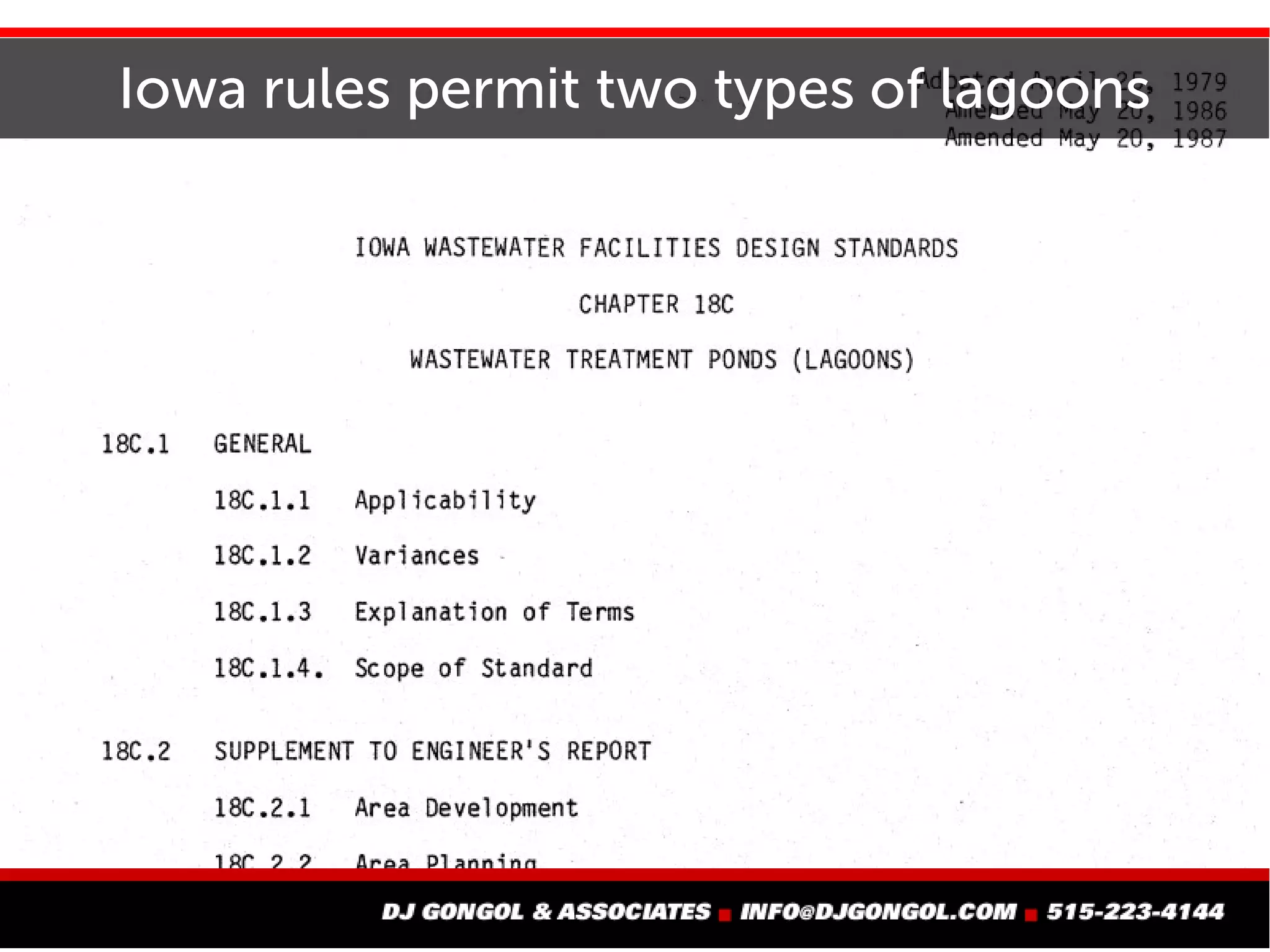
Iowa rules permit two types of lagoons
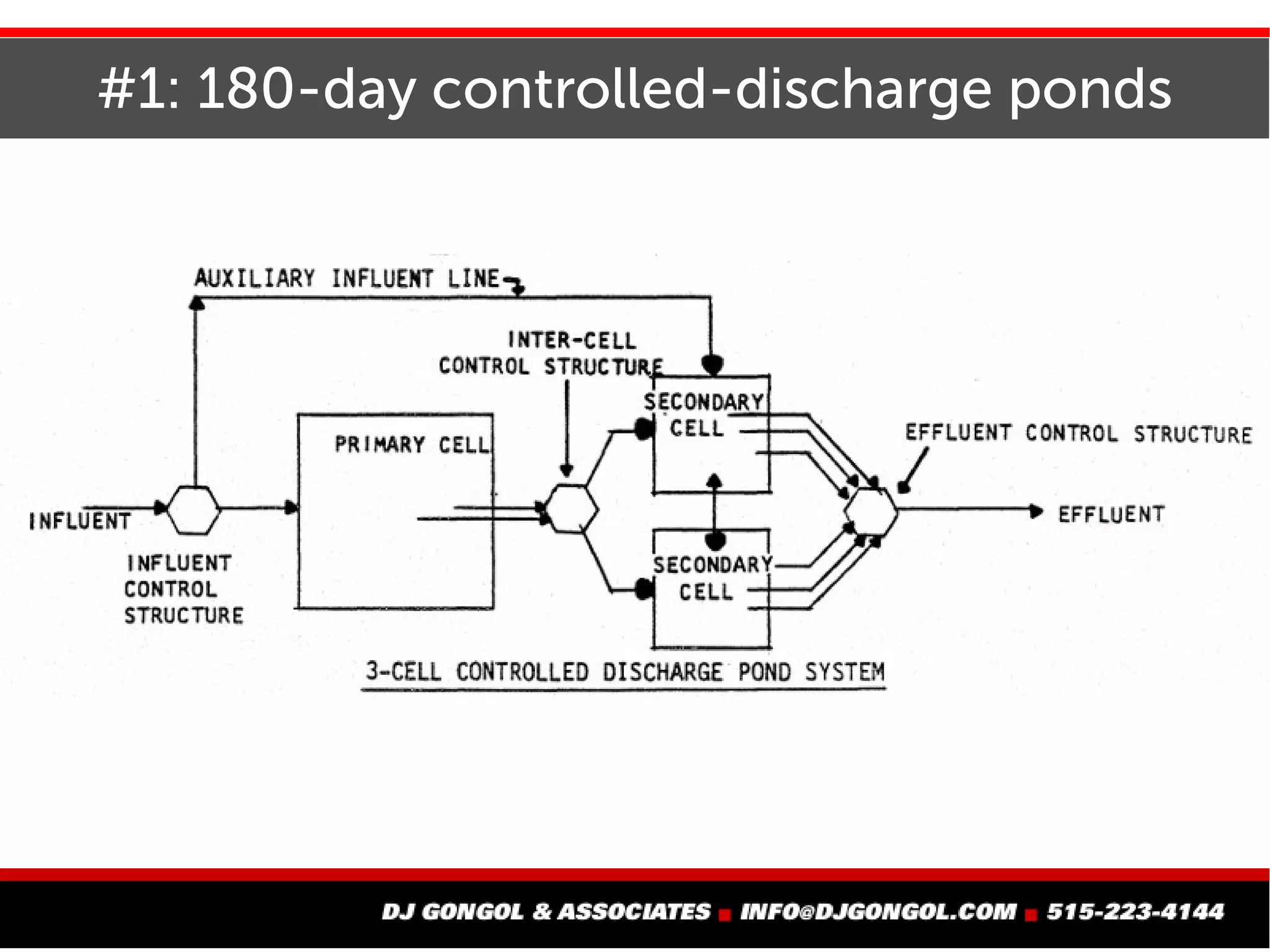
#1: 180-day controlled-discharge ponds
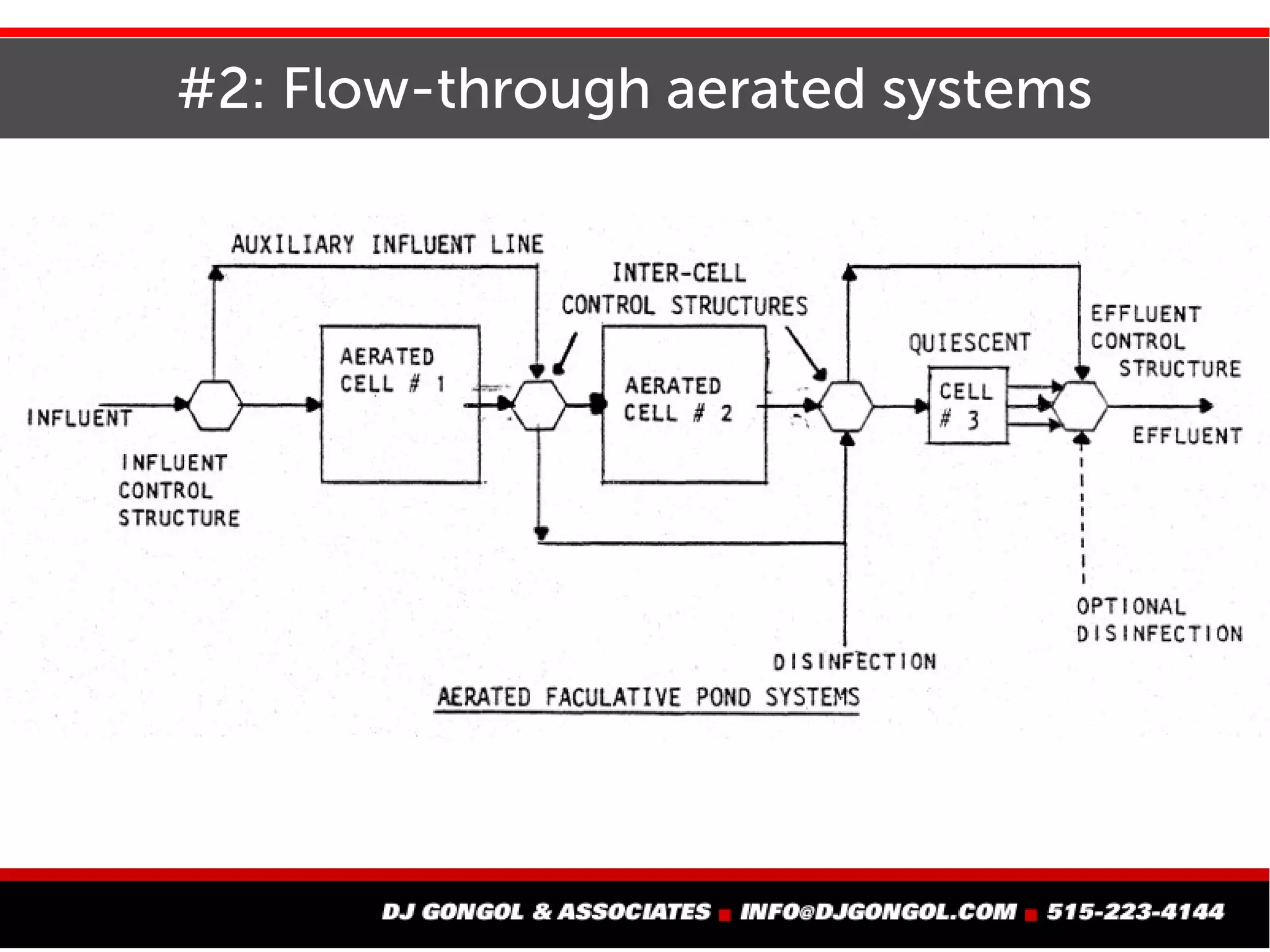
#2: Flow-through aerated systems
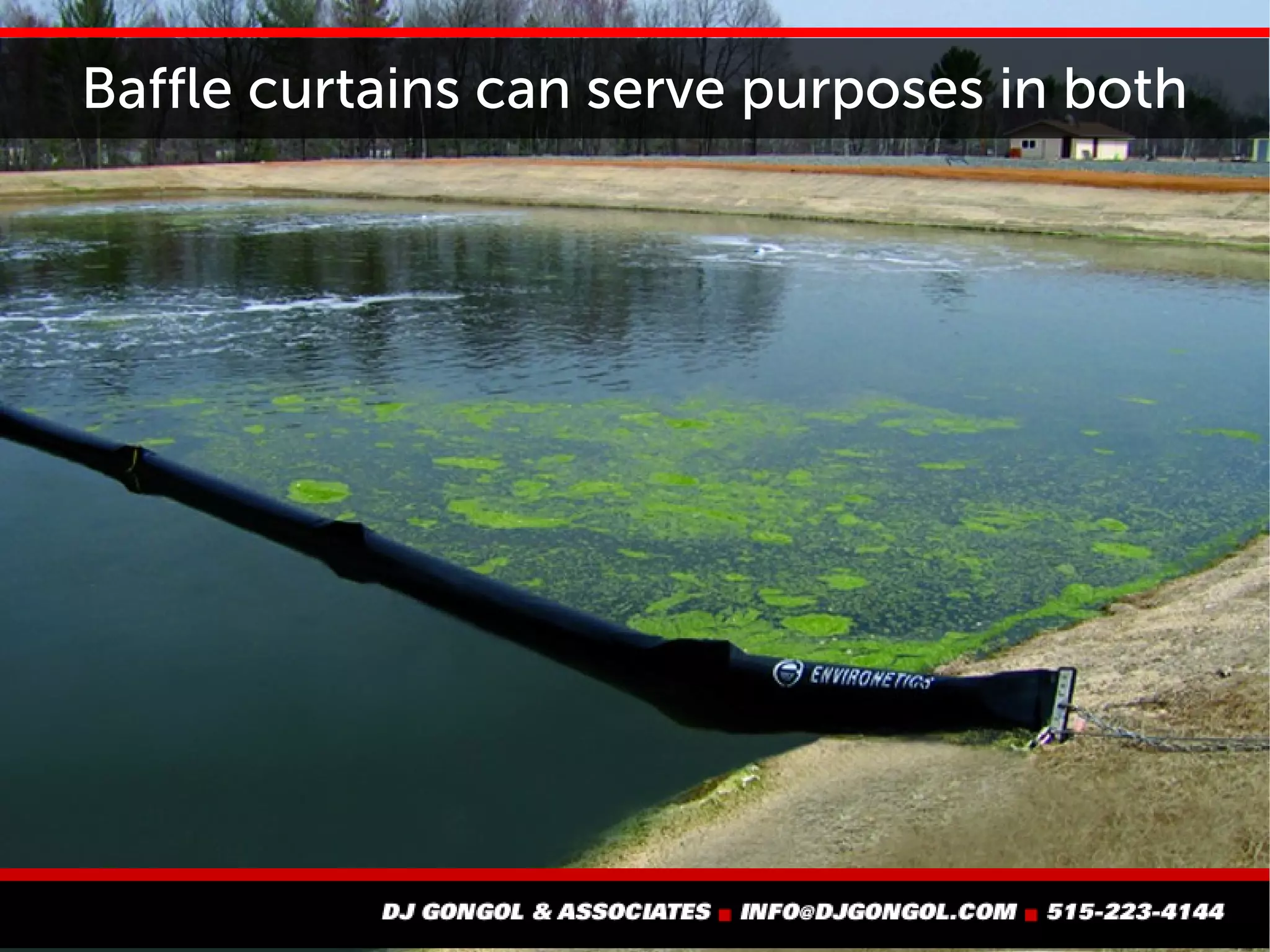
Baffle curtains can serve purposes in both
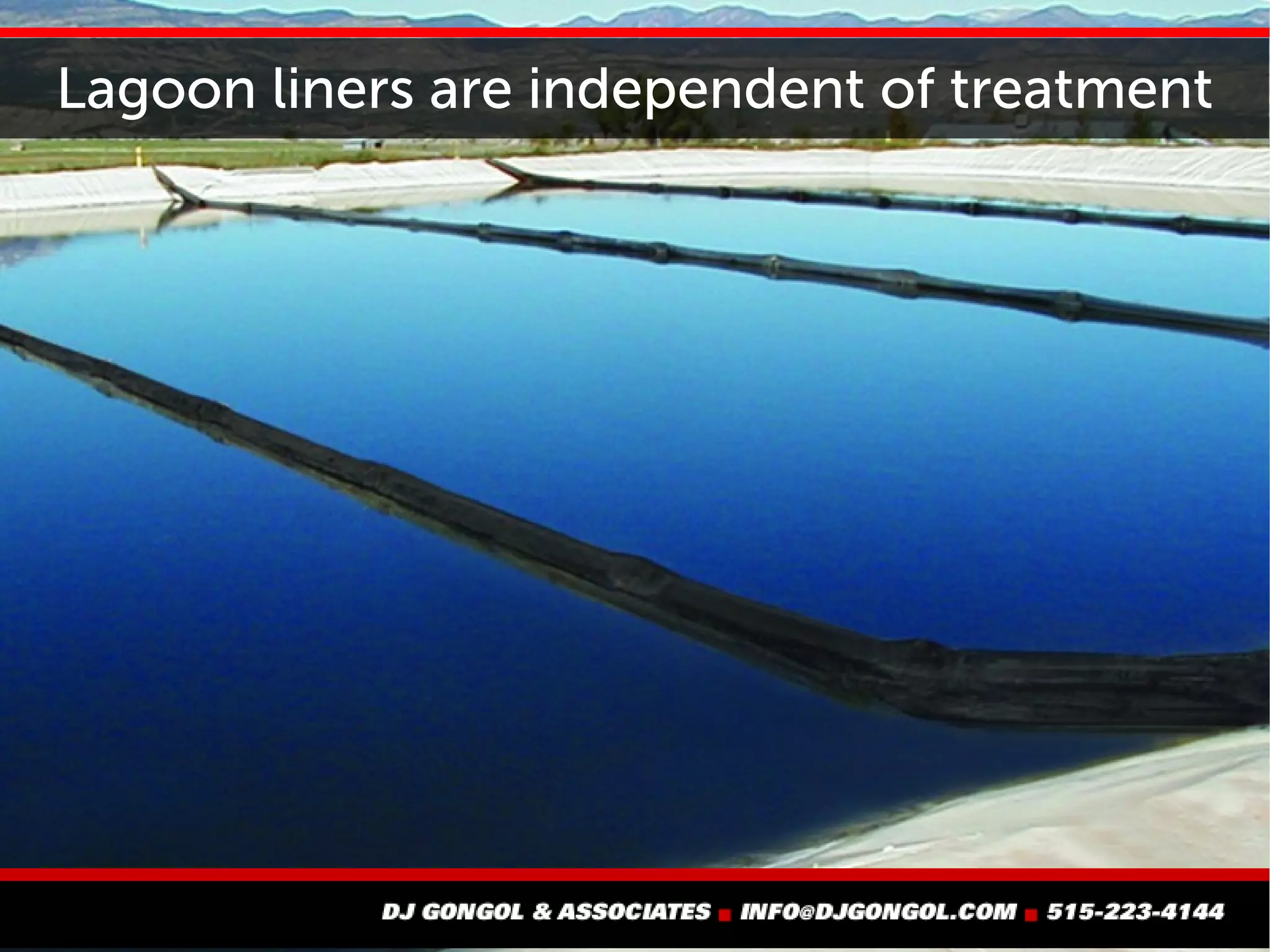
Lagoon liners are independent of treatment
Let's first un-baffle the mystery of baffles
Purpose of baffle curtains
There's not just one
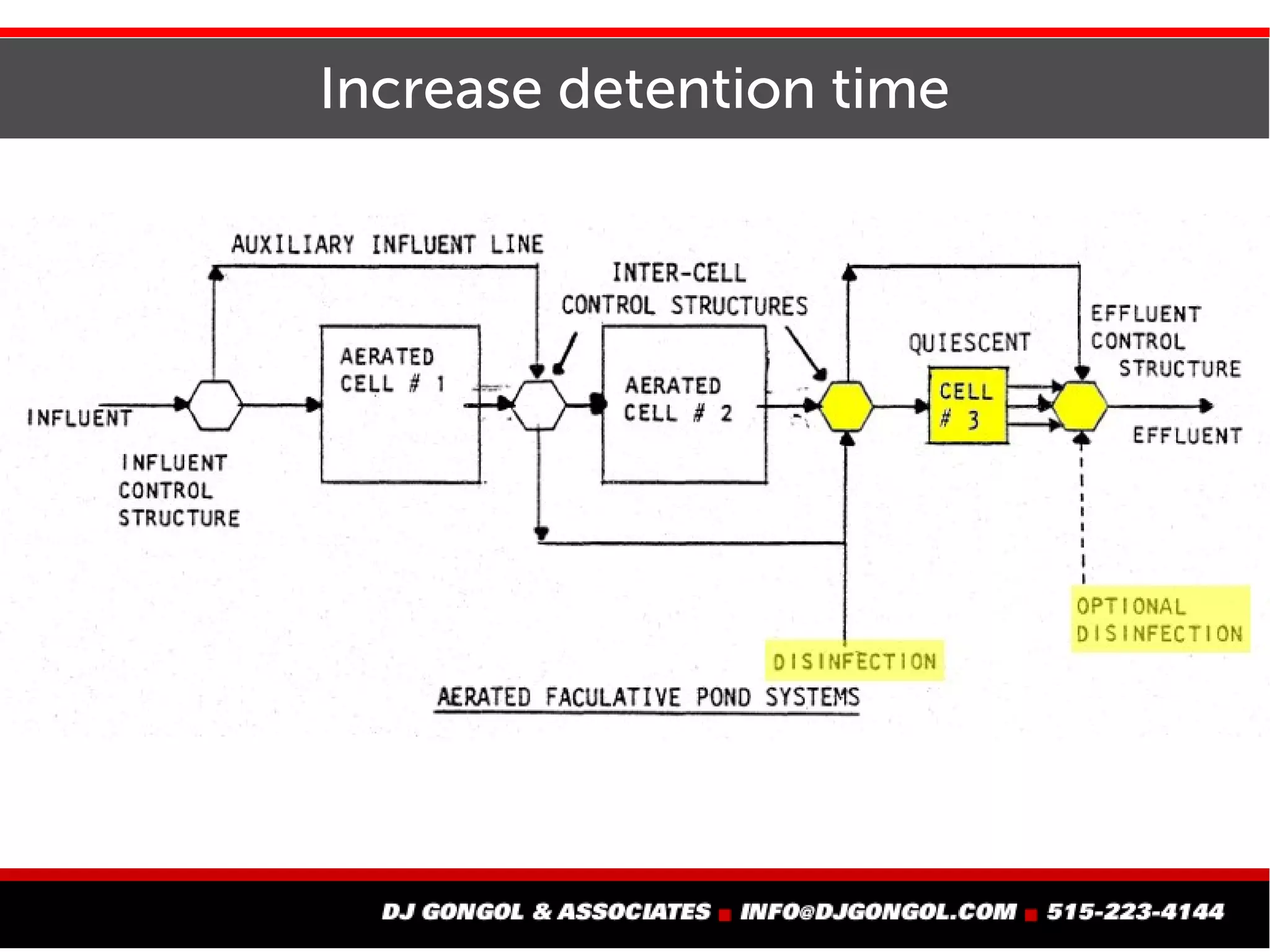
Increase detention time
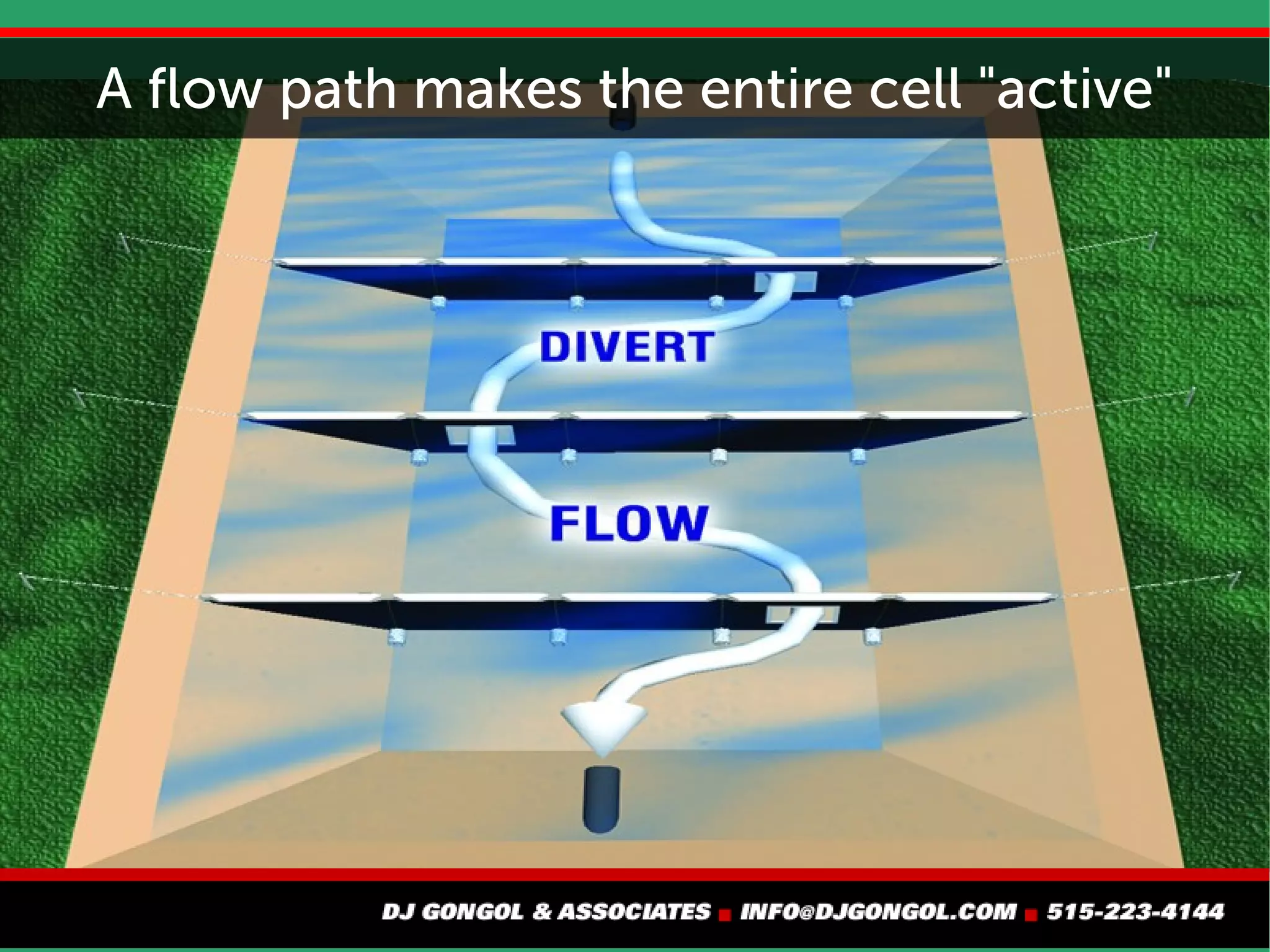
Going with the flow
 Water seeks its own level
 Water follows the path of least resistance
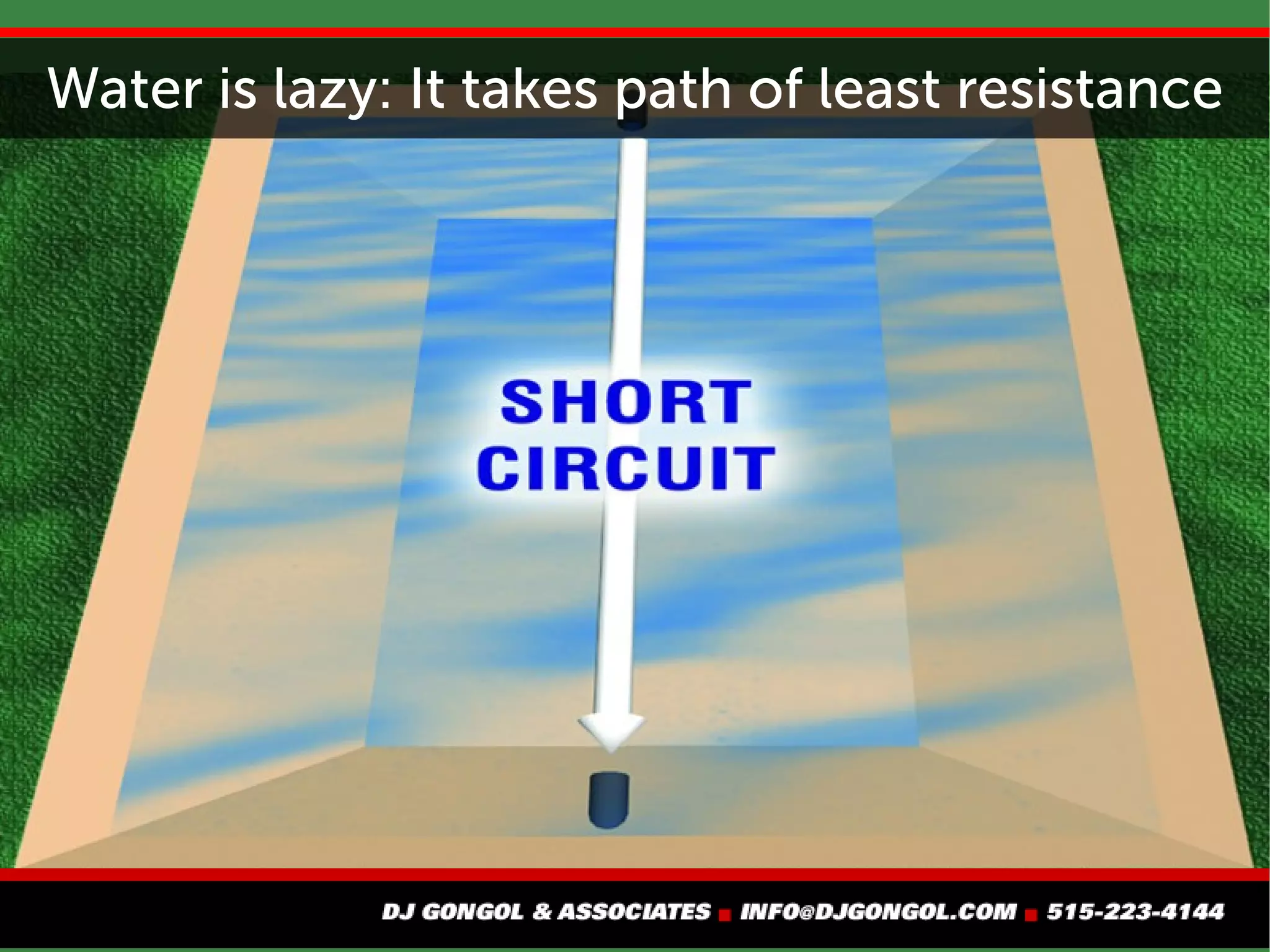
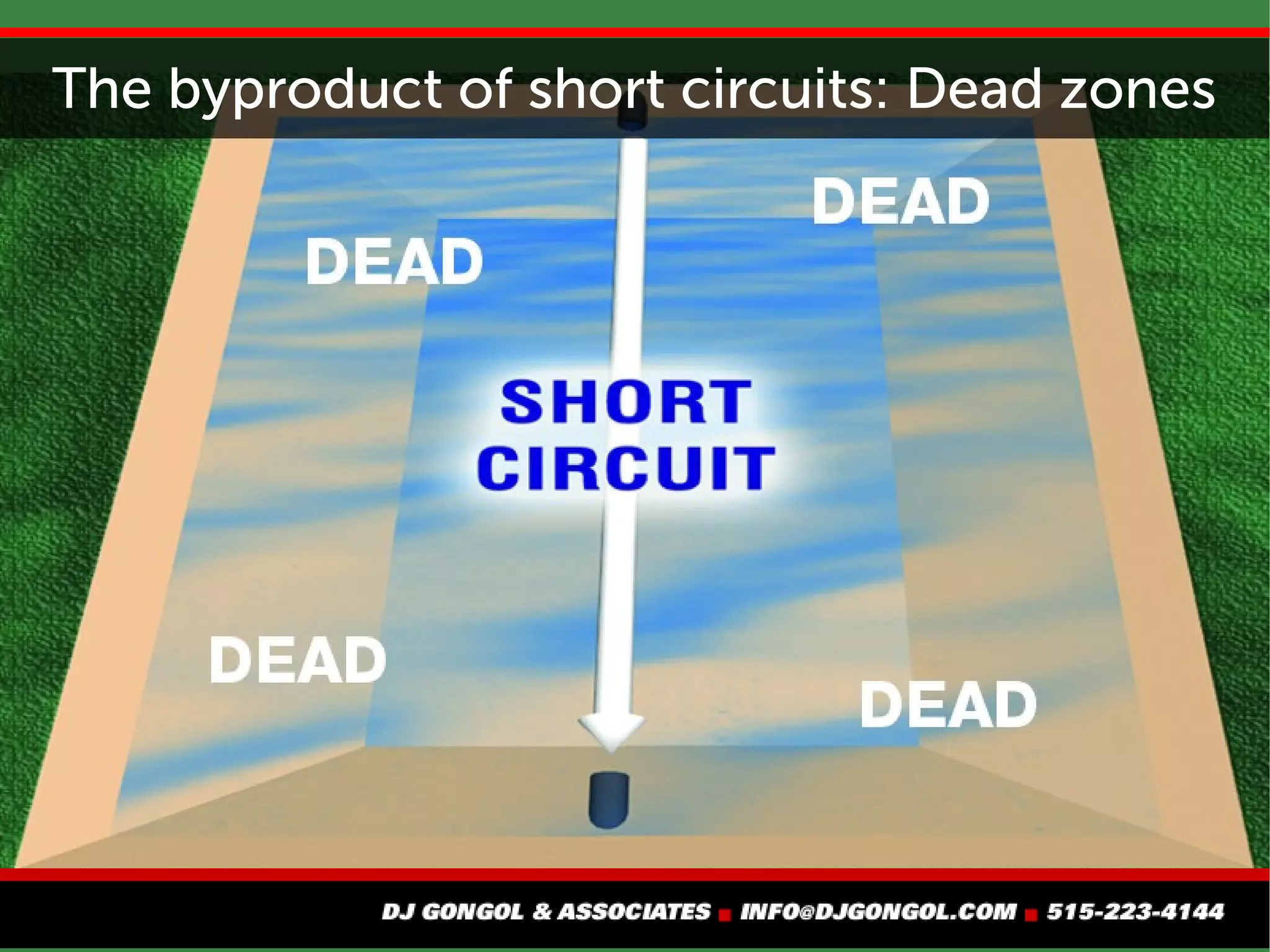
 If you don't create a path, water will short-circuit
Break down dead zones
This is important to both disinfection and aeration
Water is lazy: It takes path of least resistance
Iowa rules say: Prevent short-circuiting
 18C.7.4.5.: "Discharge into each cell should be at the
opposite end from the drawoff out of the cell to
enhance plug flow and minimize short circuiting."
The byproduct of short circuits: Dead zones
A flow path makes the entire cell "active"
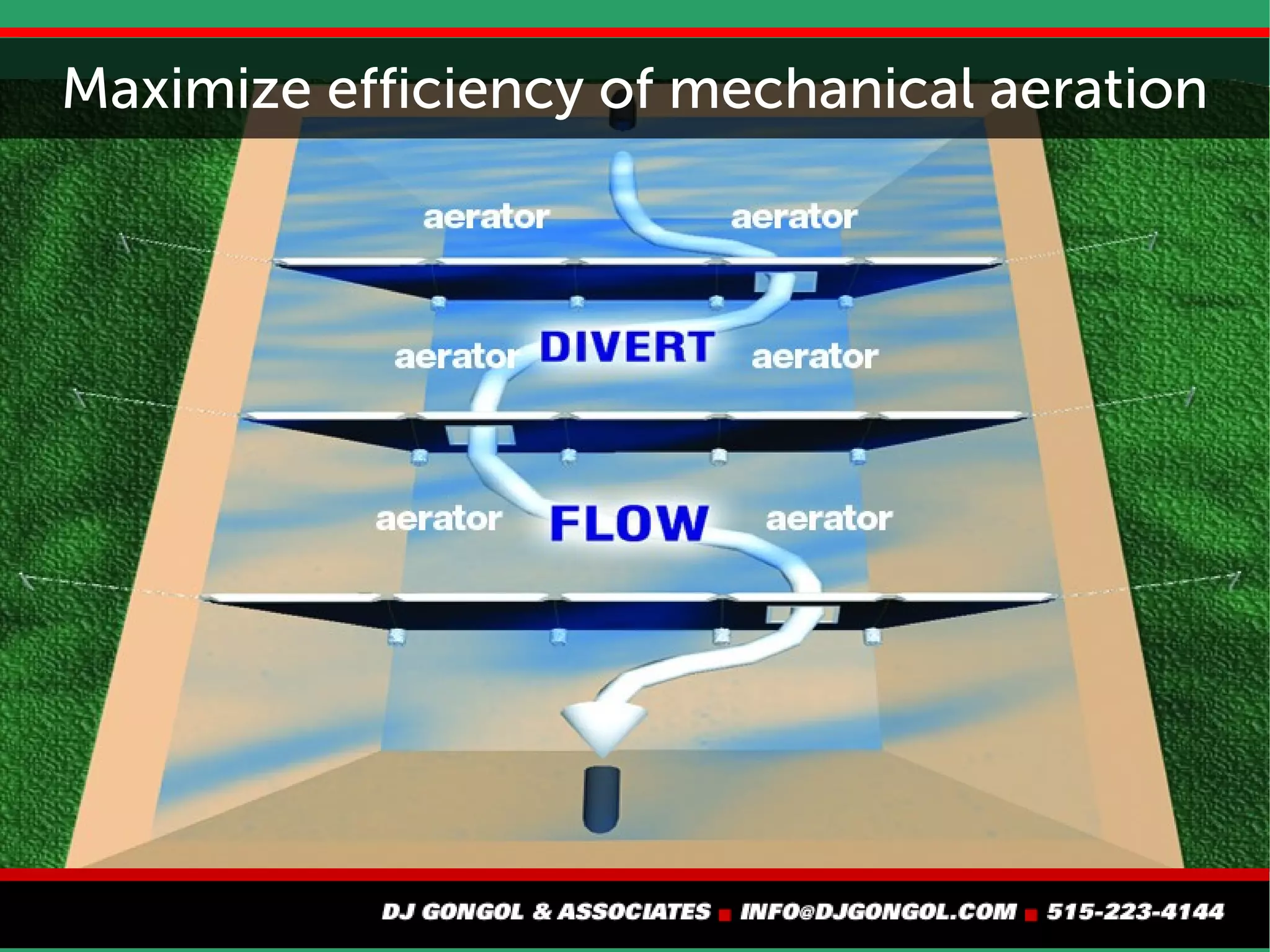
Maximize efficiency of mechanical aeration
Aerators aren't sentient
If you don't move the water past them
like an assembly line,
they won't pick up and
chase the untreated water
Repurpose existing cells into multiple zones
Get a whole new zone
without moving a shovel
of dirt
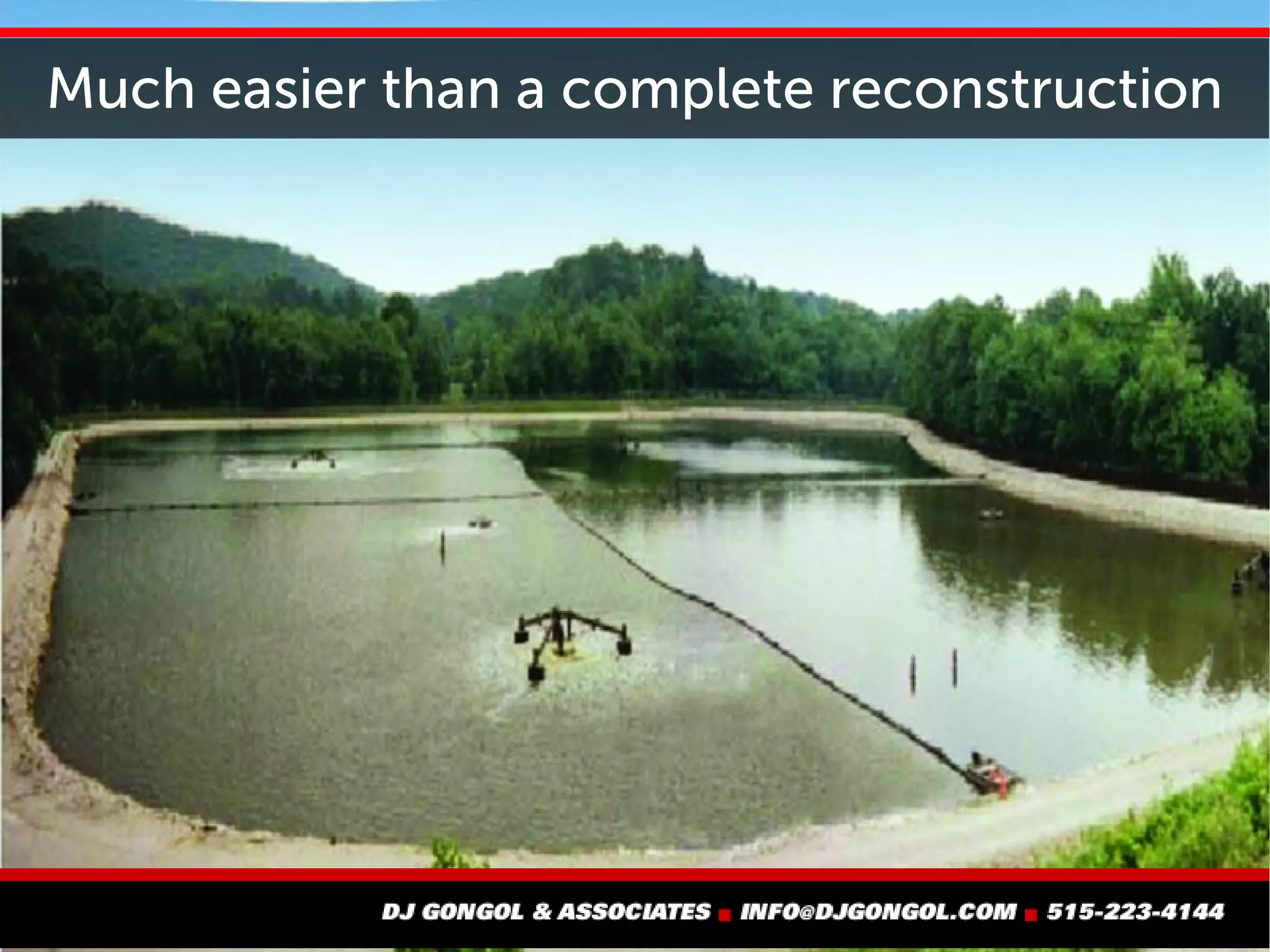
Much easier than a complete reconstruction
Baffles can help repurpose lagoons for NH3
A likely course of application
in the years ahead
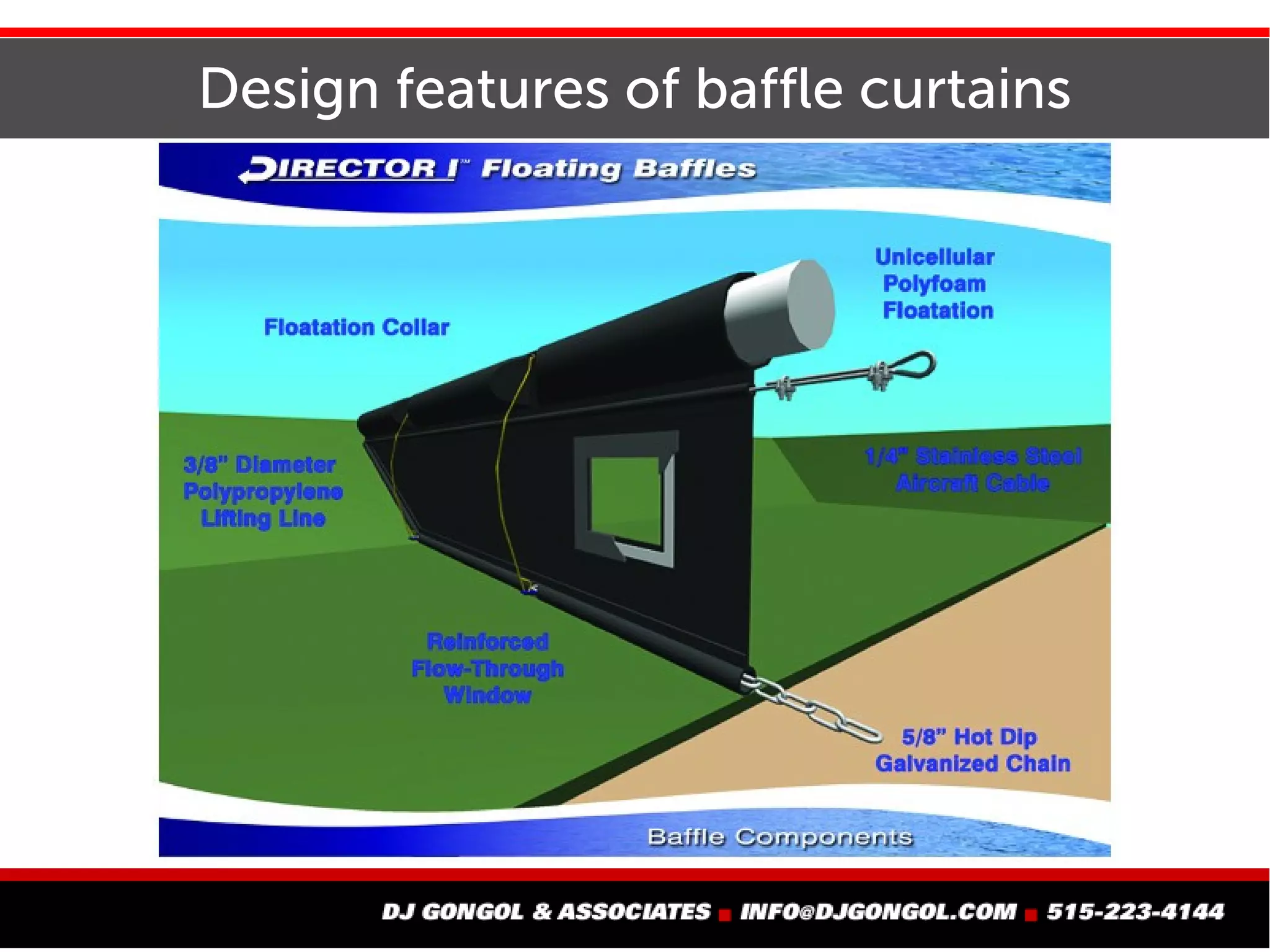
Design features of baffle curtains
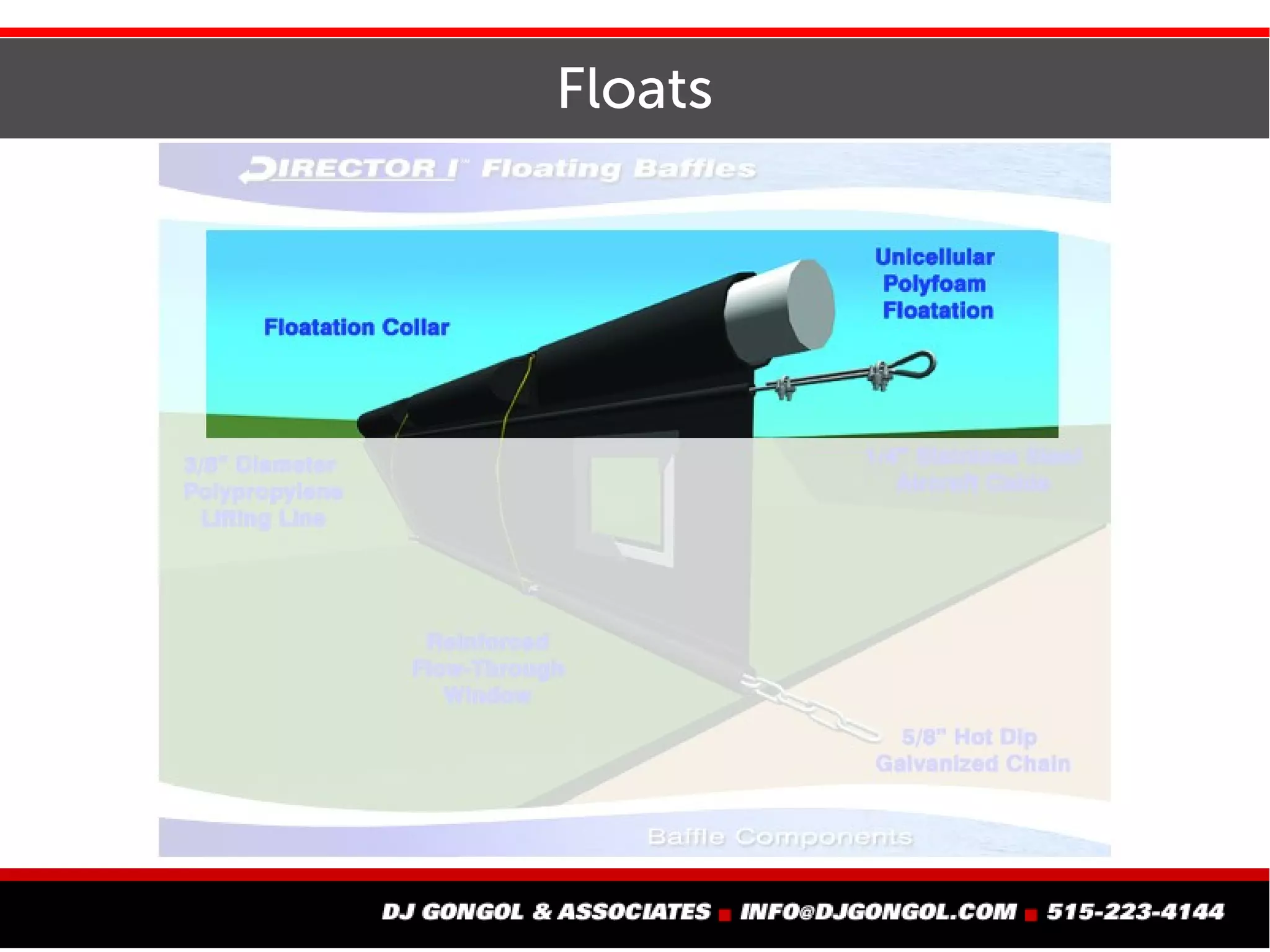
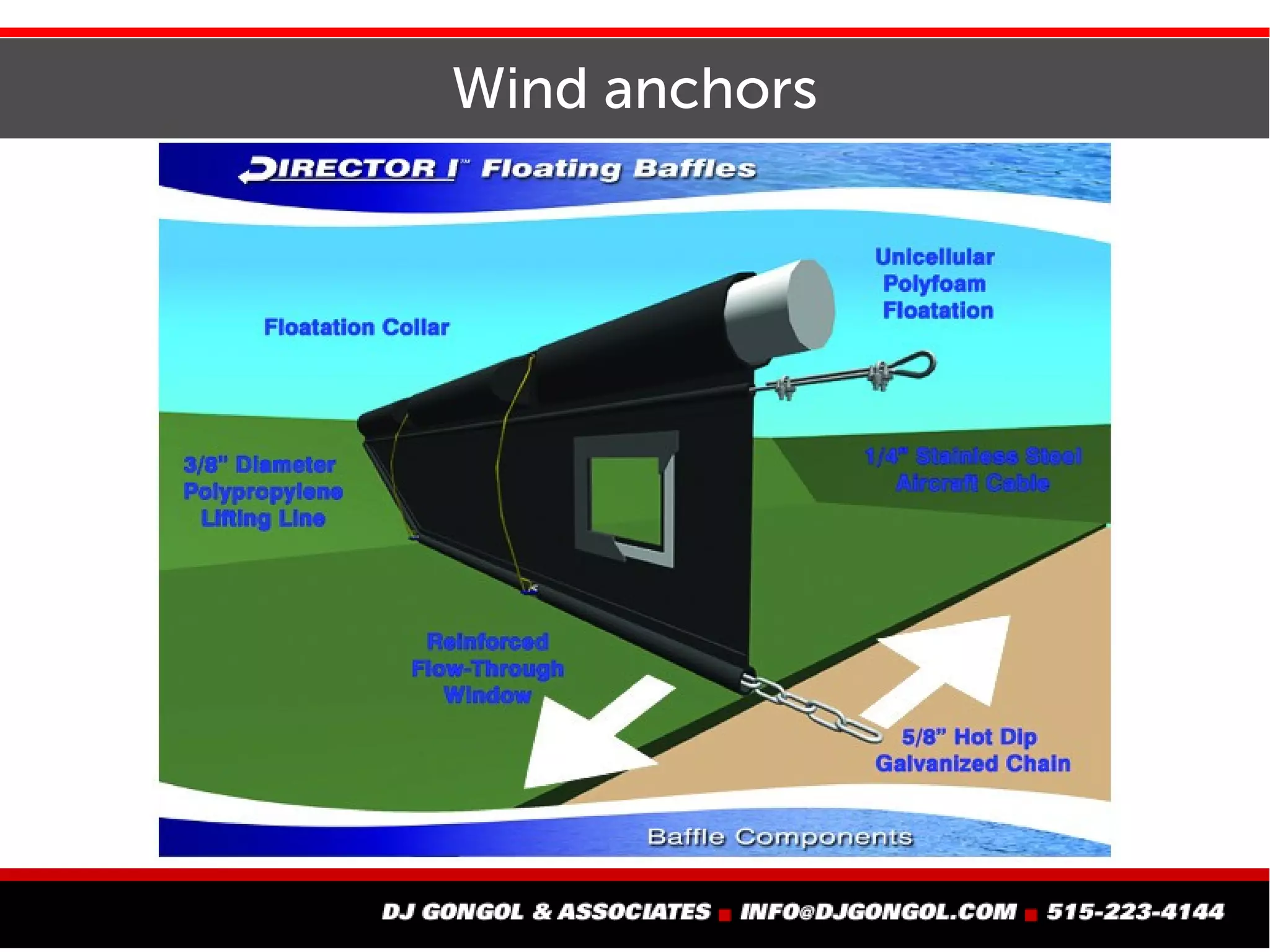
Floats
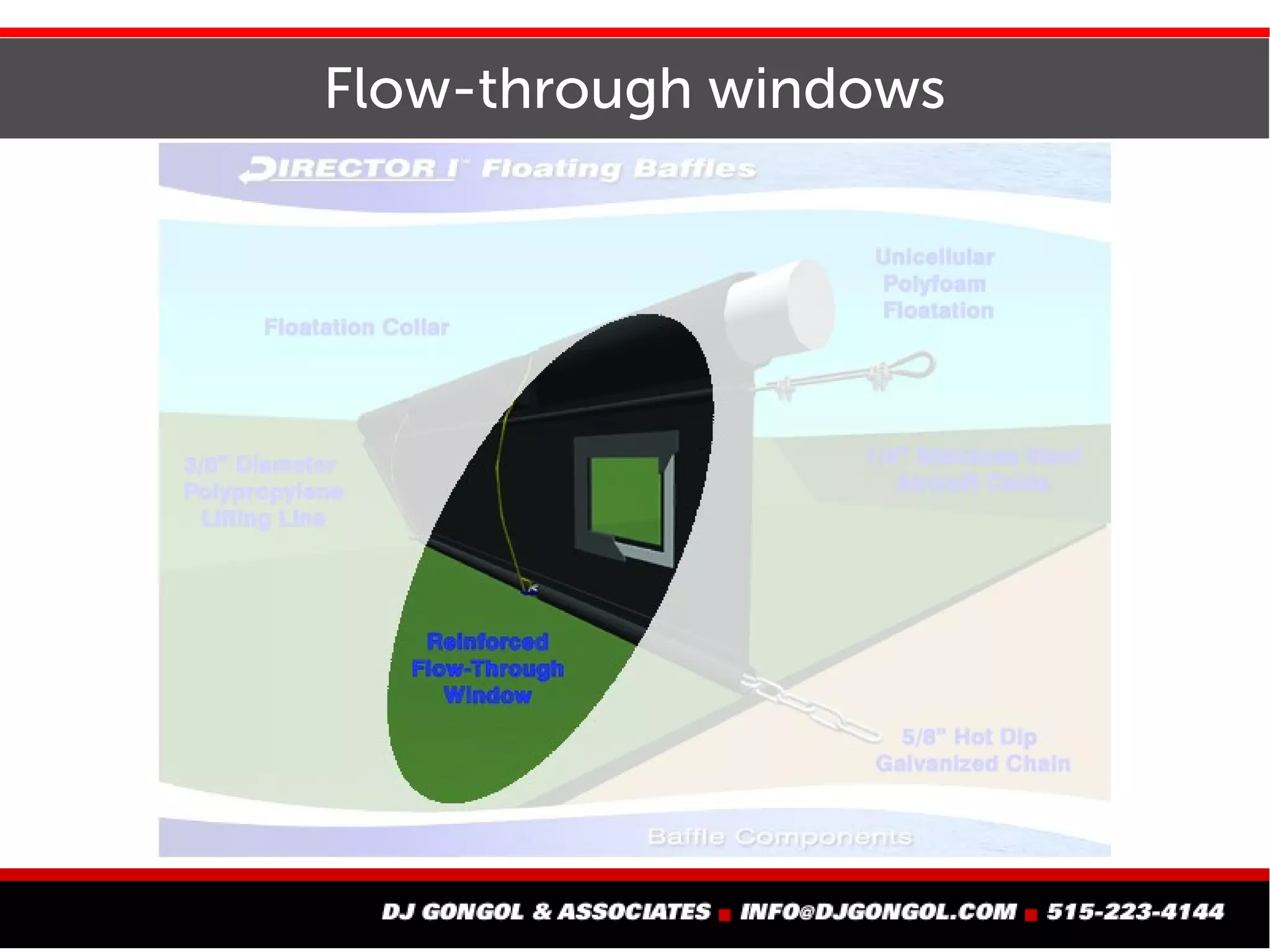
Flow-through windows
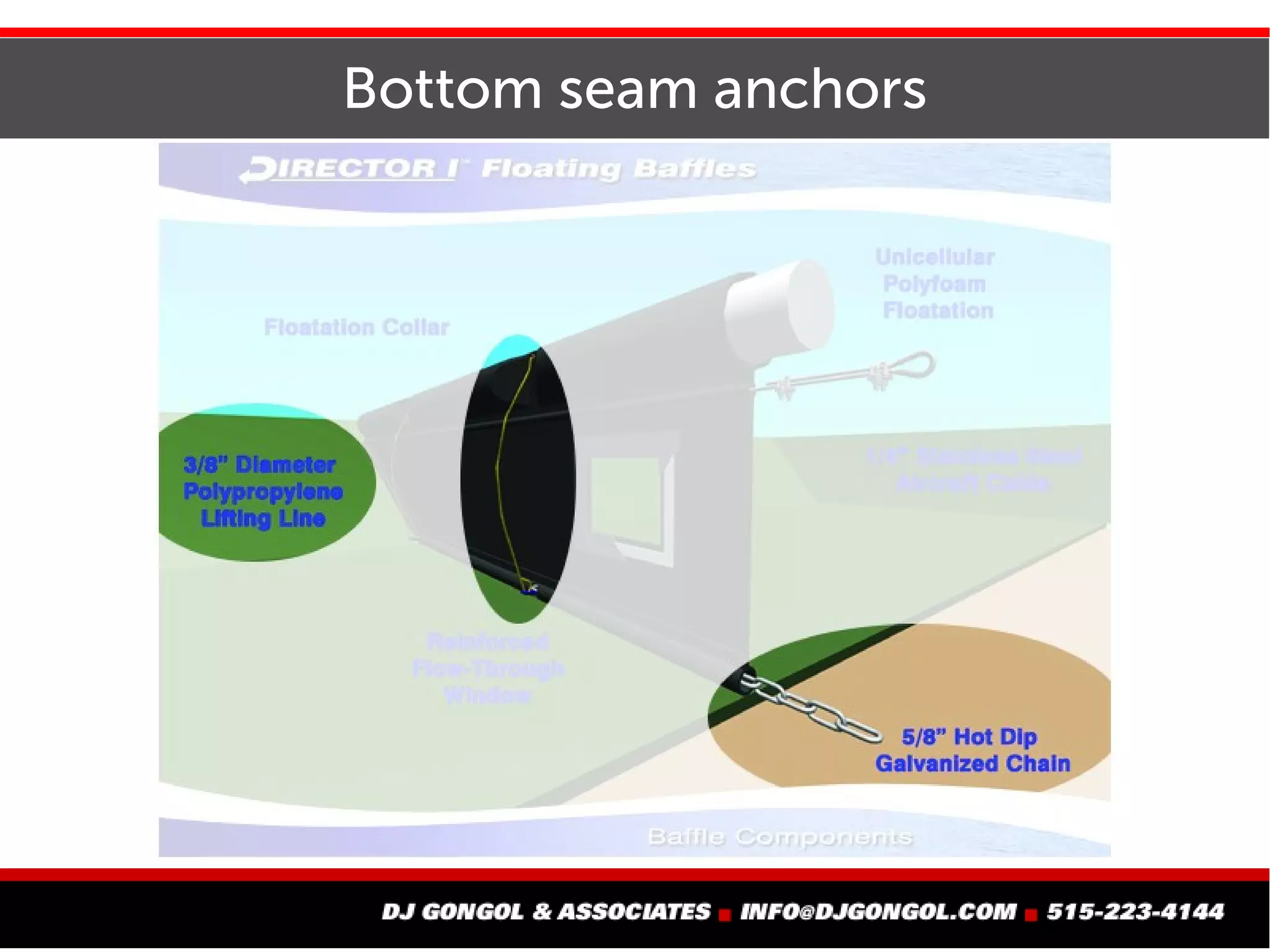
Bottom seam anchors
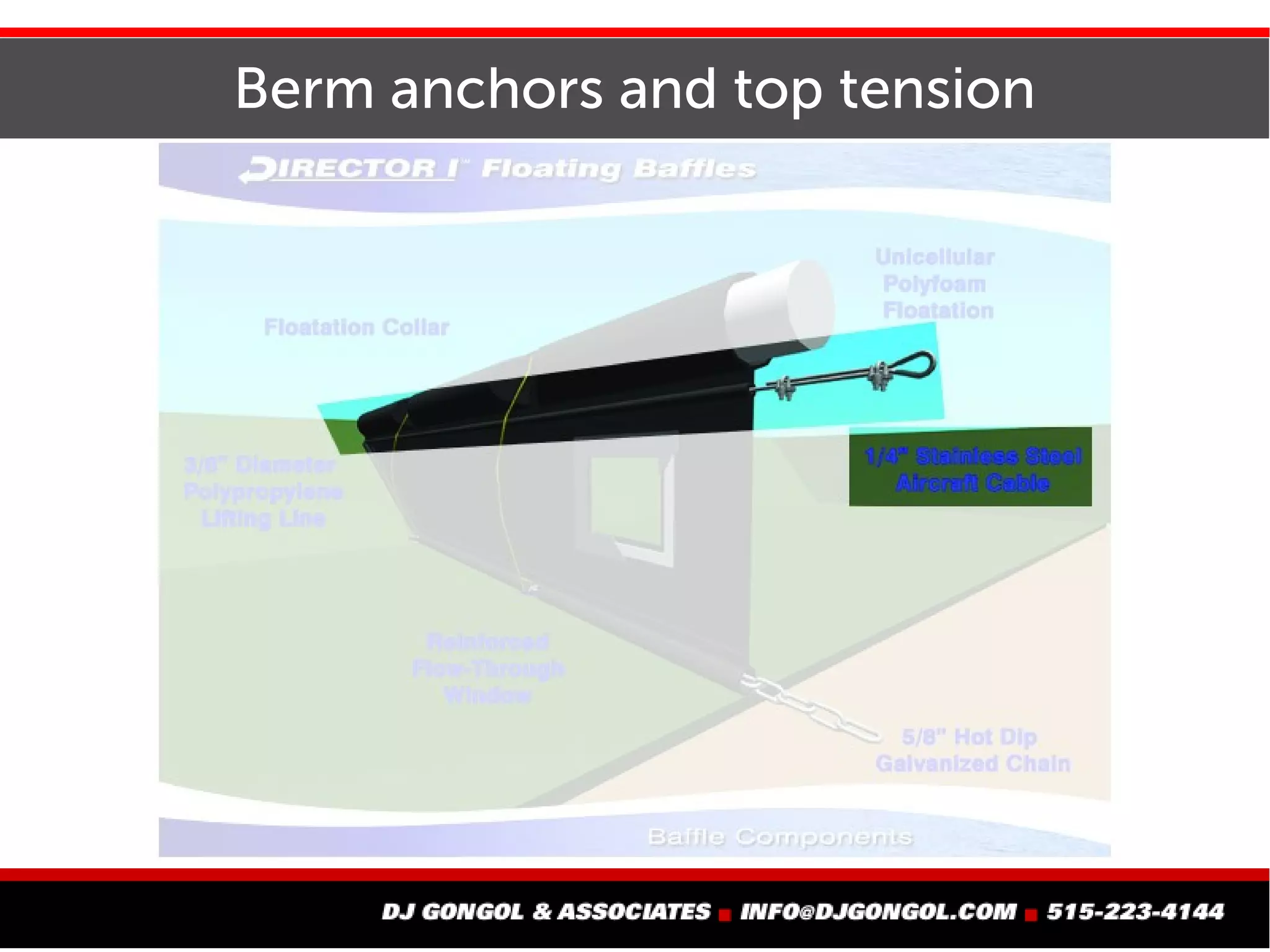
Berm anchors and top tension
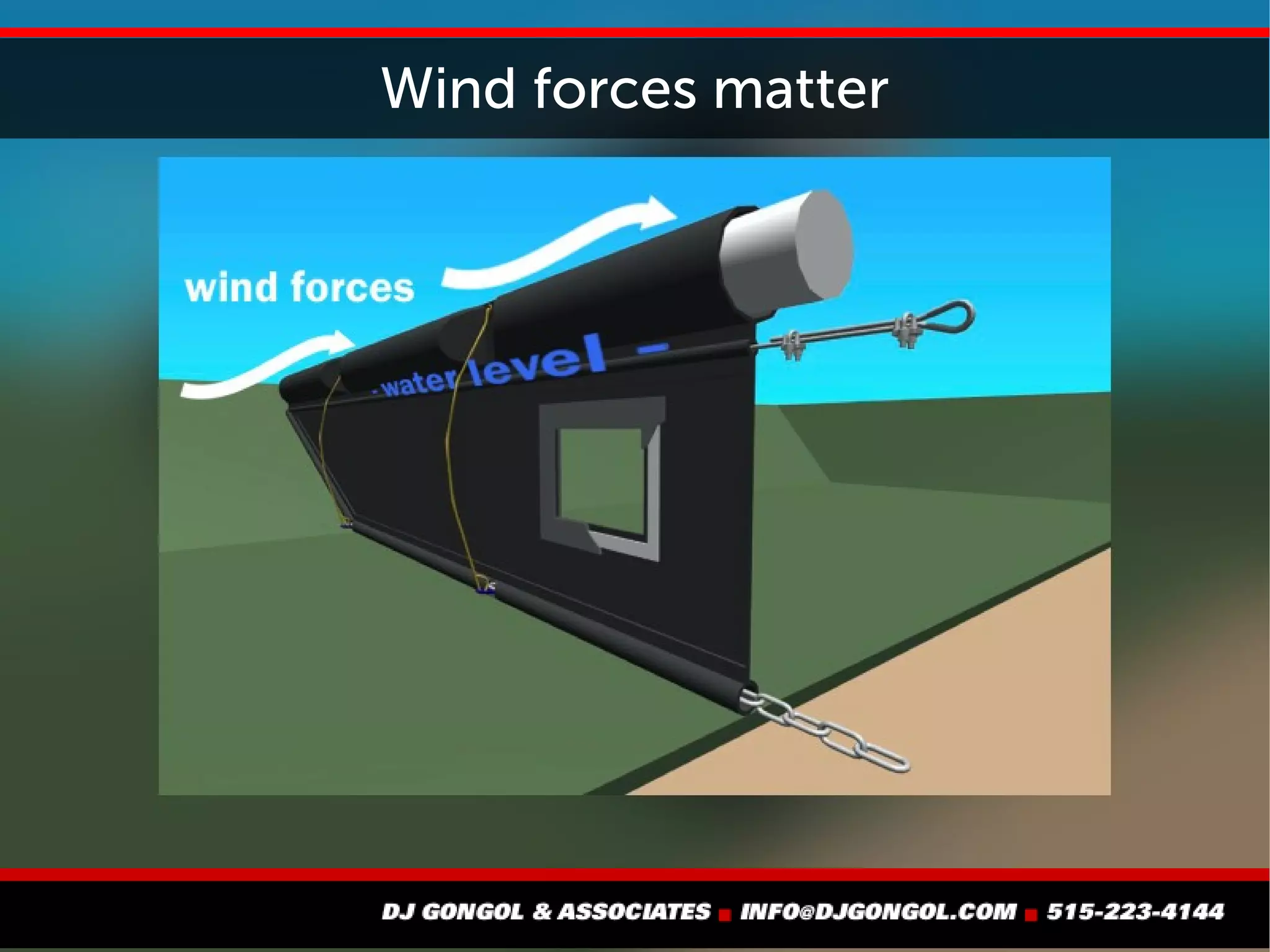
Wind forces matter
Wind anchors
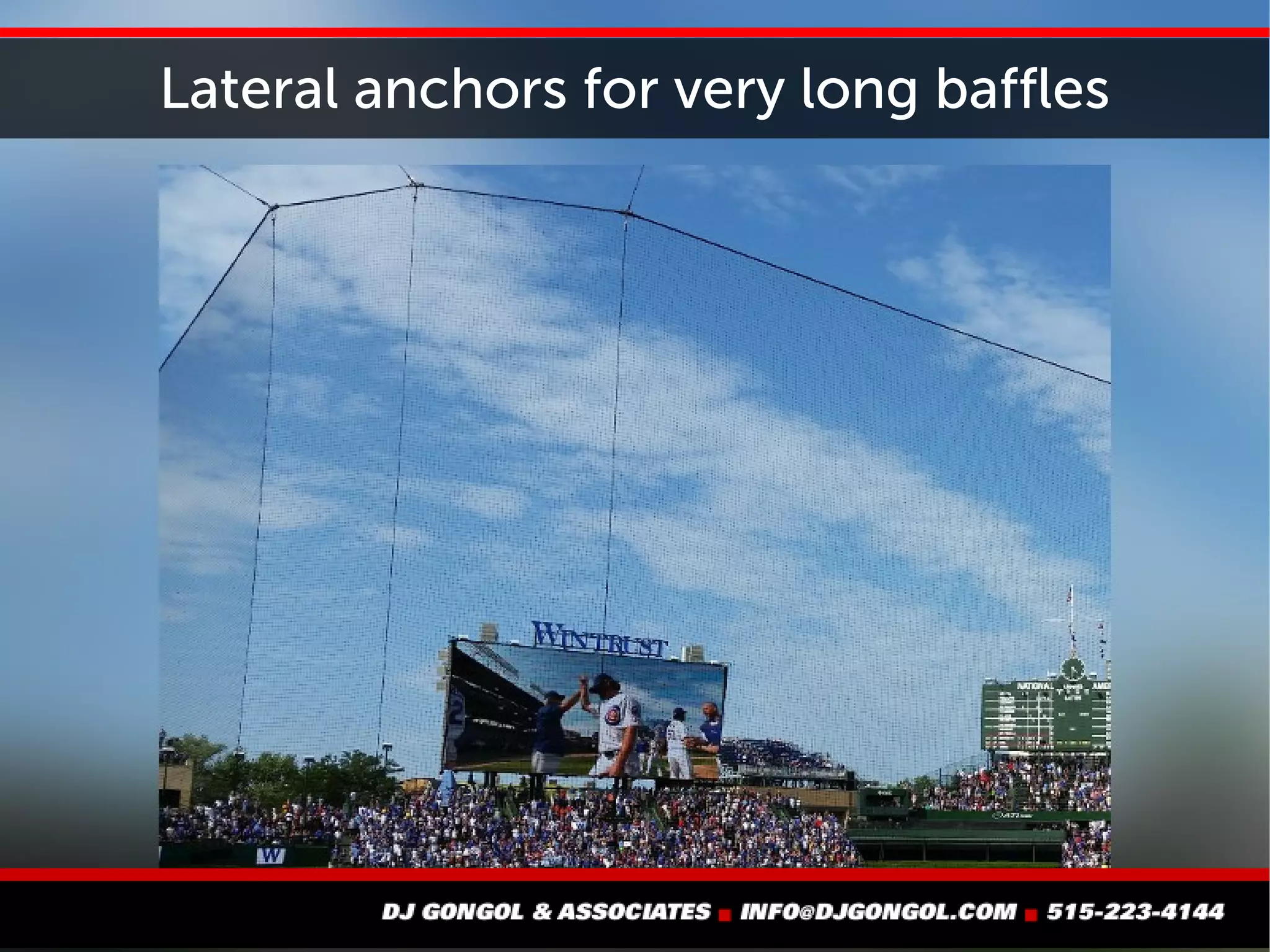
Lateral anchors for very long baffles
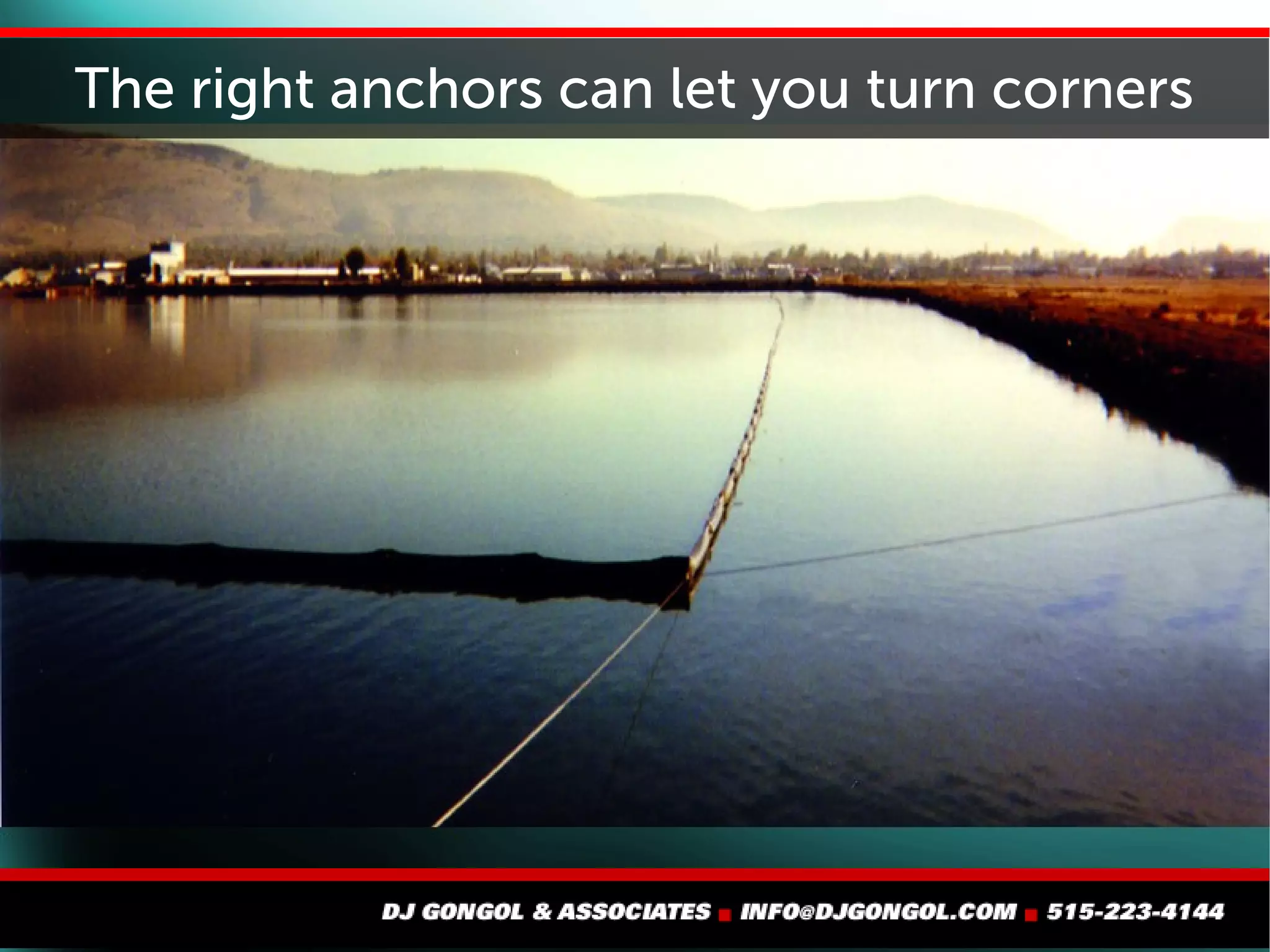
The right anchors can let you turn corners
Baffle curtain materials
In fairness, it doesn't necessarily
have to be a geomembrane
Wood
 Requires pilings
 Breaks down over time
 Not adaptable
Concrete
 Heavy
 Immovable
 Requires drawdown
 Requires foundation
Geomembranes
 Can be retrofitted without drawdown
 Can be adjusted in the future
 Field-repairable
 Cost-effective
 Factory-assembled
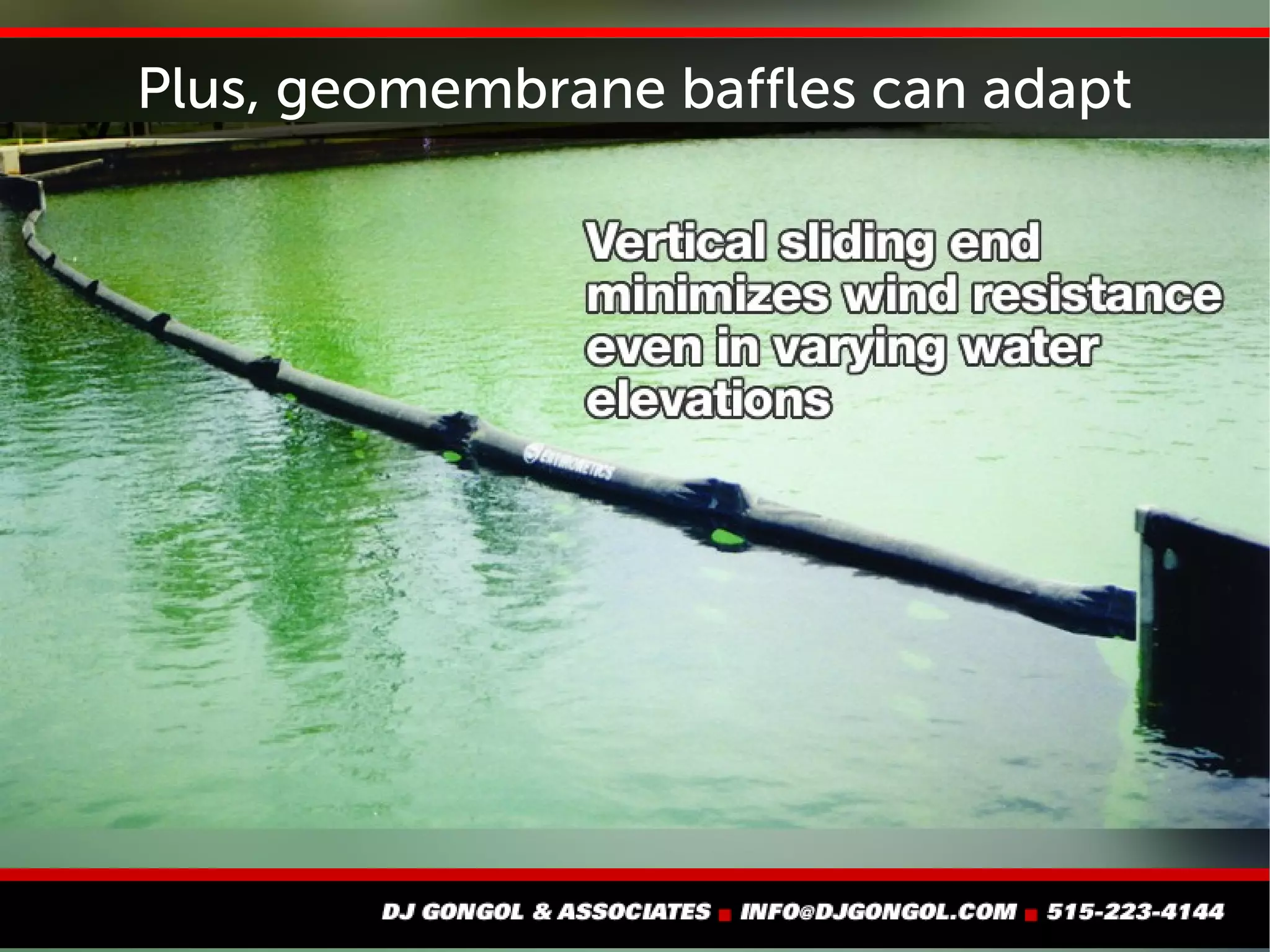
Plus, geomembrane baffles can adapt
Reinforced vs. non-reinforced
 Non-reinforced is cheaper
 Reinforced is more wear-resistant
 Reinforced can handle loads without deformation
Seaming
 Fewer seams are better than more
 Field-repairable seams are better than not
 Factory-seamed products are better than field-seamed
 Heat or dielectric seams only -- never sewn
So, what does it take to put them in?
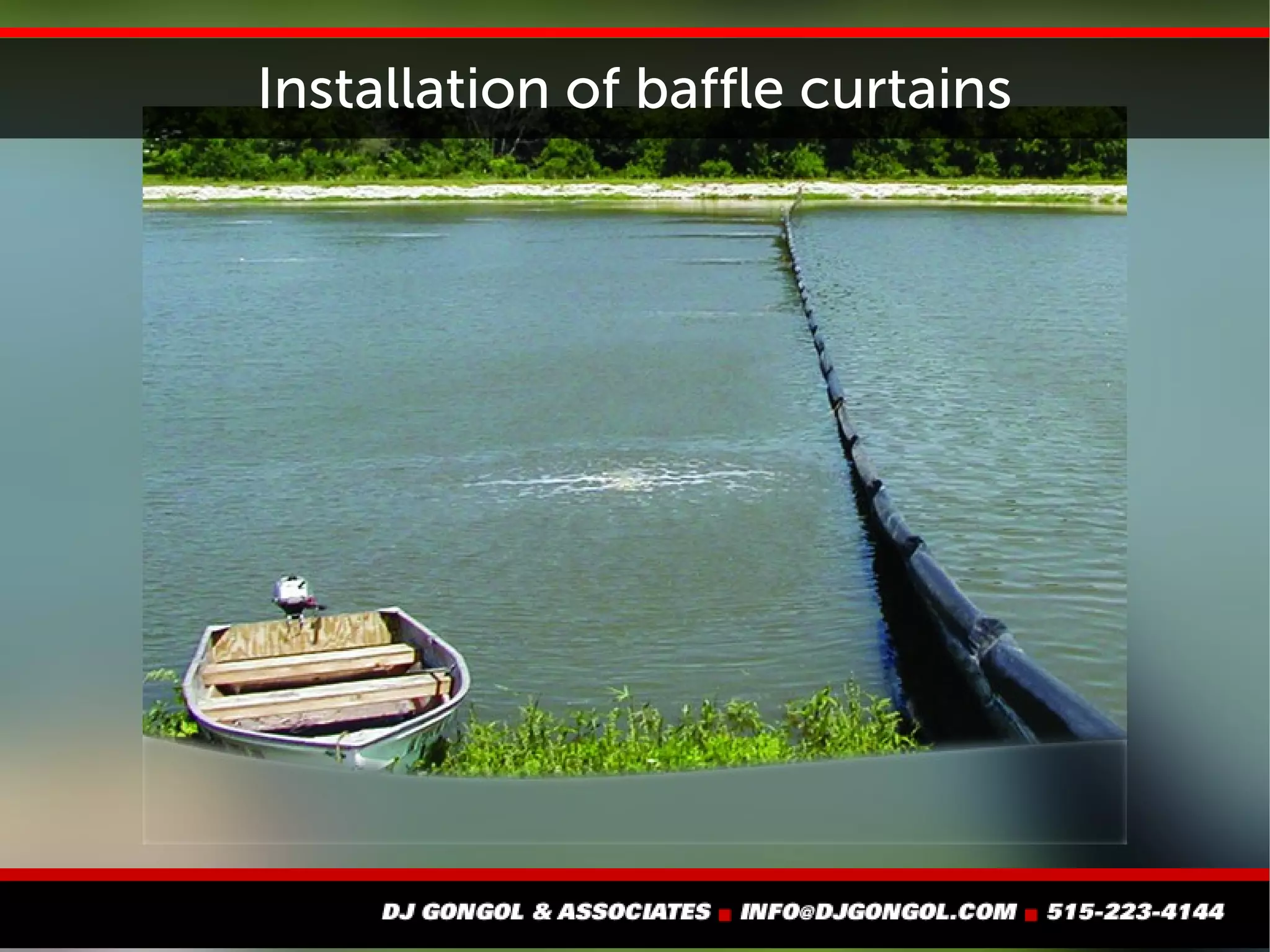
Installation of baffle curtains
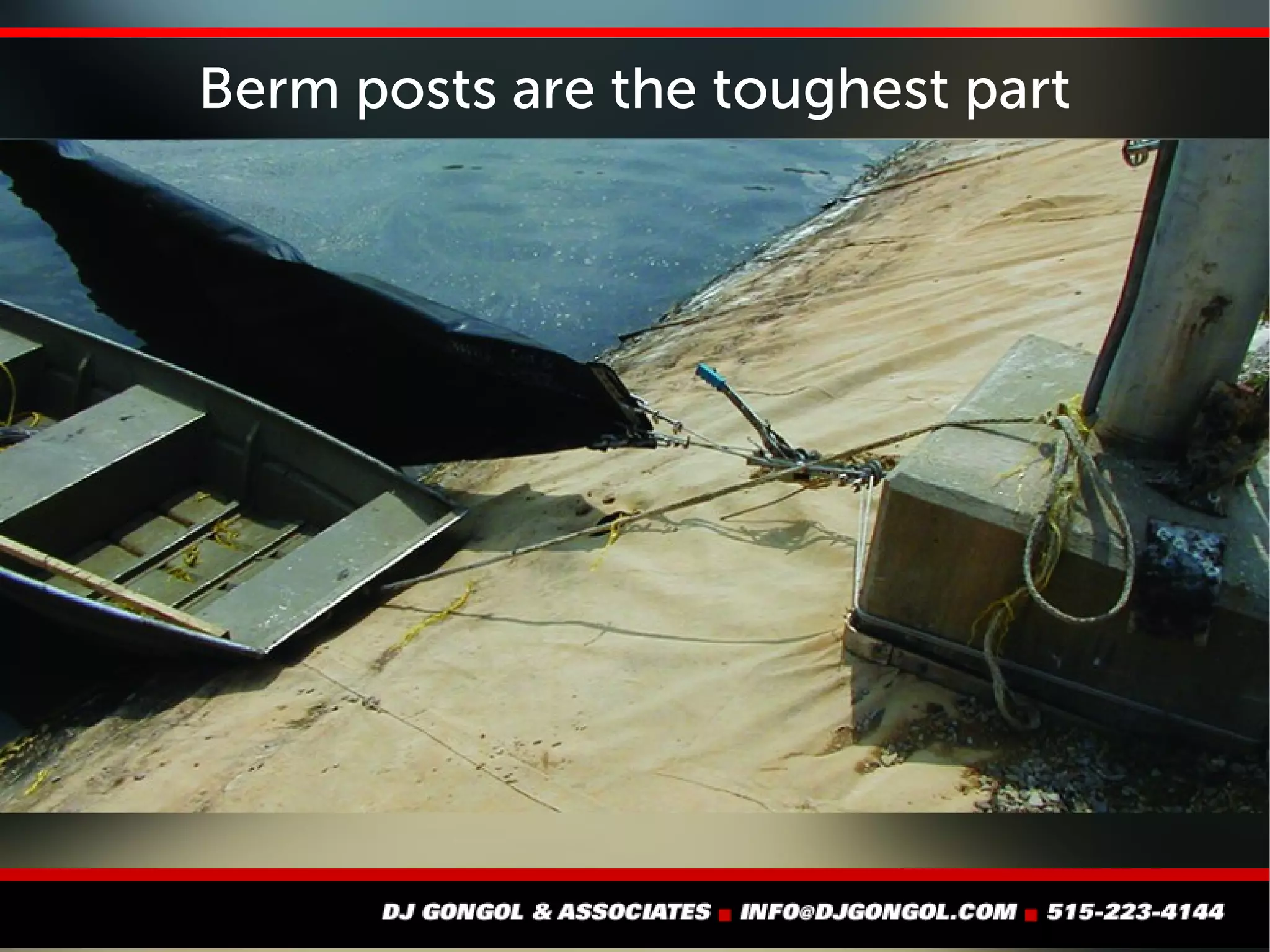
Berm posts are the toughest part
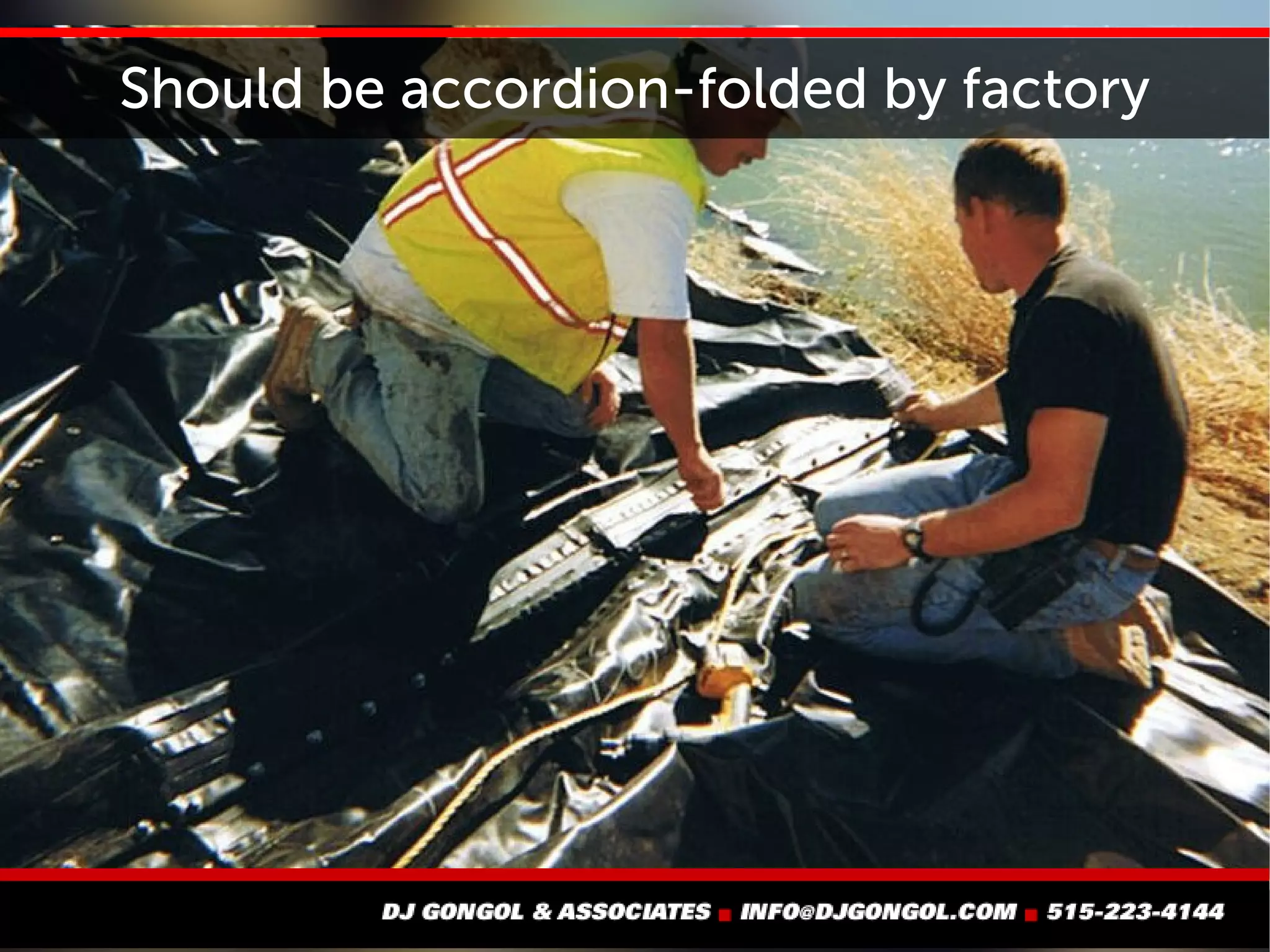
Should be accordion-folded by factory
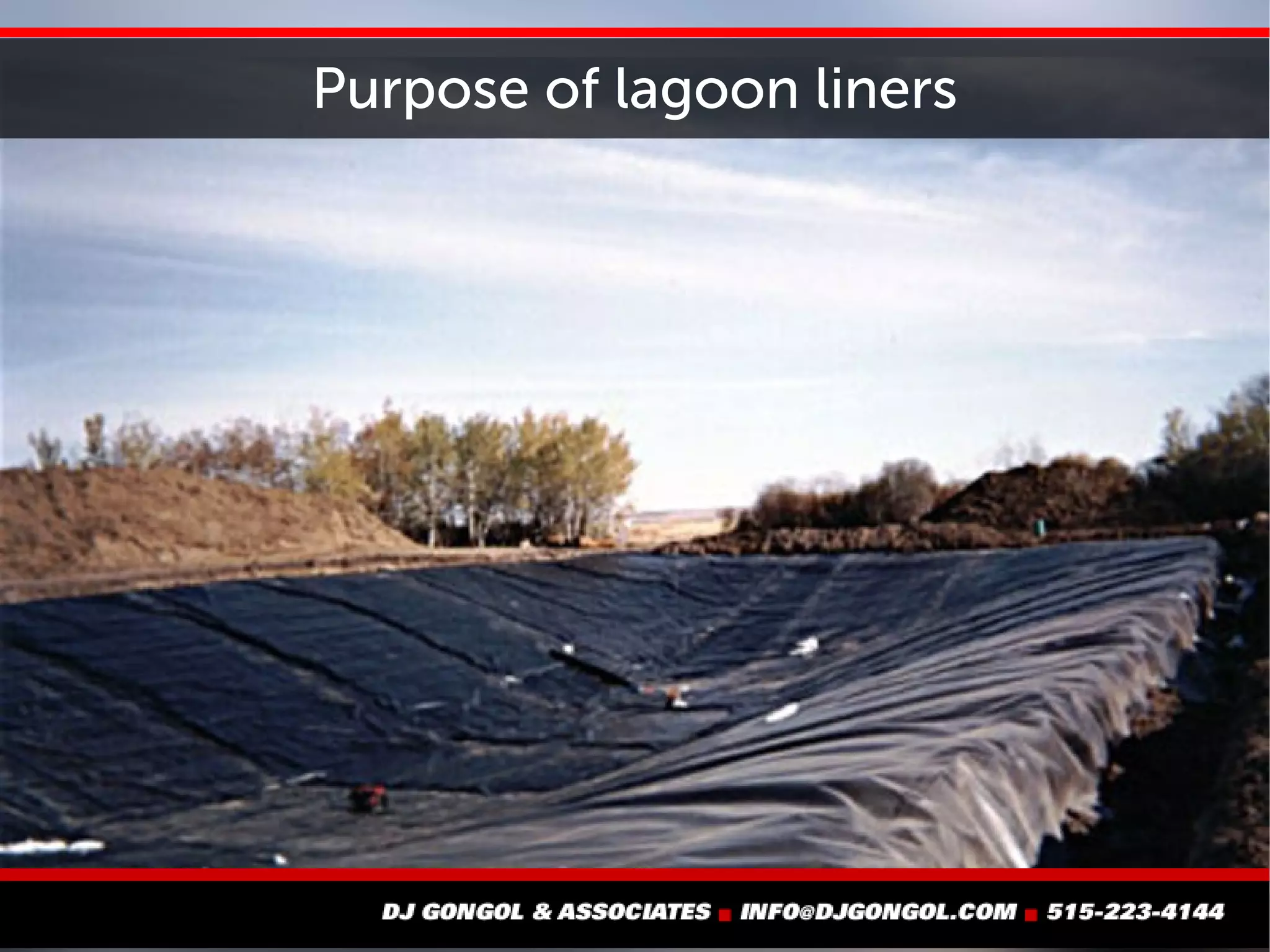
Purpose of lagoon liners
#1: Protect groundwater
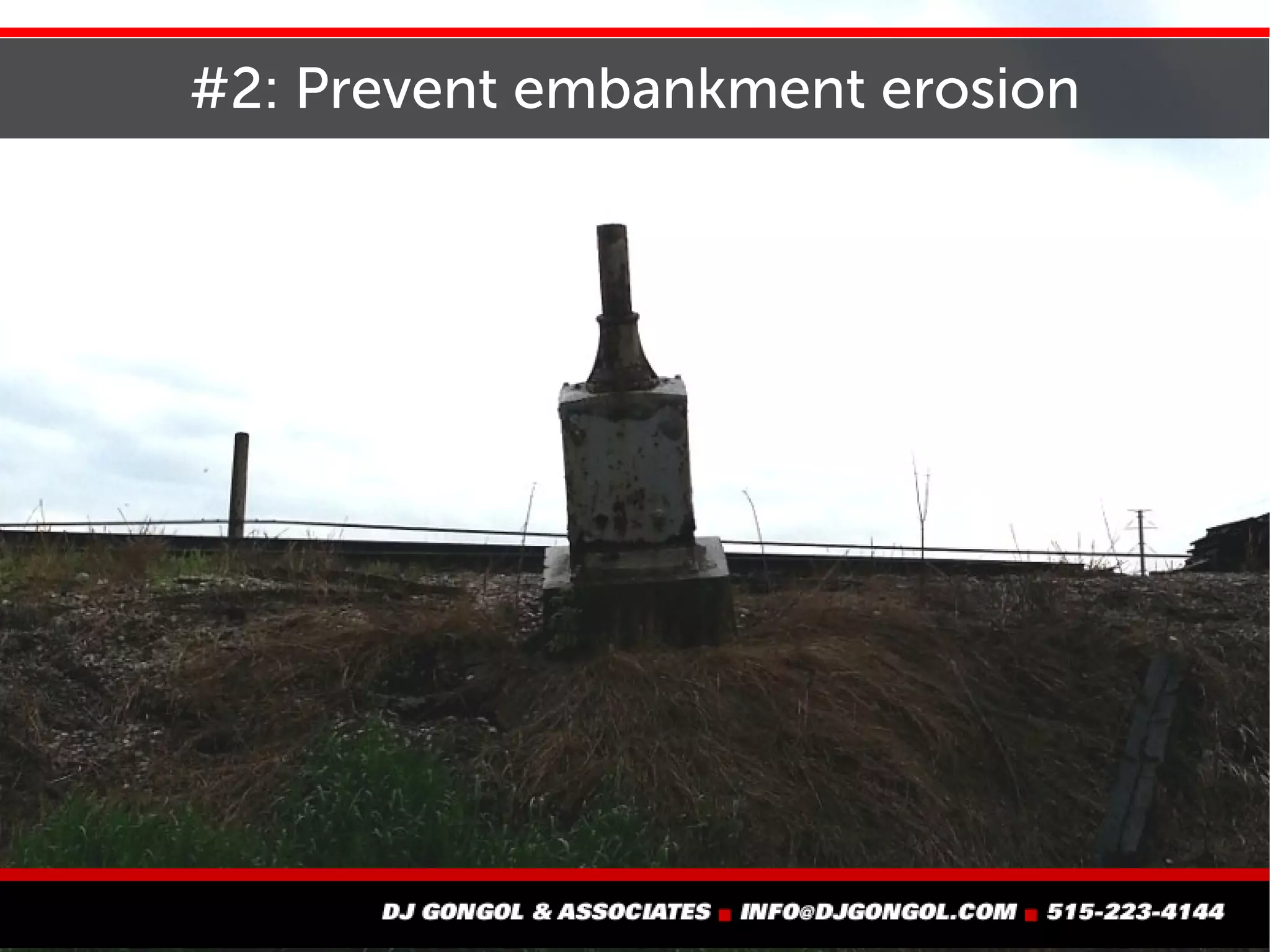
#2: Prevent embankment erosion
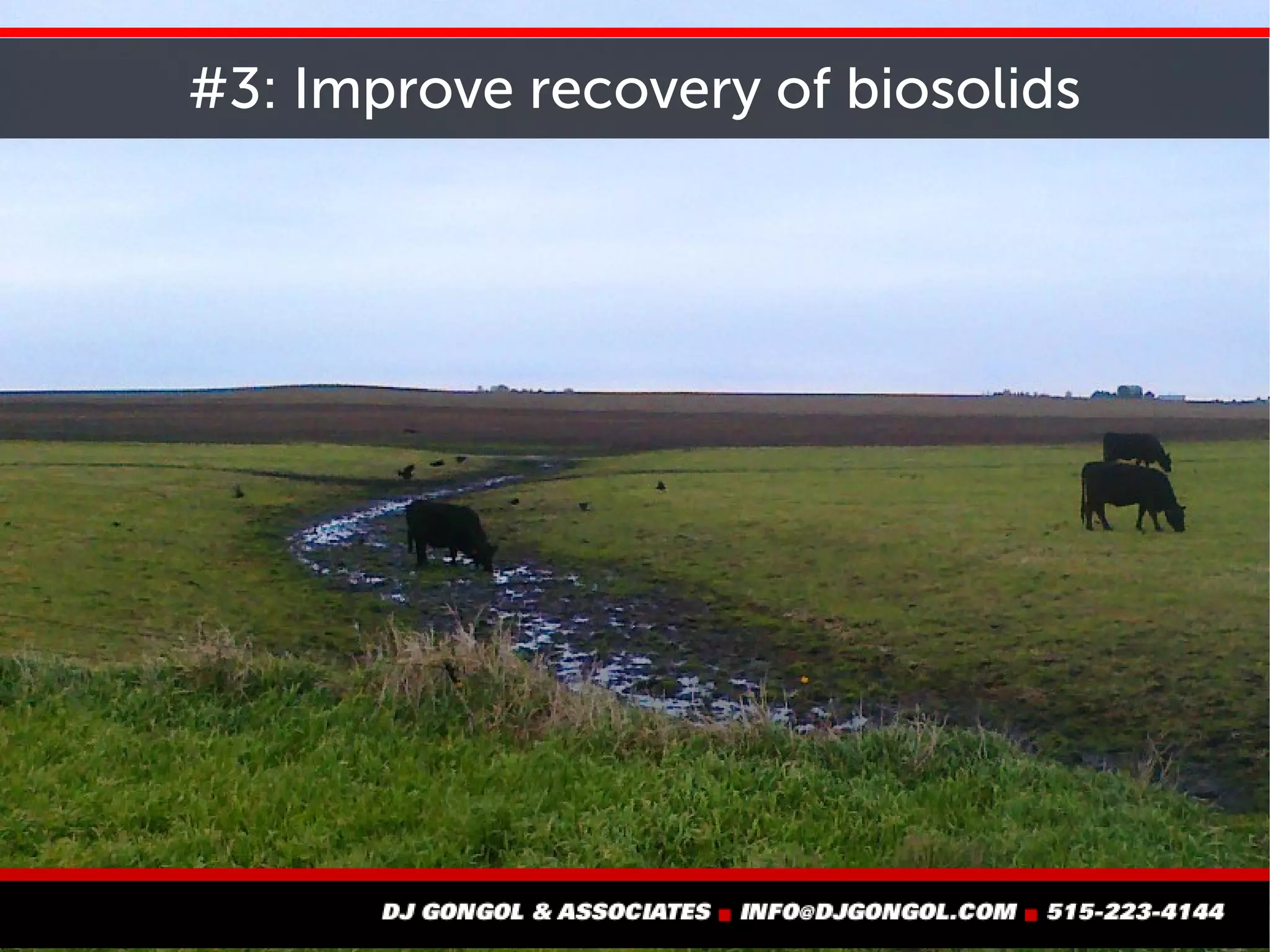
#3: Improve recovery of biosolids
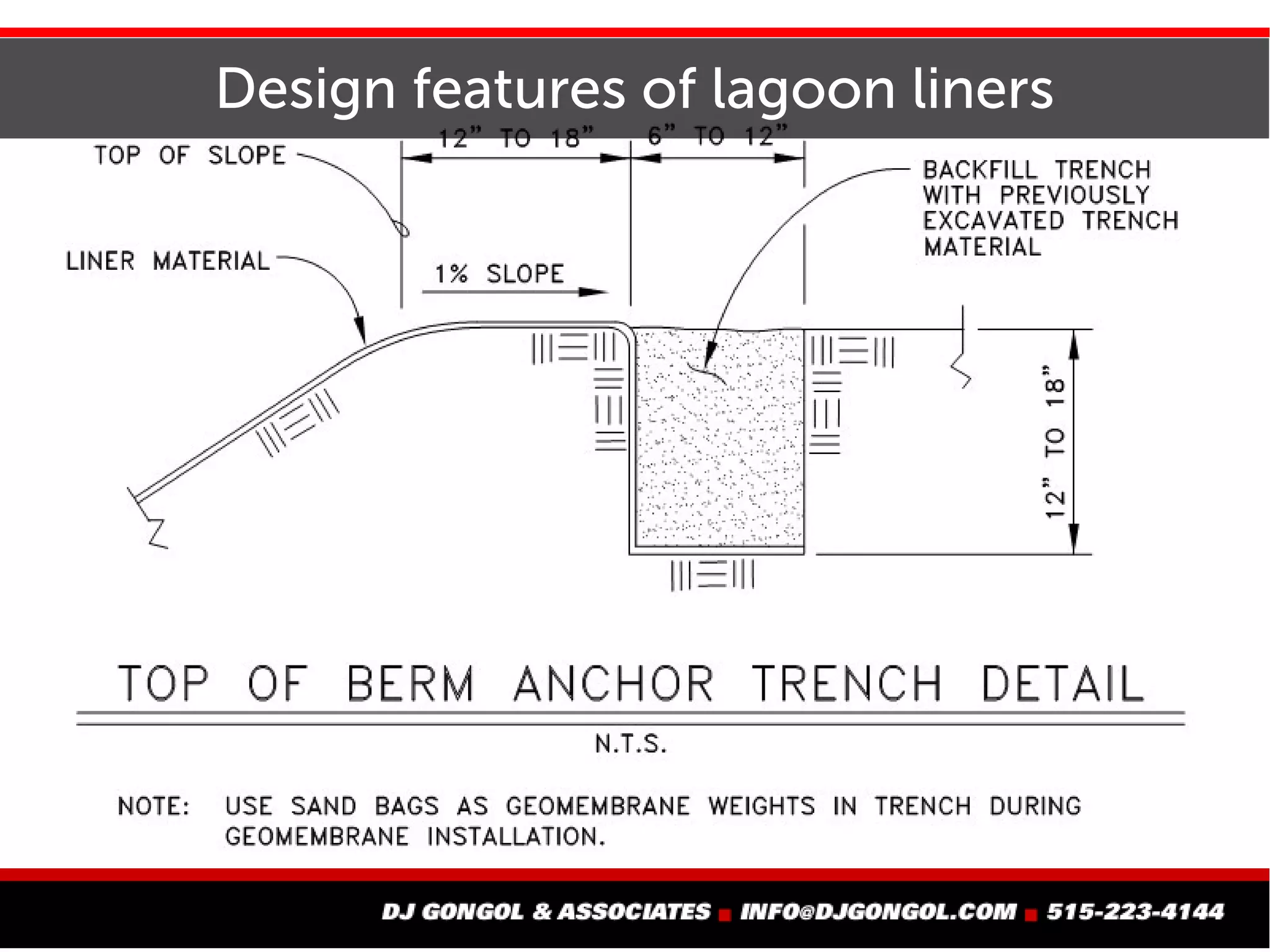
Design features of lagoon liners
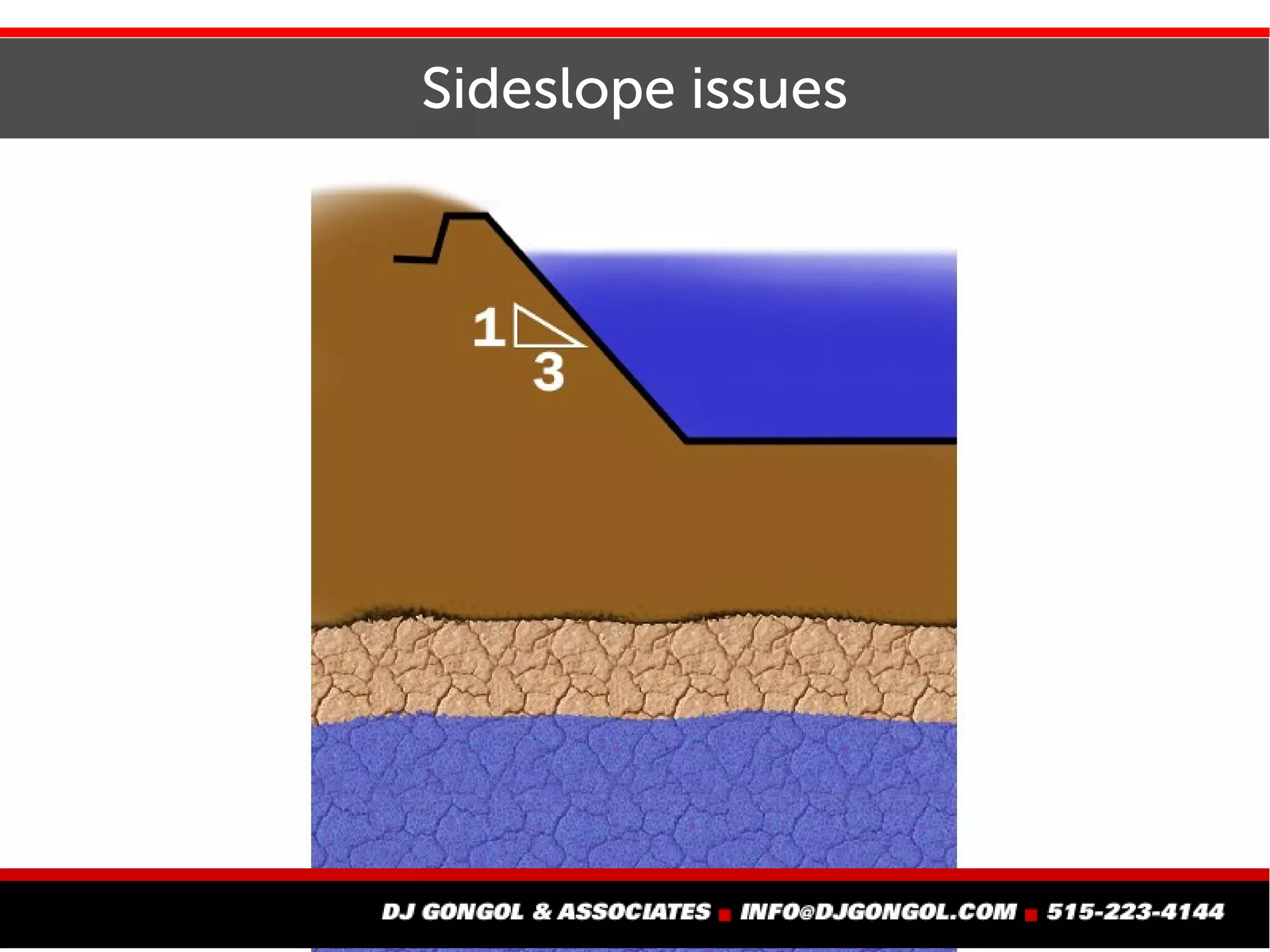
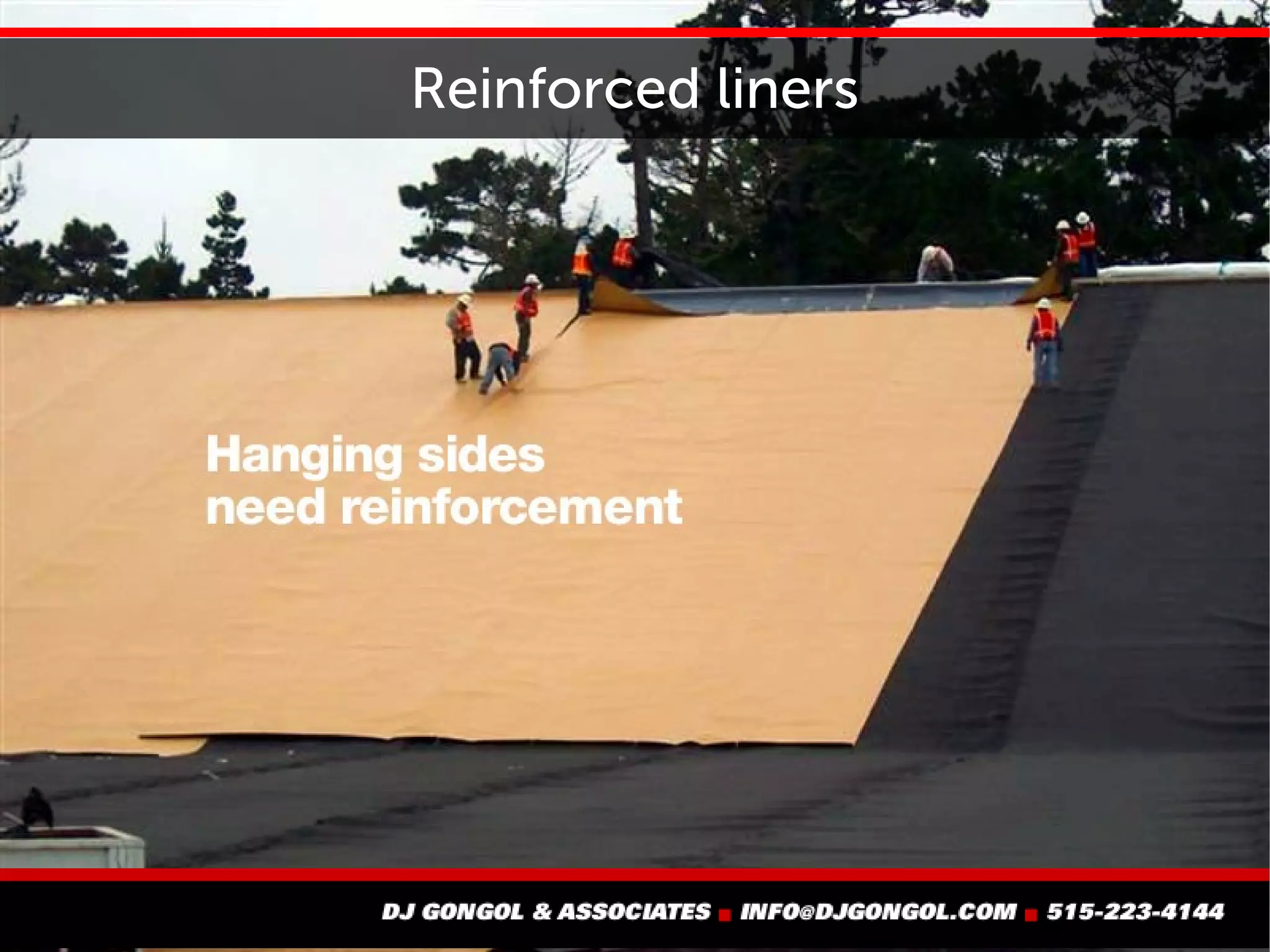
Sideslope issues
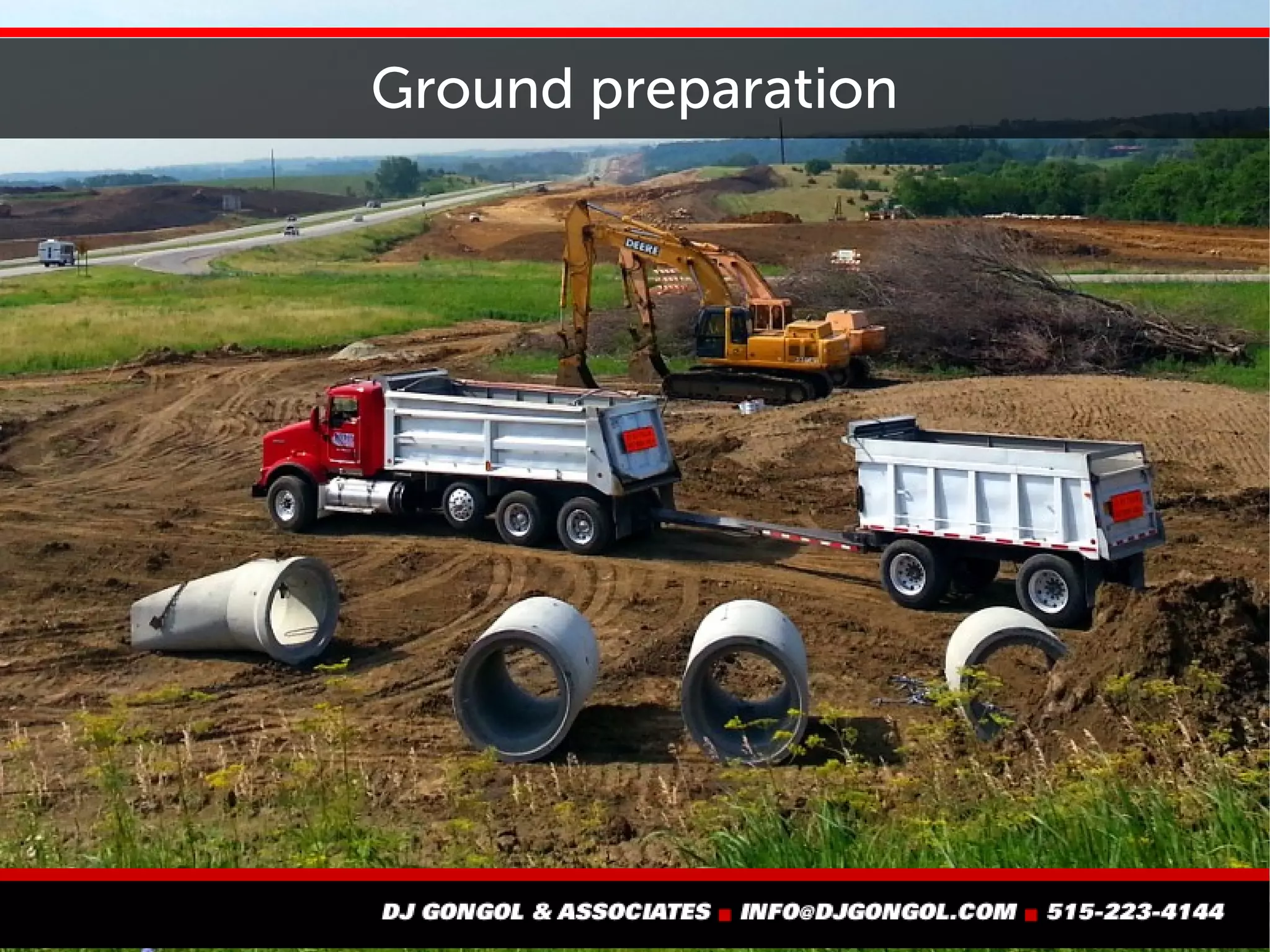
Ground preparation
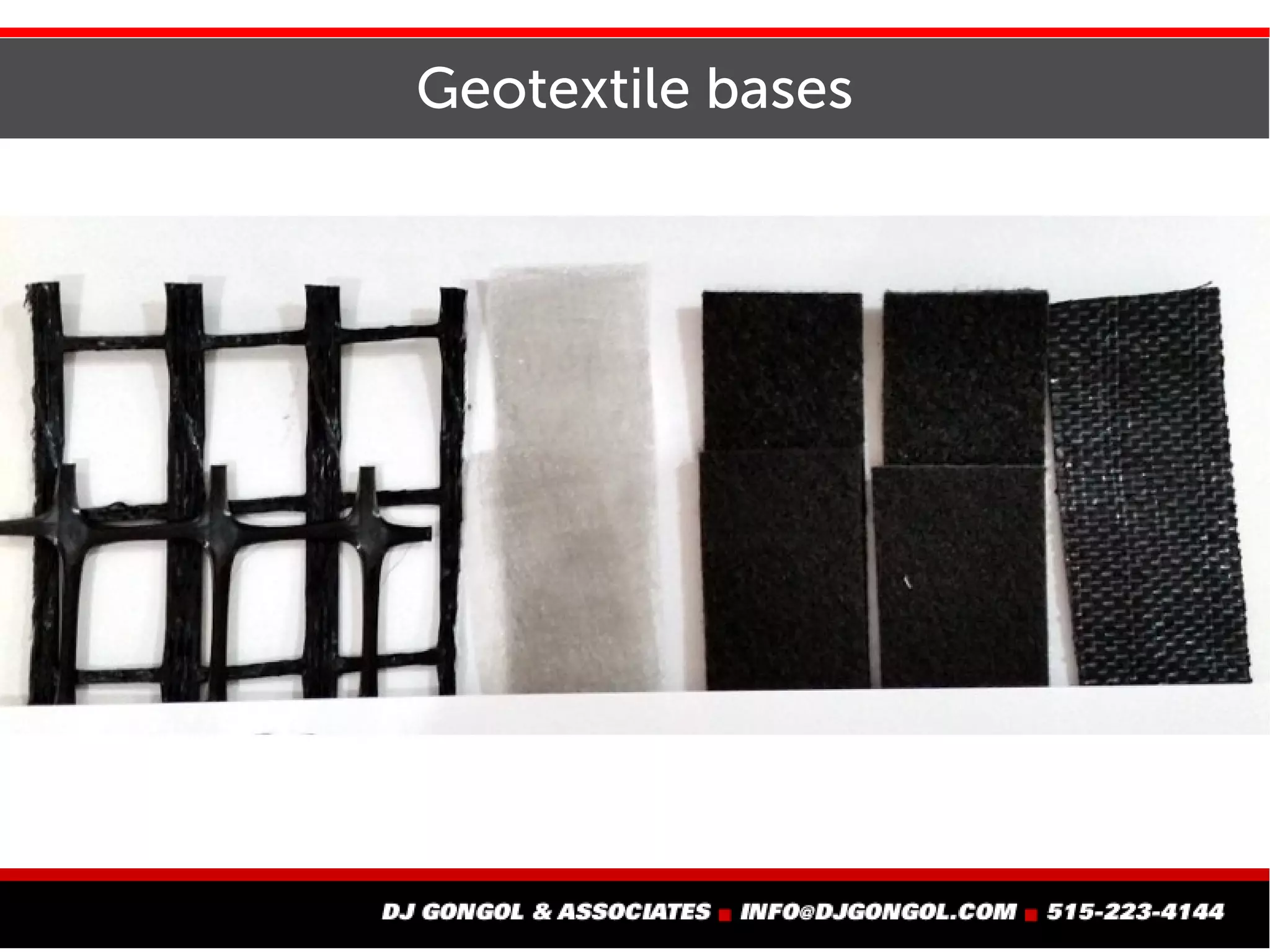
Geotextile bases
Sand bases
Sand is good as a base for the same reason
it's good in sandbags for flood control
Lagoon liner materials and options
How do you keep lagoon water in
and groundwater out?
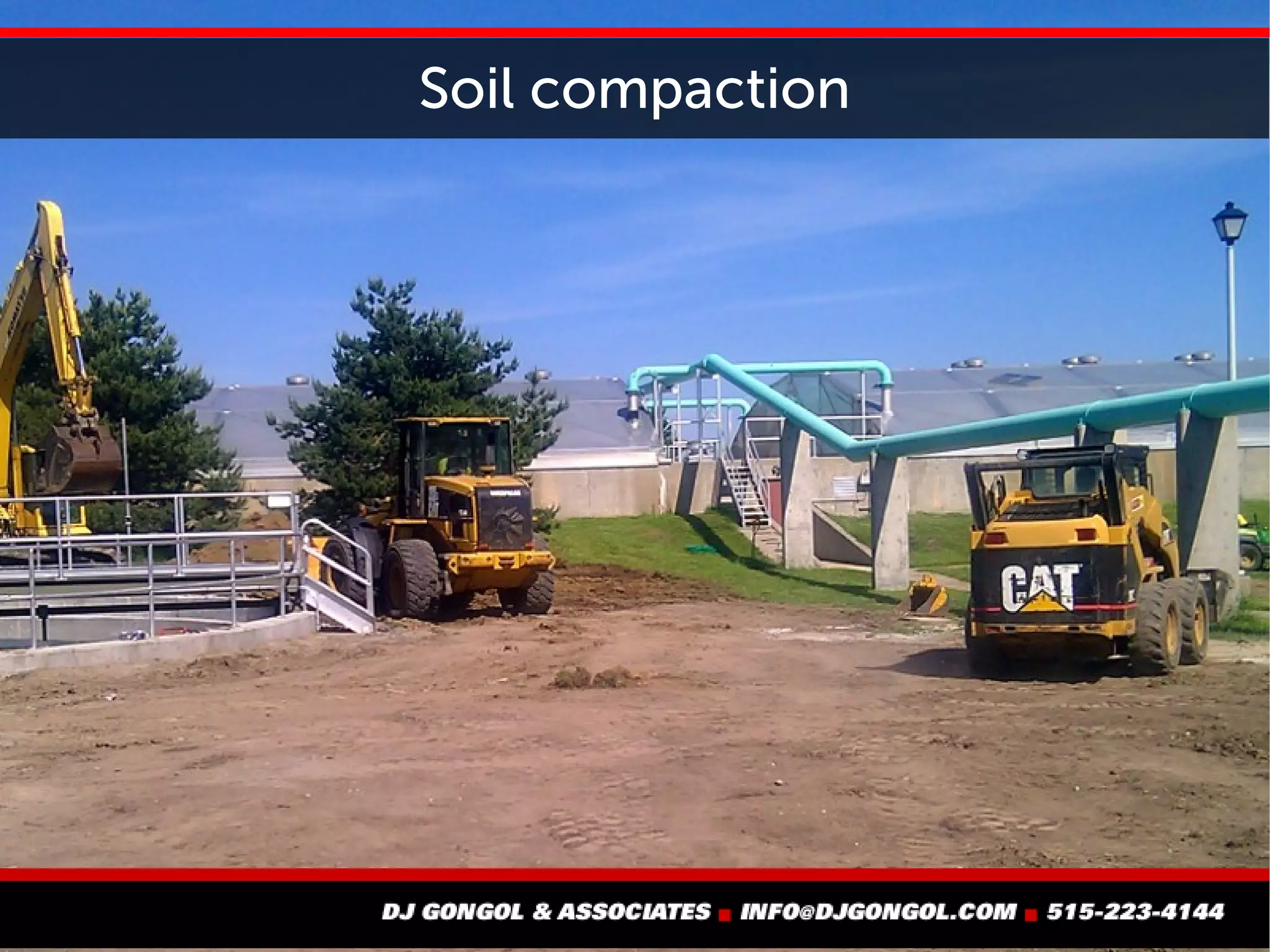
Soil compaction
Bentonite
 18C.7.3.2.: "Where bentonite is used, the minimum seal
thickness shall be four inches."
Alternative additives
 18C.7.3.2.: "Alternate sealing materials such as
membranes, soil cement or asphalt may be used."
 Soda ash
 Soil cement
 Asphalt
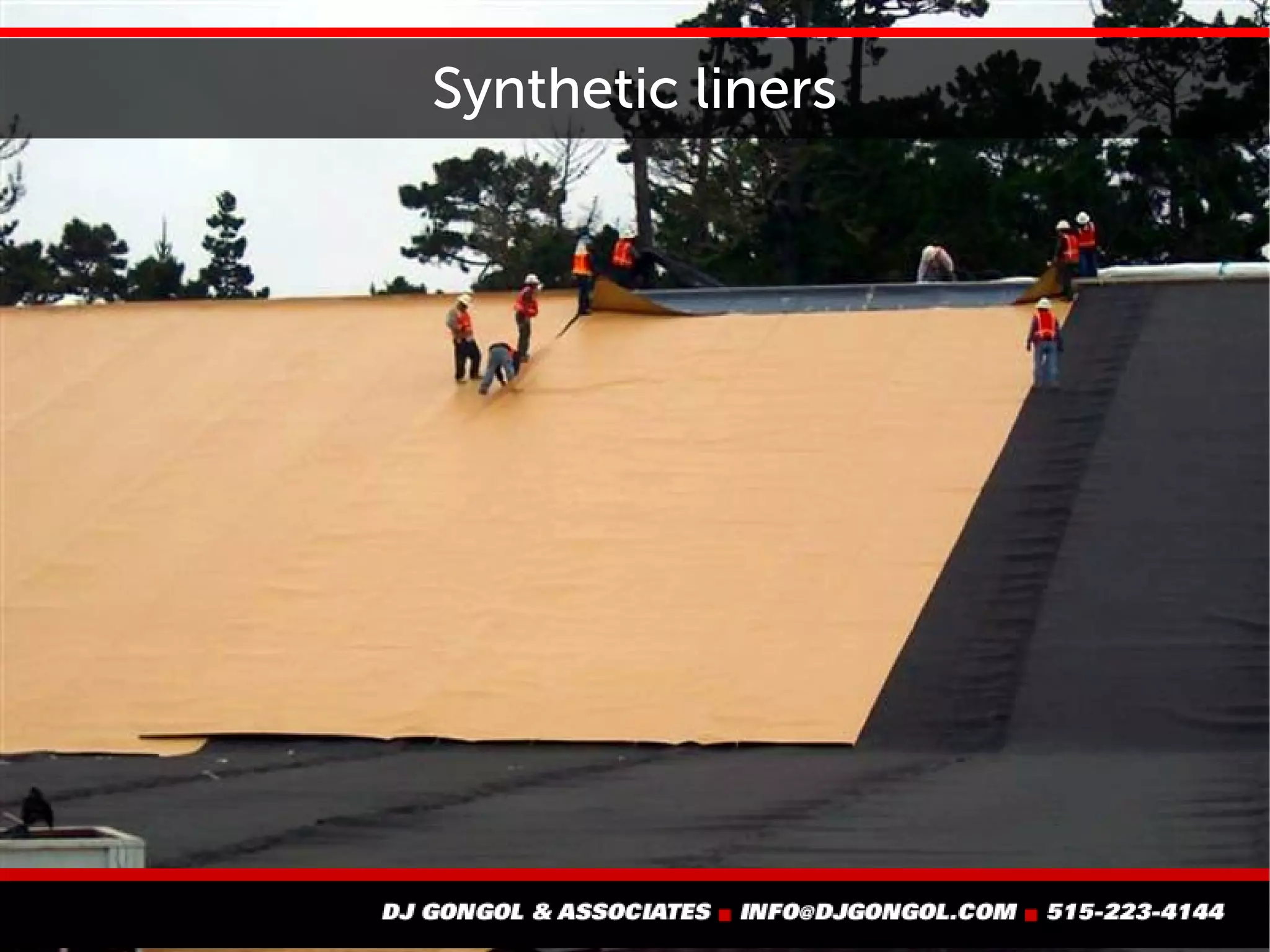
Synthetic liners
Reinforced liners
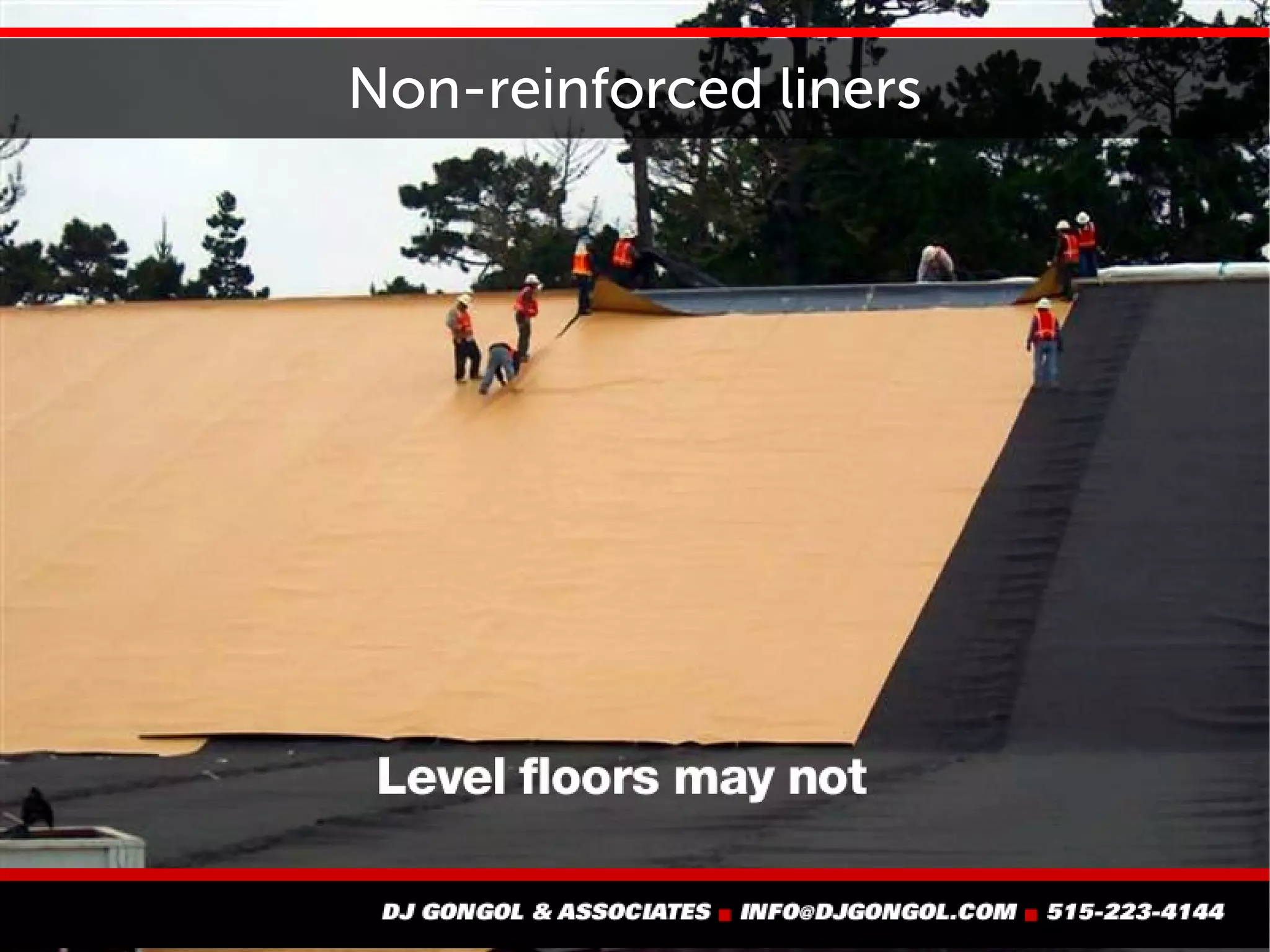
Non-reinforced liners
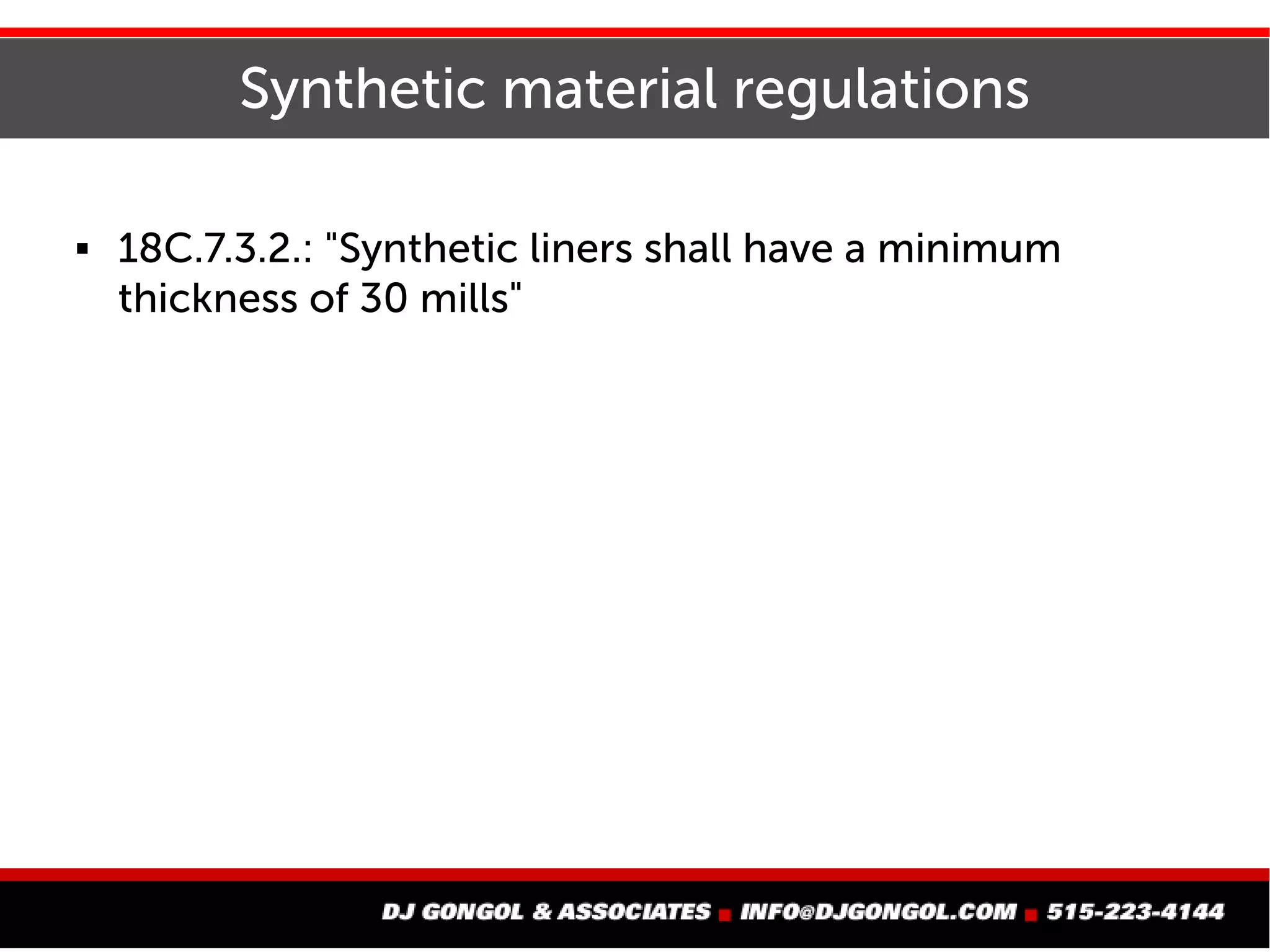
Synthetic material regulations
 18C.7.3.2.: "Synthetic liners shall have a minimum
thickness of 30 mills"
Material choices
Thickness is not a good standard
for making material selections
The walls of an airplane aren't thick
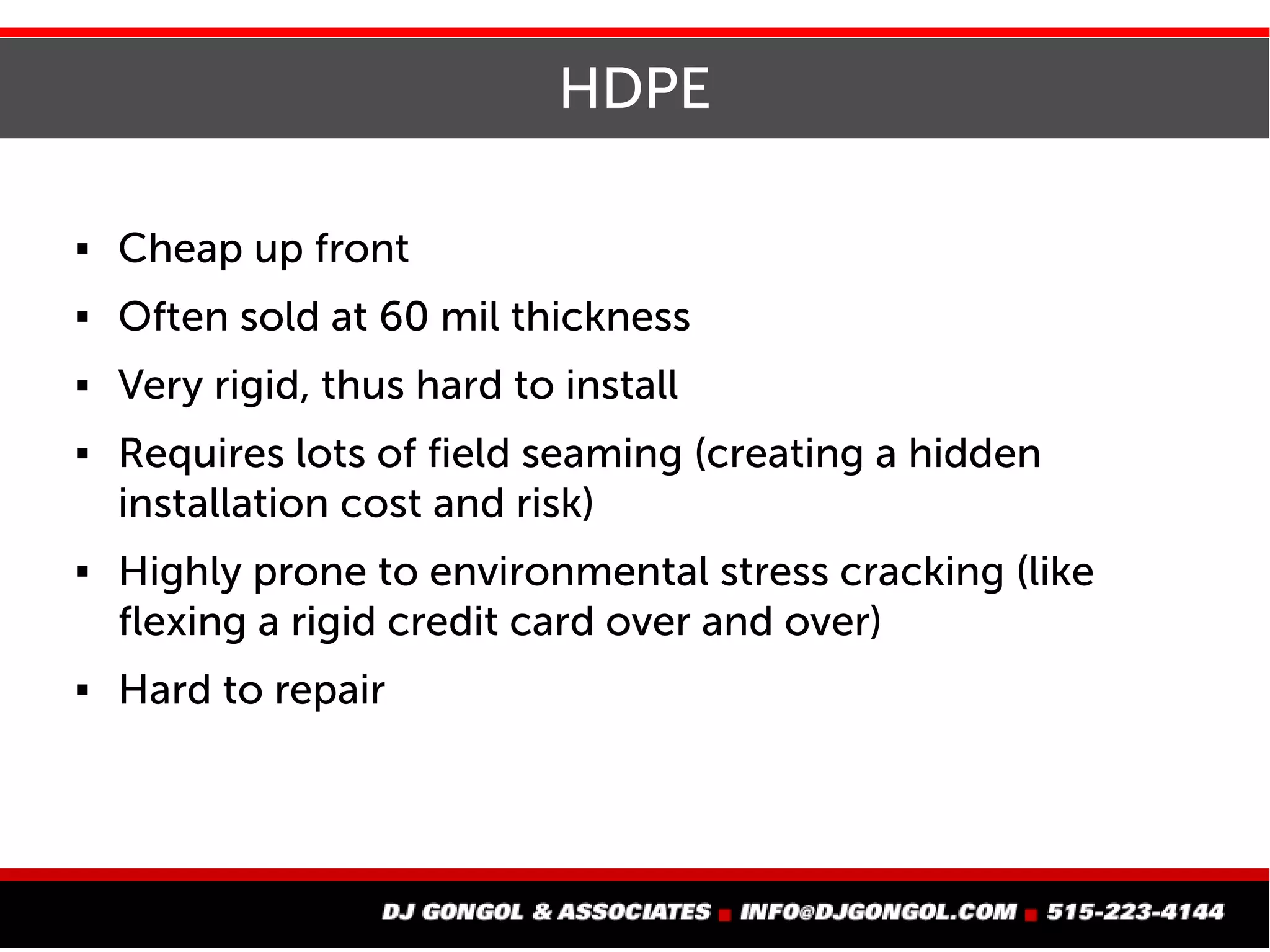
HDPE
 Cheap up front
 Often sold at 60 mil thickness
 Very rigid, thus hard to install
 Requires lots of field seaming (creating a hidden
installation cost and risk)

 Highly prone to environmental stress cracking (like
flexing a rigid credit card over and over)
 Hard to repair
PVC
 Susceptible to UV breakdown
 Must be backfilled for protection
 Similar puncture resistance at 20 mils as 60-mil HDPE
 Can be supplied in large panels
 Large panels reduce field seaming
 Plasticizers may migrate or leach, turning PVC brittle
Polypropylene
 Popular for municipal sewage
 Also very popular in potable water
 Easier to factory-seam than HDPE
 Very flexible
 Excellent dimensional stability
Hypalon
 An old favorite
 Manufacturing discontinued by DuPont
 Repairs become more difficult with age
XR-3/XR-5
 Heavily used for baffle curtains
 UV-stabilized
 XR-5 handles chemicals well
EnviroLiner/LLDPE
 Good when backfilled or UV-stabilized
 Flexible, making large panels possible
 Low surface friction, so texturing is required
 High flexibility means lower dimensional stability
 Factory-fabricated in much larger panels than HDPE
Regulatory design notes
Groundwater protection: Seepage
 18C.7.3.2.: "Ponds shall be sealed such that seepage loss
through the seal is as low as practically possible. The
percolation rate shall not exceed 1/16 inch per day at a
water depth of six feet."
Perhaps a visual instead
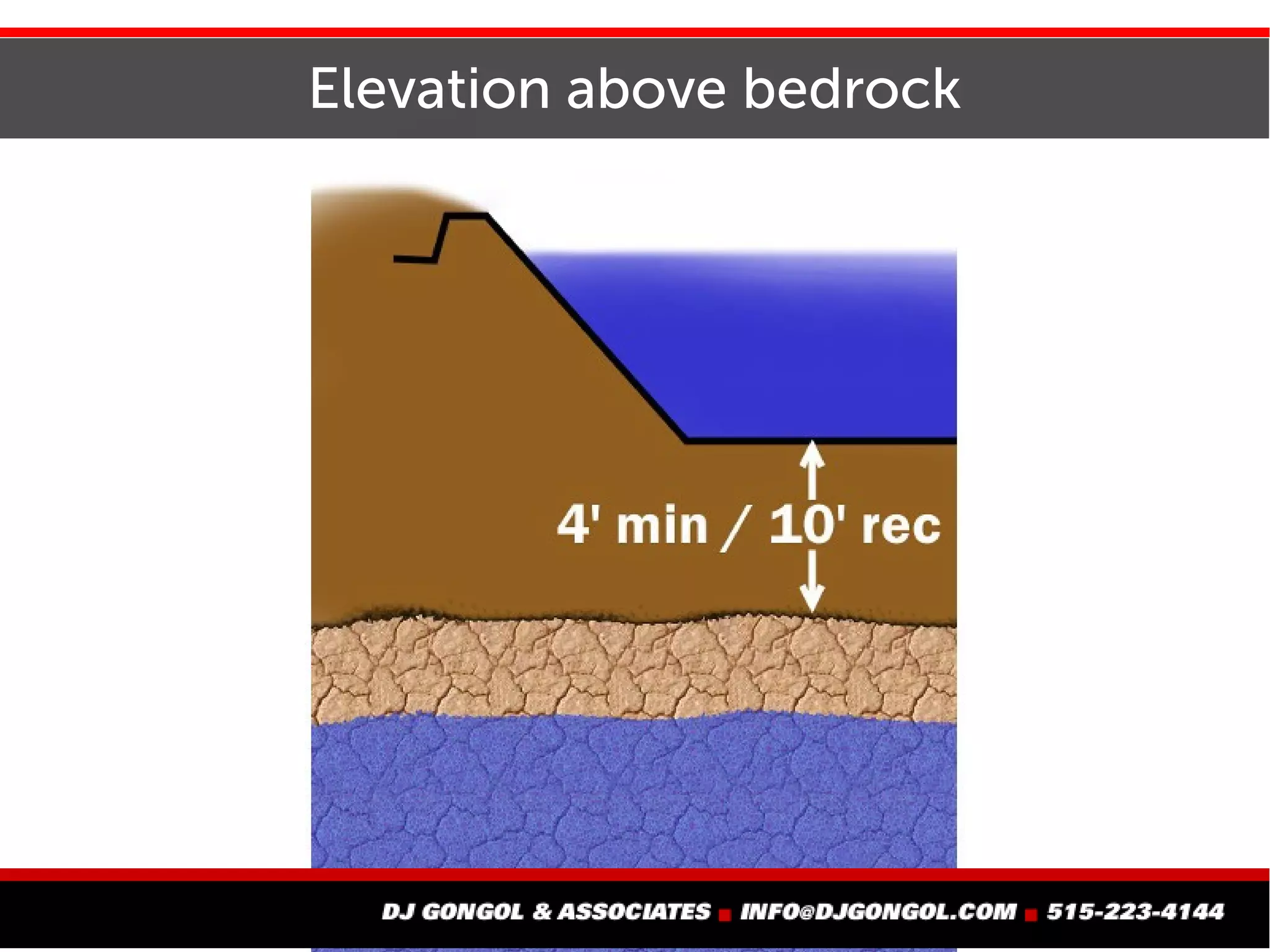
Elevation above bedrock
 18C.3.6.2.: "A separation of ten feet between the pond
bottom and any bedrock formations is recommended
with a minimum separation of four feet required. A
synthetic liner shall be required if the lagoon bottom is
to be located less than ten feet above a carbonate or
sandstone formation."
Elevation above bedrock
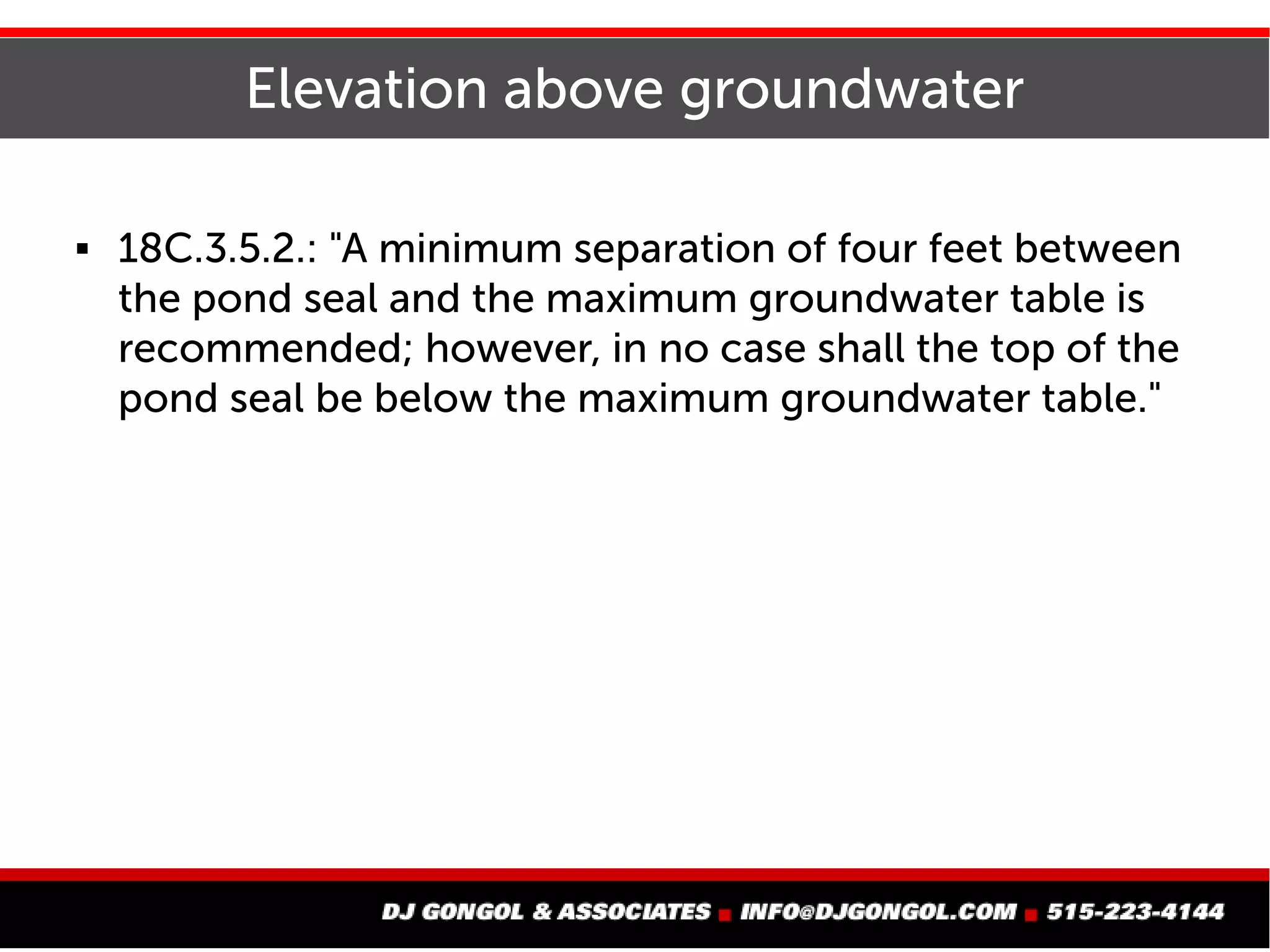
Elevation above groundwater
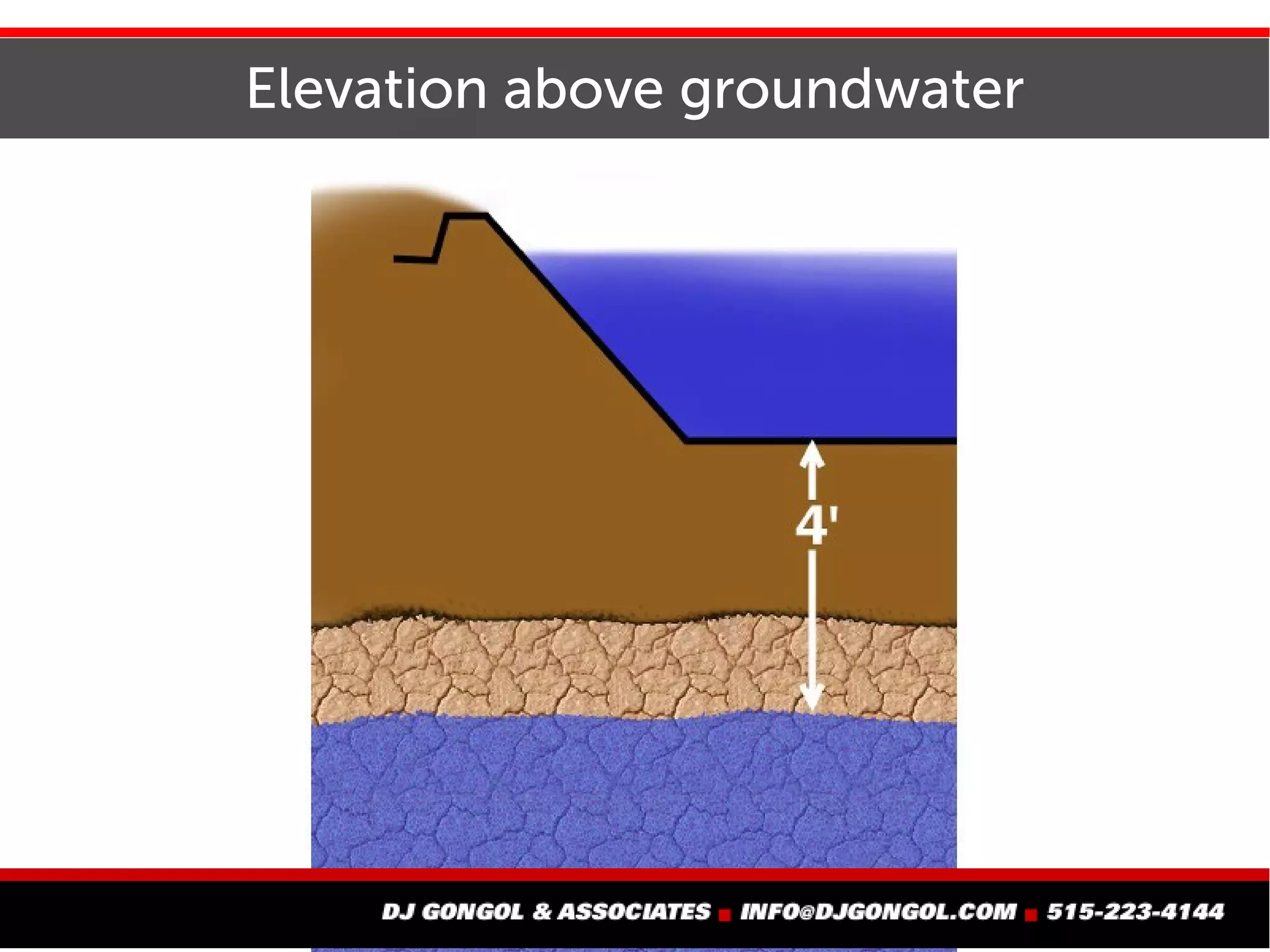
 18C.3.5.2.: "A minimum separation of four feet between
the pond seal and the maximum groundwater table is
recommended; however, in no case shall the top of the
pond seal be below the maximum groundwater table."
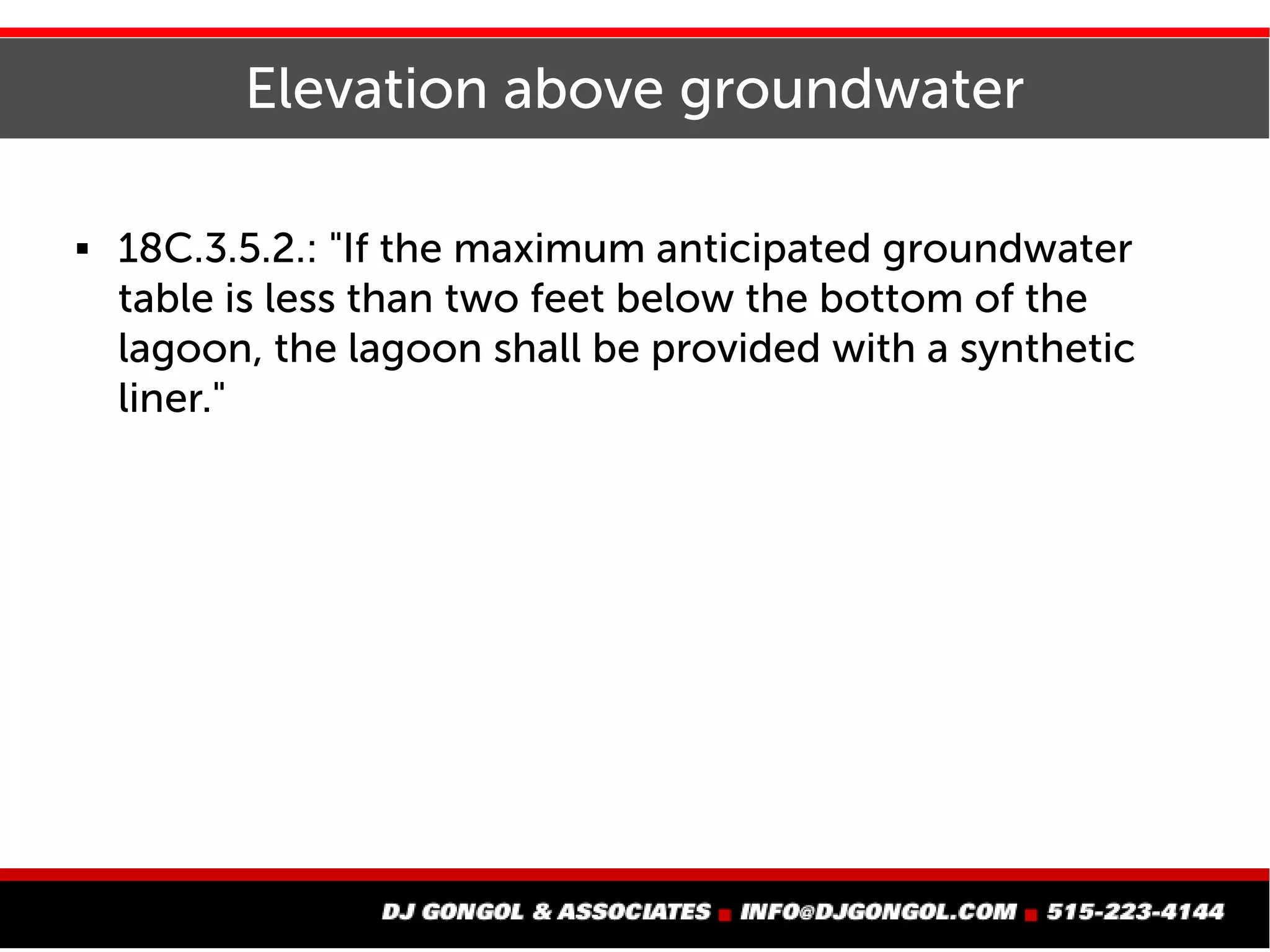
Elevation above groundwater
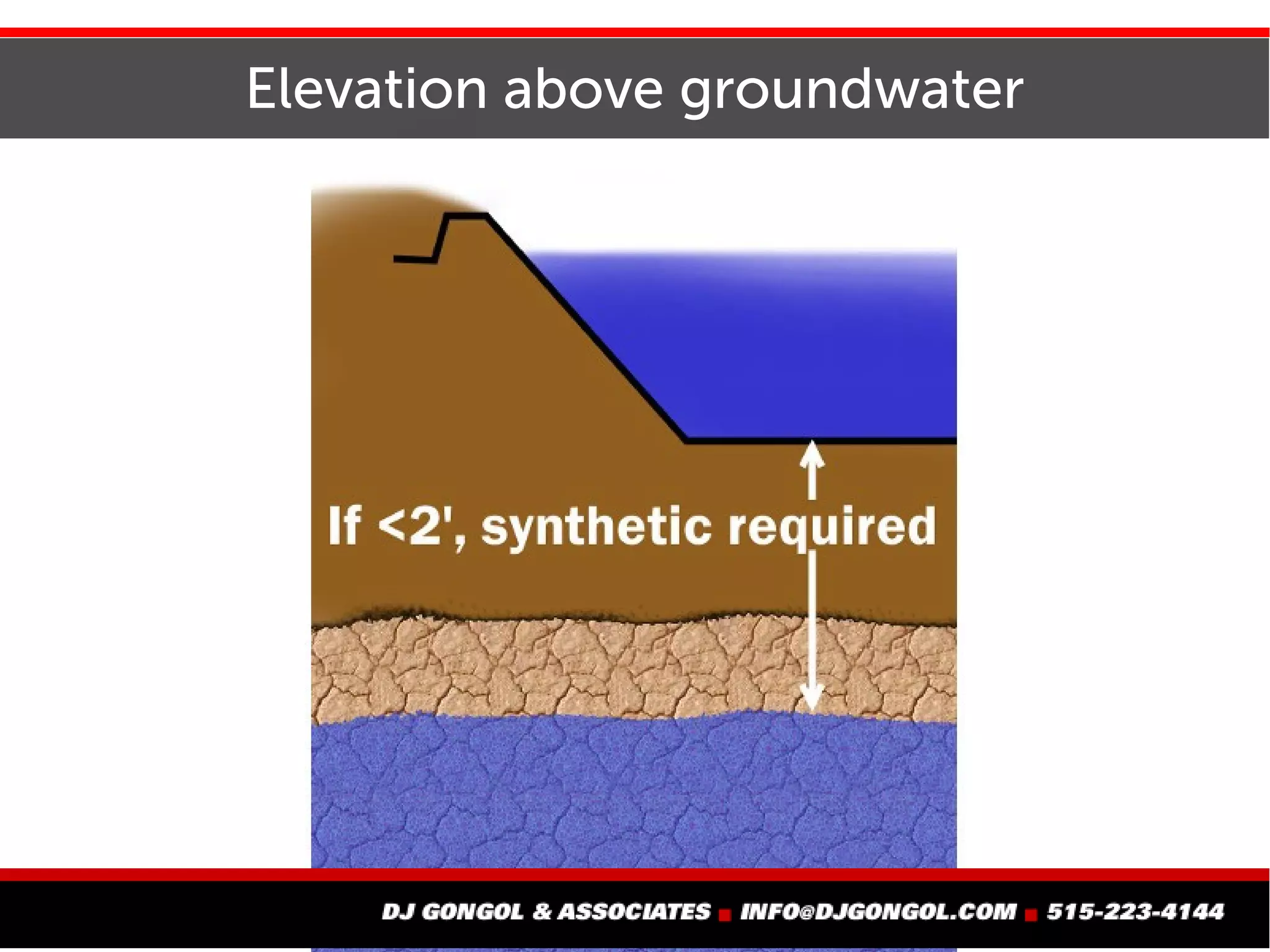
 18C.3.5.2.: "If the maximum anticipated groundwater
table is less than two feet below the bottom of the
lagoon, the lagoon shall be provided with a synthetic
liner."
Elevation above groundwater
Elevation above extraordinary groundwater
 18C.3.5.3.: "Perched groundwater layers shall be
considered as those distinct layers of groundwater of
limited area caused by the blockage of normal seepage
of rainwater/snowmelt/runoff by an impervious soil
layer [...] If the perched groundwater table after
permanent lowering is less than two feet below the
bottom of the lagoon, the lagoon shall be provided with
a synthetic liner."
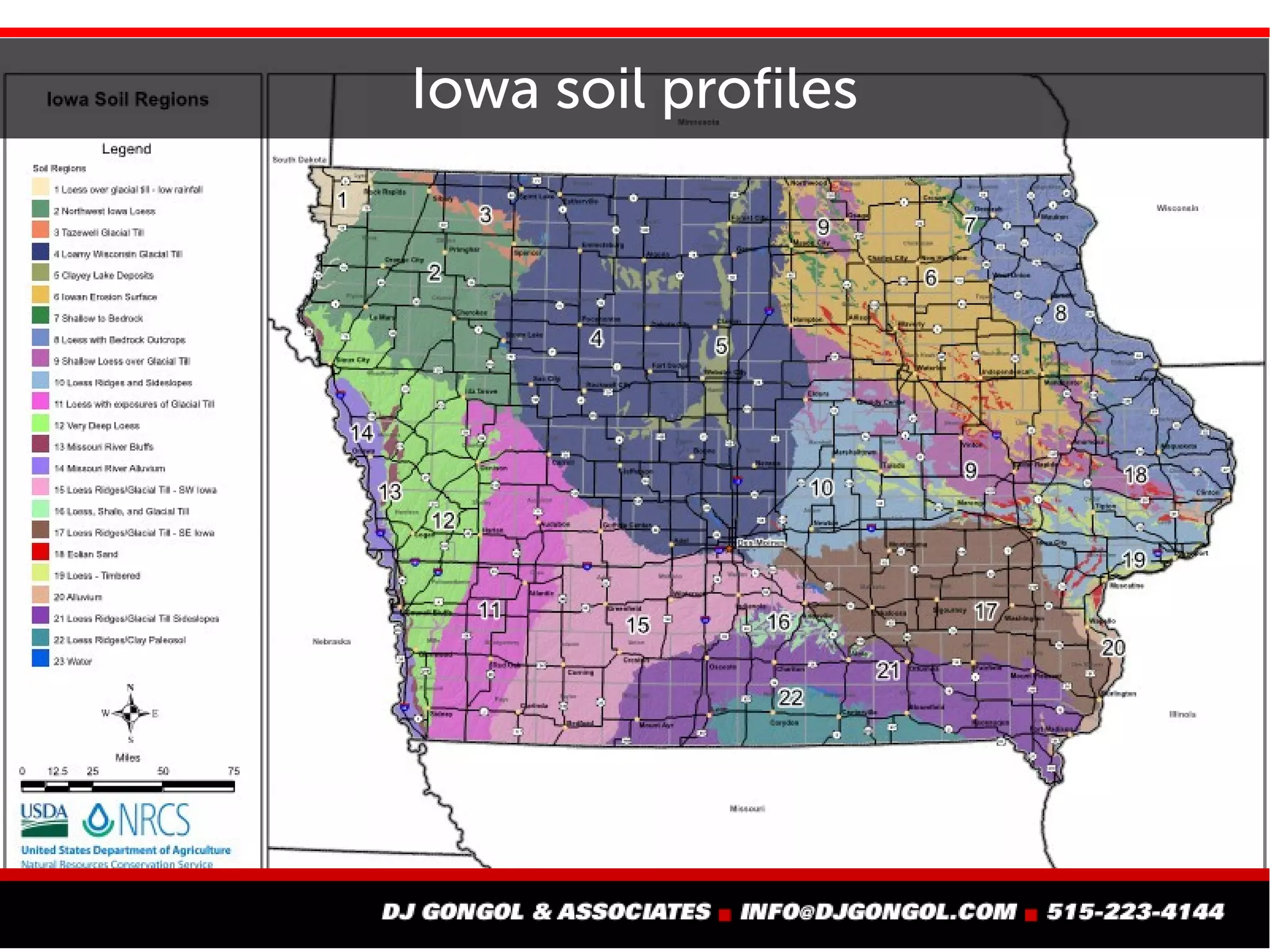
Iowa soil profiles
Fractured limestone
 18C.3.6.1.: "If the facility is located in an area of known
or suspected fractured limestone, all cells must be lined
with a synthetic liner."
Operating depths
Freeboard
Uplift from biogas
Hydrostatic uplift from flooding
Fighting uplift
Vents
Drainage
Geotextiles
Sand layers
 18C.7.3.2.: "If the subgrade is very gravelly and contains
angular rocks that could possibly damage the liner, a
minimum bedding of 3 inches of sand should be
provided directly beneath the liner."
Backfill
Operating levels
Proper excavation
Site preparation
Compaction
Material flexibility
Puncture resistance
Excavation quality
Penetrations
Soil conditions
Liner installation
Site preparation
Lower layers
Panel size
Field seaming
Testing
Uniform bottom excavation
 18C.7.3.4.: "The pond bottom shall be as level as
possible at all points. Finished elevations shall not be
more than +/-3 inches from the average elevation of the
bottom."
Trenching
 18C.3.4.: "Erosion protection shall be provided for all
external stormwater ditches as needed to prevent
erosion of the outer pond embankments."
Lagoon covers
Regulation on prevailing winds
 18C.3.3.: "If practical, the pond should be located so
that prevailing winds will be in the direction of
uninhabited areas"
Circumstances can change
Gas capture
Odor control
Global warming
Lagoon liners and baffle curtains

Lagoon liners and baffle curtains