Diseases of Laboratory Rats
and Control Measures
Submitted to: Submitted by:
Dr.Rajanna, Plavan Majunder,
Professor,Dept.of LPM. RVM/2017-44.
CVSc,Rajendranagar.
Introduction
Laboratory Rat is used as a animal modal in studies of nutritional
behavioural ,toxicity and cancer studies.
Disease:Any condition that impairs the normal functioning of the body
which is typically manifested by distinguishing signs and symptoms.
Objective to learn about this is to acquaint basic knowledge of the
variety of infectious agents that may infect rats and to ensures a quick
and appropriate response to control the disease out break in colonies.
General preventive and control measures of Diseases
• Laboratory rodents that are disease- and pathogen-free , Procuring
such animals from high-quality sources, transporting them in filtered
shipping containers, and maintaining them in facilities with both
physical and procedural barriers to the introduction of infectious
agents are effective measures to prevent disease within a colony that
may confound or ruin experiments.
• Static microisolation (filter top) cages and more advanced individually
ventilated caging systems have been used widely for rodent housing
to impede cage-to-cage transmission of infectious agents.
• Temperature should be maintained at 68°–79°F (20°–26°C) , Relative
humidity should be maintained at 30%–70% , Ventilation rates should
be 10–15 fresh air changes/hr.
• Provision of autoclaved or irradiated diets, Highly purified, deionized,
acidified, chlorinated, or sterile water.
Sanitation of enclosures:
• Heating cages and other equipment to 180°F (82.2°C) or using
appropriate chemical disinfection (eg, hypochlorite solutions) kills
nonspore-forming pathogenic bacteria and viruses.
• All caging and other equipment should be rinsed thoroughly after
treatment with detergents or disinfectants.
• Bedding material should be disposed by incineration.
Quarantine :
• Quarantine is required for all rodents coming from non_commercial
sources. The quarantine process takes at least 6 weeks and it may be
8 or more weeks before all test results have been received.
Rat Diseases
1)Bacterial and Mycoplasmal diseases
2)Fungal/Mycotic Diseases
3)Viral Diseases
4)Parasitic Diseases
5)Neoplasia
6)Miscellanious conditions
Bacterial and Mycoplasmal Diseases
Murine Respiratory Mycoplasmosis(MRM)
• Cased by Mycoplasma pulmonis
• Associated with other viruses (sendai,sialodacryoadenitis),bacteria(cilia-
associated respiratory bacillus,Streptococcus pneumonia,Borditella
bronchiseptica) causes chronic respiratory disease syndrome.
• It also associated with infections of genital tract,aural infections.
• Transmission by direct contact ,intrauterine,sexual and aerosol.
• Predisposing factors are high levels of ammonia,stress.
• Serous or catarrhal nasal and ocular discharges,laboured
breathing,snuffing,weight loss,hunched position,rough hair coat,head tilt
due to otitis interna
• Purulent endometritis,salphingitis,still births,low birth weight,fetal
resorption.
Diagnosis and treatment
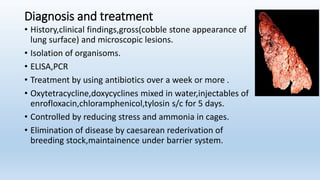
• History,clinical findings,gross(cobble stone appearance of
lung surface) and microscopic lesions.
• Isolation of organisoms.
• ELISA,PCR
• Treatment by using antibiotics over a week or more .
• Oxytetracycline,doxycyclines mixed in water,injectables of
enrofloxacin,chloramphenicol,tylosin s/c for 5 days.
• Controlled by reducing stress and ammonia in cages.
• Elimination of disease by caesarean rederivation of
breeding stock,maintainence under barrier system.
Streptococcus pneumoniae
• Causes respiratory disease In young rats.
• Normal inhabitant of upper respiratory tract due to stress out break
of diseases occur,
• Depression,serosanguinous to mucopurulent nasal
discharges,snuffing respiratory sounds,dyspnea,ruffled fur,ocular
discharge.
• Gross lesions include sero/fibrino purulent pleuritis,epicarditis,
pericarditis,peritonitis,meningitis,metritis,otitis,bronchopneumonia.
• Treatment by pencillins,oxytetracyclines,gentamycin,chloramphenicol.
• Similar infection caused by CAR bacillus and Pasteurella
pneumotropica.
Tyzzer’s Disease
• Clostridium piliforme.
• In adults the disease is subclinical and in weanlings it is clinical.
• Transmission by fecal - oral spread of spores which are highly resistant
in the environment.
• Clinical signs are diarrhea,dehydration,anorexia.may died without
signs of illness.
• Gross lesions include miliary,pale foci through out the liver.
• Megaloileitis(enlarged and reddened lower intestinal tract)
• Pale circumscribed areas or streaks over heart.
• Tetra and Oxytetracyclines are used for treatment.
Staphylococosis
• Staphylo cocus aureus
• Causes ulcerative dermatitis and pododermatitis.
• Trimming of toe nails to avoid self mutilation,good sanitation procedures to
prevent spread of disease.
• Usage of parenteral and topical antibiotics,
Korynebacterium kutscheri(pseudo tuberculosis)
• Gram positive rods find in sub mandibular lymph nodes,oropharynx,nasopharynx,middle
ear,preputial glands.
• In stressfull situation elicit subacute respiratory disease with abscess in lungs,also find in
liver,kidney,skin and joints.in chronic cases abscess contents in lungs become caseous
,hence called as pseudo tuberculosis.
• Diagnosis by isolation of organism from submandibular lymph node,serological tests,
possitive ELISA.
• Treatment by amphicillin,chloramphenicol and tetracyclines.
Pseudomonas aeruginosa:
• A gram negative bacillus non pathogenic commensal oraganism.
• Experimental manipulation like radiation where immune compramisation occur may causes
septicaemia ,
• Prevention by chlorination of drinking water(10-13ppm) or acidification of water,
• To remove this organism from colony rederivation through cesarian section or embryo
transfer may be useful.
Salmonella:
Infection exist in subclinical form may cause acute disease with high mortality,
Zoonotic disease potential ,asymptomatic carrier and shed the organism in faeces,
Streptobacillus moniliformis:
Zoonotic importance(Ratbite fever)
A commensal low pathogenic present in nasopharynx of rats can produce disease in mice and
guniea pigs and humans.
Mycotic Diseases
Pneumocystis carinii:
• Single celled air borne fungal pathogen causes most common disease in
laboratory rats, causes progressive pneumonia in immunodefecient rats and
interstitial pneumonia in immunocompetent rats.
• Diagnosis of diseased immunodefecient rat is usually through necropsy and
histological examination of lung tissue using silver stain to demonstrate the
presence of organism.
• Immunocompetent animals are routinely screened by serology or PCR.
• Treatment to suppress disease severity in immunocompramised rats by using
sulpha trimethoprim.
• Infected animal should be rederived through embryotransfer or hysterectomy.
Dermatophytosis:
• Ring worm in rats caused by Trichophyton mentaggrophytes
• Zoonotic
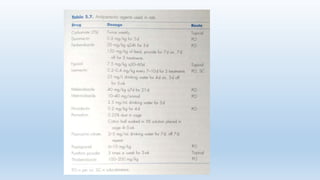
Antimicrobial and Antifungal agents used in Rats
Viral Diseases:
Corona Viruses:
• Two prototype of viruses 1) sialodacryoadenitis virus(SDAV)
2) Rat corono virus (RCV)
• These viruses are common in both pet and conventionally housed rat populations but un
common in barrier - maintained colonies.
• Highly contagious and cause inflammation of salivary and lacrimal glands.
• Transmission is by aerosol,contact,fomities or administration of contaminated biological.
• Clinical signs are eye squinting ,swelling of ventral cervical region and jaw,protrusion of eye.
• Rats infected with SDAV may exhibit a porphyrin oculonasal discharge ,palapable enlarged
submandibular salivary gland due to sialoadenitis,dacryoadenitis may cause exophthalmos
lead to keratitis.
• Keratoconjunctivitis is the only sign in outbreaks.
• Lesions include enlarged salivary glands,edematous cervical lymph nodes,swollen lacrimal
glands ,yellow grey foci in harderian glands(Brown red mottling of harderian gland is normal
due to porphyrin production).
• Disease spread very rapidly in susceptible colonies with low mortality.
• Diagnosis is by serology and PCR of tissues of acutely infected.
• Treatment by using topical ophthalmic ointments for corneal ulcers.
• Control of infection by depopulation or rederivation in immunocompramised
colonies.
Parvo viruses:
• They are single stranded DNA viruses.
• In rats multiple species of parvo viruses include Rat virus(RV or Kilham rat
virus),H-1(Toolan’s H-1 virus),Rat minute virus(RMV la,lb and lc) and Rat parvo
virus 1(RPV-1a).
• Only RV causes clinical disease in rats,others are antigenically distinct from
RV,and not been associated with naturally occurring disease .
• RMVs and RPV-1 cause subclinical,persistent infections in rats.
• Disease transmission primarily by direct contact or contact with fomities.
• Clinical signs in newly infected breeding colonies include decreased fertility,fetal
resorption,small litters and ranting of pups.
• RV infection in juvenile and young adult male rats resulted in lethal disease from
haemorrhage and necrosis of brain and gonads.
• RV infects actively replicating cells and causes cytolysis.
• Diagnosis by PCR,ELISA ,IFA.
• Lesions include cerebellar hypoplasia,hemorrhagic infarction,thrombosis of
multiple organ systems,focal necrosis,hypertrophy,and vacuolar degeneration of
hepatocytes.
Respiratory viruses(Sendai virus and PVM):
• Sendai virus is an RNA Paramixovirus of parainfluenza type 1 group and
Pneumonia virus of mice(PVM) is an RNA Paramixovirus of the pneumovirus
group.
• Primary route of infection is by direct contact with infected animal during first
two weeks of infection when virus is shed.
• Disease is usually enzootic in colonies in which susceptible animals are regularly
introduced.
• Incidence of disease in research colonies is rare for sendai virus and low for PVM.
• Sendai virus is immunosuppressive and concomitant respiratory infections with
other respiratory pathogens may occur.
Infectious diarrhea of infant rats(IDIR):
• Also known as rat Rota virus,is a group B rotavirus causes disease in suckling
rats of less than 2 wks age charecterized by presence of soft yellow faeces or
occumulation of dried faeces or haemorrhage around the anus.
• Pathology finding includes small intestinal villus atrophy and syncytial cells.
• No treatment other than supportive care.
• Prevention and control of virus by depopulation or rederivation.
Miscellanious viral infections:
Hanta virus have been recognized in wild rats.
Cyto megalovirus,adenoviruses.
Parasitic diseases:
Pinworms: Syphacia muris,S.obvelata,Aspiculuris tetraptera.
• They donot cause clinical infection but have been shown to alter hematologic
values,immunological responses,reduced weight gain and growth rates in
young ones.
• Treatment by Ivermectin,fenbendazole and piperazine.
• Prevention and control by decontamination with dry heat or ethylene oxide
gas,fumigation by hydrogen peroxide and chlorine dioxide to eliminate eggs.
Tapeworms: Rodentolepis nana(dwarf tapeworm),Hymenolepis diminuta.
• They are pathogenic only in heavy infestations.
• R.nana has zoonotic importance.
• Treatment by praziquantel and thiabendazole.
• Prevention by strict sanitary practices and elimination of vectors .
External parasites:
Mites: Radfordia ensifera(Furmite),Notoedres muris(burrowing mange
mite),Ornithonyssus bacoti(blood suckling mite).
• O.bacoti can transmit multiple serious diseases to humans (Q
fever,plague,Hanta virus and western equine encephalitis).
Lices: Polyplax spinulosa a blood suckling lice seen in wild rats,causes
irritation,anemia,debilitation.
• Transmitt mycoplasma hemomuris.
• External parasites treated and controlled by Ivermectin and permethrin
dust to animals and bedding.
Neoplasia:
• Mammary tumours
• Testicular tumours
• Keratocanthoma
• Large granular lymphocytic leukemia
• Pituitary Adenomas
• Zymbal’s gland tumours
Mammary tumors:
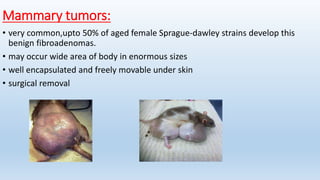
• very common,upto 50% of aged female Sprague-dawley strains develop this
benign fibroadenomas.
• may occur wide area of body in enormous sizes
• well encapsulated and freely movable under skin
• surgical removal
Testicular Tumours:
• Interstitial cell tumour of testes
• 80% incidences are in F344 rats used in toxicological studies
• 11% in wistars
• Tumours are yellow brown with areas of haemorrhage,unilateral or
bilateral
Keratoacanthoma:
• Benign tumour of skin may occur any where on the skin
• Appears as proliferations of keratin growths with crater like centres
Large grandular lymphocytic leukemia:
• This is major cause of death 10-16% in aging F344 rats
• Leucocytosis upto 180000 per microliter occur
• Weight loss ,anemia,jaundice,depression
• Gross lesions marked splenomegaly with moderate hepatomegaly and
lymphoadenopathy
• Histologically diffuse infiltration of large malignant lymphocytes
throughout many organs
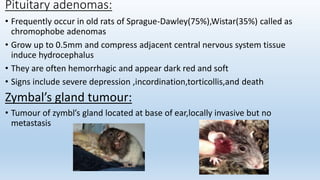
Pituitary adenomas:
• Frequently occur in old rats of Sprague-Dawley(75%),Wistar(35%) called as
chromophobe adenomas
• Grow up to 0.5mm and compress adjacent central nervous system tissue
induce hydrocephalus
• They are often hemorrhagic and appear dark red and soft
• Signs include severe depression ,incordination,torticollis,and death
Zymbal’s gland tumour:
• Tumour of zymbl’s gland located at base of ear,locally invasive but no
metastasis
Miscellaneous conditions
Chronic progressive glomerulonephropathy(CPN):
• In aged and long-term rat studies it is most common cause of death
• High incidence in Sprague-dawley,F344 and low incidence in wistar and
long- evans
• Higher incidences in male and less in females
• Incidence more in ad libitum fed rats
Chronic myocardial disease:
• High incidences are seen in Sprague-dawley strains
• Grossly heart is enlarged
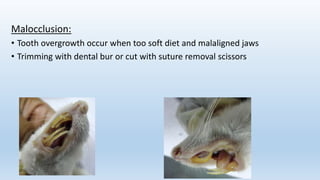
Malocclusion:
• Tooth overgrowth occur when too soft diet and malaligned jaws
• Trimming with dental bur or cut with suture removal scissors
Poly arteritis Nodosa:
• Immunologically mediated response
• Chronic degenerative disease of aging Sprague-dawley and Spontanious
hypersensitive rats(SHRs)
• Gross findings include segmental thickening and marked tortuosity of
medium sized arteries of the mesentry,testes and pancrease and
pancreatico duodenal artery.
Spontaneous radiculoneuropathy:
• Spontaneous ageing diseases of rats that involves degeneration of spinal
roots and concurrent atrophy of lumbar skeletal muscles and hind limbs
exhibits posterior paresis and weakness.
Ring tail:
• Syndrome caused by housing with low ambient relative humidity(less than 20%)
in winter season
• Mainly seen in suckling or pre weaned rats
• Ring tail appears as one or more annular constrictions of the tail
• Prevented by solid-bottomed cages with adequate bedding and 50% relative
humidity
References:
• Text Book of Clinical Laboratory Animal Medicine.
- Karen Hrapkiewicz, Lesley Colby, Patricia Denison.
• Internet.
www.cldavis.org/cgi-bin/download.cgi?pid=952
https://www.researchgate.net/.../252031596_DISEASES_OF_LABORAT
ORY_RATS
https://www.merckvetmanual.com › Exotic and Laboratory Animals ›
Rodents
laboratory Rat diseases &control measures

laboratory Rat diseases &control measures

  • 1.
    Diseases of LaboratoryRats and Control Measures Submitted to: Submitted by: Dr.Rajanna, Plavan Majunder, Professor,Dept.of LPM. RVM/2017-44. CVSc,Rajendranagar.
  • 2.
    Introduction Laboratory Rat isused as a animal modal in studies of nutritional behavioural ,toxicity and cancer studies. Disease:Any condition that impairs the normal functioning of the body which is typically manifested by distinguishing signs and symptoms. Objective to learn about this is to acquaint basic knowledge of the variety of infectious agents that may infect rats and to ensures a quick and appropriate response to control the disease out break in colonies.
  • 3.
    General preventive andcontrol measures of Diseases • Laboratory rodents that are disease- and pathogen-free , Procuring such animals from high-quality sources, transporting them in filtered shipping containers, and maintaining them in facilities with both physical and procedural barriers to the introduction of infectious agents are effective measures to prevent disease within a colony that may confound or ruin experiments. • Static microisolation (filter top) cages and more advanced individually ventilated caging systems have been used widely for rodent housing to impede cage-to-cage transmission of infectious agents. • Temperature should be maintained at 68°–79°F (20°–26°C) , Relative humidity should be maintained at 30%–70% , Ventilation rates should be 10–15 fresh air changes/hr.
  • 4.
    • Provision ofautoclaved or irradiated diets, Highly purified, deionized, acidified, chlorinated, or sterile water. Sanitation of enclosures: • Heating cages and other equipment to 180°F (82.2°C) or using appropriate chemical disinfection (eg, hypochlorite solutions) kills nonspore-forming pathogenic bacteria and viruses. • All caging and other equipment should be rinsed thoroughly after treatment with detergents or disinfectants. • Bedding material should be disposed by incineration. Quarantine : • Quarantine is required for all rodents coming from non_commercial sources. The quarantine process takes at least 6 weeks and it may be 8 or more weeks before all test results have been received.
  • 5.
    Rat Diseases 1)Bacterial andMycoplasmal diseases 2)Fungal/Mycotic Diseases 3)Viral Diseases 4)Parasitic Diseases 5)Neoplasia 6)Miscellanious conditions
  • 6.
    Bacterial and MycoplasmalDiseases Murine Respiratory Mycoplasmosis(MRM) • Cased by Mycoplasma pulmonis • Associated with other viruses (sendai,sialodacryoadenitis),bacteria(cilia- associated respiratory bacillus,Streptococcus pneumonia,Borditella bronchiseptica) causes chronic respiratory disease syndrome. • It also associated with infections of genital tract,aural infections. • Transmission by direct contact ,intrauterine,sexual and aerosol. • Predisposing factors are high levels of ammonia,stress. • Serous or catarrhal nasal and ocular discharges,laboured breathing,snuffing,weight loss,hunched position,rough hair coat,head tilt due to otitis interna • Purulent endometritis,salphingitis,still births,low birth weight,fetal resorption.
  • 7.
    Diagnosis and treatment •History,clinical findings,gross(cobble stone appearance of lung surface) and microscopic lesions. • Isolation of organisoms. • ELISA,PCR • Treatment by using antibiotics over a week or more . • Oxytetracycline,doxycyclines mixed in water,injectables of enrofloxacin,chloramphenicol,tylosin s/c for 5 days. • Controlled by reducing stress and ammonia in cages. • Elimination of disease by caesarean rederivation of breeding stock,maintainence under barrier system.
  • 8.
    Streptococcus pneumoniae • Causesrespiratory disease In young rats. • Normal inhabitant of upper respiratory tract due to stress out break of diseases occur, • Depression,serosanguinous to mucopurulent nasal discharges,snuffing respiratory sounds,dyspnea,ruffled fur,ocular discharge. • Gross lesions include sero/fibrino purulent pleuritis,epicarditis, pericarditis,peritonitis,meningitis,metritis,otitis,bronchopneumonia. • Treatment by pencillins,oxytetracyclines,gentamycin,chloramphenicol. • Similar infection caused by CAR bacillus and Pasteurella pneumotropica.
  • 9.
    Tyzzer’s Disease • Clostridiumpiliforme. • In adults the disease is subclinical and in weanlings it is clinical. • Transmission by fecal - oral spread of spores which are highly resistant in the environment. • Clinical signs are diarrhea,dehydration,anorexia.may died without signs of illness. • Gross lesions include miliary,pale foci through out the liver. • Megaloileitis(enlarged and reddened lower intestinal tract) • Pale circumscribed areas or streaks over heart. • Tetra and Oxytetracyclines are used for treatment.
  • 10.
    Staphylococosis • Staphylo cocusaureus • Causes ulcerative dermatitis and pododermatitis. • Trimming of toe nails to avoid self mutilation,good sanitation procedures to prevent spread of disease. • Usage of parenteral and topical antibiotics, Korynebacterium kutscheri(pseudo tuberculosis) • Gram positive rods find in sub mandibular lymph nodes,oropharynx,nasopharynx,middle ear,preputial glands. • In stressfull situation elicit subacute respiratory disease with abscess in lungs,also find in liver,kidney,skin and joints.in chronic cases abscess contents in lungs become caseous ,hence called as pseudo tuberculosis. • Diagnosis by isolation of organism from submandibular lymph node,serological tests, possitive ELISA. • Treatment by amphicillin,chloramphenicol and tetracyclines.
  • 11.
    Pseudomonas aeruginosa: • Agram negative bacillus non pathogenic commensal oraganism. • Experimental manipulation like radiation where immune compramisation occur may causes septicaemia , • Prevention by chlorination of drinking water(10-13ppm) or acidification of water, • To remove this organism from colony rederivation through cesarian section or embryo transfer may be useful. Salmonella: Infection exist in subclinical form may cause acute disease with high mortality, Zoonotic disease potential ,asymptomatic carrier and shed the organism in faeces, Streptobacillus moniliformis: Zoonotic importance(Ratbite fever) A commensal low pathogenic present in nasopharynx of rats can produce disease in mice and guniea pigs and humans.
  • 12.
    Mycotic Diseases Pneumocystis carinii: •Single celled air borne fungal pathogen causes most common disease in laboratory rats, causes progressive pneumonia in immunodefecient rats and interstitial pneumonia in immunocompetent rats. • Diagnosis of diseased immunodefecient rat is usually through necropsy and histological examination of lung tissue using silver stain to demonstrate the presence of organism. • Immunocompetent animals are routinely screened by serology or PCR. • Treatment to suppress disease severity in immunocompramised rats by using sulpha trimethoprim. • Infected animal should be rederived through embryotransfer or hysterectomy. Dermatophytosis: • Ring worm in rats caused by Trichophyton mentaggrophytes • Zoonotic
  • 13.
    Antimicrobial and Antifungalagents used in Rats
  • 14.
    Viral Diseases: Corona Viruses: •Two prototype of viruses 1) sialodacryoadenitis virus(SDAV) 2) Rat corono virus (RCV) • These viruses are common in both pet and conventionally housed rat populations but un common in barrier - maintained colonies. • Highly contagious and cause inflammation of salivary and lacrimal glands. • Transmission is by aerosol,contact,fomities or administration of contaminated biological. • Clinical signs are eye squinting ,swelling of ventral cervical region and jaw,protrusion of eye. • Rats infected with SDAV may exhibit a porphyrin oculonasal discharge ,palapable enlarged submandibular salivary gland due to sialoadenitis,dacryoadenitis may cause exophthalmos lead to keratitis. • Keratoconjunctivitis is the only sign in outbreaks. • Lesions include enlarged salivary glands,edematous cervical lymph nodes,swollen lacrimal glands ,yellow grey foci in harderian glands(Brown red mottling of harderian gland is normal due to porphyrin production).
  • 15.
    • Disease spreadvery rapidly in susceptible colonies with low mortality. • Diagnosis is by serology and PCR of tissues of acutely infected. • Treatment by using topical ophthalmic ointments for corneal ulcers. • Control of infection by depopulation or rederivation in immunocompramised colonies.
  • 16.
    Parvo viruses: • Theyare single stranded DNA viruses. • In rats multiple species of parvo viruses include Rat virus(RV or Kilham rat virus),H-1(Toolan’s H-1 virus),Rat minute virus(RMV la,lb and lc) and Rat parvo virus 1(RPV-1a). • Only RV causes clinical disease in rats,others are antigenically distinct from RV,and not been associated with naturally occurring disease . • RMVs and RPV-1 cause subclinical,persistent infections in rats. • Disease transmission primarily by direct contact or contact with fomities. • Clinical signs in newly infected breeding colonies include decreased fertility,fetal resorption,small litters and ranting of pups. • RV infection in juvenile and young adult male rats resulted in lethal disease from haemorrhage and necrosis of brain and gonads.
  • 17.
    • RV infectsactively replicating cells and causes cytolysis. • Diagnosis by PCR,ELISA ,IFA. • Lesions include cerebellar hypoplasia,hemorrhagic infarction,thrombosis of multiple organ systems,focal necrosis,hypertrophy,and vacuolar degeneration of hepatocytes. Respiratory viruses(Sendai virus and PVM): • Sendai virus is an RNA Paramixovirus of parainfluenza type 1 group and Pneumonia virus of mice(PVM) is an RNA Paramixovirus of the pneumovirus group. • Primary route of infection is by direct contact with infected animal during first two weeks of infection when virus is shed. • Disease is usually enzootic in colonies in which susceptible animals are regularly introduced. • Incidence of disease in research colonies is rare for sendai virus and low for PVM. • Sendai virus is immunosuppressive and concomitant respiratory infections with other respiratory pathogens may occur.
  • 18.
    Infectious diarrhea ofinfant rats(IDIR): • Also known as rat Rota virus,is a group B rotavirus causes disease in suckling rats of less than 2 wks age charecterized by presence of soft yellow faeces or occumulation of dried faeces or haemorrhage around the anus. • Pathology finding includes small intestinal villus atrophy and syncytial cells. • No treatment other than supportive care. • Prevention and control of virus by depopulation or rederivation. Miscellanious viral infections: Hanta virus have been recognized in wild rats. Cyto megalovirus,adenoviruses.
  • 19.
    Parasitic diseases: Pinworms: Syphaciamuris,S.obvelata,Aspiculuris tetraptera. • They donot cause clinical infection but have been shown to alter hematologic values,immunological responses,reduced weight gain and growth rates in young ones. • Treatment by Ivermectin,fenbendazole and piperazine. • Prevention and control by decontamination with dry heat or ethylene oxide gas,fumigation by hydrogen peroxide and chlorine dioxide to eliminate eggs. Tapeworms: Rodentolepis nana(dwarf tapeworm),Hymenolepis diminuta. • They are pathogenic only in heavy infestations. • R.nana has zoonotic importance. • Treatment by praziquantel and thiabendazole. • Prevention by strict sanitary practices and elimination of vectors .
  • 20.
    External parasites: Mites: Radfordiaensifera(Furmite),Notoedres muris(burrowing mange mite),Ornithonyssus bacoti(blood suckling mite). • O.bacoti can transmit multiple serious diseases to humans (Q fever,plague,Hanta virus and western equine encephalitis). Lices: Polyplax spinulosa a blood suckling lice seen in wild rats,causes irritation,anemia,debilitation. • Transmitt mycoplasma hemomuris. • External parasites treated and controlled by Ivermectin and permethrin dust to animals and bedding.
  • 22.
    Neoplasia: • Mammary tumours •Testicular tumours • Keratocanthoma • Large granular lymphocytic leukemia • Pituitary Adenomas • Zymbal’s gland tumours
  • 23.
    Mammary tumors: • verycommon,upto 50% of aged female Sprague-dawley strains develop this benign fibroadenomas. • may occur wide area of body in enormous sizes • well encapsulated and freely movable under skin • surgical removal
  • 24.
    Testicular Tumours: • Interstitialcell tumour of testes • 80% incidences are in F344 rats used in toxicological studies • 11% in wistars • Tumours are yellow brown with areas of haemorrhage,unilateral or bilateral
  • 25.
    Keratoacanthoma: • Benign tumourof skin may occur any where on the skin • Appears as proliferations of keratin growths with crater like centres Large grandular lymphocytic leukemia: • This is major cause of death 10-16% in aging F344 rats • Leucocytosis upto 180000 per microliter occur • Weight loss ,anemia,jaundice,depression • Gross lesions marked splenomegaly with moderate hepatomegaly and lymphoadenopathy • Histologically diffuse infiltration of large malignant lymphocytes throughout many organs
  • 26.
    Pituitary adenomas: • Frequentlyoccur in old rats of Sprague-Dawley(75%),Wistar(35%) called as chromophobe adenomas • Grow up to 0.5mm and compress adjacent central nervous system tissue induce hydrocephalus • They are often hemorrhagic and appear dark red and soft • Signs include severe depression ,incordination,torticollis,and death Zymbal’s gland tumour: • Tumour of zymbl’s gland located at base of ear,locally invasive but no metastasis
  • 27.
    Miscellaneous conditions Chronic progressiveglomerulonephropathy(CPN): • In aged and long-term rat studies it is most common cause of death • High incidence in Sprague-dawley,F344 and low incidence in wistar and long- evans • Higher incidences in male and less in females • Incidence more in ad libitum fed rats Chronic myocardial disease: • High incidences are seen in Sprague-dawley strains • Grossly heart is enlarged
  • 28.
    Malocclusion: • Tooth overgrowthoccur when too soft diet and malaligned jaws • Trimming with dental bur or cut with suture removal scissors
  • 29.
    Poly arteritis Nodosa: •Immunologically mediated response • Chronic degenerative disease of aging Sprague-dawley and Spontanious hypersensitive rats(SHRs) • Gross findings include segmental thickening and marked tortuosity of medium sized arteries of the mesentry,testes and pancrease and pancreatico duodenal artery. Spontaneous radiculoneuropathy: • Spontaneous ageing diseases of rats that involves degeneration of spinal roots and concurrent atrophy of lumbar skeletal muscles and hind limbs exhibits posterior paresis and weakness.
  • 30.
    Ring tail: • Syndromecaused by housing with low ambient relative humidity(less than 20%) in winter season • Mainly seen in suckling or pre weaned rats • Ring tail appears as one or more annular constrictions of the tail • Prevented by solid-bottomed cages with adequate bedding and 50% relative humidity
  • 31.
    References: • Text Bookof Clinical Laboratory Animal Medicine. - Karen Hrapkiewicz, Lesley Colby, Patricia Denison. • Internet. www.cldavis.org/cgi-bin/download.cgi?pid=952 https://www.researchgate.net/.../252031596_DISEASES_OF_LABORAT ORY_RATS https://www.merckvetmanual.com › Exotic and Laboratory Animals › Rodents