Downloaded 39 times




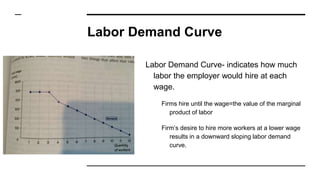


The labor market consists of workers interested in selling their services and firms interested in hiring them. Firms pay workers wages in exchange for their work, either annually or hourly. Labor quantity is measured by the number of workers or total hours worked. In a perfectly competitive labor market, there are many firms and workers with no single firm influencing wages. Wages are determined by the equilibrium of labor supply and demand. Firms will only hire workers if the value they produce exceeds their wages, and will fire workers if value falls below costs. Both labor supply and demand determine the labor market equilibrium wage and employment level. Workers decide whether and how much to work based on comparing wages to their reservation wage. Higher wages increase labor


