UnderstandingSTRESS
Lauren Davidson,Assignment 4
LT8360 Dr. Calandra
BEGIN
LearningObjectives
NEXT
Objectives
What is stress?
Brain Stress Response
Body Stress Response
ReflectionActivity
Home
This training is designed to give you a basic overview of stress. You will learn:
1.What stress is,
2.The difference between acute and chronic stress, and
3. How the brain and body respond to stress.
BACK
Assessment
NEXT
Watch the video and click “NEXT” to learn more.
What is stress?
Brain Stress Response
Body Stress Response
ReflectionActivity
Home
Objectives
What isStress?
BACK
Assessment
NEXT
Objectives
What is stress?
Brain Stress Response
Body Stress Response
ReflectionActivity
Home
BrainStress Response
BACK
Assessment
NEXT
Objectives
What is stress?
Brain Stress Response
Body Stress Response
ReflectionActivity
Home
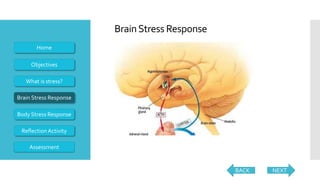
The brain sends chemical messages through the nervous system.
Within a fraction of a second, the entire body is preparing to “fight or
flight” by transferring blood and energy to the brain and heart.
BodyStress Response
BACK
Assessment
Think about a one-time stressful event you experienced in the recent
past. How does your body respond to stress?
NEXT
• Did you feel your muscles tense up?
• Did your breathing was quick or maybe you held your breath?
• Did you feel well or sick in anyway?
• How was your thinking under stress?
• Did you perspire more than when you are not under stress?
Objectives
What is stress?
Brain Stress Response
Body Stress Response
ReflectionActivity
Home
ReflectionActivity
BACK
Assessment
Assessment
Objectives
What is stress?
Brain Stress Response
Body Stress Response
ReflectionActivity
Home
Assessment
1. According to the lesson, everyone experiences stress, but
some people just can’t handle it.
TRUE FALSE
Choose the best answer for each question:
2. “Chronic stress” occurs when a person is under stress on
an ongoing basis.
FALSETRUE
3.The chemical message sent by the brain causes the body
to shut down in order to protect itself from threat.
FALSETRUE
EXIT
Congratulations!
You have completed the training. Close this window
to exit.

L davidson assignment 4 stress

  • 1.
  • 2.
    LearningObjectives NEXT Objectives What is stress? BrainStress Response Body Stress Response ReflectionActivity Home This training is designed to give you a basic overview of stress. You will learn: 1.What stress is, 2.The difference between acute and chronic stress, and 3. How the brain and body respond to stress. BACK Assessment
  • 3.
    NEXT Watch the videoand click “NEXT” to learn more. What is stress? Brain Stress Response Body Stress Response ReflectionActivity Home Objectives What isStress? BACK Assessment
  • 4.
    NEXT Objectives What is stress? BrainStress Response Body Stress Response ReflectionActivity Home BrainStress Response BACK Assessment
  • 5.
    NEXT Objectives What is stress? BrainStress Response Body Stress Response ReflectionActivity Home The brain sends chemical messages through the nervous system. Within a fraction of a second, the entire body is preparing to “fight or flight” by transferring blood and energy to the brain and heart. BodyStress Response BACK Assessment
  • 6.
    Think about aone-time stressful event you experienced in the recent past. How does your body respond to stress? NEXT • Did you feel your muscles tense up? • Did your breathing was quick or maybe you held your breath? • Did you feel well or sick in anyway? • How was your thinking under stress? • Did you perspire more than when you are not under stress? Objectives What is stress? Brain Stress Response Body Stress Response ReflectionActivity Home ReflectionActivity BACK Assessment
  • 7.
    Assessment Objectives What is stress? BrainStress Response Body Stress Response ReflectionActivity Home Assessment 1. According to the lesson, everyone experiences stress, but some people just can’t handle it. TRUE FALSE Choose the best answer for each question: 2. “Chronic stress” occurs when a person is under stress on an ongoing basis. FALSETRUE 3.The chemical message sent by the brain causes the body to shut down in order to protect itself from threat. FALSETRUE EXIT
  • 8.
    Congratulations! You have completedthe training. Close this window to exit.