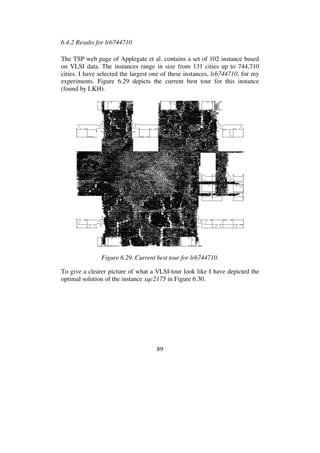
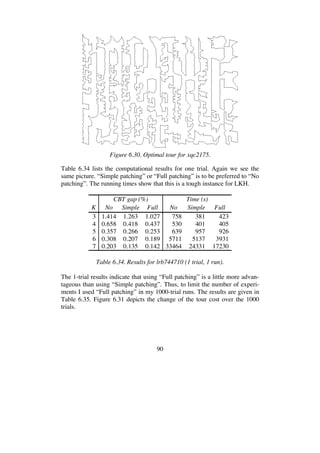
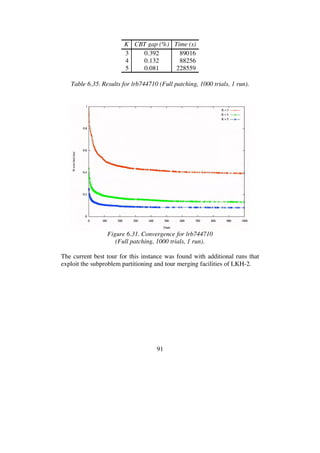
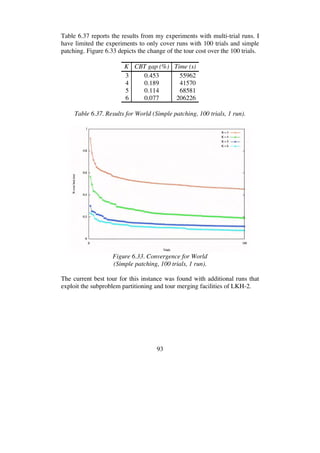
1
An Effective Implementation of K-opt Moves
for the Lin-Kernighan TSP Heuristic
Keld Helsgaun
E-mail: keld@ruc.dk
Computer Science
Roskilde University
DK-4000 Roskilde, Denmark
Abstract
Local search with k-change neighborhoods, k-opt, is the most widely
used heuristic method for the traveling salesman problem (TSP). This
report presents an effective implementation of k-opt for the Lin-
Kernighan TSP heuristic. The effectiveness of the implementation is
demonstrated with extensive experiments on instances ranging from
10,000 to 10,000,000 cities.
1. Introduction
The traveling salesman problem (TSP) is one of the most widely studied
problems in combinatorial optimization. Given a collection of cities and the
cost of travel between each pair of them, the traveling salesman problem is
to find the cheapest way of visiting all of the cities and returning to the
starting point. Mathematically, the problem may be stated as follows:
Given a ‘cost matrix’ C = (cij), where cij represents the cost of going
from city i to city j, (i, j = 1, ..., n), find a permutation (i1, i2, i3, ..., in)
of the integers from 1 through n that minimizes the quantity
ci1i2
+ ci2i3
+ ... + cini1.
____________________________________
Writings on Computer Science, No. 109, Roskilde University, 2006
Revised November 20, 2007
2
TSP may also be stated as the problem of finding a Hamiltonian cycle (tour)
of minimum weight in an edge-weighted graph:
Let G = (N, E) be a weighted graph where N = {1, 2, ..., n} is the set
of nodes and E = {(i, j) | i N, j N} is the set of edges. Each edge
(i, j) has associated a weight c(i, j). A cycle is a set of edges {(i1, i2),
(i2, i3), ..., (ik, i1)} with ip iq for p q. A Hamiltonian cycle (or tour)
is a cycle where k = n. The weight (or cost) of a tour T is the sum
(i, j) T c(i, j). An optimal tour is a tour of minimum weight.
For surveys of the problem and its applications, I refer the reader to the
excellent volumes edited by Lawler et al. [26] and Gutin and Punnen [13].
Local search with k-change neighborhoods, k-opt, is the most widely used
heuristic method for the traveling salesman problem. k-opt is a tour im-
provement algorithm, where in each step k links of the current tour are re-
placed by k links in such a way that a shorter tour is achieved.
It has been shown [8] that k-opt may take an exponential number of itera-
tions and that the ratio of the length of an optimal tour to the length of a tour
constructed by k-opt can be arbitrarily large when k n/2 - 5. Such undesir-
able cases, however, are very rare when solving practical instances [33].
Usually high-quality solutions are obtained in polynomial time. This is for
example the case for the Lin-Kernighan heuristic [26], one of the most ef-
fective methods for generating optimal or near-optimal solutions for the
symmetric traveling salesman problem. High-quality solutions are often
obtained, even though only a small part of the k-change neighborhood is
searched.
In the original version of the heuristic, the allowable k-changes (or k-opt
moves) are restricted to those that can be decomposed into a 2- or 3-change
followed by a (possibly empty) sequence of 2-changes. This restriction sim-
plifies implementation, but it need not be the best design choice. This report
explores the effect of widening the search.
3
The report describes LKH-2, an implementation of the Lin-Kernighan heu-
ristic, which allows all those moves that can be decomposed into a sequence
of K-changes for any K where 2 K n. These K-changes may be sequen-
tial as well as non-sequential. LKH-2 is an extension and generalization of a
previous version, LKH-1 [18], which uses a 5-change as its basic move
component.
The rest of this report is organized as follows. Section 2 gives an overview
of the Lin-Kernighan algorithm. Section 3 gives a short description of the
first version of LKH, LKH-1. Section 4 presents the facilities of its succes-
sor LKH-2. Section 5 describes how general k-opt moves are implemented
in LKH-2. The effectiveness of the implementation is reported in Section 6.
The evaluation is based on extensive experiments for a wide variety of TSP
instances ranging from 10,000-city to 10,000,000-city instances. Finally, the
conclusions about the implementation are given in Section 7.
4
2. The Lin-Kernighan Algorithm
The Lin-Kernighan algorithm [27] belongs to the class of so-called local
search algorithms [19, 20, 22]. A local search algorithm starts at some lo-
cation in the search space and subsequently moves from the present location
to a neighboring location. The algorithm is specified in exchanges (or
moves) that can convert one candidate solution into another. Given a feasi-
ble TSP tour, the algorithm repeatedly performs exchanges that reduce the
length of the current tour, until a tour is reached for which no exchange
yields an improvement. This process may be repeated many times from ini-
tial tours generated in some randomized way.
The Lin-Kernighan algorithm (LK) performs so-called k-opt moves on tours.
A k-opt move changes a tour by replacing k edges from the tour by k edges
in such a way that a shorter tour is achieved. The algorithm is described in
more detail in the following.
Let T be the current tour. At each iteration step the algorithm attempts to
find two sets of edges, X = {x1, ..., xk} and Y = {y1, ..., yk},, such that, if the
edges of X are deleted from T and replaced by the edges of Y, the result is a
better tour. The edges of X are called out-edges. The edges of Y are called
in-edges.
The two sets X and Y are constructed element by element. Initially X and Y
are empty. In step i a pair of edges, xi and yi, are added to X and Y, respec-
tively. Figure 2.1 illustrates a 3-opt move.
Figure 2.1. A 3-opt move.
x1, x2, x3 are replaced by y1, y2, y3.
5
In order to achieve a sufficiently efficient algorithm, only edges that fulfill
the following criteria may enter X and Y:
(1) The sequential exchange criterion
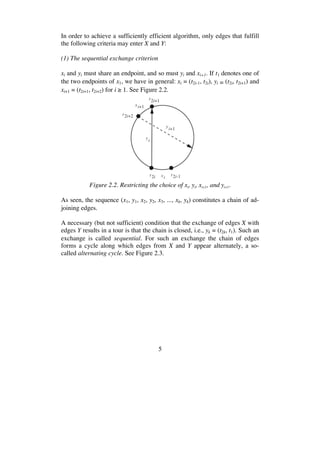
xi and yi must share an endpoint, and so must yi and xi+1. If t1 denotes one of
the two endpoints of x1, we have in general: xi = (t2i-1, t2i), yi = (t2i, t2i+1) and
xi+1 = (t2i+1, t2i+2) for i 1. See Figure 2.2.
Figure 2.2. Restricting the choice of xi, yi, xi+1, and yi+1.
As seen, the sequence (x1, y1, x2, y2, x3, ..., xk, yk) constitutes a chain of ad-
joining edges.
A necessary (but not sufficient) condition that the exchange of edges X with
edges Y results in a tour is that the chain is closed, i.e., yk = (t2k, t1). Such an
exchange is called sequential. For such an exchange the chain of edges
forms a cycle along which edges from X and Y appear alternately, a so-
called alternating cycle. See Figure 2.3.
6
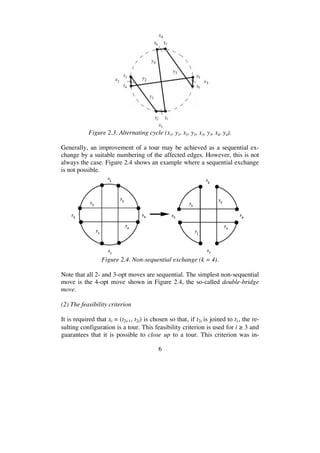
Figure 2.3. Alternating cycle (x1, y1, x2, y2, x3, y3, x4, y4).
Generally, an improvement of a tour may be achieved as a sequential ex-
change by a suitable numbering of the affected edges. However, this is not
always the case. Figure 2.4 shows an example where a sequential exchange
is not possible.
Figure 2.4. Non-sequential exchange (k = 4).
Note that all 2- and 3-opt moves are sequential. The simplest non-sequential
move is the 4-opt move shown in Figure 2.4, the so-called double-bridge
move.
(2) The feasibility criterion
It is required that xi = (t2i-1, t2i) is chosen so that, if t2i is joined to t1, the re-
sulting configuration is a tour. This feasibility criterion is used for i 3 and
guarantees that it is possible to close up to a tour. This criterion was in-
7
cluded in the algorithm both to reduce running time and to simplify the
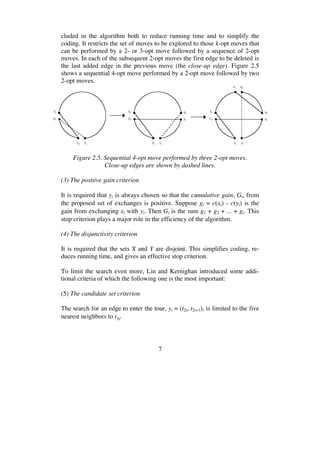
coding. It restricts the set of moves to be explored to those k-opt moves that
can be performed by a 2- or 3-opt move followed by a sequence of 2-opt
moves. In each of the subsequent 2-opt moves the first edge to be deleted is
the last added edge in the previous move (the close-up edge). Figure 2.5
shows a sequential 4-opt move performed by a 2-opt move followed by two
2-opt moves.
t1t2
t4
t3 t6
t5
t1t2
t4
t3 t6
t5
t7 t8
t1t2
t4
t3
Figure 2.5. Sequential 4-opt move performed by three 2-opt moves.
Close-up edges are shown by dashed lines.
(3) The positive gain criterion
It is required that yi is always chosen so that the cumulative gain, Gi, from
the proposed set of exchanges is positive. Suppose gi = c(xi) - c(yi) is the
gain from exchanging xi with yi. Then Gi is the sum g1 + g2 + ... + gi. This
stop criterion plays a major role in the efficiency of the algorithm.
(4) The disjunctivity criterion
It is required that the sets X and Y are disjoint. This simplifies coding, re-
duces running time, and gives an effective stop criterion.
To limit the search even more, Lin and Kernighan introduced some addi-
tional criteria of which the following one is the most important:
(5) The candidate set criterion
The search for an edge to enter the tour, yi = (t2i, t2i+1), is limited to the five
nearest neighbors to t2i.
8
3. The Modified Lin-Kernighan Algorithm (LKH-1)
Use of Lin and Kernighan’s original criteria, as described in the previous
section, results in a reasonably effective algorithm. Typical implementations
are able to find solutions that are 1-2% above optimum. However, in [18] it
was demonstrated that it was possible to obtain a much more effective im-
plementation by revising these criteria. This implementation, in the follow-
ing called LKH-1, made it possible to find optimum solutions with an im-
pressive high frequency. The revised criteria are described briefly below
(for details, see [18]).
(1) The sequential exchange criterion
This criterion has been relaxed a little. When a tour can no longer be im-
proved by sequential moves, attempts are made to improve the tour by non-
sequential 4- and 5-opt moves.
(2) The feasibility criterion
A sequential 5-opt move is used as the basic sub-move. For i 1 it is re-
quired that x5i = (t10i-1,t10i), is chosen so that if t10i is joined to t1, the resulting
configuration is a tour. Thus, the moves considered by the algorithm are se-
quences of one or more 5-opt moves. However, the construction of a move
is stopped immediately if it is discovered that a close up to a tour results in a
tour improvement. Using a 5-opt move as the basic move instead of 2- or 3-
opt moves broadens the search and increases the algorithm’s ability to find
good tours, at the expense of an increase of running times.
(3) The positive gain criterion
This criterion has not been changed.
(4) The disjunctivity criterion
The sets X and Y need no longer be disjoint. In order to prevent an infinite
chain of sub-moves the following rule applies: The last edge to be deleted in
a 5-opt move must not previously have been added in the current chain of 5-
opt moves. Note that this relaxation of the criterion makes it possible to
generate certain non-sequential moves.
9
(5) The candidate set criterion
The usual measure for nearness, the costs of the edges, is replaced by a new
measure called the -measure. Given the cost of a minimum 1-tree [16, 17],
the -value of an edge is the increase of this cost when a minimum 1-tree is
required to contain the edge. The -values provide a good estimate of the
edges’ chances of belonging to an optimum tour. Using -nearness it is of-
ten possible to restrict the search to relative few of the -nearest neighbors
of a node, and still obtain optimal tours.
10
4. LKH-2
Extensive computational experiments with LKH-1 have shown that the re-
vised criteria provide an excellent basis for an effective implementation. In
general, the solution quality is very impressive. However, these experiments
have also shown that LKH-1 has its shortcomings. For example, solving in-
stances with more than 100,000 nodes is computationally too expensive.
The new implementation, called LKH-2, eliminates many of the limitations
and shortcomings of LKH-1. The new version extends the previous one with
data structures and algorithms for solving very large instances, and facilities
for obtaining solutions of even higher quality. A brief description of the
main features of LKH-2 is given below.
1. General K-opt moves
One of the most important means in LKH-2 for obtaining high-quality solu-
tions is its use of general K-opt moves. In the original version of the Lin-
Kernighan algorithm moves are restricted to those that can be decomposed
into a 2- or 3-opt move followed by a (possibly empty) sequence of 2-opt
moves. This restriction simplifies implementation but is not necessarily the
best design choice if high-quality solutions are sought. This has been dem-
onstrated with LKH-1, which uses a 5-opt sequential move as the basic
move component. LKH-2 takes this idea a step further. Now K-opt moves
can be used as sub-moves, where K is any chosen integer greater than or
equal to 2 and less than the number of cities. Each sub-move is sequential.
However, during the search for such moves, non-sequential moves may also
be examined. Thus, in contrast to the original version of the Lin-Kernighan
algorithm, non-sequential moves are not just tried as last resort but are inte-
grated into the ordinary search.
2. Partitioning
In order to reduce the complexity of solving large-scale problem instances,
LKH-2 makes it possible to partition a problem into smaller subproblems.
Each subproblem is solved separately and its solution is used (if possible) to
improve a given overall tour. Even the solution of small problem instances
may sometimes benefit from partitioning as this helps to focus the search
process. Currently, LKH-2 implements the following six partitioning
schemes:
11
(a) Tour segment partitioning
A given tour is broken up into segments of equal size. Each segment in-
duces a subproblem consisting of all nodes and edges of the segment to-
gether with a fixed edge between the segment’s two endpoints. When a
segment is improved it is put back into the overall tour. After all subprob-
lems of this partition have been treated, a revised partition is used where
each new segment takes half its nodes from each of two adjacent old seg-
ments. This partitioning scheme may be used in general, whereas the next
five schemes require the problem to be geometric.
(b) Karp partitioning
The overall region containing the nodes is subdivided into rectangles such
that each rectangle contains a specified number of nodes. The rectangles are
found in a manner similar to that used in the construction of the k-D tree
data structure. Each rectangle together with a given tour induces a subprob-
lem consisting of all nodes inside the rectangle, and with edges fixed be-
tween cities that are connected by tour segments whose interior points are
outside the rectangle.
(c) Delaunay partitioning
The Delaunay graph is used to divide the set of nodes into clusters. The
edges in the Delaunay graph are examined in increasing order of their
lengths and added to a cluster if the cluster’s size does not exceed a pre-
scribed maximum size. Each cluster together with a given tour induces a
subproblem consisting of all nodes in the cluster, and with edges fixed be-
tween nodes that are connected by tour segments whose interior points do
not belong to the cluster.
(d) K-means partitioning
K-means is a least-squares partitioning method that divides the set of nodes
into K clusters such that the total distance between all nodes and their clus-
ter centroids is minimized. Each cluster together with a given tour induces a
subproblem consisting of all nodes in the cluster, and with edges fixed be-
tween nodes that are connected by tour segments whose interior points do
not belong to the cluster.
12
(e) Sierpinski partitioning
A tour induced by the Sierpinski spacefilling curve [34] is partitioned into
segments of equal size. Each of these segments together with a given tour
induces a subproblem. After all subproblems of this partition have been
treated, a revised partition of the Sierpinski tour is used where each new
segment takes half its nodes from each of two adjacent old segments.
(f) Rohe partitioning [35, 36]
Random rectangles are used to partition the node set into disjoint subsets of
about equal size. Each of these subsets together with a given tour induces a
subproblem.
3. Tour merging
LKH-2 provides a tour merging procedure that attempts to produce the best
possible tour from two or more given tours using local optimization on an
instance that includes all tour edges, and where edges common to the tours
are fixed. Tours that are close to optimum typically share many common
edges. Thus, the input graph for this instance is usually very sparse, which
makes it practicable to use K-opt moves for rather large values of K.
4. Iterative partial transcription
Iterative partial transcription is a general procedure for improving the per-
formance of a local search based heuristic algorithm. It attempts to improve
two individual solutions by replacing certain parts of either solution by the
related parts of the other solution. The procedure may be applied to the TSP
by searching for subchains of two tours, which contain the same cities in a
different order and have the same initial and final cities. LKH-2 uses the
procedure on each locally optimum tour and the current best tour. The
implemented algorithm is a simplified version of the algorithm described by
Möbius, Freisleben, Merz and Schreiber [31].
5. Backbone-guided search
The edges of the tours produced by a fixed number of initial trials may be
used as candidate edges in the succeeding trials. This algorithm, which is a
simplified version of the algorithm given by Zhang and Looks [38], has
proved particularly effective for VLSI instances.
13
The rest of the report describes and evaluates the implementation of general
K-opt moves in LKH-2. Partitioning, tour merging, iterative partial tran-
scription and backbone-guided search will not be described further in this
report.
14
5. Implementation of General K-opt Moves
This section describes the implementation of general K-opt moves in LKH-
2. The description is divided into the following four parts:
(1) Search for sequential moves
(2) Search for non-sequential moves
(3) Determination of the feasibility of a move
(4) Execution of a feasible move
The first two parts show how the search space of possible moves can be ex-
plored systematically. The third part describes how it is possible to decide
whether a given move is feasible, that is, whether execution of the move on
the current tour will result in a tour. Finally, it is shown how it is possible
execute a feasible move efficiently.
The involved algorithms are specified by means of the C programming lan-
guage. The code closely follows the actual implementation in LKH-2.
5.1 Search for sequential moves
A sequential K-opt move on a tour T may be specified by a sequence of
nodes, (t1, t2, ..., t2K-1, t2K), where
• (t2i-1, t2i) belongs to T (1 i K), and
• (t2i, t2i+1) does not belong to T (1 i K and t2K+1 = t1).
The requirement that (t2i, t2i+1) does not belong to T is, in fact, not a part of
the definition of a sequential K-opt move. Note, however, that if any of
these edges belong to T, then the sequential K-opt move is also a sequential
K’-opt move for some K’< K. Thus, when searching for K-opt moves, this
requirement does not exclude any moves to be found. The requirement sim-
plifies coding without doing any harm.
We may therefore generate all possible sequential K-opt moves by generat-
ing all t-sequences of length 2K that fulfill the two requirements. Generation
of such t-sequences may, for example, be performed iteratively in 2K nested
loops, where the loop at level i goes through all possible values for ti.
15
Suppose the first element, t1, of the t-sequence has been selected. Then an
iterative algorithm for generating the remaining elements may be imple-
mented as shown in the pseudo code below.
for (each t[2] in {PRED(t[1]), SUC(t[1])}) {
G[0] = C(t[1], t[2]);
for (each candidate edge (t[2], t[3])) {
if (t[3] != PRED(t[2]) && t[3] != SUC(t[2]) &&
(G[1] = G[0] - C(t[2], t[3]) > 0) {
for (each t[4] in {PRED(t[3]), SUC(t[3])}) {
G[2] = G[1] + C(t[3], t[4]);
if (FeasibleKOptMove(2) &&
(Gain = G[2] - C(t[4], t[1])) > 0) {
MakeKOptMove(2);
return Gain;
}
}
inner loops for choosing t[5], ..., t[2K]
}
}
}
Comments:
• The t-sequence is stored in an array, t, of nodes. The three outermost
loops choose the elements t[2], t[3], and t[4]. The operations PRED
and SUC return for a given node respectively its predecessor and
successor on the tour,
• The function C(ta, tb), where ta and tb are two nodes, returns the cost
of the edge (ta, tb).
• The array G is used to store the accumulated gain. It is used for
checking that the positive gain criterion is fulfilled and for comput-
ing the gain of a feasible move.
• The function FeasibleKOptMove(k) determines whether a given t-se-
quence, (t1, t2, ..., t2k-1, t2k), represents a feasible k-opt move, where 2
≤ k ≤ K. The function MakeKOptMove(k) executes a feasible k-opt
move. The implementation of these functions is described in Sec-
tions 5.3 and 5.4.
16
• Note that, if during the search a gainful feasible move is discovered,
the move is executed immediately.
The inner loops for determination of t5, ..., t2K may be implemented analo-
gous to the code above. The innermost loop, however, has one extra task,
namely to register the non-gainful K-opt move that seems to be the most
promising one for continuing the chain of K-opt moves. The innermost loop
may be implemented as follows:
for (each t[2 * K] in {PRED(t[2 * K - 1], SUC[t[2 * K - 1]]}) {
G[2 * K] = G[2 * K - 1] + C(t[2 * K - 1], t[2 * K]);
if (FeasibleKOptMove(K)) {
if ((Gain = G[2 * K] - C(t[2 * K], t[1])) > 0) {
MakeKOptMove(K);
return Gain;
}
if (G[2 * K] > BestG2K &&
Excludable(t[2 * K - 1], t[2 * K])) {
BestG2K = G[2 * K];
for (i = 1; i <= 2 * K; i++)
Best_t[i] = t[i];
}
}
}
Comments:
• The feasible K-opt move that maximizes the cumulative gain,
G[2K], is considered to be the most promising move.
• The function Excludable is used to examine whether the last edge to
be deleted in a K-opt move has previously been added in the current
chain of K-opt moves (Criterion 4 in Section 3).
Generation of 5-opt moves in LKH-1 was implemented as described above.
However, if we want to generate K-opt moves, where K may be chosen
freely, this approach is not appropriate. In this case we would like to use a
variable number of nested loops. This is normally not possible in imperative
languages like C, but it is well known that it may be simulated by use of re-
cursion. A recursive implementation of the algorithm is given below.
17
GainType BestKOptMoveRec(int k, GainType G0) {
GainType G1, G2, G3, Gain;
Node *t1 = t[1], *t2 = t[2 * k - 2], *t3, *t4;
int i;
for (each candidate edge (t2, t3)) {
if (t3 != PRED(t2) && t3 != SUC(t2) &&
!Added(t2, t3, k - 2) &&
(G1 = G0 – C(t2, t3)) > 0) {
t[2 * k - 1] = t3;
for (each t4 in {PRED(t3), SUC(t3)}) {
if (!Deleted(t3, t4, k - 2)) {
t[2 * k] = t4;
G2 = G1 + C(t3, t4);
if (FeasibleKOptMove(k) &&
(Gain = G2 - C(t4, t1)) > 0) {
MakeKOptMove(k);
return Gain;
}
if (k < K &&
(Gain = BestKOptMoveRec(k + 1, G2)) > 0)
return Gain;
if (k == K && G2 > BestG2K &&
Excludable(t3, t4)) {
BestG2K = G2;
for (i = 1; i <= 2 * K; i++)
Best_t[i] = t[i];
}
}
}
}
}
}
Comment:
• The auxiliary functions Added and Deleted are used to ensure that no
edge is added or deleted more than once in the move under con-
struction. Possible implementations of the two functions are shown
below. It is easy to see that the time complexity for each of these
functions is O(k).
18
int Added(Node *ta, Node *tb, int k) {
int i = 2 * k;
while ((i -= 2) > 0)
if ((ta == t[i] && tb == t[i + 1]) ||
(ta == t[i + 1] && tb == t[i]))
return 1;
return 0;
}
int Deleted(Node * ta, Node * tb, int k) {
int i = 2 * k + 2;
while ((i -= 2) > 0)
if ((ta == t[i - 1] && tb == t[i]) ||
(ta == t[i] && tb == t[i - 1]))
return 1;
return 0;
}
Given two neighboring nodes on the tour, t1 and t2, the search for a K-opt
move is initiated by a call of the driver function BestKOptMove shown be-
low.
Node *BestKOptMove(Node *t1, Node *t2,
GainType *G0, GainType *Gain) {
t[1] = t1; t[2] = t2;
BestG2K = MINUS_INFINITY;
Best_t[2 * K] = NULL;
*Gain = BestKOptMoveRec(2, *G0);
if (*Gain <= 0 && Best_t[2 * K] != NULL) {
for (i = 1; i <= 2 * K; i++)
t[i] = Best_t[i];
MakeKOptMove(K);
}
return Best_t[2 * K];
}
19
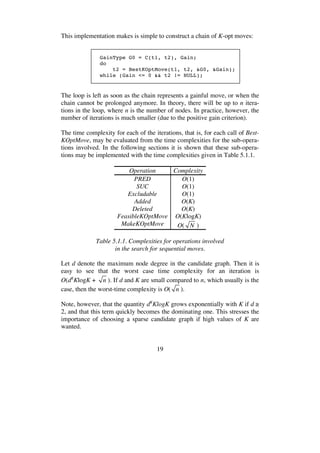
This implementation makes is simple to construct a chain of K-opt moves:
GainType G0 = C(t1, t2), Gain;
do
t2 = BestKOptMove(t1, t2, &G0, &Gain);
while (Gain <= 0 && t2 != NULL);
The loop is left as soon as the chain represents a gainful move, or when the
chain cannot be prolonged anymore. In theory, there will be up to n itera-
tions in the loop, where n is the number of nodes. In practice, however, the
number of iterations is much smaller (due to the positive gain criterion).
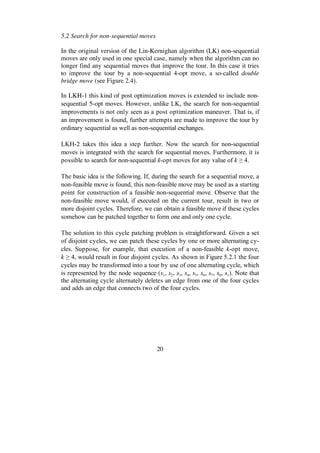
The time complexity for each of the iterations, that is, for each call of Best-
KOptMove, may be evaluated from the time complexities for the sub-opera-
tions involved. In the following sections it is shown that these sub-opera-
tions may be implemented with the time complexities given in Table 5.1.1.
Operation Complexity
PRED O(1)
SUC O(1)
Excludable O(1)
Added O(K)
Deleted O(K)
FeasibleKOptMove O(KlogK)
MakeKOptMove O( N )
Table 5.1.1. Complexities for operations involved
in the search for sequential moves.
Let d denote the maximum node degree in the candidate graph. Then it is
easy to see that the worst case time complexity for an iteration is
O(dK
KlogK + n ). If d and K are small compared to n, which usually is the
case, then the worst-time complexity is O( n ).
Note, however, that the quantity dK
KlogK grows exponentially with K if d
2, and that this term quickly becomes the dominating one. This stresses the
importance of choosing a sparse candidate graph if high values of K are
wanted.
20
5.2 Search for non-sequential moves
In the original version of the Lin-Kernighan algorithm (LK) non-sequential
moves are only used in one special case, namely when the algorithm can no
longer find any sequential moves that improve the tour. In this case it tries
to improve the tour by a non-sequential 4-opt move, a so-called double
bridge move (see Figure 2.4).
In LKH-1 this kind of post optimization moves is extended to include non-
sequential 5-opt moves. However, unlike LK, the search for non-sequential
improvements is not only seen as a post optimization maneuver. That is, if
an improvement is found, further attempts are made to improve the tour by
ordinary sequential as well as non-sequential exchanges.
LKH-2 takes this idea a step further. Now the search for non-sequential
moves is integrated with the search for sequential moves. Furthermore, it is
possible to search for non-sequential k-opt moves for any value of k 4.
The basic idea is the following. If, during the search for a sequential move, a
non-feasible move is found, this non-feasible move may be used as a starting
point for construction of a feasible non-sequential move. Observe that the
non-feasible move would, if executed on the current tour, result in two or
more disjoint cycles. Therefore, we can obtain a feasible move if these cycles
somehow can be patched together to form one and only one cycle.
The solution to this cycle patching problem is straightforward. Given a set
of disjoint cycles, we can patch these cycles by one or more alternating cy-
cles. Suppose, for example, that execution of a non-feasible k-opt move,
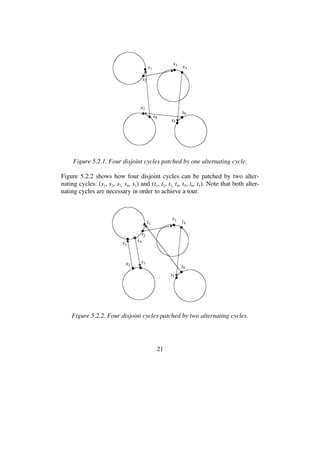
k 4, would result in four disjoint cycles. As shown in Figure 5.2.1 the four
cycles may be transformed into a tour by use of one alternating cycle, which
is represented by the node sequence (s1, s2, s3, s4, s5, s6, s7, s8, s1). Note that
the alternating cycle alternately deletes an edge from one of the four cycles
and adds an edge that connects two of the four cycles.
21
s1
s2
s3 s4
s5
s6
s7
s8
Figure 5.2.1. Four disjoint cycles patched by one alternating cycle.
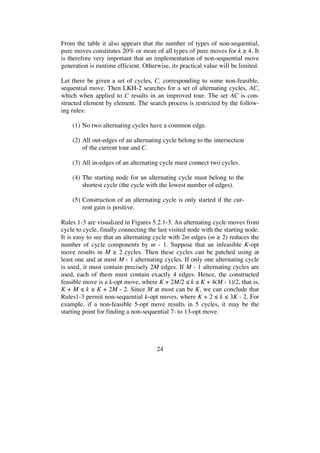
Figure 5.2.2 shows how four disjoint cycles can be patched by two alter-
nating cycles: (s1, s2, s3, s4, s1) and (t1, t2, t3, t4, t5, t6, t1). Note that both alter-
nating cycles are necessary in order to achieve a tour.
t1
t2
t3 t4
t5
t6
s1s2
s4s3
Figure 5.2.2. Four disjoint cycles patched by two alternating cycles.
22
Figure 5.2.3 illustrates that it is also possible to use three alternating cycles:
(s1, s2, s3, s4, s6), (t1, t2, t3, t4, t1), and (u1, u2, u3, u4, u1). In general, K cycles
may be transformed into a tour using up to K-1 alternating cycles.
Figure 5.2.3. Four disjoint cycles patched by three alternating cycles.
With the addition of non-sequential moves, the number of different types of
k-opt moves that the algorithm must be able to handle has increased consid-
erably. In the following this statement is quantified.
Let MT(k) denote the number of k-opt move types. A k-opt move removes k
edges from a tour and adds k edges that reconnect k tour segments into a
tour. Hence, a k-opt move may be defined as a cyclic permutation of k tour
segments where some of the segments may be inverted (swapped). Let one
of the segments be fixed. Then MT(k) can be computed as the product of the
number of inversions of k-1 segments and the number of permutations of
k-1 segments:
MT(k) = 2k 1
(k 1)!.
However, MT(k) includes the number of moves, which reinserts one or more
of the deleted edges. Since such moves may be generated by k’-opt moves
where k’< k, we are more interested in computing PMT(k), the number of
pure k-opt moves, that is, moves for which the set of removed edges and the
set of added edges are disjoint. Funke, Grünert and Irnich [11, p. 284] give
the following recursion formula for PMT(k):
23
PMT(k) = MT(k) − i
k
( )
i=2
k−1
∑ PMT(i) −1 for k ≥ 3
PMT(2) = 1
An explicit formula for PMT(k) may be derived from the formula for series
A061714 in The On-Line Encyclopedia of Integer Sequences [40]:
PMT(k) = (−1)k+ j−1
j=0
i
∑
i=1
k−1
∑ j
i
( )j!2j
for k ≥ 2
The set of pure moves accounts for both sequential and non-sequential
moves. To examine how much the search space has been enlarged by the
inclusion of non-sequential moves, we will compute SPMT(k), the number
of sequential, pure k-opt moves, and compare this number with the PMT(k).
The explicit formula for SPMT(k) shown below has been derived by Han-
lon, Stanley and Stembridge [14]:
SPMT(k) =
23k−2
k!(k −1)!2
(2k)!
+ ca,b (2)
b=1
min(a,k−a)
∑
a=1
k−1
∑
2a−b−1
(2b)!(a −1)!(k − a − b −1)
(2b −1)b!
⎡
⎣
⎢
⎤
⎦
⎥
2
where
ca,b (2) =
(−1)k (−2)a−b+1
k(2a − 2b +1)(a −1)!
(k + a − b +1)(k + a − b)(k − a + b)(k − a + b −1)(k − a − b)!(2a −1)!(b −1)!
Table 5.2.1 depicts MT(k), PMT(k), SPMT(k), and the ratio SPMT(k)/MPT(k)
for selected values of k. As seen, the ratio SMPT(k)/PMT(k) decreases as k
increases. For k ≥ 10, there are fewer types of sequential moves than types of
non-sequential moves.
k 2 3 4 5 6 7 8 9 10 50 100
MT(k) 2 8 48 384 3840 46080 645120 1.0E7 1.9E8 3.4E77 5.9E185
PMT(k) 1 4 25 208 2121 25828 365457 5.9E6 1.1E8 2.1E77 3.6E185
SPMT(k) 1 4 20 148 1348 15104 198144 3.0E6 5.1E7 4.3E76 5.9E184
SPMT (k)
PMT (k) 1 1 0.80 0.71 0.63 0.58 0.54 0.51 0.48 0.21 0.17
Table 5.2.1. Growth of move types for k-opt moves.
24
From the table it also appears that the number of types of non-sequential,
pure moves constitutes 20% or more of all types of pure moves for k 4. It
is therefore very important that an implementation of non-sequential move
generation is runtime efficient. Otherwise, its practical value will be limited.
Let there be given a set of cycles, C, corresponding to some non-feasible,
sequential move. Then LKH-2 searches for a set of alternating cycles, AC,
which when applied to C results in an improved tour. The set AC is con-
structed element by element. The search process is restricted by the follow-
ing rules:
(1) No two alternating cycles have a common edge.
(2) All out-edges of an alternating cycle belong to the intersection
of the current tour and C.
(3) All in-edges of an alternating cycle must connect two cycles.
(4) The starting node for an alternating cycle must belong to the
shortest cycle (the cycle with the lowest number of edges).
(5) Construction of an alternating cycle is only started if the cur-
rent gain is positive.
Rules 1-3 are visualized in Figures 5.2.1-3. An alternating cycle moves from
cycle to cycle, finally connecting the last visited node with the starting node.
It is easy to see that an alternating cycle with 2m edges (m 2) reduces the
number of cycle components by m - 1. Suppose that an infeasible K-opt
move results in M 2 cycles. Then these cycles can be patched using at
least one and at most M - 1 alternating cycles. If only one alternating cycle
is used, it must contain precisely 2M edges. If M - 1 alternating cycles are
used, each of them must contain exactly 4 edges. Hence, the constructed
feasible move is a k-opt move, where K + 2M/2 k K + 4(M - 1)/2, that is,
K + M k K + 2M - 2. Since M at most can be K, we can conclude that
Rules1-3 permit non-sequential k-opt moves, where K + 2 k 3K - 2. For
example, if a non-feasible 5-opt move results in 5 cycles, it may be the
starting point for finding a non-sequential 7- to 13-opt move.
25
Rule 4 minimizes the number of possible starting nodes. In this way the al-
gorithm attempts to minimize the number of possible alternating cycles to
be explored.
Rule 5 is analogue with the positive gain criterion for sequential moves (see
Section 2). During the construction of a move, no alternating cycle will be
closed unless the cumulated gain plus the cost of close-up edge is positive.
In order to reduce the search even more the following greedy rule is em-
ployed:
(6) The last three edges of an alternating cycle must be those that
contribute most to the total gain. In other words, given an al-
ternating cycle (s1, s2 ,..., s2m-2, s2m-1, s2m, s1), the quantity
- c(s2m-2, s2m-1) + c(s2m-1, s2m) - c(s2m, s1)
should be maximum.
Furthermore, the user of LKH-2 may restrict the search for non-sequential
moves by specifying an upper limit (Patching_C) for the number of cycles
that can be patched, and an upper limit (Patching_A) for the number of al-
ternating cycles to be used for patching.
In the following I will describe how cycle patching is implemented in LKH-
2. To make the description more comprehensible I will first show the im-
plementation of an algorithm that performs cycle patching by use of only
one alternating cycle. The algorithm is realized as a function, PatchCycles,
which calls a recursive auxiliary function called PatchCyclesRec.
26
GainType PatchCycles(int k, GainType Gain) {
Node *s1, *s2, *sStart, *sStop;
GainType NewGain;
int M, i;
FindPermutation(k);
M = Cycles(k);
if (M == 1 || M > Patching_C)
return 0;
CurrentCycle = ShortestCycle(M, k);
for (i = 0; i < k; i++) {
if (cycle[p[2 * i]] == CurrentCycle) {
sStart = t[p[2 * i]];
sStop = t[p[2 * i + 1]];
for (s1 = sStart; s1 != sStop; s1 = s2) {
t[2 * k + 1] = s1;
t[2 * k + 2] = s2 = SUC(s1);
if ((NewGain =
PatchCyclesRec(k, 2, M,
Gain + C(s1, s2))) > 0)
return NewGain;
}
}
}
return 0;
}
Comments:
• The function is called from the inner loop of BestKOptMoveRec:
if (t4 != t1 && Patching_C >= 2 &&
(Gain = G2 - C(t4, t1)) > 0 && // rule 5
(Gain = PatchCycles(k, Gain)) > 0)
return Gain;
• The parameter k specifies that, given the non-feasible k-opt move
represented by the nodes in the global array t[1..2k], the function
should try to find a gainful feasible move by cycle patching. The
parameter Gain specifies the gain of the non-feasible input move.
27
• We need to be able to traverse those nodes that belong to the small-
est cycle component (Rule 4), and for a given node to determine
quickly to which of the current cycles it belongs to (Rule 3). For that
purpose we first determine the permutation p corresponding to the
order in which the nodes in t[1..2k] occur on the tour in a clockwise
direction, starting with t[1]. For example, p = (1 2 4 3 9 10 7 8 5 6)
for the non-feasible 5-opt move shown in Figure 5.2.4. Next, the
function Cycles is called to determine the number of cycles and to
associate with each node in t[1..2k] the number of the cycle it be-
longs to. Execution of the 5-opt in Figure 5.2.4 move produces two
cycles, one represented by the node sequence (t1, t10, t7, t6, t1), and
one represented by the node sequence (t2, t4, t5, t8, t9, t3, t2). The nodes
of the first sequence are labeled with 1, the nodes of the second se-
quence with 2.
Figure 5.2.4. Non-feasible 5-opt move (2 cycles).
Next, the function ShortestCycle (shown below) is called in order to
find the shortest cycle. The function returns the number of the cycle
that contains the lowest number of nodes.
28
int ShortestCycle(int M, int k) {
int i, MinCycle, MinSize = INT_MAX;
for (i = 1; i <= M; i++)
size[i] = 0;
p[0] = p[2 * k];
for (i = 0; i < 2 * k; i += 2)
size[cycle[p[i]]] +=
SegmentSize(t[p[i]], t[p[i + 1]]);
for (i = 1; i <= M; i++) {
if (size[i] < MinSize) {
MinSize = size[i];
MinCycle = i;
}
}
return MinCycle;
}
• The tour segments of the shortest cycle are traversed by exploiting
the fact that t[p[2i]] and t[p[2i + 1]] are the two end points for a tour
segment of a cycle, for 0 i < k and p[0] = p[2k]. Which cycle a
tour segment is part of may be determined simply by retrieving the
cycle number associated with one of its two end points.
• Each tour edge of the shortest cycle may now be used as the first
out-edge, (s1, s2), of an alternating cycle. An alternating cycle is con-
structed by the recursive function PatchCyclesRec shown below.
29
GainType PatchCyclesRec(int k, int m, int M, GainType G0) {
Node *s1, *s2, *s3, *s4;
GainType G1, G2, G3, G4, Gain;
int NewCycle, cycleSaved[1 + 2 * k], i;
s1 = t[2 * k + 1];
s2 = t[i = 2 * (k + m) - 2];
incl[incl[i] = i + 1] = i;
for (i = 1; i <= 2 * k; i++)
cycleSaved[i] = cycle[i];
for (each candidate edge (s2, s3)) {
if (s2 != PRED(s2) && s3 != SUC(s2) &&
(NewCycle = FindCycle(s3, k)) != CurrentCycle) {
t[2 * (k + m) - 1] = s3;
G1 = G0 – C(s2, s3);
for (each s4 in {PRED(s3), SUC(s3)}) {
if (!Deleted(s3, s4, k)) {
t[2 * (k + m)] = s4;
G2 = G1 + C(s3, s4);
if (M > 2) {
for (i = 1; i <= 2 * k; i++)
if (cycle[i] == NewCycle)
cycle[i] = CurrentCycle;
if ((Gain =
PatchCyclesRec(k, m + 1, M - 1,
G2)) > 0)
return Gain;
for (i = 1; i <= 2 * k; i++)
cycle[i]= cycleSaved[i];
} else if (s4 != s1 &&
(Gain = G2 – C(s4, s1)) > 0) {
incl[incl[2 * k + 1] = 2 * (k + m)] =
2 * k + 1;
MakeKOptMove(k + m);
return Gain;
}
}
}
}
}
return 0;
}
30
Comments:
• The algorithm is rather simple and very much resembles the Best-
KOptMoveRec function. The parameter k is used to specify that a non-
feasible k-opt move be used as the starting point for finding a gainful fea-
sible move. The parameter m specifies the current number of out-edges of
the alternating cycle under construction. The parameter M specifies the
current number of cycle components (M 2). The last parameter, G0,
specifies the accumulated gain.
• If a gainful feasible move is found, then this move is executed by calling
MakeKOptMove(k + m) before the achieved gain is returned.
• A move is represented by the nodes in the global array t, where the first
2k elements are the nodes of the given non-feasible sequential k-opt
move, and the subsequent elements are the nodes of the alternating cycle.
In order to be able to determine quickly whether an edge is an in-edge or
an out-edge of the current move we maintain an array, incl, such that
incl[i] = j and incl[j] = i is true if and only if the edge (t[i], t[j]) is an in-
edge. For example, in Figure 5.2.4 incl = [10, 3, 2, 5, 4, 7, 6, 9, 8, 1]. It is
easy to see that there is no reason to maintain similar information about
out-edges as they always are those edges (t[i], t[i + 1]) for which i is odd.
• Let s2 be the last node added to the t-sequence. At each recursive call of
PatchCyclesRec the t-sequence is extended by two nodes, s3 and s4, such
that
(a) (s2, s3) is a candidate edge,
(b) s3 belongs to a not yet visited cycle component,
(c) s4 is a neighbor to s3 on the tour, and
(d) the edge (s3, s4) has not been deleted before.
• Before a recursive call of the function all cycle numbers of those nodes of
t[1..2k] that belong to s3’s cycle component are changed to the number of
the current cycle component (which is equal to the number of s2’s cycle
component).
The time complexity for a call of PatchCyclesRec may be evaluated from the
time complexities for the sub-operations involved. The sub-operations may be
implemented with the time complexities given in Table 5.2.2. Let d denote the
31
maximum node degree in the candidate graph. Then it is easy to see that the
worst case time complexity for each call is O(ndK
KlogK + n ). The factor n is
due to the fact that the shortest cycle in worst case contains at most n/2 nodes.
The factor KlogK reflects that the permutation p is determined by sorting the
nodes of the t-sequence. The node comparisons are made by the operation
BETWEEN(a, b, c), which in constant time can determine whether a node b is
placed between two other nodes, a and c, on the tour.
Operation Complexity
PRED O(1)
SUC O(1)
FindPermutation O(KlogK)
Cycles O(K)
ShortestCycle O(K)
FindCycle O(logK)
Deleted O(K)
MakeKOptMove O( n )
Table 5.2.2. Complexities for the sub-operations of PatchCyclesRec.
The algorithm as described above only allows cycle patching by means of one
alternating cycle. However, it is relatively simple to extend the algorithm such
that more than one alternating cycle can be used. Only a few lines of code need
to be added to the function patchCyclesRec.
First, the following code fragment is inserted just after the recursive call:
if (Patching_A >= 2 &&
(Gain = G2 - C(s4, s1)) > BestCloseUpGain) {
Best_s3 = s3;
Best_s4 = s4;
BestCloseUpGain = Gain;
}
If the user has decided that two or more alternating cycles may be used for
patching (Patching_A ≥ 2), this code finds the pair of nodes (Best_s3, Best_s4)
that maximizes the gain of closing up the current alternating cycle (Rule 6):
- c(s2, s3) + c(s3, s4) - c(s4, s1)
The current best close-up gain, BestCloseUpGain, is initialized to zero (Rule 5).
32
Second, the last statement of PatchCyclesRec (the return statement) is replaced
by the following code:
Gain = 0;
if (BestCloseUpGain > 0) {
int OldCycle = CurrentCycle;
t[2 * (k + m) - 1] = Best_s3;
t[2 * (k + m)] = Best_s4;
Patching_A--;
Gain = PatchCycles(k + m, BestCloseUpGain);
Patching_A++;
for (i = 1; i <= 2 * k; i++)
cycle[i]= cycleSaved[i];
CurrentCycle = OldCycle;
}
return Gain;
Note that this causes a recursive call of PatchCycles (not PatchCyclesRec).
The algorithm described in this section is somewhat simplified in relation to the
algorithm implemented in LKH-2. For example, when two cycles arise, LKH-2
will attempt to patch them, not only by means of an alternating cycle consisting
of 4 edges (a 2-opt move), but also by means of an alternating cycle consisting of
6 edges (a 3-opt move).
33
5.3 Determination of the feasibility of a move
Given a tour T and a k-opt move, how can it quickly be determined if the
move is feasible, that is, whether the result will be a tour if the move is ap-
plied to T? Consider Figure 5.3.1.
t1t2
t4
t3 t5
t6
t8 t7
t1t2
t3
t4 t5
t6
t8 t7
(a) (b)
Figure 5.3.1. (a) Feasible 4-opt move. (b) Non-feasible 4-opt move.
Figure 5.3.1a depicts a feasible 4-opt move. Execution of the move will re-
sult in precisely one cycle (a tour), namely (t2t3 t8t1 t6t7 t5t4 t2). On the
other hand, the 4-opt move in Figure 5.3.1b is not feasible, since the result
will be two cycles, (t2t3 t2) and (t4t5 t7t6 t1t8 t4).
Deciding whether a k-opt move is feasible is a frequent problem in the al-
gorithm. Each time a gainful move is found, the move is checked for feasi-
bility. Non-gainful moves are also checked to ensure that they can enter the
current chain of sequential moves. Hence, it is very important that such
checks are fast.
A simple algorithm for checking feasibility is to start in an arbitrary node
and then walk from node to node in the graph that would arise if the move
were executed, until the starting node is reached again. The move is feasible
if, and only if, the number of visited nodes is equal to the number of nodes,
n, in the original tour. However, the complexity of this algorithm is O(n),
which makes it unsuited for the job.
Can we construct a faster algorithm? Yes, because we do not need to visit
every node on a cycle. We can restrict ourselves to only visiting the t-nodes
that represent the move. In other words, we can jump from t-node to t-node.
A move is feasible, if and only if, all t-nodes of the move are visited in this
34
way. For example, if we start in node t6 in Figure 5.3.1a, and jump from t-
node to t-node following the direction of the arrows, then all t-nodes are
visited in the following sequence: t6, t7, t6, t5, t4, t2, t3, t8, t1.
It is easy to jump from one t-node, ta, to another, tb, if the edge (ta, tb) is an
in-edge. We only need to maintain an array, incl, which represents the cur-
rent in-edges. If (ta, tb) is an in-edge for a k-opt move (1 a,b 2k), this fact
is registered in the array by setting incl[a] = b and incl[b] = a. By this means
each such jump can be made in constant time (by a table lookup).
On the other hand, it is not obvious how we can skip those nodes that are
not t-nodes. It turns out that a little preprocessing solves the problem. If we
know the cyclic order in which the t-nodes occur on the original tour, then it
becomes easy to skip all nodes that lie between two t-nodes on the tour. For
a given t-node we just have to select either its predecessor or its successor in
this cyclic ordering. Which of the two cases we should choose can be de-
termined in constant time. This kind of jump may therefore be made in con-
stant time if the t-nodes have been sorted. I will now show that this sorting
can be done in O(klogk) time.
First, we realize that is not necessary to sort all t-nodes. We can restrict our-
selves to sorting half of the nodes, namely for each out-edge the first end
point met when the tour is traversed in a given direction. If in Figure 5.3.1
the chosen direction is “clockwise”, we may restrict the sorting to the four
nodes t1, t4, t5, and t8. If the result of a sorting is represented by a permuta-
tion, phalf, then phalf will be equal to (1 4 8 5). This permutation may easily be
extended to a full permutation containing all node indices, p = (1 2 4 3 8 7 5
6). The missing node indices are inserted by using the following rule: if
phalf[i] is odd, then insert phalf[i] + 1 after phalf[i], otherwise insert phalf[i] - 1
after phalf[i].
Let a move be represented by the nodes t[1..2k]. Then the function Find-
Permutation shown below is able to find the permutation p[1..2k] that corre-
sponds to their visiting order when the tour is traversed in the SUC-direc-
tion. In addition, the function determines q[1..2k] as the inverse permutation
to p, that is, the permutation for which q[p[i]] = i for 1 i 2k.
35
void FindPermutation(int k) {
int i,j;
for (i = j = 1; j <= k; i += 2, j++)
p[j] = (SUC(t[i]) == t[i + 1]) ? i : i + 1;
qsort(p + 2, k - 1, sizeof(int), Compare);
for (j = 2 * k; j >= 2; j -= 2) {
p[j - 1] = i = p[j / 2];
p[j] = i & 1 ? i + 1 : i - 1;
}
for (i = 1; i <= 2 * k; i++)
q[p[i]] = i;
}
Comments:
• First, the k indices to be sorted are placed in p. This takes O(k) time.
Next, the sorting is performed. The first element of p, p[1] is fixed
and does not take part in the sorting. Thus, only k-1 elements are
sorted. The sorting is performed by C’s library function for sorting,
qsort, using the comparison function shown below:
int Compare(const void *pa, const void *pb) {
return BETWEEN(t[p[1]], t[*(int *) pa], t[*(int *) pb])
? -1 : 1;
}
The operation BETWEEN(a, b, c) determines in constant time
whether node b lies between node a and node c on the tour in the
SUC-direction. Since the number of comparisons made by qsort on
average is O(klogk), and each comparison takes constant time, the
sorting process takes O(klogk) time on average.
• After the sorting, the full permutation, p, and its inverse, q, are built.
This can be done in O(k) time.
• From the analysis above we find that the average time for calling
FindPermutation with argument k is O(klogk).
36
After having determined p and q, we can quickly determine whether a k-opt
move represented by the contents of the arrays t and incl is feasible. The
function shown below shows how this can be achieved.
int FeasibleKOptMove(int k) {
int Count = 1, i = 2 * k;
FindPermutation(k);
while ((i = q[incl[p[i]]] ^ 1) != 0)
Count++;
return (Count == k);
}
Comments:
• In each iteration of the while-loop the two end nodes of an in-edge
are visited, namely t[p[i]] and t[incl[p[i]]]. The inverse permutation,
q, makes it possible to skip possible t-nodes between t[incl[p[i]]] and
the next t-node on the cycle. If the position of incl[p[i]] in p is even,
then in the next iteration i should be equal to this position plus one.
Otherwise, it should be equal to this position minus one.
• The starting value for i is 2k. The loop terminates when i becomes
zero, which happens when node t[p[1]] has been visited (since 1 ^ 1
= 0, where ^ is the exclusive OR operator). The loop always termi-
nates since both t[p[2k]] and t[p[1]] belong to the cycle that is tra-
versed by the loop, and no node is visited more than once.
• It is easy to see that the loop is executed in O(k) time. Since the sort-
ing made by the call of FindPermutation on average takes O(klogk)
time, we can conclude that the average-time complexity for the
FeasibleKOptMove function is O(klogk). Normally, k is very small
compared to the total number of nodes, n. Thus, we have obtained an
algorithm that is efficient in practice.
• To see a concrete example of how the algorithm works, consider the
4-opt move in Figure 5.3.1a. Before the while-loop the following is
true:
p = (1 2 4 3 8 7 5 6)
q = (1 2 4 3 7 8 6 5)
incl = (8 3 2 5 4 7 6 1)
37
The controlling variable i is assigned the values 8, 7, 2, 5, 0 in that
order, and the variable Count is incremented 3 times. Since Count
becomes equal to 4, the 4-opt move is feasible.
For the 4-opt move in Figure 5.3.b the while-loop is started with
p = (1 2 3 4 8 7 5 6)
q = (1 2 3 4 7 8 6 5)
incl = (8 3 2 5 4 7 6 1)
The controlling variable i is assigned the values 8, 7, 5, 0 in that or-
der. Since Count here becomes 3 (which is 4), the 4-opt move is
not feasible.
38
5.4 Execution of a feasible move
In order to simplify execution of a feasible k-opt move, the following fact
may be used: Any k-opt move (k 2) is equivalent to a finite sequence of 2-
opt moves [9, 28]. In the case of 5-opt moves it can be shown that any 5-opt
move is equivalent to a sequence of at most five 2-opt moves. Any 3-opt
move as well as any 4-opt move is equivalent to a sequence of at most three
2-opt moves. In general, any feasible k-opt move may be executed by at
most k 2-opt moves. For a proof, see [30].
Let FLIP(a, b, c, d) denote the operation of replacing the two edges (a, b)
and (c, d) of the tour by the two edges (b, c) and (d, a). Then the 4-opt move
depicted in Figure 5.4.1 may be executed by the following sequence of
FLIP-operations:
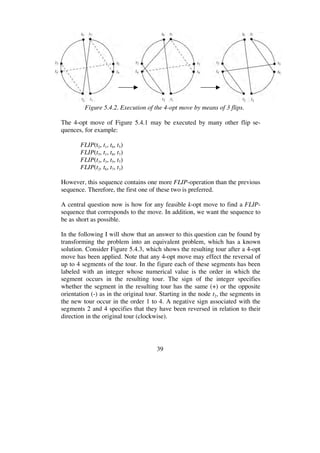
FLIP(t2, t1, t8, t7)
FLIP(t4, t3, t2, t7)
FLIP(t7, t4, t5, t6)
The execution of the flips is illustrated in Figure 5.4.2.
Figure 5.4.1. Feasible 4-opt move.
39
Figure 5.4.2. Execution of the 4-opt move by means of 3 flips.
The 4-opt move of Figure 5.4.1 may be executed by many other flip se-
quences, for example:
FLIP(t2, t1, t6, t5)
FLIP(t5, t1, t8, t7)
FLIP(t3, t3, t5, t7)
FLIP(t2, t6, t7, t3)
However, this sequence contains one more FLIP-operation than the previous
sequence. Therefore, the first one of these two is preferred.
A central question now is how for any feasible k-opt move to find a FLIP-
sequence that corresponds to the move. In addition, we want the sequence to
be as short as possible.
In the following I will show that an answer to this question can be found by
transforming the problem into an equivalent problem, which has a known
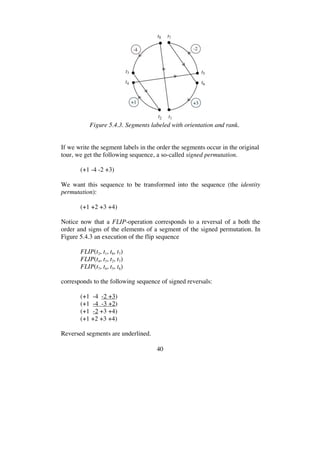
solution. Consider Figure 5.4.3, which shows the resulting tour after a 4-opt
move has been applied. Note that any 4-opt move may effect the reversal of
up to 4 segments of the tour. In the figure each of these segments has been
labeled with an integer whose numerical value is the order in which the
segment occurs in the resulting tour. The sign of the integer specifies
whether the segment in the resulting tour has the same (+) or the opposite
orientation (-) as in the original tour. Starting in the node t2, the segments in
the new tour occur in the order 1 to 4. A negative sign associated with the
segments 2 and 4 specifies that they have been reversed in relation to their
direction in the original tour (clockwise).
40
Figure 5.4.3. Segments labeled with orientation and rank.
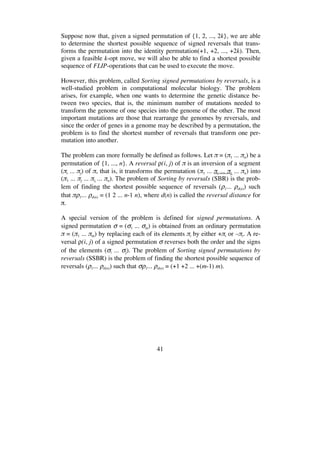
If we write the segment labels in the order the segments occur in the original
tour, we get the following sequence, a so-called signed permutation.
(+1 -4 -2 +3)
We want this sequence to be transformed into the sequence (the identity
permutation):
(+1 +2 +3 +4)
Notice now that a FLIP-operation corresponds to a reversal of a both the
order and signs of the elements of a segment of the signed permutation. In
Figure 5.4.3 an execution of the flip sequence
FLIP(t2, t1, t8, t7)
FLIP(t4, t3, t2, t7)
FLIP(t7, t4, t5, t6)
corresponds to the following sequence of signed reversals:
(+1 -4 -2 +3)
(+1 -4 -3 +2)
(+1 -2 +3 +4)
(+1 +2 +3 +4)
Reversed segments are underlined.
41
Suppose now that, given a signed permutation of {1, 2, ..., 2k}, we are able
to determine the shortest possible sequence of signed reversals that trans-
forms the permutation into the identity permutation(+1, +2, ..., +2k). Then,
given a feasible k-opt move, we will also be able to find a shortest possible
sequence of FLIP-operations that can be used to execute the move.
However, this problem, called Sorting signed permutations by reversals, is a
well-studied problem in computational molecular biology. The problem
arises, for example, when one wants to determine the genetic distance be-
tween two species, that is, the minimum number of mutations needed to
transform the genome of one species into the genome of the other. The most
important mutations are those that rearrange the genomes by reversals, and
since the order of genes in a genome may be described by a permutation, the
problem is to find the shortest number of reversals that transform one per-
mutation into another.
The problem can more formally be defined as follows. Let = ( 1 ... n) be a
permutation of {1, ..., n}. A reversal (i, j) of is an inversion of a segment
( i ... j) of , that is, it transforms the permutation ( 1 ... i ... j, ... n) into
( 1 ... j ... i, ... n). The problem of Sorting by reversals (SBR) is the prob-
lem of finding the shortest possible sequence of reversals ( 1... d(n)) such
that 1... d(n) = (1 2 ... n-1 n), where d(n) is called the reversal distance for
.
A special version of the problem is defined for signed permutations. A
signed permutation = ( 1 ... m) is obtained from an ordinary permutation
= ( 1 ... m) by replacing each of its elements i by either + i or – i. A re-
versal (i, j) of a signed permutation reverses both the order and the signs
of the elements ( i ... j). The problem of Sorting signed permutations by
reversals (SSBR) is the problem of finding the shortest possible sequence of
reversals ( 1... d(n)) such that 1... d(n) = (+1 +2 ... +(m-1) m).
42
It is easy to see that determination of a shortest possible FLIP-sequence for a
k-opt move is a SSBR problem. We are therefore interested in finding an
efficient algorithm for solving SSBR. It is known that the unsigned version,
SBR, is NP-hard [7], but, fortunately, the signed version, SSBR, has been
shown to be polynomial by Hannenhalli and Pevzner in 1995, and they gave
an algorithm for solving the problem in O(n4
) time [15]. Since then faster
algorithms have been discovered, among others an O(n2
) algorithm by Kap-
lan, Shamir and Tarjan [25]. The fastest algorithm for SSBR today has com-
plexityO(n nlogn) [37].
Several of these fast algorithms are difficult to implement. I have chosen to
implement a very simple algorithm described by Bergeron [6]. The algo-
rithm has a worst-time complexity of O(n3
). However, as it on average runs
in O(n2
) time, and hence in O(k2
) for a k-opt move, the algorithm is sufficient
efficient for our purpose. If we assume k << n, where n is the number of cit-
ies, the time for determining the minimal flip sequence is dominated by the
time to make the flips, O( n) .
Before describing Bergeron’s algorithm and its implementation, some neces-
sary definitions are stated [6].
Let = ( 1 ..., n) be a signed permutation. An oriented pair ( i, j) is a pair
of adjacent integers, that is | i| - | j| = ±1, with opposite signs. For example,
the signed permutation
(+1 -2 -5 +4 +3)
contains three oriented pairs: (+1, -2), (-2, +3), and (-5, +4).
Oriented pairs are useful as they indicate reversals that cause adjacent inte-
gers to be consecutive in the resulting permutation. For example, the ori-
ented pair (-2, +3) induces the reversal
(+1 -2 -5 +4 +3) (+1 -4 +5 +2 +3)
creating a permutation where +3 is consecutive to +2.
43
In general, the reversal induced by and oriented pair ( i, j) is
(i, j-1), if i + j = +1, and
(i+1, j), if i + j = -1
Such a reversal is called an oriented reversal.
The score of an oriented reversal is defined as the number of oriented pairs
in the resulting permutation. We may now formulate the following simple
algorithm for SSBR:
Algorithm 1:
As long as there are ordered pairs, apply the ordered reversal
that has maximum score.
It has been shown that this algorithm is able to optimally sort most random
permutations.
Unless all elements of the permutation initially are negative, the algorithm
will always terminate with a positive permutation. If the output permutation
is the identity permutation (+1 +2 ... +n), we have succeeded. Otherwise, we
must somehow see to it that an oriented pair is created, so that the algorithm
above can be used again.
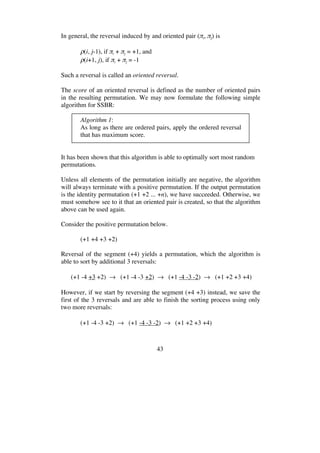
Consider the positive permutation below.
(+1 +4 +3 +2)
Reversal of the segment (+4) yields a permutation, which the algorithm is
able to sort by additional 3 reversals:
(+1 -4 +3 +2) (+1 -4 -3 +2) (+1 -4 -3 -2) (+1 +2 +3 +4)
However, if we start by reversing the segment (+4 +3) instead, we save the
first of the 3 reversals and are able to finish the sorting process using only
two more reversals:
(+1 -4 -3 +2) (+1 -4 -3 -2) (+1 +2 +3 +4)
44
Thus, if we want a minimum number of reversals, we have to be careful in
selecting the initial reversal in this case.
A possible strategy for selecting this reversal is the following.
Algorithm 2:
Find the pair (+ i, + j) for which | j – i| = 1, j i + 3, and i is minimal.
Then reverse the segment (+ i+1 ... + j-1).
In the example above, the pair (+1, +2) is found, and the segment (+4 +3) is
reversed. In this example, this strategy is sufficient to sort the permutation
optimally. However, we cannot be sure that this is always the case. If, for
example, a permutation is sorted in reversed order, (+n ... +2 +1), there is no
pair that fulfills the conditions above. However, this situation can be avoided
by requiring that +1 is always the first element of a permutation. Unless the
permutation is sorted, we are always able to find a pair that satisfies the con-
dition.
It is easy to see that this strategy is sufficient to sort any permutation. When
a positive permutation is created, we select the first pair (+ i, + j) for which
+ i is in its correct position, and + j is not. When the segment between these
two elements is reversed, at least one oriented pair is created. After making
the reversal induced by this oriented pair, the sign of + j is reversed, so that a
subsequent reversal can bring + j to its correct position (right after + i).
The question now is whether the strategy is optimal. To answer this ques-
tion, we will use the notion of a cycle graph of a permutation [5]. Let be a
signed permutation. The first step in constructing the cycle graph is to frame
by the two extra elements 0 and n + 1: = (0 1 2 ... n n+1). Next, this
permutation is mapped one-to-one into an unsigned permutation ’ of 2n+2
elements by replacing
• each positive element +x in by the sequence 2x-1 2x,
• each negative element -x in by the sequence 2x 2x+1, and
• n+1 by 2n-1.
45
For example, the permutation
= (+1 -4 -2 +3 5)
becomes
’ = (0 1 2 8 7 4 3 5 6 9)
Note that the mapping is one-to-one. The reversal (i, j) of corresponds to
the reversal (2i-1, 2j) of ’.
The cycle graph for is an edge-colored graph of 2n+2 nodes { 0 1 ...
2n+2}. For each i, 0 i n, we join two nodes 2i and 2i+1 by a black edge,
and with a gray edge, if | 2i+1 - 2i| = 1. Figure 5.4.4 depicts an example of a
cycle graph. Black edges appear as straight lines. Gray edges appear as
curved lines.
Figure 5.4.4. Cycle graph for = (+1 -4 -2 +3).
The black edges are called reality edges, and the gray edges are called dream
edges [37]. The reality edges define the permutation ’ (what you have), and
the dream edges define the identity permutation (what you want).
Every node has degree two, that is, every node has exactly two incident
edges. Thus a cycle graph consists of a set of cycles. Each of these cycles is
an alternating cycle, that is, adjacent edges have different colors.
We use k-cycle to refer to an alternating cycle of length k, that is, a cycle
consisting of k edges. The cycle graph in Figure 5.5.4 consists of a 2-cycle
and an 8-cycle. The cycle graph for the identity permutation (+1 +2 ... +n)
consists of n+1 2-cycles (see Figure 5.4.5). Sorting by reversals can be
viewed as a process that increases the number of cycles to n + 1.
46
Figure 5.4.5. Cycle graph for = (+1 +2 +3 +4).
It is easy to see that every reversal induced by an ordered pair increases the
number of cycles by one. On the other hand, if there is no ordered pair (be-
cause the permutation is positive), then there is no single reversal, which will
increase the number of cycles. In this case we will try to find a reversal,
which without reducing the number of cycles creates one or more oriented
pairs.
A cycle is said to be oriented if it contains edges that correspond to one or
more oriented pairs; otherwise, it is said to be non-oriented. We must, as far
as possible, avoid creating non-oriented cycles, unless they are 2-cycles.
Let be positive permutation, and assume that is reduced, that is, does
not contain consecutive elements. A framed interval in is an interval of the
form
i j+1 j+2 ... j+k-1 i+k
such that all its elements belong to the interval [i ... i+k]. In other words, a
framed interval consists of integers that can be reordered as i i+1 ... i+k.
Keep in mind that since is a circular permutation, we may wrap around
from the end to the start. Consider the permutation below (the plus signs
have been omitted):
(1 4 7 6 5 8 3 2 9)
The whole permutation is a framed interval. The segment 4 7 6 5 8 is a
framed interval, and the segment 3 2 9 1 4 is also a framed interval, since, by
circularity, 1 is the successor of 9, and the permutation can be reordered as
9 1 2 3 4.
47
Now we can conveniently define a hurdle. A hurdle is a framed interval that
does not contain any shorter framed intervals. In the example above, the
whole permutation is not a hurdle, since it contains the framed interval 4 7 6
5 8. The framed intervals 4 7 6 5 8 and 3 2 9 1 4 are both hurdles, since they
do not properly contain any framed intervals.
In order to get rid of hurdles, two operations are introduced: hurdle cutting
and hurdle merging. The first one, hurdle cutting, consists in reversing the
segment between i and i + 1 of a hurdle:
i j+1 j+2 ... i+1... j+k-1 i+k
Given the permutation (1 4 7 6 5 8 3 2 9), the result of cutting the hurdle 4 7
6 5 8 is the permutation (1 4 -6 -7 5 8 3 2 9).
It has been shown that when a permutation contains only one hurdle, one
such reversal creates enough oriented pairs to completely sort the resulting
permutation by means of oriented reversals. However, when a permutation
contains two or more hurdles, this is not always the case. We need one more
operation: hurdle merging.
Hurdle merging consists of reversing the segment between two end points of
two hurdles, inclusive the two end points:
i j+1 j+2 ... i+k ... i’ ... i+k
It has been shown [15] that the following algorithm, together with Algorithm
1, can be used to optimally sort any signed permutation:
Algorithm 3:
If a permutation has an even number of hurdles, merge two con-
secutive hurdles. If a permutation has an odd number of hurdles,
then if it has one hurdle whose cutting decreases the number of
cycles, then cut it; otherwise, merge two non-consecutive hurdles,
or consecutive hurdles if there are exactly three hurdles.
48
Since Algorithm 2, described earlier, corresponds to hurdle cutting we are
not guaranteed an optimal sorting, unless the number of hurdles is less than
2. However, it is easy to see that those signed permutations we must be able
sort in order to find the minimum number of flips for executing a k-opt have
at most one hurdle. Consider the positive permutation (1 4 7 6 5 8 3 2),
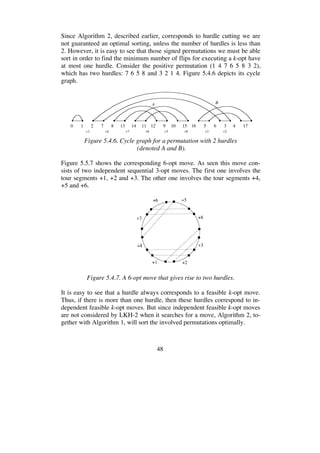
which has two hurdles: 7 6 5 8 and 3 2 1 4. Figure 5.4.6 depicts its cycle
graph.
0 1 2 7 8 13 14 11 12 9 10 15 16 5 6 3 4 17
+1 +4 +7 +6 +5 +8 +3 +2
BA
Figure 5.4.6. Cycle graph for a permutation with 2 hurdles
(denoted A and B).
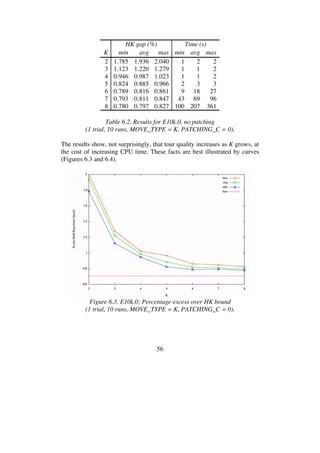
Figure 5.5.7 shows the corresponding 6-opt move. As seen this move con-
sists of two independent sequential 3-opt moves. The first one involves the
tour segments +1, +2 and +3. The other one involves the tour segments +4,
+5 and +6.
Figure 5.4.7. A 6-opt move that gives rise to two hurdles.
It is easy to see that a hurdle always corresponds to a feasible k-opt move.
Thus, if there is more than one hurdle, then these hurdles correspond to in-
dependent feasible k-opt moves. But since independent feasible k-opt moves
are not considered by LKH-2 when it searches for a move, Algorithm 2, to-
gether with Algorithm 1, will sort the involved permutations optimally.
49
Below is given a function, MakeKOptMove, which uses these algorithms for
executing a k-opt move using a minimum number of FLIP-operations.
void MakeKOptMove(long k) {
int i, j, Best_i, Best_j, BestScore, s;
FindPermutation(k);
FindNextReversal:
BestScore = -1;
for (i = 1; i <= 2 * k - 2; i++) {
j = q[incl[p[i]]];
if (j >= i + 2 && (i & 1) == (j & 1) &&
(s = (i & 1) == 1 ? Score(i + 1, j, k) :
Score(i, j - 1, k)) > BestScore) {
BestScore = s; Best_i = i; Best_j = j;
}
}
if (BestScore >= 0) {
i = Best_i; j = Best_j;
if ((i & 1) == 1) {
FLIP(t[p[i + 1]], t[p[i]], t[p[j]], t[p[j + 1]]);
Reverse(i + 1, j);
} else {
FLIP(t[p[i - 1]], t[p[i]], t[p[j]], t[p[j - 1]]);
Reverse(i, j - 1);
}
goto FindNextReversal;
}
for (i = 1; i <= 2 * k - 1; i += 2) {
j = q[incl[p[i]]];
if (j >= i + 2) {
FLIP(t[p[i]], t[p[i + 1]], t[p[j]], t[p[j - 1]]);
Reverse(i + 1, j - 1);
goto FindNextReversal;
}
}
}
Comments:
• At entry the move to be executed must be available in the two global
arrays t and incl, where t contains the nodes of the alternating cycles,
and incl represents the in-edges of these cycles, {(t[i], t[incl[i]]) :
1 ≤ i ≤ 2k}.
50
• First, the function FindPermutation is called in order to find the per-
mutation p and its inverse q, where p gives the order in which the t-
nodes occur on the tour (see Section 5.3).
• The first for-loop determines, if possible, an oriented reversal with
maximum score. At each iteration, the algorithm explores the two
cases shown in Figures 5.4.8 and 5.4.9.
Figure 5.4.8. Oriented reversal: j i+2 i odd j odd p[j] = incl[p[i]].
Figure 5.4.9. Oriented reversal: j i +2 i even j even p[j] =
incl[p[i]].
• If an oriented reversal is found, it is executed. Otherwise, the last for-
loop of the algorithm searches for a non-oriented reversal (caused by
a hurdle). See Figure 5.4.10.
Figure 5.4.10 Non-oriented reversal: j i +3 i odd j even p[j] =
incl[p[i]].
• As soon as a reversal has been found, the reversal and the
corresponding FLIP-operation on the tour are executed. The fourth
argument of FLIP has been omitted, as it can be computed from the
first three. The auxiliary function Reverse, shown below, executes a
reversal of the permutation segment p[i..j] and updates the inverse
permutation q accordingly.
51
void Reverse(int i, int j) {
for (; i < j; i++, j--) {
int pi = p[i];
q[p[i] = p[j]] = i;
q[p[j] = pi] = j;
}
}
• The auxiliary function Score, shown below, returns the score of the
reversal of p[left..right].
int Score(int left, int right, int k) {
int count = 0, i, j;
Reverse(left, right);
for (i = 1; i <= 2 * k - 2; i++) {
j = q[incl[p[i]]];
if (j >= i + 2 && (i & 1) == (j & 1))
count++;
}
Reverse(left, right);
return count;
}
Since the tour is represented by the two-level tree data structure [10], the
complexity of the FLIP-operation isO( N ). The complexity of Make-
KOptMove is O(k N + k3
), since there are at most k calls of FLIP, and at
most k2
calls of Score, each of which has complexity O(k).
The complexity of Score may be reduced from O(k) to O(logk) by using a
balanced search tree [12]. This will reduce the complexity of Make-
KOptMove to O(k n + k2
logk). However, this is of little practical value,
since usually k is very small in relation to n, so that the term k n domi-
nates.
The presented algorithm for executing a move minimizes the number of
flips. However, this need not be the best way to minimize running time. The
lengths of the tour segments to be flipped should not be ignored. Currently,
however, no algorithm is known that solves this sorting problem optimally.
It is an interesting area of future research.
52
6. Computational Results
This section presents the results of a series of computational experiments,
the purpose of which was to examine LKH-2’s performance when general
K-opt moves are used as submoves. The results include its qualitative per-
formance and its run time efficiency. Run times are measured in seconds on
a 2.7 GHz Power Mac G5 with 8 GB RAM.
The performance has been evaluated on the following spectrum of symmet-
ric problems:
E-instances: Instances consisting of uniformly distributed points
in a square.
C-instances: Instances consisting of clustered points in a square.
M-instances: Instances consisting of random distance matrices.
R-instances: Real world instances.
The E-, C- and M-instances are taken from the 8th
DIMACS Implementation
Challenge [23]. The R-instances are taken from the TSP web page of William
Cook et al. [39]. Sizes range from 10,000 to 10,000,000 cities.
6.1 Performance for E-instances
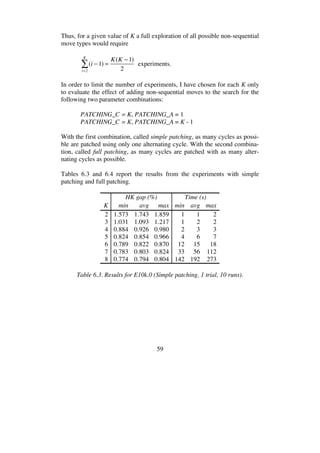
The E-instances consist of cities uniformly distributed in the 1,000,000 by
1,000,000 square under the Euclidean metric. For testing purposes I have
selected those instances of 8th
DIMACS Implementation Challenge that
have 10,000 or more cites. Optima for these instances are currently un-
known. I follow Johnson and McGeoch [24] in measuring tour quality in
terms of percentage over the Held-Karp lower bound [16, 17] on optimal
tours. The Held-Karp bound appears to provide a consistently good ap-
proximation to the optimal tour length [22].
Table 6.1 covers the lengths of the current best tours for the E-instances.
These tours have all been found by LKH. The first two columns give the
names of the instances and their number of nodes. The column labeled CBT
contains the lengths of the current best tours. The column labeled HK bound
contains the Held-Karp lower bounds. The table entries for the two largest
instances (E3M.0 and E10M.0), however, contain approximations to the
Held-Karp lower bounds (lower bounds on the lower bounds).
53
The column labeled HK gap (%) gives for each instance the percentage ex-
cess of the current best tour over the Held-Karp bound:
HK gap (%) =
CBT HK bound
HK bound
100%
It is well known that for random Euclidean instances with n cities distrib-
uted uniformly randomly over a rectangular area of A units, the ratio of the
optimal tour length to n A approaches a limiting constant COPT as n .
Johnson, McGeoch, and Rothenberg [21] have estimated COPT to 0.7124 ±
0.0002. The last column of Table 6.1 contains these ratios. The results are
consistent with this estimate for large n.
Instance n CBT HK bound
HK gap
(%)
CBT
n
10 6
E10k.0 10,000 71,865,826 71,362,276 0.706 0.7187
E10k.1 10,000 72,031,896 71,565,485 0.652 0.7203
E10k.2 10,000 71,824,045 71,351,795 0.662 0.7182
E31k.0 31,623 127,282,687 126,474,847 0.639 0.7158
E31k.1 31,623 127,453,582 126,647,285 0.637 0.7167
E100k.0 100,000 225,790,930 224,330,692 0.651 0.7140
E100k.1 100,000 225,662,408 224,241,789 0.634 0.7136
E316k.0 316,228 401,310,377 398,582,616 0.684 0.7136
E1M.0 1,000,000 713,192,435 708,703,513 0.633 0.7132
E3M.0 3,162,278 1,267,372,053 1,260,000,000 0.585 0.7127
E10M.0 10,000,000 2,253,177,392 2,240,000,000 0.588 0.7125
Table 6.1. Tour quality for E-instances.
Using cutting-plane methods Concorde [1] has found a lower bound of
713,003,014 for the 1,000,000-city instance E1M.0 [4]. The bound shows
that LKH’s tour for this instance has a length at most 0.027% greater than
the length of an optimal tour.
54
6.1.1 Results for E10k.0
The first test instance is E10k.0. Figure 6.1 depicts the current best tour for
this instance.
Figure 6.1. Best tour for E10k.0
First we will examine, for increasing values of K, how tour quality and CPU
times are affected if we use non-sequential K-opt moves as submoves. The 5
-nearest edges incident to each node are used as candidate set (see Figure
6.2). As many as 99.5% of the edges of the best tour belong to this set.
55
Figure 6.2. 5 -nearest candidate set for E10k.0.
For each value K between 2 and 8 ten local optima were found, each time
starting from a new initial tour. Initial tours are constructed using self-
avoiding random walks on the candidate edges [18].
The results from these experiments are shown in Table 6.2. The table covers
the Held-Karp gap in percent and the CPU time in seconds used for each
run. The program parameter PATCHING_C specifies the maximum number
of cycles that may be patched during the search for moves. In this experi-
ment, the value is zero, indicating that only non-sequential moves are to be
considered. Note, however, that the post optimization procedure of LKH for
finding improving non-sequential 4- or 5-opt moves is used in this as well
as all the following experiments.
56
HK gap (%) Time (s)
K min avg max min avg max
2 1.785 1.936 2.040 1 2 2
3 1.123 1.220 1.279 1 1 2
4 0.946 0.987 1.023 1 1 2
5 0.824 0.885 0.966 2 3 3
6 0.789 0.816 0.861 9 18 27
7 0.793 0.811 0.847 43 69 96
8 0.780 0.797 0.827 100 207 361
Table 6.2. Results for E10k.0, no patching
(1 trial, 10 runs, MOVE_TYPE = K, PATCHING_C = 0).
The results show, not surprisingly, that tour quality increases as K grows, at
the cost of increasing CPU time. These facts are best illustrated by curves
(Figures 6.3 and 6.4).
Figure 6.3. E10k.0: Percentage excess over HK bound
(1 trial, 10 runs, MOVE_TYPE = K, PATCHING_C = 0).
57
Figure 6.4. E10k.0: CPU time
(1 trial, 10 runs, MOVE_TYPE = K, PATCHING_C = 0).
As expected, CPU time grows exponentially with K. The average time per
run grows as 0.02 3.12K
(RMS error: 2.9). What is the best choice of K for
this instance? Unfortunately, there is no simple answer to this question. It is
a tradeoff between quality and time. A possible quality-time assessment of
K could be defined as the product of time and excess over optimum (OPT):
Time(K)
Length(K) OPT
OPT
The smaller this value is for K the better. The measure gives an equal
weight to time and quality. Figure 6.5 depicts the measure for this experi-
ment, where OPT has been replaced by the length of the current best tour.
As can be seen, 4 and 5 are the two best choices for K if this measure is
used. Note, however, that if one wants the shortest possible tour, K should
be as large as possible while respecting given time constraints.
58
Figure 6.5. E10k.0: Quality-time tradeoff
(No patching, 1 trial, 10 runs).
We will now examine the effect of integrating non-sequential and sequential
moves. To control the magnitude of the search for non-sequential moves
LKH-2 provides the following two program parameters:
PATCHING_C: Maximum number of cycles that can be patched to
form a tour
PATCHING_A: Maximum number of alternating cycles that can be
used for cycle patching
Suppose K-opt moves are used as basis for constructing non-sequential
moves. Then PATCHING_C can be at most K. PATCHING_A must be less
than or equal to PATCHING_C - 1. Search for non-sequential moves will be
made only if PATCHING_C 2 and PATCHING_A 1.
59
Thus, for a given value of K a full exploration of all possible non-sequential
move types would require
(i 1) =
K(K 1)
2i=2
K
experiments.
In order to limit the number of experiments, I have chosen for each K only
to evaluate the effect of adding non-sequential moves to the search for the
following two parameter combinations:
PATCHING_C = K, PATCHING_A = 1
PATCHING_C = K, PATCHING_A = K - 1
With the first combination, called simple patching, as many cycles as possi-
ble are patched using only one alternating cycle. With the second combina-
tion, called full patching, as many cycles are patched with as many alter-
nating cycles as possible.
Tables 6.3 and 6.4 report the results from the experiments with simple
patching and full patching.
HK gap (%) Time (s)
K min avg max min avg max
2 1.573 1.743 1.859 1 1 2
3 1.031 1.093 1.217 1 2 2
4 0.884 0.926 0.980 2 3 3
5 0.824 0.854 0.966 4 6 7
6 0.789 0.822 0.870 12 15 18
7 0.783 0.803 0.824 33 56 112
8 0.774 0.794 0.804 142 192 273
Table 6.3. Results for E10k.0 (Simple patching, 1 trial, 10 runs).
60
HK gap (%) Time (s)
K min avg max min avg max
2 1.573 1.743 1.859 1 2 2
3 1.039 1.098 1.185 1 2 2
4 0.863 0.914 0.950 2 3 3
5 0.795 0.866 0.923 4 6 8
6 0.792 0.826 0.843 12 19 38
7 0.768 0.792 0.822 33 62 139
8 0.757 0.770 0.781 89 198 340
Table 6.4. Results for E10k.0 (Full patching, 1 trial, 10 runs).
Not surprisingly, these experiments show that better tour quality is achieved
if non-sequential moves are allowed. However, it is a nice surprise that this
increase in quality is obtained with very little time penalty. In fact, for K 6
the algorithm uses less CPU time when non-sequential moves are allowed.
61
6.1.2 Results for E100k.0
Are these conclusions also valid for larger E-instances? In order to answer
this question, the same experiments as described in the previous section
were made with the 100,000-city instance E100k.0. The results from these
experiments are reported in Tables 6.5-7. As can be seen from these tables
the same conclusions may be drawn. It pays off to use non-sequential
moves. Note, however, for this instance there seems to be no reason to pre-
fer full patching to simple patching.
HK gap (%) Time (s)
K min avg max min avg max
2 1.779 1.839 1.941 88 99 137
3 1.126 1.151 1.184 22 33 43
4 0.920 0.931 0.951 25 31 34
5 0.818 0.837 0.846 48 61 75
6 0.781 0.791 0.804 276 341 395
7 0.754 0.759 0.770 1051 1409 1720
8 0.721 0.736 0.749 3529 5315 7351
Table 6.5. Results for E100k.0 (No patching, 1 trial, 10 runs).
HK gap (%) Time (s)
K min avg max min avg max
2 1.627 1.667 1.716 23 29 34
3 1.010 1.034 1.092 23 29 37
4 0.851 0.873 0.899 33 40 48
5 0.785 0.799 0.813 83 91 111
6 0.735 0.751 0.778 253 293 398
7 0.725 0.731 0.742 698 992 1550
8 0.709 0.715 0.721 2795 4323 7017
Table 6.6. Results for E100k.0 (Simple patching, 1 trial, 10 runs).
62
HK gap (%) Time (s)
K min avg max min avg max
2 1.627 1.667 1.716 23 29 34
3 0.998 1.020 1.184 20 23 31
4 0.838 0.857 0.874 29 34 40
5 0.748 0.801 0.809 78 85 101
6 0.746 0.755 0.766 293 291 322
7 0.727 0.734 0.747 793 1138 1506
8 0.706 0.714 0.719 2432 5722 9058
Table 6.7. Results for E100k.0 (Full patching, 1 trial, 10 runs).
63
6.1.3 Comparative results for E-instances
In order to examine the performance of the implementation as n grows, I
used the following E-instances: E10k.0, E31k.0, E100k.0, E316k.0, E1M.0,
E3M.0, E10M.0. The instance sizes are increasing half-powers of 10: 104
,
104 5
, 105
, 105 5
, 106
, 106 5
, and 107
. For each of these instances a local opti-
mum was found using values of K between 4 and 7, and using either no
patching, simple patching or full patching. Due to long computation times
for the largest instances only one run was made for each instance. The re-
sults of the experiments are reported in Tables 6.8-10. Figures 6.6-11 pro-
vide a graphical visualization of the results. As can be seen the algorithm is
very robust for this problem type.
Average HK gap (%)
K E10k.0 E31k.0 E100k.0 E316k.0 E1M.0 E3M.0 E10M.0
4 0.987 0.909 0.931 0.976 0.931 0.896 0.892
5 0.885 0.821 0.837 0.881 0.830 0.791 0.780
6 0.816 0.769 0.791 0.829 0.771 0.737 0.720
7 0.811 0.741 0.759 0.785 0.743 0.699 0.681
Time (s)
K E10k.0 E31k.0 E100k.0 E316k.0 E1M.0 E3M.0 E10M.0
4 2 6 31 290 3116 22930 120783
5 3 11 61 343 2340 25893 113674
6 17 79 341 1640 6741 39906 143704
7 69 331 1409 4919 21969 88021 330188
Table 6.8. Results for E-instances (No patching, 1 trial, 1 run).
64
Figure 6.6. E-instances: Percentage excess over HK bound
(No patching, 1 trial, 1 run).
Figure 6.7. E-instances: Time per node
(No patching, 1 trial, 1 run).
65
Average HK gap (%)
K E10k.0 E31k.0 E100k.0 E316k.0 E1M.0 E3M.0 E10M.0
4 0.926 0.854 0.873 0.902 0.855 0.815 0.816
5 0.854 0.785 0.799 0.834 0.787 0.736 0.736
6 0.822 0.748 0.751 0.791 0.736 0.695 0.688
7 0.803 0.724 0.731 0.766 0.712 0.668 0.660
Time (s)
K E10k.0 E31k.0 E100k.0 E316k.0 E1M.0 E3M.0 E10M.0
4 3 9 40 206 1281 5536 18232
5 6 23 90 371 1688 11823 24050
6 15 70 291 1049 4354 20277 58623
7 56 290 987 4151 15639 69706 239741
Table 6.9. Results for E-instances (Simple patching, 1 trial, 1 run).
Figure 6.8. E-instances: Percentage excess over HK bound
(Simple patching, 1 trial, 1 run).
66
Figure 6.9. E-instances: Time per node
(Simple patching, 1 trial, 1 run).
Average HK gap (%)
K E10k.0 E31k.0 E100k.0 E316k.0 E1M.0 E3M.0 E10M.0
4 0.926 0.851 0.857 0.889 0.850 0.808 0.808
5 0.854 0.784 0.801 0.829 0.780 0.732 0.728
6 0.826 0.744 0.755 0.786 0.742 0.689 0.639
7 0.792 0.721 0.734 0.765 0.719 0.665 0.657
Time (s)
K E10k.0 E31k.0 E100k.0 E316k.0 E1M.0 E3M.0 E10M.0
4 3 10 33 216 1062 4503 19225
5 6 25 85 390 1567 6797 23563
6 19 77 291 1115 4039 21277 74892
7 63 309 1138 4688 17360 57010 245502
Table 6.10. Results for E-instances (Full patching, 1 trial, 1 run).
67
Figure 6.10. E-instances: Percentage excess over HK bound
(Full patching, 1 trial, 1 run).
Figure 6.11. E-instances: Time per node
(Full patching, 1 trial, 1 run).
68
6.1.4 Solving E10k.0 and E100k.0 by multi-trial LKH
In the experiments described until now only one trial per run was used. As
each run takes a new initial tour as its starting point, the trials have been in-
dependent. Repeatedly starting from new tours, however, is an inefficient
way to sample locally optimal tours. Valuable information is thrown away.
A better strategy is to kick a locally optimal tour (that is, to perturb it
slightly), and reapply the algorithm on this tour. If this effort produces a
better tour, we discard the old tour and work with the new one. Otherwise,
we kick the old tour again. To kick the tour the double-bridge move (see
Figure 2.4) is often used [2, 3, 29].
An alternative strategy is used by LKH. The strategy differs from the stan-
dard approach in that it uses a random initial tour and restricts its search
process by the following rule:
Moves in which the first edge (t1,t2) to be broken belongs to
the current best solution tour are not investigated.
It has been observed that this dependence of the trials almost always results
in significantly better tours than would be obtained by the same number of
independent trials. In addition, the search restriction above makes it fast.
I made a series of experiments with the instances E10k.0 and E100k.0 to
study how multi-trial LKH is affected when K is increased and cycle patch-
ing is added to the basic K-opt move. Tables 6.11-13 report the results for
1000 trials on E10k.0. As can be seen, tour quality increases as K increases,
and as in the previous 1-trial experiments with this instance it is advanta-
geous to use cycle patching (simple patching seems to be a better choice
than full patching).
HK gap (%) Time (s)
K min avg max min avg max
4 0.712 0.728 0.741 512 569 640
5 0.711 0.720 0.745 444 564 750
6 0.711 0.716 0.724 1876 2578 4145
Table 6.11. Results for E10k.0 (No patching, 1000 trials, 10 runs).
69
HK gap (%) Time (s)
K min avg max min avg max
4 0.716 0.728 0.742 387 464 618
5 0.710 0.724 0.747 464 559 689
6 0.706 0.714 0.729 634 798 924
Table 6.12. Results for E10k.0 (Simple patching, 1000 trials, 10 runs).
HK gap (%) Time (s)
K min avg max min avg max
4 0.712 0.724 0.740 427 511 562
5 0.709 0.721 0.731 473 567 689
6 0.707 0.720 0.742 805 1054 1468
Table 6.13. Results for E10k.0 (Full patching, 1000 trials, 10 runs).
Figures 6.12-14 illustrate the convergence of the tour length for each of the
three patching cases.
Figure 6.12. Convergence for E10k.0
(No patching, 1000 trials, best of 10 runs).
70
Figure 6.13. Convergence for E10k.0
(Simple patching, 1000 trials, best of 10 runs).
Figure 6.14. Convergence for E10k.0
(Full patching, 1000 trials, best of 10 runs).
71
Tables 6.15 and Figures 6.15-17 report the experimental results for multi-
trial LKH on the E100k.0 instance. These results follow the same pattern as
the results for E10k.0.
HK gap (%) Time (s)
K No Simple Full No Simple Full
4 0.798 0.709 0.694 27023 9304 10675
5 0.707 0.674 0.672 32740 12043 13873
6 0.703 0.663 0.665 189911 22202 25266
Table 6.14. Results for E100k.0 (1000 trials, 1 run).
Figure 6.15. Convergence for E100k.0
(No patching, 1000 trials, 1 run).
72
Figure 6.16. Convergence for E100k.0
(Simple patching, 1000 trials, 1 run).
Figure 6.17. Convergence for E100k.0
(Full patching, 1000 trials, 1 run).
73
6.2 Performance for C-instances
It is well known that geometric instances with clustered points are difficult
for the Lin-Kernighan heuristic. When it tries to remove an edge bridging
two clusters, it is tricked into long and often fruitless searches. Each time a
long edge is removed, the cumulative gain rises enormously, and the heu-
ristic is encouraged to perform very deep searches. The cumulative gain
criterion is too optimistic and does not effectively prune the search space for
this type of instances [32].
To examine LKH’s performance for clustered problems I performed ex-
periments on the eight largest C-instances of the 8th
DIMACS TSP Chal-
lenge. Table 6.15 covers the lengths of the current best tours for these in-
stances. These tours have all been found by LKH. My experiments with C-
instances are very similar to those performed with the E-instances.
Table 6.15. Tour quality for C-instances.
Instance n CBT HK bound HK gap (%)
C10k.0 10,000 33,001,034 32,782,155 0.668
C10k.1 10,000 33,186,248 32,958,946 0.690
C10k.2 10,000 33,155,424 32,926,889 0.694
C31k.0 31,623 59,545,428 59,169,193 0.636
C31k.1 31,623 59,293,266 58,840,096 0.770
C100k.0 100,000 104,646,656 103,916,254 0.703
C100k.1 100,000 105,452,240 104,663,040 0.754
C316k.0 316,228 186,936,768 185,576,667 0.733
74
6.2.1 Results for C10k.0
Figure 6.18 depicts the current best tour for the 10,000-city instance C10k.0.
Its clustered nature is clear. The cities are grouped so that distances between
cities in distinct groups are large in comparison to distances between cities
within a group.
Figure 6.18. Best tour for C10k.0.
As in the experiments with E-instances a candidate set based on the -
measure could be used. Figure 6.19 depicts the 5 -nearest candidate set for
C10k.0. Since the set contains as many as 99.3% of the edges of the current
best tour, it seems to be well qualified as a candidate set. But, unfortunately,
some of the long edges of the best tour are missing, which means that we
cannot expect high-quality tours to be found.
75
Figure 6.19. 5 -nearest candidate set for C10k.0.
For geometric instances, Johnson [20] has suggested using quadrant-based
neighbors, that is, the least costly edges in each of the four geometric
quadrants (for 2-dimensional instances) around the city. For example, for
each city its neighbors could be chosen so as to include, if possible, the 5
closest cities in each of its four surrounding quadrants.
For clustered instances I have chosen to use candidate sets defined by the
union of the 4 -nearest neighbors and the 4 quadrant-nearest neighbors (the
closest city in each of the four quadrants). Figure 6.20 depicts this candidate
set for C10k.0. Even though this candidate subgraph is very sparse (average
number of neighbors is 5.1) it has proven to be sufficiently rich to produce
excellent tours. It contains 98.3% of the edges of the current best tour,
which is less than for the candidate subgraph defined by 5 -nearest neigh-
bors. In spite of this, it leads to better tours.
76
Figure 6.20. 4 -nearest + 4 quadrant nearest candidate set for C10k.0.
However, even if this sparse candidate set is used, my experiments with cy-
cle patching on clustered instances have revealed that the search space is
large. To prune the search space I decided to restrict cycle patching for this
type of instances by adding the following rule:
All in-edges of an alternating cycle must belong to the candidate set.
Note that the algorithm for generating alternating cycles described in Sec-
tions 5.1 and 5.2 already guarantees that all in-edges, except the last one, are
candidate edges. The rule is put into force by a program parameter,
The results from experiments with 1-trial solution of C10k.0 are shown in
Tables 6.16-18. As can be seen, tour quality and CPU time are acceptable.
But note that increasing K from 5 to 6 incurs a considerable runtime penalty.
77
HK gap (%) Time (s)
K min avg max min avg max
3 2.129 2.771 3.316 1 2 2
4 1.003 2.020 3.356 2 2 3
5 1.131 1.472 2.332 7 9 11
6 0.963 1.289 1.767 122 167 256
Table 6.16. Results for C10k.0 (No patching, 1 trial, 10 runs).
HK gap (%) Time (s)
K min avg max min avg max
3 1.837 2.805 4.248 2 2 2
4 1.461 1.952 2.935 4 5 6
5 1.022 1.255 1.650 18 23 33
6 0.995 1.259 1.918 111 144 194
Table 6.17. Results for C10k.0 (Simple patching, 1 trial, 10 runs).
HK gap (%) Time (s)
K min avg max min avg max
3 1.612 2.038 2.472 1 2 2
4 1.524 1.973 2.654 4 5 6
5 1.019 1.402 1.962 19 25 30
6 0.896 1.218 1.782 93 143 236
Table 6.18. Results for C10k.0 (Full patching, 1 trial, 10 runs).
78
6.2.2 Results for C100k.0
Looking at the results for 1-trial solution of C10k.0 (Tables 6.16-18), there
seems to be only little advantage in using cycle patching. To see whether
this also applies to larger instances I made the same experiments with the
100,000-city instance C100k.0. The results of these experiments are covered
in Tables 6.19-21. As can be seen, it is also questionable whether patching
is useful for this instance. In addition, the runtime penalty for increasing K
from 5 to 6 is even more conspicuous for this instance.
HK gap (%) Time (s)
K min avg max min avg max
3 2.981 3.320 4.076 33 38 48
4 2.163 2.372 2.572 34 39 46
5 1.643 1.786 2.009 94 112 140
6 1.382 1.563 1.699 1519 1697 2097
Table 6.19. Results for C100k.0 (No patching, 1 trial, 10 runs).
HK gap (%) Time (s)
K min avg max min avg max
3 2.814 3.203 3.905 29 33 40
4 2.057 2.282 2.681 65 74 99
5 1.495 1.740 2.026 306 362 440
6 1.229 1.381 1.381 1578 1949 2348
Table 6.20. Results for C100k.0 (Simple patching, 1 trial, 10 runs).
HK gap (%) Time (s)
K min avg max min avg max
3 2.868 3.244 3.656 31 52 79
4 1.823 2.175 2.570 73 82 101
5 1.523 1.783 2.174 309 392 491
6 1.280 1.437 1.588 1721 2272 3392
Table 6.21. Results for C100k.0 (Full patching, 1 trial, 10 runs).
79
6.2.3 Comparative results for C-instances
In order to evaluate the robustness of the implementation we also performed
experiments with the instances C31k.0 and C316k.0. Tables 6.22-24 contain
comparative results for the four chosen C-instances.
Average HK gap (%) Time (s)
K C10k.0 C31k.0 C100k.0 C316k.0 C10k.0 C31k.0 C100k.0 C316k.0
3 2.771 2.327 3.320 4.419 2 16 38 416
4 1.453 1.987 2.287 3.001 2 8 51 329
5 1.472 1.404 1.786 2.068 17 30 112 673
Table 6.22. Results for C-instances (No patching, 1 trial, 1 run).
Average HK gap (%) Time (s)
K C10k.0 C31k.0 C100k.0 C316k.0 C10k.0 C31k.0 C100k.0 C316k.0
3 2.805 2.860 3.203 2.747 2 6 33 444
4 1.952 1.998 2.282 1.779 5 19 74 669
5 1.255 1.522 1.740 1.870 23 89 362 2038
Table 6.23. Results for C-instances (Simple patching, 1 trial, 1 run).
Average HK gap (%) Time (s)
K C10k.0 C31k.0 C100k.0 C316k.0 C10k.0 C31k.0 C100k.0 C316k.0
3 2.038 1.772 3.244 3.718 2 21 52 507
4 1.973 1.725 2.175 2.655 5 21 82 453
5 1.402 1.439 1.783 1.618 25 90 392 1881
Table 6.24. Results for C-instances (Full patching, 1 trial, 1 run).
80
6.2.4 Solving C10k.0 and C100k.0 by multi-trial LKH
The performance for 1-trial solution of the C-instances is not impressive.
However, as shown by the following results from 1000-trial experiments
with C10k.0 and C100k.0, high-quality solutions may be achieved using few
trials. It is interesting that for this instance type it does not seem to pay off
to set K to other values than 4, and that only little is gained by using non-
sequential moves.
HK gap (%) Time (s)
K No Simple Full No Simple Full
3 0.669 0.669 0.669 617 741 758
4 0.668 0.688 0.668 768 1180 1395
5 0.668 0.668 0.668 2049 3227 3797
Table 6.25. Results for C10k.0 (1000 trials, best of 10 runs).
Figure 6.21. Convergence for C10k.0
(No patching, 1000 trials, best of 10 runs).
81
Figure 6.22. Convergence for C10k.0
(Simple patching, 1000 trials, best of 10 runs).
Figure 6.23. Convergence for C10k.0
(Full patching, 1000 trials, best of 10 runs).
82
HK gap (%) Time (s)
K No Simple Full No Simple Full
3 0.895 1.011 1.045 23592 9553 13901
4 0.829 0.794 0.792 11700 12039 21711
5 0.823 0.829 0.806 14632 28639 34010
Table 6.26. Results for C100k.0 (1000 trials, 1 run)
Figure 6.24. Convergence for C100k.0
(No patching, 1000 trials, 1 run).
83
Figure 6.25. Convergence for C100k.0
(Simple patching, 1000 trials, 1 run).
Figure 6.26. Convergence for C100k.0
(Full patching, 1000 trials, 1 run).
84
6.3 Performance for M-instances
The testbed of the 8th
DIMACS TSP Challenge also contains seven in-
stances specified by distance matrices where each entry is chosen independ-
ently and uniformly from the integers in (0,1000000]. Sizes range from
1,000 to 10,000. All have been solved to optimality.
This type of instances appears to be easy to LKH-2. I have chosen only to
report the results of my experiments with the largest of these instances, the
10,000-city instance M10k.0.
6.3.1 Results for M10k.0
Tables 6.27-29 report the results of the 1-trial runs. As optimum is known
for this instance, I will measure tour quality as the percentage excess over
optimum. The tables show that high-quality solutions can be obtained using
only one trial, and with running times that are small, even for K = 8.
OPT gap (%) Time (s)
K min avg max min avg max
3 0.167 0.200 0.238 1 1 1
4 0.038 0.053 0.077 1 1 1
5 0.013 0.022 0.031 1 1 1
6 0.006 0.012 0.016 2 3 3
7 0.003 0.007 0.010 4 4 5
8 0.001 0.005 0.009 6 8 10
Table 6.27. Results for M10k.0 (No patching, 1 trial, 10 runs).
85
OPT gap (%) Time (s)
K min avg max min avg max
3 0.136 0.183 0.207 2 3 4
4 0.036 0.049 0.057 3 4 6
5 0.012 0.022 0.034 7 8 9
6 0.004 0.012 0,019 11 13 16
7 0.003 0.006 0.009 16 19 24
8 0.001 0.004 0.008 22 26 29
Table 6.28. Results for M10k.0 (Simple patching, 1 trial, 10 runs).
OPT gap (%) Time (s)
K min avg max min avg max
3 0.136 0.167 0.192 2 3 4
4 0.031 0.054 0.067 3 4 6
5 0.016 0.024 0.040 6 7 10
6 0.004 0.011 0.016 10 12 16
7 0.002 0.006 0.012 14 18 27
8 0.001 0.006 0.008 19 24 27
Table 6.29. Results for M10k.0 (Full patching, 1 trial, 10 runs).
Tables 6.27-29 suggest that there is no advantage in using cycle patching.
This is even more evident from Table 6.30, which reports the results from
1000-trial runs. Adding cycle patching does not result in better tours. It only
increases running time considerably.
OPT gap (%) Time (s)
K No Simple Full No Simple Full
3 0.051 0.047 0.091 321 2119 2149
4 0.013 0.012 0.010 297 2533 2601
5 0.004 0.004 0.005 340 3633 3490
6 0.001 0.002 0.002 641 6367 5923
7 0.001 0.001 0.001 900 10583 10284
8 0.000 0.000 0.000 1372 15301 16152
Table 6.30. Results for M10k.0 (1000 trials, 1 run).
86
6.4 Performance for R-instances
The preceding sections have presented computational results from experi-
ments with synthetic generated test instances. In order to study the perform-
ance of LKH-2 for real world instances I made experiments with three
large-scale instances from the TSP web page of Applegate, Bixby, Chvátal
and Cook [39]. These instances are listed in Table 6.31. The column labeled
CBT contains the length of the current best tour for each of the instances.
Instance n CBT
ch71009 71,009 4,566,506
lrb744710 744,710 1,611,420
World 1,904,711 7,515,964,553
Table 6.31. R-instances.
Optima for these instances are unknown. The current best tours have been
found by LKH. Since the Held-Karp lower bounds are not available, I will
measure tour quality as percentage excess over these tours (CBT gap).
87
6.4.1 Results for ch71009
The TSP web page of Applegate et al. contains a set of 27 test instances de-
rived from maps of real countries, ranging in size from 28 cities in Western
Sahara to 71,009 cities in China. I have selected the largest one of these in-
stances, ch71009, for my experiments. Figure 6.27 depicts the current best
tour for this instance (found by LKH).
Figure 6.27. Current best tour for ch71009.
The Concorde package [1] was used to compute a lower bound for ch71009
of 4,565,452. This bound shows that LKH’s best tour is at most 0.024%
greater than the length of an optimal tour.
Table 6.32 lists the computational results for one trial. The results indicate
that “Simple patching” or “Full patching” is to be preferred to “No patch-
ing”. In this respect ch71009 resembles E-instances. The advantage of using
patching is further emphasized by the 1000-trial results shown in Table
6.33. Note that the 1000-trial run with K = 6 and full patching results in a
tour that deviates only 0.004% from the current best tour.
88
CBT gap (%) Time (s)
K No Simple Full No Simple Full
4 0.188 0.213 0.229 16 27 30
5 0.118 0.126 0.127 25 93 95
6 0.086 0.091 0.092 204 471 380
7 0.059 0.042 0.053 847 1394 1443
8 0.057 0.040 0.041 5808 7626 7398
Table 6.32. Results for ch71009 (1 trial, 1 run).
CBT gap (%) Time (s)
K No Simple Full No Simple Full
4 0.084 0.066 0.055 9545 10246 10390
5 0.032 0.014 0.019 10682 15661 17896
6 0.010 0.008 0.004 71468 38664 36686
Table 6.33. Results for ch71009 (1000 trials, 1 run).
Figure 6.28. Convergence ch71009
(Full patching, 1000 trials, 1 run).
89
6.4.2 Results for lrb744710
The TSP web page of Applegate et al. contains a set of 102 instance based
on VLSI data. The instances range in size from 131 cities up to 744,710
cities. I have selected the largest one of these instances, lrb744710, for my
experiments. Figure 6.29 depicts the current best tour for this instance
(found by LKH).
Figure 6.29. Current best tour for lrb744710.
To give a clearer picture of what a VLSI-tour look like I have depicted the
optimal solution of the instance xqc2175 in Figure 6.30.
90
Figure 6.30. Optimal tour for xqc2175.
Table 6.34 lists the computational results for one trial. Again we see the
same picture. “Simple patching” or “Full patching” is to be preferred to “No
patching”. The running times show that this is a tough instance for LKH.
CBT gap (%) Time (s)
K No Simple Full No Simple Full
3 1.414 1.263 1.027 758 381 423
4 0.658 0.418 0.437 530 401 405
5 0.357 0.266 0.253 639 957 926
6 0.308 0.207 0.189 5711 5137 3931
7 0.203 0.135 0.142 33464 24331 17230
Table 6.34. Results for lrb744710 (1 trial, 1 run).
The 1-trial results indicate that using “Full patching” is a little more advan-
tageous than using “Simple patching”. Thus, to limit the number of experi-
ments I used “Full patching” in my 1000-trial runs. The results are given in
Table 6.35. Figure 6.31 depicts the change of the tour cost over the 1000
trials.
91
K CBT gap (%) Time (s)
3 0.392 89016
4 0.132 88256
5 0.081 228559
Table 6.35. Results for lrb744710 (Full patching, 1000 trials, 1 run).
Figure 6.31. Convergence for lrb744710
(Full patching, 1000 trials, 1 run).
The current best tour for this instance was found with additional runs that
exploit the subproblem partitioning and tour merging facilities of LKH-2.
92
6.4.3 Results for World
The largest test instance on the TSP web page of Applegate et al. is a
1,904,711-city instance of locations throughout the world, named World.
Figure 6.32 depicts the current best tour for this instance (found by LKH).
Figure 6.32. Projection of current best tour for World.
The Concorde package [1] was used to compute a lower bound of
7,512,276,947 for this instance (August 2007). This bound shows that LKH-
2’s best tour has length at most 0.049% greater than the length of an optimal
tour.
As can be seen from Figure 6.32, this instance is clustered. So in my ex-
periments I used the same candidate neighborhood as was used for the C-
instances, i.e., the 4 -nearest neighbors supplemented with the 4 quadrant-
nearest neighbors. In addition, the so-called Quick-Boruvka algorithm [3]
was used to construct the initial tour. I found that this tour construction al-
gorithm improved the tour quality considerably in my 1-trial runs. Table
6.36 lists the computational results from these runs.
CBT gap (%) Time (s)
K No Simple Full No Simple Full
3 1.072 0.915 1.011 4911 867 974
4 0.658 0.567 0.505 2881 1508 1459
5 0.490 0.301 0.316 3802 3736 7485
6 0.275 0.235 0.228 20906 15788 61583
Table 6.36. Results for World (1 trial, 1 run).
93
Table 6.37 reports the results from my experiments with multi-trial runs. I
have limited the experiments to only cover runs with 100 trials and simple
patching. Figure 6.33 depicts the change of the tour cost over the 100 trials.
K CBT gap (%) Time (s)
3 0.453 55962
4 0.189 41570
5 0.114 68581
6 0.077 206226
Table 6.37. Results for World (Simple patching, 100 trials, 1 run).
Figure 6.33. Convergence for World
(Simple patching, 100 trials, 1 run).
The current best tour for this instance was found with additional runs that
exploit the subproblem partitioning and tour merging facilities of LKH-2.
94
7. Conclusions
This report has described the implementation of a general k-opt submove for
the Lin-Kernighan heuristic. My computational experiments have shown
that the implementation is both effective and scalable. It should be noted,
however, that the usefulness of general k-opt submoves depends on the can-
didate graph. Unless the candidate graph is sparse (for example defined by
the five -nearest neighbors), it will often be too time consuming to choose
k larger than 4. Furthermore, the instance should not be heavily clustered.
The implementation allows the search for non-sequential moves to be inte-
grated with the search for sequential moves. It is interesting to note that in
many cases the use of non-sequential moves not only results in better tours
but also, what is surprising, reduce running time.
In the current implementation the user may choose the value of k as well the
extent of non-sequential moves. These choices are constant during program
execution. A possible future path for research would be to explore strategies
for varying k dynamically during a run.
95
References
[1] D. Applegate, R. Bixby, V. Chvátal, and W. Cook,
“Concorde: A code for solving Traveling Salesman Problems” (1999),
http://www.tsp.gatech.edu/concorde.html
[2] D. Applegate, R. Bixby, V. Chvátal, and W. Cook,
“Finding tours in the TSP”,
Technical Report 99885, Forschungsinstitut für Diskrete Mathematik,
Universität Bonn (1999).
[3] D. Applegate, W. Cook, and A. Rohe,
“Chained Lin-Kernighan for Large Traveling Salesman Problems”,
Technical Report 99887, Forschungsinstitut für Diskrete Mathematik,
Universität Bonn (2000).
[4] D. Applegate, R. Bixby, V. Chvátal, and W. Cook,
“Implementing the Dantzig-Fulkerson-Johnson Algorithm for Large
Traveling Salesman Problems”,
Mathematical Programming, 97, pp. 91-153 (2003).
[5] V. Bafna and P. Pevzner,
“Genome rearrangements and sorting by reversals”,
SIAM Journal on Computing, 25(2), pp. 272-289 (1996).
[6] A. Bergeron,
“A Very Elementary Presentation of the Hannenhalli-Pevzner Theory”,
Lecture Notes in Computer Science, 2089, pp. 106-117 (2001).
[7] A. Caprara,
“Sorting by reversals is difficult”,
In Proceedings of the First International Conference on Computational
Molecular Biology, pp. 75-83 (1997).
[8] B. Chandra, H. Karloff and C. Tovey,
“New results on the old k-opt algorithm for the TSP”,
In Proceedings of the 5th Annual ACM-SIAM Symposium on Discrete
Algorithms,
pp. 150-159 (1994).
96
[9] N. Christofides and S. Eilon,
“Algorithms for large-scale traveling salesman problems”,
Operations Research Quarterly, 23, pp. 511-518 (1972).
[10] M. L. Fredman, D. S. Johnson, L. A. McGeoch, and G. Ostheimer,
“Data Structures for Traveling Salesmen”,
J. Algorithms, 18(3) pp. 432-479 (1995).
[11] B. Funke, T. Grünert and S. Irnich,
“Local Search for Vehicle Routing and Scheduling Problems: Review and
Conceptual Integration”.
Journal of Heuristics, 11, pp. 267-306 (2005).
[12] D. Garg and A. Lal,
”CS360 - Independent Study Report”,
IIT-Delhi (2002).
[13] G. Gutin and A. P. Punnen,
“Traveling Salesman Problem and Its Variations”,
Kluwer Academic Publishers (2002).
[14] P. J. Hanlon, R. P. Stanley, and J. R. Stembridge,
“Some combinatorial aspects of the spectra of normally distributed random
matrices”.
Contemporary Mathematics, 138, pp. 151-174 (1992).
[15] S. Hannenhalli and P. A. Pevzer,
“Transforming cabbage into turnip: polynomial algorithm for sorting signed
permutations by reversals”,
In Proceedings of the 27th ACM-SIAM Symposium on Theory of
Computing, pp. 178-189 (1995).
[16] M. Held and R. M. Karp,
“The traveling-salesman problem and minimum spanning trees”,
Operations Research, 18, pp. 1138-1162 (1970).
[17] M. Held and R. M. Karp,
“The traveling-salesman problem and minimum spanning trees: Part II”,
Math. Programming, pp. 6-25 (1971).
97
[18] K. Helsgaun,
“An Effective Implementation of the Lin-Kernighan Traveling Salesman
Heuristic”,
European Journal of Operational Research, 12, pp. 106-130 (2000).
[19] H. H. Hoos and T. Stützle,
“Stochastic Local Search: Foundations and Applications”,
Morgan Kaufmann (2004).
[20] D. S. Johnson,
“Local optimization and the traveling salesman problem”,
Lecture Notes in Computer Science, 442, pp. 446-461 (1990).
[21] D. S. Johnson, L. A. McGeoch, and E. E. Rothberg,
“Asymptotic Experimental Analysis for the Held-Karp Traveling Salesman
Bound”,
Proc. 7th Ann. ACM-SIAM Symp. on Discrete Algorithms, pp. 341-350
(1996).
[22] D. S. Johnson and L. A. McGeoch,
“The Traveling Salesman Problem: A Case Study in Local Optimization”
in Local Search in Combinatorial Optimization, E. H. L. Aarts and J. K.
Lenstra (editors), John-Wiley and Sons, Ltd., pp. 215-310 (1997).
[23] D. S. Johnson, L. A. McGeoch, F. Glover, and C. Rego,
“8th
DIMACS Implementation Challenge: The Traveling Salesman Problem”
(2000),
http://www.research.att.com/~dsj/chtsp/
[24] D. S. Johnson and L. A. McGeoch,
“Experimental Analysis of Heuristics for the STSP”,
In The Traveling Salesman Problem and Its Variations, G. Gutin and A.
Punnen, Editors, pp. 369-443 (2002).
[25] H. Kaplan, R. Shamir, and R. E. Tarjan,
“Faster and simpler algorithm for sorting signed permutations by reversals”,
In Proc. 8th annual ACM-SIAM Symp. on Discrete Algorithms (SODA 97),
pp. 344-351, 1997.
98
[26] E. L. Lawler, J. K. Lenstra, A. H. G. Rinnooy Kan, and D. B. Shmoys
(eds.),
“The Traveling Salesman Problem: A Guided Tour of Combinatorial
Optimization”,
Wiley, New York (1985).
[27] S. Lin and B. W. Kernighan,
“An Effective Heuristic Algorithm for the Traveling-Salesman Problem”,
Operations Research, 21, pp. 498-516 (1973).
[28] K. T. Mak and A. J. Morton,
“Distances between traveling salesman tours”,
Discrete Applied Mathematics, 58, pp. 281-291 (1995).
[29] O. Martin, S.W. Otto, and E.W. Felten,
“Large-step markov chains for the tsp incorporating local search heuristics”,
Operations Research Letters, 11, pp. 219-224 (1992).
[30] D. Mendivil, R.Shonkwiler, and M. C. Spruill,
“An analysis of Random Restart and Iterated Improvement for Global
Optimization with an application to the Traveling Salesman Problem”,
Journal of optimization theory and applications, 124 (4), pp. 407-433
(2005).
[31] A. Möbius, B. Freisleben, P. Merz, and M. Schreiber,
“Combinatorial Optimization by Iterative Partial Transcription”,
Physical Review E, 59 (4), pp. 4667-4674 (1999).
[32] D. Neto.
“Efficient Cluster Compensation For Lin-Kernighan Heuristics”,
PhD thesis, University of Toronto (1999).
[33] M. Okada,
“Studies on Probabilistic Analysis of –opt for Traveling Salesperson
Problems”,
Doctor’s thesis, Nara Institute of Science and Technology (1999).
[34] L. K. Platzman and J. J. Bartholdi,
“Spacefilling curves and the planar traveling salesman problem”,
Journal of the ACM, 36(4), pp. 719-737 (1989).
99
[35] A. Rohe,
“Parallele Heuristiken fur sehr gro e Traveling Salesman Probleme”,
Diplomarbeit, Research Institute for Discrete Mathematics, Universität
Bonn (1997).
[36] A. Rohe,
“Parallel Lower and Upper Bounds for Large TSPs”,
ZAMM, 77(2), pp. 429-432 (1997).
[37] E. Tannier, M. Sagot,
“Sorting by reversals in subquadratic time”,
Rapport de recherche No
5097, l’INRIA (2004).
[38] W. Zhang and M. Looks,
“A Novel Local Search Algorithm for the Traveling Salesman Problem that
Exploits Backbones”,
IJCAI 2005, pp. 343-350 (2005).
[39] “Traveling salesman problem web”,
http://www.tsp.gatech.edu/
[40] “The On-Line Encyclopedia of Integer Sequences”,
http://www.research.att.com/~njas/sequences/A061714

Koptreport

  • 1.
    1 An Effective Implementationof K-opt Moves for the Lin-Kernighan TSP Heuristic Keld Helsgaun E-mail: keld@ruc.dk Computer Science Roskilde University DK-4000 Roskilde, Denmark Abstract Local search with k-change neighborhoods, k-opt, is the most widely used heuristic method for the traveling salesman problem (TSP). This report presents an effective implementation of k-opt for the Lin- Kernighan TSP heuristic. The effectiveness of the implementation is demonstrated with extensive experiments on instances ranging from 10,000 to 10,000,000 cities. 1. Introduction The traveling salesman problem (TSP) is one of the most widely studied problems in combinatorial optimization. Given a collection of cities and the cost of travel between each pair of them, the traveling salesman problem is to find the cheapest way of visiting all of the cities and returning to the starting point. Mathematically, the problem may be stated as follows: Given a ‘cost matrix’ C = (cij), where cij represents the cost of going from city i to city j, (i, j = 1, ..., n), find a permutation (i1, i2, i3, ..., in) of the integers from 1 through n that minimizes the quantity ci1i2 + ci2i3 + ... + cini1. ____________________________________ Writings on Computer Science, No. 109, Roskilde University, 2006 Revised November 20, 2007
  • 2.
    2 TSP may alsobe stated as the problem of finding a Hamiltonian cycle (tour) of minimum weight in an edge-weighted graph: Let G = (N, E) be a weighted graph where N = {1, 2, ..., n} is the set of nodes and E = {(i, j) | i N, j N} is the set of edges. Each edge (i, j) has associated a weight c(i, j). A cycle is a set of edges {(i1, i2), (i2, i3), ..., (ik, i1)} with ip iq for p q. A Hamiltonian cycle (or tour) is a cycle where k = n. The weight (or cost) of a tour T is the sum (i, j) T c(i, j). An optimal tour is a tour of minimum weight. For surveys of the problem and its applications, I refer the reader to the excellent volumes edited by Lawler et al. [26] and Gutin and Punnen [13]. Local search with k-change neighborhoods, k-opt, is the most widely used heuristic method for the traveling salesman problem. k-opt is a tour im- provement algorithm, where in each step k links of the current tour are re- placed by k links in such a way that a shorter tour is achieved. It has been shown [8] that k-opt may take an exponential number of itera- tions and that the ratio of the length of an optimal tour to the length of a tour constructed by k-opt can be arbitrarily large when k n/2 - 5. Such undesir- able cases, however, are very rare when solving practical instances [33]. Usually high-quality solutions are obtained in polynomial time. This is for example the case for the Lin-Kernighan heuristic [26], one of the most ef- fective methods for generating optimal or near-optimal solutions for the symmetric traveling salesman problem. High-quality solutions are often obtained, even though only a small part of the k-change neighborhood is searched. In the original version of the heuristic, the allowable k-changes (or k-opt moves) are restricted to those that can be decomposed into a 2- or 3-change followed by a (possibly empty) sequence of 2-changes. This restriction sim- plifies implementation, but it need not be the best design choice. This report explores the effect of widening the search.
  • 3.
    3 The report describesLKH-2, an implementation of the Lin-Kernighan heu- ristic, which allows all those moves that can be decomposed into a sequence of K-changes for any K where 2 K n. These K-changes may be sequen- tial as well as non-sequential. LKH-2 is an extension and generalization of a previous version, LKH-1 [18], which uses a 5-change as its basic move component. The rest of this report is organized as follows. Section 2 gives an overview of the Lin-Kernighan algorithm. Section 3 gives a short description of the first version of LKH, LKH-1. Section 4 presents the facilities of its succes- sor LKH-2. Section 5 describes how general k-opt moves are implemented in LKH-2. The effectiveness of the implementation is reported in Section 6. The evaluation is based on extensive experiments for a wide variety of TSP instances ranging from 10,000-city to 10,000,000-city instances. Finally, the conclusions about the implementation are given in Section 7.
  • 4.
    4 2. The Lin-KernighanAlgorithm The Lin-Kernighan algorithm [27] belongs to the class of so-called local search algorithms [19, 20, 22]. A local search algorithm starts at some lo- cation in the search space and subsequently moves from the present location to a neighboring location. The algorithm is specified in exchanges (or moves) that can convert one candidate solution into another. Given a feasi- ble TSP tour, the algorithm repeatedly performs exchanges that reduce the length of the current tour, until a tour is reached for which no exchange yields an improvement. This process may be repeated many times from ini- tial tours generated in some randomized way. The Lin-Kernighan algorithm (LK) performs so-called k-opt moves on tours. A k-opt move changes a tour by replacing k edges from the tour by k edges in such a way that a shorter tour is achieved. The algorithm is described in more detail in the following. Let T be the current tour. At each iteration step the algorithm attempts to find two sets of edges, X = {x1, ..., xk} and Y = {y1, ..., yk},, such that, if the edges of X are deleted from T and replaced by the edges of Y, the result is a better tour. The edges of X are called out-edges. The edges of Y are called in-edges. The two sets X and Y are constructed element by element. Initially X and Y are empty. In step i a pair of edges, xi and yi, are added to X and Y, respec- tively. Figure 2.1 illustrates a 3-opt move. Figure 2.1. A 3-opt move. x1, x2, x3 are replaced by y1, y2, y3.
  • 5.
    5 In order toachieve a sufficiently efficient algorithm, only edges that fulfill the following criteria may enter X and Y: (1) The sequential exchange criterion xi and yi must share an endpoint, and so must yi and xi+1. If t1 denotes one of the two endpoints of x1, we have in general: xi = (t2i-1, t2i), yi = (t2i, t2i+1) and xi+1 = (t2i+1, t2i+2) for i 1. See Figure 2.2. Figure 2.2. Restricting the choice of xi, yi, xi+1, and yi+1. As seen, the sequence (x1, y1, x2, y2, x3, ..., xk, yk) constitutes a chain of ad- joining edges. A necessary (but not sufficient) condition that the exchange of edges X with edges Y results in a tour is that the chain is closed, i.e., yk = (t2k, t1). Such an exchange is called sequential. For such an exchange the chain of edges forms a cycle along which edges from X and Y appear alternately, a so- called alternating cycle. See Figure 2.3.
  • 6.
    6 Figure 2.3. Alternatingcycle (x1, y1, x2, y2, x3, y3, x4, y4). Generally, an improvement of a tour may be achieved as a sequential ex- change by a suitable numbering of the affected edges. However, this is not always the case. Figure 2.4 shows an example where a sequential exchange is not possible. Figure 2.4. Non-sequential exchange (k = 4). Note that all 2- and 3-opt moves are sequential. The simplest non-sequential move is the 4-opt move shown in Figure 2.4, the so-called double-bridge move. (2) The feasibility criterion It is required that xi = (t2i-1, t2i) is chosen so that, if t2i is joined to t1, the re- sulting configuration is a tour. This feasibility criterion is used for i 3 and guarantees that it is possible to close up to a tour. This criterion was in-
  • 7.
    7 cluded in thealgorithm both to reduce running time and to simplify the coding. It restricts the set of moves to be explored to those k-opt moves that can be performed by a 2- or 3-opt move followed by a sequence of 2-opt moves. In each of the subsequent 2-opt moves the first edge to be deleted is the last added edge in the previous move (the close-up edge). Figure 2.5 shows a sequential 4-opt move performed by a 2-opt move followed by two 2-opt moves. t1t2 t4 t3 t6 t5 t1t2 t4 t3 t6 t5 t7 t8 t1t2 t4 t3 Figure 2.5. Sequential 4-opt move performed by three 2-opt moves. Close-up edges are shown by dashed lines. (3) The positive gain criterion It is required that yi is always chosen so that the cumulative gain, Gi, from the proposed set of exchanges is positive. Suppose gi = c(xi) - c(yi) is the gain from exchanging xi with yi. Then Gi is the sum g1 + g2 + ... + gi. This stop criterion plays a major role in the efficiency of the algorithm. (4) The disjunctivity criterion It is required that the sets X and Y are disjoint. This simplifies coding, re- duces running time, and gives an effective stop criterion. To limit the search even more, Lin and Kernighan introduced some addi- tional criteria of which the following one is the most important: (5) The candidate set criterion The search for an edge to enter the tour, yi = (t2i, t2i+1), is limited to the five nearest neighbors to t2i.
  • 8.
    8 3. The ModifiedLin-Kernighan Algorithm (LKH-1) Use of Lin and Kernighan’s original criteria, as described in the previous section, results in a reasonably effective algorithm. Typical implementations are able to find solutions that are 1-2% above optimum. However, in [18] it was demonstrated that it was possible to obtain a much more effective im- plementation by revising these criteria. This implementation, in the follow- ing called LKH-1, made it possible to find optimum solutions with an im- pressive high frequency. The revised criteria are described briefly below (for details, see [18]). (1) The sequential exchange criterion This criterion has been relaxed a little. When a tour can no longer be im- proved by sequential moves, attempts are made to improve the tour by non- sequential 4- and 5-opt moves. (2) The feasibility criterion A sequential 5-opt move is used as the basic sub-move. For i 1 it is re- quired that x5i = (t10i-1,t10i), is chosen so that if t10i is joined to t1, the resulting configuration is a tour. Thus, the moves considered by the algorithm are se- quences of one or more 5-opt moves. However, the construction of a move is stopped immediately if it is discovered that a close up to a tour results in a tour improvement. Using a 5-opt move as the basic move instead of 2- or 3- opt moves broadens the search and increases the algorithm’s ability to find good tours, at the expense of an increase of running times. (3) The positive gain criterion This criterion has not been changed. (4) The disjunctivity criterion The sets X and Y need no longer be disjoint. In order to prevent an infinite chain of sub-moves the following rule applies: The last edge to be deleted in a 5-opt move must not previously have been added in the current chain of 5- opt moves. Note that this relaxation of the criterion makes it possible to generate certain non-sequential moves.
  • 9.
    9 (5) The candidateset criterion The usual measure for nearness, the costs of the edges, is replaced by a new measure called the -measure. Given the cost of a minimum 1-tree [16, 17], the -value of an edge is the increase of this cost when a minimum 1-tree is required to contain the edge. The -values provide a good estimate of the edges’ chances of belonging to an optimum tour. Using -nearness it is of- ten possible to restrict the search to relative few of the -nearest neighbors of a node, and still obtain optimal tours.
  • 10.
    10 4. LKH-2 Extensive computationalexperiments with LKH-1 have shown that the re- vised criteria provide an excellent basis for an effective implementation. In general, the solution quality is very impressive. However, these experiments have also shown that LKH-1 has its shortcomings. For example, solving in- stances with more than 100,000 nodes is computationally too expensive. The new implementation, called LKH-2, eliminates many of the limitations and shortcomings of LKH-1. The new version extends the previous one with data structures and algorithms for solving very large instances, and facilities for obtaining solutions of even higher quality. A brief description of the main features of LKH-2 is given below. 1. General K-opt moves One of the most important means in LKH-2 for obtaining high-quality solu- tions is its use of general K-opt moves. In the original version of the Lin- Kernighan algorithm moves are restricted to those that can be decomposed into a 2- or 3-opt move followed by a (possibly empty) sequence of 2-opt moves. This restriction simplifies implementation but is not necessarily the best design choice if high-quality solutions are sought. This has been dem- onstrated with LKH-1, which uses a 5-opt sequential move as the basic move component. LKH-2 takes this idea a step further. Now K-opt moves can be used as sub-moves, where K is any chosen integer greater than or equal to 2 and less than the number of cities. Each sub-move is sequential. However, during the search for such moves, non-sequential moves may also be examined. Thus, in contrast to the original version of the Lin-Kernighan algorithm, non-sequential moves are not just tried as last resort but are inte- grated into the ordinary search. 2. Partitioning In order to reduce the complexity of solving large-scale problem instances, LKH-2 makes it possible to partition a problem into smaller subproblems. Each subproblem is solved separately and its solution is used (if possible) to improve a given overall tour. Even the solution of small problem instances may sometimes benefit from partitioning as this helps to focus the search process. Currently, LKH-2 implements the following six partitioning schemes:
  • 11.
    11 (a) Tour segmentpartitioning A given tour is broken up into segments of equal size. Each segment in- duces a subproblem consisting of all nodes and edges of the segment to- gether with a fixed edge between the segment’s two endpoints. When a segment is improved it is put back into the overall tour. After all subprob- lems of this partition have been treated, a revised partition is used where each new segment takes half its nodes from each of two adjacent old seg- ments. This partitioning scheme may be used in general, whereas the next five schemes require the problem to be geometric. (b) Karp partitioning The overall region containing the nodes is subdivided into rectangles such that each rectangle contains a specified number of nodes. The rectangles are found in a manner similar to that used in the construction of the k-D tree data structure. Each rectangle together with a given tour induces a subprob- lem consisting of all nodes inside the rectangle, and with edges fixed be- tween cities that are connected by tour segments whose interior points are outside the rectangle. (c) Delaunay partitioning The Delaunay graph is used to divide the set of nodes into clusters. The edges in the Delaunay graph are examined in increasing order of their lengths and added to a cluster if the cluster’s size does not exceed a pre- scribed maximum size. Each cluster together with a given tour induces a subproblem consisting of all nodes in the cluster, and with edges fixed be- tween nodes that are connected by tour segments whose interior points do not belong to the cluster. (d) K-means partitioning K-means is a least-squares partitioning method that divides the set of nodes into K clusters such that the total distance between all nodes and their clus- ter centroids is minimized. Each cluster together with a given tour induces a subproblem consisting of all nodes in the cluster, and with edges fixed be- tween nodes that are connected by tour segments whose interior points do not belong to the cluster.
  • 12.
    12 (e) Sierpinski partitioning Atour induced by the Sierpinski spacefilling curve [34] is partitioned into segments of equal size. Each of these segments together with a given tour induces a subproblem. After all subproblems of this partition have been treated, a revised partition of the Sierpinski tour is used where each new segment takes half its nodes from each of two adjacent old segments. (f) Rohe partitioning [35, 36] Random rectangles are used to partition the node set into disjoint subsets of about equal size. Each of these subsets together with a given tour induces a subproblem. 3. Tour merging LKH-2 provides a tour merging procedure that attempts to produce the best possible tour from two or more given tours using local optimization on an instance that includes all tour edges, and where edges common to the tours are fixed. Tours that are close to optimum typically share many common edges. Thus, the input graph for this instance is usually very sparse, which makes it practicable to use K-opt moves for rather large values of K. 4. Iterative partial transcription Iterative partial transcription is a general procedure for improving the per- formance of a local search based heuristic algorithm. It attempts to improve two individual solutions by replacing certain parts of either solution by the related parts of the other solution. The procedure may be applied to the TSP by searching for subchains of two tours, which contain the same cities in a different order and have the same initial and final cities. LKH-2 uses the procedure on each locally optimum tour and the current best tour. The implemented algorithm is a simplified version of the algorithm described by Möbius, Freisleben, Merz and Schreiber [31]. 5. Backbone-guided search The edges of the tours produced by a fixed number of initial trials may be used as candidate edges in the succeeding trials. This algorithm, which is a simplified version of the algorithm given by Zhang and Looks [38], has proved particularly effective for VLSI instances.
  • 13.
    13 The rest ofthe report describes and evaluates the implementation of general K-opt moves in LKH-2. Partitioning, tour merging, iterative partial tran- scription and backbone-guided search will not be described further in this report.
  • 14.
    14 5. Implementation ofGeneral K-opt Moves This section describes the implementation of general K-opt moves in LKH- 2. The description is divided into the following four parts: (1) Search for sequential moves (2) Search for non-sequential moves (3) Determination of the feasibility of a move (4) Execution of a feasible move The first two parts show how the search space of possible moves can be ex- plored systematically. The third part describes how it is possible to decide whether a given move is feasible, that is, whether execution of the move on the current tour will result in a tour. Finally, it is shown how it is possible execute a feasible move efficiently. The involved algorithms are specified by means of the C programming lan- guage. The code closely follows the actual implementation in LKH-2. 5.1 Search for sequential moves A sequential K-opt move on a tour T may be specified by a sequence of nodes, (t1, t2, ..., t2K-1, t2K), where • (t2i-1, t2i) belongs to T (1 i K), and • (t2i, t2i+1) does not belong to T (1 i K and t2K+1 = t1). The requirement that (t2i, t2i+1) does not belong to T is, in fact, not a part of the definition of a sequential K-opt move. Note, however, that if any of these edges belong to T, then the sequential K-opt move is also a sequential K’-opt move for some K’< K. Thus, when searching for K-opt moves, this requirement does not exclude any moves to be found. The requirement sim- plifies coding without doing any harm. We may therefore generate all possible sequential K-opt moves by generat- ing all t-sequences of length 2K that fulfill the two requirements. Generation of such t-sequences may, for example, be performed iteratively in 2K nested loops, where the loop at level i goes through all possible values for ti.
  • 15.
    15 Suppose the firstelement, t1, of the t-sequence has been selected. Then an iterative algorithm for generating the remaining elements may be imple- mented as shown in the pseudo code below. for (each t[2] in {PRED(t[1]), SUC(t[1])}) { G[0] = C(t[1], t[2]); for (each candidate edge (t[2], t[3])) { if (t[3] != PRED(t[2]) && t[3] != SUC(t[2]) && (G[1] = G[0] - C(t[2], t[3]) > 0) { for (each t[4] in {PRED(t[3]), SUC(t[3])}) { G[2] = G[1] + C(t[3], t[4]); if (FeasibleKOptMove(2) && (Gain = G[2] - C(t[4], t[1])) > 0) { MakeKOptMove(2); return Gain; } } inner loops for choosing t[5], ..., t[2K] } } } Comments: • The t-sequence is stored in an array, t, of nodes. The three outermost loops choose the elements t[2], t[3], and t[4]. The operations PRED and SUC return for a given node respectively its predecessor and successor on the tour, • The function C(ta, tb), where ta and tb are two nodes, returns the cost of the edge (ta, tb). • The array G is used to store the accumulated gain. It is used for checking that the positive gain criterion is fulfilled and for comput- ing the gain of a feasible move. • The function FeasibleKOptMove(k) determines whether a given t-se- quence, (t1, t2, ..., t2k-1, t2k), represents a feasible k-opt move, where 2 ≤ k ≤ K. The function MakeKOptMove(k) executes a feasible k-opt move. The implementation of these functions is described in Sec- tions 5.3 and 5.4.
  • 16.
    16 • Note that,if during the search a gainful feasible move is discovered, the move is executed immediately. The inner loops for determination of t5, ..., t2K may be implemented analo- gous to the code above. The innermost loop, however, has one extra task, namely to register the non-gainful K-opt move that seems to be the most promising one for continuing the chain of K-opt moves. The innermost loop may be implemented as follows: for (each t[2 * K] in {PRED(t[2 * K - 1], SUC[t[2 * K - 1]]}) { G[2 * K] = G[2 * K - 1] + C(t[2 * K - 1], t[2 * K]); if (FeasibleKOptMove(K)) { if ((Gain = G[2 * K] - C(t[2 * K], t[1])) > 0) { MakeKOptMove(K); return Gain; } if (G[2 * K] > BestG2K && Excludable(t[2 * K - 1], t[2 * K])) { BestG2K = G[2 * K]; for (i = 1; i <= 2 * K; i++) Best_t[i] = t[i]; } } } Comments: • The feasible K-opt move that maximizes the cumulative gain, G[2K], is considered to be the most promising move. • The function Excludable is used to examine whether the last edge to be deleted in a K-opt move has previously been added in the current chain of K-opt moves (Criterion 4 in Section 3). Generation of 5-opt moves in LKH-1 was implemented as described above. However, if we want to generate K-opt moves, where K may be chosen freely, this approach is not appropriate. In this case we would like to use a variable number of nested loops. This is normally not possible in imperative languages like C, but it is well known that it may be simulated by use of re- cursion. A recursive implementation of the algorithm is given below.
  • 17.
    17 GainType BestKOptMoveRec(int k,GainType G0) { GainType G1, G2, G3, Gain; Node *t1 = t[1], *t2 = t[2 * k - 2], *t3, *t4; int i; for (each candidate edge (t2, t3)) { if (t3 != PRED(t2) && t3 != SUC(t2) && !Added(t2, t3, k - 2) && (G1 = G0 – C(t2, t3)) > 0) { t[2 * k - 1] = t3; for (each t4 in {PRED(t3), SUC(t3)}) { if (!Deleted(t3, t4, k - 2)) { t[2 * k] = t4; G2 = G1 + C(t3, t4); if (FeasibleKOptMove(k) && (Gain = G2 - C(t4, t1)) > 0) { MakeKOptMove(k); return Gain; } if (k < K && (Gain = BestKOptMoveRec(k + 1, G2)) > 0) return Gain; if (k == K && G2 > BestG2K && Excludable(t3, t4)) { BestG2K = G2; for (i = 1; i <= 2 * K; i++) Best_t[i] = t[i]; } } } } } } Comment: • The auxiliary functions Added and Deleted are used to ensure that no edge is added or deleted more than once in the move under con- struction. Possible implementations of the two functions are shown below. It is easy to see that the time complexity for each of these functions is O(k).
  • 18.
    18 int Added(Node *ta,Node *tb, int k) { int i = 2 * k; while ((i -= 2) > 0) if ((ta == t[i] && tb == t[i + 1]) || (ta == t[i + 1] && tb == t[i])) return 1; return 0; } int Deleted(Node * ta, Node * tb, int k) { int i = 2 * k + 2; while ((i -= 2) > 0) if ((ta == t[i - 1] && tb == t[i]) || (ta == t[i] && tb == t[i - 1])) return 1; return 0; } Given two neighboring nodes on the tour, t1 and t2, the search for a K-opt move is initiated by a call of the driver function BestKOptMove shown be- low. Node *BestKOptMove(Node *t1, Node *t2, GainType *G0, GainType *Gain) { t[1] = t1; t[2] = t2; BestG2K = MINUS_INFINITY; Best_t[2 * K] = NULL; *Gain = BestKOptMoveRec(2, *G0); if (*Gain <= 0 && Best_t[2 * K] != NULL) { for (i = 1; i <= 2 * K; i++) t[i] = Best_t[i]; MakeKOptMove(K); } return Best_t[2 * K]; }
  • 19.
    19 This implementation makesis simple to construct a chain of K-opt moves: GainType G0 = C(t1, t2), Gain; do t2 = BestKOptMove(t1, t2, &G0, &Gain); while (Gain <= 0 && t2 != NULL); The loop is left as soon as the chain represents a gainful move, or when the chain cannot be prolonged anymore. In theory, there will be up to n itera- tions in the loop, where n is the number of nodes. In practice, however, the number of iterations is much smaller (due to the positive gain criterion). The time complexity for each of the iterations, that is, for each call of Best- KOptMove, may be evaluated from the time complexities for the sub-opera- tions involved. In the following sections it is shown that these sub-opera- tions may be implemented with the time complexities given in Table 5.1.1. Operation Complexity PRED O(1) SUC O(1) Excludable O(1) Added O(K) Deleted O(K) FeasibleKOptMove O(KlogK) MakeKOptMove O( N ) Table 5.1.1. Complexities for operations involved in the search for sequential moves. Let d denote the maximum node degree in the candidate graph. Then it is easy to see that the worst case time complexity for an iteration is O(dK KlogK + n ). If d and K are small compared to n, which usually is the case, then the worst-time complexity is O( n ). Note, however, that the quantity dK KlogK grows exponentially with K if d 2, and that this term quickly becomes the dominating one. This stresses the importance of choosing a sparse candidate graph if high values of K are wanted.
  • 20.
    20 5.2 Search fornon-sequential moves In the original version of the Lin-Kernighan algorithm (LK) non-sequential moves are only used in one special case, namely when the algorithm can no longer find any sequential moves that improve the tour. In this case it tries to improve the tour by a non-sequential 4-opt move, a so-called double bridge move (see Figure 2.4). In LKH-1 this kind of post optimization moves is extended to include non- sequential 5-opt moves. However, unlike LK, the search for non-sequential improvements is not only seen as a post optimization maneuver. That is, if an improvement is found, further attempts are made to improve the tour by ordinary sequential as well as non-sequential exchanges. LKH-2 takes this idea a step further. Now the search for non-sequential moves is integrated with the search for sequential moves. Furthermore, it is possible to search for non-sequential k-opt moves for any value of k 4. The basic idea is the following. If, during the search for a sequential move, a non-feasible move is found, this non-feasible move may be used as a starting point for construction of a feasible non-sequential move. Observe that the non-feasible move would, if executed on the current tour, result in two or more disjoint cycles. Therefore, we can obtain a feasible move if these cycles somehow can be patched together to form one and only one cycle. The solution to this cycle patching problem is straightforward. Given a set of disjoint cycles, we can patch these cycles by one or more alternating cy- cles. Suppose, for example, that execution of a non-feasible k-opt move, k 4, would result in four disjoint cycles. As shown in Figure 5.2.1 the four cycles may be transformed into a tour by use of one alternating cycle, which is represented by the node sequence (s1, s2, s3, s4, s5, s6, s7, s8, s1). Note that the alternating cycle alternately deletes an edge from one of the four cycles and adds an edge that connects two of the four cycles.
  • 21.
    21 s1 s2 s3 s4 s5 s6 s7 s8 Figure 5.2.1.Four disjoint cycles patched by one alternating cycle. Figure 5.2.2 shows how four disjoint cycles can be patched by two alter- nating cycles: (s1, s2, s3, s4, s1) and (t1, t2, t3, t4, t5, t6, t1). Note that both alter- nating cycles are necessary in order to achieve a tour. t1 t2 t3 t4 t5 t6 s1s2 s4s3 Figure 5.2.2. Four disjoint cycles patched by two alternating cycles.
  • 22.
    22 Figure 5.2.3 illustratesthat it is also possible to use three alternating cycles: (s1, s2, s3, s4, s6), (t1, t2, t3, t4, t1), and (u1, u2, u3, u4, u1). In general, K cycles may be transformed into a tour using up to K-1 alternating cycles. Figure 5.2.3. Four disjoint cycles patched by three alternating cycles. With the addition of non-sequential moves, the number of different types of k-opt moves that the algorithm must be able to handle has increased consid- erably. In the following this statement is quantified. Let MT(k) denote the number of k-opt move types. A k-opt move removes k edges from a tour and adds k edges that reconnect k tour segments into a tour. Hence, a k-opt move may be defined as a cyclic permutation of k tour segments where some of the segments may be inverted (swapped). Let one of the segments be fixed. Then MT(k) can be computed as the product of the number of inversions of k-1 segments and the number of permutations of k-1 segments: MT(k) = 2k 1 (k 1)!. However, MT(k) includes the number of moves, which reinserts one or more of the deleted edges. Since such moves may be generated by k’-opt moves where k’< k, we are more interested in computing PMT(k), the number of pure k-opt moves, that is, moves for which the set of removed edges and the set of added edges are disjoint. Funke, Grünert and Irnich [11, p. 284] give the following recursion formula for PMT(k):
  • 23.
    23 PMT(k) = MT(k)− i k ( ) i=2 k−1 ∑ PMT(i) −1 for k ≥ 3 PMT(2) = 1 An explicit formula for PMT(k) may be derived from the formula for series A061714 in The On-Line Encyclopedia of Integer Sequences [40]: PMT(k) = (−1)k+ j−1 j=0 i ∑ i=1 k−1 ∑ j i ( )j!2j for k ≥ 2 The set of pure moves accounts for both sequential and non-sequential moves. To examine how much the search space has been enlarged by the inclusion of non-sequential moves, we will compute SPMT(k), the number of sequential, pure k-opt moves, and compare this number with the PMT(k). The explicit formula for SPMT(k) shown below has been derived by Han- lon, Stanley and Stembridge [14]: SPMT(k) = 23k−2 k!(k −1)!2 (2k)! + ca,b (2) b=1 min(a,k−a) ∑ a=1 k−1 ∑ 2a−b−1 (2b)!(a −1)!(k − a − b −1) (2b −1)b! ⎡ ⎣ ⎢ ⎤ ⎦ ⎥ 2 where ca,b (2) = (−1)k (−2)a−b+1 k(2a − 2b +1)(a −1)! (k + a − b +1)(k + a − b)(k − a + b)(k − a + b −1)(k − a − b)!(2a −1)!(b −1)! Table 5.2.1 depicts MT(k), PMT(k), SPMT(k), and the ratio SPMT(k)/MPT(k) for selected values of k. As seen, the ratio SMPT(k)/PMT(k) decreases as k increases. For k ≥ 10, there are fewer types of sequential moves than types of non-sequential moves. k 2 3 4 5 6 7 8 9 10 50 100 MT(k) 2 8 48 384 3840 46080 645120 1.0E7 1.9E8 3.4E77 5.9E185 PMT(k) 1 4 25 208 2121 25828 365457 5.9E6 1.1E8 2.1E77 3.6E185 SPMT(k) 1 4 20 148 1348 15104 198144 3.0E6 5.1E7 4.3E76 5.9E184 SPMT (k) PMT (k) 1 1 0.80 0.71 0.63 0.58 0.54 0.51 0.48 0.21 0.17 Table 5.2.1. Growth of move types for k-opt moves.
  • 24.
    24 From the tableit also appears that the number of types of non-sequential, pure moves constitutes 20% or more of all types of pure moves for k 4. It is therefore very important that an implementation of non-sequential move generation is runtime efficient. Otherwise, its practical value will be limited. Let there be given a set of cycles, C, corresponding to some non-feasible, sequential move. Then LKH-2 searches for a set of alternating cycles, AC, which when applied to C results in an improved tour. The set AC is con- structed element by element. The search process is restricted by the follow- ing rules: (1) No two alternating cycles have a common edge. (2) All out-edges of an alternating cycle belong to the intersection of the current tour and C. (3) All in-edges of an alternating cycle must connect two cycles. (4) The starting node for an alternating cycle must belong to the shortest cycle (the cycle with the lowest number of edges). (5) Construction of an alternating cycle is only started if the cur- rent gain is positive. Rules 1-3 are visualized in Figures 5.2.1-3. An alternating cycle moves from cycle to cycle, finally connecting the last visited node with the starting node. It is easy to see that an alternating cycle with 2m edges (m 2) reduces the number of cycle components by m - 1. Suppose that an infeasible K-opt move results in M 2 cycles. Then these cycles can be patched using at least one and at most M - 1 alternating cycles. If only one alternating cycle is used, it must contain precisely 2M edges. If M - 1 alternating cycles are used, each of them must contain exactly 4 edges. Hence, the constructed feasible move is a k-opt move, where K + 2M/2 k K + 4(M - 1)/2, that is, K + M k K + 2M - 2. Since M at most can be K, we can conclude that Rules1-3 permit non-sequential k-opt moves, where K + 2 k 3K - 2. For example, if a non-feasible 5-opt move results in 5 cycles, it may be the starting point for finding a non-sequential 7- to 13-opt move.
  • 25.
    25 Rule 4 minimizesthe number of possible starting nodes. In this way the al- gorithm attempts to minimize the number of possible alternating cycles to be explored. Rule 5 is analogue with the positive gain criterion for sequential moves (see Section 2). During the construction of a move, no alternating cycle will be closed unless the cumulated gain plus the cost of close-up edge is positive. In order to reduce the search even more the following greedy rule is em- ployed: (6) The last three edges of an alternating cycle must be those that contribute most to the total gain. In other words, given an al- ternating cycle (s1, s2 ,..., s2m-2, s2m-1, s2m, s1), the quantity - c(s2m-2, s2m-1) + c(s2m-1, s2m) - c(s2m, s1) should be maximum. Furthermore, the user of LKH-2 may restrict the search for non-sequential moves by specifying an upper limit (Patching_C) for the number of cycles that can be patched, and an upper limit (Patching_A) for the number of al- ternating cycles to be used for patching. In the following I will describe how cycle patching is implemented in LKH- 2. To make the description more comprehensible I will first show the im- plementation of an algorithm that performs cycle patching by use of only one alternating cycle. The algorithm is realized as a function, PatchCycles, which calls a recursive auxiliary function called PatchCyclesRec.
  • 26.
    26 GainType PatchCycles(int k,GainType Gain) { Node *s1, *s2, *sStart, *sStop; GainType NewGain; int M, i; FindPermutation(k); M = Cycles(k); if (M == 1 || M > Patching_C) return 0; CurrentCycle = ShortestCycle(M, k); for (i = 0; i < k; i++) { if (cycle[p[2 * i]] == CurrentCycle) { sStart = t[p[2 * i]]; sStop = t[p[2 * i + 1]]; for (s1 = sStart; s1 != sStop; s1 = s2) { t[2 * k + 1] = s1; t[2 * k + 2] = s2 = SUC(s1); if ((NewGain = PatchCyclesRec(k, 2, M, Gain + C(s1, s2))) > 0) return NewGain; } } } return 0; } Comments: • The function is called from the inner loop of BestKOptMoveRec: if (t4 != t1 && Patching_C >= 2 && (Gain = G2 - C(t4, t1)) > 0 && // rule 5 (Gain = PatchCycles(k, Gain)) > 0) return Gain; • The parameter k specifies that, given the non-feasible k-opt move represented by the nodes in the global array t[1..2k], the function should try to find a gainful feasible move by cycle patching. The parameter Gain specifies the gain of the non-feasible input move.
  • 27.
    27 • We needto be able to traverse those nodes that belong to the small- est cycle component (Rule 4), and for a given node to determine quickly to which of the current cycles it belongs to (Rule 3). For that purpose we first determine the permutation p corresponding to the order in which the nodes in t[1..2k] occur on the tour in a clockwise direction, starting with t[1]. For example, p = (1 2 4 3 9 10 7 8 5 6) for the non-feasible 5-opt move shown in Figure 5.2.4. Next, the function Cycles is called to determine the number of cycles and to associate with each node in t[1..2k] the number of the cycle it be- longs to. Execution of the 5-opt in Figure 5.2.4 move produces two cycles, one represented by the node sequence (t1, t10, t7, t6, t1), and one represented by the node sequence (t2, t4, t5, t8, t9, t3, t2). The nodes of the first sequence are labeled with 1, the nodes of the second se- quence with 2. Figure 5.2.4. Non-feasible 5-opt move (2 cycles). Next, the function ShortestCycle (shown below) is called in order to find the shortest cycle. The function returns the number of the cycle that contains the lowest number of nodes.
  • 28.
    28 int ShortestCycle(int M,int k) { int i, MinCycle, MinSize = INT_MAX; for (i = 1; i <= M; i++) size[i] = 0; p[0] = p[2 * k]; for (i = 0; i < 2 * k; i += 2) size[cycle[p[i]]] += SegmentSize(t[p[i]], t[p[i + 1]]); for (i = 1; i <= M; i++) { if (size[i] < MinSize) { MinSize = size[i]; MinCycle = i; } } return MinCycle; } • The tour segments of the shortest cycle are traversed by exploiting the fact that t[p[2i]] and t[p[2i + 1]] are the two end points for a tour segment of a cycle, for 0 i < k and p[0] = p[2k]. Which cycle a tour segment is part of may be determined simply by retrieving the cycle number associated with one of its two end points. • Each tour edge of the shortest cycle may now be used as the first out-edge, (s1, s2), of an alternating cycle. An alternating cycle is con- structed by the recursive function PatchCyclesRec shown below.
  • 29.
    29 GainType PatchCyclesRec(int k,int m, int M, GainType G0) { Node *s1, *s2, *s3, *s4; GainType G1, G2, G3, G4, Gain; int NewCycle, cycleSaved[1 + 2 * k], i; s1 = t[2 * k + 1]; s2 = t[i = 2 * (k + m) - 2]; incl[incl[i] = i + 1] = i; for (i = 1; i <= 2 * k; i++) cycleSaved[i] = cycle[i]; for (each candidate edge (s2, s3)) { if (s2 != PRED(s2) && s3 != SUC(s2) && (NewCycle = FindCycle(s3, k)) != CurrentCycle) { t[2 * (k + m) - 1] = s3; G1 = G0 – C(s2, s3); for (each s4 in {PRED(s3), SUC(s3)}) { if (!Deleted(s3, s4, k)) { t[2 * (k + m)] = s4; G2 = G1 + C(s3, s4); if (M > 2) { for (i = 1; i <= 2 * k; i++) if (cycle[i] == NewCycle) cycle[i] = CurrentCycle; if ((Gain = PatchCyclesRec(k, m + 1, M - 1, G2)) > 0) return Gain; for (i = 1; i <= 2 * k; i++) cycle[i]= cycleSaved[i]; } else if (s4 != s1 && (Gain = G2 – C(s4, s1)) > 0) { incl[incl[2 * k + 1] = 2 * (k + m)] = 2 * k + 1; MakeKOptMove(k + m); return Gain; } } } } } return 0; }
  • 30.
    30 Comments: • The algorithmis rather simple and very much resembles the Best- KOptMoveRec function. The parameter k is used to specify that a non- feasible k-opt move be used as the starting point for finding a gainful fea- sible move. The parameter m specifies the current number of out-edges of the alternating cycle under construction. The parameter M specifies the current number of cycle components (M 2). The last parameter, G0, specifies the accumulated gain. • If a gainful feasible move is found, then this move is executed by calling MakeKOptMove(k + m) before the achieved gain is returned. • A move is represented by the nodes in the global array t, where the first 2k elements are the nodes of the given non-feasible sequential k-opt move, and the subsequent elements are the nodes of the alternating cycle. In order to be able to determine quickly whether an edge is an in-edge or an out-edge of the current move we maintain an array, incl, such that incl[i] = j and incl[j] = i is true if and only if the edge (t[i], t[j]) is an in- edge. For example, in Figure 5.2.4 incl = [10, 3, 2, 5, 4, 7, 6, 9, 8, 1]. It is easy to see that there is no reason to maintain similar information about out-edges as they always are those edges (t[i], t[i + 1]) for which i is odd. • Let s2 be the last node added to the t-sequence. At each recursive call of PatchCyclesRec the t-sequence is extended by two nodes, s3 and s4, such that (a) (s2, s3) is a candidate edge, (b) s3 belongs to a not yet visited cycle component, (c) s4 is a neighbor to s3 on the tour, and (d) the edge (s3, s4) has not been deleted before. • Before a recursive call of the function all cycle numbers of those nodes of t[1..2k] that belong to s3’s cycle component are changed to the number of the current cycle component (which is equal to the number of s2’s cycle component). The time complexity for a call of PatchCyclesRec may be evaluated from the time complexities for the sub-operations involved. The sub-operations may be implemented with the time complexities given in Table 5.2.2. Let d denote the
  • 31.
    31 maximum node degreein the candidate graph. Then it is easy to see that the worst case time complexity for each call is O(ndK KlogK + n ). The factor n is due to the fact that the shortest cycle in worst case contains at most n/2 nodes. The factor KlogK reflects that the permutation p is determined by sorting the nodes of the t-sequence. The node comparisons are made by the operation BETWEEN(a, b, c), which in constant time can determine whether a node b is placed between two other nodes, a and c, on the tour. Operation Complexity PRED O(1) SUC O(1) FindPermutation O(KlogK) Cycles O(K) ShortestCycle O(K) FindCycle O(logK) Deleted O(K) MakeKOptMove O( n ) Table 5.2.2. Complexities for the sub-operations of PatchCyclesRec. The algorithm as described above only allows cycle patching by means of one alternating cycle. However, it is relatively simple to extend the algorithm such that more than one alternating cycle can be used. Only a few lines of code need to be added to the function patchCyclesRec. First, the following code fragment is inserted just after the recursive call: if (Patching_A >= 2 && (Gain = G2 - C(s4, s1)) > BestCloseUpGain) { Best_s3 = s3; Best_s4 = s4; BestCloseUpGain = Gain; } If the user has decided that two or more alternating cycles may be used for patching (Patching_A ≥ 2), this code finds the pair of nodes (Best_s3, Best_s4) that maximizes the gain of closing up the current alternating cycle (Rule 6): - c(s2, s3) + c(s3, s4) - c(s4, s1) The current best close-up gain, BestCloseUpGain, is initialized to zero (Rule 5).
  • 32.
    32 Second, the laststatement of PatchCyclesRec (the return statement) is replaced by the following code: Gain = 0; if (BestCloseUpGain > 0) { int OldCycle = CurrentCycle; t[2 * (k + m) - 1] = Best_s3; t[2 * (k + m)] = Best_s4; Patching_A--; Gain = PatchCycles(k + m, BestCloseUpGain); Patching_A++; for (i = 1; i <= 2 * k; i++) cycle[i]= cycleSaved[i]; CurrentCycle = OldCycle; } return Gain; Note that this causes a recursive call of PatchCycles (not PatchCyclesRec). The algorithm described in this section is somewhat simplified in relation to the algorithm implemented in LKH-2. For example, when two cycles arise, LKH-2 will attempt to patch them, not only by means of an alternating cycle consisting of 4 edges (a 2-opt move), but also by means of an alternating cycle consisting of 6 edges (a 3-opt move).
  • 33.
    33 5.3 Determination ofthe feasibility of a move Given a tour T and a k-opt move, how can it quickly be determined if the move is feasible, that is, whether the result will be a tour if the move is ap- plied to T? Consider Figure 5.3.1. t1t2 t4 t3 t5 t6 t8 t7 t1t2 t3 t4 t5 t6 t8 t7 (a) (b) Figure 5.3.1. (a) Feasible 4-opt move. (b) Non-feasible 4-opt move. Figure 5.3.1a depicts a feasible 4-opt move. Execution of the move will re- sult in precisely one cycle (a tour), namely (t2t3 t8t1 t6t7 t5t4 t2). On the other hand, the 4-opt move in Figure 5.3.1b is not feasible, since the result will be two cycles, (t2t3 t2) and (t4t5 t7t6 t1t8 t4). Deciding whether a k-opt move is feasible is a frequent problem in the al- gorithm. Each time a gainful move is found, the move is checked for feasi- bility. Non-gainful moves are also checked to ensure that they can enter the current chain of sequential moves. Hence, it is very important that such checks are fast. A simple algorithm for checking feasibility is to start in an arbitrary node and then walk from node to node in the graph that would arise if the move were executed, until the starting node is reached again. The move is feasible if, and only if, the number of visited nodes is equal to the number of nodes, n, in the original tour. However, the complexity of this algorithm is O(n), which makes it unsuited for the job. Can we construct a faster algorithm? Yes, because we do not need to visit every node on a cycle. We can restrict ourselves to only visiting the t-nodes that represent the move. In other words, we can jump from t-node to t-node. A move is feasible, if and only if, all t-nodes of the move are visited in this
  • 34.
    34 way. For example,if we start in node t6 in Figure 5.3.1a, and jump from t- node to t-node following the direction of the arrows, then all t-nodes are visited in the following sequence: t6, t7, t6, t5, t4, t2, t3, t8, t1. It is easy to jump from one t-node, ta, to another, tb, if the edge (ta, tb) is an in-edge. We only need to maintain an array, incl, which represents the cur- rent in-edges. If (ta, tb) is an in-edge for a k-opt move (1 a,b 2k), this fact is registered in the array by setting incl[a] = b and incl[b] = a. By this means each such jump can be made in constant time (by a table lookup). On the other hand, it is not obvious how we can skip those nodes that are not t-nodes. It turns out that a little preprocessing solves the problem. If we know the cyclic order in which the t-nodes occur on the original tour, then it becomes easy to skip all nodes that lie between two t-nodes on the tour. For a given t-node we just have to select either its predecessor or its successor in this cyclic ordering. Which of the two cases we should choose can be de- termined in constant time. This kind of jump may therefore be made in con- stant time if the t-nodes have been sorted. I will now show that this sorting can be done in O(klogk) time. First, we realize that is not necessary to sort all t-nodes. We can restrict our- selves to sorting half of the nodes, namely for each out-edge the first end point met when the tour is traversed in a given direction. If in Figure 5.3.1 the chosen direction is “clockwise”, we may restrict the sorting to the four nodes t1, t4, t5, and t8. If the result of a sorting is represented by a permuta- tion, phalf, then phalf will be equal to (1 4 8 5). This permutation may easily be extended to a full permutation containing all node indices, p = (1 2 4 3 8 7 5 6). The missing node indices are inserted by using the following rule: if phalf[i] is odd, then insert phalf[i] + 1 after phalf[i], otherwise insert phalf[i] - 1 after phalf[i]. Let a move be represented by the nodes t[1..2k]. Then the function Find- Permutation shown below is able to find the permutation p[1..2k] that corre- sponds to their visiting order when the tour is traversed in the SUC-direc- tion. In addition, the function determines q[1..2k] as the inverse permutation to p, that is, the permutation for which q[p[i]] = i for 1 i 2k.
  • 35.
    35 void FindPermutation(int k){ int i,j; for (i = j = 1; j <= k; i += 2, j++) p[j] = (SUC(t[i]) == t[i + 1]) ? i : i + 1; qsort(p + 2, k - 1, sizeof(int), Compare); for (j = 2 * k; j >= 2; j -= 2) { p[j - 1] = i = p[j / 2]; p[j] = i & 1 ? i + 1 : i - 1; } for (i = 1; i <= 2 * k; i++) q[p[i]] = i; } Comments: • First, the k indices to be sorted are placed in p. This takes O(k) time. Next, the sorting is performed. The first element of p, p[1] is fixed and does not take part in the sorting. Thus, only k-1 elements are sorted. The sorting is performed by C’s library function for sorting, qsort, using the comparison function shown below: int Compare(const void *pa, const void *pb) { return BETWEEN(t[p[1]], t[*(int *) pa], t[*(int *) pb]) ? -1 : 1; } The operation BETWEEN(a, b, c) determines in constant time whether node b lies between node a and node c on the tour in the SUC-direction. Since the number of comparisons made by qsort on average is O(klogk), and each comparison takes constant time, the sorting process takes O(klogk) time on average. • After the sorting, the full permutation, p, and its inverse, q, are built. This can be done in O(k) time. • From the analysis above we find that the average time for calling FindPermutation with argument k is O(klogk).
  • 36.
    36 After having determinedp and q, we can quickly determine whether a k-opt move represented by the contents of the arrays t and incl is feasible. The function shown below shows how this can be achieved. int FeasibleKOptMove(int k) { int Count = 1, i = 2 * k; FindPermutation(k); while ((i = q[incl[p[i]]] ^ 1) != 0) Count++; return (Count == k); } Comments: • In each iteration of the while-loop the two end nodes of an in-edge are visited, namely t[p[i]] and t[incl[p[i]]]. The inverse permutation, q, makes it possible to skip possible t-nodes between t[incl[p[i]]] and the next t-node on the cycle. If the position of incl[p[i]] in p is even, then in the next iteration i should be equal to this position plus one. Otherwise, it should be equal to this position minus one. • The starting value for i is 2k. The loop terminates when i becomes zero, which happens when node t[p[1]] has been visited (since 1 ^ 1 = 0, where ^ is the exclusive OR operator). The loop always termi- nates since both t[p[2k]] and t[p[1]] belong to the cycle that is tra- versed by the loop, and no node is visited more than once. • It is easy to see that the loop is executed in O(k) time. Since the sort- ing made by the call of FindPermutation on average takes O(klogk) time, we can conclude that the average-time complexity for the FeasibleKOptMove function is O(klogk). Normally, k is very small compared to the total number of nodes, n. Thus, we have obtained an algorithm that is efficient in practice. • To see a concrete example of how the algorithm works, consider the 4-opt move in Figure 5.3.1a. Before the while-loop the following is true: p = (1 2 4 3 8 7 5 6) q = (1 2 4 3 7 8 6 5) incl = (8 3 2 5 4 7 6 1)
  • 37.
    37 The controlling variablei is assigned the values 8, 7, 2, 5, 0 in that order, and the variable Count is incremented 3 times. Since Count becomes equal to 4, the 4-opt move is feasible. For the 4-opt move in Figure 5.3.b the while-loop is started with p = (1 2 3 4 8 7 5 6) q = (1 2 3 4 7 8 6 5) incl = (8 3 2 5 4 7 6 1) The controlling variable i is assigned the values 8, 7, 5, 0 in that or- der. Since Count here becomes 3 (which is 4), the 4-opt move is not feasible.
  • 38.
    38 5.4 Execution ofa feasible move In order to simplify execution of a feasible k-opt move, the following fact may be used: Any k-opt move (k 2) is equivalent to a finite sequence of 2- opt moves [9, 28]. In the case of 5-opt moves it can be shown that any 5-opt move is equivalent to a sequence of at most five 2-opt moves. Any 3-opt move as well as any 4-opt move is equivalent to a sequence of at most three 2-opt moves. In general, any feasible k-opt move may be executed by at most k 2-opt moves. For a proof, see [30]. Let FLIP(a, b, c, d) denote the operation of replacing the two edges (a, b) and (c, d) of the tour by the two edges (b, c) and (d, a). Then the 4-opt move depicted in Figure 5.4.1 may be executed by the following sequence of FLIP-operations: FLIP(t2, t1, t8, t7) FLIP(t4, t3, t2, t7) FLIP(t7, t4, t5, t6) The execution of the flips is illustrated in Figure 5.4.2. Figure 5.4.1. Feasible 4-opt move.
  • 39.
    39 Figure 5.4.2. Executionof the 4-opt move by means of 3 flips. The 4-opt move of Figure 5.4.1 may be executed by many other flip se- quences, for example: FLIP(t2, t1, t6, t5) FLIP(t5, t1, t8, t7) FLIP(t3, t3, t5, t7) FLIP(t2, t6, t7, t3) However, this sequence contains one more FLIP-operation than the previous sequence. Therefore, the first one of these two is preferred. A central question now is how for any feasible k-opt move to find a FLIP- sequence that corresponds to the move. In addition, we want the sequence to be as short as possible. In the following I will show that an answer to this question can be found by transforming the problem into an equivalent problem, which has a known solution. Consider Figure 5.4.3, which shows the resulting tour after a 4-opt move has been applied. Note that any 4-opt move may effect the reversal of up to 4 segments of the tour. In the figure each of these segments has been labeled with an integer whose numerical value is the order in which the segment occurs in the resulting tour. The sign of the integer specifies whether the segment in the resulting tour has the same (+) or the opposite orientation (-) as in the original tour. Starting in the node t2, the segments in the new tour occur in the order 1 to 4. A negative sign associated with the segments 2 and 4 specifies that they have been reversed in relation to their direction in the original tour (clockwise).
  • 40.
    40 Figure 5.4.3. Segmentslabeled with orientation and rank. If we write the segment labels in the order the segments occur in the original tour, we get the following sequence, a so-called signed permutation. (+1 -4 -2 +3) We want this sequence to be transformed into the sequence (the identity permutation): (+1 +2 +3 +4) Notice now that a FLIP-operation corresponds to a reversal of a both the order and signs of the elements of a segment of the signed permutation. In Figure 5.4.3 an execution of the flip sequence FLIP(t2, t1, t8, t7) FLIP(t4, t3, t2, t7) FLIP(t7, t4, t5, t6) corresponds to the following sequence of signed reversals: (+1 -4 -2 +3) (+1 -4 -3 +2) (+1 -2 +3 +4) (+1 +2 +3 +4) Reversed segments are underlined.
  • 41.
    41 Suppose now that,given a signed permutation of {1, 2, ..., 2k}, we are able to determine the shortest possible sequence of signed reversals that trans- forms the permutation into the identity permutation(+1, +2, ..., +2k). Then, given a feasible k-opt move, we will also be able to find a shortest possible sequence of FLIP-operations that can be used to execute the move. However, this problem, called Sorting signed permutations by reversals, is a well-studied problem in computational molecular biology. The problem arises, for example, when one wants to determine the genetic distance be- tween two species, that is, the minimum number of mutations needed to transform the genome of one species into the genome of the other. The most important mutations are those that rearrange the genomes by reversals, and since the order of genes in a genome may be described by a permutation, the problem is to find the shortest number of reversals that transform one per- mutation into another. The problem can more formally be defined as follows. Let = ( 1 ... n) be a permutation of {1, ..., n}. A reversal (i, j) of is an inversion of a segment ( i ... j) of , that is, it transforms the permutation ( 1 ... i ... j, ... n) into ( 1 ... j ... i, ... n). The problem of Sorting by reversals (SBR) is the prob- lem of finding the shortest possible sequence of reversals ( 1... d(n)) such that 1... d(n) = (1 2 ... n-1 n), where d(n) is called the reversal distance for . A special version of the problem is defined for signed permutations. A signed permutation = ( 1 ... m) is obtained from an ordinary permutation = ( 1 ... m) by replacing each of its elements i by either + i or – i. A re- versal (i, j) of a signed permutation reverses both the order and the signs of the elements ( i ... j). The problem of Sorting signed permutations by reversals (SSBR) is the problem of finding the shortest possible sequence of reversals ( 1... d(n)) such that 1... d(n) = (+1 +2 ... +(m-1) m).
  • 42.
    42 It is easyto see that determination of a shortest possible FLIP-sequence for a k-opt move is a SSBR problem. We are therefore interested in finding an efficient algorithm for solving SSBR. It is known that the unsigned version, SBR, is NP-hard [7], but, fortunately, the signed version, SSBR, has been shown to be polynomial by Hannenhalli and Pevzner in 1995, and they gave an algorithm for solving the problem in O(n4 ) time [15]. Since then faster algorithms have been discovered, among others an O(n2 ) algorithm by Kap- lan, Shamir and Tarjan [25]. The fastest algorithm for SSBR today has com- plexityO(n nlogn) [37]. Several of these fast algorithms are difficult to implement. I have chosen to implement a very simple algorithm described by Bergeron [6]. The algo- rithm has a worst-time complexity of O(n3 ). However, as it on average runs in O(n2 ) time, and hence in O(k2 ) for a k-opt move, the algorithm is sufficient efficient for our purpose. If we assume k << n, where n is the number of cit- ies, the time for determining the minimal flip sequence is dominated by the time to make the flips, O( n) . Before describing Bergeron’s algorithm and its implementation, some neces- sary definitions are stated [6]. Let = ( 1 ..., n) be a signed permutation. An oriented pair ( i, j) is a pair of adjacent integers, that is | i| - | j| = ±1, with opposite signs. For example, the signed permutation (+1 -2 -5 +4 +3) contains three oriented pairs: (+1, -2), (-2, +3), and (-5, +4). Oriented pairs are useful as they indicate reversals that cause adjacent inte- gers to be consecutive in the resulting permutation. For example, the ori- ented pair (-2, +3) induces the reversal (+1 -2 -5 +4 +3) (+1 -4 +5 +2 +3) creating a permutation where +3 is consecutive to +2.
  • 43.
    43 In general, thereversal induced by and oriented pair ( i, j) is (i, j-1), if i + j = +1, and (i+1, j), if i + j = -1 Such a reversal is called an oriented reversal. The score of an oriented reversal is defined as the number of oriented pairs in the resulting permutation. We may now formulate the following simple algorithm for SSBR: Algorithm 1: As long as there are ordered pairs, apply the ordered reversal that has maximum score. It has been shown that this algorithm is able to optimally sort most random permutations. Unless all elements of the permutation initially are negative, the algorithm will always terminate with a positive permutation. If the output permutation is the identity permutation (+1 +2 ... +n), we have succeeded. Otherwise, we must somehow see to it that an oriented pair is created, so that the algorithm above can be used again. Consider the positive permutation below. (+1 +4 +3 +2) Reversal of the segment (+4) yields a permutation, which the algorithm is able to sort by additional 3 reversals: (+1 -4 +3 +2) (+1 -4 -3 +2) (+1 -4 -3 -2) (+1 +2 +3 +4) However, if we start by reversing the segment (+4 +3) instead, we save the first of the 3 reversals and are able to finish the sorting process using only two more reversals: (+1 -4 -3 +2) (+1 -4 -3 -2) (+1 +2 +3 +4)
  • 44.
    44 Thus, if wewant a minimum number of reversals, we have to be careful in selecting the initial reversal in this case. A possible strategy for selecting this reversal is the following. Algorithm 2: Find the pair (+ i, + j) for which | j – i| = 1, j i + 3, and i is minimal. Then reverse the segment (+ i+1 ... + j-1). In the example above, the pair (+1, +2) is found, and the segment (+4 +3) is reversed. In this example, this strategy is sufficient to sort the permutation optimally. However, we cannot be sure that this is always the case. If, for example, a permutation is sorted in reversed order, (+n ... +2 +1), there is no pair that fulfills the conditions above. However, this situation can be avoided by requiring that +1 is always the first element of a permutation. Unless the permutation is sorted, we are always able to find a pair that satisfies the con- dition. It is easy to see that this strategy is sufficient to sort any permutation. When a positive permutation is created, we select the first pair (+ i, + j) for which + i is in its correct position, and + j is not. When the segment between these two elements is reversed, at least one oriented pair is created. After making the reversal induced by this oriented pair, the sign of + j is reversed, so that a subsequent reversal can bring + j to its correct position (right after + i). The question now is whether the strategy is optimal. To answer this ques- tion, we will use the notion of a cycle graph of a permutation [5]. Let be a signed permutation. The first step in constructing the cycle graph is to frame by the two extra elements 0 and n + 1: = (0 1 2 ... n n+1). Next, this permutation is mapped one-to-one into an unsigned permutation ’ of 2n+2 elements by replacing • each positive element +x in by the sequence 2x-1 2x, • each negative element -x in by the sequence 2x 2x+1, and • n+1 by 2n-1.
  • 45.
    45 For example, thepermutation = (+1 -4 -2 +3 5) becomes ’ = (0 1 2 8 7 4 3 5 6 9) Note that the mapping is one-to-one. The reversal (i, j) of corresponds to the reversal (2i-1, 2j) of ’. The cycle graph for is an edge-colored graph of 2n+2 nodes { 0 1 ... 2n+2}. For each i, 0 i n, we join two nodes 2i and 2i+1 by a black edge, and with a gray edge, if | 2i+1 - 2i| = 1. Figure 5.4.4 depicts an example of a cycle graph. Black edges appear as straight lines. Gray edges appear as curved lines. Figure 5.4.4. Cycle graph for = (+1 -4 -2 +3). The black edges are called reality edges, and the gray edges are called dream edges [37]. The reality edges define the permutation ’ (what you have), and the dream edges define the identity permutation (what you want). Every node has degree two, that is, every node has exactly two incident edges. Thus a cycle graph consists of a set of cycles. Each of these cycles is an alternating cycle, that is, adjacent edges have different colors. We use k-cycle to refer to an alternating cycle of length k, that is, a cycle consisting of k edges. The cycle graph in Figure 5.5.4 consists of a 2-cycle and an 8-cycle. The cycle graph for the identity permutation (+1 +2 ... +n) consists of n+1 2-cycles (see Figure 5.4.5). Sorting by reversals can be viewed as a process that increases the number of cycles to n + 1.
  • 46.
    46 Figure 5.4.5. Cyclegraph for = (+1 +2 +3 +4). It is easy to see that every reversal induced by an ordered pair increases the number of cycles by one. On the other hand, if there is no ordered pair (be- cause the permutation is positive), then there is no single reversal, which will increase the number of cycles. In this case we will try to find a reversal, which without reducing the number of cycles creates one or more oriented pairs. A cycle is said to be oriented if it contains edges that correspond to one or more oriented pairs; otherwise, it is said to be non-oriented. We must, as far as possible, avoid creating non-oriented cycles, unless they are 2-cycles. Let be positive permutation, and assume that is reduced, that is, does not contain consecutive elements. A framed interval in is an interval of the form i j+1 j+2 ... j+k-1 i+k such that all its elements belong to the interval [i ... i+k]. In other words, a framed interval consists of integers that can be reordered as i i+1 ... i+k. Keep in mind that since is a circular permutation, we may wrap around from the end to the start. Consider the permutation below (the plus signs have been omitted): (1 4 7 6 5 8 3 2 9) The whole permutation is a framed interval. The segment 4 7 6 5 8 is a framed interval, and the segment 3 2 9 1 4 is also a framed interval, since, by circularity, 1 is the successor of 9, and the permutation can be reordered as 9 1 2 3 4.
  • 47.
    47 Now we canconveniently define a hurdle. A hurdle is a framed interval that does not contain any shorter framed intervals. In the example above, the whole permutation is not a hurdle, since it contains the framed interval 4 7 6 5 8. The framed intervals 4 7 6 5 8 and 3 2 9 1 4 are both hurdles, since they do not properly contain any framed intervals. In order to get rid of hurdles, two operations are introduced: hurdle cutting and hurdle merging. The first one, hurdle cutting, consists in reversing the segment between i and i + 1 of a hurdle: i j+1 j+2 ... i+1... j+k-1 i+k Given the permutation (1 4 7 6 5 8 3 2 9), the result of cutting the hurdle 4 7 6 5 8 is the permutation (1 4 -6 -7 5 8 3 2 9). It has been shown that when a permutation contains only one hurdle, one such reversal creates enough oriented pairs to completely sort the resulting permutation by means of oriented reversals. However, when a permutation contains two or more hurdles, this is not always the case. We need one more operation: hurdle merging. Hurdle merging consists of reversing the segment between two end points of two hurdles, inclusive the two end points: i j+1 j+2 ... i+k ... i’ ... i+k It has been shown [15] that the following algorithm, together with Algorithm 1, can be used to optimally sort any signed permutation: Algorithm 3: If a permutation has an even number of hurdles, merge two con- secutive hurdles. If a permutation has an odd number of hurdles, then if it has one hurdle whose cutting decreases the number of cycles, then cut it; otherwise, merge two non-consecutive hurdles, or consecutive hurdles if there are exactly three hurdles.
  • 48.
    48 Since Algorithm 2,described earlier, corresponds to hurdle cutting we are not guaranteed an optimal sorting, unless the number of hurdles is less than 2. However, it is easy to see that those signed permutations we must be able sort in order to find the minimum number of flips for executing a k-opt have at most one hurdle. Consider the positive permutation (1 4 7 6 5 8 3 2), which has two hurdles: 7 6 5 8 and 3 2 1 4. Figure 5.4.6 depicts its cycle graph. 0 1 2 7 8 13 14 11 12 9 10 15 16 5 6 3 4 17 +1 +4 +7 +6 +5 +8 +3 +2 BA Figure 5.4.6. Cycle graph for a permutation with 2 hurdles (denoted A and B). Figure 5.5.7 shows the corresponding 6-opt move. As seen this move con- sists of two independent sequential 3-opt moves. The first one involves the tour segments +1, +2 and +3. The other one involves the tour segments +4, +5 and +6. Figure 5.4.7. A 6-opt move that gives rise to two hurdles. It is easy to see that a hurdle always corresponds to a feasible k-opt move. Thus, if there is more than one hurdle, then these hurdles correspond to in- dependent feasible k-opt moves. But since independent feasible k-opt moves are not considered by LKH-2 when it searches for a move, Algorithm 2, to- gether with Algorithm 1, will sort the involved permutations optimally.
  • 49.
    49 Below is givena function, MakeKOptMove, which uses these algorithms for executing a k-opt move using a minimum number of FLIP-operations. void MakeKOptMove(long k) { int i, j, Best_i, Best_j, BestScore, s; FindPermutation(k); FindNextReversal: BestScore = -1; for (i = 1; i <= 2 * k - 2; i++) { j = q[incl[p[i]]]; if (j >= i + 2 && (i & 1) == (j & 1) && (s = (i & 1) == 1 ? Score(i + 1, j, k) : Score(i, j - 1, k)) > BestScore) { BestScore = s; Best_i = i; Best_j = j; } } if (BestScore >= 0) { i = Best_i; j = Best_j; if ((i & 1) == 1) { FLIP(t[p[i + 1]], t[p[i]], t[p[j]], t[p[j + 1]]); Reverse(i + 1, j); } else { FLIP(t[p[i - 1]], t[p[i]], t[p[j]], t[p[j - 1]]); Reverse(i, j - 1); } goto FindNextReversal; } for (i = 1; i <= 2 * k - 1; i += 2) { j = q[incl[p[i]]]; if (j >= i + 2) { FLIP(t[p[i]], t[p[i + 1]], t[p[j]], t[p[j - 1]]); Reverse(i + 1, j - 1); goto FindNextReversal; } } } Comments: • At entry the move to be executed must be available in the two global arrays t and incl, where t contains the nodes of the alternating cycles, and incl represents the in-edges of these cycles, {(t[i], t[incl[i]]) : 1 ≤ i ≤ 2k}.
  • 50.
    50 • First, thefunction FindPermutation is called in order to find the per- mutation p and its inverse q, where p gives the order in which the t- nodes occur on the tour (see Section 5.3). • The first for-loop determines, if possible, an oriented reversal with maximum score. At each iteration, the algorithm explores the two cases shown in Figures 5.4.8 and 5.4.9. Figure 5.4.8. Oriented reversal: j i+2 i odd j odd p[j] = incl[p[i]]. Figure 5.4.9. Oriented reversal: j i +2 i even j even p[j] = incl[p[i]]. • If an oriented reversal is found, it is executed. Otherwise, the last for- loop of the algorithm searches for a non-oriented reversal (caused by a hurdle). See Figure 5.4.10. Figure 5.4.10 Non-oriented reversal: j i +3 i odd j even p[j] = incl[p[i]]. • As soon as a reversal has been found, the reversal and the corresponding FLIP-operation on the tour are executed. The fourth argument of FLIP has been omitted, as it can be computed from the first three. The auxiliary function Reverse, shown below, executes a reversal of the permutation segment p[i..j] and updates the inverse permutation q accordingly.
  • 51.
    51 void Reverse(int i,int j) { for (; i < j; i++, j--) { int pi = p[i]; q[p[i] = p[j]] = i; q[p[j] = pi] = j; } } • The auxiliary function Score, shown below, returns the score of the reversal of p[left..right]. int Score(int left, int right, int k) { int count = 0, i, j; Reverse(left, right); for (i = 1; i <= 2 * k - 2; i++) { j = q[incl[p[i]]]; if (j >= i + 2 && (i & 1) == (j & 1)) count++; } Reverse(left, right); return count; } Since the tour is represented by the two-level tree data structure [10], the complexity of the FLIP-operation isO( N ). The complexity of Make- KOptMove is O(k N + k3 ), since there are at most k calls of FLIP, and at most k2 calls of Score, each of which has complexity O(k). The complexity of Score may be reduced from O(k) to O(logk) by using a balanced search tree [12]. This will reduce the complexity of Make- KOptMove to O(k n + k2 logk). However, this is of little practical value, since usually k is very small in relation to n, so that the term k n domi- nates. The presented algorithm for executing a move minimizes the number of flips. However, this need not be the best way to minimize running time. The lengths of the tour segments to be flipped should not be ignored. Currently, however, no algorithm is known that solves this sorting problem optimally. It is an interesting area of future research.
  • 52.
    52 6. Computational Results Thissection presents the results of a series of computational experiments, the purpose of which was to examine LKH-2’s performance when general K-opt moves are used as submoves. The results include its qualitative per- formance and its run time efficiency. Run times are measured in seconds on a 2.7 GHz Power Mac G5 with 8 GB RAM. The performance has been evaluated on the following spectrum of symmet- ric problems: E-instances: Instances consisting of uniformly distributed points in a square. C-instances: Instances consisting of clustered points in a square. M-instances: Instances consisting of random distance matrices. R-instances: Real world instances. The E-, C- and M-instances are taken from the 8th DIMACS Implementation Challenge [23]. The R-instances are taken from the TSP web page of William Cook et al. [39]. Sizes range from 10,000 to 10,000,000 cities. 6.1 Performance for E-instances The E-instances consist of cities uniformly distributed in the 1,000,000 by 1,000,000 square under the Euclidean metric. For testing purposes I have selected those instances of 8th DIMACS Implementation Challenge that have 10,000 or more cites. Optima for these instances are currently un- known. I follow Johnson and McGeoch [24] in measuring tour quality in terms of percentage over the Held-Karp lower bound [16, 17] on optimal tours. The Held-Karp bound appears to provide a consistently good ap- proximation to the optimal tour length [22]. Table 6.1 covers the lengths of the current best tours for the E-instances. These tours have all been found by LKH. The first two columns give the names of the instances and their number of nodes. The column labeled CBT contains the lengths of the current best tours. The column labeled HK bound contains the Held-Karp lower bounds. The table entries for the two largest instances (E3M.0 and E10M.0), however, contain approximations to the Held-Karp lower bounds (lower bounds on the lower bounds).
  • 53.
    53 The column labeledHK gap (%) gives for each instance the percentage ex- cess of the current best tour over the Held-Karp bound: HK gap (%) = CBT HK bound HK bound 100% It is well known that for random Euclidean instances with n cities distrib- uted uniformly randomly over a rectangular area of A units, the ratio of the optimal tour length to n A approaches a limiting constant COPT as n . Johnson, McGeoch, and Rothenberg [21] have estimated COPT to 0.7124 ± 0.0002. The last column of Table 6.1 contains these ratios. The results are consistent with this estimate for large n. Instance n CBT HK bound HK gap (%) CBT n 10 6 E10k.0 10,000 71,865,826 71,362,276 0.706 0.7187 E10k.1 10,000 72,031,896 71,565,485 0.652 0.7203 E10k.2 10,000 71,824,045 71,351,795 0.662 0.7182 E31k.0 31,623 127,282,687 126,474,847 0.639 0.7158 E31k.1 31,623 127,453,582 126,647,285 0.637 0.7167 E100k.0 100,000 225,790,930 224,330,692 0.651 0.7140 E100k.1 100,000 225,662,408 224,241,789 0.634 0.7136 E316k.0 316,228 401,310,377 398,582,616 0.684 0.7136 E1M.0 1,000,000 713,192,435 708,703,513 0.633 0.7132 E3M.0 3,162,278 1,267,372,053 1,260,000,000 0.585 0.7127 E10M.0 10,000,000 2,253,177,392 2,240,000,000 0.588 0.7125 Table 6.1. Tour quality for E-instances. Using cutting-plane methods Concorde [1] has found a lower bound of 713,003,014 for the 1,000,000-city instance E1M.0 [4]. The bound shows that LKH’s tour for this instance has a length at most 0.027% greater than the length of an optimal tour.
  • 54.
    54 6.1.1 Results forE10k.0 The first test instance is E10k.0. Figure 6.1 depicts the current best tour for this instance. Figure 6.1. Best tour for E10k.0 First we will examine, for increasing values of K, how tour quality and CPU times are affected if we use non-sequential K-opt moves as submoves. The 5 -nearest edges incident to each node are used as candidate set (see Figure 6.2). As many as 99.5% of the edges of the best tour belong to this set.
  • 55.
    55 Figure 6.2. 5-nearest candidate set for E10k.0. For each value K between 2 and 8 ten local optima were found, each time starting from a new initial tour. Initial tours are constructed using self- avoiding random walks on the candidate edges [18]. The results from these experiments are shown in Table 6.2. The table covers the Held-Karp gap in percent and the CPU time in seconds used for each run. The program parameter PATCHING_C specifies the maximum number of cycles that may be patched during the search for moves. In this experi- ment, the value is zero, indicating that only non-sequential moves are to be considered. Note, however, that the post optimization procedure of LKH for finding improving non-sequential 4- or 5-opt moves is used in this as well as all the following experiments.
  • 56.
    56 HK gap (%)Time (s) K min avg max min avg max 2 1.785 1.936 2.040 1 2 2 3 1.123 1.220 1.279 1 1 2 4 0.946 0.987 1.023 1 1 2 5 0.824 0.885 0.966 2 3 3 6 0.789 0.816 0.861 9 18 27 7 0.793 0.811 0.847 43 69 96 8 0.780 0.797 0.827 100 207 361 Table 6.2. Results for E10k.0, no patching (1 trial, 10 runs, MOVE_TYPE = K, PATCHING_C = 0). The results show, not surprisingly, that tour quality increases as K grows, at the cost of increasing CPU time. These facts are best illustrated by curves (Figures 6.3 and 6.4). Figure 6.3. E10k.0: Percentage excess over HK bound (1 trial, 10 runs, MOVE_TYPE = K, PATCHING_C = 0).
  • 57.
    57 Figure 6.4. E10k.0:CPU time (1 trial, 10 runs, MOVE_TYPE = K, PATCHING_C = 0). As expected, CPU time grows exponentially with K. The average time per run grows as 0.02 3.12K (RMS error: 2.9). What is the best choice of K for this instance? Unfortunately, there is no simple answer to this question. It is a tradeoff between quality and time. A possible quality-time assessment of K could be defined as the product of time and excess over optimum (OPT): Time(K) Length(K) OPT OPT The smaller this value is for K the better. The measure gives an equal weight to time and quality. Figure 6.5 depicts the measure for this experi- ment, where OPT has been replaced by the length of the current best tour. As can be seen, 4 and 5 are the two best choices for K if this measure is used. Note, however, that if one wants the shortest possible tour, K should be as large as possible while respecting given time constraints.
  • 58.
    58 Figure 6.5. E10k.0:Quality-time tradeoff (No patching, 1 trial, 10 runs). We will now examine the effect of integrating non-sequential and sequential moves. To control the magnitude of the search for non-sequential moves LKH-2 provides the following two program parameters: PATCHING_C: Maximum number of cycles that can be patched to form a tour PATCHING_A: Maximum number of alternating cycles that can be used for cycle patching Suppose K-opt moves are used as basis for constructing non-sequential moves. Then PATCHING_C can be at most K. PATCHING_A must be less than or equal to PATCHING_C - 1. Search for non-sequential moves will be made only if PATCHING_C 2 and PATCHING_A 1.
  • 59.
    59 Thus, for agiven value of K a full exploration of all possible non-sequential move types would require (i 1) = K(K 1) 2i=2 K experiments. In order to limit the number of experiments, I have chosen for each K only to evaluate the effect of adding non-sequential moves to the search for the following two parameter combinations: PATCHING_C = K, PATCHING_A = 1 PATCHING_C = K, PATCHING_A = K - 1 With the first combination, called simple patching, as many cycles as possi- ble are patched using only one alternating cycle. With the second combina- tion, called full patching, as many cycles are patched with as many alter- nating cycles as possible. Tables 6.3 and 6.4 report the results from the experiments with simple patching and full patching. HK gap (%) Time (s) K min avg max min avg max 2 1.573 1.743 1.859 1 1 2 3 1.031 1.093 1.217 1 2 2 4 0.884 0.926 0.980 2 3 3 5 0.824 0.854 0.966 4 6 7 6 0.789 0.822 0.870 12 15 18 7 0.783 0.803 0.824 33 56 112 8 0.774 0.794 0.804 142 192 273 Table 6.3. Results for E10k.0 (Simple patching, 1 trial, 10 runs).
  • 60.
    60 HK gap (%)Time (s) K min avg max min avg max 2 1.573 1.743 1.859 1 2 2 3 1.039 1.098 1.185 1 2 2 4 0.863 0.914 0.950 2 3 3 5 0.795 0.866 0.923 4 6 8 6 0.792 0.826 0.843 12 19 38 7 0.768 0.792 0.822 33 62 139 8 0.757 0.770 0.781 89 198 340 Table 6.4. Results for E10k.0 (Full patching, 1 trial, 10 runs). Not surprisingly, these experiments show that better tour quality is achieved if non-sequential moves are allowed. However, it is a nice surprise that this increase in quality is obtained with very little time penalty. In fact, for K 6 the algorithm uses less CPU time when non-sequential moves are allowed.
  • 61.
    61 6.1.2 Results forE100k.0 Are these conclusions also valid for larger E-instances? In order to answer this question, the same experiments as described in the previous section were made with the 100,000-city instance E100k.0. The results from these experiments are reported in Tables 6.5-7. As can be seen from these tables the same conclusions may be drawn. It pays off to use non-sequential moves. Note, however, for this instance there seems to be no reason to pre- fer full patching to simple patching. HK gap (%) Time (s) K min avg max min avg max 2 1.779 1.839 1.941 88 99 137 3 1.126 1.151 1.184 22 33 43 4 0.920 0.931 0.951 25 31 34 5 0.818 0.837 0.846 48 61 75 6 0.781 0.791 0.804 276 341 395 7 0.754 0.759 0.770 1051 1409 1720 8 0.721 0.736 0.749 3529 5315 7351 Table 6.5. Results for E100k.0 (No patching, 1 trial, 10 runs). HK gap (%) Time (s) K min avg max min avg max 2 1.627 1.667 1.716 23 29 34 3 1.010 1.034 1.092 23 29 37 4 0.851 0.873 0.899 33 40 48 5 0.785 0.799 0.813 83 91 111 6 0.735 0.751 0.778 253 293 398 7 0.725 0.731 0.742 698 992 1550 8 0.709 0.715 0.721 2795 4323 7017 Table 6.6. Results for E100k.0 (Simple patching, 1 trial, 10 runs).
  • 62.
    62 HK gap (%)Time (s) K min avg max min avg max 2 1.627 1.667 1.716 23 29 34 3 0.998 1.020 1.184 20 23 31 4 0.838 0.857 0.874 29 34 40 5 0.748 0.801 0.809 78 85 101 6 0.746 0.755 0.766 293 291 322 7 0.727 0.734 0.747 793 1138 1506 8 0.706 0.714 0.719 2432 5722 9058 Table 6.7. Results for E100k.0 (Full patching, 1 trial, 10 runs).
  • 63.
    63 6.1.3 Comparative resultsfor E-instances In order to examine the performance of the implementation as n grows, I used the following E-instances: E10k.0, E31k.0, E100k.0, E316k.0, E1M.0, E3M.0, E10M.0. The instance sizes are increasing half-powers of 10: 104 , 104 5 , 105 , 105 5 , 106 , 106 5 , and 107 . For each of these instances a local opti- mum was found using values of K between 4 and 7, and using either no patching, simple patching or full patching. Due to long computation times for the largest instances only one run was made for each instance. The re- sults of the experiments are reported in Tables 6.8-10. Figures 6.6-11 pro- vide a graphical visualization of the results. As can be seen the algorithm is very robust for this problem type. Average HK gap (%) K E10k.0 E31k.0 E100k.0 E316k.0 E1M.0 E3M.0 E10M.0 4 0.987 0.909 0.931 0.976 0.931 0.896 0.892 5 0.885 0.821 0.837 0.881 0.830 0.791 0.780 6 0.816 0.769 0.791 0.829 0.771 0.737 0.720 7 0.811 0.741 0.759 0.785 0.743 0.699 0.681 Time (s) K E10k.0 E31k.0 E100k.0 E316k.0 E1M.0 E3M.0 E10M.0 4 2 6 31 290 3116 22930 120783 5 3 11 61 343 2340 25893 113674 6 17 79 341 1640 6741 39906 143704 7 69 331 1409 4919 21969 88021 330188 Table 6.8. Results for E-instances (No patching, 1 trial, 1 run).
  • 64.
    64 Figure 6.6. E-instances:Percentage excess over HK bound (No patching, 1 trial, 1 run). Figure 6.7. E-instances: Time per node (No patching, 1 trial, 1 run).
  • 65.
    65 Average HK gap(%) K E10k.0 E31k.0 E100k.0 E316k.0 E1M.0 E3M.0 E10M.0 4 0.926 0.854 0.873 0.902 0.855 0.815 0.816 5 0.854 0.785 0.799 0.834 0.787 0.736 0.736 6 0.822 0.748 0.751 0.791 0.736 0.695 0.688 7 0.803 0.724 0.731 0.766 0.712 0.668 0.660 Time (s) K E10k.0 E31k.0 E100k.0 E316k.0 E1M.0 E3M.0 E10M.0 4 3 9 40 206 1281 5536 18232 5 6 23 90 371 1688 11823 24050 6 15 70 291 1049 4354 20277 58623 7 56 290 987 4151 15639 69706 239741 Table 6.9. Results for E-instances (Simple patching, 1 trial, 1 run). Figure 6.8. E-instances: Percentage excess over HK bound (Simple patching, 1 trial, 1 run).
  • 66.
    66 Figure 6.9. E-instances:Time per node (Simple patching, 1 trial, 1 run). Average HK gap (%) K E10k.0 E31k.0 E100k.0 E316k.0 E1M.0 E3M.0 E10M.0 4 0.926 0.851 0.857 0.889 0.850 0.808 0.808 5 0.854 0.784 0.801 0.829 0.780 0.732 0.728 6 0.826 0.744 0.755 0.786 0.742 0.689 0.639 7 0.792 0.721 0.734 0.765 0.719 0.665 0.657 Time (s) K E10k.0 E31k.0 E100k.0 E316k.0 E1M.0 E3M.0 E10M.0 4 3 10 33 216 1062 4503 19225 5 6 25 85 390 1567 6797 23563 6 19 77 291 1115 4039 21277 74892 7 63 309 1138 4688 17360 57010 245502 Table 6.10. Results for E-instances (Full patching, 1 trial, 1 run).
  • 67.
    67 Figure 6.10. E-instances:Percentage excess over HK bound (Full patching, 1 trial, 1 run). Figure 6.11. E-instances: Time per node (Full patching, 1 trial, 1 run).
  • 68.
    68 6.1.4 Solving E10k.0and E100k.0 by multi-trial LKH In the experiments described until now only one trial per run was used. As each run takes a new initial tour as its starting point, the trials have been in- dependent. Repeatedly starting from new tours, however, is an inefficient way to sample locally optimal tours. Valuable information is thrown away. A better strategy is to kick a locally optimal tour (that is, to perturb it slightly), and reapply the algorithm on this tour. If this effort produces a better tour, we discard the old tour and work with the new one. Otherwise, we kick the old tour again. To kick the tour the double-bridge move (see Figure 2.4) is often used [2, 3, 29]. An alternative strategy is used by LKH. The strategy differs from the stan- dard approach in that it uses a random initial tour and restricts its search process by the following rule: Moves in which the first edge (t1,t2) to be broken belongs to the current best solution tour are not investigated. It has been observed that this dependence of the trials almost always results in significantly better tours than would be obtained by the same number of independent trials. In addition, the search restriction above makes it fast. I made a series of experiments with the instances E10k.0 and E100k.0 to study how multi-trial LKH is affected when K is increased and cycle patch- ing is added to the basic K-opt move. Tables 6.11-13 report the results for 1000 trials on E10k.0. As can be seen, tour quality increases as K increases, and as in the previous 1-trial experiments with this instance it is advanta- geous to use cycle patching (simple patching seems to be a better choice than full patching). HK gap (%) Time (s) K min avg max min avg max 4 0.712 0.728 0.741 512 569 640 5 0.711 0.720 0.745 444 564 750 6 0.711 0.716 0.724 1876 2578 4145 Table 6.11. Results for E10k.0 (No patching, 1000 trials, 10 runs).
  • 69.
    69 HK gap (%)Time (s) K min avg max min avg max 4 0.716 0.728 0.742 387 464 618 5 0.710 0.724 0.747 464 559 689 6 0.706 0.714 0.729 634 798 924 Table 6.12. Results for E10k.0 (Simple patching, 1000 trials, 10 runs). HK gap (%) Time (s) K min avg max min avg max 4 0.712 0.724 0.740 427 511 562 5 0.709 0.721 0.731 473 567 689 6 0.707 0.720 0.742 805 1054 1468 Table 6.13. Results for E10k.0 (Full patching, 1000 trials, 10 runs). Figures 6.12-14 illustrate the convergence of the tour length for each of the three patching cases. Figure 6.12. Convergence for E10k.0 (No patching, 1000 trials, best of 10 runs).
  • 70.
    70 Figure 6.13. Convergencefor E10k.0 (Simple patching, 1000 trials, best of 10 runs). Figure 6.14. Convergence for E10k.0 (Full patching, 1000 trials, best of 10 runs).
  • 71.
    71 Tables 6.15 andFigures 6.15-17 report the experimental results for multi- trial LKH on the E100k.0 instance. These results follow the same pattern as the results for E10k.0. HK gap (%) Time (s) K No Simple Full No Simple Full 4 0.798 0.709 0.694 27023 9304 10675 5 0.707 0.674 0.672 32740 12043 13873 6 0.703 0.663 0.665 189911 22202 25266 Table 6.14. Results for E100k.0 (1000 trials, 1 run). Figure 6.15. Convergence for E100k.0 (No patching, 1000 trials, 1 run).
  • 72.
    72 Figure 6.16. Convergencefor E100k.0 (Simple patching, 1000 trials, 1 run). Figure 6.17. Convergence for E100k.0 (Full patching, 1000 trials, 1 run).
  • 73.
    73 6.2 Performance forC-instances It is well known that geometric instances with clustered points are difficult for the Lin-Kernighan heuristic. When it tries to remove an edge bridging two clusters, it is tricked into long and often fruitless searches. Each time a long edge is removed, the cumulative gain rises enormously, and the heu- ristic is encouraged to perform very deep searches. The cumulative gain criterion is too optimistic and does not effectively prune the search space for this type of instances [32]. To examine LKH’s performance for clustered problems I performed ex- periments on the eight largest C-instances of the 8th DIMACS TSP Chal- lenge. Table 6.15 covers the lengths of the current best tours for these in- stances. These tours have all been found by LKH. My experiments with C- instances are very similar to those performed with the E-instances. Table 6.15. Tour quality for C-instances. Instance n CBT HK bound HK gap (%) C10k.0 10,000 33,001,034 32,782,155 0.668 C10k.1 10,000 33,186,248 32,958,946 0.690 C10k.2 10,000 33,155,424 32,926,889 0.694 C31k.0 31,623 59,545,428 59,169,193 0.636 C31k.1 31,623 59,293,266 58,840,096 0.770 C100k.0 100,000 104,646,656 103,916,254 0.703 C100k.1 100,000 105,452,240 104,663,040 0.754 C316k.0 316,228 186,936,768 185,576,667 0.733
  • 74.
    74 6.2.1 Results forC10k.0 Figure 6.18 depicts the current best tour for the 10,000-city instance C10k.0. Its clustered nature is clear. The cities are grouped so that distances between cities in distinct groups are large in comparison to distances between cities within a group. Figure 6.18. Best tour for C10k.0. As in the experiments with E-instances a candidate set based on the - measure could be used. Figure 6.19 depicts the 5 -nearest candidate set for C10k.0. Since the set contains as many as 99.3% of the edges of the current best tour, it seems to be well qualified as a candidate set. But, unfortunately, some of the long edges of the best tour are missing, which means that we cannot expect high-quality tours to be found.
  • 75.
    75 Figure 6.19. 5-nearest candidate set for C10k.0. For geometric instances, Johnson [20] has suggested using quadrant-based neighbors, that is, the least costly edges in each of the four geometric quadrants (for 2-dimensional instances) around the city. For example, for each city its neighbors could be chosen so as to include, if possible, the 5 closest cities in each of its four surrounding quadrants. For clustered instances I have chosen to use candidate sets defined by the union of the 4 -nearest neighbors and the 4 quadrant-nearest neighbors (the closest city in each of the four quadrants). Figure 6.20 depicts this candidate set for C10k.0. Even though this candidate subgraph is very sparse (average number of neighbors is 5.1) it has proven to be sufficiently rich to produce excellent tours. It contains 98.3% of the edges of the current best tour, which is less than for the candidate subgraph defined by 5 -nearest neigh- bors. In spite of this, it leads to better tours.
  • 76.
    76 Figure 6.20. 4-nearest + 4 quadrant nearest candidate set for C10k.0. However, even if this sparse candidate set is used, my experiments with cy- cle patching on clustered instances have revealed that the search space is large. To prune the search space I decided to restrict cycle patching for this type of instances by adding the following rule: All in-edges of an alternating cycle must belong to the candidate set. Note that the algorithm for generating alternating cycles described in Sec- tions 5.1 and 5.2 already guarantees that all in-edges, except the last one, are candidate edges. The rule is put into force by a program parameter, The results from experiments with 1-trial solution of C10k.0 are shown in Tables 6.16-18. As can be seen, tour quality and CPU time are acceptable. But note that increasing K from 5 to 6 incurs a considerable runtime penalty.
  • 77.
    77 HK gap (%)Time (s) K min avg max min avg max 3 2.129 2.771 3.316 1 2 2 4 1.003 2.020 3.356 2 2 3 5 1.131 1.472 2.332 7 9 11 6 0.963 1.289 1.767 122 167 256 Table 6.16. Results for C10k.0 (No patching, 1 trial, 10 runs). HK gap (%) Time (s) K min avg max min avg max 3 1.837 2.805 4.248 2 2 2 4 1.461 1.952 2.935 4 5 6 5 1.022 1.255 1.650 18 23 33 6 0.995 1.259 1.918 111 144 194 Table 6.17. Results for C10k.0 (Simple patching, 1 trial, 10 runs). HK gap (%) Time (s) K min avg max min avg max 3 1.612 2.038 2.472 1 2 2 4 1.524 1.973 2.654 4 5 6 5 1.019 1.402 1.962 19 25 30 6 0.896 1.218 1.782 93 143 236 Table 6.18. Results for C10k.0 (Full patching, 1 trial, 10 runs).
  • 78.
    78 6.2.2 Results forC100k.0 Looking at the results for 1-trial solution of C10k.0 (Tables 6.16-18), there seems to be only little advantage in using cycle patching. To see whether this also applies to larger instances I made the same experiments with the 100,000-city instance C100k.0. The results of these experiments are covered in Tables 6.19-21. As can be seen, it is also questionable whether patching is useful for this instance. In addition, the runtime penalty for increasing K from 5 to 6 is even more conspicuous for this instance. HK gap (%) Time (s) K min avg max min avg max 3 2.981 3.320 4.076 33 38 48 4 2.163 2.372 2.572 34 39 46 5 1.643 1.786 2.009 94 112 140 6 1.382 1.563 1.699 1519 1697 2097 Table 6.19. Results for C100k.0 (No patching, 1 trial, 10 runs). HK gap (%) Time (s) K min avg max min avg max 3 2.814 3.203 3.905 29 33 40 4 2.057 2.282 2.681 65 74 99 5 1.495 1.740 2.026 306 362 440 6 1.229 1.381 1.381 1578 1949 2348 Table 6.20. Results for C100k.0 (Simple patching, 1 trial, 10 runs). HK gap (%) Time (s) K min avg max min avg max 3 2.868 3.244 3.656 31 52 79 4 1.823 2.175 2.570 73 82 101 5 1.523 1.783 2.174 309 392 491 6 1.280 1.437 1.588 1721 2272 3392 Table 6.21. Results for C100k.0 (Full patching, 1 trial, 10 runs).
  • 79.
    79 6.2.3 Comparative resultsfor C-instances In order to evaluate the robustness of the implementation we also performed experiments with the instances C31k.0 and C316k.0. Tables 6.22-24 contain comparative results for the four chosen C-instances. Average HK gap (%) Time (s) K C10k.0 C31k.0 C100k.0 C316k.0 C10k.0 C31k.0 C100k.0 C316k.0 3 2.771 2.327 3.320 4.419 2 16 38 416 4 1.453 1.987 2.287 3.001 2 8 51 329 5 1.472 1.404 1.786 2.068 17 30 112 673 Table 6.22. Results for C-instances (No patching, 1 trial, 1 run). Average HK gap (%) Time (s) K C10k.0 C31k.0 C100k.0 C316k.0 C10k.0 C31k.0 C100k.0 C316k.0 3 2.805 2.860 3.203 2.747 2 6 33 444 4 1.952 1.998 2.282 1.779 5 19 74 669 5 1.255 1.522 1.740 1.870 23 89 362 2038 Table 6.23. Results for C-instances (Simple patching, 1 trial, 1 run). Average HK gap (%) Time (s) K C10k.0 C31k.0 C100k.0 C316k.0 C10k.0 C31k.0 C100k.0 C316k.0 3 2.038 1.772 3.244 3.718 2 21 52 507 4 1.973 1.725 2.175 2.655 5 21 82 453 5 1.402 1.439 1.783 1.618 25 90 392 1881 Table 6.24. Results for C-instances (Full patching, 1 trial, 1 run).
  • 80.
    80 6.2.4 Solving C10k.0and C100k.0 by multi-trial LKH The performance for 1-trial solution of the C-instances is not impressive. However, as shown by the following results from 1000-trial experiments with C10k.0 and C100k.0, high-quality solutions may be achieved using few trials. It is interesting that for this instance type it does not seem to pay off to set K to other values than 4, and that only little is gained by using non- sequential moves. HK gap (%) Time (s) K No Simple Full No Simple Full 3 0.669 0.669 0.669 617 741 758 4 0.668 0.688 0.668 768 1180 1395 5 0.668 0.668 0.668 2049 3227 3797 Table 6.25. Results for C10k.0 (1000 trials, best of 10 runs). Figure 6.21. Convergence for C10k.0 (No patching, 1000 trials, best of 10 runs).
  • 81.
    81 Figure 6.22. Convergencefor C10k.0 (Simple patching, 1000 trials, best of 10 runs). Figure 6.23. Convergence for C10k.0 (Full patching, 1000 trials, best of 10 runs).
  • 82.
    82 HK gap (%)Time (s) K No Simple Full No Simple Full 3 0.895 1.011 1.045 23592 9553 13901 4 0.829 0.794 0.792 11700 12039 21711 5 0.823 0.829 0.806 14632 28639 34010 Table 6.26. Results for C100k.0 (1000 trials, 1 run) Figure 6.24. Convergence for C100k.0 (No patching, 1000 trials, 1 run).
  • 83.
    83 Figure 6.25. Convergencefor C100k.0 (Simple patching, 1000 trials, 1 run). Figure 6.26. Convergence for C100k.0 (Full patching, 1000 trials, 1 run).
  • 84.
    84 6.3 Performance forM-instances The testbed of the 8th DIMACS TSP Challenge also contains seven in- stances specified by distance matrices where each entry is chosen independ- ently and uniformly from the integers in (0,1000000]. Sizes range from 1,000 to 10,000. All have been solved to optimality. This type of instances appears to be easy to LKH-2. I have chosen only to report the results of my experiments with the largest of these instances, the 10,000-city instance M10k.0. 6.3.1 Results for M10k.0 Tables 6.27-29 report the results of the 1-trial runs. As optimum is known for this instance, I will measure tour quality as the percentage excess over optimum. The tables show that high-quality solutions can be obtained using only one trial, and with running times that are small, even for K = 8. OPT gap (%) Time (s) K min avg max min avg max 3 0.167 0.200 0.238 1 1 1 4 0.038 0.053 0.077 1 1 1 5 0.013 0.022 0.031 1 1 1 6 0.006 0.012 0.016 2 3 3 7 0.003 0.007 0.010 4 4 5 8 0.001 0.005 0.009 6 8 10 Table 6.27. Results for M10k.0 (No patching, 1 trial, 10 runs).
  • 85.
    85 OPT gap (%)Time (s) K min avg max min avg max 3 0.136 0.183 0.207 2 3 4 4 0.036 0.049 0.057 3 4 6 5 0.012 0.022 0.034 7 8 9 6 0.004 0.012 0,019 11 13 16 7 0.003 0.006 0.009 16 19 24 8 0.001 0.004 0.008 22 26 29 Table 6.28. Results for M10k.0 (Simple patching, 1 trial, 10 runs). OPT gap (%) Time (s) K min avg max min avg max 3 0.136 0.167 0.192 2 3 4 4 0.031 0.054 0.067 3 4 6 5 0.016 0.024 0.040 6 7 10 6 0.004 0.011 0.016 10 12 16 7 0.002 0.006 0.012 14 18 27 8 0.001 0.006 0.008 19 24 27 Table 6.29. Results for M10k.0 (Full patching, 1 trial, 10 runs). Tables 6.27-29 suggest that there is no advantage in using cycle patching. This is even more evident from Table 6.30, which reports the results from 1000-trial runs. Adding cycle patching does not result in better tours. It only increases running time considerably. OPT gap (%) Time (s) K No Simple Full No Simple Full 3 0.051 0.047 0.091 321 2119 2149 4 0.013 0.012 0.010 297 2533 2601 5 0.004 0.004 0.005 340 3633 3490 6 0.001 0.002 0.002 641 6367 5923 7 0.001 0.001 0.001 900 10583 10284 8 0.000 0.000 0.000 1372 15301 16152 Table 6.30. Results for M10k.0 (1000 trials, 1 run).
  • 86.
    86 6.4 Performance forR-instances The preceding sections have presented computational results from experi- ments with synthetic generated test instances. In order to study the perform- ance of LKH-2 for real world instances I made experiments with three large-scale instances from the TSP web page of Applegate, Bixby, Chvátal and Cook [39]. These instances are listed in Table 6.31. The column labeled CBT contains the length of the current best tour for each of the instances. Instance n CBT ch71009 71,009 4,566,506 lrb744710 744,710 1,611,420 World 1,904,711 7,515,964,553 Table 6.31. R-instances. Optima for these instances are unknown. The current best tours have been found by LKH. Since the Held-Karp lower bounds are not available, I will measure tour quality as percentage excess over these tours (CBT gap).
  • 87.
    87 6.4.1 Results forch71009 The TSP web page of Applegate et al. contains a set of 27 test instances de- rived from maps of real countries, ranging in size from 28 cities in Western Sahara to 71,009 cities in China. I have selected the largest one of these in- stances, ch71009, for my experiments. Figure 6.27 depicts the current best tour for this instance (found by LKH). Figure 6.27. Current best tour for ch71009. The Concorde package [1] was used to compute a lower bound for ch71009 of 4,565,452. This bound shows that LKH’s best tour is at most 0.024% greater than the length of an optimal tour. Table 6.32 lists the computational results for one trial. The results indicate that “Simple patching” or “Full patching” is to be preferred to “No patch- ing”. In this respect ch71009 resembles E-instances. The advantage of using patching is further emphasized by the 1000-trial results shown in Table 6.33. Note that the 1000-trial run with K = 6 and full patching results in a tour that deviates only 0.004% from the current best tour.
  • 88.
    88 CBT gap (%)Time (s) K No Simple Full No Simple Full 4 0.188 0.213 0.229 16 27 30 5 0.118 0.126 0.127 25 93 95 6 0.086 0.091 0.092 204 471 380 7 0.059 0.042 0.053 847 1394 1443 8 0.057 0.040 0.041 5808 7626 7398 Table 6.32. Results for ch71009 (1 trial, 1 run). CBT gap (%) Time (s) K No Simple Full No Simple Full 4 0.084 0.066 0.055 9545 10246 10390 5 0.032 0.014 0.019 10682 15661 17896 6 0.010 0.008 0.004 71468 38664 36686 Table 6.33. Results for ch71009 (1000 trials, 1 run). Figure 6.28. Convergence ch71009 (Full patching, 1000 trials, 1 run).
  • 89.
    89 6.4.2 Results forlrb744710 The TSP web page of Applegate et al. contains a set of 102 instance based on VLSI data. The instances range in size from 131 cities up to 744,710 cities. I have selected the largest one of these instances, lrb744710, for my experiments. Figure 6.29 depicts the current best tour for this instance (found by LKH). Figure 6.29. Current best tour for lrb744710. To give a clearer picture of what a VLSI-tour look like I have depicted the optimal solution of the instance xqc2175 in Figure 6.30.
  • 90.
    90 Figure 6.30. Optimaltour for xqc2175. Table 6.34 lists the computational results for one trial. Again we see the same picture. “Simple patching” or “Full patching” is to be preferred to “No patching”. The running times show that this is a tough instance for LKH. CBT gap (%) Time (s) K No Simple Full No Simple Full 3 1.414 1.263 1.027 758 381 423 4 0.658 0.418 0.437 530 401 405 5 0.357 0.266 0.253 639 957 926 6 0.308 0.207 0.189 5711 5137 3931 7 0.203 0.135 0.142 33464 24331 17230 Table 6.34. Results for lrb744710 (1 trial, 1 run). The 1-trial results indicate that using “Full patching” is a little more advan- tageous than using “Simple patching”. Thus, to limit the number of experi- ments I used “Full patching” in my 1000-trial runs. The results are given in Table 6.35. Figure 6.31 depicts the change of the tour cost over the 1000 trials.
  • 91.
    91 K CBT gap(%) Time (s) 3 0.392 89016 4 0.132 88256 5 0.081 228559 Table 6.35. Results for lrb744710 (Full patching, 1000 trials, 1 run). Figure 6.31. Convergence for lrb744710 (Full patching, 1000 trials, 1 run). The current best tour for this instance was found with additional runs that exploit the subproblem partitioning and tour merging facilities of LKH-2.
  • 92.
    92 6.4.3 Results forWorld The largest test instance on the TSP web page of Applegate et al. is a 1,904,711-city instance of locations throughout the world, named World. Figure 6.32 depicts the current best tour for this instance (found by LKH). Figure 6.32. Projection of current best tour for World. The Concorde package [1] was used to compute a lower bound of 7,512,276,947 for this instance (August 2007). This bound shows that LKH- 2’s best tour has length at most 0.049% greater than the length of an optimal tour. As can be seen from Figure 6.32, this instance is clustered. So in my ex- periments I used the same candidate neighborhood as was used for the C- instances, i.e., the 4 -nearest neighbors supplemented with the 4 quadrant- nearest neighbors. In addition, the so-called Quick-Boruvka algorithm [3] was used to construct the initial tour. I found that this tour construction al- gorithm improved the tour quality considerably in my 1-trial runs. Table 6.36 lists the computational results from these runs. CBT gap (%) Time (s) K No Simple Full No Simple Full 3 1.072 0.915 1.011 4911 867 974 4 0.658 0.567 0.505 2881 1508 1459 5 0.490 0.301 0.316 3802 3736 7485 6 0.275 0.235 0.228 20906 15788 61583 Table 6.36. Results for World (1 trial, 1 run).
  • 93.
    93 Table 6.37 reportsthe results from my experiments with multi-trial runs. I have limited the experiments to only cover runs with 100 trials and simple patching. Figure 6.33 depicts the change of the tour cost over the 100 trials. K CBT gap (%) Time (s) 3 0.453 55962 4 0.189 41570 5 0.114 68581 6 0.077 206226 Table 6.37. Results for World (Simple patching, 100 trials, 1 run). Figure 6.33. Convergence for World (Simple patching, 100 trials, 1 run). The current best tour for this instance was found with additional runs that exploit the subproblem partitioning and tour merging facilities of LKH-2.
  • 94.
    94 7. Conclusions This reporthas described the implementation of a general k-opt submove for the Lin-Kernighan heuristic. My computational experiments have shown that the implementation is both effective and scalable. It should be noted, however, that the usefulness of general k-opt submoves depends on the can- didate graph. Unless the candidate graph is sparse (for example defined by the five -nearest neighbors), it will often be too time consuming to choose k larger than 4. Furthermore, the instance should not be heavily clustered. The implementation allows the search for non-sequential moves to be inte- grated with the search for sequential moves. It is interesting to note that in many cases the use of non-sequential moves not only results in better tours but also, what is surprising, reduce running time. In the current implementation the user may choose the value of k as well the extent of non-sequential moves. These choices are constant during program execution. A possible future path for research would be to explore strategies for varying k dynamically during a run.
  • 95.
    95 References [1] D. Applegate,R. Bixby, V. Chvátal, and W. Cook, “Concorde: A code for solving Traveling Salesman Problems” (1999), http://www.tsp.gatech.edu/concorde.html [2] D. Applegate, R. Bixby, V. Chvátal, and W. Cook, “Finding tours in the TSP”, Technical Report 99885, Forschungsinstitut für Diskrete Mathematik, Universität Bonn (1999). [3] D. Applegate, W. Cook, and A. Rohe, “Chained Lin-Kernighan for Large Traveling Salesman Problems”, Technical Report 99887, Forschungsinstitut für Diskrete Mathematik, Universität Bonn (2000). [4] D. Applegate, R. Bixby, V. Chvátal, and W. Cook, “Implementing the Dantzig-Fulkerson-Johnson Algorithm for Large Traveling Salesman Problems”, Mathematical Programming, 97, pp. 91-153 (2003). [5] V. Bafna and P. Pevzner, “Genome rearrangements and sorting by reversals”, SIAM Journal on Computing, 25(2), pp. 272-289 (1996). [6] A. Bergeron, “A Very Elementary Presentation of the Hannenhalli-Pevzner Theory”, Lecture Notes in Computer Science, 2089, pp. 106-117 (2001). [7] A. Caprara, “Sorting by reversals is difficult”, In Proceedings of the First International Conference on Computational Molecular Biology, pp. 75-83 (1997). [8] B. Chandra, H. Karloff and C. Tovey, “New results on the old k-opt algorithm for the TSP”, In Proceedings of the 5th Annual ACM-SIAM Symposium on Discrete Algorithms, pp. 150-159 (1994).
  • 96.
    96 [9] N. Christofidesand S. Eilon, “Algorithms for large-scale traveling salesman problems”, Operations Research Quarterly, 23, pp. 511-518 (1972). [10] M. L. Fredman, D. S. Johnson, L. A. McGeoch, and G. Ostheimer, “Data Structures for Traveling Salesmen”, J. Algorithms, 18(3) pp. 432-479 (1995). [11] B. Funke, T. Grünert and S. Irnich, “Local Search for Vehicle Routing and Scheduling Problems: Review and Conceptual Integration”. Journal of Heuristics, 11, pp. 267-306 (2005). [12] D. Garg and A. Lal, ”CS360 - Independent Study Report”, IIT-Delhi (2002). [13] G. Gutin and A. P. Punnen, “Traveling Salesman Problem and Its Variations”, Kluwer Academic Publishers (2002). [14] P. J. Hanlon, R. P. Stanley, and J. R. Stembridge, “Some combinatorial aspects of the spectra of normally distributed random matrices”. Contemporary Mathematics, 138, pp. 151-174 (1992). [15] S. Hannenhalli and P. A. Pevzer, “Transforming cabbage into turnip: polynomial algorithm for sorting signed permutations by reversals”, In Proceedings of the 27th ACM-SIAM Symposium on Theory of Computing, pp. 178-189 (1995). [16] M. Held and R. M. Karp, “The traveling-salesman problem and minimum spanning trees”, Operations Research, 18, pp. 1138-1162 (1970). [17] M. Held and R. M. Karp, “The traveling-salesman problem and minimum spanning trees: Part II”, Math. Programming, pp. 6-25 (1971).
  • 97.
    97 [18] K. Helsgaun, “AnEffective Implementation of the Lin-Kernighan Traveling Salesman Heuristic”, European Journal of Operational Research, 12, pp. 106-130 (2000). [19] H. H. Hoos and T. Stützle, “Stochastic Local Search: Foundations and Applications”, Morgan Kaufmann (2004). [20] D. S. Johnson, “Local optimization and the traveling salesman problem”, Lecture Notes in Computer Science, 442, pp. 446-461 (1990). [21] D. S. Johnson, L. A. McGeoch, and E. E. Rothberg, “Asymptotic Experimental Analysis for the Held-Karp Traveling Salesman Bound”, Proc. 7th Ann. ACM-SIAM Symp. on Discrete Algorithms, pp. 341-350 (1996). [22] D. S. Johnson and L. A. McGeoch, “The Traveling Salesman Problem: A Case Study in Local Optimization” in Local Search in Combinatorial Optimization, E. H. L. Aarts and J. K. Lenstra (editors), John-Wiley and Sons, Ltd., pp. 215-310 (1997). [23] D. S. Johnson, L. A. McGeoch, F. Glover, and C. Rego, “8th DIMACS Implementation Challenge: The Traveling Salesman Problem” (2000), http://www.research.att.com/~dsj/chtsp/ [24] D. S. Johnson and L. A. McGeoch, “Experimental Analysis of Heuristics for the STSP”, In The Traveling Salesman Problem and Its Variations, G. Gutin and A. Punnen, Editors, pp. 369-443 (2002). [25] H. Kaplan, R. Shamir, and R. E. Tarjan, “Faster and simpler algorithm for sorting signed permutations by reversals”, In Proc. 8th annual ACM-SIAM Symp. on Discrete Algorithms (SODA 97), pp. 344-351, 1997.
  • 98.
    98 [26] E. L.Lawler, J. K. Lenstra, A. H. G. Rinnooy Kan, and D. B. Shmoys (eds.), “The Traveling Salesman Problem: A Guided Tour of Combinatorial Optimization”, Wiley, New York (1985). [27] S. Lin and B. W. Kernighan, “An Effective Heuristic Algorithm for the Traveling-Salesman Problem”, Operations Research, 21, pp. 498-516 (1973). [28] K. T. Mak and A. J. Morton, “Distances between traveling salesman tours”, Discrete Applied Mathematics, 58, pp. 281-291 (1995). [29] O. Martin, S.W. Otto, and E.W. Felten, “Large-step markov chains for the tsp incorporating local search heuristics”, Operations Research Letters, 11, pp. 219-224 (1992). [30] D. Mendivil, R.Shonkwiler, and M. C. Spruill, “An analysis of Random Restart and Iterated Improvement for Global Optimization with an application to the Traveling Salesman Problem”, Journal of optimization theory and applications, 124 (4), pp. 407-433 (2005). [31] A. Möbius, B. Freisleben, P. Merz, and M. Schreiber, “Combinatorial Optimization by Iterative Partial Transcription”, Physical Review E, 59 (4), pp. 4667-4674 (1999). [32] D. Neto. “Efficient Cluster Compensation For Lin-Kernighan Heuristics”, PhD thesis, University of Toronto (1999). [33] M. Okada, “Studies on Probabilistic Analysis of –opt for Traveling Salesperson Problems”, Doctor’s thesis, Nara Institute of Science and Technology (1999). [34] L. K. Platzman and J. J. Bartholdi, “Spacefilling curves and the planar traveling salesman problem”, Journal of the ACM, 36(4), pp. 719-737 (1989).
  • 99.
    99 [35] A. Rohe, “ParalleleHeuristiken fur sehr gro e Traveling Salesman Probleme”, Diplomarbeit, Research Institute for Discrete Mathematics, Universität Bonn (1997). [36] A. Rohe, “Parallel Lower and Upper Bounds for Large TSPs”, ZAMM, 77(2), pp. 429-432 (1997). [37] E. Tannier, M. Sagot, “Sorting by reversals in subquadratic time”, Rapport de recherche No 5097, l’INRIA (2004). [38] W. Zhang and M. Looks, “A Novel Local Search Algorithm for the Traveling Salesman Problem that Exploits Backbones”, IJCAI 2005, pp. 343-350 (2005). [39] “Traveling salesman problem web”, http://www.tsp.gatech.edu/ [40] “The On-Line Encyclopedia of Integer Sequences”, http://www.research.att.com/~njas/sequences/A061714