BAGAIMANA MERK DIBANGUN (2) ( INTEGRATING MARKETING COMMUNICATIONS TO BUILD BRAND ) Marketing Communication 2010
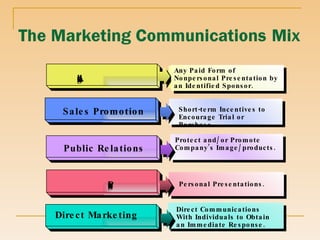
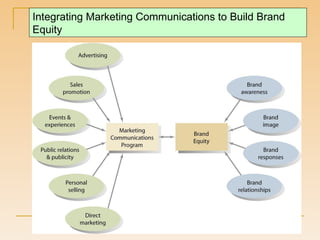
Advertising Personal Selling Any Paid Form of Nonpersonal Presentation by an Identified Sponsor. Sales Promotion Short-term Incentives to Encourage Trial or Purchase. Public Relations Direct Marketing Direct Communications With Individuals to Obtain an Immediate Response. Protect and/or Promote Company’s Image/products. Personal Presentations.
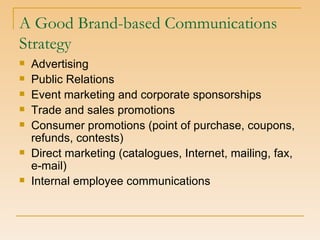
A Good Brand-based Communications Strategy Advertising Public Relations Event marketing and corporate sponsorships Trade and sales promotions Consumer promotions (point of purchase, coupons, refunds, contests) Direct marketing (catalogues, Internet, mailing, fax, e-mail) Internal employee communications
Integrating Marketing Communications to Build Brand Equity
Becoming an AUTHOR The AUTHOR model, describes the six stages of impact communications should have on your target customer. It enables you to control of all your communications efforts
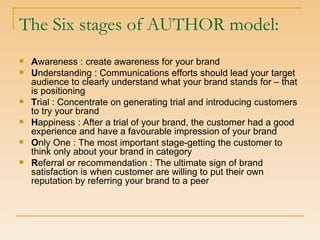
The Six stages of AUTHOR model: A wareness : create awareness for your brand U nderstanding : Communications efforts should lead your target audience to clearly understand what your brand stands for – that is positioning T rial : Concentrate on generating trial and introducing customers to try your brand H appiness : After a trial of your brand, the customer had a good experience and have a favourable impression of your brand O nly One : The most important stage-getting the customer to think only about your brand in category R eferral or recommendation : The ultimate sign of brand satisfaction is when customer are willing to put their own reputation by referring your brand to a peer
Five Principles for Successful Brand-Based Communications Use all communication strategies to help achieve your corporate strategy and brand vision Let your Brand Positioning largely determine the right communications strategy to execute Use an integrated marketing Communications strategy to get maximum return from all investments Execute your communications strategy well across the organization Create internal involvement, education, and metrics to determine the success of communications
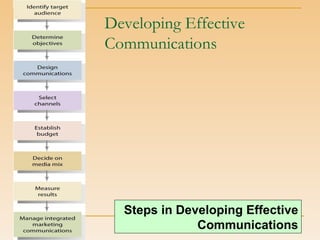
Developing Effective Communications Steps in Developing Effective Communications
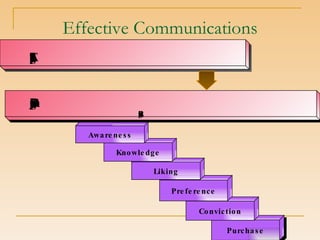
Effective Communications Step 1.  Identifying the Target Audience Purchase Conviction Preference Liking Knowledge Awareness Step 2.  Determining the Communication Objectives Buyer Readiness Stages
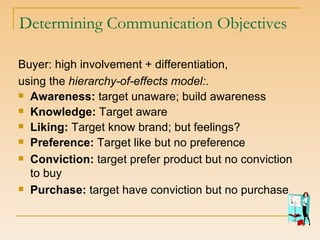
Determining Communication Objectives Buyer: high involvement + differentiation,  using the  hierarchy-of-effects model: . Awareness:  target unaware; build awareness Knowledge:  Target aware Liking:  Target know brand; but feelings? Preference:  Target like but no preference Conviction:  target prefer product but no conviction to buy Purchase:  target have conviction but no purchase
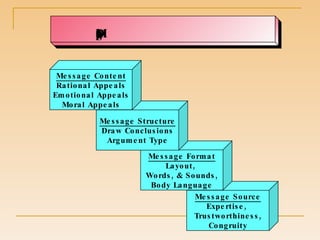
Message Source Expertise,  Trustworthiness, Congruity Step 3.  Designing the Message Message Format Layout,  Words, & Sounds, Body Language Message Structure Draw Conclusions Argument Type Message Content Rational Appeals Emotional Appeals Moral Appeals
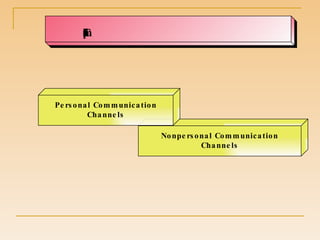
Step 4.  Select Communications Channel Nonpersonal Communication Channels Personal Communication Channels
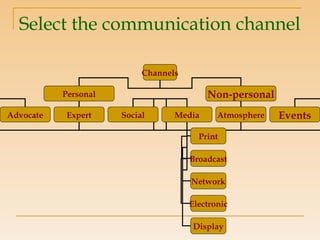
Select the communication channel Channels Personal Non-personal Advocate Expert Social Media Atmosphere Events Print Broadcast Network Electronic Display
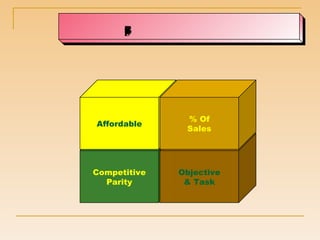
Step 5.  Establish the Budget Competitive Parity Objective & Task Affordable % Of Sales
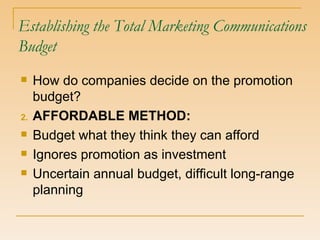
Establishing the Total Marketing Communications Budget How do companies decide on the promotion budget? AFFORDABLE METHOD: Budget what they think they can afford Ignores promotion as investment  Uncertain annual budget, difficult long-range planning
Establishing the Total Marketing Communications Budget PERCENTAGE-OF-SALES METHOD: specified % of sales or sales price
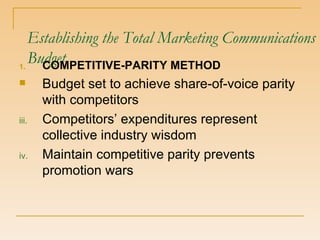
Establishing the Total Marketing Communications Budget COMPETITIVE-PARITY METHOD Budget set to achieve share-of-voice parity with competitors Competitors’ expenditures represent collective industry wisdom Maintain competitive parity prevents promotion wars
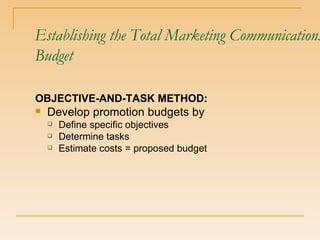
Establishing the Total Marketing Communications Budget OBJECTIVE-AND-TASK METHOD: Develop promotion budgets by  Define specific objectives Determine tasks Estimate costs = proposed budget
Step 6.  Decide on Communications Mix Advertising Public, Pervasive, Expressive, Impersonal Sales Promotion Communication, Incentive, Invitation Public Relations & Publicity Credibility, Surprise, Dramatization Personal Selling Personal Confrontation, Cultivation, Response Direct Marketing Nonpublic, Customized, Up-to-Date, Interactive
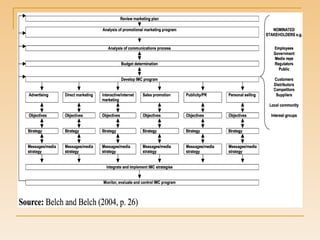
Step 7.  Measure Results Step 8.  Manage the IMC Process
 
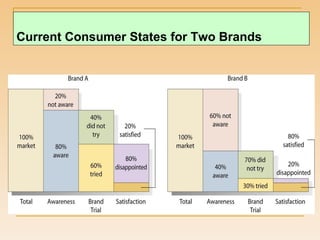
Current Consumer States for Two Brands
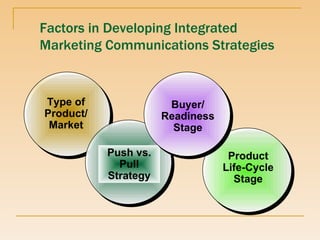
Factors in Developing Integrated Marketing Communications Strategies Product Life-Cycle Stage Type of Product/ Market Push vs. Pull Strategy Buyer/ Readiness Stage
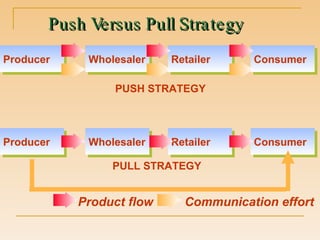
Push Versus Pull Strategy Producer Wholesaler Retailer Consumer PUSH STRATEGY Producer Wholesaler Retailer Consumer Product flow Communication effort PULL STRATEGY
Measuring Communications Results Management wants to know  outcomes  &  revenues   from communications investments Behavior change measures should capture real payoff Communications director must measure its impact on the target audience
 

Komunikasi Pemasaran Terpadu_sesi 2

  • 1.
    BAGAIMANA MERK DIBANGUN(2) ( INTEGRATING MARKETING COMMUNICATIONS TO BUILD BRAND ) Marketing Communication 2010
  • 2.
    Advertising Personal SellingAny Paid Form of Nonpersonal Presentation by an Identified Sponsor. Sales Promotion Short-term Incentives to Encourage Trial or Purchase. Public Relations Direct Marketing Direct Communications With Individuals to Obtain an Immediate Response. Protect and/or Promote Company’s Image/products. Personal Presentations.
  • 3.
    A Good Brand-basedCommunications Strategy Advertising Public Relations Event marketing and corporate sponsorships Trade and sales promotions Consumer promotions (point of purchase, coupons, refunds, contests) Direct marketing (catalogues, Internet, mailing, fax, e-mail) Internal employee communications
  • 4.
  • 5.
    Becoming an AUTHORThe AUTHOR model, describes the six stages of impact communications should have on your target customer. It enables you to control of all your communications efforts
  • 6.
    The Six stagesof AUTHOR model: A wareness : create awareness for your brand U nderstanding : Communications efforts should lead your target audience to clearly understand what your brand stands for – that is positioning T rial : Concentrate on generating trial and introducing customers to try your brand H appiness : After a trial of your brand, the customer had a good experience and have a favourable impression of your brand O nly One : The most important stage-getting the customer to think only about your brand in category R eferral or recommendation : The ultimate sign of brand satisfaction is when customer are willing to put their own reputation by referring your brand to a peer
  • 7.
    Five Principles forSuccessful Brand-Based Communications Use all communication strategies to help achieve your corporate strategy and brand vision Let your Brand Positioning largely determine the right communications strategy to execute Use an integrated marketing Communications strategy to get maximum return from all investments Execute your communications strategy well across the organization Create internal involvement, education, and metrics to determine the success of communications
  • 8.
    Developing Effective CommunicationsSteps in Developing Effective Communications
  • 9.
    Effective Communications Step1. Identifying the Target Audience Purchase Conviction Preference Liking Knowledge Awareness Step 2. Determining the Communication Objectives Buyer Readiness Stages
  • 10.
    Determining Communication ObjectivesBuyer: high involvement + differentiation, using the hierarchy-of-effects model: . Awareness: target unaware; build awareness Knowledge: Target aware Liking: Target know brand; but feelings? Preference: Target like but no preference Conviction: target prefer product but no conviction to buy Purchase: target have conviction but no purchase
  • 11.
    Message Source Expertise, Trustworthiness, Congruity Step 3. Designing the Message Message Format Layout, Words, & Sounds, Body Language Message Structure Draw Conclusions Argument Type Message Content Rational Appeals Emotional Appeals Moral Appeals
  • 12.
    Step 4. Select Communications Channel Nonpersonal Communication Channels Personal Communication Channels
  • 13.
    Select the communicationchannel Channels Personal Non-personal Advocate Expert Social Media Atmosphere Events Print Broadcast Network Electronic Display
  • 14.
    Step 5. Establish the Budget Competitive Parity Objective & Task Affordable % Of Sales
  • 15.
    Establishing the TotalMarketing Communications Budget How do companies decide on the promotion budget? AFFORDABLE METHOD: Budget what they think they can afford Ignores promotion as investment Uncertain annual budget, difficult long-range planning
  • 16.
    Establishing the TotalMarketing Communications Budget PERCENTAGE-OF-SALES METHOD: specified % of sales or sales price
  • 17.
    Establishing the TotalMarketing Communications Budget COMPETITIVE-PARITY METHOD Budget set to achieve share-of-voice parity with competitors Competitors’ expenditures represent collective industry wisdom Maintain competitive parity prevents promotion wars
  • 18.
    Establishing the TotalMarketing Communications Budget OBJECTIVE-AND-TASK METHOD: Develop promotion budgets by Define specific objectives Determine tasks Estimate costs = proposed budget
  • 19.
    Step 6. Decide on Communications Mix Advertising Public, Pervasive, Expressive, Impersonal Sales Promotion Communication, Incentive, Invitation Public Relations & Publicity Credibility, Surprise, Dramatization Personal Selling Personal Confrontation, Cultivation, Response Direct Marketing Nonpublic, Customized, Up-to-Date, Interactive
  • 20.
    Step 7. Measure Results Step 8. Manage the IMC Process
  • 21.
  • 22.
  • 23.
    Factors in DevelopingIntegrated Marketing Communications Strategies Product Life-Cycle Stage Type of Product/ Market Push vs. Pull Strategy Buyer/ Readiness Stage
  • 24.
    Push Versus PullStrategy Producer Wholesaler Retailer Consumer PUSH STRATEGY Producer Wholesaler Retailer Consumer Product flow Communication effort PULL STRATEGY
  • 25.
    Measuring Communications ResultsManagement wants to know outcomes & revenues from communications investments Behavior change measures should capture real payoff Communications director must measure its impact on the target audience
  • 26.

Editor's Notes

  • #3 The Marketing Communications Mix This CTR relates to the material on pp. 422-423. Tools of The Marketing Communications Mix Advertising. Advertising is any paid form of nonpersonal presentation and promotion of ideas, goods, or services by an identified sponsor. Advertising often utilizes mass media and may be adapted to take advantages of a given mediums strengths to convey information. Sales Promotion. Sales promotions consist of short-term incentives to encourage purchase of sales of a product or service. Limited time offers or dated coupons are common sales promotions. Public Relations. Public relations is an on-going process of building good relations with the various publics of the company. Key elements in the process are obtaining favorable publicity, building and projecting a good "corporate image," and designing an information support and response team to respond proactively to unfavorable rumors, stories, or events. Personal Selling. Personal selling describes the use of oral presentations in a conversation with one or more prospective buyers for the purposes of making a sale. Personal selling combines product information and benefits with the interpersonal dynamics of the sales person. Good interpersonal relationship skills and effective oral communication skills are needed for personal selling. Direct Marketing. Directed communications with carefully targeted individual consumers to obtain an immediate response.