1st INTERNAL ASSESSMENT
KNOWLEDGE MANAGEMENT
TOPIC: KNOWLEDGE MANAGEMENT
IN AN AUTOMOBILE INDUSTRY
Submitted by: Tanmay Bhagwat
Roll number:D-56
PRN: 15020441288
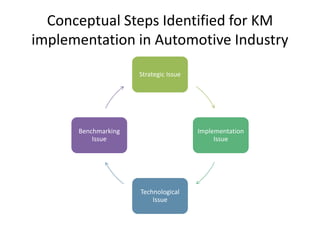
Conceptual Steps Identified for KM
implementation in Automotive Industry
Strategic Issue
Implementation
Issue
Technological
Issue
Benchmarking
Issue
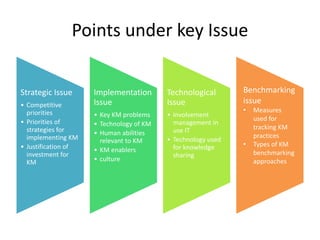
Points under key Issue
Strategic Issue
• Competitive
priorities
• Priorities of
strategies for
implementing KM
• Justification of
investment for
KM
Implementation
Issue
• Key KM problems
• Technology of KM
• Human abilities
relevant to KM
• KM enablers
• culture
Technological
Issue
• Involvement
management in
use IT
• Technology used
for knowledge
sharing
Benchmarking
issue
• Measures
used for
tracking KM
practices
• Types of KM
benchmarking
approaches
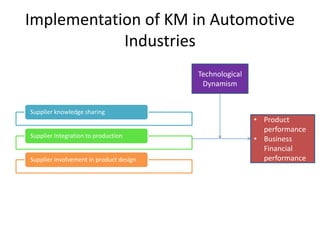
Implementation of KM in Automotive
Industries
Supplier knowledge sharing
Supplier Integration to production
Supplier involvement in product design
• Product
performance
• Business
Financial
performance
Technological
Dynamism
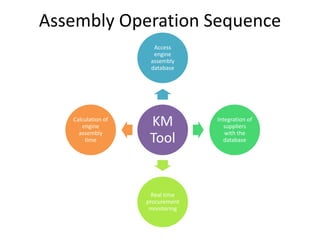
Assembly Operation Sequence
KM
Tool
Access
engine
assembly
database
Integration of
suppliers
with the
database
Real time
procurement
monitoring
Calculation of
engine
assembly
time
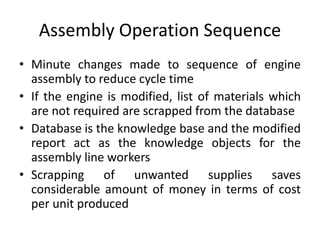
Assembly Operation Sequence
• Minute changes made to sequence of engine
assembly to reduce cycle time
• If the engine is modified, list of materials which
are not required are scrapped from the database
• Database is the knowledge base and the modified
report act as the knowledge objects for the
assembly line workers
• Scrapping of unwanted supplies saves
considerable amount of money in terms of cost
per unit produced
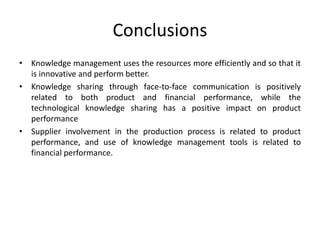
Conclusions
• Knowledge management uses the resources more efficiently and so that it
is innovative and perform better.
• Knowledge sharing through face-to-face communication is positively
related to both product and financial performance, while the
technological knowledge sharing has a positive impact on product
performance
• Supplier involvement in the production process is related to product
performance, and use of knowledge management tools is related to
financial performance.

KNOWLEDGE MANAGEMENT IN AN AUTOMOBILE INDUSTRY

  • 1.
    1st INTERNAL ASSESSMENT KNOWLEDGEMANAGEMENT TOPIC: KNOWLEDGE MANAGEMENT IN AN AUTOMOBILE INDUSTRY Submitted by: Tanmay Bhagwat Roll number:D-56 PRN: 15020441288
  • 2.
    Conceptual Steps Identifiedfor KM implementation in Automotive Industry Strategic Issue Implementation Issue Technological Issue Benchmarking Issue
  • 3.
    Points under keyIssue Strategic Issue • Competitive priorities • Priorities of strategies for implementing KM • Justification of investment for KM Implementation Issue • Key KM problems • Technology of KM • Human abilities relevant to KM • KM enablers • culture Technological Issue • Involvement management in use IT • Technology used for knowledge sharing Benchmarking issue • Measures used for tracking KM practices • Types of KM benchmarking approaches
  • 4.
    Implementation of KMin Automotive Industries Supplier knowledge sharing Supplier Integration to production Supplier involvement in product design • Product performance • Business Financial performance Technological Dynamism
  • 5.
    Assembly Operation Sequence KM Tool Access engine assembly database Integrationof suppliers with the database Real time procurement monitoring Calculation of engine assembly time
  • 6.
    Assembly Operation Sequence •Minute changes made to sequence of engine assembly to reduce cycle time • If the engine is modified, list of materials which are not required are scrapped from the database • Database is the knowledge base and the modified report act as the knowledge objects for the assembly line workers • Scrapping of unwanted supplies saves considerable amount of money in terms of cost per unit produced
  • 7.
    Conclusions • Knowledge managementuses the resources more efficiently and so that it is innovative and perform better. • Knowledge sharing through face-to-face communication is positively related to both product and financial performance, while the technological knowledge sharing has a positive impact on product performance • Supplier involvement in the production process is related to product performance, and use of knowledge management tools is related to financial performance.