University of Rajasthan
Department of Zoology
Vitamins
Submitted To: Submitted By:
Kiran Meena
M.Sc. 1st semester
Session – 2022-2023
Vitamins
• Organic molecules with a wide variety of functions
• Cofactors for enzymatic reactions
• Essential, supplied in the diet
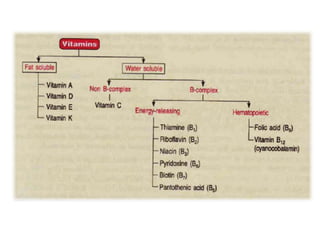
• Two distinct types: Fat soluble (A, D, E, K)
• Water soluble (B – complex, C)
Vitamins are organic molecules that are essential for normal
health and growth. They are required in trace amounts and must
be obtained from the diet because they are not synthesized in the
body. Before vitamins were discovered, it was known that lime
juice prevented the disease scurvy in sailors and that cod liver oil
could prevent rickets. In 1912, scientists found that, in addition to
carbohydrates, fats, and proteins, certain other factors called
vitamins must be obtained from the diet.
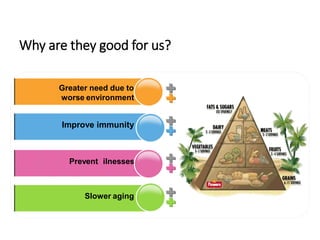
Why are they good for us?
Greater need due to
worse environment
Improve immunity
Prevent ilnesses
Slower aging
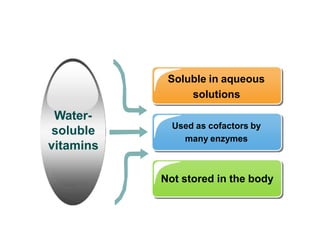
Used as cofactors by
many enzymes
Soluble in aqueous
solutions
Not stored in the body
Water-
soluble
vitamins
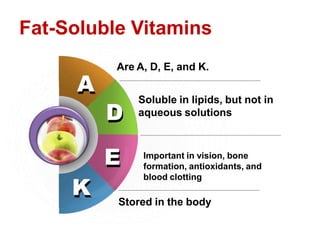
A
K
Are A, D, E, and K.
Soluble in lipids, but not in
aqueous solutions
Important in vision, bone
formation, antioxidants, and
blood clotting
D
E
Stored in the body
Fat-Soluble Vitamins
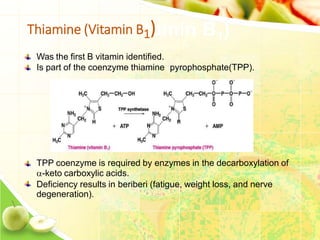
Thiamine (Vitamin B1)
Was the first B vitamin identified.
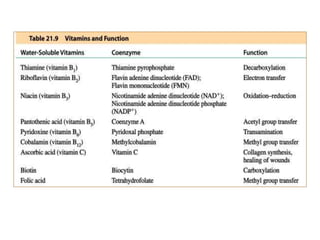
Is part of the coenzyme thiamine pyrophosphate(TPP).
TPP coenzyme is required by enzymes in the decarboxylation of
-keto carboxylic acids.
Deficiency results in beriberi (fatigue, weight loss, and nerve
degeneration).
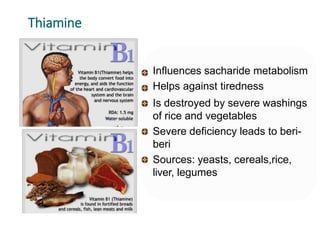
Influences sacharide metabolism
Helps against tiredness
Is destroyed by severe washings
of rice and vegetables
Severe deficiency leads to beri-
beri
Sources: yeasts, cereals,rice,
liver, legumes
Thiamine
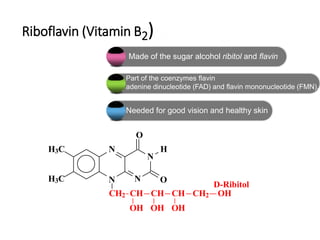
Riboflavin (Vitamin B2)
0
30%
55%
Made of the sugar alcohol ribitol and flavin
Part of the coenzymes flavin
adenine dinucleotide (FAD) and flavin mononucleotide (FMN).
N
N
N
H
H3C
H3C
Needed for good vision and healthy skin
D
O
.Description of the contents
N O
D-Ribitol
CH2 CH CH CH CH2 OH
OH OH OH
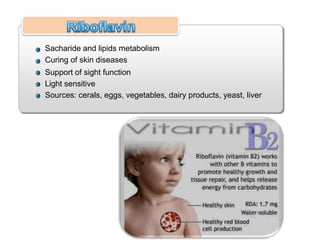
Sacharide and lipids metabolism
Curing of skin diseases
Support of sight function
Light sensitive
Sources: cerals, eggs, vegetables, dairy products, yeast, liver
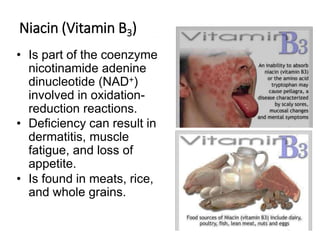
Niacin (Vitamin B3)
• Is part of the coenzyme
nicotinamide adenine
dinucleotide (NAD+)
involved in oxidation-
reduction reactions.
• Deficiency can result in
dermatitis, muscle
fatigue, and loss of
appetite.
• Is found in meats, rice,
and whole grains.
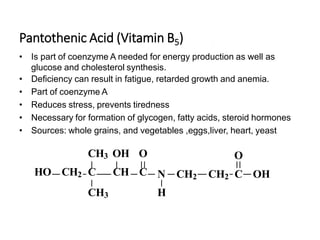
Pantothenic Acid (Vitamin B5)
• Is part of coenzyme A needed for energy production as well as
glucose and cholesterol synthesis.
• Deficiency can result in fatigue, retarded growth and anemia.
• Part of coenzyme A
• Reduces stress, prevents tiredness
• Necessary for formation of glycogen, fatty acids, steroid hormones
• Sources: whole grains, and vegetables ,eggs,liver, heart, yeast
O
N CH2 CH2 C OH
H
CH3 OH O
HO CH2 C CH C
CH3
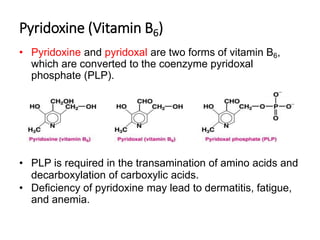
Pyridoxine (Vitamin B6)
• Pyridoxine and pyridoxal are two forms of vitamin B6,
which are converted to the coenzyme pyridoxal
phosphate (PLP).
• PLP is required in the transamination of amino acids and
decarboxylation of carboxylic acids.
• Deficiency of pyridoxine may lead to dermatitis, fatigue,
and anemia.
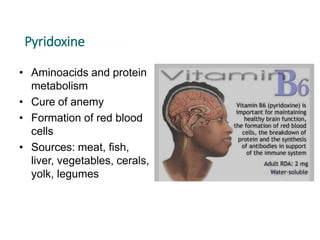
Pyridoxine
• Aminoacids and protein
metabolism
• Cure of anemy
• Formation of red blood
cells
• Sources: meat, fish,
liver, vegetables, cerals,
yolk, legumes
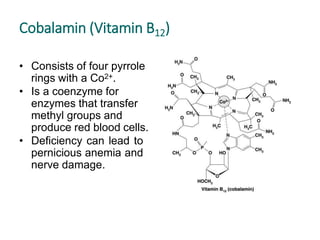
Cobalamin (Vitamin B12)
• Consists of four pyrrole
rings with a Co2+.
• Is a coenzyme for
enzymes that transfer
methyl groups and
produce red blood cells.
• Deficiency can lead to
pernicious anemia and
nerve damage.
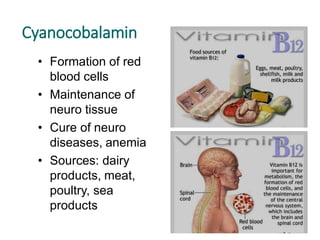
Cyanocobalamin
• Formation of red
blood cells
• Maintenance of
neuro tissue
• Cure of neuro
diseases, anemia
• Sources: dairy
products, meat,
poultry, sea
products
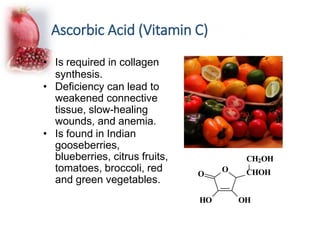
Ascorbic Acid (Vitamin C)
• Is required in collagen
synthesis.
• Deficiency can lead to
weakened connective
tissue, slow-healing
wounds, and anemia.
• Is found in Indian
gooseberries,
blueberries, citrus fruits,
tomatoes, broccoli, red
and green vegetables.
O
CH2OH
CHOH
OH
HO
O
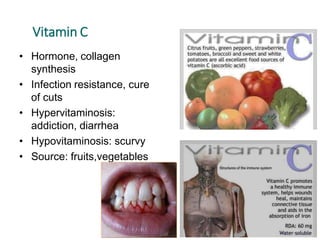
Vitamin C
• Hormone, collagen
synthesis
• Infection resistance, cure
of cuts
• Hypervitaminosis:
addiction, diarrhea
• Hypovitaminosis: scurvy
• Source: fruits,vegetables
21
VitaminA
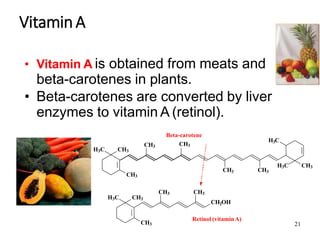
• Vitamin A is obtained from meats and
beta-carotenes in plants.
• Beta-carotenes are converted by liver
enzymes to vitamin A (retinol).
H3C CH3
CH3
CH3
CH3 CH3
H3C CH3
3
H C
CH3 CH3
2
CH OH
H3C CH3
CH3
Beta-carotene
CH3
Retinol (vitamin A)
Compiled & Edited by
Dr.Syed Ismail,MAU, Parbhani
22
Vitamin A and provitaminA
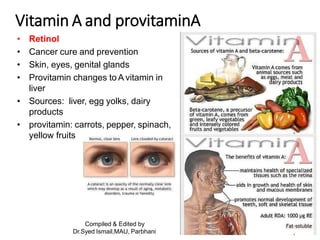
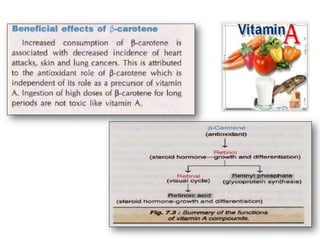
• Retinol
• Cancer cure and prevention
• Skin, eyes, genital glands
• Provitamin changes to A vitamin in
liver
• Sources: liver, egg yolks, dairy
products
• provitamin: carrots, pepper, spinach,
yellow fruits
Vitamin D
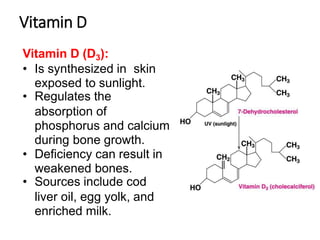
Vitamin D (D3):
• Is synthesized in skin
exposed to sunlight.
• Regulates the
absorption of
phosphorus and calcium
during bone growth.
• Deficiency can result in
weakened bones.
• Sources include cod
liver oil, egg yolk, and
enriched milk.
25
Vitamin D
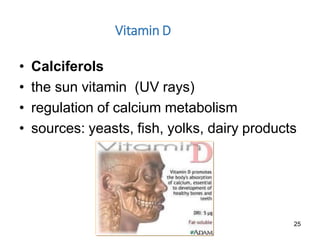
• Calciferols
• the sun vitamin (UV rays)
• regulation of calcium metabolism
• sources: yeasts, fish, yolks, dairy products
Vitamin E
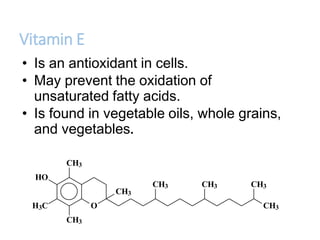
• Is an antioxidant in cells.
• May prevent the oxidation of
unsaturated fatty acids.
• Is found in vegetable oils, whole grains,
and vegetables.
O
CH3
HO
H3C
CH3
CH3
CH3
CH3 CH3 CH3
Vitamin E
Tocoferols
• Antioxidant (lipid protection)
• improves immunity
• Cures muscle, heart and skin diseases,
burns
• Sources: green vegetables, vegetable oil,
corn, eggs, bread, dairy products, peas,
beans
Vitamin K
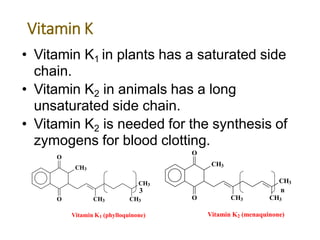
• Vitamin K1 in plants has a saturated side
chain.
• Vitamin K2 in animals has a long
unsaturated side chain.
• Vitamin K2 is needed for the synthesis of
zymogens for blood clotting.
3
CH3
O
O CH3
CH3
n
CH3
Vitamin K2 (menaquinone)
CH3
CH3
O
O CH3 CH3
Vitamin K1 (phylloquinone)
Compiled & Edited by Dr.Syed
Ismail,MAU, Parbhani
29
Vitamin K
• Blood clotting
• Higher need by newborns, people with
liver diseases, or fat malabsorbtion
• Sources: green fruits and vegetables,
tomatoes, soy, beef liver, yolks, wheat,
butter, cheese
Thank You!

kiran vitamin ppt.pptx

  • 1.
    University of Rajasthan Departmentof Zoology Vitamins Submitted To: Submitted By: Kiran Meena M.Sc. 1st semester Session – 2022-2023
  • 2.
    Vitamins • Organic moleculeswith a wide variety of functions • Cofactors for enzymatic reactions • Essential, supplied in the diet • Two distinct types: Fat soluble (A, D, E, K) • Water soluble (B – complex, C) Vitamins are organic molecules that are essential for normal health and growth. They are required in trace amounts and must be obtained from the diet because they are not synthesized in the body. Before vitamins were discovered, it was known that lime juice prevented the disease scurvy in sailors and that cod liver oil could prevent rickets. In 1912, scientists found that, in addition to carbohydrates, fats, and proteins, certain other factors called vitamins must be obtained from the diet.
  • 3.
    Why are theygood for us? Greater need due to worse environment Improve immunity Prevent ilnesses Slower aging
  • 5.
    Used as cofactorsby many enzymes Soluble in aqueous solutions Not stored in the body Water- soluble vitamins
  • 7.
    A K Are A, D,E, and K. Soluble in lipids, but not in aqueous solutions Important in vision, bone formation, antioxidants, and blood clotting D E Stored in the body Fat-Soluble Vitamins
  • 8.
    Thiamine (Vitamin B1) Wasthe first B vitamin identified. Is part of the coenzyme thiamine pyrophosphate(TPP). TPP coenzyme is required by enzymes in the decarboxylation of -keto carboxylic acids. Deficiency results in beriberi (fatigue, weight loss, and nerve degeneration).
  • 9.
    Influences sacharide metabolism Helpsagainst tiredness Is destroyed by severe washings of rice and vegetables Severe deficiency leads to beri- beri Sources: yeasts, cereals,rice, liver, legumes Thiamine
  • 10.
    Riboflavin (Vitamin B2) 0 30% 55% Madeof the sugar alcohol ribitol and flavin Part of the coenzymes flavin adenine dinucleotide (FAD) and flavin mononucleotide (FMN). N N N H H3C H3C Needed for good vision and healthy skin D O .Description of the contents N O D-Ribitol CH2 CH CH CH CH2 OH OH OH OH
  • 11.
    Sacharide and lipidsmetabolism Curing of skin diseases Support of sight function Light sensitive Sources: cerals, eggs, vegetables, dairy products, yeast, liver
  • 12.
    Niacin (Vitamin B3) •Is part of the coenzyme nicotinamide adenine dinucleotide (NAD+) involved in oxidation- reduction reactions. • Deficiency can result in dermatitis, muscle fatigue, and loss of appetite. • Is found in meats, rice, and whole grains.
  • 13.
    Pantothenic Acid (VitaminB5) • Is part of coenzyme A needed for energy production as well as glucose and cholesterol synthesis. • Deficiency can result in fatigue, retarded growth and anemia. • Part of coenzyme A • Reduces stress, prevents tiredness • Necessary for formation of glycogen, fatty acids, steroid hormones • Sources: whole grains, and vegetables ,eggs,liver, heart, yeast O N CH2 CH2 C OH H CH3 OH O HO CH2 C CH C CH3
  • 14.
    Pyridoxine (Vitamin B6) •Pyridoxine and pyridoxal are two forms of vitamin B6, which are converted to the coenzyme pyridoxal phosphate (PLP). • PLP is required in the transamination of amino acids and decarboxylation of carboxylic acids. • Deficiency of pyridoxine may lead to dermatitis, fatigue, and anemia.
  • 15.
    Pyridoxine • Aminoacids andprotein metabolism • Cure of anemy • Formation of red blood cells • Sources: meat, fish, liver, vegetables, cerals, yolk, legumes
  • 16.
    Cobalamin (Vitamin B12) •Consists of four pyrrole rings with a Co2+. • Is a coenzyme for enzymes that transfer methyl groups and produce red blood cells. • Deficiency can lead to pernicious anemia and nerve damage.
  • 17.
    Cyanocobalamin • Formation ofred blood cells • Maintenance of neuro tissue • Cure of neuro diseases, anemia • Sources: dairy products, meat, poultry, sea products
  • 18.
    Ascorbic Acid (VitaminC) • Is required in collagen synthesis. • Deficiency can lead to weakened connective tissue, slow-healing wounds, and anemia. • Is found in Indian gooseberries, blueberries, citrus fruits, tomatoes, broccoli, red and green vegetables. O CH2OH CHOH OH HO O
  • 19.
    Vitamin C • Hormone,collagen synthesis • Infection resistance, cure of cuts • Hypervitaminosis: addiction, diarrhea • Hypovitaminosis: scurvy • Source: fruits,vegetables
  • 20.
    21 VitaminA • Vitamin Ais obtained from meats and beta-carotenes in plants. • Beta-carotenes are converted by liver enzymes to vitamin A (retinol). H3C CH3 CH3 CH3 CH3 CH3 H3C CH3 3 H C CH3 CH3 2 CH OH H3C CH3 CH3 Beta-carotene CH3 Retinol (vitamin A)
  • 21.
    Compiled & Editedby Dr.Syed Ismail,MAU, Parbhani 22 Vitamin A and provitaminA • Retinol • Cancer cure and prevention • Skin, eyes, genital glands • Provitamin changes to A vitamin in liver • Sources: liver, egg yolks, dairy products • provitamin: carrots, pepper, spinach, yellow fruits
  • 23.
    Vitamin D Vitamin D(D3): • Is synthesized in skin exposed to sunlight. • Regulates the absorption of phosphorus and calcium during bone growth. • Deficiency can result in weakened bones. • Sources include cod liver oil, egg yolk, and enriched milk.
  • 24.
    25 Vitamin D • Calciferols •the sun vitamin (UV rays) • regulation of calcium metabolism • sources: yeasts, fish, yolks, dairy products
  • 25.
    Vitamin E • Isan antioxidant in cells. • May prevent the oxidation of unsaturated fatty acids. • Is found in vegetable oils, whole grains, and vegetables. O CH3 HO H3C CH3 CH3 CH3 CH3 CH3 CH3
  • 26.
    Vitamin E Tocoferols • Antioxidant(lipid protection) • improves immunity • Cures muscle, heart and skin diseases, burns • Sources: green vegetables, vegetable oil, corn, eggs, bread, dairy products, peas, beans
  • 27.
    Vitamin K • VitaminK1 in plants has a saturated side chain. • Vitamin K2 in animals has a long unsaturated side chain. • Vitamin K2 is needed for the synthesis of zymogens for blood clotting. 3 CH3 O O CH3 CH3 n CH3 Vitamin K2 (menaquinone) CH3 CH3 O O CH3 CH3 Vitamin K1 (phylloquinone)
  • 28.
    Compiled & Editedby Dr.Syed Ismail,MAU, Parbhani 29 Vitamin K • Blood clotting • Higher need by newborns, people with liver diseases, or fat malabsorbtion • Sources: green fruits and vegetables, tomatoes, soy, beef liver, yolks, wheat, butter, cheese
  • 29.