K I M C H I
FERMENTE D FOOD
Contents
1. Origin of Kimchi
2.Types of Kimchi in every Region
4.Nutrients from Kimchi
5.Health benefits of Kimchi
6. Kimchi exports
3. Various Dishes of using
Kimchi
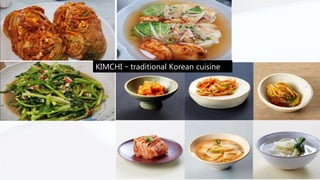
KIMCHI – traditional Korean cuisine
Origin of Kimchi
Earlier names of Kimchi are
imchɑi , dimchɑi , jimchɑi , jimchui , gimchi. The
term kimchi changes from Middle Korean to Modern
Korean times.
The pickling of vegetables was an ideal method,
prior to refrigerators, that helped to preserve the
lifespan of foods. In Korea, where kimchi originated,
kimchi was made during the winter by fermenting
vegetables, and burying it in the ground in
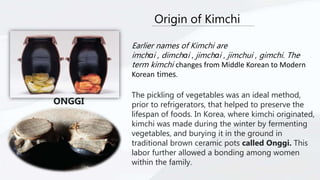
traditional brown ceramic pots called Onggi. This
labor further allowed a bonding among women
within the family.
ONGGI
Types of Kimchi in Every Region
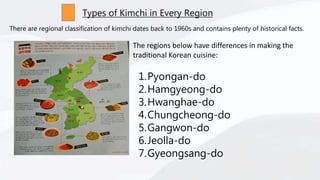
There are regional classification of kimchi dates back to 1960s and contains plenty of historical facts.
The regions below have differences in making the
traditional Korean cuisine:
1.Pyongan-do
2.Hamgyeong-do
3.Hwanghae-do
4.Chungcheong-do
5.Gangwon-do
6.Jeolla-do
7.Gyeongsang-do
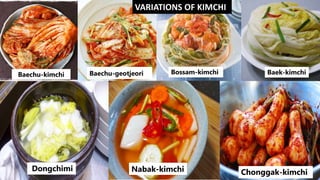
VARIATIONS OF KIMCHI
Baechu-kimchi Baechu-geotjeori Bossam-kimchi Baek-kimchi
Dongchimi Nabak-kimchi Chonggak-kimchi
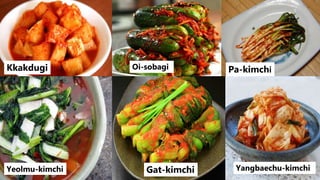
Kkakdugi Oi-sobagi Pa-kimchi
Yeolmu-kimchi Gat-kimchi Yangbaechu-kimchi
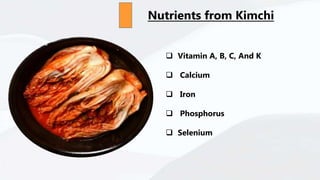
Nutrients from Kimchi
 Vitamin A, B, C, And K
 Calcium
 Iron
 Phosphorus
 Selenium
Health benefits of eating Kimchi
Our health emerged as a hot topic
due to the spread of COVID-19.
More foreigners are looking for
kimchi, which is known as good in
improving immunity. The probiotics
in fermented foods like kimchi not
only improve digestion but also help
improve immune function.
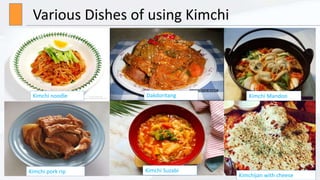
Various Dishes of using Kimchi
Dakdoritang
Kimchi noodle Kimchi Mandoo
Kimchi pork rip Kimchi Suzabi
Kimchijan with cheese
Korean Wave
Parasite Squid Game
Korean Wave
BTS Minari
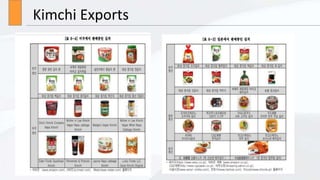
Kimchi Exports
Tokyo Olympic
Thank you 

Kimchi

  • 1.
    K I MC H I FERMENTE D FOOD
  • 2.
    Contents 1. Origin ofKimchi 2.Types of Kimchi in every Region 4.Nutrients from Kimchi 5.Health benefits of Kimchi 6. Kimchi exports 3. Various Dishes of using Kimchi
  • 3.
    KIMCHI – traditionalKorean cuisine
  • 4.
    Origin of Kimchi Earliernames of Kimchi are imchɑi , dimchɑi , jimchɑi , jimchui , gimchi. The term kimchi changes from Middle Korean to Modern Korean times. The pickling of vegetables was an ideal method, prior to refrigerators, that helped to preserve the lifespan of foods. In Korea, where kimchi originated, kimchi was made during the winter by fermenting vegetables, and burying it in the ground in traditional brown ceramic pots called Onggi. This labor further allowed a bonding among women within the family. ONGGI
  • 5.
    Types of Kimchiin Every Region There are regional classification of kimchi dates back to 1960s and contains plenty of historical facts. The regions below have differences in making the traditional Korean cuisine: 1.Pyongan-do 2.Hamgyeong-do 3.Hwanghae-do 4.Chungcheong-do 5.Gangwon-do 6.Jeolla-do 7.Gyeongsang-do
  • 6.
    VARIATIONS OF KIMCHI Baechu-kimchiBaechu-geotjeori Bossam-kimchi Baek-kimchi Dongchimi Nabak-kimchi Chonggak-kimchi
  • 7.
    Kkakdugi Oi-sobagi Pa-kimchi Yeolmu-kimchiGat-kimchi Yangbaechu-kimchi
  • 8.
    Nutrients from Kimchi Vitamin A, B, C, And K  Calcium  Iron  Phosphorus  Selenium
  • 9.
    Health benefits ofeating Kimchi Our health emerged as a hot topic due to the spread of COVID-19. More foreigners are looking for kimchi, which is known as good in improving immunity. The probiotics in fermented foods like kimchi not only improve digestion but also help improve immune function.
  • 10.
    Various Dishes ofusing Kimchi Dakdoritang Kimchi noodle Kimchi Mandoo Kimchi pork rip Kimchi Suzabi Kimchijan with cheese
  • 11.
  • 12.
  • 13.
  • 14.
  • 15.