Finance —Formula Reminders
Profit
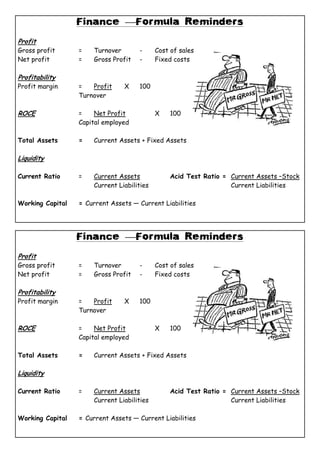
Gross profit      =   Turnover       -      Cost of sales
Net profit        =   Gross Profit   -      Fixed costs

Profitability
Profit margin     =   Profit    X    100
                  Turnover

ROCE              =    Net Profit           X    100
                  Capital employed

Total Assets      =   Current Assets + Fixed Assets

Liquidity

Current Ratio     =   Current Assets             Acid Test Ratio = Current Assets –Stock
                      Current Liabilities                          Current Liabilities

Working Capital   = Current Assets — Current Liabilities


                  Finance —Formula Reminders
Profit
Gross profit      =   Turnover       -      Cost of sales
Net profit        =   Gross Profit   -      Fixed costs

Profitability
Profit margin     =   Profit    X    100
                  Turnover

ROCE              =    Net Profit           X    100
                  Capital employed

Total Assets      =   Current Assets + Fixed Assets

Liquidity

Current Ratio     =   Current Assets             Acid Test Ratio = Current Assets –Stock
                      Current Liabilities                          Current Liabilities

Working Capital   = Current Assets — Current Liabilities
Finance —Key Terms
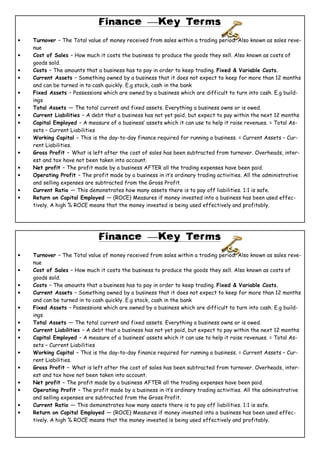
•   Turnover – The Total value of money received from sales within a trading period. Also known as sales reve-
    nue
•   Cost of Sales – How much it costs the business to produce the goods they sell. Also known as costs of
    goods sold.
•   Costs – The amounts that a business has to pay in order to keep trading. Fixed & Variable Costs.
•   Current Assets – Something owned by a business that it does not expect to keep for more than 12 months
    and can be turned in to cash quickly. E.g stock, cash in the bank
•   Fixed Assets – Possessions which are owned by a business which are difficult to turn into cash. E.g build-
    ings
•   Total Assets — The total current and fixed assets. Everything a business owns or is owed.
•   Current Liabilities – A debt that a business has not yet paid, but expect to pay within the next 12 months
•   Capital Employed – A measure of a business’ assets which it can use to help it raise revenues. = Total As-
    sets – Current Liabilities
•   Working Capital – This is the day-to-day finance required for running a business. = Current Assets – Cur-
    rent Liabilities.
•   Gross Profit – What is left after the cost of sales has been subtracted from turnover. Overheads, inter-
    est and tax have not been taken into account.
•   Net profit – The profit made by a business AFTER all the trading expenses have been paid.
•   Operating Profit – The profit made by a business in it’s ordinary trading activities. All the administrative
    and selling expenses are subtracted from the Gross Profit.
•   Current Ratio — This demonstrates how many assets there is to pay off liabilities. 1:1 is safe.
•   Return on Capital Employed — (ROCE) Measures if money invested into a business has been used effec-
    tively. A high % ROCE means that the money invested is being used effectively and profitably.


                              Finance —Key Terms
•   Turnover – The Total value of money received from sales within a trading period. Also known as sales reve-
    nue
•   Cost of Sales – How much it costs the business to produce the goods they sell. Also known as costs of
    goods sold.
•   Costs – The amounts that a business has to pay in order to keep trading. Fixed & Variable Costs.
•   Current Assets – Something owned by a business that it does not expect to keep for more than 12 months
    and can be turned in to cash quickly. E.g stock, cash in the bank
•   Fixed Assets – Possessions which are owned by a business which are difficult to turn into cash. E.g build-
    ings
•   Total Assets — The total current and fixed assets. Everything a business owns or is owed.
•   Current Liabilities – A debt that a business has not yet paid, but expect to pay within the next 12 months
•   Capital Employed – A measure of a business’ assets which it can use to help it raise revenues. = Total As-
    sets – Current Liabilities
•   Working Capital – This is the day-to-day finance required for running a business. = Current Assets – Cur-
    rent Liabilities.
•   Gross Profit – What is left after the cost of sales has been subtracted from turnover. Overheads, inter-
    est and tax have not been taken into account.
•   Net profit – The profit made by a business AFTER all the trading expenses have been paid.
•   Operating Profit – The profit made by a business in it’s ordinary trading activities. All the administrative
    and selling expenses are subtracted from the Gross Profit.
•   Current Ratio — This demonstrates how many assets there is to pay off liabilities. 1:1 is safe.
•   Return on Capital Employed — (ROCE) Measures if money invested into a business has been used effec-
    tively. A high % ROCE means that the money invested is being used effectively and profitably.

Key terms finance

  • 1.
    Finance —Formula Reminders Profit Grossprofit = Turnover - Cost of sales Net profit = Gross Profit - Fixed costs Profitability Profit margin = Profit X 100 Turnover ROCE = Net Profit X 100 Capital employed Total Assets = Current Assets + Fixed Assets Liquidity Current Ratio = Current Assets Acid Test Ratio = Current Assets –Stock Current Liabilities Current Liabilities Working Capital = Current Assets — Current Liabilities Finance —Formula Reminders Profit Gross profit = Turnover - Cost of sales Net profit = Gross Profit - Fixed costs Profitability Profit margin = Profit X 100 Turnover ROCE = Net Profit X 100 Capital employed Total Assets = Current Assets + Fixed Assets Liquidity Current Ratio = Current Assets Acid Test Ratio = Current Assets –Stock Current Liabilities Current Liabilities Working Capital = Current Assets — Current Liabilities
  • 2.
    Finance —Key Terms • Turnover – The Total value of money received from sales within a trading period. Also known as sales reve- nue • Cost of Sales – How much it costs the business to produce the goods they sell. Also known as costs of goods sold. • Costs – The amounts that a business has to pay in order to keep trading. Fixed & Variable Costs. • Current Assets – Something owned by a business that it does not expect to keep for more than 12 months and can be turned in to cash quickly. E.g stock, cash in the bank • Fixed Assets – Possessions which are owned by a business which are difficult to turn into cash. E.g build- ings • Total Assets — The total current and fixed assets. Everything a business owns or is owed. • Current Liabilities – A debt that a business has not yet paid, but expect to pay within the next 12 months • Capital Employed – A measure of a business’ assets which it can use to help it raise revenues. = Total As- sets – Current Liabilities • Working Capital – This is the day-to-day finance required for running a business. = Current Assets – Cur- rent Liabilities. • Gross Profit – What is left after the cost of sales has been subtracted from turnover. Overheads, inter- est and tax have not been taken into account. • Net profit – The profit made by a business AFTER all the trading expenses have been paid. • Operating Profit – The profit made by a business in it’s ordinary trading activities. All the administrative and selling expenses are subtracted from the Gross Profit. • Current Ratio — This demonstrates how many assets there is to pay off liabilities. 1:1 is safe. • Return on Capital Employed — (ROCE) Measures if money invested into a business has been used effec- tively. A high % ROCE means that the money invested is being used effectively and profitably. Finance —Key Terms • Turnover – The Total value of money received from sales within a trading period. Also known as sales reve- nue • Cost of Sales – How much it costs the business to produce the goods they sell. Also known as costs of goods sold. • Costs – The amounts that a business has to pay in order to keep trading. Fixed & Variable Costs. • Current Assets – Something owned by a business that it does not expect to keep for more than 12 months and can be turned in to cash quickly. E.g stock, cash in the bank • Fixed Assets – Possessions which are owned by a business which are difficult to turn into cash. E.g build- ings • Total Assets — The total current and fixed assets. Everything a business owns or is owed. • Current Liabilities – A debt that a business has not yet paid, but expect to pay within the next 12 months • Capital Employed – A measure of a business’ assets which it can use to help it raise revenues. = Total As- sets – Current Liabilities • Working Capital – This is the day-to-day finance required for running a business. = Current Assets – Cur- rent Liabilities. • Gross Profit – What is left after the cost of sales has been subtracted from turnover. Overheads, inter- est and tax have not been taken into account. • Net profit – The profit made by a business AFTER all the trading expenses have been paid. • Operating Profit – The profit made by a business in it’s ordinary trading activities. All the administrative and selling expenses are subtracted from the Gross Profit. • Current Ratio — This demonstrates how many assets there is to pay off liabilities. 1:1 is safe. • Return on Capital Employed — (ROCE) Measures if money invested into a business has been used effec- tively. A high % ROCE means that the money invested is being used effectively and profitably.