
Costs
What are costs?


Costs are amounts that a
 business incurs in order
  to make goods and/or
     provide services
Costs – what entrepreneurs need to know

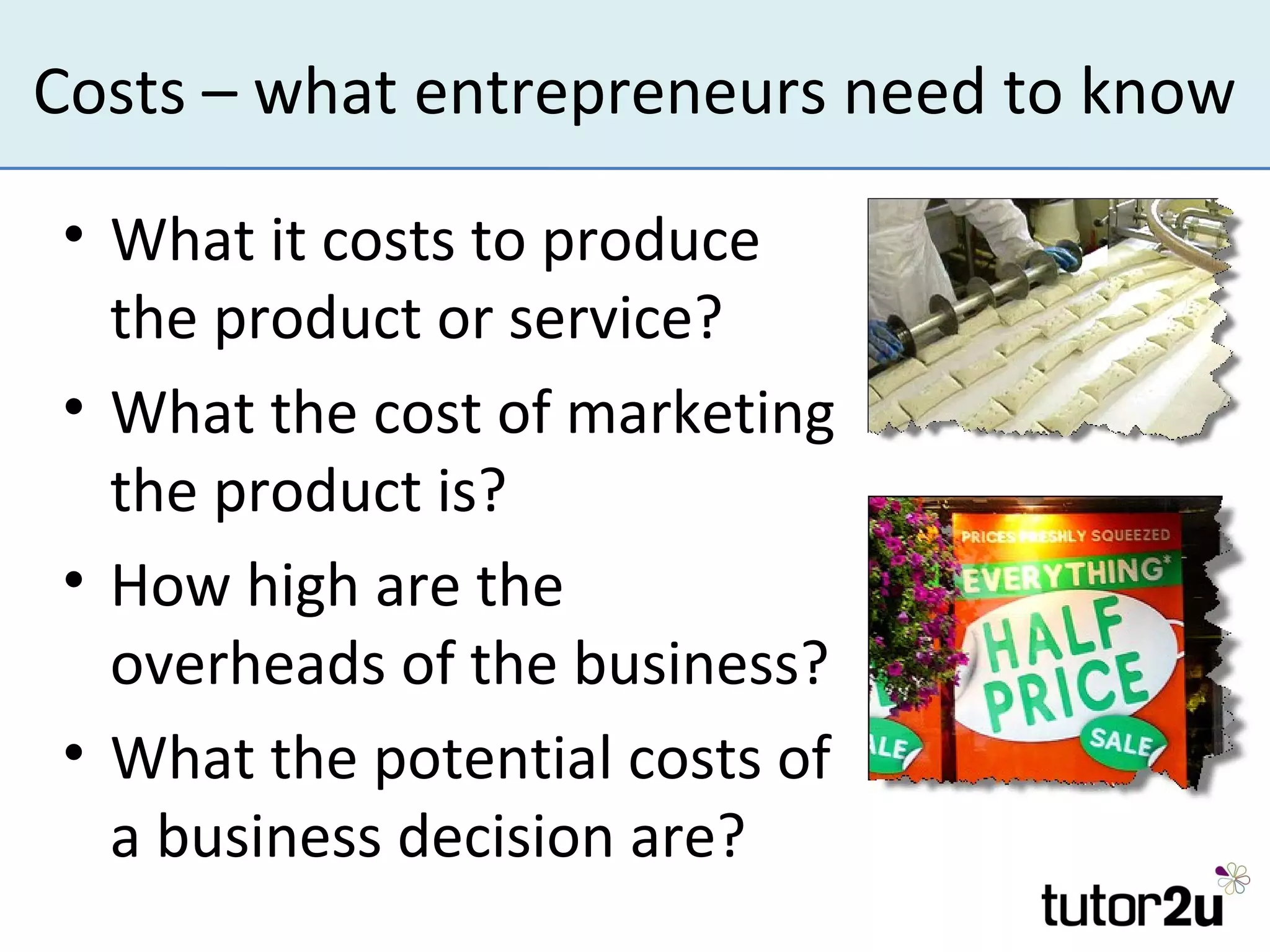
• What it costs to produce
  the product or service?
• What the cost of marketing
  the product is?
• How high are the
  overheads of the business?
• What the potential costs of
  a business decision are?
Costs are important because they..
• Are the thing that drains away the profits
  made by a business
• Are the difference between making a good
  and a poor profit margin
• Are the main cause of cash flow problems
  in a small business
• Change as the output or activity of a
  business changes – the entrepreneur needs
  to know how these are likely to change
Variable & fixed costs
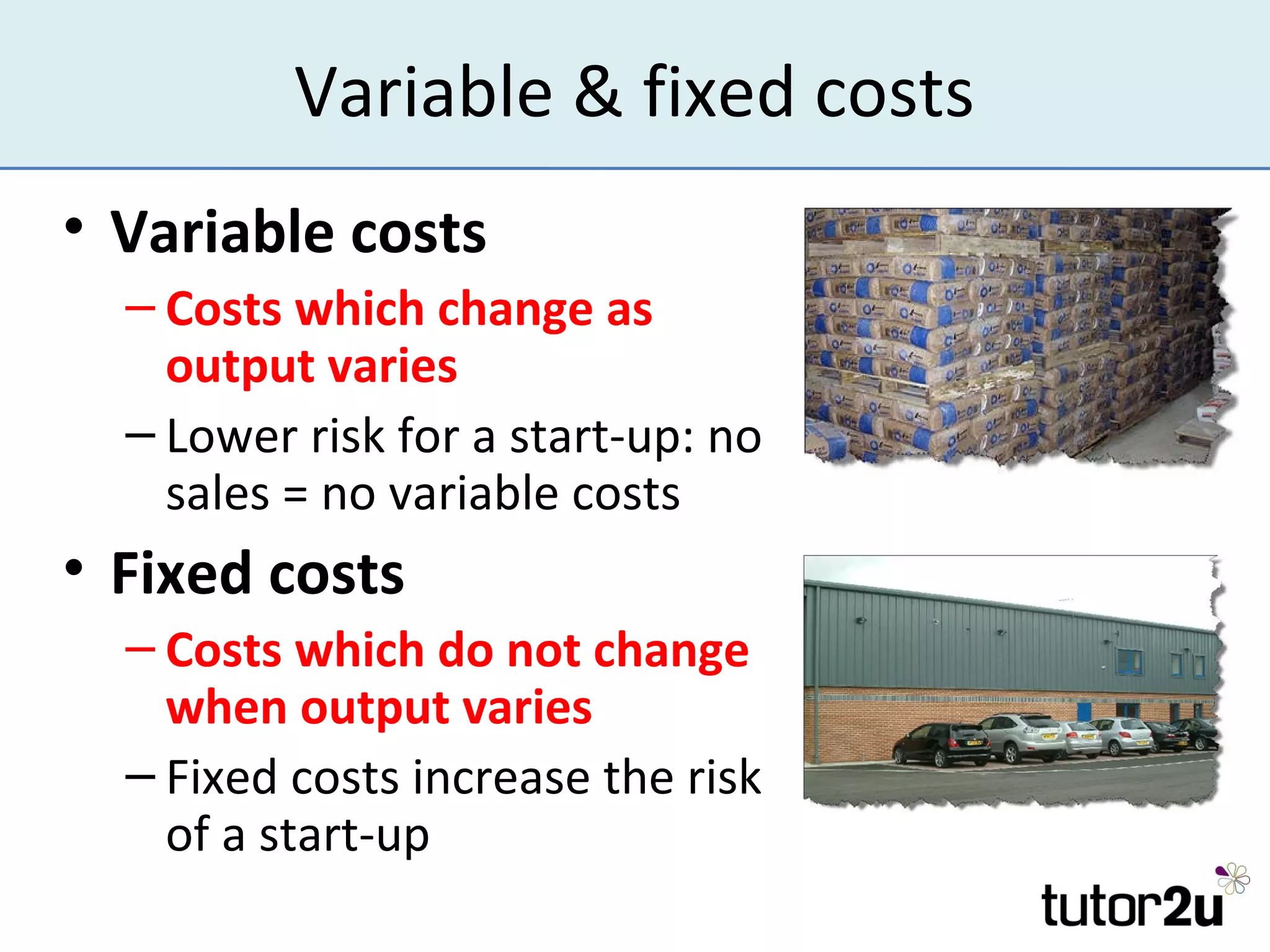
• Variable costs
  – Costs which change as
    output varies
  – Lower risk for a start-up: no
    sales = no variable costs
• Fixed costs
  – Costs which do not change
    when output varies
  – Fixed costs increase the risk
    of a start-up
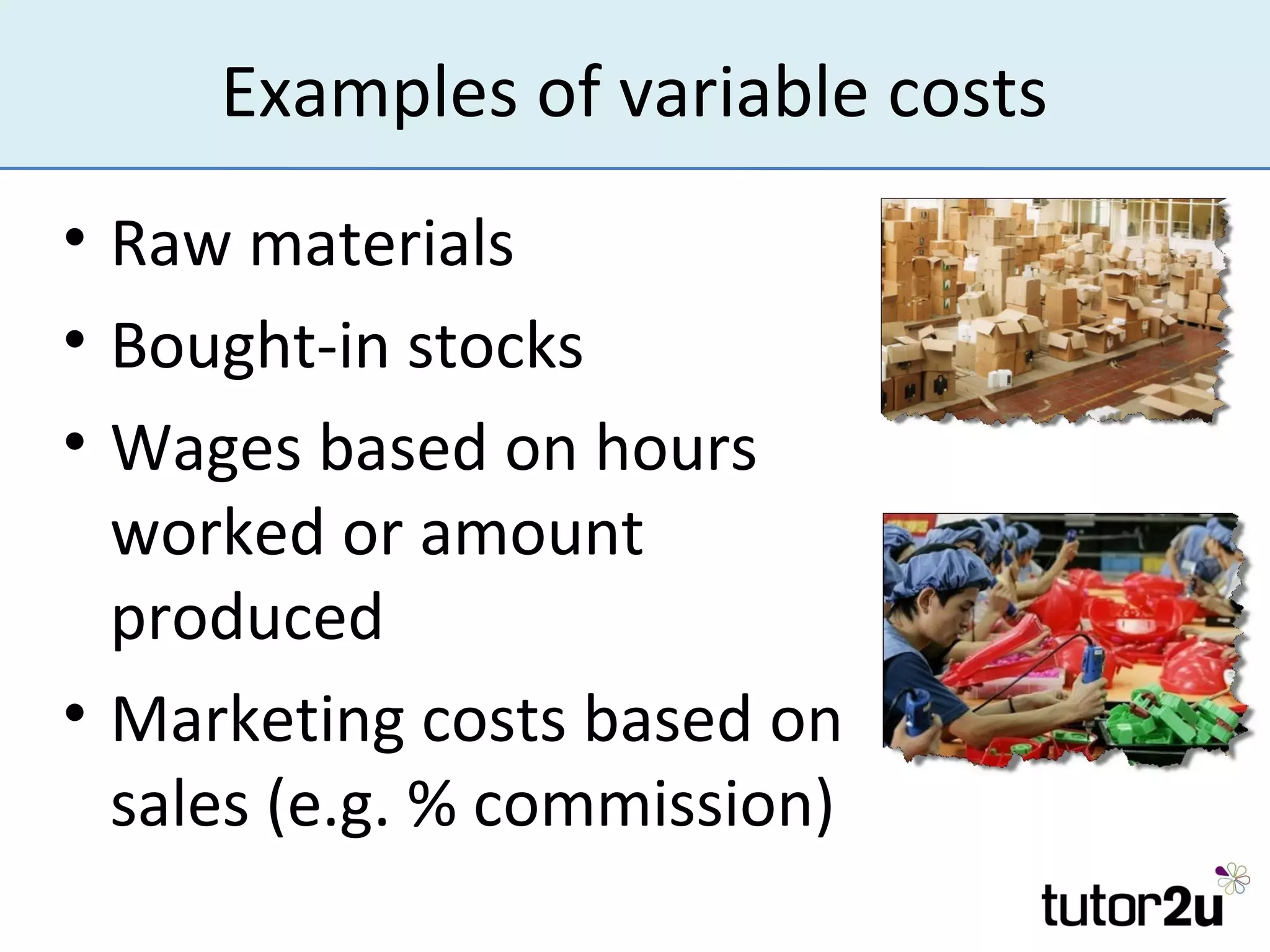
Examples of variable costs
• Raw materials
• Bought-in stocks
• Wages based on hours
  worked or amount
  produced
• Marketing costs based on
  sales (e.g. % commission)
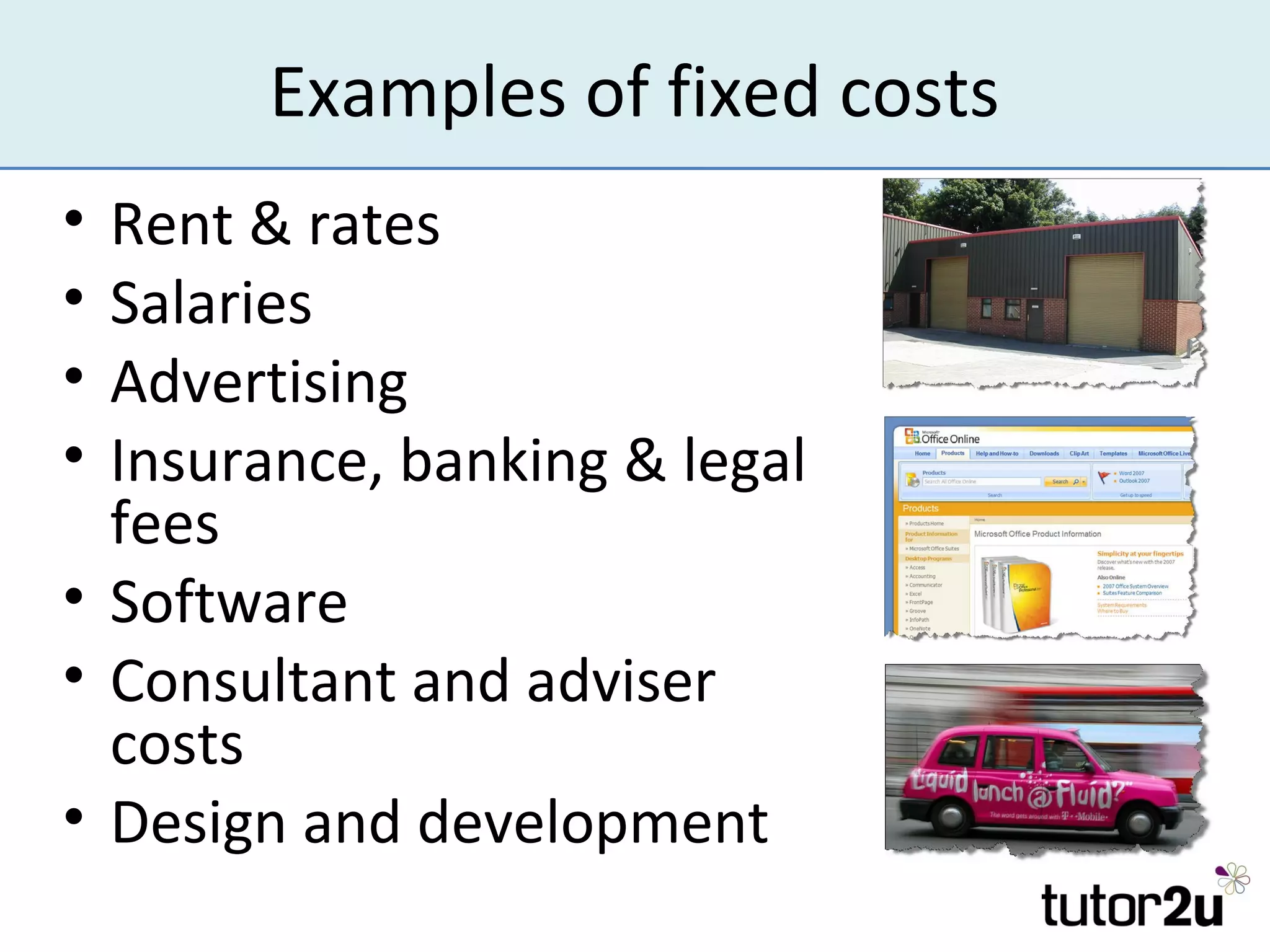
Examples of fixed costs
• Rent & rates
• Salaries
• Advertising
• Insurance, banking & legal
  fees
• Software
• Consultant and adviser
  costs
• Design and development
Semi-fixed costs
• Some costs are fixed in the short-
  term, but then change once a
  certain level of output is reached
• Examples:
  – Admin salaries: stay fixed until the
    workload means someone else is
    needed
  – Rent: space can be enough for a
    certain level of output until the
    point at which the business needs
    to move to somewhere bigger (or
    take on more space)
Total costs

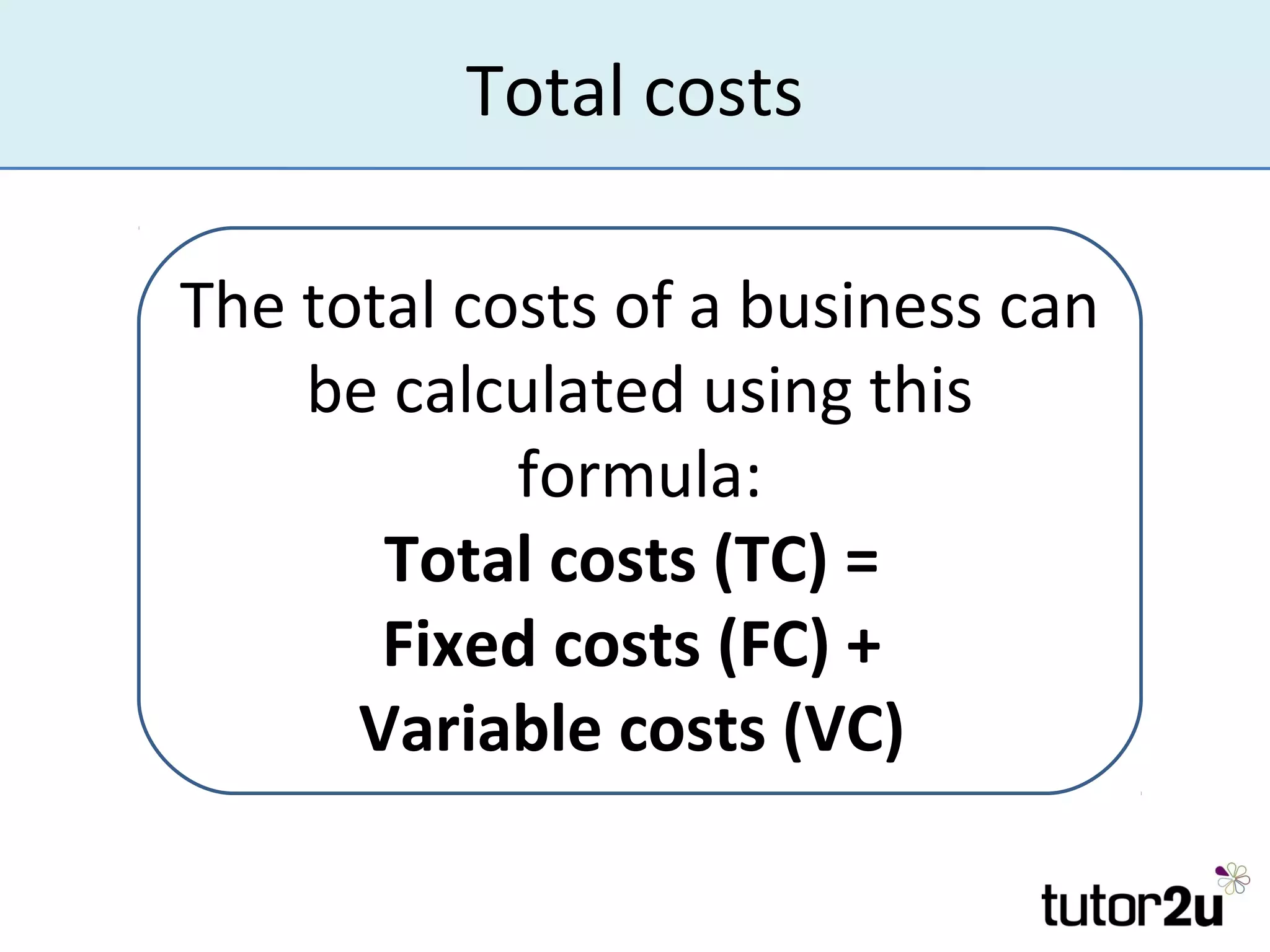
The total costs of a business can
    be calculated using this
            formula:
       Total costs (TC) =
       Fixed costs (FC) +
      Variable costs (VC)
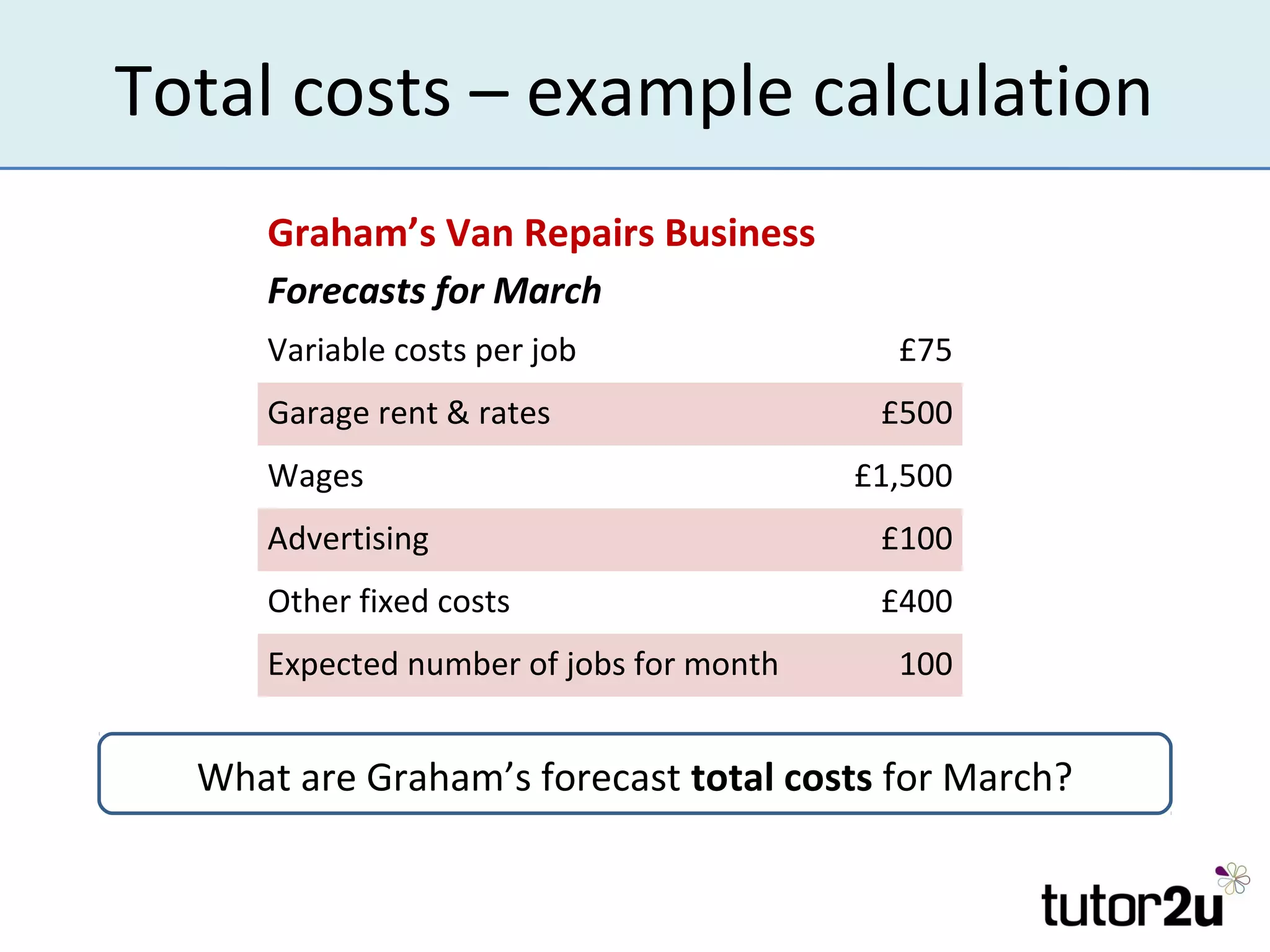
Total costs – example calculation
     Graham’s Van Repairs Business
     Forecasts for March
     Variable costs per job                £75
     Garage rent & rates                  £500
     Wages                               £1,500
     Advertising                          £100
     Other fixed costs                    £400
     Expected number of jobs for month     100


  What are Graham’s forecast total costs for March?
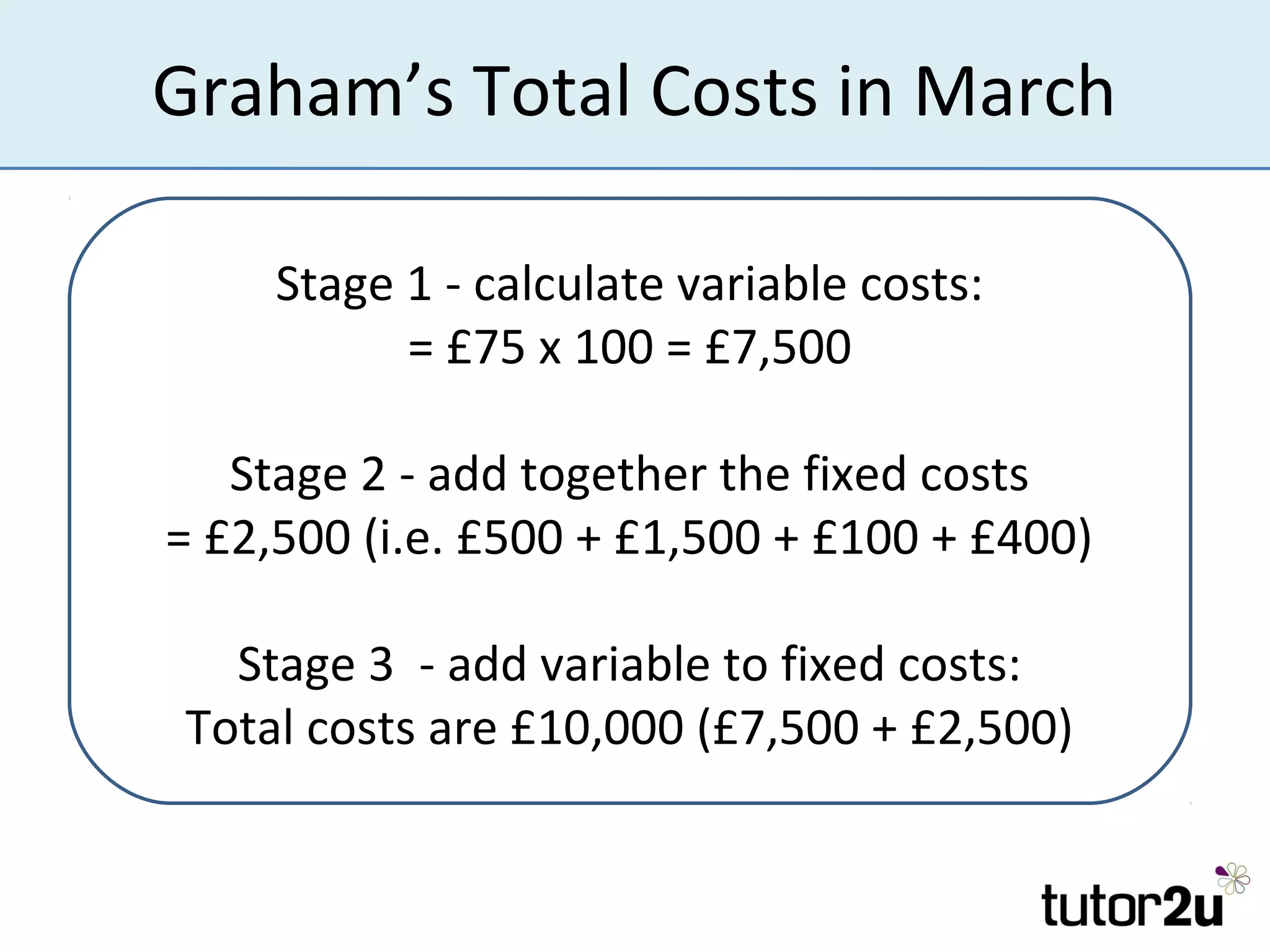
Graham’s Total Costs in March

     Stage 1 - calculate variable costs:
           = £75 x 100 = £7,500

   Stage 2 - add together the fixed costs
= £2,500 (i.e. £500 + £1,500 + £100 + £400)

   Stage 3 - add variable to fixed costs:
 Total costs are £10,000 (£7,500 + £2,500)
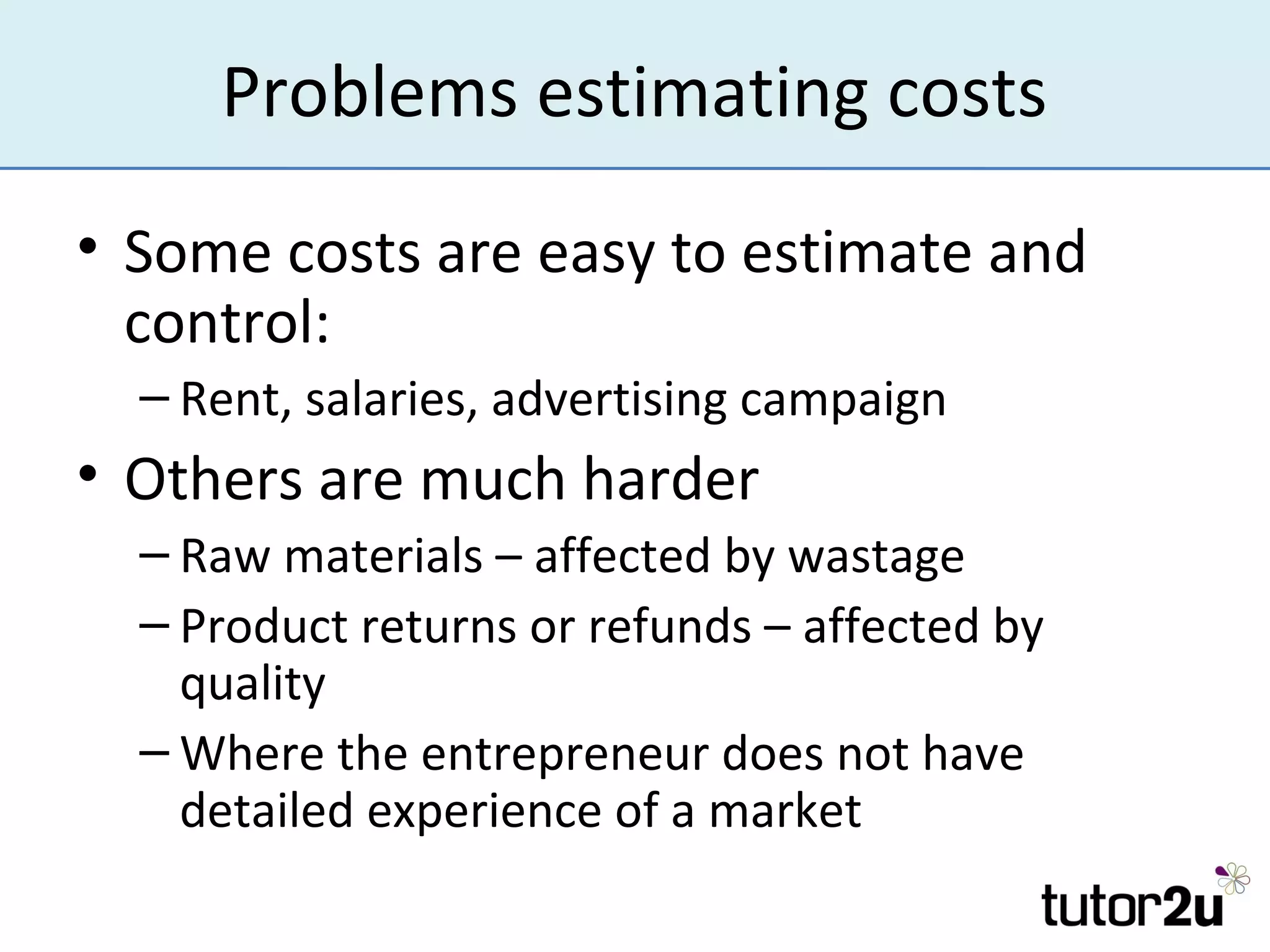
Problems estimating costs
• Some costs are easy to estimate and
  control:
  – Rent, salaries, advertising campaign
• Others are much harder
  – Raw materials – affected by wastage
  – Product returns or refunds – affected by
    quality
  – Where the entrepreneur does not have
    detailed experience of a market
Follow tutor2u on Twitter


tutor2u      tutor2u_econ
Become a fan of tutor2u on
      Facebook!


   tutor2u on Facebook
Keep up-to-date with business
stories, resources, quizzes and
 worksheets for your business
    course. Click the logo!

Introduction to Business Costs

  • 1.
  • 2.
    What are costs? Costsare amounts that a business incurs in order to make goods and/or provide services
  • 3.
    Costs – whatentrepreneurs need to know • What it costs to produce the product or service? • What the cost of marketing the product is? • How high are the overheads of the business? • What the potential costs of a business decision are?
  • 4.
    Costs are importantbecause they.. • Are the thing that drains away the profits made by a business • Are the difference between making a good and a poor profit margin • Are the main cause of cash flow problems in a small business • Change as the output or activity of a business changes – the entrepreneur needs to know how these are likely to change
  • 5.
    Variable & fixedcosts • Variable costs – Costs which change as output varies – Lower risk for a start-up: no sales = no variable costs • Fixed costs – Costs which do not change when output varies – Fixed costs increase the risk of a start-up
  • 6.
    Examples of variablecosts • Raw materials • Bought-in stocks • Wages based on hours worked or amount produced • Marketing costs based on sales (e.g. % commission)
  • 7.
    Examples of fixedcosts • Rent & rates • Salaries • Advertising • Insurance, banking & legal fees • Software • Consultant and adviser costs • Design and development
  • 8.
    Semi-fixed costs • Somecosts are fixed in the short- term, but then change once a certain level of output is reached • Examples: – Admin salaries: stay fixed until the workload means someone else is needed – Rent: space can be enough for a certain level of output until the point at which the business needs to move to somewhere bigger (or take on more space)
  • 9.
    Total costs The totalcosts of a business can be calculated using this formula: Total costs (TC) = Fixed costs (FC) + Variable costs (VC)
  • 10.
    Total costs –example calculation Graham’s Van Repairs Business Forecasts for March Variable costs per job £75 Garage rent & rates £500 Wages £1,500 Advertising £100 Other fixed costs £400 Expected number of jobs for month 100 What are Graham’s forecast total costs for March?
  • 11.
    Graham’s Total Costsin March Stage 1 - calculate variable costs: = £75 x 100 = £7,500 Stage 2 - add together the fixed costs = £2,500 (i.e. £500 + £1,500 + £100 + £400) Stage 3 - add variable to fixed costs: Total costs are £10,000 (£7,500 + £2,500)
  • 12.
    Problems estimating costs •Some costs are easy to estimate and control: – Rent, salaries, advertising campaign • Others are much harder – Raw materials – affected by wastage – Product returns or refunds – affected by quality – Where the entrepreneur does not have detailed experience of a market
  • 13.
    Follow tutor2u onTwitter tutor2u tutor2u_econ
  • 14.
    Become a fanof tutor2u on Facebook! tutor2u on Facebook
  • 15.
    Keep up-to-date withbusiness stories, resources, quizzes and worksheets for your business course. Click the logo!