CARE AND PROTECTION OF
CHILDREN,ACT 2000
SUBMITTED BY:-MOHINI
THE JUVENILE JUSTICE ACT
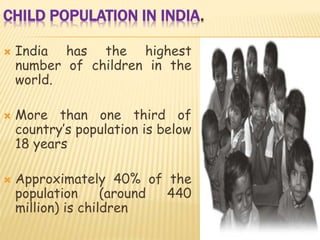
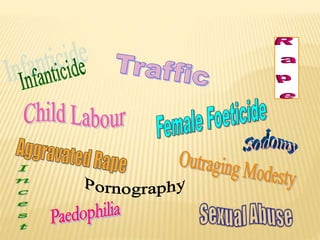
CHILD POPULATION IN INDIA.
 India has the highest
number of children in the
world.
 More than one third of
country’s population is below
18 years
 Approximately 40% of the
population (around 440
million) is children
Children everywhere are
vulnerable to abuse and
exploitation by those in positions
of power and trust…
INTRODUCTION
 An Act to consolidate and amend the law relating to
juveniles in conflict with law

• Protection and treatment.
• Child-friendly approach.
• Rehabilitation.
• Institutions established
 JUVENILE JUSTICE ACT 1986:
Was renamed and rewritten in 2000 to be
called the Juvenile Justice (Care and
Protection of children) Act .
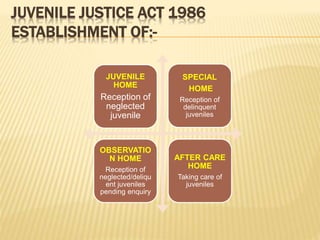
JUVENILE JUSTICE ACT 1986
ESTABLISHMENT OF:-
JUVENILE
HOME
Reception of
neglected
juvenile
SPECIAL
HOME
Reception of
delinquent
juveniles
OBSERVATIO
N HOME
Reception of
neglected/deliqu
ent juveniles
pending enquiry
AFTER CARE
HOME
Taking care of
juveniles
THE OBJECTIVE OF THE ACT
 To Lay Down A Legal Structure For The Juvenile Justice System In The Country.
 To Provide A Special Approach To The Protection And Treatment Of Juveniles.
 To outline the machinery and infrastructure required for the care, protection,
treatment, development and rehabilitation of juveniles.
 To establish norms and standards for administration of juvenile justice.
 To establish linkages and co-ordination between the formal system of juvenile
justice and voluntary efforts in the welfare of juveniles.

To constitute special offences in relation to juveniles and provide punishment.

SILENT FEATURES OF THE ACT
 Primary law for children in India.
 It defines a juvenile/child as a person below the age of 18 years.
 Rehabilitation and social reintegration are the primary aims of the Act.
 To create a separate system of justice –dispensation .
 Distinct from criminal justice system for adults.
 Effective involvement of informal social arrangements – family, community.
 Child friendly juvenile justice system .
JUVENILE JUSTICE ACT
The Act places children/juveniles in two
categories –
1. Juvenile in ‘conflict with the law’ handled
by State Governments/ ‘Juvenile Boards’
2. Child in need of ‘care and protection’ to be
looked after by State Governments/ ‘Child
Welfare Committees’
Act to be implemented by the respective State
Governments
CHILDREN IN CONFLICT WITH LAW
 Juvenile in conflict with law is a child who is alleged
to have committed an offence and should be
produced before Juvenile Justice Board (JJB)
Children in need of care and protection are children
who are:
Neglected
Orphaned
Abused
Abandoned
Victims of any arm conflict or natural calamity
and should be produced before
Child Welfare Committee (CWC)
Appointed by the State Government.
Panel of Metropolitan Magistrate or Judicial Magistrate
of the first class.
Two social workers of whom at least one shall be a
women.
Magistrate to have special knowledge or training in child
psychology or child
JUVENILE JUSTICE BOARD :
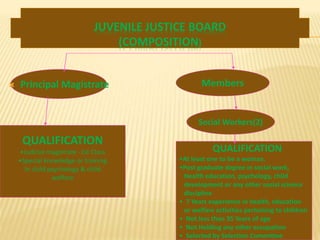
JUVENILE JUSTICE BOARD
(COMPOSITION)
 Principal Magistrate
QUALIFICATION
•Judicial magistrate -1st Class
•Special knowledge or training
In child psychology & child
welfare
Members
Social Workers(2)
QUALIFICATION
•At least one to be a woman.
•Post graduate degree in social work,
Health education, psychology, child
development or any other social science
discipline
• 7 Years experience in health, education
or welfare activities pertaining to children
• Not less than 35 Years of age
• Not Holding any other occupation
• Selected by Selection Committee
Juvenile in conflict with law to be produced before
JJB/a member of JJB.
when JJB not sitting JJB may act and pass orders
in the absence of any member.
At least two members including Magistrate to be
present at time of final disposal of case Opinion of
majority will prevail.
In absence, opinion of magistrate will prevail.
PROCEDURE, ETC. IN RELATION
TO BOARD :
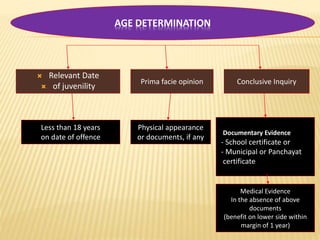
AGE DETERMINATION
 Relevant Date
 of juvenility
Less than 18 years
on date of offence
Prima facie opinion
Physical appearance
or documents, if any
Conclusive Inquiry
Documentary Evidence
- School certificate or
- Municipal or Panchayat
certificate
Medical Evidence
In the absence of above
documents
(benefit on lower side within
margin of 1 year)
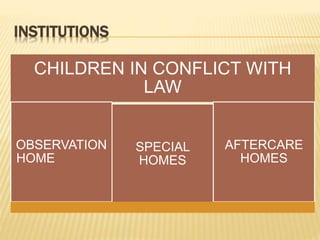
INSTITUTIONS
CHILDREN IN CONFLICT WITH
LAW
OBSERVATION
HOME
SPECIAL
HOMES
AFTERCARE
HOMES
They shall be placed under the charge of the special
juvenile police unit
The State Government may make rules consistent with
this Act,-
To provide for persons through whom ( including
registered voluntary organizations) any juvenile in
conflict with law may be produced before the Board to
provide the manner in which such juvenile may be sent
to an observation home.
APPREHENSION OF JUVENILE IN
CONFLICT WITH LAW.-
ORDER THAT MAY NOT BE PASSED
AGAINST JUVENILE
A Juvenile Cannot be sentenced to
death/life imprisonment/committed to prison.
Juvenile Justice Act,2000

Juvenile Justice Act,2000

  • 1.
    CARE AND PROTECTIONOF CHILDREN,ACT 2000 SUBMITTED BY:-MOHINI THE JUVENILE JUSTICE ACT
  • 2.
    CHILD POPULATION ININDIA.  India has the highest number of children in the world.  More than one third of country’s population is below 18 years  Approximately 40% of the population (around 440 million) is children
  • 3.
    Children everywhere are vulnerableto abuse and exploitation by those in positions of power and trust…
  • 5.
    INTRODUCTION  An Actto consolidate and amend the law relating to juveniles in conflict with law  • Protection and treatment. • Child-friendly approach. • Rehabilitation. • Institutions established
  • 6.
     JUVENILE JUSTICEACT 1986: Was renamed and rewritten in 2000 to be called the Juvenile Justice (Care and Protection of children) Act .
  • 7.
    JUVENILE JUSTICE ACT1986 ESTABLISHMENT OF:- JUVENILE HOME Reception of neglected juvenile SPECIAL HOME Reception of delinquent juveniles OBSERVATIO N HOME Reception of neglected/deliqu ent juveniles pending enquiry AFTER CARE HOME Taking care of juveniles
  • 8.
    THE OBJECTIVE OFTHE ACT  To Lay Down A Legal Structure For The Juvenile Justice System In The Country.  To Provide A Special Approach To The Protection And Treatment Of Juveniles.  To outline the machinery and infrastructure required for the care, protection, treatment, development and rehabilitation of juveniles.  To establish norms and standards for administration of juvenile justice.  To establish linkages and co-ordination between the formal system of juvenile justice and voluntary efforts in the welfare of juveniles.  To constitute special offences in relation to juveniles and provide punishment. 
  • 9.
    SILENT FEATURES OFTHE ACT  Primary law for children in India.  It defines a juvenile/child as a person below the age of 18 years.  Rehabilitation and social reintegration are the primary aims of the Act.  To create a separate system of justice –dispensation .  Distinct from criminal justice system for adults.  Effective involvement of informal social arrangements – family, community.  Child friendly juvenile justice system .
  • 10.
    JUVENILE JUSTICE ACT TheAct places children/juveniles in two categories – 1. Juvenile in ‘conflict with the law’ handled by State Governments/ ‘Juvenile Boards’ 2. Child in need of ‘care and protection’ to be looked after by State Governments/ ‘Child Welfare Committees’ Act to be implemented by the respective State Governments
  • 11.
    CHILDREN IN CONFLICTWITH LAW  Juvenile in conflict with law is a child who is alleged to have committed an offence and should be produced before Juvenile Justice Board (JJB) Children in need of care and protection are children who are: Neglected Orphaned Abused Abandoned Victims of any arm conflict or natural calamity and should be produced before Child Welfare Committee (CWC)
  • 12.
    Appointed by theState Government. Panel of Metropolitan Magistrate or Judicial Magistrate of the first class. Two social workers of whom at least one shall be a women. Magistrate to have special knowledge or training in child psychology or child JUVENILE JUSTICE BOARD :
  • 13.
    JUVENILE JUSTICE BOARD (COMPOSITION) Principal Magistrate QUALIFICATION •Judicial magistrate -1st Class •Special knowledge or training In child psychology & child welfare Members Social Workers(2) QUALIFICATION •At least one to be a woman. •Post graduate degree in social work, Health education, psychology, child development or any other social science discipline • 7 Years experience in health, education or welfare activities pertaining to children • Not less than 35 Years of age • Not Holding any other occupation • Selected by Selection Committee
  • 14.
    Juvenile in conflictwith law to be produced before JJB/a member of JJB. when JJB not sitting JJB may act and pass orders in the absence of any member. At least two members including Magistrate to be present at time of final disposal of case Opinion of majority will prevail. In absence, opinion of magistrate will prevail. PROCEDURE, ETC. IN RELATION TO BOARD :
  • 15.
    AGE DETERMINATION  RelevantDate  of juvenility Less than 18 years on date of offence Prima facie opinion Physical appearance or documents, if any Conclusive Inquiry Documentary Evidence - School certificate or - Municipal or Panchayat certificate Medical Evidence In the absence of above documents (benefit on lower side within margin of 1 year)
  • 16.
    INSTITUTIONS CHILDREN IN CONFLICTWITH LAW OBSERVATION HOME SPECIAL HOMES AFTERCARE HOMES
  • 17.
    They shall beplaced under the charge of the special juvenile police unit The State Government may make rules consistent with this Act,- To provide for persons through whom ( including registered voluntary organizations) any juvenile in conflict with law may be produced before the Board to provide the manner in which such juvenile may be sent to an observation home. APPREHENSION OF JUVENILE IN CONFLICT WITH LAW.-
  • 18.
    ORDER THAT MAYNOT BE PASSED AGAINST JUVENILE A Juvenile Cannot be sentenced to death/life imprisonment/committed to prison.