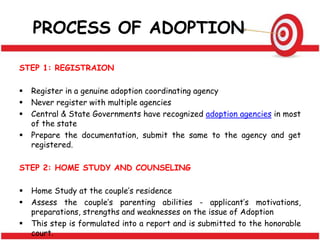
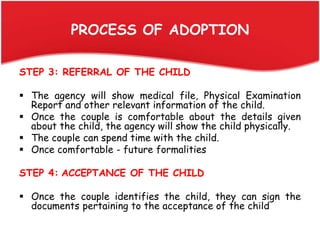
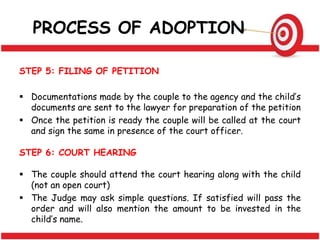
INDIAN ADOPTION LAWSFILMA VARGHESEALTACIT GLOBAL
ADOPTIONAdoption is a legal process by which a child is placed with a married couple or a single female who agree to raise her as their own child and assume all responsibility for her.
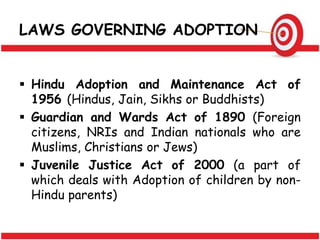
LAWS GOVERNING ADOPTIONHindu Adoption and Maintenance Act of 1956 (Hindus, Jain, Sikhs or Buddhists)
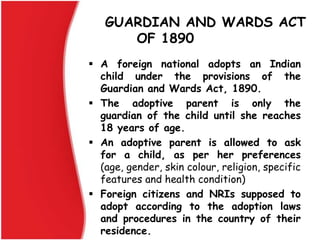
Guardian and Wards Act of 1890 (Foreign citizens, NRIs and Indian nationals who are Muslims, Christians or Jews)
Juvenile Justice Act of 2000 (a part of which deals with Adoption of children by non-Hindu parents)REQUIREMENTS FOR A VALID ADOPTION No adoption is valid unless The person adopting is lawfully capable of taking in adoption.
The person giving in adoption is lawfully capable of giving in adoption.
The person adopted is lawfully capable of being taken in adoption.
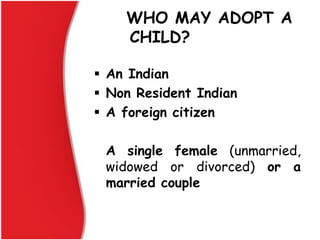
The adoption is completed by an actual giving and taking and after the ceremony called Datta Homan (oblation to the fire) has been performed. However this may not be essential in all cases as to the validity of adoption. WHO MAY ADOPT A CHILD?An Indian
Non Resident Indian
A foreign citizen	A single female (unmarried, widowed or divorced) or a married couple
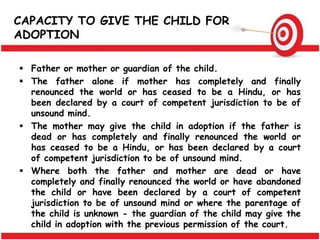
CAPACITY TO GIVE THE CHILD FOR ADOPTIONFather or mother or guardian of the child.
The father alone if mother has completely and finally renounced the world or has ceased to be a Hindu, or has been declared by a court of competent jurisdiction to be of unsound mind.
The mother may give the child in adoption if the father is dead or has completely and finally renounced the world or has ceased to be a Hindu, or has been declared by a court of competent jurisdiction to be of unsound mind.
Where both the father and mother are dead or have completely and finally renounced the world or have abandoned the child or have been declared by a court of competent jurisdiction to be of unsound mind or where the parentage of the child is unknown - the guardian of the child may give the child in adoption with the previous permission of the court.CONDITIONS TO BE FULFILLED BY AN ADOPTIVE PARENTMedically fit and financially able to care for a child
Must be at least 21 years old
No legal upper age limit for parents
Adoption of the older children, age of the parents may be relaxed
Adopted child with special needs, the age limit may be relaxed
If the adoption is of a son, the adoptive father or mother by whom the adoption is made must not have a son living at the time of adoption.

Indian adoption laws

  • 1.
    INDIAN ADOPTION LAWSFILMAVARGHESEALTACIT GLOBAL
  • 2.
    ADOPTIONAdoption is alegal process by which a child is placed with a married couple or a single female who agree to raise her as their own child and assume all responsibility for her.
  • 3.
    LAWS GOVERNING ADOPTIONHinduAdoption and Maintenance Act of 1956 (Hindus, Jain, Sikhs or Buddhists)
  • 4.
    Guardian and WardsAct of 1890 (Foreign citizens, NRIs and Indian nationals who are Muslims, Christians or Jews)
  • 5.
    Juvenile Justice Actof 2000 (a part of which deals with Adoption of children by non-Hindu parents)REQUIREMENTS FOR A VALID ADOPTION No adoption is valid unless The person adopting is lawfully capable of taking in adoption.
  • 6.
    The person givingin adoption is lawfully capable of giving in adoption.
  • 7.
    The person adoptedis lawfully capable of being taken in adoption.
  • 8.
    The adoption iscompleted by an actual giving and taking and after the ceremony called Datta Homan (oblation to the fire) has been performed. However this may not be essential in all cases as to the validity of adoption. WHO MAY ADOPT A CHILD?An Indian
  • 9.
  • 10.
    A foreign citizen Asingle female (unmarried, widowed or divorced) or a married couple
  • 11.
    CAPACITY TO GIVETHE CHILD FOR ADOPTIONFather or mother or guardian of the child.
  • 12.
    The father aloneif mother has completely and finally renounced the world or has ceased to be a Hindu, or has been declared by a court of competent jurisdiction to be of unsound mind.
  • 13.
    The mother maygive the child in adoption if the father is dead or has completely and finally renounced the world or has ceased to be a Hindu, or has been declared by a court of competent jurisdiction to be of unsound mind.
  • 14.
    Where both thefather and mother are dead or have completely and finally renounced the world or have abandoned the child or have been declared by a court of competent jurisdiction to be of unsound mind or where the parentage of the child is unknown - the guardian of the child may give the child in adoption with the previous permission of the court.CONDITIONS TO BE FULFILLED BY AN ADOPTIVE PARENTMedically fit and financially able to care for a child
  • 15.
    Must be atleast 21 years old
  • 16.
    No legal upperage limit for parents
  • 17.
    Adoption of theolder children, age of the parents may be relaxed
  • 18.
    Adopted child withspecial needs, the age limit may be relaxed
  • 19.
    If the adoptionis of a son, the adoptive father or mother by whom the adoption is made must not have a son living at the time of adoption.