WELCOME TO PRESENTATION
Jute Fiber
Submitted By:
Tonmoy Bhoumik
Dept. of Textile Engineering
Jessore University of Science & Technology
Introduction
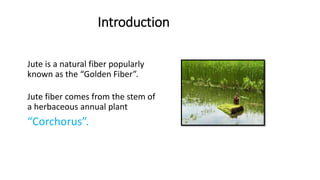
Jute is a natural fiber popularly
known as the “Golden Fiber”.
Jute fiber comes from the stem of
a herbaceous annual plant
“Corchorus”.
• Jute is the second in the world’s production of
textile fibers after cotton.
• India , Bangladesh are leading producers of Jute.
• Jute is almost entirely a market oriented crop.
• Bangladesh is the largest cultivator of raw jute.
• The plant has a height of 8 to 12 feet.
Cultivation and Harvesting of Fiber
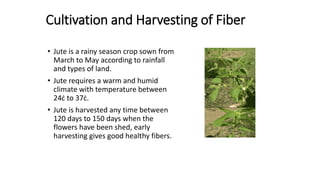
• Jute is a rainy season crop sown from
March to May according to rainfall
and types of land.
• Jute requires a warm and humid
climate with temperature between
24ċ to 37ċ.
• Jute is harvested any time between
120 days to 150 days when the
flowers have been shed, early
harvesting gives good healthy fibers.
Structure of Fiber
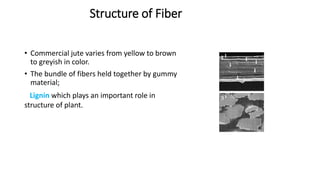
• Commercial jute varies from yellow to brown
to greyish in color.
• The bundle of fibers held together by gummy
material;
Lignin which plays an important role in
structure of plant.
CHEMICAL COMPOSITION OF JUTE
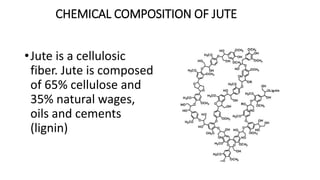
•Jute is a cellulosic
fiber. Jute is composed
of 65% cellulose and
35% natural wages,
oils and cements
(lignin)
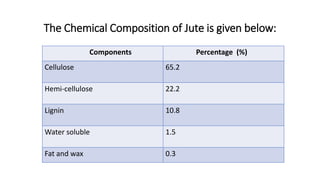
The Chemical Composition of Jute is given below:
Components Percentage (%)
Cellulose 65.2
Hemi-cellulose 22.2
Lignin 10.8
Water soluble 1.5
Fat and wax 0.3
Uses
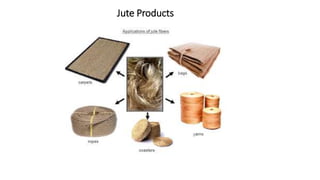
• Jute is cheap and reasonably strong and is available in large quantities.
Generally used in:
Sacks & Packing Cloth.
Food Storage.
Backing cloth for carpets.
Used in Geotextiles, technical textiles and textile composites.
Mixed with wool, used in cheap clothing.
Jute Products
Processing: Environmental Impact
Advantages
• 100% biodegradable.
oReduction in use of plastics
goods.
• Unused “waste” parts of plants
add nutrients to the soil
Disadvantages
• Jute mill runoff causes
sound/water/soil pollution.
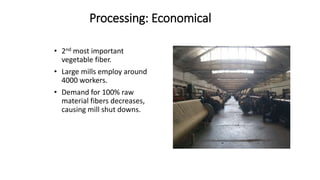
Processing: Economical
• 2nd most important
vegetable fiber.
• Large mills employ around
4000 workers.
• Demand for 100% raw
material fibers decreases,
causing mill shut downs.
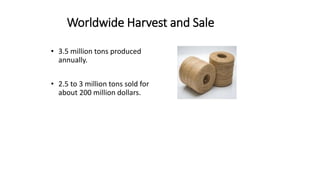
Worldwide Harvest and Sale
• 3.5 million tons produced
annually.
• 2.5 to 3 million tons sold for
about 200 million dollars.
Major Buyers And Sellers
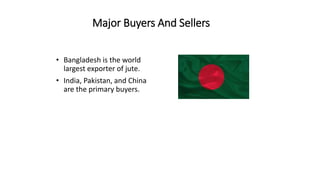
• Bangladesh is the world
largest exporter of jute.
• India, Pakistan, and China
are the primary buyers.
The future of jute?
• As we drive to transition to a bio-based economy, the jute industry
will also grow for years to come
• Will be essential in multiple industries, such as automotive and
clothing
• Growing among consumers as a favorable substitute to synthetic
resources, which make the future of jute very bright.
Summary
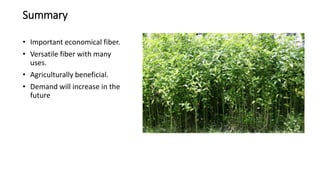
• Important economical fiber.
• Versatile fiber with many
uses.
• Agriculturally beneficial.
• Demand will increase in the
future
Thank YOU

Jute Fiber

  • 1.
  • 2.
    Jute Fiber Submitted By: TonmoyBhoumik Dept. of Textile Engineering Jessore University of Science & Technology
  • 3.
    Introduction Jute is anatural fiber popularly known as the “Golden Fiber”. Jute fiber comes from the stem of a herbaceous annual plant “Corchorus”.
  • 4.
    • Jute isthe second in the world’s production of textile fibers after cotton. • India , Bangladesh are leading producers of Jute. • Jute is almost entirely a market oriented crop. • Bangladesh is the largest cultivator of raw jute. • The plant has a height of 8 to 12 feet.
  • 5.
    Cultivation and Harvestingof Fiber • Jute is a rainy season crop sown from March to May according to rainfall and types of land. • Jute requires a warm and humid climate with temperature between 24ċ to 37ċ. • Jute is harvested any time between 120 days to 150 days when the flowers have been shed, early harvesting gives good healthy fibers.
  • 6.
    Structure of Fiber •Commercial jute varies from yellow to brown to greyish in color. • The bundle of fibers held together by gummy material; Lignin which plays an important role in structure of plant.
  • 7.
    CHEMICAL COMPOSITION OFJUTE •Jute is a cellulosic fiber. Jute is composed of 65% cellulose and 35% natural wages, oils and cements (lignin)
  • 8.
    The Chemical Compositionof Jute is given below: Components Percentage (%) Cellulose 65.2 Hemi-cellulose 22.2 Lignin 10.8 Water soluble 1.5 Fat and wax 0.3
  • 9.
    Uses • Jute ischeap and reasonably strong and is available in large quantities. Generally used in: Sacks & Packing Cloth. Food Storage. Backing cloth for carpets. Used in Geotextiles, technical textiles and textile composites. Mixed with wool, used in cheap clothing.
  • 10.
  • 11.
    Processing: Environmental Impact Advantages •100% biodegradable. oReduction in use of plastics goods. • Unused “waste” parts of plants add nutrients to the soil Disadvantages • Jute mill runoff causes sound/water/soil pollution.
  • 12.
    Processing: Economical • 2ndmost important vegetable fiber. • Large mills employ around 4000 workers. • Demand for 100% raw material fibers decreases, causing mill shut downs.
  • 13.
    Worldwide Harvest andSale • 3.5 million tons produced annually. • 2.5 to 3 million tons sold for about 200 million dollars.
  • 14.
    Major Buyers AndSellers • Bangladesh is the world largest exporter of jute. • India, Pakistan, and China are the primary buyers.
  • 15.
    The future ofjute? • As we drive to transition to a bio-based economy, the jute industry will also grow for years to come • Will be essential in multiple industries, such as automotive and clothing • Growing among consumers as a favorable substitute to synthetic resources, which make the future of jute very bright.
  • 16.
    Summary • Important economicalfiber. • Versatile fiber with many uses. • Agriculturally beneficial. • Demand will increase in the future
  • 17.