Wound management in
Buruli ulcer patients
BY : JUSTICE ABOTSI
2
Wound
A break in the continuity of the skin or
membrane.
It may be due to
Injury-
Rupture- “Oedematous form” of BU
Disease-
3
Types of wound
• Intentional wound
– Surgical excision, incisions, skin grafting
• Accidental wounds
– Lacerations, stab wound, burns, traumatic
injury, disease (Buruli ulcer)
4
Buruli Ulcer
Presentation of BU wounds
– Clean wounds
– Contaminated wound
– Clean-contaminated wounds
– Dirty or infected wounds (septic wound)
– Grafted wound
Example of clean wound
5
Contaminated wound
6
Clean contaminated wound
7
8
Dirty and septic wound
Early and after grafting
9
Grafted wound
10
11
Wound Dressing Essentials
• Get all requirements set/ready
• Ensure privacy and explain procedure
• Wound dressing is done after
complete/partial bath (of the patient).
12
Lotions & Ointments used
Lotions
• Normal saline .
• Savlon
• Povidone Iodine (aqueous)
• Acetic acid ( 1 part of white vinegar in 9 parts of normal saline) is
used to clean wound with bluish green discharge. (Pseudomonas
infection) after adequate cleaning of the wound ,
Ointments
Betadine or Wokadine
Vaseline gauze with betadine or wokadine ointment is applied
followed by several layers of sterile gauze or other absorbent sterile
materials for adequate absorption of fluid.
13
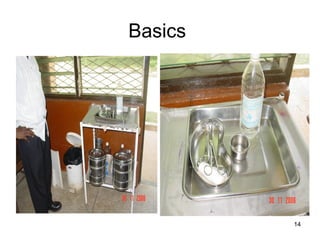
DRESSING REQUIREMENT
Top Shelf
• Gallipot(s) for lotions.
• Dressing forceps.
• Dissecting forceps.
• Sinus forceps.
• Probe
• Stitch scissors.
• Covered bowl with sterile cotton wool and gauze swabs.
Bottom Shelf
• Bottles of lotions & ointment e.g. savlon, normal saline, acetic acid
Povidone Iodine (Aqueous), wokadine or betadine.
• Adhesive plaster
• Vaseline gauze
• Scissors.
• Bandages, crepe.
• Covered receiver containing parazone 1:10 for soiled instruments.
• Mackintosh with cover.
• Receptacle for soiled dressings
14
Basics
15
REMOVING OLD DRESSING
Loosen the soiled dressing by holding the
patient’s skin and pulling the plaster or
dressing towards the wound.
• If the gauze adheres to the wound loosen
it by moistening with sterile normal saline
solution.
• Observe the dressing for the amount,
colour, odour and amount of exudates.
• Discard the dressing and gloves in a water
proof trash “polythene” bag
Dressing of wounds(steps)
• Explain procedure to patients and ensure
privacy
• Wash and dry hands,prepare and take
trolley to patient’s bedside.
• Position patient comfortably and protect
bed cloths and exposed the wound.
• Pour out lotion into gallipots and remove
plaster or bandages
16
continue
• Wash and dry hands
• Remove soiled dressing with dissecting
forceps or gloved hand and discard.
• Wash and dry hands again.
• Create a sterile field
• Clean wound from within outward using
one swab only once.
17
continue
• Clean wound with swabs soaked in saline
or boiled cooled water using sterile
forceps or gloves
• Clean wound with series of swabs until
clean.
• Apply enough sterile dressing and secure
into position (plaster or bandage)
• Make patient comfortable in bed.
18
continue
• Explain relevant findings to patient and
thank him/her.
• Discard trolley and decontaminate
instruments and wash hand.
• Remove gloves and screen,wash hands
and dry hands.
• Document and report state of the wound.
19
20
Conclusion
• BU wounds require special attention
• Always make dressing environment is
clean
• Provide privacy for patient
• Observe and record findings
• Be looking for signs of restriction of
movement at any joint and act accordingly
• If possible reffer to the physiotherapist.
Thank you
21

Wound management in Buruli ulcer patients

  • 1.
    Wound management in Buruliulcer patients BY : JUSTICE ABOTSI
  • 2.
    2 Wound A break inthe continuity of the skin or membrane. It may be due to Injury- Rupture- “Oedematous form” of BU Disease-
  • 3.
    3 Types of wound •Intentional wound – Surgical excision, incisions, skin grafting • Accidental wounds – Lacerations, stab wound, burns, traumatic injury, disease (Buruli ulcer)
  • 4.
    4 Buruli Ulcer Presentation ofBU wounds – Clean wounds – Contaminated wound – Clean-contaminated wounds – Dirty or infected wounds (septic wound) – Grafted wound
  • 5.
  • 6.
  • 7.
  • 8.
  • 9.
    Early and aftergrafting 9
  • 10.
  • 11.
    11 Wound Dressing Essentials •Get all requirements set/ready • Ensure privacy and explain procedure • Wound dressing is done after complete/partial bath (of the patient).
  • 12.
    12 Lotions & Ointmentsused Lotions • Normal saline . • Savlon • Povidone Iodine (aqueous) • Acetic acid ( 1 part of white vinegar in 9 parts of normal saline) is used to clean wound with bluish green discharge. (Pseudomonas infection) after adequate cleaning of the wound , Ointments Betadine or Wokadine Vaseline gauze with betadine or wokadine ointment is applied followed by several layers of sterile gauze or other absorbent sterile materials for adequate absorption of fluid.
  • 13.
    13 DRESSING REQUIREMENT Top Shelf •Gallipot(s) for lotions. • Dressing forceps. • Dissecting forceps. • Sinus forceps. • Probe • Stitch scissors. • Covered bowl with sterile cotton wool and gauze swabs. Bottom Shelf • Bottles of lotions & ointment e.g. savlon, normal saline, acetic acid Povidone Iodine (Aqueous), wokadine or betadine. • Adhesive plaster • Vaseline gauze • Scissors. • Bandages, crepe. • Covered receiver containing parazone 1:10 for soiled instruments. • Mackintosh with cover. • Receptacle for soiled dressings
  • 14.
  • 15.
    15 REMOVING OLD DRESSING Loosenthe soiled dressing by holding the patient’s skin and pulling the plaster or dressing towards the wound. • If the gauze adheres to the wound loosen it by moistening with sterile normal saline solution. • Observe the dressing for the amount, colour, odour and amount of exudates. • Discard the dressing and gloves in a water proof trash “polythene” bag
  • 16.
    Dressing of wounds(steps) •Explain procedure to patients and ensure privacy • Wash and dry hands,prepare and take trolley to patient’s bedside. • Position patient comfortably and protect bed cloths and exposed the wound. • Pour out lotion into gallipots and remove plaster or bandages 16
  • 17.
    continue • Wash anddry hands • Remove soiled dressing with dissecting forceps or gloved hand and discard. • Wash and dry hands again. • Create a sterile field • Clean wound from within outward using one swab only once. 17
  • 18.
    continue • Clean woundwith swabs soaked in saline or boiled cooled water using sterile forceps or gloves • Clean wound with series of swabs until clean. • Apply enough sterile dressing and secure into position (plaster or bandage) • Make patient comfortable in bed. 18
  • 19.
    continue • Explain relevantfindings to patient and thank him/her. • Discard trolley and decontaminate instruments and wash hand. • Remove gloves and screen,wash hands and dry hands. • Document and report state of the wound. 19
  • 20.
    20 Conclusion • BU woundsrequire special attention • Always make dressing environment is clean • Provide privacy for patient • Observe and record findings • Be looking for signs of restriction of movement at any joint and act accordingly • If possible reffer to the physiotherapist.
  • 21.