A Just Culture
MIKE SHAMA
AIM
To introduce the concept of what a Just Safety Culture is in aviation, with
application to all staff at Starlite Aviation
CONTENTS
• What is Just Culture
• Evolution of Safety Thinking
• Benefits of a Just Culture
• Defining the borders of Bad Behaviour
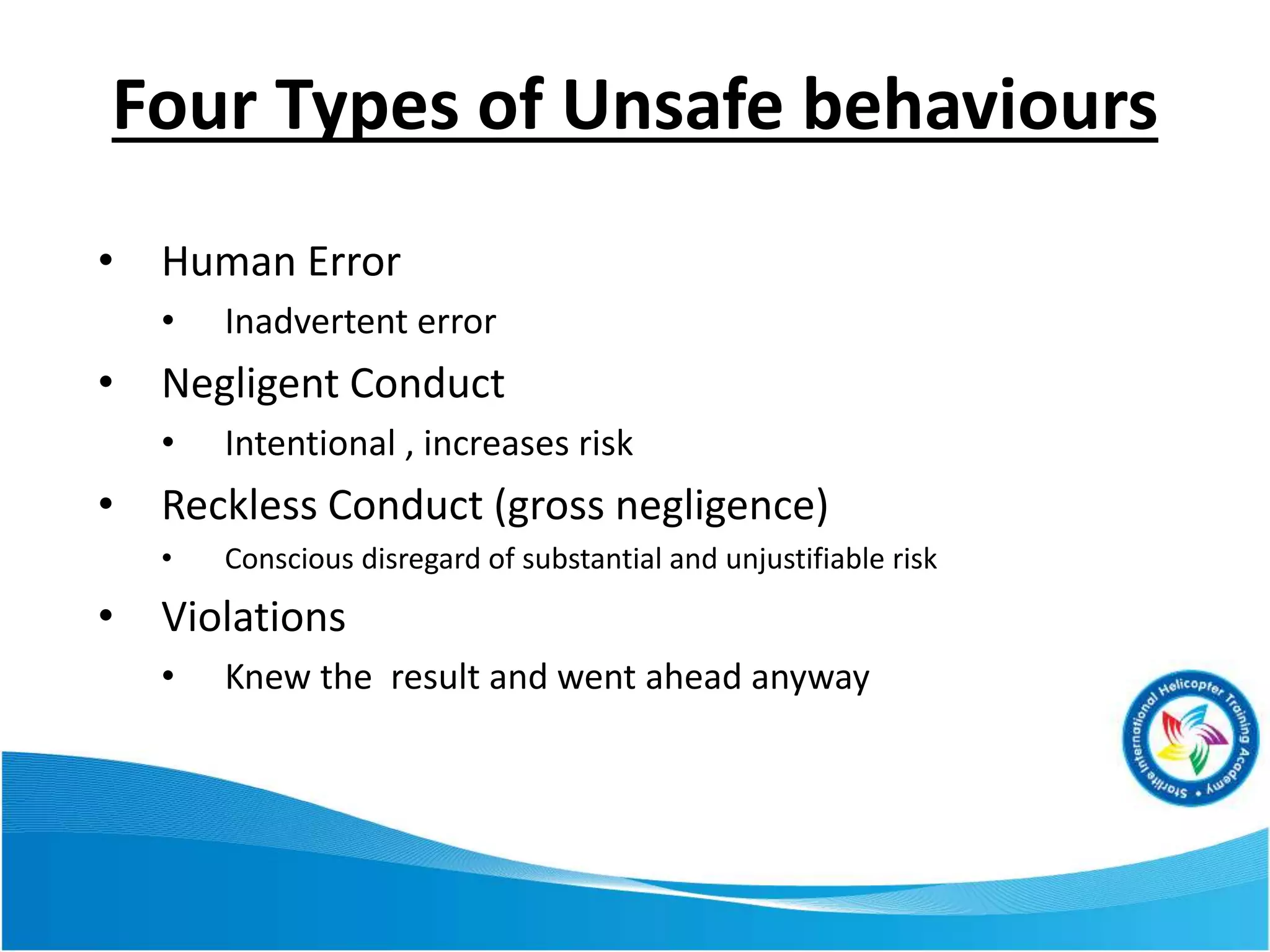
• Four Types of Unsafe Behaviour
• Determining The Culpability Of Unsafe Acts
• So where do you fit in at Starlite Aviation?
What is Just Culture
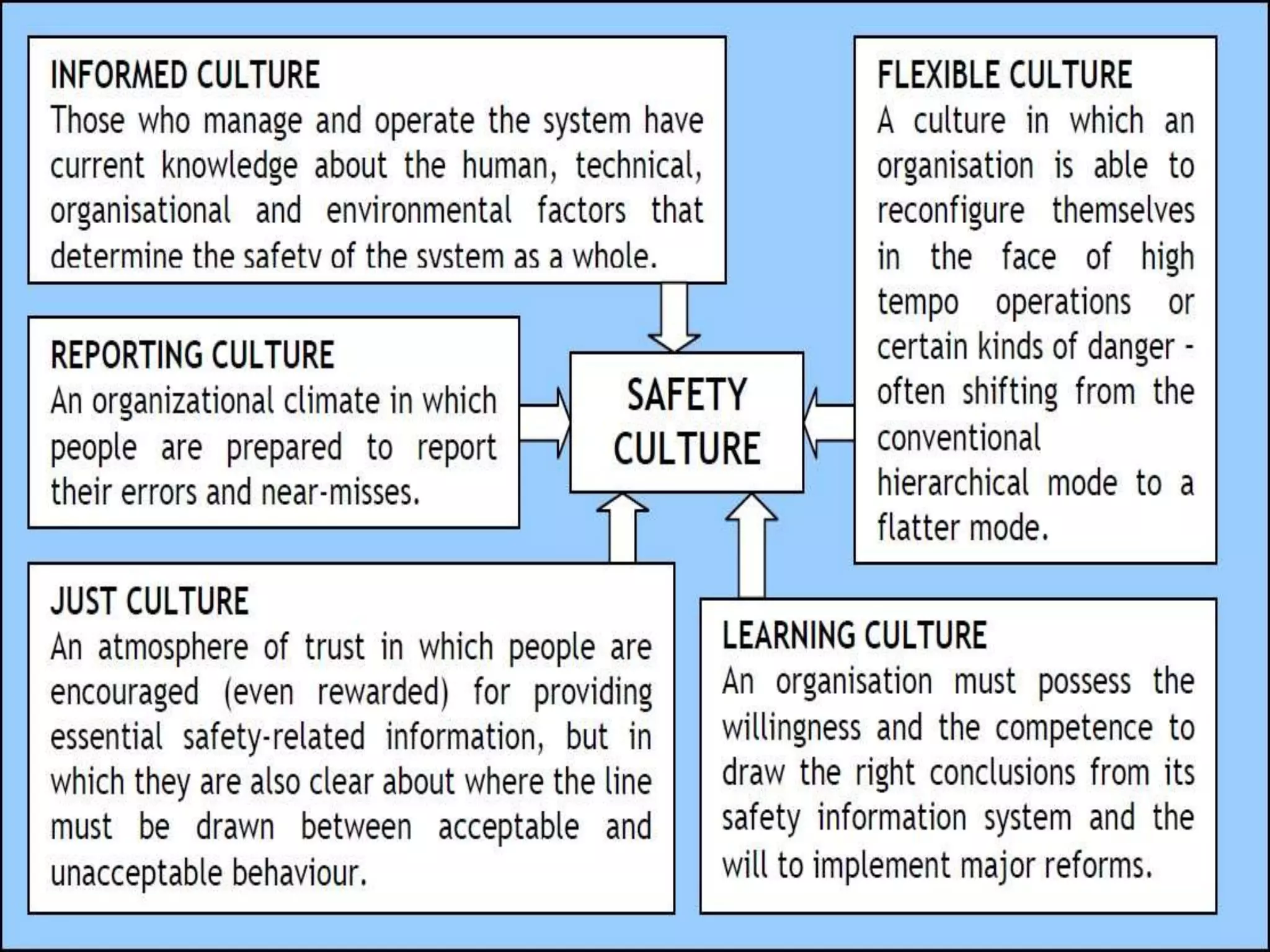
• An atmosphere of trust in which people are
encouraged (even rewarded) for providing
essential safety-related information, but in
which they are also clear about where the
line must be drawn between acceptable and
unacceptable behaviour.
Evolution of Safety Thinking
Technical Factors
Human Factors
Org Factors
1950s 1970s 1990s
Benefits of a Just Culture
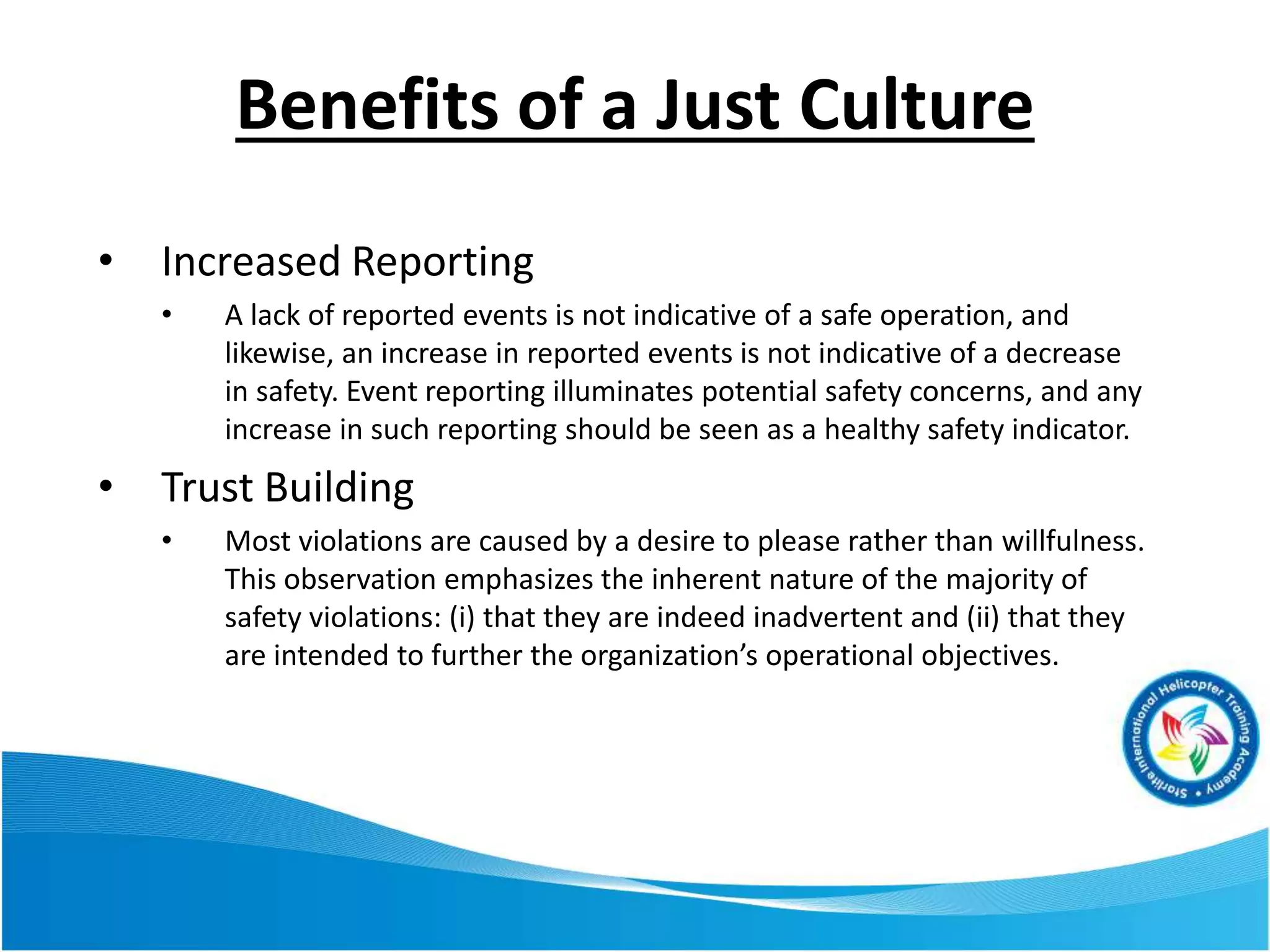
• Increased Reporting
• A lack of reported events is not indicative of a safe operation, and
likewise, an increase in reported events is not indicative of a decrease
in safety. Event reporting illuminates potential safety concerns, and any
increase in such reporting should be seen as a healthy safety indicator.
• Trust Building
• Most violations are caused by a desire to please rather than willfulness.
This observation emphasizes the inherent nature of the majority of
safety violations: (i) that they are indeed inadvertent and (ii) that they
are intended to further the organization’s operational objectives.
Benefits of a Just Culture
• More Effective Safety and Operational Management
• Will enhance the organization’s effectiveness by defining job
performance expectations, establishing clear guidelines for the
consequences of deviance from procedures, and promoting the
continuous review of policies and procedures.
Defining the borders of Bad
Behaviour
• Human Error
• Inadvertent error
• Negligent Conduct
• Intentional , increases risk
• Reckless Conduct (gross negligence)
• Conscious disregard of substantial and unjustifiable risk
• Violations
• Knew the result and went ahead anyway
Four Types of Unsafe behaviours
A Decision Tree For Determining The
Culpability Of Unsafe Acts
Sidney Dekker on Just Culture
• Human Factors and System Safety, Leading Opinion
from Professor Sidney Dekker. Explains Just Culture;
why you need it, what it is, and how you get it.
• https://www.youtube.com/watch?v=t81sDiYjKUk
So where do you fit in at
Starlite Aviation?
• Importance of safety consciousness in all job roles
• Proactive approach to reporting
hazards/occurrences/incidents
• Sense of responsibility: an engineer can spot
something that saves a pilot’s life, a pilot can spot
something in maintenance that could save an
engineer’s life
SUMMARY
• Increased reporting improves safety for all, builds trust
between individuals and with Starlite (in both
directions), and makes us as an organisation more
effective and more efficient.
• Awareness of your behaviour and the potential for
errors.
• Just Culture is not a “no blame” culture. The individual
and the organisation are responsible for their actions
and policies.
• If you are ever unsure, or think something could be
unsafe, DO NOT BE QUIET. ASK.
QUESTIONS
A Just Culture
MIKE SHAMA

Just Culture in Aviation

  • 1.
  • 2.
    AIM To introduce theconcept of what a Just Safety Culture is in aviation, with application to all staff at Starlite Aviation
  • 3.
    CONTENTS • What isJust Culture • Evolution of Safety Thinking • Benefits of a Just Culture • Defining the borders of Bad Behaviour • Four Types of Unsafe Behaviour • Determining The Culpability Of Unsafe Acts • So where do you fit in at Starlite Aviation?
  • 4.
    What is JustCulture • An atmosphere of trust in which people are encouraged (even rewarded) for providing essential safety-related information, but in which they are also clear about where the line must be drawn between acceptable and unacceptable behaviour.
  • 6.
    Evolution of SafetyThinking Technical Factors Human Factors Org Factors 1950s 1970s 1990s
  • 7.
    Benefits of aJust Culture • Increased Reporting • A lack of reported events is not indicative of a safe operation, and likewise, an increase in reported events is not indicative of a decrease in safety. Event reporting illuminates potential safety concerns, and any increase in such reporting should be seen as a healthy safety indicator. • Trust Building • Most violations are caused by a desire to please rather than willfulness. This observation emphasizes the inherent nature of the majority of safety violations: (i) that they are indeed inadvertent and (ii) that they are intended to further the organization’s operational objectives.
  • 8.
    Benefits of aJust Culture • More Effective Safety and Operational Management • Will enhance the organization’s effectiveness by defining job performance expectations, establishing clear guidelines for the consequences of deviance from procedures, and promoting the continuous review of policies and procedures.
  • 9.
    Defining the bordersof Bad Behaviour
  • 10.
    • Human Error •Inadvertent error • Negligent Conduct • Intentional , increases risk • Reckless Conduct (gross negligence) • Conscious disregard of substantial and unjustifiable risk • Violations • Knew the result and went ahead anyway Four Types of Unsafe behaviours
  • 11.
    A Decision TreeFor Determining The Culpability Of Unsafe Acts
  • 12.
    Sidney Dekker onJust Culture • Human Factors and System Safety, Leading Opinion from Professor Sidney Dekker. Explains Just Culture; why you need it, what it is, and how you get it. • https://www.youtube.com/watch?v=t81sDiYjKUk
  • 13.
    So where doyou fit in at Starlite Aviation? • Importance of safety consciousness in all job roles • Proactive approach to reporting hazards/occurrences/incidents • Sense of responsibility: an engineer can spot something that saves a pilot’s life, a pilot can spot something in maintenance that could save an engineer’s life
  • 14.
    SUMMARY • Increased reportingimproves safety for all, builds trust between individuals and with Starlite (in both directions), and makes us as an organisation more effective and more efficient. • Awareness of your behaviour and the potential for errors. • Just Culture is not a “no blame” culture. The individual and the organisation are responsible for their actions and policies. • If you are ever unsure, or think something could be unsafe, DO NOT BE QUIET. ASK.
  • 15.
  • 16.

Editor's Notes

  • #5 A “Just Culture” refers to a way of safety thinking that promotes a questioning attitude, is resistant to complacency, is committed to excellence, and fosters both personal accountability and corporate self-regulation in safety matters. A “Just” safety culture, then, is both attitudinal as well as structural, relating to both individuals and organizations. Personal attitudes and corporate style can enable or facilitate the unsafe acts and conditions that are the precursors to accidents and incidents. It requires not only actively identifying safety issues, but responding with appropriate action