Janani Shishu Suraksha
Karyakram (JSSK)
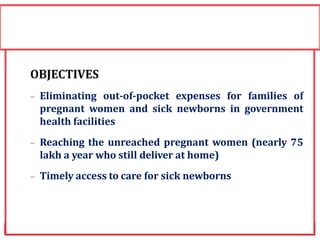
– Eliminating out-of-pocket expenses for families of
pregnant women and sick newborns in government
health facilities
– Reaching the unreached pregnant women (nearly 75
lakh a year who still deliver at home)
– Timely access to care for sick newborns
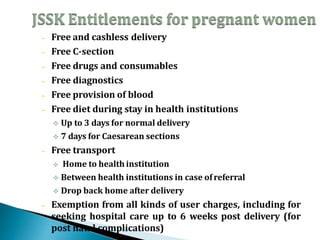
– Free and cashless delivery
– Free C-section
– Free drugs and consumables
– Free diagnostics
– Free provision of blood
– Free diet during stay in health institutions
 Up to 3 days for normal delivery
 7 days for Caesarean sections
– Free transport
 Home to health institution
 Between health institutions in case ofreferral
 Drop back home after delivery
– Exemption from all kinds of user charges, including for
seeking hospital care up to 6 weeks post delivery (for
post natal complications)
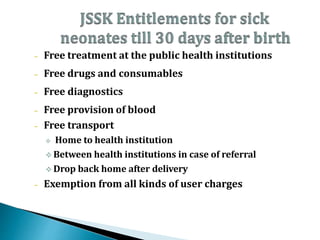
– Free treatment at the public health institutions
– Free drugs and consumables
– Free diagnostics
– Free provision of blood
– Free transport
 Home to health institution
 Between health institutions in case of referral
 Drop back home after delivery
– Exemption from all kinds of user charges
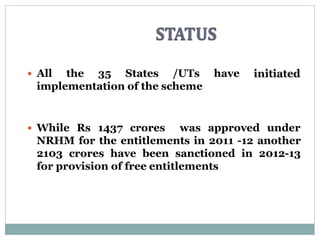
have All the 35 States /UTs
implementation of the scheme
 While Rs 1437 crores was approved under
NRHM for the entitlements in 2011 -12 another
2103 crores have been sanctioned in 2012-13
for provision of free entitlements
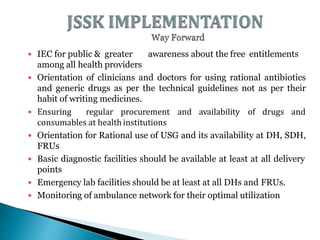
awareness about the free entitlements IEC for public & greater
among all health providers
 Orientation of clinicians and doctors for using rational antibiotics
and generic drugs as per the technical guidelines not as per their
habit of writing medicines.
 Ensuring regular procurement and availability of drugs and
consumables at health institutions
 Orientation for Rational use of USG and its availability at DH, SDH,
FRUs
 Basic diagnostic facilities should be available at least at all delivery
points
 Emergency lab facilities should be at least at all DHs and FRUs.
 Monitoring of ambulance network for their optimal utilization
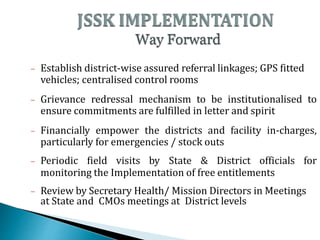
– Establish district-wise assured referral linkages; GPS fitted
vehicles; centralised control rooms
– Grievance redressal mechanism to be institutionalised to
ensure commitments are fulfilled in letter and spirit
– Financially empower the districts and facility in-charges,
particularly for emergencies / stock outs
– Periodic field visits by State & District officials for
monitoring the Implementation of free entitlements
– Review by Secretary Health/ Mission Directors in Meetings
at State and CMOs meetings at District levels
Jssk

Jssk

  • 1.
  • 2.
    – Eliminating out-of-pocketexpenses for families of pregnant women and sick newborns in government health facilities – Reaching the unreached pregnant women (nearly 75 lakh a year who still deliver at home) – Timely access to care for sick newborns
  • 3.
    – Free andcashless delivery – Free C-section – Free drugs and consumables – Free diagnostics – Free provision of blood – Free diet during stay in health institutions  Up to 3 days for normal delivery  7 days for Caesarean sections – Free transport  Home to health institution  Between health institutions in case ofreferral  Drop back home after delivery – Exemption from all kinds of user charges, including for seeking hospital care up to 6 weeks post delivery (for post natal complications)
  • 4.
    – Free treatmentat the public health institutions – Free drugs and consumables – Free diagnostics – Free provision of blood – Free transport  Home to health institution  Between health institutions in case of referral  Drop back home after delivery – Exemption from all kinds of user charges
  • 5.
    have All the35 States /UTs implementation of the scheme  While Rs 1437 crores was approved under NRHM for the entitlements in 2011 -12 another 2103 crores have been sanctioned in 2012-13 for provision of free entitlements
  • 6.
    awareness about thefree entitlements IEC for public & greater among all health providers  Orientation of clinicians and doctors for using rational antibiotics and generic drugs as per the technical guidelines not as per their habit of writing medicines.  Ensuring regular procurement and availability of drugs and consumables at health institutions  Orientation for Rational use of USG and its availability at DH, SDH, FRUs  Basic diagnostic facilities should be available at least at all delivery points  Emergency lab facilities should be at least at all DHs and FRUs.  Monitoring of ambulance network for their optimal utilization
  • 7.
    – Establish district-wiseassured referral linkages; GPS fitted vehicles; centralised control rooms – Grievance redressal mechanism to be institutionalised to ensure commitments are fulfilled in letter and spirit – Financially empower the districts and facility in-charges, particularly for emergencies / stock outs – Periodic field visits by State & District officials for monitoring the Implementation of free entitlements – Review by Secretary Health/ Mission Directors in Meetings at State and CMOs meetings at District levels