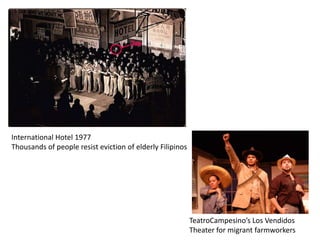
This document discusses how digital stories can promote inclusion and civic engagement. It argues that personal identity is shaped by how one is recognized by others, and lack of recognition can damage self-image. Several examples are given of immigrant and minority groups organizing through shared stories to resist oppression, including Mexican American pecan shellers who went on strike in 1938 and elderly Filipinos who fought eviction from affordable housing in 1977. The document outlines benefits of digital stories for communities, such as giving voice to underrepresented groups, enabling activism, driving citizen journalism, and promoting public health by reframing personal issues as social problems.


![The demands for recognition [by immigrants or cultural minorities]
is given urgency by the supposed links between recognition and
identity, where this latter term designates something like a person's
understanding of who they are, of their fundamental defining
characteristics as a human being. The thesis is that our identity is
partly shaped by recognition or its absence, often by the
'misrecognition' of others, and so a person or group of people can
suffer real damage, real distortion, if the people or society around
them mirror back to them a confining or demeaning or
contemptible picture of themselves. ….misrecognition shows not
just a lack of due respect. It can inflict a grievous wound, saddling its
victims with a crippling self-hatred. Due recognition is not just a
courtesy we owe people. It is a vital human need.
Charles Taylor
The Politics of Recognition](https://image.slidesharecdn.com/eutunesdec2012-121214014505-phpapp02/85/Joe-Lambert-EUTunes-Presentation-5-320.jpg)