digital storytelling, trauma, and racism
mary e. hess

rea 2021
trauma-informed pedagogy
• fosters safety

• nurtures trust and transparency

• invites peer support and mutuality

• supports collaboration by sharing agency

• empowers voice by identifying and
building on strengths

• pays attention to cultural, gender, and
historical issues

• supports a sense of purpose
InsideHigherEd
carefully designed storytelling work can be a very
creative and empowering form of trauma-informed
pedagogy
four kinds of stories
storytelling project
stock stories
• stock stories are the most public and ubiquitous in dominant,
mainstream institutions, such as schools, government, workplaces and
the media


• stock stories are those told by the dominant group, passed on through
historical and literary documents, and celebrated through public rituals,
monuments and media representations


• stock stories tell us a lot about what a society considers important and
meaningful; for example, stock stories about race and racism provide a
useful point of analysis for understanding how racism operates
concealed stories
• coexist alongside the stock stories but most often remain in
the shadows, hidden from public view.


• though invisible to those in the dominant society, concealed
stories are often circulated, told and retold by people in the
margins whose experiences and aspirations they express
and honor, and they provide a perspective that is often very
different from that of the mainstream
resistance stories
• are stories, both historical and contemporary, that tell about how people
have resisted forms of oppression such as racism, challenged the stock
stories that support it, and fought for more equal and inclusive social
arrangements


• resistance stories are the reserve of stories built up through the ages about
challenges to an unjust status quo


• these stories include stories of “sheroes” and “heroes” who have been
excluded (though sometimes included and vili
fi
ed) in history books, but who
have nevertheless struggled against various forms of oppression. Such
stories can teach us about perspectives and practices that have existed
throughout our history up to the present time thus expanding our vision of
what is possible in our own work for the kin-dom of God
counter stories
• counter stories are new stories that are deliberately constructed
to challenge the stock stories


• they build on and amplify resistance stories


• they offer ways to interrupt the status quo and work for change


• these stories enact continuing critique and resistance to the stock
stories and enable new possibilities for inclusive human
community
digital stories may embody any of the four
• pre-produced digital shorts, speci
fi
cally useful for critiquing
dominant representations (stock stories)


• pre-produced digital shorts, speci
fi
cally created for anti-
racism work (concealed and counter stories)


• digital storytelling as a form of anti-racism work (counter and
resistance stories)


• storying practices to support people telling their own stories,
within carefully designed and convened spaces
examples (if we have time)
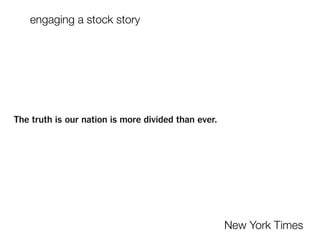
engaging a stock story
New York Times
Ta-Nehisi Coates
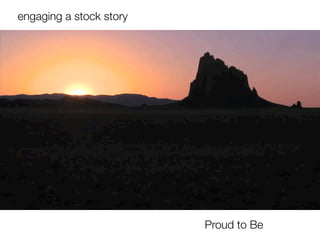
engaging a stock story
Proud to Be
engaging a stock story
Vox
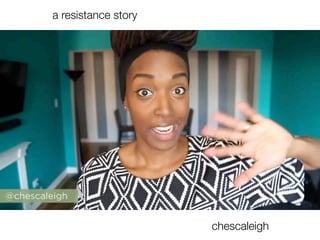
lifting to visibility a concealed story
chescaleigh
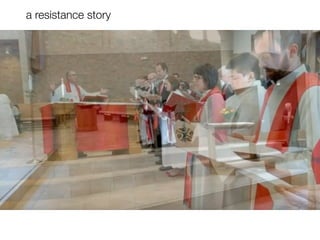
a resistance story
Joan Baez
a resistance story
a resistance story
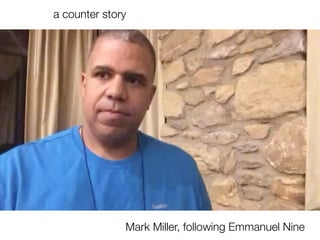
Mark Miller, following Emmanuel Nine
a counter story
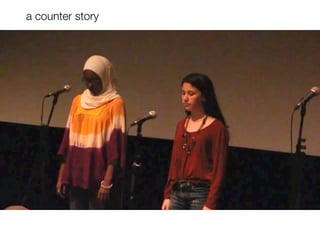
a counter story
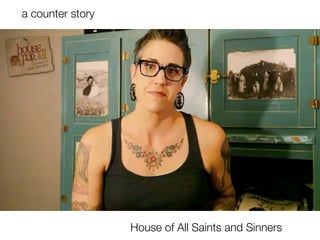
a counter story
House of All Saints and Sinners
storying practices designed for good convening
• four elements (feelings, actions, values, narrator) (B&H,
81)


• tell a story / title it (B&H, 82)


• circle of voices (B&H, 111)


• grab a song, understand its lyrics as addressing
transcendence (eg. Springsteen’s “Letter to you” as a
psalm) (Hess, 133)


• mash-up a psalm and a popular song (Hess, 133)
Stephen S. Brook
fi
eld and Mary E. Hess, Becoming a white
antiracist: A practical guide for educators, leaders and activists
(Stylus Publications, 2021)


Mary E. Hess, Engaging technology in theological education: All
that we can’t leave behind (Rowman&Little
fi
eld, 2008)
video citations:


The New York Times (https://youtu.be/ax1eCYDXhdY)


Ta-Nehisi Coates (https://youtu.be/gyiH3YcvRH0)


Proud to Be (https://youtu.be/mR-tbOxlhvE)


The president sang Amazing Grace (https://youtu.be/m9iYBifsOPI)


Race explainer (https://youtu.be/VnfKgffCZ7U)


5 tips for being an ally (https://youtu.be/_dg86g-QlM0)


I choose love by Mark Miller (https://youtu.be/Vh96Dt71ZGk)


Quarter
fi
nals poetry slam (https://youtu.be/tv00xjClbx0)


“I am not an issue” (https://youtu.be/nFhHieJOH5w)


Katie Hendrickson ordination video (write to me for access)
more information:


meh.religioused.org

Digital story examples

  • 1.
    digital storytelling, trauma,and racism mary e. hess rea 2021
  • 2.
    trauma-informed pedagogy • fosterssafety • nurtures trust and transparency • invites peer support and mutuality • supports collaboration by sharing agency • empowers voice by identifying and building on strengths • pays attention to cultural, gender, and historical issues • supports a sense of purpose InsideHigherEd
  • 3.
    carefully designed storytellingwork can be a very creative and empowering form of trauma-informed pedagogy
  • 4.
    four kinds ofstories storytelling project
  • 5.
    stock stories • stockstories are the most public and ubiquitous in dominant, mainstream institutions, such as schools, government, workplaces and the media • stock stories are those told by the dominant group, passed on through historical and literary documents, and celebrated through public rituals, monuments and media representations • stock stories tell us a lot about what a society considers important and meaningful; for example, stock stories about race and racism provide a useful point of analysis for understanding how racism operates
  • 6.
    concealed stories • coexistalongside the stock stories but most often remain in the shadows, hidden from public view. • though invisible to those in the dominant society, concealed stories are often circulated, told and retold by people in the margins whose experiences and aspirations they express and honor, and they provide a perspective that is often very different from that of the mainstream
  • 7.
    resistance stories • arestories, both historical and contemporary, that tell about how people have resisted forms of oppression such as racism, challenged the stock stories that support it, and fought for more equal and inclusive social arrangements • resistance stories are the reserve of stories built up through the ages about challenges to an unjust status quo • these stories include stories of “sheroes” and “heroes” who have been excluded (though sometimes included and vili fi ed) in history books, but who have nevertheless struggled against various forms of oppression. Such stories can teach us about perspectives and practices that have existed throughout our history up to the present time thus expanding our vision of what is possible in our own work for the kin-dom of God
  • 8.
    counter stories • counterstories are new stories that are deliberately constructed to challenge the stock stories • they build on and amplify resistance stories • they offer ways to interrupt the status quo and work for change • these stories enact continuing critique and resistance to the stock stories and enable new possibilities for inclusive human community
  • 9.
    digital stories mayembody any of the four • pre-produced digital shorts, speci fi cally useful for critiquing dominant representations (stock stories) • pre-produced digital shorts, speci fi cally created for anti- racism work (concealed and counter stories) • digital storytelling as a form of anti-racism work (counter and resistance stories) • storying practices to support people telling their own stories, within carefully designed and convened spaces
  • 10.
    examples (if wehave time)
  • 11.
    engaging a stockstory New York Times
  • 12.
  • 13.
    Proud to Be engaginga stock story
  • 14.
    Vox lifting to visibilitya concealed story
  • 15.
  • 16.
  • 17.
  • 18.
    Mark Miller, followingEmmanuel Nine a counter story
  • 19.
  • 20.
    a counter story Houseof All Saints and Sinners
  • 21.
    storying practices designedfor good convening • four elements (feelings, actions, values, narrator) (B&H, 81) • tell a story / title it (B&H, 82) • circle of voices (B&H, 111) • grab a song, understand its lyrics as addressing transcendence (eg. Springsteen’s “Letter to you” as a psalm) (Hess, 133) • mash-up a psalm and a popular song (Hess, 133)
  • 22.
    Stephen S. Brook fi eldand Mary E. Hess, Becoming a white antiracist: A practical guide for educators, leaders and activists (Stylus Publications, 2021) Mary E. Hess, Engaging technology in theological education: All that we can’t leave behind (Rowman&Little fi eld, 2008)
  • 23.
    video citations: The NewYork Times (https://youtu.be/ax1eCYDXhdY) Ta-Nehisi Coates (https://youtu.be/gyiH3YcvRH0) Proud to Be (https://youtu.be/mR-tbOxlhvE) The president sang Amazing Grace (https://youtu.be/m9iYBifsOPI) Race explainer (https://youtu.be/VnfKgffCZ7U) 5 tips for being an ally (https://youtu.be/_dg86g-QlM0) I choose love by Mark Miller (https://youtu.be/Vh96Dt71ZGk) Quarter fi nals poetry slam (https://youtu.be/tv00xjClbx0) “I am not an issue” (https://youtu.be/nFhHieJOH5w) Katie Hendrickson ordination video (write to me for access)
  • 24.