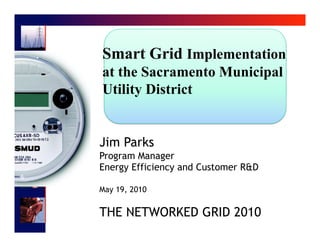
Smart Grid Implementation
at the Sacramento Municipal
Utility District


Jim Parks
Program Manager
Energy Efficiency and Customer R&D

May 19, 2010


THE NETWORKED GRID 2010
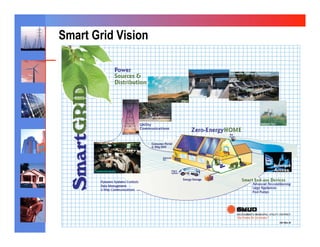
SMUD’s Smart Grid Vision
♦ A comprehensive regional smart grid solution built upon the
 installation and operation of an end-to-end smart grid that
 extends from generation to the smart meters of all SMUD’s
 customers. It will:
  ❖  Link
        smart meters and home area networks with upstream,
    automated distribution operations
  ❖  Optimize   distribution system operations to improve system
    reliability and efficiency
  ❖  Enableour customers to fully participate in the electricity
    marketplace through dynamic pricing and demand response
    programs
What is Smart Grid?

♦ Smart grid is all about optimizing and managing the
  electricity grid to maximize operational efficiencies and
  reduce the need for additional infrastructure
  (transmission lines and power plants).
    ❖  Provide control down to the customer level

    ❖  Increase the capacity of the grid

    ❖  Levelize loads

♦ There are several elements of smart grid that will make
  it a reality.
SMUD’s Smart Grid Grant
♦ SMUD received a $127.5M Smart Grid Investment
 Grant from DOE to implement $308 M worth of
 projects:
  ❖  Advanced    Metering Infrastructure/Smart Meters
  ❖  Consumer Behavior Study (Dynamic Pricing)

  ❖  Demand Response

  ❖  Distribution Automation

  ❖  PHEV/EV Infrastructure

  ❖  Customer Applications (Partner Projects)

  ❖  Cyber Security
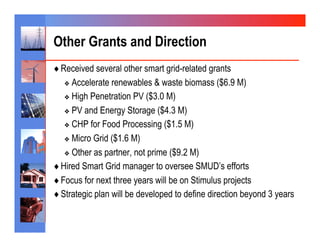
Other Grants and Direction
♦  Received several other smart grid-related grants
   ❖  Accelerate  renewables & waste biomass ($6.9 M)
    ❖  High Penetration PV ($3.0 M)

    ❖  PV and Energy Storage ($4.3 M)

    ❖  CHP for Food Processing ($1.5 M)

    ❖  Micro Grid ($1.6 M)

    ❖  Other as partner, not prime ($9.2 M)

♦  Hired Smart Grid manager to oversee SMUD’s efforts
♦  Focus for next three years will be on Stimulus projects
♦  Strategic plan will be developed to define direction beyond 3 years
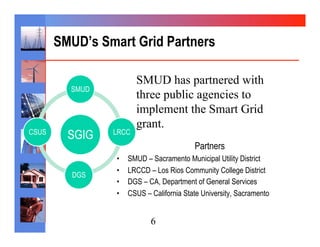
SMUD’s Smart Grid Partners

                        SMUD has partnered with
         SMUD
                        three public agencies to
                        implement the Smart Grid
                        grant.
CSUS
         SGIG   LRCC
                                           Partners
                 •    SMUD – Sacramento Municipal Utility District
                 •    LRCCD – Los Rios Community College District
         DGS
                 •    DGS – CA, Department of General Services
                 •    CSUS – California State University, Sacramento


                             6
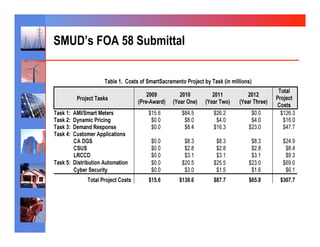
SMUD’s FOA 58 Submittal
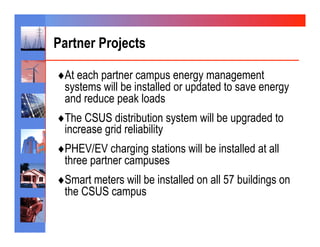
Partner Projects

♦ At each partner campus energy management
 systems will be installed or updated to save energy
 and reduce peak loads
♦ The CSUS distribution system will be upgraded to
 increase grid reliability
♦ PHEV/EV charging stations will be installed at all
 three partner campuses
♦ Smart meters will be installed on all 57 buildings on
 the CSUS campus
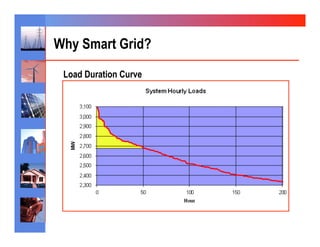
Why Smart Grid?
 Load Duration Curve


                       Critical peak: 500 MW
                       for < 50 hrs/year
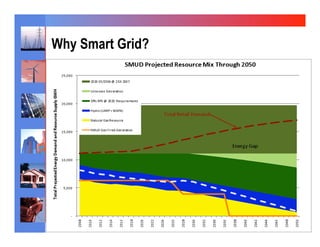
SMUD Strategic Directive 9
♦ Reduce Greenhouse Gas Emissions 90% below 1990
 levels by 2050
♦ <350,000 metric tonnes/year
♦ Assure reliable power supply
Why Smart Grid?
Smart Grid Vision
Smart Grid Elements
1.    Advanced Metering Infrastructure
2.    Dynamic Rates
3.    Demand Response
4.    Energy Storage
5.    Distribution System Improvements
6.    Generation Efficiency
7.    Energy Efficiency
8.    Renewables/Distributed Generation
Advanced Metering Infrastructure/Rates

♦ Enables time differentiated rates and critical peak
 pricing opportunities
♦ Enables communication with appliances and
 equipment for demand response
♦ Enables loading information and automation all along
 the supply chain
♦ Selected Silver Spring Network and Landis + Gyr
 meters
♦ 50k pilot installation under way
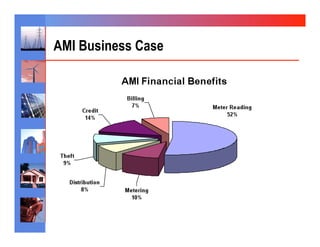
AMI Business Case
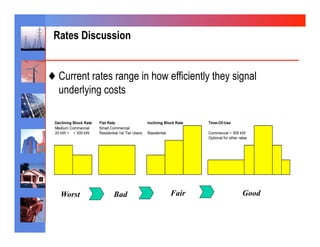
Rates Discussion


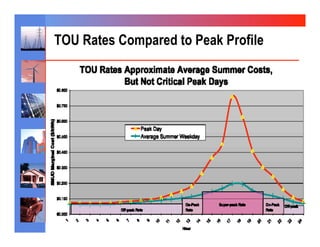
♦ Current rates range in how efficiently they signal
  underlying costs


   Worst        Bad           Fair              Good
TOU Rates Compared to Peak Profile
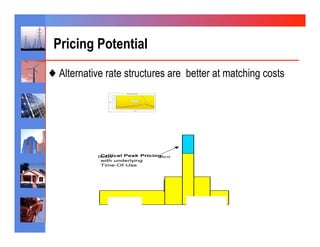
Pricing Potential
♦ Alternative rate structures are better at matching costs
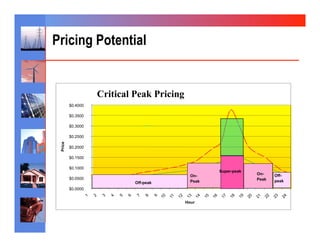
Pricing Potential


                   Critical Peak Pricing
         $0.4000

         $0.3500

         $0.3000

         $0.2500
 Price


         $0.2000

         $0.1500

         $0.1000
                                                    Super-peak
                                             On-                 On-    Off-
         $0.0500                                                 Peak
                            Off-peak         Peak                       peak
         $0.0000


                                           Hour
Demand Response
♦  Automate DR

♦  SMUD will provide 50,000 residential and small commercial customers
  with enabling technologies (such as home energy management systems)
  that allow them to participate in direct load control and pricing programs
♦  SMUD will work with medium and large commercial customers to provide
  technical assistance and enabling technology that allows them to
  automatically respond to peak prices by reducing load
♦  Benefits
   ❖  Provides customers with tools to manage their bills
   ❖  Reduces system peak

   ❖  Enables dynamic pricing options
Consumer Behavior Study
♦ SMUD will conduct a large-scale dynamic pricing study to
 test:
  ❖  Customer   response to Critical Peak Pricing
  ❖  Customer   preferences for information and messaging
  ❖  Ability
          of customers to reduce peak demand and energy using
    enabling technologies (such as programmable communicating
    thermostats)
  ❖  Customer  acceptance and response to new technologies and
    pricing options


                             21
Energy Storage
♦ Develop infrastructure standards for plug in hybrid
 vehicles that charge off-peak and generate during
 peak periods
♦ Test the effectiveness of battery storage and power
 management products
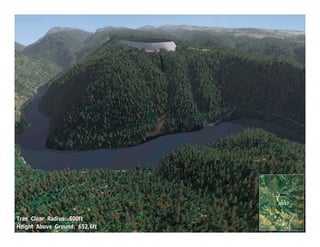
♦ Considering 400 MW pumped storage facility
Plug In Hybrids and Battery Electric Vehicles

♦ Install 250 Battery Electric Vehicle charging stations
♦ Automate the entire process – customer sets parameters
  ❖  Charge    the batteries during off-peak periods based on
      price signals
   ❖  Sell energy based on a high price or for grid reliability

   ❖  Never let the charge fall below a pre-specified level

♦ Future – V2G electricity sales and home energy storage
♦ Automakers not supportive of using batteries for grid
  stabilization – 10-year warranty on smog equipment
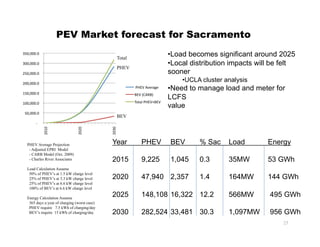
PEV Market forecast for Sacramento

350,000.0


                                                       Total
                                                                                 • Load becomes significant around 2025

300,000.0

                                                                     • Local distribution impacts will be felt
                                                       PHEV

250,000.0

                                                                     sooner

200,000.0


                                                                                     • UCLA cluster analysis
                                                               
PHEV
Average
    • Need to manage load and meter for

150,000.0

                                                   BEV
(CARB)

                                                                                 LCFS

100,000.0

                                                   Total
PHEV+BEV

                                                                                 value
 
50,000.0


                                                       BEV
        
‐


                 2010


                                 2020


                                               2030


   PHEV Average Projection                     Year               PHEV           BEV       % Sac     Load        Energy
    - Adjusted EPRI Model
    - CARB Model (Oct. 2009)
    - Charles River Associates                 2015               9,225          1,045     0.3       35MW        53 GWh
   Load Calculation Assume
    50% of PHEV’s at 1.5 kW charge level
    25% of PHEV’s at 3.3 kW charge level       2020               47,940 2,357             1.4       164MW       144 GWh
    25% of PHEV’s at 6.6 kW charge level
    100% of BEV’s at 6.6 kW charge level

   Energy Calculation Assume
                                               2025               148,108 16,322 12.2                566MW       495 GWh
    365 days a year of charging (worst case)
    PHEV require 7.5 kWh of charging/day
    BEV’s require 15 kWh of charging/day       2030               282,524 33,481 30.3                1,097MW     956 GWh
                                                                                                                      25
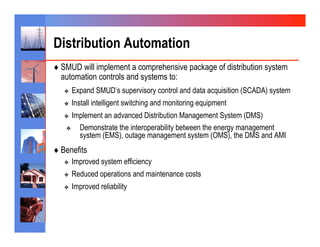
Distribution Automation
♦  SMUD will implement a comprehensive package of distribution system
  automation controls and systems to:
   ❖    Expand SMUD’s supervisory control and data acquisition (SCADA) system
   ❖    Install intelligent switching and monitoring equipment
   ❖   Implement an advanced Distribution Management System (DMS)
    ❖    Demonstrate the interoperability between the energy management
         system (EMS), outage management system (OMS), the DMS and AMI
♦  Benefits
   ❖    Improved system efficiency
   ❖    Reduced operations and maintenance costs
   ❖    Improved reliability
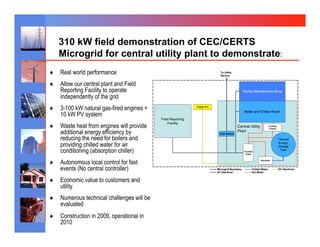
310 kW field demonstration of CEC/CERTS
     Microgrid for central utility plant to demonstrate:
♦    Real world performance
♦    Allow our central plant and Field
     Reporting Facility to operate
     independently of the grid
♦    3-100 kW natural gas-fired engines +
     10 kW PV system
♦    Waste heat from engines will provide
     additional energy efficiency by
     reducing the need for boilers and
     providing chilled water for air
     conditioning (absorption chiller)
♦    Autonomous local control for fast
     events (No central controller)
♦    Economic value to customers and
     utility
♦    Numerous technical challenges will be
     evaluated
♦    Construction in 2009, operational in
     2010
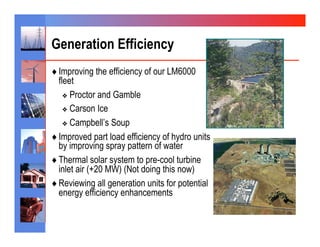
Generation Efficiency
♦  Improving the efficiency of our LM6000
   fleet
     ❖  Proctor and Gamble

     ❖  Carson Ice

     ❖  Campbell’s Soup

♦  Improved part load efficiency of hydro units
   by improving spray pattern of water
♦  Thermal solar system to pre-cool turbine
   inlet air (+20 MW) (Not doing this now)
♦  Reviewing all generation units for potential
   energy efficiency enhancements
Cyber Security

♦  SMUD’s smart grid will enact security programs and procedures
  that meet or exceed government mandated standards

♦  This is a continuation of SMUD’s current best practices with
  increased resources to support smart grid initiatives
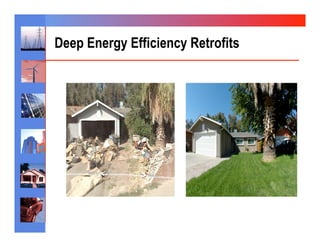
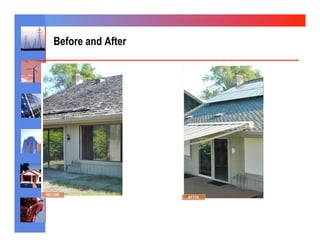
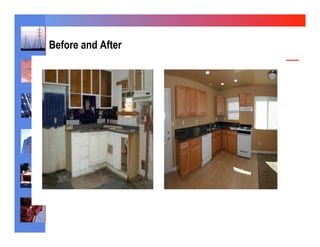
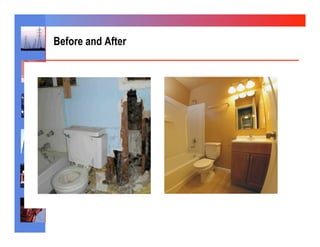
Deep Energy Efficiency Retrofits
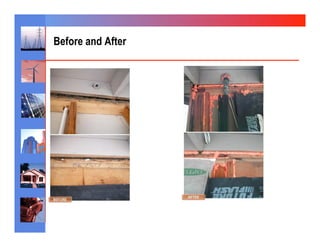
Before and After
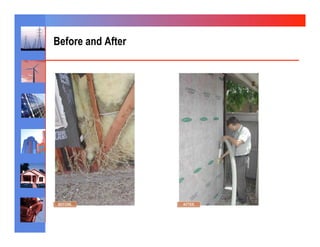
Before and After
Before and After
Before and After
Before and After
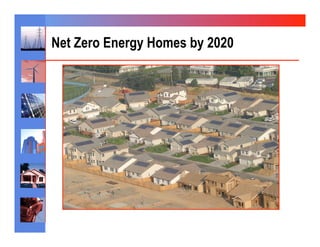
Net Zero Energy Homes by 2020
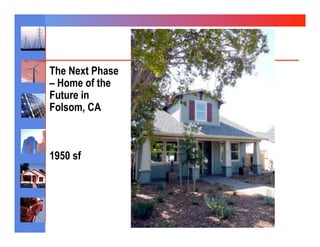
The Next Phase
– Home of the
Future in
Folsom, CA


1950 sf
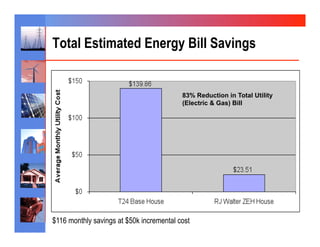
Total Estimated Energy Bill Savings


                                          83% Reduction in Total Utility
                                          (Electric & Gas) Bill


$116 monthly savings at $50k incremental cost
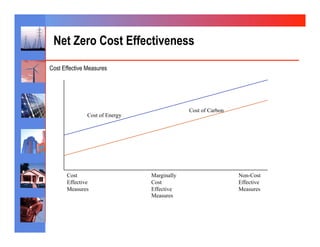
Net Zero Cost Effectiveness
Cost Effective Measures


                                             Cost of Carbon
               Cost of Energy


      Cost                      Marginally                    Non-Cost
      Effective                 Cost                          Effective
      Measures                  Effective                     Measures
                                Measures
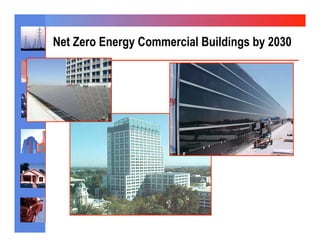
Net Zero Energy Commercial Buildings by 2030
Where We Are Today
♦ Moving forward with the Smart Meters project:
  ❖  Communication    network 96% complete
  ❖  Over 50,000 meters installed

  ❖  95% customers satisfied with installation

  ❖  Testing installed meters and system through year-end

♦ Contract with DOE signed
♦ Meeting with equipment and software vendors to
  determine technology landscape
♦ Performing pilot projects to test equipment where
  necessary
Conclusions
♦  SMUD is committed to implementing Smart Grid and is working with EPRI on
   the statewide smart grid roadmap sponsored by PIER
♦  Smart Grid will improve the grid through:
    ❖  Better load management through demand response and energy storage

    ❖  Improved customer participation through Home Area Networks and utility
       programs
    ❖  Reduced loads due to innovative rate structures

    ❖  Automation of the distribution system

    ❖  Improved home and commercial building performance by moving towards
       net zero energy
    ❖  Improved reliability through implementation of distributed generation and
       micro grids
♦  There is no silver bullet. Smart Grid promotes the silver buckshot approach—
   working on multiple strategies simultaneously—energy efficiency, renewables
   and DG, distribution automation, energy storage, demand response,
   generation efficiency, AMI and rates to maximize benefits

Jim Parks - SMUD

  • 1.
    Smart Grid Implementation atthe Sacramento Municipal Utility District Jim Parks Program Manager Energy Efficiency and Customer R&D May 19, 2010 THE NETWORKED GRID 2010
  • 2.
    SMUD’s Smart GridVision ♦ A comprehensive regional smart grid solution built upon the installation and operation of an end-to-end smart grid that extends from generation to the smart meters of all SMUD’s customers. It will: ❖  Link smart meters and home area networks with upstream, automated distribution operations ❖  Optimize distribution system operations to improve system reliability and efficiency ❖  Enableour customers to fully participate in the electricity marketplace through dynamic pricing and demand response programs
  • 3.
    What is SmartGrid? ♦ Smart grid is all about optimizing and managing the electricity grid to maximize operational efficiencies and reduce the need for additional infrastructure (transmission lines and power plants). ❖  Provide control down to the customer level ❖  Increase the capacity of the grid ❖  Levelize loads ♦ There are several elements of smart grid that will make it a reality.
  • 4.
    SMUD’s Smart GridGrant ♦ SMUD received a $127.5M Smart Grid Investment Grant from DOE to implement $308 M worth of projects: ❖  Advanced Metering Infrastructure/Smart Meters ❖  Consumer Behavior Study (Dynamic Pricing) ❖  Demand Response ❖  Distribution Automation ❖  PHEV/EV Infrastructure ❖  Customer Applications (Partner Projects) ❖  Cyber Security
  • 5.
    Other Grants andDirection ♦  Received several other smart grid-related grants ❖  Accelerate renewables & waste biomass ($6.9 M) ❖  High Penetration PV ($3.0 M) ❖  PV and Energy Storage ($4.3 M) ❖  CHP for Food Processing ($1.5 M) ❖  Micro Grid ($1.6 M) ❖  Other as partner, not prime ($9.2 M) ♦  Hired Smart Grid manager to oversee SMUD’s efforts ♦  Focus for next three years will be on Stimulus projects ♦  Strategic plan will be developed to define direction beyond 3 years
  • 6.
    SMUD’s Smart GridPartners SMUD has partnered with SMUD three public agencies to implement the Smart Grid grant. CSUS SGIG LRCC Partners •  SMUD – Sacramento Municipal Utility District •  LRCCD – Los Rios Community College District DGS •  DGS – CA, Department of General Services •  CSUS – California State University, Sacramento 6
  • 7.
    SMUD’s FOA 58Submittal
  • 8.
    Partner Projects ♦ At eachpartner campus energy management systems will be installed or updated to save energy and reduce peak loads ♦ The CSUS distribution system will be upgraded to increase grid reliability ♦ PHEV/EV charging stations will be installed at all three partner campuses ♦ Smart meters will be installed on all 57 buildings on the CSUS campus
  • 9.
    Why Smart Grid? Load Duration Curve Critical peak: 500 MW for < 50 hrs/year
  • 10.
    SMUD Strategic Directive9 ♦ Reduce Greenhouse Gas Emissions 90% below 1990 levels by 2050 ♦ <350,000 metric tonnes/year ♦ Assure reliable power supply
  • 11.
  • 12.
  • 13.
    Smart Grid Elements 1.  Advanced Metering Infrastructure 2.  Dynamic Rates 3.  Demand Response 4.  Energy Storage 5.  Distribution System Improvements 6.  Generation Efficiency 7.  Energy Efficiency 8.  Renewables/Distributed Generation
  • 14.
    Advanced Metering Infrastructure/Rates ♦ Enablestime differentiated rates and critical peak pricing opportunities ♦ Enables communication with appliances and equipment for demand response ♦ Enables loading information and automation all along the supply chain ♦ Selected Silver Spring Network and Landis + Gyr meters ♦ 50k pilot installation under way
  • 15.
  • 16.
    Rates Discussion ♦ Current ratesrange in how efficiently they signal underlying costs Worst Bad Fair Good
  • 17.
    TOU Rates Comparedto Peak Profile
  • 18.
    Pricing Potential ♦ Alternative ratestructures are better at matching costs
  • 19.
    Pricing Potential Critical Peak Pricing $0.4000 $0.3500 $0.3000 $0.2500 Price $0.2000 $0.1500 $0.1000 Super-peak On- On- Off- $0.0500 Peak Off-peak Peak peak $0.0000 Hour
  • 20.
    Demand Response ♦  AutomateDR ♦  SMUD will provide 50,000 residential and small commercial customers with enabling technologies (such as home energy management systems) that allow them to participate in direct load control and pricing programs ♦  SMUD will work with medium and large commercial customers to provide technical assistance and enabling technology that allows them to automatically respond to peak prices by reducing load ♦  Benefits ❖  Provides customers with tools to manage their bills ❖  Reduces system peak ❖  Enables dynamic pricing options
  • 21.
    Consumer Behavior Study ♦ SMUDwill conduct a large-scale dynamic pricing study to test: ❖  Customer response to Critical Peak Pricing ❖  Customer preferences for information and messaging ❖  Ability of customers to reduce peak demand and energy using enabling technologies (such as programmable communicating thermostats) ❖  Customer acceptance and response to new technologies and pricing options 21
  • 22.
    Energy Storage ♦ Develop infrastructurestandards for plug in hybrid vehicles that charge off-peak and generate during peak periods ♦ Test the effectiveness of battery storage and power management products ♦ Considering 400 MW pumped storage facility
  • 24.
    Plug In Hybridsand Battery Electric Vehicles ♦ Install 250 Battery Electric Vehicle charging stations ♦ Automate the entire process – customer sets parameters ❖  Charge the batteries during off-peak periods based on price signals ❖  Sell energy based on a high price or for grid reliability ❖  Never let the charge fall below a pre-specified level ♦ Future – V2G electricity sales and home energy storage ♦ Automakers not supportive of using batteries for grid stabilization – 10-year warranty on smog equipment
  • 25.
    PEV Market forecastfor Sacramento 
350,000.0

 Total • Load becomes significant around 2025 
300,000.0

 • Local distribution impacts will be felt PHEV 
250,000.0

 sooner 
200,000.0

 • UCLA cluster analysis 
PHEV
Average
 • Need to manage load and meter for 
150,000.0

 BEV
(CARB)
 LCFS 
100,000.0

 Total
PHEV+BEV
 value 
50,000.0

 BEV 
‐


 2010
 2020
 2030
 PHEV Average Projection Year PHEV BEV % Sac Load Energy - Adjusted EPRI Model - CARB Model (Oct. 2009) - Charles River Associates 2015 9,225 1,045 0.3 35MW 53 GWh Load Calculation Assume 50% of PHEV’s at 1.5 kW charge level 25% of PHEV’s at 3.3 kW charge level 2020 47,940 2,357 1.4 164MW 144 GWh 25% of PHEV’s at 6.6 kW charge level 100% of BEV’s at 6.6 kW charge level Energy Calculation Assume 2025 148,108 16,322 12.2 566MW 495 GWh 365 days a year of charging (worst case) PHEV require 7.5 kWh of charging/day BEV’s require 15 kWh of charging/day 2030 282,524 33,481 30.3 1,097MW 956 GWh 25
  • 26.
    Distribution Automation ♦  SMUDwill implement a comprehensive package of distribution system automation controls and systems to: ❖  Expand SMUD’s supervisory control and data acquisition (SCADA) system ❖  Install intelligent switching and monitoring equipment ❖  Implement an advanced Distribution Management System (DMS) ❖  Demonstrate the interoperability between the energy management system (EMS), outage management system (OMS), the DMS and AMI ♦  Benefits ❖  Improved system efficiency ❖  Reduced operations and maintenance costs ❖  Improved reliability
  • 27.
    310 kW fielddemonstration of CEC/CERTS Microgrid for central utility plant to demonstrate: ♦  Real world performance ♦  Allow our central plant and Field Reporting Facility to operate independently of the grid ♦  3-100 kW natural gas-fired engines + 10 kW PV system ♦  Waste heat from engines will provide additional energy efficiency by reducing the need for boilers and providing chilled water for air conditioning (absorption chiller) ♦  Autonomous local control for fast events (No central controller) ♦  Economic value to customers and utility ♦  Numerous technical challenges will be evaluated ♦  Construction in 2009, operational in 2010
  • 28.
    Generation Efficiency ♦  Improvingthe efficiency of our LM6000 fleet ❖  Proctor and Gamble ❖  Carson Ice ❖  Campbell’s Soup ♦  Improved part load efficiency of hydro units by improving spray pattern of water ♦  Thermal solar system to pre-cool turbine inlet air (+20 MW) (Not doing this now) ♦  Reviewing all generation units for potential energy efficiency enhancements
  • 29.
    Cyber Security ♦  SMUD’ssmart grid will enact security programs and procedures that meet or exceed government mandated standards ♦  This is a continuation of SMUD’s current best practices with increased resources to support smart grid initiatives
  • 30.
  • 31.
  • 32.
  • 33.
  • 34.
  • 35.
  • 36.
    Net Zero EnergyHomes by 2020
  • 37.
    The Next Phase –Home of the Future in Folsom, CA 1950 sf
  • 38.
    Total Estimated EnergyBill Savings 83% Reduction in Total Utility (Electric & Gas) Bill $116 monthly savings at $50k incremental cost
  • 39.
    Net Zero CostEffectiveness Cost Effective Measures Cost of Carbon Cost of Energy Cost Marginally Non-Cost Effective Cost Effective Measures Effective Measures Measures
  • 40.
    Net Zero EnergyCommercial Buildings by 2030
  • 41.
    Where We AreToday ♦ Moving forward with the Smart Meters project: ❖  Communication network 96% complete ❖  Over 50,000 meters installed ❖  95% customers satisfied with installation ❖  Testing installed meters and system through year-end ♦ Contract with DOE signed ♦ Meeting with equipment and software vendors to determine technology landscape ♦ Performing pilot projects to test equipment where necessary
  • 42.
    Conclusions ♦  SMUD iscommitted to implementing Smart Grid and is working with EPRI on the statewide smart grid roadmap sponsored by PIER ♦  Smart Grid will improve the grid through: ❖  Better load management through demand response and energy storage ❖  Improved customer participation through Home Area Networks and utility programs ❖  Reduced loads due to innovative rate structures ❖  Automation of the distribution system ❖  Improved home and commercial building performance by moving towards net zero energy ❖  Improved reliability through implementation of distributed generation and micro grids ♦  There is no silver bullet. Smart Grid promotes the silver buckshot approach— working on multiple strategies simultaneously—energy efficiency, renewables and DG, distribution automation, energy storage, demand response, generation efficiency, AMI and rates to maximize benefits