Reproductive health and rights in Russia
“When the chemistry works... Gender relations and birth control
in the age of The Pill”
November 28-29, 2013
Friedrich Schiller University,
Jena, Germany

Victoria Sakevich (Institute of Demography, Higher School of Economics,
vsakevich@hse.ru)
Boris Denisov (Lab of population economics and demography, Department of
Economics, Moscow University, denisov@demography.ru)
outline:

•  demographic look at reproductive health
•  data availability
•  historical and contemporary situations
•  reproductive rights in a pronatalist state
metrics and components:

•  infant and child mortality
•  maternal mortality
•  abortion
•  contraception
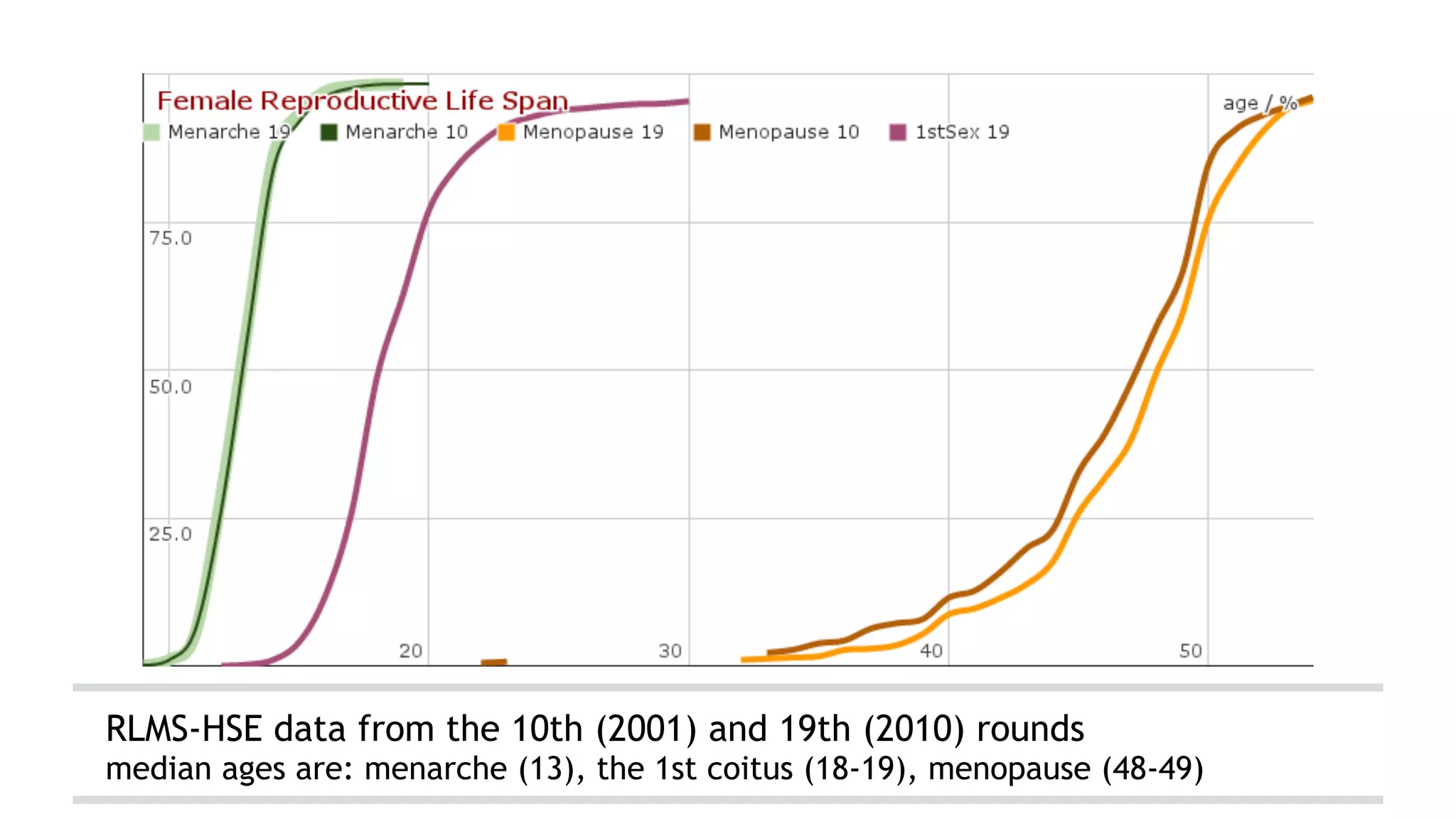
RLMS-HSE data from the 10th (2001) and 19th (2010) rounds

median ages are: menarche (13), the 1st coitus (18-19), menopause (48-49)
demographic view:

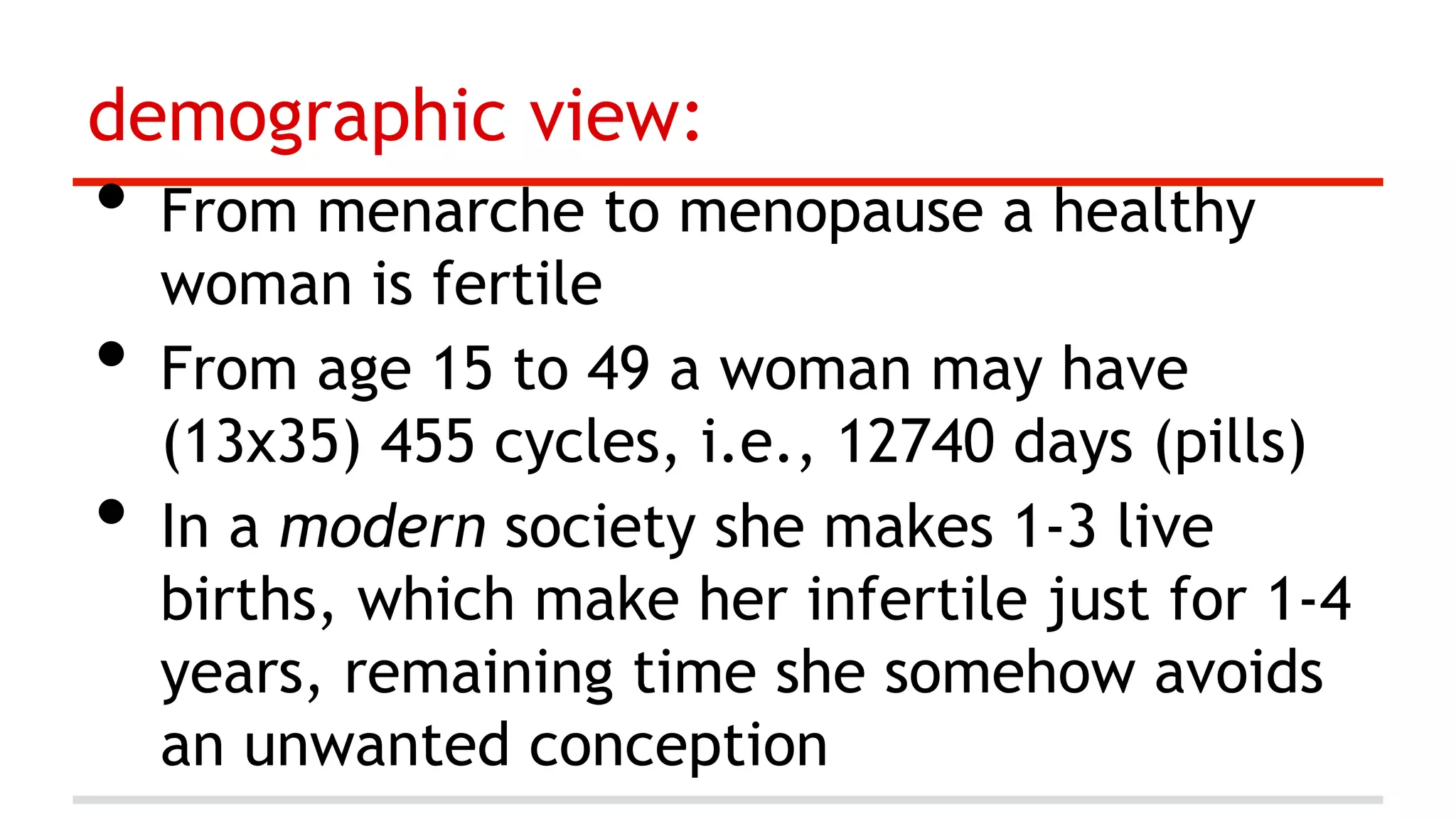
•  From menarche to menopause a healthy
• 
• 

woman is fertile
From age 15 to 49 a woman may have
(13x35) 455 cycles, i.e., 12740 days (pills)
In a modern society she makes 1-3 live
births, which make her infertile just for 1-4
years, remaining time she somehow avoids
an unwanted conception
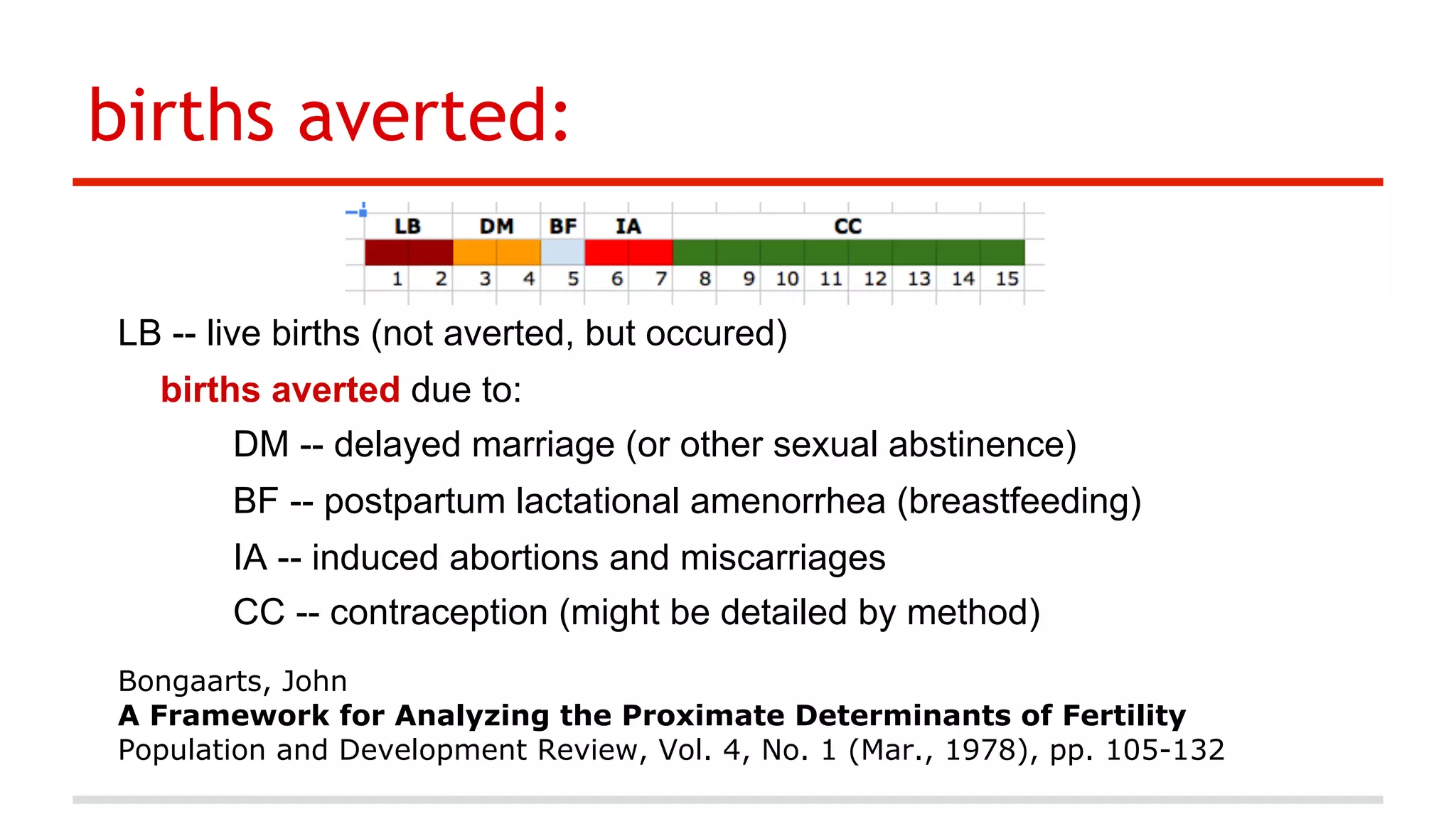
births averted:
LB -- live births (not averted, but occured)
births averted due to:
DM -- delayed marriage (or other sexual abstinence)
BF -- postpartum lactational amenorrhea (breastfeeding)
IA -- induced abortions and miscarriages
CC -- contraception (might be detailed by method)
Bongaarts, John
A Framework for Analyzing the Proximate Determinants of Fertility
Population and Development Review, Vol. 4, No. 1 (Mar., 1978), pp. 105-132
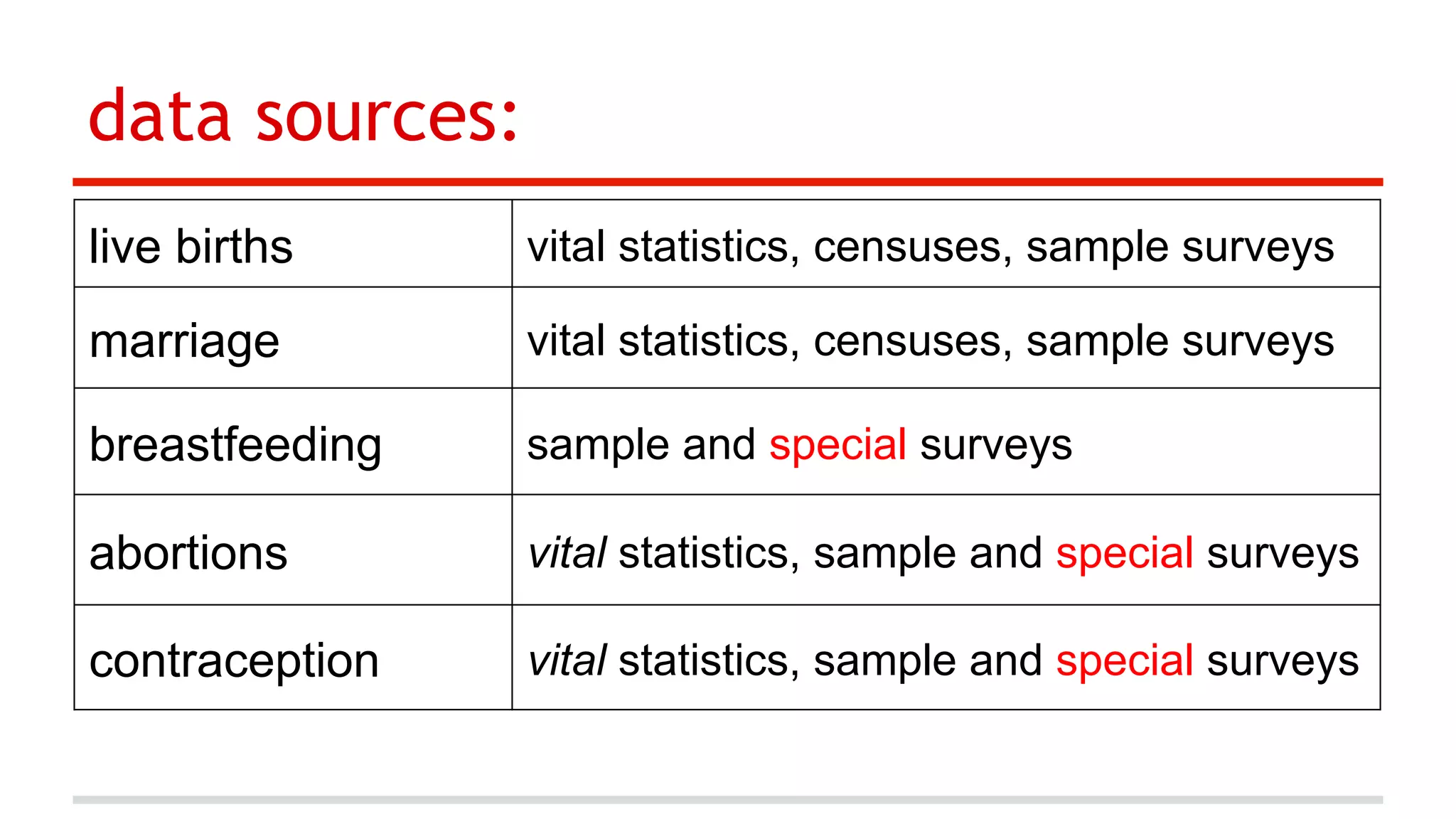
data sources:
live births

vital statistics, censuses, sample surveys

marriage

vital statistics, censuses, sample surveys

breastfeeding

sample and special surveys

abortions

vital statistics, sample and special surveys

contraception

vital statistics, sample and special surveys
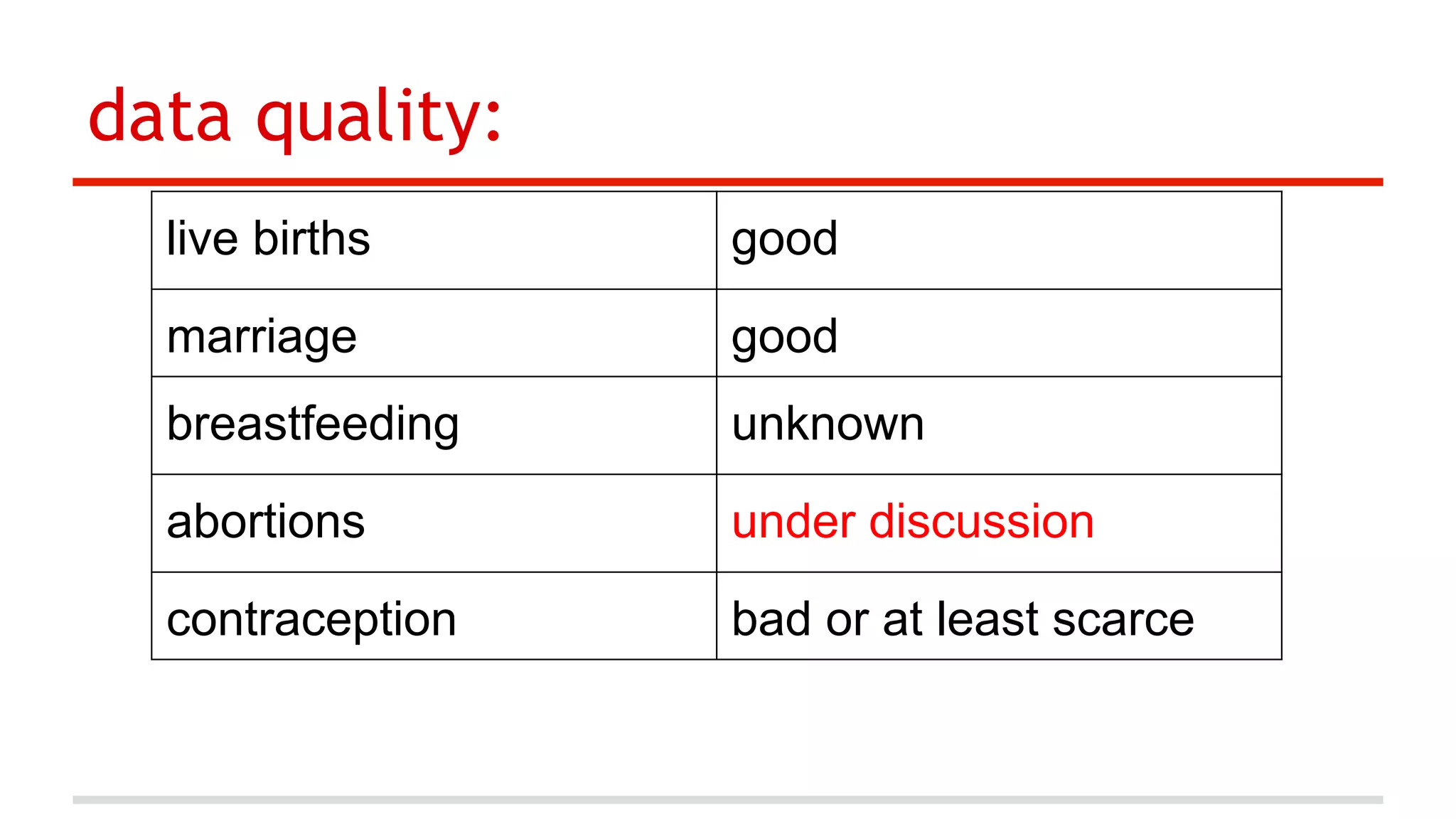
data quality:
live births

good

marriage

good

breastfeeding

unknown

abortions

under discussion

contraception

bad or at least scarce
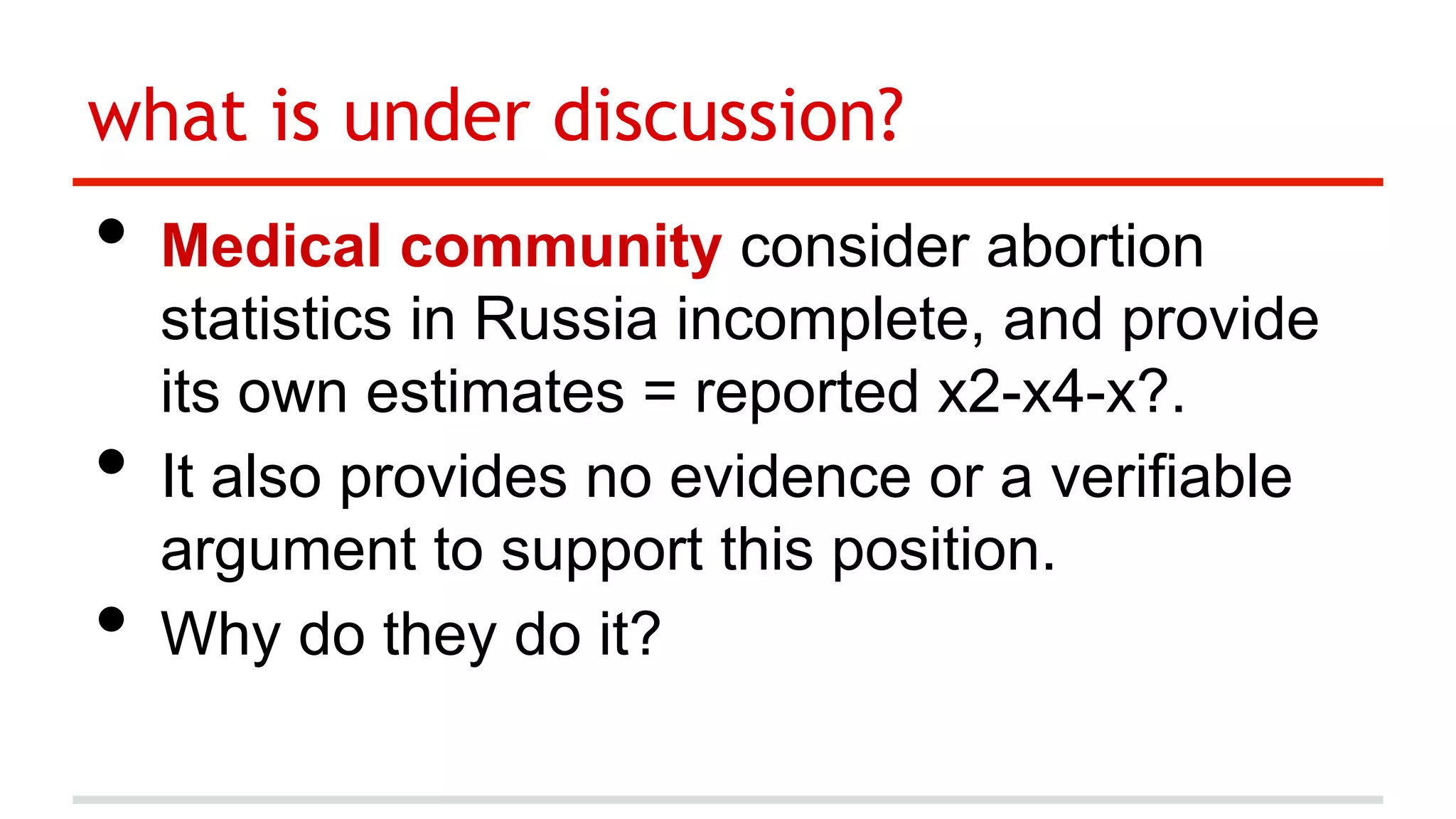
what is under discussion?

•  Medical community consider abortion
• 
• 

statistics in Russia incomplete, and provide
its own estimates = reported x2-x4-x?.
It also provides no evidence or a verifiable
argument to support this position.
Why do they do it?
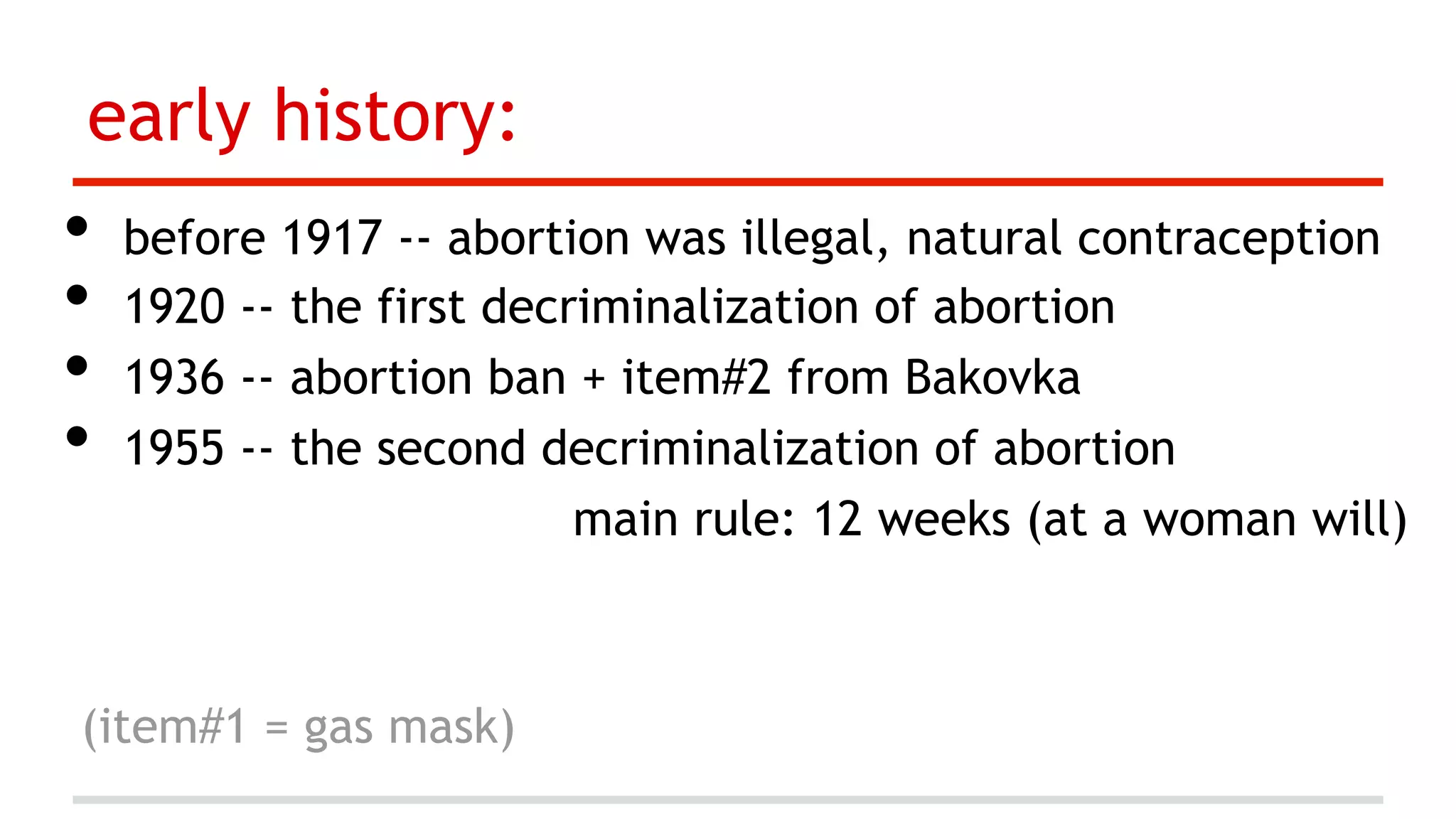
early history:

•  before 1917 -- abortion was illegal, natural contraception
•  1920 -- the first decriminalization of abortion
•  1936 -- abortion ban + item#2 from Bakovka
•  1955 -- the second decriminalization of abortion
main rule: 12 weeks (at a woman will)

(item#1 = gas mask)
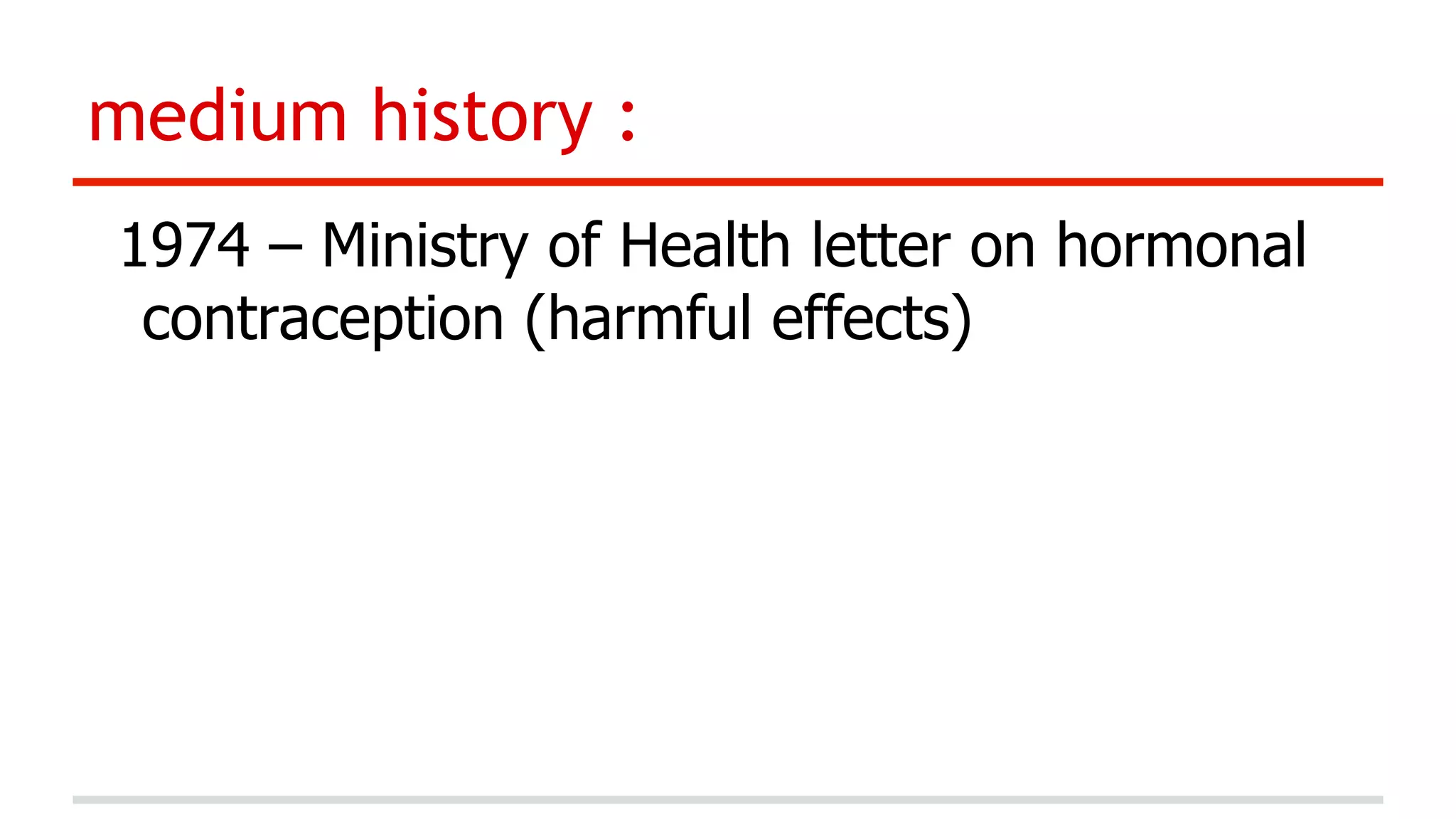
medium history :
1974 – Ministry of Health letter on hormonal
contraception (harmful effects)
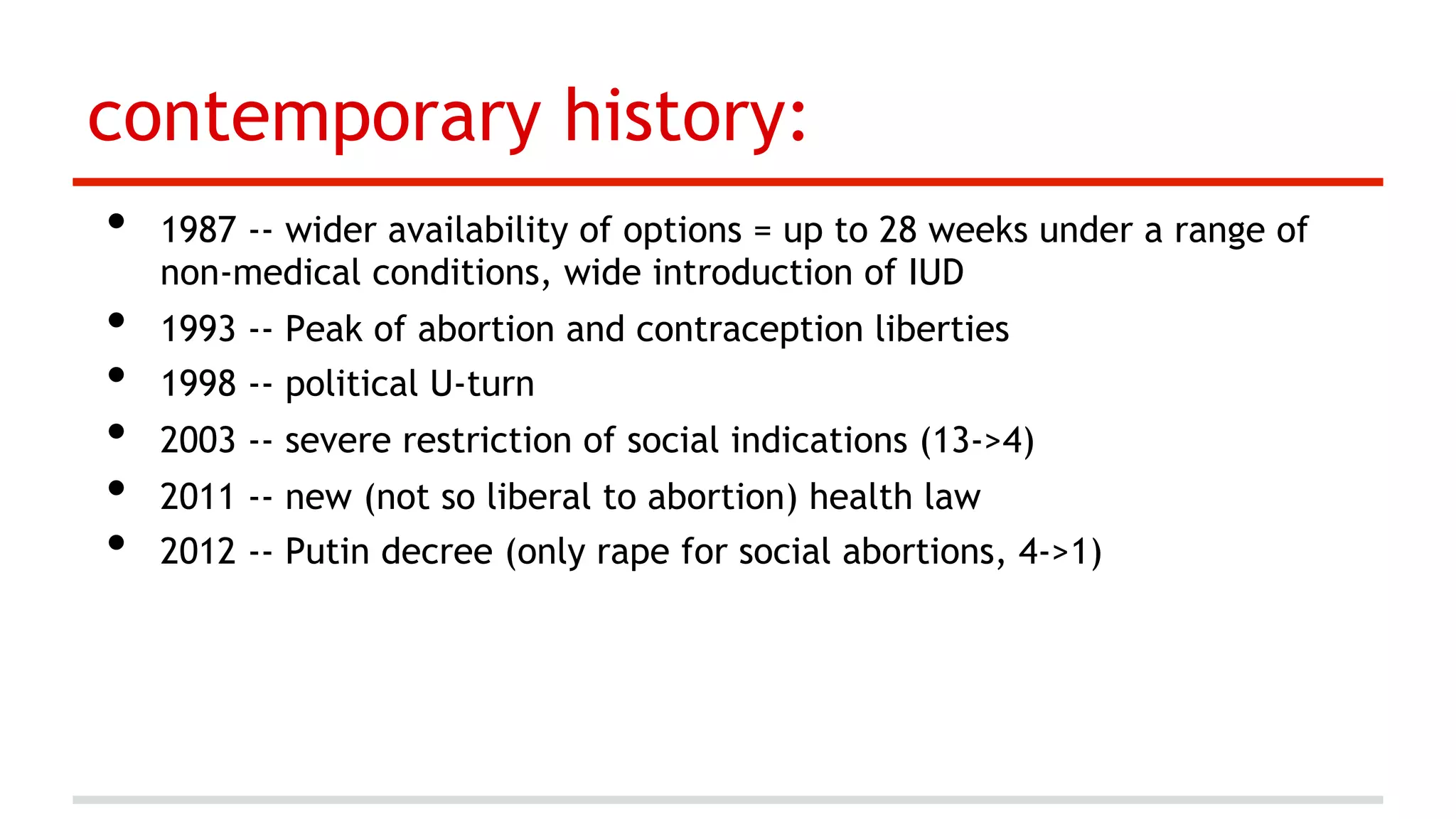
contemporary history:
• 
• 
• 
• 
• 
• 

1987 -- wider availability of options = up to 28 weeks under a range of
non-medical conditions, wide introduction of IUD
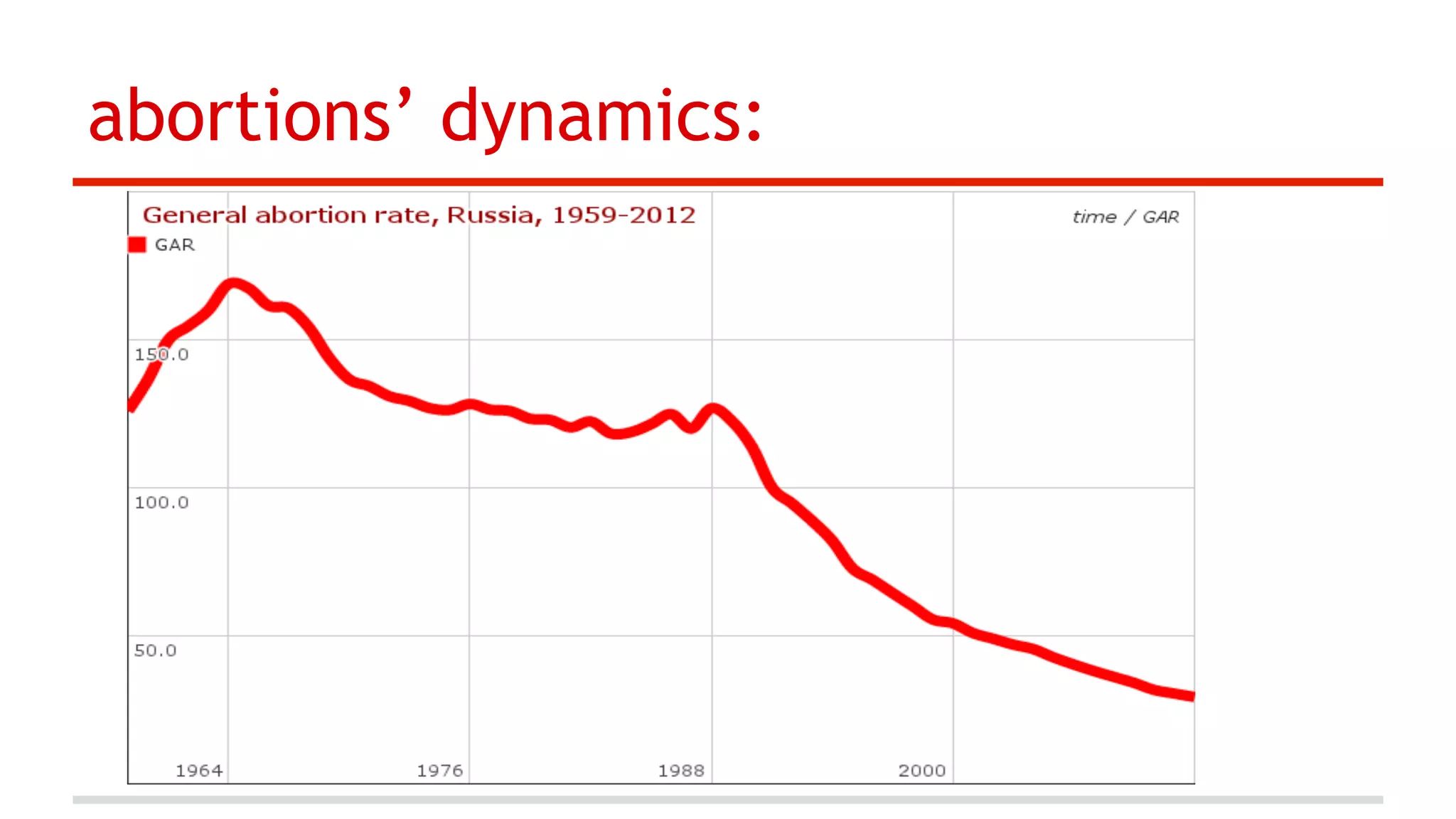
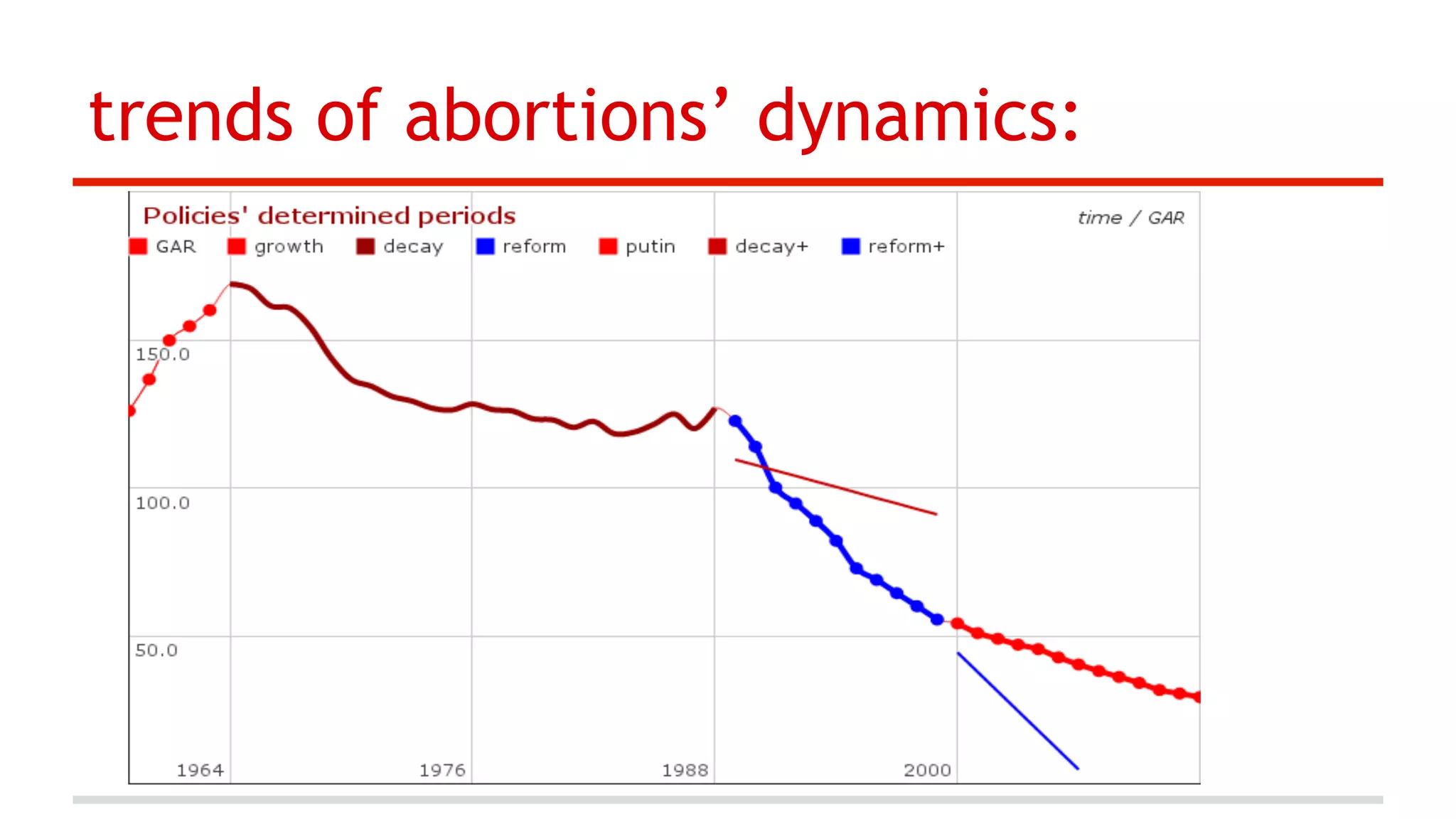
1993 -- Peak of abortion and contraception liberties
1998 -- political U-turn
2003 -- severe restriction of social indications (13->4)
2011 -- new (not so liberal to abortion) health law
2012 -- Putin decree (only rape for social abortions, 4->1)
abortions’ dynamics:
trends of abortions’ dynamics:
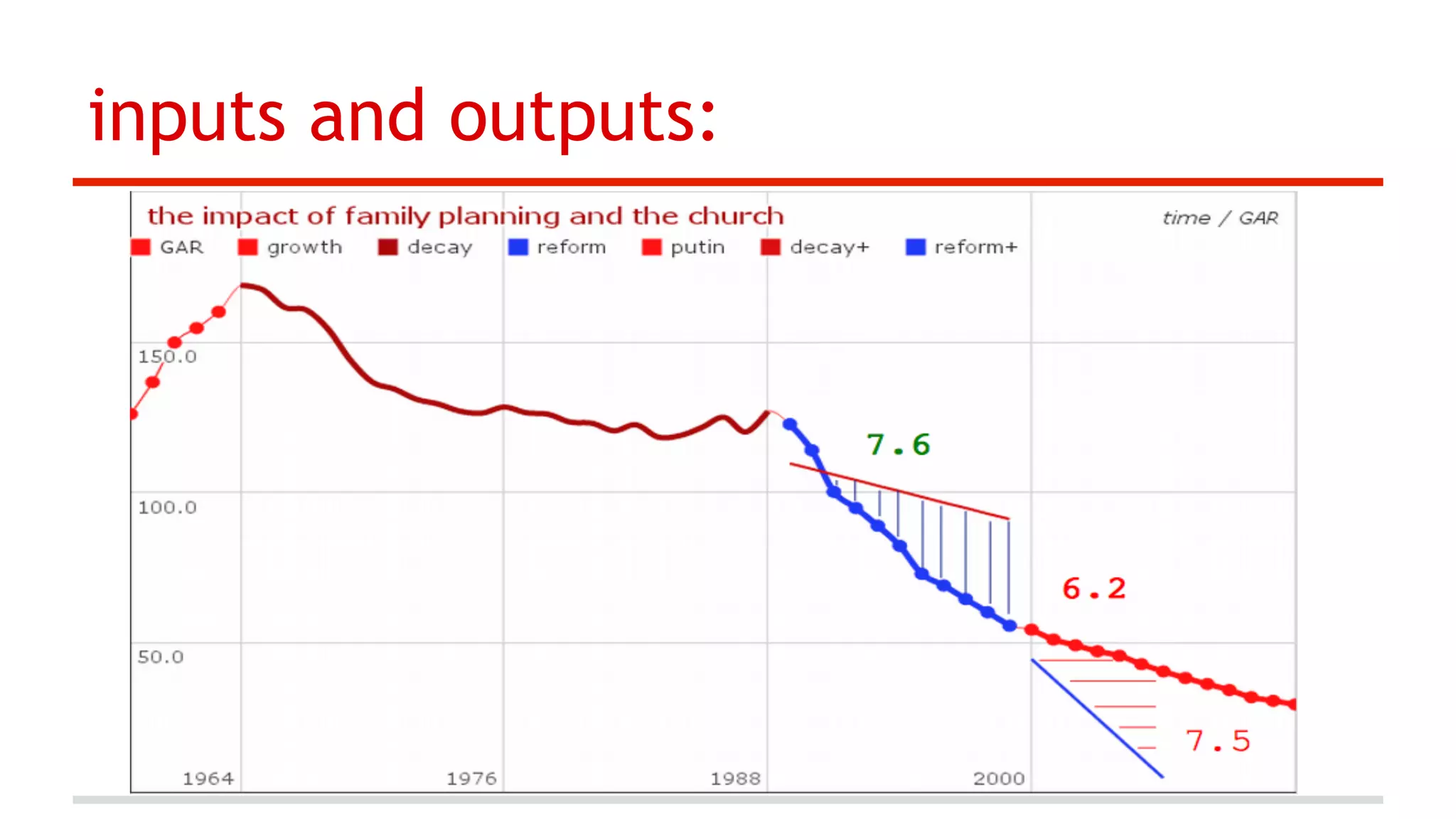
inputs and outputs:
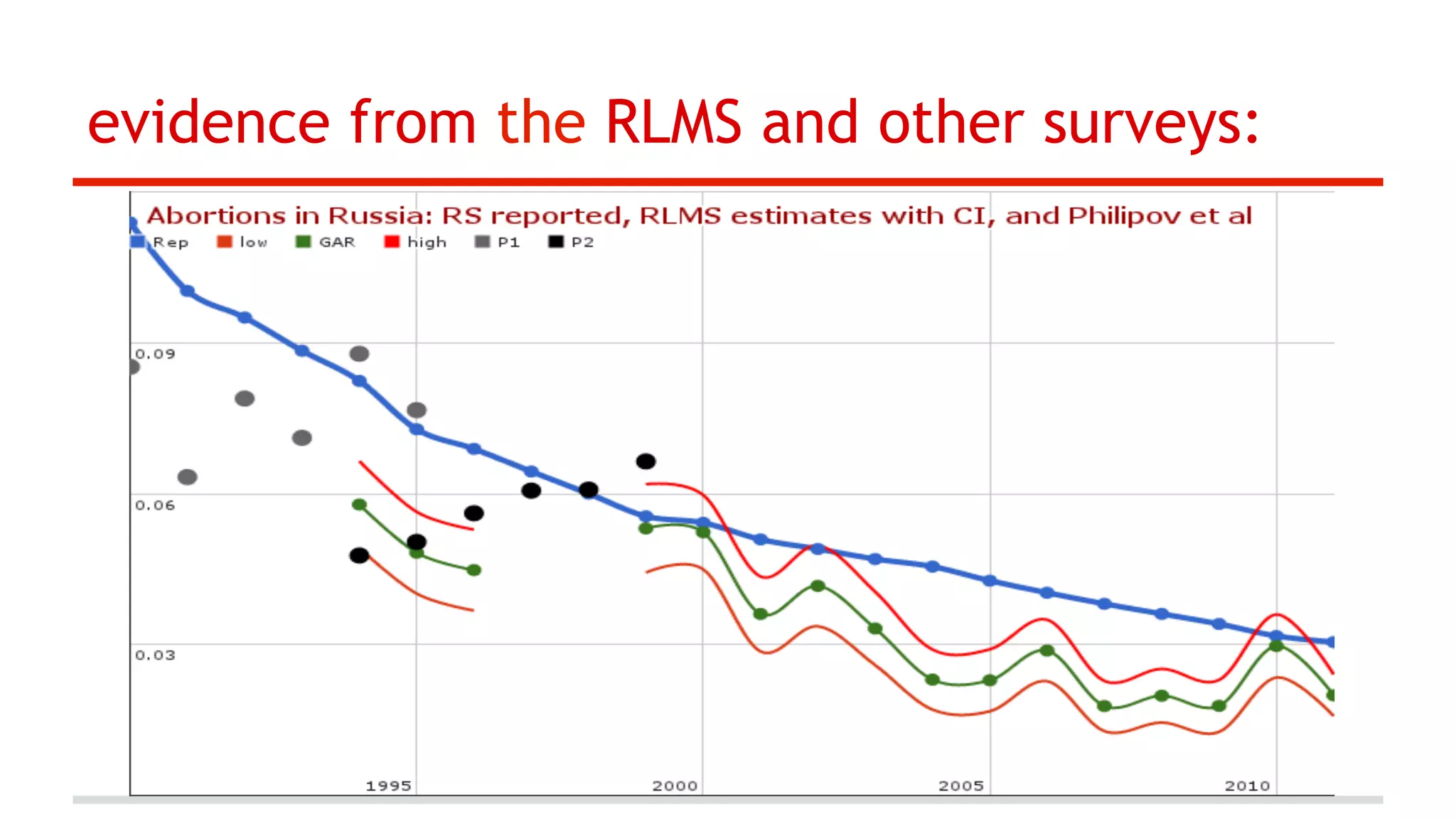
are these data complete?

•  There is evidence that abortion statistics is
• 

good enough
for the opposite the evidence is anecdotal or
not transparent
evidence from the RLMS and other surveys:
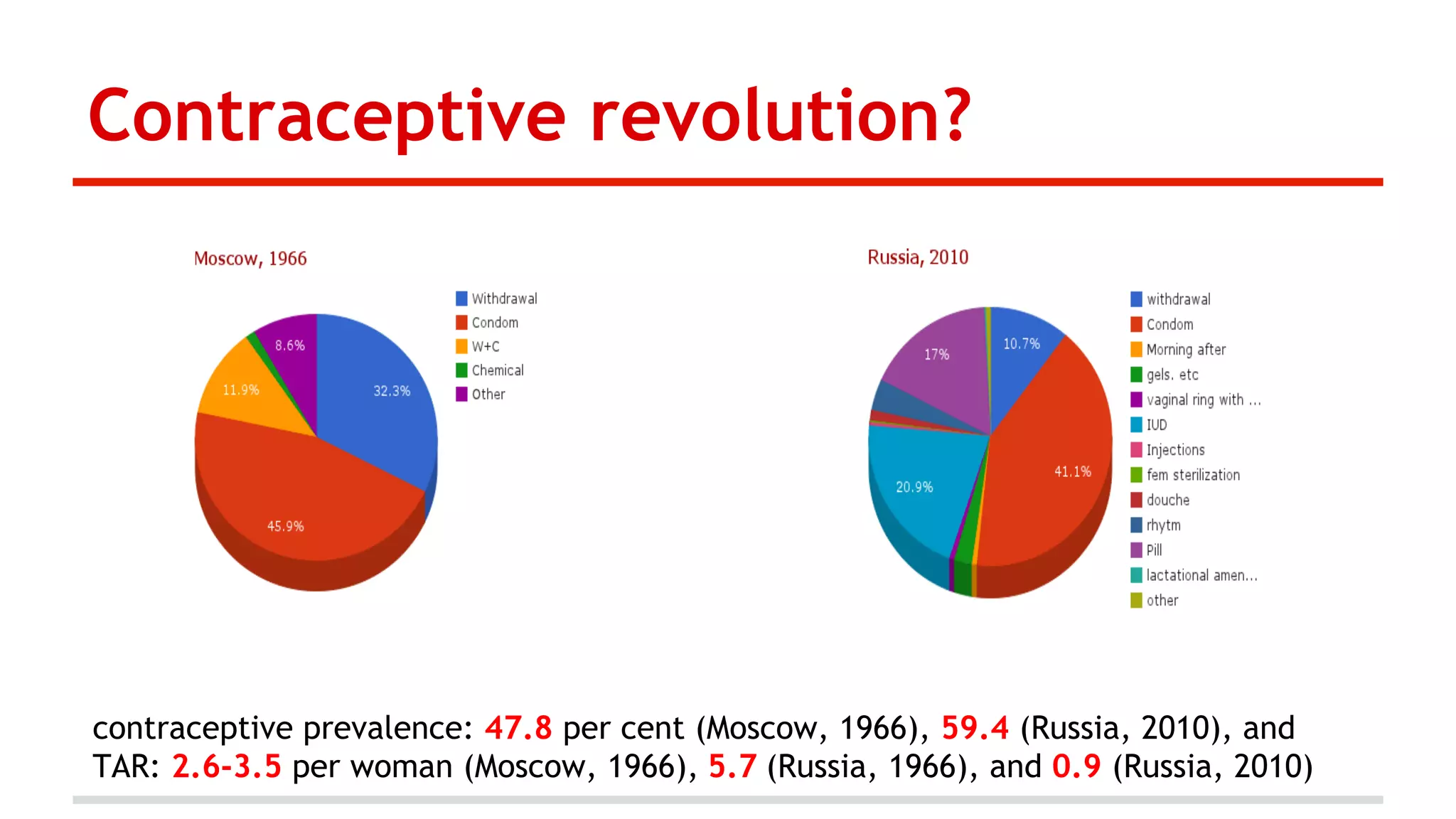
Contraceptive revolution?

contraceptive prevalence: 47.8 per cent (Moscow, 1966), 59.4 (Russia, 2010), and
TAR: 2.6-3.5 per woman (Moscow, 1966), 5.7 (Russia, 1966), and 0.9 (Russia, 2010)
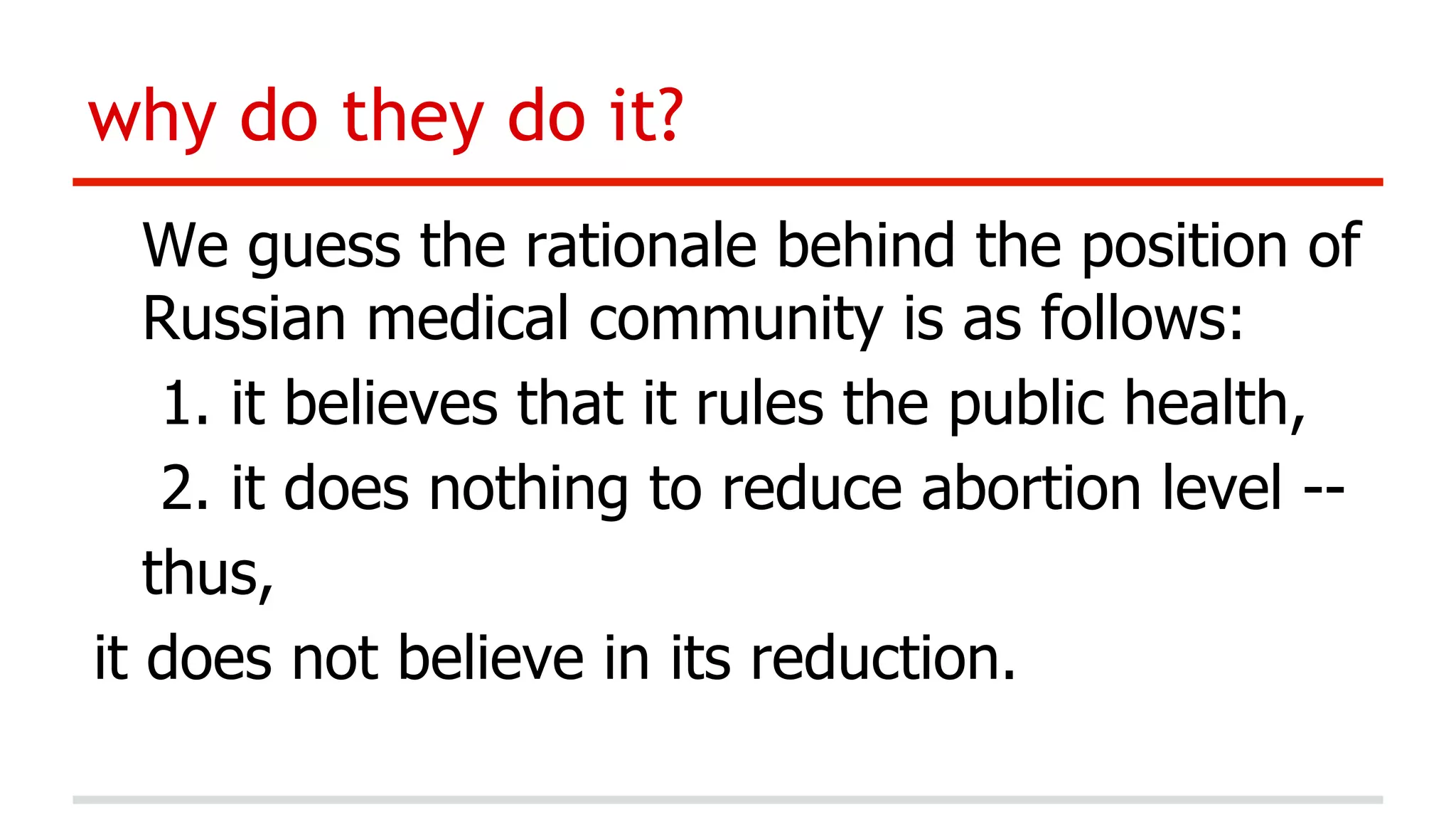
why do they do it?
We guess the rationale behind the position of
Russian medical community is as follows:
1.  it believes that it rules the public health,
2.  it does nothing to reduce abortion level -thus,
it does not believe in its reduction.
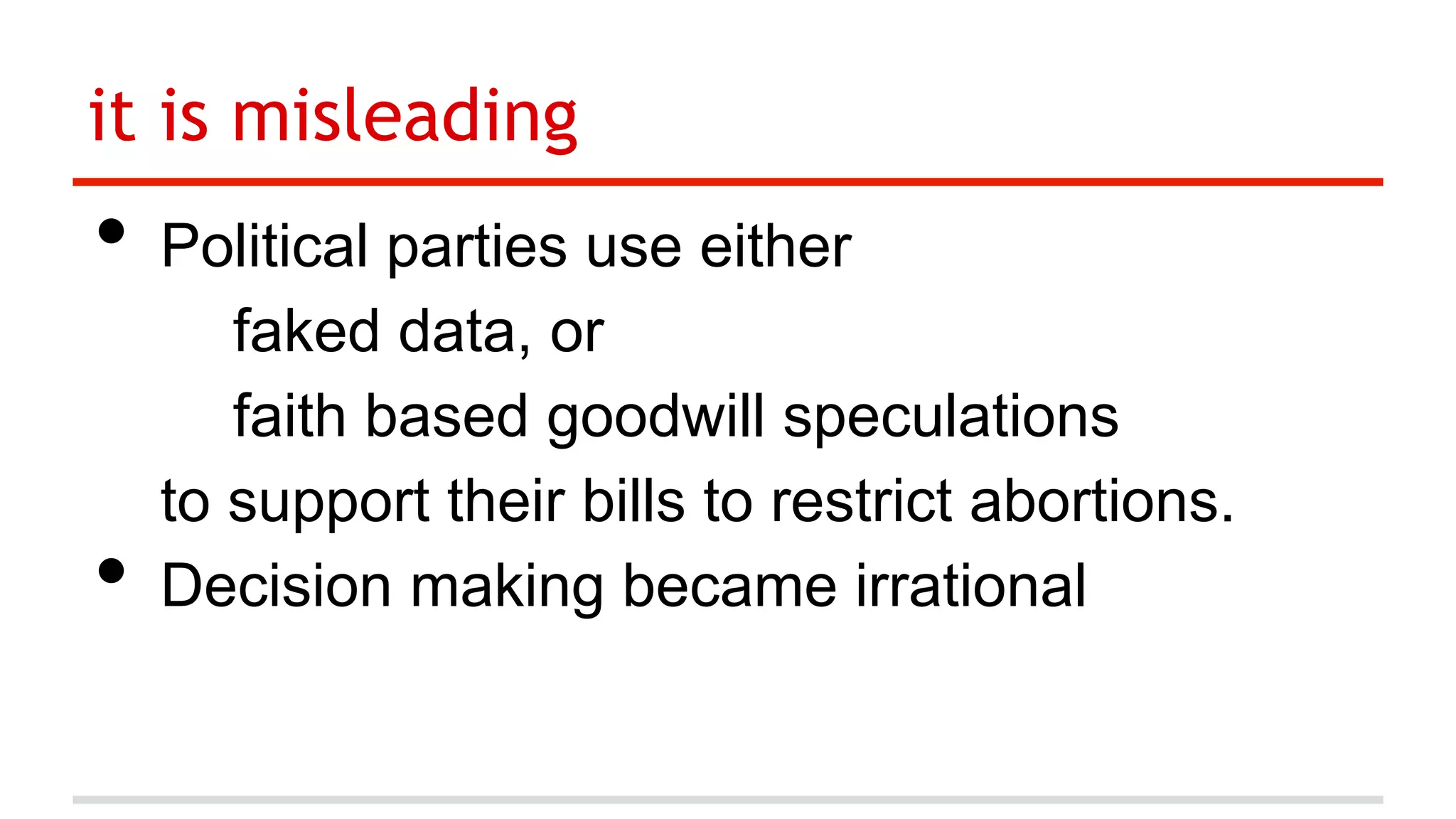
it is misleading

•  Political parties use either
• 

faked data, or
faith based goodwill speculations
to support their bills to restrict abortions.
Decision making became irrational
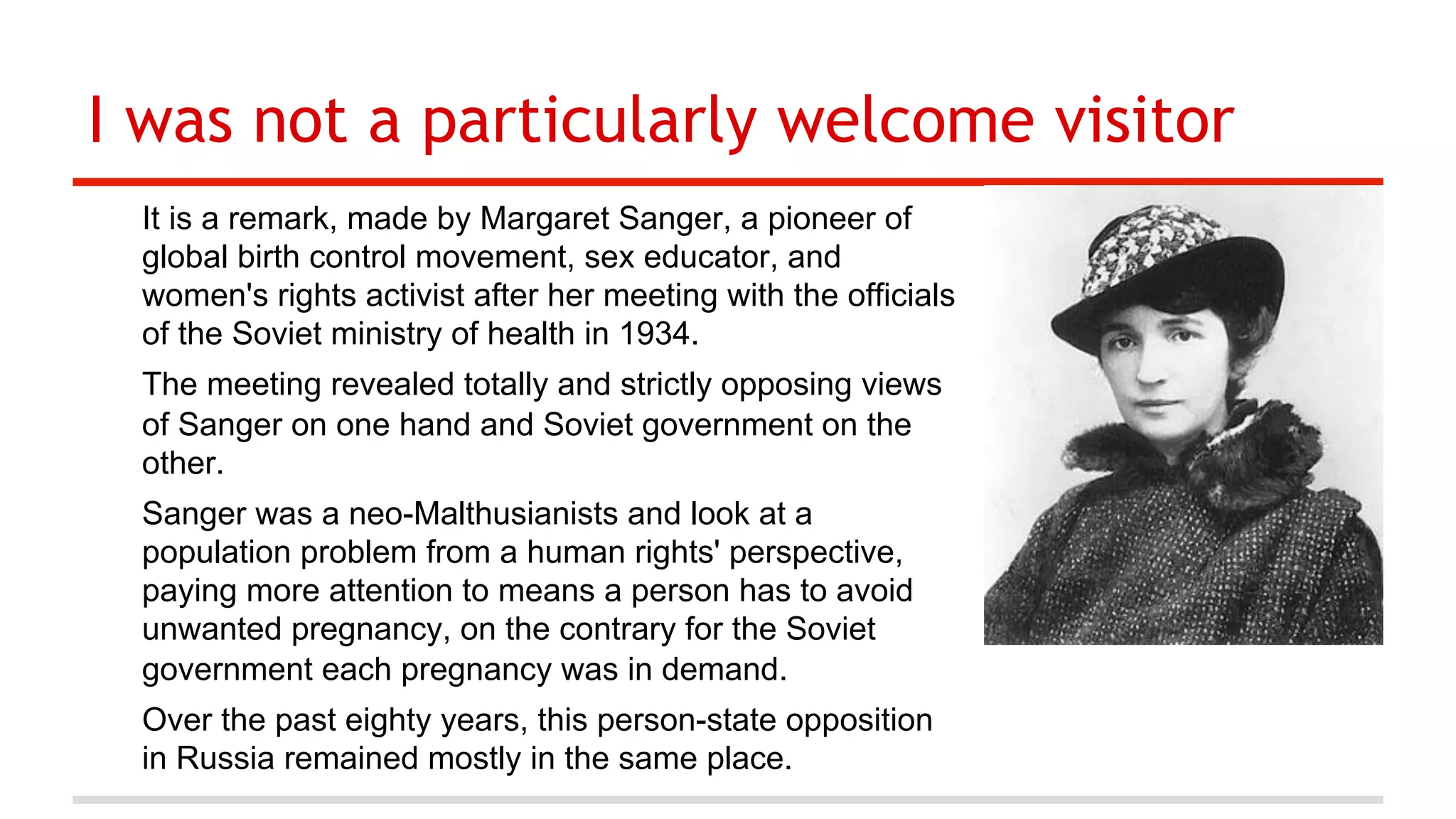
I was not a particularly welcome visitor
It is a remark, made by Margaret Sanger, a pioneer of
global birth control movement, sex educator, and
women's rights activist after her meeting with the officials
of the Soviet ministry of health in 1934.
The meeting revealed totally and strictly opposing views
of Sanger on one hand and Soviet government on the
other.
Sanger was a neo-Malthusianists and look at a
population problem from a human rights' perspective,
paying more attention to means a person has to avoid
unwanted pregnancy, on the contrary for the Soviet
government each pregnancy was in demand.
Over the past eighty years, this person-state opposition
in Russia remained mostly in the same place.
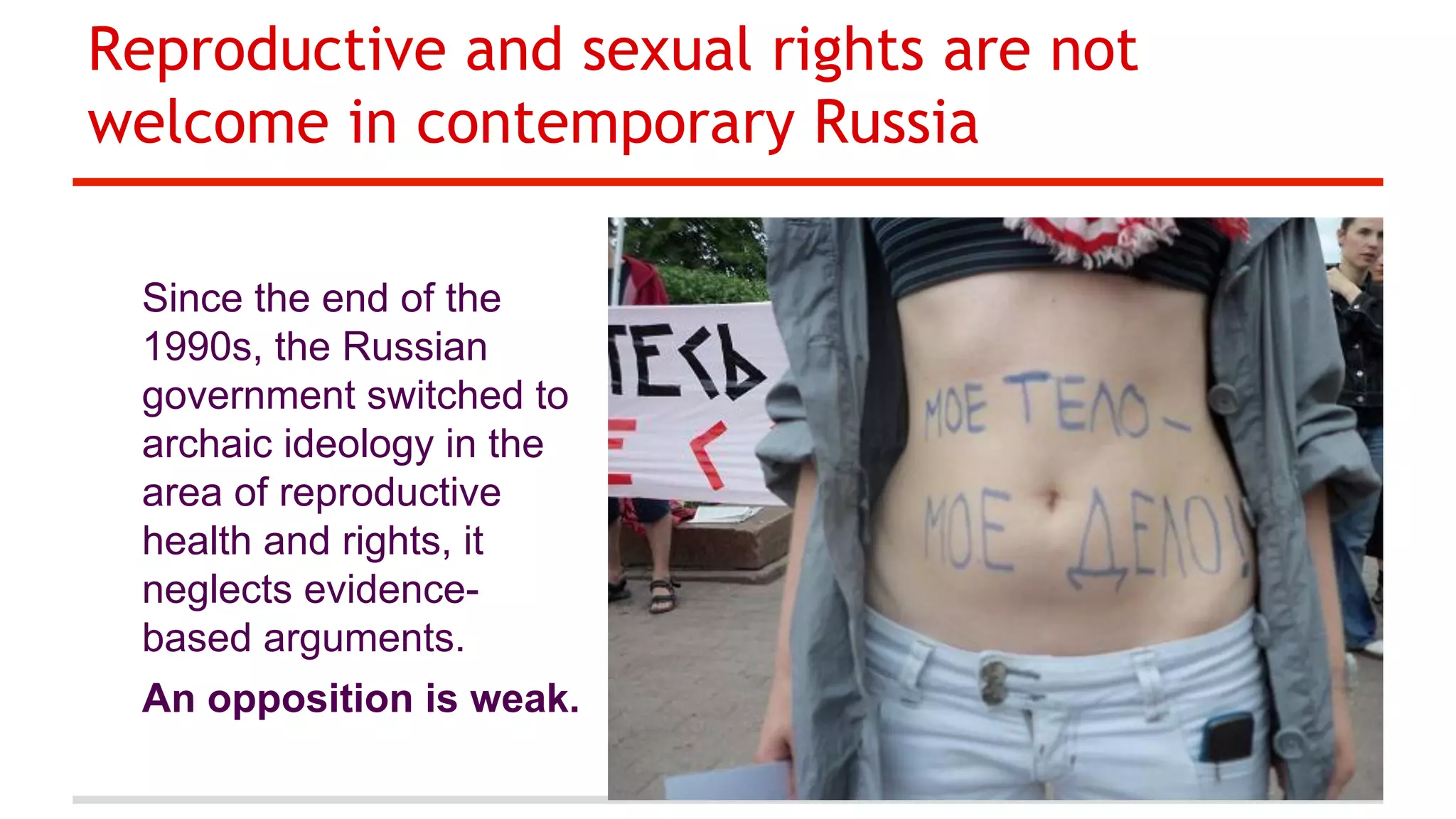
Reproductive and sexual rights are not
welcome in contemporary Russia
Since the end of the
1990s, the Russian
government switched to
archaic ideology in the
area of reproductive
health and rights, it
neglects evidencebased arguments.
An opposition is weak.
Resume:
• There is a demographic instrument capable of testing
data consistency
• There are data from various sources
• Together the above confirms dramatic true decline in
abortions, and thus improvement of reproductive health
• Despite this evidence medical community provides
government and society with wrong ideas, which are
partially responsible for the archaization of public health
policy
Acknowledgments
This study (research grant No 12-01-0076) was
supported by The National Research University – Higher
School of Economics’ Academic Fund Program in 2013 2014
Vielen Dank für Ihre Aufmerksamkeit

Thank you for your attention

„Wenn die Chemie stimmt…” Gender Relations and Birth Control in the Age of the Pill

  • 1.
    Reproductive health andrights in Russia “When the chemistry works... Gender relations and birth control in the age of The Pill” November 28-29, 2013 Friedrich Schiller University, Jena, Germany Victoria Sakevich (Institute of Demography, Higher School of Economics, vsakevich@hse.ru) Boris Denisov (Lab of population economics and demography, Department of Economics, Moscow University, denisov@demography.ru)
  • 2.
    outline: •  demographic lookat reproductive health •  data availability •  historical and contemporary situations •  reproductive rights in a pronatalist state
  • 3.
    metrics and components: • infant and child mortality •  maternal mortality •  abortion •  contraception
  • 4.
    RLMS-HSE data fromthe 10th (2001) and 19th (2010) rounds median ages are: menarche (13), the 1st coitus (18-19), menopause (48-49)
  • 5.
    demographic view: •  Frommenarche to menopause a healthy •  •  woman is fertile From age 15 to 49 a woman may have (13x35) 455 cycles, i.e., 12740 days (pills) In a modern society she makes 1-3 live births, which make her infertile just for 1-4 years, remaining time she somehow avoids an unwanted conception
  • 6.
    births averted: LB --live births (not averted, but occured) births averted due to: DM -- delayed marriage (or other sexual abstinence) BF -- postpartum lactational amenorrhea (breastfeeding) IA -- induced abortions and miscarriages CC -- contraception (might be detailed by method) Bongaarts, John A Framework for Analyzing the Proximate Determinants of Fertility Population and Development Review, Vol. 4, No. 1 (Mar., 1978), pp. 105-132
  • 7.
    data sources: live births vitalstatistics, censuses, sample surveys marriage vital statistics, censuses, sample surveys breastfeeding sample and special surveys abortions vital statistics, sample and special surveys contraception vital statistics, sample and special surveys
  • 8.
  • 9.
    what is underdiscussion? •  Medical community consider abortion •  •  statistics in Russia incomplete, and provide its own estimates = reported x2-x4-x?. It also provides no evidence or a verifiable argument to support this position. Why do they do it?
  • 10.
    early history: •  before1917 -- abortion was illegal, natural contraception •  1920 -- the first decriminalization of abortion •  1936 -- abortion ban + item#2 from Bakovka •  1955 -- the second decriminalization of abortion main rule: 12 weeks (at a woman will) (item#1 = gas mask)
  • 11.
    medium history : 1974– Ministry of Health letter on hormonal contraception (harmful effects)
  • 12.
    contemporary history: •  •  •  •  •  •  1987 --wider availability of options = up to 28 weeks under a range of non-medical conditions, wide introduction of IUD 1993 -- Peak of abortion and contraception liberties 1998 -- political U-turn 2003 -- severe restriction of social indications (13->4) 2011 -- new (not so liberal to abortion) health law 2012 -- Putin decree (only rape for social abortions, 4->1)
  • 13.
  • 14.
  • 15.
  • 16.
    are these datacomplete? •  There is evidence that abortion statistics is •  good enough for the opposite the evidence is anecdotal or not transparent
  • 17.
    evidence from theRLMS and other surveys:
  • 18.
    Contraceptive revolution? contraceptive prevalence:47.8 per cent (Moscow, 1966), 59.4 (Russia, 2010), and TAR: 2.6-3.5 per woman (Moscow, 1966), 5.7 (Russia, 1966), and 0.9 (Russia, 2010)
  • 19.
    why do theydo it? We guess the rationale behind the position of Russian medical community is as follows: 1.  it believes that it rules the public health, 2.  it does nothing to reduce abortion level -thus, it does not believe in its reduction.
  • 20.
    it is misleading • Political parties use either •  faked data, or faith based goodwill speculations to support their bills to restrict abortions. Decision making became irrational
  • 21.
    I was nota particularly welcome visitor It is a remark, made by Margaret Sanger, a pioneer of global birth control movement, sex educator, and women's rights activist after her meeting with the officials of the Soviet ministry of health in 1934. The meeting revealed totally and strictly opposing views of Sanger on one hand and Soviet government on the other. Sanger was a neo-Malthusianists and look at a population problem from a human rights' perspective, paying more attention to means a person has to avoid unwanted pregnancy, on the contrary for the Soviet government each pregnancy was in demand. Over the past eighty years, this person-state opposition in Russia remained mostly in the same place.
  • 22.
    Reproductive and sexualrights are not welcome in contemporary Russia Since the end of the 1990s, the Russian government switched to archaic ideology in the area of reproductive health and rights, it neglects evidencebased arguments. An opposition is weak.
  • 23.
    Resume: • There is ademographic instrument capable of testing data consistency • There are data from various sources • Together the above confirms dramatic true decline in abortions, and thus improvement of reproductive health • Despite this evidence medical community provides government and society with wrong ideas, which are partially responsible for the archaization of public health policy
  • 24.
    Acknowledgments This study (researchgrant No 12-01-0076) was supported by The National Research University – Higher School of Economics’ Academic Fund Program in 2013 2014
  • 25.
    Vielen Dank fürIhre Aufmerksamkeit Thank you for your attention