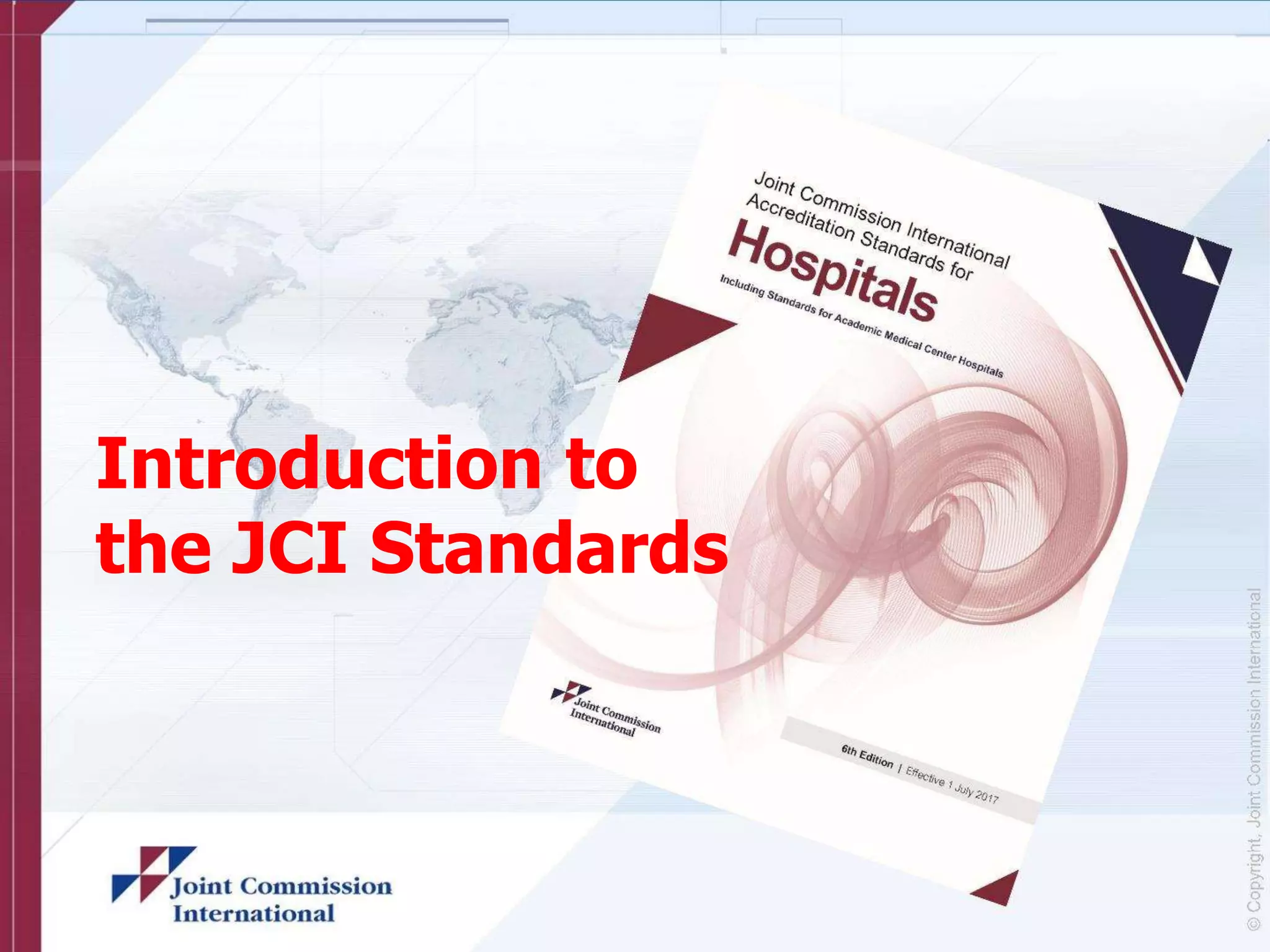
Introduction to
the JCI Standards
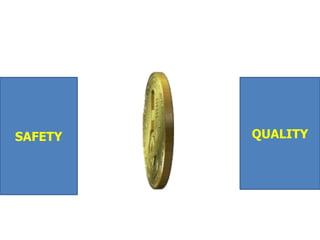
QUALITY
SAFETY
What is Quality
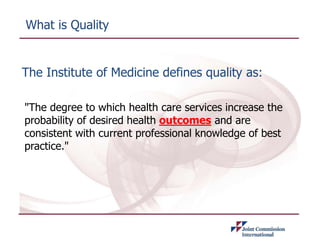
The Institute of Medicine defines quality as:
"The degree to which health care services increase the
probability of desired health outcomes and are
consistent with current professional knowledge of best
practice."
Accreditation
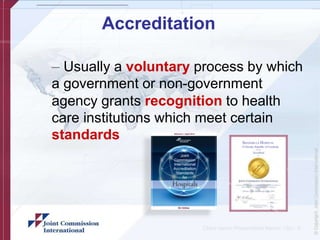
– Usually a voluntary process by which
a government or non-government
agency grants recognition to health
care institutions which meet certain
standards SHANGRI-LA HOSPITAL
El Dorado, Republic of Freedonia
Paul
a
Wils
on
Client name/ Presentation Name/ 12pt - 6
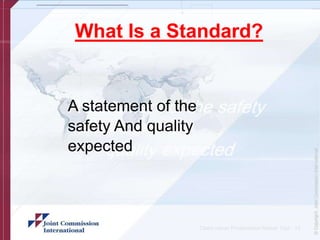
What Is a Standard?
A statement of the
safety And quality
expected
Client name/ Presentation Name/ 12pt - 13
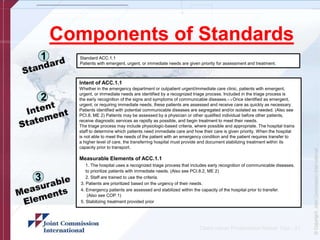
Components of Standards
1
2
Standard ACC.1.1
Patients with emergent, urgent, or immediate needs are given priority for assessment and treatment.
Intent of ACC.1.1
Whether in the emergency department or outpatient urgent/immediate care clinic, patients with emergent,
urgent, or immediate needs are identified by a recognized triage process. Included in the triage process is
the early recognition of the signs and symptoms of communicable diseases.1–3 Once identified as emergent,
urgent, or requiring immediate needs, these patients are assessed and receive care as quickly as necessary.
Patients identified with potential communicable diseases are segregated and/or isolated as needed. (Also see
PCI.8, ME 2) Patients may be assessed by a physician or other qualified individual before other patients,
receive diagnostic services as rapidly as possible, and begin treatment to meet their needs.
The triage process may include physiologic-based criteria, where possible and appropriate. The hospital trains
staff to determine which patients need immediate care and how their care is given priority. When the hospital
is not able to meet the needs of the patient with an emergency condition and the patient requires transfer to
a higher level of care, the transferring hospital must provide and document stabilizing treatment within its
capacity prior to transport.
Measurable Elements of ACC.1.1
1. The hospital uses a recognized triage process that includes early recognition of communicable diseases,
to prioritize patients with immediate needs. (Also see PCI.8.2, ME 2)
2. Staff are trained to use the criteria.
3 3. Patients are prioritized based on the urgency of their needs.
4. Emergency patients are assessed and stabilized within the capacity of the hospital prior to transfer.
(Also see COP.1)
5. Stabilizing treatment provided prior
Client name/ Presentation Name/ 12pt - 21
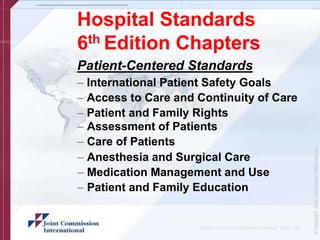
Hospital Standards
6th Edition Chapters
Patient-Centered Standards
– International Patient Safety Goals
– Access to Care and Continuity of Care
– Patient and Family Rights
– Assessment of Patients
– Care of Patients
– Anesthesia and Surgical Care
– Medication Management and Use
– Patient and Family Education
Client name/ Presentation Name/ 12pt - 26
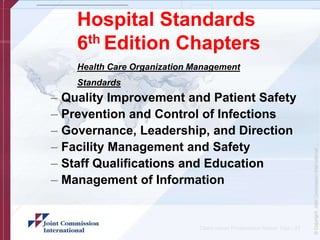
Hospital Standards
6th Edition Chapters
Health Care Organization Management
Standards
– Quality Improvement and Patient Safety
– Prevention and Control of Infections
– Governance, Leadership, and Direction
– Facility Management and Safety
– Staff Qualifications and Education
– Management of Information
Client name/ Presentation Name/ 12pt - 27
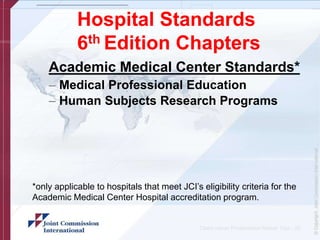
Hospital Standards
6th Edition Chapters
Academic Medical Center Standards*
– Medical Professional Education
– Human Subjects Research Programs
*only applicable to hospitals that meet JCI’s eligibility criteria for the
Academic Medical Center Hospital accreditation program.
Client name/ Presentation Name/ 12pt - 28
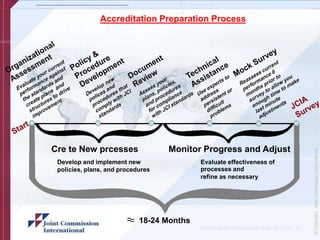
Accreditation Preparation Process
Cre te New prcesses Monitor Progress and Adjust
Develop and implement new
policies, plans, and procedures
Evaluate effectiveness of
processes and
refine as necessary
18-24 Months
Client name/ Presentation Name/ 12pt - 11
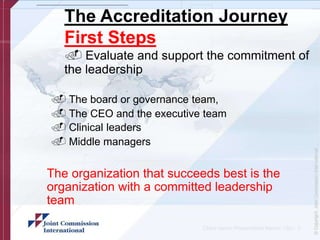
The Accreditation Journey
First Steps
. Evaluate and support the commitment of
the leadership
. The board or governance team,
. The CEO and the executive team
. Clinical leaders
. Middle managers
The organization that succeeds best is the
organization with a committed leadership
team
Client name/ Presentation Name/ 12pt - 3
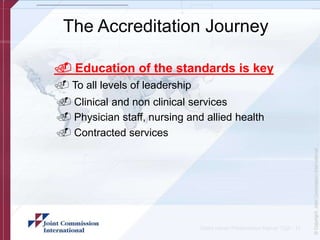
The Accreditation Journey
. Education of the standards is key
. To all levels of leadership
. Clinical and non clinical services
. Physician staff, nursing and allied health
. Contracted services
Client name/ Presentation Name/ 12pt - 11
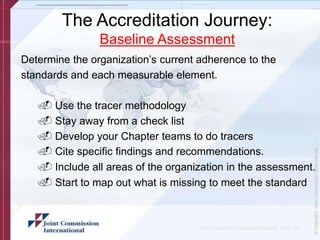
The Accreditation Journey:
Baseline Assessment
Determine the organization’s current adherence to the
standards and each measurable element.
. Use the tracer methodology
. Stay away from a check list
. Develop your Chapter teams to do tracers
. Cite specific findings and recommendations.
. Include all areas of the organization in the assessment.
. Start to map out what is missing to meet the standard
Client name/ Presentation Name/ 12pt - 15
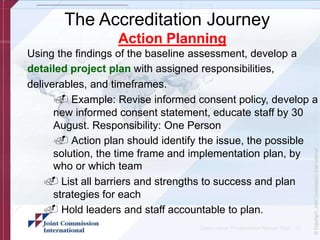
The Accreditation Journey
Action Planning
Using the findings of the baseline assessment, develop a
detailed project plan with assigned responsibilities,
deliverables, and timeframes.
. Example: Revise informed consent policy, develop a
new informed consent statement, educate staff by 30
August. Responsibility: One Person
. Action plan should identify the issue, the possible
solution, the time frame and implementation plan, by
who or which team
. List all barriers and strengths to success and plan
strategies for each
. Hold leaders and staff accountable to plan.
Client name/ Presentation Name/ 12pt - 16
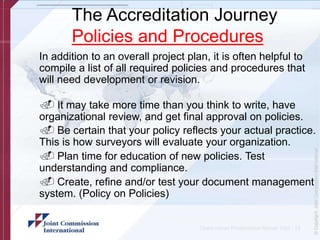
The Accreditation Journey
Policies and Procedures
In addition to an overall project plan, it is often helpful to
compile a list of all required policies and procedures that
will need development or revision.
. It may take more time than you think to write, have
organizational review, and get final approval on policies.
. Be certain that your policy reflects your actual practice.
This is how surveyors will evaluate your organization.
. Plan time for education of new policies. Test
understanding and compliance.
. Create, refine and/or test your document management
system. (Policy on Policies)
Client name/ Presentation Name/ 12pt - 19
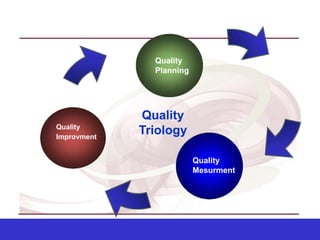
Quality
Planning
Quality
Triology
Quality
Improvment
Quality
Mesurment
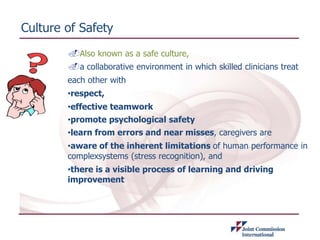
Culture of Safety
.Also known as a safe culture,
.a collaborative environment in which skilled clinicians treat
each other with
•respect,
•effective teamwork
•promote psychological safety
•learn from errors and near misses, caregivers are
•aware of the inherent limitations of human performance in
complexsystems (stress recognition), and
•there is a visible process of learning and driving
improvement
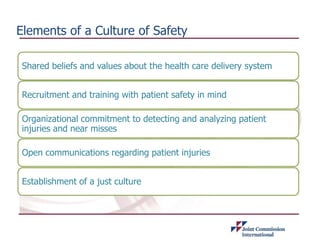
Elements of a Culture of Safety
Shared beliefs and values about the health care delivery system
Recruitment and training with patient safety in mind
Organizational commitment to detecting and analyzing patient
injuries and near misses
Open communications regarding patient injuries
Establishment of a just culture
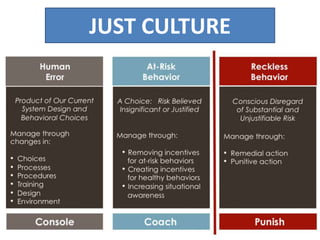
JUST CULTURE
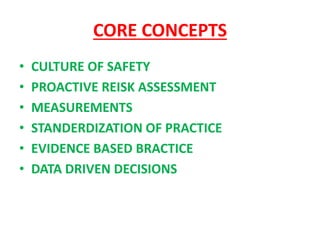
CORE CONCEPTS
• CULTURE OF SAFETY
• PROACTIVE REISK ASSESSMENT
• MEASUREMENTS
• STANDERDIZATION OF PRACTICE
• EVIDENCE BASED BRACTICE
• DATA DRIVEN DECISIONS
Questions?
68

Jci orientation

  • 1.
  • 3.
  • 8.
    What is Quality TheInstitute of Medicine defines quality as: "The degree to which health care services increase the probability of desired health outcomes and are consistent with current professional knowledge of best practice."
  • 9.
    Accreditation – Usually avoluntary process by which a government or non-government agency grants recognition to health care institutions which meet certain standards SHANGRI-LA HOSPITAL El Dorado, Republic of Freedonia Paul a Wils on Client name/ Presentation Name/ 12pt - 6
  • 10.
    What Is aStandard? A statement of the safety And quality expected Client name/ Presentation Name/ 12pt - 13
  • 11.
    Components of Standards 1 2 StandardACC.1.1 Patients with emergent, urgent, or immediate needs are given priority for assessment and treatment. Intent of ACC.1.1 Whether in the emergency department or outpatient urgent/immediate care clinic, patients with emergent, urgent, or immediate needs are identified by a recognized triage process. Included in the triage process is the early recognition of the signs and symptoms of communicable diseases.1–3 Once identified as emergent, urgent, or requiring immediate needs, these patients are assessed and receive care as quickly as necessary. Patients identified with potential communicable diseases are segregated and/or isolated as needed. (Also see PCI.8, ME 2) Patients may be assessed by a physician or other qualified individual before other patients, receive diagnostic services as rapidly as possible, and begin treatment to meet their needs. The triage process may include physiologic-based criteria, where possible and appropriate. The hospital trains staff to determine which patients need immediate care and how their care is given priority. When the hospital is not able to meet the needs of the patient with an emergency condition and the patient requires transfer to a higher level of care, the transferring hospital must provide and document stabilizing treatment within its capacity prior to transport. Measurable Elements of ACC.1.1 1. The hospital uses a recognized triage process that includes early recognition of communicable diseases, to prioritize patients with immediate needs. (Also see PCI.8.2, ME 2) 2. Staff are trained to use the criteria. 3 3. Patients are prioritized based on the urgency of their needs. 4. Emergency patients are assessed and stabilized within the capacity of the hospital prior to transfer. (Also see COP.1) 5. Stabilizing treatment provided prior Client name/ Presentation Name/ 12pt - 21
  • 12.
    Hospital Standards 6th EditionChapters Patient-Centered Standards – International Patient Safety Goals – Access to Care and Continuity of Care – Patient and Family Rights – Assessment of Patients – Care of Patients – Anesthesia and Surgical Care – Medication Management and Use – Patient and Family Education Client name/ Presentation Name/ 12pt - 26
  • 13.
    Hospital Standards 6th EditionChapters Health Care Organization Management Standards – Quality Improvement and Patient Safety – Prevention and Control of Infections – Governance, Leadership, and Direction – Facility Management and Safety – Staff Qualifications and Education – Management of Information Client name/ Presentation Name/ 12pt - 27
  • 14.
    Hospital Standards 6th EditionChapters Academic Medical Center Standards* – Medical Professional Education – Human Subjects Research Programs *only applicable to hospitals that meet JCI’s eligibility criteria for the Academic Medical Center Hospital accreditation program. Client name/ Presentation Name/ 12pt - 28
  • 15.
    Accreditation Preparation Process Crete New prcesses Monitor Progress and Adjust Develop and implement new policies, plans, and procedures Evaluate effectiveness of processes and refine as necessary 18-24 Months Client name/ Presentation Name/ 12pt - 11
  • 16.
    The Accreditation Journey FirstSteps . Evaluate and support the commitment of the leadership . The board or governance team, . The CEO and the executive team . Clinical leaders . Middle managers The organization that succeeds best is the organization with a committed leadership team Client name/ Presentation Name/ 12pt - 3
  • 17.
    The Accreditation Journey .Education of the standards is key . To all levels of leadership . Clinical and non clinical services . Physician staff, nursing and allied health . Contracted services Client name/ Presentation Name/ 12pt - 11
  • 18.
    The Accreditation Journey: BaselineAssessment Determine the organization’s current adherence to the standards and each measurable element. . Use the tracer methodology . Stay away from a check list . Develop your Chapter teams to do tracers . Cite specific findings and recommendations. . Include all areas of the organization in the assessment. . Start to map out what is missing to meet the standard Client name/ Presentation Name/ 12pt - 15
  • 19.
    The Accreditation Journey ActionPlanning Using the findings of the baseline assessment, develop a detailed project plan with assigned responsibilities, deliverables, and timeframes. . Example: Revise informed consent policy, develop a new informed consent statement, educate staff by 30 August. Responsibility: One Person . Action plan should identify the issue, the possible solution, the time frame and implementation plan, by who or which team . List all barriers and strengths to success and plan strategies for each . Hold leaders and staff accountable to plan. Client name/ Presentation Name/ 12pt - 16
  • 20.
    The Accreditation Journey Policiesand Procedures In addition to an overall project plan, it is often helpful to compile a list of all required policies and procedures that will need development or revision. . It may take more time than you think to write, have organizational review, and get final approval on policies. . Be certain that your policy reflects your actual practice. This is how surveyors will evaluate your organization. . Plan time for education of new policies. Test understanding and compliance. . Create, refine and/or test your document management system. (Policy on Policies) Client name/ Presentation Name/ 12pt - 19
  • 21.
  • 22.
    Culture of Safety .Alsoknown as a safe culture, .a collaborative environment in which skilled clinicians treat each other with •respect, •effective teamwork •promote psychological safety •learn from errors and near misses, caregivers are •aware of the inherent limitations of human performance in complexsystems (stress recognition), and •there is a visible process of learning and driving improvement
  • 23.
    Elements of aCulture of Safety Shared beliefs and values about the health care delivery system Recruitment and training with patient safety in mind Organizational commitment to detecting and analyzing patient injuries and near misses Open communications regarding patient injuries Establishment of a just culture
  • 24.
  • 26.
    CORE CONCEPTS • CULTUREOF SAFETY • PROACTIVE REISK ASSESSMENT • MEASUREMENTS • STANDERDIZATION OF PRACTICE • EVIDENCE BASED BRACTICE • DATA DRIVEN DECISIONS
  • 27.