Jason Tam
 Cluster of firms
 Productivity gains
 Lower transport cost
 Studies by Kawashima (1975) , Sveikauskas
(1975), Segal (1976), Forgarty and Garofalo
(1978) and Moomaw (1981, 1985)
 Positive effect of city size on labour
productivity levels
 Industries found higher density areas more
productive than lower density areas. Why?
 Allowed workers to develop skills over time
 Wages increase
 More incentive
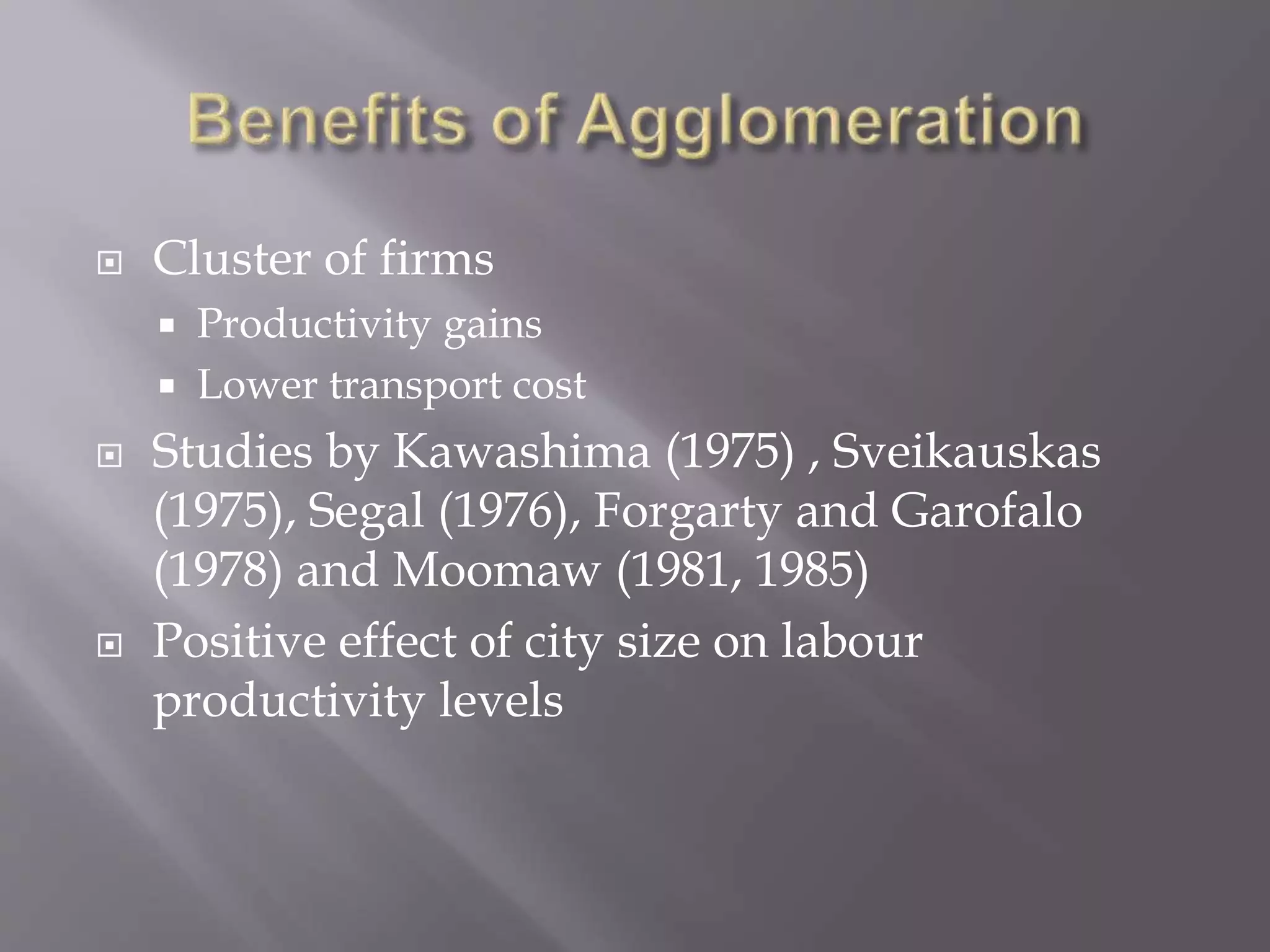
 Higher education levels & better amenities
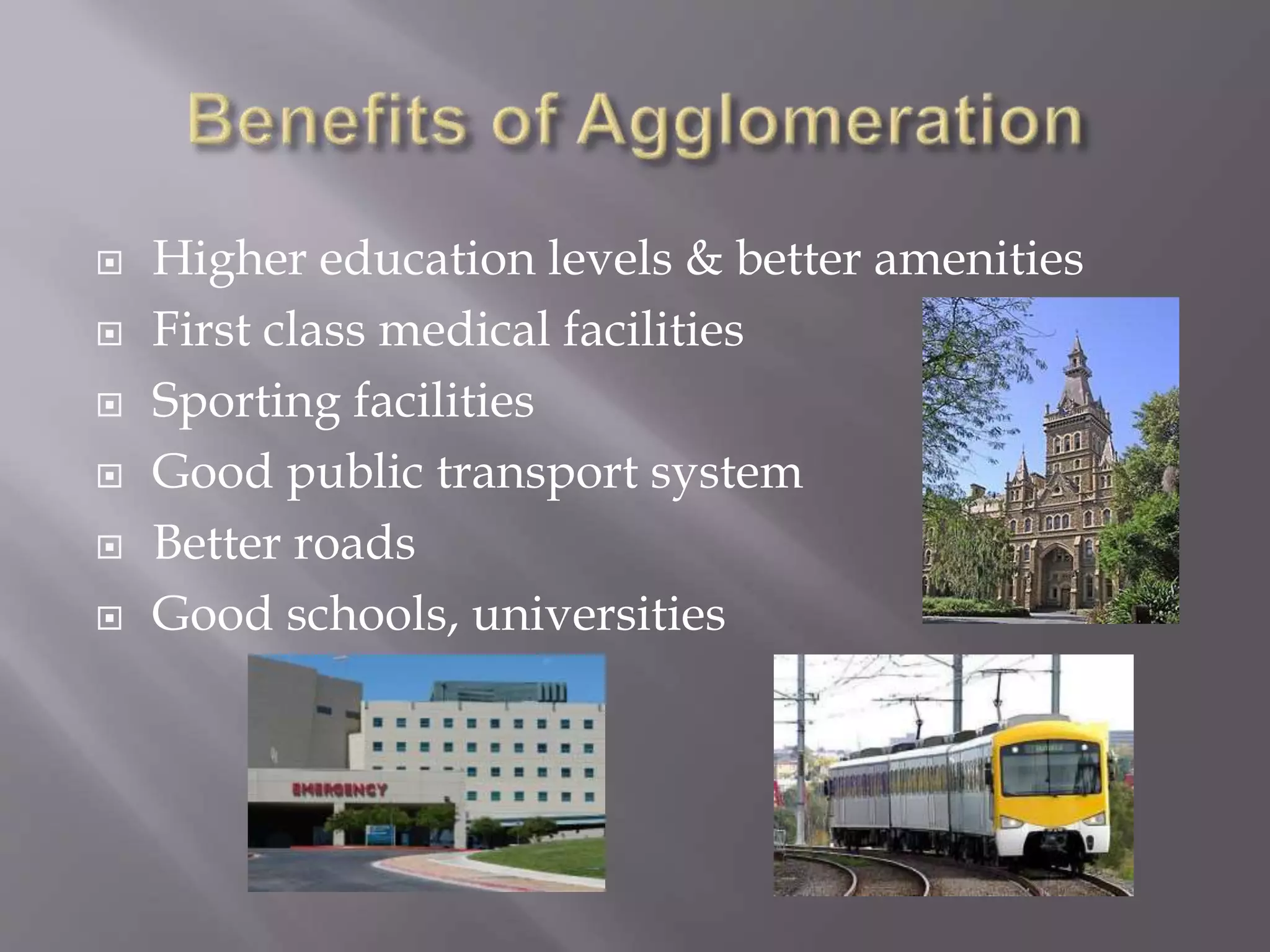
 First class medical facilities
 Sporting facilities
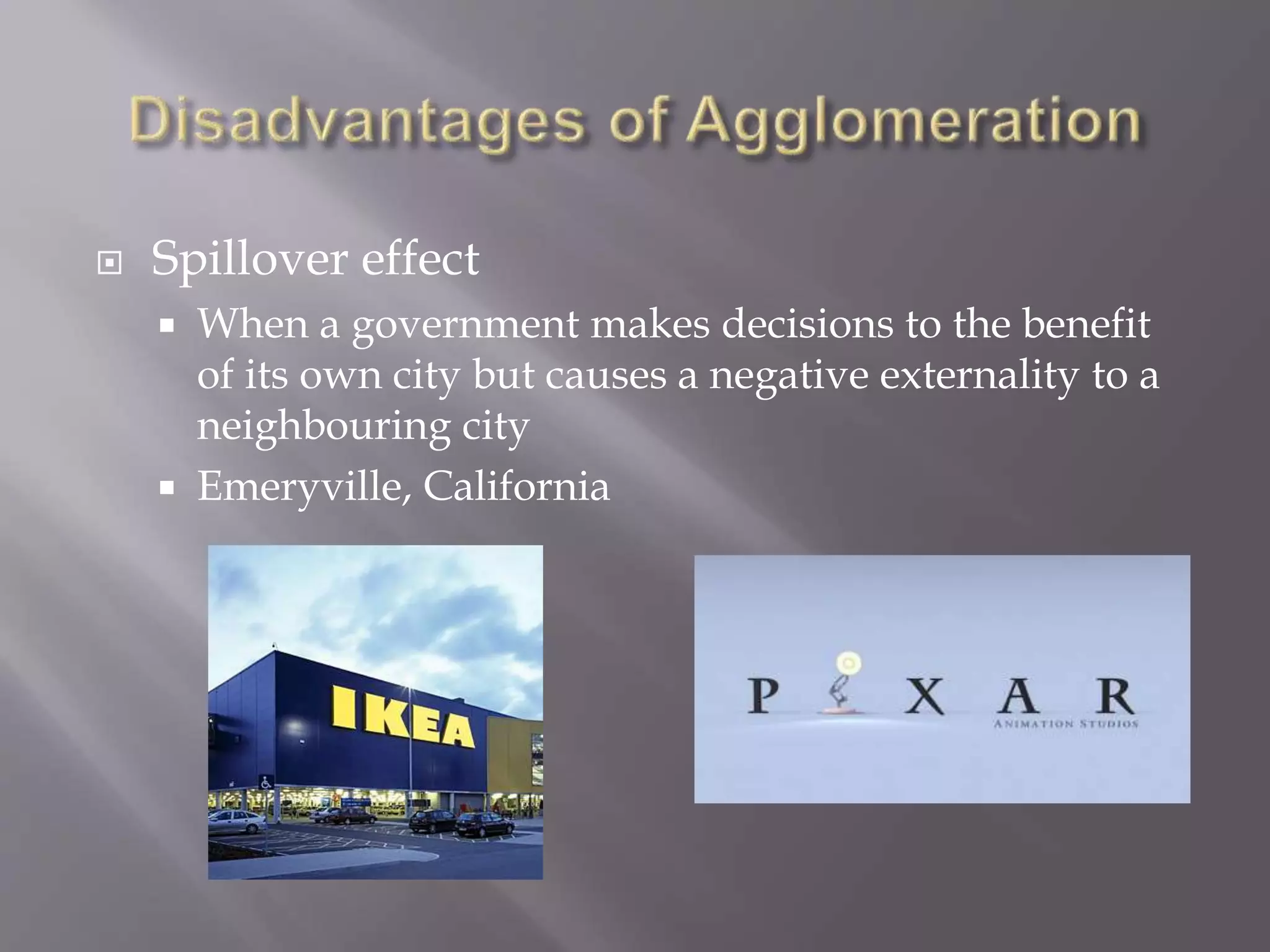
 Good public transport system
 Better roads
 Good schools, universities
 Knowledge spillover effect (Porter 1990)
 An exchange of ideas among individuals
 Stimulates growth in specialised and geographically
concentrated industries
 Local competition good for agglomeration economy
 Innovation!
 Maximised in cities where industries are centralised
and geographically specialised and competitive
 Traffic congestions
 Loss of productivity
 Eg. Los Angeles & Beijing
 Spillover effect
 When a government makes decisions to the benefit
of its own city but causes a negative externality to a
neighbouring city
 Emeryville, California
 Pollution
 Air, Water, Ground
 Developing countries
 Health issues
 Agglomeration is a natural phenomena &
unavoidable
 Often viewed as successful because advantages
outweigh disadvantages
 In my view, for agglomerations to work:
 People allowed to reap full benefits of advantages
 Government to manage negative externalities
 Beneficial to economy of agglomeration

Jason tam

  • 1.
  • 2.
     Cluster offirms  Productivity gains  Lower transport cost  Studies by Kawashima (1975) , Sveikauskas (1975), Segal (1976), Forgarty and Garofalo (1978) and Moomaw (1981, 1985)  Positive effect of city size on labour productivity levels
  • 3.
     Industries foundhigher density areas more productive than lower density areas. Why?  Allowed workers to develop skills over time  Wages increase  More incentive
  • 4.
     Higher educationlevels & better amenities  First class medical facilities  Sporting facilities  Good public transport system  Better roads  Good schools, universities
  • 5.
     Knowledge spillovereffect (Porter 1990)  An exchange of ideas among individuals  Stimulates growth in specialised and geographically concentrated industries  Local competition good for agglomeration economy  Innovation!  Maximised in cities where industries are centralised and geographically specialised and competitive
  • 6.
     Traffic congestions Loss of productivity  Eg. Los Angeles & Beijing
  • 7.
     Spillover effect When a government makes decisions to the benefit of its own city but causes a negative externality to a neighbouring city  Emeryville, California
  • 8.
     Pollution  Air,Water, Ground  Developing countries  Health issues
  • 9.
     Agglomeration isa natural phenomena & unavoidable  Often viewed as successful because advantages outweigh disadvantages  In my view, for agglomerations to work:  People allowed to reap full benefits of advantages  Government to manage negative externalities  Beneficial to economy of agglomeration