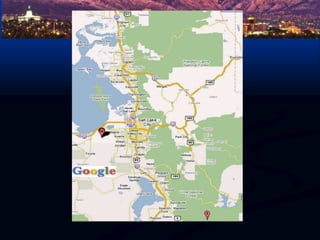
Wasatch FrontRegional Planning GrantWilf SommerkornPlanning DirectorSalt Lake City
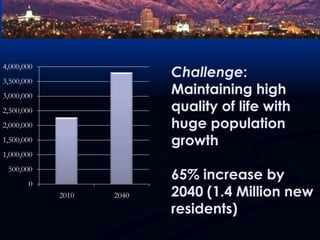
Challenge:  Maintaining high quality of life with huge population growth65% increase by 2040 (1.4 Million new residents)
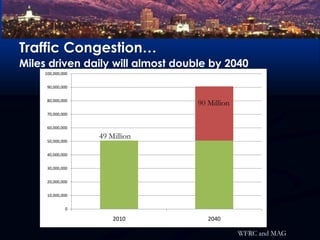
Traffic Congestion…Miles driven daily will almost double by 204090 Million49 MillionWFRC and MAG
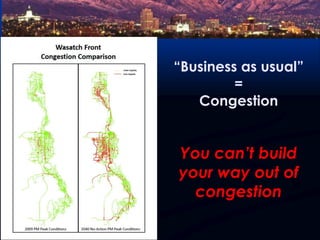
“Business as usual”=CongestionYou can’t build your way out of congestion
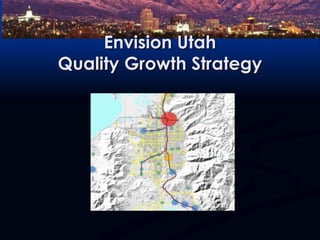
Envision UtahQuality Growth Strategy
Wasatch Choice for 2040 Process
There is a Better Way to Grow… The Wasatch Choice for 2040:Regional Vision for Land Use and Transportation
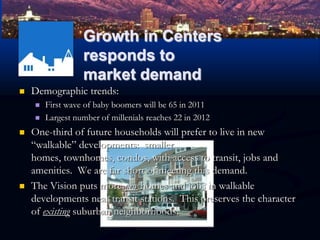
Growth in Centers responds to market demandDemographic trends:First wave of baby boomers will be 65 in 2011Largest number of millenials reaches 22 in 2012One-third of future households will prefer to live in new “walkable” developments:  smaller homes, townhomes, condos, with access to transit, jobs and amenities.  We are far short of meeting this demand.The Vision puts more new homes and jobs in walkable developments near transit stations.  This preserves the character of existing suburban neighborhoods.
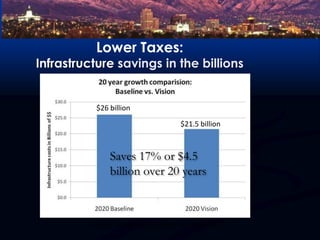
Lower Taxes:Infrastructure savings in the billions$26 billion$21.5 billionSaves 17% or $4.5 billion over 20 yearsEnvision Utah Quality Growth Strategy; 1999
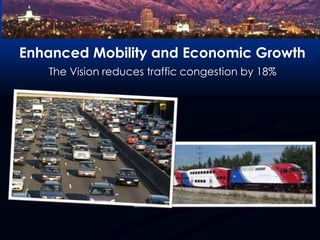
Enhanced Mobility and Economic GrowthThe Vision reduces traffic congestion by 18%
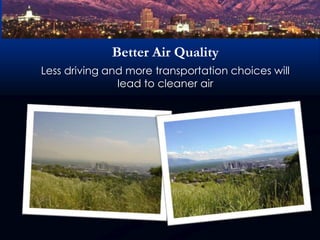
Better Air QualityLess driving and more transportation choices will lead to cleaner air
Implementing the Wasatch Choice for 2040?
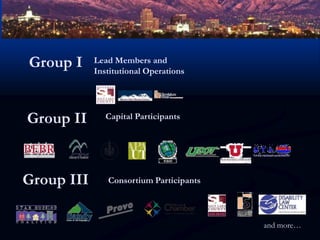
Group I Lead Members andInstitutional Operations  Group II Capital Participants  Group III Consortium Participantsand more…
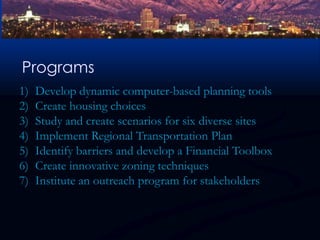
Programs Develop dynamic computer-based planning toolsCreate housing choicesStudy and create scenarios for six diverse sitesImplement Regional Transportation PlanIdentify barriers and develop a Financial ToolboxCreate innovative zoning techniquesInstitute an outreach program for stakeholders
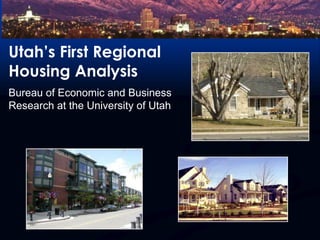
Utah’s First Regional Housing AnalysisBureau of Economic and Business Research at the University of Utah
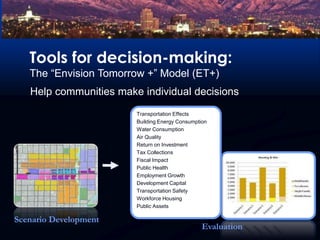
Tools for decision-making:  The “Envision Tomorrow +” Model (ET+)Help communities make individual decisionsTransportation EffectsBuilding Energy ConsumptionWater ConsumptionAir QualityReturn on InvestmentTax CollectionsFiscal ImpactPublic HealthEmployment GrowthDevelopment CapitalTransportation SafetyWorkforce HousingPublic AssetsScenario DevelopmentEvaluation
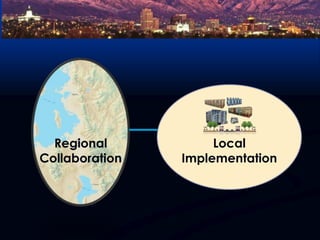
Regional  CollaborationLocal Implementation
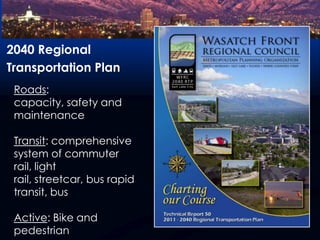
2040 Regional Transportation PlanRoads: capacity, safety and maintenanceTransit: comprehensive system of commuter rail, light rail, streetcar, bus rapid transit, busActive: Bike and pedestrian
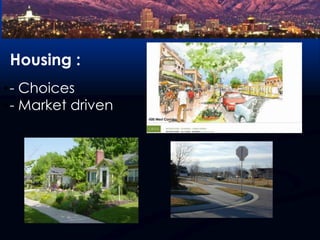
Housing :  - Choices
- Market drivenConsortium supports the local processEducating the publicHelping to identify stakeholdersForging relationships with stakeholdersCreating development scenarios with ET+Analyzing development scenarios Suggesting zoning techniques for adoptionAssisting with identifying financing opportunities & strategies
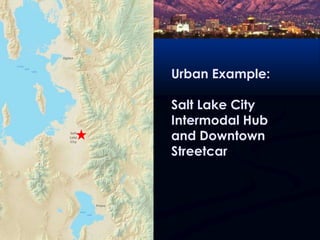
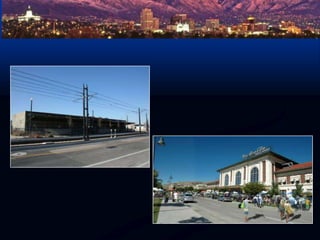
Urban Example:Salt Lake City Intermodal Huband Downtown Streetcar
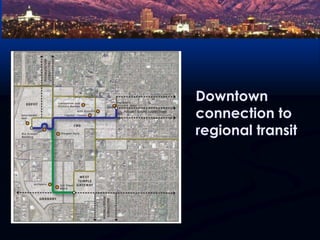
Downtown connection to regional transit
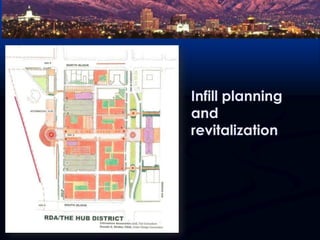
Infill planning and revitalization
SSC2011_Wilf Sommerkorn PPT

SSC2011_Wilf Sommerkorn PPT

  • 1.
    Wasatch FrontRegional PlanningGrantWilf SommerkornPlanning DirectorSalt Lake City
  • 4.
    Challenge: Maintaininghigh quality of life with huge population growth65% increase by 2040 (1.4 Million new residents)
  • 5.
    Traffic Congestion…Miles drivendaily will almost double by 204090 Million49 MillionWFRC and MAG
  • 6.
    “Business as usual”=CongestionYoucan’t build your way out of congestion
  • 7.
  • 8.
    Wasatch Choice for2040 Process
  • 9.
    There is aBetter Way to Grow… The Wasatch Choice for 2040:Regional Vision for Land Use and Transportation
  • 10.
    Growth in Centersresponds to market demandDemographic trends:First wave of baby boomers will be 65 in 2011Largest number of millenials reaches 22 in 2012One-third of future households will prefer to live in new “walkable” developments: smaller homes, townhomes, condos, with access to transit, jobs and amenities. We are far short of meeting this demand.The Vision puts more new homes and jobs in walkable developments near transit stations. This preserves the character of existing suburban neighborhoods.
  • 11.
    Lower Taxes:Infrastructure savingsin the billions$26 billion$21.5 billionSaves 17% or $4.5 billion over 20 yearsEnvision Utah Quality Growth Strategy; 1999
  • 12.
    Enhanced Mobility andEconomic GrowthThe Vision reduces traffic congestion by 18%
  • 13.
    Better Air QualityLessdriving and more transportation choices will lead to cleaner air
  • 14.
    Implementing the WasatchChoice for 2040?
  • 15.
    Group I LeadMembers andInstitutional Operations Group II Capital Participants Group III Consortium Participantsand more…
  • 16.
    Programs Develop dynamiccomputer-based planning toolsCreate housing choicesStudy and create scenarios for six diverse sitesImplement Regional Transportation PlanIdentify barriers and develop a Financial ToolboxCreate innovative zoning techniquesInstitute an outreach program for stakeholders
  • 17.
    Utah’s First RegionalHousing AnalysisBureau of Economic and Business Research at the University of Utah
  • 18.
    Tools for decision-making: The “Envision Tomorrow +” Model (ET+)Help communities make individual decisionsTransportation EffectsBuilding Energy ConsumptionWater ConsumptionAir QualityReturn on InvestmentTax CollectionsFiscal ImpactPublic HealthEmployment GrowthDevelopment CapitalTransportation SafetyWorkforce HousingPublic AssetsScenario DevelopmentEvaluation
  • 19.
  • 20.
    2040 Regional TransportationPlanRoads: capacity, safety and maintenanceTransit: comprehensive system of commuter rail, light rail, streetcar, bus rapid transit, busActive: Bike and pedestrian
  • 21.
    Housing : - Choices
  • 22.
    - Market drivenConsortiumsupports the local processEducating the publicHelping to identify stakeholdersForging relationships with stakeholdersCreating development scenarios with ET+Analyzing development scenarios Suggesting zoning techniques for adoptionAssisting with identifying financing opportunities & strategies
  • 23.
    Urban Example:Salt LakeCity Intermodal Huband Downtown Streetcar
  • 24.
    Downtown connection toregional transit
  • 25.
    Infill planning andrevitalization

Editor's Notes

  • #6 Business as usual: driving increases.
  • #11 This plan is reinforced by research from the University of Utah for the National Association of Realtors; there will be a shortage of small lot single family residential housing, and there will be over stock of suburban housing. Not suggesting we entirely change existing suburban areas, some people want that.
  • #19 Limited resources to consider different approaches?Tool to consider different scenarios and evaluate them.
  • #22 Focus is on providing choices, and responding to the market preferences. How do we get things built? Cooperation with developers and lending community, through innovative zoning.