Conference Workshop
Harold Goodwin
Responsible Tourism Partnership
International Centre for Responsible Tourism
Institute for Place Management, MMU
ICTR 2018 JAMK University of Applied Science Jyväskylä
Sustainable Development: a long
history?
• 1972 World Commission on Environment & Development
• 1980 World Conservation Strategy
• 1987 Brundtland Report & Our Common Future
• 1992 Rio Environment & Development –
UN Commission on Sustainable Development
• 2000 Millennium Development Goals
• 2002 World Summit on Sustainable Development
• 2012 Rio+20
• 2015 Sustainable Development Goals
40 years
• 1972 World Commission on
Environment & Development
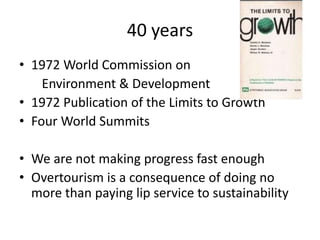
• 1972 Publication of the Limits to Growth
• Four World Summits
• We are not making progress fast enough
• Overtourism is a consequence of doing no
more than paying lip service to sustainability
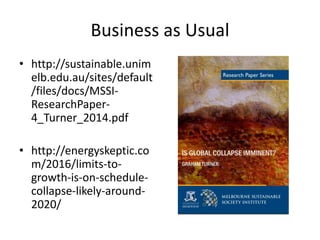
Business as Usual
• http://sustainable.unim
elb.edu.au/sites/default
/files/docs/MSSI-
ResearchPaper-
4_Turner_2014.pdf
• http://energyskeptic.co
m/2016/limits-to-
growth-is-on-schedule-
collapse-likely-around-
2020/
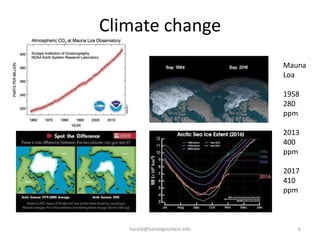
Climate change
harold@haroldgoodwin.info 6
Mauna
Loa
1958
280
ppm
2013
400
ppm
2017
410
ppm
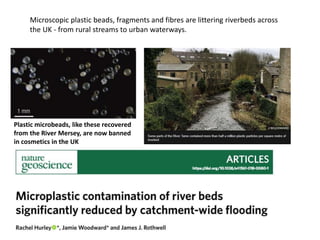
Microscopic plastic beads, fragments and fibres are littering riverbeds across
the UK - from rural streams to urban waterways.
Plastic microbeads, like these recovered
from the River Mersey, are now banned
in cosmetics in the UK
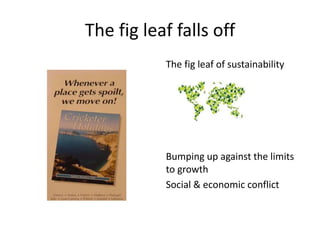
The fig leaf falls off
The fig leaf of sustainability
Bumping up against the limits
to growth
Social & economic conflict
Tourism freerides
• Tourism makes extensive use of common pool or
common property resources, the public realm and
takes advantage of, for example, museums and
galleries, which are free or merit priced initially for the
benefit of citizens.
• Lord Marshall’s description of the tourism and travel
industry as “…essentially the renting out for short-
term lets of other people’s environments, whether
this is a coastline, a city, a mountain range, or a
rainforest.” The problem is that they collect the rent
eternalising the costs to the public purse.
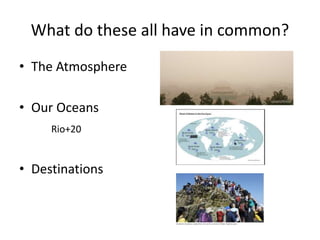
What do these all have in common?
• The Atmosphere
• Our Oceans
Rio+20
• Destinations
Common property resources
The tragedy of the commons
• Public realm goods are
– Non-rival (light & view)
– Non excludable
But nowhere has infinite
capacity?
Tourist behaviours affect
capacity.
• “Therein is the tragedy.
Each man is locked into a
system that compels him
to increase his herd
without limit - in a world
that is limited. Ruin is the
destination toward which
all men rush, each
pursuing his own best
interest in a society that
believes in the freedom of
the commons.”
• Hardin 1968
Tourism is not a natural phenomenon
• Tourism is what we –
the producers and the
consumers – make it
• It is a social construct
• Access = Egress
• The metrics matter
– International arrivals
– Length of stay
– Spend and retained yield
– Spread
– Key question is does a
destination use tourism
or is it used by it?
Not a new problem
• The challenge of managing tourism sustainably for
residents, tourists and day visitors has been recognised
for twenty years.
Clements 1989 Boissevain 1996 Bosselman, Poeterson
& McCarthy 1999 Fyall & Goddard
• Kotler demarketing 1971
• We now have a pejorative word for it: overtourism,
some kick back. Problems of success ……
• “rebellious tourists and rebellious locals”
How do we take responsibility?
• We become aware of a problem or an issue?
• We are made aware of a problem or an issue?
• We want to do something about it? Or not?
• We look for actions we can take that will make
a difference?
• We may take responsibility if the cost is not
too high – opportunity, time, resources
Barriers
• Rabbits trapped in the headlights ….
• Recognising that individual action will not
make a difference.
• Moving from the personal to the political
• Changing the system of production and
consumption
• Legislation and asserting the precautionary
principle
Evidence Matters
• The family of Responsible Tourism Awards set a standard
• Too much use of Responsible Tourism for greenwashing
• Evidence Matters – transparent reporting
– Village Ways
– CGH Earth and Kumarakom
• A label is not enough – consumers are becoming more
critical
• TUI is reporting on a growing range of their impacts
https://www.tuigroup.com/en-en/sustainability/reporting-downloads
Responsible Tourism Partnership Working Papers
1. Goodwin H (2016) Managing Tourism in Barcelona
2.Kumar, R., Bobbin, J., Goodwin, H. (2017) Tourism
Impacts in Kumarakom, Kerala, India
3.Bobbin J & Goodwin H (in press) The Local Impacts of
Coconut Lagoon in Kumarakom
4.Goodwin H (2017) The Challenge of Overtourism
http://haroldgoodwin.info/publications/
Some of the Pro-Poor Tourism cases have been written
up.
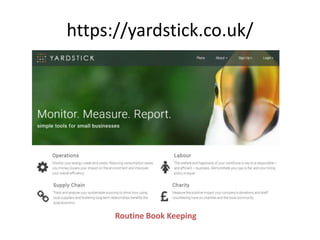
https://yardstick.co.uk/
Routine Book Keeping
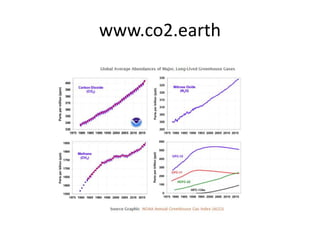
www.co2.earth
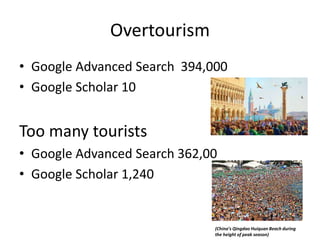
Overtourism
• Google Advanced Search 394,000
• Google Scholar 10
Too many tourists
• Google Advanced Search 362,00
• Google Scholar 1,240
(China’s Qingdao Huiquan Beach during
the height of peak season)
Overtourism the antithesis of
Responsible Tourism
Responsible Tourism
• Making better places to live
in and better places to visit
• In that order
• Running up against the
limits to growth
Overtourism
• Overtourism describes
destinations where hosts or
guests, locals or visitors, feel
that there are too many
visitors and that the quality
of life in the area or the
quality of the experience
has deteriorated
unacceptably.
Proximate causes
• The proximate causes of overtourism are
locally apparent – it is the consequence of the
volume, behaviour and impacts of tourists
and the tourism industry in the destination.
• At the heart of the problem is the fact that we
take our holidays in other people’s homes
Causes: research themes?
• Low cost of travel and
its larger scale.
• Disintermediation
creating supply and
reducing costs
• Propensity to consume
• We take our behaviours
and mores with us.
• New originating
markets
• Public realm is free
• Distribution strategies –
“chips with everything”
• Whose place is it? The
marketers?
• Seasonality maybe a
good thing
• Value (in cash and
status) of tourism jobs
• Honeypots
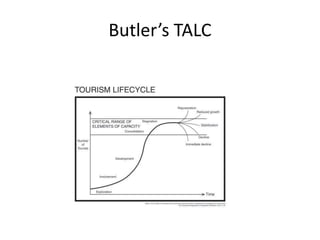
Butler’s TALC
Theory
• Park Planning sacrifice zones, carrying capacity
and Limits of Acceptable Change
• Common Pool Resources
• Tragedy of the Commons
• Tourism Area Life Cycle
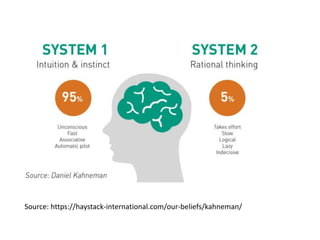
• System 1 and System 2 thinking and the
ostrich problem
Source: https://haystack-international.com/our-beliefs/kahneman/
Emerging principles
• Manage the people who are there – residents,
commuters, visitors and tourists,
• Decide what degree of homogeneity is aspired
to.
• Whole of government approach – departments
and levels/spheres.
• Evidence based management
• Sustainability fundamental to competitiveness
Research
• Keen to get some research partnerships going
on the causes and “coping with success”
• Those managing the issues are keen to have
knowledge of what others have done, what
works, what doesn’t
• Interventions by different levels or spheres of
government
• What do the different stakeholder think and
does it affect their behaviour?
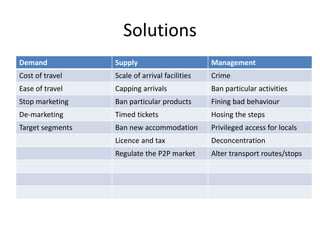
Solutions
Demand Supply Management
Cost of travel Scale of arrival facilities Crime
Ease of travel Capping arrivals Ban particular activities
Stop marketing Ban particular products Fining bad behaviour
De-marketing Timed tickets Hosing the steps
Target segments Ban new accommodation Privileged access for locals
Licence and tax Deconcentration
Regulate the P2P market Alter transport routes/stops
Political Question
• Will the destination use tourism or be used by it?
• Tourism is what we make it, hosts and guests, we
can make it different.
• “The tourism crisis in Barcelona is further proof of the emptiness of the
promises of neo-liberalism that deregulation and privatisation will allow
us all to prosper….
• “Of course, the answer is not to attack tourism. Everyone is a tourist at
some point in their life. Rather, we have to regulate the sector, return to
the traditions of local urban planning, and put the rights of residents
before those of big business. .. Win back democracy for the city … put its
institutions at the service of the common good” Ada Colau 2014
• Overtourism is further evidence of the limits to growth
harold@haroldgoodwin.info 33
http://haroldgoodwin.info/links/
http://responsibletourismpartnership.org/
RTNews
http://responsibletourismpartnership.org/
Cape Town Declaration
http://responsibletourismpartnership.org/cape-
town-declaration-on-responsible-tourism/
WTM Responsible Tourism Blog
https://news.wtm.com/category/responsible-
tourism/
https://www.slideshare.net/HaroldGoodwin

JAMK Conference workshop

  • 1.
    Conference Workshop Harold Goodwin ResponsibleTourism Partnership International Centre for Responsible Tourism Institute for Place Management, MMU ICTR 2018 JAMK University of Applied Science Jyväskylä
  • 3.
    Sustainable Development: along history? • 1972 World Commission on Environment & Development • 1980 World Conservation Strategy • 1987 Brundtland Report & Our Common Future • 1992 Rio Environment & Development – UN Commission on Sustainable Development • 2000 Millennium Development Goals • 2002 World Summit on Sustainable Development • 2012 Rio+20 • 2015 Sustainable Development Goals
  • 4.
    40 years • 1972World Commission on Environment & Development • 1972 Publication of the Limits to Growth • Four World Summits • We are not making progress fast enough • Overtourism is a consequence of doing no more than paying lip service to sustainability
  • 5.
    Business as Usual •http://sustainable.unim elb.edu.au/sites/default /files/docs/MSSI- ResearchPaper- 4_Turner_2014.pdf • http://energyskeptic.co m/2016/limits-to- growth-is-on-schedule- collapse-likely-around- 2020/
  • 6.
  • 7.
    Microscopic plastic beads,fragments and fibres are littering riverbeds across the UK - from rural streams to urban waterways. Plastic microbeads, like these recovered from the River Mersey, are now banned in cosmetics in the UK
  • 8.
    The fig leaffalls off The fig leaf of sustainability Bumping up against the limits to growth Social & economic conflict
  • 9.
    Tourism freerides • Tourismmakes extensive use of common pool or common property resources, the public realm and takes advantage of, for example, museums and galleries, which are free or merit priced initially for the benefit of citizens. • Lord Marshall’s description of the tourism and travel industry as “…essentially the renting out for short- term lets of other people’s environments, whether this is a coastline, a city, a mountain range, or a rainforest.” The problem is that they collect the rent eternalising the costs to the public purse.
  • 10.
    What do theseall have in common? • The Atmosphere • Our Oceans Rio+20 • Destinations
  • 11.
    Common property resources Thetragedy of the commons • Public realm goods are – Non-rival (light & view) – Non excludable But nowhere has infinite capacity? Tourist behaviours affect capacity. • “Therein is the tragedy. Each man is locked into a system that compels him to increase his herd without limit - in a world that is limited. Ruin is the destination toward which all men rush, each pursuing his own best interest in a society that believes in the freedom of the commons.” • Hardin 1968
  • 12.
    Tourism is nota natural phenomenon • Tourism is what we – the producers and the consumers – make it • It is a social construct • Access = Egress • The metrics matter – International arrivals – Length of stay – Spend and retained yield – Spread – Key question is does a destination use tourism or is it used by it?
  • 13.
    Not a newproblem • The challenge of managing tourism sustainably for residents, tourists and day visitors has been recognised for twenty years. Clements 1989 Boissevain 1996 Bosselman, Poeterson & McCarthy 1999 Fyall & Goddard • Kotler demarketing 1971 • We now have a pejorative word for it: overtourism, some kick back. Problems of success …… • “rebellious tourists and rebellious locals”
  • 14.
    How do wetake responsibility? • We become aware of a problem or an issue? • We are made aware of a problem or an issue? • We want to do something about it? Or not? • We look for actions we can take that will make a difference? • We may take responsibility if the cost is not too high – opportunity, time, resources
  • 16.
    Barriers • Rabbits trappedin the headlights …. • Recognising that individual action will not make a difference. • Moving from the personal to the political • Changing the system of production and consumption • Legislation and asserting the precautionary principle
  • 18.
    Evidence Matters • Thefamily of Responsible Tourism Awards set a standard • Too much use of Responsible Tourism for greenwashing • Evidence Matters – transparent reporting – Village Ways – CGH Earth and Kumarakom • A label is not enough – consumers are becoming more critical • TUI is reporting on a growing range of their impacts https://www.tuigroup.com/en-en/sustainability/reporting-downloads
  • 19.
    Responsible Tourism PartnershipWorking Papers 1. Goodwin H (2016) Managing Tourism in Barcelona 2.Kumar, R., Bobbin, J., Goodwin, H. (2017) Tourism Impacts in Kumarakom, Kerala, India 3.Bobbin J & Goodwin H (in press) The Local Impacts of Coconut Lagoon in Kumarakom 4.Goodwin H (2017) The Challenge of Overtourism http://haroldgoodwin.info/publications/ Some of the Pro-Poor Tourism cases have been written up.
  • 20.
  • 21.
  • 22.
    Overtourism • Google AdvancedSearch 394,000 • Google Scholar 10 Too many tourists • Google Advanced Search 362,00 • Google Scholar 1,240 (China’s Qingdao Huiquan Beach during the height of peak season)
  • 23.
    Overtourism the antithesisof Responsible Tourism Responsible Tourism • Making better places to live in and better places to visit • In that order • Running up against the limits to growth Overtourism • Overtourism describes destinations where hosts or guests, locals or visitors, feel that there are too many visitors and that the quality of life in the area or the quality of the experience has deteriorated unacceptably.
  • 24.
    Proximate causes • Theproximate causes of overtourism are locally apparent – it is the consequence of the volume, behaviour and impacts of tourists and the tourism industry in the destination. • At the heart of the problem is the fact that we take our holidays in other people’s homes
  • 25.
    Causes: research themes? •Low cost of travel and its larger scale. • Disintermediation creating supply and reducing costs • Propensity to consume • We take our behaviours and mores with us. • New originating markets • Public realm is free • Distribution strategies – “chips with everything” • Whose place is it? The marketers? • Seasonality maybe a good thing • Value (in cash and status) of tourism jobs • Honeypots
  • 26.
  • 27.
    Theory • Park Planningsacrifice zones, carrying capacity and Limits of Acceptable Change • Common Pool Resources • Tragedy of the Commons • Tourism Area Life Cycle • System 1 and System 2 thinking and the ostrich problem
  • 28.
  • 29.
    Emerging principles • Managethe people who are there – residents, commuters, visitors and tourists, • Decide what degree of homogeneity is aspired to. • Whole of government approach – departments and levels/spheres. • Evidence based management • Sustainability fundamental to competitiveness
  • 30.
    Research • Keen toget some research partnerships going on the causes and “coping with success” • Those managing the issues are keen to have knowledge of what others have done, what works, what doesn’t • Interventions by different levels or spheres of government • What do the different stakeholder think and does it affect their behaviour?
  • 31.
    Solutions Demand Supply Management Costof travel Scale of arrival facilities Crime Ease of travel Capping arrivals Ban particular activities Stop marketing Ban particular products Fining bad behaviour De-marketing Timed tickets Hosing the steps Target segments Ban new accommodation Privileged access for locals Licence and tax Deconcentration Regulate the P2P market Alter transport routes/stops
  • 32.
    Political Question • Willthe destination use tourism or be used by it? • Tourism is what we make it, hosts and guests, we can make it different. • “The tourism crisis in Barcelona is further proof of the emptiness of the promises of neo-liberalism that deregulation and privatisation will allow us all to prosper…. • “Of course, the answer is not to attack tourism. Everyone is a tourist at some point in their life. Rather, we have to regulate the sector, return to the traditions of local urban planning, and put the rights of residents before those of big business. .. Win back democracy for the city … put its institutions at the service of the common good” Ada Colau 2014 • Overtourism is further evidence of the limits to growth
  • 33.
    harold@haroldgoodwin.info 33 http://haroldgoodwin.info/links/ http://responsibletourismpartnership.org/ RTNews http://responsibletourismpartnership.org/ Cape TownDeclaration http://responsibletourismpartnership.org/cape- town-declaration-on-responsible-tourism/ WTM Responsible Tourism Blog https://news.wtm.com/category/responsible- tourism/ https://www.slideshare.net/HaroldGoodwin