.J
M
BY 29
ON 40
TI 2 3
TA 201
AN A
ES SH
PR ADI
M

Sustainable
and
Responsible
Developmen
t
Background


CHANGE



How to change?



Never underestimate yourself



Small action can make a difference
2 Schools of Thought
1.

Sustainability meant that the
level of individual capital
stocks must be maintained for
future generations (strong
sustainability proponents)

2. The total capital stock must
be maintained but it is possible
to deplete one stock in order
to increase another (weak
sustainability proponents)
Social impacts


Who are Tourism Hosts?





Residents of the destination
Tourism professionals brought into work with the industry at the
destination

What are their roles?


Customer service



Overall friendliness



Beautification



Cultural experience
Sustainability Principles
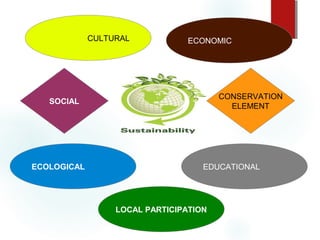
Refer to environmental, economic and socio-cultural
aspects of tourism development, and a suitable balance
must be established between these dimensions to
guarantee its long term sustainability.
CULTURAL

ECONOMIC

CONSERVATION
ELEMENT

SOCIAL

ECOLOGICAL

EDUCATIONAL

LOCAL PARTICIPATION
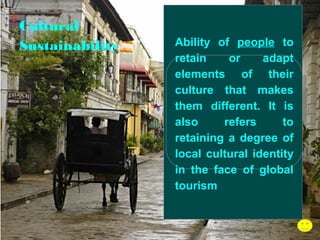
Cultural
Sustainability

Ability of people to
retain
or
adapt
elements of their
culture that makes
them different. It is
also
refers
to
retaining a degree of
local cultural identity
in the face of global
tourism
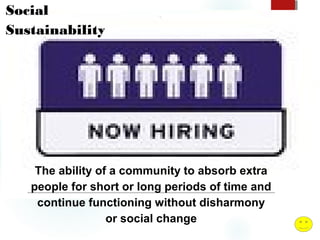
Social
Sustainability

`

The ability of a community to absorb extra
people for short or long periods of time and
continue functioning without disharmony
or social change
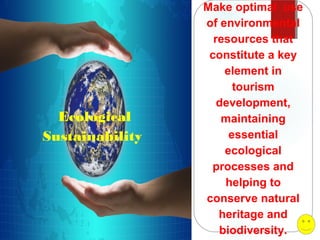
Ecological
Sustainability

Make optimal use
of environmental
resources that
constitute a key
element in
tourism
development,
maintaining
essential
ecological
processes and
helping to
conserve natural
heritage and
biodiversity.
Economic
Sustainability

It is the level of
economic
gain from any
tourism
activity which
needs to
be sufficient
to cover the
costs of any
special
measures
taken to
cater for the
tourist and
to mitigate the impact of tourist’s presence
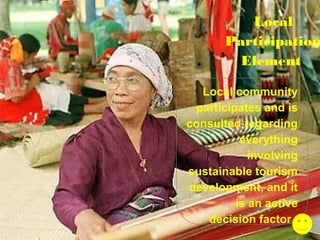
Local
Participation
Element
Local community
participates and is
consulted regarding
everything
involving
sustainable tourism
development, and it
is an active
decision factor.
 
Economic
Structure
•

The more developed and industrialized the
economy, the more robust and adaptable
it will be

•

As economies grow and diversify, so too do
the skills of the workforce

•

Tourism development may bring with it the
economic problems associated with
–

Migration from rural to urban
areas

–

The transfer of labor from
traditional industries to tourism
and its related industries
Educational
Element

It is the enlightenment of the new tourist in the cultural
ways and norms of those they are visiting – an education
for its own sake. The training of the ‘hosts’ so that they are
better able to cater for the wishes of the new middle
classes who visit them.
 
Sustainability as strategy
•

•

•

•

It is widely used in
tourism and in the
world
Societies seek to use
their resources more
efficient
It can be used to
achieve different goals
Can adopt longer term
time frame
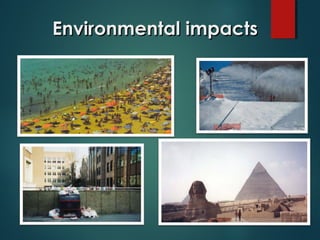
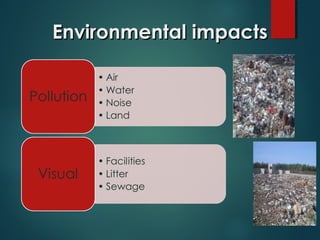
Environmental impacts
Sustainable Development
•

•

The term “ sustainable development” was first
used internationally at the 1972 UN Conference.
To sustain means to hold up, to bear, to support,
to relieve/prolong from the Latin word sustineo.
Sustainability is vital to the life of the tourism
industry.
Sustainability principles refer to the
environmental, economic and sociocultural aspects of tourism
development. A suitable balance
must be established between these
three dimensions to guarantee its
long-term sustainability.
UN World Tourism Organization
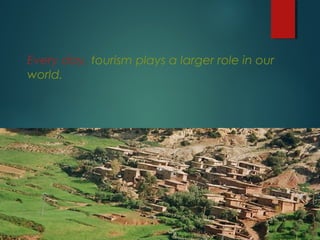
Every day, tourism plays a larger role in our
world.
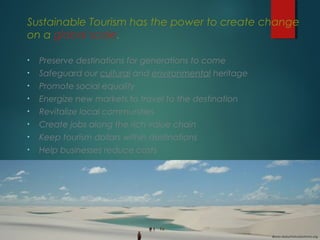
Sustainable Tourism has the power to create change
on a global scale.
•

Preserve destinations for generations to come

•

Safeguard our cultural and environmental heritage

•

Promote social equality

•

Energize new markets to travel to the destination

•

Revitalize local communities

•

Create jobs along the rich value chain

•

Keep tourism dollars within destinations

•

Help businesses reduce costs

Bruno Maia/Naturezafotos.org
… but there is hesitancy.

•

“It’s Just a Fad”

•

“Too Expensive”

•

“Too Complicated”

•

“Requires Sacrificing Quality”

•

“No Return on Investment”
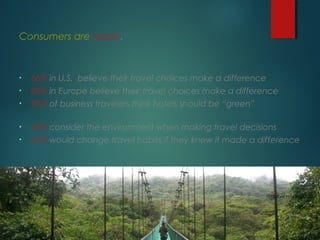
Consumers are ready.

•

66% in U.S. believe their travel choices make a difference

•

80% in Europe believe their travel choices make a difference

•

95% of business travelers think hotels should be “green”

•

44% consider the environment when making travel decisions

•

67% would change travel habits if they knew it made a difference

*Sabre Holdings, 2010
**TUI
***Deloitte

Bruno Maia/Naturezafotos.org
What do “sustainable travelers” look like?

•

Younger. Average age is 39. Non-green traveler is 44.

•

Educated. 48% have a college degree.

•

Wealthier. 13% higher income.

•

Spendy-er. $2,000 more on travel per year.

•

Tech Savvy. Book online and value technology.

*Saber Holdings, 2010
** LOHAS
**TUI*

Bruno Maia/Naturezafotos.org
Tree Hut, Wayanad
African Safari, Botswana
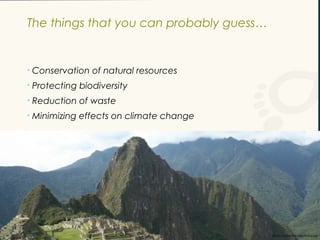
The things that you can probably guess…

•

Conservation of natural resources

•

Protecting biodiversity

•

Reduction of waste

•

Minimizing effects on climate change

Bruno Maia/Naturezafotos.org
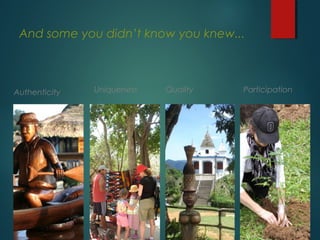
And some you didn’t know you knew...

Authenticity

Bruno

Uniqueness

Quality

Participation

Bruno
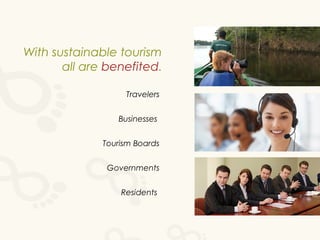
With sustainable tourism
all are benefited.
Bruno Maia/Naturezafotos.org

Travelers
Businesses
Tourism Boards
Governments
Residents
Impacts on hosts


Low paid/ seasonal jobs



Congestion



Over- dependence on tourism which makes the host
economy vulnerable to changes in the tourism market



Opportunities costs


Money invested in tourism that cannot be used for other purposes
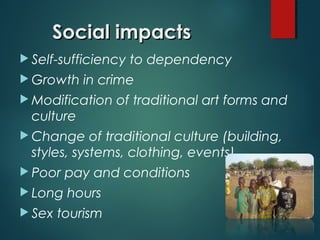
Social impacts
 Self-sufficiency
 Growth

to dependency

in crime

 Modification

of traditional art forms and

culture
 Change

of traditional culture (building,
styles, systems, clothing, events)

 Poor

pay and conditions

 Long

hours

 Sex

tourism
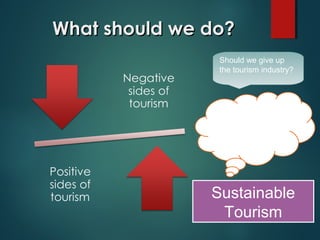
What should we do?
Should we give up
the tourism industry?

Or should we think
of ways to minimize
the negative
impacts brought by
tourism?

Sustainable
Tourism
What did you do?
References


This presentation is a mash up of three different sources:



Hatchuel,M.(2012). Sustainable and responsible development.



http://www.slideshare.net/confirm/NjExMjM2NDA7MzA2NzVhNDBjMjQzOTkwZTM
3ZDE3MmI0NmJiODEwNGNiMmRmOGM1NA==/2877523819840005422e023945e1d79583b8af5775b52b8d-slideshow Accessed on 7 March
2014



Jithu, P.(2011). Sustainable tourism.



http://www.slideshare.net/jithupettan/sustainable-tourism-9613349?
qid=7db871be-451d-4768-815b-2732ea6f55a3&v=default&b=&from_search=1
Accessed on 7 March 2014



Sharonchu, S.(2011).Sustainable tourism.



http://www.slideshare.net/sharonchu0316/sustainable-tourism-7392073?
qid=e004723f-8977-4486-89bf-41ee17f2a305&v=default&b=&from_search=24
Accessed on 7 March 2014

Power point presantation

  • 1.
    .J M BY 29 ON 40 TI2 3 TA 201 AN A ES SH PR ADI M Sustainable and Responsible Developmen t
  • 2.
    Background  CHANGE  How to change?  Neverunderestimate yourself  Small action can make a difference
  • 3.
    2 Schools ofThought 1. Sustainability meant that the level of individual capital stocks must be maintained for future generations (strong sustainability proponents) 2. The total capital stock must be maintained but it is possible to deplete one stock in order to increase another (weak sustainability proponents)
  • 4.
    Social impacts  Who areTourism Hosts?    Residents of the destination Tourism professionals brought into work with the industry at the destination What are their roles?  Customer service  Overall friendliness  Beautification  Cultural experience
  • 5.
    Sustainability Principles Refer toenvironmental, economic and socio-cultural aspects of tourism development, and a suitable balance must be established between these dimensions to guarantee its long term sustainability.
  • 6.
  • 7.
    Cultural Sustainability Ability of peopleto retain or adapt elements of their culture that makes them different. It is also refers to retaining a degree of local cultural identity in the face of global tourism
  • 8.
    Social Sustainability ` The ability ofa community to absorb extra people for short or long periods of time and continue functioning without disharmony or social change
  • 9.
    Ecological Sustainability Make optimal use ofenvironmental resources that constitute a key element in tourism development, maintaining essential ecological processes and helping to conserve natural heritage and biodiversity.
  • 10.
    Economic Sustainability It is thelevel of economic gain from any tourism activity which needs to be sufficient to cover the costs of any special measures taken to cater for the tourist and to mitigate the impact of tourist’s presence
  • 11.
    Local Participation Element Local community participates andis consulted regarding everything involving sustainable tourism development, and it is an active decision factor.  
  • 12.
    Economic Structure • The more developedand industrialized the economy, the more robust and adaptable it will be • As economies grow and diversify, so too do the skills of the workforce • Tourism development may bring with it the economic problems associated with – Migration from rural to urban areas – The transfer of labor from traditional industries to tourism and its related industries
  • 13.
    Educational Element It is theenlightenment of the new tourist in the cultural ways and norms of those they are visiting – an education for its own sake. The training of the ‘hosts’ so that they are better able to cater for the wishes of the new middle classes who visit them.  
  • 14.
    Sustainability as strategy • • • • Itis widely used in tourism and in the world Societies seek to use their resources more efficient It can be used to achieve different goals Can adopt longer term time frame
  • 15.
  • 16.
  • 17.
    Sustainable Development • • The term“ sustainable development” was first used internationally at the 1972 UN Conference. To sustain means to hold up, to bear, to support, to relieve/prolong from the Latin word sustineo.
  • 18.
    Sustainability is vitalto the life of the tourism industry. Sustainability principles refer to the environmental, economic and sociocultural aspects of tourism development. A suitable balance must be established between these three dimensions to guarantee its long-term sustainability. UN World Tourism Organization
  • 19.
    Every day, tourismplays a larger role in our world.
  • 20.
    Sustainable Tourism hasthe power to create change on a global scale. • Preserve destinations for generations to come • Safeguard our cultural and environmental heritage • Promote social equality • Energize new markets to travel to the destination • Revitalize local communities • Create jobs along the rich value chain • Keep tourism dollars within destinations • Help businesses reduce costs Bruno Maia/Naturezafotos.org
  • 21.
    … but thereis hesitancy. • “It’s Just a Fad” • “Too Expensive” • “Too Complicated” • “Requires Sacrificing Quality” • “No Return on Investment”
  • 22.
    Consumers are ready. • 66%in U.S. believe their travel choices make a difference • 80% in Europe believe their travel choices make a difference • 95% of business travelers think hotels should be “green” • 44% consider the environment when making travel decisions • 67% would change travel habits if they knew it made a difference *Sabre Holdings, 2010 **TUI ***Deloitte Bruno Maia/Naturezafotos.org
  • 23.
    What do “sustainabletravelers” look like? • Younger. Average age is 39. Non-green traveler is 44. • Educated. 48% have a college degree. • Wealthier. 13% higher income. • Spendy-er. $2,000 more on travel per year. • Tech Savvy. Book online and value technology. *Saber Holdings, 2010 ** LOHAS **TUI* Bruno Maia/Naturezafotos.org
  • 24.
  • 25.
  • 26.
    The things thatyou can probably guess… • Conservation of natural resources • Protecting biodiversity • Reduction of waste • Minimizing effects on climate change Bruno Maia/Naturezafotos.org
  • 27.
    And some youdidn’t know you knew... Authenticity Bruno Uniqueness Quality Participation Bruno
  • 28.
    With sustainable tourism allare benefited. Bruno Maia/Naturezafotos.org Travelers Businesses Tourism Boards Governments Residents
  • 29.
    Impacts on hosts  Lowpaid/ seasonal jobs  Congestion  Over- dependence on tourism which makes the host economy vulnerable to changes in the tourism market  Opportunities costs  Money invested in tourism that cannot be used for other purposes
  • 30.
    Social impacts  Self-sufficiency Growth to dependency in crime  Modification of traditional art forms and culture  Change of traditional culture (building, styles, systems, clothing, events)  Poor pay and conditions  Long hours  Sex tourism
  • 31.
    What should wedo? Should we give up the tourism industry? Or should we think of ways to minimize the negative impacts brought by tourism? Sustainable Tourism
  • 32.
  • 33.
    References  This presentation isa mash up of three different sources:  Hatchuel,M.(2012). Sustainable and responsible development.  http://www.slideshare.net/confirm/NjExMjM2NDA7MzA2NzVhNDBjMjQzOTkwZTM 3ZDE3MmI0NmJiODEwNGNiMmRmOGM1NA==/2877523819840005422e023945e1d79583b8af5775b52b8d-slideshow Accessed on 7 March 2014  Jithu, P.(2011). Sustainable tourism.  http://www.slideshare.net/jithupettan/sustainable-tourism-9613349? qid=7db871be-451d-4768-815b-2732ea6f55a3&v=default&b=&from_search=1 Accessed on 7 March 2014  Sharonchu, S.(2011).Sustainable tourism.  http://www.slideshare.net/sharonchu0316/sustainable-tourism-7392073? qid=e004723f-8977-4486-89bf-41ee17f2a305&v=default&b=&from_search=24 Accessed on 7 March 2014

Editor's Notes

  • #19 Clearly defined… Minimizing the harm, and maximizing the good. Why is this important?
  • #20 Everyone is familiar with these facts So many people traveling, huge impact Finite resources, Finite ability to manage people flows
  • #21 Sustainable tourism isn’t just about minimizing harm… but has a real power for change. When done correctly it can do all sorts of things that are ultimately beneficial for the tourism industry & travelers Example: Only five percent of mainstream tourism dollars stay within a destination Example: Help reduce costs by investing in training, reducing consumption, and thinking strategically about business
  • #22 All of those things sound
  • #23 66% of U.S. consumers believe their travel choices can make a difference to the environment Lifestyle changes toward sustainability represent a $200 billion industry in the U.S. alone 56% are skeptical of companies making green claims and look for information elsewhere
  • #24 Green Travelers are those that specifically travel for sustainability or consider sustainability at least half of the time. “Dark Green” travelers – those on the forefront of the movement - Tech savvy – resourceful, investigative and rely on the word of mouth experience of others
  • #27 These are things typically associated with sustainability by the majority of people
  • #28 Sustainable tourism goes beyond being obsessed with recycling and living in a treehouse. High quality tourism that embraces the uniqueness of the destination, creates an authentic experience, and encourages interaction with the place and its people is also sustainable. So, being a sustainable business is not JUST about the environment, being crunchy… but it’s about being a GOOD business and providing GOOD opportunities to clientele
  • #29 Tourism that is truly sustainable has very important impacts for everyone. Travelers are more happy – WoM Businesses – reduce cost, new markets Destinations – positive association, new markets Governments – increased revenue, increased jobs, money stays local Residents – new jobs, money stays local, healthy destination