Let’s discuss!! Volunteers…
• What kind of food do you like?
• Are there different types of food?
• What things do you dislike?
• Why is food important?
• Do you know the benefits of eating
healthy?
• What are some examples of healthy
food?
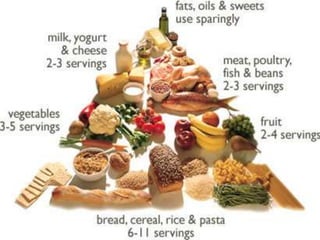
What are the food groups?
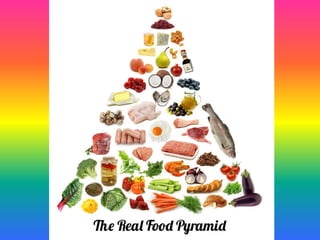
• There are 6 food groups in the food
pyramid. Do you know any?
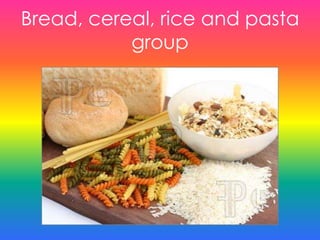
Bread, cereal, rice and pasta
group
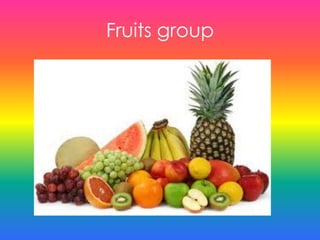
Fruits group
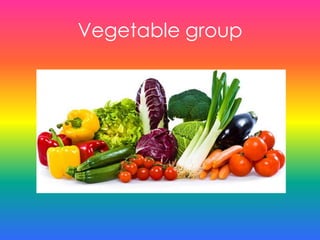
Vegetable group
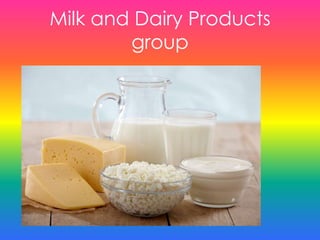
Milk and Dairy Products
group
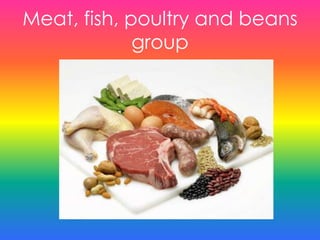
Meat, fish, poultry and beans
group
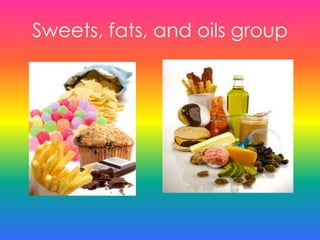
Sweets, fats, and oils group
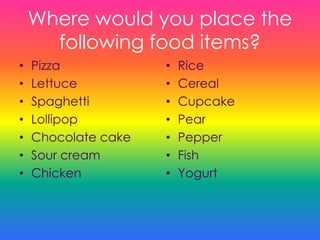
Where would you place the
following food items?
• Pizza
• Lettuce
• Spaghetti
• Lollipop
• Chocolate cake
• Sour cream
• Chicken
• Rice
• Cereal
• Cupcake
• Pear
• Pepper
• Fish
• Yogurt
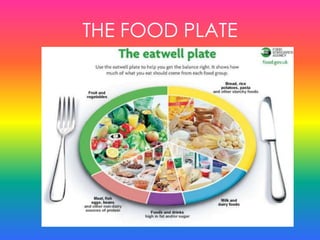
THE FOOD PLATE
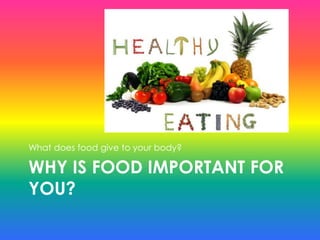
WHY IS FOOD IMPORTANT FOR
YOU?
What does food give to your body?
• Food provides energy so you can do
all kinds of activities.
• Food helps you grow.
• A balanced diet protects you from
diseases.
• Eating all kinds of food helps your body
to function properly.
CARBOHYDRATES
• Supply the major source of energy for the
body. There are two types
– Simple carbohydrates – These are sugars that
provide fast energy because they can be
broken down and absorbed by the body quickly
(fruits, milk, and juice).
– Complex carbohydrates – These are starches
that provide longer lasting energy because they
take longer to break down and are absorbed by
the body slower (potatoes, whole grain breads,
legumes).
FATS
• Supply energy but they have many other benefits.
Fats transport nutrients and they are a part of many
body cells. Fats provide storage and insulation for
your body.
– Saturated fat – A type of fat that is solid at room
temperature (e.g., butter). Saturated fat can clog arteries
and veins and is associated with an increased risk of heart
disease. Saturated fat is usually found in animal products
(meat, poultry, and whole milk dairy products).
– Unsaturated fat – A type of fat that is liquid at room
temperature (e.g., vegetable oils). Unsaturated fat is found
in fish (salmon, tuna, and sardines).
– Trans fat – A type of fat that started out as an unsaturated
fat, but then was combined with hydrogen to make the fat
act like a saturated fat (solid at room temperature).
PROTEINS
• They build and repair body
tissues; supplies energy (meats,
nuts, and beans).
VITAMINS
• They are needed in very small amounts in
the diet to regulate chemical reactions in
the body. Vitamins do not provide energy
but they help our bodies use the energy
from foods. Examples:
– Vitamin C – Promotes healing of wounds (fruits).
– B vitamins – Releases energy from the foods you
eat so that your body can use the energy
(breads and grains).
– Vitamin A – Helps maintain healthy skin and good
eyesight (dark green and yellow fruits,
vegetables).
MINERALS
• They perform many functions in regulating the activity
of cells.
– Calcium – Helps build and maintain strong bones and teeth
(milk and dairy products).
– Iron – Important for making red blood cells that carry
oxygen through the body (meat, fish, poultry, iron-fortified
cereals, spinach).
– Potassium – Helps balance the amount of water in your
body, allows for normal muscle growth, and a healthy brain
function (bananas, spinach, cantaloupe, and raisins).
– Sodium – Important in regulating blood volume and blood
pressure, helps maintain water levels in the body, and assists
nerves in sending messages throughout the body
(processed foods, e.g., crackers, canned vegetables,
soups, and pretzels).
VIDEOS
• https://www.youtube.com/watch?v=v
V_DcnnPmX4
• https://www.youtube.com/watch?v=5
zmEZ2Wsg4U
• https://www.youtube.com/watch?v=u
1sh_XGKJ-Q

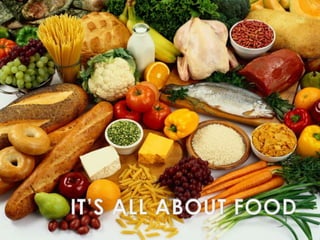
It’s all about food

  • 2.
    Let’s discuss!! Volunteers… •What kind of food do you like? • Are there different types of food? • What things do you dislike? • Why is food important? • Do you know the benefits of eating healthy? • What are some examples of healthy food?
  • 4.
    What are thefood groups? • There are 6 food groups in the food pyramid. Do you know any?
  • 6.
    Bread, cereal, riceand pasta group
  • 7.
  • 8.
  • 9.
    Milk and DairyProducts group
  • 10.
    Meat, fish, poultryand beans group
  • 11.
  • 12.
    Where would youplace the following food items? • Pizza • Lettuce • Spaghetti • Lollipop • Chocolate cake • Sour cream • Chicken • Rice • Cereal • Cupcake • Pear • Pepper • Fish • Yogurt
  • 13.
  • 14.
    WHY IS FOODIMPORTANT FOR YOU? What does food give to your body?
  • 15.
    • Food providesenergy so you can do all kinds of activities. • Food helps you grow. • A balanced diet protects you from diseases. • Eating all kinds of food helps your body to function properly.
  • 16.
    CARBOHYDRATES • Supply themajor source of energy for the body. There are two types – Simple carbohydrates – These are sugars that provide fast energy because they can be broken down and absorbed by the body quickly (fruits, milk, and juice). – Complex carbohydrates – These are starches that provide longer lasting energy because they take longer to break down and are absorbed by the body slower (potatoes, whole grain breads, legumes).
  • 17.
    FATS • Supply energybut they have many other benefits. Fats transport nutrients and they are a part of many body cells. Fats provide storage and insulation for your body. – Saturated fat – A type of fat that is solid at room temperature (e.g., butter). Saturated fat can clog arteries and veins and is associated with an increased risk of heart disease. Saturated fat is usually found in animal products (meat, poultry, and whole milk dairy products). – Unsaturated fat – A type of fat that is liquid at room temperature (e.g., vegetable oils). Unsaturated fat is found in fish (salmon, tuna, and sardines). – Trans fat – A type of fat that started out as an unsaturated fat, but then was combined with hydrogen to make the fat act like a saturated fat (solid at room temperature).
  • 18.
    PROTEINS • They buildand repair body tissues; supplies energy (meats, nuts, and beans).
  • 19.
    VITAMINS • They areneeded in very small amounts in the diet to regulate chemical reactions in the body. Vitamins do not provide energy but they help our bodies use the energy from foods. Examples: – Vitamin C – Promotes healing of wounds (fruits). – B vitamins – Releases energy from the foods you eat so that your body can use the energy (breads and grains). – Vitamin A – Helps maintain healthy skin and good eyesight (dark green and yellow fruits, vegetables).
  • 20.
    MINERALS • They performmany functions in regulating the activity of cells. – Calcium – Helps build and maintain strong bones and teeth (milk and dairy products). – Iron – Important for making red blood cells that carry oxygen through the body (meat, fish, poultry, iron-fortified cereals, spinach). – Potassium – Helps balance the amount of water in your body, allows for normal muscle growth, and a healthy brain function (bananas, spinach, cantaloupe, and raisins). – Sodium – Important in regulating blood volume and blood pressure, helps maintain water levels in the body, and assists nerves in sending messages throughout the body (processed foods, e.g., crackers, canned vegetables, soups, and pretzels).
  • 21.