Architecture Framework Advisory
Committee Update
Presentation to the Information Technology Infrastructure
Roundtable
October 7, 2014
Benoît Long, Senior Assistant Deputy Minister, Transformation,
Service Strategy and Design and Chair of the Architecture
Framework Advisory Committee
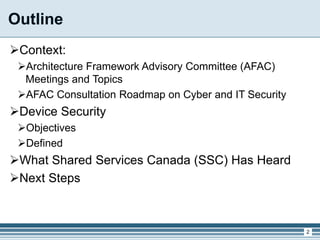
Outline
Context:
Architecture Framework Advisory Committee (AFAC)
Meetings and Topics
AFAC Consultation Roadmap on Cyber and IT Security
Device Security
Objectives
Defined
What Shared Services Canada (SSC) Has Heard
Next Steps
2
3
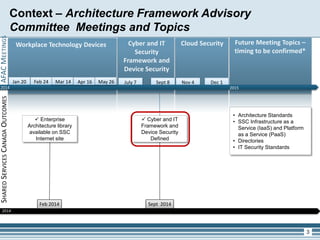
Workplace Technology Devices
SHAREDSERVICESCANADAOUTCOMESAFACMEETINGS
Cyber and IT
Security
Framework and
Device Security
Cloud Security Future Meeting Topics –
timing to be confirmed*
Jan 20 Feb 24 July 7 Sept 8 Nov 4 Dec 1
2014
2014
Context – Architecture Framework Advisory
Committee Meetings and Topics
2015
Mar 14 Apr 16 May 26
 Cyber and IT
Framework and
Device Security
Defined
Sept 2014
 Enterprise
Architecture library
available on SSC
Internet site
Feb 2014
• Architecture Standards
• SSC Infrastructure as a
Service (IaaS) and Platform
as a Service (PaaS)
• Directories
• IT Security Standards
2014
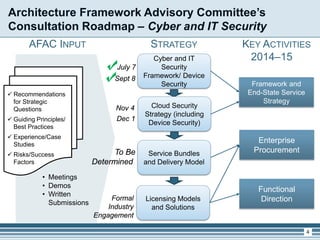
Architecture Framework Advisory Committee’s
Consultation Roadmap – Cyber and IT Security
STRATEGY KEY ACTIVITIES
2014–15
AFAC INPUT
 Recommendations
for Strategic
Questions
 Guiding Principles/
Best Practices
 Experience/Case
Studies
 Risks/Success
Factors
Cyber and IT
Security
Framework/ Device
Security
Service Bundles
and Delivery Model
Licensing Models
and Solutions
Framework and
End-State Service
Strategy
Enterprise
Procurement
Functional
Direction
• Meetings
• Demos
• Written
Submissions
Formal
Industry
Engagement
July 7
To Be
Determined
4
Sept 8
Nov 4
Dec 1
Cloud Security
Strategy (including
Device Security)
Device Security – Objectives
5
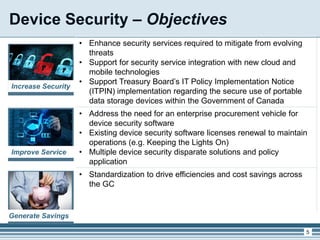
• Enhance security services required to mitigate from evolving
threats
• Support for security service integration with new cloud and
mobile technologies
• Support Treasury Board’s IT Policy Implementation Notice
(ITPIN) implementation regarding the secure use of portable
data storage devices within the Government of Canada
• Address the need for an enterprise procurement vehicle for
device security software
• Existing device security software licenses renewal to maintain
operations (e.g. Keeping the Lights On)
• Multiple device security disparate solutions and policy
application
• Standardization to drive efficiencies and cost savings across
the GC
Increase Security
Improve Service
Generate Savings
Device Security – Defined
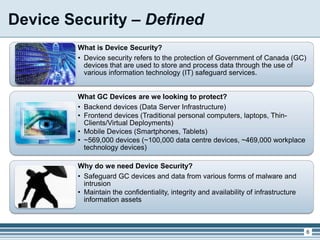
What is Device Security?
• Device security refers to the protection of Government of Canada (GC)
devices that are used to store and process data through the use of
various information technology (IT) safeguard services.
What GC Devices are we looking to protect?
• Backend devices (Data Server Infrastructure)
• Frontend devices (Traditional personal computers, laptops, Thin-
Clients/Virtual Deployments)
• Mobile Devices (Smartphones, Tablets)
• ~569,000 devices (~100,000 data centre devices, ~469,000 workplace
technology devices)
Why do we need Device Security?
• Safeguard GC devices and data from various forms of malware and
intrusion
• Maintain the confidentiality, integrity and availability of infrastructure
information assets
6
What Shared Services Canada Heard from the
Architecture Framework Advisory Committee
Address “legacy” requirements separately from “end state”
De-couple procurements for DC and WTD as their security requirements are
different
Security continuously evolving to meet endlessly changing landscape
Transition from network to data centric approach
Cloud Security increases requirements for data encryption
Build a centralised public key infrastructure (PKI)/certificate authorities
Leverage “location based” data access (e.g. no Protected B in a public
zone)
Develop and enforce hardening and standards
Metrics are crucial – defines how success is measured
Look into behavioural security analysis for advanced attack detection
Investigate sandbox and isolation techniques (micro-segmentation)
7
Revised Device Security Strategy
Address legacy requirements by leveraging existing
procurement vehicles
De-couple data centre and WTD device security strategy
efforts
Develop a Cloud Security Strategy that incorporates device
security
Holistic approach across IT security domains
Integrate security services & strategies
Data centric approach
Continue consulting industry
8
Next Steps
In early November, SSC plans to further explore cloud security
with AFAC members
At the next IT Infrastructure Roundtable meeting, return with
feedback and advice from AFAC sessions on cloud security
9

Itir oct0714-afac report-en

  • 1.
    Architecture Framework Advisory CommitteeUpdate Presentation to the Information Technology Infrastructure Roundtable October 7, 2014 Benoît Long, Senior Assistant Deputy Minister, Transformation, Service Strategy and Design and Chair of the Architecture Framework Advisory Committee
  • 2.
    Outline Context: Architecture Framework AdvisoryCommittee (AFAC) Meetings and Topics AFAC Consultation Roadmap on Cyber and IT Security Device Security Objectives Defined What Shared Services Canada (SSC) Has Heard Next Steps 2
  • 3.
    3 Workplace Technology Devices SHAREDSERVICESCANADAOUTCOMESAFACMEETINGS Cyberand IT Security Framework and Device Security Cloud Security Future Meeting Topics – timing to be confirmed* Jan 20 Feb 24 July 7 Sept 8 Nov 4 Dec 1 2014 2014 Context – Architecture Framework Advisory Committee Meetings and Topics 2015 Mar 14 Apr 16 May 26  Cyber and IT Framework and Device Security Defined Sept 2014  Enterprise Architecture library available on SSC Internet site Feb 2014 • Architecture Standards • SSC Infrastructure as a Service (IaaS) and Platform as a Service (PaaS) • Directories • IT Security Standards 2014
  • 4.
    Architecture Framework AdvisoryCommittee’s Consultation Roadmap – Cyber and IT Security STRATEGY KEY ACTIVITIES 2014–15 AFAC INPUT  Recommendations for Strategic Questions  Guiding Principles/ Best Practices  Experience/Case Studies  Risks/Success Factors Cyber and IT Security Framework/ Device Security Service Bundles and Delivery Model Licensing Models and Solutions Framework and End-State Service Strategy Enterprise Procurement Functional Direction • Meetings • Demos • Written Submissions Formal Industry Engagement July 7 To Be Determined 4 Sept 8 Nov 4 Dec 1 Cloud Security Strategy (including Device Security)
  • 5.
    Device Security –Objectives 5 • Enhance security services required to mitigate from evolving threats • Support for security service integration with new cloud and mobile technologies • Support Treasury Board’s IT Policy Implementation Notice (ITPIN) implementation regarding the secure use of portable data storage devices within the Government of Canada • Address the need for an enterprise procurement vehicle for device security software • Existing device security software licenses renewal to maintain operations (e.g. Keeping the Lights On) • Multiple device security disparate solutions and policy application • Standardization to drive efficiencies and cost savings across the GC Increase Security Improve Service Generate Savings
  • 6.
    Device Security –Defined What is Device Security? • Device security refers to the protection of Government of Canada (GC) devices that are used to store and process data through the use of various information technology (IT) safeguard services. What GC Devices are we looking to protect? • Backend devices (Data Server Infrastructure) • Frontend devices (Traditional personal computers, laptops, Thin- Clients/Virtual Deployments) • Mobile Devices (Smartphones, Tablets) • ~569,000 devices (~100,000 data centre devices, ~469,000 workplace technology devices) Why do we need Device Security? • Safeguard GC devices and data from various forms of malware and intrusion • Maintain the confidentiality, integrity and availability of infrastructure information assets 6
  • 7.
    What Shared ServicesCanada Heard from the Architecture Framework Advisory Committee Address “legacy” requirements separately from “end state” De-couple procurements for DC and WTD as their security requirements are different Security continuously evolving to meet endlessly changing landscape Transition from network to data centric approach Cloud Security increases requirements for data encryption Build a centralised public key infrastructure (PKI)/certificate authorities Leverage “location based” data access (e.g. no Protected B in a public zone) Develop and enforce hardening and standards Metrics are crucial – defines how success is measured Look into behavioural security analysis for advanced attack detection Investigate sandbox and isolation techniques (micro-segmentation) 7
  • 8.
    Revised Device SecurityStrategy Address legacy requirements by leveraging existing procurement vehicles De-couple data centre and WTD device security strategy efforts Develop a Cloud Security Strategy that incorporates device security Holistic approach across IT security domains Integrate security services & strategies Data centric approach Continue consulting industry 8
  • 9.
    Next Steps In earlyNovember, SSC plans to further explore cloud security with AFAC members At the next IT Infrastructure Roundtable meeting, return with feedback and advice from AFAC sessions on cloud security 9