IT and Data Management
        in the ER
 Nawanan Theera-Ampornpunt, MD, PhD
 Faculty of Medicine Ramathibodi Hospital
Outline


•   Healthcare & Health IT
•   ER Information Needs
•   Information Systems in ER
•   Implications for Emergency
    Physicians
Outline


•   Healthcare & Health IT
•   ER Information Needs
•   Information Systems in ER
•   Implications for Emergency
    Physicians
Manufacturing


      Image Source: Guardian.co.uk
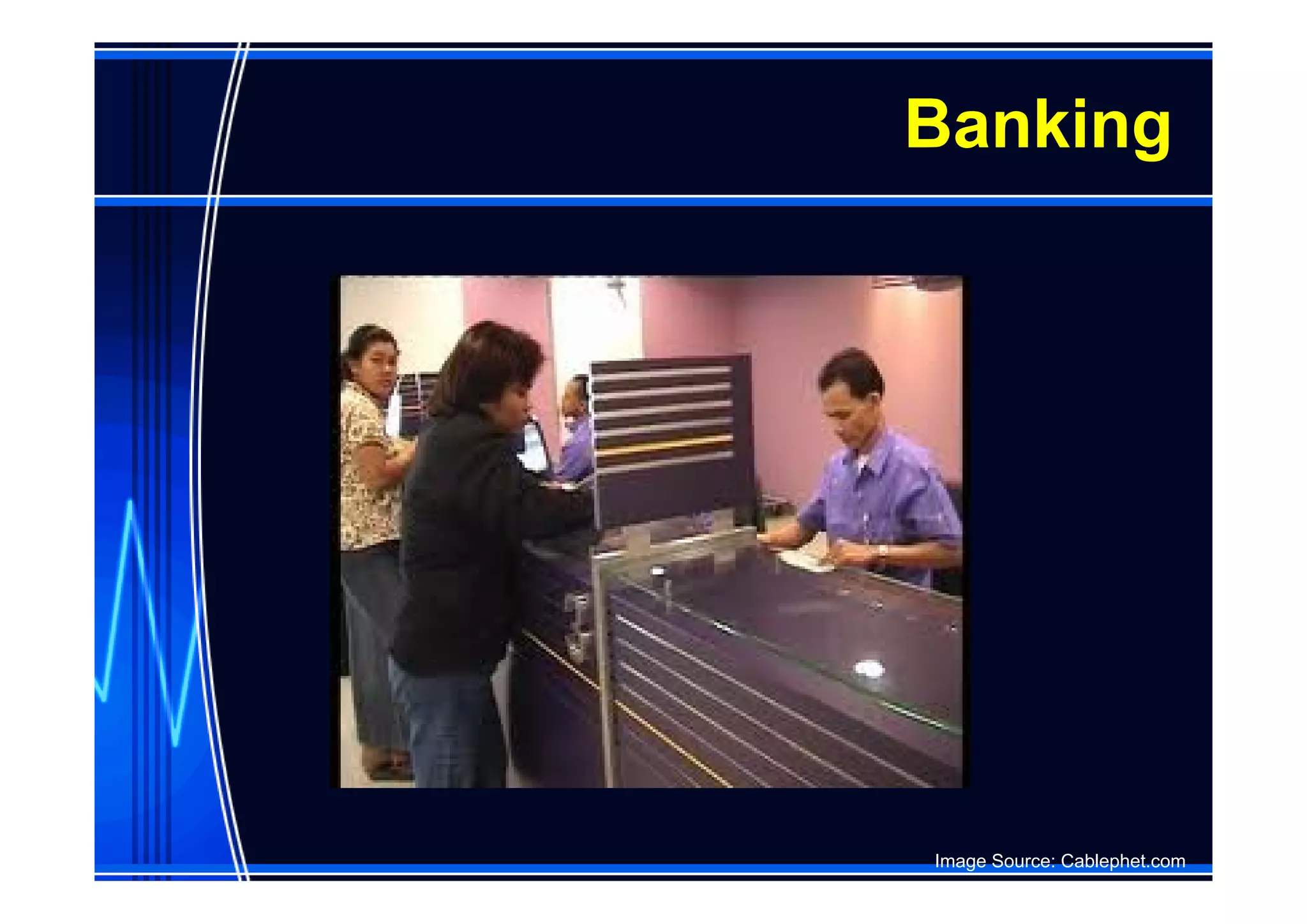
Banking


Image Source: Cablephet.com
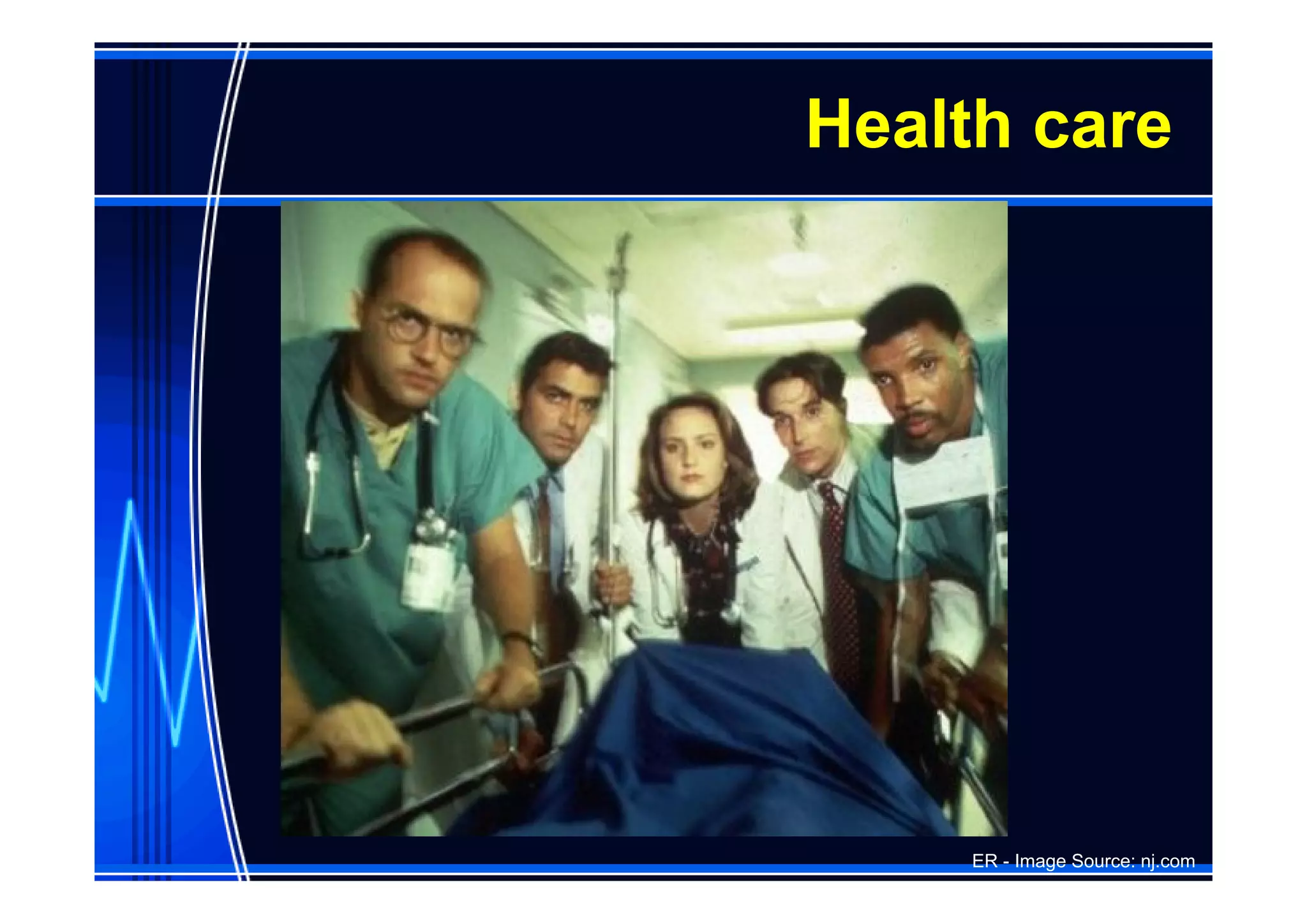
Health care


    ER - Image Source: nj.com
Why Health care Isn’t Like Any Others?


• Life-or-Death
• Many & varied stakeholders
• Strong professional values
• Evolving standards of care
• Fragmented, poorly-coordinated systems
• Large, ever-growing & changing body of
  knowledge
• High volume, low resources, little time
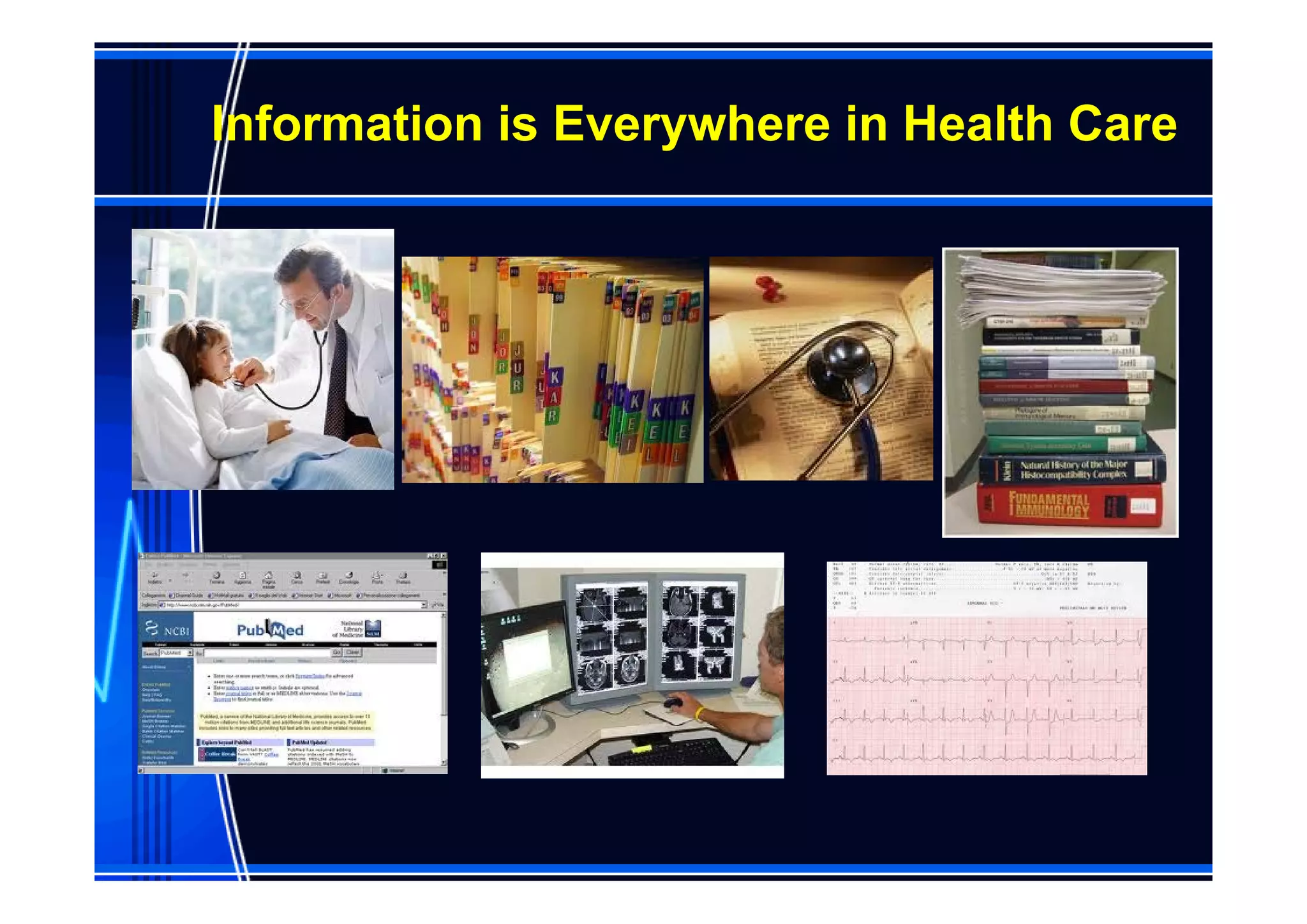
Information is Everywhere in Health Care
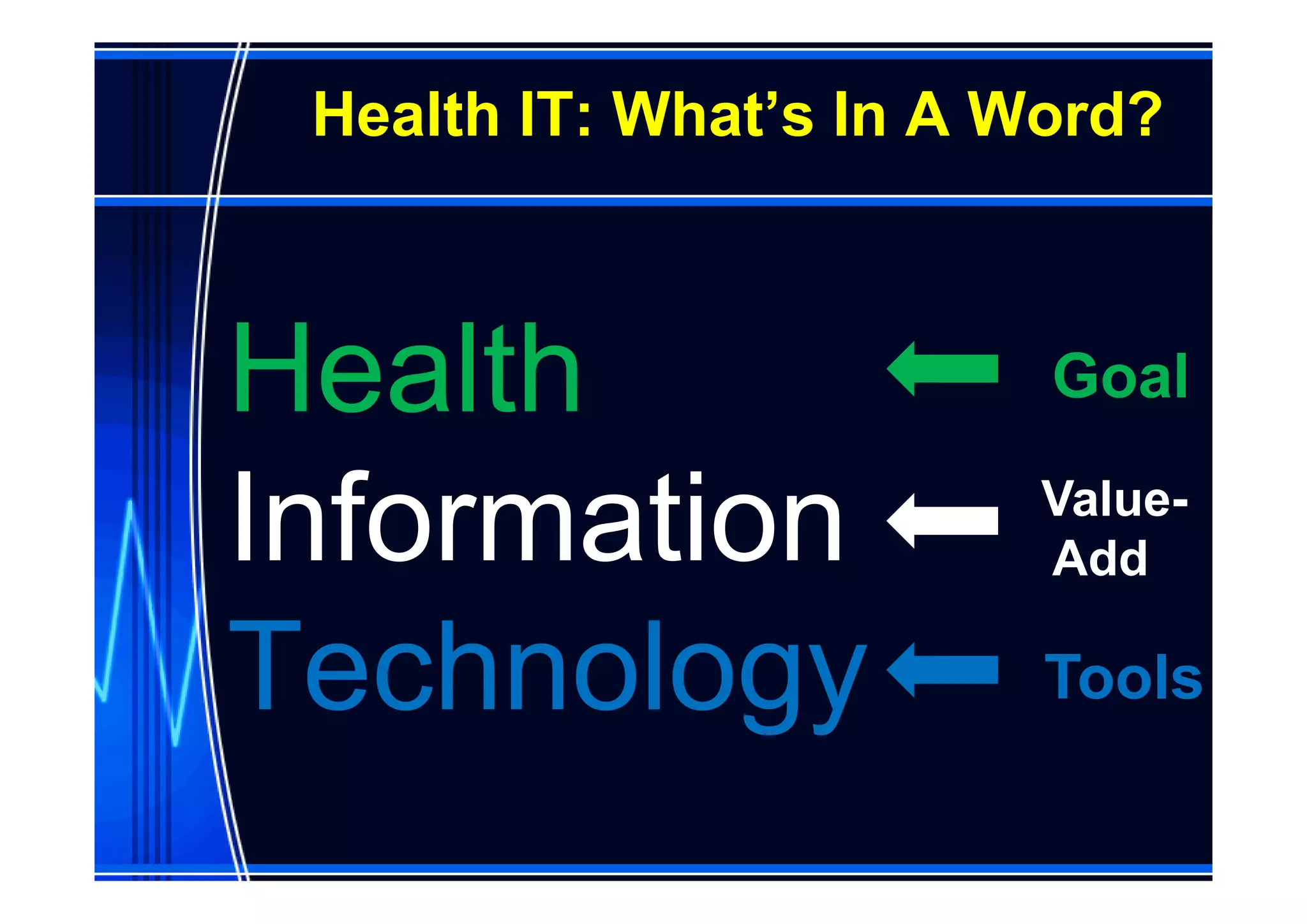
Health IT: What’s In A Word?


Health                   Goal

Information             Value-
                        Add

Technology               Tools
Outline


•   Healthcare & Health IT
•   ER Information Needs
•   Information Systems in ER
•   Implications for Emergency
    Physicians
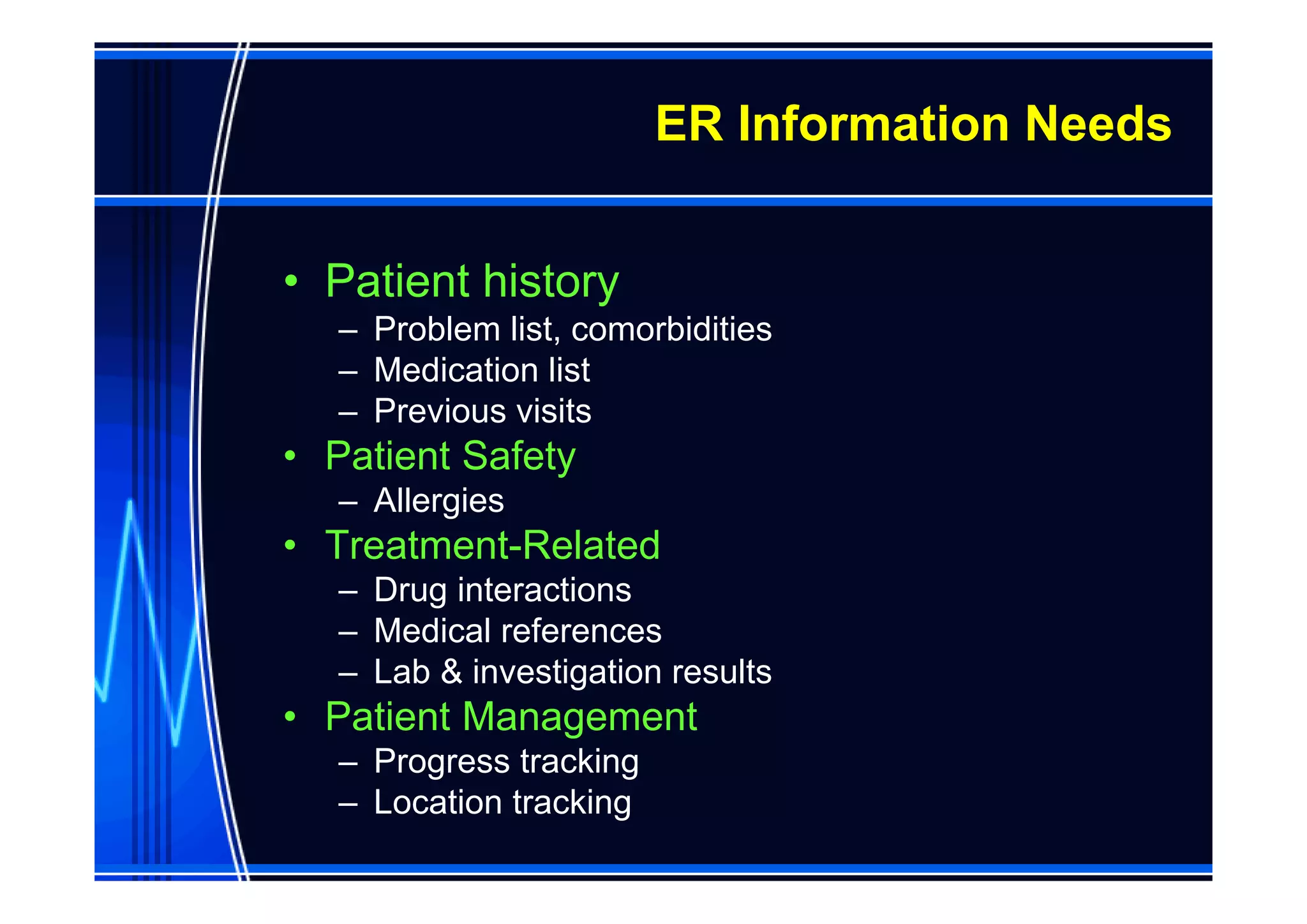
ER Information Needs


• Patient history
   – Problem list, comorbidities
   – Medication list
   – Previous visits
• Patient Safety
   – Allergies
• Treatment-Related
   – Drug interactions
   – Medical references
   – Lab & investigation results
• Patient Management
   – Progress tracking
   – Location tracking
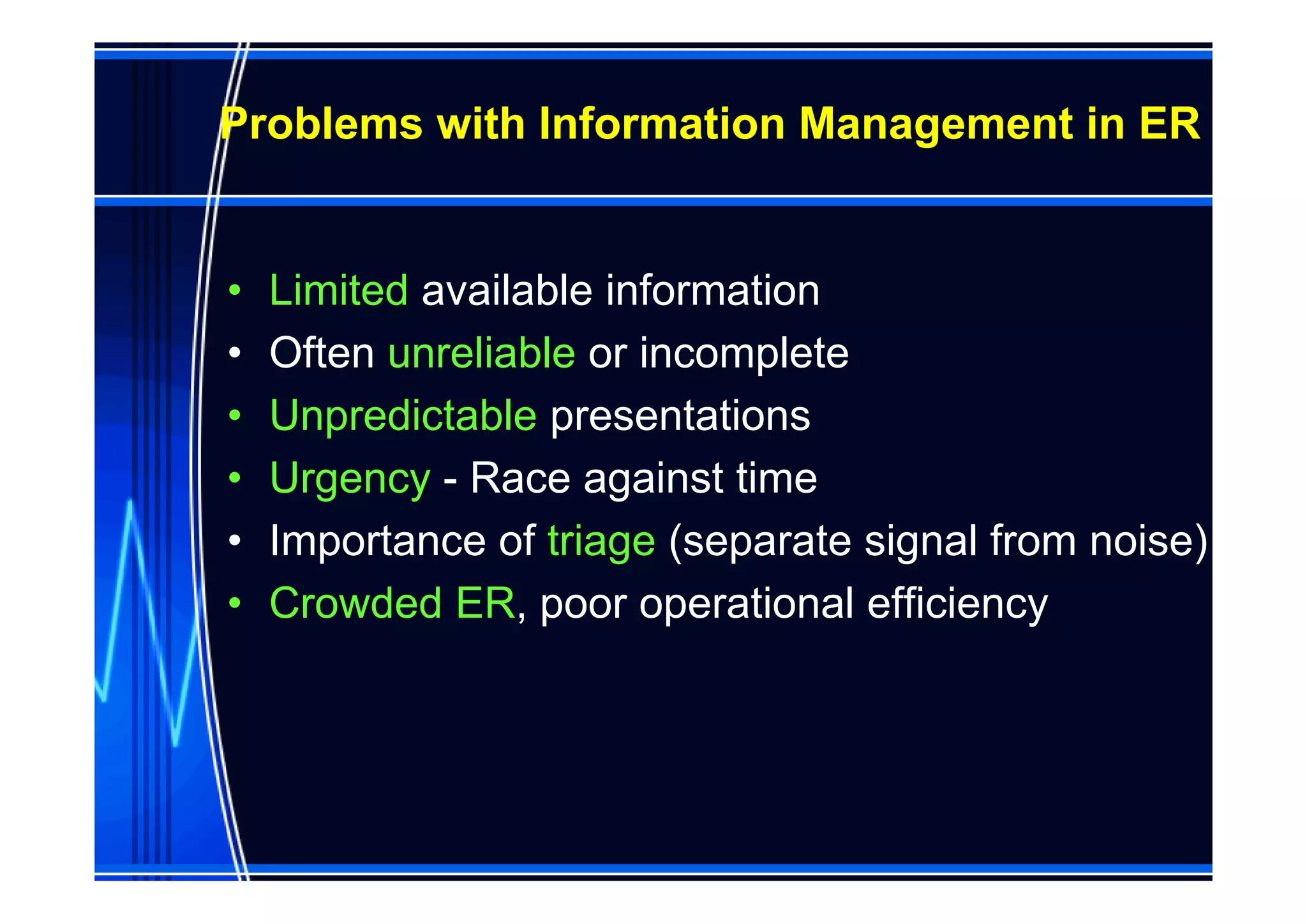
Problems with Information Management in ER


•   Limited available information
•   Often unreliable or incomplete
•   Unpredictable presentations
•   Urgency - Race against time
•   Importance of triage (separate signal from noise)
•   Crowded ER, poor operational efficiency
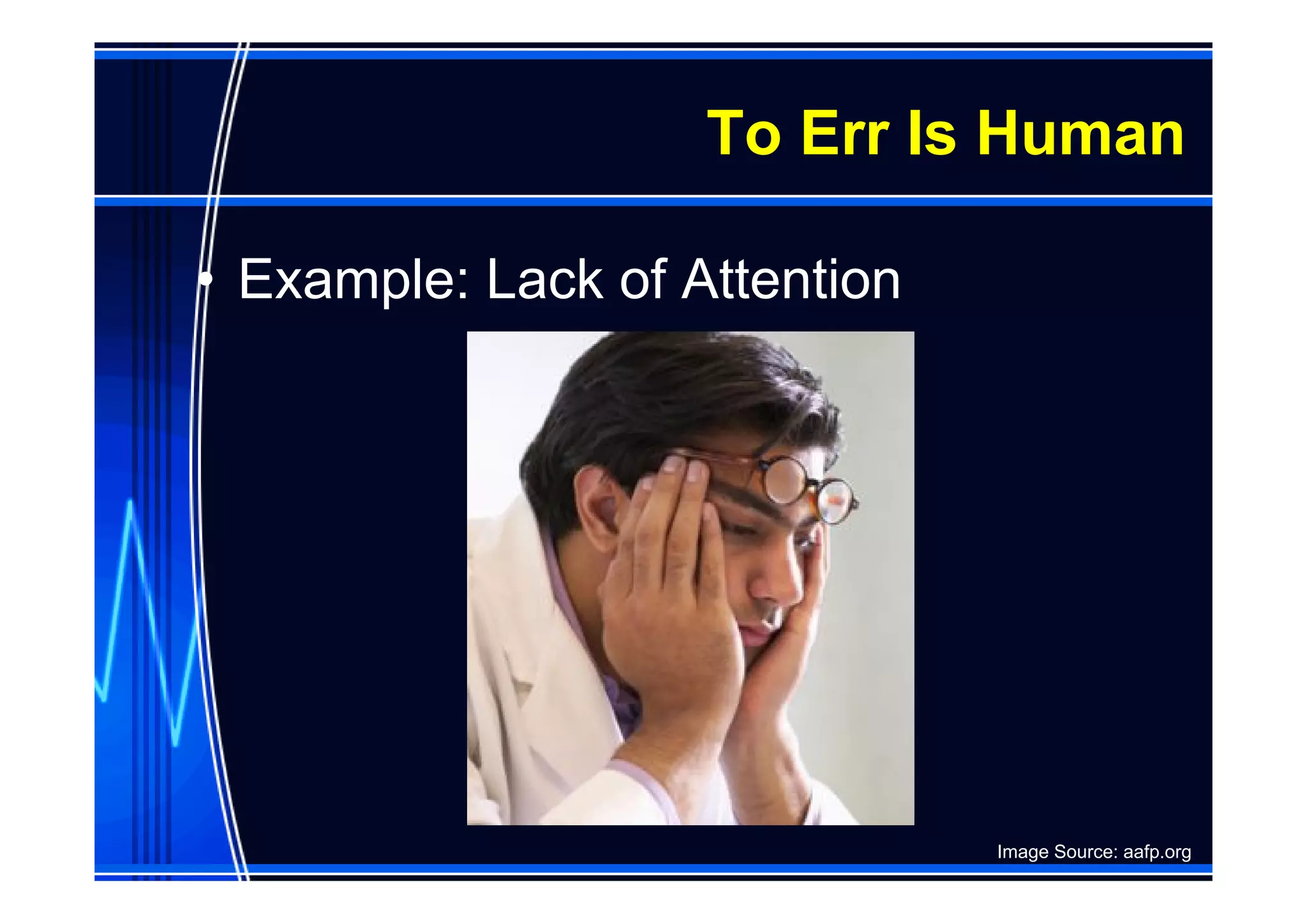
To Err Is Human

• Example: Lack of Attention


                               Image Source: aafp.org
Value of Health IT

• Guideline adherence
• Better documentation
• Practitioner decision making
  or process of care
• Medication safety
• Patient surveillance &
  monitoring
• Patient education/reminder
Outline


•   Healthcare & Health IT
•   ER Information Needs
•   Information Systems in ER
•   Implications for Emergency
    Physicians
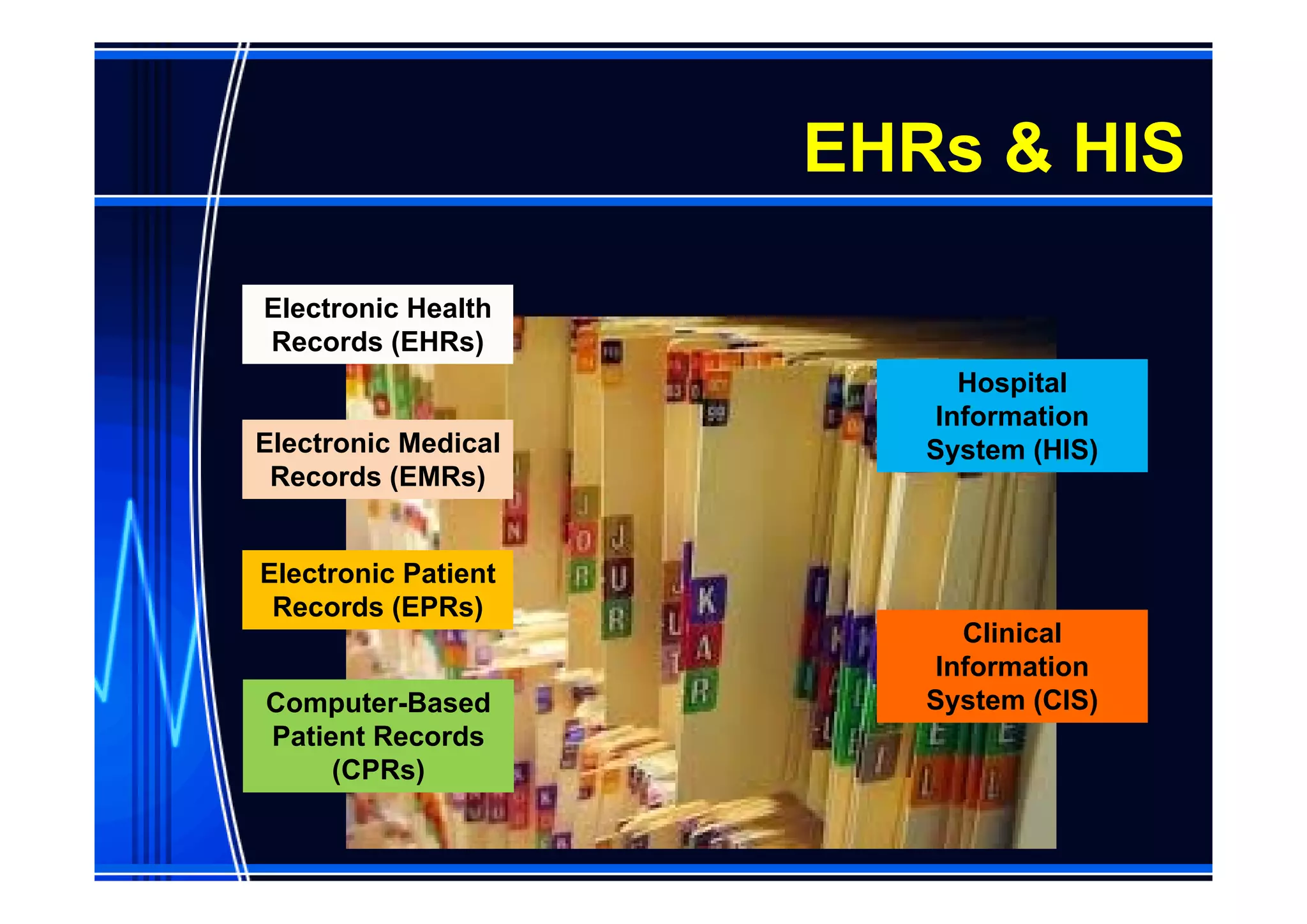
EHRs & HIS

Electronic Health
Records (EHRs)
                           Hospital
                         Information
Electronic Medical      System (HIS)
 Records (EMRs)


Electronic Patient
 Records (EPRs)
                           Clinical
                         Information
Computer-Based          System (CIS)
Patient Records
     (CPRs)
Functions that Should Be Part of EHR Systems

     •   Computerized Medication Order Entry
     •   Computerized Laboratory Order Entry
     •   Computerized Laboratory Results
     •   Physician Notes
     •   Patient Demographics
     •   Problem Lists
     •   Medication Lists
     •   Discharge Summaries
     •   Diagnostic Test Results
     •   Radiologic Reports
                                  (IOM, 2003; Blumenthal et al, 2006)
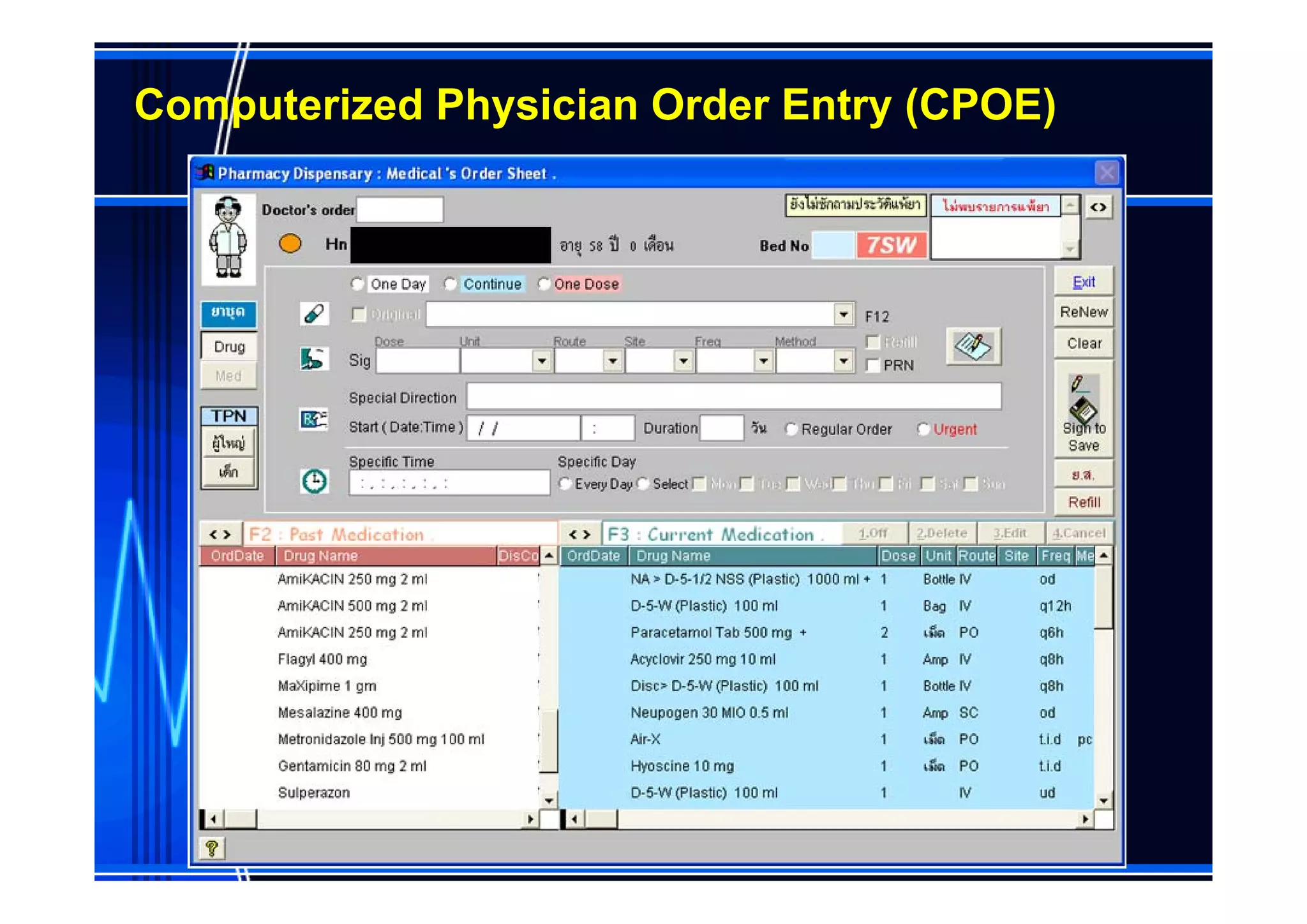
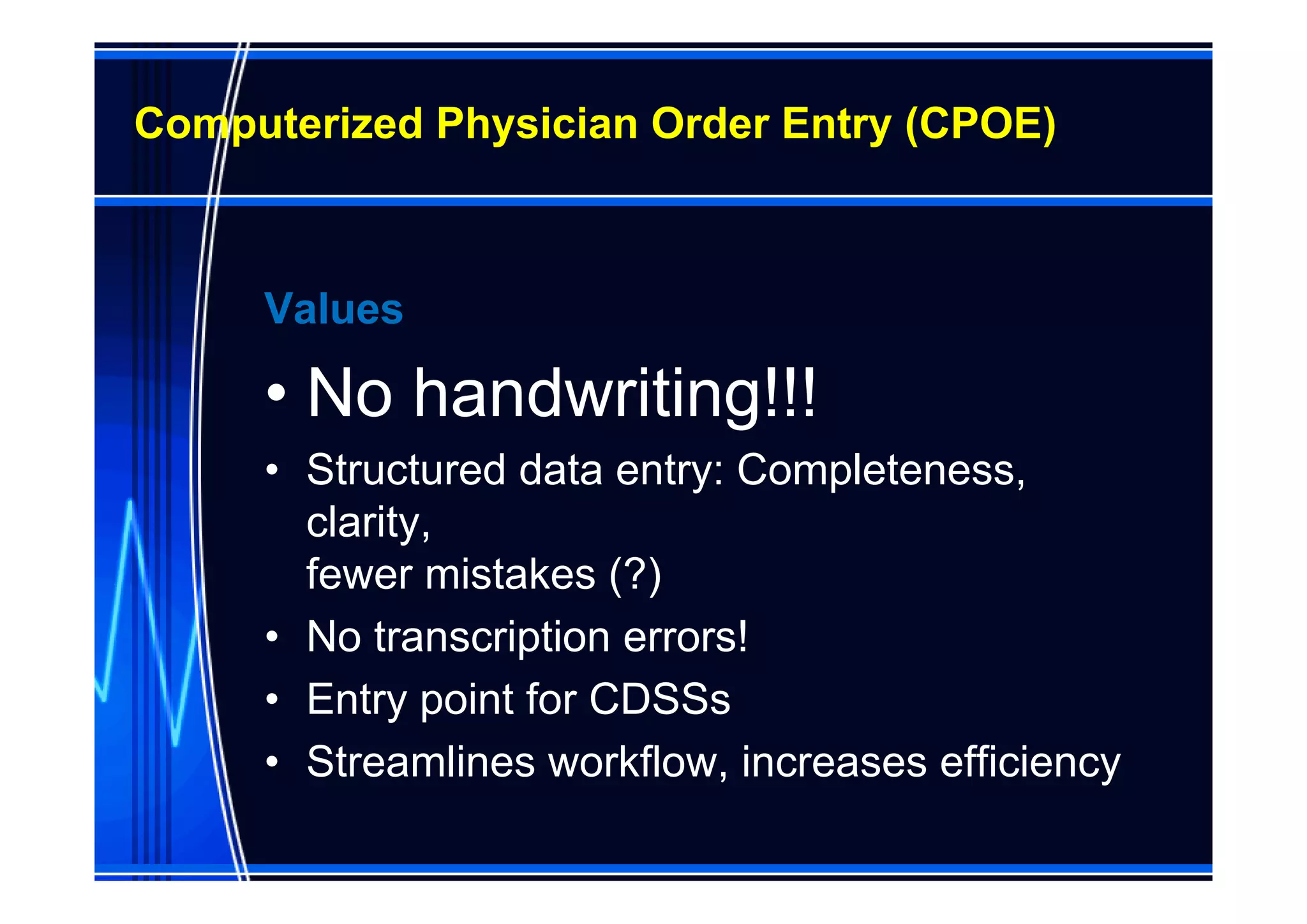
Computerized Physician Order Entry (CPOE)


     Values

     • No handwriting!!!
     • Structured data entry: Completeness,
       clarity,
       fewer mistakes (?)
     • No transcription errors!
     • Entry point for CDSSs
     • Streamlines workflow, increases efficiency
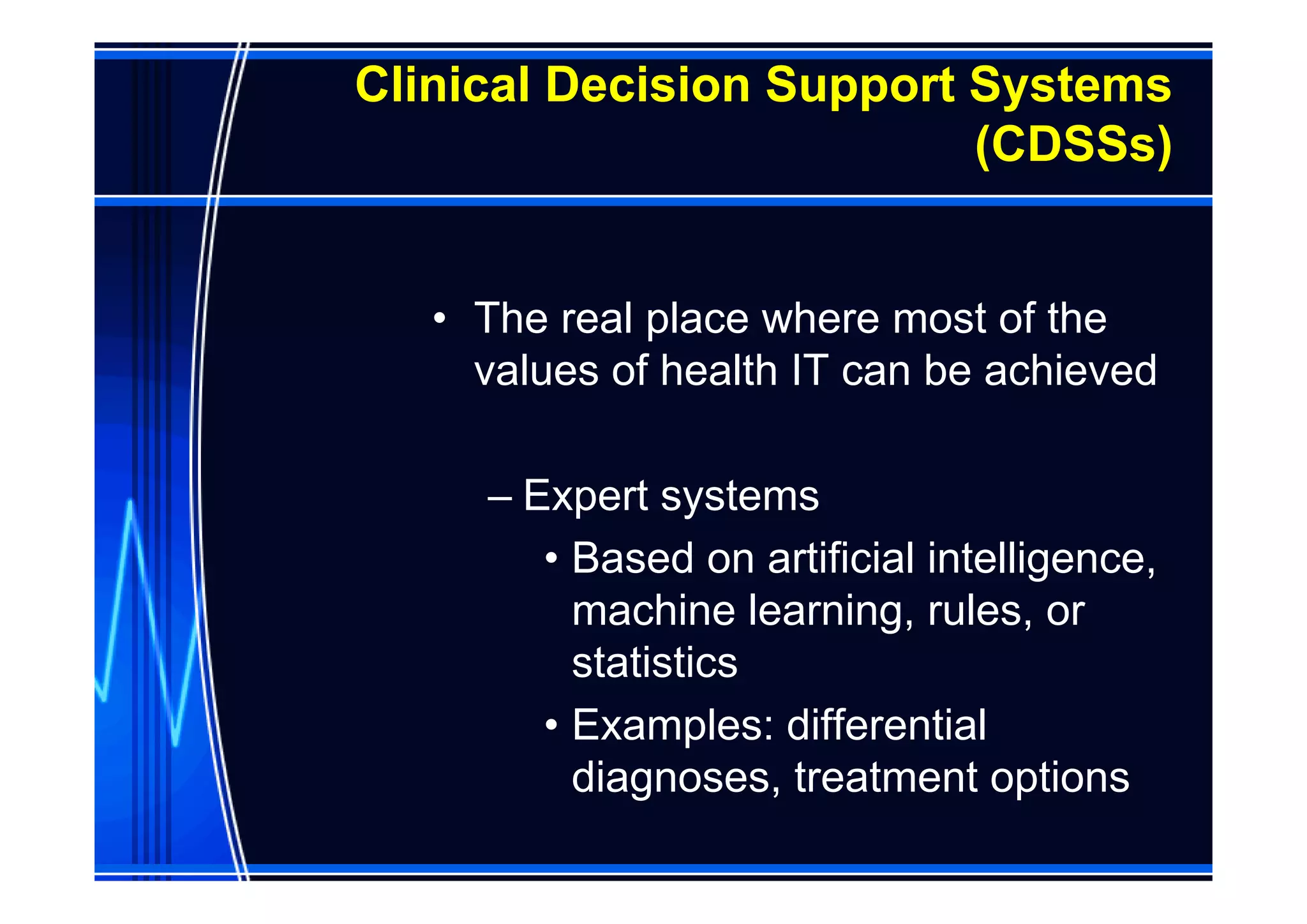
Clinical Decision Support Systems
                          (CDSSs)


   • The real place where most of the
     values of health IT can be achieved

     – Expert systems
        • Based on artificial intelligence,
          machine learning, rules, or
          statistics
        • Examples: differential
          diagnoses, treatment options
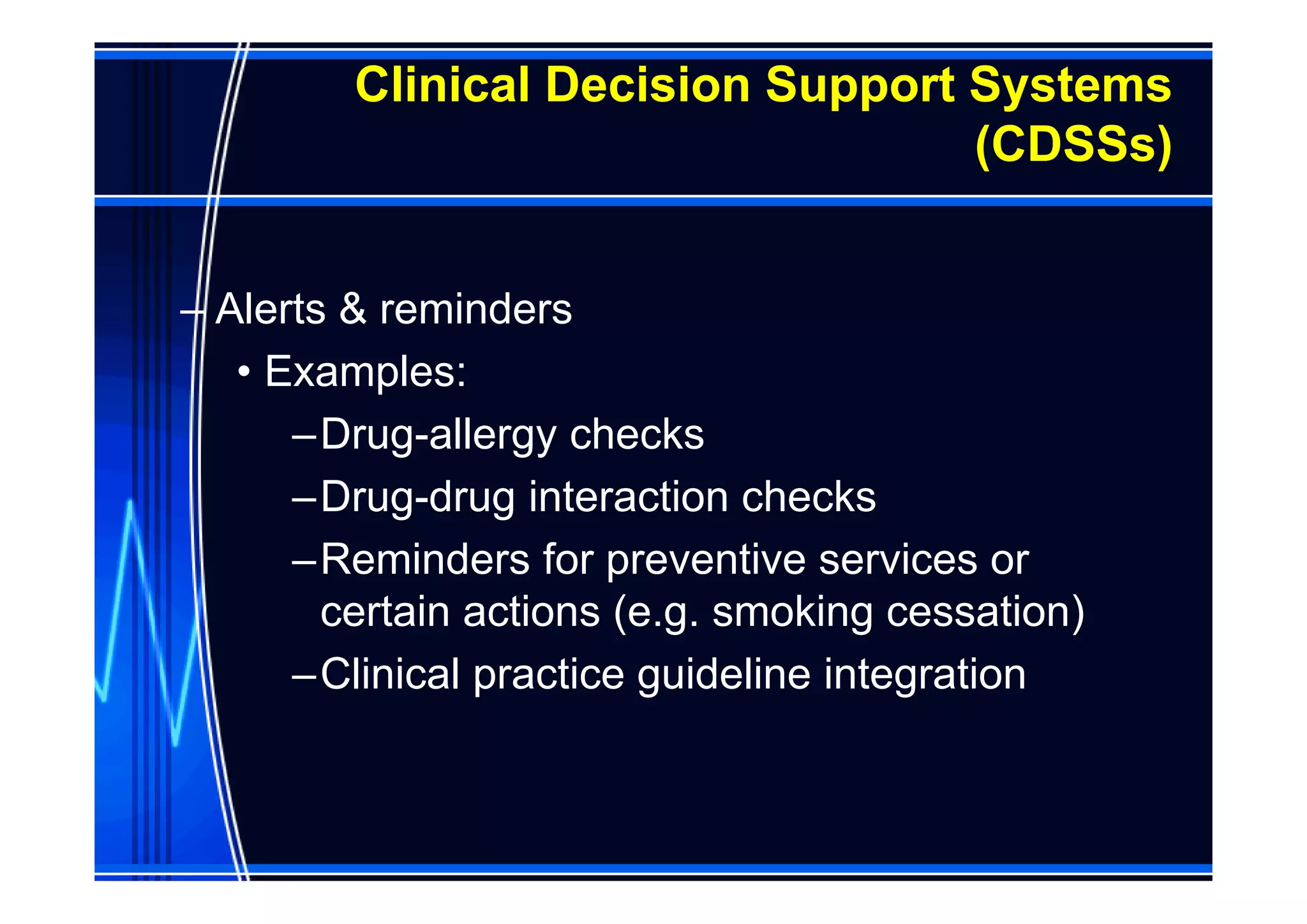
Clinical Decision Support Systems
                                   (CDSSs)


– Alerts & reminders
   • Examples:
      –Drug-allergy checks
      –Drug-drug interaction checks
      –Reminders for preventive services or
        certain actions (e.g. smoking cessation)
      –Clinical practice guideline integration
Example of “Alerts & Reminders”
Clinical Decision Support Systems
                             (CDSSs)


– Evidence-based knowledge sources e.g.
  drug database, literature
– Simple UI designed to help clinical decision
  making
  • E.g., Abnormal Lab Highlights
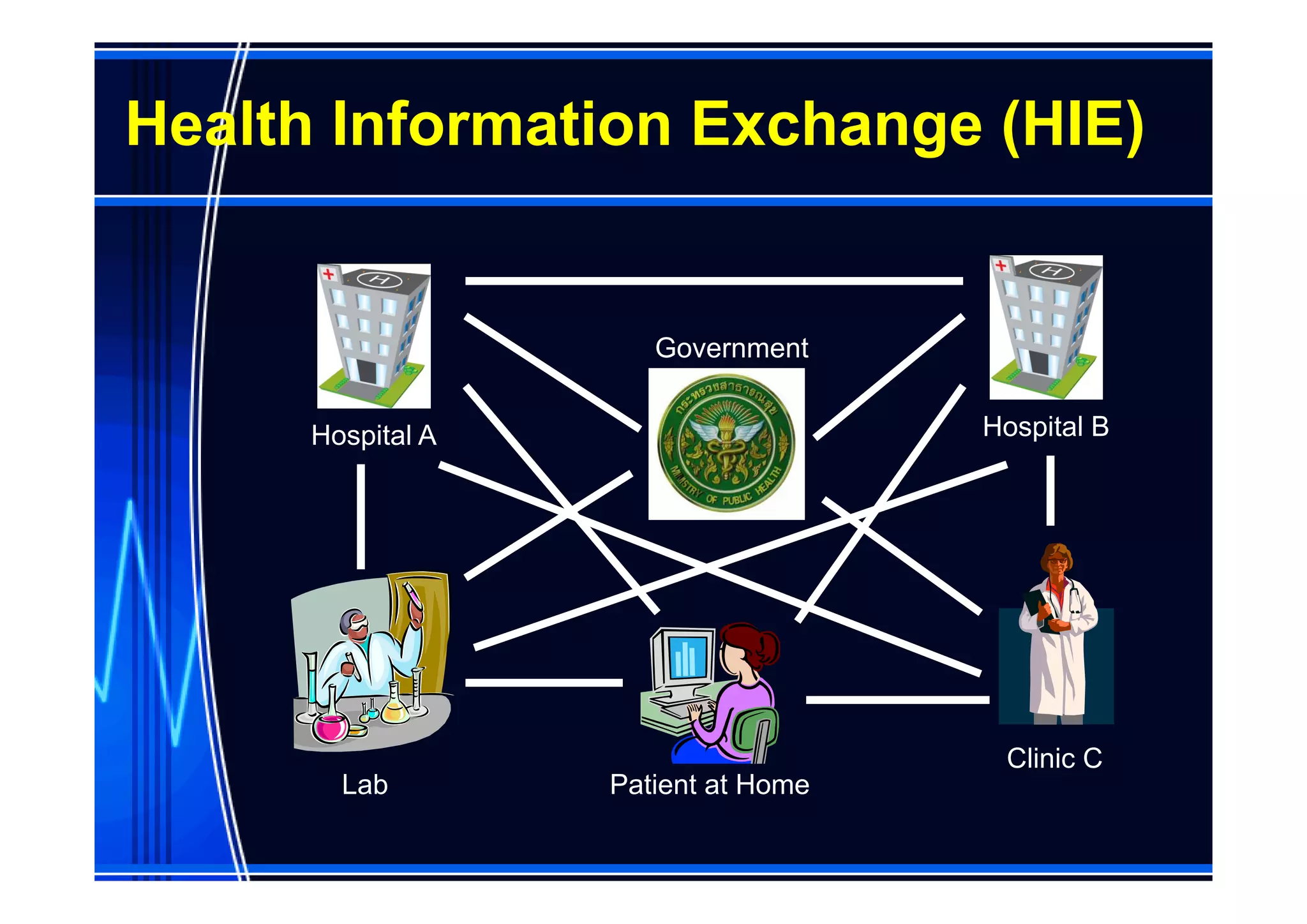
Health Information Exchange (HIE)


                      Government


      Hospital A                     Hospital B


                                      Clinic C
        Lab        Patient at Home
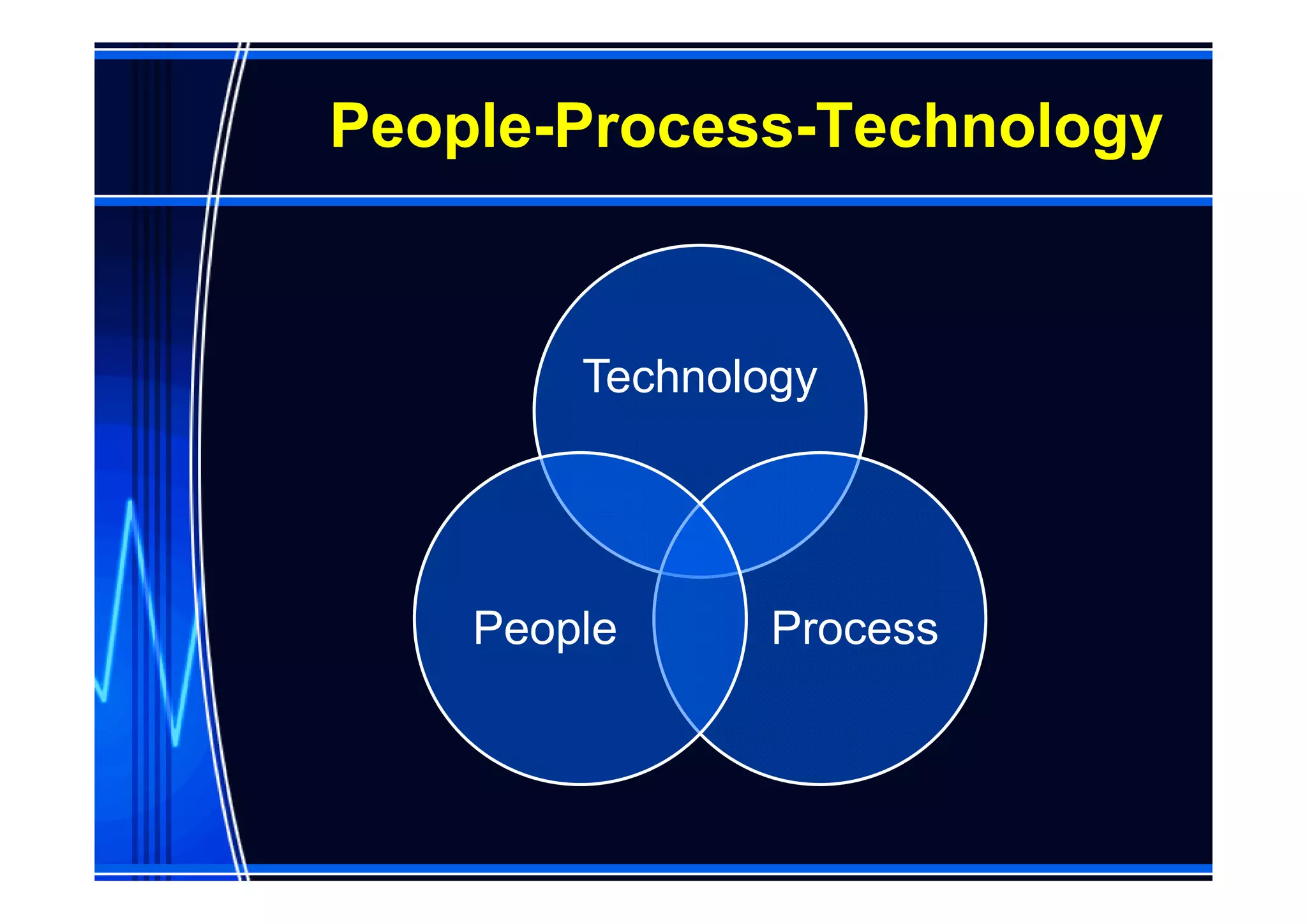
People-Process-Technology


        Technology


    People      Process
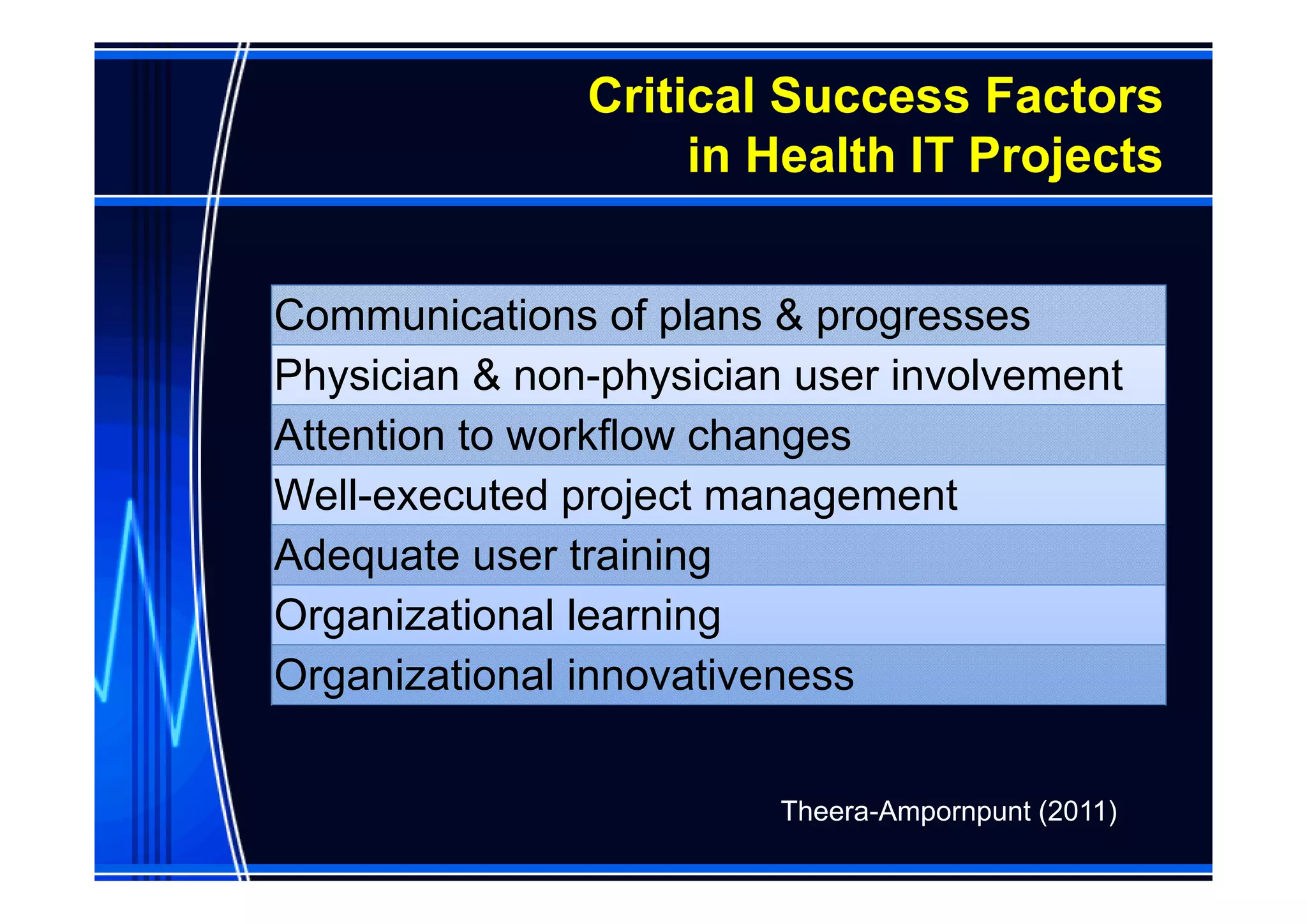
Critical Success Factors
                    in Health IT Projects


Communications of plans & progresses
Physician & non-physician user involvement
Attention to workflow changes
Well-executed project management
Adequate user training
Organizational learning
Organizational innovativeness


                         Theera-Ampornpunt (2011)
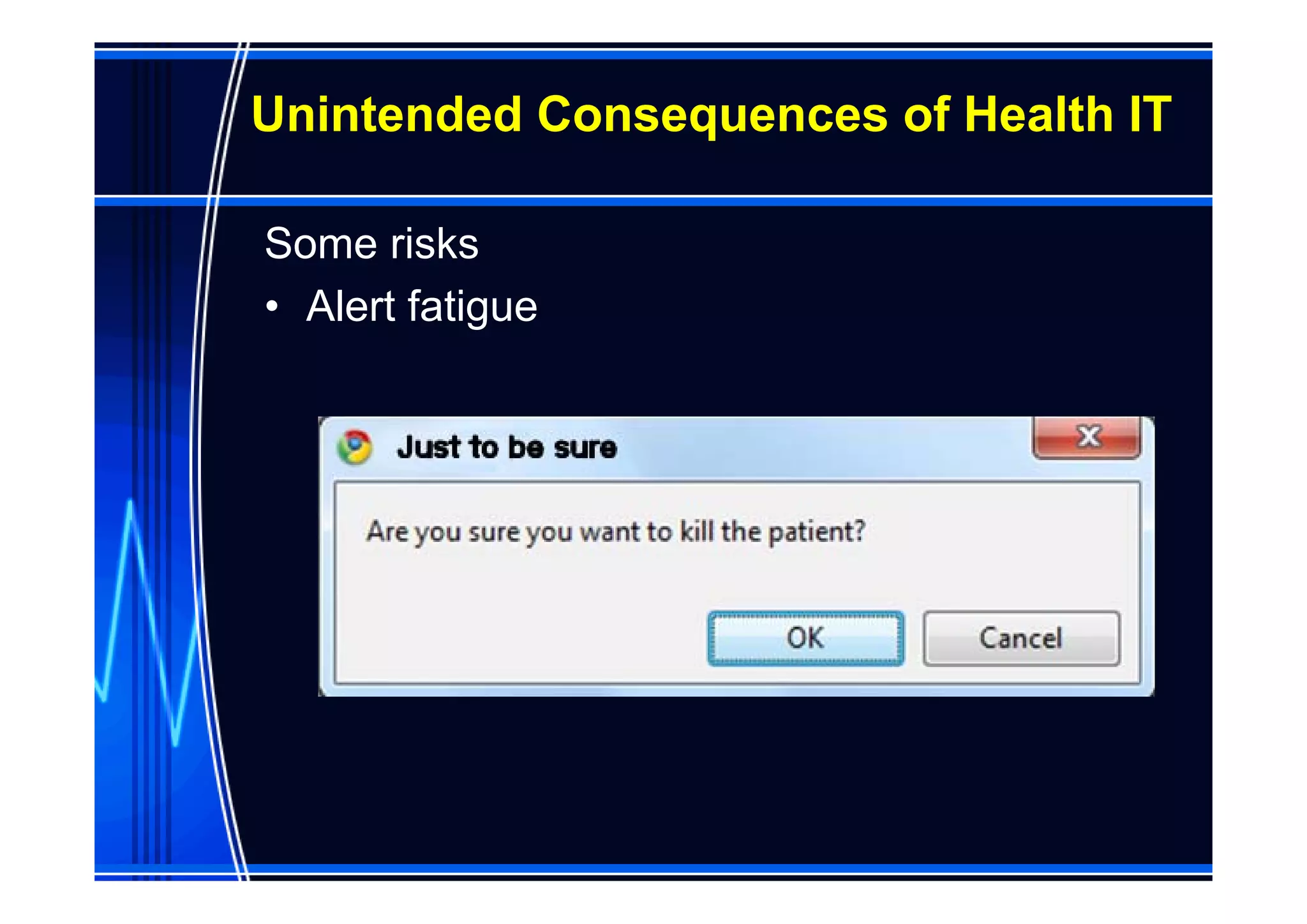
Unintended Consequences of Health IT

Some risks
• Alert fatigue
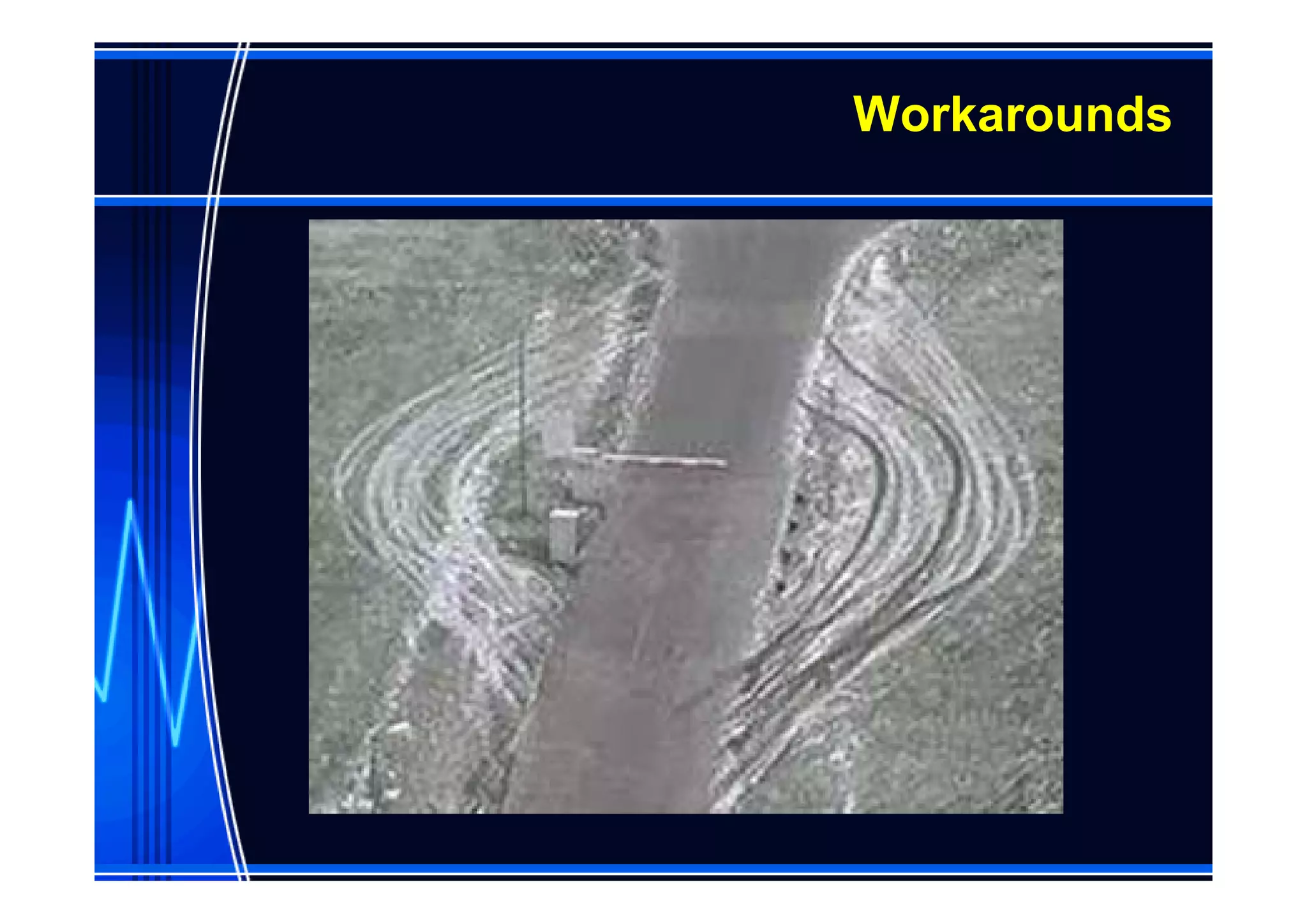
Workarounds
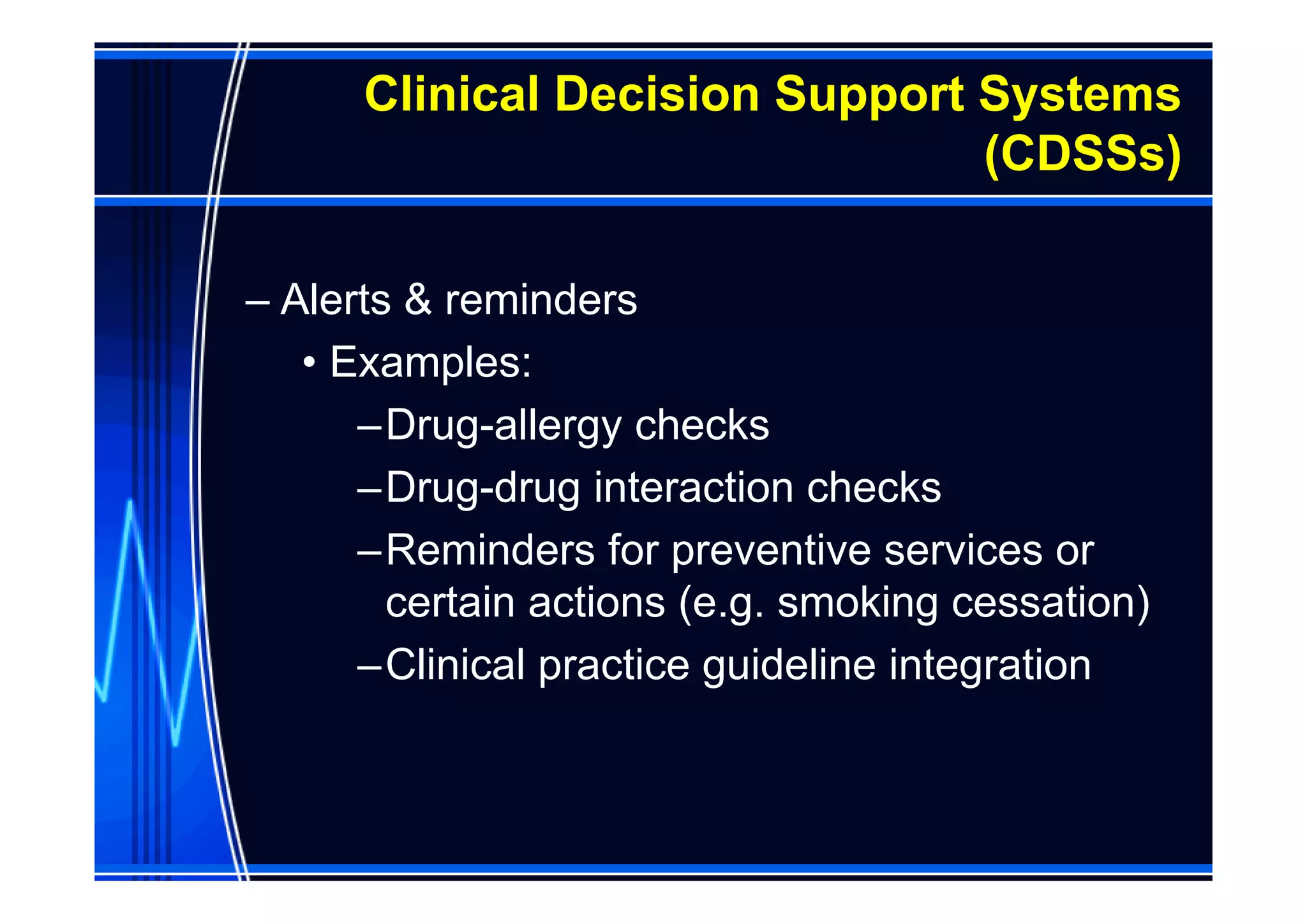
Clinical Decision Support Systems
                                (CDSSs)

– Alerts & reminders
   • Examples:
      –Drug-allergy checks
      –Drug-drug interaction checks
      –Reminders for preventive services or
        certain actions (e.g. smoking cessation)
      –Clinical practice guideline integration
Outline


•   Healthcare & Health IT
•   ER Information Needs
•   Information Systems in ER
•   Implications for Emergency
    Physicians
Implications


– ER has unique information needs
– Health IT offers values to EP
– Health IT has some risks (unintended
  consequences)
– The “right management” is a
  critical success factor
Questions?

IT and Data Management in ER

  • 1.
    IT and DataManagement in the ER Nawanan Theera-Ampornpunt, MD, PhD Faculty of Medicine Ramathibodi Hospital
  • 2.
    Outline • Healthcare & Health IT • ER Information Needs • Information Systems in ER • Implications for Emergency Physicians
  • 3.
    Outline • Healthcare & Health IT • ER Information Needs • Information Systems in ER • Implications for Emergency Physicians
  • 4.
    Manufacturing Image Source: Guardian.co.uk
  • 5.
  • 6.
    Health care ER - Image Source: nj.com
  • 7.
    Why Health careIsn’t Like Any Others? • Life-or-Death • Many & varied stakeholders • Strong professional values • Evolving standards of care • Fragmented, poorly-coordinated systems • Large, ever-growing & changing body of knowledge • High volume, low resources, little time
  • 8.
  • 9.
    Health IT: What’sIn A Word? Health Goal Information Value- Add Technology Tools
  • 10.
    Outline • Healthcare & Health IT • ER Information Needs • Information Systems in ER • Implications for Emergency Physicians
  • 11.
    ER Information Needs •Patient history – Problem list, comorbidities – Medication list – Previous visits • Patient Safety – Allergies • Treatment-Related – Drug interactions – Medical references – Lab & investigation results • Patient Management – Progress tracking – Location tracking
  • 12.
    Problems with InformationManagement in ER • Limited available information • Often unreliable or incomplete • Unpredictable presentations • Urgency - Race against time • Importance of triage (separate signal from noise) • Crowded ER, poor operational efficiency
  • 13.
    To Err IsHuman • Example: Lack of Attention Image Source: aafp.org
  • 14.
    Value of HealthIT • Guideline adherence • Better documentation • Practitioner decision making or process of care • Medication safety • Patient surveillance & monitoring • Patient education/reminder
  • 15.
    Outline • Healthcare & Health IT • ER Information Needs • Information Systems in ER • Implications for Emergency Physicians
  • 16.
    EHRs & HIS ElectronicHealth Records (EHRs) Hospital Information Electronic Medical System (HIS) Records (EMRs) Electronic Patient Records (EPRs) Clinical Information Computer-Based System (CIS) Patient Records (CPRs)
  • 17.
    Functions that ShouldBe Part of EHR Systems • Computerized Medication Order Entry • Computerized Laboratory Order Entry • Computerized Laboratory Results • Physician Notes • Patient Demographics • Problem Lists • Medication Lists • Discharge Summaries • Diagnostic Test Results • Radiologic Reports (IOM, 2003; Blumenthal et al, 2006)
  • 18.
  • 19.
    Computerized Physician OrderEntry (CPOE) Values • No handwriting!!! • Structured data entry: Completeness, clarity, fewer mistakes (?) • No transcription errors! • Entry point for CDSSs • Streamlines workflow, increases efficiency
  • 20.
    Clinical Decision SupportSystems (CDSSs) • The real place where most of the values of health IT can be achieved – Expert systems • Based on artificial intelligence, machine learning, rules, or statistics • Examples: differential diagnoses, treatment options
  • 21.
    Clinical Decision SupportSystems (CDSSs) – Alerts & reminders • Examples: –Drug-allergy checks –Drug-drug interaction checks –Reminders for preventive services or certain actions (e.g. smoking cessation) –Clinical practice guideline integration
  • 22.
    Example of “Alerts& Reminders”
  • 23.
    Clinical Decision SupportSystems (CDSSs) – Evidence-based knowledge sources e.g. drug database, literature – Simple UI designed to help clinical decision making • E.g., Abnormal Lab Highlights
  • 24.
    Health Information Exchange(HIE) Government Hospital A Hospital B Clinic C Lab Patient at Home
  • 25.
    People-Process-Technology Technology People Process
  • 26.
    Critical Success Factors in Health IT Projects Communications of plans & progresses Physician & non-physician user involvement Attention to workflow changes Well-executed project management Adequate user training Organizational learning Organizational innovativeness Theera-Ampornpunt (2011)
  • 27.
    Unintended Consequences ofHealth IT Some risks • Alert fatigue
  • 28.
  • 29.
    Clinical Decision SupportSystems (CDSSs) – Alerts & reminders • Examples: –Drug-allergy checks –Drug-drug interaction checks –Reminders for preventive services or certain actions (e.g. smoking cessation) –Clinical practice guideline integration
  • 30.
    Outline • Healthcare & Health IT • ER Information Needs • Information Systems in ER • Implications for Emergency Physicians
  • 31.
    Implications – ER hasunique information needs – Health IT offers values to EP – Health IT has some risks (unintended consequences) – The “right management” is a critical success factor
  • 32.