The IT ACT 2000
 An Act to provide Legal Recognition for E-
Commerce.
 EDI transactions and Electronic communications
 Use of alternatives to paper based methods of
communication and storage of information.
 To facilitate electronic filing of documents with the
Government agencies.
 And further to amend:
Indian penal code
The Indian Evidence Act, 1872
The Bankers Books Evidence Act, 1891 & RBI
Act 1934.
Objectives of IT Act 2000.
 Legal recognition to digital signatures.
 Electronic governance.
 Mode of Attribution, acknowledgement and
dispatch of electronic records.
 Secure electronic records.
 Regulation of certification authorities.
 Digital certificates.
 Duties of subscribers.
 Protection to network service providers in certain
situations.
 Penalties and adjudication.
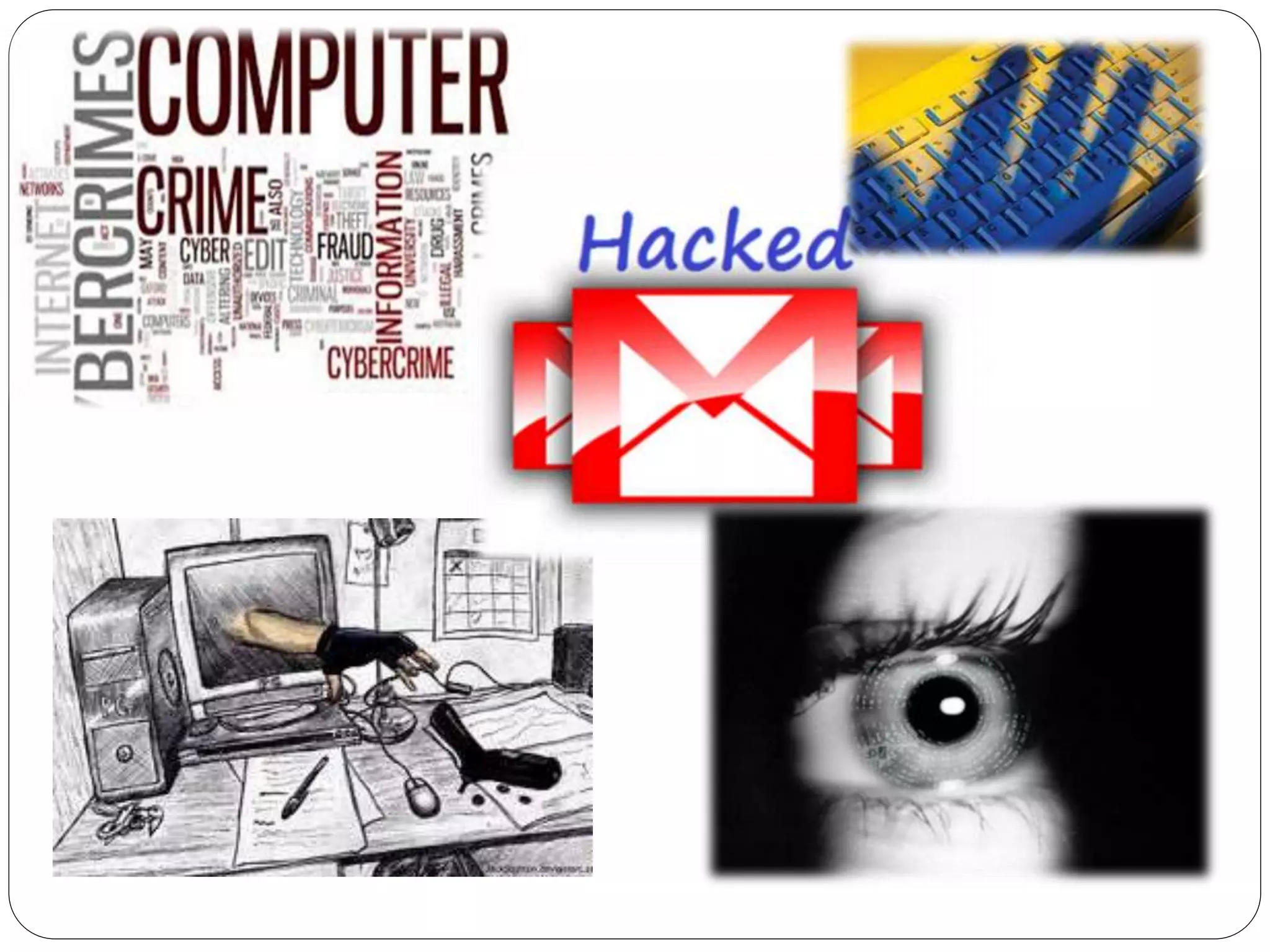
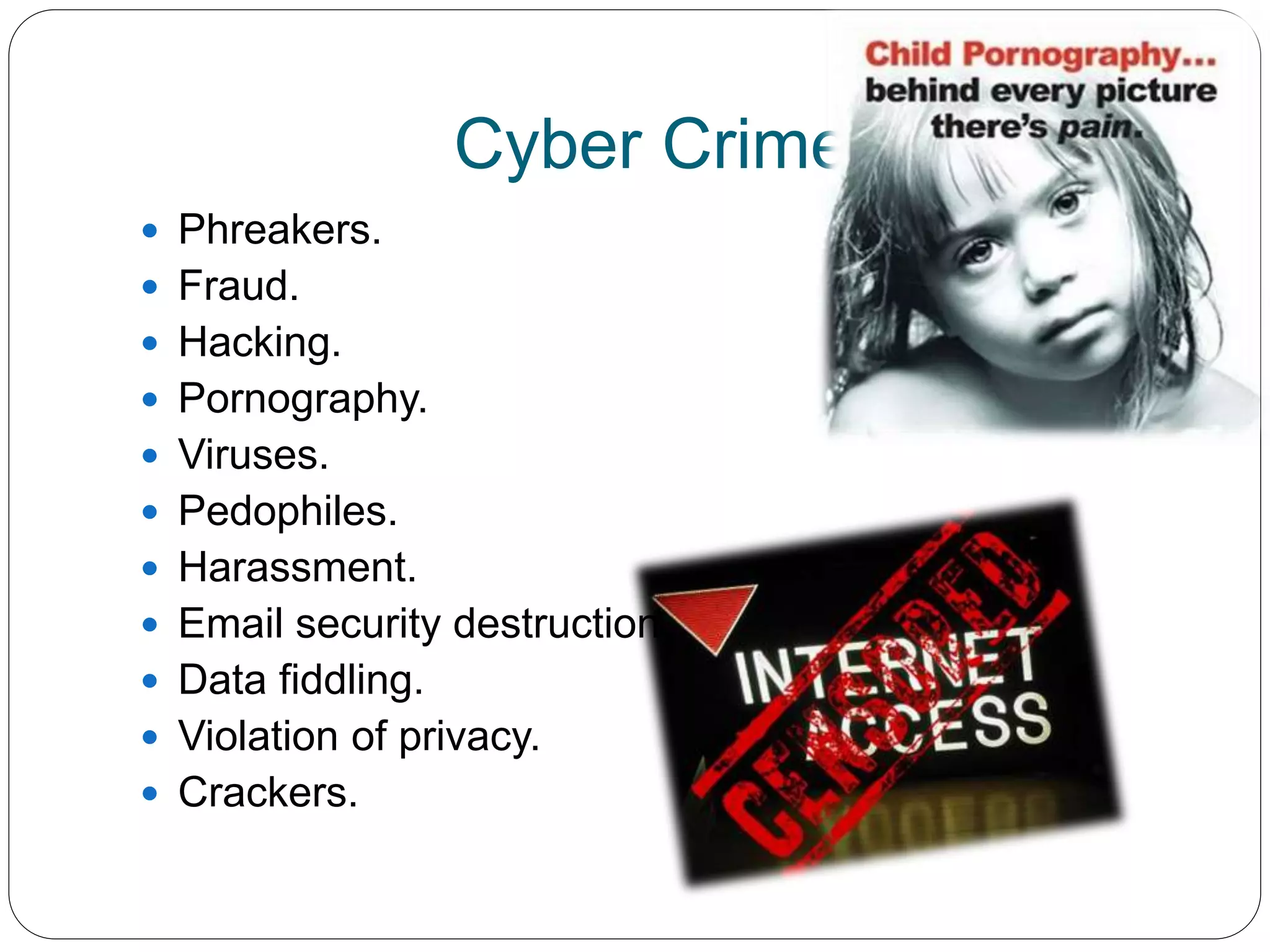
Cyber Crimes.
 Phreakers.
 Fraud.
 Hacking.
 Pornography.
 Viruses.
 Pedophiles.
 Harassment.
 Email security destruction.
 Data fiddling.
 Violation of privacy.
 Crackers.
Measures to counter cyber crimes.
 Technical.
 Counter-Terror Social Network Analysis and Intent
Recognition.
 Economic.
 Legal.
 The Computer Fraud and Abuse Act.
 The Digital Millennium Copyright Act.
 The Electronic Communications Privacy Act.
 The Stored Communications Act.
 Identity Theft and Aggravated Identity Theft.
 Identity Theft and Assumption Deterrence Act.
 Gramm-Leach-Bliley Act.
 Internet Spyware Prevention Act.
Advantages of I.T. Act 2000
 Helpful to promote e-commerce
• Email is valid.
• Digital signature is valid.
• Payment via credit card is valid.
• Online contract is valid .
 Enhance the corporate business.
 Filling online forms.
 High penalty for cyber crime.
Shortcomings of I.T. Act 2000
Infringement of copyright has not been included
in this law.
 No protection for domain names.
The act is not applicable on the power of
attorney, trusts and will.
 Act is silent on taxation.
No, provision of payment of stamp duty on
electronic documents.
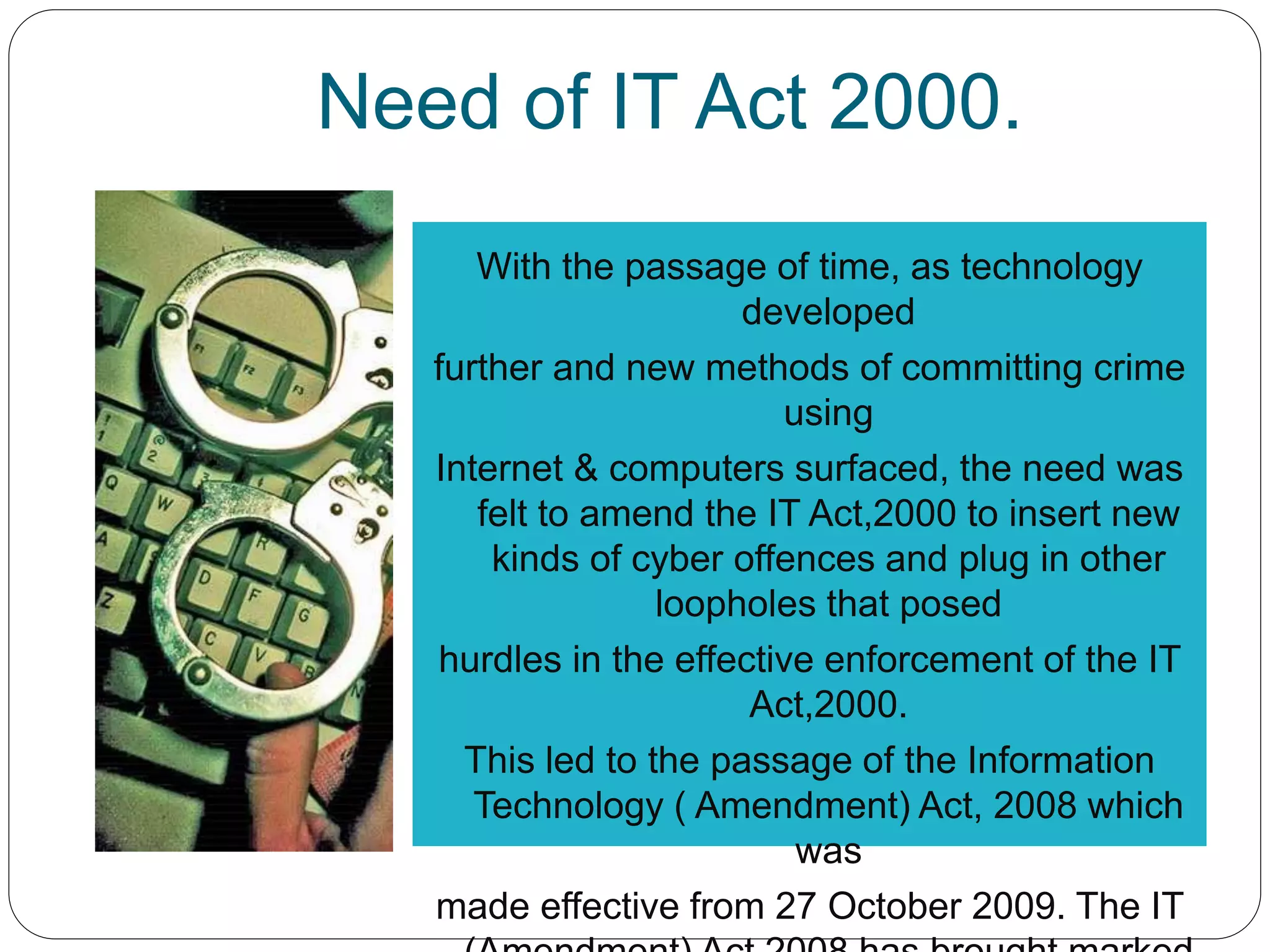
Need of IT Act 2000.
With the passage of time, as technology
developed
further and new methods of committing crime
using
Internet & computers surfaced, the need was
felt to amend the IT Act,2000 to insert new
kinds of cyber offences and plug in other
loopholes that posed
hurdles in the effective enforcement of the IT
Act,2000.
This led to the passage of the Information
Technology ( Amendment) Act, 2008 which
was
made effective from 27 October 2009. The IT
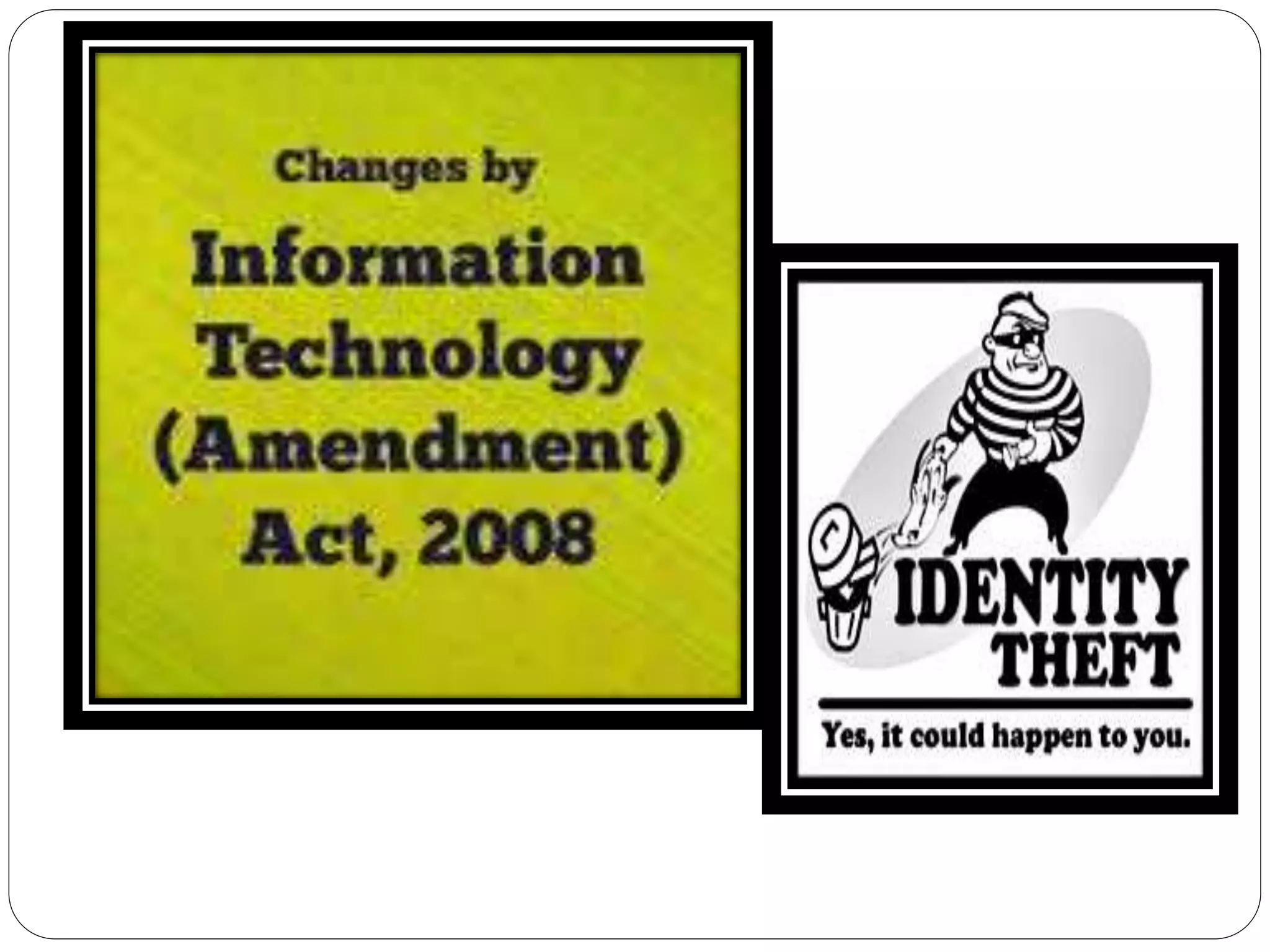
The Information Technology
(Amendment) Act, 2008
 It has provided additional focus on Information
Security.
 It has added several new sections on offences
including Cyber Terrorism and Data Protection.
 A set of Rules relating to Sensitive Personal
Information and Reasonable Security Practices
(mentioned in section 43A of the ITAA, 2008) was
released in April 2011.
Criticisms of ITAA 2008.
 The amendment was passed in an
eventful Parliamentary session on
23rd of December 2008 with no
discussion in the House.
 The cyber law observers have criticized
the amendments on the ground of lack
of legal and procedural safeguards to
prevent violation of civil liberties of
Indians.
 Official website of Maharashtra government
hacked.
 Three people held guilty in on line credit card
scam.
 Some computer experts managed to break into
the high security computer network of Bhabha
Atomic Research Center but were luckily
detected.
THANKING YOU.
PRESENTED BY-
PAYAL SINHA

IT act 2000

  • 2.
    The IT ACT2000  An Act to provide Legal Recognition for E- Commerce.  EDI transactions and Electronic communications  Use of alternatives to paper based methods of communication and storage of information.  To facilitate electronic filing of documents with the Government agencies.  And further to amend: Indian penal code The Indian Evidence Act, 1872 The Bankers Books Evidence Act, 1891 & RBI Act 1934.
  • 3.
    Objectives of ITAct 2000.  Legal recognition to digital signatures.  Electronic governance.  Mode of Attribution, acknowledgement and dispatch of electronic records.  Secure electronic records.  Regulation of certification authorities.  Digital certificates.  Duties of subscribers.  Protection to network service providers in certain situations.  Penalties and adjudication.
  • 6.
    Cyber Crimes.  Phreakers. Fraud.  Hacking.  Pornography.  Viruses.  Pedophiles.  Harassment.  Email security destruction.  Data fiddling.  Violation of privacy.  Crackers.
  • 7.
    Measures to countercyber crimes.  Technical.  Counter-Terror Social Network Analysis and Intent Recognition.  Economic.  Legal.  The Computer Fraud and Abuse Act.  The Digital Millennium Copyright Act.  The Electronic Communications Privacy Act.  The Stored Communications Act.  Identity Theft and Aggravated Identity Theft.  Identity Theft and Assumption Deterrence Act.  Gramm-Leach-Bliley Act.  Internet Spyware Prevention Act.
  • 8.
    Advantages of I.T.Act 2000  Helpful to promote e-commerce • Email is valid. • Digital signature is valid. • Payment via credit card is valid. • Online contract is valid .  Enhance the corporate business.  Filling online forms.  High penalty for cyber crime.
  • 9.
    Shortcomings of I.T.Act 2000 Infringement of copyright has not been included in this law.  No protection for domain names. The act is not applicable on the power of attorney, trusts and will.  Act is silent on taxation. No, provision of payment of stamp duty on electronic documents.
  • 10.
    Need of ITAct 2000. With the passage of time, as technology developed further and new methods of committing crime using Internet & computers surfaced, the need was felt to amend the IT Act,2000 to insert new kinds of cyber offences and plug in other loopholes that posed hurdles in the effective enforcement of the IT Act,2000. This led to the passage of the Information Technology ( Amendment) Act, 2008 which was made effective from 27 October 2009. The IT
  • 12.
    The Information Technology (Amendment)Act, 2008  It has provided additional focus on Information Security.  It has added several new sections on offences including Cyber Terrorism and Data Protection.  A set of Rules relating to Sensitive Personal Information and Reasonable Security Practices (mentioned in section 43A of the ITAA, 2008) was released in April 2011.
  • 13.
    Criticisms of ITAA2008.  The amendment was passed in an eventful Parliamentary session on 23rd of December 2008 with no discussion in the House.  The cyber law observers have criticized the amendments on the ground of lack of legal and procedural safeguards to prevent violation of civil liberties of Indians.
  • 16.
     Official websiteof Maharashtra government hacked.  Three people held guilty in on line credit card scam.  Some computer experts managed to break into the high security computer network of Bhabha Atomic Research Center but were luckily detected.
  • 17.