ISTA 1A
ISTA 1A tests packaged products weighting 150 LB (68 KG) or less. It can be
considered as one of the most basic test sequence of all of the ISTA test
procedures. It can alsos to be considered as a screening test. If you need to
qualify your package for selling to the .com retailers, ISTA 3A should be used
instead. Micom offers ISTA 1A testing as part of its Package testing services.
ISTA 1A use and factors to be considered
ISTA 1A is used to evaluate the performance of a packaged-product and
compare the relative performance of package and product design
alternatives. While testing to this standard, the package and product are
considered together and not separately. Both product and package need to be
tested together. ISTA 1A does not cover specific conditions of transit such as
moisture, pressure or unusual handling. If these distribution hazards are of
concern to you, we recommend using the ISTA 2A package testing
standard instead.
ISTA 1A calls for the use of a fixed displacement vibration test. Random
vibration testing is a much more realistic test. If you need to use random
vibration instead of fixed displacement vibration, we recommend using
either ISTA 1G or ISTA 2A package testing standards instead.
ISTA standards require a minimum of 1 sample to be tested. For final
packaging design purposes, a higher number of samples is recommended.
You should ideally test 5 or more samples. However, only one testing sample
is mandatory. Alternatively, the ASTM D4169 can also be used as a test
method.
Packages that have already been subjected to the rigors of transportation
prior to the test cannot be assumed to represent standard conditions. In order
to insure testing in optimal condition, products and packages shipped to
certified laboratories for testing must be over-packaged for shipment to the
laboratory or repackaged in new packaging at the laboratory.
Test Sequence under the ISTA 1A standard
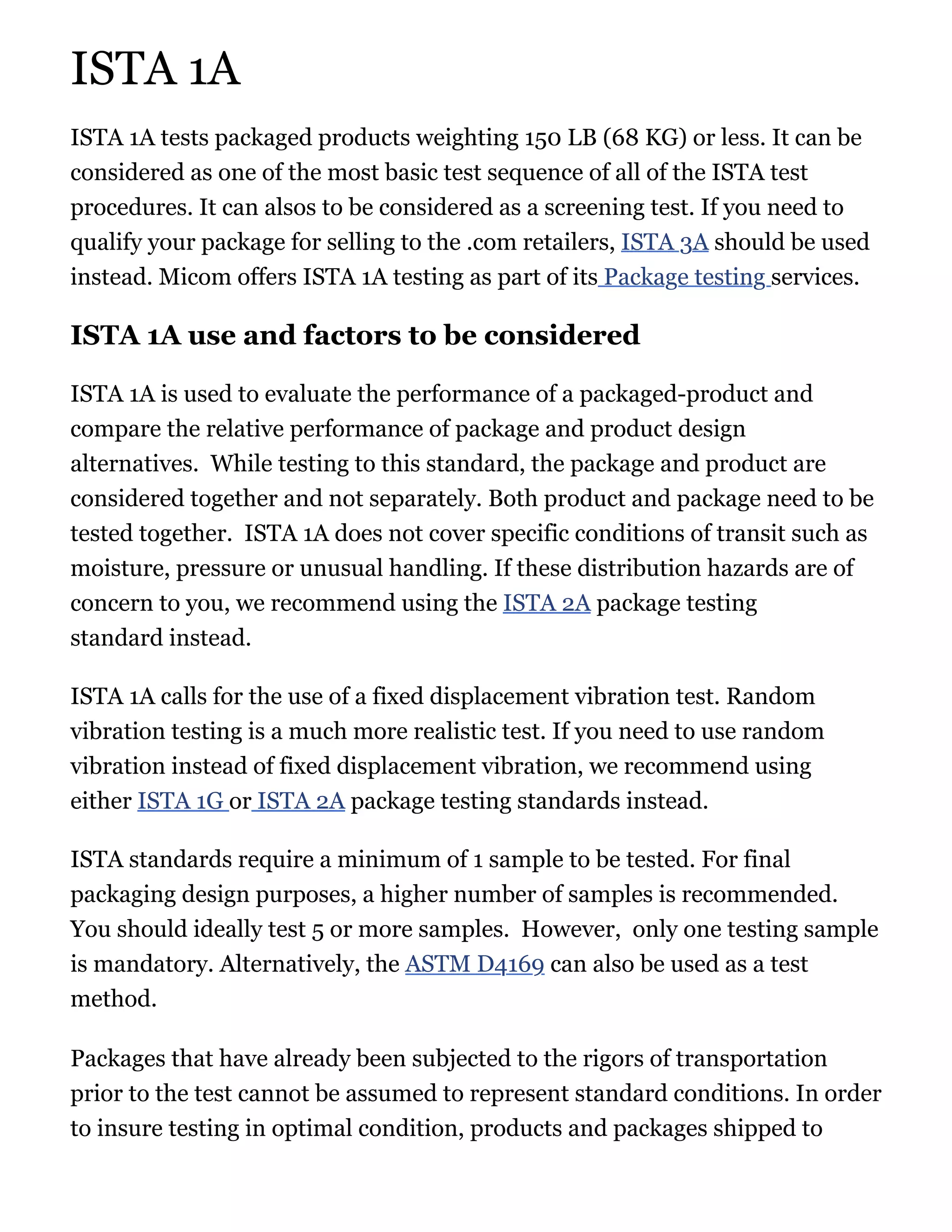
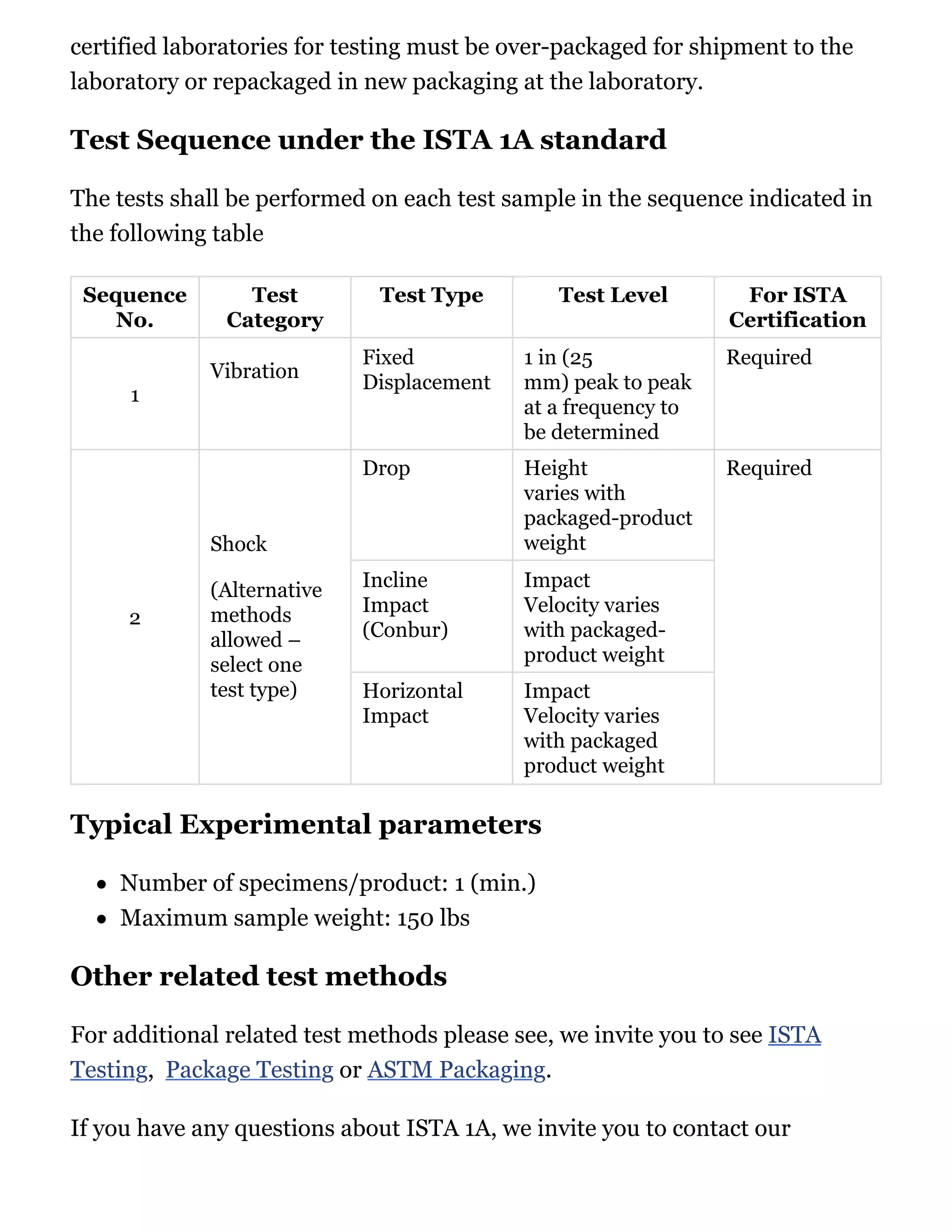
The tests shall be performed on each test sample in the sequence indicated in
the following table
Sequence
No.
Test
Category
Test Type Test Level For ISTA
Certification
1
Vibration
Fixed
Displacement
1 in (25
mm) peak to peak
at a frequency to
be determined
Required
2
Shock
(Alternative
methods
allowed –
select one
test type)
Drop Height
varies with
packaged-product
weight
Required
Incline
Impact
(Conbur)
Impact
Velocity varies
with packaged-
product weight
Horizontal
Impact
Impact
Velocity varies
with packaged
product weight
Typical Experimental parameters
Number of specimens/product: 1 (min.)
Maximum sample weight: 150 lbs
Other related test methods
For additional related test methods please see, we invite you to see ISTA
Testing, Package Testing or ASTM Packaging.
If you have any questions about ISTA 1A, we invite you to contact our
material testing lab. It will be our pleasure to answer your questions and help
you with your unique package testing requirements.
« Go Back

ISTA 1A - Packaging test offered at Micom Laboratories

  • 1.
    ISTA 1A ISTA 1Atests packaged products weighting 150 LB (68 KG) or less. It can be considered as one of the most basic test sequence of all of the ISTA test procedures. It can alsos to be considered as a screening test. If you need to qualify your package for selling to the .com retailers, ISTA 3A should be used instead. Micom offers ISTA 1A testing as part of its Package testing services. ISTA 1A use and factors to be considered ISTA 1A is used to evaluate the performance of a packaged-product and compare the relative performance of package and product design alternatives. While testing to this standard, the package and product are considered together and not separately. Both product and package need to be tested together. ISTA 1A does not cover specific conditions of transit such as moisture, pressure or unusual handling. If these distribution hazards are of concern to you, we recommend using the ISTA 2A package testing standard instead. ISTA 1A calls for the use of a fixed displacement vibration test. Random vibration testing is a much more realistic test. If you need to use random vibration instead of fixed displacement vibration, we recommend using either ISTA 1G or ISTA 2A package testing standards instead. ISTA standards require a minimum of 1 sample to be tested. For final packaging design purposes, a higher number of samples is recommended. You should ideally test 5 or more samples. However, only one testing sample is mandatory. Alternatively, the ASTM D4169 can also be used as a test method. Packages that have already been subjected to the rigors of transportation prior to the test cannot be assumed to represent standard conditions. In order to insure testing in optimal condition, products and packages shipped to
  • 2.
    certified laboratories fortesting must be over-packaged for shipment to the laboratory or repackaged in new packaging at the laboratory. Test Sequence under the ISTA 1A standard The tests shall be performed on each test sample in the sequence indicated in the following table Sequence No. Test Category Test Type Test Level For ISTA Certification 1 Vibration Fixed Displacement 1 in (25 mm) peak to peak at a frequency to be determined Required 2 Shock (Alternative methods allowed – select one test type) Drop Height varies with packaged-product weight Required Incline Impact (Conbur) Impact Velocity varies with packaged- product weight Horizontal Impact Impact Velocity varies with packaged product weight Typical Experimental parameters Number of specimens/product: 1 (min.) Maximum sample weight: 150 lbs Other related test methods For additional related test methods please see, we invite you to see ISTA Testing, Package Testing or ASTM Packaging. If you have any questions about ISTA 1A, we invite you to contact our
  • 3.
    material testing lab.It will be our pleasure to answer your questions and help you with your unique package testing requirements. « Go Back