1
By the end of my 10 minutes, you will learn..
• What IPPOSI stands for?
• How Patient Experience Mapping is relevant in/across Europe?
• Importance of integrating Patient Experience Data with Patient
Engagement
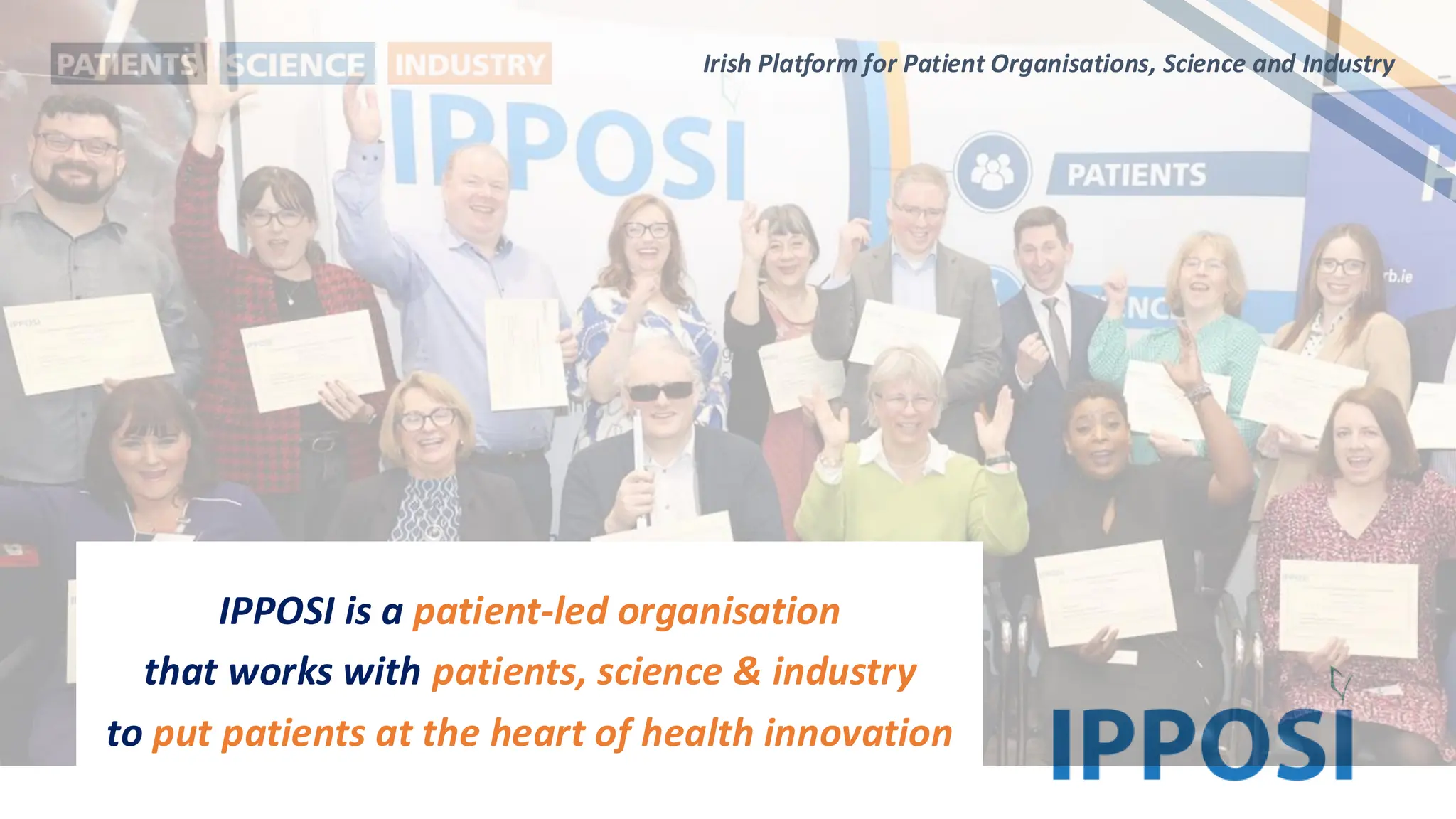
IPPOSI is a patient-led organisation
that works with patients, science & industry
to put patients at the heart of health innovation
Irish Platform for Patient Organisations, Science and Industry
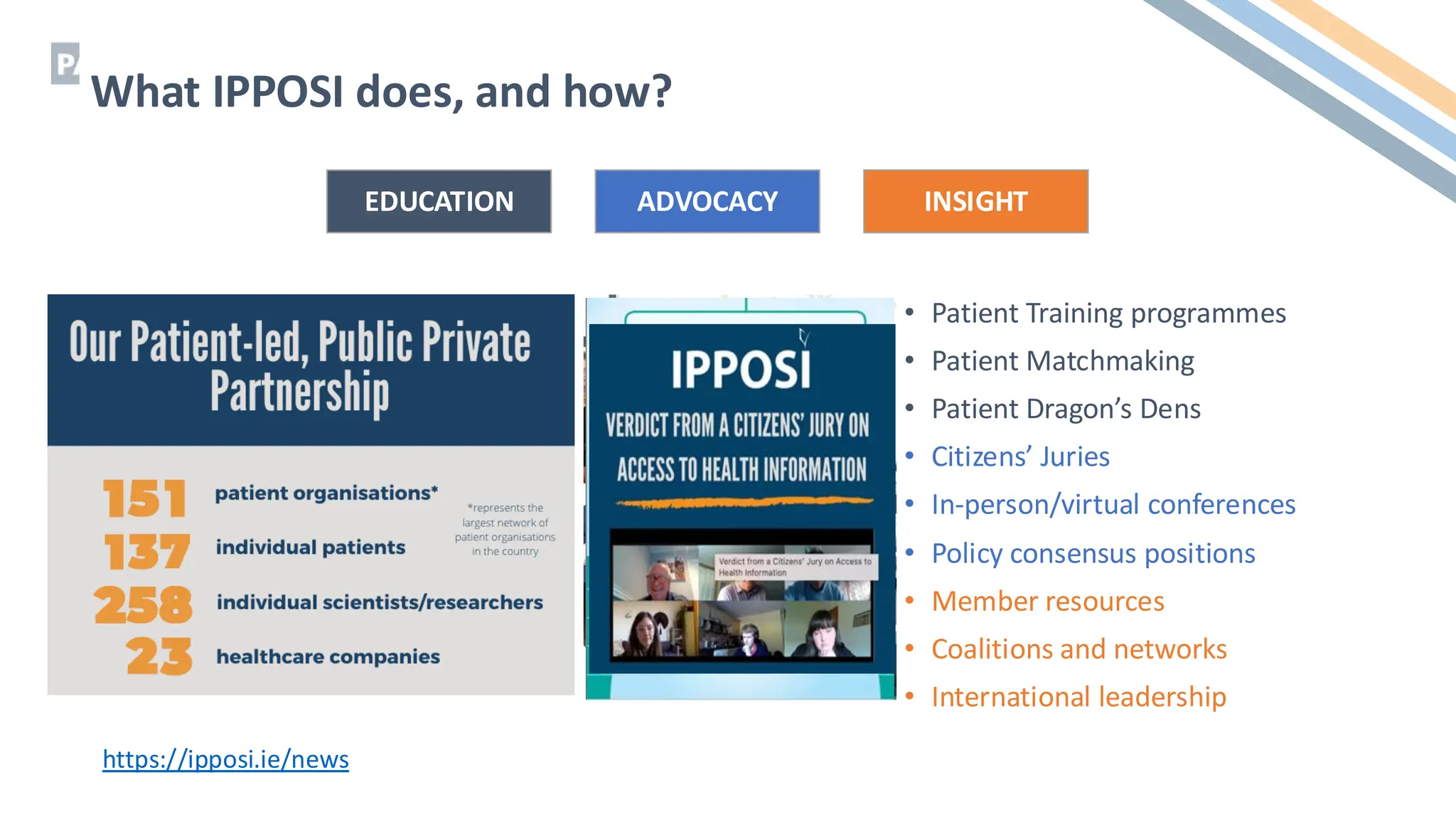
What IPPOSI does, and how?
• Patient Training programmes
• Patient Matchmaking
• Patient Dragon’s Dens
• Citizens’ Juries
• In-person/virtual conferences
• Policy consensus positions
• Member resources
• Coalitions and networks
• International leadership
EDUCATION ADVOCACY INSIGHT
https://ipposi.ie/news
4
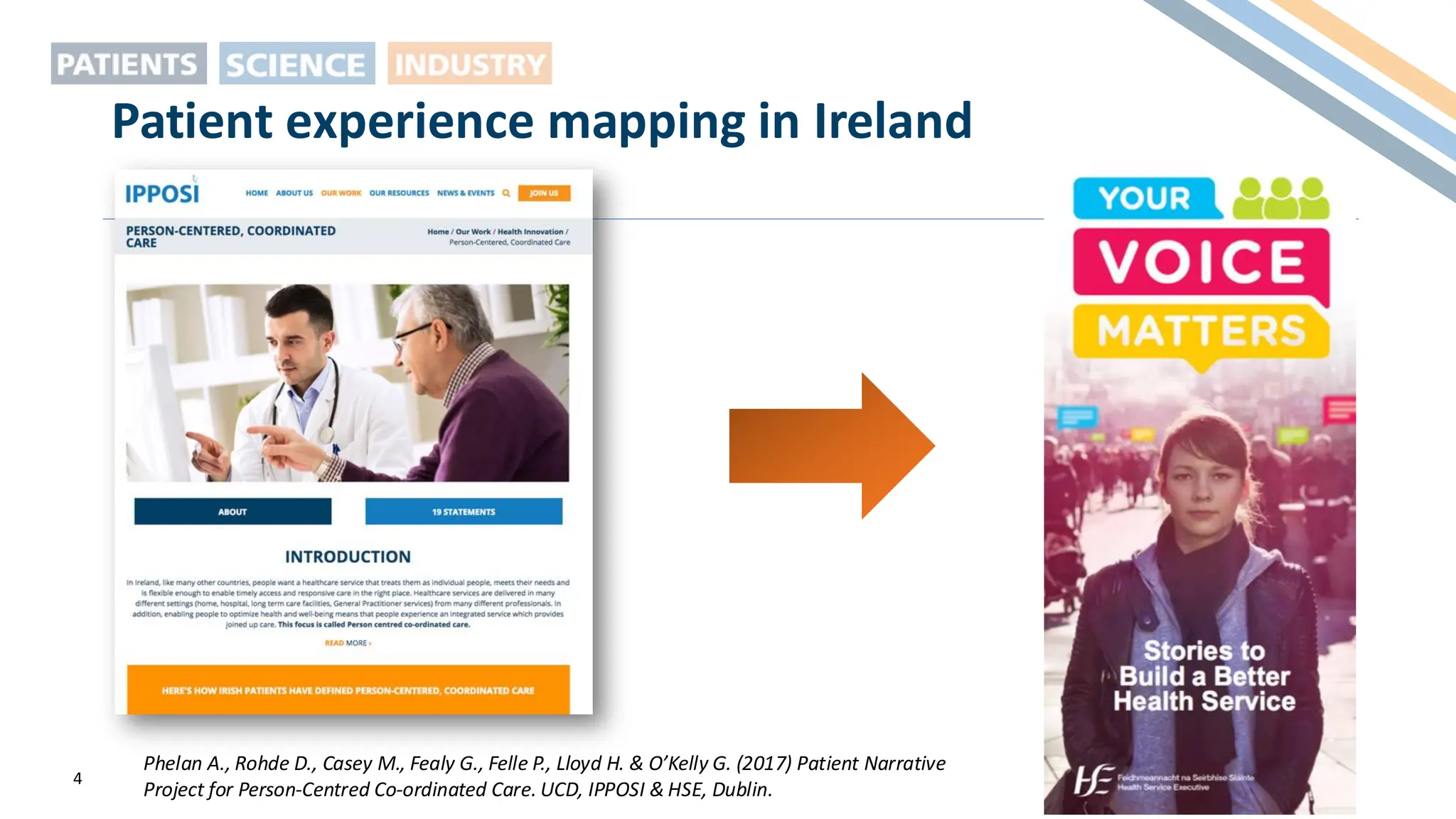
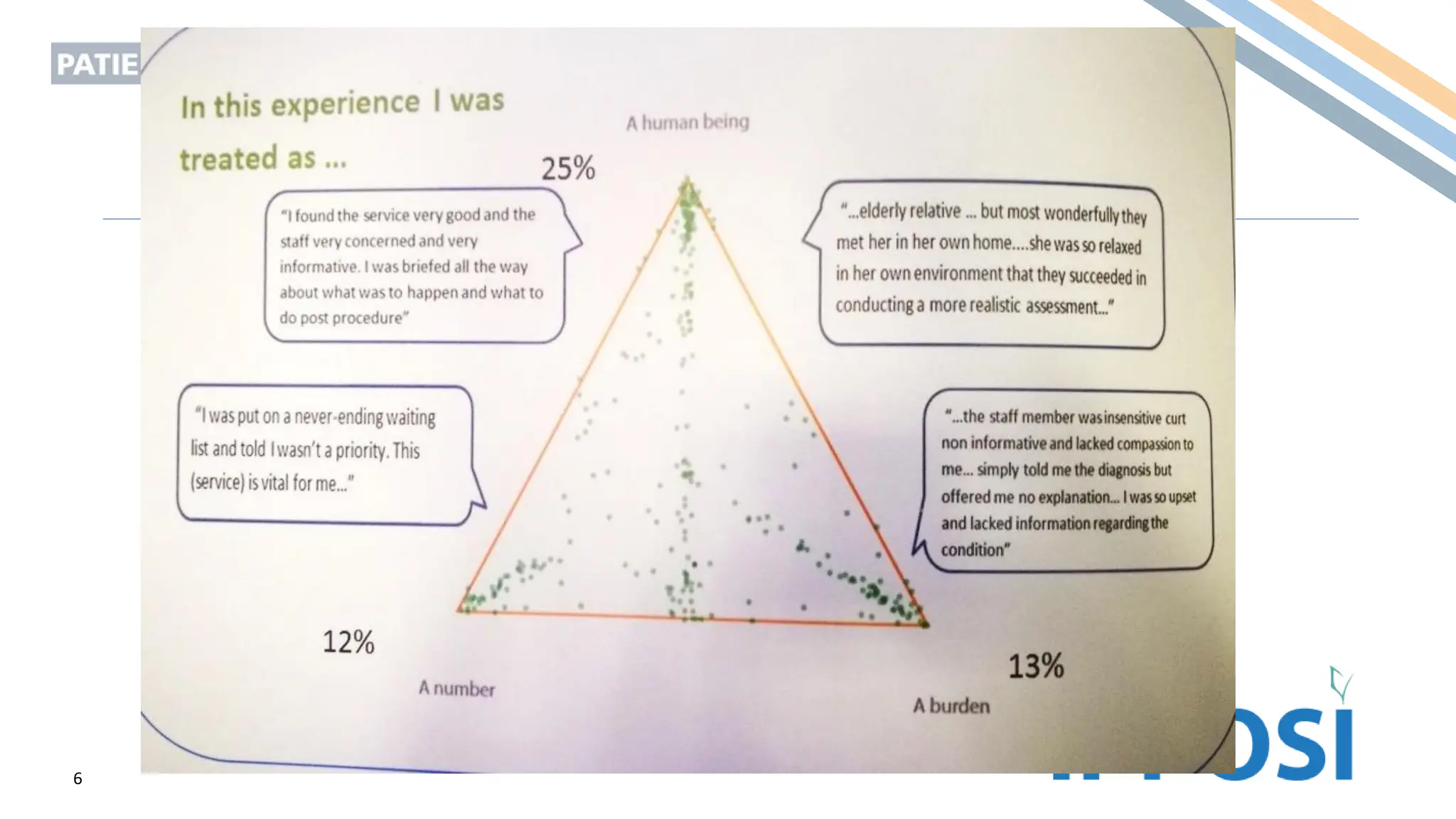
Patient experience mapping in Ireland
Phelan A., Rohde D., Casey M., Fealy G., Felle P., Lloyd H. & O’Kelly G. (2017) Patient Narrative
Project for Person-Centred Co-ordinated Care. UCD, IPPOSI & HSE, Dublin.
5
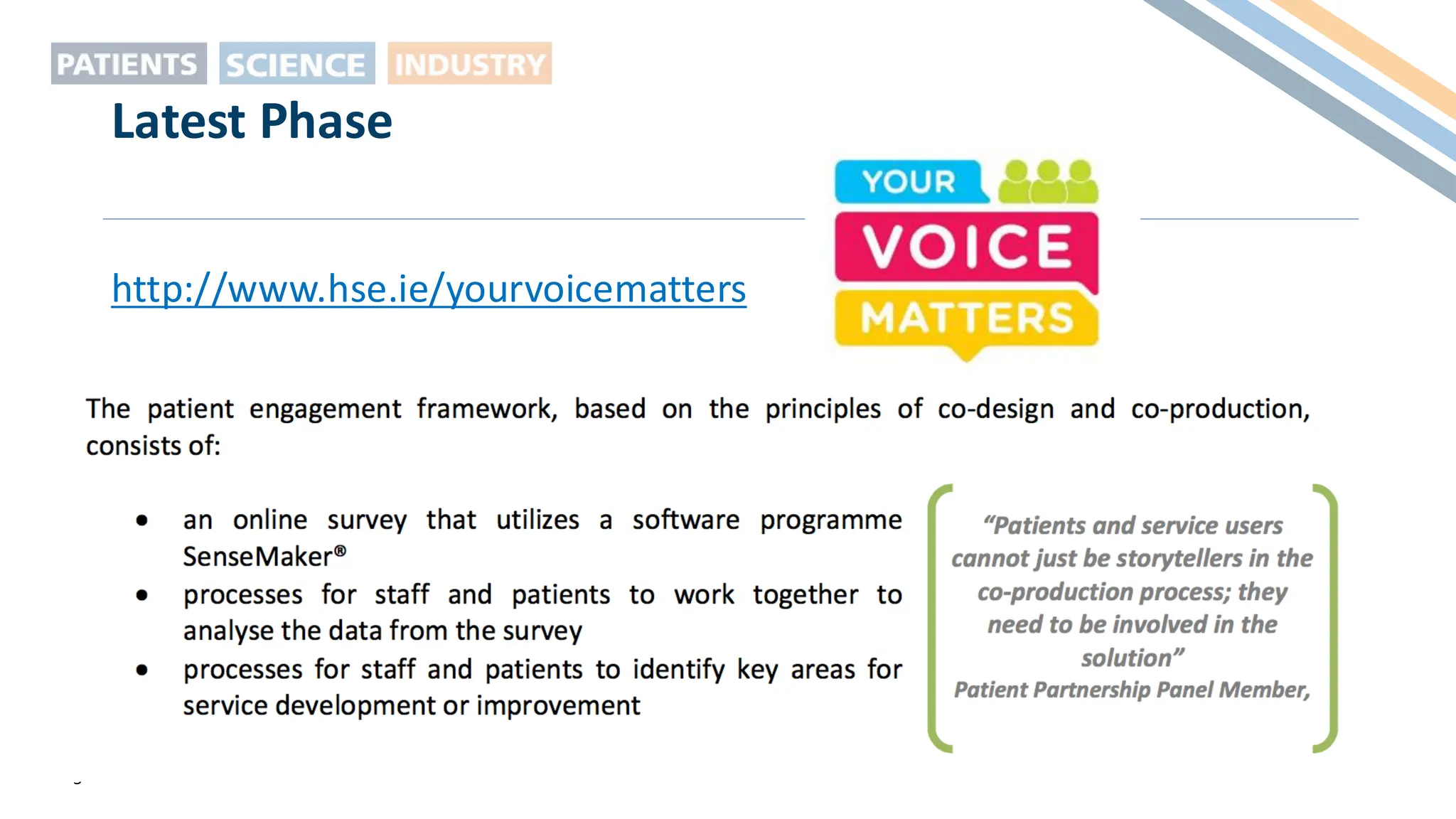
Latest Phase
http://www.hse.ie/yourvoicematters
6
7
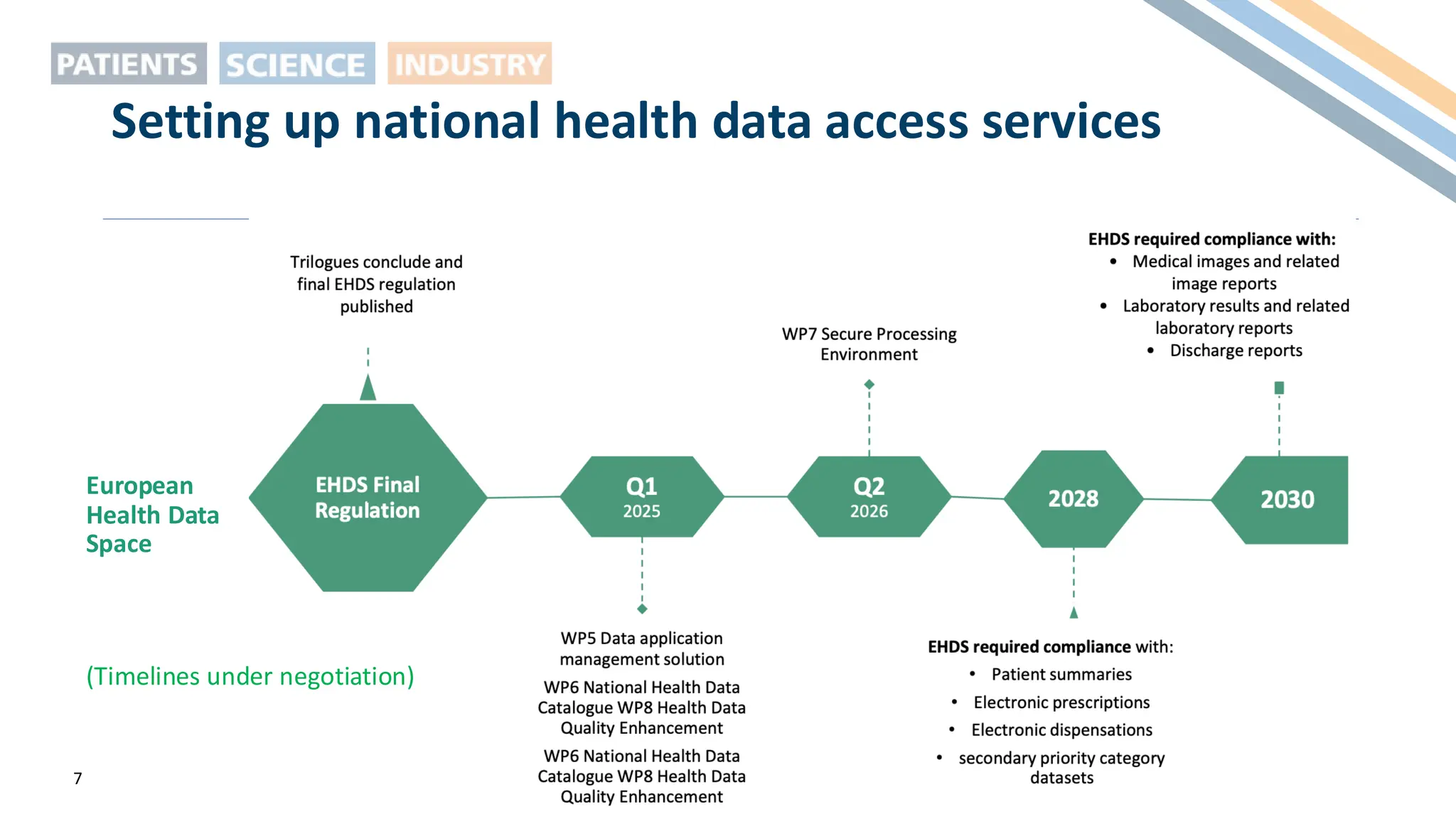
Setting up national health data access services
European
Health Data
Space
(Timelines under negotiation)
8
IPPOSI at EU + Global Levels
www.eupati.eu
www. pfmd.org
www.oecd.org/health/paris
9
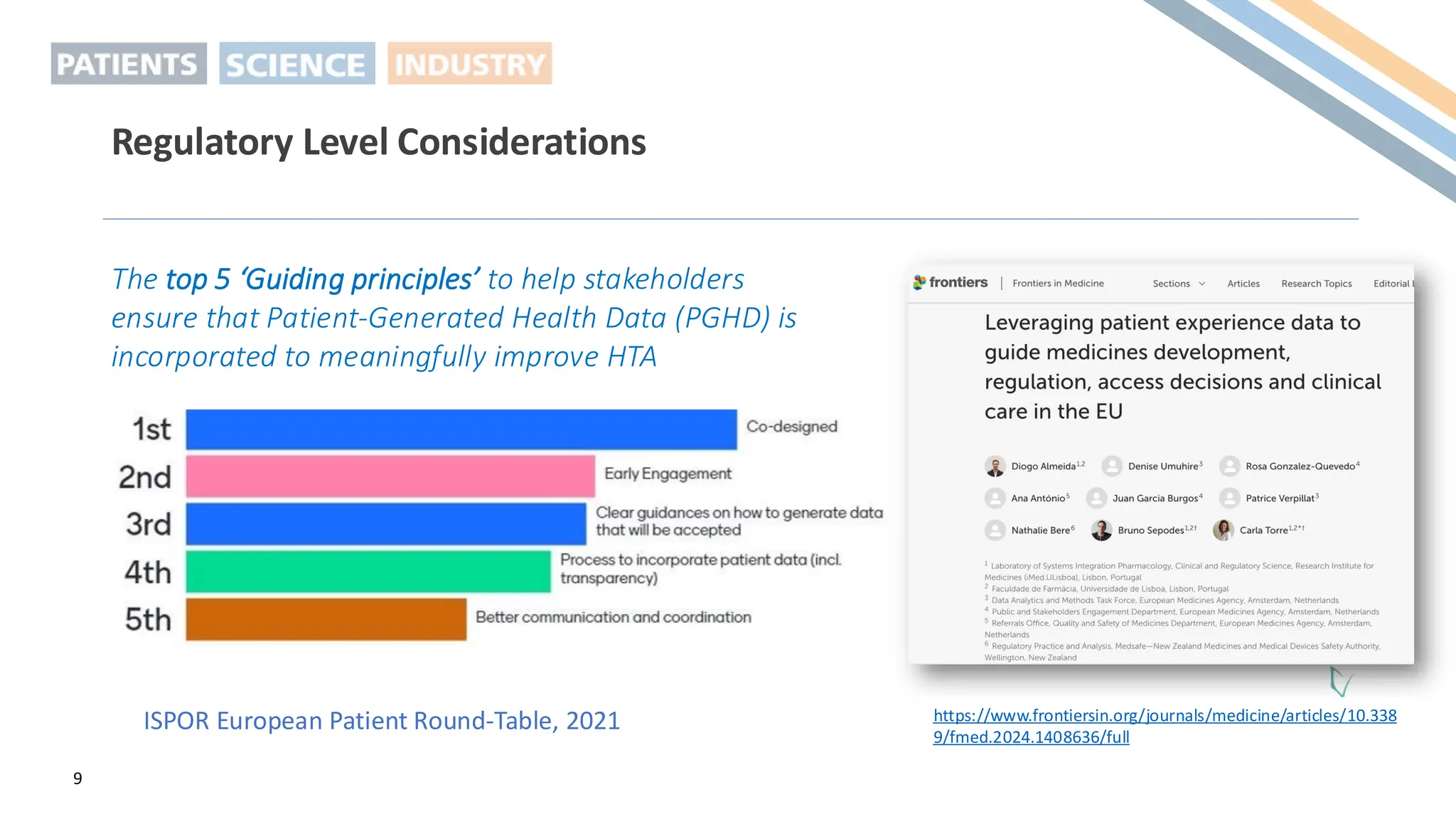
Regulatory Level Considerations
The top 5 ‘Guiding principles’ to help stakeholders
ensure that Patient-Generated Health Data (PGHD) is
incorporated to meaningfully improve HTA
https://www.frontiersin.org/journals/medicine/articles/10.338
9/fmed.2024.1408636/full
ISPOR European Patient Round-Table, 2021
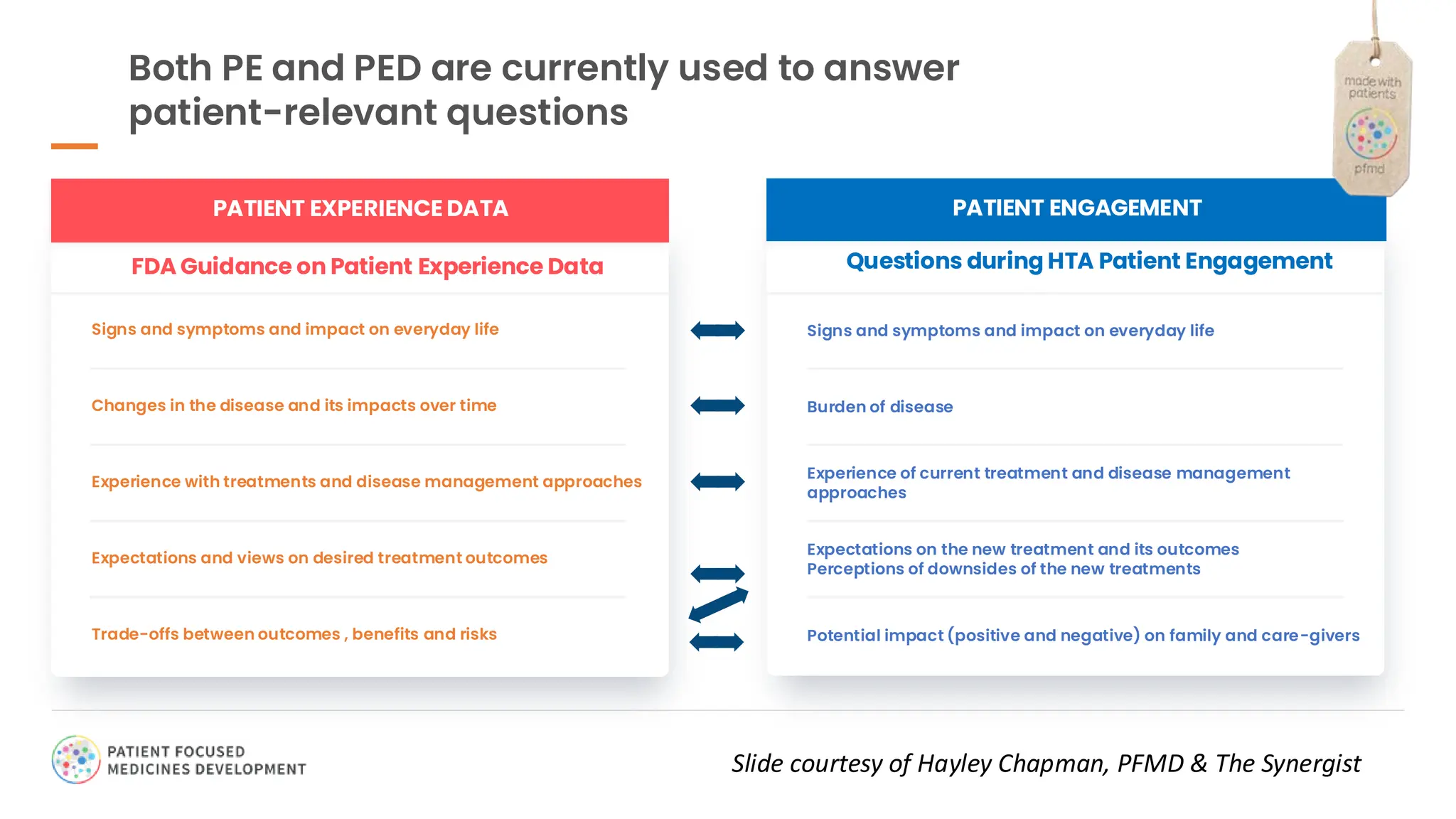
Signs and symptoms and impact on everyday life Signs and symptoms and impact on everyday life
Changes in the disease and its impacts over time
Experience with treatments and disease management approaches
Expectations and views on desired treatment outcomes
Trade-offs between outcomes , benefits and risks
Experience of current treatment and disease management
approaches
Expectations on the new treatment and its outcomes
Perceptions of downsides of the new treatments
Potential impact (positive and negative) on family and care-givers
Burden of disease
Both PE and PED are currently used to answer
patient-relevant questions
FDA Guidance on Patient Experience Data Questions during HTA Patient Engagement
PATIENT ENGAGEMENT
PATIENT EXPERIENCE DATA
Slide courtesy of Hayley Chapman, PFMD & The Synergist
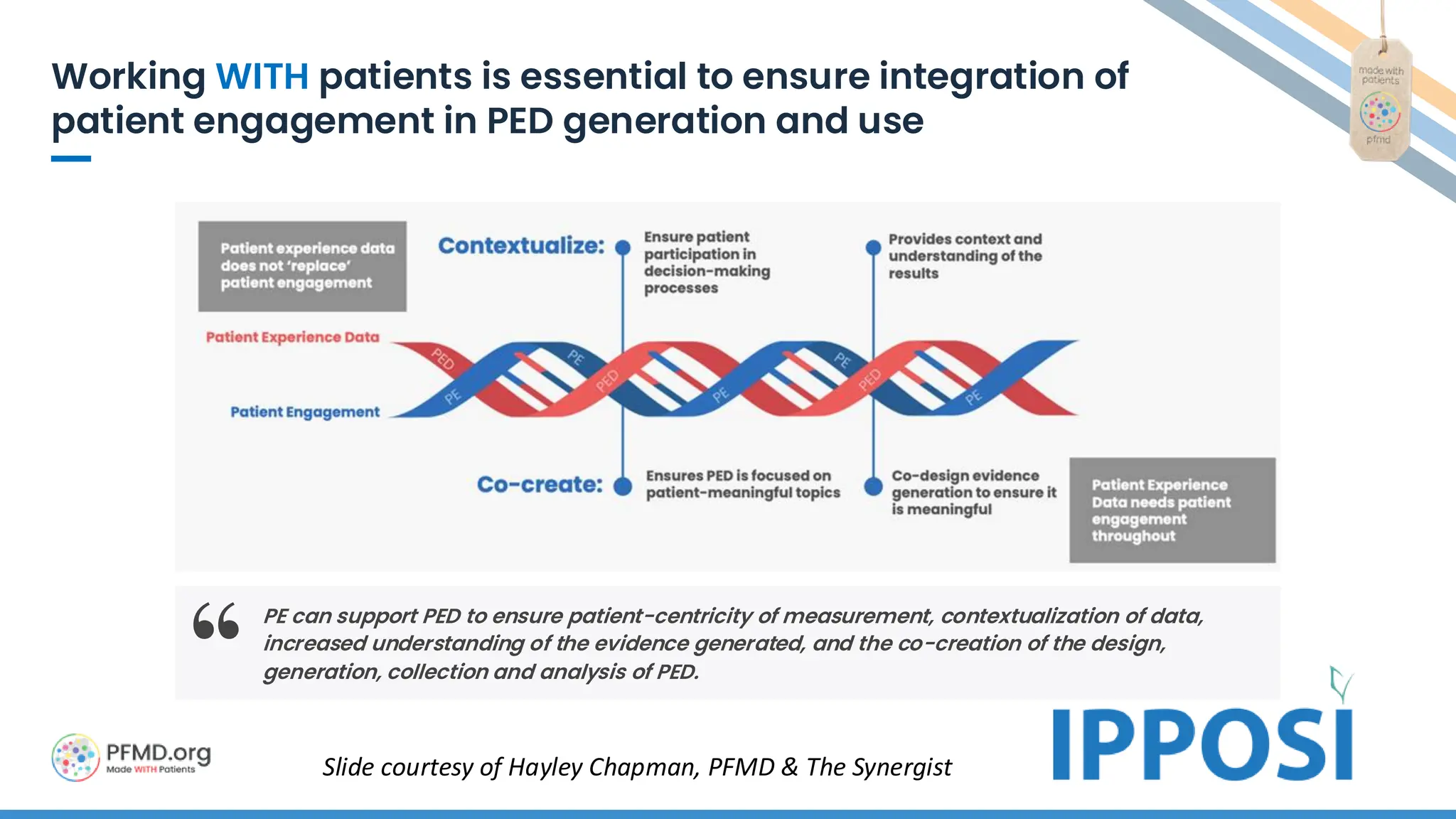
PE can support PED to ensure patient-centricity of measurement, contextualization of data,
increased understanding of the evidence generated, and the co-creation of the design,
generation, collection and analysis of PED.
“
Working WITH patients is essential to ensure integration of
patient engagement in PED generation and use
Slide courtesy of Hayley Chapman, PFMD & The Synergist
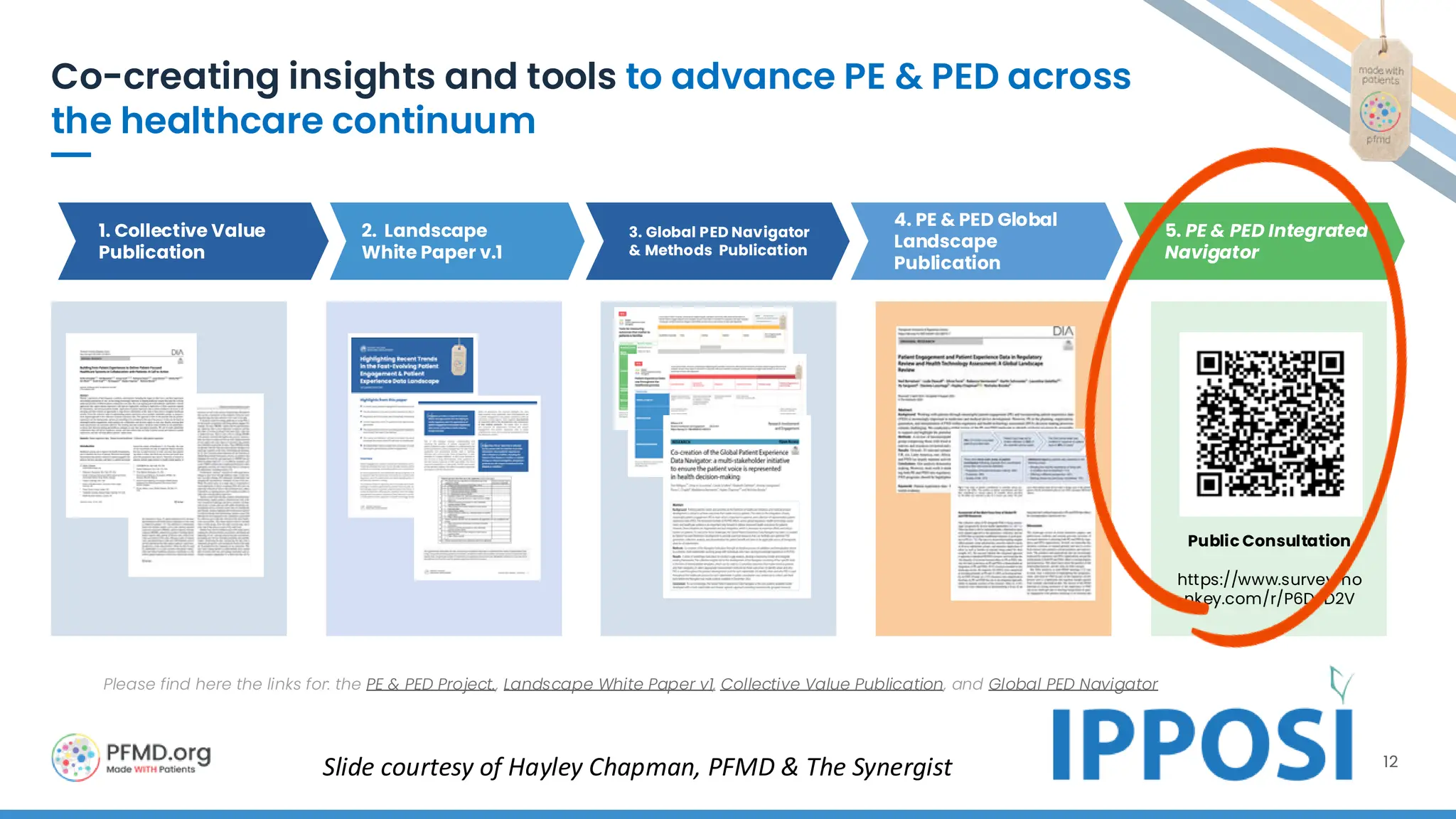
1. Collective Value
Publication
3. Global PED Navigator
& Methods Publication
4. PE & PED Global
Landscape
Publication
Please find here the links for: the PE & PED Project., Landscape White Paper v1, Collective Value Publication, and Global PED Navigator
5. PE & PED Integrated
Navigator
2. Landscape
White Paper v.1
Public Consultation
https://www.surveymo
nkey.com/r/P6DJD2V
12
Co-creating insights and tools to advance PE & PED across
the healthcare continuum
Slide courtesy of Hayley Chapman, PFMD & The Synergist
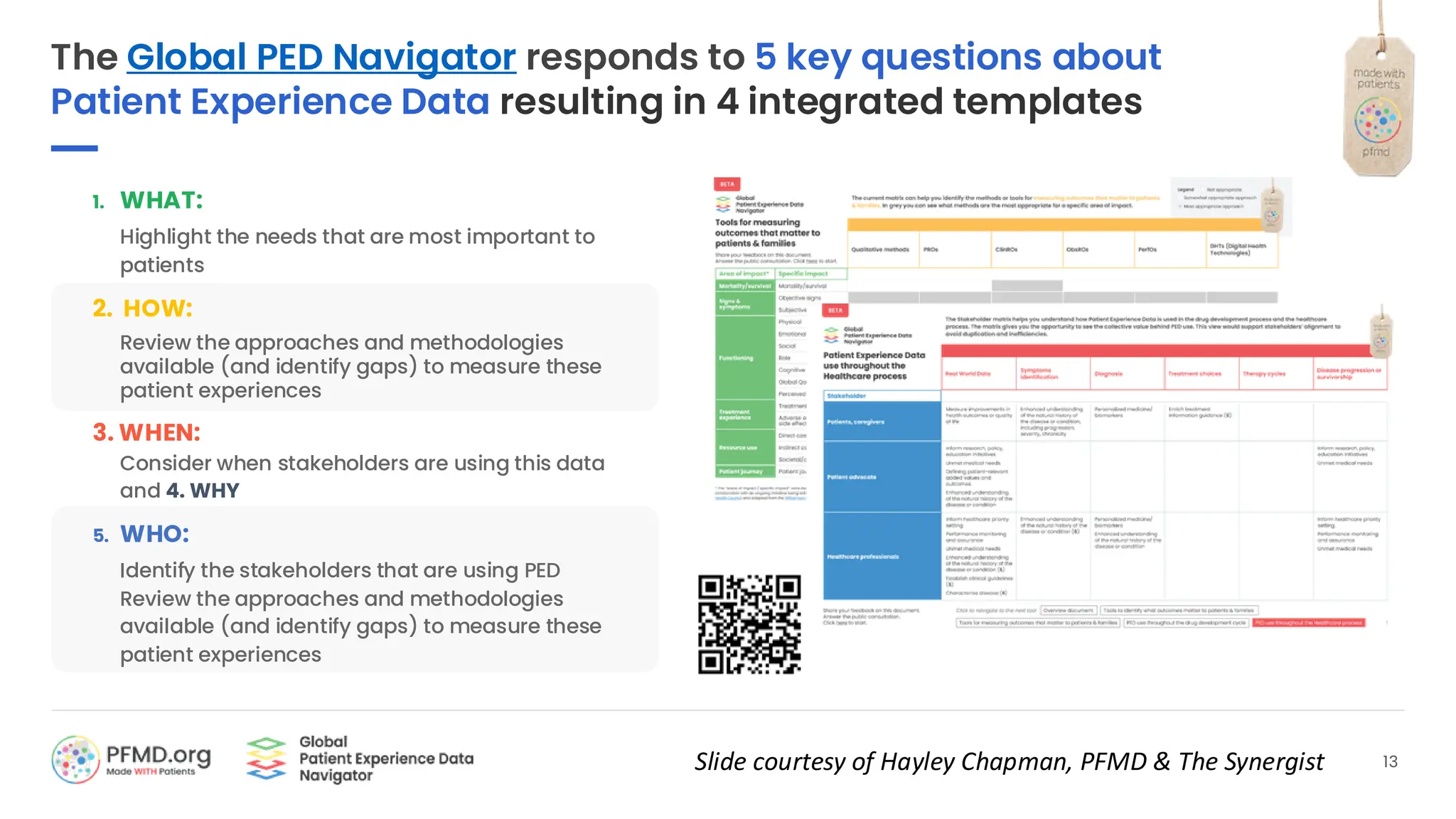
1. WHAT:
Highlight the needs that are most important to
patients
2. HOW:
Review the approaches and methodologies
available (and identify gaps) to measure these
patient experiences
3. WHEN:
Consider when stakeholders are using this data
and 4. WHY
5. WHO:
Identify the stakeholders that are using PED
Review the approaches and methodologies
available (and identify gaps) to measure these
patient experiences
The Global PED Navigator responds to 5 key questions about
Patient Experience Data resulting in 4 integrated templates
13
Slide courtesy of Hayley Chapman, PFMD & The Synergist
14
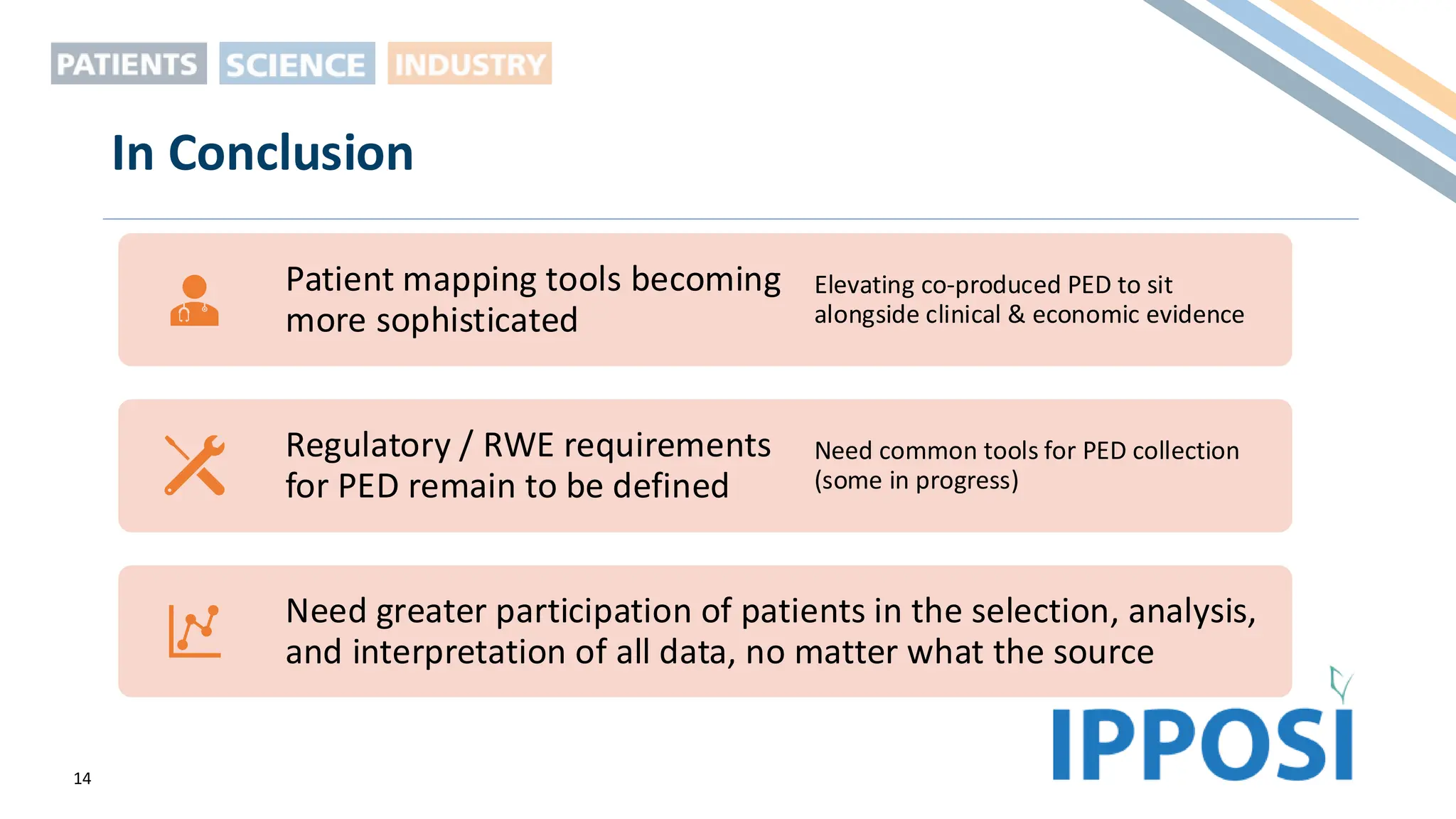
In Conclusion
Patient mapping tools becoming
more sophisticated
Elevating co-produced PED to sit
alongside clinical & economic evidence
Regulatory / RWE requirements
for PED remain to be defined
Need common tools for PED collection
(some in progress)
Need greater participation of patients in the selection, analysis,
and interpretation of all data, no matter what the source

ISPOR EU 2024 - IPPOSI slides - Patient Experience Data

  • 1.
    1 By the endof my 10 minutes, you will learn.. • What IPPOSI stands for? • How Patient Experience Mapping is relevant in/across Europe? • Importance of integrating Patient Experience Data with Patient Engagement
  • 2.
    IPPOSI is apatient-led organisation that works with patients, science & industry to put patients at the heart of health innovation Irish Platform for Patient Organisations, Science and Industry
  • 3.
    What IPPOSI does,and how? • Patient Training programmes • Patient Matchmaking • Patient Dragon’s Dens • Citizens’ Juries • In-person/virtual conferences • Policy consensus positions • Member resources • Coalitions and networks • International leadership EDUCATION ADVOCACY INSIGHT https://ipposi.ie/news
  • 4.
    4 Patient experience mappingin Ireland Phelan A., Rohde D., Casey M., Fealy G., Felle P., Lloyd H. & O’Kelly G. (2017) Patient Narrative Project for Person-Centred Co-ordinated Care. UCD, IPPOSI & HSE, Dublin.
  • 5.
  • 6.
  • 7.
    7 Setting up nationalhealth data access services European Health Data Space (Timelines under negotiation)
  • 8.
    8 IPPOSI at EU+ Global Levels www.eupati.eu www. pfmd.org www.oecd.org/health/paris
  • 9.
    9 Regulatory Level Considerations Thetop 5 ‘Guiding principles’ to help stakeholders ensure that Patient-Generated Health Data (PGHD) is incorporated to meaningfully improve HTA https://www.frontiersin.org/journals/medicine/articles/10.338 9/fmed.2024.1408636/full ISPOR European Patient Round-Table, 2021
  • 10.
    Signs and symptomsand impact on everyday life Signs and symptoms and impact on everyday life Changes in the disease and its impacts over time Experience with treatments and disease management approaches Expectations and views on desired treatment outcomes Trade-offs between outcomes , benefits and risks Experience of current treatment and disease management approaches Expectations on the new treatment and its outcomes Perceptions of downsides of the new treatments Potential impact (positive and negative) on family and care-givers Burden of disease Both PE and PED are currently used to answer patient-relevant questions FDA Guidance on Patient Experience Data Questions during HTA Patient Engagement PATIENT ENGAGEMENT PATIENT EXPERIENCE DATA Slide courtesy of Hayley Chapman, PFMD & The Synergist
  • 11.
    PE can supportPED to ensure patient-centricity of measurement, contextualization of data, increased understanding of the evidence generated, and the co-creation of the design, generation, collection and analysis of PED. “ Working WITH patients is essential to ensure integration of patient engagement in PED generation and use Slide courtesy of Hayley Chapman, PFMD & The Synergist
  • 12.
    1. Collective Value Publication 3.Global PED Navigator & Methods Publication 4. PE & PED Global Landscape Publication Please find here the links for: the PE & PED Project., Landscape White Paper v1, Collective Value Publication, and Global PED Navigator 5. PE & PED Integrated Navigator 2. Landscape White Paper v.1 Public Consultation https://www.surveymo nkey.com/r/P6DJD2V 12 Co-creating insights and tools to advance PE & PED across the healthcare continuum Slide courtesy of Hayley Chapman, PFMD & The Synergist
  • 13.
    1. WHAT: Highlight theneeds that are most important to patients 2. HOW: Review the approaches and methodologies available (and identify gaps) to measure these patient experiences 3. WHEN: Consider when stakeholders are using this data and 4. WHY 5. WHO: Identify the stakeholders that are using PED Review the approaches and methodologies available (and identify gaps) to measure these patient experiences The Global PED Navigator responds to 5 key questions about Patient Experience Data resulting in 4 integrated templates 13 Slide courtesy of Hayley Chapman, PFMD & The Synergist
  • 14.
    14 In Conclusion Patient mappingtools becoming more sophisticated Elevating co-produced PED to sit alongside clinical & economic evidence Regulatory / RWE requirements for PED remain to be defined Need common tools for PED collection (some in progress) Need greater participation of patients in the selection, analysis, and interpretation of all data, no matter what the source