Participation, Power& Online PlatformsLaura SteinLstein@mail.utexas.edu
OverviewAlternative media scholarship/practiceConceptual tools to examine the conditions of participationHopes/concerns for the future
Alternative Media (Downing)Offers alternative to mainstream mediaChallenges existing power structuresRepresents/empowers marginalized groupsMakes horizontal linkages between communities of interestProvides an alternative public forum
Alternative DimensionsContentAestheticOrganizationRelationship to Audience/UsersNoam Chomsky Reads the New York TimesPaper Tiger Reads Paper Tiger TV
Paper Tiger Reads Paper Tiger Television
Participatory CultureJenkins- digital media consumers actively participate in the creation and circulation of new content (though under unclear rules and conditions of differential power)Benkler- radically decentralized, collaborative and nonproprietary ways of organizing production (commons-based peer production)Participation fosters empowerment & democracy
Critical Questions:Do specific instances of participation challenge or reinforce existing power structures? Are opportunities to participate equitably distributed?What are the terms and conditions of participation?Do governments and markets support or suppress participation?
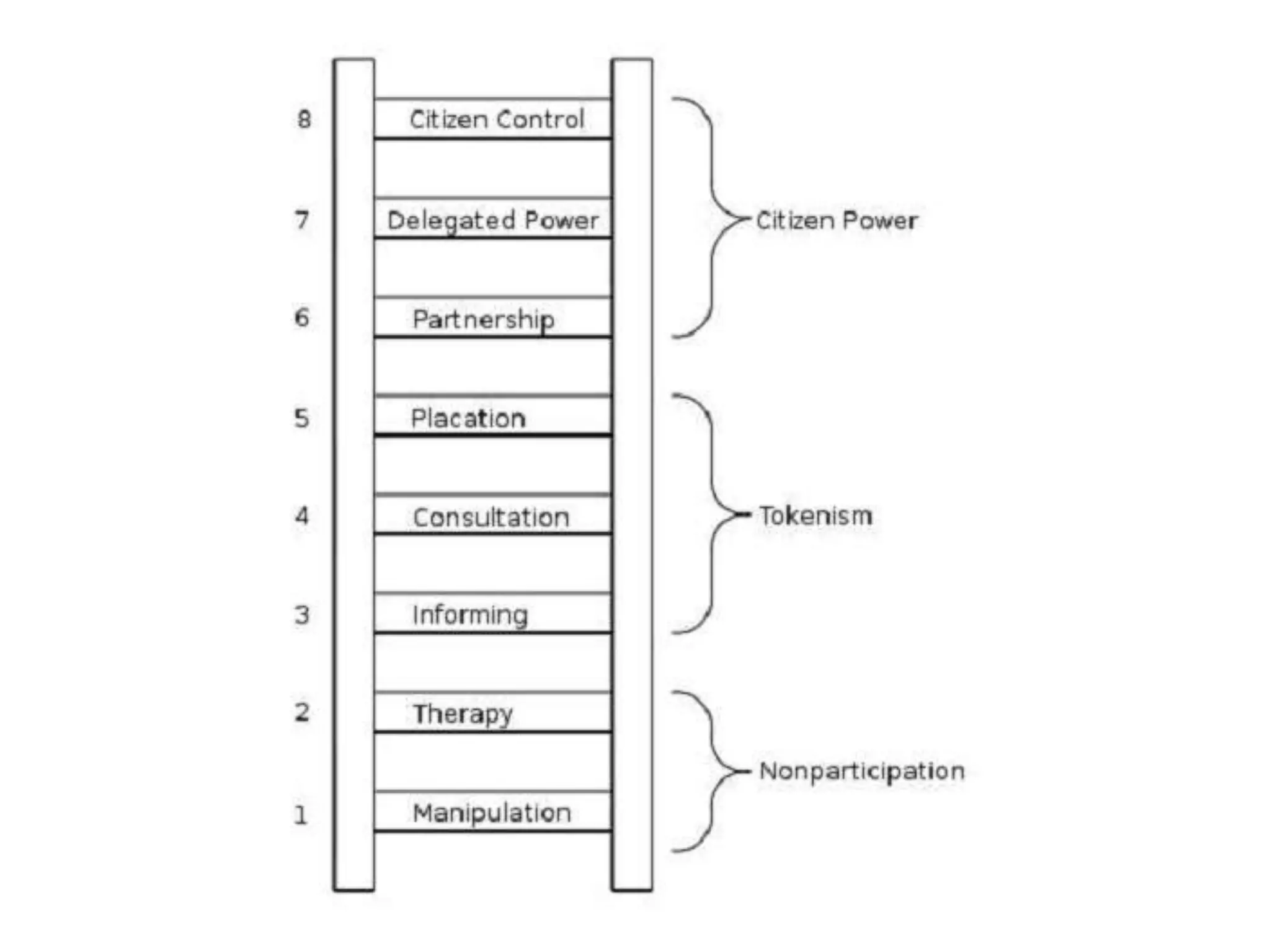
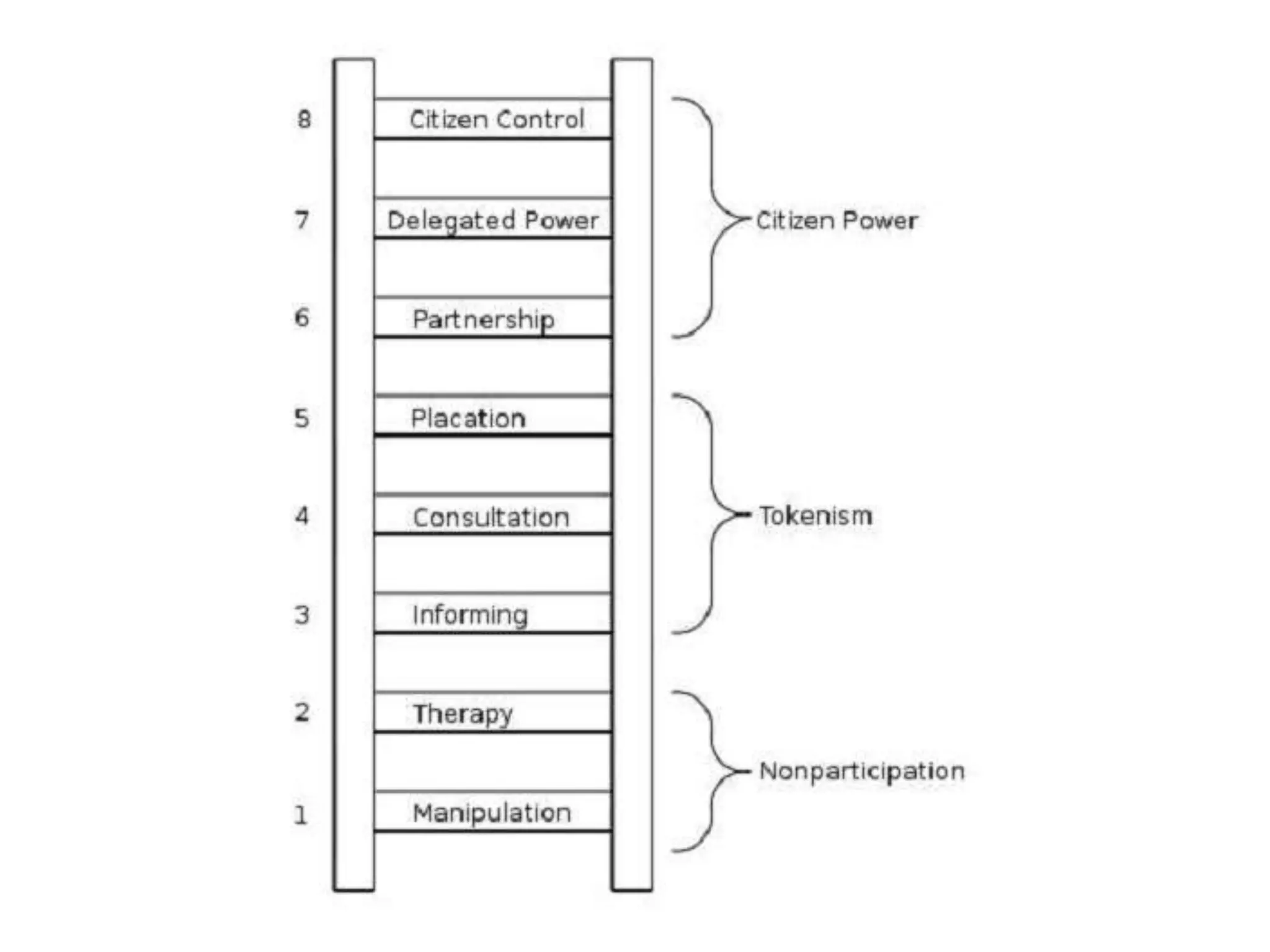
Exercise (with 5 groups)Pick a platform and collectively examine its platform policies [Facebook, YouTube, Blogger, Wikipedia, or Indymedia Portugal].Where do these platform policies fall on the ladder of citizen participation?  Why?Briefly report your findings back to the larger group
Selected Steps on the LadderCitizen control- puts citizens in full charge of policy and managementDelegated power- gives citizens majority of decision-making powerPartnership- lets people negotiate and engage in trade-offs with power-holdersPlacation- people can advise, but power-holders retain right to judge legitimacy/feasibility of adviceConsultation- people can hear and be heard, but can’t insure they’re listened toInforming- people may get necessary information, but the process is one-way with no opportunity for feedback or negotiation
Isdt talk2010 v2-edited

Isdt talk2010 v2-edited

  • 1.
    Participation, Power& OnlinePlatformsLaura SteinLstein@mail.utexas.edu
  • 2.
    OverviewAlternative media scholarship/practiceConceptualtools to examine the conditions of participationHopes/concerns for the future
  • 3.
    Alternative Media (Downing)Offersalternative to mainstream mediaChallenges existing power structuresRepresents/empowers marginalized groupsMakes horizontal linkages between communities of interestProvides an alternative public forum
  • 4.
    Alternative DimensionsContentAestheticOrganizationRelationship toAudience/UsersNoam Chomsky Reads the New York TimesPaper Tiger Reads Paper Tiger TV
  • 5.
    Paper Tiger ReadsPaper Tiger Television
  • 6.
    Participatory CultureJenkins- digitalmedia consumers actively participate in the creation and circulation of new content (though under unclear rules and conditions of differential power)Benkler- radically decentralized, collaborative and nonproprietary ways of organizing production (commons-based peer production)Participation fosters empowerment & democracy
  • 7.
    Critical Questions:Do specificinstances of participation challenge or reinforce existing power structures? Are opportunities to participate equitably distributed?What are the terms and conditions of participation?Do governments and markets support or suppress participation?
  • 9.
    Exercise (with 5groups)Pick a platform and collectively examine its platform policies [Facebook, YouTube, Blogger, Wikipedia, or Indymedia Portugal].Where do these platform policies fall on the ladder of citizen participation? Why?Briefly report your findings back to the larger group
  • 10.
    Selected Steps onthe LadderCitizen control- puts citizens in full charge of policy and managementDelegated power- gives citizens majority of decision-making powerPartnership- lets people negotiate and engage in trade-offs with power-holdersPlacation- people can advise, but power-holders retain right to judge legitimacy/feasibility of adviceConsultation- people can hear and be heard, but can’t insure they’re listened toInforming- people may get necessary information, but the process is one-way with no opportunity for feedback or negotiation