
Induced pluripotent stem cells in
cardiovascular diseases
Cardiovascular diseases (CVDs)
• An estimate shows that 17.3 million people died from CVDs in
2008, representing 30% of all global deaths.
• The number of people who die from CVDs, mainly from heart
disease and stroke, will increase to reach 23.3. million by 2030
• Group of disorders of the heart and blood vessels
 coronary heart disease -48%
 cerebrovascular disease -25%
 peripheral arterial disease-11%
 rheumatic heart disease – 6%
• Treatment Options
 Coronary Angioplasty
 Radiofrequency ablation
 Pacemaker insertion
 Cardiac defibrillator
 Resynchronization therapy
• Risk factors associated with various therapies includes
discomfort and bleeding, blood vessel damages, arrhthymia
Kidney damage.
• hESC therapy could potentially repair and regenerate
damaged heart tissue.
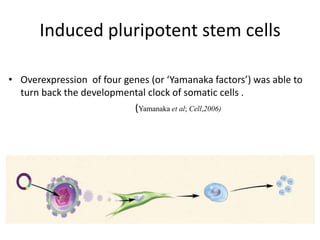
Induced pluripotent stem cells
• Overexpression of four genes (or ‘Yamanaka factors’) was able to
turn back the developmental clock of somatic cells .
(Yamanaka et al; Cell,2006)
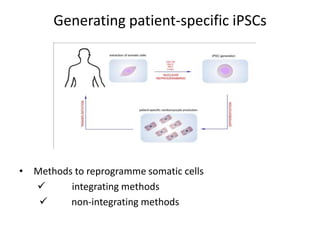
Generating patient-specific iPSCs
• Methods to reprogramme somatic cells
 integrating methods
 non-integrating methods
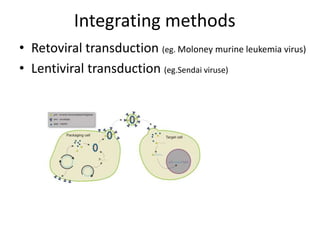
Integrating methods
• Retoviral transduction (eg. Moloney murine leukemia virus)
• Lentiviral transduction (eg.Sendai viruse)
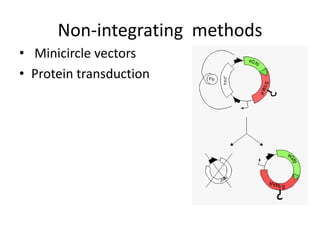
Non-integrating methods
• Minicircle vectors
• Protein transduction
Cardiovascular disease modelling
• Models for CVDs
 Myocardial infarction(mice)
 arterial thrombosis (rat)
 venous thrombosis (rat)
 venous stasis thrombosis (rabbit)
• Derivation of iPSCs from human somatic cells circumvent the
ethical roadblock associated with the acquisition of hESCs.
• iPSC-CMs can recapitulate the disease phenotype in
humans(Moretti et al,cell,2010) .
Modelling the long QT syndrome
• Autosomal dominant inheritance of a 596G/A missense
mutation in the KCNQ1 gene.
• Electrophysiological parameters in iPSC-CMs generated from
two patients with LQTS1 were compared with healthy control.
• Similarly, two other studies reported the use of iPSC-CM
disease models for LQTS2(Itzhaki et al ,Nature 2011.)
• The investigators further tested drugs that could either relieve
or aggravate the clinical phenotype of LQTS
• The potential therapeutic effects of nifedipine and pinacidil
was tested in this in vitro model.
• Generation of iPSC-CMs from two patients with Timothy
syndrome (LQTS8)(Yazawa et al, Nature, 2011).
• Timothy syndrome had APs that were significantly prolonged
compared with controls, while atrial and nodal Timothy
syndrome iPSC-CMs did not.
significant hurdles still exist in modelling the
more complex cardiovascular diseases using
iPSC technology
• Difficulty in ensuring a purified cardiomyocyte population
from iPSCs .
• The complexities of reproducing a heterogeneous disease
phenotype
• Limitations of modelling essentially adult-onset diseases using
iPSC-CMs.
Applications in drug testing and
discovery
• Part of the process of drug development and testing is to
demonstrate that the product does not have any significant
cardiac toxicities.
• To ascertain the cardiac response or side effects of an
individual to a new drug in vitro.
• Targeted gene modification of patient-specific iPSCs
Applications in regenerative medicine
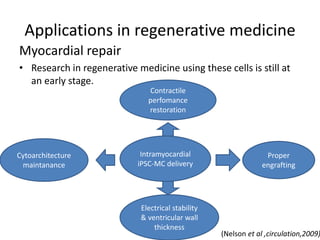
Myocardial repair
• Research in regenerative medicine using these cells is still at
an early stage.
Intramyocardial
iPSC-MC delivery
Proper
engrafting
Cytoarchitecture
maintanance
Contractile
perfomance
restoration
Electrical stability
& ventricular wall
thickness
(Nelson et al ,circulation,2009)
Conclusion
• Mininizing the potential of transplanted undifferentiated
iPSCs to form teratomas.
• Methods ensuring a purified cardiomyocyte population from
iPSCs.
• Safe and effective methods of cell delivery and ensuring that
transplanted cells remain in the myocardium.
References
• Nelson TJ, Martinez-Fernandez A, Yamada S, et al. Repair of
acute myocardial infarction by human stemness factors
induced pluripotent stem cells. Circulation, 2009;120:408e16
• Moretti A, Bellin M, Welling A, et al. Patient-specific induced
pluripotent stem-cell models for long-QT syndrome. N Engl J
Med 2010;363:1397e409
• Yazawa M, Hsueh B, Jia X, et al. Using induced pluripotent
stem cells to investigate cardiac phenotypes in Timothy
syndrome. Nature, 2011;471:230e4
iPSCs in treating Cardiovascular disorders

iPSCs in treating Cardiovascular disorders

  • 1.
    Induced pluripotent stemcells in cardiovascular diseases
  • 2.
    Cardiovascular diseases (CVDs) •An estimate shows that 17.3 million people died from CVDs in 2008, representing 30% of all global deaths. • The number of people who die from CVDs, mainly from heart disease and stroke, will increase to reach 23.3. million by 2030 • Group of disorders of the heart and blood vessels  coronary heart disease -48%  cerebrovascular disease -25%  peripheral arterial disease-11%  rheumatic heart disease – 6%
  • 3.
    • Treatment Options Coronary Angioplasty  Radiofrequency ablation  Pacemaker insertion  Cardiac defibrillator  Resynchronization therapy • Risk factors associated with various therapies includes discomfort and bleeding, blood vessel damages, arrhthymia Kidney damage. • hESC therapy could potentially repair and regenerate damaged heart tissue.
  • 4.
    Induced pluripotent stemcells • Overexpression of four genes (or ‘Yamanaka factors’) was able to turn back the developmental clock of somatic cells . (Yamanaka et al; Cell,2006)
  • 5.
    Generating patient-specific iPSCs •Methods to reprogramme somatic cells  integrating methods  non-integrating methods
  • 6.
    Integrating methods • Retoviraltransduction (eg. Moloney murine leukemia virus) • Lentiviral transduction (eg.Sendai viruse)
  • 7.
    Non-integrating methods • Minicirclevectors • Protein transduction
  • 8.
    Cardiovascular disease modelling •Models for CVDs  Myocardial infarction(mice)  arterial thrombosis (rat)  venous thrombosis (rat)  venous stasis thrombosis (rabbit) • Derivation of iPSCs from human somatic cells circumvent the ethical roadblock associated with the acquisition of hESCs. • iPSC-CMs can recapitulate the disease phenotype in humans(Moretti et al,cell,2010) .
  • 9.
    Modelling the longQT syndrome • Autosomal dominant inheritance of a 596G/A missense mutation in the KCNQ1 gene. • Electrophysiological parameters in iPSC-CMs generated from two patients with LQTS1 were compared with healthy control. • Similarly, two other studies reported the use of iPSC-CM disease models for LQTS2(Itzhaki et al ,Nature 2011.)
  • 10.
    • The investigatorsfurther tested drugs that could either relieve or aggravate the clinical phenotype of LQTS • The potential therapeutic effects of nifedipine and pinacidil was tested in this in vitro model. • Generation of iPSC-CMs from two patients with Timothy syndrome (LQTS8)(Yazawa et al, Nature, 2011). • Timothy syndrome had APs that were significantly prolonged compared with controls, while atrial and nodal Timothy syndrome iPSC-CMs did not.
  • 11.
    significant hurdles stillexist in modelling the more complex cardiovascular diseases using iPSC technology • Difficulty in ensuring a purified cardiomyocyte population from iPSCs . • The complexities of reproducing a heterogeneous disease phenotype • Limitations of modelling essentially adult-onset diseases using iPSC-CMs.
  • 12.
    Applications in drugtesting and discovery • Part of the process of drug development and testing is to demonstrate that the product does not have any significant cardiac toxicities. • To ascertain the cardiac response or side effects of an individual to a new drug in vitro. • Targeted gene modification of patient-specific iPSCs
  • 13.
    Applications in regenerativemedicine Myocardial repair • Research in regenerative medicine using these cells is still at an early stage. Intramyocardial iPSC-MC delivery Proper engrafting Cytoarchitecture maintanance Contractile perfomance restoration Electrical stability & ventricular wall thickness (Nelson et al ,circulation,2009)
  • 14.
    Conclusion • Mininizing thepotential of transplanted undifferentiated iPSCs to form teratomas. • Methods ensuring a purified cardiomyocyte population from iPSCs. • Safe and effective methods of cell delivery and ensuring that transplanted cells remain in the myocardium.
  • 15.
    References • Nelson TJ,Martinez-Fernandez A, Yamada S, et al. Repair of acute myocardial infarction by human stemness factors induced pluripotent stem cells. Circulation, 2009;120:408e16 • Moretti A, Bellin M, Welling A, et al. Patient-specific induced pluripotent stem-cell models for long-QT syndrome. N Engl J Med 2010;363:1397e409 • Yazawa M, Hsueh B, Jia X, et al. Using induced pluripotent stem cells to investigate cardiac phenotypes in Timothy syndrome. Nature, 2011;471:230e4