Confidential to PresiNET Healthcare Inc.
2
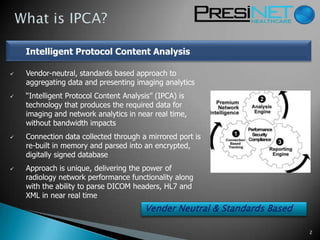
 Vendor-neutral, standards based approach to
aggregating data and presenting imaging analytics
 “Intelligent Protocol Content Analysis” (IPCA) is
technology that produces the required data for
imaging and network analytics in near real time,
without bandwidth impacts
 Connection data collected through a mirrored port is
re-built in memory and parsed into an encrypted,
digitally signed database
 Approach is unique, delivering the power of
radiology network performance functionality along
with the ability to parse DICOM headers, HL7 and
XML in near real time
Intelligent Protocol Content Analysis
Vender Neutral & Standards Based
3
 Avoid the Need for Expensive Interfaces
 Produce Data Easily as Needed
 Recognize that a lot of RIS’ are Inadequate
 Allow for Linkage with Radiology Network
Performance Analytics
 Allow for Data Mining and Analysis
Comprehensive Imaging Analytics
Avoid Building Interfaces
IPCA Makes Analysis Powerful
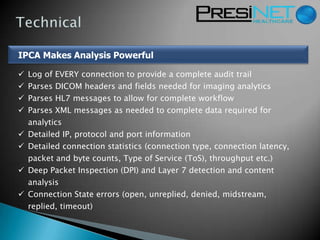
 Log of EVERY connection to provide a complete audit trail
 Parses DICOM headers and fields needed for imaging analytics
 Parses HL7 messages to allow for complete workflow
 Parses XML messages as needed to complete data required for
analytics
 Detailed IP, protocol and port information
 Detailed connection statistics (connection type, connection latency,
packet and byte counts, Type of Service (ToS), throughput etc.)
 Deep Packet Inspection (DPI) and Layer 7 detection and content
analysis
 Connection State errors (open, unreplied, denied, midstream,
replied, timeout)
5
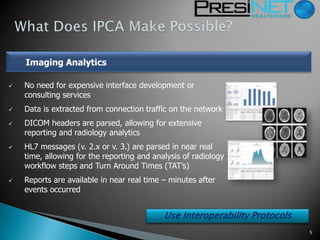
 No need for expensive interface development or
consulting services
 Data is extracted from connection traffic on the network
 DICOM headers are parsed, allowing for extensive
reporting and radiology analytics
 HL7 messages (v. 2.x or v. 3.) are parsed in near real
time, allowing for the reporting and analysis of radiology
workflow steps and Turn Around Times (TAT’s)
 Reports are available in near real time – minutes after
events occurred
Imaging Analytics
Use Interoperability Protocols
6
 Provides a real time view of the Radiology Network
 All devices on the monitored network are exposed
 Determine traffic latency with a granular view that allows you to
determine whether delays are happening on your server side or in the
remote connection. Know when radiologists are having access and
latency issues and get the actionable data you need to repair the problem.
 Extensive drill-down capacity allows for views of application performance
and quickly points to the issues causing problems
 Create real time alerts to receive automated warning of specific issues and
problems
 Produce automated reports as needed
Radiology Network Analytics
Powerful, Efficient &Transformative
7
In United States:
Paul Shumate, pshumate@presinethealthcare.com
949-481-3146
Call or email
In Canada:
Cindy Block, cblock@presinethealthcare.com
250-405-5380 Ext 228

IPCA - Intelligent Protocol Content Analysis

  • 1.
    Confidential to PresiNETHealthcare Inc.
  • 2.
    2  Vendor-neutral, standardsbased approach to aggregating data and presenting imaging analytics  “Intelligent Protocol Content Analysis” (IPCA) is technology that produces the required data for imaging and network analytics in near real time, without bandwidth impacts  Connection data collected through a mirrored port is re-built in memory and parsed into an encrypted, digitally signed database  Approach is unique, delivering the power of radiology network performance functionality along with the ability to parse DICOM headers, HL7 and XML in near real time Intelligent Protocol Content Analysis Vender Neutral & Standards Based
  • 3.
    3  Avoid theNeed for Expensive Interfaces  Produce Data Easily as Needed  Recognize that a lot of RIS’ are Inadequate  Allow for Linkage with Radiology Network Performance Analytics  Allow for Data Mining and Analysis Comprehensive Imaging Analytics Avoid Building Interfaces
  • 4.
    IPCA Makes AnalysisPowerful  Log of EVERY connection to provide a complete audit trail  Parses DICOM headers and fields needed for imaging analytics  Parses HL7 messages to allow for complete workflow  Parses XML messages as needed to complete data required for analytics  Detailed IP, protocol and port information  Detailed connection statistics (connection type, connection latency, packet and byte counts, Type of Service (ToS), throughput etc.)  Deep Packet Inspection (DPI) and Layer 7 detection and content analysis  Connection State errors (open, unreplied, denied, midstream, replied, timeout)
  • 5.
    5  No needfor expensive interface development or consulting services  Data is extracted from connection traffic on the network  DICOM headers are parsed, allowing for extensive reporting and radiology analytics  HL7 messages (v. 2.x or v. 3.) are parsed in near real time, allowing for the reporting and analysis of radiology workflow steps and Turn Around Times (TAT’s)  Reports are available in near real time – minutes after events occurred Imaging Analytics Use Interoperability Protocols
  • 6.
    6  Provides areal time view of the Radiology Network  All devices on the monitored network are exposed  Determine traffic latency with a granular view that allows you to determine whether delays are happening on your server side or in the remote connection. Know when radiologists are having access and latency issues and get the actionable data you need to repair the problem.  Extensive drill-down capacity allows for views of application performance and quickly points to the issues causing problems  Create real time alerts to receive automated warning of specific issues and problems  Produce automated reports as needed Radiology Network Analytics Powerful, Efficient &Transformative
  • 7.
    7 In United States: PaulShumate, pshumate@presinethealthcare.com 949-481-3146 Call or email In Canada: Cindy Block, cblock@presinethealthcare.com 250-405-5380 Ext 228