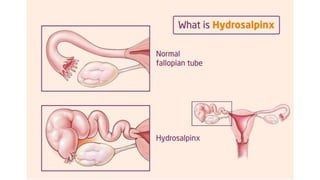
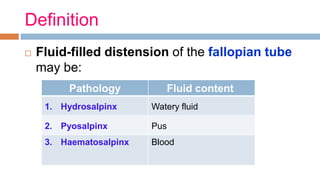
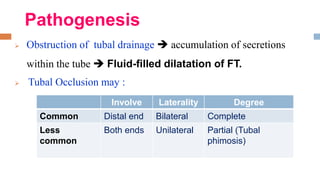
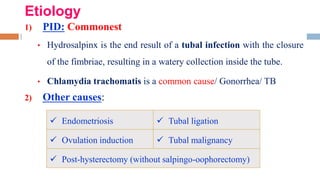
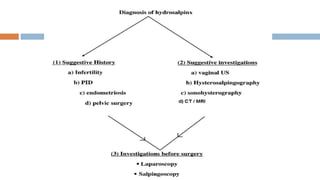
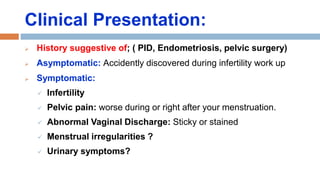
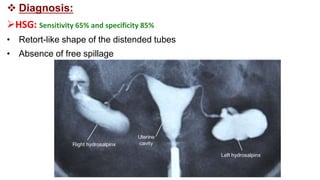
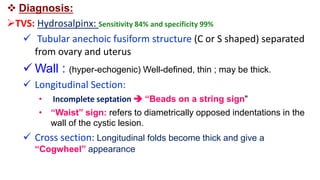
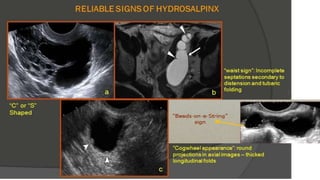
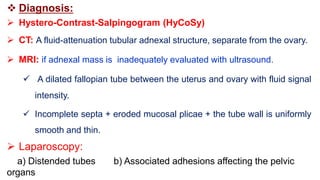
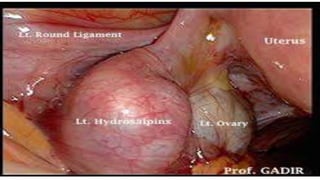
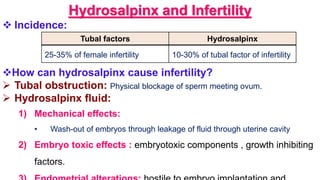
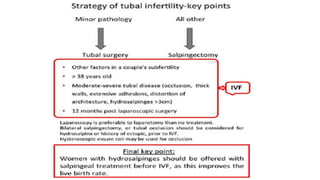
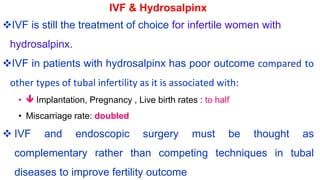
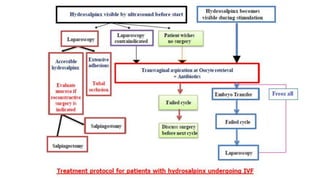
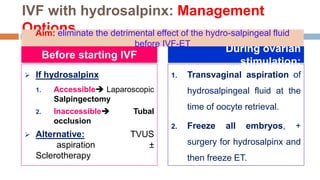
This document discusses IVF and hydrosalpinx. It defines hydrosalpinx as a fluid-filled distension of the fallopian tube that is most commonly caused by pelvic inflammatory disease. The presence of hydrosalpinx is associated with lower IVF success rates compared to other causes of tubal infertility due to mechanical and toxic effects on embryos. Surgical treatment of hydrosalpinx prior to IVF through laparoscopic salpingectomy, tubal occlusion, or transvaginal aspiration of fluid can help improve IVF outcomes by eliminating the detrimental effects of hydrosalpingeal fluid. Among the options, laparoscopic salpingectomy provides the strongest evidence for improving pregnancy