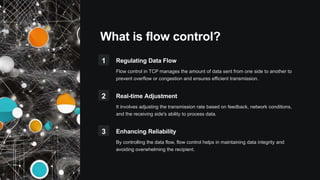
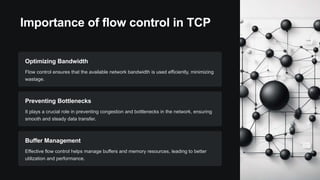
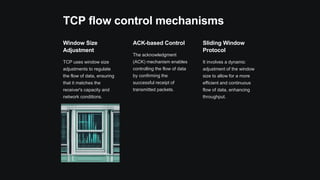
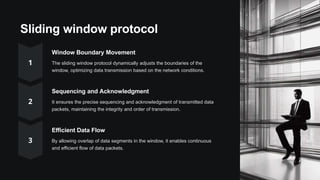
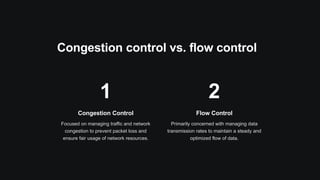
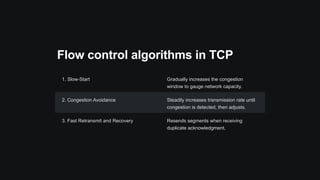
TCP uses flow control to regulate the amount of data sent between programs over an IP network. It adjusts the transmission rate based on feedback and network conditions to prevent overflow and ensure efficient transmission. By controlling the data flow, flow control helps maintain data integrity and avoid overwhelming the recipient. TCP implements flow control using mechanisms like window size adjustment, acknowledgment-based control, and the sliding window protocol, which dynamically adjusts window boundaries to optimize data transmission.