Sustainable Energy Studies
LNT 101; SES 101
Fall 2017
Mark Valen
Sustainable Energy Studies
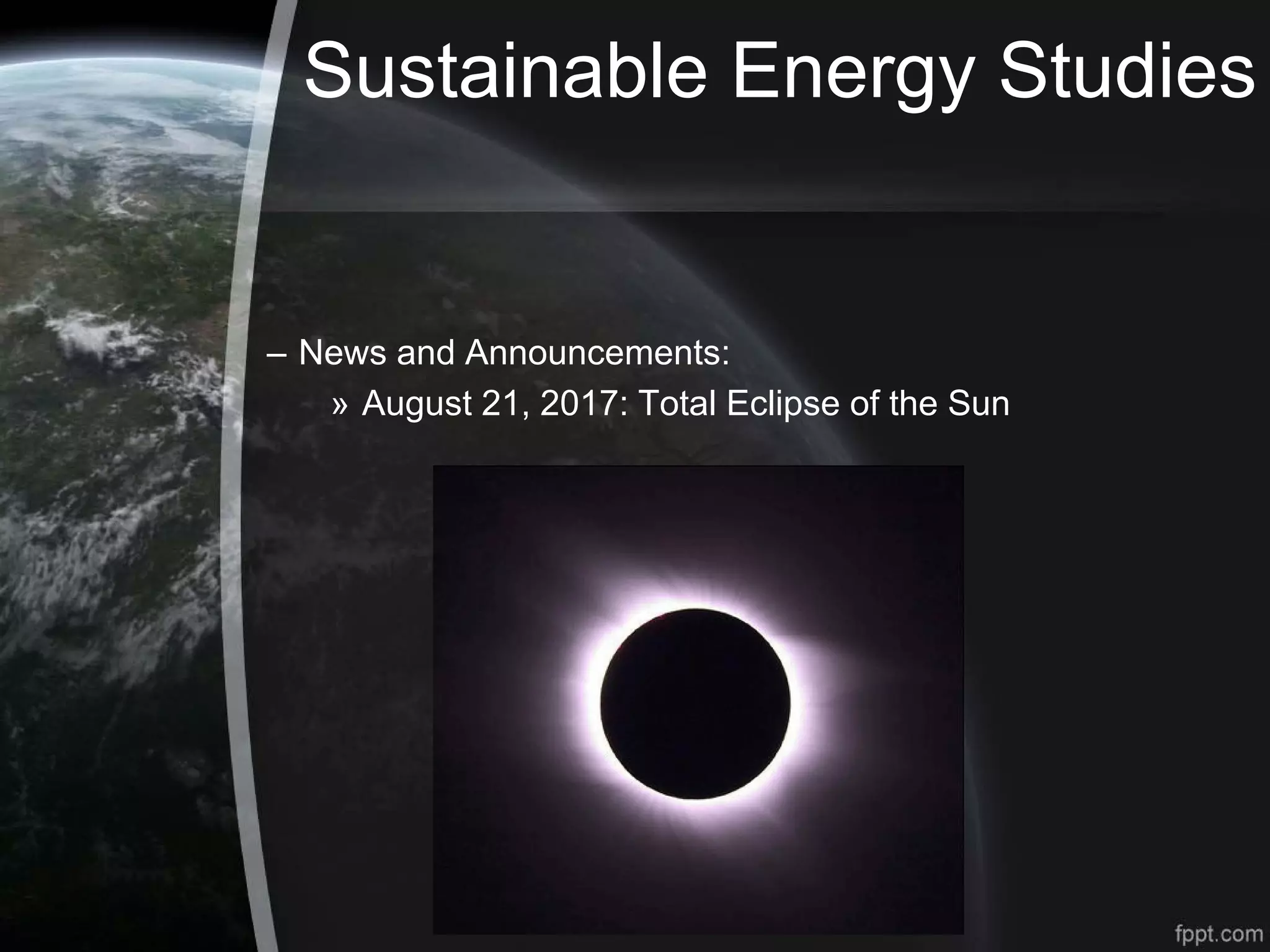
– News and Announcements:
» August 21, 2017: Total Eclipse of the Sun
Sustainable Energy Studies
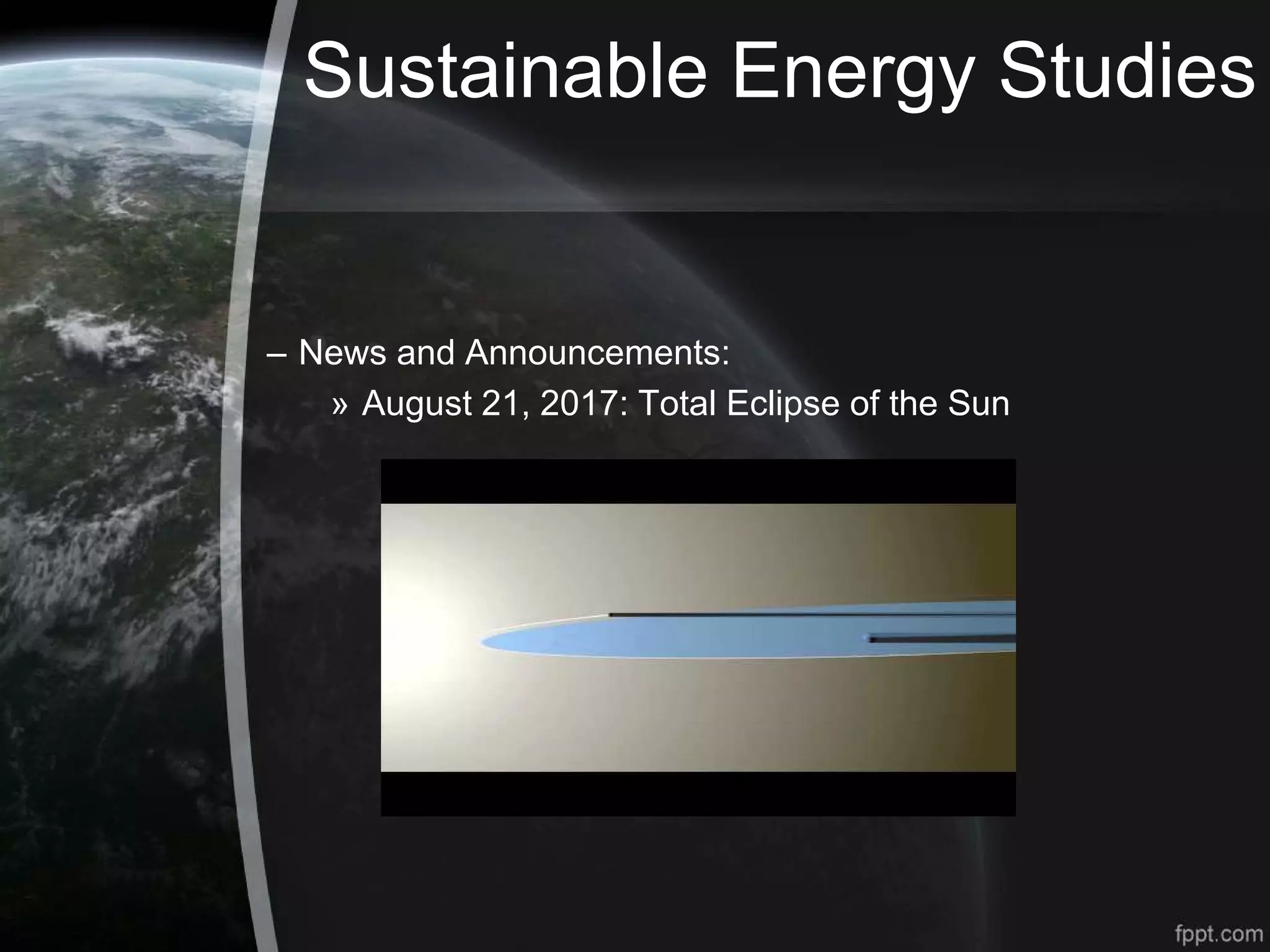
– News and Announcements:
» August 21, 2017: Total Eclipse of the Sun
Sustainable Energy Studies
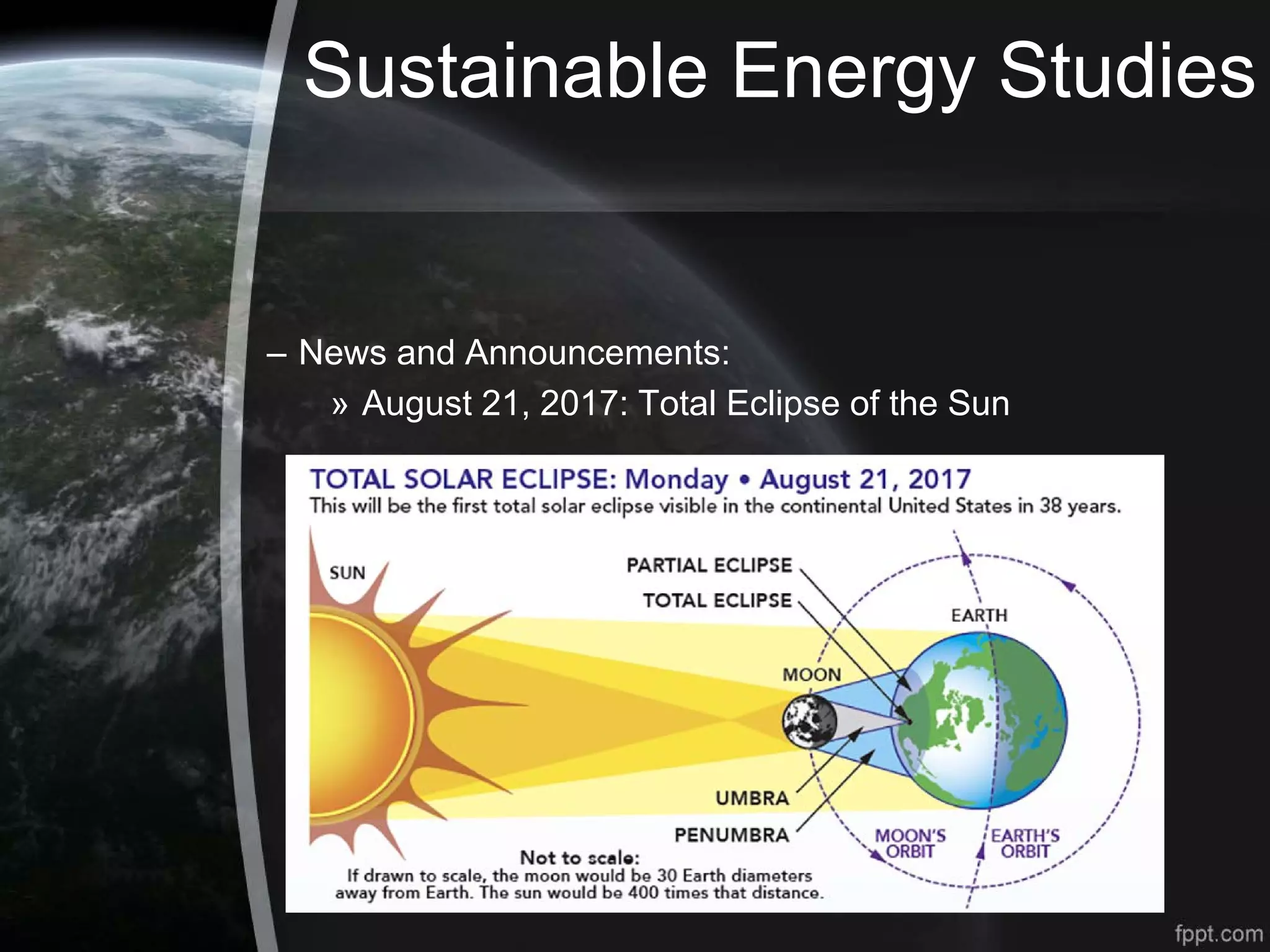
– News and Announcements:
» August 21, 2017: Total Eclipse of the Sun
Sustainable Energy Studies
–Study the growth of the human
population and its effects on energy
and climate demands with an
emphasis on landscaping and the
built environment
Sustainable Energy Studies
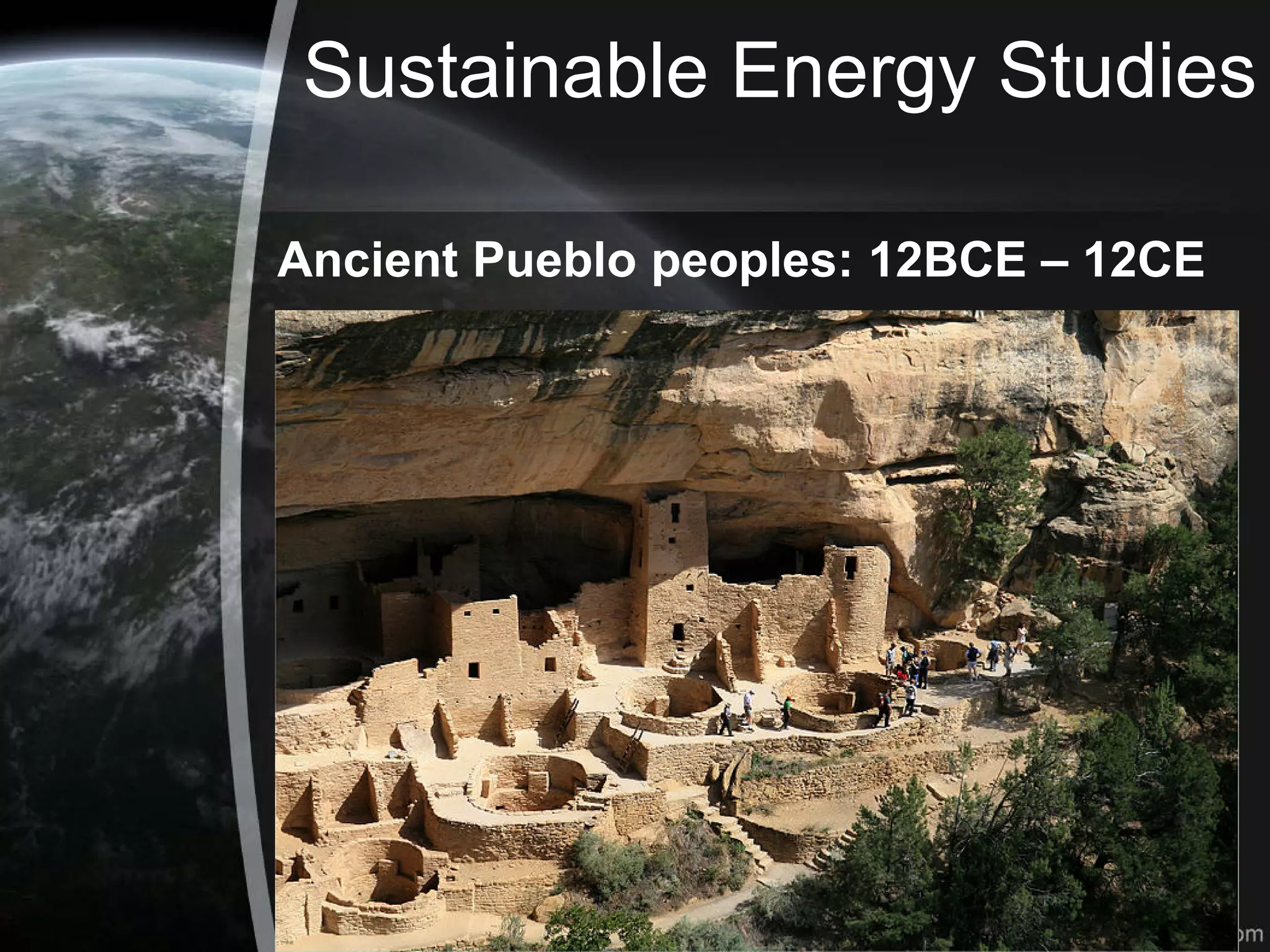
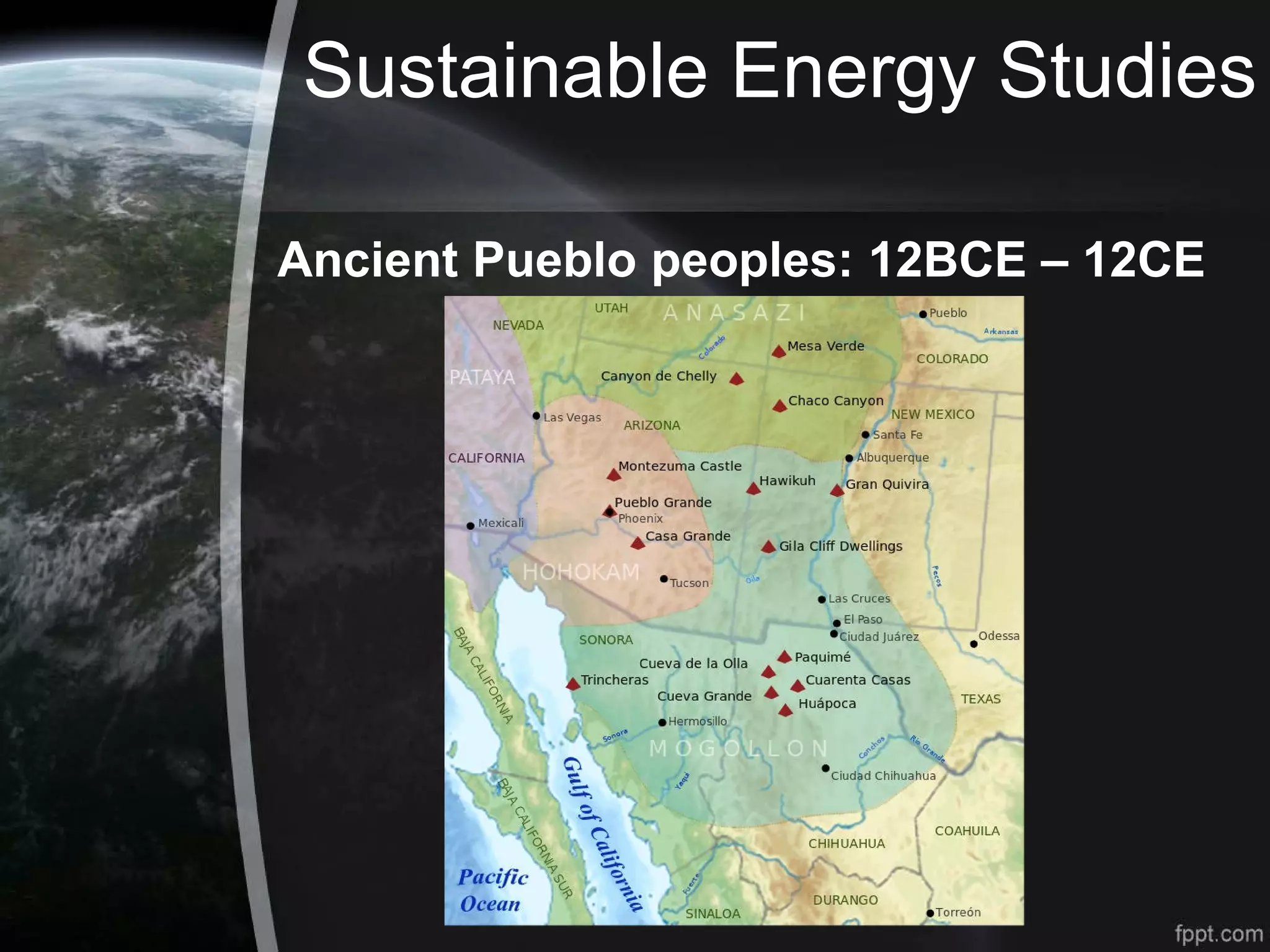
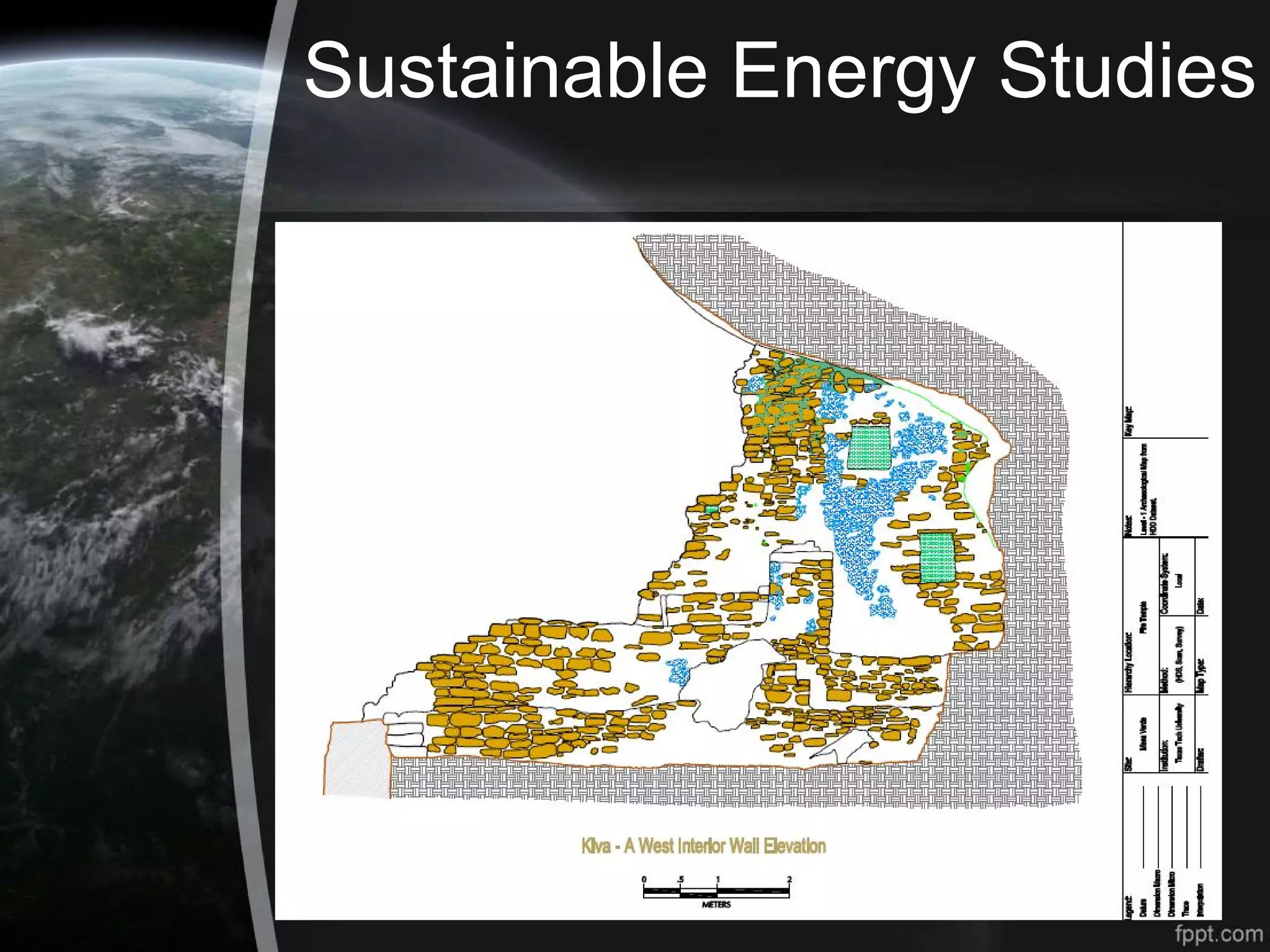
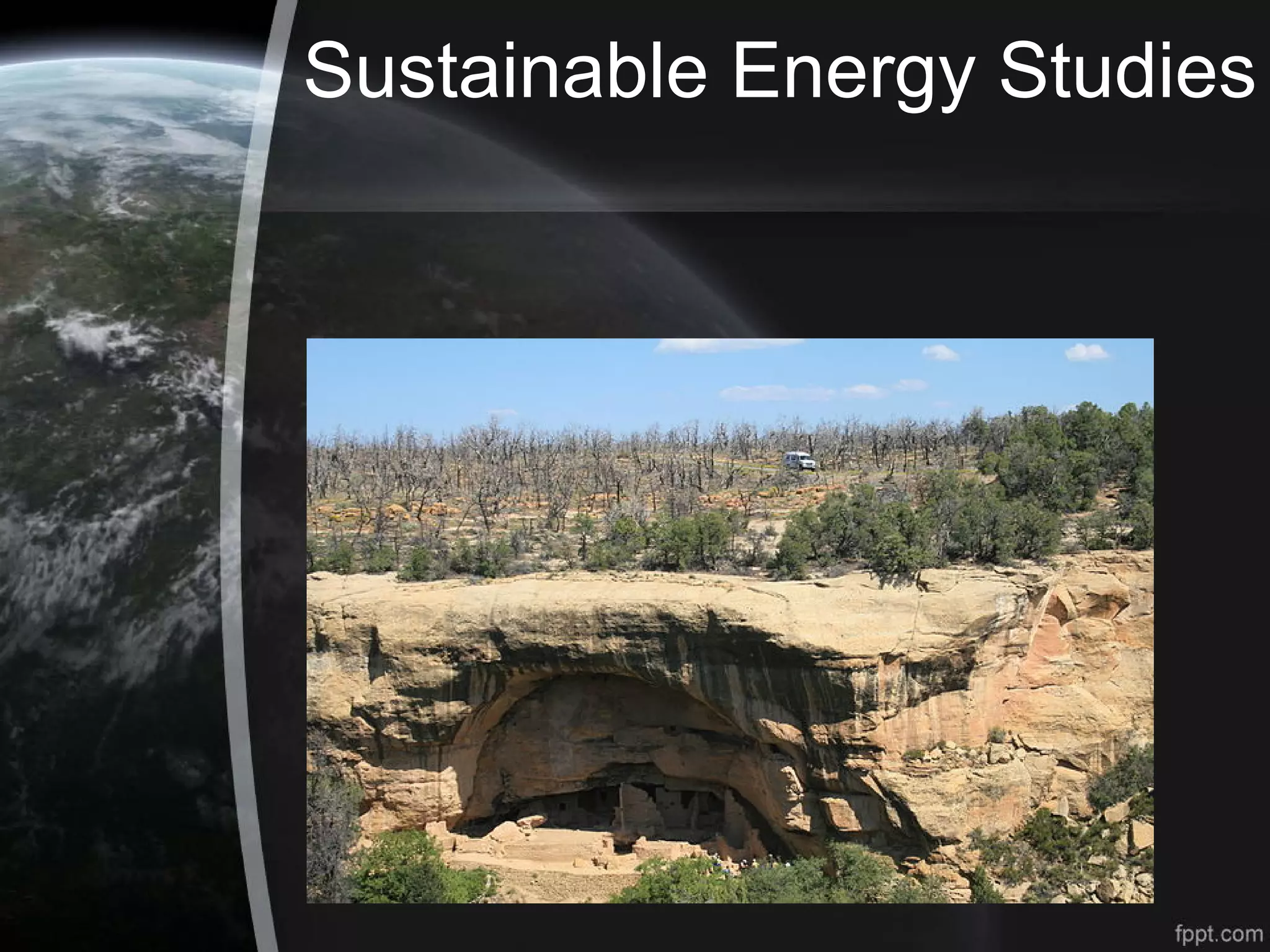
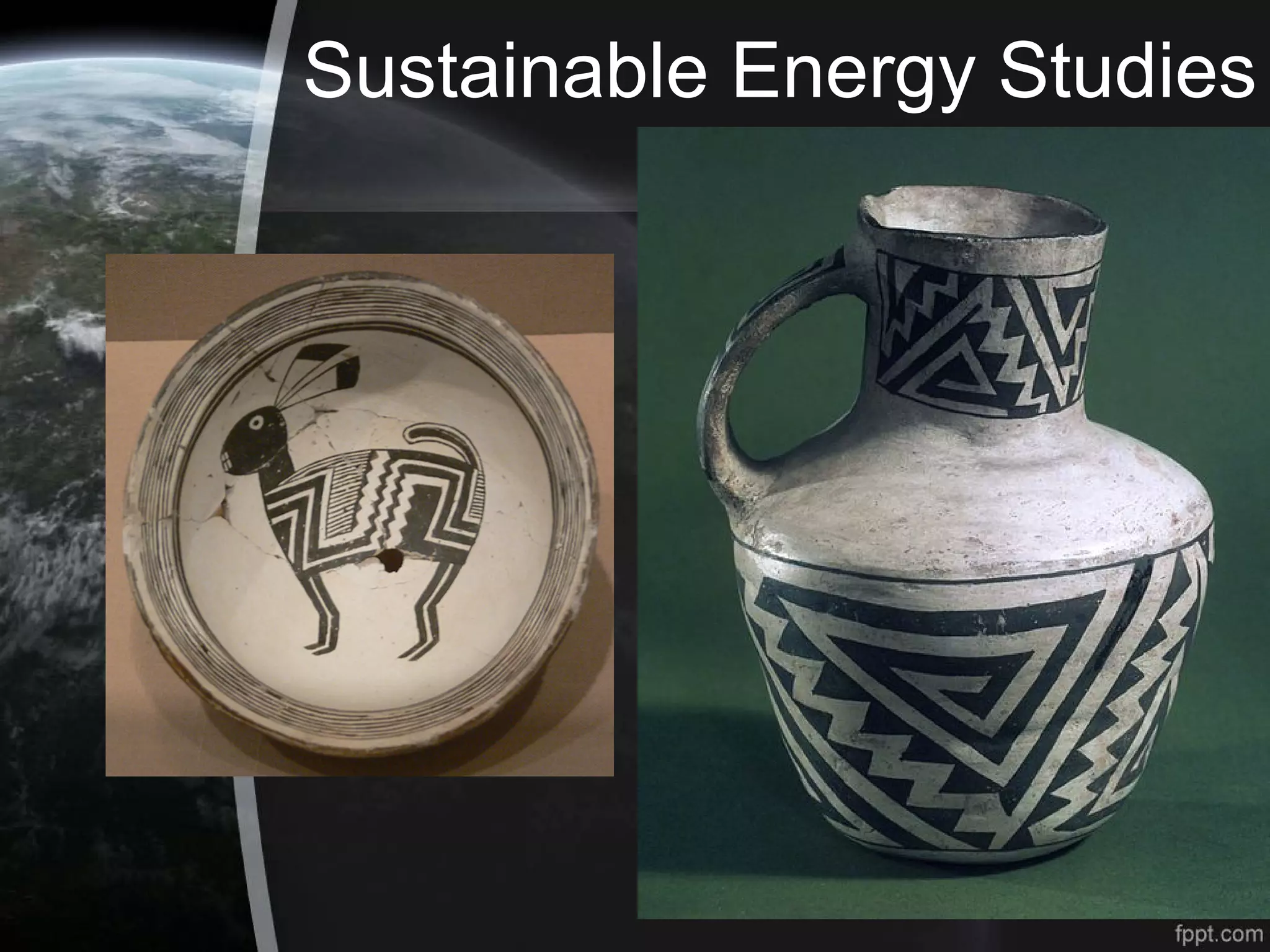
Ancient Pueblo peoples: 12BCE – 12CE
Sustainable Energy Studies
Ancient Pueblo peoples: 12BCE – 12CE
Sustainable Energy Studies
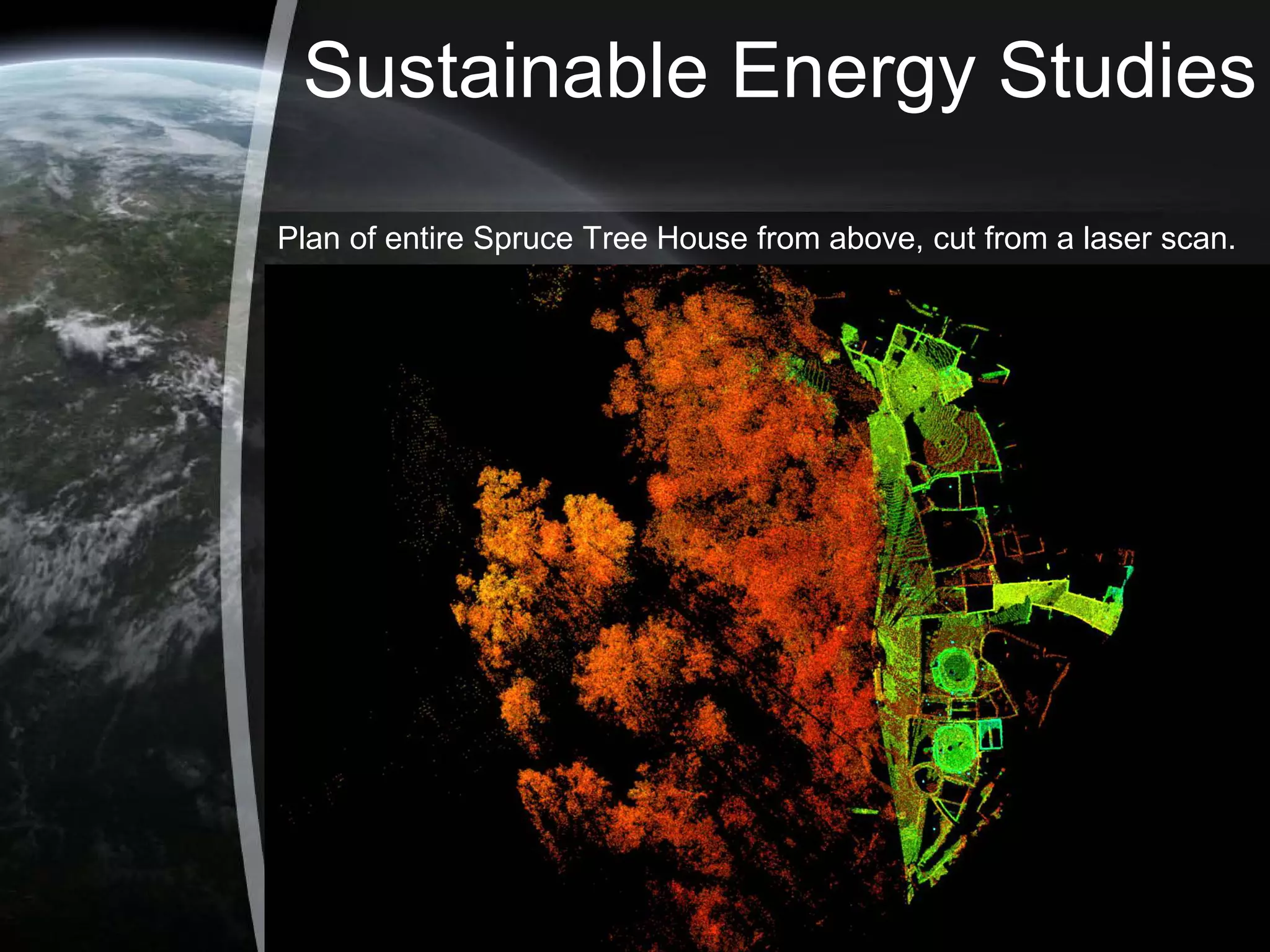
Plan of entire Spruce Tree House from above, cut from a laser scan.
Sustainable Energy Studies
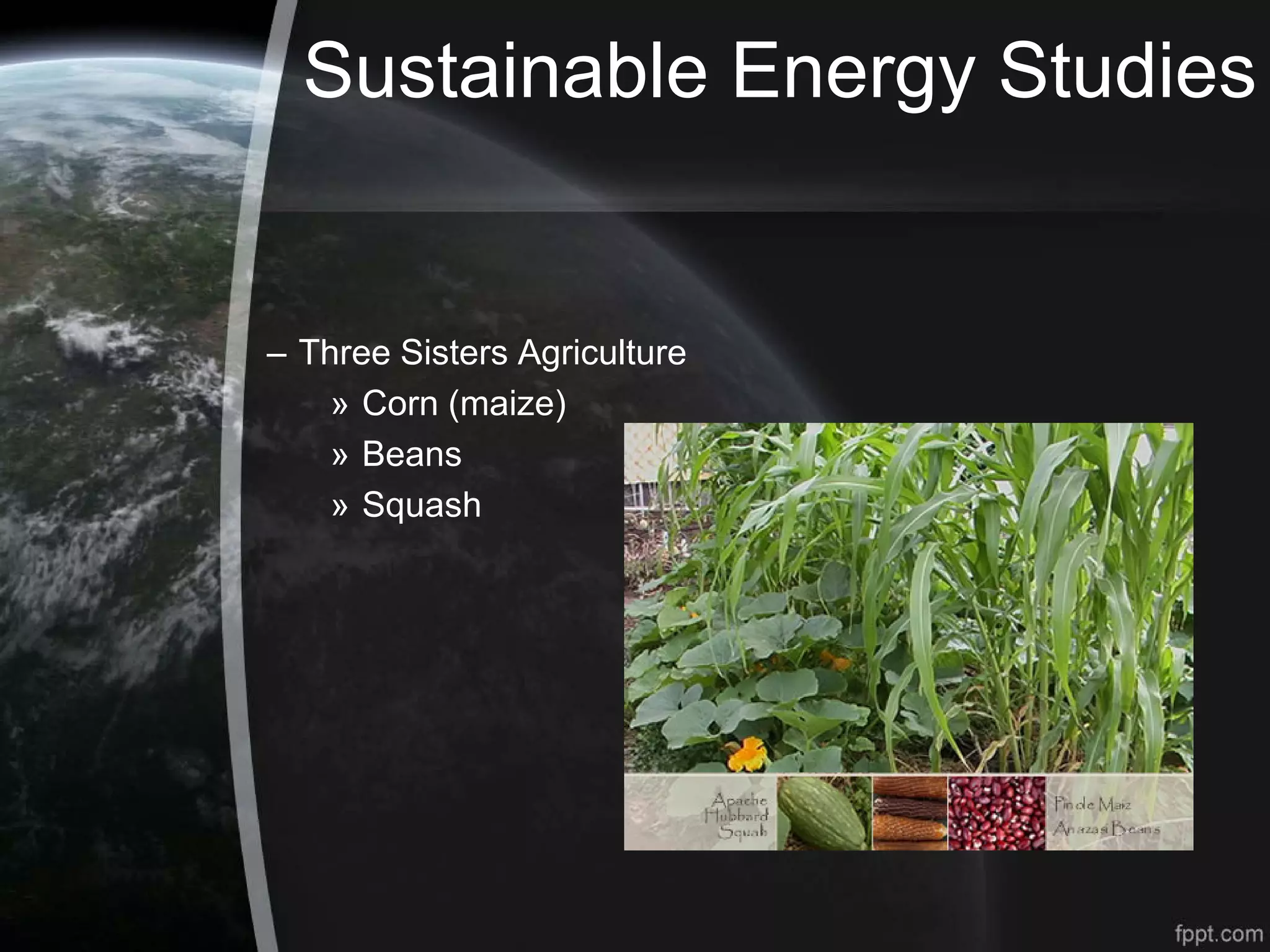
– Three Sisters Agriculture
» Corn (maize)
» Beans
» Squash
Sustainable Energy Studies
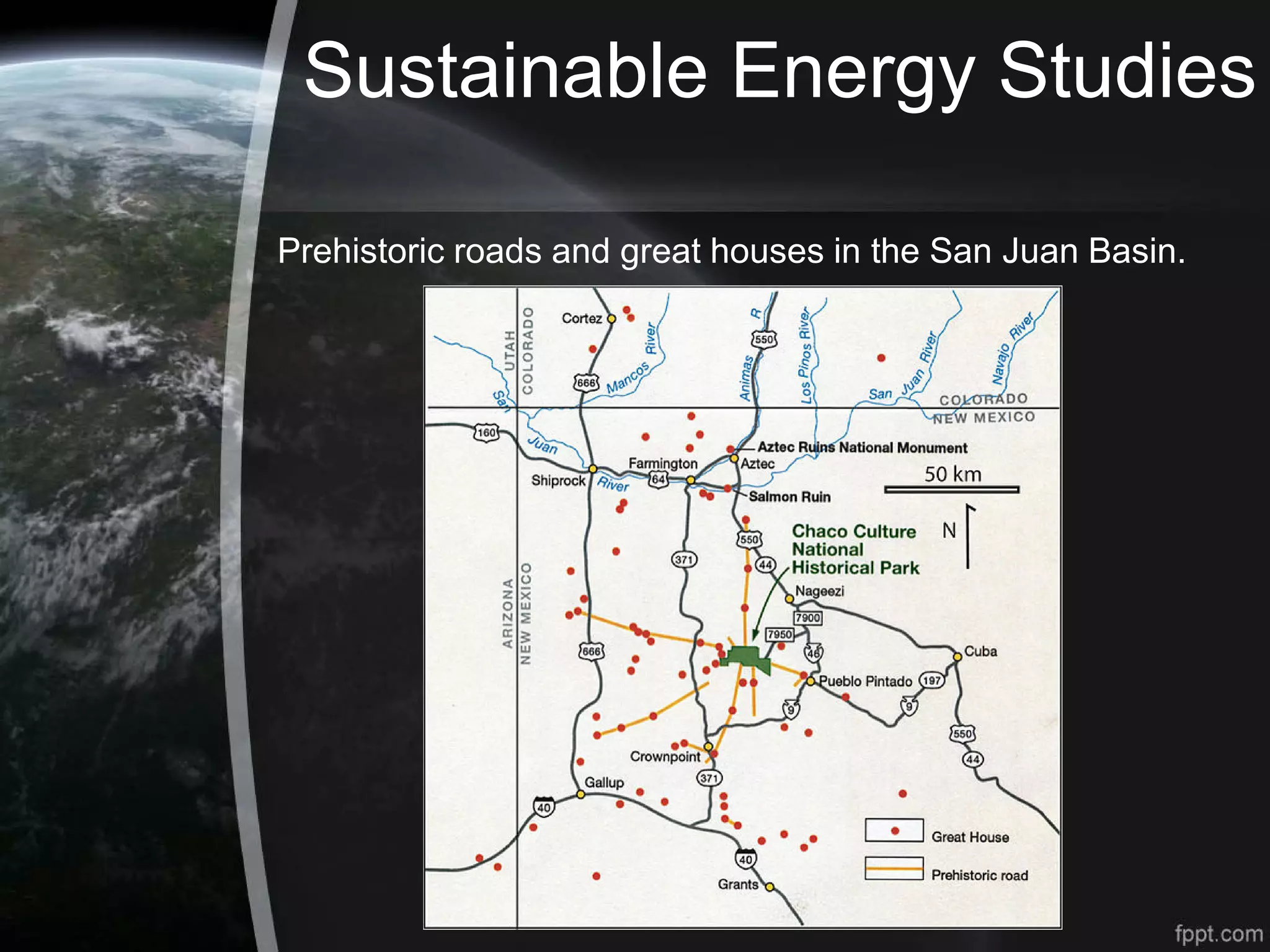
Prehistoric roads and great houses in the San Juan Basin.
Sustainability
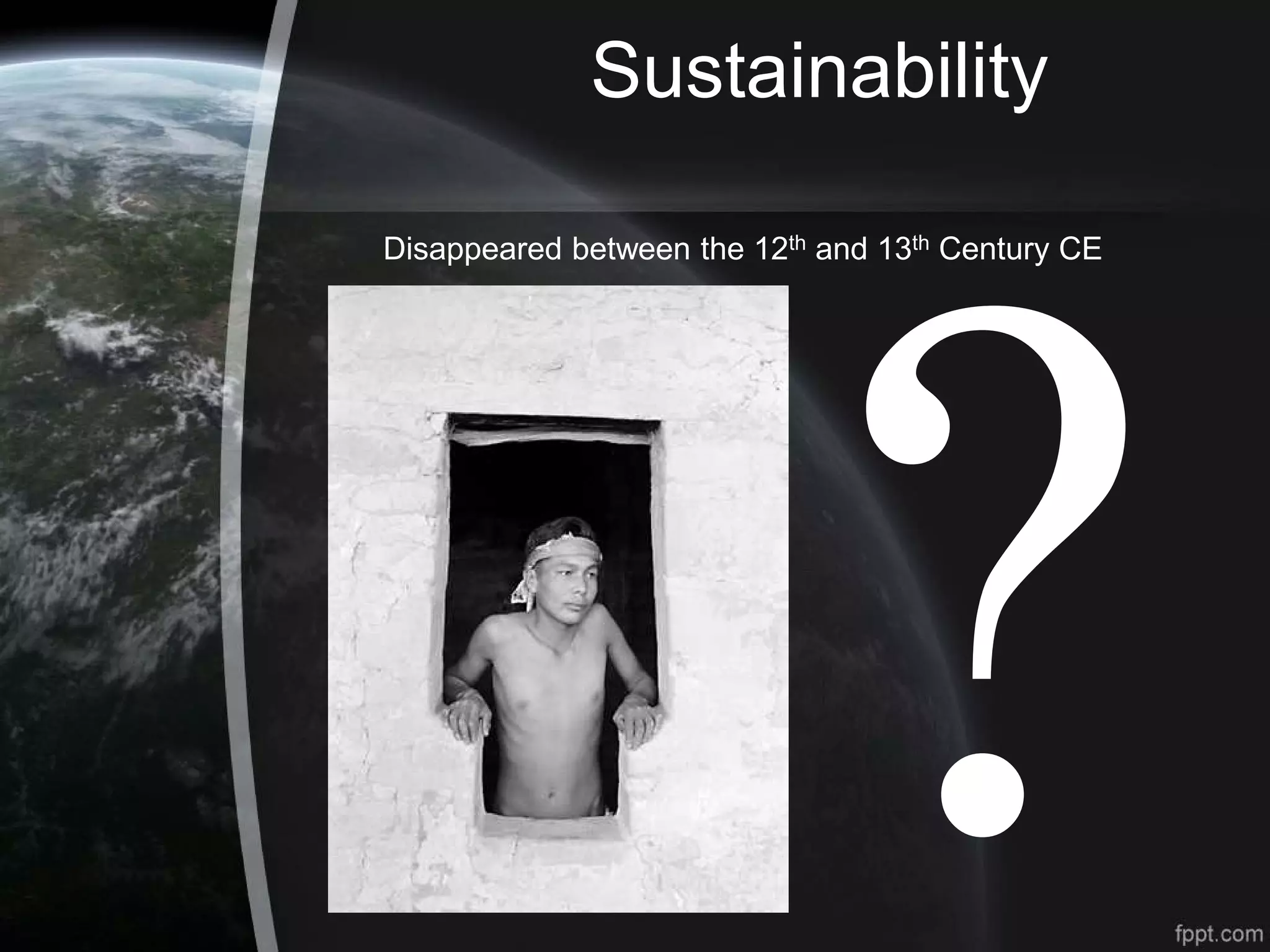
Disappeared between the 12th and 13th Century CE
Sustainability
Disappeared between the 12th and 13th Century CE
• The ancient Pueblos attained a cultural
"Golden Age" between about 900 and
1150.
• During this time the climate was relatively
warm and rainfall mostly adequate.
• Communities grew larger and were
inhabited for longer periods of time.
• Highly specific local traditions in
architecture and pottery emerged, and
trade over long distances appears to have
been common.
Sustainability
Disappeared between the 12th and 13th Century CE
• Starting in 1150, North America
experienced a 300-year drought.
• The population of the region continued to
be mobile, abandoning settlements and
fields under adverse conditions.
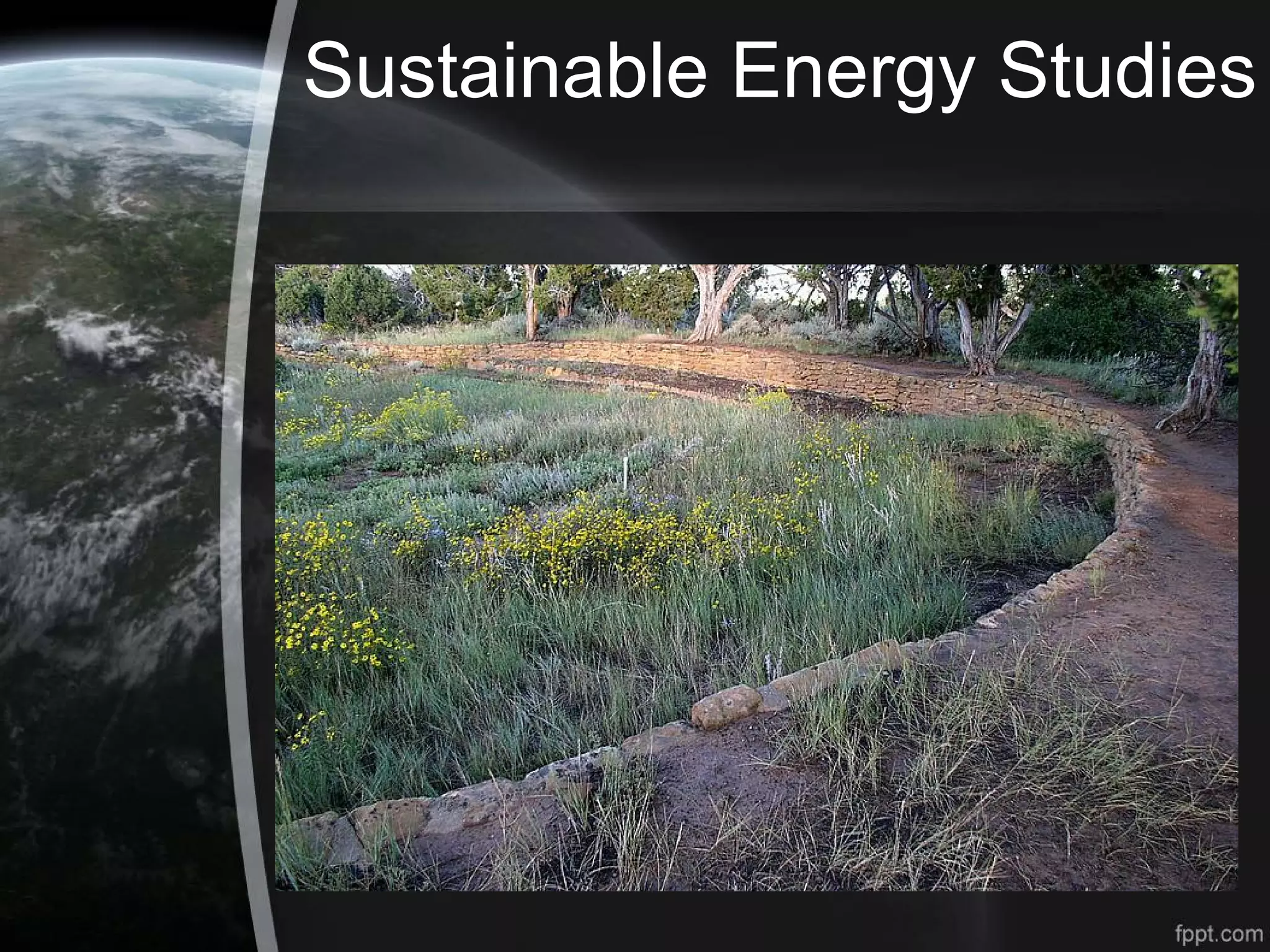
• Southwest farmers developed irrigation
techniques, including soil and water
control features such as check dams and
terraces.
• There was a drop in water table levels due
to a different cycle unrelated to rainfall.
Sustainable Energy Studies
Sustainability
Disappeared between the 12th and 13th Century CE
Most modern Pueblo peoples assert the
ancient Pueblo did not "vanish", as is
commonly portrayed in media
presentations or popular books, but
migrated to areas in the southwest with
more favorable rainfall and dependable
streams. They integrated with the various
Pueblo peoples whose descendants still
live in Arizona and New Mexico.
Sustainability
Sustainability
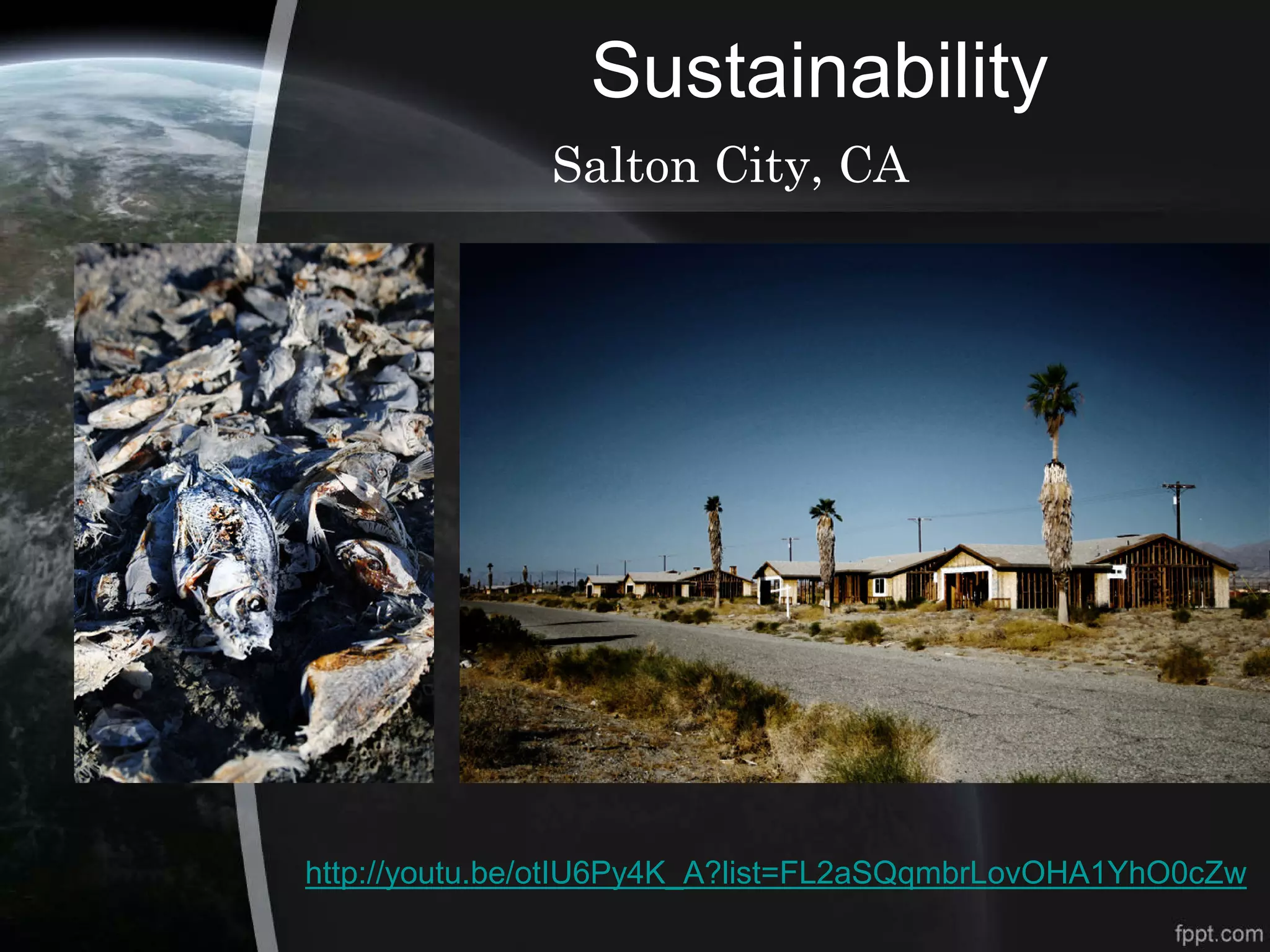
Salton City, CA
http://youtu.be/otIU6Py4K_A?list=FL2aSQqmbrLovOHA1YhO0cZw
Sustainability
Sustainability
– Politically feasible
– Economically feasible
– Not part of a pyramid or bubble
– Socially enlightened
– Conservative small government
– Liberal principles of social justice
– Morally desirable
– Sensibly far-sighted
Sustainability
–“sustainable development is
development that meets the needs
of the present without
compromising the ability of future
generations to meet their own
needs.”
United Nations. 1987."Report of the World Commission on
Environment and Development.“ AKA “The Brundtland Report”
Sustainability
–“sustainable development is
development that meets the needs
of the present without
compromising the ability of future
generations to meet their own
needs.”
United Nations. 1987."Report of the World Commission on
Environment and Development.“ AKA “The Brundtland Report”
Sustainability
Mainstream economics refuses to differentiate
between needs and wants.
Sustainability
Mainstream economics refuses to differentiate
between needs and wants.
The work of Wilfred Pareto was crucial to this
refusal: because satisfactions and pleasures
are subjective, there is no rational way to
compare the degree of pleasure that different
people will gain by satisfying desires.
Sustainability
Mainstream economics refuses to differentiate
between needs and wants.
The work of Wilfred Pareto was crucial to this
refusal: because satisfactions and pleasures
are subjective, there is no rational way to
compare the degree of pleasure that different
people will gain by satisfying desires.
All we can do is assert that if an economic
arrangement satisfies more human wants, it is
objectively better than an arrangement that
satisfies fewer human wants.
Sustainability
Economic science, in its desire to be grounded on
rational, objective principles, concludes that
were we to take a dollar from a billionaire and
give it to a starving man to buy food, we can’t
know for certain that we have improved the sum
total of human satisfaction in the world.
“All we can do” is promote the growth of income;
and if we care about that starving man, we must
work to produce two dollars’ worth of goods
where before there was only one, so that both
the billionaire and the starving man can satisfy
their wants.
Sustainability
–“sustainable development is
development that meets the needs
of the present without
compromising the ability of future
generations to meet their own
needs.”
United Nations. 1987."Report of the World Commission on
Environment and Development.“ AKA “The Brundtland Report”
Sustainability
–“sustainable development is
development that meets the needs
desires of the present without
compromising the ability of future
generations to meet their own
needs desires.”
United Nations. 1987."Report of the World Commission on
Environment and Development.“ AKA “The Brundtland Report”
Sustainability
–“sustainable development is
development that meets the needs
desires of the present without
compromising the ability of future
generations to meet their own
needs desires.”
United Nations. 1987."Report of the World Commission on
Environment and Development.“ AKA “The Brundtland Report”
Sustainability
Can humans, through technological development,
solve any problem brought on by resource
scarcity and the limited capacity of ecosystems
to absorb our acts and works?
Sustainability
Can humans, through technological development,
solve any problem brought on by resource
scarcity and the limited capacity of ecosystems
to absorb our acts and works?
When all is said and done, can we enlarge the
economy’s ecological footprint forever in order
to create wealth?
Sustainability
Can humans, through technological development,
solve any problem brought on by resource
scarcity and the limited capacity of ecosystems
to absorb our acts and works?
When all is said and done, can we enlarge the
economy’s ecological footprint forever in order
to create wealth?
Gradually, we are coming to recognize that the
answer is no.
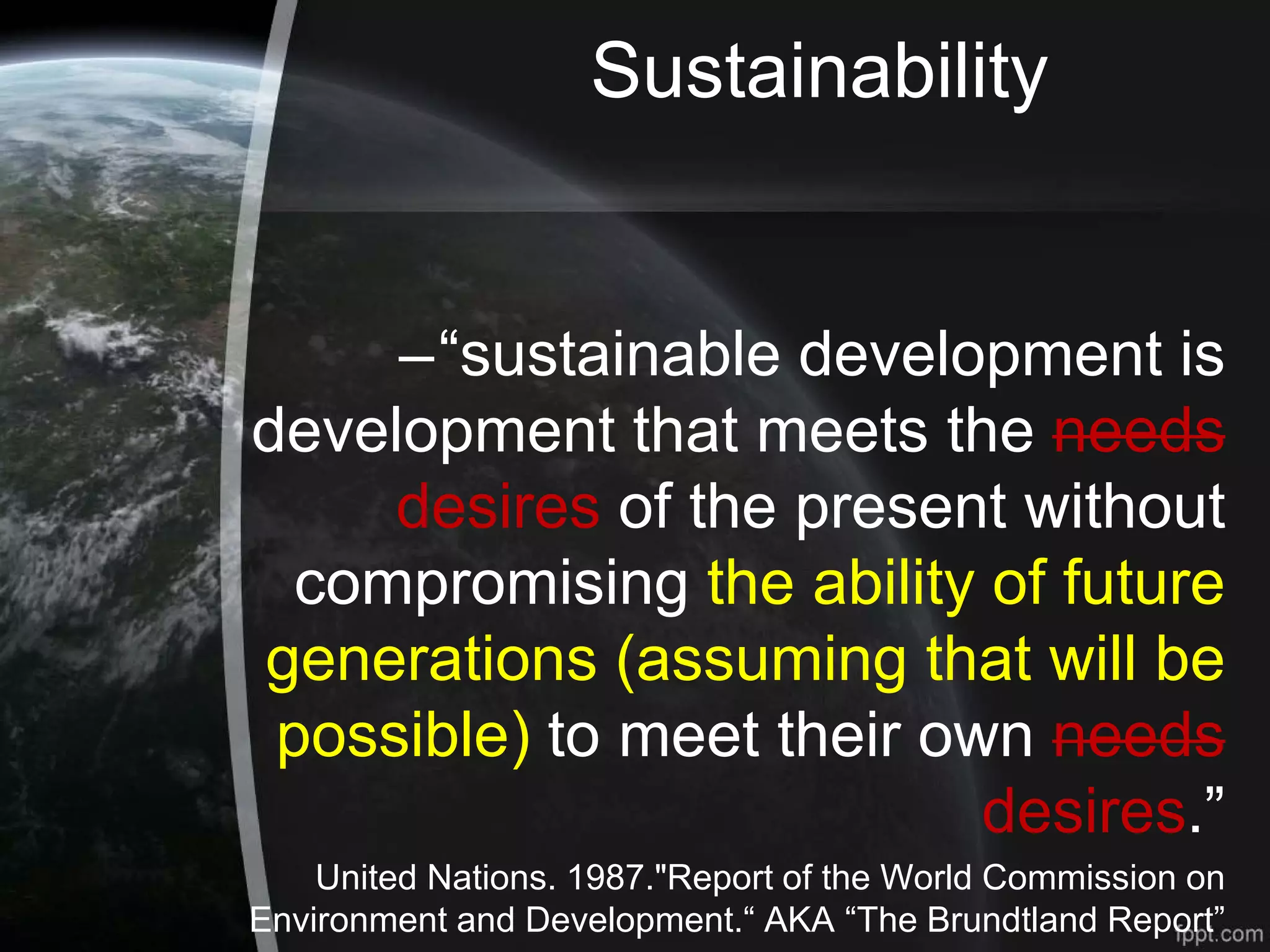
Sustainability
–“sustainable development is
development that meets the needs
desires of the present without
compromising the ability of future
generations (assuming that will be
possible) to meet their own needs
desires.”
United Nations. 1987."Report of the World Commission on
Environment and Development.“ AKA “The Brundtland Report”
Sustainability
Human civilization has been built on
the exploitation of the stored solar
energy found in four distinct carbon
pools: (soil, wood, coal, and
petroleum)
Sustainability
Coal and petroleum are ancient, stored
solar energy, and their stock is finite.
Since agriculture and forestry exploit
current solar income, civilizations
built on these resources had the
opportunity to be sustainable.
(Many were not.)
Sustainability
• “A sustainable system is one that
produces enough energy over its
lifetime to maintain and duplicate
itself.”
Bill Mollison and Geoff Lawton, Permaculture Design
Course, 2005 University of Melbourne
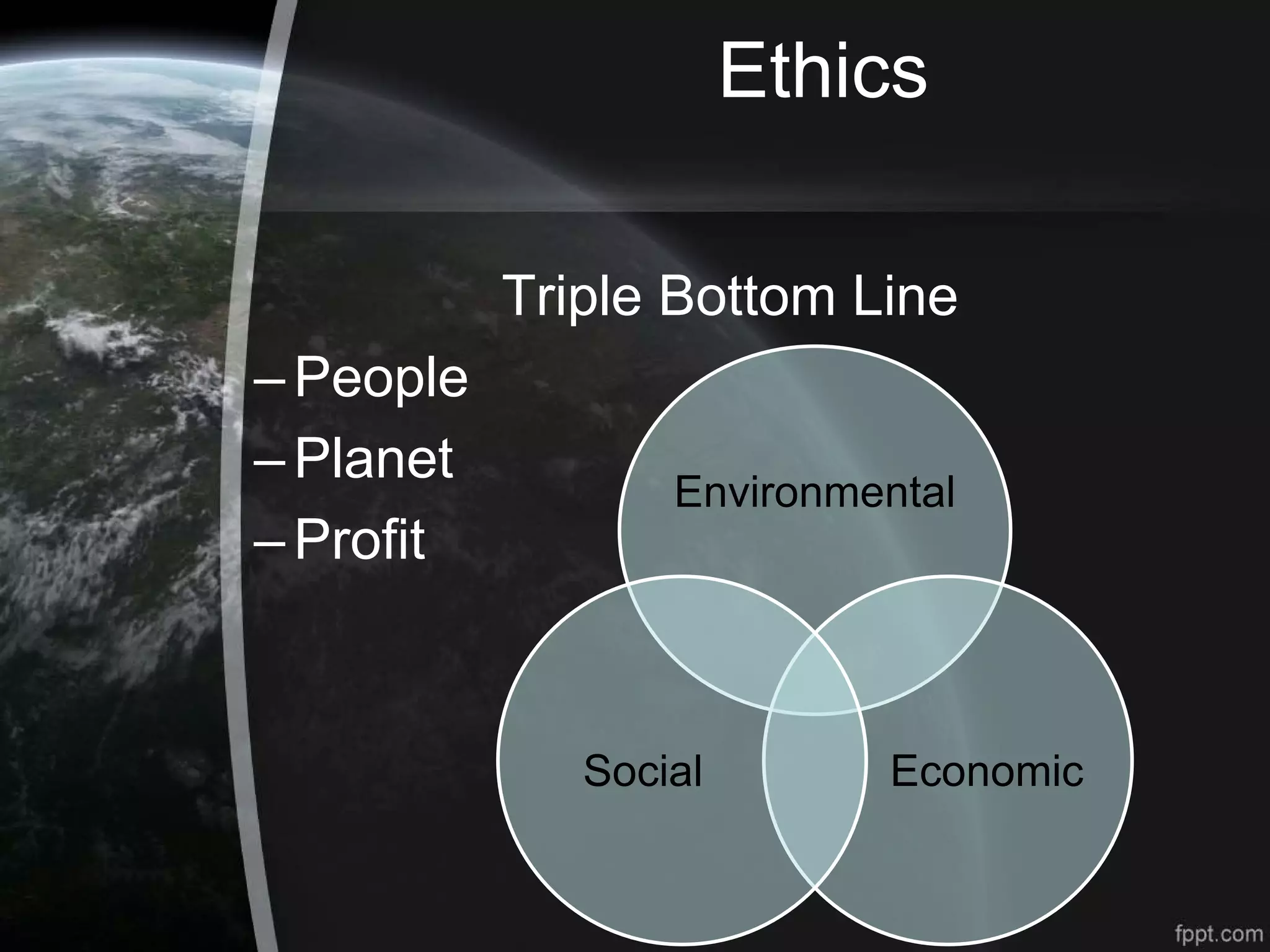
Ethics
Triple Bottom Line
–People
–Planet
–Profit
Environmental
EconomicSocial
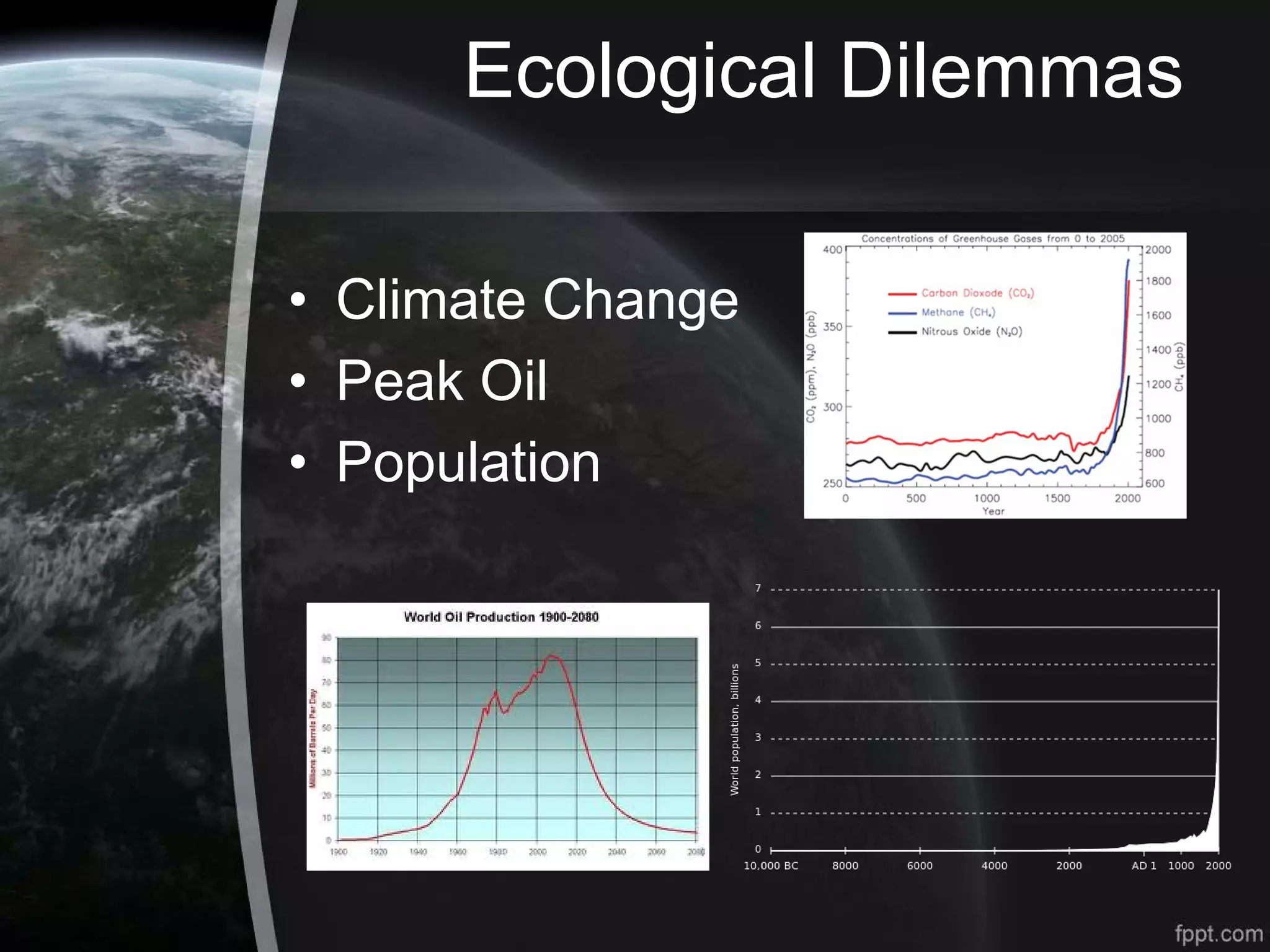
Ecological Dilemmas
• Climate Change
• Peak Oil
• Population
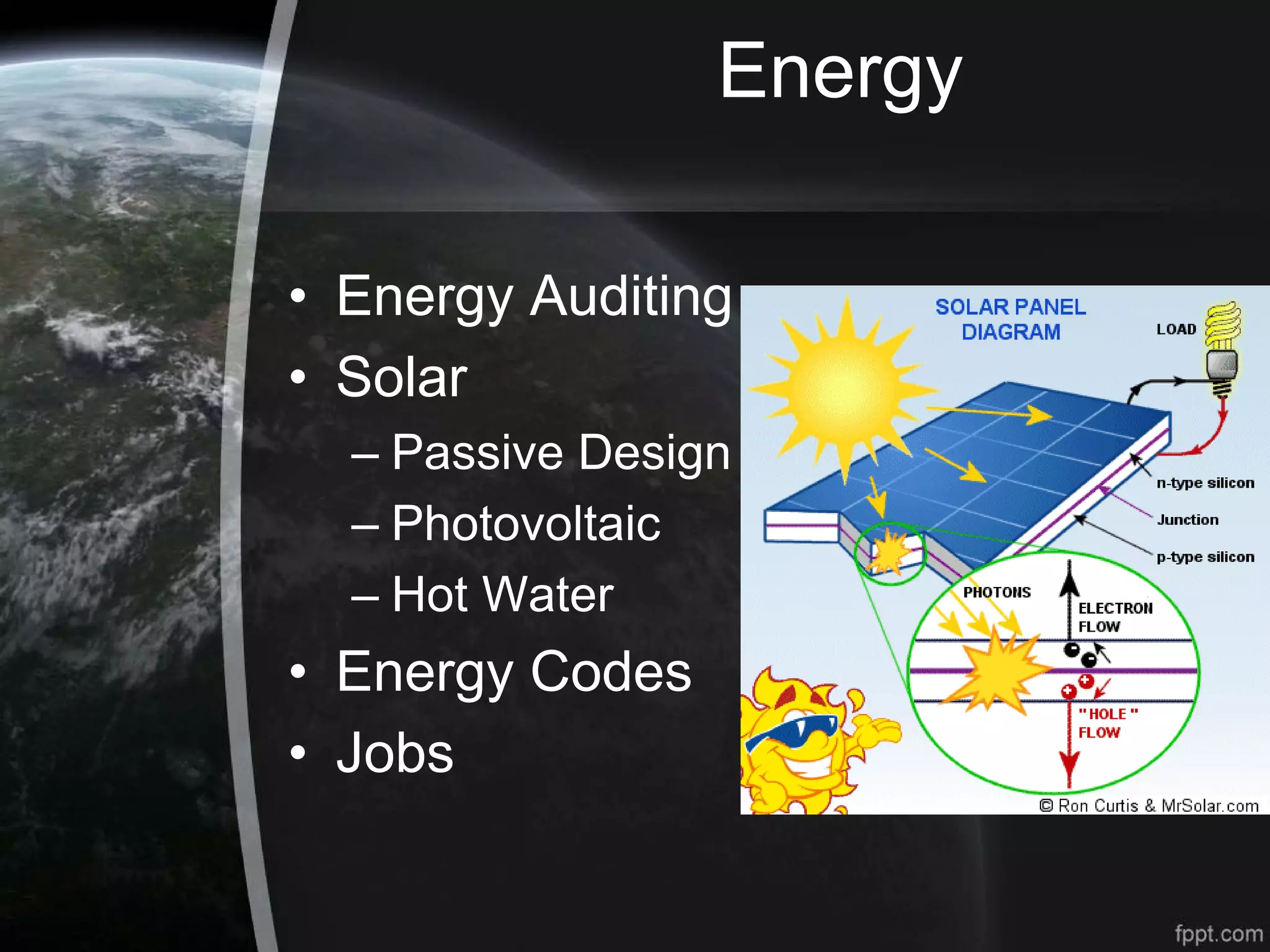
Energy
• Energy Auditing
• Solar
– Passive Design
– Photovoltaic
– Hot Water
• Energy Codes
• Jobs
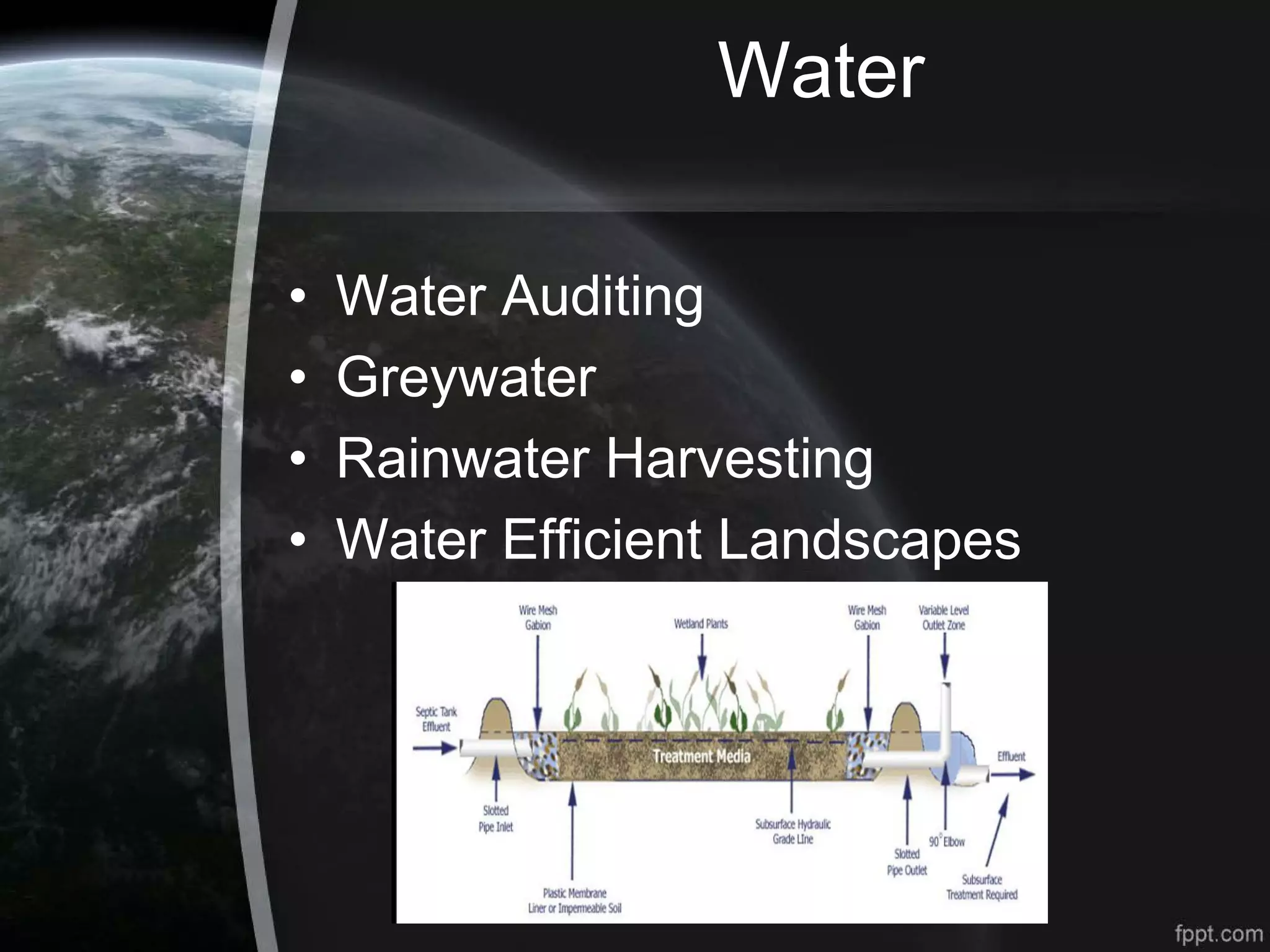
Water
• Water Auditing
• Greywater
• Rainwater Harvesting
• Water Efficient Landscapes
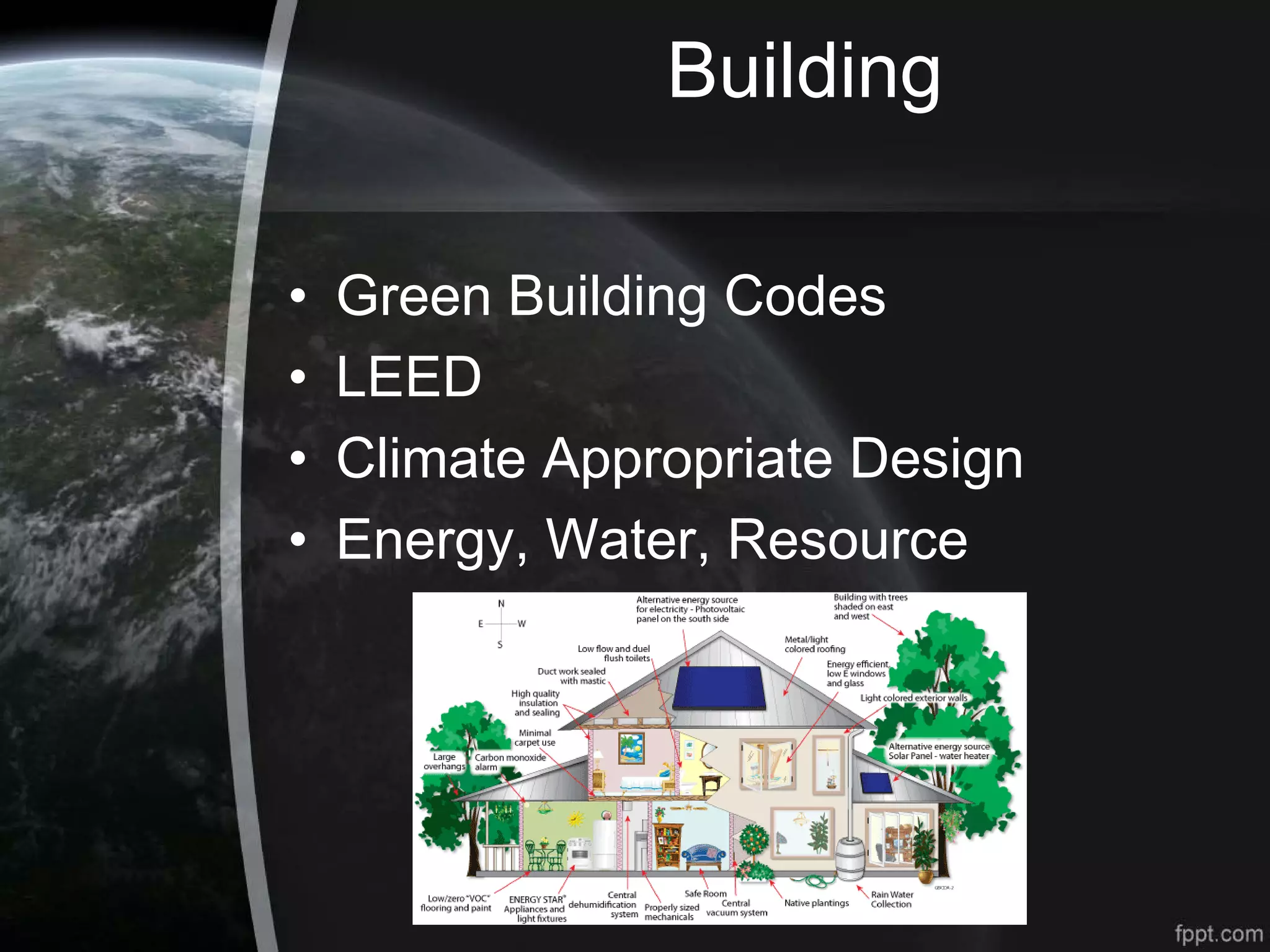
Building
• Green Building Codes
• LEED
• Climate Appropriate Design
• Energy, Water, Resource
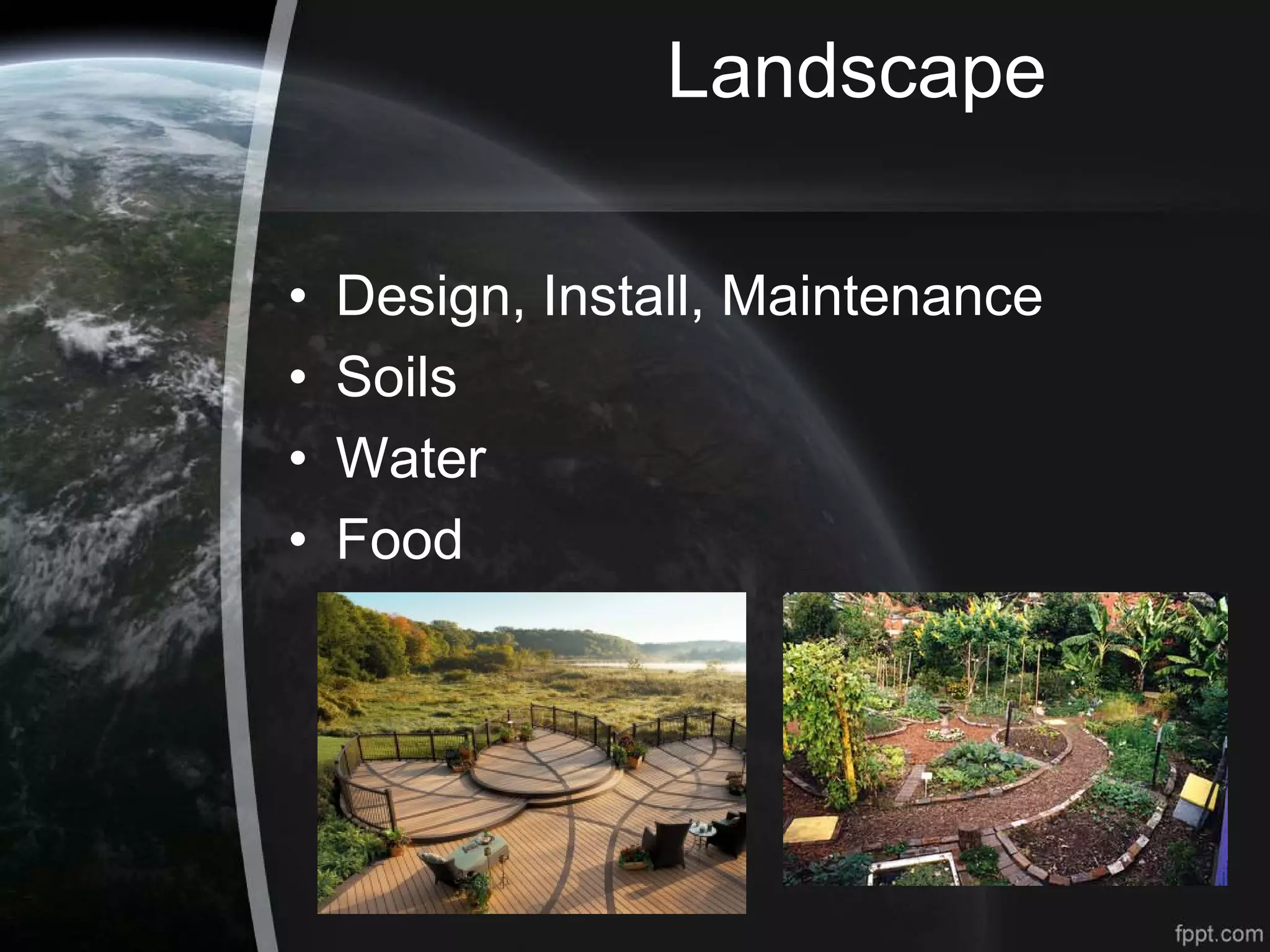
Landscape
• Design, Install, Maintenance
• Soils
• Water
• Food
Other Topics
• Waste
• Transportation
• Business
• Community
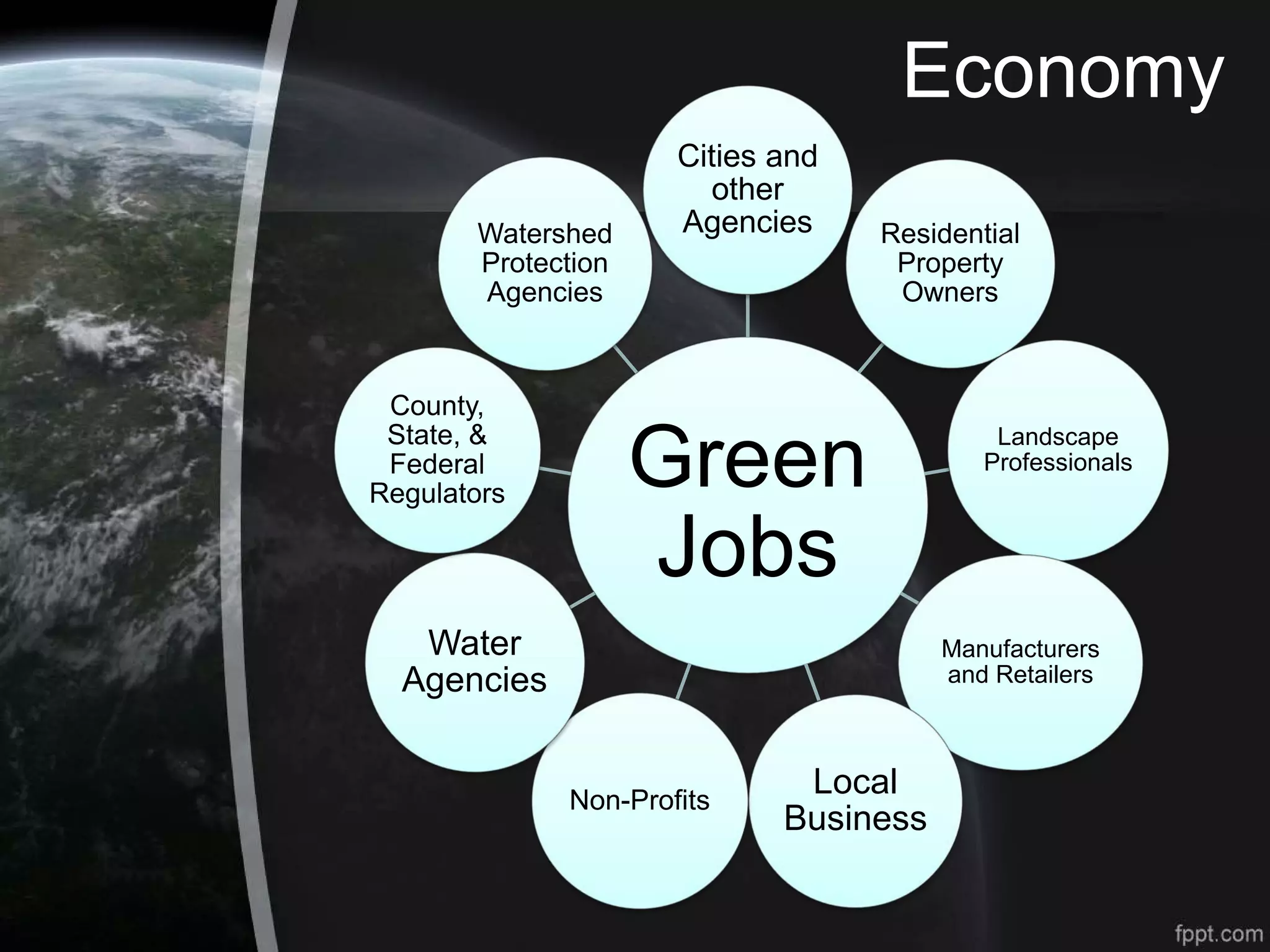
Economy
Green
Jobs
Cities and
other
Agencies Residential
Property
Owners
Landscape
Professionals
Manufacturers
and Retailers
Local
Business
Non-Profits
Water
Agencies
County,
State, &
Federal
Regulators
Watershed
Protection
Agencies

Introduction to Sustainable Energy Studies