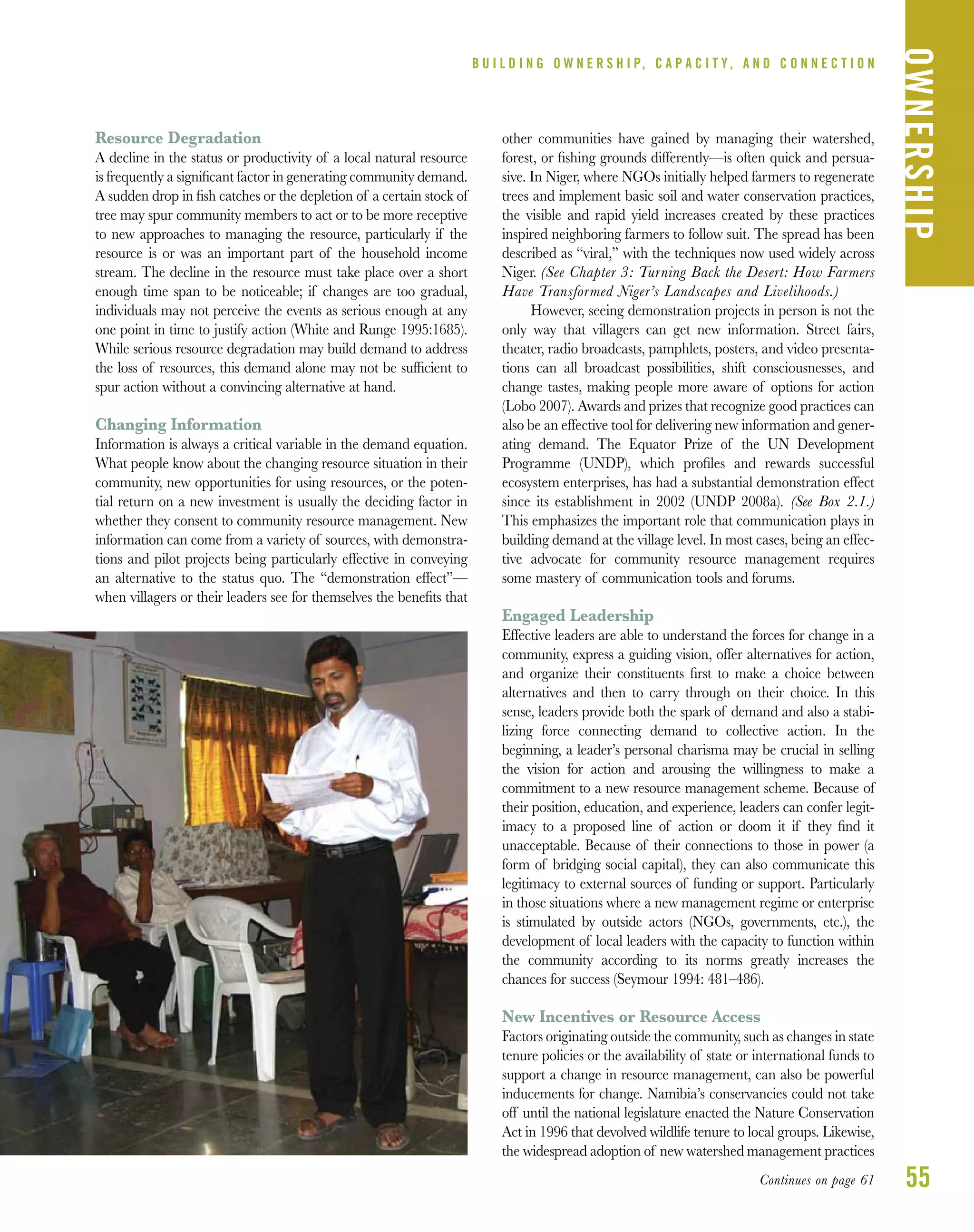
Growing the Wealth of the Poor
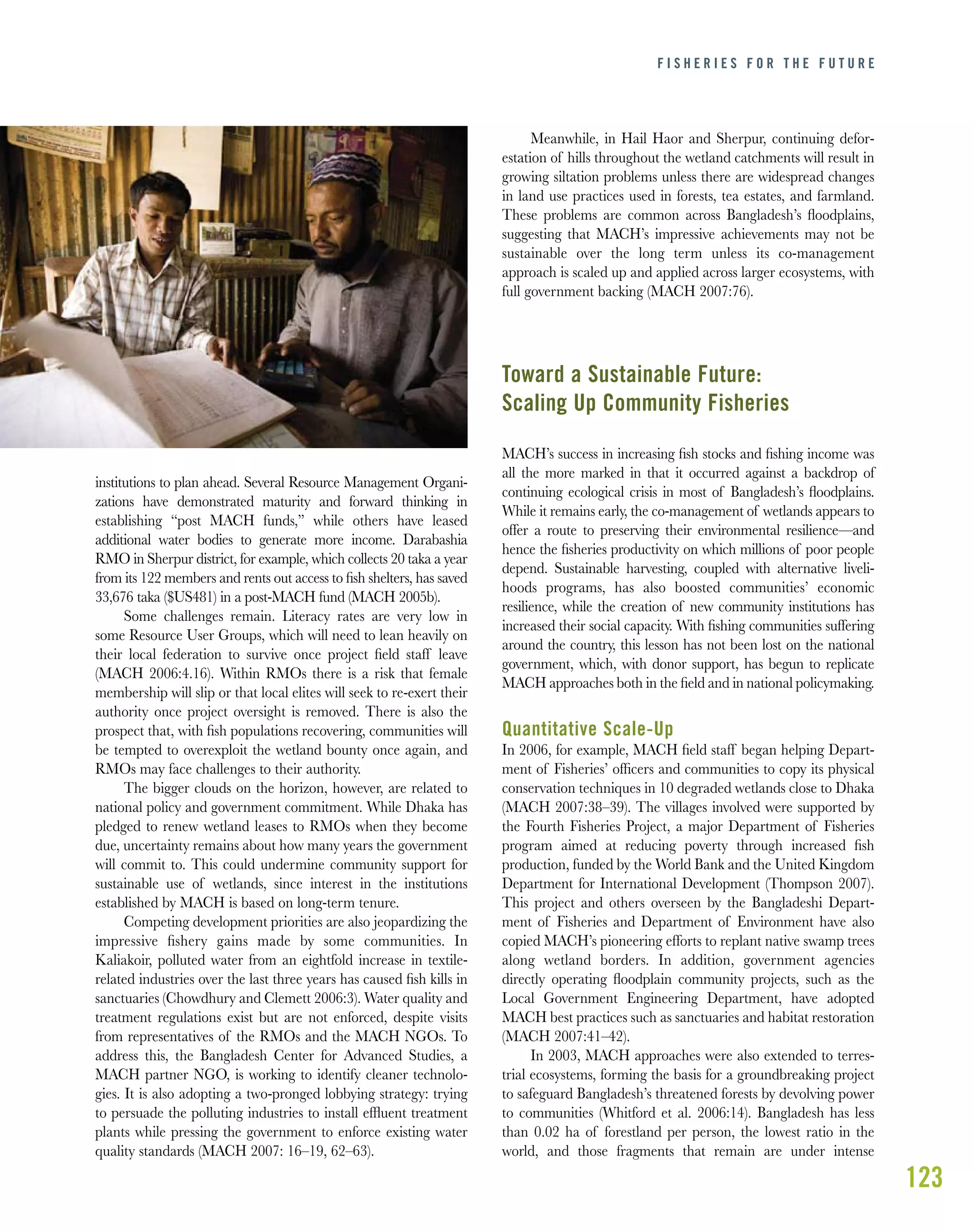
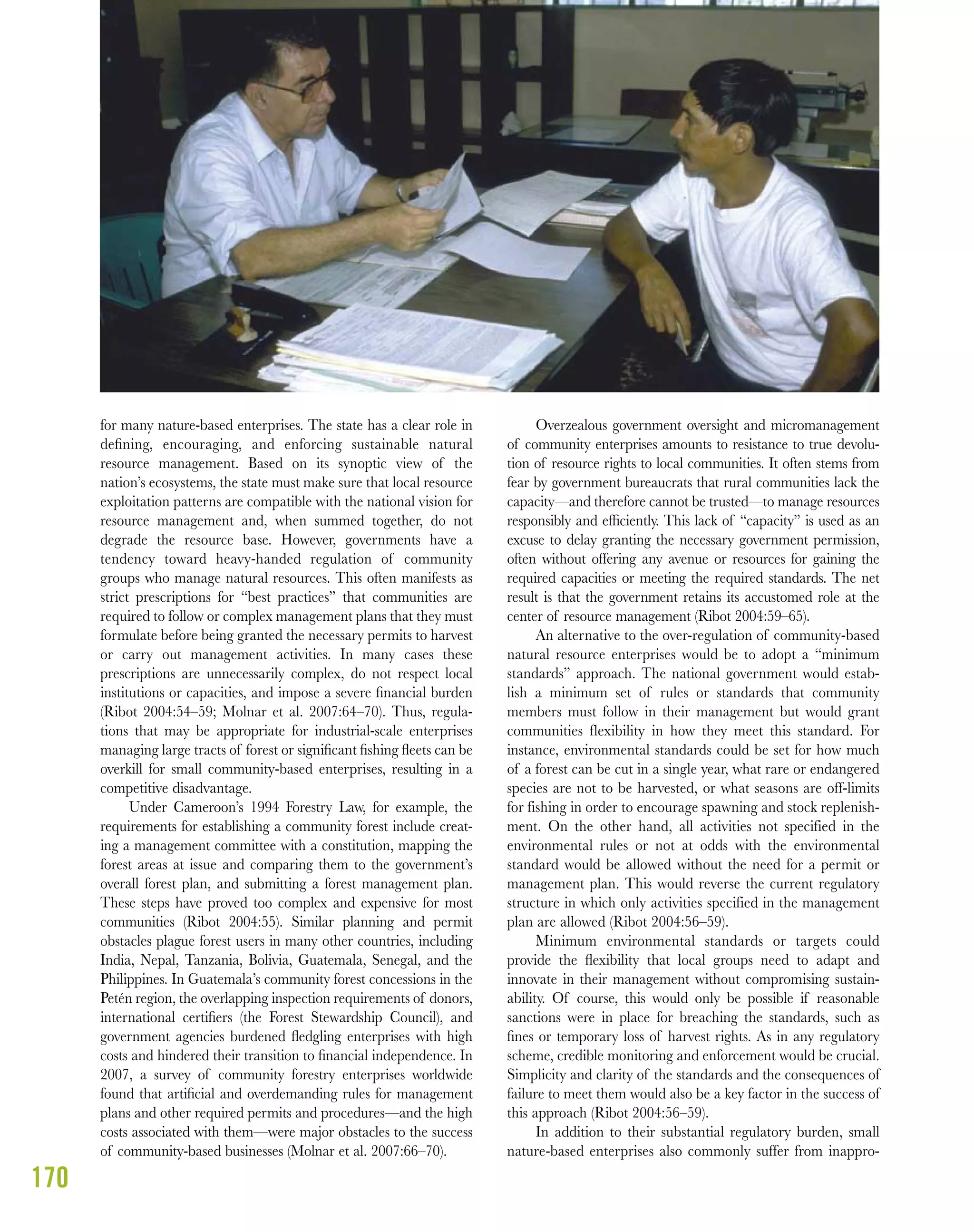
WORLD
RESOURCES
INSTITUTE
Resilience
O W N E R S H I P I
C A P A C I T Y I
C O N N E C T I O N
2008
Roots of
WORLD
RESOURCES
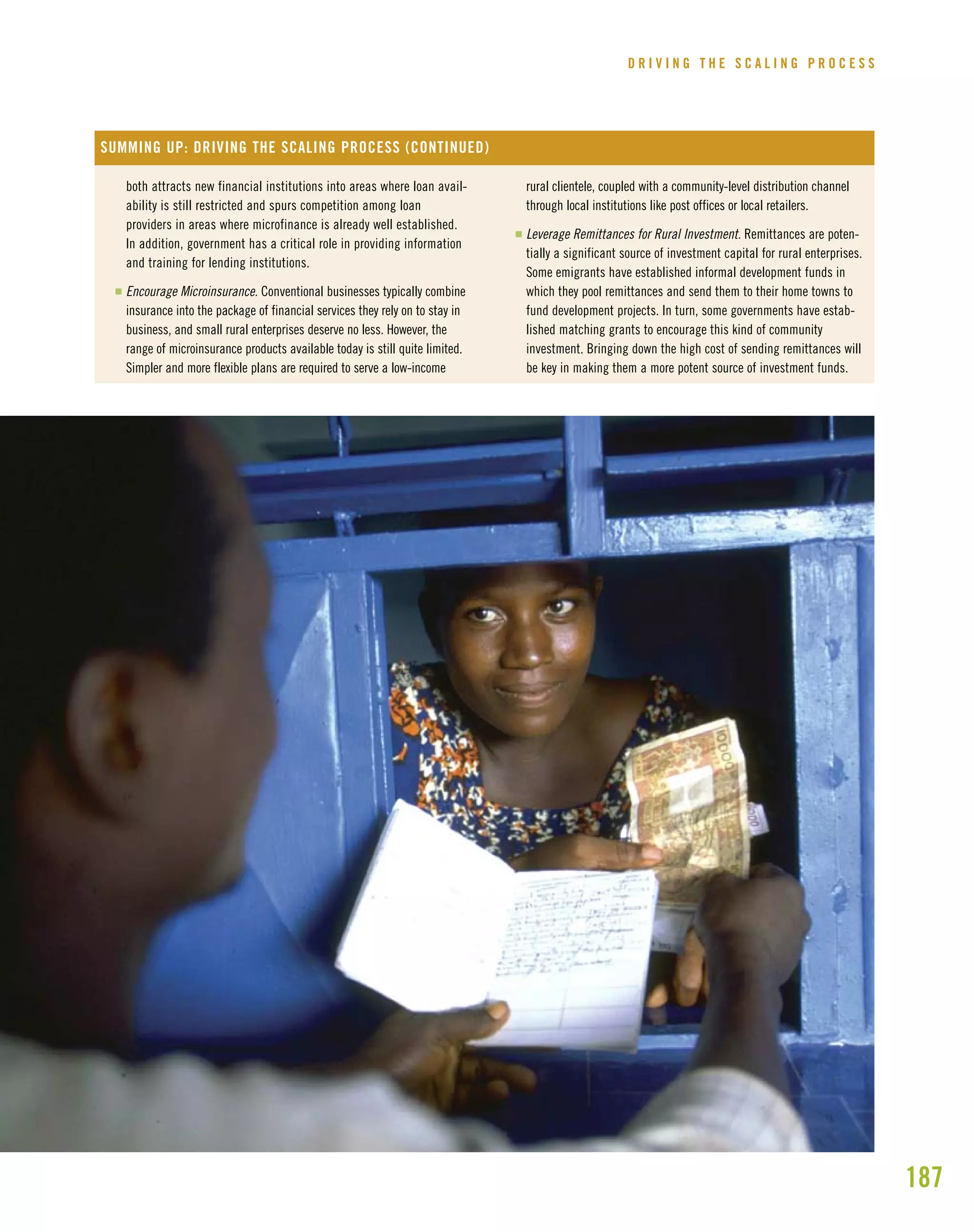
THE WORLD BANK
WORLD
RESOURCES2008WORLD RESOURCES REPORT
Philip Angell, Editor-in-Chief
Gregory Mock, Senior Writer/Editor
Lauren Withey, Research Assistant
Emily Cooper, Research Analyst
Stephanie Hanson, Managing Editor
Jen Lesar, Managing Editor (to December 2007)
Alex Acs, Research Analyst (to August 2007)
Ethan Arpi, Intern
Dena Leibman, Contributing Editor
Hyacinth Billings, Publications Director
DATA, MAPS, AND GRAPHICS
Amy Cassara, Senior Associate
Crystal Davis, Research Analyst
Stephen Adam, Research Analyst
Hugo Ahlenius, Programme Officer (UNEP/GRID-Arendal)
CONTRIBUTING WRITERS
Polly Ghazi, Consultant
Karen Holmes, Consultant
Alex Acs, WRI
Emily Cooper, WRI
Joe Foti, WRI
Lauren Withey, WRI
Elspeth Halverson, UNDP
Gabriela Tobler, UNDP
Crispino Lobo, Watershed Organisation Trust
WORLD RESOURCES 2008 EDITORIAL BOARD
Manish Bapna
David Jhirad
Jonathan Lash
Robin Murphy
Janet Ranganathan
Daniel Tunstall
Jake Werksman
PRINCIPAL PARTNERS
United Nations Development Programme
Veerle Vandeweerd
Charles McNeill
Gordon Johnson
United Nations Environment Programme
Peter Gilruth
Munyaradzi Chenje
World Bank
James Warren Evans
Kirk Hamilton
World Resources Institute
Manish Bapna
Daniel Tunstall
ADJUNCT PARTNER
UNEP/GRID-Arendal
Peter Prokosch
Marianne Fernagut
Hugo Ahlenius
Itchy Cvetanovski
Frank Turyatunga
Svein Tveitdal
PUBLICATION DESIGN
Alston Taggart, Studio RED
WORLD
RESOURCES2008
United Nations Development Programme
United Nations Environment Programme
World Bank
World Resources Institute
WORLD
RESOURCES
2008
W O R L D R E S O U R C E S I N S T I T U T E W A S H I N G T O N , D C
Growing the Wealth of the Poor
Resilience
O W N E R S H I P I
C A P A C I T Y I
C O N N E C T I O N
Roots of
iv
W O R L D R E S O U R C E S 2 0 0 8
World Resources 2008:
Roots of Resilience—Growing the Wealth of the Poor
Cite as: World Resources Institute (WRI) in collaboration with
United Nations Development Programme, United Nations
Environment Programme, and World Bank. 2008. World
Resources 2008: Roots of Resilience—Growing the Wealth of
the Poor. Washington, DC: WRI.
Published by
World Resources Institute
10 G Street, NE
Suite 800
Washington, DC 20002
© 2008 World Resources Institute
The World Resources Series is produced collaboratively by four
organizations: the United Nations Development Programme, the
United Nations Environment Programme, the World Bank, and the
World Resources Institute. The views expressed in this volume are
those of the contributors and do not necessarily reflect the judgments
of the organizations’ boards of directors or member governments.
The full report is available online at www.wri.org. Materials may be
reproduced with the written permission of the World Resources Institute.
ISBN 978-1-56973-600-5
The World Resources Institute wishes to acknowledge five organizations whose support has been indispensable
in bringing World Resources 2008 to publication:
Netherlands Ministry
of Foreign Affairs
Swedish International
Development Cooperation Agency
United States Agency
for International Development
UNEP/GRID - Arendal Ministry of Foreign Affairs
of Denmark
FOREWORD vii
PART I ROOTS OF RESILIENCE
CHAPTER 1 SCALING UP ECOSYSTEM ENTERPRISE 2
I Our Thesis 5
I The Need to Scale Up 8
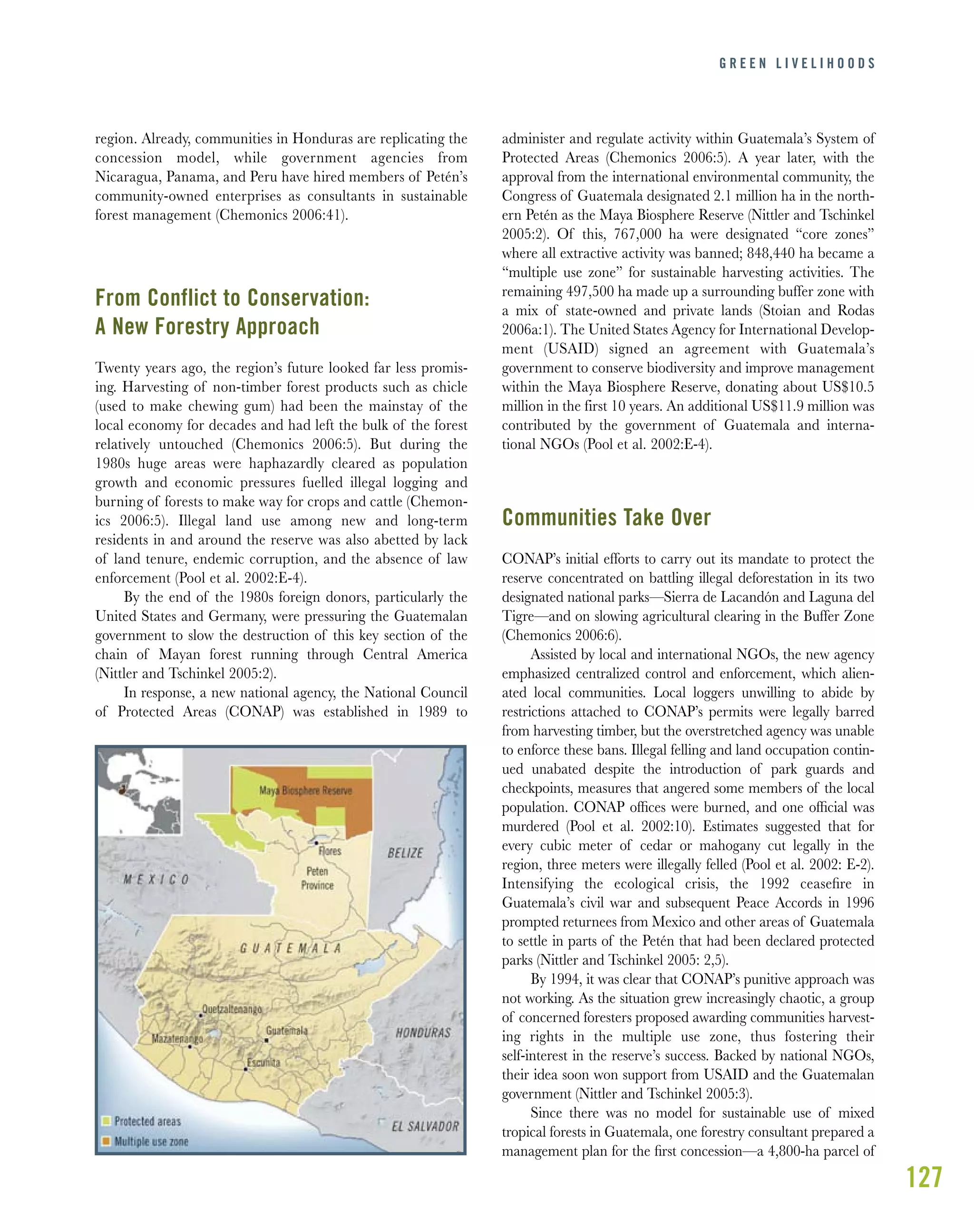
I Box 1.1 Managing Ecosystems to Fight Poverty: The Messages of World Resources 2005 9
I Box 1.2 What is Scaling Up? 10
I Ownership, Capacity, and Connection 13
I Enterprise and Governance 16
I Box 1.3 The Rural Poverty Imperative 20
I Scaling Up Requires Social Capital 25
I The Changing Development Paradigm 26
I The Resilience Dividend 27
I Update: Scaling Up Namibia’s Community Conservancies 30
I Update: Scaling Up Local Management of Coastal Fisheries in Fiji 38
CHAPTER 2 BUILDING OWNERSHIP, CAPACITY, AND CONNECTION 46
BUILDING OWNERSHIP 49
I Land and Resource Tenure 50
I Local Demand and Commitment 54
I Box 2.1 Lessons from the Equator Initiative: Best Practice in Local Ecosystem-Based Entrepreneurship 56
I Participatory Decision-Making 63
I Box 2.2 Lessons from the Field: Generating and Channeling Local Demand 68
DEVELOPING CAPACITY 71
I A Focus on Local Organizations 71
I Box 2.3 Women on the Move: Scaling Up Women’s Savings Groups in Niger 74
I The Role of Intermediary Support Organizations 77
I Box 2.4 Watershed Organisation Trust, India 78
I Box 2.5 Local Empowerment, Upward Influence: The Aga Khan Rural Support Programme 84
CONNECTING RURAL ENTERPRISES: NETWORKS AND ASSOCIATIONS 95
I The Power of Association 95
I Box 2.6 Curing Poverty? Taking Advantage of the Medicinals Market 98
I Box 2.7 Ethiopian Coffee Cooperatives: Leverage Through Networks 100
I The Challenges of Association 107
CONTENTS
WORLD
RESOURCES2008
vi
W O R L D R E S O U R C E S 2 0 0 8
CHAPTER 3 ROUTES TO RESILIENCE: CASE STUDIES 110
I Fisheries for the Future: Restoring Wetland Livelihoods in Bangladesh 112
I Green Livelihoods: Community Forestry Enterprises in Guatemala 126
I Turning Back the Desert: How Farmers Have Transformed Niger's Landscape and Livelihoods 142
CHAPTER 4 DRIVING THE SCALING PROCESS 158
I Extracting Insights from the Cases 160
I Box 4.1 REDD and Community Forest Management: Reducing Poverty, Reducing Carbon Emissions 164
I Beyond the Community Level: Addressing Challenges at the Macro Level 168
I Box 4.2 The Difficulty of Devolution: Senegal’s Struggle to Shift Forest Management to Local Hands 172
CHAPTER 5 RECOMMENDATIONS: ADVANCING ENTERPRISE AND RESILIENCE 188
I Cultivating Ownership and Increasing Demand 191
I Box 5.1 Climate Change and the Poor: Resilience and Adaptation 192
I Developing the Capacity of Local Organizations 195
I Promoting Enterprise Networks and Associations 197
I Creating a National Enabling Environment 197
I Culturing Resilience and Resourcefulness 200
PART II DATA TABLES
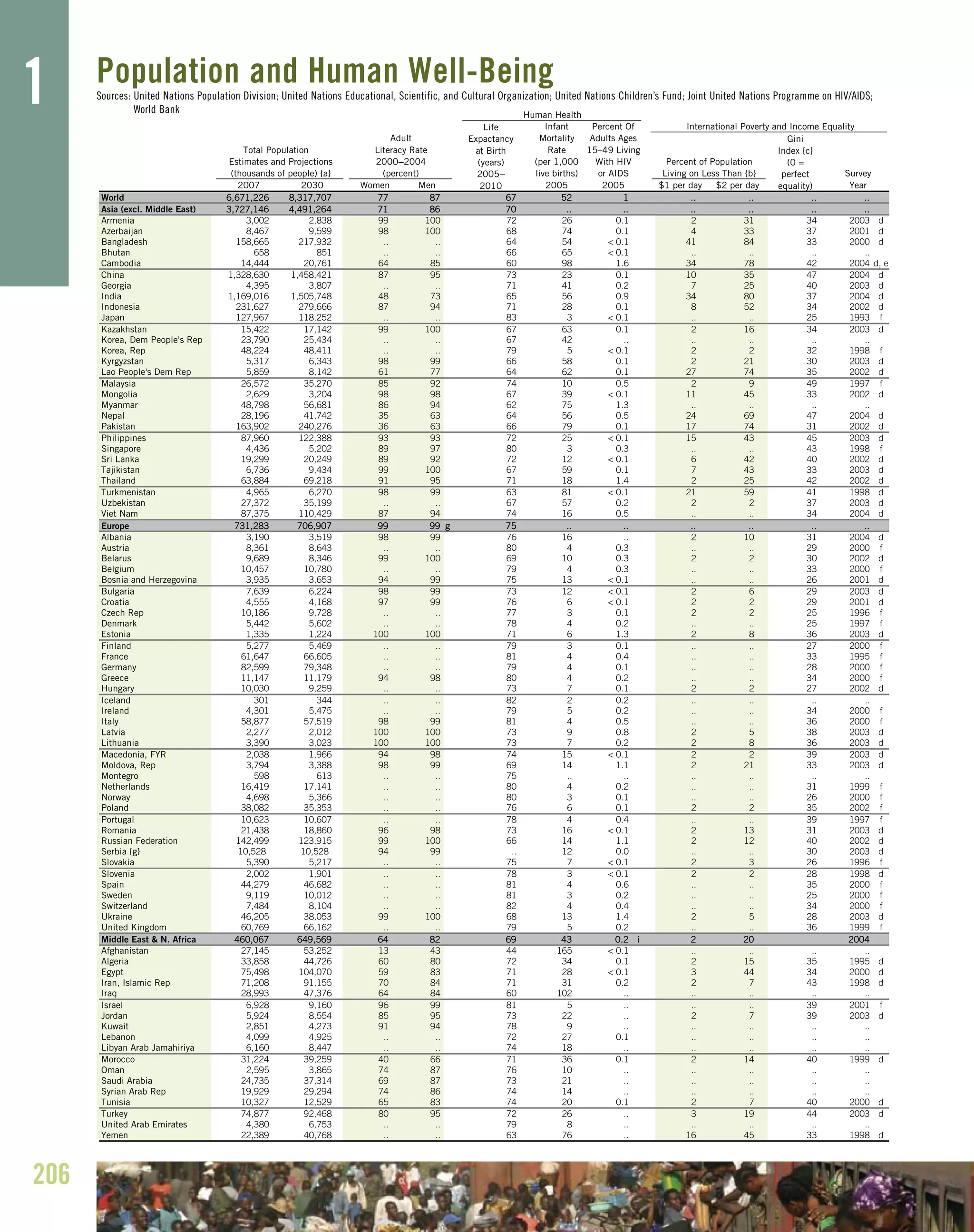
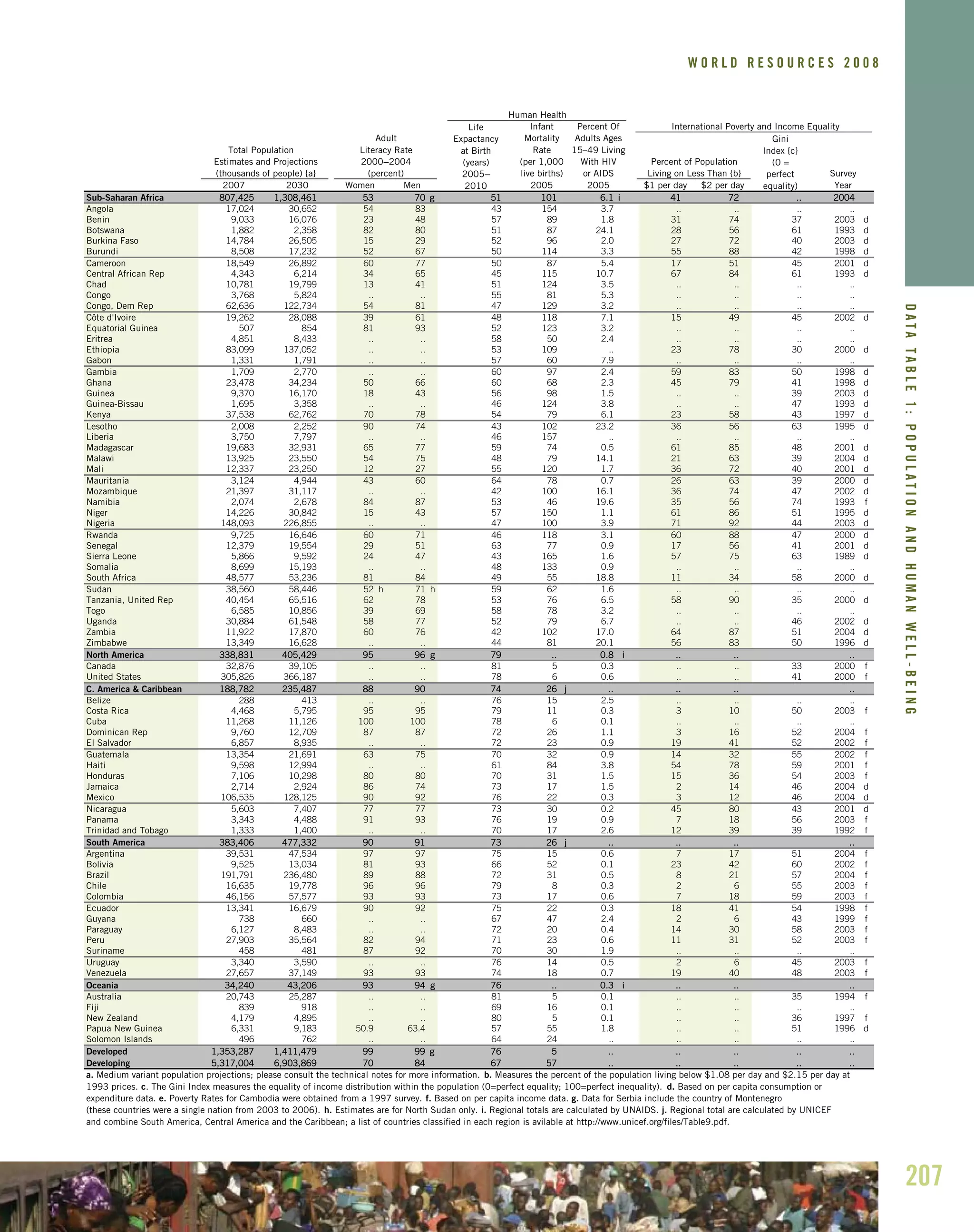
1. Population and Human Well-Being 206
2. Food and Water 210
3. Economics and Trade 214
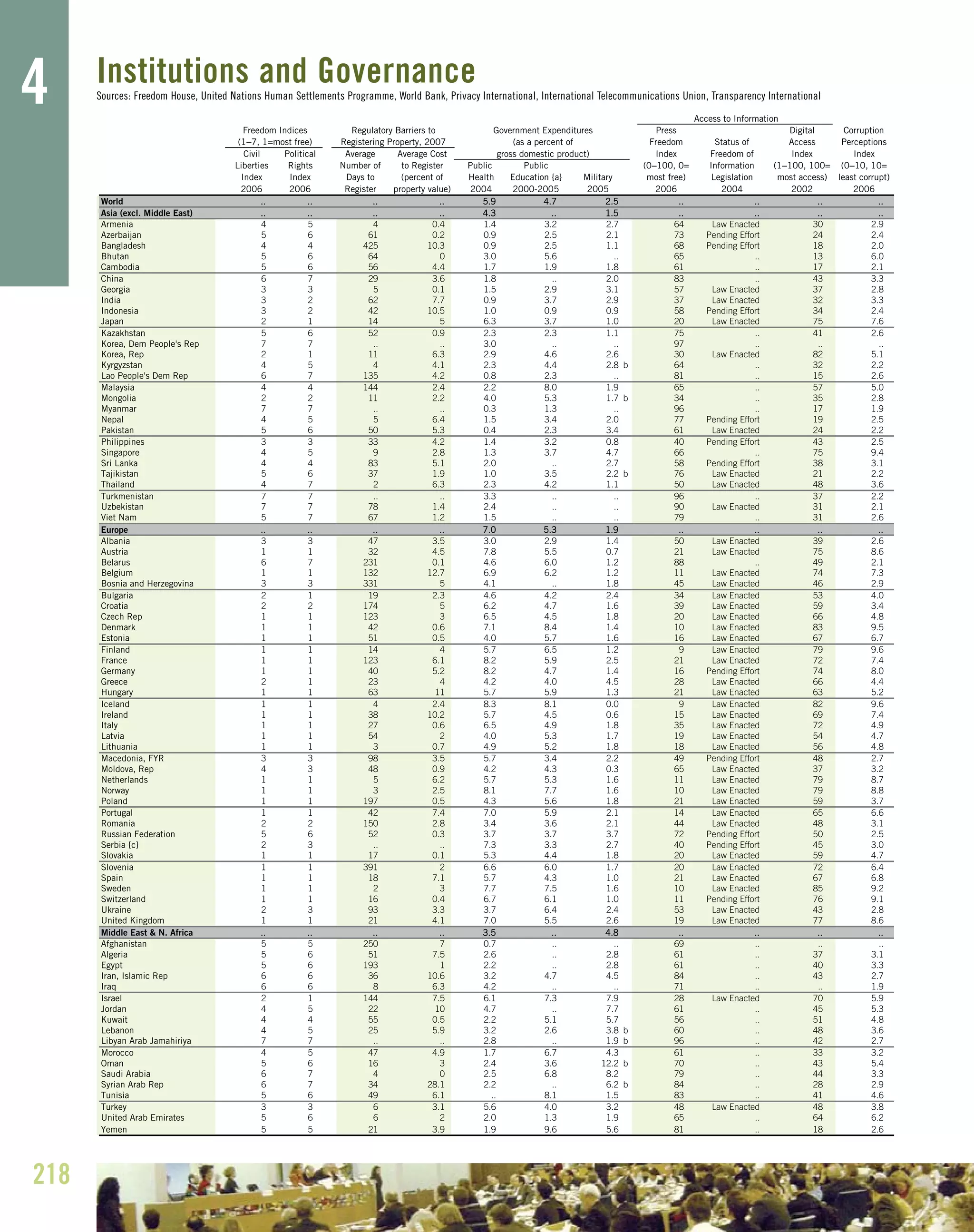
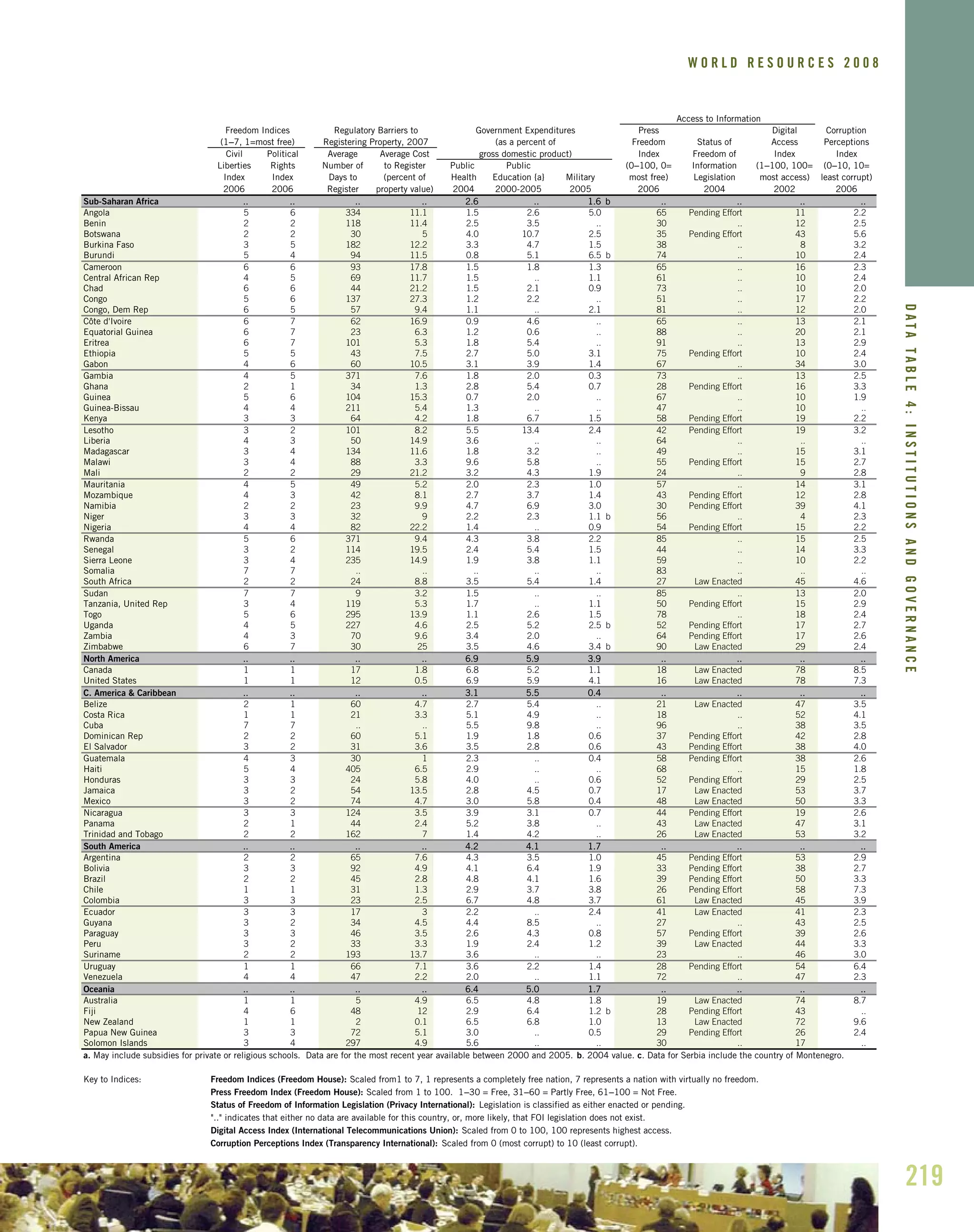
4. Institutions and Governance 218
I Acknowledgments 222
I References 224
I Photo Credits 244
I Index 245
THREE-QUARTERS OF THE WORLD’S POOREST CITIZENS—
those living on less than $2 per day—are dependent on the environment for a significant
part of their daily livelihoods. Climate change, therefore, adds a real urgency to the efforts
of the many institutions that work to improve the lives of the poor.
World Resources 2008 argues that properly designed enterprises can create economic,
social, and environmental resilience that cushion the impacts of climate change, and help
provide needed social stability. Increased resilience must be part of the response to the
risks of climate change. The efforts that foster resilience chart the first steps on the path
out of poverty.
What can we say with some certainty about environment and development as we approach
the end of the first decade of the 21st century?
CREATING
ENTERPRISE,
FIGHTING
POVERTY,
FOSTERING
RESILIENCE.
FOREWORD
viii
W O R L D R E S O U R C E S 2 0 0 8
I The world is far wealthier; Brazil, India and China are emerg-
ing as new and influential economic powers. At the same time,
however, wealth tends to be highly concentrated in a small
percentage of the population worldwide.
I The Millennium Ecosystem Assessment of 2005 found that
15 out of the 24 major ecosystem services it assessed are being
degraded or used unsustainably.
I We are already experiencing the initial consequences of
climate change; the pace of these early changes, such as polar
ice melt, is more rapid than any models had predicted.
I We have made commendable progress in reducing the number
of people living in poverty, but that achievement has been
limited to China and a handful of South Asian countries. The
plain fact is that almost half the world’s population—
2.6 billion people—continues to live on $2 per day or less; one
billion of them on $1 per day or less.
I In spite of the news that as of 2007, we have become a
predominately urban world, the reality of poverty remains
geographical. Three-quarters of the poorest families live in
rural areas; they still depend in large measure on natural
resources for their existence; they remain vulnerable and their
future insecure.
What we know well from successful case studies, and what this
volume again argues is that any success in overcoming poverty
takes time and persistence; efforts to address rural poverty are
linked to natural systems and must abide by natural cycles. Yet
time is a growing constraint as the early impacts of climate
change emerge and their long-term effects become clearer.
Of equal concern is the fear that progress made over the
past decades to overcome poverty may be at risk from the
disruptive effects of climate change. This poses a dilemma for
the development community: we must not only maintain but
scale up our responses to such poverty, to reduce the economic
vulnerability of the poorest at a time when many natural
resources are being degraded.
World Resources 2005: The Wealth of the Poor examined
the relationship between ecosystem management, good gover-
nance, and poverty reduction. In it we argued that poverty and
the environment are inextricably linked, that the world’s rural
poor could enhance their livelihoods by capturing greater value
from ecosystems.
Our thesis was that income from sustainably managed
ecosystems can act as a stepping stone in the economic empow-
erment of the poor. But this could only happen when poor
households are able to reap the benefits of their good ecosystem
stewardship. Governance, in the form of tenure reform, can
create the self-interest that leads to an improved natural
resource base, be it agriculture, forestry, or fishing.
We believe the linkage among poverty, environment, and
governance, and the promise it holds for the poor has even more
currency today. In this book, we take a closer look at that
ix
linkage. We draw on a wealth of experience in community-
based natural resource management, much of it supported by
the partners in this book.
We identify those elements without which the achieve-
ment of any permanent measure of improvement, of any
promise of sustained growth, is greatly diminished. We
explore three essential factors in some detail: community
ownership and self-interest; the role of intermediate organiza-
tions (in providing skills and capacity); and the importance of
networks—formal and informal—as support and learning
structures. When these factors are present, resourceful and
resilient communities can emerge.
Resilience is the capacity to adapt and to thrive in the face
of challenge. This report contends that when the poor success-
fully (and sustainably) scale up ecosystem-based enterprises,
their resilience can increase in three dimensions: They can
become more economically resilient—better able to face
economic risks. They—and their communities—can become
more socially resilient—better able to work together for mutual
benefit. And the ecosystems they live in can become more
biologically resilient—more productive and stable.
It is clear that in the coming decades, the rural poor will be
tested as the impacts of climate change manifest. There are no
cities in the developing world large enough or wealthy enough
to absorb the migration of the poor who have no buffer against
these dangers, and can find no means to adapt. The political
and social instability inherent in such potentially massive
movements of people is of increasing concern to the interna-
tional community.
With the adoption of the Millennium Development Goals
in 2000, and the increased attention given poverty with succeed-
ing meetings of the G-8, a renewed and expanded commitment
to overcoming poverty is slowly being put in place. There are
big strategies being tested, and significant resources being
expended, both by donor countries and by NGOs and philan-
thropic organizations.
We recognize that the concern for poverty extends to the
serious problems of urban poverty as well. For this reason, we
must continue to support responsible industrial development
that generates jobs and opportunity, even as it lessens its burden
of pollution. Such urban industrial growth has been a signifi-
cant factor in East Asia’s success over the last two decades in
reducing poverty.
But for the rural poor, the challenge is different. Natural
resources are still the mainstay of the rural economy. Nature-
based enterprises such as community forestry or ecotourism
lodges offer the poor a way to use their ecosystem assets and
gain business capacities that allow them to participate in an
increasingly integrated and globalized economy. They provide
the opportunity for diverse livelihood strategies.
And, as we move to reduce carbon emissions, there may
well be additional economic opportunity for the rural poor
through the mechanism of carbon markets, in which rural
communities may receive compensation for carbon reduction or
offset programs, such as storing carbon through community
forestry projects.
Improved governance is the key. Giving communities the
right to manage local natural resources themselves can be a
critical catalyst for improving well-being.
Governments committed to end poverty should also begin
to remove barriers to rural enterprises, such as lack of compet-
itive markets, lack of transportation infrastructure, and lack of
financial services. There is ready help in public and private insti-
tutions to assist in these tasks.
Most importantly, the concern over poverty must translate
into a real and substantial effort to build the capacity of local
organizations to manage natural resources and create viable
enterprises. Scaling up such enterprises can provide a potent
source of revenue for substantive rural development—the key to
a better life for almost 2 billion of the world’s poor.
To this imperative is now added the unease that comes
from knowing that the time to get ready, the time to help
millions prepare, is growing short. The consequences of not
acting may well test the depths of our compassion.
Thirty-five years ago—in 1972—the nations of the world
came to Stockholm for the first international conference on the
human environment. The theme of that historic gathering was
“Only One Earth.” It marked the onset of our awareness that
we all share a common environment, a fact not fully appreciated
then or for many years after. Today, the manifest reality of
climate change and its certain impact on all of us, no matter
how privileged, leaves no doubt as to that fact.
How we embrace that reality does now determine our
common future.
Kemal Dervis
A D M I N I S T R ATO R
United National Development Programme
Achim Steiner
E X E C U T I V E D I R E C TO R
United Nations Environment Programme
Robert B. Zoellick
P R E S I D E N T
World Bank
Jonathan Lash
P R E S I D E N T
World Resources Institute
F O R E W 0 R D
3
Roots of
Resilie
I
nce
PART
2
3
5
Scaling Up Ecosystem Enterprise
Building Ownership, Capacity, and Connection
I Building Ownership
I Developing Capacity
I Connecting Rural Enterprises: Networks and Associations
Routes to Resilience: Case Studies
Driving the Scaling Process
Recommendations: Advancing Enterprise and Resilience
1
4
2
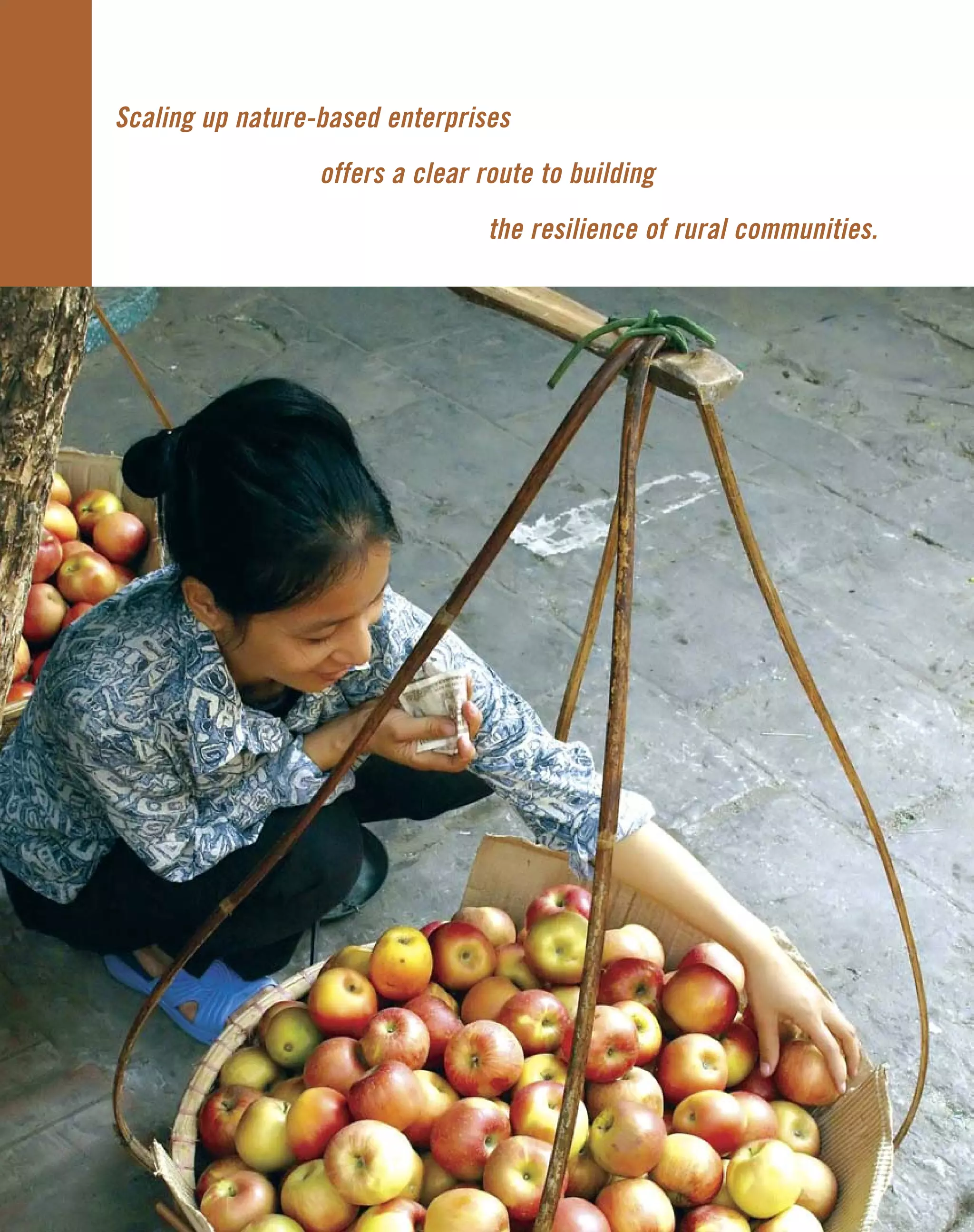
Scaling up nature-based enterprises
offers a clear route to building
the resilience of rural communities.
SCALING
UP
ECOSYSTEM
ENTERPRISE
NATURE IS AN ESSENTIAL YET ELUSIVE ASSET FOR THE
world’s poor. It routinely provides subsistence livelihoods for poor rural households but little
prospect for creating opportunity, wealth, and security—the foundations of well-being. This
need not be so.
In World Resources 2005 we showed that ecosystems can become the focus of a powerful
model for nature-based enterprise that delivers continuing economic and social benefits to
the poor, even as it improves the natural resource base. Evidence shows that poor rural
families empowered with secure resource rights can significantly increase their income
stream from nature with prudent ecosystem management. To make this possible, a funda-
mental shift in governance—in the power of the poor to access resources of value and build
functional enterprises—is required. (See Box 1.1 on page 9.)
The increase in “environmental income” that results from ecosystem-based enterprises
can stabilize the household economies of the poor, translating into better nutrition
and health, greater access to education, more opportunities for saving and investment,
and reduced vulnerability to financial shocks. Social gains accompany these material
gains, as the poor assume greater power to manage local ecosystems and become more
active players in the local economy. These gains are often associated with an increased
voice in resource decisions and greater equity in the distribution of economic benefits
from natural resources.
CHAPTER1
4
Examples of such economic and social gains from environ-
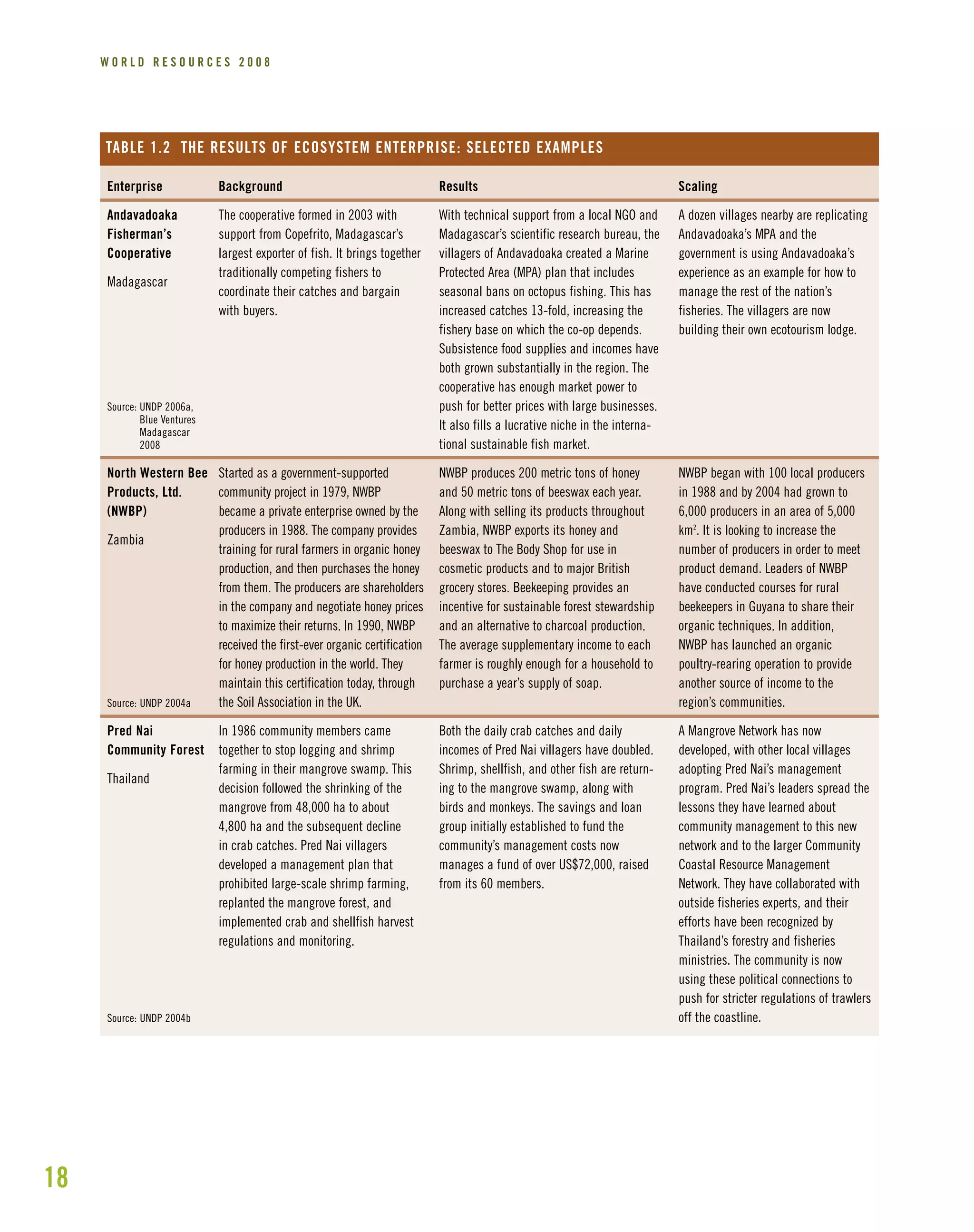
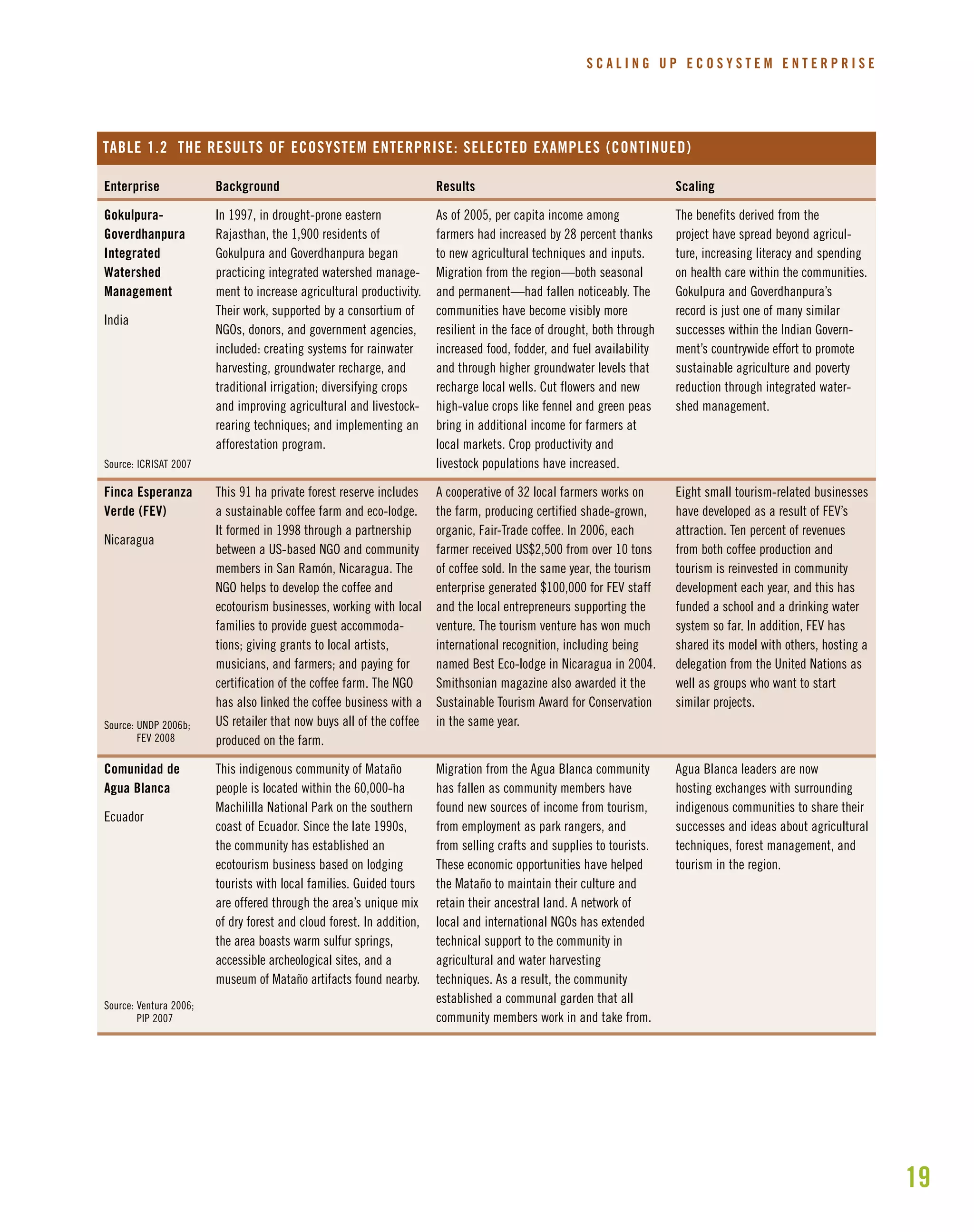
mental enterprise have grown in recent years. (See Table 1.2 on
page 18.) It is clear now that helping the poor to increase their
environmental income through good resource stewardship,
devolution of resource authority, and competent business models
can contribute to reducing rural poverty. This must be matched
by access to finance and the reform of policies and institutions
that keep rural groups and their businesses from competing fairly
in rural, national, and international markets.
When these conditions are met, environmental enterprises
can become a basis for building more resilient rural communi-
ties—resilient in the face of environmental challenges such as
climate change. This resilience extends as well to the economic
and social challenges associated with rural life in an era of
globalization and urban migration. These include the loss of
traditional livelihoods, political marginalization, and the break-
down of customary village institutions.
Can this ecosystem-based approach to wealth creation and
resilience be scaled up so that it begins to make a difference on a
global level? In World Resources 2008, we assert that it can.
In this chapter we present a vision for how the rural poor can use their
ecosystem assets to create viable and sustainable enterprises, gain
empowerment, increase their income and opportunities, and build their
resilience to environmental and social challenges—and do so at a
significant scale. The chapter:
I Presents the thesis that scaling up nature-based income and cultur-
ing resilience requires the three elements of ownership, capacity, and
connection, and defines these terms.
I Defines what we mean by ecosystem-based enterprise and how it
relates to community-based natural resource management.
I Presents a rationale for the need to “scale up” and explains the
different kinds of scaling.
I Defines the enabling environment of natural resource polices, market
regulations, and state support that is needed to foster successful
nature-based enterprises of the poor.
I Explains the role of local governments vis-à-vis other local resource
institutions such as forest user groups, watershed committees, or
fishery committees.
I Relates our thesis to community-driven development as funded and
practiced by development organizations today.
I Defines the three dimensions of resilience—ecological resilience,
social resilience, and economic resilience—and how scaling up
ecosystem-based enterprise helps build the resilience of rural
communities and poor families.
THIS CHAPTER
5
S C A L I N G U P E C O S Y S T E M E N T E R P R I S E
Our Thesis
Under the right conditions, programs that give communities the
skills and rights to manage their ecosystem assets sustainably
have shown they can achieve results on a significant scale, raising
environmental income at the village level or district level and, in
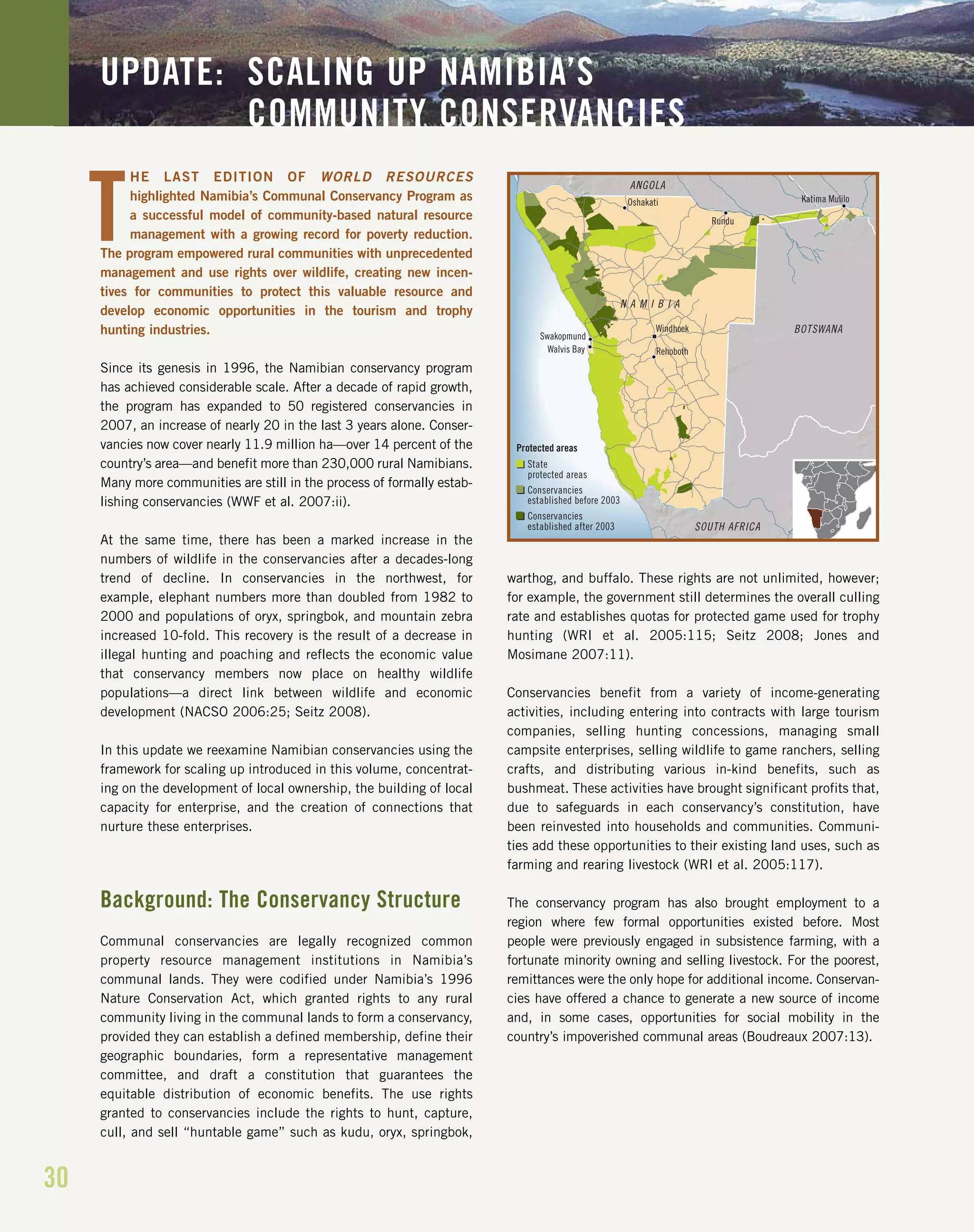
some instances, even larger scales. In Namibia, for example,
community conservancies have grown to cover 14 percent of the
land area in less than a decade. Using the authority the state
grants them to manage local wildlife, community conservancies
have become the foundation of a new rural economy, generating
substantial income from tourism and trophy hunting while
actually increasing wildlife populations. (See Update: Scaling Up
Namibia’s Community Conservancies on page 30.)
But what are the conditions under which such approaches
can go to scale? And how can national governments and inter-
national development agencies foster these conditions?
In this volume we explore the essential factors behind
scaling up environmental income and resilience for the poor. (See
Box 1.2 on page 10 for a discussion of what we mean by
“scaling up.”) Because so many of the forests, fisheries, grass-
lands, and watersheds that poor families rely on are common
pool resources, we concentrate on the governance conditions
and local capacities that allow communities to jointly manage
these ecosystems in equitable, sustainable, productive, and
commercially successful ways. That means we are often speaking
of community-based natural resource management (CBNRM).
Our consideration of environmental income also includes small-
holder agriculture—the most prevalent nature-based livelihood
of the poor. This kind of agriculture also benefits from joint
approaches to irrigation, soil conservation, pest management,
adoption of new technology, and marketing. The capacity for
joint action—the result of building “social capital”—is an
important feature of successful scaling.
Our thesis is that successfully scaling up environmental
income for the poor requires three elements: it begins with
ownership—a groundwork of good governance that both
transfers to the poor real authority over local resources and elicits
local demand for better management of these resources. Making
good on this demand requires unlocking and enabling local
capacity for development—in this case, the capacity of local
communities to manage ecosystems competently, carry out
ecosystem-based enterprises, and distribute the income from
these enterprises fairly. The third element is connection: estab-
lishing adaptive networks that connect and nurture nature-based
enterprises, giving them the ability to adapt, learn, link to
markets, and mature into businesses that can sustain themselves
and enter the economic mainstream.
When these three elements are present, communities can
begin to unlock the wealth potential of ecosystems in ways that
actually reach the poor. In so doing they build a base of compe-
tencies that extends beyond nature-based enterprises and
supports rural economic growth in general, including the gradual
transition beyond reliance on natural resource income alone.
They also acquire greater resilience. It is the new capacities
that community members gain—how to build functional and
inclusive institutions, how to undertake community-based
projects, and how to conduct a successful business—that give rise
to greater social and economic resilience. It is the insight that
ecosystems are valuable assets that can be owned and managed
for sustained benefits that builds the foundation of ecological
resilience. Together, these three dimensions of resilience support
the kind of rural development whose benefits persist in the face
of challenge.
Even while stressing these elements, we realize there are
numerous other factors that are crucial to creating an environ-
ment where poor families have both the authority and the support
to engage in ecosystem enterprises. These include state policies
on how and to whom natural resource access is granted, as well
as how the markets for nature-based products are regulated. Basic
democratic rights such as the ability of the poor to have their
interests championed within government by representatives that
they can sanction and the ability to seek legal recourse when their
rights have been violated also form a backdrop of good gover-
nance that is essential to real economic empowerment.
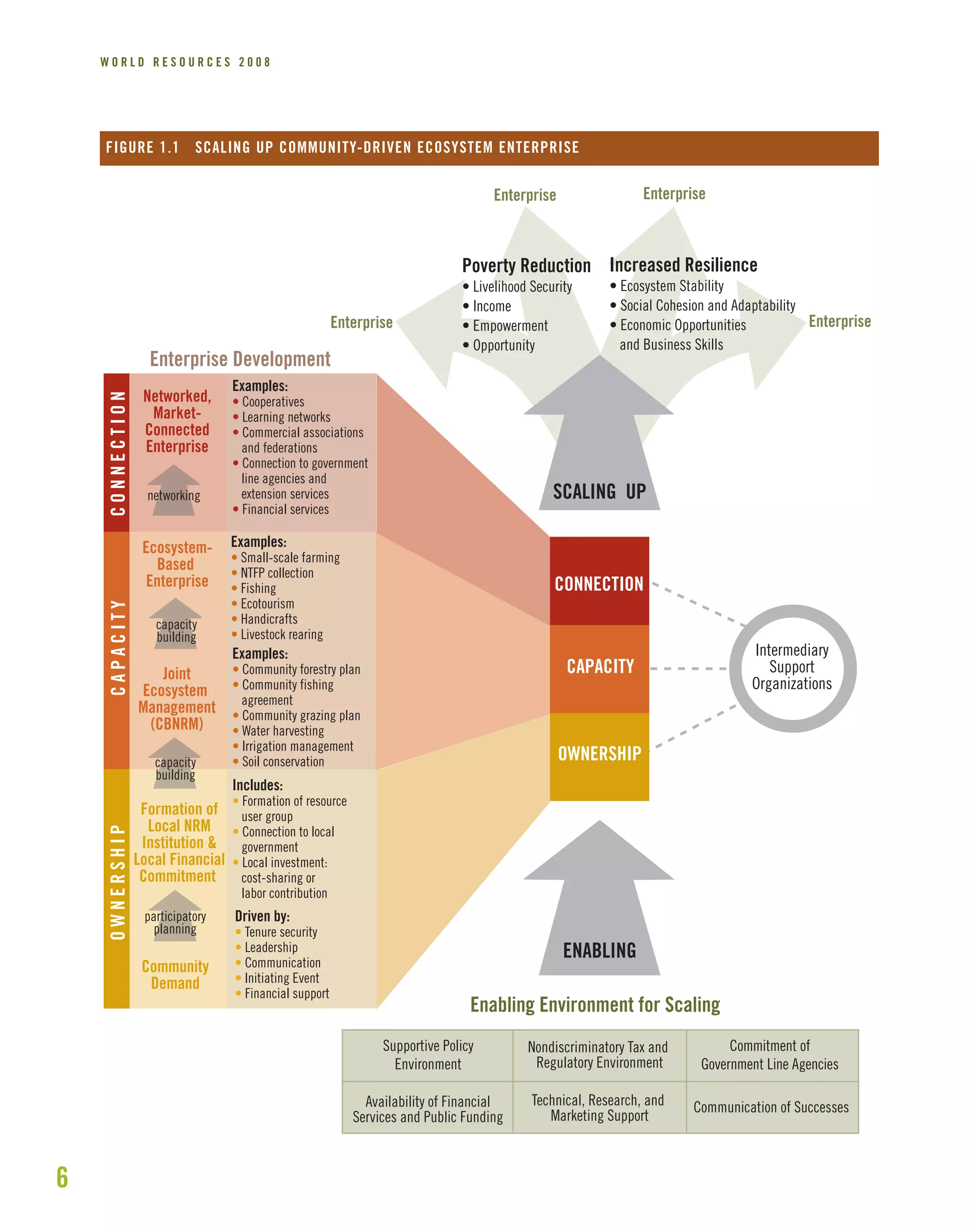
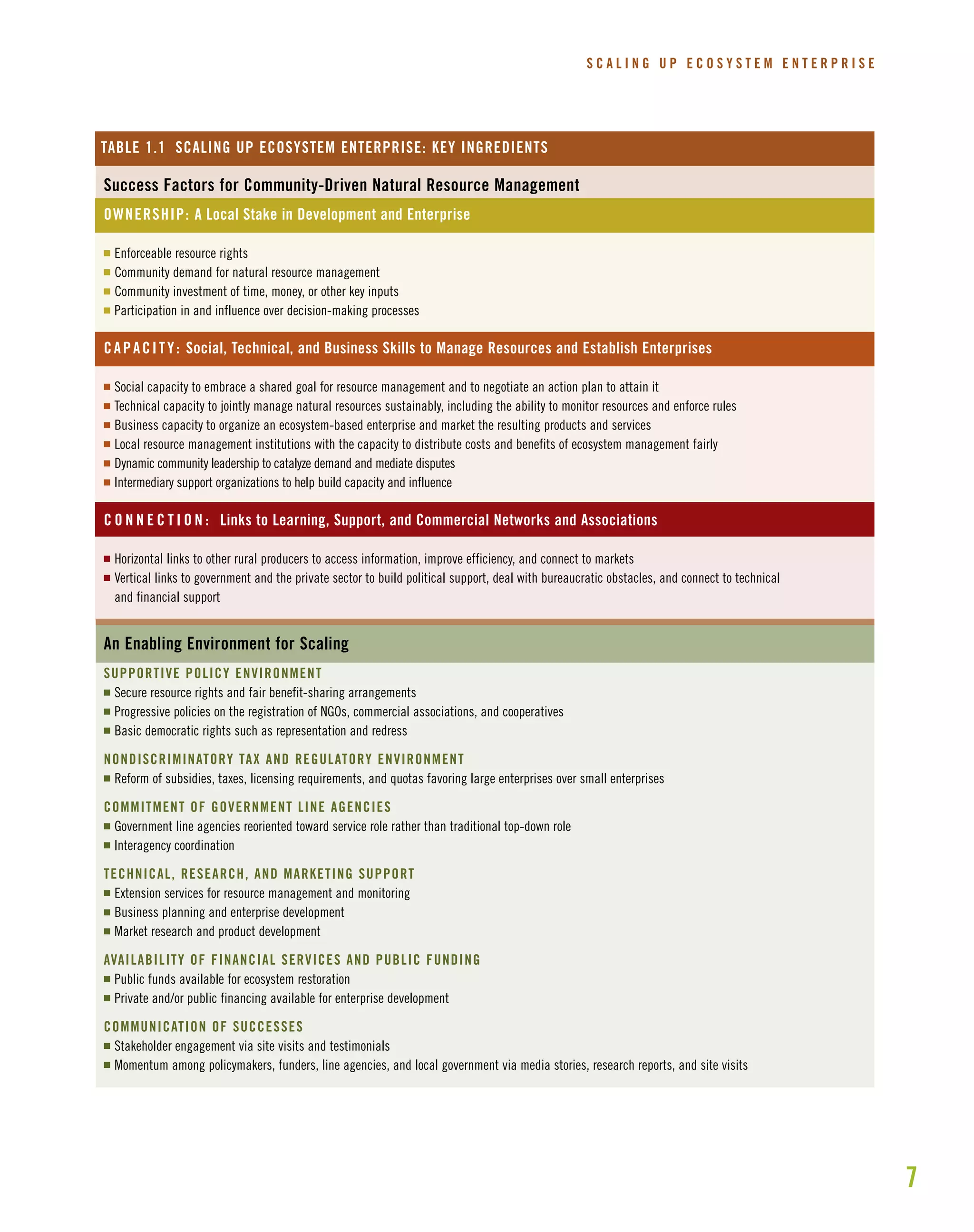
On the following pages, Table 1.1 summarizes our view of
the key ingredients for successfully scaling up ecosystem-based
enterprises to reduce poverty and build resilience, and Figure 1.1
depicts how these ingredients interact to generate ecosystem
enterprises and drive them to scale up. At the same time, we
realize that enterprise scaling does not proceed by a linear check
list or formula. For example, incremental progress can be made
without attaining the perfect enabling environment. However,
the better the enabling environment, the more effective the
scaling-up process and the resulting reduction in poverty.
6
W O R L D R E S O U R C E S 2 0 0 8
Formation of
Local NRM
Institution &
Local Financial
Commitment
Community
Demand
Joint
Ecosystem
Management
(CBNRM)
Ecosystem-
Based
Enterprise
Networked,
Market-
Connected
Enterprise
participatory
planning
Driven by:
• Tenure security
• Leadership
• Communication
• Initiating Event
• Financial support
Includes:
• Formation of resource
user group
• Connection to local
government
• Local investment:
cost-sharing or
labor contribution
Examples:
• Community forestry plan
• Community fishing
agreement
• Community grazing plan
• Water harvesting
• Irrigation management
• Soil conservation
Examples:
• Small-scale farming
• NTFP collection
• Fishing
• Ecotourism
• Handicrafts
• Livestock rearing
Examples:
• Cooperatives
• Learning networks
• Commercial associations
and federations
• Connection to government
line agencies and
extension services
• Financial services
Supportive Policy
Environment
Nondiscriminatory Tax and
Regulatory Environment
Commitment of
Government Line Agencies
Technical, Research, and
Marketing Support
Availability of Financial
Services and Public Funding
Communication of Successes
CONNECTION
CAPACITY
OWNERSHIP
CONNECTIONCAPACITYOWNERSHIP
Enabling Environment for Scaling
Poverty Reduction
• Livelihood Security
• Income
• Empowerment
• Opportunity
Increased Resilience
• Ecosystem Stability
• Social Cohesion and Adaptability
• Economic Opportunities
and Business Skills
capacity
building
SCALING UP
Enterprise Enterprise
Enterprise Development
Intermediary
Support
Organizations
ENABLING
networking
capacity
building
FIGURE 1.1 SCALING UP COMMUNITY-DRIVEN ECOSYSTEM ENTERPRISE
7
S C A L I N G U P E C O S Y S T E M E N T E R P R I S E
TABLE 1.1 SCALING UP ECOSYSTEM ENTERPRISE: KEY INGREDIENTS
Success Factors for Community-Driven Natural Resource Management
OWNERSHIP: A Local Stake in Development and Enterprise
I Enforceable resource rights
I Community demand for natural resource management
I Community investment of time, money, or other key inputs
I Participation in and influence over decision-making processes
CAPACITY: Social, Technical, and Business Skills to Manage Resources and Establish Enterprises
I Social capacity to embrace a shared goal for resource management and to negotiate an action plan to attain it
I Technical capacity to jointly manage natural resources sustainably, including the ability to monitor resources and enforce rules
I Business capacity to organize an ecosystem-based enterprise and market the resulting products and services
I Local resource management institutions with the capacity to distribute costs and benefits of ecosystem management fairly
I Dynamic community leadership to catalyze demand and mediate disputes
I Intermediary support organizations to help build capacity and influence
C O N N E C T I O N : Links to Learning, Support, and Commercial Networks and Associations
I Horizontal links to other rural producers to access information, improve efficiency, and connect to markets
I Vertical links to government and the private sector to build political support, deal with bureaucratic obstacles, and connect to technical
and financial support
An Enabling Environment for Scaling
SUPPORTIVE POLICY ENVIRONMENT
I Secure resource rights and fair benefit-sharing arrangements
I Progressive policies on the registration of NGOs, commercial associations, and cooperatives
I Basic democratic rights such as representation and redress
NONDISCRIMINATORY TAX AND REGULATORY ENVIRONMENT
I Reform of subsidies, taxes, licensing requirements, and quotas favoring large enterprises over small enterprises
COMMITMENT OF GOVERNMENT LINE AGENCIES
I Government line agencies reoriented toward service role rather than traditional top-down role
I Interagency coordination
TECHNICAL, RESEARCH, AND MARKETING SUPPORT
I Extension services for resource management and monitoring
I Business planning and enterprise development
I Market research and product development
AVAILABILITY OF FINANCIAL SERVICES AND PUBLIC FUNDING
I Public funds available for ecosystem restoration
I Private and/or public financing available for enterprise development
COMMUNICATION OF SUCCESSES
I Stakeholder engagement via site visits and testimonials
I Momentum among policymakers, funders, line agencies, and local government via media stories, research reports, and site visits
The Need to Scale Up
The scale of global poverty and the scale of peril to rural ecosys-
tems are both great. They require a response at a similar scale.
Some 2.6 billion people live on less than $2 per day, with three
quarters of them in rural areas. (See Box 1.3 on pg. 20.) Their
dependence on ecosystems for subsistence and cash is high.
Nature-based income often makes up more than half of the total
income stream of the rural poor (WRI et al. 2005:39, 52). Unfor-
tunately, rural ecosystems themselves are under unprecedented
strain. In 2005 the Millennium Ecosystem Assessment (MA)
found that 15 of the 24 ecosystem services it assessed were in
global decline—services such as plant pollination or the provi-
sion of fresh water, woodfuels, wild foods, and fish. These and
similar services provide the basis for many of the livelihoods of
the poor. Indeed, the MA concluded that the greatest burden of
ecosystem degradation already falls on the poor, and it will do so
in increasing measure if current trends persist (MA 2005:1–2).
Scaling Up Community-Based Natural Resource
Management for Income and Resilience
These worsening ecosystem trends and the close connection
between poverty and the environment drive home the need
to scale up income for the poor in a way that helps arrest
rather than exacerbate environmental damage. Two decades of
experience show that community-based natural resource
management—in the right hands and with appropriate
support—has the potential to meet this goal. The question has
become how to isolate the key elements of the many local success
stories and propel them into wider application. Without an
approach to scaling up CBNRM for the poor, these local
8
W O R L D R E S O U R C E S 2 0 0 8
-5 -4 -3 -2 -1 0 1 2
Europe
Oceania
Asia
South America
Africa
North & Central
America
Million hectares per year
FIGURE 1.2 ECOSYSTEM DECLINE: ANNUAL NET CHANGE
IN FOREST AREA BY REGION, 1990-2005
Source: FAO 2005a:XV
Continues on page 12
9
IN WORLD RESOURCES 2005 WE ARGUED THAT
poverty and the environment are inextricably linked and that
the world’s rural poor could enhance their livelihoods by captur-
ing greater value from ecosystems. The reality is that three
quarters of the world’s poor people—those living on less than
$1 a day—live in rural areas and depend on natural resources
to earn a living.
Our thesis was that income from sustainably managed ecosys-
tems can act as a stepping stone in the economic empowerment
of the poor. But this can only happen when poor households are
able to reap the benefits of their good ecosystem stewardship.
Good governance, including secure tenure, can create the self-
interest that leads to an improved natural resource base, be it in
agriculture, forestry, or fishing.
Unfortunately, an array of governance failures usually stands in the
way: lack of secure access to ecosystems, political marginaliza-
tion, and exclusion from the decisions that affect how ecosystems
are managed. Unlocking the economic potential of ecosystems to
reduce rural poverty means tackling these obstacles.
Major Findings of World Resources 2005
1. Environmental income is crucial to the livelihoods of the
rural poor. Natural resources anchor the household
economies of the rural poor. In the last decade, the connec-
tion between environment and the livelihoods of the poor has
been well elucidated. Nature-based income, or environmen-
tal income, often contributes from one half to two thirds of
the total income stream of poor rural families. Small-scale
farming and the collection of wild foods, materials, and
medicines are the main sources of environmental income.
Case studies show that better management of the ecosys-
tems that produce these goods and services can significantly
increase household incomes of the poor.
2. Community-based natural resource management (CBNRM)
can be pro-poor. CBNRM has tremendous potential to
increase environmental income of poor households.
However, realizing this potential requires a change in gover-
nance—a change in the access to and control of natural
resources by the poor. Better governance can mean the
difference between using nature for simple survival or for
wealth accumulation.
3. A poverty-environment-governance approach is flexible,
adaptable, and replicable. When people have a vested inter-
est in the natural resources they use, this self-interest can
manifest in improved environmental stewardship and
improved quality of life. Tenure reform that assures the poor
secure resource rights is the first priority in making gover-
nance work for the poor. Access and use rights to
resources—the basis of resource tenure—are fundamental to
tapping the wealth of ecosystems. This includes the right to
have access to common pool resources, which are an impor-
tant source of environmental income but are typically under
the control of the state.
4. Government at all levels plays a critical role. Everything from
resource rights to access to larger markets depends in one
way or another on government action and government policy.
Getting this policy right so that it facilitates rather than
impedes the natural-resource-based livelihoods of the poor is
critical.
5. There are significant obstacles to the success of this
approach. They include the capture of benefits by the elite
and powerful, often through corruption; lack of participation
by all groups in the community, especially the most disad-
vantaged; and inequitable distribution of the benefits of
natural resource management. Tackling poverty ultimately
means political change that enables land reform, finance
reform, tax reform, and policy reform in a number of
resource sectors. Yet initial steps on the path out of poverty
can be taken successfully without the need for every reform
to be in place.
Maximizing sustainable environmental income is not, taken
alone, a full solution to poverty. But it is a legitimate and impor-
tant entry route to more stable incomes and greater
participation in the market economy of nations. It can support
other job creation strategies and economic expansion programs.
Emphasizing good ecosystem management will also directly
support attaining the Millennium Development Goals (MDGs).
Because of the dependence of the poor on environmental
income, the MDGs can never be fully met without utilizing the
power of ecosystems to support wealth creation. The converse is
also true. Failure to deal with the declining state of ecosystems
will increase poverty. Should the ecosystems that the poor rely
on most heavily for subsistence and income continue to decline
at their present rate or should the poor fail to capture the income
derived from these ecosystems, more people will fall into
poverty, and the prospect of meeting the MDGs will recede.
Source: World Resources 2005: The Wealth of the Poor—Managing Ecosystems to Fight
Poverty. Download the full report or the executive summary online: http://www.wri.org/
publication/world-resources-2005-wealth-poor-managing-ecosystems-fight-poverty#.
BOX 1.1 MANAGING ECOSYSTEMS TO FIGHT POVERTY:
THE MESSAGES OF WORLD RESOURCES 2005
10
In general, scaling up refers to increasing the scope or reach of
an activity, program, project, or initiative so that it serves more
people or delivers more or better benefits.
WHILE THIS SEEMS STRAIGHTFORWARD ENOUGH,
the term “scaling up” can be confusing because we use it in
several ways. Its meaning depends on what is being scaled and
the type of scaling up that is occurring.
What Are We Scaling Up?
In the broadest sense, we want to scale up:
I Poverty reduction, using the assets from ecosystems as a
basis for wealth creation, and
I Resilience of local communities—especially poor families—
to accommodate environmental and social change,
particularly arising from climate change.
However, these are ultimate goals. In World Resources 2008, we
use the term scaling up more specifically to refer to the means
to achieve these ultimate goals. Thus we want to scale up:
I Environmental income—income from ecosystems and
nature-related activities,
I Access—the power to use ecosystem resources to support
livelihoods and empowerment,
I Environmental enterprises—generators of environmental
income and livelihood skills, and
I Community-based natural resource management (CBNRM)—
the basis of much enterprise, social learning, and
empowerment.
These four elements are interrelated, as described here:
To reduce income poverty, we focus on increasing the quantity
of income from nature—in other words, scaling up environmen-
tal income. This can result from higher productivity from the
natural resource base due to better management, from generat-
ing new services like trophy hunting or carbon storage, or from
extracting greater value from traditional products like coffee,
handicrafts, or medicinal plants due to better business
practices or marketing. Environmental income can take the
form of subsistence services—food, building materials, or fuel,
for instance—but more and more must also translate into the
cash economy if the rural poor are eventually to be integrated
into mainstream national and global economies.
Environmental income cannot be scaled up unless the poor
have access to ecosystem resources—or the power to use these
resources for benefit within the current economic and political
system. With real access comes empowerment and social
benefits beyond just income.
Environmental income is realized through some form of enter-
prise, be it farming, fishing, collection of non-timber forest
products, or provision of services like tourism. Scaling up
environmental income means increasing the scale, viability,
and profitability of these enterprises—and doing so sustainably.
For the rural poor, many of these enterprises are best under-
taken collectively as community-based schemes, since many of
the resources they use are common pool resources. Scaling up
CBNRM, then, is often the route to scaling up environmental
income and environmental enterprise.
Most current development literature uses “scaling up” in this
last sense of scaling up a successful CBNRM project, approach,
or initiative. While this is certainly desirable, in this volume we
do not restrict our definition of scaling up to donor-funded
projects or initiatives. We go further to speak of scaling up
successful and equitable ecosystem enterprises. Such enter-
prises are the expression of conducive governance conditions,
market and business skills, and good natural resource manage-
ment, which we believe are the basis of sustainability and
resilience.
Five Types of Scaling Up
We can speak in terms of five different modes of scaling up, all
of which can help increase the development impact of an enter-
prise, project, initiative, or organization.
I Quantitative scaling up. When an enterprise, program, or
organization expands its size, profitability, geographic base,
or budget, it is experiencing quantitative scaling. This is the
kind of growth and expansion of membership base,
constituency, or geographic influence that most people think
of when they speak of scaling up. It often involves replicating
a successful community-based model or enterprise in new
communities or simply spreading the original enterprise or
program to cover a larger area—a process sometimes referred
to as “scaling out.” But quantitative scaling can also simply
involve growing an enterprise’s size and profitability, and thus
increasing its social and financial sustainability (Hooper et al.
2004:132; Uvin and Miller 1994:8-11; Gillespie 2004:8).
BOX 1.2 WHAT IS SCALING UP?
11
I Functional scaling up. As enterprises or organizations
increase the types of activities they carry out or the scope or
integration of these activities with other enterprises or organi-
zations, they are undergoing functional scaling. This allows
successful enterprises or CBNRM programs to diversify into
complementary activities. For example, a community water-
shed rehabilitation program may expand to include
agricultural marketing activities as the restored watershed
becomes more agriculturally productive. Or programs may
expand into new areas such as nutrition, health, or even liter-
acy that make use of the trust and community mobilization
engendered by the original activities (Hooper et al.
2004:131-132; Uvin and Miller 1994:11-12).
I Organizational scaling up. Organizations responsible for
community-based projects and enterprises often strengthen
their own capacities substantially, allowing them to take on
new responsibilities or to carry on their current activities
more effectively. They may accomplish this through staff
training and personnel development to improve the manage-
ment and systems of the organization. New sources of
funding can also lead to organizational scaling by increasing
financial independence and nurturing creativity and critical
analysis. Establishing learning links with other public
agencies or private organizations is also an important factor
in encouraging this type of organizational growth (Hooper et
al. 2004:132; Uvin and Miller 1994:16-18).
I Political scaling up. This type of scaling involves increasing
the political power of an organization or enterprise so that it
can influence state actors, negotiate for stronger support or
greater latitude in its activities, and advocate for policy
changes that facilitate the organization’s work or extend the
enterprise’s commercial or social reach. Through political
scaling up, community-based organizations can greatly
increase the chances that their work will spread to new juris-
dictions or expand into new activities, increasing their impact
(Hooper et al. 2004:132; Uvin and Miller 1994:12-13).
I Institutional scaling up. This refers to growing and
strengthening the public institutions necessary for estab-
lishing and distributing the benefits of ecosystem
enterprises. Local government is often the focus of this
scaling. Replication of the institutional infrastructure of
representation—the institutionalized form of participa-
tion—and the placement of natural resource functions at
the local representative level of government can help
spread citizen inclusion in decision-making. Since local
government is both replicable across space and sustain-
able over time, it can be an important partner in scaling
up ecosystem enterprises (Ribot 2008).
W O R L D R E S O U R C E S 2 0 0 8
successes will remain isolated achievements. With such an
approach, they may help transform the rural economy and
create incentives to manage ecosystems for long-term health as
well as profit.
Scaling up CBNRM for the poor needs to be seen as part of
a larger strategy to increase the resilience of the rural poor to
meet the array of environmental, social, and economic
challenges they face. Change is coming to rural communities in
many forms—as climate change that threatens agriculture and
other nature-based livelihoods; as the general decline in ecosys-
tem health cited by the MA; as a change in traditional rural
economies with globalization and the intensification of agricul-
ture; and as increased social instability as village, tribal, and
family patterns adjust to new models of ownership and gover-
nance and to increasing urban flight. These sources of change
are growing exponentially and, with them, the stresses they
impose on the poor. So the need for scaling up extends to
resilience as well.
CBNRM can become the vehicle for developing the
capabilities and connections to accommodate such systemic
changes. That, effectively, is the definition of resilience. CBNRM
is more than just a means to focus and direct environmental
management. It can be a platform for empowerment, a way to
develop local institutions, a connection point for local represen-
tative government, and a nucleation point for the development
of social connections. These aspects encourage knowledge
generation and social learning, and these are the basis of greater
social resilience. They are also the basis for cooperative enter-
prise, which can bring greater earning power, so that the poor
can expand their financial assets.
At the same time, CBNRM that adopts a stewardship
approach supports ecosystem stability, which increases an ecosys-
tem’s ability to absorb environmental stresses and remain
productive. Reducing pressure on local ecosystems through
restoration and sustainable harvest practices can help mitigate
longer-term systemic changes like climate change. Thus, scaling
up CBNRM through the elements of ownership, capacity, and
connection is effectively scaling up resilience in all its dimensions.
Such resilience must underlie any attempt at poverty reduction
in a rural environment defined by large-scale physical, economic,
and social change.
The Potential for Scaling Up
To better understand the need and potential for scaling up
environmental income and resilience through good ecosystem
stewardship, consider the plight of inland fisheries in
Bangladesh. The country’s many rivers, wetlands, and shallow
lakes make it the world’s third largest producer of freshwater fish
(not including aquaculture) (FAO 2007a:14). Even so, productiv-
ity could be much higher if the nation’s freshwater fisheries were
not so degraded. As with many of the world’s inland fisheries,
pollution, development, dams, and unsustainable fishing
practices have greatly diminished the annual catch. The conse-
quences for the poor have been grim. Between 1995 and 2000,
fish consumption among poor families in Bangladesh’s extensive
floodplains dropped almost 40 percent (World Bank 2006a:46).
Conscious of the need to try a new approach to managing
the nation’s inland fisheries, the government of Bangladesh has
assented to community control of local fishing waters in 110
villages in three wetland watersheds in the country’s northern
region. Between 1999 and 2006, fish catches rose 140 percent in
these villages as local fishers adopted better fishing practices and
restored fish habitat to help fish stocks recover. Fish consumption
rose 52 percent, and average daily household income rose more
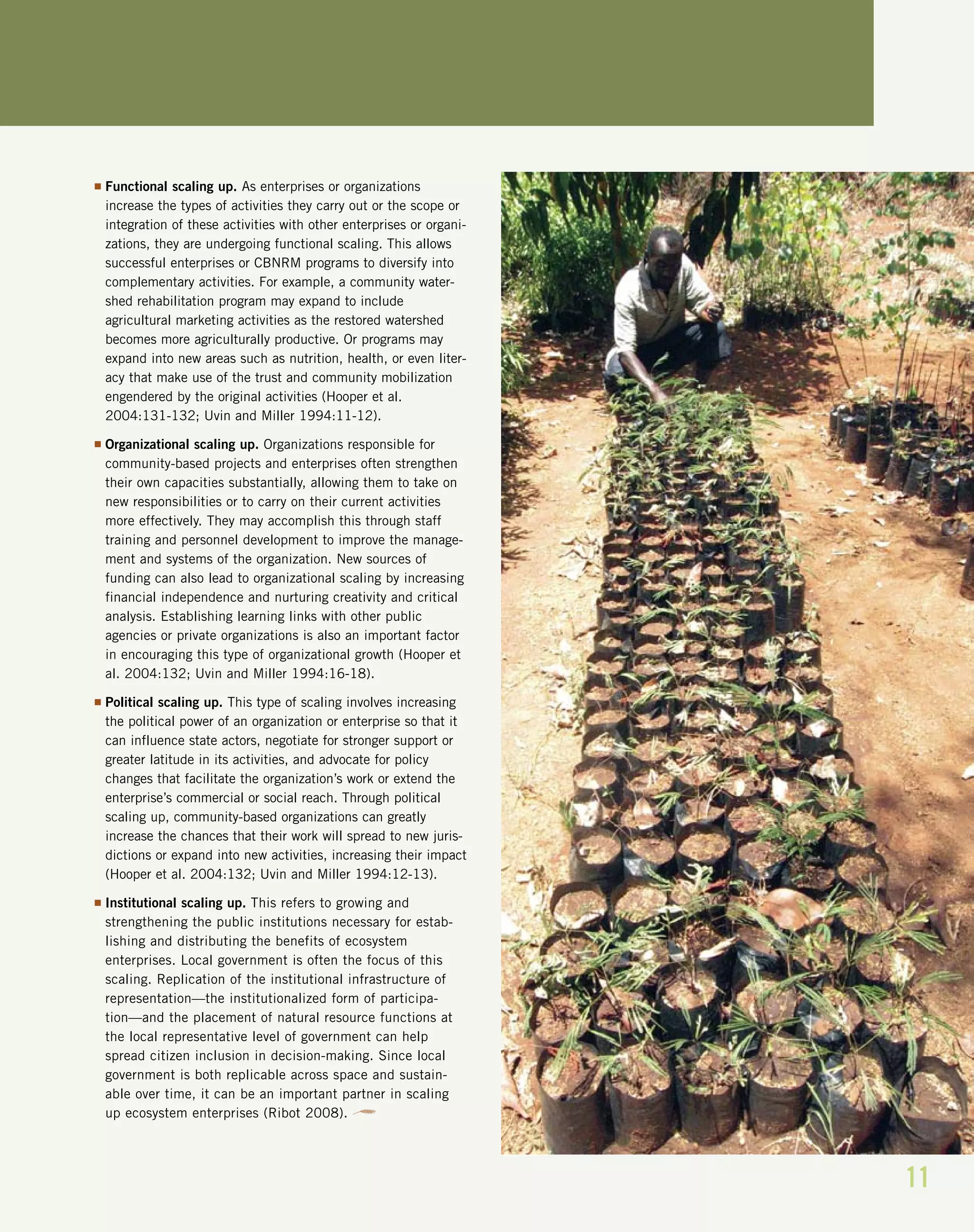
than 30 percent in the affected villages. (For a more complete
account of the fishery restoration, see Chapter 3: Fisheries for
the Future: Restoring Wetland Livelihoods in Bangladesh.)
There is great potential for scaling up the success of the
community-based fishery management arrangement in northern
Bangladesh. So far, the new approach has directly benefited
184,000 Bangladeshis—most of them poor—in 110 villages
12
13
(MACH 2006:2). But the successes there are directly applicable
to another 340 neighboring villages in the same watersheds.
Beyond these watersheds, many more fish-dependent families
could benefit if the government applies the lessons of these
communities in the thousands of villages in which freshwater fish
make up an important part of the local economy. An estimated
9.5 million Bangladeshis are involved in subsistence fishing on
the nation’s floodplains, swelling to some 11 million during the
monsoon season (Azim et al. 2002:38; FAO 2005b).
Looking farther afield, the number of potential beneficiar-
ies increases even more, since freshwater fisheries are a prime
source of income for poor people throughout the developing
world. In China, more than 9 million people are involved with
inland fisheries and aquaculture. In the Mekong River basin,
where fish is a critical part of the diet, as many as 40 million
people—from full-time fishers to rice farmers—depend on fresh-
water fish for at least a portion of their livelihood. Lessons from
Bangladesh’s success are likely quite relevant in these and other
regions where the decline of fisheries still confronts the poor
(Kura et al. 2004:36).
Similar estimations could be made for other ecosystems. For
example, successful efforts at community-led watershed restora-
tion in arid western India have replenished water tables and
boosted crop production and village incomes. These models are
now beginning to go to scale, with implications not just for India
but for many of the 1.8 billion people in developing countries
who live in drylands. About half of all poor families live in
drylands; most of them depend on vulnerable rainfed agricul-
ture and livestock rearing in watersheds that are overgrazed and
marginally productive (Morton and Anderson 2008:4; UNEP
2007:83). Similarly, community forestry enterprises in Asia,
Africa, and Central America have shown that forest loss, poach-
ing, and illegal logging can be arrested as forests become a more
reliable source of community income. Since about 1.6 billion of
the rural poor rely on forests for at least a portion of their
income, the need for scaling up these enterprise models is clear
(Forest Trends 2005:1). In all these cases, scaling up successful
community-driven approaches is the most promising route to
addressing both poverty and ecosystem decline simultaneously.
Ownership, Capacity, and Connection
Ownership, capacity, and connection are essential elements of a
strategy to scale up environmental income and ecosystem enter-
prises and to achieve poverty reduction and increased rural
resilience using nature’s assets.
Ownership and Demand
Without ownership, poor households and poor communities lack
the personal investment necessary to participate in joint resource
management efforts, adopt new management techniques, or
build enterprises based on long-term stewardship. Ownership
here has two aspects. One is ownership of the resource manage-
ment process, meaning control over decisions on what resources
are to be managed and how to manage them. The second is legal
ownership or tenure: the recognized right to benefit from
resource management. When both of these are aligned, poor
families can legitimately be said to have a stake in the benefits
that accrue from successful ecosystem management. And that is
the first requirement for their engagement at either an individual
or community level.
Ownership here should not necessarily be interpreted as the
full bundle of property rights associated with private property
(the rights to access, to use, to exclude others, to manage a
resource, and to sell or transfer these rights). The right to trans-
S C A L I N G U P E C O S Y S T E M E N T E R P R I S E
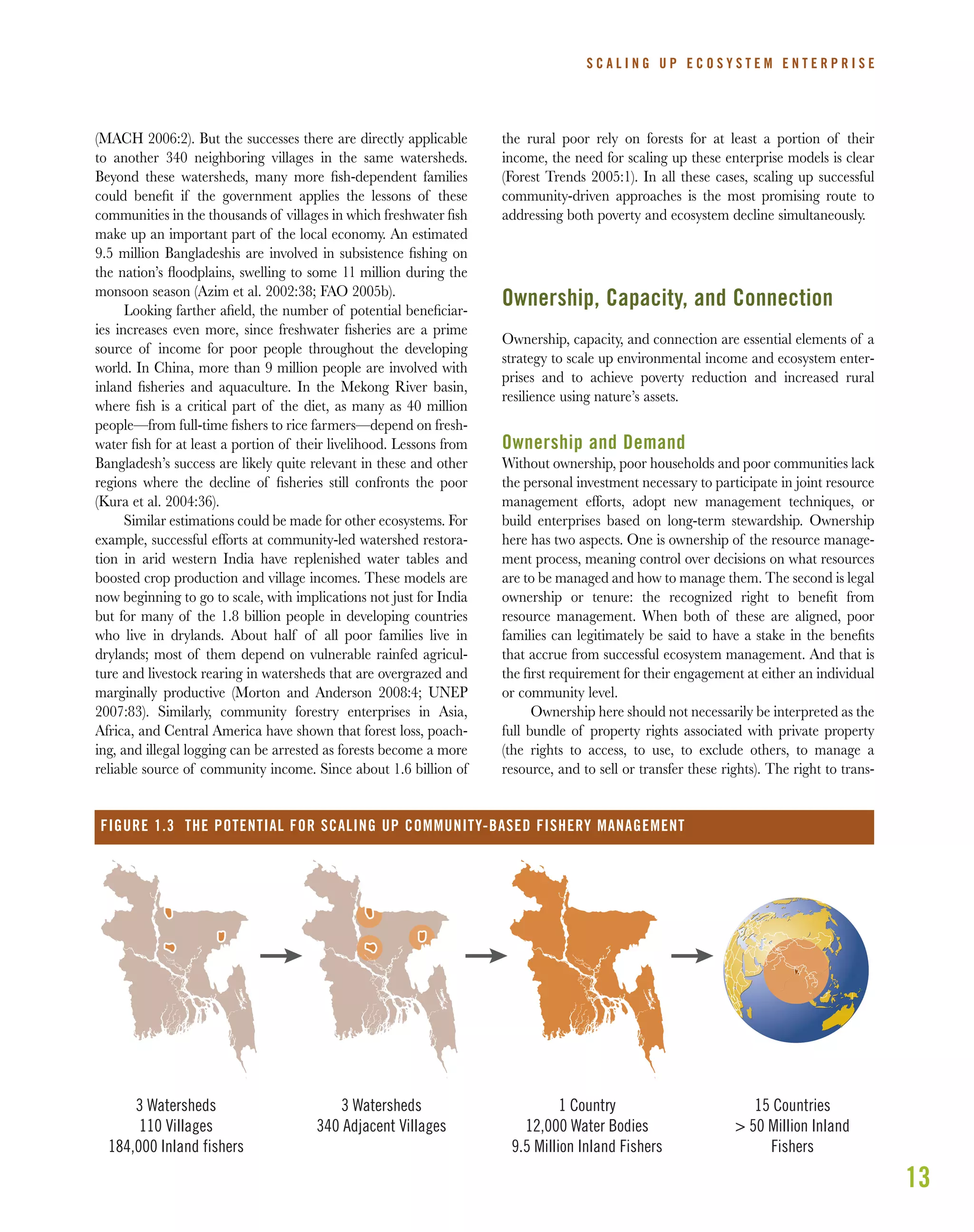
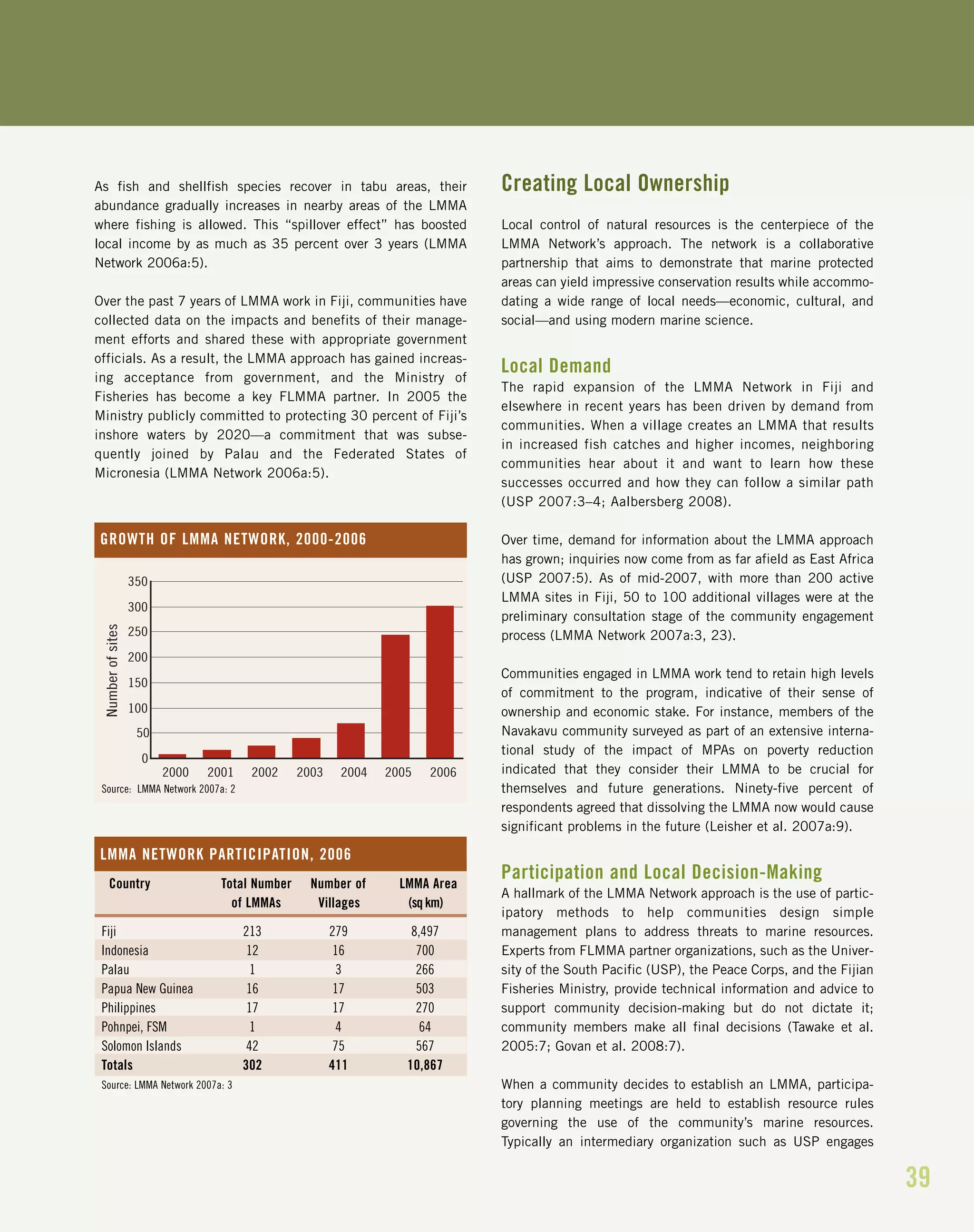
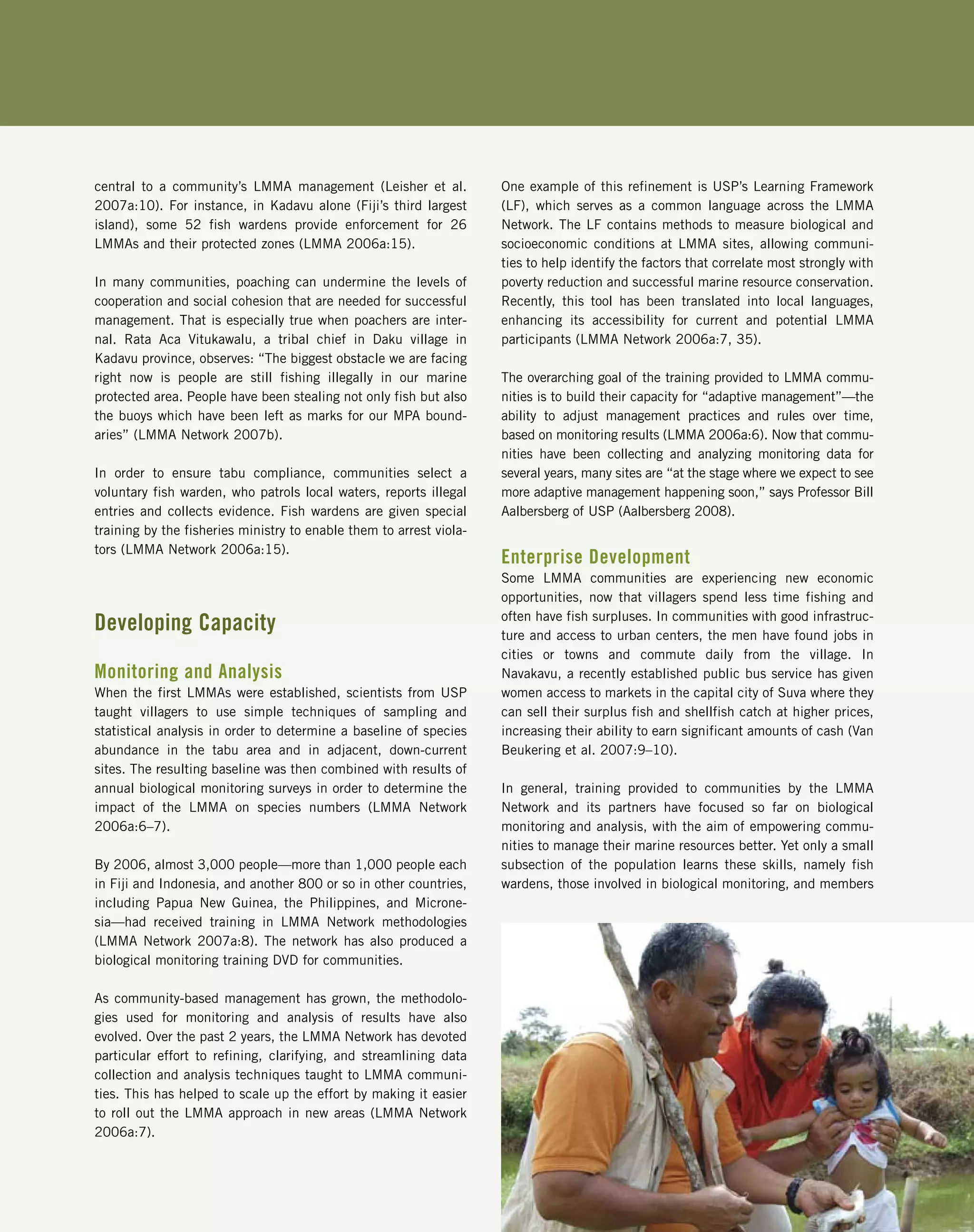
3 Watersheds
110 Villages
184,000 Inland fishers
3 Watersheds
340 Adjacent Villages
1 Country
12,000 Water Bodies
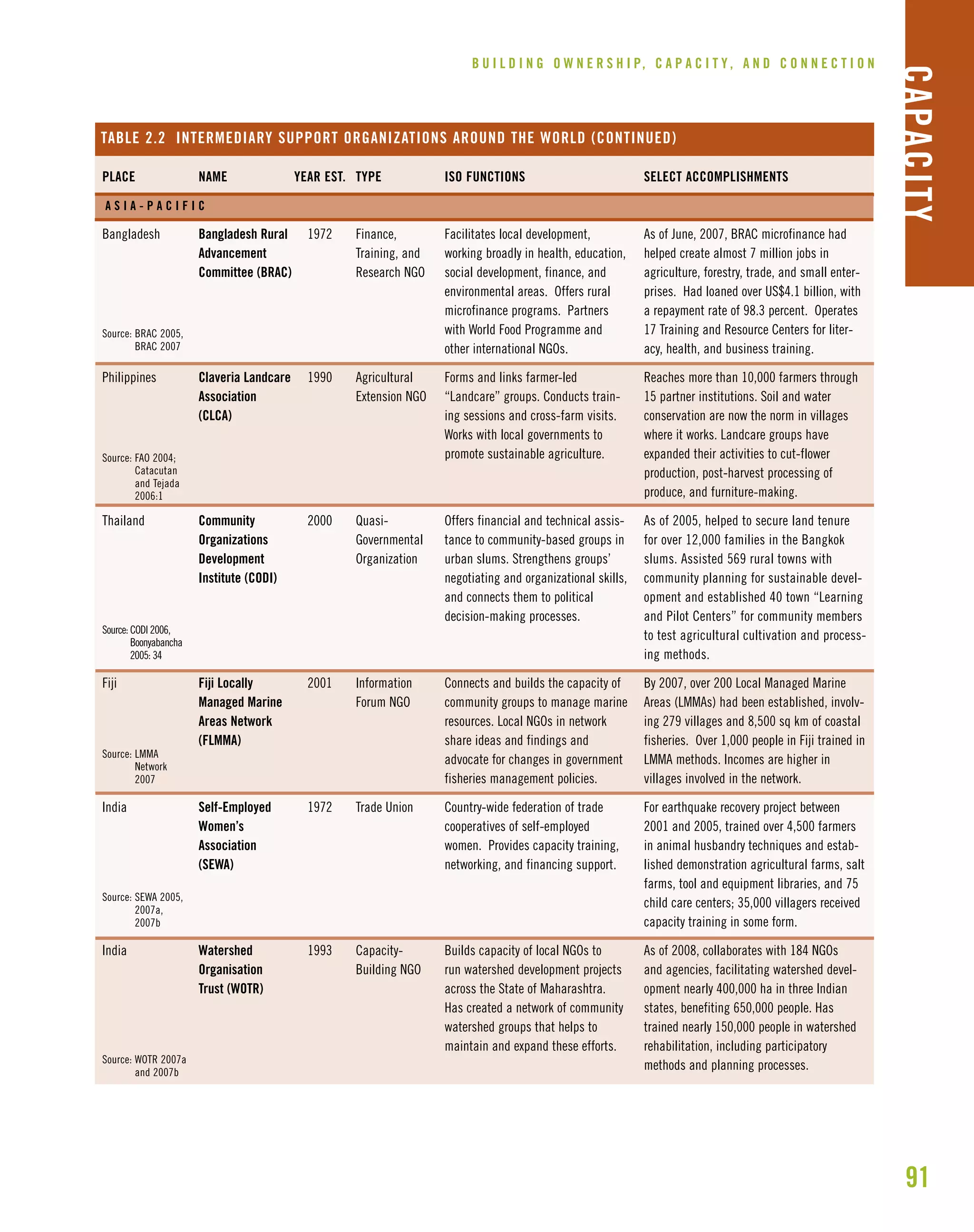
9.5 Million Inland Fishers
15 Countries
> 50 Million Inland
Fishers
FIGURE 1.3 THE POTENTIAL FOR SCALING UP COMMUNITY-BASED FISHERY MANAGEMENT
14
W O R L D R E S O U R C E S 2 0 0 8
fer or sell communal or state resources, for example, may not be
necessary for establishing a viable enterprise. The crux of
ownership—as we use the term—is that local people have secure
rights to use and control ecosystem resources, including the right
to manage the resource and exclude others. Without this power,
local groups may find it impossible to protect their resources
from exploitation by powerful outsiders (Meinzen-Dick 2008).
Ownership of resources and the resource management
process can give rise to local demand for better ecosystem
management. Demand can be defined as the expression of
desire for something, measured by the contribution that people
are willing to make to receive it. In this sense, demand is a spur
to action and translates to a willingness to work together for a
common goal. Indeed, successful CBNRM often grows directly
out of community consensus on the need to act and a commit-
ment on the part of a majority of stakeholders to adhere to an
agreed action plan. The impetus for this “local demand” can
come from a variety of sources. It may come as a response to
resource scarcity or ecosystem decline—the failure of a local
fishery, for example. Or it may come in response to successful
pilot projects that demonstrate benefits from good resource
management in situations similar to those found in a community.
In World Resources 2008 we focus on building ecosystem-based enter-
prises as a way to create viable rural livelihoods and reduce poverty. What
do we mean by enterprise and how does it relate to human well-being?
We define an enterprise as any activity undertaken to create a product or
service of value. Ecosystem-based or nature-based enterprises derive
their products or services from ecosystem services—from the primary
productivity of nature and the functioning of natural systems. Fishing;
agriculture; livestock rearing for meat, milk, or wool; timber extraction;
collection of non-timber forest products such as rattan, xate palm, thatch,
or edible plants and spices; the harvest of medicinal plants; and plant-
based handicrafts such as wood carving—are all common nature-based
enterprises based on consumptive use. Tourism and recreation are typical
nonconsumptive enterprises based on nature.
Enterprises support livelihoods. That is, they are the organized activity that
provides the basis for any livelihood, along with the attendant relationships—
with markets, social groups, or government—necessary for its success.
It’s important to understand that while enterprise is commonly associated
with commerce, this is not always so, particularly when speaking of the
enterprises of the poor. Realizing the value from the product or service
created by an enterprise often occurs when it is marketed within the cash
economy, yielding revenue. But value from an enterprise can also be
extracted through subsistence use of products or in the form of personal
or social benefits such as empowerment, group cohesion, cultural identity,
or religious experience. Many of the benefits of community-based natural
resource management come in these nonmonetary forms.
Thus our definition of enterprise is a more encompassing one rather than
being restricted narrowly to commerce. Enterprise is not only a way to
connect to markets, and our emphasis on enterprise is not an attempt to
monetize all livelihood benefits. Just as poverty has dimensions beyond lack
of income, so enterprises that are poor-friendly have benefits beyond income.
Nonetheless, the commercial aspect of ecosystem-related enterprises for
poverty reduction is undeniably important. Developing the business skills,
access rights, market connections, finance, and policy support to enable
successful business enterprises is an essential part of enabling low-
income families to participate in national and global economies and is
thus a principal focus of this report.
WHAT IS AN ENTERPRISE?
In sum, enterprise, as we use it here, is both a vehicle for individual and
social empowerment, and a means for wealth creation.
How do Ecosystem-Based Enterprises and CBNRM Relate?
Community-based natural resource management (CBNRM) is the founda-
tion of many successful ecosystem-based enterprises. CBNRM plays two
important roles in facilitating these enterprises among the poor.
First, CBNRM can improve the natural resource base by encouraging
sustainable management and harvest practices. This may mean that there
are more fish for fishers to catch and sell, more fodder for pastoralists to
feed their livestock, or a higher water table and less erosion, allowing
farmers to grow crops more productively.
Second, CBNRM builds social capital among community members and
linkages to networks beyond the community that help create successful
enterprises. For instance, communities managing forest concessions in
Guatemala have used the social capital and linkages to NGOs and govern-
ment required for this management to create community forest enterprises
that export high-grade timber around the world. (See Chapter 3.)
The relationship also goes the other way: the promise of improved enter-
prise encourages greater participation in CBNRM by crystallizing the
benefits of working together. A community’s demand for joint management
of its natural resources is defined by incentives. The prospect of enterprise
that produces income or other tangible benefits acts as such an incentive.
Although CBNRM is itself a collective activity, the enterprises associated
with CBNRM are not necessarily collective enterprises—they may be
individually owned enterprises as well. For example, a community group
may collaborate to jointly manage irrigation water, but the benefits the
water brings may be realized in an individual small farmer’s field—an
individual enterprise. However, the collective effort associated with CBNRM
may foster networks such as producer cooperatives or Farmer Field Schools
that allow individuals to share techniques and technologies, purchase
inputs in bulk, and sell their products together to gain market leverage.
So while CBNRM is not a precondition for ecosystem-based enterprises, we
argue that the poor’s reliance on communal natural resources often makes
it a key element in the commercial success of these enterprises, while
magnifying their social benefits.
15
It might also come in reaction to a dynamic leader who presents
the community with a compelling vision for good management.
The availability of state funds, technical assistance, or reforms to
natural resource policy may also factor into the willingness of
poor families to change their farming or fishing practices, their
grazing habits, or their use of a forest.
Once local demand for a new resource management
approach has been expressed, local commitment must follow.
This can take a variety of forms, such as a contribution of cash,
labor, or other investment that represents both personal owner-
ship of the new management effort and a willingness to
participate in a joint undertaking. Sometimes this investment
takes the form of adherence to a management plan that restricts
harvests for a prescribed period to allow the ecosystem to
recover. Without this expression of self-interest and social enter-
prise, participation in and sustainability of community resource
management efforts is likely to be low.
Local Capacity for Development
Ownership and demand are just the first steps in successful
environmental enterprise for the poor. When community
members take on enforceable rights and the willingness and
scope to exercise them, they become empowered “stakeholders.”
But they must still develop a range of technical, social, and finan-
cial skills in order to turn their stake in natural resources into
improvements in livelihoods and income. These include the
ability to assay their resources, formulate and execute a resource
management plan, produce a high-quality product, and market
it successfully. This knowledge is the infrastructure of skills and
experiences that successful natural resource enterprise requires.
Building these skills is not a haphazard processes for
community-based enterprises that succeed. It is an intentional
and step-wise process that involves a variety of local organiza-
tions—from informal savings or self-help groups to civil society
groups like NGOs or unions and to local and municipal govern-
ments. In the aggregate, these small-scale, ground-level
organizations are the key to drive the scaling process, particularly
when it comes to scaling up environmental income for poverty
reduction. To be effective for poverty reduction, such local
organizations must function along participatory lines and ensure
that the interests of the poor are adequately represented.
Other groups beyond local organizations also have impor-
tant roles to play. Intermediary support organizations or
mid-level NGOs that straddle between local groups and state
governments are especially powerful actors in building the
human, social, and institutional capital required for successful
community-driven management of natural resources. These
second-order groups—sometimes called “mother NGOs”—play
a variety of roles in capacity-building, coordination, service
delivery, and as trusted intermediaries between local and state
institutions. Fostering the development of such intermediary
organizations may be one of the most important steps govern-
ments and donors can take to encourage successful scaling.
It is important to note that effective capacity-building is
something that enterprises, community groups, and local institu-
tions take on themselves. It is encouraged and facilitated by
NGOs and others, but the incentive is born of self-interest. In
the largest sense, capacity follows power, and when local people
are given enforceable rights over resources of value, their capac-
ities for resource management and entrepreneurship often
quickly emerge. In some ways the issue is not so much lack of
capacity as it is the inability to exercise capacities due to a lack of
political power, contacts, and select skills. As part of this process,
local groups can identify those technical and social skill sets they
lack and can engage intermediary groups to facilitate these skills
and provide opportunities and financial support to apply them.
Networks and Connection
Successful nature-based enterprises depend upon developing
dynamic links among local organizations (horizontal linkages)
and between local and state institutions (vertical linkages). These
linkages, which often take the shape of networks such as cooper-
atives, federations, unions, or learning networks, are the conduit
for information exchange and adaptive learning. They play a
critical role in facilitating access to markets, financial services,
and other technical and social services that support and sustain
community enterprises. Without continued attention to develop-
ing and maintaining such networks and connections, the
ecosystem enterprises of the poor are not likely to last long.
Experience shows that community-based natural resource
projects often fail within 5 years without a connection to innova-
tion, encouragement, engagement, and learning (Farrington and
Boyd 1997:380–381).
Networks help to create lasting social capital among the
poor by increasing cooperation and understanding across a
geographic area. In fact, they are the glue of scalability, allowing
the efforts of individual organizations in widely separated
communities to coalesce into something with broader applicabil-
ity and impact. In many cases, networks are also the channel
through which intermediary organizations reach village clients
and deliver their capacity-building services.
The updates on case studies from World Resources 2005 at
the end of this chapter demonstrate the importance and interrela-
tionship of the three elements of ownership, capacity, and
connection, using examples of two very different types of ecosys-
tem enterprise that have scaled up significantly in the last few years.
So far this chapter has stressed the potential for nature-
based enterprise to enhance the livelihoods of the rural poor and
has suggested a strategy to first develop and then scale up such
enterprises. The model presented is intentionally schematic,
concentrating on a local-level strategy for valuing ecosystem
assets and enabling local groups to turn these assets into
functional businesses and sources of social empowerment. The
remainder of the chapter places this model in the larger context
of rural development, acknowledging the governance challenges
inherent in fostering the enterprises of the poor and stressing the
S C A L I N G U P E C O S Y S T E M E N T E R P R I S E
16
importance of an enabling environment of natural resource
policy, access to finance, and good communication. The central
role of social capital—the web of social networks and relation-
ships that pervade society—in developing successful rural
enterprise is also explored, as well as the relationship of nature-
based enterprise to “community-driven development” (CDD)—a
participatory model of development that devolves decision-
making and financial power to local bodies. The chapter ends
by considering the potential for a “resilience dividend” when
individuals and communities successfully undertake sustainable
nature-based enterprises.
Enterprise and Governance
Any model of nature-based enterprise for the poor must wrestle
with the fundamental power imbalance that the poor face where
natural resources are concerned. For years the poor have been
relegated to low-level enterprises and subsistence use of nature,
while others have been empowered with access to high-value
resources, granted subsidies to develop extractive industries,
given favorable tax and regulatory treatment, and permitted to
dominate natural resource markets. In other words, wealth is
continuously extracted from nature—but not by the poor. They
have been excluded from nature’s wealth not principally because
they lack the business acumen to compete but because the
resource rights and market access they need to go beyond subsis-
tence use of ecosystems have been granted to others through
state policies (Larson and Ribot 2007:189–191). Successful
nature-based enterprises of the poor will not arise—and those
that arise will not scale up—without addressing these basic
governance challenges.
The Need for Authority and Access
CBNRM can only provide a route for the rural poor to tap
nature’s wealth if the poor are given sufficient authority over
resources and access to markets, technology, and other factors
they need to translate their resource management efforts into
benefits, monetary or otherwise. We have emphasized the
concept of ownership and associated it with secure resource
rights and inclusive participation in management and enterprise
decision-making. While these are essential, they alone are not
sufficient. Poor individuals and groups may be granted resource
tenure but lack effective ways to enter the market chains for
farm, fish, or forest products. They may lack critical inputs, such
as technologies or fertilizers, or lack energy or road infrastruc-
ture. They often will lack finance, making productive investment
in the resource more difficult. And they will almost certainly be
subject to licensing requirements and other regulations that
place restrictions on how they can exercise their resource rights.
These common obstacles translate into a lack of true access
to nature’s wealth. Real access here is more than just physical
access to the resource. It encompasses a bundle of powers that
includes the ability to tap new technology, gain state support,
obtain financing, and negotiate the regulatory and tax systems
that the state uses to control resource markets through licenses,
quotas, fees, and levies (Ribot and Peluso 2003:161–170).
Honduras provides a good example of the difficulty that the
poor often have in acquiring not only the rights to use and
manage resources but also the access they need to markets and
to a competitive business regulatory environment so that they
can conduct successful enterprises. Although in law the
Honduran government recognizes the rights of indigenous
peoples to their traditional lands, in practice indigenous peoples
have found it very difficult to establish legal title to these lands.
Indeed, their use rights over forest resources are restricted to
non-timber forest products, while the government has the right
to grant logging contracts to third parties on indigenous lands
17
without the approval of the indigenous inhabitants (Larson and
Ribot 2007:193–196).
Even when rural communities seem to gain an advantage
under Honduran law the advantage evaporates under inspec-
tion. One provision of Honduran forest law—called the Social
Forestry System—grants communities that form an
“agroforestry cooperative” the ability to negotiate directly with
the state for a contract to tap forest resources, including timber
and pine resin. The intent is to foster small-scale forest enter-
prises. The forest contracts are not only difficult to negotiate,
however, but very restricted in their commercial usefulness. For
example, agroforestry cooperatives are only permitted to harvest
a maximum of 1,000 m3
of timber annually—an amount so
small that it is nearly impossible to support a commercial opera-
tion. Meanwhile, large-scale timber operators are not subject to
similar restrictions. It is no coincidence that the forestry sector is
dominated by such large-scale producers, who control both the
timber and pine resin markets and who maintain very close
relationships with government bureaucrats, often facilitated by
sweetheart deals and bribes (Larson and Ribot 2007:193–196).
The situation in Honduras is not unique. Similar obstacles
plague the attempts of local groups to undertake community
forestry or to organize their use of other ecosystem services—
fisheries or wildlife, for instance—into commercial enterprises. A
recent study of community forestry enterprises worldwide identi-
fied a long list of discriminatory taxes, licensing systems,
royalties, and legal limitations that routinely handicap the ability
of small forest enterprises to compete against more powerful
commercial interests (Molnar et al. 2007:64–68). Thus local
nature-based enterprises—even when they are driven by
community demand, as we have described—depend for their
success on overcoming systemic policy obstacles and power
imbalances. Many of these obstacles reflect the fact that the
process of decentralizing natural resource authority is still
incomplete in most cases.
Creating an Enabling Environment for Enterprise
Wrestling with the problems of authority and access is a neces-
sary precondition for pro-poor enterprise. However, a true
“enabling environment” for poor-friendly enterprise will not
only remove obstacles but will lend support in many key areas,
such as finance, leadership development, communication, and
progressive public policy. Much of this will originate at the
national level. For example, ensuring that state policies do not
unduly restrict the formation or activities of NGOs, producer
cooperatives, commercial associations, and other civil society
and commercial organizations is essential if these organizations
are to provide effective support to rural enterprises. At the same
time, the state itself has an important role to play in small enter-
prise development, whether that be offering technical support for
natural resource management, helping small producers to
develop business plans, or supporting basic market and product
development that small rural enterprises have difficulty under-
taking on their own.
Clearly, an enabling environment for nature-based enter-
prise also requires access to financial services, since lack of
investment capital and start-up funds are frequent barriers to the
enterprises of the poor. Both the public and the private sector
have parts to play in making financial services available for both
small and medium enterprises. Government also has an impor-
tant regulatory role to encourage the private sector to develop
credit and insurance products appropriate for a rural clientele.
Governments and international financial institutions can in
addition provide funds to undertake basic investments in ecosys-
tem stabilization and restoration, such as watershed restoration
to improve water retention and check erosion or aquatic habitat
restoration to revitalize fisheries. These funds are often a catalyst
for CBNRM and thus a generator of natural assets that can be
the basis of enterprise.
Creating an environment in which nature-based enterprises
can replicate also requires attention to the role of communica-
tion. Media engagement in publicizing successes is almost always
necessary to generate interest and local demand for CBNRM
and then to build political support among government agencies
and donors for funding the scaling process and for building the
capacity of intermediary support organizations that will act as
midwives for community-driven enterprises. Culturing dynamic
community leaders through access to training, mentoring, and
secondments is another essential enabling factor. Many of these
enabling factors are described in greater detail in Chapter 4.
S C A L I N G U P E C O S Y S T E M E N T E R P R I S E
Continues on page 24
18
W O R L D R E S O U R C E S 2 0 0 8
Results
With technical support from a local NGO and
Madagascar’s scientific research bureau, the
villagers of Andavadoaka created a Marine
Protected Area (MPA) plan that includes
seasonal bans on octopus fishing. This has
increased catches 13-fold, increasing the
fishery base on which the co-op depends.
Subsistence food supplies and incomes have
both grown substantially in the region. The
cooperative has enough market power to
push for better prices with large businesses.
It also fills a lucrative niche in the interna-
tional sustainable fish market.
NWBP produces 200 metric tons of honey
and 50 metric tons of beeswax each year.
Along with selling its products throughout
Zambia, NWBP exports its honey and
beeswax to The Body Shop for use in
cosmetic products and to major British
grocery stores. Beekeeping provides an
incentive for sustainable forest stewardship
and an alternative to charcoal production.
The average supplementary income to each
farmer is roughly enough for a household to
purchase a year’s supply of soap.
Both the daily crab catches and daily
incomes of Pred Nai villagers have doubled.
Shrimp, shellfish, and other fish are return-
ing to the mangrove swamp, along with
birds and monkeys. The savings and loan
group initially established to fund the
community’s management costs now
manages a fund of over US$72,000, raised
from its 60 members.
Scaling
A dozen villages nearby are replicating
Andavadoaka’s MPA and the
government is using Andavadoaka’s
experience as an example for how to
manage the rest of the nation’s
fisheries. The villagers are now
building their own ecotourism lodge.
NWBP began with 100 local producers
in 1988 and by 2004 had grown to
6,000 producers in an area of 5,000
km2
. It is looking to increase the
number of producers in order to meet
product demand. Leaders of NWBP
have conducted courses for rural
beekeepers in Guyana to share their
organic techniques. In addition,
NWBP has launched an organic
poultry-rearing operation to provide
another source of income to the
region’s communities.
A Mangrove Network has now
developed, with other local villages
adopting Pred Nai’s management
program. Pred Nai’s leaders spread the
lessons they have learned about
community management to this new
network and to the larger Community
Coastal Resource Management
Network. They have collaborated with
outside fisheries experts, and their
efforts have been recognized by
Thailand’s forestry and fisheries
ministries. The community is now
using these political connections to
push for stricter regulations of trawlers
off the coastline.
Background
The cooperative formed in 2003 with
support from Copefrito, Madagascar’s
largest exporter of fish. It brings together
traditionally competing fishers to
coordinate their catches and bargain
with buyers.
Started as a government-supported
community project in 1979, NWBP
became a private enterprise owned by the
producers in 1988. The company provides
training for rural farmers in organic honey
production, and then purchases the honey
from them. The producers are shareholders
in the company and negotiate honey prices
to maximize their returns. In 1990, NWBP
received the first-ever organic certification
for honey production in the world. They
maintain this certification today, through
the Soil Association in the UK.
In 1986 community members came
together to stop logging and shrimp
farming in their mangrove swamp. This
decision followed the shrinking of the
mangrove from 48,000 ha to about
4,800 ha and the subsequent decline
in crab catches. Pred Nai villagers
developed a management plan that
prohibited large-scale shrimp farming,
replanted the mangrove forest, and
implemented crab and shellfish harvest
regulations and monitoring.
Enterprise
Andavadoaka
Fisherman’s
Cooperative
Madagascar
Source: UNDP 2006a,
Blue Ventures
Madagascar
2008
North Western Bee
Products, Ltd.
(NWBP)
Zambia
Source: UNDP 2004a
Pred Nai
Community Forest
Thailand
Source: UNDP 2004b
TABLE 1.2 THE RESULTS OF ECOSYSTEM ENTERPRISE: SELECTED EXAMPLES
19
S C A L I N G U P E C O S Y S T E M E N T E R P R I S E
Results
As of 2005, per capita income among
farmers had increased by 28 percent thanks
to new agricultural techniques and inputs.
Migration from the region—both seasonal
and permanent—had fallen noticeably. The
communities have become visibly more
resilient in the face of drought, both through
increased food, fodder, and fuel availability
and through higher groundwater levels that
recharge local wells. Cut flowers and new
high-value crops like fennel and green peas
bring in additional income for farmers at
local markets. Crop productivity and
livestock populations have increased.
A cooperative of 32 local farmers works on
the farm, producing certified shade-grown,
organic, Fair-Trade coffee. In 2006, each
farmer received US$2,500 from over 10 tons
of coffee sold. In the same year, the tourism
enterprise generated $100,000 for FEV staff
and the local entrepreneurs supporting the
venture. The tourism venture has won much
international recognition, including being
named Best Eco-lodge in Nicaragua in 2004.
Smithsonian magazine also awarded it the
Sustainable Tourism Award for Conservation
in the same year.
Migration from the Agua Blanca community
has fallen as community members have
found new sources of income from tourism,
from employment as park rangers, and
from selling crafts and supplies to tourists.
These economic opportunities have helped
the Mataño to maintain their culture and
retain their ancestral land. A network of
local and international NGOs has extended
technical support to the community in
agricultural and water harvesting
techniques. As a result, the community
established a communal garden that all
community members work in and take from.
Scaling
The benefits derived from the
project have spread beyond agricul-
ture, increasing literacy and spending
on health care within the communities.
Gokulpura and Goverdhanpura’s
record is just one of many similar
successes within the Indian Govern-
ment’s countrywide effort to promote
sustainable agriculture and poverty
reduction through integrated water-
shed management.
Eight small tourism-related businesses
have developed as a result of FEV’s
attraction. Ten percent of revenues
from both coffee production and
tourism is reinvested in community
development each year, and this has
funded a school and a drinking water
system so far. In addition, FEV has
shared its model with others, hosting a
delegation from the United Nations as
well as groups who want to start
similar projects.
Agua Blanca leaders are now
hosting exchanges with surrounding
indigenous communities to share their
successes and ideas about agricultural
techniques, forest management, and
tourism in the region.
Background
In 1997, in drought-prone eastern
Rajasthan, the 1,900 residents of
Gokulpura and Goverdhanpura began
practicing integrated watershed manage-
ment to increase agricultural productivity.
Their work, supported by a consortium of
NGOs, donors, and government agencies,
included: creating systems for rainwater
harvesting, groundwater recharge, and
traditional irrigation; diversifying crops
and improving agricultural and livestock-
rearing techniques; and implementing an
afforestation program.
This 91 ha private forest reserve includes
a sustainable coffee farm and eco-lodge.
It formed in 1998 through a partnership
between a US-based NGO and community
members in San Ramón, Nicaragua. The
NGO helps to develop the coffee and
ecotourism businesses, working with local
families to provide guest accommoda-
tions; giving grants to local artists,
musicians, and farmers; and paying for
certification of the coffee farm. The NGO
has also linked the coffee business with a
US retailer that now buys all of the coffee
produced on the farm.
This indigenous community of Mataño
people is located within the 60,000-ha
Machililla National Park on the southern
coast of Ecuador. Since the late 1990s,
the community has established an
ecotourism business based on lodging
tourists with local families. Guided tours
are offered through the area’s unique mix
of dry forest and cloud forest. In addition,
the area boasts warm sulfur springs,
accessible archeological sites, and a
museum of Mataño artifacts found nearby.
Enterprise
Gokulpura-
Goverdhanpura
Integrated
Watershed
Management
India
Source: ICRISAT 2007
Finca Esperanza
Verde (FEV)
Nicaragua
Source: UNDP 2006b;
FEV 2008
Comunidad de
Agua Blanca
Ecuador
Source: Ventura 2006;
PIP 2007
TABLE 1.2 THE RESULTS OF ECOSYSTEM ENTERPRISE: SELECTED EXAMPLES (CONTINUED)
20
BOX 1.3 THE RURAL POVERTY IMPERATIVE
REDUCING POVERTY REMAINS A MORAL AND ECONOMIC
imperative for most nations. While there has been progress over
the last two decades in reducing the number of poor families,
poverty persists on a massive scale, with nearly half of the
population of the developing world living on less than $2 per
day. In addition to the lack of income associated with poverty,
the poor experience a range of other deficits in nutrition,
health, education, and opportunity, emphasizing poverty’s
multidimensional nature. Social exclusion and political power-
lessness add to the burden.
For these reasons, poverty continues to be one of the most
formidable development challenges that nations face. To help
meet this challenge, the Millennium Development Goals
(MDGs)—adopted by the international community in 2000—
establish quantitative and time-bound targets to reach
development milestones in income, education, health, and
empowerment. At the top of the list of MDGs is the goal to cut
in half the number of people living in extreme poverty by 2015
(starting from 1990 levels).
Recent Poverty Trends
Worldwide, the number of people living on less than $1 per
day—the international standard for extreme poverty—has
dropped from 1.25 billion in 1990 to 986 million in 2004 (the
latest year for which data are available). This represents signif-
icant progress, given the population growth that occurred
during this period. In 1990, 29 percent of the global popula-
tion lived below the $1 per day level; in 2004, that figure had
dropped to 18 percent. The number of people living on less
than $2 per day—another recognized poverty marker—has also
dropped; nonetheless, some 2.6 billion people still struggle to
make do at this marginal income level (World Bank 2007a:63,
Table 2.6a).
Although the global drop in poverty has been significant, a
more detailed breakdown of poverty trends shows that poverty
reduction has been highly uneven across regions. Much of the
recent progress on poverty comes from China’s extraordinary
success in the last several decades in lowering its poverty rate.
In 1981, 63 percent of China’s population—more than 600
million people—lived on less than $1 per day; by 2004, some
500 million fewer Chinese suffered $1 per day poverty
(adjusted for inflation) and the nation’s rate of extreme poverty
had fallen to just below 10 percent, aided by years of double-
digit economic growth (World Bank 2007a:63, Table 2.6a;
World Bank 2007b:40–41). (See Figure on page 19.)
In contrast, other regions have seen more modest progress. In
sub-Saharan Africa, where nearly a third of all poor people live,
recent economic growth has helped reduce the share of people in
extreme poverty by 4 percent from 1999 to 2004. Nonetheless,
population growth has suppressed these gains and kept the
number of people suffering $1 per day poverty at nearly 300
million—more than 40 percent of the region’s population.
Similarly, extreme poverty fell 4 percent in South Asia from 1999
to 2004, but the number of people living on less than $1 per day
still exceeds 460 million—32 percent of the region’s population
(World Bank 2007a:63, Table 2.6a; World Bank 2007b:40–41).
Given these trends, the prognosis is mixed for meeting the
Millennium Development Goal of halving the incidence of
extreme poverty from 1990 levels by 2015. At the global level,
this goal is still within reach: extreme poverty is expected to
continue declining to around 12 percent of the global popula-
tion in 2015. But many countries will not come close to meeting
the MDG goal, particularly in Africa. One worrying trend is that
severe and persistent poverty is increasingly concentrated in so-
called fragile states—countries that suffer from poor governance
and weak institutions, are often enmeshed in civil conflict, and
have little capacity to address poverty. In these states, poverty
levels may actually increase to over 50 percent by 2015, as their
Poverty translates into the lack of some or all of the aspects of human
well-being. These aspects begin with sufficient income to obtain
adequate food and shelter. But other dimensions of well-being are impor-
tant as well. These include good health, security, social acceptance,
access to opportunity, and freedom of choice.
THE DIMENSIONS OF WELL-BEING
ELEMENTS OF WELL-BEING
Physical and Financial Necessities
Health
Security
Good Social Relations
Freedom of Choice and Action
Source: MA 2005:vi
I Adequate Livelihood
I Sufficient Nutritious Food
I Shelter
I Access to Goods
I Strength and Fitness for Activity
I Feeling Well
I Access to Clean Air and Water
I Personal Safety
I Secure Resource Access
I Security from Disasters
I Social Cohesion
I Mutual Respect
I Ability to Help Others
I Opportunity to Achieve
What an Individual Values
21
citizens are shut out of the promising
economic trends in other nations (World Bank
2007b:2–4, 40; World Bank 2007a:4).
Even where progress against income poverty
has been made, deficits in other aspects of
poverty persist. For example, no regions are
on track to reach the Millennium Develop-
ment Goal for reducing child mortality. One
third of all children in developing countries
remain underweight or stunted from poor
nutrition. And half of the residents of devel-
oping countries still lack adequate sanitation
(World Bank 2007b:1). Even those countries
on track to meet their MDG targets will face
the challenge of maintaining their current
economic growth and progressive poverty
policies beyond 2015 so that they continue
to lower their national poverty rates.
0
10
20
30
40
50
60
1980 1985 1990 1995 2000 2005
Sub-Saharan Africa
South Asia
East Asia & Pacific
Europe &
Central Asia
Percentoftotalpopulation
Latin America
& Caribbean
Middle East
& North Africa
POPULATION LIVING ON LESS THAN $1 PER DAY, 1981-2004
Source: World Bank 2007
Percentage of population living under $2/day
<15% 15-35% 35-75% >75% No data
PERCENTAGE OF POPULATION LIVING UNDER $2 PER DAY IN 2004
Source: World Bank 2008
22
Poverty Is Predominantly Rural
Although the world’s population is steadily urbanizing, the great
majority of the world’s poor still live in rural areas. New
research on the breakdown between rural and urban poverty
shows that 75 percent of those who live on less than $1 per day
in developing nations live in the countryside—a higher estimate
than many observers expected, given the continued growth of
urban slums. However, there are considerable regional differ-
ences in the urban-rural poverty split. In East Asia, more than
90 percent of the poor live in rural areas. Poverty in China, for
example, is overwhelmingly rural and is becoming more so. In
Latin America and the Caribbean, on the other hand, poverty is
more urban in nature, with only 40 percent of the poor residing
in the countryside. The rural poor make up 70 percent of all
those surviving on $1 per day in sub-Saharan Africa and 75
percent in South Asia (Ravallion et al. 2007a:38, Table 3;
Ravallion et al. 2007b:1–2).
New research also reveals how much of the total rural popula-
tion lives on less than $1 per day. At a global level, 30 percent
of all rural residents live in $1 per day poverty, and 70 percent
live on less than $2 per day. By comparison, some 13 percent
of urban residents live on $1 per day and 34 percent on $2 per
day (Ravallion et al. 2007a:38–39, Tables 3 and 4; Ravallion
et al. 2007b:1).
While poverty is still overwhelmingly rural, the balance is slowly
shifting as urbanization progresses. In other words, poverty is
gradually becoming more urban, in many cases fueled by an
influx of poor immigrants from rural areas seeking jobs in the
city. Nonetheless, poverty will remain predominantly rural for
decades more. Forecasts for 2030, for example, predict that
60 percent of all poor people will still live in the countryside,
even though the majority of people in the developing world will
live in cities at that point (Ravallion et al. 2007a:25–26; Raval-
lion et al. 2007b:2).
The persistence of poverty as a rural phenomenon emphasizes
the importance of effective rural development models for
scaling up poverty reduction. It also strengthens the case for
ecosystem management as a necessary element of such devel-
opment, since natural ecosystems are one of the principal
assets of rural areas—an asset the poor already use extensively.
The Depth of Poverty is Important
Simply knowing the number of people who fall below the $1 or
$2 per day poverty line in an area is not sufficient to under-
stand the real depth or severity of poverty there. For that it is
necessary to probe how far below the poverty line people fall.
One way to do this is to calculate the poverty gap—the mean
shortfall from the poverty line of an area’s population. The
poverty gap captures not only the proportion of people who are
poor but also how poor they are, and it is thus an important
consideration when designing poverty reduction strategies or
measuring their effectiveness. Where the poverty gap is large,
escaping poverty is all the more difficult, since families must
make substantial income gains just to reach the poverty line.
On the other hand, reducing the poverty gap through even small
increases in environmental income or wage labor may help
BOX 1.3 THE RURAL POVERTY IMPERATIVE
0%
20%
40%
60%
80%
100%
Rural,
76%
Urban,
24%
East Asia &
Pacific
Middle East
& North
Africa
South
Asia
Sub-
Saharan
Africa
Europe &
Central
Asia
Latin
America &
Caribbean
Percentofimpoverishedpopulation
livinginruralareas
1993
2002
RURAL SHARE OF POVERTY
Rural Share of Poverty, 1993 and 2002 Rural Share of Global
Poverty 2002
Source: Ravallion et. al. 2007: 38
relieve some of the symptoms of poverty, even though families
remain below the poverty line.
The poverty gap in rural areas can vary markedly from village
to village, district to district, or province to province. For
example, while the average poverty gap in Kenya (calculated
from the national rural poverty line of 59 cents per day) is
19 percent, some districts in Nyanza and Coast Provinces have
poverty gaps of 30 percent. These districts have not only more
people in poverty but a deeper level of poverty, with family
income that is further below the poverty line. In contrast, in
many locations in Central and Nairobi Province, the poverty
gap is less than 10 percent, and poverty is not as severe (World
Resources Institute et al. 2007:13,18–19). Looking across all
of sub-Saharan Africa, the large size of the poverty gap—
23 percent—gives a good picture of the dimensions of the
continent’s poverty problem and the challenge of attaining the
poverty MDG (Ravallion et al. 2007a:42, Table 8).
Two Imperatives:
More Growth and Greater Equity
Large-scale poverty reduction requires sustained economic
growth. A case in point is China, where particularly rapid growth
has been paired with steep declines in poverty numbers. Even
outside of China, analysis suggests that recent declines in
global poverty are largely the product of a resumption of
economic growth in many low- and middle-income countries. In
a recent analysis of 19 low-income countries, analysts found
that a 1-percent rise in gross domestic product per capita—a
standard measure of economic growth—was associated with a
1.3-percent fall in the rate of extreme poverty in the countries
studied (World Bank 2007b:42).
But growth is not the only factor behind poverty reduction. The
distribution of income within a nation—its level of income
equality—is also important in determining whether the benefits
of economic growth reach the poor or are captured by the well-
off. Where income inequality is high, the pace of poverty
reduction slows. Inequality results in deficits in many of the
factors that determine how economic benefits are shared, such
as education, political voice, and access to information,
markets, and technology. According to the World Bank, rising
inequality over the 1990s offset some of the poverty reduction
from economic gains in many countries. In a recent study of
trends in growth and inequality, the Bank found that inequality
had increased over the last two decades in 46 of the 59
countries studied (World Bank 2007a:4; World Bank 2007c:3).
The need to encourage economic growth with equity is particu-
larly acute in rural areas, where most poverty is centered.
Natural resources have been a traditional source of economic
activity in these areas, but the kinds of large-scale forestry,
mining, fishing, and agricultural development that have been
common there have often depleted the resource base. This has
not only run counter to the immediate interests of the rural
poor, who depend heavily on nature, it has harmed the long-
term economic health of nations. In sub-Saharan Africa, for
example, net creation of wealth has effectively been zero over
the last three decades, as economic gains have been offset by
the liquidation of the region’s natural resource assets (World
Bank 2007b:55). Community-based efforts to manage natural
resources offer one route to local enterprises that support
sustainable rural growth that both adds to local incomes and
builds net wealth at the national level.
23
Since 1990, poverty analysts have been using the $1 per day standard
as the international poverty line for extreme poverty. More precisely,
the extreme poverty standard is set at $1.08, figured in 1993
“purchasing power parity” (PPP) dollars, which allows comparison of
poverty rates across countries and across years. However, most people
in rural areas who live in extreme poverty actually survive on signifi-
cantly less than $1.08 per day. Recent calculations by the World Bank
show that the mean income of those living below the poverty line in
rural areas throughout the world is just 77 cents. The difference
between this mean income and the poverty line—31 cents—indicates
that rural poverty is not only extensive but deep.
HOW POOR IS POOR?
$0.76 $0.75 $0.76 $0.77
$0.00
$0.20
$0.40
$0.60
$0.80
$1.00
$1.20
1993 1996 1999 2002
Dailyincomepercapita
(in1993internationaldollars) International Poverty Line
($1.08 per day)
GLOBAL AVERAGE INCOME OF THE RURAL POOR*
*The rural poor are defined as populations living in rural
areas with per capita incomes of less than $1.08 per day
Source: Ravallion et. al. 2007: 38, 42
The Importance of Local Government
At the heart of our model of nature-based enterprise is the need
for local institutions that can competently manage ecosystem
assets in a way that enfranchises the poor and distributes the
benefits and costs of ecosystem management fairly. Ideally, these
institutions would be associated with local levels of government
that are based on principles of democratic representation, such
as elected village councils. Representation is a critical piece of
an enterprise model for the poor; it is the formal mechanism to
institutionalize inclusion and citizen participation in local
decisions on access and exploitation of natural resources, as well
as matters such as business taxes and licenses. Thus when local
governments exercise representation effectively, they become
critical pieces of the infrastructure of scaling up. By definition,
local governments are already “scaled up” geographically and
present a vehicle for spreading citizen inclusion laterally over
space and time. In other words, local governments can represent
an efficient mechanism for institutional scaling (Ribot 2008).
(See Box 1.2 on page 10.)
However, local governments have struggled both with their
ability to represent the poor and their ability to manage local
natural resources in a way that enables enterprise. For this
reason, other local institutions such as forest user groups, grazing
societies, irrigation groups, and watershed committees have
emerged to deal with natural resource issues even when local
governments are present. In some cases, these groups evolve
from customary institutions such as elders councils or tribal
authorities, but in many cases they are deliberately created by
local stakeholders or by outside influences such as the central
government or international funders. When these groups are
empowered with legally recognized resource management
powers, they can directly or indirectly compete with the author-
ity of local governments, which is already weak in many cases
(Ribot et al. 2008:8).
The question of “institutional choice”—which local institu-
tion receives legitimacy and legal empowerment to manage
ecosystems—is a challenge for those wishing to foster poor-
friendly enterprises, and it has been so for over a decade. On
the one hand, transferring substantial powers to resource user
committees can undermine the authority of representative
government, creating a separate pole of authority outside the
traditional governance structure. While such user committees may
strive to be inclusive, they are not part of the formal democratic
mechanisms of government built on the concept of representa-
tion. Under some conditions, they may favor elite capture and
actually harm the interests of the poor. On the other hand, they
often offer a much greater opportunity for inclusion and participa-
tion in actual resource decisions than local government processes,
which can be unwieldy and inaccessible to the poor (Ribot et al.
2008:8). In any case, these alternative resource institutions have
grown in stature and number and are unlikely to die away soon.
They are part of the process of community-driven development as
currently practiced.
The challenge, then, is to integrate the functioning of
these alternative resource institutions into the processes of local
government without handicapping their ability to apply their
specialized skills and to motivate citizens to cooperatively
manage local resources. There is some precedent to believe
that this can be done, although the best routes to accomplish
this are by no means well articulated. In the Indian state of
Karnataka, for example, communities participating in a World
Bank-funded program to revitalize village reservoirs (tanks)
formed Tank User Groups to determine how to manage the
village tanks for maximum benefit. Villagers were offered a
choice as to how their user group would formally relate to the
local government. The choices ranged from having members of
the local government sit on the Tank User Groups to having
the Tank User Group be designated as a legal subcommittee of
the local government. The point was to give local government
an official role in the decision-making process without disem-
powering tank users (World Bank 2002:46–49).
Similarly, when the government of Bangladesh transferred
authority to manage inland fisheries to communities participat-
ing in a special pilot project to rejuvenate depleted fish stocks, it
established local Resource Management Organizations composed
of all users of the nearby water bodies. But it gave local govern-
ments the power to oversee and approve the fishery management
plans that the Resource Management Organizations submitted
24
W O R L D R E S O U R C E S 2 0 0 8
25
as part of the project. (See the Chapter 3 case Fisheries for the
Future for more details.) The point here is that addressing
questions of institutional choice so that local government and
user groups do not work at cross purposes is a critical part of the
process of creating governance conditions where the poor can
pursue nature-based enterprise.
Scaling Up Requires Social Capital
In considering the challenge of scaling up environmental
income, it may be useful to think in terms of natural, human,
and social capital.
Nature accounts for much of the wealth of developing
nations, particularly the poorest countries. In its 2006 report
Where is the Wealth of Nations?, the World Bank found that
natural capital—a nation’s stock of natural resources and
biological systems—makes up more than a quarter of the total
wealth in low-income countries (World Bank 2006b:20–21).
That comes as no surprise when viewing rural economies in the
developing world, which are highly dependent on natural
resource income, both from small-scale farming, fishing, and
forest products and from commercial-scale logging, mining,
agribusiness, and fishing fleets.
The implication of this dependence is that careful manage-
ment of ecosystem resources can be a key contributor to
successful development, particularly in the poorest countries
(World Bank 2006b:vii). Indeed, the premise of World Resources
2005 was that ecosystems are reservoirs of natural capital that
the poor can tap as a renewable source of income. Giving the
poor access to this asset base places this natural capital at the
center of rural development and poverty reduction rather than
at its fringes, as other development models that ignore the
environment-poverty link have done.
But converting the natural capital of ecosystems to sustainable
wealth for the poor requires other forms of capital for its success.
One of the most significant findings of the World Bank’s analysis
of global wealth is that the bulk of the world’s wealth exists not as
natural capital or physical capital (such as buildings, roads, or
goods) but as human, social, and institutional capital—the intangible
forms of wealth represented by human knowledge and capacity,
socialnetworks,andthequalityof humaninstitutionssuchastherule
of law. In developing countries this “intangible capital” accounts for
nearly 60 percent of total wealth, but in high-income countries the
proportion is far higher—about 80 percent (See Figure 1.4). To a
great extent, the key advantages of rich countries are the skills of
their labor force, the breadth of their commercial and social
networks, and the quality of their institutions—these are essential
ingredients behind their high level of economic activity (World Bank
2006b:xiv, 4). For developing countries, making the most of their
natural resource wealth will require overcoming their current deficits
in these forms of intangible capital.
This insight is relevant to how communities pursue the goal
of managing ecosystems for sustainable income. The major
challenge in scaling up environmental income for the poor is not
identifying opportunities for better ecosystem management or
developing better management strategies, although these are
very important. The greatest challenge is developing the capaci-
ties to take advantage of these opportunities, the local
institutions to govern resource management efficiently and fairly,
and social networks that are open to the poor. At the village level,
a commitment to scaling up is a commitment to deliberately
developing human and social capital—to enabling the capacities
and willingness for joint resource management.
The capacity for collective action or joint enterprise—
cooperative behavior that is mutually beneficial—is one of the
defining features of social capital. More broadly, social capital is
understood to encompass the social networks and relationships
that pervade societies and the shared values and norms that
underlie them. Ideas on the importance of social capital have
been circulating for some time now, and it is generally accepted
that the density of social networks and institutions can greatly
affect the efficiency and sustainability of development, including
economic growth and poverty reduction (Serageldin and
Grootaert 1999:45–47; Grootaert and van Bastelaer 2001:1).
Also important is the fact that the formation of social capital can
be linked to improvement in natural capital, through the power
of collective action (Pretty and Ward 2001:212–214).
Research in the last decade has made it clear that invest-
ments in developing social capital may be particularly important
to the poor, with major impacts on their income and welfare.
The existence of social capital has been found to increase
agricultural production and improve the management of natural
resources, as well as bringing poor households greater access to
water, sanitation, credit, and education (Grootaert and van
Bastelaer 2001:xi). Poor people’s organizations, such as saving
and credit groups, local political advocacy groups, resource user
groups, and federations that link such groups into a broader web
of support, are a form of structural social capital with proven
benefits (Bebbington and Carroll 2000:xiii, 1–2).
S C A L I N G U P E C O S Y S T E M E N T E R P R I S E
0%
20%
40%
60%
80%
100% Intangible capital
Produced capital
Natural capital
Low-income
countries
Middle-income
countries
High-income
countries
FIGURE 1.4 DISTRIBUTION OF TOTAL WEALTH BY
INCOME GROUP, 2000
Source: World Bank 2006b:4
26
Investing in the social capital of the poor is particularly
important for ecosystem management. Managing the common
pool resources that are often at issue requires community
approaches—bolstered by the strengths of poor people’s groups
and social networks. The empowerment, connectedness, and
commercial outreach that these groups bring are crucial offsets
to the marginalization that plagues the rural poor and isolates
their business ventures.
The Changing Development Paradigm
The foundations of a scalable approach to environmental
income have been long in the making. Since the late 1980s there
has been a growing realization that poor families and rural
communities must be the driving force in resource management
if this management is to truly benefit them. The move to decen-
tralize natural resource authorities and embrace local
participation is just one aspect of a shift in development practice
toward “bottom-up” approaches. These community-based
approaches—often called community-driven development—see
local households and communities as the proper origin and
center of development, not simply as beneficiaries of develop-
ment schemes dictated from above (Shah 2006:1).
The Lessons of Community-Driven Development
Development institutions such as the World Bank and the
UN Development Programme have increasingly turned to
community-driven development as the shortcomings of top-
down development projects have become clear. A 2005 World
Bank study showed that projects that include a community-
driven component have grown from 2 percent of the World
Bank project portfolio in 1989 to 25 percent in 2003 (World
Bank 2005:ix).
The Bank’s interest stems from years of research and
experience indicating that community empowerment has an
important role to play in encouraging pro-poor growth, increas-
ing the effectiveness of development projects, and promoting
poverty reduction. The lesson is that empowering communities
to participate in their own development not only respects their
inherent rights, it leads to more successful outcomes (Narayan
2002:1–11).
In addition to empowering communities through participa-
tory processes, CDD—at least as practiced by the World
Bank—has four other major components. The first is empowering
local governments by granting them significant fiscal powers over
development project budgets. A second component is reformulat-
ing the role of the central government so that decentralization
does not lead to abandoning communities entirely to their own
resources but instead joining with them in co-management or joint
ventures, drawing on the strengths of each level of government.
Improving “downward accountability” is another important
dimension of CDD, meaning that service providers and local and
central governments must be accountable to local communities for
their development decisions. A final vital CDD component is
capacity development—enabling local organizations and citizens
to improve their skills and problem-solving abilities through train-
ing, facilitation, and hands-on experience (Binswanger and
Nguyen 2004:9–10).
While there is growing acceptance of the basic tenets of
CDD, applying these tenets successfully through normal devel-
opment channels has achieved mixed results so far, particularly
in rural areas. Outcome ratings for World Bank–funded CDD
projects undertaken from 1994 to 2003 were, on average, better
than those for traditional top-down projects, demonstrating the
value of the approach and its ability to be applied at a significant
scale. In Benin, for example, community members in 229
villages used a Bank-supported participatory planning approach
to identify priority problems, prepare action plans, take part in
literacy and technical training courses, and successfully carry out
nearly 300 infrastructure projects as part of the Benin Borgou
Pilot Project (World Bank 2005:xiii,17). In Senegal, an independ-
ent review of the country’s National Rural Infrastructures
Program—which adopts a community-driven approach to build-
ing schools, health clinics, access roads, and water and sanitation
infrastructure—found that the program had achieved significant
results in extending access to clean water and health services to
rural villagers (Arcand and Bassole 2007:1).
27
But the Bank’s CDD projects are not uniformly successful,
nor have they met all their project goals. They tend to be more
effective in delivering local infrastructure—such as new schools,
roads, or other physical improvements—than in building the
capacity of communities to use these facilities to reach their
development goals. In addition, many CDD projects have not
been very effective at reaching the poor, despite efforts to target
poor families. Some of this stems from structural factors, such as
the fact that many benefits are tied to owning land and thus favor
wealthier households with larger land holdings. But some of it
derives from a lack of attention to the power dynamics within
communities that favor elite capture and make it hard for the
poor to participate effectively in community processes (World
Bank 2005:xiii–xiv; 19–23).
Attempts to target projects to geographic regions that have
high poverty levels, while useful, do nothing to develop a
community process that involves the poor and builds their capac-
ity to participate as equal beneficiaries. At the same time,
participatory processes are fraught with difficulties for tradition-
ally excluded groups such as women and the poor. In the Benin
Borgou Project, traditional village leaders dominated the process
of deciding which infrastructure project the village would under-
take, and they only later sought the community’s approval of
their decision—an all-too common form of “participation”
(World Bank 2005:126, 20).
Building Capacity Takes Time
According to the Bank’s own evaluation, the difficulty that
many of its CDD projects have encountered in capacity-build-
ing can be traced to the lack of a long-term commitment to
systematic and comprehensive capacity-building programs.
The typical project cycle for a modest community project—a
school, for example—is just 1 year. This may be enough time
for a community to assess its needs, generate demand, and
actually construct the school, but it is not enough time for
residents to develop the social capacity to incorporate the
school into the life of the community or the financial and
managerial skills to run it effectively. Those capacities require a
longer period of gestation. Indeed, the Bank has found that its
CDD projects were most successful when they included long-
term capacity-building programs or when they took advantage
of capacity that had already been built over years of commu-
nity participation in development projects. For example, one of
the factors in the success of Pakistan’s Aga Khan Rural
Support Programme is that the support of the World Bank and
many other funders has stretched over 20 years, allowing the
program to capitalize on participatory processes built up over
that time (World Bank 2005:19, 21).
The lessons of the World Bank’s experience with commu-
nity-driven development show that while putting communities
in the “driver’s seat” of local development can bring
enormous benefits, it requires a deep commitment to eliciting
or channeling community demand, backed by a long-term and
comprehensive program of developing skills and the confi-
dence to use them. Most of all, it must catalyze and build on
a process of social engagement within the community that
gradually cultures social capital sufficient to allow different
local stakeholders to work together productively over years
rather than months, so that poor families become part of the
working model of community action (World Bank 2005:22).
The Resilience Dividend
Resilience is the capacity to thrive in the face of challenge.
Communities that are successful in using a community-driven
model to manage their ecosystem assets and build them into
enterprises can experience a marked increase in their resilience.
With increased resilience, these communities are better prepared
to survive economic downturns, environmental changes, and
social disruptions—challenges whose impacts are often most
severe where poverty is highest.
Defining Resilience
Resilience is usually defined as the capacity of a system to toler-
ate shocks or disturbances and recover. In human systems, this is
closely linked to the adaptive capacity of the system—the ability
of individuals and the group to adapt to changing conditions
through learning, planning, or reorganization. In the context of
rural communities, we can speak of three forms or dimensions of
resilience: ecological, social, and economic.
I Ecological resilience is the level of disturbance that an ecosys-
tem can absorb without crossing a threshold to a different
ecosystem structure or state (Walker et al. 2006:14; Folke et al.
2002:13). The disturbance may be natural, like a storm, or
human-caused, like deforestation, pollution, or climate change.
The new ecosystem structure that results after crossing a
threshold may have lower productivity or may produce differ-
S C A L I N G U P E C O S Y S T E M E N T E R P R I S E
28
W O R L D R E S O U R C E S 2 0 0 8
ent things that are not as desirable to those remaining in the
ecosystem. Overfishing, forest clearance, and overgrazing are
typical disturbances that can challenge ecosystems and
ultimately overwhelm their ability to recover, forcing them over
the threshold to a new and, from the standpoint of nature-
based livelihoods, less desirable state.
I Social resilience is the ability to face internal or external crises
and effectively resolve them. In the best cases it may allow
groups to not simply resolve crises but also learn from and be
strengthened by them (Brenson-Lazan 2003:1). It implies an
ability to cohere as a community and to solve problems together
in spite of differences within the community. Social capital and
a shared sense of identity and common purpose support this
aspect of resilience.
I Economic resilience is the ability to recover from adverse
economic conditions or economic shocks (Briguglio et al.
2005:6–7). It encompasses having a variety of economic options
available if a particular economic activity fails or being able to
create more options if necessary. It benefits from being able to
call on a wide variety of skill sets and contacts.
Rural environments are subject to increasing challenges as
economic globalization, social instability, and large-scale
environmental changes disrupt traditional rural social patterns
and livelihoods. Turning the natural capital available in ecosys-
tems into the human, social, and institutional capital needed for
rural development to succeed generates all three forms of
resilience. The concept of resilience started to take hold in
development circles in the late 1990s, when it became clear that
climate change posed a serious threat to smallholder agriculture
in the developing world and that the ability to adapt to it would
be crucial to the survival of rural communities (Füssel
2007:155). This adaptability represents resilience writ large, as
we use the term here.
But climate change is only one of the high-profile challenges
that rural, resource-dependent communities face. Rapid popula-
tion growth, out-migration from lack of opportunity, the
disruption of traditional systems of land tenure, depressed and
volatile prices for agricultural commodities, and armed conflict
are all serious sources of vulnerability in the modern countryside.
Some of these challenges may occur rapidly; others evolve slowly,
building in intensity over time. In either case, developing greater
resilience can help manage this vulnerability.
Building Resilience
Ecological, social, and economic resilience are all interrelated,
creating a strongly coupled system (Glavovic 2005). Depleting or
enhancing any of the three dimensions of resilience will affect
the other dimensions. For example, exhausting the forest
resources in an area through overharvesting—reducing its
ecological resilience—may leave the area with fewer economic
options, and therefore less economic resilience, particularly if the
capital gained from the harvest has not been invested in building
the capacity of the community to move beyond forest-related
livelihoods. Reduced economic resilience will, in turn, affect the
community’s social resilience if it leads to a high proportion of
out-migration or causes dissention due to increased competition
for the area’s remaining resources or jobs (Adger 2000:353–357).
But this strong coupling between ecosystem and society can
also create a positive cycle. When communities manage ecosys-
tems for long-term productivity, they increase the resilience of
these ecosystems, and this stabilizes the ecosystems’ ability to
continue to support economic activities. At the same time, the
act of cooperatively managing the resource builds the commu-
nity’s social capacity, its set of business skills, and its connection
with outside markets and sources of financial and technical
support. These sum up to a substantial resilience dividend that
consists of different layers of skills, support mechanisms, and
biological potential that can allow communities to absorb change
and reorganize in new and productive ways rather than disinte-
grate (Glavovic 2005).
The resilience of the social-ecological system can be
increased in a number of ways. For ecosystems, sound manage-
ment techniques are critical, including harvesting, tillage, and
water use practices. For example, contour tilling, agroforestry,
organic agriculture, and the use of hedges or vegetative buffer
strips can all help stabilize soil structure, reducing erosion and
increasing soil organic matter. This increases fertility and raises
the moisture holding capacity of the soil. In turn, this decreases
vulnerability to high-intensity rainfall, floods, and droughts (FAO
2007b:11). Likewise, water harvesting through the use of contour
tilling and check dams can raise water tables, making agriculture
on marginal lands less volatile (FAO 2007b:12). In forests, retain-
ing plant diversity can stabilize the ecosystem, making it less
vulnerable to extreme weather events and pest damage. These are
precisely the kinds of tactics that communities engaged in nature-
based enterprises use to increase and sustain production.
Community-driven enterprises also build social resilience
because the cooperation and communication skills they demand
build the group’s functional social capital. For example, new
evidence from Nepal, where civil war disrupted village life and
affected forest use and agriculture for over a decade, shows that
participation in Community Forest User Groups can provide a
source of stability during violent conflict (Glenzer 2008). The
trust and common purpose developed by managing, harvesting,
and marketing forest products together can help bridge potential
divides within the community and creates an atmosphere where
future cooperation is more likely. Similarly, research in Rwanda
shows that the participation of smallholder coffee producers in
newly formed cooperatives has provided a shared sense of
endeavor and an unexpected opportunity for reconciliation of
some Tutsi and Hutu farmers in the aftermath of the nation’s
genocide (Boudreaux 2007:28–31).
Successful community-based enterprises also depend
heavily on their learning skills, and learning is central to
resilience and adaptability over time. Indeed, social resilience is
not about avoiding change but about gaining the tools to survive
29
and reorganize when change is inevitable—in other words,
learning to adapt (Folke et al. 2002:7). The ability to learn from
errors and experiments is a key ingredient of adaptability and
thus a key to greater resilience (Walker et al. 2006:15, 20–21).
Resilience experts say that preventing a system under stress
from crossing a threshold—in other words, from collapsing to a
less desirable state—requires innovation and skills, agreement
within the group on what to do, and financial options. These are
the kinds of resources that communities build when they under-
take community-based enterprises. They gain the ability to work
systematically through trial and error, to innovate in order to
solve problems, to work together and come to negotiated agree-
ments. At the same time, their business and technical skills give
them options to modify their businesses or start new ventures
(Walker et al. 2006:19).
When communities in Guatemala’s Petén region were first
given forest concessions, they confronted widespread illegal
forest use that was rapidly degrading the concessions’ commer-
cial resources and the ecosystem’s biological stability. They had
little experience with community action or business develop-
ment. But the financial and social incentives were strong for
joint resource management and were well understood in the
communities involved. As a consequence, these communities
have persisted in their efforts for over a decade, working
through occasional disagreements and business misjudgments
and mastering their business through trial and error—with the
support of donors and the government. The result has been the
establishment of several viable commercial timber operations
that have increased economic options in these communities
and yielded valuable—and transferable—business experience.
The forest ecosystem itself is no longer in danger of imminent
decline because of the actions taken to foster these community
forest enterprises. (See Chapter 3: Green Livelihoods: Commu-
nity Forest Enterprises in Guatemala.)
Ultimately, communities that undertake joint resource
management, systematically build their social cohesion and
business capacities, and expand their learning and commercial
networks are greatly increasing their ability to “manage for
resilience.” This gives them a much better chance of sustaining
their success in a world where unforeseen challenges are likely
(Folke et al. 2002:10). Moreover, scaling up these kinds of
nature-based enterprises offers a clear route to building this
resilience on a larger district, regional, or national level. Scaling
up resilience in this manner is a recipe for more vital and
sustainable rural development.
30
HE LAST EDITION OF WORLD RESOURCES
highlighted Namibia’s Communal Conservancy Program as
a successful model of community-based natural resource
management with a growing record for poverty reduction.
The program empowered rural communities with unprecedented
management and use rights over wildlife, creating new incen-
tives for communities to protect this valuable resource and
develop economic opportunities in the tourism and trophy
hunting industries.
Since its genesis in 1996, the Namibian conservancy program
has achieved considerable scale. After a decade of rapid growth,
the program has expanded to 50 registered conservancies in
2007, an increase of nearly 20 in the last 3 years alone. Conser-
vancies now cover nearly 11.9 million ha—over 14 percent of the
country’s area—and benefit more than 230,000 rural Namibians.
Many more communities are still in the process of formally estab-
lishing conservancies (WWF et al. 2007:ii).
At the same time, there has been a marked increase in the
numbers of wildlife in the conservancies after a decades-long
trend of decline. In conservancies in the northwest, for
example, elephant numbers more than doubled from 1982 to
2000 and populations of oryx, springbok, and mountain zebra
increased 10-fold. This recovery is the result of a decrease in
illegal hunting and poaching and reflects the economic value
that conservancy members now place on healthy wildlife
populations—a direct link between wildlife and economic
development (NACSO 2006:25; Seitz 2008).
In this update we reexamine Namibian conservancies using the
framework for scaling up introduced in this volume, concentrat-
ing on the development of local ownership, the building of local
capacity for enterprise, and the creation of connections that
nurture these enterprises.
Background: The Conservancy Structure
Communal conservancies are legally recognized common
property resource management institutions in Namibia’s
communal lands. They were codified under Namibia’s 1996
Nature Conservation Act, which granted rights to any rural
community living in the communal lands to form a conservancy,
provided they can establish a defined membership, define their
geographic boundaries, form a representative management
committee, and draft a constitution that guarantees the
equitable distribution of economic benefits. The use rights
granted to conservancies include the rights to hunt, capture,
cull, and sell “huntable game” such as kudu, oryx, springbok,
warthog, and buffalo. These rights are not unlimited, however;
for example, the government still determines the overall culling
rate and establishes quotas for protected game used for trophy
hunting (WRI et al. 2005:115; Seitz 2008; Jones and
Mosimane 2007:11).
Conservancies benefit from a variety of income-generating
activities, including entering into contracts with large tourism
companies, selling hunting concessions, managing small
campsite enterprises, selling wildlife to game ranchers, selling
crafts, and distributing various in-kind benefits, such as
bushmeat. These activities have brought significant profits that,
due to safeguards in each conservancy’s constitution, have
been reinvested into households and communities. Communi-
ties add these opportunities to their existing land uses, such as
farming and rearing livestock (WRI et al. 2005:117).
The conservancy program has also brought employment to a
region where few formal opportunities existed before. Most
people were previously engaged in subsistence farming, with a
fortunate minority owning and selling livestock. For the poorest,
remittances were the only hope for additional income. Conservan-
cies have offered a chance to generate a new source of income
and, in some cases, opportunities for social mobility in the
country’s impoverished communal areas (Boudreaux 2007:13).
UPDATE: SCALING UP NAMIBIA’S
COMMUNITY CONSERVANCIES
T
Walvis Bay
Swakopmund
Rehoboth
Oshakati
Rundu
Katima Mulilo
Windhoek
ANGOLA
BOTSWANA
SOUTH AFRICA
N A M I B I A
Protected areas
State
protected areas
Conservancies
established before 2003
Conservancies
established after 2003
Creating Local Ownership
Core to the mission of the conservancy program has been giving
communities the local ownership needed to benefit from better
natural resource management. By design, communities have
considerable control over the relatively nonprescriptive conser-
vancy program. The program’s flexibility has enabled it to mold
to local conditions across Namibia’s diverse communal areas
(WRI et al. 2005:115).
Responding to Demand
Conservancies have succeeded as demand-driven institutions
because they offer rural communities a vehicle to address
unmet needs. People living within the communal areas have
long suffered from a paucity of legal rights, particularly when
Namibia was under South African apartheid rule, prior to
independence in 1990. This has undermined their access to
land and economic opportunity. Conservancies allow them a
chance to overcome these deficiencies by building political and
economic institutions around proven tourism and wildlife
industries (Harring and Odendaal 2006: 42–43).
For example, the Nyae Nyae Conservancy in the northeastern part
of the country grew out of the Ju/Wa Farmers Union from a demand
for a viable economic alternative to farming. The farmers’ union was
one of the first and most effective formal organizations of the San
people—one of the country’s poorest and most marginalized minor-
ity groups (Harring and Odendaal 2006:37, 38). Due in part to the
region’s dry and harsh climate, however, the union’s agropastoral
focus offered little respite to the San. Following the passage of the
communal conservancy legislation, the union evolved into the Nyae
Nyae Conservancy, taking advantage of considerable potential in the
tourism industry. This is now one of the best-performing conservan-
cies, bringing in N$914,000 (US$135, 610) in 2006 (WWF et al.
2007:112). A portion of the money was allotted for conservancy
reinvestment, while some was used to make cash payouts to
members, with each of the conservancy’s 657 members receiving
N$300 (US$44) (Jones and Mosimane 2007:26).
While conservancies do offer substantive rights over wildlife
within the conservancy boundaries, they do not confer full land
rights over the conservancy area. Conservancy status does not
affect other forms of land use such as livestock grazing or
agriculture. In practical terms, this sometimes makes wildlife
management more difficult if outsiders try to move their
livestock onto land the conservancy has reserved for wildlife
and tourism. In other words, conservancy status offers only a
partial solution to the questions of resource and land tenure,
since it does not confer the full right to exclude competing land
uses. Nonetheless, it is a large step forward compared with the
situation prior to 1996 (Boudreaux 2007:40–43).
Allowing Space for Local Decision-Making
Conservancies themselves are effectively self-selecting units, so
they are built around communities’ willingness to work collec-
tively. In many instances, they form when neighboring villages
and tribal authorities—sometimes with little history of cooper-
ation—agree to trace a boundary around their shared borders
and manage the wildlife within this area. Conservancies can
also be championed by local groups like farmers’ unions, trusts,
and veld committees, building on preexisting institutional
arrangements—such as the Khoadi Hoas Conservancy, which
emerged from a strong association of local farmers known as
the Grootberg Farmers’ Union (WRI et al. 2005:115; Jones and
Mosimane 2007:10; Harring and Odendaal 2006:38).
The flexibility of the conservancy program allows communities
to choose diverse strategies to manage wildlife and distribute
benefits according to their particular needs, customs, and
norms. Conservancies can choose whether wildlife is to be sold,
hunted, used for ceremonial purposes, or left alone. Similarly,
conservancy revenues are spent according to local discretion—
provided that they are equitably distributed. Some
conservancies have opted to invest in social services to support
schools, local farmers, and other groups in need (NACSO
2006:41–42). Even questions regarding who qualifies as a
conservancy member are resolved locally, resulting in arrange-
ments varying from each person within the conservancy
boundaries being considered a member to only the heads of
households as members. In other cases, membership is open to
any individual wishing to participate (NACSO 2006:16).
Participation
Substantive participation of conservancy residents is central to
the design of the program, though it has succeeded to varying
degrees in practice. The usual challenges to participation exist,
32
including a limited culture of participation, a distrust concern-
ing the benefits of participation, and gender and ethnic
inequalities (NACSO 2006:38–39; Seitz 2008). In the rural
context, these challenges are often exaggerated by physical
barriers. The Khoadi Hoas Conservancy, for example, in the
western semiarid part of Namibia, relies upon a single pickup
truck to ferry participants to meetings across the conservancy’s
many square kilometers (Jones and Mosimane 2007:22).
But as the benefits to participation become clear, even within
the sparse rural terrain, communities have spoken up. Particu-
larly when conservancy revenues accumulate, members tend to
show more interest in payouts and processes (NACSO
2006:38,40). They begin to demand more accountability from
the conservancy management committees and sometimes insist
on changes to the constitution that place more power in the
hands of members (Jones 2008).
Greater participation is a mechanism for members to apply
pressure to conservancy committees, challenging them to
deliver benefits fairly. One of the most contentious issues has
been the handling of finances, mainly because poor bookkeep-
ing and auditing practices have resulted in missing funds and
disgruntled members (NACSO 2006:38). In the Torra Conser-
vancy, for example, members complained that there was no
clear process for recording the receipts of payouts. This led to
some instances of conflict, but also resulted in recommenda-
tions that a third party, like the Ministry of Environment and
Tourism, assume an advisory role to oversee the dispersion of
payouts (Vaughan et al. 2003:19).
Overall, as the experience of conservancy management commit-
tees ripens, the opportunities for participation are growing as
well. By 2006, some 80 percent of all conservancies were
holding annual general meetings in which conservancy
members were able to participate in decision-making, reelect or
remove committee members, receive financial reports, and
approve conservancy budgets. In three conservancies where the
committees did not at first submit audited financial documents
for approval, conservancy members insisted that they do so,
marking a heightened expectation of accountability (NACSO
2006:38–39).
UPDATE: NAMIBIA
Support Activities
Supplies legal advice and advocacy on issues related to community-based natural resource management (CBNRM).
Serves as an umbrella organization and support provider for community-based tourism initiatives.
Represents a broad range of NGOs and community-based organizations.
Provides assistance through grants, financial administration, technical support, fundraising, and monitoring
and evaluation.
Provides training and materials for CBNRM partners.
Centre of the University of Namibia provides research-related support.
Provides assistance to established and emerging conservancies in southern Namibia.
Provides research, developmental assistance, and market linkages for natural plant products.
Conducts capacity training in participatory, democratic management for conservancy communities and institutions
supporting communities.
Researches arid land management, conducts participatory learning projects with communities about sustainable
management, and engages policymakers to improve regulatory framework for sustainable development.
Provides assistance to established and emerging conservancies in southern Kunene and Erongo regions.
A field-based organization working to support conservancy development in Kunene and Caprivi regions.
Supports San communities in the Otjozondjupa region in the Nyae Nyae Conservancy.
MET is not a formal member, but attends meetings and participates in NACSO working groups. Provides a broad
spectrum of support in terms of policy, wildlife monitoring and management, and publicity.
Organization
Legal Assistance Centre
Namibia Community-Based
Tourism Association
Namibia Non-Governmental
Organisation Forum
Namibia Nature Foundation
Rössing Foundation
Multi-disciplinary Research Centre
Namibia Development Trust
Centre for Research Information
Action in Africa – Southern Africa
Development and Consulting
!NARA
Desert Research Foundation
of Namibia
Rural People’s Institute
for Social Empowerment
Integrated Rural Development
and Nature Conservation
Nyae Nyae Development Foundation
Ministry of Environment and Tourism
NAMIBIAN ASSOCIATION OF CBNRM SUPPORT ORGANIZATIONS (NACSO)
Source: MET 2005; NEEN 2004a,b,c; Weaver 2007; Jones 2008
33
Developing Capacity
As institutions, conservancies are in many cases newcomers;
they bring together villages, tribal authorities, and other local
institutions that often have little experience working together
formally. As such, signs of good governance, like participation
and a familiarity with accounting and budgeting, develop over
time as conservancies learn by doing (NACSO 2006:38).
Supporting their evolution are a number of local intermediary
support organizations that work with nascent conservancies on
capacity-building projects.
At the center of the capacity-building efforts is the Namibian
Association of CBNRM Support Organizations (NACSO), which
in partnership with the Ministry of Environment and Tourism
has helped design and run skills training programs among many
diverse communities, institutions, and businesses. These
include community-based tourism enterprises, private tourism
companies, tribal authorities, villages, and the conservancy
committees themselves (NACSO 2005).
The organizations that belong to NACSO—12 local NGOs, the
University of Namibia, and several members who participate on
a more limited basis (see Table on previous page)—undertake
the bulk of the capacity-building effort due to their familiarity
with issues of development and conservation in rural Namibia
(Jones 2007). For example, the Namibian Community-Based
Tourism Association (NACOBTA) has been instrumental in
helping communities negotiate levies and income-sharing
agreements with private tourism companies (Jones 2007).
Other capacity-building support has focused on business and
natural resources management skills, which has helped the
essential day-to-day operations of conservancies. An investiga-
tion in 2005 found that most instances of financial
mismanagement in the conservancies were due not to graft but
to shortfalls in capacity and training—a potent reminder that
capacity building is now the conservancies’ most critical need
(NACSO 2006:38).
Capacity-building efforts have spanned a wide range of
activities, from training management teams in financial
administration and the writing of annual reports to encourag-
ing local potters to enter the national pottery exhibition and
also training workshops on conflict management. In the
Caprivi region in northern Namibia, Integrated Rural Develop-
ment and Nature Conservation—one of the NACSO support
organizations—offered tour guide training and even sponsored
public speaking workshops specifically intended for women
(IRDNC 2006:1,3).
Evolving Governance
Today, with the help of NACSO, some conservancies have
become the most functional governing bodies in their regions
(Harring and Odendaal 2006:32). Conservancies have revenue,
legitimacy from the state, and an ability to work with tribal
authorities, giving them political and economic influence
(Harring and Odendaal 2006:32–33). For example, when the
management committee in Sesfontein Conservancy wanted to
distribute bushmeat from regulated hunting, it worked with
traditional leaders to allocate and distribute the meat equitably
among conservancy members (NACSO 2006:38).
The continued success of conservancies, however, will likely
depend on the level of benefits they keep bringing to their
members. Addressing this concern, some conservancies have
catered their activities more closely around the livelihood needs
of local residents, helping to build political support and demon-
strate a degree of accountability to the local community. The
Khoadi Hoas Conservancy, for instance, has worked with its local
farmers’ union to support livestock and range management activ-
ities, as well as helping to subsidize fuel for water pumps and
repair infrastructure damaged by wildlife. It has also reimbursed
members for crop losses from elephant and predator damage
(Jones and Mosimane 2007:21; NACSO 2006:54)
In some instances, conservancies have taken on larger land use
and natural resource management issues in the communal
areas. As social and political institutions, they are evolving a
capacity to manage land rights issues. Leaders of the Khoadi
Hoas Conservancy, for one, have worked with other local
figures, such as agricultural extension officers, to offer advice
on land and resource disputes (Vaughan and Katjiua 2002:19
as cited in Jones and Mosimane 2007:21). Conservancies have
also begun to address social issues such as HIV and AIDS,
which affect a large percentage of the population of some
areas. In Caprivi, conservancy “peer educators” attended a
week-long training workshop in 2006 to improve their AIDS
awareness-raising skills (IRDNC 2006:3).
Networks
The success of implementing Namibia’s community conserva-
tion program has very much been a story of cooperation
between institutions. Fifteen years ago the Ministry of Environ-
ment and Tourism (MET) began working with a group of
nonprofit organizations, along with the University of Namibia,
to address the challenges of community-based natural resource
management (CBNRM) in Namibia. This cooperative arrange-
ment eventually evolved into NACSO (NACSO 2006:15,19).
34
The organic development of NACSO has allowed it to address
the evolving challenges faced by communities. Over time,
NACSO has worked to build ownership around wildlife manage-
ment in Namibia’s conservancies. This in turn has supported
the development of local governance, as well as building the
skills and capacities needed to manage wildlife productively for
the benefit of the community.
Alongside NACSO’s evolution, the Namibia Community-Based
Tourism Association has represented and supported the
community tourism enterprises sprouting up within conservan-
cies. Currently there are 108 such conservancy-owned
enterprises working solely within the conservancy boundaries,
with varying levels of success (WWF et al. 2007:92–93).
NACOBTA has worked to improve local business skills and, with
its membership in NACSO and engagement with the Namibian
government, has also helped bridge the gap between national
policy and local needs.
Funding and facilitating the work of NACSO have been a
number of international partners, such as the United States
Agency for International Development (USAID) and the World
Wildlife Fund (WWF). From the beginning, these organizations
have been crucial in supporting governance innovations such as
the Nature Conservation Act, which provided the legal founda-
tion for the conservancy program, and in providing guidance on
establishing community-based wildlife management enter-
prises (NACSO 2006:15, 19, 55). They have also been very
effective at documenting the Namibian conservancy movement
and advertising it within the international development commu-
nity as a model for sustainable environmental management and
rural development. This has both strengthened the political
position of the conservancy program
within the Namibian government and
helped it gain the necessary financial
resources from other international
donors to cover the considerable
startup costs of new conservancies.
One downside to the current funding
formula is that it has created a certain
degree of dependence on external
donors, whose funding levels are now
declining. This challenges the NACSO
organizations to develop alternate
funding sources so that they can
continue their current level of support
to conservancies (Jones 2008).
UPDATE: NAMIBIA
0
5
10
15
20
25
1994 1995 1996 1997 1998 1999 2000 2001 2002 2003 2004 2005
MillionNamibiandollars
Income from CBNRM
activities outside of
conservancies
Non-case income to
conservancies
Cash income to
conservancies
INCOME FROM CONSERVANCIES AND OTHER COMMUNITY-BASED NATURAL
RESOURCE MANAGEMENT IN NAMIBIA, 1994-2005
0
50,000
100,000
150,000
200,000
250,000
1998 1999 2000 2001 2002 2003 2004 2005
Numberofpeople
POPULATION LIVING IN CONSERVANCY AREAS
0
20,000
40,000
60,000
80,000
100,000
120,000
1998 1999 2000 2001 2002 2003 2004 2005
Squarekilometers
TOTAL LAND AREA UNDER MANAGEMENT
GROWTH IN COMMUNAL CONSERVANCIES, 1998-2005
Source: NACSO 2006: 12
Source: NACSO 2006: 45
35
Impacts
Conservancies will not end rural poverty in Namibia on their
own, but they are a step in the right direction. In 2006, conser-
vancy income reached nearly N$19 million (US$2.9 million),
and this figure has been climbing steadily for the past eight
years. Income from small businesses associated with the
conservancies but not directly owned by them brings in another
N$8 million (US$1.2 million), raising the total economic
benefits associated with Namibian conservancies to nearly
N$27 million (US$4.1 million) in 2006 (see table), up from
N$20 million (US$3 million) just a year earlier. This has estab-
lished conservancies as a substantial and growing source of
employment and revenue generation for rural areas (WWF et al.
2007:ii). Significantly, women have shared in the employment
benefit and the empowerment that it brings, capturing many of
the new jobs, including being game guards and natural resource
monitors, as well as serving tourists in campgrounds and lodges
(Seitz 2008; WRI et al. 2005:117).
As conservancy income has risen, so have community benefits.
The greatest portion of the money that conservancies take in
typically goes toward salaries and benefits for employees in the
joint-tourism ventures, campsites, and other tourism and
hunting enterprises—some N$7.7 million (US$1.2 million) in
2006. The remainder of the income is used for cash payouts to
members, investments in social development and local infra-
structure, miscellaneous operating costs, capital development,
and purchases of bushmeat for members (WWF et al. 2007:ii;
NACSO 2006:52–54). Cash payouts, although relatively small
in dollar value, play an important role in this cash-scarce
society. They are especially helpful when school fees are due or
during the dry season, when food can be insufficient (Jones and
Mosimane 2007:27).
Expenditures on social development projects are increasing
among conservancies, more than doubling from 2003 to 2005.
This has made conservancies an increasingly important agent of
rural development. Mayuni Conservancy, for instance, donated
N$5,000 (US$755) to each of its two schools in 2005, while
Source of Income Value in N$ Percentage of Total
Conservancy Income
Miscellaneous 34,788 0.1%
Premium hunting 43,600 0.2%
Veld products 39,000 0.1%
Thatching Grass 2,450,481 9.1%
Shoot and sell hunting 504,883 1.9%
Interest earned 161,807 0.6%
Craft sales 474,343 1.8%
Campsites and CBTEs* 3,746,481 14.0%
Trophy meat distribution 870,219 3.2%
Game Donation 860,950 3.2%
Use of own game 739,629 2.8%
Trophy hunting 6,113,923 22.8%
Joint venture tourism 10,794,668 40.2%
TOTAL 26,834,772 100.0%
* community-based tourism enterprises.
Source: WWF et al. 2007:113.
CONSERVANCY-RELATED INCOME, 2006
Based in large part on the success of CBNRM in the conservancies,
the Namibian government enacted legislation in 2001 allowing the
formation of community forests—areas within the country’s communal
lands for which a community has obtained management rights over
forest resources such as timber, firewood, wild fruits, thatch grass,
honey, and even some wildlife (MET 2003). The establishment of the
community forest program shows how the scaling-up process can
reach across natural resource systems, affecting natural resource
policy at the broadest level. Although the community forest program
and the conservancy program are now administered separately by
different ministries, some groups have expressed interest in merging
the programs to allow a more integrated approach to managing
natural resources at the community level (Tjaronda 2008).
Establishing a community forest is similar to the process of forming
a conservancy. Communities must:
I Submit a formal application to the government;
I Elect a forest management committee from the community;
I Develop a constitution;
I Select, map, and demark a community forest area;
I Submit a forest management plan describing how the community
will harvest forest resources sustainably and manage other activities
such as grazing and farming within the forest area;
I Specify use rights and bylaws necessary to act on their
management plan;
I Craft a plan to ensure the equitable distribution of revenues to all
community members; and
I Obtain permission from the area’s traditional authority (MET 2003).
As of April 2008, a total of 45 community forests had been formed
(although only 13 were officially gazetted), encompassing 2.2 million ha
and benefiting some 150,000 Namibians. In the northeastern region
alone, 16 registered forests have generated more than N$300,000
(US$38,000) since 2005 (The Namibian 2008; Tjaronda 2008).
EXTENDING THE CONSERVANCY CONCEPT:
COMMUNITY FORESTS IN NAMIBIA
36
Torra Conservancy supported youth development programs and paid for the maintenance of school computers. Tsiseb Conser-
vancy has started a microfinance scheme to encourage local
enterprises. Soup kitchens and pensioners receive continuing
support in Khoadi-Hoas. Many conservancies also make a contri-
bution to the local traditional authority (NACSO 2006:52–54).
Sustainability
A decade after the program began, many conservancies are
moving steadily toward economic self-sufficiency. By the end of
2007 there were 16 conservancies covering all their operating
costs, up from just 4 in 2003. Another 4 were paying a
substantial portion of their costs—as much as 85 percent
(Weaver 2007). This sort of financial independence is a crucial
long-term goal for conservancies. Strong economic performance
increases local buy-in to activities and bankrolls capacity build-
ing, which is one of the keys to a conservancy’s commercial and
social viability. Wealthier conservancies, for example, have
started investing in permanent staff to run daily operations.
This increases the quality and consistency of conservancy
management and ensures that institutional memory is retained
longer than when conservancies were managed by a rotating
staff of community volunteers (Jones 2007). By 2007, half of
the 50 registered conservancies had employed some staff—
including conservancy managers, administrators, and field
officers—although this was mostly within the conservancies
with the highest tourism and game hunting potential (WWF et
al. 2007:113).
Torra Conservancy provides an example of what these bodies are
capable of. In 2000, it became Namibia’s first financially
independent conservancy, covering all its operating expenses
through conservancy income as well as paying out a surplus
dividend to its 450 members (Vaughan et al. 2003:5). This was
partly made possible because Torra entered into a joint-venture
arrangement with the private company Wilderness Safaris
Namibia to run a high-end campground called Damaraland. The
conservancy collects 10 percent of the camp’s income.
Together these joint-venture arrangements are the largest
source of revenue for conservancies overall, although only a
minority of the conservancies have such an agreement in place.
Currently, 16 formal joint-venture agreements exist, with 8
more in development (Weaver 2007).
UPDATE: NAMIBIA
The expansion and success of conservancies as sources of rural
income, empowerment, social cohesion, and institutional development
have increased the resilience of Namibia’s ecosystems and rural
communities to environmental problems like desertification as well as
to the challenges of social and economic change.
Greater Environmental Resilience
I The spread of conservancies means that over 14 percent of Namibia’s
land mass now benefits from sustainable wildlife management.
Reduced poaching and better management have increased wildlife
populations over wide areas and helped restore historic game migra-
tion patterns (WWF et al. 2007:ii; NACSO 2006:25–29).
I Managing conservancy lands primarily for wildlife has reduced
livestock grazing in some areas, lowering the likelihood of overgrazing,
which exacerbates desertification (Jones and Mosimane 2007:22).
Greater Economic Resilience
I Greater job opportunities in tourism and related services have diver-
sified local livelihoods, supplementing traditional income from
agriculture and livestock rearing. This has reduced vulnerability to
drought, which Namibian dryland agriculture is prone to (Jones and
Mosimane 2007:3,6).
I Conservancy income has helped bankroll microfinance schemes that
have magnified the economic growth associated with the conservan-
cies (NACSO 2006:54).
I The skills necessary to manage wildlife populations, attract and
serve a tourist clientele, and distribute conservancy revenues fairly
are transferable to other business and social enterprises, opening
greater possibilities for small business development within conser-
vancy communities (Boudreaux 2007:15).
Greater Social Resilience
I Conservancies build social capital by offering a platform for collec-
tive activities that unite dispersed communities in common cause
and for mutual benefit (Boudreaux 2007:3).
I Conservancy management committees provide a forum for participa-
tion and empowerment and a laboratory to develop representative
and inclusive local institutions whose benefits extend beyond wildlife
management into the provision of a variety of social services as well
as dispute resolution.
I Conservancy activities build a culture of learning and connection
rather than isolation, allowing rural communities to participate in
national and global economies and cultures.
CONSERVANCIES INCREASE RESILIENCE
37
Challenges to the Conservancies
Despite the economic gains that many conservancies have
experienced, there is still considerable work to be done. In
2007, only 34 of 50 conservancies received some kind of
income from their activities that was used toward covering
operating costs, resource management activities, and payments
to members (Weaver 2007). While this is up from 19 in 2004,
it indicates that setting up an economically viable conservancy
is a difficult and time-consuming process and that the wildlife
rights that are devolved to conservancies do not guarantee
instant income. Gaining the competence and infrastructure to
take advantage of wildlife management rights requires consis-
tent capacity building and institutional support for many years
in most cases. Further, a conservancy may gain financial
independence before it has a sound governance foundation and
may require continuing support in developing good governance
practices (Jones 2008).
This need for consistent and continuing support will become a
pressing concern in the next few years as international donor
support for the conservancies tapers off. Over the past 15 years
the Living in a Finite Environment (LIFE) program, which was
funded by USAID and implemented by WWF, has supported the
Ministry of Environment and Tourism and the NACSO network of
NGOs involved in scaling up CBRNM activities in Namibia. The
funds have been used to support a variety of existing initiatives,
such as strengthening local democratic decision-making in
communal areas, helping to develop wildlife management plans,
and developing tourism enterprises. But the LIFE program is set
to expire in 2008 after receiving US$46 million in support (WWF
et al. 2007:1; Jones and Mosimane 2007:5–6).
As the LIFE program phases out, will conservancies have the
resources they need to continue their upward trajectory? The
answer is unclear. Of course, some conservancies will fare
better than others, either because they have more tourist
appeal, better functioning institutions, or have benefited from
sustained NGO and government capacity-building efforts. But a
number of other conservancies—both existing and in the
making—will require continued assistance for CBNRM activi-
ties to scale up beyond their current level of success.
One likely source of support comes from the Millennium
Challenge Corporation (MCC), a 4-year-old United States devel-
opment agency. With encouragement from the MCC, the
Namibian government submitted a US$300-million proposal for
assistance in funding economic development objectives over 5
years. Roughly a third of the proposed spending would be used
to support tourism ventures, including community conservan-
cies. In its current form, however, the proposal does not
primarily focus on conservancies, and it is not clear how much
of the money would fund activities that directly or indirectly
benefit them. Nor does the proposal specify the kinds of capac-
ity-building and support services that conservancies will clearly
continue to need, such as assistance in entering into joint
partnerships with private tourism enterprises. This points up the
continuing challenge of integrating the growth and maturation of
Namibian conservancies into the mainstream of Namibian
economic development. That integration will likely determine
how successful the scaling up of Namibian conservancies is and
how effective this is in achieving long-term rural development
and poverty reduction (Morris et al. 2007:5–7, 28).
38
UPDATE: SCALING UP LOCAL MANAGEMENT
OF COASTAL FISHERIES IN FIJI
ORLD RESOURCES 2005 HIGHLIGHTED THE
local management of coastal fisheries in Fiji as an
example of successful community-based stewardship
of natural resources that improved local livelihoods
while enhancing marine biodiversity and productivity. A locally
managed marine area (LMMA) is an innovative type of marine
protected area that blends traditional village management of
ocean resources with modern methods of biological monitoring
and assessment.
Through the establishment of LMMAs, communities are
empowered to improve management of declining marine
resources, leading to gradual restoration of productivity and,
ultimately, to increased catches of fish and shellfish. Organiz-
ing communities into networks actively engaged in the
management of their marine resources also helps villagers gain
greater access to decision-makers and have more impact on
policies that affect their lives.
Since the creation of Fiji’s first LMMA in 1997—covering 24
ha near the small village of Ucunivanua on the eastern coast of
Fiji’s largest island—the use of LMMAs as a tool to address
overfishing has spread rapidly throughout Fiji. In 2001, the Fiji
Locally-Managed Marine Area (FLMMA) Network was estab-
lished as a forum for Fiji’s LMMA participants to share their
methods and monitoring results. As reported in World
Resources 2005, the LMMA Network in Fiji encompassed
nearly 60 LMMAs, involving 125 communities and covering
about 20 percent of Fiji’s inshore fishery. By 2007 the Network
had scaled up to include some 213 LMMAs, involving 279
villages and covering almost 8,500 sq km (850,000 ha) of
coastal fisheries, or about 25 percent of the inshore area
(LMMA Network 2005a; LMMA Network 2007a:3; Tawake
2008:2).
At the same time, the LMMA Network has expanded to other
countries in the Asia-Pacific region, including Indonesia, Papua
New Guinea, the Philippines, the Solomon Islands, and the
islands of Palau and Pohnpei. All told, the international LMMA
Network encompasses more than 300 LMMA sites, covering
in excess of 10,800 sq km (LMMA Network 2007a:3). The
LMMA approach has also inspired local management of marine
resources in more distant lands, ranging from the Marshall
Islands and Vanuatu to Hawaii (LMMA Network 2007b).
In this update, we look at how the LMMA Network has
expanded in Fiji and elsewhere in the Asia-Pacific and examine
the key factors in that scaling-up and the impact it has had.
Background: The LMMA Approach in Fiji
The FLMMA Network emerged against a backdrop of long-term
depletion of Fiji’s inshore fisheries that had accelerated in the
1990s, attributable to increased commercial fishing as well as
larger harvests by growing populations of subsistence fishers.
The resulting degradation of marine resources impinged
sharply on the livelihoods of rural Fijians, most of whom
depend on local fish and shellfish catches for some or all of
their daily protein intake and income. With fish stocks on the
decline, the incidence of national poverty rose from 29 percent
in 1991 to about 34 percent in 2003 (Narsey 2007).
The structure of LMMAs in Fiji is based on customary systems
of marine tenure, under which communities control traditional
fishing grounds, known as iqoliqolis, adjacent to their villages.
(Leisher et al. 2007b). Communities establishing LMMAs in
Fiji today have used these traditional practices, managing their
iqoliqolis at the community level and setting aside a portion
of this traditional fishing ground (typically 10–20 percent) as
a restricted or tabu area to allow marine resources to recover
(LMMA 2005a).
The location and size of this tabu area is determined within
each community, often with suggestions from technical
experts. In this aspect, LMMAs are distinct from the more
common marine protected areas (MPAs), in which management
decisions are made by central authorities with little or no
consultation with local people (LMMA 2005b).
W
39
As fish and shellfish species recover in tabu areas, their
abundance gradually increases in nearby areas of the LMMA
where fishing is allowed. This “spillover effect” has boosted
local income by as much as 35 percent over 3 years (LMMA
Network 2006a:5).
Over the past 7 years of LMMA work in Fiji, communities have
collected data on the impacts and benefits of their manage-
ment efforts and shared these with appropriate government
officials. As a result, the LMMA approach has gained increas-
ing acceptance from government, and the Ministry of
Fisheries has become a key FLMMA partner. In 2005 the
Ministry publicly committed to protecting 30 percent of Fiji’s
inshore waters by 2020—a commitment that was subse-
quently joined by Palau and the Federated States of
Micronesia (LMMA Network 2006a:5).
Creating Local Ownership
Local control of natural resources is the centerpiece of the
LMMA Network’s approach. The network is a collaborative
partnership that aims to demonstrate that marine protected
areas can yield impressive conservation results while accommo-
dating a wide range of local needs—economic, cultural, and
social—and using modern marine science.
Local Demand
The rapid expansion of the LMMA Network in Fiji and
elsewhere in recent years has been driven by demand from
communities. When a village creates an LMMA that results
in increased fish catches and higher incomes, neighboring
communities hear about it and want to learn how these
successes occurred and how they can follow a similar path
(USP 2007:3–4; Aalbersberg 2008).
Over time, demand for information about the LMMA approach
has grown; inquiries now come from as far afield as East Africa
(USP 2007:5). As of mid-2007, with more than 200 active
LMMA sites in Fiji, 50 to 100 additional villages were at the
preliminary consultation stage of the community engagement
process (LMMA Network 2007a:3, 23).
Communities engaged in LMMA work tend to retain high levels
of commitment to the program, indicative of their sense of
ownership and economic stake. For instance, members of the
Navakavu community surveyed as part of an extensive interna-
tional study of the impact of MPAs on poverty reduction
indicated that they consider their LMMA to be crucial for
themselves and future generations. Ninety-five percent of
respondents agreed that dissolving the LMMA now would cause
significant problems in the future (Leisher et al. 2007a:9).
Participation and Local Decision-Making
A hallmark of the LMMA Network approach is the use of partic-
ipatory methods to help communities design simple
management plans to address threats to marine resources.
Experts from FLMMA partner organizations, such as the Univer-
sity of the South Pacific (USP), the Peace Corps, and the Fijian
Fisheries Ministry, provide technical information and advice to
support community decision-making but do not dictate it;
community members make all final decisions (Tawake et al.
2005:7; Govan et al. 2008:7).
When a community decides to establish an LMMA, participa-
tory planning meetings are held to establish resource rules
governing the use of the community’s marine resources.
Typically an intermediary organization such as USP engages
0
50
100
150
200
250
300
350
2000 2001 2002 2003 2004 2005 2006
Numberofsites
GROWTH OF LMMA NETWORK, 2000-2006
Country Total Number Number of LMMA Area
of LMMAs Villages (sq km)
Fiji 213 279 8,497
Indonesia 12 16 700
Palau 1 3 266
Papua New Guinea 16 17 503
Philippines 17 17 270
Pohnpei, FSM 1 4 64
Solomon Islands 42 75 567
Totals 302 411 10,867
Source: LMMA Network 2007a: 3
LMMA NETWORK PARTICIPATION, 2006
Source: LMMA Network 2007a: 2
40
UPDATE: FIJI
extensively with the community during this period to provide
assistance. Support from a neutral party like USP that is not
aligned with any interest group in the community is often very
helpful to stakeholders in reaching consensus.
Once rules governing resource use are established, an iqoliqoli
committee is formed to coordinate LMMA work as well as to
represent the community before relevant institutions on issues
involving the LMMA. The iqoliqoli committee has the responsi-
bility, as designated by the vanua (traditional community
council), for making all management decisions concerning the
LMMA, following consultation with residents through village
council meetings (van Beukering et al. 2007:11).
In the community of Navakavu, for example, the iqoliqoli
committee consists of 21 members, including landowners and
the headman from each of the four main villages using the
iqloiqoli, as well as the individuals serving in key posts estab-
lished by the LMMA process: biological monitors, fish wardens
(one from each village), and the leader of the youth environ-
mental drama group (van Beukering et al. 2007:11–12).
People in the villages of Navakavu are confident about the
committee’s competence and its responsiveness to community
demands. As one villager noted, “The establishment of the
[iqoliqoli] committee has helped each member recognize their
assigned duties and has encouraged them to perform well in
their area” (Leisher et al. 2007a:8).
The relatively small size of LMMAs (compared with large MPAs
administered by central authorities) tends to foster a stronger
sense of ownership and engagement by the locals. The limited
scale of the resource ensures that the impact of conservation
measures can be detected sooner. In the case of Navakavu, the
LMMA is even within sight of the managing villages, adding to
their sense of control (Leisher et al. 2007a:32).
Compliance and Enforcement
When a community establishes an LMMA, the improvement in
the condition of marine resources attracts poachers from both
inside and outside the community. Thus monitoring compliance
with established resource rules and minimizing poaching is
central to a community’s LMMA management (Leisher et al.
2007a:10). For instance, in Kadavu alone (Fiji’s third largest
island), some 52 fish wardens provide enforcement for 26
LMMAs and their protected zones (LMMA 2006a:15).
In many communities, poaching can undermine the levels of
cooperation and social cohesion that are needed for successful
management. That is especially true when poachers are inter-
nal. Rata Aca Vitukawalu, a tribal chief in Daku village in
Kadavu province, observes: “The biggest obstacle we are facing
right now is people are still fishing illegally in our marine
protected area. People have been stealing not only fish but also
the buoys which have been left as marks for our MPA bound-
aries” (LMMA Network 2007b).
In order to ensure tabu compliance, communities select a
voluntary fish warden, who patrols local waters, reports illegal
entries and collects evidence. Fish wardens are given special
training by the fisheries ministry to enable them to arrest viola-
tors (LMMA Network 2006a:15).
Developing Capacity
Monitoring and Analysis
When the first LMMAs were established, scientists from USP
taught villagers to use simple techniques of sampling and
statistical analysis in order to determine a baseline of species
abundance in the tabu area and in adjacent, down-current
sites. The resulting baseline was then combined with results of
annual biological monitoring surveys in order to determine the
impact of the LMMA on species numbers (LMMA Network
2006a:6–7).
By 2006, almost 3,000 people—more than 1,000 people each
in Fiji and Indonesia, and another 800 or so in other countries,
including Papua New Guinea, the Philippines, and Microne-
sia—had received training in LMMA Network methodologies
(LMMA Network 2007a:8). The network has also produced a
biological monitoring training DVD for communities.
As community-based management has grown, the methodolo-
gies used for monitoring and analysis of results have also
evolved. Over the past 2 years, the LMMA Network has devoted
particular effort to refining, clarifying, and streamlining data
collection and analysis techniques taught to LMMA communi-
ties. This has helped to scale up the effort by making it easier
to roll out the LMMA approach in new areas (LMMA Network
2006a:7).
One example of this refinement is USP’s Learning Framework
(LF), which serves as a common language across the LMMA
Network. The LF contains methods to measure biological and
socioeconomic conditions at LMMA sites, allowing communi-
ties to help identify the factors that correlate most strongly with
poverty reduction and successful marine resource conservation.
Recently, this tool has been translated into local languages,
enhancing its accessibility for current and potential LMMA
participants (LMMA Network 2006a:7, 35).
The overarching goal of the training provided to LMMA commu-
nities is to build their capacity for “adaptive management”—the
ability to adjust management practices and rules over time,
based on monitoring results (LMMA 2006a:6). Now that commu-
nities have been collecting and analyzing monitoring data for
several years, many sites are “at the stage where we expect to see
more adaptive management happening soon,” says Professor Bill
Aalbersberg of USP (Aalbersberg 2008).
Enterprise Development
Some LMMA communities are experiencing new economic
opportunities, now that villagers spend less time fishing and
often have fish surpluses. In communities with good infrastruc-
ture and access to urban centers, the men have found jobs in
cities or towns and commute daily from the village. In
Navakavu, a recently established public bus service has given
women access to markets in the capital city of Suva where they
can sell their surplus fish and shellfish catch at higher prices,
increasing their ability to earn significant amounts of cash (Van
Beukering et al. 2007:9–10).
In general, training provided to communities by the LMMA
Network and its partners have focused so far on biological
monitoring and analysis, with the aim of empowering commu-
nities to manage their marine resources better. Yet only a small
subsection of the population learns these skills, namely fish
wardens, those involved in biological monitoring, and members
of the iqoliqoli committee (Van Beukering et al. 2007:16).
Unfortunately, even less emphasis is placed on development of
alternative livelihoods for families currently dependent on
fisheries or on the acquisition of skills needed to run success-
ful enterprises: accounting, bookkeeping, and management
(Van Beukering et al. 2007:16).
Networks
At its core, the LMMA Network is a peer learning system in which
members share a strong commitment to supporting each other’s
activities, including the exchange of information. Community
partners who have been trained in LMMA techniques are eager to
pass on what they have learned to others. In addition to hosting
formal workshops, the LMMA Network also promotes opportuni-
ties for informal learning and village-to-village exchanges.
Cross-site visits between Network communities enable those
involved to learn from each other’s experiences, methods, and
practices (LMMA Network 2006a:7).
Extending the LMMA Approach
One especially promising development has been FLMMA’s
creation of subnetworks to extend LMMA work to more remote
areas of Fiji. This is being carried out by province-wide teams,
which provide systematic support to remote communities.
These Iqoliqoli Management Support Teams (QMSTs) are made
up of community members, fisheries officers, overseas volun-
teers, USP students, and provincial government officials. They
hold management planning workshops and link LMMA groups
province-wide (Tawake et al. 2005:5–6).
This approach has worked well in Kadavu, Fiji’s fifth largest
island, located to the south of Fiji’s main island of Viti Levu.
The people of Kadavu rely heavily on fishing and farming for
their livelihoods, although a growing tourist industry has begun
to provide a few alternative sources of income (Tawake
2008:4). Kadavu faces significant overfishing problems and
destructive fishing practices, which have degraded some
marine areas.
But due to the Kadavu QMST’s efforts to extend the LMMA
approach throughout the province, the number of communities
that have established tabu areas has increased rapidly in recent
years—from 5 in 2002 to 30 in 2005 and 52 in 2008, which
represents nearly the entire island (Tawake et al. 2005:5;
Aalbersberg 2008). The provincial council has endorsed the
team’s work and has passed a resolution calling on every
community to set up both terrestrial and marine protected areas
(Tawake et al. 2005:5).
Similar province-wide approaches are also being pursued in
Cakaudrove and Macuata, two of three provinces based on
Vanua Levu, Fiji’s second largest island, located to the north of
Viti Levu (LMMA Network 2006a:5). As of March 2008, some
40 villages (about half of those encompassed by the initiative)
had established resource management plans. Of these villages,
24 had established tabu areas of varying sizes (with a maximum
of slightly more than 1 sq km) and varying durations (from 3
months to 10 years) (Aalbersberg 2008).
Policy Influence and Political Engagement
Organizing communities into networks enables them to have
greater access to decision-makers and greater impact on policy.
The efforts of the LMMA Network have helped to secure
national governments’ recognition of the value of traditional
resource management approaches. Indeed, Fiji’s government
has formally adopted the LMMA approach and has devoted a
division of the Fisheries Department to coordinate with FLMMA
to promote inshore conservation. The FLMMA Secretariat is
now even housed in the Fisheries Department. And as a result
of community pressures on the Fisheries Ministry, Fiji has
recently set a 12-nautical-mile limit to keep foreign fishing
vessels from iqoliqolis (Tamake 2008:2, 8; Aalbersberg 2008).
Impacts
The economic impacts of the LMMA program seem to be signif-
icant, although the data so far are not comprehensive. About
20 LMMA Network sites in Fiji have collected detailed survey
data on household incomes. However, only 3 of these sites have
time-series data to correlate economic benefits from increased
fish catch. In Ucunivanua, average household income rose from
just over F$430 (US$258) per month in 2002 to about F$990
(US$594) in 2006, an increase of 130 percent. The commu-
nity of Daku in Kadavu province experienced a gain in average
income of just over 30 percent in one year, from about F$235
(US$141) per month in 2005 to F$307 (US$184) in 2006
(Aalbersberg 2007).
The most comprehensive examination of the economic impacts of
LMMA work has been a recent study by an international team
examining the role of marine protected areas in poverty reduction.
The team did extensive interviews with households in the
Navakavu community, an LMMA site since 2000. A survey of 300
households found that monthly income in Navakavu averaged
F$418 (US$251), while income in control sites with similar
demographic and geographic characteristics averaged only F$197
(US$118) per month (van Beukering et al. 2007:20).
42
UPDATE: FIJI
43
The team also investigated whether the tabu had had any
significant impacts on fishers. Some 283 fishers were exten-
sively interviewed about their activities, but no significant
differences between LMMA and non-LMMA villages could be
detected in terms of the types of fish caught, fishing
techniques used, fishing frequency, or travel time to fishing
grounds (van Beukering et al. 2007:24). Yet LMMA sites gener-
ated about three times the income from fishing as non-LMMA
sites (van Beukering et al. 2007:28). The ability of fishers from
LMMA villages to secure larger fish catches from a smaller
harvest zone is testament to the substantial spillover effect
from the tabu area into the harvesting zone (van Beukering et
al. 2007:28).
The key difference between fishers from LMMA and non-LMMA
villages was in their perceptions of changes in fishing condi-
tions over the past 5 years. While some 80 percent of fishers
from LMMA villages said that they faced easier conditions, the
majority of fishers from non-LMMA villages said that they faced
more difficult conditions (van Beukering et al. 2007:26).
Moreover, households in LMMA villages were more likely to rely
on income from sources other than fishing, with 28 percent of
households in LMMA sites having alternative income sources
versus only 17 percent in comparable, non-LMMA villages (van
Beukering et al. 2007:28). This increased diversification of
income sources boosts resilience in the LMMA villages to
threats to future fisheries income from, for instance, the
impacts of reef degradation due to coastal pollution, severe
storms, or climate change. This resilience comes with other
LMMA benefits as well, such as planning skills and closer
community cooperation.
Another advantage for LMMA members has been increased
consumption of fish. Households in LMMA villages eat more
fish because they catch more fish. Some 75 percent of
surveyed households in Navakavu reported eating more fish
than 5 years ago, while 76 percent of households in the control
(that is, non-LMMA) villages reported eating less fish (van
Beukering et al. 2007:31).
Despite the challenges of achieving full equity in participation,
the ongoing work of the iqoliqoli committees has tended to
foster better communication and increased cooperation within
LMMA communities, helping to bridge differences between
various clans. Typically, local councils in LMMA communities
are called on to make many more collective decisions about
resource management than was the case before the LMMA’s
creation. This has revitalized traditional systems of community
cooperation and joint decision-making, thus contributing to
increased social cohesion (van Beukering et al. 2007:15, 17).
For instance, a survey of villagers in the Navakavu community
found that more than 80 percent agreed that since establish-
ment of the LMMA there has been a higher level of participation
in community meetings, women have had a stronger voice, and
the community has become more united. More than 50 percent
agreed that youth have more opportunities to share their
opinions and that resource conflicts within the community have
declined (van Beukering et al. 2007:30).
In Votua, another LMMA community, social cohesiveness has
improved considerably after 3 years of LMMA work. “Through
our engagement with LMMA work…our three clan chiefs are
now talking to each other after decades of disputes,” observed
one community member (LMMA Network 2006a:21).
44
UPDATE: FIJI
LMMAs have also enhanced social cohesion by increasing
village fundraising for communal purposes, such as to support
the local church or schools. Households earning additional
income from selling surplus fish and shellfish are better able to
meet their traditional social obligation to contribute to village
fundraising. For instance, in Waiqanake village in Navakavu,
the Community Fundraising Project recently amassed some
F$20,000 (about US$12,000), three quarters of which came
from the sale of fish and shellfish from the LMMA (van Beuker-
ing et al. 2007:9).
Sustainability
The LMMA approach has several distinct characteristics that
contribute to its ability to create long-term change. First, it
relies on strong commitment and motivation from the commu-
nities themselves, which tends to promote enhanced resilience.
Experience with the initial LMMAs indicates that communities
remain engaged in the collective efforts needed for successful
ongoing resource management.
Another favorable aspect is the relatively low cost to establish
an LMMA. For instance, the total cost to establish the LMMA
in Navakavu is estimated at less than US$12,000 over 5
years—a modest investment that has led to a doubling of
average household income for about 600 people (Leisher et al.
2007a:iv). A separate study in Navakavu showed that the
increase in fish caught over this period has provided about
US$37,800 in benefits to the community (O’Garra 2007:2).
The province-wide approaches established in Kadavu and
other provinces of Fiji hold considerable promise as a low-cost
and highly effective method for extending LMMA work to
remote sites and may provide a model for other LMMA Network
countries to emulate (LMMA Network 2006a:35).
It is important to note, however, that successful LMMA work
requires a commitment to provide ongoing training for commu-
nity members who replace people who move away from the
village. Likewise, continual training is needed in LMMA Network
partner organizations, such as government ministries, since staff
move around over the course of their careers and often leave the
districts in which they had begun promoting LMMAs.
The role of external funding has also been significant. The cost
of the LMMA Network’s core operations is about US$500,000
per year, much of which has historically been supplied by U.S.-
based charitable organizations, including the MacArthur and
Packard Foundations. It has been challenging for the network
to secure additional sources of support, especially for core costs
(USP 2007:23).
A FLMMA Trust Fund has been established to provide ongoing
village assistance costs once donor funding ends. It was origi-
nally established with prize money from international awards for
FLMMA work. More recently, Conservation International has
committed funds in return for FLMMA managing the organiza-
tion’s Fiji Marine Managed Area initiative. A marine
bioprospecting venture has also contributed to the fund.
Individual communities are being encouraged to establish their
own trust funds as well (Aalbersberg 2008).
Challenges to the LMMAs
In addition to the sustainability challenges described above,
the LMMA approach faces other tests as it expands throughout
Fiji and the South Pacific.
Representation
Traditional Fijian cultural norms tend to emphasize the involve-
ment of older, male community members in decisions on
marine resources. Women and youth are often challenged to
make their voices heard.
45
While the FLMMA protocol recommends equal representation
of women, men, and youth in all meetings and committees, this
is not always achieved. In some villages, women lead iqoliqoli
committees (Aalbersberg 2008). In others, however, women are
not represented, despite the fact that many are actively
involved in gathering shellfish (van Beukering et al.
2007:15,16–17). In interviews, many women of Navakavu
voiced serious criticisms concerning the operation of the
iqoliqoli committee in their community, especially the lack of
any mechanism for women’s grievances to be heard and acted
on by the committee (van Beukering et al. 2007:15).
Changing such entrenched traditions will take time, yet the
long-term future of any community LMMA depends on both the
perception and the reality of equitable treatment and participa-
tion. Increases in alternative livelihoods, critical when natural
resources are the sole source of income, can provide other
avenues of empowerment and representation.
Enforcement
Maintaining the integrity of tabu areas is a continuing problem
for LMMA communities, despite the efforts discussed earlier to
develop enforcement capacity. Uneven support from regional
and national officials and inadequate resources both cause
problems. Fish wardens often experience difficulties carrying
out their assigned jobs due to this lack of resources. Many
LMMA villages consider the availability of a specially desig-
nated patrol boat (with an engine) to be a prerequisite for
successful enforcement, particularly in areas of conflict with
commercial fishers (LMMA Network 2006b:2). While some
communities have been able to secure the use of such a boat,
they may lack the means to purchase fuel for it.
When violations are detected, only sanctioned fish wardens have
the right to take violators to the police. Some transgressors may
be brought before community meetings for more traditional
forms of enforcement, such as shaming (LMMA Network
2006a:15). But a general lack of consistency and an occasional
unwillingness of official law enforcement to get involved often
undercut the effectiveness of any compliance program (Rarabici
2007). For instance, in the community of Tavualevu, on the
north shore of Fiji’s largest island, Viti Levu, the iqoliqoli
committee has taken on violators who engage in destructive,
illegal fishing using dynamite smuggled out from a nearby gold
mine. Despite the confiscation of dynamite and offenders’
fishing gear by community fish wardens, many violators have
evaded significant penalties due to lack of will within the
judicial system to convict them (LMMA Network 2007a:14-15).
A related challenge for communities engaged in LMMA work is
addressing the suspicion of favoritism in enforcement. There is
a perception that some people, such as extended family
members of fish wardens, are more able to “get away with”
illegal entry into tabu areas or the use of prohibited gear (van
Beukering et al. 2007:12–13). Community support for the
LMMA program will be eroded if the appearance of preferential
access to marine resources is not addressed.
Other Livelihoods
The long-term success of the LMMA strategy also will depend
on LMMA members’ capacities for enterprise development and
alternative livelihoods. Even with new opportunities for tourism
employment, most poor families in Fiji’s coastal communities
remain heavily dependent on marine resources for their
income. Yet as populations grow, if additional livelihood
options are not available there is always the danger that poach-
ing will become more common and that communities will
revert to overharvesting.
Scaling up environmental enterprise for the poor
involves creating the conditions
for nature-based enterprises to thrive.
BUILDING
OWNERSHIP,
CAPACITY,
AND
CONNECTION
SCALING UP ENVIRONMENTAL INCOME FOR THE POOR
involves creating the conditions for nature-based enterprises to thrive. The term “enterprise”
here spans the range from smallholder farming, fishing, and agroforestry to community-
based ecotourism and even commercial logging. The conditions that foster successful
ecosystem enterprises are conditions that promote engagement and investment at the
individual and community level, skill development to manage resources and yield a desirable
product, and the forging of social and commercial links and networks that help isolated rural
enterprises to connect to markets and continue growing their business and management
capacities over time.
In its three major parts, this chapter probes these three essential conditions for poor-
friendly enterprise: ownership, capacity, and connection. Or, to be more precise: creating
a sense of ownership, developing the local capacity for resource management and entrepreneur-
ship, and building the dynamic networks and connections necessary to sustain ecosystem-based
enterprises. These elements are both sequential and interactive. Ownership provides the
initial impulse for enterprise and precedes individual and collective action, but capacity is
necessary to allow ownership to bear fruit, and connection is needed to increase and sustain
the benefits stream.
CHAPTER2
48
W O R L D R E S O U R C E S 2 0 0 8
This chapter emphasizes the role of local organizations and
local branches of government in bringing about these condi-
tions. These local actors, which encompass village councils,
savings groups, farmers’ organizations, NGOs, producer
cooperatives, worker associations, resource user groups, and a
range of other formal and informal groups, provide the mecha-
nisms through which joint resource management and enterprise
development occur in the rural sphere.
The chapter also examines intermediary support organiza-
tions (ISOs) that help connect and enable community-level
groups and that act as bridges between local groups and higher
levels of government and business. Without these trusted inter-
mediaries, the rural poor would have a much more difficult time
gaining the skills, financing, and authority necessary to carry out
successful nature-based enterprises. The capacity development
that these organizations enable and the political connections that
they bring to the table are key elements of successful scaling up.
In examining the elements of scaling up nature-based
enterprises, we realize that no list of “best practices,” however
well-grounded in observation and practice, can be regarded as
a blueprint for success. Community-driven enterprises, and
particularly nature-based enterprises, are always a product of
the unique social, cultural, and resource context in which they
arise. Slow and persistent learning by doing, where local partic-
ipants gradually adapt their collective resource management
and business practices to the local situation and capacities of
the group, is perhaps the only consistent best practice (Mansuri
and Rao 2003:37). Nonetheless, isolating common experiences
and challenges within an identifiable theoretical frame, as we
do here, offers an undeniable opportunity for learning at a
macro level, so that support for scaling up ecosystem enterprise
is well conceived.
Managing ecosystems productively and sustainably generally
requires a significant investment of time and resources. What can
catalyze the willingness to make this personal investment, or, even
more challenging, the willingness to work and invest collabora-
tively with others in the community? Ownership is the
inducement—having a stake in the benefits that will accrue from
ecosystem management. Ownership here involves both resource
rights—the rights over land and resources known as tenure—as
well as a sense of control over the larger process of resource devel-
opment in a community. Local ownership of resource rights and
decision-making processes governing resource use provides the
motive force for community-driven development of ecosystem
enterprises. Without this local stake in ownership, ecosystem
management schemes are not likely to be sustainable or effective
at poverty reduction.
As mentioned in Chapter 1, our use of the term ownership
does not necessarily imply possessing the full bundle of rights
attributed to private property. Many different tenure arrange-
ments—from full private ownership to communal tenure to
co-management arrangements over state-owned resources like
forests or fisheries—can support local nature-based enterprises.
The critical factor for ownership is that local people—individually
or collectively—have secure rights to use and control the ecosys-
tem resources in question and perceive that their access is secure.
While we do not explicitly take up the topic of decentraliza-
tion of natural resource governance in this chapter, it provides a
necessary backdrop to our discussion of ownership. Decentraliza-
tion—the shifting of decision-making powers from central to local
levels of government—is part of the larger process of devolving
resource rights to local-level institutions, which is an important first
step on the path to viable ecosystem enterprises. The current
reality is that resource rights are often not vested in local govern-
ments, communities, or individuals, and the poor are particularly
likely to suffer from a lack of control over the ecosystem resources
they rely on for their livelihoods. Centralized state control over
forest, fishery, mineral, and wildlife resources is still the norm in
49
1. BUILDING OWNERSHIP
Ownership: A Local Stake in
Development and Enterprise
Enforceable resource rights
Community demand for natural
resource management
Community investment of time, money,
or other key inputs
Participation in and influence over
decision-making processes
See page 6 for full diagram.
OWNERSHIP
CAPACITY
CONNECTION
In this section, we present the idea that “ownership,” broadly conceived,
is the bedrock of nature-based enterprise. The incentive for sound
resource management grows when individuals and communities possess
enforceable resource rights and process rights—that is, when they have
secure access to natural resources of value as well as to the decision-
making processes around natural resource management. This section:
I Examines the two components of ownership: secure rights in land or
aquatic resources and the ability to participate in decision-making
around the management of local ecosystem resources. Both are
important to create a real stake in improved resource management.
I Links the success of community-based natural resources manage-
ment (CBNRM) to the security of land and resource tenure and looks
at recent innovations in tenure reform.
I Proposes that community demand for better resource management is
a crucial element in catalyzing successful ecosystem enterprises and
analyzes how this demand arises.
I Traces how community demand is expressed as collective action—a
commitment of resources and time for joint ecosystem management.
I Explains the importance of participation of community members in
the design of local resource management institutions and in the
resource management process itself.
I Probes the weaknesses of current participatory methods with respect
to the poor and suggests some strategies for making participation
more poor-friendly.
THIS SECTION: OWNERSHIP
most developing nations, although this has begun to change as
more nations have embraced decentralization reforms. True
decentralization shifts power over resources by realigning
resource-related decision-making processes to put local institu-
tions—and thus local users—at the center. Devolution of
meaningful resource rights can take place within such a decentral-
ization process, with local government playing a critical role.
Unfortunately, most current decentralization efforts remain
partial, and lack of resource rights is still a serious impediment for
most of the rural poor.
Land and Resource Tenure
Access to land and natural resources is the basis for livelihoods,
shelter, and social inclusion. Tenure is the right—embodied in law,
custom, or convention—to such access. It is the right to use,
manage, and profit from resources and to exclude others from
access—a bundle often termed property rights. As such, land and
resource tenure is the basis for all ecosystem enterprises—from
farming to fishing—and lack of secure tenure is one of the most
consistent and significant obstacles the poor face in tapping the
wealth of nature. In fact, rural poverty is strongly associated with
weak property rights or outright landlessness (Cotula et al. 2006:7).
Creating the conditions for “ownership” and community buy-in to
nature-based enterprises thus requires wrestling early on with the
issue of tenure.
The link between successful enterprise and property rights is
well established. Those with secure land and resource rights have
a reasonable expectation that they will benefit from the use of their
“property” and are more willing to invest time and money to
improve or manage it (van den Brink et al. 2006:4). Some studies
show that investment doubles on land where tenure is strength-
ened (Feder 2002:15). It comes as no surprise, then, that strong
property rights are associated with increased economic growth
(Cotula et al. 2006:7).
The connection between property rights and investment is
particularly true of investments that take time to yield benefits, such
as using good cultivation and water-management practices, plant-
ing long-lived crops such as orchards and plantations, adopting
sustainable fishing practices, or installing expensive infrastructure
such as irrigation systems or new fishing equipment (Meinzen-Dick
and Di Gregorio 2004:1; van den Brink et al. 2006:4). The key here
is that the individuals or groups holding the property rights feel
these rights are secure, meaning that there is little chance they will
be dispossessed of their land or property for a period long enough
to ensure that they reap the benefits of their investment.
Secure tenure is also linked to the success of community-
based natural resource management. In a 2006 meta-study of 49
community forest management (CFM) cases worldwide, Pagdee et
al. found a significant association between a community’s security
of forest tenure and the project’s success (See Figure 1). Conversely,
when user rights and benefits were insecure, CFM was more likely
to fail. Clearly defined forest boundaries and clear rules for forest
use were other factors important to successful community
management. All of these are features of robust property rights
regimes (Pagdee et al. 2006:43–45, 49).
Challenges to Security
While the benefits of secure tenure are clear, achieving it is often
exceedingly difficult for the poor. Tenure regimes are complex and
50
W O R L D R E S O U R C E S 2 0 0 8OWNERSHIP
Status of Land Tenure
and Property Rights, 2005
Moderately severe concern
Serious concern
Extremely serious concern
Not ranked
STATUS OF LAND TENURE AND PROPERTY RIGHTS, 2005
Source: USAID and ARD, Inc. 2008
51
the sources of tenure insecurity are many. One particular
challenge is the mismatch between modern systems of formalized
legal tenure and the systems of informal customary tenure that still
prevail in many rural areas. Modern tenure systems are generally
based on registered titles that give property owners legally recog-
nized rights sanctioned and enforced by the state.
However, formally codified property rights are uncommon in
many rural communities. Access to land in these areas often comes
through social networks, kinship, inheritance, and other customary
means that bypass the official recognition of the state. Titled
property rights in Africa, for example, are still rare, and most land
falls under customary tenure. In West Africa, only 2–3 percent
of all land is held by formal written title—and most of that is
in urban areas or covers higher-value lands such as those near
irrigation systems or other infrastructure (Toulmin 2005:34; van
den Brink et al. 2006:5).
Responsibility for validating and enforcing customary
tenure systems rests with customary authorities such as village
elders and tribal chiefs. These systems can be complex, recogniz-
ing multiple, sometimes overlapping, rights over the same land or
resource. For example, a person may have the right to build a
house or grow crops on a piece of land but not to sell it, or the
right to graze cattle on a piece of pasture during certain months
of the year while another person farms it in other months
(Toulmin 2005:33–34). As long as the local institutions that
recognize and enforce customary tenure remain strong and
unchallenged, research confirms that customary property rights
can provide the security landholders need to make long-term
investments (Toulmin 2005:29; van den Brink et al. 2006:5).
Unfortunately, customary property rights often overlap state-
sanctioned tenure systems, with a single parcel or resource claimed
under both systems. The state does not recognize customary title
in many of these cases—although this is beginning to change—
and the result has been conflict over competing claims and loss of
tenure security (van den Brink et al. 2006:14). In many cases, these
customary tenure rights take the form of communal rights,
meaning they are held in common by a group, tribe, or village,
which may allocate different land rights to individuals within the
group or to the group as a whole. This provides another point of
potential conflict with state tenure systems, where titles are usually
granted to individuals (van den Brink et al. 2006:5–6).
State Claims to Land
One of the most frequent sources of tenure conflict is when the
state itself claims title to lands and resources long considered by
local people to be their own, including forestland, fisheries, and
other common pool resources. States routinely grant logging,
mining, or fishing concessions to commercial interests without
B U I L D I N G O W N E R S H I P, C A P A C I T Y , A N D C O N N E C T I O N
OWNERSHIP
Inequitable Access to Land
and Natural Resources, 2005
Moderately severe concern,
merits monitoring
Serious concern, merits
intervention
Extremely serious concern,
merits urgent attention
Not ranked
INEQUITABLE ACCESS TO LAND AND NATURAL RESOURCES, 2005
100%
38%
0%
20%
40%
60%
80%
100%
SuccessrateofCFM
Tenure Security
Present
Tenure Security
Absent
*of 7
communities
evaluated
*of 42
communities
evaluated
FIGURE 1 SUCCESS RATE OF COMMUNITY FOREST
MANAGEMENT (CFM) IN 49 COMMUNITIES STUDIED
Source: Pagdee et al. 2006:45
Source: USAID and ARD, Inc. 2008
52
W O R L D R E S O U R C E S 2 0 0 8
consultation and with little or no compensation to local inhabi-
tants. Often these are precisely the lands and resources to which
the poor require access in order to pursue ecosystem enterprises
(Toulmin 2005:31; van den Brink et al. 2006:14).
At the same time, new market forces, demographic trends,
and land uses have destabilized many customary tenure
regimes. Population growth means that more people are vying
for access to land and resource rights in most areas. Modern
markets for cash crops, timber, and minerals have also encour-
aged intensification of land uses. In many areas—particularly
near urban centers and lands with high-value resources—land
markets have developed that directly compete with traditional
methods of land exchange and allocation of resource rights
(IIED 2006:2–3; Toulmin 2005:29–31, 34).
For example, in regions of Ghana where land competition is
most intense, once-secure inheritance rights over land have begun
to break down, with older family members increasingly leasing out
family land for income rather than passing it on, resulting in rising
landlessness among the young. In other instances, agribusiness
firms have worked with local Ghanaian chiefs to expropriate
family farming land for conversion to cash crops such as palm oil
plantations. The result is increasing distortions of customary
tenure practices and a trend toward privatizing land and resource
uses to fit the market economy, with the impact falling hardest on
those with the weakest property rights: the young, the old, women,
and the poor (van den Brink et al. 2006:9; IIED 2006:2–3).
Tenure Innovations
Many governments today are aware of the importance of
tenure security to poverty alleviation and economic growth. In
a 2005 study of 18 recent national anti-poverty strategies, the
International Institute for Environment and Development
found that 13 countries made explicit reference to the connection
between poverty and the lack of access to land. As a consequence,
many countries are experimenting with tenure reform, revising
the ways they recognize individual and collective rights to land
and resources (Cotula et al. 2006:12; Toulmin 2005:35).
Rural people and governments alike realize that there is an
increasing need to formalize their property rights in a way that
is legally recognized. To be truly secure, a property right today
requires two forms of recognition. It must first be seen as legit-
imate in the eyes of the community, which must respect the
property rights on a daily basis. But it must also be legally recog-
nized by the state and thus capable of weathering a competing
claim. While legal recognition may not matter so much if the
land is not under pressure and customary tenure arrangements
are still strong, it is essential where local land markets are active
or there is strong interest in the land or resource rights at issue
(Cotula et al. 2006:23). Moreover, where communities seek
secure access to natural resources claimed by the state as a basis
for environmental enterprise, a formalized agreement between
the community and the state that spells out the community’s use
and management rights is essential.
OWNERSHIP
53
In the 1970s and 1980s, efforts to make tenure more secure
in Africa, Asia, and Latin America focused on large-scale land-
titling programs, emphasizing formal land registration and
individual title deeds backed by detailed surveys of property
boundaries (cadastral surveys). This approach brought some
success in Latin America and Asia. In Nicaragua, Ecuador, and
Venezuela, research shows that registration of land has brought
higher agricultural investment and land values, while Thailand’s
titling program has increased productivity and investment on
titled farm land (Cotula et al. 2006:20; van den Brink et al.
2006:19–20; Feder 2002: 15, 18; Deininger 2003:42–51).
In general, however, traditional titling efforts have not
proved to be an effective and cost-efficient approach, particularly
in Africa. They tend to be too expensive, time-consuming, and
bureaucratically complex and therefore not very accessible to the
poor. In 1985, Ghana enacted a registration law intended to help
formalize all interests in land, whether under customary tenure or
the nation’s common law tenure. But the country’s registry has
not been able to process applications quickly enough and a large
backlog remains. In addition, poor quality control in the registra-
tion process led to 30,000 disputed titles as of 2000 (Cotula et al.
2006: 20–22; Toulmin 2005:46; van den Brink et al. 2006:12–13).
Titling also brings with it other challenges and unintended
consequences. Experience shows that local elites often try to take
advantage of the titling process to grab land or to influence the
registration process in their favor, such as by registering common
lands in their own name. Titling may also work against margin-
alized groups, such as widows or the poor, who may not have the
time, money, or technical understanding to protect their interests
against those with more influence or contacts. Titling may even
increase land conflicts—at least in the short term—as people
with latent disputes realize that registration will be a decisive step
in deciding who holds property rights over a given piece of land
or resource (Cotula et al. 2006:20).
Using Local Institutions
As a result, the thinking on how best to improve tenure security has
now shifted away from wholesale replacement of customary tenure
with formal titles. The current consensus is that a broader approach
is necessary that builds on local tenure practices and uses local institu-
tions to help execute simpler forms of land and resource registration
open to a broader range of rural families. Such registration can be
much lower-cost and can offer an intermediate level of formalization
that provides a measurable increase in security (Cotula et al. 2006:
21–22; van den Brink et al. 2006:14). In Niger, for example, the
government has instituted a community-based system for registering
local land rights in the Mirriah region by creating Village Land
Commissions. The five-person committees publicize the requests they
receive for land registration and, if a request is not contested, they
record it in the village land register (Toulmin 2005:48).
Another key to increasing tenure security is rectifying national
tenure laws so that they recognize local customary land rights.
Countries such as Uganda, Mozambique, Tanzania, Niger, and
Namibia have all made efforts to protect such customary tenure in
law and often to recognize it through various forms of registration.
On the other hand, under Mozambique’s 1997 land law, custom-
ary use rights are protected whether they have been registered or
not. The law also mandates that communities be consulted when
investment projects are proposed within their jurisdiction and be
given the right of first refusal (Cotula et al. 2006:21; IIED 2006:7).
One potential problem with blanket recognition of customary
tenure is that it may formalize existing inequalities in customary
tenure arrangements, which often concentrate land rights in
authorities such as tribal chiefs (Ribot 2008).
Rights for the Landless
A comprehensive approach to increasing tenure security must also
serve those who don’t own land. Land leasing arrangements, for
example, are an important form of land access for many rural
families. Tenure experts point out that full, titled ownership is not
always required to give secure access to land and resources. Longer-
term lease or tenant arrangements can also provide security and
flexibility at much lower cost than land purchases, making them a
good entry point for many poor families to increase their land and
resource access. Sometimes, NGOs can play a useful intermediary
role in helping the poor negotiate land leases. In the Indian state of
Andhra Pradesh, an NGO called the Deccan Development Society
has helped lower-caste women lease underutilized private land on
a tenancy basis (Cotula et al. 2006:25).
Finally, any approach to more secure tenure must include the
development of more effective systems to resolve land disputes.
Often, several different courts and land dispute tribunals—some
part of the national legal system and some operating under
customary law—operate in the same jurisdiction without coordi-
nation. Those with conflicts often go “forum shopping,” looking
for the venue where they feel they will get the most favorable
ruling. The result is that many land disputes are never fully
resolved in a manner that is binding or accepted by all parties. A
functional dispute resolution system must include both customary
and statutory mechanisms within a single framework, with the
connection between the two clearly established (von Benda-
Beckmann 1981; Cotula et al. 2006:23).
Forests: Leading Tenure Progress
How quickly such approaches can be applied to bring measurable
increases in resource tenure security is uncertain. But it is clear that
fundamental changes in the tenure landscape are already under
way, particularly with respect to state-owned resources such as
forests. Forest tenure has changed substantially in the last few
decades, with the area of forest administered by communities
doubling in the past 15 years alone to 25 percent of all developing-
country forests (White et al. 2007:15) New legislation and reforms
now taking place suggest that this increase may continue, with
some experts predicting the percentage of community forests may
double again by 2020. For instance, in 2006, the Indian parlia-
ment passed legislation recognizing the land and use rights of
indigenous tribes and other traditional forest dwellers. Meanwhile,
the Indonesian government indicated it would allocate 60 percent
B U I L D I N G O W N E R S H I P, C A P A C I T Y , A N D C O N N E C T I O N
OWNERSHIP
54
W O R L D R E S O U R C E S 2 0 0 8
of its degraded state forestlands to communities, and the head of
China’s State Forest Administration said that strengthening local
property rights was a top priority (White et al. 2007:15; White and
Martin 2002:4-7; Lok Sabha 2006).
How this will play out in terms of actual increases in forest-
based enterprises is again unknown. There is often a significant
difference between policy and practice on the ground, and the
nature of the tenure rights granted to communities varies widely,
from substantive to shallow. In addition, there are many require-
ments for successful enterprise beyond resource access.
Nonetheless, current trends show that governments are increas-
ingly aware that ecosystem resources have considerable potential
to contribute to rural development if progress on the issue of
resource tenure can be made (White et al. 2007:15).
Local Demand and Commitment
Successful ecosystem-based enterprises arise out of an expressed
demand from the community. Secure resource rights alone are
not sufficient. There must be the desire and willingness to use
these rights to jointly manage ecosystems, reflecting the belief
that doing so will benefit individuals and the group. (See Box 2.2.)
Demand manifests itself as community consensus on the need to
act and a commitment on the part of the majority of stakehold-
ers to adhere to an agreed action plan. Without this kind of
demand from the community, ecosystem enterprises are likely to
fail; people will not maintain projects or adhere to management
plans over the long term that they do not want or do not consider
fair. Similarly, by requiring commitments and investments—of
labor, money, or other resources—community-based enterprise
encourages a sense of local ownership, in turn engendering
sustained involvement on the part of participants.
Insights on the importance of community demand for
success in development efforts first arose out of experience with
water and sanitation projects in the 1970s and 1980s. Authorities
noted that drinking water or sewer projects that were planned
and executed without consultation with local communities often
failed to meet community needs and subsequently were under-
used and poorly maintained. In contrast, projects that responded
to focused community demand and involved the community in
design, construction, and maintenance had a better performance
and cost-recovery record (Deverill et al. 2002:2–3; Breslin
2003:1–10). These lessons provided the groundwork of experi-
ence for the community-driven development approach and a
point of reference for examining the structure of demand.
The Structure of Demand for Rural Enterprise
In the realm of community development, demand can be defined
as “an informed expression of desire for a particular service,
measured by the contribution people are willing and able to make
to receive this service” (Deverill 2000:1). A “contribution” often
includes time and effort, not just goods and money. For nature-
based enterprises, the service involved is an ecosystem service,
such as increased agricultural production, the provision of timber
or non-timber forest products (NTFPs), higher fisheries produc-
tion, or landscapes and species that attract tourists.
Demand is not static; it develops with changes in the
community and the resource base. Among some groups, demand
for jointly managing ecosystems has deep historical roots, but it
has often broken down as modern tenure patterns and economic
forces have disrupted traditional ways. In other instances, degra-
dation of the resource base or new opportunities for resource
exploitation offer conditions for the demand for community
resource management to arise.
Development of local demand can be envisioned in three
stages. First, there is a change, or initiating event in the commu-
nity. Second, participants decide whether or not to respond to
this change. This usually involves deliberation among the
community members, with individuals weighing the costs and
benefits to themselves. Third, the participants decide how to
address the problem. These stages are iterative and not discrete
from one another, as people constantly update their information
and weigh the consequences of participation or nonparticipa-
tion (White and Runge 1995:1685).
The initiating event that leads to demand for a new ecosys-
tem enterprise can come from a number of sources: a change in
the information available, a change in the local environment or
economy, a change in the financial incentives for investment, or
a change in resource rights or access that makes resources more
available. A dynamic community leader who can put the change
in perspective and advocate for action is often an important part
of the mix. In many cases, several of these factors work in
concert to create the perception that a new opportunity is at
hand. In the end, the decision whether to act on this opportu-
nity is a function of available information, community
dynamics, and the perceived costs of action versus inaction
(Lobo 2007; White and Runge 1995:1685).
OWNERSHIP
0
100
200
300
400
1985 2002
Communallyownedforestarea
(millionhectares)
FIGURE 2 GROWTH IN COMMUNITY FOREST
OWNERSHIP WORLDWIDE, 1985-2002
Source: White and Martin 2002: 11
55
Resource Degradation
A decline in the status or productivity of a local natural resource
is frequently a significant factor in generating community demand.
A sudden drop in fish catches or the depletion of a certain stock of
tree may spur community members to act or to be more receptive
to new approaches to managing the resource, particularly if the
resource is or was an important part of the household income
stream. The decline in the resource must take place over a short
enough time span to be noticeable; if changes are too gradual,
individuals may not perceive the events as serious enough at any
one point in time to justify action (White and Runge 1995:1685).
While serious resource degradation may build demand to address
the loss of resources, this demand alone may not be sufficient to
spur action without a convincing alternative at hand.
Changing Information
Information is always a critical variable in the demand equation.
What people know about the changing resource situation in their
community, new opportunities for using resources, or the poten-
tial return on a new investment is usually the deciding factor in
whether they consent to community resource management. New
information can come from a variety of sources, with demonstra-
tions and pilot projects being particularly effective in conveying
an alternative to the status quo. The “demonstration effect”—
when villagers or their leaders see for themselves the benefits that
other communities have gained by managing their watershed,
forest, or fishing grounds differently—is often quick and persua-
sive. In Niger, where NGOs initially helped farmers to regenerate
trees and implement basic soil and water conservation practices,
the visible and rapid yield increases created by these practices
inspired neighboring farmers to follow suit. The spread has been
described as “viral,” with the techniques now used widely across
Niger. (See Chapter 3: Turning Back the Desert: How Farmers
Have Transformed Niger’s Landscapes and Livelihoods.)
However, seeing demonstration projects in person is not the
only way that villagers can get new information. Street fairs,
theater, radio broadcasts, pamphlets, posters, and video presenta-
tions can all broadcast possibilities, shift consciousnesses, and
change tastes, making people more aware of options for action
(Lobo 2007). Awards and prizes that recognize good practices can
also be an effective tool for delivering new information and gener-
ating demand. The Equator Prize of the UN Development
Programme (UNDP), which profiles and rewards successful
ecosystem enterprises, has had a substantial demonstration effect
since its establishment in 2002 (UNDP 2008a). (See Box 2.1.)
This emphasizes the important role that communication plays in
building demand at the village level. In most cases, being an effec-
tive advocate for community resource management requires
some mastery of communication tools and forums.
Engaged Leadership
Effective leaders are able to understand the forces for change in a
community, express a guiding vision, offer alternatives for action,
and organize their constituents first to make a choice between
alternatives and then to carry through on their choice. In this
sense, leaders provide both the spark of demand and also a stabi-
lizing force connecting demand to collective action. In the
beginning, a leader’s personal charisma may be crucial in selling
the vision for action and arousing the willingness to make a
commitment to a new resource management scheme. Because of
their position, education, and experience, leaders can confer legit-
imacy to a proposed line of action or doom it if they find it
unacceptable. Because of their connections to those in power (a
form of bridging social capital), they can also communicate this
legitimacy to external sources of funding or support. Particularly
in those situations where a new management regime or enterprise
is stimulated by outside actors (NGOs, governments, etc.), the
development of local leaders with the capacity to function within
the community according to its norms greatly increases the
chances for success (Seymour 1994: 481–486).
New Incentives or Resource Access
Factors originating outside the community, such as changes in state
tenure policies or the availability of state or international funds to
support a change in resource management, can also be powerful
inducements for change. Namibia’s conservancies could not take
off until the national legislature enacted the Nature Conservation
Act in 1996 that devolved wildlife tenure to local groups. Likewise,
the widespread adoption of new watershed management practices
B U I L D I N G O W N E R S H I P, C A P A C I T Y , A N D C O N N E C T I O N
OWNERSHIP
Continues on page 61
56
THE EQUATOR INITIATIVE OF THE UNITED Nations
Development Programme (UNDP) champions community efforts
to link socioeconomic development and income generation with
the conservation and sustainable use of natural resources. The
Initiative’s name comes from the observation that the most
biologically diverse ecosystems and the most acute levels of
poverty overlap within the equatorial belt. Bringing together the
United Nations, local communities, civil society, businesses, and
governments, the Initiative supports community-based organiza-
tions and local ecosystem-based enterprises (EBEs) by providing
knowledge management services, documenting best practices,
and expanding access to policymaking processes that have been
recognized as integral to achieving the Millennium Development
Goals (Hooper et al. 2005:142).
Since its launch in 2002, the Equator Initiative has accumu-
lated a wealth of knowledge on local best practices through the
Equator Prize, an international award that recognizes outstand-
ing local efforts within the equatorial region to reduce poverty
through improved environmental stewardship. The selection
process is by design a mechanism to identify best practice.
Nominations are evaluated by an experienced technical advisory
committee whose members have diverse areas of expertise.
Winners, which have ranged between five and seven organiza-
tions in the past, are selected by a jury of preeminent individuals
in the fields of conservation and development.
To distill lessons learned from the process, an ongoing research
program reports on Equator Prize finalists and winners.
Researchers from the University of Manitoba and the International
Development Research Centre have worked firsthand with Equator
Prize finalist communities to document and analyze their experi-
ences. They have identified a number of necessary conditions and
best practices for successful community-based EBEs (NRI 2007).
Preconditions for Success
In order for EBEs to begin to grow and flourish, the stakeholders
involved must recognize the economic value of ecosystem-
derived resources and also be knowledgeable about how to use
these resources to improve local livelihoods. Then EBEs require
firm rights to the resource or need to have land (or water) tenure
over its use. Without well-established and defensible rights,
EBEs cannot make and enforce resource use rules. This is a
basic defining principle for success: EBEs must have access to
a secure natural resource base and the right to benefit from its
use. This is a necessary but not a sufficient condition for EBE
success (Berkes and Davidson-Hunt 2007:219).
Another major precondition for success is the availability of
sufficient start-up capital and access to financial services, with
the amounts needed dependent on the scale and ambition of
those involved in the early stages of a project. This “seed
money” is often in the form of grants. The Equator Initiative
experience has indicated that small grants with few or no condi-
tions (no strings attached) may show better results than large
grants during the start-up phase. Large grants create the need
for a higher level of financial management capacity to meet
many bureaucratic requirements (UNDP 2005:13).
Increasing Access to Markets
and Overcoming Barriers to Entry
EBEs are most successful when they engage in innovative
strategies to increase access to markets, finding ways to
overcome the obstacles they face in the form of local and
national regulations, international trade laws, lack of product
demand, and channels of distribution (UNDP 2005:24). These
obstacles also include physical barriers to getting products to
market, such as a lack of roads, bridges, or means of trans-
portation, as well as barriers to knowledge and insight, such as
the value of marketing and the need to limit the number of
individuals in a value chain in order to capture as much profit
as possible for the local community.
Alimentos Nutri-Naturales, an Equator Prize 2006 winner from
Guatemala, was founded by 56 women from nine communities in
the buffer zone of the Maya Biosphere Reserve. It is completely
owned and managed by women. It has successfully overcome
barriers to market access through local product sourcing and
selling. The women have created a local niche market for the
Maya nut, a traditional staple food, whose use had become infre-
quent and which was becoming threatened by habitat
destruction. Sustainable local production and sales, which are
BOX 2.1 LESSONS FROM THE EQUATOR INITIATIVE:
BEST PRACTICE IN LOCAL ECOSYSTEM-BASED
Honey Care Africa, Ltd. in Kenya, 2002 Equator Prize Finalist
57
cost-effective and locally manageable, have allowed the women
of Alimentos Nutri-Naturales to successfully improve local liveli-
hoods and food security. One significant way they have created
demand is through a partnership with a school lunch program,
whereby biscuits made from Maya nut flour are included in the
lunches provided to local schoolchildren (UNDP 2007).
Cross-Scale Linkages
Horizontal Linkages
The Equator Initiative experience has shown that some prize
finalists and winners may have 20 or more partners who assume
different roles at different phases of program development.
Research shows that at least 8–12 partners are needed to
provide the levels and kinds of support required to meet all the
technical, capacity-building, educational, infrastructural, legal,
and marketing needs for program or enterprise growth (Berkes
and Adhikari 2006:687; Berkes 2007:15190).
The Village of Andavadoaka in Madagascar, a winner of the
2006 Equator Prize, reacted to declining populations of
octopus, the traditional source of local livelihood, by partnering
with marine conservationists to stabilize the species and imple-
ment a seasonal ban on octopus fishing. The successful
partnership encouraged nearby villagers to join Andavadoaka’s
efforts, resulting in a regional community network that is
working to preserve local coral reefs and manage aquatic
wildlife populations. To further bolster local livelihoods, the
villagers in this remote isolated area have begun to explore
ecotourism options in partnership with a UK-based NGO, and a
new resort was scheduled to open in late 2007. The overall
success of the village’s efforts is tied to its work with a number
of partners: a national academic institution, two international
NGOs, a variety of national government agencies, a private-
sector fishing company, and more than a dozen neighboring
communities (UNDP 2007; Heid and Streets 2006:4–7).
Vertical Linkages
Research has shown that successful Equator Prize finalists and
winners are often connected across four or five levels (commu-
nity, regional, national, multinational, international) and also
demonstrate a system of co-management across the different
levels, with vertically integrated responsibilities for program
management. If the number of levels a program extends across
is truncated, the likelihood of success is diminished (Berkes
and Adhikari 2006:687,688).
The Shompole Community Trust, a winner of the 2006 Equator
Prize, belongs to the indigenous Maasai people in Kenya. It has
been successful in part because it was able to significantly
increase community funds by entering into a partnership with a
private investor who brought in start-up capital, international
hotel standards, and marketing and management skills to
establish a luxury eco-lodge. The Shompole Lodge works in
close cooperation with the Maasai community, offering local
employment and training opportunities. Hotel visitors generate
a monthly average income of US$2,000–5,000 that the
community invests in social development activities and biodi-
versity conservation. At the same time, the lodge operations
benefit from the Maasai’s traditional expertise in managing
their ancestral land and wildlife, ensuring a steady flow of
ecotourists. Shompole’s ability to partner from the community
level with a corporate entity that works at the national level, and
to use this linkage to attract an international clientele and
national and international media attention, has been a signifi-
cant driver of the Trust’s success (UNDP 2002, 2007).
Leadership
Effective leaders and leadership teams are integral to bridging
levels and to building and maintaining partnerships. The
Equator Initiative has worked closely with representatives of
prize finalist and winning communities and has found that
these leaders consistently demonstrate an ability to operate in
different contexts and across different horizontal and vertical
levels. They tend to think systematically about the design of
their enterprises, and they catalyze innovative thinking, facili-
tate communications, and initiate organizational learning
(Timmer 2004:4).
Honey Care Africa, an Equator Prize 2002 finalist, illustrates
the importance of effective leadership in sustaining successful
enterprises. Honey Care was established in 2000 as a social
venture to promote local economic development through
community-based beekeeping across East Africa. Since then, it
has helped more than 9,000 rural beekeepers (over 40 percent
of whom are women) earn a supplementary income of
US$180–250 per year—often the difference between living
above or below the poverty line.
Farouk Jiwa and his co-founders use a holistic strategy for
development: in addition to providing beehives to rural farmers
and guaranteeing to purchase the honey that is produced, they
have also established tree planting and tree nursery programs,
using the pollinating habits of the bees to improve local ecosys-
tems. In addition, Honey Care’s leaders have created strong
networks, partnering with NGOs and donors to support training
in sustainable beekeeping and long-term relationships with
product retailers abroad. The enterprise’s leaders were also
willing to take calculated risks, introducing the latest beekeep-
ENTREPRENEURSHIP
Continues on page 60
58
BOX 2.1 LESSONS FROM THE EQUATOR INITIATIVE
Description
Based in Kahuzi-Biega National Park, Pole
Pole Foundation provides capacity-building
in local communities, including those of
displaced pygmies, through wood-carving
programs called “poachers to artisans,”
environmental education, farming and
breeding, and reforestation.
Honey Care supplies hives and apiculture
training to communities, farmers, and organi-
zations and assures them that it will purchase
all the honey they produce for a competitive
price. Foundations support the initiative by
providing start-up funds to the farmers.
This Maasai Community enterprise includes
a community-owned and -managed 10,000
ha conservation area that is patrolled by
trained local game scouts. The conservation
area strategy is designed to decrease
poaching and improve environmental condi-
tions, including reforestation and wetland
restoration. The community collectively
owns 30 percent of an eco-lodge they have
helped to establish.
The indigenous Masyarakat Adat of Ngata
Toro village live within Lore Lindu National
Park. After being granted resource use rights
in the park in 2000, the Ngata Toro commu-
nity established an ecotourism enterprise
and complementary agriculture and handi-
crafts enterprises.
Developed to increase food security among
farmers in the state of Karnataka, GREEN
facilitates the creation of seed and gene
banks of indigenous varieties of millet, rice,
and various vegetables and leads farmer
knowledge exchanges and agricultural
education programs.
Benefits
Since 1997, Pole Pole has planted more than
426,000 trees, which communities use for timber,
firewood, and construction projects. Pygmy women
harvest crops and have started at least 140 small
businesses. More than 135 children have been
supported for three years at a school built by
the organization.
Some 2,000 households care for 10,000 hives and
earn $200–250 per year in supplemental income.
The trust has more than 2,000 registered members.
The lodge offers 70 percent of its permanent jobs to
community members, with priority given to the
poorest. In addition, it provides the community with
US$2000–5000 per month in profits, which are used
to pay for health care, water, and teacher salaries.
Wildlife numbers on the reserve tripled between 2001
and 2004, and small enterprises have spun off from
the tourism venture.
Ngata Toro has revived and implemented customary
laws to ensure sustainable extraction of natural
resources. They have established duck, pig, and fish
farming, implemented organic farming practices, and
developed value-added rattan, bamboo, and tree-bark
product enterprises. They now host other indigenous
communities to share knowledge.
GREEN established 31 community seed banks
managed by women farmers, who earn an average of
US$52 per year from their work with the seeds. The
number of farmers participating in the seed conser-
vation program has grown from 10 in 1992 to more
than 1,500 farmers across Karnataka.
Product or
Service Provided
Crafts, carvings, tree
nursery, timber, non-
timber forest products,
construction projects,
crop harvesting
Honey
Tourism
Tourism, artisanal
crafts, furniture making
Seeds, garden produce
SUCCESSFUL ECOSYSTEM-BASED ENTERPRISES: SELECTED EQUATOR PRIZE FINALISTS
Ecosystem-Based
Enterprise
A F R I C A
Pole Pole Foundation
Democratic Republic
of the Congo
Founded: 1992
2006 Equator Prize Finalist
Honey Care Africa, Ltd.
Kenya
Founded: 2000
2002 Equator Prize Finalist
Shompole
Community Trust
Kenya
Founded: 2001
2006 Equator Prize Winner
http://www.shompole.com/
A S I A - P A C I F I C
Ngata Toro Community
Indonesia
Founded: 1993
2004 Equator Prize Finalist
Genetic Resource, Energy,
Ecology and Nutrition
(GREEN) Foundation
India
Founded: 1992
2004 Equator Prize Winner
59
Description
CERD began a program in Hinatuan Bay in
Surigao del Sur called Fishery Integrated
Resource Management for Economic Develop-
ment (FIRMED). The program established a plan
among local villages to rehabilitate and conserve
fishing resources.
Communities around the wetlands developed a
written contract setting guidelines for sustain-
able harvest of crocodile eggs, as well as
protective measures for nesting crocodiles and
their habitat. They have implemented a commu-
nal monitoring and enforcement program to
secure the contract’s benefits.
AmazonLife markets Treetap
®
, a cotton fabric
drenched in natural latex that is extracted from
wild rubber trees. The cloth producers are co-
owners of the patented process. The company
contracts third parties in Rio de Janeiro to
produce bags, backpacks, briefcases, hats, and
footwear with the fabric that are sold nationally
and internationally.
In this enterprise women harvest the high-protein
maya nut from trees in the rainforests and
process it at home into whole grain maya nut
seeds and flour, drink mix, pancake
mix, and cereal. They then jointly market the maya
nut products. The group is just one of three
women’s maya nut enterprises formed in Central
America with technical support provided by a
regional NGO.
This community-based enterprise consists of
women who grow vegetables, herbs, and medici-
nal and aromatic plants in their home gardens
and in a 2.25-ha community garden. The
women’s network uses sustainable agricultural
practices, makes and markets compost, and
coordinates a seed bank. The women and their
husbands have built a central storage facility
and a processing plant for their produce.
Benefits
FIRMED established seven fish sanctuaries,
restored 117 ha of mangroves, and successfully
lobbied for reforms on local fishing laws. Between
2003 and 2005 the number of families engaged in
fishing increased by a third while average fish
catches have increased by 50 percent. Average
household income from fishing has doubled within
the community, and income from seaweed farming
also more than doubled.
A strong rise in the crocodile population helped
Sepik communities earn more than US$90,000 per
year from the sale of eggs, skins, and young
crocodiles. Revenue goes into a communal fund
that is distributed among community members
and pays for school fees.
As of 2006, some 200 families supplied the
rubber for Treetap
®
, and AmazonLife was selling
40,000 sheets of rubber laminates each year at
10 times the price that local producers had previ-
ously received.
Alimentos Nutri-Naturales brings an annual income
of US$24,000 to seven rural communities. The
broader maya nut rejuvenation project helps 600
families from 21 communities in Central America
to earn more than US$200 per year. The workers
have conserved 90,000 ha of maya nut forests and
planted 400,000 new trees. Consumption of maya
nut products has also improved local nutrition due
to its high protein content.
Forty-two families directly benefit from the
network. The women’s average annual incomes
have grown from US$409 per year prior to the
enterprise to US$2,863 per year.
Product or
Service Provided
Fish
Crocodile eggs
and related
products
Treetap
®
cloth
product line,
including bags,
garments, and
footwear
Maya nuts and
maya nut products
Medicinal plants,
spices
SUCCESSFUL ECOSYSTEM-BASED ENTERPRISES: SELECTED EQUATOR PRIZE FINALISTS (CONTINUED)
Ecosystem-Based
Enterprise
Center for Empowerment
and Resource Development
(CERD)
Philippines
Founded: 1996
2006 Equator Prize Finalist
Sepik Wetlands
Management Initiative
Papua New Guinea
Founded: 1998
2006 Equator Prize Finalist
AmazonLife
Brazil
Founded: 1994
2002 Equator Prize Finalist
http://www.amazonlife.com
Alimentos
Nutri-Naturales
Guatemala
Founded: 2001
2006 Equator Prize Winner
http://www.theequilibriumfund.org/
Quibdo Women’s Network of
Medicinal Plant Producers
and Marketeres
(Red de Mujeres Productoras y
Comercializadoras de Plantas
Medicinales de Quibdo)
Colombia
Founded: 1997
2004 Equator Prize Finalist
Source: UNDP 2007
L A T I N A M E R I C A - C A R I B B E A N
60
ing technology to ensure high-quality honey. Their solid leader-
ship has created a successful and sustainable enterprise
model. Today, Honey Care Africa is the region’s largest producer
of quality honey and continues to expand its operations, selling
its Fair Trade and ecologically certified honey locally and
abroad (Timmer 2004:15–18).
Scalability
The vertical and horizontal linkages and leadership conditions
for success also apply to scalability. Hooper et al. examined the
experiences of Equator Prize finalists and winners and found
that their success was defined in large part by their ability to
scale up their efforts (Hooper et al. 2005:141–142). Scaling
up can be defined as “bringing more quality benefits to more
people over a wider geographical area more quickly, more
equitably, and more lastingly” (IIRR 2000). Scaling up can
take place functionally, in terms of broadening the types of
activities undertaken; quantitatively, in terms of increasing
participation and scope; organizationally, in terms of increased
effectiveness and efficiency of operations; or politically, in
terms of a better ability to engage in political processes in order
to benefit initiative stakeholders (Hooper et al. 2005: 131-
132). The Shompole Community Trust, for example, has shown
functional and organizational scalability, while Honey Care
Africa has shown strong quantitative scalability.
The experiences of Costa Rica’s Talamanca Initiative, an Equator
Prize 2002 winner, demonstrate the potential for political scalabil-
ity. The Initiative is an alliance of more than 20 community-based
organizations committed to bringing environmental and socioeco-
nomic benefits to the Talamanca region. It has also provided
leadership at many levels beyond the region by establishing and
consolidating advocacy groups. The Costa Rican Sea Turtle Conser-
vation Network and the Central American Sea Turtle Conservation
Network, for instance, have influenced the development of local
and national policies to protect the area’s sea turtle population. The
Initiative’s advocacy efforts have contributed as well to the
adoption of rural tourism as the fourth pillar of Costa Rica’s tourism
marketing plan and the passage of a law to promote organic
production methods. Most recently, the Talamanca Initiative has
created the National Cacao Chamber (CANACACAO), a multistake-
holder group that aims to influence the Costa Rican government to
use traditional cacao production techniques nationwide
(Asociación ANAI 2006).
Conclusion
Over the past five years, the Equator Initiative has received more
than 1,000 nominations for the Equator Prize. Of these, 75
community initiatives stand out as exemplary cases of commu-
nity-level efforts to conserve biological diversity, alleviate
poverty, and ultimately contribute to achieving the Millennium
Development Goals. In partnership with academic institutions
and research organizations, the Initiative has learned from the
experiences of these successful community groups and local
EBEs. Analysis shows that local initiatives are most successful
when there is a collective understanding of the value of ecosys-
tem-derived resources, secure property rights to these resources,
low barriers to market participation, multiple beneficial partner-
ships, and strong effective leadership. EBEs, when developed
with sustainability in mind and operated for the benefit of
communities, are a powerful tool in international efforts to
protect the environment and promote human development.
This box was written by Elspeth Halverson and Gabriela Tobler, Programme Officers at
the UNDP Equator Initiative. More information on the Equator Initiative is available at
www.undp.org/equatorinitiative.
BOX 2.1 LESSONS FROM THE EQUATOR INITIATIVE
Alimentos Nutri-Naturales (ANN) in Guatemala, 2006 Equator Prize Winner
in India did not occur until the government made village-level
grants available for undertaking such work. In these situations,
demand arose when information about the new opportunity circu-
lated to eligible communities through local NGOs and other
intermediaries. (See Update in Chapter 1: Scaling Up Namibia’s
Community Conservancies.) As with resource degradation, policy
changes and other incentives from outside rarely create sufficient
demand by themselves to lead to action without the advocacy of a
leader or other trusted intermediary who can demonstrate how
these new policies or funds can translate to local benefits.
From Demand to Commitment
Local commitment is essential to ensure that a community is really
invested in the success of an ecosystem-based enterprise. Whereas
demand is the expressed desire to engage in an enterprise, based
on the projected benefits and costs, commitment is the demon-
strated intent of each stakeholder to carry out their respective
parts of the project and to make the sacrifices necessary for the
venture to succeed. It is essentially the “down payment” on the
community’s expression of demand.
Commitment can take many forms in the context of nature-
based enterprises. It may be a contract, a public promise, or a
demonstration of involvement, with participants all bringing some
form of goods, service, or money to offer. It can be a contribution
of time or labor, as when members of a forest user group in Nepal
volunteer to patrol the forest on a rotating basis to guard against
illegal entry or when Indian villagers undertaking watershed
restoration activities dig contour trenches together to stop
monsoon rains from cascading down the bare slopes. It can also
take the form of a monetary contribution used to finance some or
all of the costs of the new resource management effort. The
important thing is that the commitment must take a tangible form
of recognized value. And to have maximum effect, it must be
made early in the evolution of the new management effort.
In addition, commitment must be public to be effective. In this
way, community members can hold each other accountable for
their promise. An important benefit of this accountability is that,
over time, as participants make good on their commitments, trust
within the group grows, increasing the group’s social capital and
making communication and coordination among members easier.
Communities as Investors
Without local investment of something of value or a commitment
to make a sacrifice, participation in community natural resource
management over the longer term is likely to be uncertain. In
contrast, by investing in a community undertaking, beneficiaries
change its nature. The enterprise moves from something
“received” to something “earned.” Community members, as
active participants, are freer to negotiate for what they want in a
project before they contribute their money, time, or goods. In this
sense, a show of local commitment opens a path of communica-
tion among both community members and outside funders or
support organizations, so that the needs and suggestions of partic-
ipants are taken seriously. Commitment turns community
members into active investors (Breslin 2003:1–9).
In concept, the commitment necessary for a nature-based
enterprise is similar to the co-financing arrangements that have
become common practice in most community-driven infrastruc-
ture projects. The World Bank’s Ghana Community Water and
Sanitation Project, for example, required communities to commit
to 5 percent of the project costs to begin with and 100 percent of
the operations and maintenance costs. Zambia requires communi-
ties to contribute 15 percent of financing costs (with exceptions for
particularly indigent communities). In middle-income countries,
communities are expected to contribute greater amounts. In
Brazil, communities must contribute 10 percent to subproject costs
and 15 percent to infrastructure projects (Chebil and Haque
2003:129–130; Breslin 2003:1–9).
Such a substantial monetary commitment may not be possi-
ble for community-based resource management efforts that
involve many poor families. In these cases, contributions of labor
are often more appropriate. Sometimes this “labor” can take the
61
B U I L D I N G O W N E R S H I P, C A P A C I T Y , A N D C O N N E C T I O N
OWNERSHIP
62
W O R L D R E S O U R C E S 2 0 0 8OWNERSHIP
form of simply adhering to a new ecosystem management regime
that calls for reducing harvest levels—a definite sacrifice for poor
families whose dependence on the resource may be high. For
example, participants in Bangladesh’s MACH program (Manage-
ment of Aquatic Ecosystems through Community Husbandry),
which sought to increase fish harvests for lakeside communities,
had to forgo fishing in established sanctuaries, stop using certain
fishing gear such as mesh nets, and curtail certain types of
hunting and gathering. (See Chapter 3: Fisheries for the Future:
Restoring Wetland Livelihoods in Bangladesh.) The advantage
of using nonmonetary forms of commitment is that they tend to
increase actual involvement in the endeavor and create a shared
sense of effort and mutual sacrifice that furthers the group
dynamic and increases the sustainability of the project.
Inspiring Collective Action
At the heart of joint management of natural resources is “collec-
tive action” —the willingness to work collaboratively in the pursuit
of a common goal. This is what occurs when people decide that it
is in their best interest to co-manage a community forest or fishery
or work together to insure that an irrigation system operates
properly. Most ecosystem-based enterprises depend for their
success on collective action because they make use of common
pool resources, where many users have access to the resource.
Collective action is essential to keep the resource from overex-
ploitation and to make sure benefits are fairly apportioned. This
kind of collaboration is nothing new—groups have been engaging
in collective resource management for millennia. However, many
years of research have confirmed that some conditions are more
favorable for inspiring and maintaining collective action than
others (Ostrom 1990:88–102; Meinzen-Dick and Di Gregorio
2004:1; Ostrom 2004:1–2; Agrawal 2001:1659).
Demand is the starting point for collective action. Another
key condition is that the community or group must have the
authority to manage the resource. They must have the autonomy
to create and enforce rules—whether formal or informal—for
resource use. Without this ability to apply their rules and make
them stick, the rationale for joint action quickly diminishes (Bruns
and Bruns 2004:1). (See Figure 3.)
The will and ability to enforce rules is paramount. Groups
need the authority to set boundaries and control access to the
resource and the means to monitor the resource for infractions.
The rules themselves must have some force behind them, whether
it is the threat of punishment, rewards for cooperative behavior, or
the threat of alienation from the group. To a certain extent, the
details of the rules the group adopts matter less to the success of
the collective action than how well these rules are monitored and
enforced (Bruns and Bruns 2004:1; Gibson et al. 2005:279–282;
Barrett et al. 2005:195).
Not surprisingly, social capital is a fundamental building block
of effective collective action. When people in a group are linked by
social bonds and share norms and social expectations they are
more likely to successfully manage a resource together and succeed
at an ecosystem-based enterprise. The social capital of the group
greatly influences how effective it is in making and following
resource management rules. In the words of one researcher: “Trust
lubricates cooperation” (Pretty and Ward 2001:210). It reduces the
“transaction costs” of working together, saving time, worry, and
money. Where social bonds are strong, the threat of social sanctions
alone is an effective means of rule enforcement (Pretty and Ward
2001:210–217; Uphoff 1999:221–231).
Experience working together as a group in the past also
contributes to success. Those who already have some experience
of the group dynamic are more likely to put their faith in new
enterprises that require collective action. It helps, too, if some
members of the group have previous experience with the
benefits of a particular kind of collective action. This can act as
a strong motivator for continued participation in the group
endeavor and a source of inspiration for other group members.
In a study of Haitian peasant groups who undertook joint
watershed management, those groups with at least some
members who had experience adopting soil conservation
measures in the past were most likely to continue working
together (White and Runge 1995:1690–1692). In Mozambique,
the fishers of the Inhassoro community rapidly adopted a
fisheries co-management arrangement offered by the state in
1995 because years earlier they had informally adopted closed
fishing seasons and other management practices on their own,
and they knew the advantages and challenges of these practices.
They were primed for the opportunity when it came (Chuen-
pagdee and Jentoft 2007:661).
The proven value of experience, trust, and knowledge of
benefits to the success of collective action emphasizes the need to
bring these elements into play early when forming nature-based
enterprises. Where these elements have not been previously
developed in the group, there is a pressing need to employ
communication, demonstration, knowledge sharing, and trust-
building processes—the motivators behind demand—to fill the
void. Building the social capacity of the group to work together
70%
0%
0%
20%
40%
60%
80%
100%
SuccessrateofCFM
Rules and Regulations
Present
Rules and Regulations
Absent
*of 57
communities
evaluated
*of 12
communities
evaluated
FIGURE 3 INFLUENCE OF COMMUNITY RULES
ON THE SUCCESS OF FOREST MANAGEMENT
(CFM) IN 69 COMMUNITIES
Source: Pagdee et al 2006:45
63
B U I L D I N G O W N E R S H I P, C A P A C I T Y , A N D C O N N E C T I O N
OWNERSHIP
also requires embracing the idea and practice of participatory
processes, where each member of the group provides input and
has a voice in negotiations on the resource management rules
and the general conduct of the ecosystem enterprise. Participa-
tion anchors the group in a common purpose and provides the
means to resolve the disputes that inevitably arise in community
resource management.
Participatory Decision-Making
Participation in decisions about how and for what purpose local
ecosystems should be managed is an essential part of creating a
local stake in development. It is part and parcel of the process
of building demand for an ecosystem-based enterprise and a
crucial mechanism enabling community-based resource
management to succeed.
Participatory decision-making allows local stakeholders to
“own” the process of creating and directing environmental enter-
prises and to specify how and to whom benefits from the enterprise
should be distributed. It is the dialogue through which local
demand is expressed and thus the basis for “buy-in” to the enter-
prise and the management activities it requires. Without a
mechanism for eliciting what stakeholders want and what they are
willing to commit to, community-based resource management
efforts can’t be “community-driven.”
The Benefits of Participation
Since the mid-1970s, the use of participatory approaches to local
development has become increasingly common (Pozzoni and
Kumar 2005:v). One premise of community-driven development
is that broad-based participation is the key mechanism through
which communities first define their development and investment
priorities and then carry them out. This premise is based on years
of experience showing that the more people are involved upstream
in the process of planning and carrying out development projects,
the more likely they are to contribute to the project and sustain
it—to own it (World Bank 1996:8).
The range of participatory methods is broad and, after more
than 25 years of application at the community level, fairly well
elaborated. At the initial planning stage of an ecosystem-based
project, participation techniques often fall under the broad rubric
of participatory rural appraisals and can include such activities as
joint resource appraisals using mapping and modeling, focus
group discussions, structured interviews carried out by an assess-
ment team deputized by the community, and various preference
ranking exercises (World Bank 1996:191–192). Ideally, the infor-
mation, options, and preferences surfaced through these methods
provide the basis for a community decision on how to proceed.
Once the group decides on an activity, and on an institution—such
as a watershed committee or a forest users group—to manage the
activity, participation often becomes more structured and formal-
ized. For both these levels of participation, research and practice
have confirmed several benefits.
W O R L D R E S O U R C E S 2 0 0 8
Greater Legitimacy,
Greater Capacity, Better Implementation
Participation by the range of stakeholders in the activity
planning process and in the ongoing management of the activity
builds the legitimacy of resource and business decisions made.
Legitimacy translates to acceptance and “buy-in.” Even where
there are clear winners and losers, the ownership built in the
participatory process can lessen opposition and conflict when the
decisions are implemented.
The process of successful participation is itself a learning
experience for most stakeholders—a process of social learning.
Community members gain awareness of new opportunities and
become familiar with their possible costs and benefits. They often
acquire new skills: some are technical, such as learning how to
monitor resource parameters and trends; others are interpersonal.
Community members who otherwise might not have interacted
have the chance to build relationships with one another, fostering
trust and social cohesion—the currency of social capital. Inclusive
participation also deepens the community’s democratic culture.
Participation brings well-known empowerment benefits as
well, such as confidence, increased social status, self-reliance, and
satisfaction at being included in the decision-making process. It
may also help connect participants to government services,
additional learning opportunities, or other resources of personal
benefit (Andersson et al. 2005:70).
Increasing the legitimacy of a community decision-making
process and the capacities of the participants leads to better imple-
mentation of the project, management plan, or other resource
decision. Skills and knowledge developed through a participatory
process may give participants greater ability to contribute to the
project activity, for example by being a monitor or advisor.
Equally important, the legitimacy granted to a participatory
decision usually translates to greater compliance with the terms
of the decision, such as fishing or harvest rules. This allows
people to make more informed commitments—commitments
that they are more likely to keep (Andersson et al. 2005:67–71;
Fritsch and Newig 2006:3–5; World Bank 1996:5–6).
Participation is Imperfect
Despite the known advantages of participation, it suffers from
documented weaknesses as well. Without conscious manage-
ment, these weaknesses can advantage certain groups at the
expense of others, diminishing the legitimacy of the decisions
taken and the prospects for buy-in by the full array of stakeholders.
The Poor Can Be Excluded
Inclusiveness is a particular challenge for many participatory
processes, with typically marginalized groups such as the poor and
women likely to be left out or their input discounted. Two dimen-
sions of inclusion are essential for true participation. Formal
inclusion is the ability for community members to take part in a
participatory process—to be present and allowed to speak up.
Substantive inclusion relates to the extent that this formal input is
actually taken into consideration by others—how well a commu-
nity member’s voice is really heard. Too often, the poor suffer a
double exclusion, with fewer poor families taking part in participa-
tory processes overall and, when they do take part, being regarded
as minority voices without authority. The participation of poor
women is often a worst-case scenario. In a 1994 study of Nepal’s
Forest User Groups, women only constituted 3.5 percent of all
members (Pozzoni and Kumar 2005:4–8; Dahal 1994:78).
64
OWNERSHIP
65
B U I L D I N G O W N E R S H I P, C A P A C I T Y , A N D C O N N E C T I O N
OWNERSHIP
There are a number of factors behind the lack of participation
of the poor. For one, the costs in terms of time and transportation
can be significant, while the immediate benefits of participating are
often uncertain, providing little incentive to take time away from
their pressing livelihood concerns (Pozzoni and Kumar 2005:29–30;
World Bank 1996:147).
In addition, the poor may believe their involvement is of
little value, as the processes may be dominated by village elites.
While new laws and government practices have begun to increase
the level of formal inclusion of marginalized groups in participa-
tory decision-making, research shows that weaker social groups
such as the poor still exercise little influence over final decisions
compared with more powerful community members (Pozzoni
and Kumar 2005:v, 6–7).
Inequality Hinders Cooperation
A related phenomenon is that participatory decision-making is
more difficult in communities with high levels of income inequality
or strong social or class divisions. One of the strongest criticisms of
the generalized application of participatory methods is that it often
treats “communities” as if they were more homogeneous than they
are, composed of individuals or groups with largely compatible—
or at least reconcilable—interests. This ignores the natural
heterogeneity of communities and thus ignores the divisions,
competing interests, cultural divides, and power imbalances that
are typically present in most groups. When these divisions are
strong, collective action and participatory processes can suffer.
Some research shows, for example, that cooperating to
manage natural resources is more difficult in heterogeneous
groups, even when all the members of the group depend equally
on the resource (Cardenas 2001:20). In some cases, both the
poorest and the richest tend to drop out, as their prospects for
getting what they want from the process diminish (Pozzoni and
Kumar 2005:9). However, other research shows that group hetero-
geneity can be tolerated—or managed—and need not hinder
successful participation, particularly if the resource at issue is
highly valued and the benefits from working together are likely to
be substantial (Varughese and Ostrom 2001:762–763).
Benefits and Costs Are Not Equally Shared
If better-off members of the community tend to dominate
participatory decision-making, then it is not hard to imagine that
they might also share disproportionately in the benefits of partic-
ipation-based projects. Research on community irrigation
developments in Tanzania found that while landowners and
tenant farmers both received water, landowners were the main
beneficiaries. Both groups had to contribute the same amount of
labor to the project, but tenants ended up paying higher land
rents since irrigated acreage is more valuable in the land market
(Koopman et al. 2001:47–48). In instances where improved
community management of ecosystems results in greater
productivity—more water, fish, or forest products, for example—
those with larger land holdings or more investment capital can
often capture a greater share of the increased production. At the
same time, landless residents often bear the greatest costs of
ecosystem management, particularly if it requires a temporary
decrease in their use of common pool resources like fodder,
woodfuel, building materials, or bush meat.
Making Participation Poor-Friendly
Addressing the dysfunctions of participation is essential if commu-
nity-driven ecosystem enterprises are to benefit the poor.
Certainly, no standard recipe for successful participation is possi-
ble, because each instance of community participation is unique,
depending on the natural resource at issue and the social and
economic dynamics of the group. Nonetheless, it is possible to
identify broad strategies to achieve greater inclusion, facilitate
communication, encourage a group vision, build the social capac-
ity to act collectively, and create a viable institution to manage that
action. These strategies—which often benefit from the interven-
tion of a trusted outside facilitator such as an NGO—help
surmount the initial barriers that local groups face when they
contemplate managing natural resources as a community.
Ground Rules: Formal Inclusion and Format
Formal inclusion of all community members is not just a formal-
ity, but an essential ground rule. Explicitly recognizing the goal of
seeking the input of all stakeholders—men and women—is a
significant step in making sure the participatory forum is not
unbalanced from the start. Some groups find it useful to specify
that management or leadership committees must include
members of low-income or marginalized groups. The format for
group decision-taking—whether by majority vote, consensus, or
other means—is also important. Consensus-based approaches—
where the group does not proceed until all parties agree—can help
protect the interests of the poor, but they can also be unwieldy.
Logistics matter as well. The choice of location and time for the
initial and follow-on meetings are simple but important formatting
concerns to lower time costs and increase accessibility for the poor.
Fact-Finding and Initial Goal Identification
Initial encounters within a participatory decision-making process
need to set a tone of common endeavor and provide the basis for
unbiased information. Fact-finding exercises or mapping and
modeling efforts can offer a neutral ground for determining the
dimensions of the resource base and the range of possible
management goals, along with the likely benefits. The discussion
and enthusiasm that such exercises often generate can begin to
establish a rapport within the group and prepare it for more
substantive and controversial topics (World Bank 1996:192; Bruns
and Bruns 2004:1–2).
Affinity Groups and Empowerment
Early in the participatory process, the self-selection of affinity
groups—composed of individuals with common concerns due to
similar economic circumstances, landholdings, or gender—can
give marginalized groups the chance to meet and identify
common goals and challenges, preparing them to represent
their interests within the larger group (Sharma et al. 2005:5;
Bruns and Bruns 2004:2). Sometimes these groups find it useful
to prepare a formal “action plan” in which they envision their
participation in the enterprise and how it can be shaped to meet
their needs and respect their constraints. One risk is that
members of affinity groups, while they may gain confidence and
solidarity by meeting with their peers, may be further stigma-
tized by more powerful actors in the group as a whole if they
function too autonomously. For example, if the landless band
together in an affinity group, they may make it easier for the
larger community to label them and marginalize their input. To
avoid this, when the Indian NGO Watershed Organisation
Trust (WOTR) facilitates initial meetings among villagers
considering watershed restoration, they divide the entire group
into smaller affinity groups that meet simultaneously and in the
same location, so that the deliberations of these groups are
always considered part of the group process rather than seen as
separate and competing with it (Lobo 2007).
Facilitated Group Exchanges to Identify Issues
Once an initial basis of information and group tolerance is estab-
lished, a broader range of issues can be brought to the table. An
important early task is creating a group vision for what success will
look like. Facilitation of the visioning process and subsequent
discussions by a trusted outside actor such as a local NGO are
often beneficial to provide direction to the process and supply an
independent moderator (World Bank 1996:204; Bruns and Bruns
2004:1). On the basis of this vision, the group can proceed to
enumerate the challenges to achieving this vision from each stake-
holder’s standpoint and to negotiate an agreement for collective
action. A strong vision of benefits is crucial to maintain the
momentum of participation and create space for negotiation.
Building Social Capacities and Technical Skills
To a great extent, the quality of a group’s participatory decision-
making reflects the social relationships within the group—its
stock of social capital. Increasing the inclusion of the poor often
requires reconstructing these relationships to build the social
capacities of the group. Social capacity-building is thus a big
part of successful participation, particularly where marginalized
groups are part of the mix. Visioning and other trust-building
exercises are one aspect of this, including working side by side to
assess, repair, or demark the resource at issue before full commu-
nity management has begun (Bruns and Bruns 2004:1).
More broadly, social capacity-building is often linked to other
forms of capacity-building, such as learning new technical and
management skills—the kinds of applied skills necessary to reveg-
etate a watershed, set up a no-fishing zone, or create a harvest plan
for a community forest, for example. Linking the two types of
learning—social and technical—can often help both proceed
more rapidly, so that the capacity for jointly managing the
resource is developed as quickly as possible.
Design of Institutions and Formal Rules
for Inclusion and Benefits Sharing
A prime focus of participatory decision-making around commu-
nity resources involves the design of the management rules and
the formula for sharing the costs and benefits of the manage-
ment regime. In both these areas, considerations for how the
poor will fare must be in the forefront as negotiations within the
group proceed. This requires first a careful accounting of the
costs of management that may fall hardest on the poor and the
recognition that some form of compensation may be appropri-
ate to allow them to continue to participate in and support the
scheme. If poor households will have to reduce their woodfuel
harvests to allow a forest to recover or decrease their bushmeat
harvest so that tourists can see more wildlife at an ecotourism
destination, then provision must be made at the time of rule-
making for an adequate substitute. Compensation can come in
many forms, such as cash, substitute employment, or increased
access to resources at another site. Research confirms that
communities are capable of instituting quite complex manage-
ment rules and compensations if most members believe they are
fair and if the community values the resource highly enough
(Shyamsundar et al. 2004:10, 95–96; Varughese and Ostrom
2001:759–763).
66
OWNERSHIP
67
OWNERSHIP
Ownership has two aspects in relation to ecosystem enterprises: secure
resource rights and meaningful participation rights, or the ability to
participate in decisions about the management of local ecosystems.
Together they create a real stake—financial and social—in how ecosys-
tems are managed.
F O U R S T E P S T O F O S T E R O W N E R S H I P
STEP 1: Improve the Security of Resource Tenure
I Security of resource tenure supports successful nature-based enterprise.
Research confirms that secure tenure is linked to the success of commu-
nity-based natural resource management. Unfortunately, tenure
insecurity is widespread, constituting a major obstacle to ecosystem
enterprises among the poor.
I To improve the security of tenure for the majority of poor rural residents,
a broader approach is necessary that builds on local tenure practices
and uses local institutions to execute simpler, speedier, and lower-cost
forms of land and resource registration that are more accessible to rural
families. Recognition of local customary land rights must be part of any
viable tenure reform. Such reform must also include development of
more effective dispute resolution systems that can accommodate both
customary and statutory titles within a single legal framework.
STEP 2: Catalyze Demand for Ecosystem Management
I Ecosystem-based enterprises that arise out of community demand are
more likely to succeed. Demand is expressed as the willingness for
collective action—for joint management of local ecosystem resources.
Demand can be catalyzed by factors such as a change in the local
environment or economy, a change in the financial incentives for invest-
ment, a change in resource rights or access, or a change in information
through exposure to pilot projects or demonstrations. Leadership is
important in channeling community demand into enterprise.
SUMMING UP: OWNERSHIP
STEP 3: Inspire a Public Commitment to Collective Action
I To be useful, demand must translate into a public commitment of
money, resources, or time—a demonstration of involvement on the part
of stakeholders that signals their ownership of the joint effort or enter-
prise and their commitment to collective action.
STEP 4: Encourage Participatory Decision-Making
I Participatory decision-making allows local stakeholders to own the
process of creating and carrying out ecosystem enterprises and is
important to building demand for CBNRM and other enterprises.
I Participation by the range of stakeholders builds the legitimacy of
business or resource management decisions, which can bring better
compliance with management plans. Participation also empowers the
poor and builds the social capacities of the group, which can improve
cooperation and lessen conflict.
I Making participation more poor-friendly is essential if the poor
are to benefit from CBNRM and nature-based enterprise. Some
strategies include:
I Establishing formal rules for inclusion of marginalized groups, such
as on executive committees;
I Undertaking group mapping or modeling exercises to establish a
common ground of endeavor and information sharing;
I Establishing affinity groups to allow the poor to organize and repre-
sent their needs effectively;
I Engaging in a group visioning process to establish a model for what
successful collective action will look like, understand what its
benefits and challenges will be, and establish a basis for negotiation
among competing interests; and
I Accounting for the costs of resource management and compensating
the poor when these costs fall on them disproportionately
68
In this piece, Crispino Lobo, one of the founders of the Water-
shed Organisation Trust, speaks from more than 15 years experience
helping villagers in almost 600 watersheds to organize and collectively
carry out watershed rehabilitation projects in three arid Indian states.
REGENERATING THE ENVIRONMENT AND REVITALIZING
the local economy on a sustainable basis is possible only if the
effort is a response to the felt need and demand of the local
community. The questions that arise then are: How does one
elicit and organize such a response in ecologically and econom-
ically stressed communities? How can a commonality of
purpose be fostered? How does one gauge the depth of purpose,
will, and unity amongst all the major actors in the community?
How does one ensure that the interests of disadvantaged groups
are not only protected but also become part of the articulated
consensus of the community?
Generating Demand,
Forging Consensus, Creating Institutions
It is important that people understand the interrelationship
between the hardships they are experiencing, the ecological
health of their “area of survival,” and the way they use their
natural resources. Often, the social, economic, and power
asymmetries within the community prevent people from seeing
these crucial causal relationships.
For a consensus to emerge that galvanizes a community for
change and collective action, it is necessary to address the
various competing and often hostile interests, agendas, and
grievances that permeate the social fabric of a community. For
this, it is necessary to surface and discuss exhaustively the
conflicts and concerns of the various interest groups. Together,
they must arrive at community-endorsed arrangements that
protect the legitimate interests of each group, compensate
those who suffer losses resulting from restoration measures,
and grant vulnerable groups—women, the landless, small
herders and farmers, and indigenous groups—an assured share
of benefits both during and after environmental rehabilitation.
If this inclusive process of negotiation, arbitration, reconcilia-
tion, compensation, and redistribution results in an agreement
that is seen as fair and reasonable by all the major stakehold-
ers, it will become the dynamic that catalyzes a decisive
consensus for collective action. Equity is the key to igniting and
maintaining community-wide engagement that leads to desired
and therefore sustainable results.
Once this dynamic has been created, a local institution must be
set up that has effective representation of all the stakeholder
groups, is mandated to oversee implementation and enforce-
ment of the actions agreed upon, and is in turn accountable to
the community.
This sensitive exercise requires the intervention of a trusted
intermediary agency—usually an external one, such as an
NGO—that has credibility as well as the ability to leverage the
funds necessary for the environmental regeneration to go
forward. Unless sufficient financial resources are secured
beforehand, the community processes should not proceed.
Common purpose and will can only be sustained if people
believe that there is a fair chance of the project proceeding and
their hopes and aspirations for it being fulfilled.
Assessing Social Capital, Building
Capacities, Putting People at the Center
Many projects that begin with great promise quickly lose steam
once implementation begins and the agreed upon arrangements
and restrictions have to be put into practice. This is because,
despite the best intentions, the existing social capital—the
bonds of solidarity and goodwill—are not yet strong enough to
overcome long-standing internal conflicts, fault lines, and
closed mindsets in the community.
To gauge the true extent of positive engagement among commu-
nity members and decrease the risk of failure, it is helpful to
devise a practical “entry test” to help the community determine
if it is ready for such a collective undertaking. Such a test must
be transparent and resistant to distorting influences like political
pressure. More important, it should be “self-selecting” in nature,
where success is based on the actions of the community itself
rather than the judgment of government or program authorities.
Box 2.2 LESSONS FROM THE FIELD:
GENERATING AND CHANNELING LOCAL DEMAND
Crispino Lobo
69
The measures of success must be directly related to the kinds
of actions that will be required should the project go forward.
For instance, when villages wanting to undertake the regenera-
tion of their watersheds approach the Watershed Organisation
Trust (WOTR), they are required to demonstrate their intent and
commitment by doing 4 days of voluntary work as a community,
such as digging contour trenches or other soil and water conser-
vation work. In dryland areas where the majority of people eke
out a subsistence living from the land, this is a substantial
contribution, and completing it requires real need, a suffi-
ciently cohesive community, and a functioning and trusted
leadership—the minimum amount of social capital needed for
complex projects and interventions to succeed.
Once a community has passed the “entry test,” it must then
enter a capacity-building phase as a prelude to undertaking
full-scale project implementation. Capacity-building—as WOTR
uses the term—is a time of intense facilitation, support, and
skill training, usually by an NGO or other external agent. The
community is helped to understand the implications of the
agreements they have made as a community and is supported
in implementing them and in managing the conflicts that
inevitably occur when curbs on customary land and resource
uses begin to take effect. Usually this is a time of stress and
uncertainty, where internal contradictions and conflicts come to
the fore and community institutions undergo changes in
membership, functioning, and mandates.
During the capacity-building phase, actual project work should
begin at a sufficient scale that it will have some visible short-
term impacts. This preliminary work cements trust and builds
confidence between the villagers and outside project authori-
ties—a crucial requirement for success and a “goodwill
reserve” that can be drawn upon when rough patches are hit. It
also provides a cushioning environment for the hardships
suffered by some groups by creating incentives—such as
increased opportunities for wage labor—to resolve conflicts and
adopt new behaviors. These incentives, as well as other short-
term results of the project, are a powerful glue that holds
together a common consensus and provides a preview of the
kind of benefits that will flow to the entire community once the
full project is completed. Perhaps most important, this prelim-
inary work during the capacity-building phase provides the
experiential basis for imparting skills and competencies to the
villagers. In rural communities, the most effective means of
knowledge acquisition is through “learning by doing.” People
learn by directly participating, observing, and experiencing the
consequences of their actions and then reflecting upon
mistakes made.
Training must be oriented toward empowerment and tailored to
the work being undertaken and the needs of the community.
It should therefore include the entire range of skills that a
community must acquire in order to be in the “driver’s seat” of
the effort. Unless people are fully engaged in all aspects of the
regeneration effort—planning, implementation, monitoring,
evaluation, and maintenance—and are able to implement the
project in a technically proficient and managerially sound
manner, they will not acquire the necessary “ownership” of the
effort nor reap benefits commensurate with their investments
and expectations. It is also important to introduce at all levels,
especially at the project level, systems that promote trans-
parency, accountability, and free flow of information to all
actors and partners so as to secure commitment, foster owner-
ship, and sustain momentum.
A community will maintain and enhance an asset that generates
for it a stream of desired benefits on a reliable basis. Hence,
it is important to “mate” the village into the local and regional
economy and markets as well as with development agencies and
resource providers across sectors. This will provide outlets for local
products and increase business opportunities and employment.
It will also provide access to new developmental schemes,
financing, technologies, new ideas, and information.
Women are critical in shaping the sustainability of natural
resources, whether they be watersheds, forests, or pastures. A
major portion of a rural household’s daily food consumption
comes from the environment and is managed by women. Involv-
ing them as decision-makers, with preference given to their
needs, ensures that they have a stake in the maintenance of
assets created by the project. It also gives them the incentive to
encourage their children—the next generation of resources
users—to become careful stewards of the resources they inherit.
Making Equity a Community Concern
With projects such as watershed regeneration, it is generally
acknowledged that those with access to sizable land resources
benefit more that those with less or no land—the impoverished
and marginalized. In order to bring about a measure of equity,
most of these projects adopt various mechanisms such as
increased representation of the marginalized in decision-
making bodies, preferential access to resources, and inclusion
of a significant livelihood component in the project to augment
and diversify the income portfolio of the vulnerable groups.
Unfortunately, equity in natural resources management inter-
ventions, as currently practiced, is primarily a concern imposed
from outside—usually by donors and some enlightened project
authorities. The need for equity and sharing is usually outside
the cognitive framework of the village elite. As such, it is often
viewed as an irritant to be endured in order to secure project
funding. Unless it becomes a part of the “concern set” of the
village elite, the underlying inequity will endure. Some of the
marginalized will benefit from the interventions or opportunities
created for them, but it is unlikely that most of them will experi-
ence significant and sustained benefits after the project ends.
To address this, the Watershed Organisation Trust is piloting an
approach that promotes inclusiveness and enlists the active
cooperation of the village elite in improving the lot of vulnera-
ble groups. Called Wasundhara, which means “the earth” and
connotes compassion, caring, co-responsibility, and harmony, it
is being implemented in 28 villages in Maharashtra where
watershed development projects are under way. It is based on
the premise that unless the village elite see reducing poverty
and marginalization in their village as a desirable “public good”
that also furthers their self-interest, they will not make it their
concern, and little will change for the majority of the poor.
Wasundhara engages an entire community in an ongoing
dialogue focused on envisaging and realizing a shared and more
equitable future, beginning from the smallest unit—the single
habitation or neighborhood unit (hamlet)—and building upward
to the wider community.
The core components of the approach are:
I Generating awareness by getting groups and the community
to understand the nature of their poverty—the events and
their causal relationships that led to the present situation;
I Catalyzing community-wide momentum for change by
walking them through a process that helps them envision
their highest possible realizable good (“visioning”) and the
steps that are needed to get there;
I Identifying the poor and vulnerable on the basis of a
community-led “wealth ranking exercise”; and
I Generating a consensus and affixing responsibilities as to
what is to be done, how, and by whom, in order to address
identified gaps, particularly the needs of the poor and the
underserved areas of the village.
A focused strategy of empowering the marginalized while using
the project funds to simultaneously leverage and maintain the
political will and commitment of the village leadership to
address the needs of the poor and underserved is used.
In addressing these needs, Wasundhara looks beyond the
confines of the watershed project that the village is undertak-
ing. This is appropriate since many of the “developmental
deficits” of the poor—in infrastructure, education, energy, and
so on—are beyond the scope of such a project. The Wasundara
approach therefore attempts to link up project villages to
government development agencies and other service providers.
Initial results in the 28 villages adopting the Wasundhara
approach are very encouraging. Social interactions have
improved and relationships between the various community-
based organizations and village governance agencies have
become more collaborative and less conflict-prone. Fourteen of
these villages have already secured funding from various
government agencies totaling approximately US$230,000 for
development projects such as constructing drinking water
systems, classrooms, drip irrigation systems, and connecting
roads. They have also contributed more of their own money and
labor than they would have otherwise. Such results drive greater
sustainability of project gains in the future. If the overwhelm-
ing majority of a project village believes that they are
appreciably benefiting from watershed restoration and associ-
ated developments, it is more than likely that they will continue
to maintain these assets in the days ahead.
Box 2.2 LESSONS FROM THE FIELD
70
71
When the “demand cycle” finishes, the “action cycle” begins.
Once a community or group of resource users has acquired
resource rights and generated the vision and commitment—the
demand—for joint enterprise, it enters a new phase of execu-
tion. Translating the group’s demand into action requires skills.
At a minimum, the group must learn to manage the resource,
produce and market its product, and organize its own decision-
making process to keep group members aligned and involved in
the enterprise. Building these skills is at the heart of the process
of scaling up rural ecosystem enterprises.
Successful scaling strategies often use a graduated approach
that starts with the skills inherent in local organizations and
systematically builds these through dedicated capacity-building
programs. These programs make a point of building social
capital as well as technical skills, emphasizing adaptive and flexi-
ble learning. The point is not only to assure the persistence of the
resource base but also to build inclusive local organizations with
the organizational skills and business experience to succeed in a
variety of social enterprises. This is one of the definitions of
increasing social and economic resilience.
A Focus on Local Organizations
Local organizations are essential for implementing and sustaining
community-based natural resources management. In the develop-
ing world, organizations such as forest user groups, watershed
committees, and village councils provide the institutional structure
for group resource management and the receptacle for resource
management authority devolved from the state. Other local groups
such as NGOs, unions, savings groups, or producer cooperatives
provide technical, financial, and capacity-building services or help
marginalized groups organize themselves. These organizations
have a distinct advantage in pro-poor development, but they have
a number of inherent weaknesses as well. Strengthening such local
institutions and their linkages is one of the most effective ways to
empower local communities, make their resource management and
business efforts technically competent, and ensure that poor
families share in the benefits (Alsop and Kurey 2005:5–7).
Defining Local Organizations
The defining feature of “local” organizations is that their dealings
are characterized by face-to-face interactions. Their members rely
heavily on personal relationships and networks to gain access to
2. DEVELOPING CAPACITY
Capacity: Social, Technical, and Business
Skills to Manage Resources
and Establish Enterprises
Social capacity to embrace a shared
goal for resource management and to
negotiate an action plan to attain it
Technical capacity to jointly manage
natural resources sustainably, including
the ability to monitor resources and
enforce rules
Business capacity to organize an
ecosystem-based enterprise and market
the resulting products and services
Local resource management institutions
with the capacity to distribute costs and
benefits of ecosystem management fairly
Dynamic community leadership to
catalyze demand and mediate disputes
Intermediary support organizations
to help build capacity and influence
See page 6 for full diagram.
OWNERSHIP
CAPACITY
CONNECTION
In this section, we argue that strong nature-based enterprises are built
around functional local organizations with a breadth of social, technical,
and business capacities. Developing these latent capacities often
requires systematic support from intermediary organizations that can
act as honest brokers, facilitators, trainers, organizers, and connection
points with government and the private sector. This section:
I Defines local organizations and discusses their function as the keys
to implementing and sustaining CBNRM and nature-based enterprise.
I Weighs the strengths and weaknesses of local organizations and
describes the need for capacity development to improve inclusiveness
and accountability, build critical skills and connections, and find
more reliable funding.
I Describes intermediary support organizations, defines their role in
catalyzing local nature-based enterprises and delivering critical
support services, and profiles several successful ISOs.
I Asserts the ability of ISOs to make nature-based enterprises and
CBNRM more pro-poor by building a group’s social capacity and
setting forth norms for participation and distribution of benefits.
I Examines the role of ISOs in “upward” capacity-building—that
is, changing the attitudes of government officials toward local
enterprises and increasing government services and political support.
THIS SECTION: CAPACITY
72
W O R L D R E S O U R C E S 2 0 0 8
resources and make decisions within the group. They are human-
scale, with trust as an important driver in their activities (Uphoff
1992:3; Uphoff and Buck 2006:5).
Local organizations operate across all sectors and vary widely
depending on culture and location. Some are institutions of local
government, while others are civil society groups or even
businesses. (See Table 2.1.) Local organizations also span a
spectrum from formal and officially recognized by the government
to highly informal, traditional, or organic organizations. In any
one rural setting there may be a large number of such organiza-
tions with overlapping membership and intersecting functions. In
one study of four villages in India, researchers identified 38 differ-
ent local institutions, including the gram panchayat (official village
council), labor and educational organizations, savings groups,
youth and religious groups, and marketing groups such as dairy
cooperatives (USAID 1984:1–7; Marsh 2003:7).
Local organizations have a variety of origins: some spring
from traditions within a community, while others are created by
community members in response to new social, economic, or
environmental conditions. Donors and the government also create
local groups to take on specific development tasks. In some cases,
self-help groups and other local organizations have arisen in
response to state failure and lack of government services. Some
receive significant support (money, training, resources, or labor)
from outside groups, while others are completely self-sufficient
(Uphoff 1992:3; Seymour 1994:479; Francis and Amuyunzu-
Nyamongo 2005:18–20).
Local groups have been involved with natural resources for as
long as these resources have been managed. Many traditional insti-
tutions regulating access to natural resources revolved around
customary authorities such as tribal leaders. For example, until
recently the Borana people of southern Ethiopia used councils of
elders and clan leaders to administer carefully delineated rangeland
districts on their communities’ behalf, specifying where and when
to graze based on seasonal weather patterns (Uphoff and Buck
2006:59–60). Today, even as many traditional institutions have
declined, the number of local groups involved with fisheries, forests,
pastures, and farms has increased and diversified as rural society
has reorganized itself around new ownership patterns, central
government structures, and economic realities. Some estimates put
the number of new groups related to resource use formed in the
last two decades in the hundreds of thousands (Pretty and Ward
2001:214). One principal reason for this expansion has been the
trend toward government decentralization and the creation of
greater political space for the devolution of resource rights to local
groups (Scherr et al. 2001:10). In Nepal alone the government
reported the existence of 14,000 community forest user groups by
2005, due to the enactment of the 1993 Forest Act, which set the
framework for devolving management authority and harvesting
rights to local groups (Pokharel et al. 2006:6).
The Strengths of Local Organizations
Local organizations are central actors in rural development, an
insight confirmed by two decades of research and case studies.
Their effectiveness stems from being embedded in the community
social order. Because of their intimate contact with village life they
are good at assessing needs and marshaling local resources to
accomplish their work. Their small size and relatively nonbureau-
cratic nature generally makes them highly adaptable to the
changing demands and uncertainty posed by rural life (Satterth-
waite 2005:3–7; Uphoff 1992:2–9; Marsh 2003:1–4; Uphoff and
Buck 2006:1–10; Scherr et al. 2001:17–18).
The fact that they are populated by people who know each
other means that local organizations offer opportunities for
collective action and mutual assistance that do not always occur
at district, national, or international levels (Uphoff 1992:2–3). For
example, in Nepal rotating credit associations called Dhikuri offer
the chance for members to tap an informal lending market.
Members of the local Dhikuri contribute regularly to a loan fund
that each member in turn can draw upon on a revolving basis for
CAPACITY
Type of Local Organization
Local Government
or Public Institution
Resource Management Group
Self-Help Group
Service Delivery, Advocacy,
or Networking Group
Examples
Village Councils; Councils of Elders;
Public Schools; Local Health Clinics
Forest User Groups; Grazing Societies;
Watershed Committees; Irrigation Associ-
ations; Fishery Management Committees;
Farmer Associations
Savings Groups; Women’s Support
Groups, Youth Clubs
Non-governmental Organizations; Unions;
Church Groups; Cooperatives
TABLE 2.1 THE VARIETY OF LOCAL ORGANIZATIONS
73
B U I L D I N G O W N E R S H I P, C A P A C I T Y, A N D C O N N E C T I O N
CAPACITY
investment purposes or to meet expenses (Chhetri 1994:449–453).
In this instance, trust substitutes for financial or property-based
collateral in obtaining the loan (Marsh 2003:26). Local organiza-
tions are adept at lowering transaction costs in this way, based on
social ties.
Local organizations can be effective at organizing and sustain-
ing collective natural resource management because they naturally
tap into the community’s understanding of the resource and its
connection to local livelihoods. They are likely to be familiar with
the different techniques used locally to manage the resource, as well
as the problems involved in management. Importantly, they reflect
the social norms and work ethic of the community, and for this
reason they can often command compliance with management
rules through social pressure (Uphoff 1992:2–3; Scherr et al.
2001:17–18). In the village of Mendha-Lekha in the Indian state of
Maharashtra, villagers established a gram sabha (village assembly)
and a forest protection committee in the early 1980s to regulate use
of their 1,800-ha village forest. Working in tandem to set rules on
forest use, these two local organizations have been highly effective
at preventing once-common forest fires, encroachment, and illegal
extraction of forest products—so effective, in fact, that the state has
ceded all enforcement authority over the local forest to the village
(Pathak et al. 2005:59).
Community organizations can offer particular advantages to
the poor. Savings groups, self-help groups, resource user groups,
and other informal organizations afford members the option to
join as the need arises. This opt-in, opt-out structure grants the
poor considerable flexibility to participate and provides a safety
net in times of need. Local organizations such as political parties,
church groups, or farmer cooperatives can also provide an avenue
for the poor to achieve some social mobility, at least when these
groups are inclusive in their membership. For example, evidence
from villages in Mozambique shows that belonging to a church or
political group brings opportunities to get ahead in the community
(Marsh 2003:25-26).
Local NGOs can play a particularly important role in
natural resource management and enterprise development.
They often provide key services to help strengthen and connect
other local organizations, bringing new information and
management techniques and offering training in business and
management skills to allow resource user groups to do their jobs
more effectively. In the Indian states of Maharashtra, Gujarat,
Andhra Pradesh, and others, local NGOs have played an essen-
tial part in mobilizing communities to take part in watershed
restoration schemes and in building the capacity of village water-
shed committees to manage the restoration work. NGOs also
frequently act as advocates for communities, helping to channel
local voices to higher levels of government and the private sector
and insisting on accountability from these authorities (Marsh
2003:27–28; Scherr et al. 2001:15–16).
Challenges and Limitations
Despite their potential to manage local natural resources,
empower community members, and bring political, social, and
economic benefits to the community, local organizations suffer
from a number of weaknesses.
Local organizations provide a range of functions that are essential to
rural development, natural resource management, and the development
of nature-based enterprises. These include:
I Financing: mobilizing and securing funds
I Staffing: providing staff to form or support groups
I Provisioning: facilitating access to services, natural resources, and
local assets
I Community-Based Action: physical construction and mobilization of
village resources.
I Capacity-Building: facilitation or direct provision of training
programs
I Coordination: coordination with other organizations
I Monitoring and Evaluation: tracking organizational inputs, outputs,
and performance
I Conflict Resolution and Accountability: prevention, mediation,
and adjudication of conflict
I Information-Sharing and Dissemination: sharing technical, commer-
cial, and political information within and between organizations
I Advocacy: pushing for reform of laws or institutions or representing
the interests of members to public officials and donors
Source: Adapted from Alsop and Kurey 2005:6–7.
HOW LOCAL ORGANIZATIONS
SUPPORT RURAL DEVELOPMENT
74
MATA MASU DUBARA—MMD, FOR SHORT—MEANS
“Women on the Move” in Hausa, a language of Niger and the
African Sahel (Allen 2002:1). It is also the name of a highly
successful savings and loan program based on women’s self-
help groups. The rapid growth and well-documented success of
the program demonstrates that self-initiated local organizations
can become effective agents of rural development.
This village-based savings and loan program began in 1991
with six groups of about 30 women in Niger’s Maradi region,
with funding and technical support from CARE International
(Allen 2002:1). Today, MMD’s “accumulating savings and
credit associations” model provides small short-term loans and
strong savings returns to rural women across western and south-
ern Africa. As of August 2005, the MMD program had reached
172,000 women in Niger, resulting in over US$5 million in
savings (CARE International 2005:1). By the end of 2006,
CARE’s Village Savings and Loan program, based on MMD’s
principles, had reached 500,000 people across Africa—70
percent of them women (CARE International 2007:10).
An MMD group in a rural village typically consists of 30 women
who meet on a weekly basis to make a predetermined contribu-
tion to a savings pot (FON 2001:1). The group decides each
month how it will use the savings. Most often, the funds go
toward small loans to petitioning members who make their case
to the group. The loans, with interest rates generally between
10 and 20 percent, must then be repaid to the group 4 weeks
later. Some groups decide to invest their savings in a group
business (Allen 2002:10,19).
At the end of a set time period—usually 9 or 12 months—the
savings group dissolves, evenly redistributing its funds among
all its members. The fund cycle is timed so that the redistribu-
tion takes place in a season when extra funds are particularly
desirable—either before the holidays or during the agricultural
planting season. Most groups re-form shortly thereafter to
continue the savings and loan process. The program is attrac-
tive largely because MMD members receive a median return of
80 percent on their savings (Allen 2002:23).
The rapid growth of MMDs across Niger and in other African
states illustrates the scaling capacity of demand-driven local
organizations when they are based on a simple model that is
supplemented by effective capacity training. The MMD training
was initially provided entirely by CARE volunteers. Today,
however, the program operates through a “train-the-trainer”
model, whereby CARE officials work with select village leaders
to bring the model to new areas. The change in strategy greatly
facilitated the spread of MMDs. In the four years after the
“train-the-trainer” model was adopted in 1998, the number of
MMD groups grew from 1,200 to more than 5,600, and
membership quadrupled—topping 160,000 (Allen 2002:13).
Women in the region who are interested in forming their own
group pay the local trainers a small fee to help establish their
MMD. During the first three months of a newly formed group,
the trainers attend weekly meetings explaining the procedures
and working out the specific rules and the type of loan program
the women want to follow. After this “intensive period,” the
trainer sits in on meetings less frequently but is available to
answer questions through the end of the 8-month cycle that
new groups typically use as a test period (Allen 2002:18–19).
One key to the simple and flexible MMD model is that no liter-
acy is required of any group members. Instead, the group uses
procedures like dropping pebbles into their savings safe-deposit
box to mark the number of weeks they have been operating;
other records are kept orally, with several women responsible for
keeping records, which are then reconciled at each meeting. If
women want to contribute more savings each week, they are
able to do so in a multiple of the minimum contribution and are
considered to represent “multiple persons” in order to simplify
the payout process at the end. CARE learned from experience
about the unique challenges presented by illiteracy and has
formalized these adaptive procedures in its model as a result
(Allen 2002:19–20).
CARE’s role in MMD’s success exemplifies the changing role that
external support organizations often play in catalyzing and scaling
up the efforts of local organizations. Its transition from a ground-
level testing and frontline service to an upper-tier training and
advisory organization has allowed CARE to move to the background
as local groups have stepped up, promoting local learning and
ownership of the program and ensuring that the growth of MMD
groups continues to be driven by local demand.
Box 2.3 WOMEN ON THE MOVE: SCALING UP
WOMEN’S SAVINGS GROUPS IN NIGER
75
Restricted Focus
The narrow focus of, say, a user group, can foster parochialism
and insularity, as members concentrate their energies on increas-
ing the benefits to the group without regard for the effects on
other community members or on adjacent communities. For
example, a forest protection committee concerned only about
enforcing its ban on wood collection by outsiders may show little
concern for the broader effects of the ban on nearby communi-
ties. Likewise, an irrigation association may succeed at
maintaining irrigation structures and apportioning water fairly
among its members, but it will likely have little concern for the
downstream effects of its water diversions. Without input from
other groups, these organizations may miss opportunities for
partnerships that meet more than one goal simultaneously and
widen the constituency—and base of support—for their actions
(Brown and Kalegaonkar 1999:3, 8).
Lack of Capacity
Undoubtedly the greatest weakness of local organizations—
particularly newly formed ones—is their lack of social and
technical skills and business experience. Many groups form
organically through face-to-face interaction, sometimes impro-
vised to solve a particular problem. Others are encouraged to
form by outside donors, government agencies, or NGOs in order
to enable community-driven development and create an institu-
tional structure for local resource management. The result is that
they are largely amateur rather than professionally run organiza-
tions. Though their members may be well versed in their
livelihood or trade, they are often unfamiliar with business skills
such as budgeting, accounting, or negotiation of legal contracts;
in the case of resource management groups, they often lack
technical knowledge of resource management or monitoring
skills. They may also be unfamiliar with organizational processes
and participatory methods that the group may need to plan,
make joint decisions, and encourage “ownership” by its members
(World Bank 1996:154; Brown and Kalegaonkar 1999:3, 8).
In Namibia’s conservancies, lack of capacity is one of the
biggest constraints that conservancy management committees
face. In the Khoadi Hoas Conservancy, for example, a poorly
negotiated contract suppressed income from trophy hunting for
several years until professional help was brought in to restructure
the deal. Conservancy committees have also had some trouble
with auditing and accounting procedures, resulting in cases of
misplaced funds. Training in financial management has thus
become a high priority for every conservancy committee in the last
few years (Jones and Mosimane 2007:11; NACSO 2006:38–40).
Lack of Resources and Connections
Most local organizations are perennially short of funds. This limits
their ability to undertake large projects, pay members for their
time, or even meet the organization’s basic needs for equipment,
meeting space, and supplies. Indeed, many rural community
groups without a sponsor are low-budget affairs that depend on
volunteers for their activities and donations for their expenses.
Similarly, they often lack influential contacts within government or
the private sector that could advocate for their work, connect them
to government support programs, or intervene when they face
regulatory obstacles. Recognizing this financial and political isola-
tion, many donors have stepped in to provide support and
connection. While this has proved very helpful in many cases, it
also tends to weaken the group’s autonomy. As local groups
become more reliant on a few donors, they run the risk that the
donors’ goals rather than the needs of their members may begin
driving their agendas. In addition, reliance on external support is,
in most cases, unsustainable in the long run (Brown and
Kalegaonkar 1999:8; USAID 1984:11).
CAPACITY
76
W O R L D R E S O U R C E S 2 0 0 8CAPACITY
The technical, social, and business capacities that are painstakingly
built during the creation and management of nature-based enterprises
also foster ecological, social, and economic resilience. The skills and
abilities represented by these capacities can be deployed in many other
social, resource management, and business settings, increasing the
flexibility and adaptability of the members of the enterprise.
CAPACITIES THAT INCREASE ECOLOGICAL RESILIENCE
I Technical: mapping and assessing ecosystem resources.
Enables enterprise to demark accurately the resources to be managed
and estimate their potential productivity, contributing to better
management plans and more enforceable management boundaries.
I Technical: monitoring and analyzing resource trends. Allows
enterprise to assess pressures on a resource and determine the effect
of the enterprise’s management techniques.
I Technical: applying resource restoration techniques. Allows
enterprise to increase the ecosystem’s baseline productivity.
I Technical: applying resource restoration techniques. Allows
enterprise to increase the ecosystem’s baseline productivity.
I Technical: applying sustainable harvest techniques. Leaves
ecosystem resources to regenerate, providing a continuing stream of
environmental benefits.
I Technical: processing ecosystem products efficiently. Allows
enterprise to maximize production while minimizing impact.
I Social: enforcing management rules. Enables enterprise to
minimize poaching or clearing and to attain its management goals.
CAPACITIES THAT INCREASE SOCIAL RESILIENCE
I Social: group visioning and enterprise planning. Builds the
willingness for collective action and guides the formulation of manage-
ment and business plans.
I Social: undertaking collective management activities. Builds
group trust and confidence that enterprise members can work coopera-
tively toward shared goals.
I Social: crafting an equitable benefits distribution plan. Demon-
strates that collective action can result in widespread benefits.
I Social: resolving internal management disputes. Enables
enterprise members to overcome obstacles to collective action and joint
enterprise.
I Social: negotiating with outside funders or government agencies.
Enables enterprise to represent its interests and increases the chance
of receiving technical, political, and funding support for the enterprise.
CAPACITIES THAT INCREASE ECONOMIC RESILIENCE
I Business: crafting a business plan. Increases the
enterprise’s probable returns and improves competitiveness for
commercial entities.
I Business: applying accounting and fiscal management. Allows
enterprise to handle business transactions and distribute benefits in
an efficient and transparent manner that maintains the confidence of
enterprise members, funders, and government overseers.
I Business: undertaking marketing and communication. Enables
enterprise to expand its customer base and tap support networks.
I Business: maintaining quality control. Allows the enterprise to
deliver quality products and services that command a higher market
price and inspire customer confidence.
RESILIENCE AND CAPACITY: MAKING THE CONNECTION
Lack of Accountability
Many local groups are not formed along democratic or participa-
tory lines and lack strong accountability to their members. They
are frequently dominated by strong individuals—often those
who founded them or prominent members of the community—
and don’t have good mechanisms to communicate with or elicit
feedback from members. They may not have elections, leaving
members little ability to sanction leaders or express dissatisfaction.
In such situations, members often show little engagement in the
governance of the group. Even when local organizations are part
of local government, as in the case of official village councils, lack
of accountability is still an issue. In Tanzania, some village forest
management committees—which are official subcommittees of
the elected local government—have withheld crucial information
about their forest activities from villagers in order to have a freer
hand with their decisions (Alsop et al. 2000:3; Brown and
Kalegaonkar 1999:5; Blomley 2006:15).
Lack of Inclusiveness
Achieving greater social inclusion and representation is a major
challenge for local organizations around the world. Many local
groups—both traditional and modern—still reflect the hierarchical
social structure of rural societies and are thus not very inclusive of
women, the poor, and other socially marginalized people.
Researchers in Guatemala estimated that in 2001 less than
10 percent of the members of community assemblies were
women, and women held just 1 percent of leadership positions.
In the Indian state of Gujarat, a study of the participation of
poor families in rural dairy cooperatives showed that large
landowners dominated the cooperatives and captured most of
the benefits, while the landless and lower-caste households had
not benefited as much. Illiteracy made it difficult for many of the
poor to understand the proceedings of the cooperative’s general
meetings, discouraging their attendance. Moreover, cooperative
rules forbade considering illiterate members for spots on the
77
management committee. The persistence of such barriers to
inclusion is a central obstacle to realizing the potential of local
organizations to drive rural development and foster nature-based
enterprises (Pimbert 2006:18–19; Marsh 2003:26, 40–45).
The Need for Capacity Development
Local organizations are in great flux today as traditional groups try
to adapt to modern ideas of good governance and as new groups
arise to fill the demand for community-driven development. The
strengths and weaknesses of these local groups result in a mixed
bag of benefits and missed opportunities. They are often in the
best position to manage local ecosystems for sustainability and
income—and have done so successfully in many cases. But they
don’t always do so efficiently, in a participatory manner, or with
enough consideration for the poor.
The development challenge is to work with local organiza-
tions to capitalize on their strengths and facilitate a transformation
“from within” that allows them to become more inclusive and
competent. This calls for a serious capacity-building effort that
supports both social and technical learning. Local organizations are
at the ground floor of the creation of ecosystem enterprises, either
participating directly in the enterprise or delivering support
services. Unless they raise their level of functioning, scaling up of
these enterprises will never occur. Devolving rights to local commu-
nities is only one part of the formula. The other necessary element
is sufficient capacity within the community to use these rights to
good effect, turning them into functional and poor-friendly enter-
prises (Marsh 2003:32; Satterthwaite 2005:17–19; IIED 2007:1–5).
Experience over the last two decades has demonstrated the
perils of ignoring the need for effective capacity-building. More
than a decade ago, the World Bank concluded, from its own
experience with local organizations, that a common failure was
to create an institutional structure—like a watershed committee
or irrigation association—without paying sufficient attention to
the capabilities, knowledge, and technical skills that these
groups would require in order to be successful. In the Bank’s
experience, many newly formed local groups fail because too
much is expected of them, with insufficient capacity-building
and time for growth (World Bank 1996:154).
The Role of Intermediary
Support Organizations
Over the last 15 years or so, attention has been directed at a new
class of organization—the intermediary support organization—in
response to a greater recognition of the constraints of capacity,
sustainability, and influence that many local groups face. Interme-
diary support organizations are typically NGOs or other civil
society groups that operate in the space between the state and the
local level and often act as intermediaries between the two.
Occasionally, private businesses can also act as ISOs.
These groups are sometimes called intermediate, meso-level,
grassroots support, or second-order organizations to distinguish them
from purely local groups. They are characterized by high-level
organizing, technical, or political skills that they use to help local
groupsincreasetheircapacityandfunctioningandtoconnecttostate
or regional authorities and funding sources. The abilities to manage,
coordinate, train, and influence that they possess allow them to
catalyze local development projects, extract the elements of success,
and spread these as models to other communities. For this reason
they are important actors in the scaling up process. Indeed, in nearly
every example of successful scaling up of nature-based enterprises,
the fingerprints of one or more ISOs are detectable. The Watershed
Organisation Trust profiled in Box 2.4 provides a good example of
what an effective intermediary organization can achieve.
B U I L D I N G O W N E R S H I P, C A P A C I T Y , A N D C O N N E C T I O N
CAPACITY
Assessing the strength of local organizations—and their potential to drive
local development—requires looking at several different dimensions:
I Vision and Strategy: Does the organization have a clear vision for
its future and a coherent strategy to achieve its goals?
I Leadership: How is the leadership chosen and how often are
leaders replaced?
I Inclusiveness and Gender Balance: How diverse is the
membership in terms of gender, income level, and social standing?
I Physical Participation: To what degree do members participate
in the communal activity?
I Process Participation: To what degree do members participate
in organizational decisions?
I Internal Processes: What rules and processes guide the organiza-
tion’s day-to-day functioning?
I Technical Capacity: How effectively can the organization carry out
its activities, using appropriate technologies and methods?
I Administrative Capacity: How well can the organization plan and
arrange its activities and finances?
I Financial Control: To what degree do members control and audit
|the use of funds?
I Funding: What are the organization’s income sources and are they
sufficient to finance its essential activities?
Source: World Bank 1996:154
ASSESSING LOCAL ORGANIZATIONS
Intermediary support organizations are characterized by high-
level organizing, technical, or political skills. They use these to
help local organizations increase their capacity and functioning
and to connect to state or regional authorities and funding sources.
78
BOX 2.4 WATERSHED ORGANISATION TRUST, INDIA
IN WORLD RESOURCES 2005: THE WEALTH OF
the Poor, we profiled the India-based Watershed Organisation
Trust (WOTR) in a case study titled “More Water, More Wealth
in Darewadi Village” (WRI et al. 2005:124–130). The case
examined WOTR’s watershed restoration program in Darewadi, a
village of 1,000 residents in the western state of Maharashtra.
The Trust, a classic example of an intermediary support organ-
ization, helped Darewadi villagers restore their severely
degraded terrain through a process of securing land tenure,
developing strong institutions and community involvement, and
implementing sophisticated regeneration plans. The results
were impressive: higher water tables, more land under irriga-
tion, new wells, livestock increases, and crop diversification.
At the start of 2008, WOTR continues to multiply its Darewadi
success, leaving a string of similar stories across Maharashtra,
Andhra Pradesh, and other Indian states and even other
countries (WOTR 2007). WOTR illustrates the pivotal role that
intermediary support organizations can play in scaling up
successful community development models.
WOTR was officially incorporated in 1993 to serve as the imple-
menting NGO for a German-sponsored development initiative
known as the Indo-German Watershed Development Programme.
The program was carried out in partnership with the Indian govern-
ment in an effort to mitigate the rapid degradation of overused,
drought-prone lands across India. WOTR began by working directly
with individual villages, beginning in Maharashtra state, to help
them implement successful management projects.
At the heart of the program is the assumption that these commu-
nity programs would be organized and facilitated by local NGOs.
Government agencies, at both the federal and the state level,
would provide administrative and policy support, as well as
approving the means and delivery of funding (WOTR 2005:8–9).
Initial success of the first project in Darewadi led to plans for
large-scale implementation. The pilot identified certain princi-
ples and approaches that WOTR believed were critical to future
scaling and implementation success:
I A development initiative will succeed only if it is “owned”
by the community it is trying to help. People need to see
themselves not as beneficiaries but as active participants
and decision-makers. They should be involved at every
stage, and that involvement requires accountability. All
others involved, no matter from what sector, have to be
facilitators, mentors, teachers—not “doers.”
I Given the many dimensions of poverty, various developmen-
tal actors—including those involved in policy
development—must be engaged. Creating partnerships and
networks across all three sectors—civil society, the private
sector, and government—is critical if permanent change is
to be achieved.
I Government has an important but redefined role if success-
ful projects are to scale up. It acts as a validator of the
process and as a facilitator to involve new communities.
I The scope of the project has to be carefully and clearly defined
at the outset, so that all involved understand what participation
is required and what results can reasonably be expected.
Today WOTR is a true intermediary support organization, going
well beyond its original role as village-level implementer and its
single focus on watershed management. It takes on multiple
responsibilities at various levels: It selects implementing
agencies, builds their capacities, brings them together to facili-
tate shared learning and build relationships, and links them into
the local development resource network. It provides financial,
technical, organizational, and managerial support to the imple-
menting agencies. Through a variety of communication efforts,
WOTR is able to shape pro-poor enabling policies (Lobo 2007).
The WOTR Program
Capacity-Building
WOTR began by developing two training, or “pedagogy,”
programs: the Participatory Operational Pedagogy (POP) and the
Gender Oriented Participatory Operational Pedagogy (GO-POP).
POP is an integrated, sequenced, iterative methodology by
which communities (and their facilitating NGOs) are able to
develop their organizational capabilities and subsequently learn
skills specific to their needs. It contains built-in assessment and
monitoring tools. POP is built around the principles of “learning
by doing,” peer mentoring, and on-site engagement. It is a
sequenced program with three components: agency selection
(NGOs and villagers), capacity-building within these groups, and
implementation of an “operating system” that contains a
package of processes that facilitate learning and help realize
desired outcomes.
The GO-POP is a stand-alone subcomponent of the overall POP.
The GO-POP seeks to weave gender into all aspects of the
project. It builds the capacities of women and secures their
meaningful representation in the institutional life of the village,
while working with men to obtain their support for the women’s
roles (Lobo 2007).
79
The capacity-building phase, which WOTR believes is critical to
scaling up, must be completed before a project is allowed to go
into full implementation mode.
Community
Equally important to the program is the role of the community.
WOTR requires active engagement by the community from the
outset. Not only does the community have to request the imple-
mentation of a watershed restoration program, but that request
has to reflect the will of the community arrived at through a
process that involved the whole community.
But this will is not enough. WOTR understood the power of self-
interest or “ownership.” A community must not only want the
program that would help them out of poverty, it must “own” a
part of it. Community members had to make an investment.
Poor communities have little cash. What they do have is time
and labor. So the program also requires community members’
commitment to provide the time to attend training sessions that
help build the skills and social capital of the community and
the labor to construct the catch-basins, ditches, and wells
necessary for restoring and improving a small watershed. The
self-interest represented by these “investments” is critical to a
project’s success (Lobo 2007).
Networks and Connections
Successful projects aspire to sustainable (permanent) change
that can be scaled up to have greater impact. To avoid operat-
ing in a vacuum, a project must make both horizontal and
vertical connections.
Expanding the impact of the watershed program has involved
sharing its accomplishments and its requirements with other
communities. It also required the establishment and training of
a network of local NGOs, which were primarily community-
grown, and community-based organizations (CBOs) to provide
day-to-day support to the projects.
Communicating the opportunity of the watershed restoration
program has become a key part of the work of state and local
governments. WOTR has managed those delicate relations in a
manner that engages government as a partner, ensuring they
share credit for project successes.
Those linkages become important as change takes place in
communities, as their economic situation improves, as they
require additional skills, and as their need for new services
increases. WOTR ensures that relevant training and other
services are provided, whether by government, the private
sector, or civil society, and it establishes those linkages with
each community.
The communities become linked to each other through the
process of learning about the program and validating the
benefits before joining. WOTR facilitates ongoing communica-
tions between the CBOs and local NGOs in each community to
share information and best practices. The communities also
maintain contacts with government officials.
A crucial element in the WOTR network, one designed to help
ensure an enabling institutional framework for the program and
support by both the host government and donors, is an effort
called the Exposure and Dialogue Program. It brings all
parties—donors, government officials, other community
leaders—together on a regular basis to spend several days living
in poor communities. There they immerse themselves in the
daily lives of the villagers, deal with them as equals, and begin
to understand the reality of the poor. This experience creates a
cadre of motivated, high-level “champions” who understand
firsthand what the program does, how it is carried out, and what
it requires in policy and funding (Lobo 2007).
Results
Having started in one village, WOTR today supports efforts
involving 184 NGOs and agencies that facilitate watershed
development in 476 villages in three Indian states. The work
has brought improvements to nearly 400,000 ha and more than
650,000 people. Some 150,000 individuals have gone through
the WOTR training programs, primarily in India but in 23 other
countries as well, thus creating thousands of “ambassadors”
spreading the practice of community-driven watershed develop-
ment (WOTR 2007).
In addition, several other donor and government-funded water-
shed programs have introduced a capacity-building phase into
their programs and adopted some of the approaches and
methodologies that WOTR has developed. A major achievement
has been the establishment of a National Watershed Develop-
ment Fund by the government of India that is intended to
communicate this program to villages in some of the poorest
dryland districts in the country (Lobo 2007).
80
W O R L D R E S O U R C E S 2 0 0 8
Groups like the Watershed Organisation Trust gain their
effectiveness from a variety of qualities:
I They have influence. Intermediary organizations usually have
good relations with or access to government authorities who are
a position to clear obstacles at multiple scales.
I They are good mentors. They have a “managing” capacity that
goes beyond just an “organizing” role, enabling them to
mentor other local and mid-level organizations, build capacity
within government and donor communities as well as on the
ground, and connect different groups to the services, actors,
and channels that they need.
I They communicate well. They understand the importance of
publicizing their successes and sharing their needs and aspira-
tions with those in the position to help.
I Their endorsement counts. Their credibility can lend legiti-
macy to and generate momentum around local initiatives that
would otherwise struggle to gain funding and recognition.
Intermediary organizations emerge in a number of ways.
They can grow out of grassroots action, be established by exter-
nal actors, or emerge from a combination of both. They are very
often NGOs, but they can be other types of civil society and
quasi-governmental organizations. Examples include universi-
ties, trade unions, religious organizations, and science and
research groups. Local organizations can also grow into or begin
to take on some of the functions of intermediary organizations
as they mature.
Finally, ISOs are often characterized by adaptability. Success
at the community level in natural resource management may lead
to demands for new types of information and services. Intermedi-
ary organizations that have successfully remained flexible and
responsive can adapt to these needs and begin to provide a new
array of services, contacts, and strategies.
In this section, we look in greater depth at the core capabili-
ties of intermediary organizations and how they support efforts to
sustain and scale up nature-based enterprises that route environ-
mental income to the poor.
ISOs: Capacity-Building
Building Technical Capacity
Technical capacities that communities need include the ability to
use new technologies like improved seeds and more-efficient
processing facilities, as well as new techniques such as water
harvesting or no-fishing zones. Financial and business skills—from
accounting to writing a business plan—also fall under the category
of technical capacity, as do monitoring and evaluation skills.
Effective capacity-building is more difficult than many
realize. Conventional approaches, which often involve technical
CAPACITY
Capacity is the ability of individuals and institutions to perform
their functions, solve problems, and set and achieve objectives. It
is also the set of attributes, capabilities, and resources of an
organization that enables it to undertake its mission.
Source: UNDP 1998:10; Beltran et al. 2004:167; UNDP 2008b.
There is no one model that describes intermediary support organizations or
what they do. However, their work generally falls into four main categories:
I Capacity Building. Building capacity involves imparting a variety of
business and social skills, along with the guidance and opportunity to
master them. ISOs are involved in at least three different forms of
capacity-building:
I Building technical, financial, business, and political skills. This is
the more conventional aspect of capacity-building necessary to allow
individuals and local organizations to establish and carry out
community-based natural resource management and build it into a
viable enterprise. ISOs are in a position to identify existing capacity
and build upon it to a degree not possible solely at the local level.
I Building social and institutional capital. Putting technical and
business skills to good use in nature-based enterprises requires the
social capacity for participation and negotiation. ISOs often have
particular expertise in catalyzing community processes that develop
this social learning.
I Upward influence and government capacity-building. Capacity on the
ground will not be enough to sustain community enterprises if government
stands in the way. One of the skills of an ISO is that it can engage with
government, helping to increase the adaptability and receptivity of the
bureaucracy so that it can further rather than hinder community efforts.
I Facilitating Finance. As trusted intermediaries, ISOs can be important
contacts and conduits for project and business finance. On the one
hand, they may solicit and receive funds from government or from local
or international donors, which they then disperse at the project level. On
the other hand, they may play a crucial role in connecting local nature-
based entrepreneurs to sources of investment capital or outside
business partners.
I Increasing Equity and Transparency. ISOs are often ideally situated to
improve the inclusiveness and transparency of community-based
resource management efforts by setting forth norms for participation,
finance, project management, and the distribution of benefits. This
aspect of their work is particularly important to making nature-based
enterprises open to the poor.
I Building Linkages and Networks. By their nature, ISOs maintain
contacts with a variety of organizations, enterprises, and government
representatives, as well as a pool of technical experts and other influen-
tial actors. They are thus well positioned to help community-based
enterprises connect to larger networks for information exchange, market
development, and political influence.
WHAT DO INTERMEDIARY SUPPORT ORGANIZATIONS DO?
81
experts from government agencies or outside consulting firms,
often miss the mark in terms of their relevance to local needs.
They may consist of “one-off” efforts that rely on one or two
quick training courses, rather than the kind of interactive train-
ing that people need to truly absorb useful skills. Perhaps the
biggest challenge is to provide capacity-building services that go
beyond one-dimensional “how to” training and allow local
people to express their creativity and entrepreneurial ability,
while providing access to the tools that can help them adapt to
changing circumstances.
ISOs help meet these challenges in several ways. First, they
typically adopt a long-term and collaborative approach to capac-
ity-building. In many instances they provide training themselves,
but just as often they facilitate specialized local NGOs to deliver
the training in a way that is locally appropriate. ISOs often
coordinate the efforts of these local capacity-builders, providing
“training for the trainers” and using their networking ability to
provide access to resources that local NGOs typically lack. This
ability to nurture and support local service providers has
prompted the Watershed Organisation Trust in India to see itself
as a “Mother NGO” (Lobo 2008).
The ability to look broadly at capacity-building gives ISOs
the power to identify and meet needs on a wider scale, such as
across a district or region. For example, the Kalinga Mission for
Indigenous Communities and Youth Development, an ISO in the
Philippines, recognized a widespread need among Philippine
community organizations for better managerial and financial
capacity. It worked with some 50 local organizations already
engaged in sustainable development projects—including sustain-
able farming and watershed management—to build their
financial accounting, management, and reporting skills. These
skill sets increased the financial sustainability of the participating
CBOs and increased their confidence when approaching poten-
tial donors (Bumacas et al. 2006:299).
When they do participate directly in capacity-building, the
most successful ISOs blend an assortment of learning approaches
in order to maximize the relevance and effectiveness of their train-
ing. For instance, many ISOs emphasize field visits (one village to
another), regional workshops and forums for exchange, and a
blend of participatory and more traditional methods to build
technical skills. The abilities to think holistically about the capac-
ity development process and to draw on their wide reach and
system of contacts to facilitate learning are signal characteristics of
effective ISOs (Bruneau 2005:43–47; Carter and Currie-Alder
2006:136–138; Berkes et al. 2004:12).
Building Social Capacity
More than technical capacity is required to enable a community-
based enterprise to thrive. Many of the capabilities that enable
community efforts to succeed over the long term—group organiz-
ing and institution building, negotiating and political skills, and the
ability to distribute benefits and costs fairly—require significant
social capacity within communities.
B U I L D I N G O W N E R S H I P, C A P A C I T Y , A N D C O N N E C T I O N
CAPACITY
The Asian Network for Sustainable Agriculture and Bioresources, or ANSAB,
is an NGO established in 1992 in Katmandu to raise the living standards
of smallholder farmers in South Asia. The organization was founded as a
technology-focused initiative, meant to generate knowledge and capacity
in agriculture and forestry technology across South Asia. ANSAB evolved
through the mid-1990s to emphasize natural resource management and
enterprise development, realizing that these two components would be
central to its mission of raising living standards (Subedi 2007). The
organization’s 50 employees are drawn from a variety of fields, including
sociology, biology, and economics. Their work is concentrated in five
programs: enterprise development, community forestry, policy and
networking, marketing information services, and business development
services. Within these program areas, ANSAB consults on individual
community development projects and also serves as a network coordinator
for large-scale initiatives (ANSAB 2007:14–15).
Most of ANSAB’s work since this transition has centered on empowering
and training Community Forest User Groups (CFUGs) across Nepal, which
govern much of the country’s forests under the 1993 Forest Law. In addition
to assisting with the formation of these CFUGs, in 1995 ANSAB became the
coordinator of the Nepal Non-Timber Forest Products Network (NNN). This
network brings together communities, businesses, donors, and environ-
mental and government representatives to promote sustainable use of
NTFPs in Nepal. NNN coordinators meet biannually to advance their goals
of reducing poverty and promoting biodiversity through careful commercial-
ization of NTFPs. Between meetings, ANSAB, among other things, leads
trainings for the directors of Community Forest User Groups, publishes and
distributes data about NTFP markets, and holds talks with government
officials to improve laws for NTFP producers (ANSAB 2005b: 4,7).
Over the last 15 years, ANSAB has facilitated and implemented a wide
range of nature-based enterprise initiatives—with visible results. In 2006
alone, their enterprise development work with CFUGs helped 65,351 people
to realize US$5.54 million in income (ANSAB 2007:3). In 2005, some 70
percent of the NTFP producers who received ANSAB’s market information
reported increased bargaining power and therefore higher incomes as a
result of the information. In addition, ANSAB’s direct work with CFUGs has
led to the sustainable management of more than 86,584 ha of forest
across Nepal (ANSAB 2007:8).
ANSAB’s cross-cutting strategic partnerships are also critical to its
success. In 2002, they formed a public-private alliance that brought the
Rainforest Alliance together with Nepalese companies, NGOs, and Nepal’s
federation of CFUGs (known as FECOFUN), to create a program to certify
NTFPs produced by the Community Forest User Groups. To date, 24
products, such as handmade paper and cosmetic ingredients, have
received Forest Stewardship Council certification under this program.
Twenty-one CFUGs are involved in the production of these products
(ANSAB 2005b:6). In addition, ANSAB has facilitated the organic certifica-
tion of dozens of herbs and essential oils within CFUG communities
(ANSAB 2005b:12).
ISO PROFILE: ASIAN NETWORK FOR SUSTAINABLE
AGRICULTURE AND BIORESOURCES, KATMANDU, NEPAL
82
W O R L D R E S O U R C E S 2 0 0 8CAPACITY
The ANAI Association, winner of the 2002 UN Equator Prize, describes itself
as a “grassroots support organization,” helping other grassroots groups in
Costa Rica’s Talamanca region to carry out sustainable agriculture projects
and conservation initiatives, from agroforestry to sea turtle conservation and
ecotourism (ANAI 2005a). ANAI grew out of a loose partnership between
North American biologists and Talamancan farmers in the late 1970s,
initially formed to provide technical support for conservation-focused
community development projects (ANAI 2005b). Since then, ANAI has used
training courses, seed grants, networking, and targeted research to support
the efforts of 20 grassroots conservation organizations, a 1,500-member
farmers’ cooperative, and 16 local ecotourism ventures (ANAI 2005c).
When ANAI first began working on agroforestry in the 1970s, there were few
local organizations to work with on the ground. As a result, while it was
providing seeds and training to community groups willing to participate in
agroforestry projects, ANAI also placed an early emphasis on building the
organizational and technical capacities of local groups. ANAI’s focus on local
capacity-building took a major step forward in 1991 when it established its
Regional Training Center. Here, ANAI offers agriculture, health, technology,
conservation, and leadership workshops to local indigenous communities
(ANAI 2005d). Over time, ANAI has evolved into a true intermediary support
organization, channeling funds to grassroots organizations and connecting
them to sources of technical, financial, and marketing support. It has also
become skilled in creating linkages to government agencies, research insti-
tutions, and international funders and in promoting the efforts of its clients
to these actors (Carroll 1992:217).
The substance and tenor of ANAI’s work has changed over the years, largely
as a result of the organization’s own success. For instance, ANAI began its
efforts to conserve Leatherback sea turtles in 1985, concentrating initially on
reducing poaching by protecting the beach of the Gandoca-Manzanillo Wildlife
Refuge, where the turtles came ashore to breed. Between 1985 and 2004,
ANAI developed an entire program to achieve both development and conserva-
tion goals through scientific monitoring, community outreach and education,
and ecotourism. By 2003, the new ecotourism ventures were generating over
US$93,000 for the coastal communities, and poaching was virtually non-
existent (ANAI 2005e). The project had become so successful that ANAI’s
central coordinating role no longer seemed appropriate. The project spun off
from ANAI and joined WIDECAST, a global network of turtle conservation
groups and researchers (WIDECAST Latin American Program 2007).
ISO PROFILE: ANAI ASSOCIATION, TALAMANCA, COSTA RICA
ANAI views the spin-off as a mark of its success and its evolution. In fact,
its stated purpose is to become part of the local fabric of support, function-
ing as just one node in a network of self-sufficient local organizations. In
ANAI’s own words: “The role of locally based Grassroots Support Organiza-
tions like ANAI is increasingly recognized as a necessary part of what may be
called an ‘ecology of organizations,’ including specialized technical aid
groups, donors, lending institutions, advocacy and watchdog groups,
government agencies, and grassroots or ‘base’ groups….At every stage it
has been appropriate for us to ask ourselves what we should be doing for
others and what we should be training our neighbors to do [themselves].
Increasingly, though, local groups are taking the initiative to let us know
what they think they can do, and what they would like to learn to do, and
where they need help” (ANAI 2005a).
Focus
Capacity-Building
Information
Service Provision
Networking
Source: ANAI 2005a, 2005b, 2005c, 2005d, 2005e.
Activities
I Hold workshops and outreach activities in:
I Agricultural diversification
I Organic certification
I Sea turtle restoration
I Health
I Organizational management and leadership
I Collect, analyze, and distribute information about:
I Ecotourism markets
I Agricultural best practices
I Biodiversity
I Agricultural markets
I Work with local enterprises to develop business plans
I Distribute donor funds to local initiatives
I Partner with Costa Rican government to secure good
policies for sustainable development projects and
conservation of biodiversity
I Coordinate enterprise and NGO coalitions, such as
ecotourism networks and farmers’ cooperatives
HOW DOES ANAI FACILITATE
SUSTAINABLE COMMUNITY DEVELOPMENT?
Evidence indicates that early attention to social processes is
worth the effort. In analyses of watershed development projects in
India, researchers have found that NGO-led projects have tended
to invest more heavily than government-led projects in social
organizing. As a result, most NGO projects recorded a higher
success rate in terms of creating self-sustaining local institutions—
such as village watershed committees—that continued to manage
their lands sustainably and profitably (Sharma et al. 2005:2; Kerr
et al. 2002:77; Turton et al. 1998:2).
Social capacity-building is a matter of emphasizing process
as well as substance. What this often means for ISOs is that guided
social interactions and group learning are deliberately incorpo-
rated as part of technical capacity-building courses, in order to
induce a new social dynamic in the group. In some cases, these
participatory exercises and guided group interactions are broken
out separately and become a precursor to the community under-
taking group action in the field.
The Watershed Organisation Trust in India has recently
begun piloting an approach to social capacity-building when it
begins to work with a new community on watershed rehabilitation
and water harvesting. It calls its approach wasundhara—a term which
means “mother earth” and connotes caring and compassion within
83
the community. In it, facilitators from WOTR lead the group
through a process of examining the wealth dynamics of the
community, including an assessment of needs and aspirations within
the village population. This is followed by a visioning process where
the community generates a shared goal, agrees upon the steps to get
there, and assigns responsibilities for action. In order to cement the
agreement and build trust, the group then undertakes several days
of cooperative field work together in the watershed. The idea is to
engage the entire community in an on-going dialogue focused on
creating a more equitable future that offers benefits for every house-
hold in the village, rich and poor (Lobo 2007).
While many competent local NGOs can facilitate social
capacity-building exercises, WOTR was able to use its extensive
experience in nearly 600 villages to design the wasundara
approach, which is tailored to the caste and wealth situation in
Maharashtra’s villages and its relation to water in the arid rural
landscape. Villagers tend to respect WOTR as a firm but fair
“outsider” with a proven track record in helping villages success-
fully increase their access to water. This illustrates the point that
the established reputation of an ISO can be an important factor
in convincing villagers to undertake a social capacity-building
process like wasundara in the first place. Indeed, ISO effectiveness
depends in some measure on the ISO’s own social capacity.
Competent ISOs consciously work on their own visioning process
and constantly try to build their connection to their clients, since
trust and reputation are sometimes their most valuable assets in
their work to guide and empower communities and build networks
among stakeholders at many levels (Lobo 2007).
When social capacity-building is successful, it gives rise to
capabilities beyond just a shared vision and the ability to work
productively together. It can enable groups to internalize learning
processes and to problem-solve, and it can give them the confi-
dence and flexibility to collaborate with outside partners and to
gain access to outside sources of support. These are the very abili-
ties that help local enterprises sustain themselves in the face of
outside shocks, such as economic downturns, unfavorable regula-
tions, or natural hazards such as drought or floods. In this sense,
greater social capacity translates to greater social resilience.
“Upward” Capacity-Building
No natural resource can be managed entirely at the local level,
even when communities have been granted significant resource
rights. All such local efforts ultimately take place within the larger
political environment. National policies and the attitudes and
competence of elected officials and line-agency staff have a very
real impact on the success of management efforts at the local level.
B U I L D I N G O W N E R S H I P, C A P A C I T Y , A N D C O N N E C T I O N
CAPACITY
84
THE AGA KHAN RURAL SUPPORT PROGRAMME
(AKRSP) is an internationally funded NGO working to promote
development in the remote communities of Pakistan’s
mountainous northern regions. Its considerable success as an
intermediary support organization is a testament to the power
of its two-pronged approach: working “downward” to build local
institutions and social capacity and “upward” to change
government attitudes and development practices.
When AKRSP began to serve the isolated villages of the Chitral
and the Northern Areas in 1982, it did so in a governance
vacuum at the local level. This vacuum was created in the
1970s when the central government, in a bid to increase its
political control of the region, abolished the traditional local
governance structures known as mirdoms, which had controlled
many aspects of village life and natural resource use. In the
fractured governance situation that resulted, local leadership
became less effective, and forest and pasture resources
degraded quickly (Zehra 2005:22–25). AKRSP decided its
initial development efforts must focus on founding and support-
ing community organizations that could govern and provide for
communities on their own, betting that this would be the most
effective development strategy for such remote locales in the
long term (Zehra 2005:25).
The strategy has paid off. These harsh mountain valleys, histor-
ically defined by religious and political divisions, are likely
some of the most challenging regions of the world to promote
economic opportunities. Yet by focusing on promoting commu-
nity development, AKRSP has organized nearly 4000
functional village organizations (VOs) that have effectively filled
the governance gap that once existed (AKRSP 2003).
The VOs—and parallel women’s organizations (WOs), exclu-
sively for women—initially formed around building productive
physical infrastructure for the villages. With all village house-
holds represented, the VOs convened to make investment
decisions based on principles of equity, productivity, and
sustainability. Initial investments included transportation and
sanitation infrastructure. The communities then began to
provide other services through their VOs, such as training in
community forestry practices and in veterinary care for
livestock. Savings programs were established for each VO, with
each member contributing a share. These funds, now totaling
over US$8 million, are used as a source of collateral to obtain
financing for community projects (Zehra 2005:25–26).
Today the VOs involve about 90 percent of the region’s popula-
tion, and many have federated into clusters to capitalize on
economies of scale for larger investments (AKRSP 2003; Zehra
2005:28). AKRSP has facilitated these processes from the
start by working closely with the villagers on the ground to
establish the VOs, to fund them initially, and to provide techni-
cal support and information. All of these efforts have been
grounded in AKRSP’s goals for social capacity-building among
villagers. Participation, self-help, and cooperation are well-
established norms among the isolated communities, and
AKRSP has used this to its advantage in developing social
capital through the village organizations (Zehra 2005:41–42).
The VOs’ work has helped to cut poverty rates in the region
nearly in half over the last 25 years (Malik and Wood 2003:1).
With NGO partners like the World Conservation Union–IUCN
and funding from Pakistan’s government and bilateral donors,
AKRSP has helped communities achieve an impressive range of
conservation and development goals (Zehra 2005:32; AKRSP
2003). These include slowing deforestation and providing
electricity for 18,000 households through small hydro dam
projects. In the process, community decision-making structures
have been strengthened. For example, all proposed dams go
BOX 2.5 LOCAL EMPOWERMENT, UPWARD INFLUENCE:
THE AGA KHAN RURAL SUPPORT PROGRAMME
85
CAPACITY
through consensus-oriented planning within the village organi-
zations before being approved (Khan 2005:5–7).
Yet even as it has stressed local empowerment and the gradual
maturing of local institutions, AKRSP has always understood
the inescapable role of government in its work. In its early years
of operation, AKRSP focused on earning legitimacy and making
gains in natural resource management and renewable energy
projects in one region of the country. Its primary concern
regarding the provincial and federal government was to
convince officials not to actively deter its efforts (Najam 2003:2).
As AKRSP became more established, it began to shift its strat-
egy to explicitly target line agencies and government officials
with training sessions and field visits. These efforts began to
pay off in the form of new attitudes and approaches to rural
development policy in the early 1990s. As a result, the NGO
began to have opportunities to collaborate directly with govern-
ment on education, health, and forestry projects. Leery of the
dangers of becoming too closely associated with government,
AKRSP’s leadership made a conscious effort to avoid over-
reliance on government funding. It reserved government
collaboration for one portion of its portfolio and treated it as an
opportunity for upward capacity-building, particularly in terms
of improving social-organizing capacity within government
agencies (Najam 2003:2-3).
Finally, after it had been working for more than 20 years, the
organization found itself collaborating with officials who had
grown up in the villages where AKRSP programs were in place.
As it garnered success in the field and earned recognition
nationally and internationally, AKRSP found its role with
government shifting to that of a respected advisor (Najam
2003:2). The results of this work are visible on the ground. For
example, in the late 1990s federal and provincial governments
agreed, under guidance from AKRSP, to give 80 percent of all
hunting license fees to local conservation funds. These funds
are now used by the villages for projects ranging from school
construction to compensation for shepherds who sustain losses
from snow leopard predation (Zehra 2005:32). AKRSP illus-
trates that ISOs that are able to attain this level of
respectability within government and still retain their flexibility
and connections at the grassroots level can become a potent
force for change.
AKRSP’s successes have inspired a burst of successful imitator
NGOs across the region as well as a new government focus on
providing support at the local level. This has made what was once
a services and governance vacuum a crowded and competitive
workspace (Najam 2003:4). By 2000, at least eight rural support
programs were modeled on AKRSP’s approach, and these
programs had catalyzed the formation of 20,000 additional
community organizations (Zehra 2005:29).
Intermediary organizations are often in a position to
engage with government in a number of different capacities
and hence can play an important role in building the capacity
of government to further grassroots development. “Upward”
capacity-building refers to the efforts of ISOs to improve the
skills, adaptability, and receptiveness of government to more
participatory approaches and its active engagement with
emerging institutions at the local level (Carroll 1992:122–125).
At first, ISO dealings with government often concentrate on
mitigating the immediate dysfunctions of government, minimiz-
ing harmful interference and neutralizing the often hostile view
that official agencies take of local resource management. One of
the most effective ways to do this is to act early on to get support
from highly placed government officials, based on a compelling
vision for the work as well as the solid reputation of the ISO. This
can earn the organization some maneuvering room at lower
levels of the bureaucracy, and it is one reason that politically
savvy leadership can be an important advantage for an ISO.
ISOs may also directly intervene at the policy level on
behalf of their local clients. For example, in 2001 ANSAB
convinced Nepali forestry authorities to lift their ban on the
harvesting of yarsagumba, a valuable medicinal fungus. Earlier,
unregulated harvesting had badly depleted the fungus; in spite of
a total ban on local use, rampant illegal harvesting continued.
ANSAB argued that legalizing the harvest and trade of
yarsagumba by Community Forest User Groups under careful
guidelines would give these groups the incentive to protect the
resource. ANSAB’s proposal was taken seriously by forest
officials since they had worked productively with ANSAB for
many years to help local user groups establish sustainable
regimes for harvesting other forest products (ANSAB 2005b).
In addition to direct intervention and advocacy, ISOs use a
variety of training and engagement strategies, profiled below, to
drive positive change in government agencies and build govern-
ment capacity.
Training and Dialogue. Organizations that are engaged in
projects on the ground have a wealth of information and project
experience that could inform government activities, but there are
few channels to effectively communicate all this to those in govern-
ment who could use it. One method for reaching policymakers
and line-agency officials directly is simply to offer training services
that they find worthwhile. These may be technical courses or field
demonstrations, or they may involve more dialogue and interac-
tive training in social and policy matters. When carried out
skillfully, such training contributes to a wider communication and
influence strategy that ISOs use to create the “institutional space”
for local programs to succeed. Organizations such as WOTR,
Sadguru, and MYRADA—all of which facilitate community-
based watershed restoration in India—train government officials
at their training centers and organize demonstration visits and
workshops for officials (Sharma et al. 2005:10).
ISO-instigated workshops or other public meetings can
become a setting in which policymakers and practitioners interact
with representatives of poor people in an atmosphere of learning.
UNDP’s Equator Initiative (see Box 2.1) provides an example of
this on an international scale. As a respected external actor,
UNDP draws attention to successful ecosystem-based enterprises
and examples of best practice, and it brings actors from grassroots
organizations and governments together on equal footing in inter-
national forums (Hooper et al 2004:142).
Staff Exchanges and Partnerships. A very straightforward
method for creating dialogue with government is to encourage
short- or long-term exchanges of personnel for the purposes of
hands-on training and information exchange. A number of the
more established ISOs in India and Pakistan have used such
secondments to good effect. In its early years of operation, the
work of the Aga Khan Rural Support Programme (AKRSP) on
rural development in northern Pakistan effectively replaced the
weakened government’s development role in that area. However,
the ISO later played a key role in developing capacity in the
public sector through joint activities, training sessions, and
deputation of staff from forestry, fisheries, and wildlife depart-
ments to work for AKRSP (Zehra 2005:29–30). (See Box 2.5.)
ISOs may also influence government attitudes and exchange
technical knowledge by working as consultants on government-
run projects. When working with reasonably supportive
governments, this can be one of the most efficient ways to build
capacity within the government bureaucracy itself. AKRSP was
able to achieve notable changes in government policy and
practice through its direct collaboration with the government of
Pakistan on development projects.
Other forms of direct partnership with government can be
useful as well. In Namibia, the Ministry of Environment and
Tourism (MET) became one of 12 partner organizations that
affiliated as the Namibian Association of CBNRM Support
Organizations (NACSO), which has acted as an ISO for Namib-
ian conservancies. By joining as a partner of NACSO, the MET
has been able to effectively “mainstream” into the government
bureaucracy the progressive approach to wildlife governance
that NACSO represents.
However, while partnerships between government and ISOs
offer many potential benefits, they are always a delicate matter.
The origins and terms of the partnership—which party initiated
it, who controls funding, and relative levels of competence on
both sides—can influence the balance of independence and influ-
ence that an ISO is able to maintain. Furthermore, support for
collaborative efforts can wane with changes in government
leadership, jeopardizing the common ground between the state
and an ISO. A larger limitation of collaboration as a model for
building capacity is that it rarely influences the underlying incen-
tive structures and organizational attitudes of government
agencies. As a result, it may only result in incremental change
(Howell and Pearce 2000:75).
The scaling up of CBNRM projects ultimately requires
navigating existing policy and enforcement practices—an impos-
sible goal to achieve without engaging government in a construc-
tive manner. Attempting to influence or collaborate with
government actors is important in large part because bypassing
these institutions is not a viable strategy for the longer term.
ISOs: Building Linkages and Networks
A core strength of intermediary support organizations is their
ability to build ties between the diverse actors in development.
ISOs are well equipped to facilitate partnerships between
community-based organizations and government, between local
entrepreneurs and outside sources of support, and among the
many NGOs and government actors working—sometimes at
cross purposes—in a given area (Edwards and Hulme 1992:84;
Brown 1991:812).
This “bridging” or networking function lies at the heart of
efforts to sustain and scale up successes in CBNRM and nature-
based enterprise. When the ISO bridging function is effective, it
supports cumulative learning and builds a web of relationships
that persist long after the ISO has exited the scene (Carroll
1992:104). ISOs that are able to build such self-sustaining
networks of capable organizations can then gradually withdraw
their direct support and focus on replicating their efforts
elsewhere. By supporting the growth of other implementing
NGOs and improving pathways for communication and learning
at the grassroots level, an ISO can also scale out its impact through
multiple avenues at once.
Furthermore, a key strength of ISOs is their ability to
transcend the limits of localized action, fostering strategic
planning across multiple scales and sectors and influencing policy
at higher levels. These capacities reflect a combination of horizon-
tal and vertical linkage-building (Bebbington and Carroll
2000:xiii; Bruneau 2005:27).
Horizontal Networking
Horizontal linkages—those between local organizations—
enhance the capacity of grassroots organizations for collective
action and increase the sustainability and scalability of local
development efforts (Brown 1991:810–811). Catalyzing the
growth of new relationships and institutional arrangements can
be an area of strength for many intermediary support organiza-
tions. ISOs often focus on strengthening connections between
local groups as part of building social capacity. In other cases,
ISOs themselves emerge as the result of groups federating in
response to the limitations of local organizations. In both cases
ISOs are in a position to be particularly successful networkers.
Their efforts can range from creating informal forums for infor-
mation exchange or more-formal conferences and committees of
local representatives to actively supporting the efforts of grass-
roots organizations to form official networks or federations on
their own. Even in places where there is a strong history of grass-
roots organizing, ISOs can play a networking role by improving
86
W O R L D R E S O U R C E S 2 0 0 8CAPACITY
87
synergies between complementary efforts, allowing for cross-
fertilization of ideas and institutional learning and improving
groups’ access to new services and sources of information.
The People’s Rural Education Movement (PREM), an ISO
based in the Indian state of Orissa, is a good example of an ISO
that is adept at the networking function. PREM, whose develop-
ment work stresses education, health, and sustainable livelihoods,
has been very active in the establishment of formal networks at
the regional and national levels. It heads a large supernetwork of
172 independent community-based organizations, from which it
has helped several more specialized networks to emerge. These
include Utkal Mahila Sanchaya Bikas, a federation of women’s
self-help groups; the National Advocacy Council for Develop-
ment of Indigenous People, which represents indigenous
communities in 18 states; and the East Coast Fisher People
Forum, which organizes and advocates for poor fishing commu-
nities. PREM mentors and provides managerial support for these
organizations (PREM 2007).
In addition to their obvious importance for scaling up,
horizontal linkages can also strengthen existing local initiatives
by improving feedback and expanding opportunities. For
example, externally funded development projects often suffer
from a lack of relevant feedback from the outside. Papa Andina,
a regional organization affiliated with the International Potato
Center that promotes research and development activities
among farmers in the Andes region of South America, noticed
this phenomenon among local development projects within its
network. External evaluations rarely produced clear recommen-
dations or significant follow-up and often suffered from the
creation of an expert/inexpert dynamic that hindered real capac-
ity-building. In response, Papa Andina began bringing peers from
a range of research and development projects in the region
together for three-day workshops to evaluate methodologies,
conduct site visits, and exchange ideas. These “horizontal evalua-
tions” produced recommendations that were “actionable” and
strengthened the confidence and sense of community among
participating organizations (Thiele et al. 2006:1).
The concept of horizontal evaluations can also be applied
more informally to good effect. WOTR organizes annual “peer
review” processes among villages participating in watershed
restoration. Representatives from village watershed committees
visit and evaluate progress in other villages, creating opportunities
to learn from successes and recommend areas for improvement.
WOTR has noticed that these reviews spark an element of
competitive pride among watershed committees, none of which
want to look bad in front of their peers (Das Gupta et al. 2005:27).
WOTR also integrates peer reviews into a wider communication
strategy by awarding prizes to top performers and involving
government officials and neighboring villages in recognizing
success stories.
Hence, horizontal evaluations fill several important roles:
they help spread the word of successful approaches (evaluators can
B U I L D I N G O W N E R S H I P, C A P A C I T Y , A N D C O N N E C T I O N
CAPACITY
88
W O R L D R E S O U R C E S 2 0 0 8CAPACITY
Source: Uphoff et al. 1998: ii.
ANATOMY OF AN ISO: THE SELF-EMPLOYED WOMEN’S ORGANIZATION (SEWA), INDIA
More than one million poor women are involved in SEWA, an Indian ISO that combines elements of more traditional trade unions and
cooperatives to assist small-scale sellers, producers, and laborers.
INCREASED EMPLOYMENT OPPORTUNITIES
HIGHER WAGES
MORE SECURE AND RESILIENT LIVELIHOODS
COOPERATIVES
(Artisans, Vendors, Service Providers, Agriculturalists)
I Markets
I Raw Material Inputs
I Skills and Management Training
I Contracts
BASIC SERVICES
I Child Care
I Literacy/Numeracy Education
I Legal Aid
I Community Health Care
I Housing
FINANCIAL SERVICES
I Savings
I Credit
I Life Insurance
I Mortgage Recovery & Asset Titles
bring lessons learned back to their own communities), build the
capacity of local organizations to evaluate and solve technical and
management issues on their own, and motivate communities to a
higher level of performance. Furthermore, all these interactions
strengthen the network of peer groups tackling the same resource
and governance issues in a region, opening channels for further
learning and collaboration in the future.
Vertical Networking
By virtue of their position of operating between local organiza-
tions and higher-level actors, intermediary support organizations
are inherently suited to the task of strengthening vertical
linkages—connections between local groups and the state or
central government, donors, and various international organiza-
tions. In some cases, strengthening such linkages can be as
straightforward as facilitating access of local groups to funding,
or it can be as delicate as improving relationships between state
agencies and the poor and paving the way for government to
better support local natural resource management. Improving
communication and exchanges of learning can also be as impor-
tant here as in horizontal networking, potentially contributing to
greater transparency as well as greater adaptability and respon-
siveness of actors at different levels.
Capacity-building at the local level plays an important
complimentary role in this process, since grassroots organizations
interacting with government agencies need confidence, negotiat-
ing skills, and credibility. An important part of an ISO’s vertical
networking ability is its familiarity with the government system
and its skill in transferring to grassroots groups the ability to deal
with external actors and negotiate unfamiliar procedures (Carroll
1992:122–125; Brown 1991:826; Hooper et al. 2004:136).
In some cases, ISOs are able to use their role as an independ-
ent and respected party to create opportunities for equal
exchanges between grassroots and government actors. A study of
nominees of UNDP’s Equator Prize found that one advantage of
the program was that it facilitated situations that put community,
national, regional, and global leaders all on equal footing, facilitat-
ing the rate of political scaling-up for many of the community
groups recognized in the process (Hooper et al. 2004:142).
Another example of this process is the Carchi Consortium,
an initiative that originated as a roundtable for NGOs and univer-
sities to share information on watershed management in northern
Ecuador. It soon expanded to involve local stakeholders and
government representatives. As it began to gain recognition as a
legitimate actor in the region, the consortium evolved into a forum
for local and non-local stakeholders to exchange ideas and address
TRADE GROUP UNIONS
(Carpenters, Scrap Collectors, Garment Stitchers )
I Social Security
I Protective Legislation, Lobbying
I Protests, Rallies
conflicts. It has been successful at bringing together municipal
governments and local organizations to establish joint watershed
planning at the local level and strategic management at a
landscape scale. By encouraging ongoing exchanges, the consor-
tium has also created opportunities to raise issues such as women’s
rights and environmental sustainability across scales. Most impor-
tant, it provides a neutral space for local stakeholders to interact
with the state and influence government processes (Carter and
Currie-Alder 2006:132–133).
In practical terms, it is usually impossible to separate the
horizontal and vertical networking functions that ISOs perform.
They are usually integrated into a unified effort to help local
organizations connect to sources of help and support at all levels.
The Botswana Community-Based Organization Network
(BOCOBONET), for instance, serves as an umbrella organiza-
tion supporting communities that have been given authority to
manage local wildlife. It offers training and communications
services, but its most important function is its networking role.
BOCOBONET facilitates horizontal linkages by providing a
forum for local organizations to exchange experiences and dissem-
inate lessons learned. But it has also strived to use its position to
improve dialogue and coordination between community groups,
NGOs, the private sector, and the government (IUCN Botswana
2006). Among the policy impacts of its work have been greater
support for joint venture activities and a national review of
CBNRM in 2003 (IUCN Botswana 2006). Like many active
networks, BOCOBONET realizes that building effective capac-
ity on the ground benefits greatly from political connection.
ISOs: Improving Access to Markets
While scaling out nature-based enterprises is an important goal,
an equally important objective from a poverty-reduction stand-
point is to scale up the income-generating opportunities within
these schemes. CBNRM projects in particular are very often
hindered by an inadequate focus on the business side of sustain-
able resource management. One challenge for every nature-based
enterprise effort is its dependence upon the viability of local and
wider markets and the ability of local people to reach and
navigate them. Both of these issues can present daunting
challenges to small farmers, foresters, and other natural
resource–based entrepreneurs.
Intermediary organizations, by virtue of their connections
to the wider world, are potentially well positioned to improve
local producers’ relationships with local, regional, and—in some
cases—international markets. For example, AKRSP’s work in
northern Pakistan focused primarily on building and supporting
community organizations, but it also included an enterprise
development arm that was able to use the ISO’s size and connec-
tions to its advantage (See Box 2.5). Carpet makers and dry
fruit merchants are among the industries that gained good access
to national and international markets through AKRSP’s
involvement (Zehra 2005:31).
One source of ISOs’ effectiveness in connecting community
enterprises to markets is their ability to catalyze “upstream”
market research, product development, and process improve-
ments. In the early 1980s, ANAI Association began a series of
research and marketing studies to develop higher-value crops and
more-efficient cropping systems for local farmers. To bring these
to their local clientele, they partnered with a local farmers’
cooperative in a three-year crop diversification program. In this
instance, ANAI acted like a government research and extension
service, but with greater flexibility and accountability to local
people (Carroll 1992:214).
‘
ISOs: Facilitating Finance
As trusted intermediaries, ISOs are logical candidates to help
community groups and local entrepreneurs connect to sources of
finance. In many instances, ISOs act as nodes for the distribution
of project funds from governments or international donors. In
India, SEWA and WOTR have acted as receptacles for project
funds from the government’s “watershed development” program,
which they then disbursed to village watershed committees for use
89
B U I L D I N G O W N E R S H I P, C A P A C I T Y , A N D C O N N E C T I O N
CAPACITY
90
W O R L D R E S O U R C E S 2 0 0 8CAPACITY
TABLE 2.2 INTERMEDIARY SUPPORT ORGANIZATIONS AROUND THE WORLD
SELECT ACCOMPLISHMENTS
By 2003, ecotourism ventures initiated by
ANAI generated $93,000/year for coastal
communities, and poaching had been
reduced on beaches where ANAI has turtle
conservation programs. Farmers co-op that
ANAI started provides consistent market and
better prices for 1,500 farmers.
Helped five communities obtain FSC certifi-
cation for 25,000 ha of forest. Implemented
carbon-capture program through Clean
Development Mechanism of Kyoto Protocol.
Conducted community forestry management
training in 22 communities.
Has trained 6,839 community forest enter-
prise members in forestry and processing
techniques and business management.
FORESCOM halved the cost to receive FSC
certification for the 12 enterprises it has
certified, which are responsible for 500,000
ha of community concessions. In 2007,
coordinated sales of over 2.6 million board
feet of timber.
Taught 1,000 farmers to process native
products, generating employment and
income and developing new markets. T’ika-
papa branding project brings fresh native
potatoes from 500 poor farmers to Lima
supermarkets.
In 2006, helped over 65,000 forest dwellers to
realize US$5.54 million in additional income.
Increased the capacity of over 500 businesses
to produce and market natural products.
Helped 21 community groups to obtain Forest
Stewardship Council certification.
Per capita income in districts where AKRSP
works rose from $131 to $241 between 1991
and 2001, while the poverty rate fell from 67
percent to 34 percent. Has helped mobilize
US$8 million in savings in 4,000 community
organizations it helped established.
ISO FUNCTIONS
Builds capacity of community organ-
izations and local environmental
enterprises in forest products,
ecotourism, and agriculture. Trains
leaders and connects local groups to
technical and financial support.
Provides technical support to
community organizations to help
them generate income and improve
living standards while improving
the environment.
Holds technical and managerial
training courses for and enables
information-sharing among 22
communities that manage forest
concessions. In 2003, ACOFOP
created FORESCOM—a commercial
association of ACOFOP members—
to process, market, and certify the
communities’ forest products.
Trains smaller Andes NGOs to help
potato farmers organize effectively,
gain access to new technologies
and markets, and innovate market
chain solutions.
Works with Community Forest User
Groups, offering technical support
and linkages to markets, NGOs, and
government to promote nature-based
enterprise and biodiversity.
Builds the capacity of community
organizations and government
officials, using training sessions,
collaboration, and hands-on
approaches. Leads natural resource
management and poverty reduction
efforts in Pakistan’s north.
TYPE
Grassroots
Support NGO
Training NGO
Federation of
Community
Enterprises
Regional
Research and
Development
NGO
Networking
NGO
Community
Support NGO
YEAR EST.
1978
1986
1997
1998
1992
1982
NAME
Asociación ANAI
Asociación para
la Investigación y
Desarrollo
Integral (AIDER)
Asociación de
Comunidades
Forestales del
Petén (ACOFOP)
Papa Andina
Asia Network for
Sustainable
Agriculture and
Bioresources
(ANSAB)
Aga Khan Rural
Support
Programme
(AKRSP)
PLACE
Costa Rica
Source: ANAI 2005a-f
Peru
Source: AIDER 2007
Guatemala
Source: Nittler and
Tschinkel
2005:10–11;
Chemonics
2005:8, 28,
30; Saito 2008
Andes
Source: Valcárcel
2007; CIP
2007
Nepal
Source: ANSAB
2005a;
ANSAB 2007
Pakistan
Source: Khan
2004:18–19;
Zehra
2005:20;
AKRSP 2003
L A T I N A M E R I C A
A S I A - P A C I F I C
91
B U I L D I N G O W N E R S H I P, C A P A C I T Y , A N D C O N N E C T I O N
CAPACITY
TABLE 2.2 INTERMEDIARY SUPPORT ORGANIZATIONS AROUND THE WORLD (CONTINUED)
SELECT ACCOMPLISHMENTS
As of June, 2007, BRAC microfinance had
helped create almost 7 million jobs in
agriculture, forestry, trade, and small enter-
prises. Had loaned over US$4.1 billion, with
a repayment rate of 98.3 percent. Operates
17 Training and Resource Centers for liter-
acy, health, and business training.
Reaches more than 10,000 farmers through
15 partner institutions. Soil and water
conservation are now the norm in villages
where it works. Landcare groups have
expanded their activities to cut-flower
production, post-harvest processing of
produce, and furniture-making.
As of 2005, helped to secure land tenure
for over 12,000 families in the Bangkok
slums. Assisted 569 rural towns with
community planning for sustainable devel-
opment and established 40 town “Learning
and Pilot Centers” for community members
to test agricultural cultivation and process-
ing methods.
By 2007, over 200 Local Managed Marine
Areas (LMMAs) had been established, involv-
ing 279 villages and 8,500 sq km of coastal
fisheries. Over 1,000 people in Fiji trained in
LMMA methods. Incomes are higher in
villages involved in the network.
For earthquake recovery project between
2001 and 2005, trained over 4,500 farmers
in animal husbandry techniques and estab-
lished demonstration agricultural farms, salt
farms, tool and equipment libraries, and 75
child care centers; 35,000 villagers received
capacity training in some form.
As of 2008, collaborates with 184 NGOs
and agencies, facilitating watershed devel-
opment nearly 400,000 ha in three Indian
states, benefiting 650,000 people. Has
trained nearly 150,000 people in watershed
rehabilitation, including participatory
methods and planning processes.
ISO FUNCTIONS
Facilitates local development,
working broadly in health, education,
social development, finance, and
environmental areas. Offers rural
microfinance programs. Partners
with World Food Programme and
other international NGOs.
Forms and links farmer-led
“Landcare” groups. Conducts train-
ing sessions and cross-farm visits.
Works with local governments to
promote sustainable agriculture.
Offers financial and technical assis-
tance to community-based groups in
urban slums. Strengthens groups’
negotiating and organizational skills,
and connects them to political
decision-making processes.
Connects and builds the capacity of
community groups to manage marine
resources. Local NGOs in network
share ideas and findings and
advocate for changes in government
fisheries management policies.
Country-wide federation of trade
cooperatives of self-employed
women. Provides capacity training,
networking, and financing support.
Builds capacity of local NGOs to
run watershed development projects
across the State of Maharashtra.
Has created a network of community
watershed groups that helps to
maintain and expand these efforts.
TYPE
Finance,
Training, and
Research NGO
Agricultural
Extension NGO
Quasi-
Governmental
Organization
Information
Forum NGO
Trade Union
Capacity-
Building NGO
YEAR EST.
1972
1990
2000
2001
1972
1993
NAME
Bangladesh Rural
Advancement
Committee (BRAC)
Claveria Landcare
Association
(CLCA)
Community
Organizations
Development
Institute (CODI)
Fiji Locally
Managed Marine
Areas Network
(FLMMA)
Self-Employed
Women’s
Association
(SEWA)
Watershed
Organisation
Trust (WOTR)
PLACE
Bangladesh
Source: BRAC 2005,
BRAC 2007
Philippines
Source: FAO 2004;
Catacutan
and Tejada
2006:1
Thailand
Source: CODI 2006,
Boonyabancha
2005: 34
Fiji
Source: LMMA
Network
2007
India
Source: SEWA 2005,
2007a,
2007b
India
Source: WOTR 2007a
and 2007b
A S I A - P A C I F I C
92
W O R L D R E S O U R C E S 2 0 0 8
at the project level. In return, ISOs also must act as auditors and
information nodes, monitoring progress and passing on to funders
data on project accomplishments and lessons learned. They must
therefore literally act as honest brokers (Ebrahim 2003:155).
ISOs may also be instrumental in connecting ecosystem-
based enterprises to sources of private finance or investment. In
fact, in some cases, for-profit, socially responsible businesses can
become ISOs, investing their own capital in local enterprises they
deem central to their supply chains and providing an array of
support services to these enterprises to help them stabilize produc-
tion, expand their local benefits, and raise their product quality.
Dean’s Beans—a Fair Trade coffee importer and retailer in the
United States—is one such example (See box on following page).
ISOs: Increasing Equity and Transparency
As a result of their “mid-level” status in many development
efforts, ISOs are well positioned to improve the transparency,
accountability, and inclusiveness of the organizations they
support, particularly in the beginning phases of a community
enterprise. ISOs that offer projects or services that are in high
demand can insist that communities meet governance and partic-
CAPACITY
TABLE 2.2 INTERMEDIARY SUPPORT ORGANIZATIONS AROUND THE WORLD (CONTINUED)
SELECT ACCOMPLISHMENTS
NACSO services such as business training
and legal advice have helped move new
conservancies from fledgling organizations
without enterprise experience to income-
generating institutions with high
community participation. In 2006, conser-
vancy communities accrued N$26 million
in livelihood benefits from tourism and
related commerce, creating nearly 6,000
full- and part-time jobs.
Has provided a channel for communica-
tion between communities and a platform
for rural voices. Its members’ work in
rural communities has notably shifted
attitudes toward natural resources,
particularly wildlife.
Between 1999 and 2006, trained 30,000
households in conservation farming
techniques. Crop yields have consequently
risen 6–20 percent. In 2005, earned over
US$3,000 profit on soy and honey
products, which was reinvested in
COMACO’s work.
ISO FUNCTIONS
Umbrella group for 11 NGOs and one
university. Provides information sharing,
technical assistance, capacity-building,
regional coordination, and monitoring and
evaluation to support the management
and enterprises of national conservancies.
NACSO secretariat convenes working
groups on resource management,
business and enterprise, institutional
development, etc.
Support network for nine community-based
natural resource organizations in Botswana.
Promotes information-sharing and connects
them to technical support, funding, and
government services. Also conducts train-
ing, workshops, and lobbying.
A commercial network that has evolved into
an ISO. Promotes conservation and farmer
access to niche agricultural markets. Builds
farmer capacity to gain access to markets
and to farm sustainably.
TYPE
NGO Umbrella
Network
YEAR EST.
1996
1999
2002
NAME
Namibian
Association of
CBNRM Support
Organizations
(NACSO)
BOCOBONET
Community
Markets for
Conservation
(COMACO)
PLACE
Namibia
Source: USAID and
WWF
2007:2–3;
NACSO 2003;
Buck et al.
2003:16
Botswana
Source: IUCN
Botswana
2005a, b, c;
Buck at al.
2003:17
Zambia
Source: COMACO
2006a, b
A F R I C A
93
B U I L D I N G O W N E R S H I P, C A P A C I T Y , A N D C O N N E C T I O N
CAPACITY
The private sector can play a crucial part in supporting CBNRM and its
associated enterprises in rural communities. In many instances, private
sector companies from outside the community can provide market outlets
for nature-based products. The markets for Fair Trade items such as
coffee, cocoa, and bananas or for Forest Stewardship Council–certified
wood work in this way, with retailers specifically advertising the social
and environmental benefits of the products as selling points.
In some cases, this marketing link turns into a more direct and substan-
tive partnership between the rural enterprise and the outside retailer. For
instance, Alter Eco, a fair trade company headquartered in France, has
developed a close relationship with quinoa (a specialty cereal) producers
in Bolivia and is helping them to obtain organic certification to further
distinguish their crop. Alter Eco pays an NGO with expertise in organic
certifications to train the producers’ cooperative to adhere to these
standards (Alter Eco 2007). Similarly, The Body Shop, a high-end cosmet-
ics company, has developed a Community Trade model in which it buys
shea butter and other cosmetic ingredients directly from 36 communities
in 23 countries. As part of the Community Trade model, the Body Shop
offers communities a long-term market for their products along with a
“fair price” guarantee (Body Shop a, b).
Some companies go even farther in their engagement with community
enterprises and actually assume the role of an intermediary support
organization, providing a range of services such as technical advice,
training, finance, and political advocacy on behalf of a community enter-
prise. Dean’s Beans, a coffee and cocoa Fair Trade retailer based in the
United States, is one example. In addition to its role as importer, the
company has played a political role, supporting indigenous communities
fighting oil pipeline development in Ecuador and Peru. It has helped the
communities to negotiate among themselves and with oil companies, and
its coffee purchases have broadened the economic opportunities available
to the communities.
Dean’s Beans also supports development projects within the communities
in which it works. In Ethiopia, the company is providing coffee-producing
communities with the materials and technical support to build water wells.
Elsewhere, it has assisted with health clinics, linking its coffee growers to
technical and managerial know-how for these centers and supplying the
communities with an extra premium above the Fair Trade minimum price for
their coffee to help pay for the clinic. The company even helps to develop
other forms of financing for farmers, including a microcredit program for
coffee cooperatives in Papua New Guinea (Dean’s Beans 2008).
In spite of—or because of—its outlays on social programs and capacity-
building, Dean’s Beans’ business model has proved quite successful, with
the company attaining a 14-percent profit margin on US$2.6 million in
sales in 2006. The success of Dean’s Beans and similar firms shows that
social activity and support services—the traditional work of the nonprofit
sector—can find their way into commercial business models, benefiting
both community enterprises and corporate interests. Dean’s Beans argues
that its support services and community advocacy are essential elements
in controlling its supply chain and delivering consistent quality in its
beverages. It acts as an ISO not only to uphold its corporate principles,
but also to serve its quality-focused but socially conscious customer base
(McFadden 2007).
PRIVATE SECTOR ISOs: THE EXAMPLE OF DEAN’S BEANS
ipation criteria in order to qualify, such as the equal participation
of women in the group activity and in management decisions.
Likewise, ISOs can help communities craft schemes for more
equitably distributing benefits, such as granting poor families
preferential access to water or pastures in restored watersheds.
ISOs are also well placed to encourage communities to establish
consistent monitoring and reporting regimes, as well as bookkeep-
ing and auditing practices, so that members know the results of
their management efforts and can track expenses and the distri-
bution of profits. While these may be outside values at first, they
quickly become important to the success of nature-based enter-
prises, which are predicated on continued support and confidence
by community members.
Intermediary organizations can also perform a critical
“watchdog” function in places where interactions between
government, the private sector, and local communities have little
formal oversight. They can help communities monitor and evalu-
ate government actions and compare them to what the
government has promised, and they can serve as a repository for
information gathered across a larger scale. For government
programs they are directly involved in, ISOs can work to build in
additional mechanisms for downward accountability. Clearly, this
monitoring function needs to be performed deftly so as not to
impair an ISO’s ability to partner or intervene with government
agencies at other junctures in the enterprise process (Kolavalli
and Kerr 2002:232).
Sometimes ISOs can put additional weight behind exist-
ing efforts of marginalized groups to gain resource rights or
curb abuses of power by government. In one rural district of
Orissa, India, local activists in nine villages wanted to initiate a
“social audit” of local government—a participatory process for
holding gram panchayat officials downwardly accountable.
The activists collaborated with the national branch of Action-
Aid, an international NGO, to implement the process.
Although the right to conduct an audit has been a statutory
requirement for state-led development projects since 1993, few
local groups have sufficient information on how to conduct one
or are in a position to confront local elites. The NGO was able
to provide information and organizing capacity to local organ-
izers, which brought additional credibility to the process
(ActionAid India 2002:14–17).
94
W O R L D R E S O U R C E S 2 0 0 8CAPACITY
Effective approaches to capacity development go beyond one-off technical
courses or “how-to” training to allow local people to express their creativ-
ity and entrepreneurial ability and to provide opportunities to develop
adaptive skills.
Local Organizations
I Local organizations are essential for implementing and sustaining
CBNRM and creating ecosystem-based enterprises. Local organizations
include a broad range of bodies including resource management units
like forest user groups or watershed committees, as well as local
government bodies such as village councils. Community-based organi-
zations like NGOs, unions, cooperatives, church groups, and self-help
groups are also local organizations offering important services to local
enterprises. As such, they are uniquely equipped to respond to commu-
nity demand.
I Because they are populated by people who know each other, local
organizations such as resource user groups offer opportunities for
collective action and mutual assistance not always present in more
geographically dispersed organizations. NGOs and other community-
based organizations can provide key services to organize CBNRM and
can strengthen user groups through training in business and manage-
ment skills.
I Despite their advantages, local organizations often suffer significant
weaknesses, including a restricted focus that can foster parochialism
and insularity; lack of resources and connections that limits their ability
to grow and connect to markets; a lack of accountability to members of
the group, particularly if the group is dominated by a powerful leader or
local elites; and a lack of inclusiveness of the poor, women, or other
socially marginalized groups.
I The challenge is to work with local organizations to capitalize on their
strengths and facilitate a transformation from within that allows them
to become more inclusive and competent. Intermediary support organi-
zations can be important contributors to this transformation.
Intermediary Support Organizations
I In the last 15 years, ISOs have begun to emerge as key actors in the
process of scaling-up nature-based enterprises. ISOs are distinguished
by high-level organizing, technical, or political skills that they use to
help local groups increase their capacity and functioning, and to
connect to state or regional authorities and funding sources. They are
usually NGOs or other civil society groups such as labor unions, but they
can also be private-sector businesses.
SUMMING UP: CAPACITY
I Effective ISOs are defined by several key qualities: credibility in
village circles due to their past successes, influence with government
authorities, good communication skills, and an understanding of the
power of publicizing.
I The work ISOs do generally falls into four main categories: social and
technical capacity development; facilitating finance for CBNRM and
new enterprises; increasing equity and transparency of local organiza-
tions; and building linkages and networks for information sharing,
political influence, and market connection.
I ISOs typically adopt a long-term and collaborative approach to
capacity-building, often using their mentoring ability to nurture local
NGOs and other service providers (“training the trainers”) who may
be more appropriate to provide direct skills training within a given
local context.
I ISOs pay special attention to the need to develop a group’s social
capacity. To develop that, ISOs emphasize process, often using guided
group interactions, participatory and trust-building exercises, and
group visioning processes. In these exchanges, ISOs act as facilitators
and honest brokers.
I ISOs are often in a position to engage in “upward” capacity-building
with government agencies—that is, improving the receptivity of
government to community-initiated enterprises, improving its ability to
deliver training and support services, and securing its policy support to
ease regulatory burdens that often handicap rural enterprises.
I A core strength of ISOs is their ability to build ties between the diverse
actors in development. This “bridging” or networking function lies at
the heart of efforts to sustain and scale up successes in CBNRM and
nature-based enterprise.
I ISOs are well positioned to communicate the importance of trans-
parency and equity in local enterprises and to lobby communities to
put in place auditing, benefits sharing, and participation practices
that will maintain the confidence and support of community members.
I One of the most persistent barriers that rural nature-based enterprises
face is the lack of support services that can enable inexperienced
communities to grow their business skills and expand their social and
institutional capabilities. ISOs, while important, are just one element in
a larger web of support that must also include governments, private
businesses, civil society groups, donors, international NGOs, and other
international organizations and that must persist over the long term.
95
If they are to prosper—or even survive—rural enterprises must
be connected to learning, support, and commercial networks.
Such networks help compensate for the isolation and lack of
market power that rural businesses typically suffer, and they help
link the diverse array of local organizations to achieve common
goals (Best et al. 2005:21–22). As mentioned in the last section,
linkages and networks are principal tools in sustaining and scaling
up nature-based businesses. Networks link rural producers in
information exchanges, in cooperative production and marketing
efforts, in product and process research, in financing schemes,
and in efforts to achieve political influence.
Networks also help build and extend social capital, creating
“institutional spaces” in which the poor can interact and liaise with
other groups. They help legitimize and strengthen informal insti-
tutions such as savings groups or women’s groups, allowing them
to institutionalize their processes, solidify their contacts, and thus
enter the mainstream of recognized organizations.
There are many kinds of networks. Some, like learning
networks, are informal and often amorphous. Others are more
structured and take the form of cooperatives, trade groups,
producer organizations, unions, enterprise networks, and federa-
tions. Here we will refer to these structured organizations generally
as associations. Such associations often have written charters or
rules and many—but not all—are legally recognized entities.
Associations are essentially networks that have been institutional-
ized to pursue specific kinds of collective action.
The Power of Association
Associations help small enterprises do collectively what they are
unable to accomplish alone. Although the spectrum of their
interests is wide, their activities tend to fall into a limited number
of categories. These include: creating opportunities to invest in
local production; reducing the influence of go-betweens or
agents; extending market reach; improving access to credit; facil-
itating learning networks; and building new opportunities to
engage the political process.
CAPACITY
3. CONNECTION
Connection: Links to Learning,
Support, and Commercial
Networks and Associations
Horizontal links to other rural
producers to gain access to
information, improve efficiency,
and connect to markets
Vertical links to government and
the private sector to build political
support, deal with bureaucratic
obstacles, and connect to technical
and financial support
OWNERSHIP
CAPACITY
In this section, we explore the formal and informal networks and associa-
tions that ecosystem-based enterprises must rely on to gain information,
connect to markets and technology, and organize themselves for political
influence. Such networks are part of the essential architecture of scaling
up, providing the means for local organizations to share experiences,
expand their skills and influence beyond their usual sphere, and sustain
themselves in a globalized world. This section:
I Defines networks and associations and their role in helping rural
enterprises to learn and grow, particularly with relation to the poor.
I Examines the role of formal associations such as cooperatives and
consortia in helping small rural enterprises pool resources and
achieve economies of scale.
I Looks at the importance of learning networks that facilitate informal
information exchange and foster group learning.
I Describes the power of federations to magnify the voice of small
producers and engage policymakers.
I Discusses the difficulty of starting and maintaining associations and
federations and the problems of keeping them accessible to the poor
and free of government manipulation.
THIS SECTION: CONNECTION
Networks are dynamic and lasting connections among individuals,
groups, and enterprises—a form of structured social capital. They can
be informal like learning networks or support groups or can be more
formalized, with rules and written charters, such as cooperatives,
unions, trade groups, or federations. These more formalized networks we
call associations.
WHAT ARE NETWORKS AND ASSOCIATIONS?
CONNECTING RURAL ENTERPRISES:
NETWORKS AND ASSOCIATIONS
CONNECTION
Enabling Local Production and Processing
Perhaps the most basic function of a rural enterprise association is
to enable small producers to pool their resources and achieve
economies of scale and scope. This can allow them to process locally
the raw nature-based products that they once had to send
elsewhere—products like timber, rattan, medicinal plants, spices,
and other non-timber forest products, as well as traditional agricul-
tural commodities. Bringing processing closer to home is a
straightforward way of allowing local enterprises to reach higher on
the commodity chain and capture greater value from their efforts.
In Nepal, the formation of community forest user groups
has created a platform for villagers who harvest forest products,
such as jatamansi and wintergreen, to build local production facil-
ities and improve their profit margins (Subedi et al. 2004;
Pokharel et al. 2006:11). Ten years ago, 90 percent of the
jatamansi harvested in rural Nepal was exported to India in raw
form, with Indian companies profiting from the processing
income. Today 75 percent of raw jatamansi is processed into oil
by Nepali distillers. Similar progress has been made in the distil-
lation of wintergreen. In 1995, little was processed locally, while
today almost 100 percent of the harvest is converted into oil by
local distilleries (Pokharel et al. 2006:36).
However, compared with other value-adding business
ventures, distilling small batches of wintergreen and jatamansi is
relatively inexpensive. When community forest groups have
started larger enterprises—like saw and pulp mills—they have
relied on larger organizational structures to do so. An example in
Nepal’s Kavre district is the Chaubas Wood Processing Enterprise,
which is essentially a consortium of four community forest user
groups, each representing about 75 households. The enterprise
functions like a cooperative, where profits are funneled back to the
participating community forest groups, after expensing operating
costs. The community groups have, in turn, used this money to
build roads and schools, among other development projects. In
addition to these community benefits, the mill itself employs
hundreds of local workers, with a payroll of 500,000 Nepali
rupees in 1999 (Subedi et al. 2004:34).
In agricultural communities, associations perform a similar
function to promote local crop processing. In the Tecoluca munic-
ipality of El Salvador, farmers and workers in the cashew industry
have organized under the producer association APRAINORES
and are now owners of the Organic Cashew Agroindustrial
System (SAMO, by its Spanish acronym), a local cashew produc-
tion facility. The facility itself employs 68 people and buys cashews
from 160 local farmers, most of whom belong to APRAINORES.
The sale of cashews has benefited from trade in foreign markets,
such as the United Kingdom, the United States, and Belgium
(Ford Foundation 2002:42).
While producer associations are frequently key in catalyzing
local investment in processing facilities, the reality is that such
investment must often be augmented by external support, at least
at the start. In the above examples, a number of support groups—
most of which are NGOs—supplied financial and logistical
support in varying degrees to enable the associations to get off the
ground and build their facilities. For example, the community
forest user groups in Nepal that have benefited most from
jatamansi and wintergreen distilleries are those assisted by NGOs
(Pokharel et al. 2006:1). Likewise, CORDES, an influential
Salvadoran NGO, financed and managed SAMO’s cashew
processing facility initially, as well as assisted in improving the
quality and reliability of production—an important prerequisite
for access to foreign markets (Cummings 2004:3). This reliance on
external start-up support points up the still significant challenges
that rural associations face in improving their technical capacity
and obtaining commercial finance.
Furthermore, bringing production closer to home does not
necessarily guarantee that producers will benefit financially.
Despite increases in local employment and marginal increases in
the value of the product, traders in the middle can still capture
the lion’s share of profit by exploiting advantages in market infor-
mation (Thi Phi et al. 2004:24).
Value Added
in Each Step
Total Value,
Rupees (Rs) per kg
Rs6.00
Rs1.50
Rs1.25
Rs6.50
Rs11.00
Rs10.00
Rs1.25
Farm
Transport
Mill
Transport
Value addition center
Retail center
Transport
Rs6.00
Rs7.50
Rs8.75
Rs10.00
Rs16.50
Rs27.50
Final price = Rs37.50
Unprocessed
Millet
Processed
Millet*
*Prices given per kilogram of processed millet.
About 50% of unprocessed millet is lost during processing.
Procurement price
at the farm gate
Dehusking
Millet is polished
and cleaned at the
value addition centers,
which are located in
different villages
Sent to Chennai,
usually in bulk
to reduce cost
Mostly food markets,
such as Spencer’s
96
W O R L D R E S O U R C E S 2 0 0 8CONNECTION
FIGURE 5 MILLET VALUE CHAIN IN INDIA
Source: CAPRi 2007:15
97
B U I L D I N G O W N E R S H I P, C A P A C I T Y , A N D C O N N E C T I O N
Gaining Market Influence
By building associations such as cooperatives, rural producers
establish a position from which to negotiate with traders or
marketing agents or to displace them and deal directly with larger
suppliers or retailers. Traders are an integral part of rural market
chains, but their incentives are not always aligned with that of
rural producers. In Peru, for example, a small number of
traders—about 15 percent—dominate the market for straw hats
and can often fix the prices paid to rural hat producers (Young
and Portocarrero 2007:3). As individuals, rural producers often
have poor access to market information and little access to market
outlets, putting them at a real disadvantage. Associations can help
producers collect and disseminate market information, improve
overall bargaining power, and identify new markets. This changes
the power balance and helps local enterprises exercise greater
control within the market chain (Best et al. 2005:22-23).
Cooperatives are the most common rural enterprise associa-
tion, offering many examples of successfully organizing
nature-based businesses. In 1980, tribal groups in the Mayurbhanj
District of Orissa, India, formed a cooperative to harvest and sell
sabai, a durable grass used for making rope and string. Prior to
that time, local sabai harvesters were at the mercy of traders, who
dominated access to markets. The cooperative successfully altered
market dynamics in the area by gaining the support of the State
Cooperative Department, which helped broker a deal with the
State Forest Department in which it promised to purchase sabai
only from recognized cooperatives. Since the Forest Department
was a large buyer of processed sabai for bundling timber and other
forest products, this represented a significant economic opportu-
nity (Harper and Roy 2000:96–97).
Cooperatives have been important organizing forces in count-
less other commodity areas as well. In Latin America, most
small-scale coffee farmers are members of cooperatives that
provide technical and marketing assistance to individuals and often
give them access to credit or invest in community infrastructure and
education. Fair trade certifications for thousands of these coopera-
tives allow some 420,000 farmers in Latin America to bypass the
national coffee purchasing system that historically offered low
prices and has boosted these farmers’ incomes by between 100 and
200 percent in some cases (Taylor et al. 2003:6-10).
Beyond cooperatives, which are associations of individual
producers, rural enterprises also find advantages in banding
together in regional networks or clusters to work on mutual techni-
cal and marketing concerns. In Nicaragua, 11 small hammock
makers—each with about 15 employees—formed a legally consti-
tuted business consortium called EcoHamaca with the help of the
United Nations Industrial Development Organization (UNIDO).
Prior to the formation of the group, the hammock makers had
competed in the local market. But once convinced of the need to
pool resources, their association allowed them to reconceptualize
their product designs and production approaches. For example,
they realized that by making their designs more eco-friendly they
could enter the lucrative European and United States markets, so
they shifted to using natural dyes and substituted more abundant
CONNECTION
The Songtaab-Yalgré Association is a women-run organization that facil-
itates the local production of shea butter, a vegetable fat used in
high-end cosmetics that is made by crushing and roasting shea nuts.
Collecting shea nuts has long been important to poor women in Burkina
Faso, as shea trees grow wild in the West African savannah and the
nuts are used in local cuisine. However, the international demand for
processed shea nuts has increased in recent years, creating a signifi-
cant economic opportunity.
In 1997, a study by the UN Development Fund for Women concluded that
the economic benefits of selling processed shea butter on the interna-
tional market were nearly 50 percent higher than selling raw nuts
(Harsch 2001:4).
The Songtaab-Yalgré Association has taken advantage of this differen-
tial for the benefit of poor women. It has formed relationships with
women shea nut collectors in 11 villages near Ouagadougou and works
with two women’s unions, Siglé and Boussé, to establish a purchase
price for the nuts that is considerably higher than what women used to
get from private traders. Local women also work in the association’s
production facilities. In all, the Songtaab-Yalgré Association provides
income to some 3,100 women who protect and manage nearly 20,000
shea trees. It sells its product line of traditional and organic shea butter
and soaps through a network of distributors in Europe and North
America (ASY 2007). Songtaab-Yalgré Association was an Equator Prize
winner in 2006.
ASSOCIATION PROFILE: SONGTAAB-YALGRÉ
ASSOCIATION, OUAGADOUGOU, BURKINA FASO
Continues on page 103
98
EVEN IN THE ERA OF MODERN, LAB-DESIGNED
pharmaceuticals, medicinal plants are big business. Approxi-
mately 47 percent of conventional drugs on the market today
are either natural products or directly derived from these
products (Newman and Cragg 2007:461). Pharmaceutical
companies are putting more resources than ever into
bioprospecting in the hopes of finding new cures hidden in the
world’s forests and deserts (Kursar et al. 2006:1006). In 2007,
the global trade in medicinal plants was estimated at US$78
billion and growing, propelled by a burgeoning alternative
health care market and increasing demand for natural cosmet-
ics across the United States and Europe. Experts predict that
the medicinals trade will continue to grow at about 7 percent
annually for the foreseeable future (Lambert et al. 2005:21).
Such expansion presents a prime opportunity for rural, nature-
based enterprises to capitalize on a market in which they hold
a natural advantage. But it also highlights the challenge of
advancing what has always been a low-margin business for rural
residents into a higher-value enterprise—and doing so without
overexploiting the fragile natural resource base.
Rural Advantage
Rural and indigenous communities hold a comparative advan-
tage when it comes to medicinal plant collection and
preparation since they already account for much of the global
production and use of medicinals. For many rural residents,
harvesting medicinals is an important—although limited—
contributor to total income. For example, studies show that in
India’s western Himalaya, nomadic tribes rely on medicinal
plant cultivation and sales for 5–10 percent of their income
(Shekhar and Badola 2000:275). In rural Kwazulu-Natal in
South Africa, the 16,000 medicinal plant gatherers in the
region earn an average of between US$67 and US$98 per
month for their efforts (Mander 1998:Sec. 5.4). Medicinals
also provide direct health benefits to people across the devel-
oping world, 80 percent of whom use such treatments as their
primary source of health care (WHO 2006). With the knowledge
and resources that these communities currently use in their
medicinals production, they seem well situated to play a central
role in the growing global medicinals market.
Dual Challenges:
Capturing Value, Harvesting Sustainably
Rural communities must address two major challenges if they
are to use medicinal plants to their advantage in the long term.
The first is for villagers to capture more value from the medici-
nals they harvest, requiring a shift away from the current system
in which most benefits accrue to pharmaceutical companies and
intermediary traders. The second challenge is to make medici-
nal plant collection more sustainable by reversing the habitat
degradation and overharvesting trends common in commercial
medicinal production. Fortunately, experience indicates that the
solutions to these problems are often complementary.
Ninety percent of the medicinals that are traded on the global
market are still harvested from the wild, even though many
studies have indicated the importance of increasing medicinal
cultivation to meet growing global demand (FAO 2005:5;
Schippmann et al. 2002:8–11). The low prices received by
harvesting communities and the habitat degradation associated
with plant collection stem from the fact that, in most instances,
there are no effective government or community controls on the
harvest of wild medicinal plants—a de facto open-access situa-
tion that undermines ecosystem health and disadvantages poor
rural residents, who typically have little market power.
The reality of the supply side is that harvesters rarely own the
land on which they harvest (Schippmann et al. 2002:7,10–11).
The individuals who collect the specimens tend to work alone,
selling their raw products to traders and processors. In areas
where employment options are few, these collectors are willing
to devote many hours to collection and must accept whatever
the traders offer them at the end of the day. Frequently,
harvesters are forced to travel farther and farther to find wild
medicinal stocks as plants disappear with overharvesting and
habitat destruction caused by timber cuts and land conversion
(Mander 1998:Sec. 5.1.1.1). One estimate suggests that such
destruction and overcollection has led to the endangerment of
more than 4,000 medicinal plants worldwide (Schippmann et
al 2002:3–4).
The Prunus Africana tree of Cameroon is one of these endan-
gered plants. P. Africana was once harvested primarily by locals
who used it for wooden tools and to treat chest pain and malaria
(WWF 2002:1). In the 1970s, pharmaceutical companies began
to use the plant’s bark to treat prostate gland hypertrophy.
Cameroon’s government eventually allowed all pharmaceutical
companies access to its forests as a way to promote competition,
and unsustainable harvest practices became the norm. When
these practices combined with ongoing deforestation, the P.
Africana population plummeted. The rural communities, left
without their once-common medicinal resource, reaped few
commercial benefits from the deforestation. The trees’
harvesters were either outsiders working for foreign pharmaceu-
tical companies or locals who gained little for their efforts
because they accepted the low prices offered by intermediary
traders (Stewart 2003:566–567).
BOX 2.6 CURING POVERTY?
TAKING ADVANTAGE OF THE MEDICINALS MARKET
99
A New Model:
Community Management of Medicinals
Cameroon’s failure to address the open-access issue illustrates
the need for national governments and communities to proac-
tively create and enforce guidelines for the medicinals market.
Today governments, communities, NGOs, and donors are learn-
ing how best to support such efforts. Sri Lanka, Nepal, India,
and Ethiopia are a few of the countries serving as test grounds
in recent medicinal plant development projects.
Between 1998 and 2004, the World Bank partnered with the
Sri Lankan government to establish community management
systems for biodiverse areas known to have medicinal species.
The Bank contracted with NGOs to help 29 villages form
Medicinal Plant Conservation Areas on state-owned lands,
meant to act as buffers between village domains and state
forest reserves. Village Project Management Committees,
partnering with the NGOs and local researchers, oversaw the
study of medicinal plants within the area and developed plans
for harvesting them sustainably and monitoring their popula-
tions over time. The communities involved also started
communal gardens in which they cultivated medicinal plants to
augment their collection of wild stock. The effort created a
greater awareness among local populations of conservation
methods and experience with joint forest management
practices (Crown 2004:4–5,8–10,46). At the end of the six-
year project period, the Bank considered the outcomes and
future potential for the project successful enough to pursue a
similar effort in Ethiopia (World Bank 2001).
In Nepal, thousands of communities have spent the last
12 years working with NGOs, the U.S. Agency for International
Development, and other donors to grow the medicinals market
under the state’s decentralized forestry law (USAID 2006).
NGOs like the Asia Network for Sustainable Agriculture and
Bioresources (ANSAB) have helped many of the country’s
Community Forestry User Groups to craft sustainable harvest
plans for medicinal plants and other non-timber forest products
and to build processing facilities to add value to them. In 2006
ANSAB’s technical and networking efforts, which included
securing “organic” and “sustainably harvested” certifications
for many forest-derived products, helped more than 65,000
villagers take in US$5.54 million in additional monetary
benefits (ANSAB 2007:2). The certified products include 17
different essential oils, such as jatamansi, and 44 single-ingre-
dient herbs, such as juniper, which have various uses in
Ayurvedic (a traditional form of Indian health care), Chinese,
and modern medicine (ANSAB 2005; Subedi 2001:4–6).
Business’s Evolving Role:
The Example of Gram Mooligai Co, Ltd.
Based in Bangalore in southern India, Gram Mooligai Co, Ltd.
(GMCL) is a medicinals processing company that uses a differ-
ent business model from Nepal’s community ventures to
capitalize on the medicinals market and achieve environmental
and social aims. Founded in 2002 with a grant from the Ford
Foundation, the company is owned by self-organized groups of
medicinal plant gatherers and cultivators from across southern
India who hold the company’s shares. The company buys all of
its raw stock of medicinals from these groups, eliminating inter-
mediaries from its supply chain. As a policy, it pays producers
70 percent of product sale prices to obtain the raw stock—a
very high return (GMCL 2006:2). On average, harvesters make
a seasonal income of about 3,500 rupees (US$88) per year—
a critical contribution for low-income families (Raju 2006: 8).
To protect medicinal plant stocks from overexploitation, GMCL
partners with Indian non-profits to train harvesters to carry out
their work in a sustainable manner (GMCL 2006:2). The
company also encourages organic cultivation of medicinals to
augment wild supplies and ease the work of plant collection.
The company has established a 12-ha test farm to fine-tune
methods for organic plant cultivation. The lessons learned on
the farm are then integrated into the training program for
producers (GMCL 2006:8).
As part of its larger mission, GCML’s business model empha-
sizes helping women and poor rural consumers. The company
fosters rural employment by encouraging women’s self-help
groups to sell the company’s medicinal products in the country-
side; the women’s groups make 150 rupees for every 500
rupees of medicine they sell (Indian NGOs 2007). At the same
time, GMCL hopes that these rural sales will help meet some of
the unmet health care needs of the poor. The medicine sold in
these areas is certified by Ayurvedic physicians and targets the
most common ailments of the rural population (GMCL 2006:
9). The company expects such rural sales to eventually account
for 20–30 percent of its total market (GMCL 2006:7).
Overall, Gram Mooligai’s business strategy seems to be working.
In fiscal year 2005–2006, the company achieved sales of more
than US$240,000 (Raju 2006:7,8). Having doubled its sales
since 2002, GMCL hopes to expand into northern India and
capture 3 percent of the country’s medicinals market within the
next 5 years (GMCL 2006:6). The company’s success is testa-
ment to the potential for economic and social impact and
environmental sustainability that exists in the medicinals
market under the right conditions. With care, medicinals can
connect the traditional knowledge and practices of rural
communities with the global market economy.
100
THE HUMID MOUNTAINS OF SOUTHWESTERN
Ethiopia are the legendary birthplace of Arabica coffee—the
most prized coffee variety—and coffee imbues the nation’s
culture and economy. Ethiopians are some of the world’s
biggest coffee drinkers per capita, consuming about half of the
280,000 tons of beans the country produces each year
(Dempsey and Campbell 2006:5). The remaining coffee is
exported, accounting for more than a third of the country’s total
exports—about US$424 million in fiscal year 2006–2007 (The
Economist 2007).
Some 94 percent of Ethiopian coffee is grown by smallholders
on 1–2 ha plots, most of it using organic methods (Dempsey
2006:1; Weihe 2005:12). Small coffee producers in Ethiopia,
as in many countries, generally earn little from their labors, and
poverty among coffee farmers is widespread. But reforms within
the nation’s coffee sector are bringing change. In the last
decade, coffee farmers have revitalized their system of coffee
cooperatives and improved their product quality. Greater differ-
entiation of the distinctive flavors produced by different growers
and the introduction of organic certification have also added
value to the best of the Ethiopian beans, so that they command
a higher price. In concert with government reforms of the coffee
sales and export system, these changes have allowed many
Ethiopian producers to reach more specialized and higher-
valued markets, thus increasing income for many farmers.
Reviving Cooperatives,
Building Federations
Fundamental to the reform of Ethiopia’s coffee sector has been
the revival of the nation’s coffee cooperatives. Until recently,
cooperatives in Ethiopia had fallen into disfavor among farmers
because of government interference. The former military regime
had used them as a means to control farm production rather
than to meet farmers’ needs. With the end of military rule in
1991, Ethiopia’s new government emphasized liberalizing
markets and driving growth through the agricultural sector. This
left an opening to reinvent farmer cooperatives and make them
more farmer-friendly and market-savvy (Kodama 2007:88–89;
McCarthy 2007).
To undertake this task, the Ethiopian Government and the US
Agency for International Development (USAID) partnered with a
Washington-based NGO called ACDI/VOCA that specializes in
agricultural assistance and capacity-building. The first step in
rebuilding the legitimacy of cooperatives was to bring a diverse
group of Ethiopian officials, farmers, and cooperative directors
to visit successful cooperatives in Kenya and the United States
in the early 1990s (Dorsey and Assefa 2005:8). This demon-
strated not only the marketing benefits of cooperatives but also
their potential as democratic associations acting on behalf of
their members.
To help regenerate the cooperative structure, ACDI/VOCA began
a farmer-to-farmer training program in 1995. Encouraged by its
success, the leaders of the coffee cooperatives involved—along
with ACDI/VOCA—petitioned the government to allow them to
federate into larger regional associations, called cooperative
“unions,” to increase their market power and facilitate techni-
cal training and coordination. In 1998, the government agreed,
and in 1999 the Oromia Coffee Farmers’ Cooperative Union
was created. Since then, five more coffee unions have formed
(Dorsey and Assefa 2005:8–9; Dempsey 2006:4; Kodama
2007:90).
Union leaders have been trained in topics ranging from
accounting to bean selection to processing and quality control
methods. These leaders are asked, in turn, to train the
managers of the different cooperatives within the union. The
cooperative managers then train farmers within individual
cooperatives, assuring a chain of consistent, high-quality, trace-
able beans (Dempsey 2006:8).
The government strengthened the role of the cooperatives and
unions significantly when it modified its coffee-marketing
policies in 2001. Prior to that time, Ethiopian law required
coffee cooperatives to sell their products through a national
coffee auction rather than directly to roasters and retailers
around the world. This requirement meant that coffees, often
regardless of quality or region of origin, were lumped together
and sold at one price, creating a “lowest common denomina-
tor” problem for cooperatives that were working to increase
BOX 2.7 ETHIOPIAN COFFEE COOPERATIVES:
LEVERAGE THROUGH NETWORKS
101
their bean quality and distinguish their unique regional
flavors (Kodama 2007:91; Dempsey and Campbell 2006:5).
When the government abandoned this requirement and
allowed cooperatives to sell their own products directly, it
created a more-efficient and profitable marketing pathway.
Producers could now sell their beans to cooperatives, which
would then sell to their cooperative union, and unions would
directly export their products to wholesalers and retailers
worldwide (Kodama 2007:91).
Federating into cooperative unions has brought many advantages,
such as greater efficiency and a coordinated, market-chain
approach to production and sales. Cooperatives jointly contract
for transportation and warehousing, share technical knowledge,
and develop solutions to address common logistical problems.
They also share market information and business contacts
(Dempsey and Campbell 2006:7). ACDI/VOCA has brought union
leaders together with experts in Fair Trade and organic certifica-
tion to help cooperatives get certified. By 2006, more than 70
cooperatives were certified organic and 24 were registered as
Fair Trade cooperatives (Dempsey 2006:6; Dempsey and
Campbell 2006:6). Fair Trade–certified producers are assured a
minimum price for their beans, which at US$1.26–1.60 a
pound can be up to twice the international commodity market
price (Geographical 2005:38; Dempsey 2006:6).
Nurturing Direct Trade
Today, roasters and importers around the world buy directly
from Ethiopian coffee unions and cooperatives. With improved
bean quality and product consistency, coffee unions have been
able to concentrate on promoting the impressive array of
distinct tastes and aromas from beans originating in different
Ethiopian cooperatives. This can translate into a competitive
advantage in the world of specialty coffees, in which recog-
nized producers of unique beans can command a considerable
price premium. In 2005, for example, Starbucks designated a
sun-dried coffee from Ferro Cooperative—a member of the
Sidama Union—as a “Black Apron Exclusive” and eventually
sold it in its stores for about US$26 per pound (ACDI/VOCA
2006b:16; Olsen 2007).
102
Ethiopian coffee marketing has even advanced to the point
where there are national contests such as the E-Cafe Gold
Cooperative Coffee Competition, in which judges select
Ethiopia’s best cooperative coffees to market internationally in
an Internet auction. In 2005, the average price obtained in this
auction was US$3.22 per pound, compared with 65 cents for
a pound of regular Ethiopian coffee obtained through the
national coffee auction. These direct relationships between
cooperatives and roasters have helped raise Ethiopia’s profile as
a quality coffee producer and will likely spur continued explo-
ration by roasters and retailers for distinct flavors from the
region (ACDI/VOCA 2006a:9; ICO 2008).
Cooperative Benefits
Farmers involved in these changes consistently indicate that
they are better off, reporting increased household wealth, asset
accumulation, higher education levels for their children,
improved nutrition levels, and an expansion of farm activities as
a result of cooperative membership. They also report more job
opportunities across their communities as coffee plots and
other crops expanded (Mekasha 2005:19).
New financing mechanisms set up in a partnership between
USAID and three Ethiopian banks have also increased the well-
being of cooperative members. These banks issue short-term
loans to the coffee unions and cooperatives to purchase raw
coffee beans each year, providing the initial incentive for
farmers to enter the collective process. Many cooperatives use
their earnings and pooled dividends to invest in local infrastruc-
ture such as roads, power lines, health care facilities, and
schools (Dempsey and Campbell 2006:7; Dorsey and Assefa
2005:49; Mekasha 2005:19). In addition, the federated
cooperative structure provides an effective network to achieve
other social goals, such as reaching out to rural communities
with HIV/AIDS prevention workshops (Wagner:8–9).
Challenges Ahead
Despite the positive repercussions of Ethiopia’s specialty coffee
boom in some communities, benefits are still limited to a small
percentage of producers. Within the Yirgacheffe Union, for
example, only 13 percent of coffee is directly exported
(Kodoma 2007:96). The rest still flows through the national
coffee auction and is subject to international commodity coffee
prices that have sometimes reached crisis lows in the last
decade due to global overproduction.
One difficulty that the unions must address is that they are, in
many ways, victims of their own success. Their achievements in
improving the quality and marketing of Ethiopian coffee have
led many international roasters and retailers to do business
directly with the best cooperatives, leaving fewer specialty
buyers to purchase from the unions (McCarthy 2007). This
means less funding for the unions to provide training and
support for their members. The cooperatives that remain in the
unions are in turn unwilling to pay for union membership unless
they receive tangible benefits. When cooperatives end up
selling through the auction, farmers often leave them to supply
directly to traders and thus save themselves the cooperative
membership fees.
If the unions can overcome this structural challenge, however,
their established network might help address another problem
that Ethiopian farmers face: the need to diversify economic
opportunities. With such diversification and strong unions,
poor farmers will gradually depend less on the volatile coffee
industry even as their share of the profit from the coffee they
produce grows (Mekasha 2005:17; Dorsey and Assefa
2005:12–13).
BOX 2.7 ETHIOPIAN COFFEE COOPERATIVES
103
woods for the rare cedar they had used before. They also adopted
the collective brand “Made in Masaya” to promote a local identity.
With improved product quality, design, and pricing, the
EcoHamaca group was able to successfully penetrate the export
market, eventually shipping more than 3,000 hammocks per
month (Kanungo 2004:1–2).
Despite the clear advantages, organizing and sustaining
cooperatives and other producer associations is not simple. For
example, most rural cooperatives start from a base of inexperi-
ence, with members who possess low skill levels and little business
experience. They attempt to organize in the most difficult
economic circumstances, in rural markets that are highly dispersed
and very brand- and price-conscious, making their products that
much harder to market. For business consortia, setting aside
distrust and competitiveness among members is often a major
barrier, and frequently requires an outside catalyst, such as an
NGO or government department. In addition, co-ops or consor-
tia often require considerable funding from outside sources in
order to get off the ground, and finances remain a challenge even
for successful associations (Philip 2003:21; Hellin et al. 2007:26;
Kanungo 2004:6–7).
Promoting Product Standards and Market Research
Producer associations are an ideal forum in which to develop
standards for product quality, harvesting practices, or manufactur-
ing methods to help producers improve their product positioning
and reputation. In northeast Brazil, for example, the Valexport
producer association helps farmers in the Petrolina-Juazeiro area
maintain their melon quality—and export prices—at a high level.
B U I L D I N G O W N E R S H I P, C A P A C I T Y , A N D C O N N E C T I O N
CONNECTION
Community Markets for Conservation, or COMACO, is a commercial network
with a conservation mission, working to expand livelihood opportunities for
rural communities in eastern Zambia. Every year, thousands of tourists flock
to the Luangwa Valley to visit its game parks. But its people are very poor,
with average household incomes under US$200 (Lewis 2005:2). Poverty and
food insecurity have encouraged unsustainable agricultural practices and a
high incidence of game hunting for subsistence and sale in local markets.
Hoping to break this destructive poverty-environment linkage, the Wildlife
Conservation Society, an international NGO, formed the COMACO network in
2002 (Middleton 2008).
The centerpiece of COMACO’s work is the agricultural extension service it
offers to small producer groups of 10–20 households at regional training
offices (WCS 2007). At these bases of operation throughout the valley, paid
extension officers and volunteers have taught 30,000 villagers—represent-
ing over 2,500 producer groups—about livestock care and basic
conservation farming techniques, such as natural composting and land
preparation without burning. With these techniques, farmers grow higher-
quality produce and can provide enough food for their families, even in times
of drought. (WCS 2007; Middleton 2008). Upon receiving training from the
extension officers, producer group members sign a contract committing
themselves to the conservation farming practices in return for the additional
benefits that membership in COMACO offers. Included in these benefits are
training in other types of farming and access to free and subsidized farm
inputs provided by COMACO (WCS 2006a:1).
The biggest incentive that COMACO offers for joining the network and adhering
to the contract is that the organization purchases produce with high value-
added potential—such as rice, soybeans, honey, peanuts, and fresh
vegetables—from network farmers at premium prices. After collecting the
produce at its regional centers, COMACO processes and packages the foods at
one of its three major plants and sells them under COMACO’s “It’s Wild” brand
through its Web site, in tourist lodges, and in urban markets (Lewis 2005:3;
WCS 2007). The producer groups own 20 percent of COMACO shares, and thus
receive dividends when the company makes a profit (COMACO 2004:1).
COMACO’s extension work and premium payments to farmers are part of a
larger strategy to overhaul the incentive structure for Luangwa’s farmers,
increasing their farm and non-farm income so that they can become less
reliant on game hunting and environmentally destructive farming practices
(Lewis 2005:3). As part of this strategy, citizens who hand over the firearms
they use for game hunting receive an eight-week training course in goat
husbandry, beekeeping, dry-season gardening, fish farming, and carpentry in
the Poacher Transformation Program (WCS 2007). In addition, COMACO offers
those who grow and plant tree seedlings to minimize soil erosion an extra
price premium for their produce (COMACO 2007a). COMACO has also helped
form an ecotourism enterprise of bush camp accommodations and a line of
jewelry made from animal snares that farmers have turned in as part of the
Poacher Transformation Program (COMACO 2007b). As it matures and contin-
ues to offer an expanded slate of capacity-building and marketing services,
COMACO has taken on many of the characteristics of an intermediary support
organization, with the goal of geographically scaling its effects throughout
eastern Zambia. It has also taken on ISO characteristics in its work with local
and national government officials and NGOs at all levels as it expands.
While not yet financially self-sufficient, COMACO has produced positive
results for the communities of the Luangwa Valley during its five-plus years
of work. One thousand households have begun to grow dry-season gardens
and fruit trees using the solar-powered fences COMACO has helped finance.
Farmers are now eating more fish, thanks to the 150 fish ponds COMACO
has facilitated. On-farm composting combined with other conservation
farming techniques (skills taught in COMACO’s extension courses) helped
increase maize yields of participating farmers by over 19 percent between
2005 and 2006 (WCS 2006b:4). And hunters that formerly used illegal
techniques to catch wild game have doubled their legal incomes since
joining the program. In fact, former hunters surrendered 40,000 illegal
snares and 800 firearms between 2001 and 2006. As a consequence, the
local wildlife population has stabilized and slightly increased in some
places—a trend that suggests that the network’s commercial and conserva-
tion missions are compatible (WCS 2006; WCS 2007).
NETWORK PROFILE: COMMUNITY MARKETS FOR CONSERVATION (COMACO), LUANGWA VALLEY, ZAMBIA
104
W O R L D R E S O U R C E S 2 0 0 8
In the 1980s, Petrolina-Juazeiro emerged as a leading melon
region, producing year-round fruit for export to European
markets. As word of the lucrative business spread, new growers
emerged, many of which had little experience. Product quality
fell and the region’s reputation was tarnished, lowering melon
prices (Locke 2002:24).
As a result, four of the area’s largest producers formed
Valexport. Within a few months 43 additional members had
joined, and today Valexport’s members include over 200 local
producers of different sizes. The association has set region-wide
quality standards and routinely collects data on quality control
among its members to enforce its standards (Locke 2002:24).
CONNECTION
TABLE 2.3 ECOSYSTEM-BASED ENTERPRISE ASSOCIATIONS AROUND THE WORLD
SELECT ACCOMPLISHMENTS
Women own shares of cooperative,
which has attained a profit
margin of 18 percent. Members
get credit through the cooperative
and use cooperative equipment to
increase efficiency.
Fish production doubled from
2005 to 2007. Fish production
cycle reduced from 8 months
to 5 months.
Kenya’s Kakamega District
network, one of 2,000 FFS
networks in East Africa, helped
farmers process and add value
to sweet potatoes, resulting
in higher market prices for
their produce.
In 2004, each family received
US$16 profit from their combined
812 kg of processed palqui.
From 2001 to 2006, Nam
Ha–trained guides earned
US$116,603 from 7,700 tourists,
and $11,400 more went to village
development funds to construct
local infrastructure.
Family incomes have increased
25 percent. Indirectly creates
jobs for 385 people in small,
mining-dominated community.
Members receive 40 percent
more for their organic products
than traditional farmers. Some
products sold in the United
States and Europe.
WORK
Women’s cooperative cultivates,
harvests, processes into various
food products, and markets
shoots and berries from the local
cowa tree.
Association provides marketing
strategies and technological
information, and also purchases
inputs in bulk.
Networks coordinate farmer
exchanges, help farmers
purchase agricultural inputs
in bulk, arrange for managerial
skills training, and help
coordinate product processing
and marketing.
Association manages,
processes, and conducts market-
ing workshops to sustainably
use native palqui plants for food
and medicinals.
Association trains local villagers
as ecoguides, lodge operators,
and biodiversity monitors so
they can manage ecotourism
businesses in and around Lao
PDR’s protected areas.
Women’s network cultivates,
processes, brands, and markets
medicinal and herbal plants.
Association links community
organizations for watershed
planning, coffee processing,
and organic certification of
farm products.
MEMBERS
40 women
2,100 fish
farmers
50,000
farmers
31 families
100 workers
85 women
700 farmers
YEAR EST.
1983
2004
2000
2003
2001
1996
2000
LOCALE
Chanthaburi,
Thailand
Lagos, Nigeria
Kenya, Uganda,
Tanzania
Potos, Bolivia
Luan Namtha,
Lao PDR
Choco, Colombia
Rio Abajo,
Guatemala
ASSOCIATION
KLONGNARAI WOMEN’S
GROUP
Source: Kruijsse and Somsri 2006
LAGOS STATE FISH
FARMERS’ ASSOCIATION
Source: Basorun and Olakulehin 2007
FARMER FIELD
SCHOOL (FFS) NETWORKS
Source: Braun et al. 2007
ASSOCIATION OF PALQUI
PRODUCERS (APROPALQUI)
Source: UNDP Energy and Environment
Group 2006:4-6
NAM HA ECOGUIDE SERVICE
Source: UNDP 2006a
WOMEN’S NETWORK OF
MEDICINAL AND AROMATIC
PLANT PRODUCERS AND
RETAILERS (RMPCPMA)
Source: UNDP Energy and Environment
Group 2006:29-31
SOLOLA ASSOCIATION
OF ORGANIC PRODUCERS
(APOCS)
Source: UNDP Energy and Environment
Group 2006:52-54
105
B U I L D I N G O W N E R S H I P, C A P A C I T Y , A N D C O N N E C T I O N
Associations can be important facilitators for achieving
product certifications, such as “organic,” “sustainably produced,”
or “Fair Trade”—designations that can add value to products and
allow producers to enter select markets. In Nepal, FECOFUN,
the national federation of Community Forest User Groups, has
helped pioneer new certification standards for many different
“sustainably harvested” forest products through the Forest
Stewardship Council (FSC) and has encouraged forest user
groups to meet these standards as part of their business models.
By 2006, 21 communities were harvesting forest products in
accordance with the new FSC standards (Pokharel et al 2006:27).
Producer associations are also well positioned to help their
members conduct market analyses so that they can tailor their
production and marketing efforts better. This involves assessing
the current and potential market for a given product, determin-
ing the main actors in the commodity chain, and identifying
bottlenecks in the supply chain. In Honduras, the Consorcio
Local para el Desarrollo de la Cuenca del Rio Tascalapa, a local
consortium of farmer organizations in the Yorito region,
conducted a market chain analysis for coffee in which it identified
critical points and problems in the coffee chain. The analysis,
which was jointly undertaken by producers, processors, and
traders, brought improved communication to the group and
resulted in some farmers deciding to seek organic certification for
their coffee (Best et al. 2005:38).
Accessing Credit and Finance
Associations act as important channels for rural finance, provid-
ing an access point to microcredit, private finance, or government
support programs for small businesses. They provide an organ-
ized and recognized face for producer groups—one that funders
can use as a node for communication and contact with dispersed
rural enterprises (Macqueen et al. 2006:8). When Indian artisan
producers of calico prints created the Calico Printers Coopera-
tive Society in 1999, they gained the attention of the government,
which wanted to help small-scale textile producers increase
exports of their products by investing in new processes and
marketing contacts. As a result, the Small Industries Develop-
ment Bank of India created the Mutual Credit Guarantee
Scheme for calico print makers, which provided microcredit
worth Rs 1.5 million to 65 artisans in the co-op. Similarly, small
businesses in Nicaragua that joined producer associations or
consortia with the help of UNIDO benefited from more than
US$300,000 in new investment that they would not have
attracted otherwise and gained access to US$100,000 in credit for
joint activities (Kanungo 2004:3–4).
Building Learning Networks
By participating in associations, small-scale producers can build
learning networks through informal meetings, workshops, site
visits, e-mail exchanges, and other types of knowledge sharing.
Such exchanges can help spread the latest information on sustain-
able farming practices, agroforestry, wildlife management,
aquaculture, and other knowledge-intensive livelihoods. The
learning networks that result allow producers to solve problems
collectively, share approaches, and break out of traditional
patterns of resource use that may be unsustainable, inefficient, or
unprofitable. This important aspect of capacity-building is often
self-generated—and self-scaling—when producers are given a
forum in which to interact.
In Cuba, the National Association of Small Farmers (ANAP)
started a sustainable farming initiative known as the Farmer to
Farmer Movement. ANAP worked with farmers, local coopera-
tives, and government agencies to quickly spread the adoption of
sustainable farming practices following the food crisis of the early
1990s, using workshops, farm demonstrations, and other learning
exchanges. The Farmer to Farmer Movement was so successful in
its information networking that it grew to include 100,000 small-
holders in just eight years (Holt-Giménez 2006:37, 173).
In the El Angel watershed of Northern Ecuador, a different
kind of learning network evolved, called the Carchi Consortium.
The group originally formed as a forum for scientists to share
technical information on water issues in the area. It eventually
evolved to include not just scientists but also representatives from
water associations and farmer groups from around the water-
shed—many of whom had long been concerned about the use
and allocation of water. The consortium’s effectiveness rests on its
ability to act as a clearinghouse for unbiased information on water
flows. As such, the consortium helped end much of the suspicion
that plagued earlier debates between farmers. Today, the consor-
tium has expanded in its influence by pulling together additional
stakeholders, including representatives from three neighboring
CONNECTION
106
W O R L D R E S O U R C E S 2 0 0 8CONNECTION
municipalities in the watershed. In so doing, it has become both
a forum for regional water planning and a de facto dispute resolu-
tion mechanism (Carter and Currie-Alder 2006:132–133).
One important aspect of learning networks is their ability to
reduce “innovation time”—the time it takes to learn about,
understand, adapt, and apply new ideas that will benefit the
enterprise. The ANAI Association reports that when it first
started working in Costa Rica in the 1970s, it took on average
seven years to adopt important new ideas and adapt them to the
local situation. Now the ISO says that the communities that it
mentors and partners with require only on average two years to
take on and implement new ideas of a similar scale and complex-
ity, due to the much larger network of like-minded communities
in the region today that support the innovation process by sharing
local experiences (Southey 2008).
Engaging Political Processes
Small-scale producers are not known for their influence. At the
national level, most small rural enterprises that “go it alone” are
politically marginalized compared with their corporate and state-
owned counterparts (Macqueen et al. 2005:89; Pimbert 2006: 21).
Associations can help producers engage the political process by
coordinating and amplifying their voice. They provide a forum for
reaching consensus on policy issues and crafting a uniform
message that can become the basis for effective lobbying. Associa-
tions that are adept at political networking are prime actors in the
political scaling of rural nature-based enterprises (Hooper et al.
2004:132; Bebbington and Carroll 2000:9).
The Costa Rican Organic Agricultural Movement (MAOCO)
is an example of an umbrella association that has been very
effective at influencing local and national farm policy, even as it
has catalyzed communication and better product standards
within its membership. The network grew out of efforts by small-
holders and local NGOs to increase support for organic farming
in Costa Rica. Over time, MAOCO attracted champions within
government by strategically engaging state officials and universi-
ties. It worked on a scale small enough for farmers and their
representatives to liaise with local agriculture officials but large
enough to engage the national agriculture ministry and develop-
ment agencies (UNDP 2006b:36–37).
As a result, MAOCO has helped establish a more unified
voice on organic farming at a variety of levels. At the local level,
MAOCO gave farmers a forum to share lessons and challenges
regarding organic farming. At the national and regional levels,
MAOCO worked to establish guidelines for the production,
preparation, and marketing of organic products. MAOCO
eventually helped replace an outdated law on organic farming,
paving the way for new organic farming standards and raising
awareness among other farmers—organic or not—about the
benefits and requirements of organic farming. In addition,
MAOCO’s work has helped inform a National Strategy for
Organic Agriculture (UNDP 2006b:36).
To increase the scale of their political influence, local
producer associations often federate into regional or national
groups that represent the interests of many similar businesses
and present a uniform position on state policies, as well as a
convenient contact point for government officials. Federations
are associations themselves, but they have a membership base of
organizations, not individual enterprises or producers. Many
federations exist at the national and state levels, though some
operate regionally and internationally.
In 1995, a number of Nepal’s Community Forest User
Groups established the Federation of Community Forest Users
Nepal (FECOFUN) to represent their interests at the national
level. By 2005, some 9,000 of the country’s 14,000 CFUGs had
joined the federation, giving it considerable political clout as well as
the ability to offer its members a wide range of technical and
marketing services. The federation enables member communities
to share information on forest management, biological monitoring,
timber and NTFP sales, management plans, and marketing strate-
Networks and associations help build the ecological, social, and
economic resilience of rural communities and the ecosystems they
manage for enterprise:
Ecological Resilience
I Networks aid adaptive management. Because they facilitate knowl-
edge sharing among communities and experts with the same
ecosystem concerns, networks directly contribute to adaptive manage-
ment—management that makes changes based on changing
conditions or new data, technologies, or capabilities. This kind of
learning-based management is a recognized feature of sustainable
ecosystem use.
I Networks enable a synoptic view. They allow village-level leaders to
gain a larger-scale view of ecosystems and their management.
Linking with other communities brings a larger geographic scale to
bear, so that community management systems can be informed by
and connected to management efforts in adjacent ecosystems and
can remain aware of synergistic effects.
Social Resilience
I Networks enhance social capital. They enlarge the social capital pool
by connecting it to other like-minded groups and communities and
expanding the universe of useful group processes and experiences, as
well as by introducing new ideas and norms of inclusion and public
good. In addition, they institutionalize this social capital in official
associations, allowing it to take on a legally recognized and commer-
cially relevant form.
Economic Resilience
I Networks increase commercial access. They widen and stabilize
market penetration, allow businesses to capture greater value from
their efforts, provide a route for new technology, act as a conduit for
micro or conventional finance, and make available good business
practices and opportunities for skills development and training.
NETWORKS ENHANCE RESILIENCE
107
gies. Politically, FECOFUN’s influence has grown over the years as
it has forged links with the national ministry that oversees Nepal’s
land management system. In partnership with the Asian Network
for Sustainable Agriculture and Bioresources, FECOFUN played
an active role in encouraging the government to develop a national
policy on the harvesting of herbs and other non-timber forest
products—an area that directly affects the household income of
CFUG members. The federation has subsequently become the
holder of FSC certification for the sustainable harvest of 23 differ-
ent forest products. As its confidence and lobbying power has
grown, FECOFUN has begun to help local user groups appeal to
the government for management rights over larger areas
(Pokaharel et al. 2006:17; ANSAB 2005b:5–20)
As FECOFUN’s experience shows, federations and umbrella
groups can become powerful tools for amplifying local concerns
into an effective appeal for expanded rights. In Burkina Faso, an
alliance of agricultural producers called the Coordination Frame-
work for Rural Producer Organizations (CCOF in French) has
been successful in bringing the concerns of smallholder farmers to
government policymakers. The group formed in 1988 when the
government began to make changes in national land tenure
policies. Government policymakers had not consulted smallholder
farmers, and the new tenure policies tended to advantage large
farms and agribusinesses and to ignore local customary institutions
for land management. CCOF’s efforts have helped reorient the
tenure policymaking process so that new tenure laws accord equal
rights to smallholders (Conway et al. 2002:4).
The Challenges of Association
Formal networking via associations offers indisputable benefits for
rural producers, but it also poses challenges, particularly for the
poor. By design, many associations are exclusive, open only to the
membership of certain individuals or enterprises. Farming
cooperatives, for example, tend to only benefit those with land.
Furthermore, the formal status of many associations can be
restrictive and confounding to rural producers, particularly those
who are used to working outside of legal structures. Lack of
technical and financial capacity are also common problems that
hold rural associations back.
The Closed Doors of Membership Organizations
By their nature, associations are exclusive and not always support-
ive of the neediest in society. For example, while dairy cooperatives
in the Indian state of Gujarat have been highly successful at
organizing their members and remaking the Indian dairy market,
they have been less successful at opening their doors to low-income
producers. Village-level studies suggest that preexisting inequali-
ties—in both land ownership and enforced by caste makeup—are
reflected in the makeup of cooperatives (Marsh 2003:40-45).
To address the problem of exclusion, some governments and
donors have experimented with quotas that force the inclusion of
women and marginalized groups in cooperatives or resource user
groups. In Nepal, for example, the government amended its irriga-
tion policy in 1997 to mandate that women account for at least 20
percent of all members of water user associations. Such mandates
are often insufficient to spur real acceptance of underrepresented
groups, but capacity-building programs have proved effective in
some cases. During one canal rehabilitation project funded by the
Asian Development Bank, membership of women in the local
water user association grew from 25 percent to over 60 percent
when a program to train women in canal management and
maintenance was included, directed by a newly formed Women’s
Facilitator Group within the larger water user association
(Shrestha 2004:15–17).
Another form of exclusion sometimes encountered in rural
associations is related to size. Larger enterprises within an associa-
tion may seek to exclude smaller ones because they view them as
of marginal value to the organization. Sometimes this is a result of
institutional failures within a cooperative, where stronger
members are able to leverage more decision-making power. In
Brazil, the Valexport producer association was initially created for
the region’s largest and most profitable melon producers. It was
not until the government exerted pressure on the cooperative that
it opened its doors to smaller producers (Locke 2002:28). Associa-
tions also often become less inclusive as they expand beyond their
original local areas, with new participants expected to demonstrate
a minimum level of experience and wealth (Marsh 2003:26).
The Problem of Informality
Many associations have a formal or legal status that confers a
recognizable identity and, in some cases, legal rights. For example,
they may be registered under business statutes or recognized under
B U I L D I N G O W N E R S H I P, C A P A C I T Y , A N D C O N N E C T I O N
CONNECTION
108
W O R L D R E S O U R C E S 2 0 0 8
cooperative law. Thus, one advantage of associations is that they
help bring rural enterprises out of the informal sector and increase
their visibility and bargaining power with government or private
sector actors.
However, making the transition from the informal sector is
not always easy. A good deal of business in rural areas still occurs
informally, and simple verbal arrangements often govern the rules
of business transactions. For example, lending arrangements often
rely more on trust and social standing than on financial and asset-
based collateral. Partly because of this culture, taking steps toward
formalizing rural institutions can be difficult (Marsh 2003:26;
UNDP 2004:12).
Many rural workers do not even consider themselves involved
in a sector, industry, or enterprise, especially if their work is only
seasonal or part-time (Macqueen et al. 2005:84). In addition,
much of the rural workforce is self-employed and therefore not
necessarily inclined to join an association. In its work to build
networks among small producers, UNIDO has found that small
businesses are often loath to give up their competitive attitude
toward other businesses to work together in a formal organization.
Considerable attention to trust-building exercises is sometimes
required (Kanungo 2004:3, 6–7). Simplifying regulations
surrounding the registration of formal associations can also help
reduce barriers to the formation of rural associations.
Even if rural workers and business owners are open to
working together, they may be unaware of the possibilities to do so.
In South Africa, the Sakhokuhle Association is an umbrella forestry
organization for small forestry groups with 1,400 members. The
coordinator of the program remarked that when the umbrella
organization was first starting, many forestry groups “had never
heard of any umbrella association in forestry” (Bukula 2006:29).
The Involvement of Government
Government policies are critical to the success of rural associa-
tions. For one, they determine the rules under which associations
can form as well as how they govern and support themselves.
When governments favor associations, they can be a principal
agent in their scaling up. In West Africa, for example, political
liberalization over the past 10 years has directly contributed to
the emergence of a number of new producer organizations
(Pimbert 2006:13).
But government involvement in associations can be a mixed
blessing. At times, governments have sought to use associations for
their own political purposes, to the detriment of the associations.
The postcolonial period in Africa witnessed a number of
examples where governments exerted a paternalistic control over
farmer cooperatives, dictating the terms of membership and
issuing top-down directives. This bureaucratic approach belied
the entrepreneurial nature in which many cooperatives initially
formed, resulting in their eventual economic stagnation and disfa-
vor (Chilongo 2005:6–9). Until recently, for example, many small
coffee farmers in Ethiopia distrusted cooperatives because of
their past affiliation with the government (McCarthy 2007).
In other instances, however, governments may discourage
the formation of associations, perceiving them as pressure groups
that may campaign against the policies of the state. This reluc-
tance to grant groups the right to free association can be
particularly troublesome for those in the informal rural economy,
who tend not to be protected under trade unions or other labor
laws. In 2002, the International Labour Organization (ILO)
issued a recommendation that member states curb their political
interference and control of national cooperative movements. The
ILO encouraged governments to restrict their involvement to a
regulatory and policy-setting role, instead of controlling coopera-
tives, and to revise their laws to bring them up to the standards
put forward by the International Co-operative Alliance. By 2005,
15 countries had acted on the ILO’s recommendation and had
changed their laws governing cooperatives (Boyd 2005:9–10).
In addition to their political power over associations, govern-
ments also wield considerable financial control. In theory,
associations have built-in mechanisms for generating revenue, such
as membership fees or commissions for wholesaling their
members’ products. In practice, however, many fail to raise the
funds to pay for staff and other support services for their members.
This is particularly true of new associations that have not devel-
oped established markets. The truth is that many associations are
in need of external support and may never get off the ground
without start-up finance (Macqueen et al. 2005:84). Governments
often fill this role, typically by providing grants, loans, and capac-
ity-building services. While this can provide an essential lifeline, it
can also compromise the association’s independence and its ability
to lobby for change in government policies (Pimbert 2006:13).
CONNECTION
In the Indian state of Gujarat, village dairy cooperatives work within a
three-tiered structure of organization that is represented by the national
Gujarat Cooperative Milk Marketing Federation. In the Gujarat model,
village cooperatives are the lowest level of cooperative society, where
membership is typically limited to producers. These cooperatives,
however, elect representation in the form of a managing committee and
chairperson, which represent the village cooperative at the district level.
Cooperative organizations at the district level are called unions, which
also elect representation, but for the state-level federation. Generally
speaking, the village level handles procurement, the district level
handles transportation and processing, and the federation makes
decisions on investment, marketing, and planning.
The milk cooperative model in Gujarat was considered so successful that
the government of India launched an initiative known as “Operation
Flood” to replicate the model in other Indian States (Manikutty 2002:3).
The government formed a coordinating agency called the National Dairy
Development Board, which has helped scale up the Gujarat model and
works with a total of 22 state federations, 170 district level unions,
72,774 village level societies, and 9.31 million milk producers
(Manikutty 2002:4).
FEDERATION PROFILE: THE GUJARAT
COOPERATIVE MILK MARKETING FEDERATION
109
B U I L D I N G O W N E R S H I P, C A P A C I T Y , A N D C O N N E C T I O N
CONNECTION
I Networks represent dynamic connections between individuals, groups, and
enterprises—a form of structured social capital. They can be informal, like
learning networks or support groups, or more formalized, with rules and
written charters, such as cooperatives, unions, trade groups, or federa-
tions. These more formalized networks we call associations.
I Networks and associations are the physical and institutional face of
scaling up, giving an organizational form to the growth in information,
influence, and market access that allows nature-based enterprises to
expand their production, profits, and social benefits.
Networks and the Poor
I Networks create institutional spaces in which the poor can interact with
other producers working toward similar goals, building social capital
through contact and cooperation.
I They also help to legitimize and strengthen the informal institutions of the
poor, such as savings groups or women’s groups, by expanding their
contacts, helping them to enter the mainstream of recognized organizations.
Association Benefits
I Producer associations enable small rural producers to overcome some of
their inherent handicaps, achieving economies of scale in harvesting,
processing, and marketing nature-based products and services.
I Cooperatives and marketing associations allow small producers to gain
bargaining power with traders in the middle or to bypass them altogether,
letting the producers rise higher on the value chain and capture a greater
share of the market value of their products.
I Associations provide channels for various forms of microcredit and private
finance, acting as a formal node that private banks and public funding
agencies can work through to reach a dispersed rural clientele.
I Learning networks are powerful communication links that provide a
conduit for sharing information and fostering group learning, reducing
innovation time—the time it takes to learn about and adapt new
ideas to the local situation. For this reason, they greatly contribute to
adaptive management of ecosystem resources, which depends on
sharing experiences and lessons learned through a strategic process
of trial and error. Cooperatives and producer associations often act as
venues for learning new business and technical skills through courses
or site visits.
I Federations allow enterprise owners to organize and advocate for their
interests within the political process. They provide forums for reaching
consensus and crafting a uniform message, amplifying their influence
on policy.
Association Challenges
I As with many rural organizations, associations can be exclusive, and they
often discriminate against smaller or poorer producers. It is not uncommon
for them to be dominated by more wealthy, educated, or politically
connected producers.
I Rural associations frequently face funding problems and often depend
on grants to cover start-up and running costs. They tend to be financially
marginal, with limited budgets, and thus have trouble expanding their
activities or offering many services that would benefit their members.
I Government support for rural associations can be crucial for their
survival, but it can also interfere with their internal governance.
Governments often try to use cooperatives and other associations
for political ends, which can destroy their effectiveness as producer-
driven organizations.
SUMMING UP: CONNECTION
Enterprises founded on a basis of good environmental governance
can not only improve the livelihoods of the rural poor
but increase their resilience to continuing challenges such as climate change.
ROUTES
TO
RESILIENCE
IN THIS REPORT WE ARGUE THAT COMMUNITY-BASED NATURAL
resource management that springs from genuine community demand can nurture enter-
prises that both generate considerable income and improve the state of local ecosystems.
Under the right conditions, these enterprises can scale up, achieving a significant poverty
reduction effect. The case studies in this chapter chronicle three instances where significant
scale and income effects have been achieved. The cases detail the governance conditions,
principal actors, and enabling conditions that allowed these successes to go forward, as well as
the challenges they have faced and must continue to deal with in order to sustain their success.
The cases also demonstrate that enterprises founded on a basis of good environmental governance can
not only improve the livelihoods of the rural poor but increase their resilience to continuing challenges.
They can become more economically resilient—better able to face economic risks. They and their
communities can become more socially resilient—better able to work together for mutual benefit. And
the ecosystems they live in can become more biologically resilient—more productive and stable.
The three case studies in this chapter are as diverse in their geography as they are in the ways the
communities involved have worked to improve their lives through the management of local natural
resources. They illustrate the power of self-interest and community ownership, the enabling
value of intermediary organizations, and how communication and networks can provide new ideas
and support.
These cases also illustrate simply how hard this all is—that nothing achieves the perfection of plans
on paper, that progress takes time and support, but that lives can improve and communities can
get stronger.
Fisheries for the Future: Restoring Wetland Livelihoods in Bangladesh
A change in how the government grants access to freshwater fisheries in three major watersheds
has restored these fisheries and the lives of the poor in the communities around them. Page 112.
Green Livelihoods: Community Forestry Enterprises in Guatemala
Government-granted forestry concessions in the Maya Biosphere Reserve have reduced
illegal deforestation while slowly improving the economies of the communities responsible
for them. Page 126.
Turning Back the Desert:
How Farmers Have Transformed Niger’s Landscapes and Livelihoods
Long-term engagement by NGOs has transformed traditional and sustainable agricultural
practices and in the process has literally changed the landscape of this arid country even as it has
improved lives. Page 142.
CHAPTER3CASESTUDIES
112
IGHT YEARS AGO, A FULL FISHING NET WAS A RARE SIGHT ON THE EASTERN SHORES
of Hail Haor wetland in remote northern Bangladesh. Even the wildfowl for which the area was renowned had
been driven away by shrinking habitat and hunters. For the very poor villagers who made up the majority of
local residents, and whose food and income depended on fish and aquatic plants, life was increasingly desperate.
Households competed fiercely to buy fishing rights from the local elite. These few people, mostly large landowners
and businessmen, controlled access to local water bodies (known as beels) that contained water year round, purchas-
ing government leases which they then offered to the highest bidder.
Today the residents of Hail Haor area enjoy food and income
security. Conflict over fishing rights has been replaced by
cooperation, with villagers patrolling a no-fishing sanctuary
and voluntarily paying dues to harvest a newly excavated beel.
Degraded bird and fish habitat has been restored by local
labor. Fish catches have almost doubled, and two locally
extinct species have been successfully reintroduced (MACH
2005a; MACH 2005b).
This turnaround in fortunes has been achieved under an
innovative pilot program in people-led wetland management
that is drawing attention from policymakers across South Asia.
Based on the “co-management” of wetlands by new community
institutions and local government, the Management of Aquatic
Ecosystems through Community Husbandry (MACH) program,
funded by the United States Agency for International Develop-
ment (USAID), has revived fisheries in three degraded wetlands,
improving the circumstances of 184,000 of Bangladesh’s poorest
citizens (MACH 2006:2).
Success is rooted in community self-interest and ownership.
In return for adopting conservation measures and sustainable
fishing practices, community organizations (each representing
several adjacent villages) receive 10-year leases to manage local
waterways as well as grants to excavate silted beels and create
wetland sanctuaries. To offset the hardships caused by fishing
restrictions, poor households also receive skills training and
micro-loans to start new enterprises. Between 1999 and 2006,
fish catches in project villages rose by 140 percent, consump-
tion went up by 52 percent, and average daily household
incomes increased by 33 percent (MACH 2007:10,12,32;
Whitford et al. 2006:7).
While the long-term sustainability of these benefits cannot
be judged yet, community-led wetlands management and liveli-
hood diversification have improved the ability of some of
Bangladesh’s poorest inhabitants to survive economic downturns,
environmental disruption, and the potential impacts of climate
change on the country’s low-lying floodplains. By protecting
wetlands from further overexploitation and degradation, commu-
nities have also improved the environmental resilience of the
resources on which their lives and livelihoods depend.
So clear-cut have been the ecosystem and anti-poverty
benefits that the government of Bangladesh has replicated key
elements of MACH’s approach in other fishing areas and in a
pilot program for community-led management of protected
forest areas. It has also adopted MACH’s co-management
model in its new Inland Capture Fisheries Strategy, reversing a
decades-old policy of centralized control over the floodplains
FISHERIES
FOR THE FUTURE
Restoring Wetland Livelihoods
in Bangladesh
E
113
that cover half the country and on which 70 million people
depend for food and income (Whitford et al. 2006:5; MACH
2007:47; Thompson 2006:1).
A Road Map for Wetland Revival
Located at the confluence of three major rivers—the Ganges,
the Brahmaputra, and the Meghna—Bangladesh is rich in
natural resources, especially water and fertile soils. Its freshwa-
ter wetlands are among the world’s most important, harboring
hundreds of species of fish, plants, and wildlife and providing a
critical habitat for thousands of migratory birds (MACH
2007:1). But their productivity has come under increasing
pressure as the population has increased, exceeding 140 million
people in a territory of only 144,000 km²—an area the size of
Nepal with nearly five times the population (Whitford et al. 2006:7).
Siltation caused by forest clearance, drainage for agricul-
tural development, and the construction of flood embankments
has shrunk inland fishing grounds, especially during the area’s
six-month dry season. Overexploitation and pollution have
decimated fish stocks and other aquatic life, including edible
plants harvested by the poor (Thompson 2006:1,3). The conse-
quences have been devastating for millions of fishing households,
one of the poorest segments of Bangladeshi society. Between
1995 and 2000, freshwater fish consumption fell by 38 percent
among the poorest 22 percent of Bangladeshis (World Bank
2006:46), and in 2000 the World Conservation Union (IUCN)
classified 40 percent of Bangladesh’s freshwater fish species for
which data are available as threatened with extinction (IUCN
Bangladesh 2000 as cited in Thompson 2006:1).
Long-standing government policies intensified this ecolog-
ical crisis. Bangladesh’s ruling classes traditionally viewed
wetlands as wastelands to be “recovered” for agricultural
production, which fostered indiscriminate development.
Between the mid-1960s and the mid-1980s alone, about 0.8
million ha of floodplain were drained (Sultana 2006a:1).
Fishing rights were also geared to maximizing government
revenue rather than conserving natural resources. Most inland
fishing waters in Bangladesh are government property, and the
Ministry of Land leased short-term harvesting rights to the
highest bidder. This not only encouraged overfishing, it was
also fundamentally inequitable. Fishing rights were concen-
trated in the hands of those wealthy enough to afford the
prized leases, while depriving poor fishing households of access
(MACH 2006:1).
Recognizing these shortcomings and encouraged by foreign
donors, including USAID, Bangladesh’s government began
restricting wetland drainage in the late 1990s (MACH 2006:2-1,
4-2). It also launched several experimental wetland restoration
projects that devolved management rights to communities or
local government, with national and international nongovern-
mental organizations providing capacity-building and technical
support (MACH 2006:1).
The nine-year, US$14-million MACH program was
perhaps the most successful and high-profile of these projects.
Jointly developed and funded by the government of
Bangladesh and USAID, MACH’s objective was to act as a
national testing ground for community-led natural resource
management, with field operations in more than 110 rural
fishing villages (Whitford et al. 2006:18; Thompson 2006:1).
Four highly experienced NGOs were selected by the
Bangladesh government and USAID to implement the
program and act as intermediary organizations between
communities and local and national government. US-based
Winrock International, which specializes in sustainable
resource management projects, devised the new institutional
arrangements and provided overall program management,
while three national NGOs implemented the field work.
The Bangladesh-based Center for Natural Resource
Studies (CNRS), which specializes in community-based flood-
plain restoration, helped communities establish Resource
Management Organizations (RMOs), decide environmental
priorities, and monitor the impacts of project activities. Caritas
Bangladesh, a Catholic human development agency with a
long record of working with poor, landless, marginalized
communities across the country, oversaw income generation
and microcredit lending among poor wetland users. The
Bangladesh Center for Advanced Studies, a leading environ-
mental research group, provided short-term specialists in
hydrology and fishery biology to inform physical restoration
works and fish restocking. Its staff also undertook research and
advocacy on water quality, pollution, and cleaner practices in
the textile dyeing industry and advised on policy reform
(MACH 2007:3-4).
F I S H E R I E S F O R T H E F U T U R E
114
W O R L D R E S O U R C E S 2 0 0 8
As the program will be completed in 2008, it is too early to
assess either the long-term sustainability of the new institutions
it established or the durability of benefits to fish stocks and
habitats. Still, MACH’s success to date has been impressive
enough for international donors and government policymakers
to view its co-management approach as a potential model for
natural resource management beyond Bangladesh’s borders
(Thompson 2008).
Wealth from Water: The MACH Approach
The three wetlands targeted in the MACH program faced a
representative range of development pressures and ecological
threats. Hail Haor in the Sreemangal administrative subdistrict
in northeast Bangladesh is a wetland region fed by 59 hill streams
and renowned for its fish and birdlife but threatened by siltation
and soil erosion caused by farming practices in the surrounding
hills. Turag-Bangshi, a low-lying floodplain in Kaliakoir just
north of Dhaka faces encroachment by agriculture, irrigation
works, and industrial pollution. And Kangsha-Malijhi in the
Sherpur district of north central Bangladesh is prone to flash
floods worsened by the deforestation of surrounding hills
(MACH 2003:ix; MACH 2007:5).
Out of 450 villages using these intricate ecosystems of
rivers, streams, and beels, the 184,000 people living in 110 commu-
nities most dependent on wetland resources were targeted for
project activities (MACH 2006:2). Average household income
was US$500 a year in 1999 when field operations began
(Deppert 2006a). Most families relied either fully or partly on fish
and aquatic plants for food and income (MACH 2006:1).
Wetlands in Bangladesh are highly seasonal, making year-round
livelihoods precarious, a fact of nature exacerbated in the project
areas by the overexploitation of dry-season water. In an average
year, water coverage shrinks from a wet-season peak of 13,000
ha to a dry-season minimum of 3,000 ha in Hail Haor, from
8,000 to 700 ha in Turag-Bangshi, and from 8,000 to 900 ha in
Kangsha-Malijhi (MACH 2007:5).
MACH’s approach to reviving these fishing grounds and
boosting local incomes was simple but radical: enabling commu-
nities to co-manage wetlands and gain access to fishing rights on
a secure and equitable basis through new institutions that repre-
sented all local stakeholders.
Traditionally, highly-sought-after fishing rights to jalmohals—
government-owned areas that hold water year-round—were
leased to the highest bidder for three years by the Ministry of
Land. Fisheries were therefore controlled by well-off lessees, who
either hired professional fishers to work for them or charged poor
fishers tolls. This system created little incentive to conserve local
fish stocks or protect wetland ecosystems, and many poor people
were deprived of access (Hughes 2006).
The first step in devolving wetland management was two
years of intensive community consultations to identify local
wetland threats and develop a consensus on solutions in the form
of Participatory Action Plans. In each cluster of villages, field
officers from the Center for Natural Resource Studies were
careful to bring all stakeholders into the process, including local
councilors, small businessmen, landowners, and teachers as well
as poor fishing families and the landless (Sultana 2006b:4). While
this approach ran the risk of local elites dominating the process,
it helped ensure that the new wetland management institutions
and their programs for action had full community support. It
was applauded by independent evaluators who visited MACH
villages in 2006 and described collaboration across interest
groups as “essential if the Resource Management Organization
is to articulate a credible management plan and stand up to
powerful interests, such as former leaseholders or government
officials” (Whitford et al. 2006:6–7).
Building Environmental Capital
I Sixty-three sanctuaries established, covering 178 ha; 57 ha of beel
wetland and 31 km of water channels excavated.
I Fishing restrictions have aided habitat and fish stock recovery.
I Fishing pressure in 110 project villages fell by 2,500 person hours
per day.
I Some 644,000 trees planted to replace lost swamp forest and
reduce erosion.
I Wetlands restocked with 1.2 million fish from 15 native species,
including 8 threatened fish species (MACH 2007:11–13; 15; Sultana
2006b:2).
Building Economic Capital
I Members of 5,202 wetland-dependent households received training
and credit to start new livelihoods (MACH 2007:32–33).
I Project works provided 2 million days of local employment
(MACH 2007:13).
I Average daily household incomes rose by a third, to US$1.31
(MACH 2007:33).
I Fish production rose 140 percent and consumption increased by
52 percent (Whitford et al. 2006:7).
Building Social Capital
I New community institutions provided a forum for cooperation among
different interest groups, including poor fishing families, better-off
landowners, and local businessmen (MACH 2007:57).
I Co-management arrangements with local government provided
support and sustainability for the new community institutions.
I Endowment and revolving credit funds enabled these new institutions
to function independently after project finance ended (MACH
2007:45; MACH 2006:4.13–4.17).
BENEFITING PEOPLE AND NATURE:
KEY MACH ACHIEVEMENTS 1999–2006
115
Creating Institutions, Empowering Communities
The next step involved establishing the institutional framework
for communities and local government to co-manage the
wetlands on their doorsteps. Three new types of institutions were
created—at the village, wetland, and local government levels, as
well as one village-level federation. (See Table 1.)
The first priority was establishing 16 Resource Manage-
ment Organizations to take over day-to-day control of wetland
management. These represented a radical departure from the
status quo, as community institutions had rarely played a role in
natural resource management in Bangladesh. Each organiza-
tion had jurisdiction over part of the wetland ecosystem,
incorporating several villages. All local wetland users—fishers,
farmers, women, aquatic plant harvesters, and other resource
collectors—were represented in its membership, along with
other local stakeholders such as farmers (MACH 2006:2;
Sultana 2006b:1–5).
After each RMO had drawn up a constitution, annual
budget, and wetland management plan, with MACH assistance,
it was registered with the government’s Social Welfare Direc-
torate and awarded 10-year leases to manage and harvest local
water bodies by the Ministry of Land. The only condition was
prompt payment of annual dues, which were set at lower rates
than those charged to individual leaseholders (MACH 2006:2;
MACH 2007:19–22).
This granting of medium-term tenure rights was critical to
engaging communities’ self-interest in the success of the fledgling
resource management institutions. Previously fishers and other
wetland harvesters could only receive annual permits and had no
say over wetland management. Awarding villagers a measure of
control over the natural resources on which they depended gave
them a compelling reason to invest time and resources in the new
governance institutions. By 2006, RMO memberships (ranging
from a few dozen to several hundred people) and their elected
executive committees had successfully developed, implemented,
and enforced wetland restoration plans and equitable harvesting
rights across 25,000 ha of permanent and seasonal wetlands
(MACH 2007:v, 20).
A second tier of local wetland governance—the co-
management institution—was established at the upazila (subdis-
trict) administrative level, in the form of Local Government
Committees (renamed and formalized by the Bangladeshi
government in 2007 as Upazila Fisheries Committees). These
brought together local administrators, elected local councilors,
and community representatives from both RMOs and village-
based wetland user groups representing poor households. Their
role was to coordinate wetland management activities within their
boundaries, approving RMO management plans and measures
and arbitrating conflicts. They therefore had the final say over
wetland development, marking a significant departure from the
status quo in which wetland management decision-making was
passed down from ministries in Dhaka to local government
administrators, bypassing communities (Deppert 2006a).
Role
Exercises day-to-day control of wetland management
Coordinates wetland management activities within their
boundaries, approves RMO management plans and measures,
arbitrates conflicts, has final say in wetland development
Creates opportunities for skills training, microcredit loans
Helps RUGs become self-sufficient through training in literacy,
record-keeping, and other skills
Membership
All local wetland users and local stakeholders
Local administrators, elected local councilors,
community representatives from RMOs and RUGs
Poor fishing families, aquatic plant collectors, and
landless people
Resource User Groups
Management Institution
Resource Management
Organization (RMO)
Local Government Committee
(Upazila Fisheries Committee)
Resource User Group (RUG)
Federation of Resource User
Groups (FRUGs)
TABLE 1 WETLANDS MANAGEMENT INSTITUTIONS, MACH PROGRAM
Sources: Deppert 2006a; MACH 2006:2; MACH 2007:30; Sultana 2006a:2-4; Sultana 2006b: 1-5
116
W O R L D R E S O U R C E S 2 0 0 8
Five such committees were established, each chaired by
the senior local administrator—the Upazila Nirbahi Officer—
with the Upazila Fisheries Officer acting as secretary. Other
members included the elected chairmen of local councils
(Union Parishads) and local government officials responsible
for land management and agriculture as well as the leaders of
local RMOs and Resource User Groups (RUGs). Every
member had equal voting rights, and the committees provided
a new forum for communities to exert influence and voice their
needs (MACH 2007:3).
Darrell Deppert of Winrock International, who headed the
MACH program until late 2007, describes the innovative
Upazila Fisheries Committees as the key to the program’s
success and long-term sustainability. “They are the backbone
required to support community-based institutions in sustainably
managing wetlands for the benefit of all users. I am often told by
poor community members that to sit at the same table as elected
officials and government administrators is very important and
empowering” (Deppert 2006a).
While the co-management committees fostered local
government investment in sustainable fisheries, the third tier of
new institutions created by MACH helped win over the poor.
Drawing on existing successful microcredit programs in
Bangladesh, Caritas organized village-level Resource User
Groups (RUGs), targeting poor fishing families, aquatic plant
collectors, and landless people. Each group elected a chairper-
son, and members applied for skills training and microcredit
loans to start new livelihoods. These activities were managed by
Caritas Bangladesh, which also provided literacy and nutrition
programs (Sultana 2006a:2-4).
The objective was twofold: to prevent the poor being penal-
ized by fishing restrictions imposed by RMOs to regenerate
wetlands and to reduce pressure on fisheries by helping the poor
gain access to new and more profitable livelihoods. By the end of
2006, project villages boasted 250 RUGs with 5,202 members,
bringing income benefits to more than 25,000 people (Sultana
2006a:2; MACH 2007:30; Deppert 2006a). In 2004, the village
groups were organized into 13 Federations of Resource User
Groups (FRUGs), which employed staff to help member groups
become self-sufficient via training in literacy, record-keeping, and
other key skills. By 2007, these federations had been registered as
independent organizations with the Bangladesh government’s
Social Welfare Department, had taken control of the revolving
microcredit funds built up by the project, and were operating
independently of Caritas (MACH 2007:30).
Wetland Management
by the People, for the People
Each Resource Management Organization was given jurisdic-
tion over a distinct area of one of the three project wetlands.
These were typically made up of a series of beels and streams
and a floodplain that were connected during the monsoon
months but isolated in the dry season (MACH 2003:25-26).
After it was legally registered, an RMO’s first step was to
hold community planning meetings to identify the main
problems affecting local wetlands. These generally included the
following concerns: siltation due to soil erosion, overharvesting
and use of harmful fishing gear, destructive fishing methods
such as the dewatering of deeper pockets in the floodplain to
catch fish sheltering in the dry season, industrial pollution, and
blocked fish migratory routes.
To address these problems, the RMOs adopted wetland
management plans dictating when and where fishing could
take place, banning harmful practices, and outlining physical
interventions, such as excavating corridors between dry-season
water bodies. These were developed by the membership
following community consultations and were implemented by
elected executive committees of 10–20 people. Once their
plans were approved by Local Government Committees, the
I Creating small sanctuaries, usually of 10 ha or less, where fishing is
banned year-round, enabling fish and other aquatic organisms to
repopulate the wider floodplain during the wet season.
I Excavating silted-up channels to create new dry-season habitat and
increase water flow and fish movement in the wider wetland.
I Observing two- to three-month fishing bans during the early monsoon
fish spawning season.
I Banning damaging practices such as dewatering in the dry season.
I Banning hunting of wetland birds.
I Planting indigenous wetland and riparian swamp trees.
Source: MACH 2006:4.1–4.5
TYPICAL COMMUNITY WETLAND MANAGEMENT MEASURES
117
new community organizations were awarded leases for local
water bodies, which they paid for by collecting dues from
fishers. MACH NGOs provided guidance, technical support,
and grants to implement the conservation plans (MACH
2003:xii, 29–31). Field staff from Caritas and the Center for
Natural Resource Studies also trained RMO committee
members in wetland conservation and tree restoration
techniques, accounts and record-keeping, good governance
practices, and other key skills (MACH 2003:20).
Promoting Ownership and Equity
Implementing these measures called for significant community
investment, cooperation, and sacrifices before the benefits
started flowing. Fishing was banned in the sanctuaries that
formed the cornerstone of most RMO plans, and fishers had
to stop using equipment that encouraged overfishing, such as
fine mesh nets that caught immature fish before they had time
to reproduce. In some areas, poor families accustomed to
supplementing their diet by hunting birds or collecting plants
could no longer do so (MACH 2006:4.1–4.2). Those who
wanted to join RMOs were expected to volunteer their time
free of charge and usually to pay annual dues of about 5 taka
(US$1=70 taka) (MACH 2005b).
To win over skeptical citizens, RMOs supported by field-
workers from Caritas and the Center for Natural Resource
Studies used a variety of measures. In the public arena, these
included rallies, public meetings, and street theater to raise
awareness of conservation benefits. To foster transparent
decision-making and allay suspicions of corruption, RMOs held
open meetings from the outset and set two-year term limits for
executive committee members. Following early experiences in
which relatively wealthy individuals dominated decision-making,
they also mandated that a majority of members must be poor
resource users, owning less than 0.2 ha of land (Deppert 2006a;
MACH 2007:24–25). Most RMOs also use secret ballots to elect
office-holders. Regular meetings are held with fishers and
landowners to agree on management plans and rules and to set
user fees. In order to broaden participation, most RMOs have
also set up subcommittees for financial audits, sanctuary
management, and tree plantations (MACH 2007:21).
Perhaps most important for their constituencies, RMOs
have provided fair and equitable access to harvesting grounds for
all resource users, while adopting a pro-poor approach that has
favored a majority of local citizens. Commercial fishers are
charged a one-time annual toll during the harvesting season,
while those fishing for subsistence receive free access. Dues are
lower than those charged by former profit-seeking leaseholders,
with executive committees seeking only to cover operational
costs and the annual leasing fee (MACH 2007:v–vi, 48).
Independent evaluators commissioned by USAID to visit
MACH villages in 2006 reported that the new governance
arrangements had significantly empowered the poorest citizens.
“The project has been notably successful in improving the social
standing of poor fishermen, traditionally near the bottom of the
social ladder.” One beneficiary eloquently described the improve-
ment of his lot to the evaluation team: “‘Before, we were nothing,
but now our dignity has increased so that we can shake hands with
all kinds of people’” (Deppert 2006a; Whitford et al. 2006:25).
The experience of the Jethua Resource Management
Organization in Hail Haor is typical. Its 42 founding members
elected a 13-strong executive committee that organized public
meetings and won community approval to lease and excavate a
2.4 ha perennial beel, guaranteeing a year-round harvest to local
F I S H E R I E S F O R T H E F U T U R E
118
W O R L D R E S O U R C E S 2 0 0 8
fishers. Within the beel, a 0.5 ha sanctuary was created where
fishing was banned in order to regenerate the wider wetland,
and two species of locally extinct fish have been successfully
reintroduced. The RMO borrowed 42,000 taka (US$600) from
MACH to create the sanctuary, which it repaid through user
dues within two years. Within five years, fish catches had almost
doubled, to 231 kg/ha. In 2004, having proved its sustainable
management credentials and boding well for the future, the
RMO obtained leasing rights to a much larger neighboring
beel, covering 250 ha (MACH 2005a).
In the few areas where enforcing new rules such as seasonal
fishing bans and no-fishing sanctuaries has been a problem,
communities have responded by organizing volunteer wetland
patrols to deter rule-breakers (MACH 2005c). With community
approval, CNRS also pioneered the design and use of concrete
fish shelters, using local labor to construct more than 22,000
hexapod-shaped devices and place them in sanctuaries. These
both provided additional feeding habitat and made it very diffi-
cult to catch fish, which congregate and hide among them
(MACH 2006:4-4).
Resource Management Organizations have also exercised
newfound influence by successfully overcoming resistance from
powerful former leaseholders who did not want to hand over
control of wetlands. Such successes have often been achieved
with the support of local fisheries officials or council chairmen,
underlining the worth of the new co-management arrangements
in strengthening communities’ hands. Although fisheries law in
Bangladesh is generally poorly enforced, in three cases RMOs
supported by Upazila Fisheries Committees have succeeded in
upholding fines on groups of fishers that broke harvesting rules
(MACH 2007:59–61). The evaluation team commissioned by
USAID also noted that the co-management structure had
“equipped the poor to resist pressure from the powerful” and
that they found “no examples of elite benefit capture” in the
project villages (Whitford et al. 2006:8).
Whether this remains the case after project funding ends is
an open question. But in 2006–2007 MACH boosted RMOs’
survival prospects by awarding the Upazila Fisheries Commit-
tees endowment funds whose annual returns could be used to
continue making grants to RMOs for habitat restoration and
management. By guaranteeing a future revenue stream, these
provided a clear incentive for communities to retain their loyalty
both to the institutions and to sustainable wetland and fisheries
practices (MACH 2007:vi).
Community Dividends:
More Fish, New Livelihoods
As a pilot government program, close monitoring of social and
environmental impacts was an essential component of MACH’s
activities. To establish a baseline, NGO field staff set up 23 monitor-
ing locations in 1999, representing all types of wetland habitat.
Every 10 days during the project, field staff and village monitors
designated by RMOs recorded the number of people fishing, their
hours, and the weight of the catches (MACH 2007:35).
The resulting data were dramatic and unequivocal. Fish
yields more than doubled with wetlands in community hands,
from average catches of 144 kg/ha in 1999 to 327 kg/ha in
2007 (MACH 2007). Fish consumption, recorded every three
days by local women in 29 villages, rose by 52 percent overall
between 1999 and 2004, from 32 to 48 grams per person a day
(MACH 2006:2–3). Wetland diversity also expanded, with
threatened fish species successfully reestablished, migrating
birds returning, and aquatic plants recovering, including the
shingra fruit harvested by poor families (MACH 2007: 12, 112).
For families used to unpredictable fish harvests, the most
important benefit has been the revival of fish catches. By 2004,
fishing effort had fallen by almost 2,500 hours a day across project
FISH YIELD AND FISH SANCTUARIES,
MACH SITES, 1999–2006
32
4141
46
54
61 62
kgoffish/hectare
0
100
200
300
400
1999 2000 2001 2002 2003 2004 2005 2006
Fisheries yield,
as catch per
unit of area
Number of
sanctuaries
Source: MACH 2007:11, 53
villages due to harvesting restrictions and a shift among fishing
households to alternative livelihoods that offered greater income
and stability (Sultana 2006b:2). Yet MACH communities still
earned US$4.7 million more from local fish sales in 2004 than they
did in 1999 due to the revival of wetland habitats and, consequently,
of fish stocks (MACH 2006:4-18). MACH has also speeded this
process by funding the reintroduction, under RMO supervision, of
almost 1.2 million fish from 15 native species (MACH 2007:12).
New livelihoods have also played a significant role in rising
prosperity and ecosystem recovery, underlining the importance
of linking conservation activities to income generation. Modeled
on established community microcredit schemes in Bangladesh,
the first micro-loans were awarded by Caritas a year after
MACH began operating. To qualify, households had to own less
than 0.2 ha of land, join their local men’s or women’s Resource
User Group, and agree to save a minimum of five taka a week
(MACH 2007:34; Costa 2006:2). Members were encouraged to
take up new or part-time occupations to compensate for times of
year when fishing was banned and to reduce pressure on wetland
fisheries against the backdrop of a rising population. They were
given access to training and loans covering 35 occupations
ranging from poultry, duck, and goat rearing to nursery planta-
tion, mechanics, electricians, and sewing (MACH 2006:4-17).
Most beneficiaries sold their goods or services locally, but some
reached wider markets. Clothing traders, for example, have
begun buying items tailored by RUG members, while whole-
salers collect eggs from their poultry farms (Begum 2007).
Between 2000 and 2006, a total of 14,829 loans were
handed out to RUG member households, supporting enterprises
that collectively brought in more than US$800,000 (MACH
2007:33,53). Four thousand of the borrowing families reported
that their incomes rose by at least 70 percent thanks to their new
alternative activities (MACH 2007:33). Credit recovery rates are
an impressive 96 percent, reflecting the successful outcome of
loans and community buy-in (Whitford et al. 2006:8).
MACH infrastructure activities also generated short-term
employment for poor households, particularly through the excava-
tion of 31 km of link channels between dry-season water bodies
and 57 ha of shallow beels. These excavations provided 2 million
days of manual labor while enriching thousands of hectares of
wetland by creating new perennial waterways (MACH 2007:13).
Dividends for Women
Women’s participation in decision-making of any kind is rare in
Bangladesh, particularly in the conservative rural areas where
MACH operated. As Bangladeshi women do not fish (although
they collect other aquatic resources such as plants), many
communities argued that they had no place in wetland manage-
ment. MACH field staff, however, worked hard to overcome
these cultural norms and set a 25 percent target for female
membership of resource management organizations. By 2006 all
1999 2000 2001 2002 2003 2004 2005 2006
0
1
2
3
4
5 Fishing income
earned above
1999 baseline
MillionsofUSD
ADDITIONAL INCOME FROM FISHING IN MACH COMMUNITIES
119
F I S H E R I E S F O R T H E F U T U R E
411
503
461
437 420 407
479 464
1999 2000 2001 2002 2003 2004 2005 2006
0
1000
2000
3000
4000
Average
annual income
of borrower
Number of
borrowers
USD
BENEFITS OF ALTERNATIVE INCOME LOAN PROGRAM
Source: MACH 2007: 53
120
16 RMOs included women on their executive committees and
about 20 percent of all members were female (MACH 2006:4-7,
20). Caritas also established 83 women-only resource user
groups, to encourage wives to embark on new independent liveli-
hoods (MACH 2007:31).
The evaluation team commissioned by USAID described
these efforts to empower poor women as an “outstanding
achievement” of the project. “By insisting that a proportion of
positions be filled by women…the project has forced the pace of
social change,” its stated report. “At several sites, the team
encountered women members willing to speak forthrightly about
their concerns and their role in the project—even interrupting
the men” (Whitford et al. 2006:25).
MACH’s integrated livelihoods program has also offered a
concrete route to female empowerment. A third of village user
group members are women, hundreds of whom have benefited
from skills training and micro-loans (MACH 2007:31).
Toyobul Islam, president of the Kalapur Federation of Resource
User Groups in Sreemangal district, has overseen dozens of
loans successfully disbursed for new enterprises, including
poultry, duck, and goat rearing, tree nursery management, and
sewing. “This support has opened up new opportunities for
members, especially women,” he says. “Traditionally women are
confined within the four walls of their houses. Now with money
in their hands they have become economically empowered and
more confident” (Tanvir 2006:10).
Sofia Begum (see photo above), a former housewife from
Chenguria village in the Sherpur district of northern Bangladesh,
is a good example. She joined the local women’s resource user
group in 2002, borrowing 3,000 taka (US$43) to buy wood that
her husband made into furniture and sold for a profit. The
couple then took out a second loan to open their own small
furniture shop. “I knew if we could build more things, better
things, we would make more money,” she says.
With the shop flourishing, Sofia took out a third loan, for
10,000 taka (US$143), to start a home-based poultry business.
She attended a two-day training course and bought 144 chick-
ens. The hens bring in around 11,500 taka (US$164) per month,
and Sofia’s children now attend school. Once Sofia repays her
latest loan, the family will be self-sufficient, now a common
pattern in her village. Among the 20 members of the Chenguria
women’s group, which Sofia chairs, 15 live in households that no
longer need to fish for an income (MACH 2005e).
Conservation Dividends
The main job of the 57 sanctuaries established so far by commu-
nities was to allow fish to breed and repopulate the wider
floodplain, but they also yielded benefits for the ecosystem. A
richer diversity of aquatic life as well as bird populations was
harbored in the protected waters, with 47 plant species reestab-
lished. In 2003 the government designated eight of the most
ecologically sensitive areas as permanent sanctuaries (Thompson
2008; Whitford et al 2006:18; MACH 2006: 4.1–4.2).
The most spectacular example of this trend is the renais-
sance of Hail Haor’s internationally renowned birdlife. The
wetland’s migratory waterfowl population, once numbering in
the tens of thousands, had shrunk to a few dozen by the late
1990s, decimated by overhunting and human disturbance. In
2003 the Ministry of Land agreed to set aside a 100 ha perma-
nent sanctuary in Baikka Beel and to forgo leasing payments,
handing over management responsibility to Borogangina RMO,
Sofia Begum started a home-based poultry business with a loan from her local Resource User Group.
121
F I S H E R I E S F O R T H E F U T U R E
The NGOs that implemented the MACH program were not only critical to
its success in the 110 project villages. In acting as intermediaries with
government agencies, national policymakers, donors, and the wider NGO
community, they also had an impact well beyond the program’s
geographic boundaries. Their work has thus been a practical example of
the kind of value added by intermediary NGOs, as discussed in Chapter 2.
Due to MACH’s status as a pilot project for potential replication in various
natural resource sectors, the government of Bangladesh and the United
States Agency for International Development (USAID) decided from the
outset to involve prominent and highly experienced organizations in its
implementation. Winrock International, a nonprofit NGO with technical
experience in natural resource management in 40 countries, was
contracted not only to oversee program implementation but also to devise
the detailed framework for the makeup, responsibilities, and operation of
the new co-management institutions. Likewise, the recruitment of Caritas,
the Center for Natural Resource Studies, and the Bangladesh Center for
Advanced Studies (BCAS)—three national NGOs with proven track records
(in, respectively, livelihood development, fishery and wetland manage-
ment, and environmental policy) and with highly qualified staff—was
based on the desire to lay the groundwork for success in the field.
This approach was costly, both in terms of finances and field staff per
hectare (Whitford et al. 2006:18). However, a 2006 evaluation of MACH’s
effectiveness by independent consultants acknowledged the critical role of
intermediaries in its success, stating: “The project correctly recognized
that creation and sustaining of beneficiary organizations would require
frequent face-to-face contact from project staff with considerable training
in rural development and social awareness. Thus the combination of a
major consulting firm, with considerable experience in the technical
aspects of the project, with three prominent NGOs, with excellent organi-
zational skills, has proved very effective” (Whitford et al. 2006:18). The
evaluation did warn that the “intensity of financial and staff resource use
does raise some questions for replicability” (Whitford et al. 2006:18).
MACH’s final report to USAID estimated, however, that the agency’s invest-
ment would achieve a “more than healthy” internal rate of return of 56
percent and a benefit-cost ratio of 4.7, based mainly on the documented
upsurge in fishing income (Thompson 2008).
The reach, experience, and networking ability of the MACH NGOs also
enabled the program’s positive lessons to be absorbed by both govern-
ment officials and other NGOs and to be widely disseminated.
Personnel from Caritas and the Center for Natural Resource Studies
organized site visits and seminars for policymakers from the Ministry of
Fisheries and Livestock and the Ministry of Land and for donors and
community development NGOs. They also replicated MACH’s physical
interventions in nine sites near Dhaka as part of a separate commu-
MACH NGOS AND DONORS: AGENTS FOR CHANGE
nity-led wetland management project implemented by the Department of
Fisheries (MACH 2007:38–41).
At a macro policy level, the government of Bangladesh has asked MACH
staff to advise on a range of natural resource programs, including the
high-profile Coastal and Wetland Biodiversity Management Project funded
by the United Nations Development Programme and the Global Environment
Facility (MACH 2003:xiii). Representatives from Winrock and the
Bangladesh Center for Advanced Studies also played a key role in the
development of the Ministry of Fisheries and Livestock’s 2006 Inland
Capture Fisheries Strategy (Whitford et al. 2006:17). BCAS, which helped
formulate Bangladesh’s environmental policy framework, and Winrock,
which shared staff with another project that supported the Department of
Fisheries in developing its strategies, were particularly well placed to
exert their influence on the strategy, which embraces key MACH
approaches (Thompson 2008).
As the program’s reputation has spread in development circles, the MACH
NGOs’ influence and reach has also extended overseas, with delegations
of policymakers from Nepal, Cambodia, Viet Nam, Brazil, and other
resource-rich developing countries seeking to exchange ideas and learn
lessons (Thompson 2008).
Role of USAID
As a major donor to the government of Bangladesh, the US Agency for Inter-
national Development has developed a broad environmental agenda in the
country, with impacts and influence well beyond the funding and scope of
individual projects. Its latest Program Objective for Environment seeks to
strengthen natural resource management by the Government of Bangladesh
and national NGOs via key themes, including implementation of effective
community-based resources management mechanisms, habitat restoration,
policy promotion, and improved institutional capacity.
The MACH program, mostly funded by USAID, covered all these areas. Its
success enabled USAID to influence national policymaking, both through
the Inland Capture Fisheries Strategy and the government’s latest Poverty
Reduction Strategy Paper, its keystone development blueprint. The latter
describes floodplain fisheries as having “particular significance for poverty
reduction goals.” In the future, it stated, the Department of Fisheries would
“preserve…and make more productive use of inland capture fishery
through community based participation of fishermen and fishery related
stakeholders” (MACH 2007:75).
In 2003, USAID’s community-led, co-management approach was also
formally extended to terrestrial ecosystems, in partnership with the Ministry
of Environment and Forests. A pilot program to preserve threatened tropical
forests is centered on devolving power to new local institutions in five
wildlife-rich protected areas (Whitford et al. 2006:14,19).
122
W O R L D R E S O U R C E S 2 0 0 8
which has since banned all fishing, bird hunting, and harvest-
ing of edible water plants (MACH 2007:47). By 2007, a
midwinter census recorded more than 7,000 water birds in
Baikka Beel, including such rare species as the Pallas’ Fish
Eagle and Greater Spotted Eagle (MACH 2007:38), and
MACH had built a watch tower to accommodate an influx of
ecotourists. The Bangladesh government is now applying for
Hail Haor to receive international protected wetland status
under the Ramsar Convention (MACH 2007:vi).
Land-based habitat management has also brought conser-
vation dividends. Communities planted more than 600,000
trees from 48 native species to restore swamplands and wetland
border forests and to counter erosion on the banks of rivers and
streams. Over the long term, the tree planting program will
also bring economic benefits to communities. While the swamp
forests will be preserved, tree branches can be lopped for fuel
and for brushwood that is placed in the water to attract fish.
MACH also estimates a healthy return from the first felling
cycle of non-swamp trees at US$1.04 million in today’s prices
between 2015 and 2020. Through benefit-sharing agreements
a substantial part of this will go to community organizations,
with the rest reserved for landowners and local government
(MACH 2007:14-15; 53).
Sustaining Success:
Lessons and Challenges
Two clear advantages help to explain the MACH program’s
success as a conservation and anti-poverty initiative: the large
sums of donor money invested and government support for
decentralizing wetland management. But there were several
other key elements that reflect the framework laid out earlier in
this book and that have wider resonance.
First and most important, the program was built on communi-
ties’ self-interests. Villagers were granted rights and powers to use
natural resources and responsibilities to manage and protect them.
If they failed, their livelihoods and investment (of user dues and
time volunteered) were at stake. Second, because of the co-manage-
ment arrangement with local administrators, these new institutions
were not isolated; they worked well within the existing governance
framework. Third, the implementing NGOs worked effectively as
intermediary organizations—acting as a bridge between
villagers and local and national governments to develop
democratic, equitable, and effective community-based institutions.
Fourth, effective networking, outreach, and organizational
scale-up over the nine years of the program prevented the
project villages from being mere
temporary islands of good
practice. Instead, the new
institutions were left on a good
footing to prosper after donor
funds and NGO expertise began
to be withdrawn in 2007.
Fifth, endowment funds for
RMOs and revolving credit
funds for resource user groups
provided financial security once
the project funding dried up.
As a result, the commu-
nity institutions nurtured by
MACH are now self-sufficient
enough not only to survive but
to prosper. So concluded the
team of consultants sent to
evaluate the program in 2006,
reporting that most resource
management organizations
and user groups “appear
capable of managing the
fishery resources and income
generation activities respec-
tively [and] should be able to
sustain themselves financially
for the indefinite future”
(Whitford et al. 2006:27).
The slow project phase-
out has also helped community
Career fisherman Jamir Uddin struggled to survive as once bountiful catches declined across
Sherpur wetland in the 1990s. To make extra money he began collecting and selling peanuts,
and in 2001 he took out a MACH micro-loan to start his own shop. Three loans later, his
expanding general goods store makes 30,000 taka (US$428) a year in profits, a sum he
describes as unimaginable in his former occupation: “I saw that if I quit fishing and devoted
myself to a shop full time I could make more money,” he says as he greets customers. “This
shop has changed my life.” (MACH 2005d)
123
institutions to plan ahead. Several Resource Management Organi-
zations have demonstrated maturity and forward thinking in
establishing “post MACH funds,” while others have leased
additional water bodies to generate more income. Darabashia
RMO in Sherpur district, for example, which collects 20 taka a year
from its 122 members and rents out access to fish shelters, has saved
33,676 taka ($US481) in a post-MACH fund (MACH 2005b).
Some challenges remain. Literacy rates are very low in
some Resource User Groups, which will need to lean heavily on
their local federation to survive once project field staff leave
(MACH 2006:4.16). Within RMOs there is a risk that female
membership will slip or that local elites will seek to re-exert their
authority once project oversight is removed. There is also the
prospect that, with fish populations recovering, communities will
be tempted to overexploit the wetland bounty once again, and
RMOs may face challenges to their authority.
The bigger clouds on the horizon, however, are related to
national policy and government commitment. While Dhaka has
pledged to renew wetland leases to RMOs when they become
due, uncertainty remains about how many years the government
will commit to. This could undermine community support for
sustainable use of wetlands, since interest in the institutions
established by MACH is based on long-term tenure.
Competing development priorities are also jeopardizing the
impressive fishery gains made by some communities. In
Kaliakoir, polluted water from an eightfold increase in textile-
related industries over the last three years has caused fish kills in
sanctuaries (Chowdhury and Clemett 2006:3). Water quality and
treatment regulations exist but are not enforced, despite visits
from representatives of the RMOs and the MACH NGOs. To
address this, the Bangladesh Center for Advanced Studies, a
MACH partner NGO, is working to identify cleaner technolo-
gies. It is also adopting a two-pronged lobbying strategy: trying
to persuade the polluting industries to install effluent treatment
plants while pressing the government to enforce existing water
quality standards (MACH 2007: 16–19, 62–63).
Meanwhile, in Hail Haor and Sherpur, continuing defor-
estation of hills throughout the wetland catchments will result in
growing siltation problems unless there are widespread changes
in land use practices used in forests, tea estates, and farmland.
These problems are common across Bangladesh’s floodplains,
suggesting that MACH’s impressive achievements may not be
sustainable over the long term unless its co-management
approach is scaled up and applied across larger ecosystems, with
full government backing (MACH 2007:76).
Toward a Sustainable Future:
Scaling Up Community Fisheries
MACH’s success in increasing fish stocks and fishing income was
all the more marked in that it occurred against a backdrop of
continuing ecological crisis in most of Bangladesh’s floodplains.
While it remains early, the co-management of wetlands appears to
offer a route to preserving their environmental resilience—and
hence the fisheries productivity on which millions of poor people
depend. Sustainable harvesting, coupled with alternative liveli-
hoods programs, has also boosted communities’ economic
resilience, while the creation of new community institutions has
increased their social capacity. With fishing communities suffering
around the country, this lesson has not been lost on the national
government, which, with donor support, has begun to replicate
MACH approaches both in the field and in national policymaking.
Quantitative Scale-Up
In 2006, for example, MACH field staff began helping Depart-
ment of Fisheries’ officers and communities to copy its physical
conservation techniques in 10 degraded wetlands close to Dhaka
(MACH 2007:38–39). The villages involved were supported by
the Fourth Fisheries Project, a major Department of Fisheries
program aimed at reducing poverty through increased fish
production, funded by the World Bank and the United Kingdom
Department for International Development (Thompson 2007).
This project and others overseen by the Bangladeshi Depart-
ment of Fisheries and Department of Environment have also
copied MACH’s pioneering efforts to replant native swamp trees
along wetland borders. In addition, government agencies
directly operating floodplain community projects, such as the
Local Government Engineering Department, have adopted
MACH best practices such as sanctuaries and habitat restoration
(MACH 2007:41–42).
In 2003, MACH approaches were also extended to terres-
trial ecosystems, forming the basis for a groundbreaking project
to safeguard Bangladesh’s threatened forests by devolving power
to communities (Whitford et al. 2006:14). Bangladesh has less
than 0.02 ha of forestland per person, the lowest ratio in the
world, and those fragments that remain are under intense
F I S H E R I E S F O R T H E F U T U R E
124
W O R L D R E S O U R C E S 2 0 0 8
pressure to provide timber, fuelwood, agricultural land, and
space for new settlements (Whitford et al. 2006:13). Nevertheless,
they shelter many threatened and important species, including
tigers, elephants, and gibbons, and provide livelihoods and food
for around 1 million people. The Co-management of Tropical
Forest Resources in Bangladesh project, known as Nishorgo, has
set up fledgling stakeholder co-management councils and
committees at community and forest ecosystem level in five
wildlife-rich areas covering 23,000 ha. If it proves effective, the
new governance system, a bilateral initiative of USAID and the
Ministry of Environment and Forests, will be replicated across all
19 protected forests in the country (MACH 2006:13, 18–21).
Organizational Scale-Up
MACH’s success was also founded on the networks it assiduously
built at local and national levels. In particular, setting up Federa-
tions of Resource User Groups was vital to the sustainability of
the 250 village-based RUGs, most of whose members were poor,
illiterate, and lacking in skills and confidence. The 13 federations
have offices (built by MACH) and paid employees (including
former Caritas field officers) who trained user group office
holders such as chairmen and secretaries in such skills as literacy,
numeracy, and book and account keeping (MACH 2007:14,
30–32). By mid-2007, revolving credit funds totaling more than
US$420,000, set up by Caritas to promote financial stability
after project funding ends, had been handed over to the federa-
tions to administer (MACH 2007:vi). Without their continued
operation and support, the survival of the Resource User
Groups—which have helped to lift thousands of people out of
severe poverty—would be in jeopardy.
As described earlier, the vertical networking between
community institutions and local government at union (local
council) and upazila (subdistrict) level has also played an essen-
tial role on several fronts: providing a forum for citizens’ voices,
fostering better local government understanding of wetland
problems, and rooting the MACH institutions in existing gover-
nance structures.
This has been achieved most obviously through the cross-
memberships of poor people in Federations of Resource User
Groups, Resource Management Organizations, and Upazila
Fisheries Committees. But it has also involved contacts made by
RMO leaders and MACH staff with elected local councilors and
with upazila officers working in fisheries, agriculture, livestock
management, engineering, and social welfare, whose services have
been tapped to assist the community institutions (MACH 2003:xi).
Political Scale-Up
The measurable success of MACH’s community-led recipe for
reviving wetlands (and of other similar projects in Bangladesh
and the region) has prompted Dhaka to embrace this approach
for all inland waters. In January 2006 the Ministry of Fisheries
and Livestock approved a new Inland Capture Fisheries Strategy
that adopted key MACH components, namely:
I Co-management of wetlands and fisheries through Upazila
Fisheries Committees and community-based organizations;
awarding of long-term wetland leases to the latter, for nominal
payments, provided they adopted conservation-based plans
and practices.
I Promotion of the best practices pioneered by MACH
communities, including sanctuaries, restricted fishing seasons,
and excavations.
I Alternative income programs for the poorest fishers, although
without specified funding sources (Deppert 2006b:3).
If implemented, the strategy would eventually bring some 4 million
ha of seasonal floodplains and about 12,000 government-owned
Pilot projects can have broader impact. The demonstrable success
of the MACH program has spurred its adoption by the national govern-
ment to cover all inland freshwater fisheries. The government is also
instituting a project based on the lessons of the MACH program to
safeguard and enhance the country’s dwindling forest areas. It remains
to be seen how these national commitments will be kept, but national
policy recognition establishes a certain measure of accountability that
will be hard to abandon.
A long-term commitment is necessary. The kind of political, social,
and environmental changes reflected in the MACH program take time to
develop and take permanent hold. USAID and Winrock’s involvement
over 9 years is exemplary for its dedication but also as an object
lesson. The World Bank has observed that the single most important
factor in the lack of success in community development projects has
been the absence of a long-term commitment by donors.
Sustainably-managed resources have limits. Such resources can
only provide so much economic benefit; the expanding needs of growing
populations have to be accommodated. MACH developed an alternative
livelihoods program from the start to help create other options for
economic growth for community members, thus avoiding the destruc-
tive consequences of overfishing. Villagers were exposed to a variety of
potential livelihoods and offered appropriate training.
Accommodate and include women. The alternative livelihoods
program was embraced by the women in the communities, traditionally
excluded from male-dominated fishing. Engaging women in such enter-
prises can increase the social capital of a community and hasten its
exit from extreme poverty. Microfinance efforts in these communities
have also engaged and empowered women, by giving them an impor-
tant new role in family finances.
Local government is important. The MACH program, while establish-
ing several new organizations—RMOs, RUGs—that aided the
restoration and management of the inland fisheries, made sure such
groups were not seen as a threat to local governance structures already
in place. The legitimacy of local government is critical to continued
social stability even as efforts like MACH bring about significant
change in livelihoods in a community.
LEARNING FROM BANGLADESH’S FISHERIES INITIATIVE
125
F I S H E R I E S F O R T H E F U T U R E
year-round water bodies—lakes, marshes, rivers, and estuaries—
under community-led control. At a higher policy level, MACH’s
community-led approach has also been broadly endorsed in the
government’s latest Poverty Reduction Strategy Paper, which
describes floodplain fisheries as having “particular significance
for poverty reduction goals” (MACH 2007:47–48).
Putting these paper commitments into practice, however,
will require major infusions of political will and public money.
Key lessons for successful regional or national scale-up identi-
fied by the MACH partners themselves form a daunting to-do
list, including:
I Provide all community resource management organizations with
endowment funds and wetland leases for at least 10 years.
I Mandate local government to step up support and services for
community institutions and to hold themselves accountable to
citizens for results.
I Develop criteria and systems for regular reviews of community
institution activities, to be jointly conducted by local govern-
ment and citizens.
I Facilitate the sharing of best practices among community
organizations and with government agencies.
I Train community organization representatives in record-
keeping, budget preparation, revenue-raising, and preparation
of resource management plans.
I At a national policy level, involve all relevant agencies, including
those responsible for land management, fisheries, environment,
agriculture, and water resources (Sultana 2006b:6).
Azharul Mazumder, Environment Team Leader of USAID/
Bangladesh, is confident that sustainable co-management of
floodplain fisheries can work for poor communities. But he is
under no illusions as to the scale of the task ahead. “Doing
business as usual will hardly do the trick,” he says. To muster the
required political will, “critical wetland habitats should be
declared protected areas and brought under an ecosystem-based
protected area management system. This will require a mindset
change among the policymakers and an institutional change in
the way relevant agencies perform management functions”
(Mazumder 2006).
The MACH program and similar projects have provided a
promising national road map for protecting natural resources
while enhancing livelihoods. Policymakers in both developing
and donor countries will be watching closely to see whether these
efforts will be successfully replicated in the years ahead.
126
UATEMALA’S NORTHERNMOST REGION, EL PETÉN, HOSTS A UNIQUE BLEND
of natural beauty, biological diversity, and archeological heritage dating back to ancient Mayan civilization.
The Petén’s 33,000 km² of relatively undisturbed lowland tropical forests shelter 95 species of mammals,
among them spider monkeys, pumas, and threatened jaguars, and 400 species of birds, including the iconic scarlet
macaw (WCS 2006). The region is also home to an expanding melting pot of Guatemalan citizens: indigenous descen-
dants of the Mayans, political refugees who sought refuge during 20 years of civil war, and economic migrants from
the country’s overpopulated cities and degraded highlands (Pool et al. 2002:92).
A decade ago, deforestation had diminished biodiversity and
threatened forest-based livelihoods in the region. But the north-
ern Petén is now the setting for successful community-run
forestry enterprises whose sustainably harvested wood and
non-timber forest products (NTFPs) are attracting the attention
of overseas buyers.
Under the supervision of non-governmental organizations
(NGOs), donors, and government agencies, community-owned
forestry enterprises steward more than 420,000 ha in the multi-
ple use zone of the renowned Maya Biosphere Reserve (MBR)
(Chemonics 2006:16). These enterprises are each in charge of
one distinct parcel of land – a concession - that the Guatemalan
government has leased to them. Forest product sales from these
enterprises have brought new employment, infrastructure, social
cohesion, and income.
Between October 2006 and September 2007, the conces-
sions produced some US$4.75 million in certified timber sales
and close to US$150,000 in sales of xate (palm leaves used for
flower arrangements) and other non-timber forest products
(Rainforest Alliance 2007a:1; Nittler 2007). Under village
management, biodiversity has flourished and forest fires, illegal
logging, and hunting have declined dramatically, while continu-
ing unabated in neighbouring national parks (Nittler and
Tschinkel 2005:3; Chemonics and IRG 2000: A-IV-8).
By 2000, the forest concessions in the reserve managed by
these community enterprises had become the world’s largest
tract of sustainably certified and community-managed forest
(Chemonics and IRG 2000:A-IV-8). Prior to 2004, 10 enterprises
had met the international certification standard of the Forest
Stewardship Council (FSC) for sustainably harvested wood, and
several were selling high-income finished products such as
decking and floor panels in addition to timber (Chemonics
2006:17; Rainforest Alliance 2007b:2-3).
This transformation of fragmented communities of farmers
and illegal loggers into eco-entrepreneurs did not occur in a
policy vacuum. Government decentralization policies, which
awarded communities tenure rights and resource management
responsibilities, provided an enabling environment and motiva-
tion for communities to protect their forests. Substantial
assistance from donors and intermediary support organizations
provided the funds and the technical expertise to make the
concession model work.
Progress toward financial and organizational independ-
ence has been slow and sometimes challenging, and the
community enterprises are not all assured of a long-term
future. The more successful ones now show signs of increased
resilience. The overall results have proved promising enough
for policymakers to consider scaling up the effort across the
Community Forestry Enterprises
in Guatemala
GREEN LIVELIHOODS
G
127
region. Already, communities in Honduras are replicating the
concession model, while government agencies from
Nicaragua, Panama, and Peru have hired members of Petén’s
community-owned enterprises as consultants in sustainable
forest management (Chemonics 2006:41).
From Conflict to Conservation:
A New Forestry Approach
Twenty years ago, the region’s future looked far less promis-
ing. Harvesting of non-timber forest products such as chicle
(used to make chewing gum) had been the mainstay of the
local economy for decades and had left the bulk of the forest
relatively untouched (Chemonics 2006:5). But during the
1980s huge areas were haphazardly cleared as population
growth and economic pressures fuelled illegal logging and
burning of forests to make way for crops and cattle (Chemon-
ics 2006:5). Illegal land use among new and long-term
residents in and around the reserve was also abetted by lack
of land tenure, endemic corruption, and the absence of law
enforcement (Pool et al. 2002:E-4).
By the end of the 1980s foreign donors, particularly the
United States and Germany, were pressuring the Guatemalan
government to slow the destruction of this key section of the
chain of Mayan forest running through Central America
(Nittler and Tschinkel 2005:2).
In response, a new national agency, the National Council
of Protected Areas (CONAP) was established in 1989 to
administer and regulate activity within Guatemala’s System of
Protected Areas (Chemonics 2006:5). A year later, with the
approval from the international environmental community, the
Congress of Guatemala designated 2.1 million ha in the north-
ern Petén as the Maya Biosphere Reserve (Nittler and Tschinkel
2005:2). Of this, 767,000 ha were designated “core zones”
where all extractive activity was banned; 848,440 ha became a
“multiple use zone” for sustainable harvesting activities. The
remaining 497,500 ha made up a surrounding buffer zone with
a mix of state-owned and private lands (Stoian and Rodas
2006a:1). The United States Agency for International Develop-
ment (USAID) signed an agreement with Guatemala’s
government to conserve biodiversity and improve management
within the Maya Biosphere Reserve, donating about US$10.5
million in the first 10 years. An additional US$11.9 million was
contributed by the government of Guatemala and interna-
tional NGOs (Pool et al. 2002:E-4).
Communities Take Over
CONAP’s initial efforts to carry out its mandate to protect the
reserve concentrated on battling illegal deforestation in its two
designated national parks—Sierra de Lacandón and Laguna del
Tigre—and on slowing agricultural clearing in the Buffer Zone
(Chemonics 2006:6).
Assisted by local and international NGOs, the new agency
emphasized centralized control and enforcement, which alien-
ated local communities. Local loggers unwilling to abide by
restrictions attached to CONAP’s permits were legally barred
from harvesting timber, but the overstretched agency was unable
to enforce these bans. Illegal felling and land occupation contin-
ued unabated despite the introduction of park guards and
checkpoints, measures that angered some members of the local
population. CONAP offices were burned, and one official was
murdered (Pool et al. 2002:10). Estimates suggested that for
every cubic meter of cedar or mahogany cut legally in the
region, three meters were illegally felled (Pool et al. 2002: E-2).
Intensifying the ecological crisis, the 1992 ceasefire in
Guatemala’s civil war and subsequent Peace Accords in 1996
prompted returnees from Mexico and other areas of Guatemala
to settle in parts of the Petén that had been declared protected
parks (Nittler and Tschinkel 2005: 2,5).
By 1994, it was clear that CONAP’s punitive approach was
not working. As the situation grew increasingly chaotic, a group
of concerned foresters proposed awarding communities harvest-
ing rights in the multiple use zone, thus fostering their
self-interest in the reserve’s success. Backed by national NGOs,
their idea soon won support from USAID and the Guatemalan
government (Nittler and Tschinkel 2005:3).
Since there was no model for sustainable use of mixed
tropical forests in Guatemala, one forestry consultant prepared a
management plan for the first concession—a 4,800-ha parcel of
G R E E N L I V E L I H O O D S
128
W O R L D R E S O U R C E S 2 0 0 8
forest allocated to a newly constituted legal organization estab-
lished by the villagers of San Miguel la Palotada. Another
consultant proposed how a larger concession scheme might
operate, and a local lawyer translated these concepts into draft
regulations and a prototype contract between CONAP and the
community organization (Nittler and Tschinkel 2005:3–4). “We
used the considerable experience on concessions from around
the world, especially a study on those in Africa by the World
Bank,” recalls Henry Tschinkel, part of the founding group and
a former Regional Forestry Adviser for USAID (Tschinkel 2008).
In 1994, these legal documents were approved by CONAP’s
board and the first concession was allocated (Nittler and
Tschinkel 2005:4). This mechanism opened the floodgates for
other local communities and industries to apply for legal rights to
sustainably manage forests under 25-year contracts (Nittler and
Tschinkel 2005:3). By September 2006, 11 more concessions
were in the hands of communities and 2 more were run by local
timber companies, placing the management of most of the
multiple use zone in local hands (Pool et al. 2002:E-2). In its
effort to slow deforestation in the buffer zone, CONAP has also
developed a mechanism to support communities in the buffer
that sustainably manage their private land (Chemonics and IRG
2000:A-IV-5). As of 2006, there were four such cooperatives in
operation (Stoian and Rodas 2006a:2).
In the early years, most community-harvested timber—
primarily high-value mahogany and tropical cedar—was sold as
logs to local forest industries, often on unfavorable terms. But as
the enterprises matured they began to cooperate across commu-
nities, strengthening their negotiating power. In 1999, the early
community forestry enterprises, the legally consituted entities
that held each forest concession (known as EFCs), formed an
umbrella association, the Asociación de Comunidades Forestales
del Petén (ACOFOP), which lobbied CONAP and donors on the
concessions’ behalf, giving member communities the capacity to
sell products jointly and generally defend their interests
(Chemonics and IRG 2000:A-IV-10).
As their skills and confidence grew, the community forestry
enterprises added value to their product by diversifying into
wood processing, using the proceeds from selling standing timber
to buy chainsaws and later small sawmills (Nittler 2008). Ten
enterprises took another step toward diversification and
independence in 2003 by setting up FORESCOM, a collective
forest products company. Initially funded by USAID,
FORESCOM helped its concession members to make the leap
from donor subsidy to profitability by providing affordable forest
certification services and identifying new markets for timber and
other products (Chemonics 2003:21; Nittler and Tshinkel
2005:1; Chemonics 2006:13–14).
By 2007, with some residual training from intermediaries
and government agencies, a majority of enterprises were
genuine, profit-making businesses, reaching markets in Mexico,
the United States, and Europe (Rainforest Alliance 2007a:1).
Building Environmental Capital
I Community harvesting rights were conditional on sustainable forestry
practices; only 0.8–2.4 trees felled per ha (Nittler and Tschinkel
2005:17).
I As of 2008, 9 community concessions, 2 industrial concessions, and
1 cooperative - managing about 480,000 ha in total - maintained
certification by the Forest Stewardship Council (Hughell and
Butterfield 2008:6).
I Annual forest clearance rates within certified concessions fell sharply
to only 0.04 percent of tree cover, one twentieth of the clearance rate in
neighboring protected areas; squatting by settlers and illegal logging
also declined (Hughell and Butterfield 2008:9).
I Diversity of birds, animals, and insects has been maintained or
enhanced (Balas 2004 and Radachowsky 2004 as cited in Nittler and
Tschinkel 2005:17).
Building Economic Capital
I More than 10,000 people directly benefit from forest concessions and
60,000 receive indirect benefits. Concession employees receive more
than double the regional minimum wage (Saito 2008).
I Trade in timber reached US$4.7 million in 2007, with 2.6 million board
feet sold. Sales of non-timber forest products further boosted income
from concessions (Rainforest Alliance 2007a:1).
I By 2006, a total of 6,839 members of community enterprises had
received intensive training in forestry and business management and
in technical skills (Chemonics 2006:8).
I Environmental services payments to communities for avoided defor-
estation and carbon sequestration are under negotiation (Rainforest
Alliance 2007b:3).
Building Social Capital
I Communities received legal rights to manage and harvest forests and
security of tenure via 25-year management leases (Nittler and
Tschinkel 2005:3).
I New local NGOs were established to assist communities, strengthening
civil society (Nittler and Tschinkel 2005:11–12).
I EFCs established an umbrella association and a forest products
company, FORESCOM, thereby extending their influence and sales reach
(Nittler and Tschinkel 2005:10).
I A share of the revenue from forest products was used for community
projects such as installing water supply systems and paying school
fees (Rainforest Alliance 2007b:3).
COMMUNITY FORESTRY ENTERPRISES:
KEY ACHIEVEMENTS
129
G R E E N L I V E L I H O O D S
The Concession Model: An Evolving
Blueprint for Sustainable Enterprise
As the concession initiative originated from foresters and as the
enabling regulations were rushed through by CONAP against
a backdrop of donor pressure, communities living in the multi-
ple use and buffer zones were not widely consulted at the start.
As a result, they were initially wary of seeking concessions, with
three years passing until a second community sought and
received a contract in 1997 (Nittler and Tschinkel 2005:2).
After that, as the benefits of forest harvesting rights became
apparent, “communities were suddenly standing in line,”
according to Henry Tschinkel (Tschinkel 2007).
As only six small communities inhabited the densely
forested multiple use zone—not enough to manage half a
million hectares of land—the remaining concessions were
granted to groups of villages in the adjoining buffer zone. The
disadvantage of this was that seven of the communities had
stronger backgrounds in farming than forestry and faced a steep
learning curve for their new trade (Chemonics and IRG
2000:III-6-8). Two additional concessions were awarded to local
timber companies, despite opposition from conservation NGOs,
on the condition that their operations achieve certification under
International Forest Stewardship Council guidelines within three
years (Saito 2008). Unable to clear timber and then move on as
in the past, these industrial concessions quickly became converts
to sustainable forestry practices and formed alliances with
community enterprises, buying their wood for processing and
sale (Chemonics 2006:16).
Although the multiple use zone remained government
property, the concession contracts granted usufruct rights to legally
constituted community organizations for 25 years, with an option
for renewal (Nittler and Tschinkel 2005:3; Stoian and Rodas
2006a:15). This was estimated as the time needed for the first
parcels of land to be ready for
a second harvest, thus creating
community self-interest in
practicing sustainable forestry
management (Tschinkel 2008).
It was also long enough
for communities to envisage
building healthy businesses,
especially with significant
donor subsidies.
The forest area in the
concessions ranges consider-
ably in size from 4,800 to
72,500 ha (Chemonics and
IRG 2000:A-iv-7). In a rush
to get the concession program
established as soon as possi-
ble, their borders were drawn
on the basis of lobbying by
communities and NGOs and of proximity to the park’s protected
core zones, rather than by the presence and distribution of high-
value tree species. As a result, some of the early community
enterprises struggled to extract enough valuable trees from the
small concessions they had been allocated to support a viable
business (Nittler and Tschinkel 2005:4–5). By the late 1990s, due in
part to lobbying from the newly formed EFC umbrella organiza-
tion, ACOFOP, this problem was rectified for later concessions as
the national parks agency began awarding larger concessions with
greater commercial promise (Chemonics and IRG 2000:A-iv-8).
Each concession was allocated to a legally constituted organ-
ization—the community forestry enterprises. Every adult resident
of the founding community was free to join, although in many
communities, few villagers initially signed up due to concerns
about the responsibilities involved (Tschinkel 2007). Early
memberships ranged from 29 to 372 and included residents of up
to nine villages (Chemonics and IRG 2000:A-IV-11).
Once CONAP approved an EFC’s five-year sustainable
forest management plan, that plan became part of the legal
contract between the enterprise and the national parks agency.
EFCs were then legally empowered to harvest and sell timber
from their concession, in accordance with each management
plan’s conditions. They were also required to submit annual
operating plans for CONAP’s approval, detailing the species and
volume to be cut (Chemonics and IRG 2000:II-12; Tschinkel
2008). Enterprises were legally empowered to harvest not only
valuable tree species, such as mahogany, but also non-timber
forest products, including chicle, allspice, and xate palm leaves
(Chemonics 2003:23).
Crucially, the fledgling EFCs were also required by USAID
and CONAP to achieve certification under international
sustainable forestry standards within three years in order to
qualify for continued donor assistance (Chemonics and IRG
2000:A-iv-12). To help them achieve this, the regulations for
allocating a concession required that a qualified NGO assume
130
W O R L D R E S O U R C E S 2 0 0 8
considerable technical and financial responsibility over the
businesses and that directors and governing boards be elected
for each enterprise (Nittler and Tschinkel 2005:11, 8).
Despite early suspicions about CONAP’s intentions, these
new tenure rights, combined with the desire to tap into growing
donor assistance and to develop new livelihoods, created a
powerful incentive among communities to bid for concessions
and abide by the conditions set.
The concession holders pledged to assume a completely
new role, transforming themselves from illegal loggers, farmers,
and immigrants into natural resource stewards.
Even with considerable assistance, it took several years for these
disparate and often fragmented communities to develop the
good governance and resource management practices required
to fulfill their contracts (Chemonics 2006:39-40). By December
2000, however, consultants reported to USAID that enterprise
members “fully understood” that their economic sustenance
depended on a well-managed forest, and they demonstrated this
by “their availability for…unpaid jobs and their enthusiasm for
learning the technical aspects of the operations” (Chemonics
and IRG 2000:A-IV-9-10). It also took time for mistrust of
government agencies to abate. But as the early EFCs began to
earn income from timber, the perception of CONAP and its
NGO partners held by local residents gradually evolved from
that of adversary to one of an ally. The result was a marked
reduction of tension in the region (Pool et al. 2002:10).
By the end of 1999, CONAP had signed 12 concession
contracts covering almost the entire multiple use zone, with
355,000 ha under community management and an additional
132,215 ha managed by the two industrial concessions. Nearly
92,000 ha of the community concessions had been certified to
international FSC standards, the largest tract of natural forest
under community management in the world at that time
(Chemonics and IRG 2000: A-IV-7-8).
Promoting Conservation and Commerce:ARBOL VERDE:
ANATOMY OF A COMMUNITY FORESTRY ENTERPRISE
18, 817
7,039
20,496
22,067
51,940
53,797
83,558
64,973
12,218
19,390
21,176
25,386
65,755
66,460
121
53
60
50
176
124
285
345
27
95
96
40
Community Forest Enterprise
La Pasadita
San Miguel La Palotada
Cruce a la Colorada
La Colorada
San Andrés (AFISAP)
Cooperativa Carmelita
Uaxactun (OMYC)
Arbol Verde
Impulsores Suchitecos
Laborantes del Bosque
Custudios de las Selva
El Esfuerzo
Paxbán
La Gloria
Legal Status
Community Concessions
Industrial Concessions
MAYA BIOSPHERE COMMUNITY CONCESSIONS, 2005
Source: Molnar 2006: 167-8
Members Area Under Management (Ha)
One of the most successful community forestry enterprises is Arbol
Verde, which manages a 64,973-ha concession producing timber and
sawn wood for domestic, Caribbean, and Mexican markets and runs
a side operation in ecotourism. Certified in 2002, it has the biggest
membership of any concession (345) people and its organizational
and governance structure typifies how most enterprises have evolved.
The administrator and board of directors, elected every two years,
operate a sawmill, hotel, and restaurant in addition to managing the
forest. In 2006, some 30 people were employed in seasonal timber
jobs, 10 people worked in sawmilling, and 19 were in administration,
forest management, and patrols and tourism (Chemonics 2006:10;
Molnar et al. 2007:44).
131
Intermediaries Help Build Necessary Skills
Given that most EFC members were poorly educated and few
had either organizational or business management experience,
outside assistance was critical. This role was filled by local and
international NGOs funded by donors, primarily USAID but
also the UK Department for International Development and
others. In the early years, international environmental NGOs
including Conservation International, Centro Agrónomico
Tropical de Investigación y Enseñanza (CATIE), The Nature
Conservancy, CARE, Rodale Institute, and the Wildlife Conser-
vation Society provided technical assistance geared mainly to
forest protection (Saito 2008). These organizations had lobbied
strongly for the creation of the Maya Biosphere Reserve and
were heavily invested in its success.
Working on the basis of Cooperative Agreements and
Letters of Implementation with USAID, these NGOs developed
monitoring tools, performed environmental impact assessments,
fostered conservation awareness, and helped enterprises achieve
forest certification. Each international group also worked
through local NGOs, whose personnel helped the fledgling
enterprises establish basic self-governance procedures and
provided basic training for elected officers in organizational
management, record-keeping, accounting, and strategic
planning (Chemonics and IRG 2000:II-8-9).
Three entirely new local environmental NGOs—ProPetén,
Centro Mayo, and Nature for Life—were created to implement
USAID-funded activities across the Maya Biosphere Reserve, in
itself a major achievement (Chemonics and IRG 2000:II-9).
Only one of these, Nature for Life, worked directly with the
community enterprises, under the direction of CATIE and with
support from The Nature Conservancy (Chemonics and IRG
2000:A-VI-1-2). Yet all three groups have flourished, providing
additional representation for the Petén’s isolated forest commu-
nities and increasing their social resilience.
The efforts of these early intermediaries, both international
and local, were essential in making the concessions a reality.
Working with farmers and loggers for whom forestry simply
meant felling trees, their expertise in conservation policy and
sustainable land management helped to foster conservation
awareness and pride among local populations as well as to teach
sustainable forestry practices. As a result, the young EFCs
exceeded expectations in making the transition to sustainable
forestry management. In December 2000, a review of USAID’s
efforts to preserve the Maya Biosphere Reserve by the develop-
ment consultancy Chemonics International described the
concessions in the multiple use zone as a “stroke of genius” that
had “provided the most sustainable aspects of the program”
(Chemonics and IRG 2000:III-5).
However, the same review highlighted the urgent need for
the EFCs to become viable businesses in addition to successful
forestry stewards. Generous subsidies by USAID and others had
enabled the enterprises to make profits from timber sales in their
first few years without putting sound business practices in place.
But this state of affairs was not sustainable over the long term,
and the review authors advised USAID that the conservation
NGOs assisting the EFCs lacked the business, marketing, and
management capabilities that were now required (Chemonics
and IRG 2000:A-IV-24).
The consultants also raised two other red flags. They
warned that governance failings of enterprises and turf wars
among the many NGOs advising them were delaying progress
and preventing lessons from being shared (Chemonics and IRG
2000:III-5-6). And they concluded that the free technical assis-
tance to EFCs had “served to develop an unsustainable
dependency of the communities on the subsidy and a specific
NGO” (Chemonics and IRG 2000:A-IV-24).
132
A Second Start
These important early lessons caused USAID to streamline its
Petén operations and channel all assistance through Chemonics
International to local NGOs, thus strengthening local institutions
(Chemonics 2006:1; Tschinkel 2007). CONAP also adapted the
rules governing concession management to require that a qualified
“forestry supervisor” should provide technical supervision, rather
than specifically an NGO, enabling EFCs to work with more
specialized advisers such as professional foresters (Saito 2008).
From 2002 to March 2006, Chemonics staff worked with
local NGOs to improve the community enterprises’ internal
statutes and financial practices, teach technical forestry skills to
improve cost effectiveness, and develop timber processing and
marketing outlets (Chemonics 2006:1).
The most difficult problems Chemonics faced was tackling
elite capture, corruption, and poor management within some of
the community organizations. Institutional corruption remains a
serious problem throughout Guatemala, and the new commu-
nity organizations proved no exception. Making matters worse,
the governance conditions required by USAID and the imple-
menting NGOs had often been nominally met by communities
in the rush to get enterprises going (Tschinkel 2007).
As a result, decision-making over timber management and
sales and financial power were often concentrated among a few
individuals, usually the board of directors, with little involvement
of the wider membership. Some enterprises also refused
membership to residents who had opted out in the early days,
despite contractual requirements that all adults be allowed to
join. While concession statutes generally required some invest-
ment in community-wide projects, these were often ignored,
further alienating the wider community (Chemonics and IRG
2000:A-IV-17; Nittler and Tschinkel 2005:8). Communities’ lack
of understanding of how to run a good business also resulted in
an insistence that new boards of directors and treasurers be
elected every year, adding to the organizational disarray
(Chemonics and IRG 2000:A-IV-17).
Chemonics took a three-pronged approach to developing
the EFCs into viable businesses. First, it helped them to revise
regulations along more effective, transparent, and equitable lines
(Chemonics 2003:16). Second, it filled the skills void by focusing
on intensive training and sales and marketing support. By 2006,
some 6,839 enterprise members had participated in training
courses and technical assistance events teaching entrepreneurial
skills, including business and finance administration, tax and
labor laws, banking and credit access, budgeting, sales manage-
ment, and accounting (Chemonics 2006:8, 19–24). Third, EFCs
were helped to develop five-year strategic business plans,
weaning them off a year-to-year boom-and-bust approach to
doing business (Chemonics 2006:8).
To fulfill its marketing mandate, Chemonics also subcon-
tracted SmartWood, the certification program run by the U.S.
nonprofit Rainforest Alliance, to certify the outstanding conces-
sions so they could better tap into the growing global market in
sustainable timber (Chemonics 2006:8). In addition, Chemonics’
133
technical support staff supported the establishment of
FORESCOM as an umbrella forest products company and
drafted its bylaws. FORESCOM began operations in January
2004 and took over certification of its member concessions in
2005. This centralized process for certification cut community
costs significantly, enabling EFCs to pay for certification and
technical assistance without donor subsidies for the first time
(Chemonics 2006:2, 8).
In March 2006, the second phase of USAID-funded inter-
mediary assistance ended and Chemonics withdrew. In a
natural progression toward making the EFCs viable businesses,
Chemonics was succeeded by a scaled-down USAID program
targeted specifically toward diversifying wood and non-timber
products from the concessions and expanding their markets.
The long-term viability of the concessions depends on the
success of this three-year, US$2-million phase, which is
managed by the Rainforest Alliance and will end in August
2009 (Rainforest Alliance 2007b:1).
The Paternalism Trap
By August 2009, the US government’s aid agency will have spent
more than US$11 million on the Petén community forestry
enterprises project alone (Nittler and Tschinkel 2005:12;
Rainforest Alliance 2007b:1). While the many intermediaries
working with the EFCs have helped them become both effective
stewards and successful businesses, the scale of support also
fostered a culture of donor dependency that has proved difficult
to break (Tschinkel 2007). “Self-sufficiency goals were only put in
place after Chemonics arrived,” recalled John Nittler, a vice-
president of Chemonics International who helped oversee the
program. “In the early years…a dependency was created that
remains very hard to overcome” (Nittler 2007).
Since 2006, the Rainforest Alliance and government
agencies working with the enterprises have sought to foster
independence with a “learning through doing” approach
(Rainforest Alliance 2007b:2). This provides on-the-job (rather
than theoretical) training in the production, processing, packag-
ing, and sale of new processed timber and NTFPs. CONAP’s
requirement that all concessions hire a forestry specialist as
technical supervisor has also helped to professionalize EFCs, as
has a recent requirement by the SmartWood certifiers that
concession governing boards must retain some members for
more than one term of office (Saito 2008; Carrera 2007).
By late 2007, these strategies appeared to be paying off,
with 8 of the 12 community enterprises functioning as self-
sufficient businesses and facing prosperous futures after USAID
subsidies end (Carrera 2007).
Conservation Dividend: Preserving
Forests, Protecting Livelihoods
While community forestry enterprises have been slow in gaining
organizational independence, they proved to be skillful in forestry
stewardship. Aware of the link between sustainable forest manage-
ment and the income potential of their new venture, virtually
every EFC established a low-impact approach to harvesting both
timber and non-timber forest products, based on a few common
ground rules (Chemonics and IRG 2000:A-IV-9–10).
Ecologically fragile areas and those high in biodiversity were
left alone. Elsewhere, harvest management cycles of 25 years were
established, with one of 25 blocks of forest to be harvested each
year, allowing 24 years for regrowth. Each EFC also prepared
annual operational plans, based on a census of individual trees in
the block to be harvested, which were approved by CONAP
officials (Nittler and Tschinkel 2005:14–15, 11). On average, only
0.8–2.4 trees per ha have been harvested, due in part to a lack of
commercial species of sufficient size (Tschinkel 2008).
The 25-year plans included detailed maps, some enhanced
with satellite images and aerial photography, showing concession
boundaries, vegetation and forest types, and fragile and archeolog-
ical sites in need of particular protection. Most highlighted 15–20
“commercial” tree species, although until recent years almost all
the wood felled was mahogany or tropical cedar (Nittler and
Tschinkel 2005:14). This detailed planning also enabled logging
roads to be cut efficiently, minimizing ecological impact.
Early fears voiced by some environmental NGOs that any
felling activity could harm biodiversity soon proved ground-
less (Chemonics 2006:37). As one biological monitoring team
reported in 2002: “At current extraction levels (0.8–2.4 trees/ha),
G R E E N L I V E L I H O O D S
Among rural Guatemalans, forestry is traditional male territory, a
cultural mindset that impeded early efforts to involve women in the
community enterprises. In some cases, male leaders argued that
forestry management tasks involved physical labor unsuitable for
women; in others, wives and daughters were refused membership of
EFCs granted to their husbands and fathers (Monterroso 2002:1).
Early NGO training programs also failed to emphasize women’s rights. In
2002 only about 15 percent of EFC members were female, with their
tasks mostly limited to harvesting non-timber forest products, including
berries, xate, and wicker for baskets (Monterroso 2002:1). But address-
ing this gender gap became a major focus of training programs
implemented by Chemonics International, and by 2006 eight EFCs had
set up commissions to promote gender equity and appointed at least
one woman to their Board of Directors (Chemonics 2006:18).
Chemonics and local NGOs also held workshops to enhance village
women’s self-esteem and provided day care services to boost their
participation in EFC meetings. Practical job training and marketing
assistance for non-timber products, such as handicrafts and
tourism guiding, were also focused increasingly on women
(Chemonics 2006:18–19).
ENTERPRISING WOMEN: A WORK IN PROGRESS
the ecological impacts of timber extraction are minimal. Modest
changes in the community structures of birds, beetles, diurnal
butterflies, and game species suggest that current logging
practices do not preclude any species from logged areas, but
rather increase species richness by augmenting habitat hetero-
geneity” (Balas 2004 and Radachowsky 2004 as cited in Nittler
and Tschinkel 2005:17).
Giving local communities an economic stake in the forest
around them has also proved a highly effective driver in
curbing illegal activity in the Maya Biosphere Reserve (Saito
2008). To protect their capital investment, the 1,500 members
of the 12 community forestry enterprises have invested time,
personnel, and money into patrolling and safeguarding their
concessions. Every year the EFCs jointly invest around
US$150,000 in forest surveillance and fire control measures.
Members patrol concession borders; they report fires, illegal
logging, and new settlements; and they are compensated for
their time from timber sale revenues (Chemonics 2006:37).
“Our secret is that we have more than 150 people working in
this forest, collecting palm leaves, chicle and allspice, and if
one of them sees anything happening that shouldn’t be, they
report it to us and we send a delegation to that area immedi-
ately,” says Benedin Garcia, founder member of the
community organization that manages the Uaxactun conces-
sion (Rainforest Alliance 2007b:3).
The impact of community self-interest and investment in
preserving the forests under their control has been dramatic. As
early as 2000, deforestation fell sharply in the Maya Biosphere
Reserve’s multiple use zone, which contains the concessions;
illegal deforestation continues in the core zones where devel-
opment is banned (Chemonics 2003:10–11). From 2002 to
2007, this trend accelerated, with the average annual defor-
estation rate in the reserve’s national parks (0.79 percent of
land area) 20 times higher than that in the FSC-certified
concessions (0.04 percent of land area) (Hughell and Butter-
field 2008:10). The MBR’s protected areas also suffer more
wildfires, often set by farmers or illegal settlers, than the
neighboring concessions. Since 1998, between 7 percent and
20 percent of forest cover in the Maya Biosphere Reserve has
burned annually, while in FSC-certified concessions the figure
has fallen steadily from 6.3 percent in 1998, when concessions
were first established, to 0.1 percent in 2007 (Hughell and
Butterfield 2008:1–2).
CONAP’s requirement that EFCs achieve Forest
Stewardship Council certification within three years of signing
a concession contract also contributed to the speed with which
communities adopted effective forest management and
surveillance practices (Chemonics 2003: 26). By 2008, all
12 community enterprises and both industrial concessions had
achieved FSC status at some point, and 479,500 ha of forest
was currently certified (Hughell and Butterfield 2008:6).
While the Petén population’s willingness to harvest
sustainably depends on a continuing flow of economic benefits,
they have laid the groundwork to preserve their forests for the
indefinite future. As observers Nittler and Tschinkel reported in
2005: “In general the forest management and operational plans
have evolved to a level of sophistication which, if followed, is
almost certain to assure the sustained management and long-
term conservation of the forest” (Nittler and Tschinkel
2005:15). This is particularly impressive given that tens of
millions of dollars have failed to halt deforestation in other
parts of the Maya Biosphere Reserve and the wider network of
Central American parks to which it belongs.
Community Dividends:
Jobs, Income, Infrastructure
The success of Guatemala’s community forestry enterprises is
reflected in growing income and employment among the
desperately poor villages scattered through the remote northern
forests and lowlands. By 2003, the 12 community enterprises
were generating an estimated US$5 million per year in timber
sales, while forestry operations generated an estimated 51,309
person-days of work, worth US$359,490 in wages (Nittler and
Tschinkel 2005:21). By September 2007, approximately 7,300
people were employed either seasonally or year-round by the
enterprises and FORESCOM (Carrera 2008).
Typically, half the wood harvested is highly prized
mahogany, sold mostly to local timber companies that export
W O R L D R E S O U R C E S 2 0 0 8
134
Land Use Zone 1998 2003 2005 2007
Core protected areas 23.6% 26.0% 29.6% 10.4%
FSC/RA certified concessions 6.3% 1.8% 0.1% 0.1%
in multiple use zone
Remainder of multiple use zone 21.9% 21.3% 12.9% 5.0%
Buffer zone 23.9% 23.5% 19.6% 10.3%
Overall MBR (%) 19.5% 19.1% 18.0% 7.2%
Overall MBR (ha) 404,632 398,280 375,149 149,424
Source: Hughell and Butterfield 2008:1–2
PERCENTAGE OF AREA BURNED IN EACH LAND USE ZONE
BY YEAR
Land class 1986 to 2001 2002 to 2007
Core protected areas 0.26% 0.79%
FSC certified concessions 0.01% 0.04%
in multiple use zone
Remainder of multiple use zone 0.31% 0.86%
Buffer zone 1.91% 2.20%
Entire MBR 0.52% 0.88%
Source: Hughell and Butterfield 2008:10
ANNUAL DEFORESTATION RATE BEFORE AND AFTER 2002
135
it to the United States. Another valuable species, Santa
Maria, is sold for export to Mexico, while other native timber
such as Spanish cedar finds ready local markets (Nittler and
Tschinkel 2005:17–18).
Enterprise members enjoy distinct advantages over their
neighbors. They earn an estimated average of US$1,140 during
the two to three months when full time work is available for
harvesting and processing within the concessions (Chemonics
2003: 6). The rest of the year they typically take other jobs, such
as working on farms or ranches, although some members work
year-round on the concessions, processing timber and harvest-
ing and processing non-timber products.
Annual household incomes outside concessions can be
as low as US$1,200 a year, the same amount that the
average employed concession member earns in two to three
months (Chemonics 2003:6). Not only do enterprises
typically pay a higher day rate than the regional prevailing
wage, but some also pay members an annual dividend
(Chemonics and IRG 2000:A-IV-14).
As their income and business acumen has grown, some
enterprises have also branched out into ecotourism, independ-
ent of donor support, providing additional jobs for local people.
Arbol Verde, for example, built a small hotel, while Uaxactun,
the gateway to Mayan temple country, has developed tour guide
programs and a handicrafts center (Stoian and Rodas 2006b:6;
Chemonics 2006:18–19).
Improving Quality of Life
While not all enterprises have fulfilled their own regulations on
benefit-sharing with the wider community, most have invested in
much-needed local infrastructure and services. In the early years,
for example, Unión Maya Itzá purchased two buses and a truck
for community use; Carmelita built a bridge, San Miguel
installed a potable water system, and La Pasadita built a dispen-
sary (Chemonics and IRG 2000:A-IV-14–15).
More recently, several enterprises have provided social
services that are transforming poor families’ quality of life and
young people’s prospects. For example, the Conservation and
Management Organization that manages the Uaxactun conces-
sion operates an emergency fund that the town’s poorest families
can draw on for medical care. It also pays several high school
teachers salaries and funds computer classes for 22 students in
the provincial capital. “We invest in education because we want
the next generation to be well-trained and capable of defending
our interests,” says the organization’s board secretary, Flori-
dalma Ax (Rainforest Alliance 2007c:2).
G R E E N L I V E L I H O O D S
The remote forest town of Carmelita, nestled among Mayan ruins in the
central Petén, was among the first to receive a concession contract from
CONAP, in 1996. With assistance from U.S. non-profit Conservation Inter-
national and the Wildlife Conservation Society and later with support from
Chemonics and the Rainforest Alliance, it has made productive use of its
53,798 ha of forest (Nittler 2008; Stoian and Rodas 2006a:2). The 127
members of the cooperative enterprise (56 percent male and 44 percent
female) that manages the concession have set aside 20,000 ha for timber
production and 33,798 ha for harvesting non-timber forest products,
primarily xate ornamental palms and chicle gum (Stoian and Rodas
2006a:6). In recent years, the community has offered guided ecotours on
foot and horseback into neighboring El Mirador park, which is rich in
archeological sites (Stoian and Rodas 2006a:7).
Despite felling timber on less than 1 percent of their land, enterprise
members have significantly increased their income by selling certified
mahogany and NTFPs and by investing in a community sawmill and
carpentry shop. Sawn wood from first-class mahogany fetched US$1,781
per cubic meter in 2006, up from US$742 per cubic meter in 2000 (Molnar
et al. 2007:171–172). Since 2003, individual enterprise members have
also reaped an impressive average annual income from sales of xate and
chicle of around US$2,300 (Chemonics 2003:7).
The community forestry enterprise is the largest local employer, providing
seasonal logging and wild plant harvesting work for about 90 people and
CARMELITA: A CONCESSION SUCCESS STORY
30 permanent jobs in sawmills. More than a third of earnings are ploughed
back into community development and improved forestry technology and
management (Stoian and Rodas 2006a:13).
The future is not without hazards, as Carmelita’s members sometimes have
to fend off encroaching settlers, cattle ranchers from the south, and illegal
loggers from the north. But the enterprise has strengthened its prospects
by expanding markets and pooling resources with other EFCs by joining
both FORESCOM and a non-timber forest products marketing alliance
(Stoian and Rodas 2006a:5). “Our parents protected this forest for our
benefit and it is our responsibility to protect it for future generations,” says
the enterprise’s 23-year-old president Carlos Crasborn (Rainforest Alliance
2007b:2; Pool et al. 2002:94).
DAYS OF WAGES PROVIDED BY CARMELITA CONCESSION, 2005
Activity Non-Members Members Total
Timber extraction 250 2,000 2,250
Wood processing 1,000 3,000 4,000
Xate collection - - - 400 400
Chicle collection - - - 200 200
Tourism 50 100 150
Total 1,300 5,700 7,000
Source: Stoian and Rodas 2006: 13
136
W O R L D R E S O U R C E S 2 0 0 8
Adding Value:
Processing and Wood Products
In the early years, EFC overreliance on donor subsidies and on
high-earning but finite supplies of mahogany raised the specter
of bankruptcy and subsequent community disillusionment. The
NGO intermediaries therefore steered the fledgling enterprises
toward capturing greater value from their resource, both by
selling more species and by processing timber themselves.
By 2003, eight communities owned portable sawmills, two had
invested in carpentry equipment, and 55 percent of the
50,000 work days generated across community forests were spent
sawmilling, compared with 29 percent spent harvesting (Nittler
and Tschinkel 2005:16, 22; Chemonics 2003:7).
Since 2005, the collective forestry services company,
FORESCOM, has taken its member enterprises a further step
up the economic ladder by expanding markets and developing
new products. Building on a marketing strategy developed by
Chemonics, FORESCOM has successfully established
national and US markets for three lesser-known wood
species—pucte, Santa Maria, and danto (Chemonics 2006:24;
Nittler and Tschinkel 2005:17–18). It also won government
funding to build an industrial processing plant that began
operating in 2007, enabling enterprises to directly manufacture
finished products for the lucrative international market in certi-
fied wood. With assistance from the Rainforest Alliance,
FORESCOM secured orders in 2007 for more than 1.5 million
board feet of certified wood, worth US$3 million, including
milled lumber, floorboards, and decking (USAID 2005). The
plant has already allowed more members of FORESCOM to
take advantage of sales contracts for products like decking and
flooring with specialty companies in the United States, the
Netherlands, and the United Kingdom (Molnar et al.
2007:172–173; Rainforest Alliance 2007a:1).
A Secondary Harvest:
Non-Timber Forest Products
The community enterprises have also garnered extra income
and diversified their business by harvesting and selling non-
timber forest products (NTFPs). Collecting these products, which
include chicle tree sap, xate palms, and allspice, for sale to
exporters has been lucrative in the Petén for decades, yielding
significant income for thousands of families (Chemonics 2006:5;
137
Chemonics and IRG 2000:A-V-2). Historically, NTFP collection
has been an individual venture, resulting in little awareness of
harvest sustainability and limited marketing power for the
producers (IRG 2006:1). A few years after the concessions were
awarded, however, NGOs began encouraging sustainable and
collective harvesting of these products as a supplement to timber
cutting (Pool et al. 2002:15). CONAP was subsequently charged
with regulating NTFPs’ harvesting and transport (IRG 2006:1-2;
Chemonics and IRG 2000:A-V-4).
The new focus on NTFPs has paid off for the concession
communities. With the assistance of the Rainforest Alliance, more
enterprises have improved the management and professional
harvesting of wild plants and are exploiting their commercial
potential. They are dealing directly with overseas buyers, cutting
out the export middlemen, boosting profits, and building relation-
ships with customers (Rainforest Alliance 2007c:2).
In 2007, Carmelita, Uaxactun, and five other concessions
created a joint marketing committee for xate palms to coordinate
supply and export routes. With the Rainforest Alliance acting as
intermediary, these enterprises are selling between 400 and 600
packages of xate a week to a single buyer, Continental Floral
Greens in Houston. From January to September 2007 they
grossed US$147,948 in US exports (Carrera 2008). Other new
markets include the Adventist Churches of Minnesota, which
bought 122,000 palms sourced from the Maya Biosphere Reserve
over 12 months in 2006–2007 (Rainforest Alliance 2000a:2). For
Palm Sunday 2008, these churches purchased 250,000 palms
with a 5 cent premium on each palm (Carrera 2008).
To meet the demands of eco-conscious customers, the
Rainforest Alliance has helped these communities set sustain-
able harvesting guidelines for collectors and improve supply and
delivery by building two central collection and sorting facilities.
With technical assistance, three enterprises—Carmelita, Uaxac-
tun, and San Andres—are on target to achieve FSC certification
in 2008 for sustainable xate plantations on 170,000 ha of
concession land, the first such management standard in the
world (Rainforest Alliance 2007b:2).
Securing the Future:
A Challenging Road Ahead
Both for nature and for people, Guatemala’s community
forestry enterprises have proved a clear success. As early as
2000, the government’s decision to hand over tenure rights and
management responsibilities to communities with a direct
economic interest in forest protection had paid off. “[They]
have exceeded expectations…are dramatically increasing the
incomes of concessionaires and have reduced the incidence of
forest fires, illegal logging and settlements,” reported the
authors of a 2000 review of the Maya Biosphere Project for
USAID (Chemonics and IRG 2000:III-5).
While the concessions have encountered problems and
required millions of dollars in support, they have continued to do
far better at protecting forest and biodiversity than CONAP has
done in the neighboring national parks. Studies predict that at
current rates of deforestation, the Maya Biosphere Reserve will
lose 38 percent of its 1986 forest cover by 2050. As a result, the
certified concessions are likely to play an increasingly important
role in the future in the reserve (Hughell and Butterfield 2008:2).
The commitment of self-interested communities combined
with the support of government agencies, NGOs, international
donors, and, more recently, overseas buyers has fostered this
success story. Yet 14 years after the first concession was granted,
four EFCs are in trouble and the long-term future of the remain-
der, while promising, is not assured (Nittler 2008). The reasons
for this uncertainty stem from mistakes made when concessions
were first allocated and from failures to address wider policy
issues, such as uncontrolled immigration and agricultural
encroachment that threaten their future stability.
As described earlier, the borders of some early concessions
were hastily drawn without close attention to the makeup of the
forests and without input from forestry professionals. Several
have since proved too small and devoid of high-value timber
species that could provide a viable income from sustainable
Xate palms
138
W O R L D R E S O U R C E S 2 0 0 8
timber operations, and they have struggled to make a profit
(Nittler and Tschinkel 2005).
Under these circumstances, community commitment to
sustainable forestry management has been lacking, with
predictable consequences. Corruption has flourished in a
number of the smaller concessions, including San Miguel (7,039
ha), La Pasadita (18,817 ha), La Colorada (22,067 ha), and
Cruce a La Colorada (20,469 ha). In these concessions, powerful
local figures illegally sell parcels of concession land to settlers and
encourage farmers to encroach into forest earmarked for sustain-
able harvest (Nittler 2008; Carrera 2008). In 2004, SmartWood
suspended the FSC certification status of San Miguel and La
Pasadita, further harming their business outlook and producing
a stalemate that has yet to be resolved (Chemonics and IRG
2000:A-IV-24; Carrera 2007).
Poor organization and governance have also continued to
hold back some enterprises from thriving as independent small
businesses. In 2005, for example, observers noted that the
continued insistence by many enterprises on a yearly turnover of
board members entrenched “a guaranteed recipe for perpetual
incompetence” (Nittler and Tschinkel 2005:8). In the past three
years, however, these problems have lessened significantly as
EFCs have been required to professionalize their management
under conditions specified by the SmartWood sustainable certifi-
cation inspections. At least one manager with proven forestry
experience must be hired, for example, and EFC governing
boards are required to retain at least one or two members for
more than one term of office to ensure continuity of experience
(Carrera 2007). Long-term planning has also improved EFCs’
business performance. With help from Chemonics, seven enter-
prises have produced comprehensive five-year plans enabling
them to forecast timber supply, improve sales forecasts, and avoid
poor investment decisions (Chemonics 2006:26).
In its 2006 completion report, Chemonics International
focused on the growing economic and social resilience of the
concession communities, describing how villagers had devel-
oped into effective entrepreneurs: “Unlike the mindset in 2001,
today most [enterprise] members understand the importance
of managing their organizations for profit. Board members and
managers are more aware of production costs, they have built
in administrative and production controls, and are better
prepared to negotiate more profitable forest-harvesting
contracts” (Chemonics 2006:38). By December 2007, accord-
ing to José Roman Carrera, regional manager for the
Rainforest Alliance’s sustainable forestry division, eight enter-
prises were profitable, operationally self-sufficient, and well
placed to prosper once USAID funding to develop new
products and markets ceases in August 2009 (Carrera 2007).
139
G R E E N L I V E L I H O O D S
Care must be taken at start-up. In the understandable rush to
establish concessions in the early 1990s, little thought was given to the
implications of long-term forest stewardship. Territories were carved
out with little consideration of what was appropriate and necessary to
provide economic opportunities and incentives. The first few conces-
sions were too small, unable to support profitable enterprises under
sustainable management. Today, those concessions are rife with
corruption, and the forests are degraded by illegal logging and clearing
for agriculture.
There is a difference between stewardship and enterprise. Initial
skill training for the concession managers focused on forest manage-
ment. Only after government agencies and NGOs both saw that the
expected economic impact was not materializing—and that sustain-
able practices were suffering as a result—did it become clear that
communities also needed skills to manage the business side of the
concession: sales, marketing, and certification. This oversight set back
the development of profitable community concessions by several years.
Government has an ongoing role that must be exercised. One of
the goals of the government’s establishment of the Maya Reserve was
the preservation of one of the last great swaths of virgin forest in
Central America. The track record of the certified concessions shows
considerable improvement in the health of the areas under their
control. But the National Parks in the reserve itself, ostensibly off-limits
to all extractive uses, are losing acreage at an alarming pace because
of poaching and illegal farming. The lack of any enforcement undercuts
the government’s goals and may ultimately jeopardize the achievements
of the concessions.
Long-term commitment is needed. This applies in every case. The
first concession contract was signed in 1994. Nine years later, NGOs
and aid agencies were putting the finishing touches on FORESCOM, the
organization formed by nine of the concession communities to provide
marketing services and training for concession members and to coordi-
nate sustainable certification of their timber. Twelve years after the
first concession, a phaseout plan for USAID is in place, now that nine
concessions are well established and profitable.
There is strength in numbers. The forest concessions in Guatemala
were thrust from the start into an international market; that is the
nature of the high-value timber they were able to harvest. These conces-
sions could never, individually, hope to have all the contacts and skills
necessary to successfully navigate that trade. Their willingness to fund
the creation of FORESCOM has paid significant dividends. In addition to
the services mentioned already, FORESCOM markets the combined
harvests of the members to command better prices and encourages the
production of additional products. Delegating certain critical manage-
ment decisions to FORESCOM is one key factor that has made eight of
the Petén concessions self-sufficient and profitable today.
LEARNING FROM GUATEMALA’S
COMMUNITY FOREST ENTERPRISES
Carrera warned, however, that this encouraging prospect
depended on the absence of “adverse external developments,”
particularly the threat of uncontrolled immigration and
agricultural encroachment spilling over into community forests
(Carrera 2007). Due to rising birth rates and economic migra-
tion from the south, illegal settlements and forest clearance by
farmers continue to plague the Maya Biosphere Reserve’s
supposedly protected national parks. By 2006, for example,
about 40 percent of Laguna del Tigre National Park along the
reserve’s western border had been destroyed by illegal logging
and wildfires (compared with only 4 percent in the neighboring
Uaxactun concession) (Rainforest Alliance 2007c:2).
One problem is that communities in the buffer zone
alongside the national parks have not been given the alternative
livelihood opportunities enjoyed by the concession communi-
ties and therefore lack any incentive to respect park rules.
Another is the weakness of CONAP, which remains chronically
short of staff and resources and which lacks political support
from other government agencies (Chemonics 2006:45). “The
government supports the development of the forestry enter-
prises,” says Carrera, “but to protect the concessions it needs to
assign enough resources to enforce the protected area laws
throughout the Maya Biosphere Reserve” (Carrera 2008).
Scaling Up Community Forest Enterprises
Organizational Scale-Up
The creation of second-tier agencies has been critical in putting
Guatemala’s community enterprises on a viable business
footing. In the early years, ACOFOP lobbied for more and
larger concessions to be allocated and it provided fragmented
communities with a collective voice (Chemonics 2003:10). Since
2003, the forest products company FORESCOM has enabled
nine enterprises to add value to their basic product, timber, and
to expand markets (Chemonics 2006:27).
By providing technical assistance in meeting Smart-
Wood’s sustainable timber certification conditions,
FORESCOM has allowed enterprises to cut compliance costs
by up to 80 percent and to end reliance on donor subsidies
(Chemonics 2006:13–14; Nittler and Tschinkel 2005:16). With
assistance from the internationally networked Rainforest
Alliance, the company has also successfully identified national
and overseas markets, particularly for lesser-known wood
species that FORESCOM sells on its members’ behalf. By
representing the combined output of nine concessions (with
the other three due to join by 2009), FORESCOM is winning
big contracts beyond the reach of individual enterprises, such
as an annual contract to supply 1 million board feet of timber
a year to a Guatemalan building company.
140
W O R L D R E S O U R C E S 2 0 0 8
Much of the demand from the US and Europe is for
processed wood and finished products. In 2006, FORESCOM
received a US$260,000 grant from the Guatemalan government
to build a factory that manufactures flooring, decking, and furni-
ture components from lesser-known species. In 2008, the
company will also help enterprises set up dry kilning facilities in
their communities to refine the processing of high-value
mahogany and cedar, further boosting profits (Carrera 2007).
FORESCOM has also built strong working relationships
with customers, such as the national timber company Baren
Commercial, and strategic alliances with local, national, and
international organizations and agencies such as the municipal-
ities of San Benito and Flores in the Petén, the National Forest
Institute, the Union Association of Exporters (now a
FORESCOM member), and the International Tropical
Timber Organization (Chemonics 2006:29; Rainforest
Alliance 2007b:1). Individual enterprises have also established
strong relationships with specialist US buyers, such as Gibson
Guitars and Continental Forest Greens, who are willing to pay
premium prices—and often in advance—for, respectively, certi-
fied timber and xate (Rainforest Alliance 2007b:3).
Political Scale-Up
Despite the EFCs’ well-publicized success, Guatemala’s govern-
ment has rebuffed USAID proposals that the concession
approach be extended to core zones of the Maya Biosphere
Reserve still being destroyed by illegal development and forest
fires (Tschinkel 2007). Its commitment to the existing community
concessions, however, is not in doubt. CONAP’s 2005–2014
management strategy for the MBR, which includes consolidat-
ing the concessions in the multiple use zone, was approved at
Cabinet level (Chemonics 2006:33), giving communities at least
medium-term security. The national parks agency and the
National Forest Institute have also widely adopted and institu-
tionalized the extraction and management practices used in the
concessions (Tschinkel 2008).
Since 2006, government agencies have also joined
CONAP and the USAID-funded NGOs in helping EFCs
achieve profitability and independence. The National Forest
Institute is helping refine villagers’ technical forestry skills. Two
other agencies—PRONACOM (the National Competitiveness
Program) and the Technical Training and Productivity Insti-
tute—are teaching enterprise members “learning by doing”
skills and tools for running a small business, including the
supply of finished products to international markets (Rainfor-
est Alliance 2007b:2; Carrera 2008).
These agencies are expected to retain their links with the
enterprises after international donors withdraw, deepening the
government’s investment in the EFCs’ future (Carrera 2007).
“The importance of the government of Guatemala’s political
and financial support for the development of the community
forestry concession system…and continued enterprise develop-
ment cannot be overstated,” says Greg Minnick, Managing
Director of the Rainforest Alliance TREES (Training, Exten-
sion, Enterprise and Sourcing) Program (Minnick 2008).
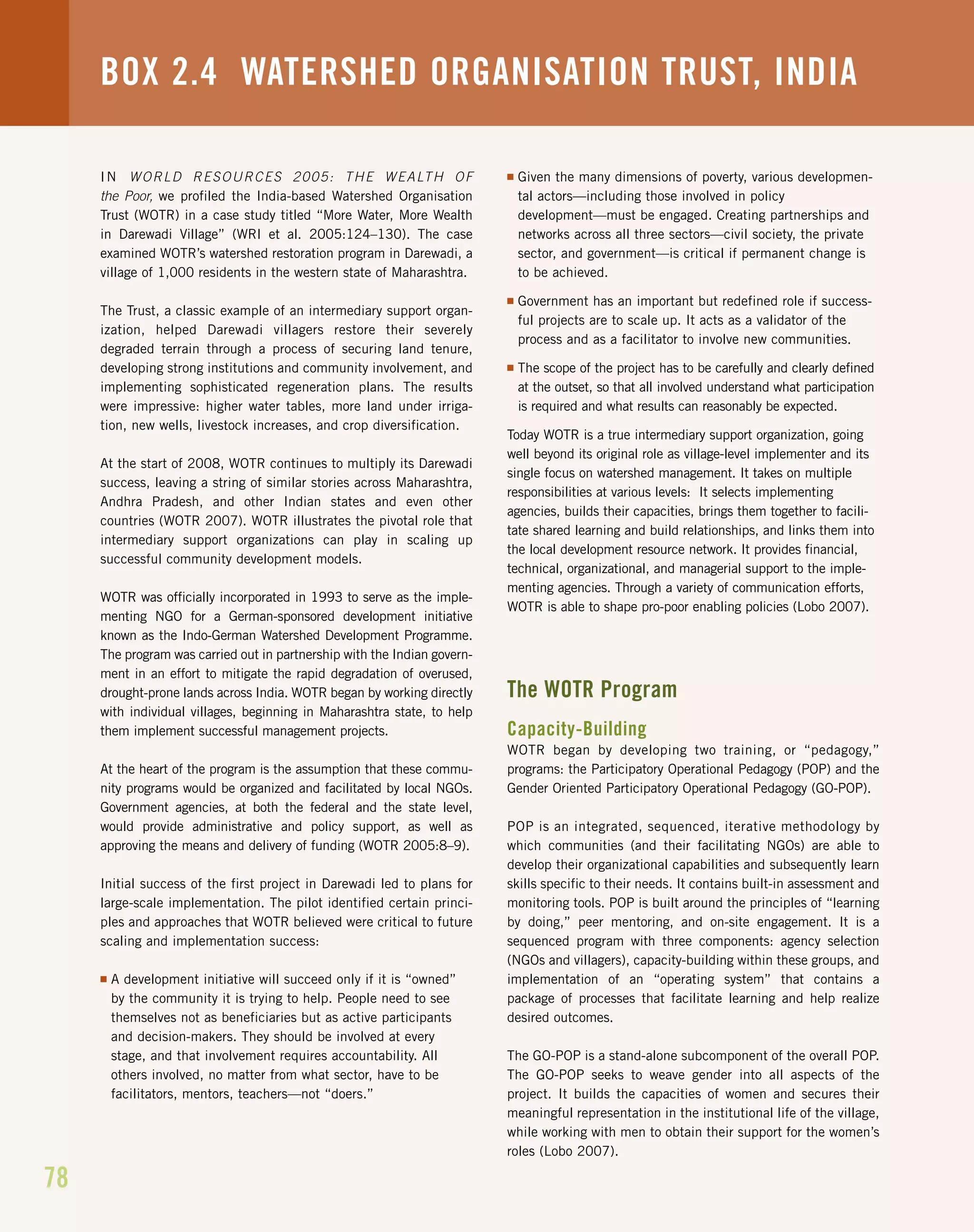
Claiming Carbon Credits: A New Policy Tool
The Guatemalan government has also recognized the earning
potential represented by preserving the Maya Biosphere
Reserve’s natural forest cover.
With funding from PRONACOM, USAID, the Inter-
American Development Bank, and two private companies,
CONAP and the Rainforest Alliance are supporting a pioneer-
ing scheme to develop carbon credit markets for the community
concessions on the basis of avoided deforestation (Rainforest
Alliance 2007b:3). “It is a new concept, the first of its kind in
Central America, because we are not working with plantations,
but with natural primary tropical forest under certification,”
says José Roman Carrera (Carrera 2007). The pilot Maya
Biosphere Carbon Project has already attracted interest from
three buyers, and a quantification and verification process is due
to be completed in 2008. The Rainforest Alliance projects that
the enterprises will be able to sell 24.9 million tons of avoided
carbon dioxide emissions over the next 10 years, creating an
impressive new revenue stream in the form of environmental
services payments (Rainforest Alliance 2007b:3).
The government’s interest reflects the recognition that, as
donors withdraw, payments such as these may represent the best
guarantee for the reserve’s long-term survival, reinforcing local
communities’ stake in its conservation. According to Carrera,
the new income will be partly invested in the four failing
community concessions, helping them to develop non-timber
forest product industries and sustainable agriculture in areas
already stripped of forest. “It’s the only way we can preserve
biodiversity,” he says, “by adding environmental services to
other sustainable forms of income and extracting maximum
value from the forests” (Carrera 2007).
Replicating the Petén’s Success
USAID is funding the first attempt to certify community and
family-owned forest plots outside the Petén, by expanding the
activities implemented by the Rainforest Alliance to two other
regions. Since September 2006, as part of the Forestry Enter-
prises in Guatemala Program, the NGO has worked in Las
Verapaces, to the south of the Petén, and in the Western
Highlands area affected by Hurricane Stan, helping commu-
nities implement sustainable management practices and
expand markets for local mixed forest products. Already,
several existing community forestry organizations have
reached commercial timber and wooden gift markets for the
first time by promoting their timber as “pre-certified”
(Rainforest Alliance 2007b:1).
141
Across Latin America
Neighboring countries with biologically diverse tropical forests
are also taking advantage of the skills and lessons learned by
the Petén’s pioneering enterprises. Following a decade of
training, the sophisticated technical capacity of community
foresters is so evident that they have been hired as consultants
and trainers in sustainable forest management programs in
Nicaragua, Panama, and Peru (Chemonics 2006:41). The
comprehensive 25-year sustainable management plans devel-
oped by the enterprises and intermediaries have also produced
“technical models worthy of emulation” by forest managers
across tropical regions, according to observers (Nittler and
Tschinkel 2005:15). The Rainforest Alliance, for example, is
already replicating the concession forest management model
in Honduras, helping to build community enterprise skills and
access to certified timber markets for 11 villages that manage
100,000 ha within the threatened and wildlife-rich Rio
Platano Biosphere Reserve (Rainforest Alliance 2006:1).
Guatemala’s community enterprises have taken a long time
to become established. In the process, they have become
increasingly resilient and better prepared for new external and
internal challenges. Their success in keeping deforestation at
bay, raising local incomes and quality of life, and developing
into established businesses is encouraging and offers prospects
and lessons for replication in other tropical regions. Manage-
ment responsibility for 25 percent of the developing world’s
forests now lies in the hands of local communities—a figure
expected to double by 2015 (Molnar et al. 2007:19; Carrera
2008). This makes identifying and scaling up such local
management models, which meet the needs of both people and
nature, a compelling and necessary task.
G R E E N L I V E L I H O O D S
142
Yet Niger is also the scene of an unprecedented, farmer-led
“re-greening” movement that has reversed desertification and
brought increased crop production, income, food security, and
self-reliance to impoverished rural producers. Vast expanses of
savanna devoid of vegetation in the early 1980s are now
densely studded by trees, shrubs, and crops. The scale of the
change is truly astonishing, affecting about 5 million ha of
land—about the size of Costa Rica—which amounts to almost
half of the cultivated land in Niger (Tappan 2007). By 2007,
between a quarter and half of all the country’s farmers were
involved, and estimates suggest that at least 4.5 million people
were reaping the benefits (Reij 2008).
The ecological impacts have been dramatic and include
reduced erosion and increased soil fertility (Tougiani et al.
2008:10). Crop harvests have risen in many areas, enabling rural
households to enjoy better diets, improved nutrition, higher
incomes, and increased capacity to cope with periods of drought
(Tougiani et al. 2008:16). In some villages, the soudure—the
annual “hungry period” when food supplies are nearly
exhausted—has been shortened or even eliminated (Larwanou
et al. 2006:1). Large areas of countryside that a few years ago
faced constant shortages of fuelwood and fodder now produce
surpluses for sale in nearby markets (Tougiani et al. 2008:13).
How Farmers Have Transformed
Niger’s Landscapes and Livelihoods
TURNING BACK
THE DESERT
IGER IS AN UNLIKELY SETTING FOR AN ENVIRONMENTAL SUCCESS STORY OF MAJOR
proportions. The West African state ranks 174th out of 177 countries in the 2007–08 Human Development Index
prepared by the United Nations Development Programme, based on indicators of health, education, and
economic well-being. Sixty percent of Niger’s people live on less than US$1 per day (UNDP 2007). Four fifths of its terri-
tory falls within the Sahara desert and cannot support food crops. Yet population pressures are intense, with rural
women bearing an average of 7.1 children (INS and Macro International Inc. 2007:xxv). Niger’s farmland and people—
nomadic tribes apart—are concentrated in a southern strip of wind-swept savanna that falls within the Sahelian
climatic zone. Rural communities struggle to grow crops in sandy, nutrient poor soils against a backdrop of chroni-
cally low and erratic rainfall, an ecological challenge that climate change will only intensify (IPCC 2007:444, 447–48).
N
143
Many rural producers have doubled or tripled their incomes
through the sale of wood, seed pods, and edible leaves (Winter-
bottom 2008).
The re-greening movement has had especially important
impacts for some of the poorest members of Nigerien
society—women and young men (Larwanou et al. 2006:1–2).
The burden on women associated with the gathering of wood
for household fuel has been reduced substantially (Boubacar et
al. 2005:23). So has the annual exodus of young men seeking
urban jobs in Niger and neighboring countries, thanks to new
opportunities to earn income in an expanded and diversified
rural economy (Larwanou et al. 2006:1–2). With farmers
producing more fuelwood to supply urban areas, Niger’s
shrinking natural forests have also been spared further destruc-
tion (Winterbottom 2008).
There have been two key vehicles for this remarkable
transformation. First is the adoption of simple, low-cost
techniques for managing the natural regeneration of trees and
shrubs, known as farmer-managed natural regeneration, or
FMNR. In concert with forest management, many communi-
ties are also using simple soil and water conservation programs
to drive the greening transformation. Both efforts have been
encouraged and assisted by intermediaries including NGOs,
donor governments, and international aid agencies. While this
case study emphasizes the FMNR process, much of Niger’s
greening success can also be attributed to the simultaneous soil
and conservation work. FMNR evolved in the mid-1980s as a
response to the problems associated with traditional farming in
Niger, in which farmers “cleaned” their land of all vegetation
and crop residues before planting crops (Polgreen 2007:2). The
past two decades of experimentation and innovation with
FMNR in sustainably harvesting native vegetation have
resulted in widespread acceptance that tree cover brings both
income and subsistence benefits. The government of Niger has
played an enabling role, enacting key land tenure and tree
growth reforms, having learned from the failures of earlier
destructive policies (McGahuey 2008).
In an ecologically vulnerable region expected to experi-
ence more frequent drought as a result of climate change,
Niger’s tree regeneration movement, say natural resource
management experts, offers a proven path to greater environ-
mental and economic resilience and increased food security for
the inhabitants of Africa’s drylands (Harris 2007; IPCC
2007:444, 447–48). Given the explosive rate of population
growth in the region, FMNR alone will not enable Niger—or
other Sahelian countries—to stay ahead of the food and liveli-
hood needs of their people (McGahuey 2008). Indeed, even
though FMNR is used widely today, 50 percent of Niger’s
children remain undernourished (INS and Macro Interna-
tional Inc. 2007:xxix). But it is one important tool to increase
productivity for land-poor farmers and has already proved its
capacity to provide them with diverse and sustainable rural
livelihoods and economies.
T U R N I N G B A C K T H E D E S E R T
Building Environmental Capital
I An increase of 10- to 20-fold in tree and shrub cover on about 5 million
ha of land, with approximately 200 million trees protected and managed
(McGahuey and Winterbottom 2007:7; Tappan 2007; Reij 2008).
I At least 250,000 ha of degraded land reclaimed for crop production
(McGahuey and Winterbottom 2007:7).
I Soil fertility improved as higher tree densities act as windbreaks to
counter erosion, provide enriching mulch, and fix nitrogen in root
systems (Reij 2006:iii).
I In some areas, the return of wild fauna, including hares, wild guinea
fowls, squirrels, and jackals (Boubacar et al. 2005:16).
I Return of diverse local tree species that had all but disappeared from
many areas and of beneficial insect and bird predators that reduce
crop pests (Boubacar et al. 2005:13; Rinaudo 2005a:14).
Building Economic Capital
I Expanded cultivation of cereals and vegetables, with harvests doubling
in some areas (Tougiani et al. 2008:16; Boubacar et al. 2005:25).
I Pods and leaves provide critical dry-season fodder supplies for
livestock (Tougiani et al. 2008:16).
I New food export markets created, primarily to Nigeria (Reij 2006:ii).
I Rural incomes rose in three regions practicing farmer-managed
natural regeneration (FMNR) (McGahuey and Winterbottom 2007:3).
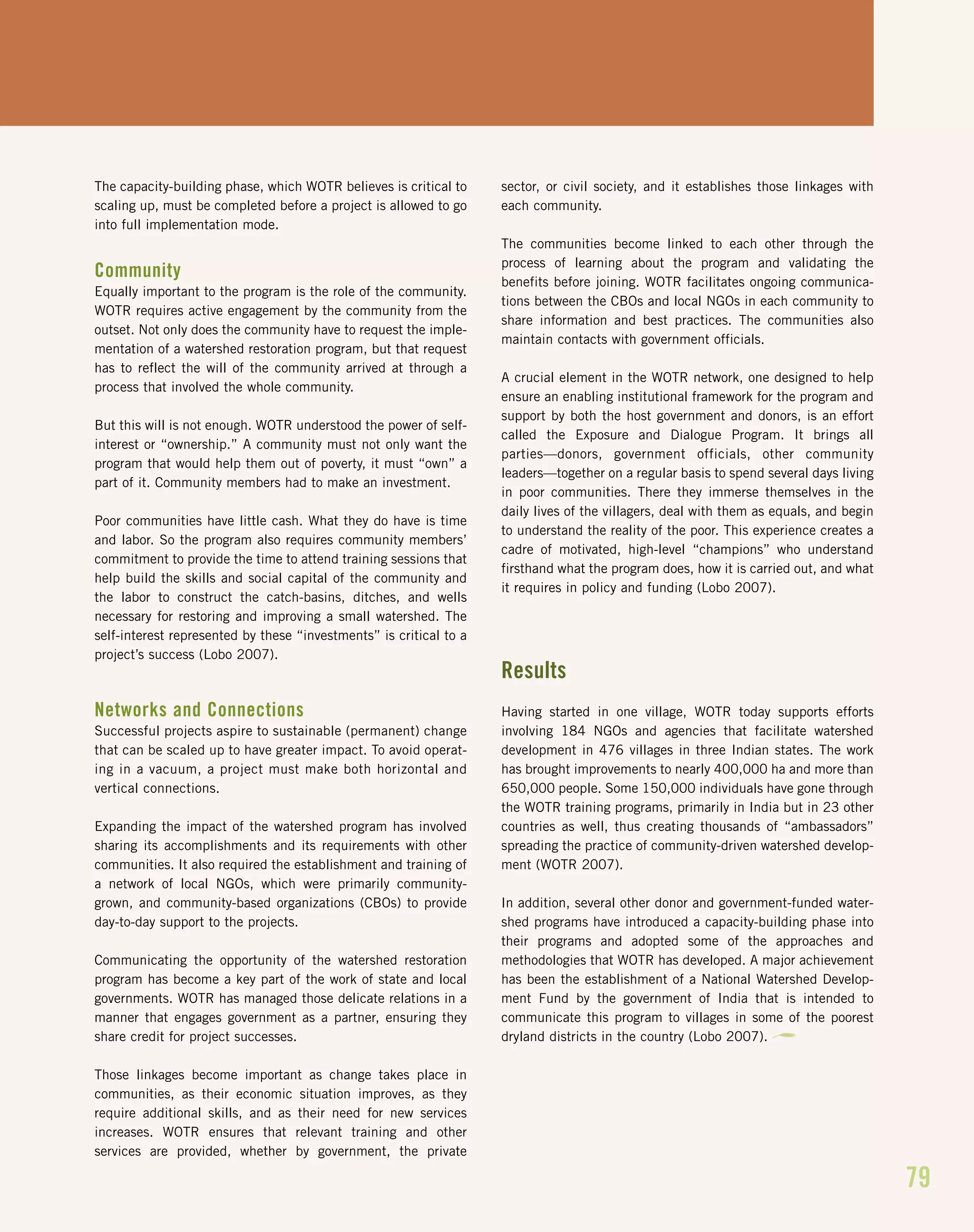
I Creation of specialized local markets in buying, rehabilitating, and
reselling degraded lands, with land values rising by 75–140 percent
in some areas (Abdoulaye and Ibro 2006:44).
I Empowerment of hundreds of thousands of poor farmers, enabling them
to pursue new enterprises and improve livelihoods (McGahuey 2008).
Building Social Capital
I Some 25–50 percent of all rural producers have adopted improved natural
resource management techniques (estimate based on Tappan 2007).
I Food, fuelwood, and income provided by trees have increased food
security (Reij 2006:iii).
I Nutrition and diets have improved through the availability of edible
tree leaves and fruits as well as produce grown on rehabilitated plots
(Larwanou et al. 2006:22).
I Improved access to land and income generation for women, widows,
and the landless poor (McGahuey and Winterbottom 2007:13).
I Average time spent by women collecting firewood has fallen from
2.5 hours to half an hour (Reij 2006:iii).
I Increased self-reliance among villages; improved social status of
women involved in FMNR (Reij 2006:iii; Diarra 2006:27).
I Reduced urban exodus of young men in search of work and creation
of new small businesses related to forest products (BBC 2006).
KEY ACHIEVEMENTS OF NIGER’S RE-GREENING MOVEMENT
144
W O R L D R E S O U R C E S 2 0 0 8
From Famine to Food:
The Revegetation of Niger
The farmer-led transformation of Niger’s countryside over the
past quarter-century stemmed from an ecological and humani-
tarian crisis that threatened the lives and livelihoods of millions
of people and undermined the country’s ability to sustain itself.
Through the early 1900s, land use in Niger was character-
ized by sparse rural populations cultivating small fields amidst
surrounding bush. Families were smaller, yields were sufficient,
and there were ample supplies of timber from natural
woodlands. Fields were left fallow, and trees and shrubs were
regenerated to provide extra wood before being cleared for
planting (Winterbottom 2008).
Land clearing and tree-felling became more common in the
1930s, as the French colonial government pushed Nigerien
farmers to grow export crops and implemented policies that
provided disincentives for farmers to care for their land. Such
disincentives included a new land law that established the national
government as the owner of all trees and required Nigeriens to
purchase permits to use them (Brough and Kimenyi 2002).
Perversely, the positive outcomes of the effective French
health care system, namely higher life expectancy and lower
infant mortality, also increased strain on natural resources
(Brough and Kimenyi 2002). So by the time the post-colonial
government took power in 1960, Niger’s resources were already
stretched thin. Throughout the 1960s and 1970s, this pressure
multiplied with the policies of the new government, rapid
population growth, and a series of devastating droughts.
Niger’s postcolonial government extended its predecessor’s
policy of state ownership over all forest resources. Hoping for
better enforcement of the forestry law, it made the Forestry
Service into a paramilitary institution (USAID et al. 2002:42). Its
I 1935: French law asserts that all natural resources in Niger, includ-
ing trees, belong to the state
I 1960: Independence from France; new government maintains natural
resource rules and begins stricter enforcement with paramilitary
Forest Service
I 1969 -1973: 4-year drought cripples country
I 1975: Multiple donors and NGOs enter Niger to improve food security
and combat desertification, including CARE International’s Majjia
Valley Project
I 1983: Serving in Mission (SIM) begins implementing Farmer-
Managed Natural Regeneration (FMNR) as part of its Maradi
Integrated Development Project (MIDP)
I 1984 -1985: MIDP teams with World Food Program’s Food for Work
Program in 95 villages in Maradi in response to drought
I 1985: Government creates Plan to Combat Desertification
I 1987: Transitional government’s Rural Code Secretariat coordinates
with international aid groups to revise Rural Code and natural
resource governance regulations
I 1993: New Rural Code signed, transferring tree ownership to
property owners
I 1996: Coup d’état results in suspended donor assistance
I 1998: Legislation to implement Rural Code at village level enacted
I 2004: Rural Code enforcement begins at village level
I 2005: Food shortages due to drought, locust infestation, and
population pressures; farmers practicing FMNR and soil and water
conservation techniques fare better than those that do not
I 2007: Satellite images show that over 5 million ha of Niger has new
vegetation thanks to regeneration efforts of previous twenty years
THE GREENING OF NIGER: KEY DATES
TRENDS IN VEGETATION INDEX, 1982–1999
145
officers forbade any felling, harvesting, or selling of trees without
government permits (Dan Baria 1999:1, 2). Offenders, including
farmers lopping branches from bush trees on their own land,
were fined or even imprisoned (Rinaudo 2005a:5). This discour-
aged people from investing efforts in producing, managing, and
selling forest products.
At the same time, government agricultural extension
services focused on planting crops in rows, animal plowing, and
other measures that also discouraged trees in fields (Rinaudo
2005a:5). The government invested heavily in centrally managed
reforestation projects, funded with donor support, which often
involved plowing under natural vegetation (McGahuey and
Winterbottom 2007:21).
This stripping of Niger’s natural tree cover was exacer-
bated by rapid population growth. By 1975 much of the
remaining natural woodland had been converted to farm fields
to feed rapidly growing rural communities. But by clearing
native trees and shrubs, farmers exposed their fields to the
fierce Sahara winds, resulting in plummeting soil fertility and
harvests. The loss of tree cover also triggered a rural fuelwood
crisis. Poor households were forced to burn animal dung or
crop residues instead of using them for compost, reinforcing
the downward spiral in soil quality and crop yields (Rinaudo
2007; Winterbottom 2008).
In 1969, Niger’s growing stresses developed into a
humanitarian disaster with the start of an extreme 4-year
drought that triggered famine across the Sahel, afflicting 50
million people (Dan Baria 1999:1). The scale of human suffer-
ing attracted global media coverage and drew international
aid agencies into Niger. Within a few years these donors,
including the United States Agency for International Develop-
ment (USAID), the World Bank, CARE International, the
Canadian International Development Agency, Italian Cooper-
ation, the International Fund for Agricultural Development
(IFAD), and the German government agency GTZ, had
expanded relief efforts to include development projects aimed
at restoring rural productivity (Hamissou 2001:34–35).
In the 1970s and early 1980s, these efforts focused on
training foresters and establishing exotic tree nurseries and
fuelwood plantations. This approach was both intensive and
expensive—plantations typically cost US$1,000 per ha to seed
and maintain (McGahuey and Winterbottom 2007:4). Local
people were rarely consulted before projects began, and the
government often appropriated land that farmers and herders
had used (Rinaudo 2005a:4). Over 12 years, some 60 million
trees were planted in Niger, less than half of which survived
(Tougiani et al. 2008:5).
One exception to an otherwise ill-fated program was the
Majjia Valley Project, developed by CARE International in
1975, funded by USAID, and implemented by the Nigerien
Forest Service and U.S. Peace Corps volunteers (USAID et al.
2002:42;Wentling 2008a). Farms in the tree-denuded river valley
had been plagued by high winds that destroyed seeds in Niger’s
June-to-October growing season. By planting alternating rows of
neem (Azadirachta indica)—an exotic nursery-grown species—
and native Acacia nilotica saplings across the valley to act as
windbreaks, the project improved soil retention and fertility,
lessened the need for repeated sowing, and reduced damage to
newly planted crops (Steinberg 1988:1).
Within a few years, overall yields of millet in fields between
windbreak rows increased by 15 percent. While this roughly
equaled the loss of production due to trees taking up former
T U R N I N G B A C K T H E D E S E R T
146
W O R L D R E S O U R C E S 2 0 0 8
crop space, the harvesting of tree branches, leaves, and twigs
used for wood fuel, thatching, and livestock fodder rose by 68
percent (Steinberg 1988:1). In a break with previous top-down
approaches, the project gave communities responsibility for
maintaining the windbreaks, and village committees were estab-
lished to create and enforce rules governing tree pruning
(Steinberg 1988:3; Tougiani et al. 2008:10).
The Search for Sustainable Solutions:
Tree Regeneration Takes Root
In its emphasis on improving native soils, harvesting branches,
and sharing responsibility with communities, the Majjia Valley
Project laid the groundwork for the FMNR revolution. Its
capital- and labor-intensive plantation-based approach,
however, was not very scaleable, as only a small fraction of
Niger’s cropland lies within river valleys; the majority is in drier
upland areas (Steinberg 1988:2).
By the early 1980s, development agencies operating in
Niger began to recognize that simple, low-cost farming
techniques held the greatest promise for improving rural liveli-
hoods. At the same time, studies sponsored by USAID’s Forest
and Land Use Planning project produced compelling evidence
that native species were better adapted to local conditions than
exotic imports, such as eucalyptus and neem, that were initially
used in development projects (Gallegos et al. 1987:86). Not only
could the long tap roots of native trees reach low water tables,
but they quickly regenerated after lopping (Amoukou 2006:26;
Rinaudo 2005a:6). These native trees provided multiple products
for resource-poor households, including fuelwood, livestock
fodder, and edible leaves and seedpods (Rinaudo 2005a:6).
Armed with this evidence, projects funded by development
agencies increasingly shifted from exotic plantations to promot-
ing natural forest management.
The Pioneers: Serving In Mission
One of the key people behind the movement toward natural
forest management was Tony Rinaudo, a Christian missionary
with a strong background in natural resource issues who spent
the 1970s and 1980s working with Serving in Mission (SIM,
formerly Society of International Ministries). In 1958, SIM had
established a farm school in Maradi, partnering with the
Evangelical Church of Niger to assist small-scale farmers in the
region (Evans 2005). In response to the drought of the early
1970s, SIM, like other aid organizations at the time, turned its
focus in Maradi to tree planting. But by the early 1980s, Rinaudo
and some of his colleagues saw that the greening improvements
from these efforts were limited, given the amount of time and
money invested.
It was then that Rinaudo began to seek out a different
solution to desertification (Rinaudo 2005a:6). In 1983 he
realized that the fields cleared by project farmers were not
barren, as they appeared, but contained “underground forests”
of native tree and shrub stumps that could be successfully regen-
erated at a fraction of the cost of growing nursery tree stock
(Rinaudo 2005a:2). As a result, he helped SIM launch the
Maradi Integrated Development Project (MIDP), featuring a
new approach to reforestation (Rinaudo 2005a:2).
Farmer-managed natural regeneration, as MIDP’s approach
came to be called, involved supporting the regeneration of trees
and their sustainable management to produce continuous
supplies of fuelwood as well as non-timber products such as
edible seeds and leaves. MIDP’s effort entailed very few “rules,”
instead emphasizing farmer experimentation and choice.
Farmers chose how many tree stumps to let resprout in their
Farmer-managed natural regeneration (FMNR) in the savannas of
southern Niger adapts centuries-old methods of woodland management
to produce continuous harvests of trees for fuel, building materials,
and food and fodder without the need for frequent, costly replanting.
Trees are trimmed and pruned to maximize harvests while promoting
optimal growing conditions (such as access to water and sunlight).
The new feature, pioneered by farmers in Niger and the intermediary
organizations that assisted them, was to use these techniques in
agricultural cropland and to manage trees as part of a farm enterprise.
For decades, Nigerien farmers had cleared their fields of vegetation,
leaving what turned out to be an “underground forest” of living stumps
and roots. FMNR is based on the regeneration of native trees and
shrubs from these mature root systems, which promote surprisingly fast
regrowth. Four key steps are involved:
I Selecting the stumps to regenerate based on the usefulness of
the species.
I Selecting stems to prune and protect on each stump—usually the
tallest and straightest. Intermediaries promoted five stems per
stump as the ideal, but each farmer decides for himself or herself,
based on farming objectives and household needs.
I Removing unwanted stems and side branches.
I Removing new stems and regularly pruning surplus side branches
(as often as once a day). The longer a stem is left to grow, the higher
its value in local wood markets.
The original FMNR model, pioneered by Serving In Mission, promoted
harvesting one of the original five stems every year, with a newly
resprouting stem chosen as a replacement. However, some farmers
regrow many more stems per stump, allowing more than 200 stumps
per ha to regenerate. This method quickly creates a young woodland.
Typical species regenerated in the region include Ziziphus and
Combretum, Guera senegalensis, Bauhinia reticulata, and Piliostigma
reticulatum, which provide wood, nutritious fruits, edible leaves, and
livestock fodder.
Source: Rinaudo 2005a:6–11
WHAT IS FARMER-MANAGED NATURAL REGENERATION?
147
fields, how many resprouted stems to grow and harvest, and what
to do with the wood (Rinaudo 2005a:8). MIDP workers lived in
the project villages and led by example, practicing FMNR on
their own farmland. They won recruits by holding village
meetings and approaching farmers known to favor planting
trees (Rinaudo 2007, 2008).
The FMNR approach asked farmers to abandon lifelong
practices. Unsurprisingly, few of them were daring enough to
take such a risk (Rinaudo 2005a:9). In the first year, only 12
farmers cultivating a total of 12 ha responded to recruitment
efforts, from among thousands of local farmers in the district of
Guidan Roumdji (the name of this arrondissement was changed
to Groumdjii in 2002). They were mocked by other farmers,
and some of their young trees were deliberately damaged or
chopped down and stolen for fuelwood (Rinaudo 2007).
According to Rinaudo, the first farmers were motivated by
a variety of factors. “In 1983, the thought of leaving trees in
crop fields was seen as ludicrous by farmers brought up with
the belief that cleared fields were essential for good crop yields.
Some of the 12 guys were early adopters and innovators and
were used to being different.... Some may have hoped that the
project would provide loans for oxen, fertilizer and seed as SIM
had done in the past. Some were visionary and were already
planting trees, so the idea that FMNR would be simpler and
faster appealed to them” (Rinaudo 2007).
Despite the peer pressure, all 12 farmers persevered and
benefited from a small fuelwood yield in the first year
(Rinaudo 2007). Their crop productivity also increased, as
MIDP workers had predicted. The following year, the Sahel
was hit with another major drought and subsequent famine, a
cycle repeated in 1988. MIDP staff seized the opportunity to
expand its tree regeneration efforts by incorporating FMNR in
a Food for Work program in 95 villages in three of Maradi’s
six districts—Guidan-Roumdjii and Madarounfa along the
southwest border with Nigeria and Dakoro district in the
northwest (Rinaudo 2008). In return for food, farmers were
required to regenerate native vegetation on their land.
Rinaudo estimates that between 80,000 and 100,000 people
were exposed to FMNR in 1984 and 1988, providing “the
critical mass of people required for adoption of an innovative
approach” (Rinaudo 2007).
Most farmers took part only reluctantly, however,
motivated solely by their desire for food aid. Although crops
flourished among their field trees, many chopped the trees
down after the program ended. About two thirds of the half-
million newly regenerated trees were lost, with only a third of
farmers continuing with the program (Rinaudo 2005a:9).
“Despite regular program messages about the value of trees,
most people practiced FMNR only in order to obtain grain,”
says Rinaudo (Rinaudo 2007).
Nevertheless, MIDP’s leaders had seen the benefits of
FMNR and were optimistic that it had the potential to help
farmers across Niger and beyond. They therefore continued
their efforts, working with the thousands of farmers who did
keep their trees to refine regeneration practices. Early progress
was slow, obstructed not only by deep-rooted cultural beliefs but
also by Niger’s forestry laws, which stipulated that trees were
state property (Rinaudo 2005a:5, 9). As farmers were liable to
be fined for cutting branches in their fields, they lacked incen-
tives to regenerate native bush, and many would slash and burn
regrowing stumps (Rinaudo 2005a:1). While government
budget cuts in the 1980s began to limit the ability of forestry
agents to enforce the laws, the Forestry Service continued to
station agents at road blocks to confiscate cut wood, preventing
the development of a legitimate commercial market for farm-
grown fuel (Rinaudo 2007).
In the late 1980s, however, this problem abated after MIDP
intervened with the head of the Maradi Forestry Department,
who agreed to suspend enforcement of the tree cutting regula-
tions (Rinaudo 2007). For the first time, this gave farmers the
incentive and confidence to protect trees on their land by
providing both informal tenure rights and the prospect of new
income from timber products. By fostering the perception that
farmers “owned” the trees in their fields—although official
reform of tree ownership was not implemented until 2004—
this cooperation between NGO and local government enabled
FMNR to take hold (Rinuado 2008).
T U R N I N G B A C K T H E D E S E R T
148
W O R L D R E S O U R C E S 2 0 0 8
Farmers Spread the Word
Within a few years, farmers throughout the region began to
experiment with regeneration. As thousands of households
quickly made impressive gains in crop yields and incomes, the
practice spread from farmer to farmer and from district to
district, driven by self-interest without project intervention. As
regenerating trees requires no financial outlays for materials or
equipment by poor, risk-averse farmers, FMNR was well adapted
to such spontaneous self-scaling (Rinaudo 2005a:17–18).
Farmers became the best spokespersons for woodland
regeneration. But the movement was also facilitated by external
intermediary support, with donor agencies funding village
implementation projects, farmer study tours, and farmer-to-
farmer exchanges. By the mid-1990s, FMNR had become
standard practice within the MIDP operational area in Maradi.
Project staff had also trained farmers and NGO field workers
in five of Niger’s six other regions, including neighboring
Tahoua and Zinder and more distant Tillabéri, Dosso and
Diffa (Rinaudo 2008). Other rural development projects
adopted and promoted FMNR methods in their programs,
including some funded by the German government and the
World Bank and implemented by organizations that included
IFAD and CARE International (Larwanou et al. 2006;
Boubacar 2006:16; USAID et al. 2002:42).
Following a military coup d’état in Niger in 1996, most of
this donor assistance was suspended (USAID et al. 2002:42). Yet
woodland regeneration continued to spread rapidly, underlining
the key role played by farmers themselves in self-scaling
(Winterbottom 2008). In 2004—the year in which government
reforms formally awarded tree ownership to rural landowners—
observers estimated the number of regenerated trees in
Maradi’s Aguié district alone at about 4 million (Reij 2004:1).
By 2006, farmers in the densely populated parts of Zinder had
almost universally adopted FMNR on about 1 million ha—
without any major donor intervention (Larwanou et al.
2006:12–13, 17).
This remarkable trend, attributed by observers to the high
economic value of Zinder’s dominant gao and baobab trees,
underlines the profound shift that farmer-led regeneration has
brought about in national consciousness (Larwanou et al.
2006:12, 14). The gao tree has always been highly valued in
Niger—under Hausa tradition, for instance, anyone cutting the
sultan’s gao trees was subject to physical punishment (Larwanou
et al. 2006:14). But with Niger’s recent decentralization of
natural resource management and the legalization of tree-
cutting, the gaos’ value can now be translated into economic
benefits for the rural farmers that tend them.
While no comprehensive national inventory has been
conducted, aerial and ground surveys and anecdotal evidence
suggest that by 2006, trees had reappeared on about 5 million ha,
nearly half of all cultivated land in Niger (Tappan 2007). In
Maradi and Zinder, which account for over half of Niger’s cereal
production and where 40 percent of its people live, the practice of
FMNR is now common (Wentling 2008b: 7; Rinaudo 2005a:5, 9).
NRM Technique
Protection of natural
regeneration of trees
Tassa
Demi-lunes
Stone lines
Dan Saga, Maradi region
(IFAD project)
100
--
--
--
Control, non-project village
(Dourgou in Maradi region)
6
--
--
--
Kolloma Baba, Tahoua region
(GTZ project)
86
91
20
97
Batodi, Tahoua region
(IFAD project)
100
97
46
91
PERCENT OF POPULATION IN THREE NIGER PROJECT VILLAGES ADOPTING COMPLEMENTARY TREE REGENERATION
AND SOIL AND WATER CONSERVATION TECHNIQUES
Source: Adapted from Abdoulaye and Ibro 2006:37.
Demi-lunes Tassa
149
Adding Value: Reclaiming Water and Land
Since the late 1970s, donor efforts to stave off future famines
have also included the introduction of simple soil and water
conservation techniques to rehabilitate barren land (Reij 2008).
As the practice of tree regeneration spread across southern
Niger, intermediaries and farmers adopted some of these
practices to further boost crop production. Widely adopted
methods included rock lining (placing rocks lines along the
contour of sloping land to reduce runoff), improved versions of
traditional planting pits or tassa, and demi-lunes (crescent-
shaped trenches dug along the contour of sloping land to
improve water infiltration into soil) (Abdoulaye and Ibro
2006:19).
These techniques enabled cultivation of secondary
vegetable crops, which in turn helped rural families improve
their diets in a country where half the children suffer from
malnutrition (Boubacar et al. 2005:21). For example, improved
soils and higher water tables have enabled villages in Tahoua
region to grow onions, tomatoes, sweet potatoes, cow peas,
watermelon, and asparagus for home use and sale in local
markets (Guéro and Dan Lamso 2006:31).
Soil and water conservation methods have proved particu-
larly important in districts with low water tables and severe
shortages of cultivable soil. One of the most dramatic success
stories is Batodi village in the Illéla district of Tahoua, where the
International Fund for Agricultural Development promoted use
of improved tassa and demi-lunes (Boubacar et al. 2005:8).
According to villagers, the local water table had sunk to 18
meters below ground by the early 1990s (Boubacar et al.
2005:15). Nothing would grow in the barren land around the
village, and women typically spent several hours a day fetching
water. By 2005, with almost every villager using tassa and demi-
lunes, water tables had risen to three meters below the surface
and yields of millet and sorghum, Niger’s primary food crops,
had increased significantly (Guéro and Dan Lamso 2006:31).
Batodi’s many women farmers now cultivate dry-season
vegetable gardens, irrigated by wells, for household use and sale
(Guéro and Dan Lamso 2006:31). Onions are especially high
value, with one producer (a male farmer) earning 250,000 CFA
francs (US$500) for a crop grown on a quarter of a hectare
(Abdoulaye and Ibro 2006:19).
Adoption of these soil and conservation techniques has led
to the restoration of land once considered useless. In Tahoua
region, for example, entrepreneurial farmers started a new
market by buying degraded land to rehabilitate and resell (Reij
2008). Land prices around Batodi doubled between 1990 and
1994 as a result, while in a second village, Roukouzoum, rehabil-
itated land was resold after two years for triple the original price
(Boubacar et al. 2005:10–11, 20). A market in specialized labor
has also developed in the region, with self-trained land restorers
hired by other farmers to dig tassa and demi-lunes (Boubacar et
al. 2005:27). While farmers most able to capitalize on increased
land values tend to be the better-off ones, land reclamation has
also provided a route for very poor families to relieve hunger and
increase income (Boubacar et al. 2005:20–21).
Creating Resilient
Landscapes, Livelihoods
The simple and cost-effective practice of farmer-managed
natural regeneration has provided an impressively wide range of
benefits for Niger’s impoverished rural communities. Over the
last 20 years or so, about 200 million trees have been protected
150
W O R L D R E S O U R C E S 2 0 0 8
and managed by farmers and at least 250,000 ha of degraded
land has been restored to crop production (Reij 2008;
McGahuey and Winterbottom 2007:7). A 2005 survey for
USAID recorded tree or shrub stems ranging from 20 to 150 per
ha across three regions, a dramatic 10- to 20-fold increase since
1975 (McGahuey and Winterbottom 2007:6–8). This change in
the rural landscape has enabled hundreds of thousands of
households living on US$2 or less a day to diversify livelihoods
and increase income, thus increasing their economic resilience. It
has also played a critical role in addressing the chronic hunger of
families accustomed to living with unpredictable harvests.
FMNR has also had an enormously empowering effect,
demonstrating to hundreds of thousands of people that they
were not helpless hostages to poverty and a capricious climate.
“[Its success] helped establish a positive mindset about farmers’
capacity to take charge of critical farm management decisions,”
explains USAID natural resources management adviser Mike
McGahuey. “It showed that progress against poverty and deser-
tification was strongest when the rural poor worked on their own
behalf to achieve their own objectives” (McGahuey 2008).
Money Trees
Fuelwood and Fodder Income
The most immediate benefit for most families practicing
FMNR is the availability of fuelwood from pruned tree
branches. From the first year, communities are able to harvest
light firewood and from the second year to cut branches to sell
in local markets for much-needed extra income. According to
conservative SIM estimates, farmers regenerating 40 stumps on
a 1-ha field could earn an additional 70,000 CFA francs (about
US$140) per year—half the average annual income of a poor
farming household.
By 2004, researchers had recorded steep increases in
fuelwood and fodder production in FMNR communities, with
majorities of villagers gaining income from one or other
product. Earlier studies indicate that in 100 Maradi villages
alone, about US$600,000 worth of wood was sold between
1985 and 1997 (SIM 1999, as cited by Rinuado 2005a:14). And
survey results from across villages with land rehabilitation
projects demonstrate that residents perceive a marked decrease
in poverty around them as a result of the projects (Abdoulaye
and Ibro 2006:40).
Crop Income
Revegetation also improves the traditionally poor fertility of
Niger’s soils, which in turn boosts crop production. Bush trees
dotted across fields help hold soil in place, reducing wind and
water erosion (Guéro and Dan Lamso 2006:15). Native trees and
shrubs draw up nutrients and distribute them in the topsoil at the
same time that falling leaves and trimmings are used as mulch
(Rinaudo 2005a:12). Livestock and birds attracted to tree shade
and branches leave droppings that fertilize the soil (Rinaudo
2005a:12). Moreover, the growing season on land with trees is
longer because farmers only have to sow once, compared with
twice or more on fields unprotected from the elements (Rinaudo
2005a:4; Reij 2008). Such benefits are magnified when farmers
act collectively, as blanket FMNR villages in Maradi and Zinder
regions have discovered. Vegetation in one field affects nearby
land by serving as a windbreak and promoting improved water
infiltration and soil retention (Winterbottom 2007).
All these FMNR benefits, combined with the soil and water
interventions, have resulted in increases in sorghum yields of
between 20 and 85 percent and in millet yields of between 15 and
50 percent in intervention villages (Amoukou 2006:25). Other
studies suggest that millet yields have even consistently doubled in
some FMNR-practicing communities (Tougiani et al. 2008:16).
This has enabled households both to store more food against the
threat of shortages in the dry season and, occasionally, to sell
surplus crops in local markets or for export to neighboring
Nigeria (Reij 2006:ii).
0%
20%
40%
60%
80%
100%
Tama Kolloma Baba Batodi Dan Saga Boukanda
Wood
Hay
Village
Source: Abdoulaye and Ibro 2006: 43
Area: 1 hectare
No. Trees protected: 40/hectare
No. stems protected per tree: 5 stems/stump
Year 1 40 stems x 0.10 cents US$ 4
Year 2 40 stems x 0.70 cents US$ 28
Year 3 40 stems x US$1.50 US$ 60
Year 4 40 stems x US$ 3.50 US$ 140
Year 5 40 stems x US$ 3.50 US$ 140
Year 6 40 stems x US$ 3.50 US$ 140
Total US$ 512
Source: Rinaudo 2005b.
SAMPLE WOOD INCOME BENEFITS FOR FARMERS
PERCENT OF RURAL HOUSEHOLDS EARNING INCOME
FROM WOOD AND HAY IN 2005
151
Nationally, figures from the Niger agriculture ministry show
cereal production rising steadily in parallel with the spread of
FMNR. In 1980, Niger produced 1,770,700 metric tons of
cereals, rising to 2,093,300 mt in 1995 and 2,319,800 mt in
2000. By 2006, when at least a quarter of cultivated land was
converted, production reached an impressive 4,055,984 mt
(Wentling 2008b:1). These statistics suggest that the farmer-led
re-greening movement is having a clear impact on the country’s
ability to feed itself and improve the rural economy.
Non-Timber Tree Products
Farmers’ trees have also yielded direct non-timber benefits in
the form of fodder for livestock and edible leaves and seedpods
to set aside for times of hunger (Rinaudo 2005a:3). Anecdotal
evidence suggests that diet has also improved for many FMNR
practitioners as they have a greater diversity of food sources.
Some villagers in the Aguié district of Maradi, for example,
harvest the leaves of a common scrubland tree, Maerua
crassifolia, which are rich in vitamin A (Reij 2008). Maradi-
based farmers have also used the proceeds of FMNR to
embark on new income-generating activities, such as beekeep-
ing (Burns 2008).
While most non-timber tree products are consumed by
farming families, some districts have generated significant
income from their sale. This is especially true in Zinder
province, where FMNR has revived cultivation of the baobab
tree. Each baobab can bring in an average of US$20 a year in
economic benefits just from the sale of its edible leaves
(Larwanou et al. 2006:18). With some farms boasting an
average of 50 baobab trees per ha, that can amount to
US$1,000 per ha a year—nearly three times the total annual
income of much of the population (calculation based on
Larwanou et al. 2006:18; Winterbottom 2007).
Providing Food Security,
Protecting Against Famine
The return of trees to Niger’s densely populated southern plains
and dunes has also increased food security for local rural
economies at a time when the country is adding 440,000 new
mouths to feed every year (Wentling 2008b:2). Since the cereals
millet and sorghum make up over 90 percent of the typical
villager’s diet, it was critical that in 2006 the country was able to
produce 283 kg of cereal per capita, almost identical to the 285
kg produced in 1980 despite a near-doubling of the population
over 25 years (Wentling 2008b:3, 1).
“In the late 1970s donors thought it would be impossible for
Niger to produce enough food to feed a population of 10
million,” says Mark Wentling, USAID’s country program
manager for Niger. “In the past three years, Niger has produced
more cereals than ever. Much of this increase can be attributed
to higher crop yields achieved through the practice of FMNR…
which has been critical to enable Niger…to feed its population of
14 million” (Wentling 2008a).
Over the last 45 years, Niger has been plagued by an
average of one bad harvest every eight years, following a
growing season of low rainfall (Wentling 2008b:4). Farmers
practicing FMNR, who are able to stockpile some grains during
good years and to harvest trees for food and income, are better
insulated against these deadly cyclical droughts, which are
predicted to increase as a result of climate change (Reij 2006:2;
IPCC 2007:444, 447–48).
When the most recent drought and accompanying food
shortages hit the regions of Maradi, Tahoua, Tillabéri, and
Zinder in 2004–05, FMNR villages fared much better than those
stripped of vegetation. An estimated 15 children a week died of
hunger in Maradi during the summer of 2005 (BBC 2005). Yet
Storing millet
152
W O R L D R E S O U R C E S 2 0 0 8
villages in Aguié District, where inhabitants could harvest regen-
erated trees for food, fodder, and firewood to sell in exchange for
grain (see box) did not rely on famine relief and avoided a single
death (Tougiani et al. 2008:13). The contrast between the
famine’s impacts on FMNR farmers and on their neighbors who
did not practice FMNR is a stark reminder of the persistence
required to scale up even visibly beneficial and simple changes to
entrenched customs. Indeed, despite all its successes, at least half
of Niger’s farmers still do not use FMNR (Tappan 2007).
Women Reap Dividends
Women are perhaps the biggest winners in Niger’s tree regener-
ation revolution. Traditionally excluded from resource
management decisions (despite being skilled in farming and
animal husbandry), they have profited from the simple reality
that FMNR favors women producers (Tougiani et al. 2008:12).
Getting the best results from revegetation requires year-round,
The Maradi village of Dan Saga and its neighbors are the focus of a
concerted effort to build social capacity while promoting natural resource
management in Niger. Beset by chronic food shortages due to a lack of
land to sustain its rapidly growing population, Dan Saga was chosen
as a priority site by the Aguié District Rural Development Project, an
initiative launched in 1992 by the International Fund for Agricultural
Development (Boubacar 2006:17). The project provided rural credit to
several dozen villages and actively promoted farmer-led tree regenera-
tion. Initially it did so using top-down demonstration and instruction to
farmers. But these early efforts were undermined by conflicts among
villagers, as some people were stealing wood from trees grown by others
(Boubacar 2006:17–19).
In 2001, project managers switched focus to empowering communities
through capacity-building. Under the renamed Desert Community
Initiative, village management committees for natural regeneration were
elected by all community members. In a major break with tradition, these
included women farmers and herders—two normally marginalized
groups—as well as male landowners. The committees laid down strict
rules to regulate the exploitation of trees, organized villagers to guard
fields against intruders, and imposed fines on those who broke commu-
nity-approved regulations (Reij 2004; Tougiani et al. 2008:12).
Resource management decisions and action plans were made at monthly
village assemblies, held before local elders and the chief, at which
committee members fed back information to the community. New bylaws,
agreed to by the local administrative authority, embedded these arrange-
ments, while elected committee members were equipped with a uniform
and badge, emphasizing their authority. Aguié’s departmental govern-
ment, forestry department, and land tenure commission also approved the
new institutional arrangements (Tougiani et al. 2008:10–14).
DAN SAGA: PEOPLE POWER TRANSFORMS LOCAL ECONOMY
Their investment thus protected, many more farmers began nurturing
bush trees, adopting pruning and trimming techniques that allowed fast
vertical growth without hindering the growth of millet in the soil below
(Toumieux 2005). By 2007, a total of 53 FMNR community committees
had been established, covering 170 villages and encompassing the entire
Aguié district (Tougiani et al. 2008:11). Each village made payments
toward policing tree regeneration activities. The income raised, together
with fines collected, was placed in a village fund and used to support
development activities and tree nurseries on common land. This trans-
parent process both enhanced social unity and reinforced public support
for tree regeneration (Tougiani et al. 2008:12–13).
By 2007, destructive tree cutting practices had “practically ceased in
the whole of Aguié,” and 130,000 ha across the district boasted regen-
erating trees (Tougiani et al. 2008:14). In Dan Saga, this included every
household and more than 5,600 ha of land, transforming the local
economy (Abdoulaye and Ibro 2006:15). Fields that had previously lain
barren contained on average 150 bush trees per ha, compared with only
52 per ha in a nearby non-project village (Abdoulaye and Ibro 2006:36).
Villagers reported that FMNR can double their yields (Diarra 2006:18),
and some
40 percent of village producers were selling surplus wood, seedpods from
gao trees, and fruits and gum Arabic from Acacia seyal trees (Abdoulaye
and Ibro 2006:43). Annual per capita income from wood sales alone
ranged between US$46 and US$92 (Tougiani et al. 2008: 13).
Food security and resilience to drought—critical issues for a village on
the edge of the Sahara—have also improved markedly (Tougiani et al.
2008:2). In 2005, when a deadly combination of locusts and drought
struck the region, Dan Saga required no food aid (Toumieux 2005).
153
even daily, attention to pruning trees. As most men still migrate
to urban centers throughout West Africa during the dry season
to secure additional cash income, the increasingly valued task
of tree husbandry often falls to women (Wentling 2008a).
Women and their families derive a host of material benefits
from this role. Using their own wood for cooking eliminates a
daily cost of 200 CFA francs (US 40 cents) for purchased
firewood (USAID et al. 2005:18). Surplus wood can earn up to
400 CFA francs (US 80 cents) per bundle in local markets
during the dry season; in Zinder, a sack of nutritious, edible
baobab leaves can sell for as much as 3,000 CFA francs
(US$6), three times the average daily wage for laborers
(Larwanou et al. 2006:18). Women farmers use FMNR
income to meet household needs, including purchasing food
and paying school fees. Many have also diversified their house-
holds’ livelihoods: some by taking advantage of better soil
fertility and water retention to cultivate cash crops such as
onions, tomatoes, sesame, and hibiscus; others by using their
new earnings to invest in sheep and goats, which live off of
tree seedpods (BBC 2006; Reij 2006:iii).
Anecdotal evidence highlights how the status of women
has been transformed by their involvement in FMNR. A 2006
field study of FMNR villages across Zinder region found that
livestock owners—ranked high on the social ladder—
commonly included women (Larwanou et al. 2006:21). In
Kolloma Baba village in Tahoua, formerly vulnerable and
marginalized widows and divorcees employ male laborers to
work their farms (Boubacar et al. 2005:10, 16). During the
2005 food crisis, female FMNR farmers also used their food
reserves to assist others, elevating their position in the
community (Diarra 2006:12). Women farmers’ enhanced
status is also clearly demonstrated in FMNR communities
that boast village natural resource management committees,
where they participate equally with men in decision-making
(Tougiani et al. 2008:12).
Re-greening a Country:
Key Players and Partners
With millions of trees now carpeting land that was mostly barren
only one to two decades ago, Niger’s farmers have produced
one of the most visibly successful examples of natural resource
management in the world today. Although it took several years
to take off, Niger’s farmers have abandoned a core practice of
clearing fields and have embraced the protection and sustain-
able management of native vegetation.
Why did they do so? One clear reason, say observers, was
the impact of the environmental and economic crisis of the late
1970s and early 1980s, combined with Niger’s booming
population. With more mouths to feed every year, rural
communities could see that traditional clearing and farming
methods were no longer meeting their needs (Wentling 2008a).
The obvious success of early FMNR projects, implemented at
little or no cost to farmers, was also a powerful spur to their
neighbors. But it is unlikely the movement would have reached
such a scale or overcome the barriers to farmer adoption
without the input of two key players: Niger’s central govern-
ment and international intermediary organizations.
T U R N I N G B A C K T H E D E S E R T
“These lands are now like our husbands,” say the women of Kolloma
Baba, describing the thriving plots of millet and sorghum, cow peas,
groundnut, and okra around them, the result of years of hard labor
(Abdoulaye and Ibro 2006:40, 42). Once barren, boulder-covered, and
devoid of vegetation, these patches of reclaimed desert have lifted the
women, mostly divorcees and widows, out of grinding poverty and
transformed their social status. Today, not only do they harvest enough
food for their families; they earn income from selling surplus crops, hay,
and tree seedpods, and their land has significantly increased in value
(Boubacar et al. 2005:17, 20; Diarra 2006:21).
The women’s fortunes were transformed with the help of the Tahoua
Rural Development Project, funded by the German government agency
GTZ. In the late 1980s, with the agreement of the village chief and local
government officials, about 250 widows and divorced women received
the rights to abandoned, degraded land in Kolloma Baba, a village
where farm productivity had plunged by up to 90 percent (PDRT 1997
as cited by Guéro and Dan Lamso 2006:5; Abdoulaye and Ibro 2006:40).
In return the women pledged to restore the land by investing their labor
in soil and water conservation techniques (Guéro and Dan Lamso
2006:29; Winterbottom 2008).
After clearing the land of rock, each woman received a plot of about
60 square meters (BBC 2006). In addition to sowing traditional millet
and sorghum, many took the initiative to diversify into cow peas,
groundnut, and okra (Abdoulaye and Ibro 2006:32). In the early years,
female farmers worked through the Kolloma Baba Women’s Association,
established by the project, with members helping each other to develop
their land (BBC 2006). More recently, they have hired male labor, proof
of their considerable economic capacity (Boubacar et al. 2005:18, 29).
By 2006, they had restored 2,000 ha of degraded land and were selling
excess crops, lifting themselves a step out of poverty and increasing
their social status. A village committee, principally made up of women,
deals with protection of regenerated trees across the community
(Saadou and Larwanou 2006:15–16, 18).
Although their land has increased several times in value, and despite
persistent pressure from male farmers, the women have vowed not to
sell. Says association member Fatima Illiassou: “Thanks to our crops,
we can eat. We can buy clothes for our children. We won’t go through
all that suffering to give men the fruits of our labor” (BBC 2006).
KOLLOMA BABA:
WOMEN REVIVE LAND, IMPROVE THEIR STATUS
154
W O R L D R E S O U R C E S 2 0 0 8
Role of Government: From Policemen to Allies
One of the biggest hurdles to widespread adoption of FMNR
was the state ownership of Niger’s trees. Villagers were well
aware of the law because the oppressive Forestry Service vigor-
ously enforced it for over 20 years, well into the 1980s, making
farmers hesitant to manage trees. However, de facto shifts in the
forest and land tenure system began in the late 1980s as part of
the government’s transition to democracy (USAID et al.
2002:42; Wentling 2008a).
These de facto shifts were driven by a confluence of forces.
Macro issues included the fallout from the 1984 drought and
Niger’s 1987 transition to a democratic government. There were
also a range of smaller efforts taking place simultaneously that
had an impact on the thinking of the government. One of the
most important of these was a USAID project that partnered
Niger’s Forest Service with rural residents to manage a formerly
“off-limits” national park using FMNR and soil and water
conservation techniques.
The Forest and Land Use Planning project convinced the
Forest Service that such practices were effective and could
actually create revenue for the state, as the partnership was based
around a sustainable wood harvesting cooperative that divided
revenues between the Forest Service and local people (Gallegos
et al. 1987:51–52). MIDP and CARE projects were also helping
the government realize the goals of its 1985 Plan to Combat
Desertification, thereby solidifying the effectiveness of FMNR
and these localized conservation techniques in the minds of
government officials (Gallegos et al. 1987:24).
In 1987, the transitional government created a Permanent
Rural Code Secretariat to begin the process of revising the Rural
Code, a body of law that applied to much of Niger and that
included the provision establishing government ownership of
trees. MIDP, USAID, and others worked with the new Inter-
Ministerial Committee on Natural Resources, charged by the
government to develop a new Code (Gallegos et al. 1987:25).
The organizations were largely successful in their efforts,
though formal legal changes took longer than hoped due to
government instability. The Code that was signed in 1993 recog-
nized both customary and formal land use rights and laid the
groundwork for transferring tree ownership to property owners
(McGahuey 2008). Legislation to implement the new code at the
village level was passed in 1998 and came into force in 2004
(Wentling 2008a). For many farmers, having this sense of
security about managing trees without fear of legal repercussions
tipped the balance of self-interest in favor of embracing
FMNR’s simple, cheap, and effective practices.
Prompted and assisted by foreign donors, the new govern-
ment did not limit its reforms to the Rural Code. In pursuit of
economic development and improved management of the
country’s beleaguered natural resources, it also overhauled the
country’s Forest Code, decentralization laws, Forest Service, and
forest fiscal policy (USAID et al. 2002:42). The collective impact
was to create an economic and social environment in which
sustainable land management practices, such as FMNR and soil
and water conservation, could and did explode across the
country. “Under the old system, the spontaneous spread of
FMNR would not have likely occurred,” says Mike McGahuey.
“FMNR demonstrated that the most effective role of govern-
ment was to reduce barriers and strengthen farmers’ incentives
to engage in and benefit from environmentally and socially
sustainable agricultural practices” (McGahuey 2008).
Role of Intermediaries: Agents of Change
In an effective partnership, international donors and NGOs have
had a twofold impact on the spread of Niger’s tree regeneration
movement: promoting new land management practices among
Niger’s farmers and facilitating the government reforms that
enabled community experiments to reach national scale.
The U.S. and German governments and the World Bank
acted as significant catalysts by providing intellectual input,
funding, land management expertise, and pressure for policy
reform. In the 1980s USAID, GTZ, the French and Dutch
governments, IFAD, and the World Bank helped provide the
economic rationale for farmer-led tree regeneration by funding
research on the superior benefits of native vegetation, including
potential markets for forest products (Winterbottom 2008).
While supporting soil conservation and tree management
programs, these donors also engaged the government of Niger in
a policy dialogue on sustainable natural resource management,
stressing the need for community rights, laws providing secure
resource tenure, and reform of both the forestry code and the
155
role of forestry agents (USAID et al. 2002:42). Their advice was
adopted in the wholesale reforms of the 1990s described earlier.
USAID’s involvement went well beyond advice, however. In
the mid-1990s, the agency was deeply involved in helping Niger’s
new democratic government formulate, implement, and
popularize its natural resource management reforms, through a
US$28-million agricultural development grant program. This
funded, for example, technical support for formulation of the
Rural Code and the establishment of the Permanent Secretariat
to administer the legislation. The agency also funded all-impor-
tant efforts to publicize the code to millions of dispersed farmers
and herders. This included translating the text into the eight
major languages spoken in Niger and communicating the
changes via radio and television (USAID et al. 2002:148).
While donors played their part at the macro level, in the field
it was the committed and long-term presence of NGOs and
specialized agencies such as Serving In Mission, IFAD, and Care
International that enabled FMNR to take root. By 2008, SIM
had worked with farmers in Maradi for over two decades, while
the major IFAD projects in Aguié district had begun 13 years
earlier. “After the food-for-work program ended in 1988, the only
tools at hand were persuasion and persistence,” recalled Rinaudo.
“Having staff in the village and giving the same message over and
over.” In the early years, he added, the catalyzing influence of
individual MIDP figures and supportive Maradi forestry staff
played a major role in fostering recognition and acceptance of the
new farming practices. Without the efforts of such intermedi-
aries, FMNR might not have reached the critical mass that
resulted in its scale-up over much of rural Niger (Rinaudo 2008).
A Road Map
for Greening Africa’s Drylands?
The simple process of regenerating native trees, coupled with
progressive policy and institutional reforms, has proved an
impressively strong mechanism for leveraging transformational
development in Niger. The scope of its impact on one of the
world’s poorest societies includes poverty reduction, economic
growth, agricultural and rural development, and improved
governance and health.
Niger’s overused farmland and barren savanna are visibly
more fertile and resilient thanks to sustainable management
practices. And instead of the dire food shortages predicted by
aid agencies as Niger’s population boomed, farmers adopting
FMNR have displayed a new economic resilience that has
impressed development experts. “Although challenges remain,
the resiliency, innovations and adaptations of rural produc-
ers…in the face of environmental and economic stresses…
provide encouraging prospects for progress,” reported USAID
officials in 2007 (McGahuey and Winterbottom 2007:26–27).
And progress need not be limited to Niger. For other Sahelian
countries facing the triple challenges of population growth,
desertification, and climate change, FMNR also offers a cheap
and effective model to improve farm productivity and reclaim
precious land from the dunes (Rinaudo 2005a:9).
More Food for More People
Yet despite the extraordinary spread of FMNR and the signifi-
cant benefits generated, population growth will continue to pose
a major challenge to food security in Niger, especially against a
backdrop of climate change.
In the past 20 years, Niger’s population has doubled to
14 million people, and it maintains one of the highest birthrates
in the world of about 7.1 children per woman (Wentling
2008b:1; INS and Macro International Inc. 2007:xxv). By 2015,
the population will rise to 18.8 million and the area of cultivable
land per capita will fall further—from 1.45 ha to 1.12 ha per
person (Wentling 2008b:6, 7). Yet already, even in the best
harvest years, at least 1 million land-poor Nigeriens need food
aid due to localized droughts or pest infestations (Wentling
2008a:5). Similar demographic pressures face Niger’s neigh-
bors, including Burkina Faso, Mali, and Chad.
As a result, food production will become an increasing
government and donor priority in the region, which makes
higher agricultural productivity imperative. In this context, say
development experts, FMNR has a major role to play in helping
poor rural populations improve food security and ride out the
present baby boom. “Niger appears to be a model in buying
time,” says Mike McGahuey. “FMNR has a track record of
allowing people to (a) get more product and more diverse forms
of product from the same amount of land and (b) maintain the
productive capacity of that land even while more is being taken
T U R N I N G B A C K T H E D E S E R T
156
from it. [Such] approaches… will be more and more important
for Niger and for other countries” (McGahuey 2008).
With two thirds of Africa either desert or drylands, this
potential has not been lost on donors, neighboring governments,
and international NGOs. While the vast, spontaneous spread of
re-greening in Niger is unique, tree regeneration and soil and
water conservation projects have also been successfully imple-
mented in other Sahelian countries, notably Burkina Faso, Mali,
Senegal, the Gambia, and Guinea (Winterbottom 2008). Organ-
isation for Economic Co-operation and Development donor
countries, working with the Club du Sahel and the Permanent
Interstate Committee for Drought Control in the Sahel, have
implemented successful programs supporting decentralized
natural resource management, land tenure, and forestry code
reforms (Winterbottom 2008).
During the 1990s, USAID duplicated its policy reform
assistance to Niger in other West African countries, including
Mali, Senegal, and Guinea, where it helped governments reform
forest codes. These reforms recognized farmers’ rights to
Sometimes costly technology is less important than patience and
persistence. The FMNR approach has succeeded in restoring and
improving vast swaths of land in Niger using little more than the time
and persistence of the staff of NGOs and aid agencies. No new technol-
ogy was involved, and no special seeds or other agricultural inputs,
simply the willingness of the NGOs to support the first adopters of the
practice and to take advantage of every chance to demonstrate the
impact of FMNR to other farmers. Even with unexpected setbacks, these
organizations stayed close to the farmers and kept encouraging them.
The result, over time, has been the significant improvement of more
than half the cultivated land in Niger.
Tradition and fear are powerful forces that must be accommo-
dated. The fact that most farmers who had allowed trees to grow on
their land in exchange for food support later uprooted the trees, even
after the benefits of that practice were apparent, demonstrates the
difficulty of securing change in rural and traditional cultures. The NGOs
and donors understood the strength of these traditions, and they
overcame them with patience and perseverance.
Livelihood improvements can also improve community stability.
In rural Sahelian communities, the dry season leaves families seeking
alternative sources of income and food. It is something of a ritual for
men to leave the village for several months at a time seeking paying
work in larger towns and cities. Not only does this exodus increase the
pressure on those left behind, it decreases social cohesion within
communities and commonly results in the introduction of diseases such
as HIV when the men return. One of the important benefits of the
increased productivity from FMNR is that it can provide more in-village
economic opportunities for men and women, reducing the need to leave
to seek work, and so enhancing community resilience. This is a benefit
that we have seen in several cases studies in WRR 2008 and 2005.
Simple methods of communication can yield significant benefits.
The widespread adoption of FMNR practices in Niger was, to a very
large extent, due to simple word-of-mouth…what today is called “viral
communication.” The program began with a few brave souls willing to
break with tradition. It expanded as neighbors witnessed the visible
agricultural and economic improvements created by these changes and
as farmers conversed about the potential benefits of leaving trees in
local and regional markets. Planned visits of farmers to FMNR commu-
nities resulted in a continued spread of the practice. Today, about 5
million ha have benefited; more than 250,000 ha of land that was once
considered unusable is now producing crops, and a significant portion
of the nation’s farmers are involved.
Inclusion is important. As communities in Niger began to adopt FMNR
and water conservation practices, decisions about the use of common
lands and tree protection were necessary. The inclusion of all affected
parties, not just land-owning farmers—women, nomadic herders—was
critical for broad community acceptance of change and the effective-
ness of the new rules.
LEARNING FROM NIGER’S RE-GREENING
157
manage trees and to redefine the role of forestry officers as
extension agents, supporting community-based management
(USAID et al. 2002:42, 137). As in Niger, USAID also provided
assistance in Mali and Senegal to help implement newly enacted
forest codes (USAID et al. 2002: 137).
Barriers remain, however, to achieving the level of scale-up
for farmer-led natural resource management witnessed in Niger.
“Unfortunately, key enabling conditions are not yet fully estab-
lished in most countries across West Africa,” says International
Resource Group natural resources management (NRM) expert
Bob Winterbottom, who worked through USAID as Natural
Resources Management Advisor to Niger’s Ministry of
Environment from 1993 to 1996. “An important challenge for
donors and governments will [be] to reinforce their efforts to
reduce barriers to FMNR, such as high taxes on wood and
other ‘natural products’ harvested and marketed by rural
populations, and…onerous permit requirements that discour-
age investment in producing and marketing forest products”
(Winterbottom 2008).
Equally important in creating the incentive to change
among farmers is granting secure land and tree tenure—still
lacking in some West African countries—and the transfer of
rights and authority to local communities to control access to
and use of natural resources. As Niger’s experience has shown,
when farmers are given the rights and tools to control their own
economic destiny, both land and people benefit.
Creating Resilience to Climate Change
The Sahel has been identified as one of the areas most vulnera-
ble to increased drought in a warming climate. While rains have
been relatively good in recent years (except 2004), the long-term
projections are for longer and more frequent droughts across the
region as global temperatures rise (IPCC 2007:444, 447–48). In
the absence of effective natural resource management approaches
such as FMNR in Niger, this raises the threat of future famines
approaching the devastating scale of the 1970s; it also promises
to further the desertification of fragile lands in the Sahel. Yet
development experts and intermediary organizations are hoping
that region-wide expansion of FMNR and other proven land
management programs will help the region increase its resilience
in the face of changing climate (Winterbottom 2008).
Winterbottom notes: “The development community needs
better models for poverty reduction and rural development that
simultaneously assist these populations in adapting to climate
change. The experience in Niger has demonstrated that incorpo-
rating FMNR and other NRM practices are key elements of
such a model” (Winterbottom 2008). Gray Tappan, a geogra-
pher who measures the spread of FMNR across Niger, has seen
these tangible effects throughout his travels: “[Adopting commu-
nities] have become much more resilient to drought in the last 20
years because of the increase in vegetation cover. Crops can fail,
but the farmers, the herders, have something to fall back on. And
that is the trees—the wood, the fruit” (Harris 2007).
One opportunity to extend these cost-effective resilience-
building techniques to more communities would be to integrate
them into the National Adaptation Programmes for Action
(NAPAs) of the countries of the Sahel. The NAPAs are adapta-
tion strategy plans written by developing-country governments
under the United Nations Framework Convention on Climate
Change (CNEDD 2006:3). FMNR can achieve many of the
goals of Niger’s current NAPA, but unlike the actions recom-
mended in the present version, it would not require extensive
external technical and financial assistance (CNEDD 2006:7–8).
Another opportunity to increase the resilience that comes
with FMNR across the Sahel is a new international alliance of
NGOs and research organizations that is developing a Sahel Re-
Greening Initiative. The Initiative will mobilize donor funding to
build on the grassroots successes of FMNR across the West
African Sahel (Reij 2008).
Niger’s current government appears more capable than
earlier administrations of instituting the new Rural Code to
allow for institutionalization of FMNR and other community
conservation practices across Niger. The new government’s
Rural Code Secretariat, created in 2006, is also getting consider-
able support from donors (Wentling 2008a). It is hoped that the
lessons of the drought in 2004, which left many individuals and
communities that did not practice FMNR vulnerable, will help
convince farmers who continue to clear their land indiscrimi-
nately of the benefits of better management.
But there are new challenges. Where tree regeneration is
widely practiced, community and local governments need to act
to resolve conflicts over access to natural resources and property
rights to formerly abandoned land that has been restored
(Winterbottom 2008). In particular, the rights of the more
vulnerable—nomadic herders, the landless, and women—to
equitably gain access to the benefits of FMNR need to be
strengthened (Tougiani et al. 2008:12–15). The gains made by
the current generation of women, for example, could be eroded
unless Niger’s inheritance laws are revised to enable land and
livestock to pass from mother to daughter (BBC 2006).
Nevertheless, in its proven impacts and ready scaleability,
FMNR and associated soil and water conservation practices
provide a potentially transformative model for natural resource
management in the drylands of Africa and beyond.
T U R N I N G B A C K T H E D E S E R T
Successfully scaling up ecosystem enterprise
requires a confluence
of community-level and national-level actions.
DRIVING
THE
SCALING
PROCESS
SUCCESSFULLY SCALING UP ECOSYSTEM ENTERPRISES
requires a confluence of community-level and national-level actions. As Chapter 2
points out, community stakeholders in ecosystem enterprises must find a compelling
rationale for working together and an effective process for learning and applying new
skills as a group. For scaling up to occur, this rationale and process must be effectively
communicated to other groups in similar circumstances and supported by intermedi-
ary organizations. At the same time, national governments, donors, and the private
sector must provide an environment that nurtures small rural enterprises and removes
some of the political, financial, and physical barriers they face as they struggle to
break out of the confines of rural markets.
This chapter looks at both these levels of action—community and national. It first
examines the case studies from Chapter 3 to extract cross-cutting lessons on how
successful enterprises are founded, sustained, and expanded. It then looks beyond the
community level to probe challenges and enabling conditions at the macro level—
larger governance, financing, and infrastructure considerations that if left unaddressed
will stymie the scaling up process.
CHAPTER4
160
W O R L D R E S O U R C E S 2 0 0 8
Extracting Insights from the Cases
The cases in Chapter 3 give a tangible expression to the power
of giving communities a stake in managing their ecosystem
assets, of providing for long-term and comprehensive capacity
development of ecosystem enterprises, and of creating politi-
cal linkages and commercial networks to nurture these
enterprises. The cases also contain a number of more nuanced
insights into the success of nature-based enterprises and the
factors that allow them to scale up.
1. Resource Tenure Need Not Be Perfect to be Useful
One of the biggest catalysts for new and scalable ecosystem
enterprises is a change in the resource tenure situation. The
prospect of gaining new or more secure resource rights is often
more important than the precise form that tenure takes. That
said, the details of the tenure situation do affect the ultimate
sustainability of an ecosystem enterprise. In addition, the
ability to initiate a change in tenure can be a powerful act of
community empowerment.
Access to resources is the bedrock of nature-based enterprises,
and tenure enshrines this access in law and practice. The case
studies make it clear that a variety of different tenure modes
can underpin scaling up, though each mode has strengths and
weaknesses. In Namibia, for example, conservancies did not
offer an unlimited set of resource rights, yet the rights they did
offer connected well with opportunities for viable enterprises
and with traditional livelihoods. But the more important factor
was that conservancies offered a ready vehicle for indigenous
communities to use their new tenure rights to their advan-
tage—something they had never had a chance to do before.
They offered a new and powerful set of incentives for land use
and enterprise.
Likewise, in Bangladesh the chief building block of the
Management of Aquatic Ecosystems through Community
Husbandry (MACH) program was the opportunity it gave
communities to gain new resource rights in the form of 10-year
leases—leases they had formerly been shut out of because of
cost. In Guatemala, the 25-year forest concessions offered the
only real possibility for forest communities to gain enforceable
rights to what was until then a de facto open access forest. In
Fiji, communities that adopted the locally managed marine
area (LMMA) model were essentially voting to adopt a tradi-
tional tenure regime that offered a social compact restricting
open fishing access.
In all these cases, communities had to understand and act
upon the opportunity for a change in tenure made possible by
a change in government policy. In Namibia, for instance,
communities had to self-organize and formally apply to
become a conservancy. The opportunity for tenure change then
became an organizing principle and catalyst for action.
One lesson is that if communities themselves can take
advantage of a new tenure opportunity, scaling up may be
more likely. That is because favorable tenure is the root of local
demand, and the opportunity to change tenure is rare.
Communities know this. In the case of state-owned resources
like common pool forests or fisheries, this implies that govern-
ments should establish clear guidelines for how communities
may enter into substantive co-management arrangements that
devolve real resource authority to them. Then governments
must make it clear that communities themselves have the
choice to adopt this new regime—a choice that was unavailable
before and that rewards community initiative.
In this chapter, we build on the basis of the case studies in Chapter 3,
first deriving cross-cutting lessons from the cases, and then looking
beyond the community level to examine several national-level actions
necessary to create an enabling environment for scaling up nature-
based enterprises. The chapter:
I Derives seven cross-cutting lessons from the case studies in Chapter 3.
I Looks at the need to make rural markets more amenable to small
nature-based enterprises by confronting elite capture, encouraging
competition, and rectifying tax and regulatory regimes that discrimi-
nate against these enterprises.
I Examines the rationale for providing technical, research, and market-
ing assistance to rural enterprises.
I Argues that representation of rural concerns in national legislatures
must improve markedly if the current marginalization of rural produc-
ers in national policy is to change.
I Argues that government line agencies must reorient their missions to
emphasize service and to embrace community participation in
resource management decisions.
I Presents the case for a different approach to rural infrastructure
development—a community-driven approach specifically attuned to
local needs.
I Examines current trends in rural finance and the government’s role in
making sure adequate financing and insurance are available for
small and medium-size enterprises.
THIS CHAPTER
161
At the same time, although many forms of tenure can be
acceptable as a basis for ecosystem enterprises, the precise form
that tenure takes does have implications for the future. Not all
tenure regimes embody the same level of resource rights or the
same tenure security. For example, there is no guarantee that the
10-year leases the fishing communities in Bangladesh now hold
will be renewed when they expire. In Niger, the government still
holds primary ownership of many tree species, and there is no
guarantee that government forest policy will not change the
incentives once again for forest management. In Fiji, the govern-
ment has been very supportive of LMMAs but has not granted
communities undisputed control of their nearshore waters. In
other words, the precise form that local resource tenure takes
does matter, insofar as it affects tenure security and benefits
sharing arrangements. The details of tenure will therefore be a
principal factor in the eventual sustainability of community
ecosystem enterprises. Ultimately there is no substitute for
strong, formal tenure arrangements with resource rights well
defined in duration and geographic extent.
2. High-Profile Demonstrations
and Communication Help Scale Up Demand
As a catalyst for local demand and commitment and as a
way of generating government and donor support, the power
of a high-profile pilot project or demonstration that shows
obvious and quantifiable benefits cannot be overestimated.
Scaling up will not occur without good communication of
success stories.
One of the clearest roles that central governments and donors
can play in the scaling up process is creating channels to spread
the successes of local enterprises and intermediary support
organizations (ISOs). Time and again, demonstration has been
shown to be crucial to both quantitative and political scaling up.
Exchange visits that allow residents of outside villages to inspect
successful community-led ecosystem enterprises are one of the
most effective ways to inspire demand. Seeing results on the
ground and meeting the people behind these results helps poten-
tial adopters to orient themselves and relate their own situations
to the social and geographic situation of the demonstration
project. This allows them to build a vision of their own, to
address pertinent questions, and to argue convincingly to others
back in their home villages.
D R I V I N G T H E S C A L I N G P R O C E S S
162
For those who cannot physically visit demonstration sites,
such as donors, international NGOs, or government officials,
communication of these successful cases in a variety of different
formats and depths can be nearly as effective. Today, websites
are one of the simplest and most cost-efficient means for
communities—often with the help of ISOs—to spread the
experiences of their pilot efforts to an international audience.
ISOs such as Winrock International, the Watershed Organisa-
tion Trust, and the Rainforest Alliance all have articles and
pictures on their websites documenting their work with
exemplary community enterprises.
International prizes and awards also play a useful role in
spreading information and building enthusiasm for new commu-
nity-based approaches, especially for donors. For example, many
of the best examples of enterprises that have successfully scaled
up have received recognition—and prize money—from the
United Nations Development Programme’s Equator Initiative.
(See Box 2.1 in Chapter 2.) This has greatly increased the
profile of these programs both internationally and in-country,
raising their prestige and opening new channels for interaction
and influence.
More-formal research and documentation of benefits,
methods, and challenges faced by these enterprises are also a criti-
cal part of building their credibility and extending their influence.
Indeed, in-depth ecosystem studies and economic analyses have
proved to be highly influential among government decision-
makers and funders pondering whether their investments have
been worthwhile and whether they should continue to fund this
model of rural enterprise. In other words, these are often the
foundation of high-level “demand”—manifest in political
commitment and funding—for scaling up a successful commu-
nity-led project. For example, in-depth and candid reports on the
conservancies in Namibia, the MACH program in Bangladesh,
and the forest enterprises in Guatemala have stimulated great
interest in the governance and enterprise innovations in these
projects and have influenced subsequent funding commitments
and natural resource management approaches by the U.S.
Agency for International Development and other donors.
3. Capacity Follows Power
Capacity-building for nature-based enterprise is pointless
without real devolution of resource authority to local stake-
holders. In fact, the devolution itself induces capacity, as
those involved in the enterprise find a compelling interest in
gaining new competencies and the opportunity to put these
into practice in real time.
Even when central governments accept the idea that devolving
authority over resources can stimulate the prospects for rural
development and poverty reduction, they are often reluctant to
relinquish substantive management, regulatory, or budgetary
powers to local communities. One reason they put forward is
that local organizations lack the technical knowledge and experi-
ence to manage forests or fisheries properly without degrading
them. Experience from the cases suggests otherwise and drives
home the point that success at community-based natural
resource management (CBNRM)—at least in the beginning—
has more to do with putting proper incentives in place for local
action than with technical proficiency. When wildlife manage-
ment power was granted to Namibian conservancies, they had
little trouble reducing poaching because communities had a
reason to protect their now-valuable wildlife populations.
Similarly, illegal logging and unsustainable fishing practices
plunged in Guatemala and Bangladesh, respectively, when
communities had the incentive and powers to police their local
resources. While there is little doubt that technical training
should be a priority early on in the formation of ecosystem
enterprises, there is no reason to use it as a reason to slow the
devolution process or to put restrictive oversight policies in place.
163
Earlier and more complete transmission of resource
authority to local governments and other local organizations can
achieve two ends. First, it can increase commitment to the new
ecosystem management regime by eliminating lingering fears
about tenure security and management authority. In other
words, it can increase local compliance with management rules
in the short term as local empowerment is validated. Second, it
can provide the conditions necessary to more rapidly gain both
technical and social capacities needed to manage over the longer
term. Experience is truly the most powerful teacher, and central
governments can help maximize this learning environment by
mentoring rather than micromanaging.
As mentioned in Chapter 1, institutional choice—which
local institution the central government devolves resource
authority to—is an important concern, with the need to recon-
cile the roles of local government and local resource user
groups. But there is little dispute that substantial devolution to
the local level must occur or the prime incentive for responsible
nature-based enterprise will be absent.
By the same token, local institutions to which management
powers are devolved must be bound by their new responsibilities
as well as their new rights. In Guatemala, the initial rules govern-
ing concession management were lax and ill enforced, which
created problems of poor governance, exclusion of some
community members, and poor business management that took
years to set right.
4. Local Resource Management Institutions
Require Time to Mature
The local institution responsible for managing a natural
resource, whether it is a forest user group, watershed committee,
or village council, usually requires a maturation period during
which the structure and processes of the institution become more
representative and inclusive as well as better able to distribute
benefits and costs equitably and resolve disputes fairly.
The development of a capable local resource management insti-
tution is essential to the success of ecosystem enterprises. This
development includes establishing local legitimacy, setting proce-
dures for decision-making and consultation with community
members, and designing processes for enforcing rules and resolv-
ing disputes. These are all competencies that build and change
over time as the practice of participation deepens and experi-
ence with the resource grows. If the institution that is given
management power over the resource is a new creation, this
maturation process may be lengthy. In Namibia, the general
outlines of the conservancy councils were set by the conservancy
charter, but there had been no experience with such groups prior
to the legal designation of the first conservancy, and little experi-
ence with participation. The same was true in Bangladesh with
the novel Resource Management Organizations (RMOs). In
some Namibian communities, dissatisfactions have surfaced with
how and what benefits are distributed among the group. In
Guatemala, the actual resource management scheme was not an
issue, even though only a minority of the communities had previ-
ously made a living from the forest. Instead, it was a lack of
business skills that held them back.
Such growing pains are common, and they point to the
importance of an initial institutional structure that is adaptable
and responsive enough to accommodate this maturation period.
In Bangladesh, the structure of the Resource Management
Organizations fostered responsiveness by limiting executive
committee members to two-year terms and mandating that a
majority of the RMO members come from the ranks of the
poorest—those with less than 0.2 hectares of land.
Investing in group visioning and trust-building exercises in
the formative stages of community enterprise development can
also help by increasing the cohesiveness of the group and its
capacity to participate and resolve problems without a rupture.
In Bangladesh, communities went through two years of intensive
consultation before the RMOs were formed. Experiences of the
Watershed Organisation Trust in India emphasize that this
initial capacity-building is a singularly effective route to institu-
tion-building. In Guatemala, by contrast, the first concessions
were hastily demarcated and granted amid political pressure to
protect the Maya Biosphere Reserve, with little consultation
among local communities or forest management experts.
The effectiveness, legitimacy, and ability of the resource
management institution to weather problems also depend on its
relationship with other local organizations and levels of govern-
ment. Care must be taken, for example, that newly empowered
resource management organizations do not undermine the role
of local representative governments in land use and business
development. In Bangladesh, this was avoided by establishing
Local Government Committees that brought together govern-
ment administrators, elected local councilors, RMO members,
and local wetland users groups to approve the RMO manage-
ment plans. The interaction of the RMOs with these other
institutions conferred legitimacy on the RMOs, making their
role clear without introducing competition among the various
groups. This kind of harmony helps give new resource manage-
ment organizations the space and support they need to mature.
In Guatemala, on the other hand, municipal governments were
given no role or involvement with the new concessions, and the
stumpage taxes they had previously collected were redistributed
to the new national park authority, creating resentment.
It is important to note that the necessity for patience as local
institutions mature into their role of natural resource managers
is frequently at odds with the desire by government or funders for
these institutions to move quickly to assume their new duties.
One of the challenges in scaling up nature-based enterprises is
reconciling this pressure with the reality that institutional growth
usually occurs by modest increments. Experience shows that
expecting too much from new institutions often undermines
progress rather than encouraging it.
D R I V I N G T H E S C A L I N G P R O C E S S
164
THE BENEFITS OF LOCAL NATURAL RESOURCE
management and nature-based enterprises reach far beyond
the local or even national level: they can also help mitigate
climate change.
As we have seen in Guatemala and elsewhere, sustainable
management plans that provide local populations with
economic alternatives to converting forestlands for agriculture
can be highly effective at protecting valuable forest resources,
increasing forest cover, and providing a host of other ecosystem
services to the surrounding region.
The case study in Chapter 3 describes in detail efforts to estab-
lish community enterprises in the Petén region of Guatemala,
based on sustainable management of designated forest conces-
sions in the Maya Biosphere Reserve. The program was
designed to help alleviate poverty in local communities as well
as to combat illegal logging and forest conversion in one of the
last unspoiled forest tracts in Latin America.
The environmental benefits were realized within a few years of
the program’s start, with significant reduction in illegal logging
and other forest degradation. Ironically, in the nearby national
park, which is a designated “no-harvest” zone, cutting for
agriculture and timber poaching have increased. An added
dividend is the potential for climate benefits resulting from the
improved stewardship of these forest resources.
Climate change now dominates environmental discussions
because of the profound effects it is predicted to have on
ecosystems around the world. In response, policymakers are
seeking fast, effective, and inexpensive ways to mitigate carbon
releases. One strategy that has surfaced in international climate
change negotiations is referred to as Reducing Emissions from
Deforestation in Developing Countries, or REDD.
REDD would function as a global payment for ecosystems
services (PES) arrangement, wherein forest owners—either
states, communities, companies, or individuals—would be
compensated to lower the rate of carbon emissions from their
forests below a given reference scenario by reducing forest
cover loss. An effective REDD program could become one
potentially important option within a menu of global carbon
reduction tools, since land use changes account for at least
20 percent of annual carbon emissions worldwide (Myers
2007:19; Huberman 2007: 6-7; IPCC 2007:543). It is
unlikely, though, that REDD will ever become a major source
of revenue to countries or communities.
There are certain technical issues that REDD must satisfy,
however, prior to being accepted by the UN Framework Conven-
tion on Climate Change—the broad-based treaty that acts as a
forum for international climate negotiations. Carbon emission
reference scenarios must be established. Monitoring tools must
be created and implemented. Payment mechanisms need to be
developed. A robust and accepted carbon trading market has to
be in place (Myers 2007:18–19, 26–37).
REDD Flag for the Poor
But even settling these and other technical issues does not
guarantee REDD’s adoption or success. Experience shows that
without careful attention to issues of equity and respect for
community rights and rural livelihoods, actions taken under
PES programs can backfire, working against the interests of the
poor and failing to achieve their environmental objectives. A
recent example in Uganda illustrates the potential hurdles for
REDD-associated projects that ignore community concerns.
In Mount Elgon National Park, a reforestation program negoti-
ated in the 1990s between a Dutch nonprofit and the national
government was designed to offset carbon releases by Dutch
power companies. From the government’s point of view, the tree
planting would improve the landscape of the national park at no
cost to the government, attracting more tourists. But the local
people who had been evicted from their lands in preparation for
reforestation were unwilling to accept the new circumstances
imposed upon them by the government. In 2006, after years of
fighting to regain their livelihoods, three communities were
granted a court injunction that overturned the evictions. After
moving back onto their lands, the farmers chopped down the
new trees. The Dutch nonprofit that managed the reforestation
project was helpless to secure its 12-year, US$4 million invest-
ment, and the carbon benefits were lost as well (Faris 2007).
What went wrong? This was a project dictated by the national
government, with no involvement by local communities. The
traditional tenure rights and livelihoods of local residents were
ignored. None of the benefits generated by the project flowed
to the local communities.
The outcome could have been different if the program was poor-
friendly and created community self-interest by recognizing the
rights and needs of the local residents. If the local farmers had
been given the opportunity to earn their livelihoods through
sustainable management of the new forests or by combining
tree planting with their traditional agriculture in an agroforestry
scheme, both the economic needs of local residents and the
environmental goals of the government and investors would
have been served.
BOX 4.1 REDD AND COMMUNITY FOREST MANAGEMENT:
REDUCING POVERTY, REDUCING CARBON EMISSIONS
165
The Lessons of PES
There are important lessons from this and other PES experi-
ences, as well as from the community-based natural resource
management enterprises described in this report, that could
help orient REDD so it can better achieve its goals. By framing
REDD initiatives as both pro-poor and pro-environment
projects, unintended consequences that could undermine the
project in the future have a better chance of being avoided. The
Uganda example makes it clear, for instance, that tenure and
governance issues cannot be ignored. Creating a community
“stake” in a project nurtures the self-interest that inspires
community involvement and responsibility.
Another lesson is that payments to communities under a REDD
compensation scheme must be substantial enough to make a
difference in the household incomes of community members,
who otherwise are unlikely to participate in the program or follow
through on their commitments. This compensation may come as
monetary payments, but it can also be complemented by capac-
ity training or support to develop alternative enterprises.
One way to make REDD’s goal of reducing deforestation more
amenable to low-income families is to allow them to pursue
complementary land uses such as agroforestry, the collection of
non-timber forest products, and perhaps even limited timber
harvesting. This recognizes the fact that poor families are
unlikely to be able to live on PES payments alone and must
pursue other activities to round out their livelihoods. The goal
should be to make these activities as compatible with carbon
storage as possible.
A third lesson is that entry costs to participate in REDD
programs—such as licensing and certification costs—must be
low if poor people are to participate. Otherwise, only large
landowners will be able to join. Prohibitively high entry costs
pose a particular problem in cases of contested tenure. Large
landowners who can afford the certification costs may stake
claims over contested lands, thereby turning REDD into a tool
to solidify land claims where tenure has been unclear.
Community-Based Forestry: A REDD Primer
The international development community has a central role to
play in assuring that REDD is carried out in an effective and
pro-poor manner, first by supporting community-based forestry.
Providing this support can bring economic and social benefits
to communities while reducing carbon emissions. Community
forestry projects can also help build the capacities and
resilience of forest communities, making them more capable of
handling a REDD project down the line. And such efforts need
not wait for REDD’s complicated technical questions to be
sorted out.
NGOs might also work to establish performance metrics for
carbon mitigation that do not rely entirely on precise calculations
of emissions created by deforestation. Such metrics could help
developing countries to receive international funding outside of
the global carbon market—whether through bilateral or multilat-
eral support, or through a global funding mechanism—by
reducing their emissions, but without the stringent technical
requirements imposed by REDD (Daviet et al. 2007: 5-8).
Agroforestry and sustainable harvesting within community forests
would likely fit more easily into such performance metrics.
Finally, NGOs and donors can assist in developing social and
environmental standards for REDD, using established commu-
nity-based forestry programs to design social protocols and to
test carbon release monitoring techniques. Doing so will mean
that if REDD becomes part of global carbon mitigation, commu-
nities, donors, governments, and NGOs will already have
experience with effectively reducing carbon emissions while
improving local economies and increasing social resilience.
Building enterprises through community management of
natural resources will certainly not solve all the challenges that
REDD faces as a global PES system. Nor will it quickly result
in the large-scale projects that climate experts claim are
required to make a significant reduction in carbon emissions.
Yet these enterprises can be encouraged right now – and they
can help meet REDD’s major environmental aim while simulta-
neously serving as a training ground to work out some of the
program’s technical issues. In this way, community manage-
ment of natural resources effectively stands at the intersection
of climate adaptation, carbon mitigation, and rural develop-
ment. A well-designed REDD program may serve as one of a
number of financial incentives to promote these management
efforts in the future.
166
5. ISOs Provide Focus and Credibility
Intermediary support organizations are often the most
efficient way to focus local demand, help communities create
an appropriate local institution for resource management,
and bring the attention and credibility to the local effort
that is needed to engage government and donor interest.
As discussed in Chapter 2, ISOs have capabilities that are
especially suited to helping communities organize themselves.
ISOs typically have a very strong vision of the advantages of
community-led resource management and, based on their
deep experience with similar interventions, can articulate the
possible benefits of working together to villagers who may lack
this vision. They can also be straightforward about costs and
potential problems and therefore can act as an honest broker.
In addition, they have an understanding of the importance of
process and participation to building a firm foundation for
group action and can intervene when obstacles arise within the
group. In Bangladesh, Caritas and the Center for Natural
Resource Studies were instrumental in setting up the initial
consultation process within communities to identify local
priorities and develop a consensus on how to restore wetland
productivity. These consultations were notable for their inclu-
siveness and political savvy, which paid dividends later on
when actual work began. Meanwhile, another ISO, Winrock
International, helped design the innovative institutional
arrangement that included Resource Management Organiza-
tions and Local Government Committees. The strength of
these institutions and their applicability on a broad scale has
been a key element in scaling up the MACH program.
ISOs have an ability to intervene with government, funders,
and even the private sector to clear obstacles that otherwise
might stop a community effort in its tracks. In Niger, for
example, it was intervention by Serving in Mission (SIM) that
first led the Forest Service to relax its insistence on state owner-
ship of trees, giving farmers the incentive to allow native trees to
return to their fields. Without the credibility of SIM, based on its
earlier work in Niger, farmer-led regeneration would not have
gotten off the ground.
The cases also show that ISOs can usefully work in consor-
tia to increase their effect. In both Namibia and Bangladesh,
groups of NGOs and other support organizations coordinated
their activities under a single umbrella group, bringing their
many different specialties together so that communities could
find a range of interlocking services. In Namibia, the
11 members of the Namibian Association of CBNRM
Support Organizations even included the Ministry of
Environment and Tourism and a trade association, giving
conservancies significant access to the government bureau-
167
cracy and the business community. Working in tandem in this
fashion may be an especially effective model to support scaling
up across culturally or geographically diverse communities. In
Guatemala, rivalries between the various international and
local NGOs working with the communities created the
opposite effect, with the fledgling enterprises failing to work
together and share best practices in the early years.
6. Accountability Remains Important
Part of the maturation process for local institutions and
enterprises is developing appropriate accountability mecha-
nisms so that community interest in maintaining collective
action persists.
One of the consistent lessons of successful nature-based enter-
prises that scale up is that they maintain significant involvement
and trust of community stakeholders over time. Stakeholder
interest is influenced by many things, such as the value of the
resources being managed (the greater the potential benefits, the
greater the interest). But trust in community institutions is
fostered by transparency of processes and regular accounting for
decisions taken. In Bangladesh, all meetings of the Resource
Management Organizations are public, and most RMOs have
established a separate subcommittee to conduct financial audits
and discourage corruption. Biological and socioeconomic data
are routinely collected and released so that the community, the
government, and funders can measure progress and assess
benefits and costs. In addition, the two-year terms for executive
committee members mean that elections—the most basic of
accountability mechanisms—are held frequently.
Sometimes, accountability mechanisms can be as simple as
a public billboard. In some state-funded watershed restoration
projects in India, local NGOs have used billboards with great
effect to let community members know what kinds of public
investments have been promised, how much they have cost so far,
and what benefits have accrued.
Such accountability mechanisms may seem like just the
rudiments of responsible public action, but they are not trivial,
and they are not always easy for inexperienced community institu-
tions to apply consistently. Training in applying such transparent
practices as regular audits and public reporting of decisions is one
aspect of capacity-building that should not be neglected.
7. High-Level Government
and Donor Commitment Is Necessary
No matter how well local demand is marshaled and local
capacity expanded, community-driven enterprises still
require active acceptance and participation of governments
and donors in order to scale up effectively.
It may seem axiomatic, but without a clear, public, and
ongoing commitment by government, no strategy to foster
nature-based enterprises for poverty reduction can succeed.
Government is entwined in nearly every aspect of natural
resource management—from granting resource tenure to
regulating the transport and sale of ecosystem products.
Government’s planning, permitting, and oversight roles mean
its involvement is nearly always required, even when control
over resources has been devolved to the local level. Govern-
ment’s potential to be an obstacle thus looms large as
community-based organizations struggle to learn how to
manage local ecosystems sustainably and profitably.
But government as potential partner also beckons.
Government backing can support pilot projects, ease access to
credit, make technical assistance available, and provide
capacity development programs that train people in crucial
resource management skills. Government also brings a unique
synoptic view. It can look broadly at ecosystems regionwide to
identify resource trends and assess where there may be
conflicts between resource users. It can also look broadly at
community-driven enterprises, and when it sees a promising
model it can help bring that to scale, bringing the state’s
planning, budget, and communication powers to bear.
As we see in the cases, the role of a committed govern-
ment, working in partnership with other key actors, evolves
from that of an institution that dictates to communities to one
that ensures that conditions are right at every stage for enter-
prises to grow and prosper. In Bangladesh, the government
worked hand in hand with ISOs and communities to analyze
the fisheries problems these communities faced, identify alter-
natives to current practices, design and fund new government
and community institutions, and make skill-building
programs available for low-income families. In Namibia, the
Ministry of Environment and Tourism worked in tandem
with conservancies and ISOs to improve wildlife manage-
ment, create tourist infrastructure, and build tourism demand
so that conservancies could capitalize on their wildlife
resource. In all these efforts, government involvement
extended over years and was at a depth that allowed promis-
ing programs to mature naturally.
Donors play a similar and complementary role. One
key insight from the cases is the importance of determina-
tion, patience, and long-term commitment on the part of
both governments and donors. The involvement of the US
Agency for International Development in the Namibia,
Bangladesh, Guatemala, and Niger cases provides a good
example, spanning at least a decade in each instance. Other
bilateral donors like the UK Department for International
Development and international NGOs such as the World
Wildlife Fund have shown similar persistence in these cases.
Their mode of extended participation and financial support
speaks forcefully to the point that effecting a permanent
change in the expectations and livelihoods of the poor
requires a long-term approach.
D R I V I N G T H E S C A L I N G P R O C E S S
168
W O R L D R E S O U R C E S 2 0 0 8
Beyond the Community Level:
Addressing Challenges at the Macro Level
Earlier chapters adopt a village-level perspective to nature-based
income, concentrating on the capacities that communities must
develop and the actions they must take in order to create viable
enterprises that reduce poverty. But for such a community-
centered model to succeed, a supporting environment of
functional national governance, accessible markets, and
improved physical and financial infrastructure is required.
Scaling up depends critically on actions that governments take to
remove obstacles and provide support in matters beyond the
local sphere. In the following sections we probe some of the
macro-level changes needed to provide the necessary enabling
environment to allow community-based enterprises to realize
their full potential and scale up their impact. The changes
needed to create that environment range from reducing the
influence of elites and implementing fair tax and regulatory
schemes to improving rural representation in national govern-
ments, making ministers more responsive to rural needs, and
improving rural infrastructure.
It is an impressive and even daunting list, although it is by
no means exhaustive. Behind these recommendations is the
understanding, however, that many of the reforms called for
have been lacking for decades and that change requires new
incentives to alter policy and motivate conduct that is pro-poor.
This is not easy. Resistance to the kind of changes that would
create such an enabling environment is every bit as persistent as
rural poverty itself. This emphasizes the importance of consis-
tent and prolonged commitment by national governments to the
goal of pro-poor development and the policy reforms that this
requires. With genuine commitment from national leaders to
alleviate rural poverty, real change is possible.
Rectifying and Expanding Rural Markets
Rural markets often possess a number of distortions that disad-
vantage rural smallholders and communities that seek to market
nature-based products. Competition is often minimal, and
villagers who produce nature-based commodities like charcoal or
coffee usually do not capture much of the eventual retail value of
their products. Governments have a vital role to play in making
markets fairer and thereby able to yield greater income. The
right policies can boost employment, helping to ensure viable
livelihoods for the poorest.
The willingness of governments to confront the dysfunc-
tions of rural markets must proceed from a genuine belief in
the potential for rural small-scale enterprises to contribute to
national economic growth. For decades, government policies in
every natural resource sector—from agriculture to forestry to
fisheries to mining—have favored large-scale producers at the
expense of rural small-scale producers. This is in spite of the
fact that small-scale rural enterprises are responsible for signif-
icant production and most of the employment in these sectors.
In India, small forest enterprises account for 87–98 percent of
all forest-related businesses and generate more than 80 percent
of all revenues. Indeed, small and medium-size forest enter-
prises frequently account for 80–90 percent of all forest
businesses in developing countries (Mayers and Macqueen
2007:1–2; Molnar et al. 2007:1–10). Likewise, smallholders are
responsible for 90 percent of all agricultural production in
Africa (WRI et al. 2005:35). In the burgeoning palm oil
business, smallholders account for up to 90 percent of total
production in West African countries and as much as one third
of production in Indonesia and Malaysia, the world’s two
biggest producers (Vermeulen and Goad 2006:4).
The rationale for states to favor large-scale over small-
scale operations has been predicated on the belief that the
bigger outfits are more efficient and productive. Yet much
research points to the fact that small enterprises, when they
have the same level of technical help and financing as large
ones, can be both efficient and profitable. For example, small-
holder palm oil farmers with access to the latest technology
have shown they can be as efficient as large-scale plantations
and can achieve high net profits (Vermeulen and Goad 2006:6,
26, 28). Similarly, some small forest enterprises in Central
America produce high-quality hard woods that are competitive
and profitable in a global timber market dominated by larger
producers (Molnar et al. 2007:43–46). Extending this produc-
tive potential beyond a few successful rural enterprises requires
state action to challenge elite capture of resources and reform
the regulatory and incentive structures that often determine
whether a small business can get off the ground or instead
withers quickly. It also requires targeted assistance with
technology adoption, product improvement, business planning,
and market development.
SMALL FORESTRY ENTERPRISES (SFES) PREDOMINATE
Brazil China Guyana India S. Africa Uganda
Number of SFEs (% of all forestry enterprises) >98% 87% 93% 87-98% 33-95% –
SFE Employees (% of all forestry employees) 49-70% 50% 75% 97% 25% 60%
SFE Revenues (% of all forestry revenues) 75% 43% 50% 82% 3% 60%
Source: Mayers and Macqueen 2007:1–2
169
Confronting Elite Capture,
Encouraging Competition
Elite capture of local resources often proceeds with the govern-
ment’s tacit or explicit help. The more valuable the resource,
the more prone it is to being used for political patronage, result-
ing in distortions in how resource concessions or access are
granted. Subsidies may be targeted to a privileged few who
qualify. Wealthy landowners or those with political influence
have been very adept at using their power to exert control in
the countryside and squelch competition. In Indonesia, the
businessman Bob Hassan dominated the Indonesian plywood
export market from the mid-1980s to the mid-1990s due to his
close personal ties to President Suharto. As head of the
plywood trade association Apkindo, Hassan—with government
compliance —controlled plywood trade quotas and
commanded shipping and insurance monopolies that left little
room for small forest operators to negotiate (Gellert
2003:55–56, 64–68).
Although Hassan’s level of dominance may not be typical,
the use of political influence and wealth to gain resource access
and discourage competition is still pervasive. Indeed, the rural
economy is often beset with anticompetitive practices that end
up concentrating profits in the hands of a few who dominate the
commodity chain. Collusion among leading businesses in an
area often leads to price-fixing in rural commodity markets or
the formation of cartels that control trade in natural resources
(Molnar et al. 2007:64; Gautam 2005:1–2). These make it hard
for smallholders to receive a fair price for their production or
labor and for small-scale enterprises to survive. In Senegal’s
charcoal trade, a handful of high-level traders and brokers
capture most of the industry’s profit, while woodcutters and
low-level transporters and retailers work for subsistence wages.
In many instances, the capture of rural commodity chains is
enabled by manipulation of government regulations, often with
the complicity of officials. Senegal’s charcoal barons, for
example, have used their dominance of state forest licenses—
required of all who harvest, transport, or market forest
products—to concentrate their power and control the charcoal
market (Ribot 2008:2, 6). (See Box 4.2.)
Confronting anticompetitive behaviors such as these is a
prerequisite for enabling rural nature-based enterprises to
grow. While the necessity of creating a “level playing field”
for businesses has long been preached by development banks
and donors, many developing nations still lack basic competi-
tion laws and have yet to act aggressively to police the
marketplace (Gautam 2005:6). Doing so means not only
adopting progressive laws and oversight practices; it also
requires that governments acknowledge the part their own
regulations play in facilitating many anticompetitive behaviors
and corrupt practices. Government has an obligation to ensure
that regulatory instruments such as production quotas, trans-
port licenses, and user fees are not abused through bribery or
patronage and are applied in a manner that widens access
rather than restricts it. Greater transparency in the application
of such instruments is a necessary first step.
Adjusting Regulatory and Tax Regimes
Unfair capture of natural resource opportunities is not the only
hurdle that small businesses face. Over-regulation by govern-
ment and unfair tax policies also constitute significant burdens
D R I V I N G T H E S C A L I N G P R O C E S S
170
for many nature-based enterprises. The state has a clear role in
defining, encouraging, and enforcing sustainable natural
resource management. Based on its synoptic view of the
nation’s ecosystems, the state must make sure that local resource
exploitation patterns are compatible with the national vision for
resource management and, when summed together, do not
degrade the resource base. However, governments have a
tendency toward heavy-handed regulation of community
groups who manage natural resources. This often manifests as
strict prescriptions for “best practices” that communities are
required to follow or complex management plans that they must
formulate before being granted the necessary permits to harvest
or carry out management activities. In many cases these
prescriptions are unnecessarily complex, do not respect local
institutions or capacities, and impose a severe financial burden
(Ribot 2004:54–59; Molnar et al. 2007:64–70). Thus, regula-
tions that may be appropriate for industrial-scale enterprises
managing large tracts of forest or significant fishing fleets can be
overkill for small community-based enterprises, resulting in a
competitive disadvantage.
Under Cameroon’s 1994 Forestry Law, for example, the
requirements for establishing a community forest include creat-
ing a management committee with a constitution, mapping the
forest areas at issue and comparing them to the government’s
overall forest plan, and submitting a forest management plan.
These steps have proved too complex and expensive for most
communities (Ribot 2004:55). Similar planning and permit
obstacles plague forest users in many other countries, including
India, Nepal, Tanzania, Bolivia, Guatemala, Senegal, and the
Philippines. In Guatemala’s community forest concessions in the
Petén region, the overlapping inspection requirements of donors,
international certifiers (the Forest Stewardship Council), and
government agencies burdened fledgling enterprises with high
costs and hindered their transition to financial independence. In
2007, a survey of community forestry enterprises worldwide
found that artificial and overdemanding rules for management
plans and other required permits and procedures—and the high
costs associated with them—were major obstacles to the success
of community-based businesses (Molnar et al. 2007:66–70).
Overzealous government oversight and micromanagement
of community enterprises amounts to resistance to true devolu-
tion of resource rights to local communities. It often stems from
fear by government bureaucrats that rural communities lack the
capacity—and therefore cannot be trusted—to manage resources
responsibly and efficiently. This lack of “capacity” is used as an
excuse to delay granting the necessary government permission,
often without offering any avenue or resources for gaining the
required capacities or meeting the required standards. The net
result is that the government retains its accustomed role at the
center of resource management (Ribot 2004:59–65).
An alternative to the over-regulation of community-based
natural resource enterprises would be to adopt a “minimum
standards” approach. The national government would estab-
lish a minimum set of rules or standards that community
members must follow in their management but would grant
communities flexibility in how they meet this standard. For
instance, environmental standards could be set for how much
of a forest can be cut in a single year, what rare or endangered
species are not to be harvested, or what seasons are off-limits
for fishing in order to encourage spawning and stock replenish-
ment. On the other hand, all activities not specified in the
environmental rules or not at odds with the environmental
standard would be allowed without the need for a permit or
management plan. This would reverse the current regulatory
structure in which only activities specified in the management
plan are allowed (Ribot 2004:56–59).
Minimum environmental standards or targets could
provide the flexibility that local groups need to adapt and
innovate in their management without compromising sustain-
ability. Of course, this would only be possible if reasonable
sanctions were in place for breaching the standards, such as
fines or temporary loss of harvest rights. As in any regulatory
scheme, credible monitoring and enforcement would be crucial.
Simplicity and clarity of the standards and the consequences of
failure to meet them would also be a key factor in the success of
this approach (Ribot 2004:56–59).
In addition to their substantial regulatory burden, small
nature-based enterprises also commonly suffer from inappro-
171
priate tax policies. In the upland areas of Vietnam, farmers
and traders of forest products are subject to as many as nine
formal and informal taxes when they market their products,
including road fees, village taxes, resource taxes, inspection
fees, a value added tax, and a tax on forest enterprises. Road
taxes and the expected bribes at inspection stations alone can
add as much as 30 percent to the original farmgate price when
transporting goods to Hanoi, posing a serious threat to business
and suppressing profits. So high was the accumulated tax
burden in Vietnam’s Ba Che district that cinnamon traders
finally abandoned the area (Thi Phi et al. 2004:13, 16–17).
Even established businesses are impeded by such burdens.
In the Compostela Valley in the Philippines, one prominent
community forestry cooperative in business since 1996 has
been consistently hindered by a combination of high regula-
tory costs and a high tax rate on forest activities (Molnar et al.
2007:69). If small nature-based businesses are to be encour-
aged, the aggregate burden of taxes, fees, and permit charges
must be lowered. In addition, certain kinds of taxes hit small
producers particularly hard, such as those applied at the point
of resource extraction. Reconfiguring the tax burden so that it
falls more heavily at points higher in the value chain could
benefit enterprise formation without unduly reducing total tax
receipts (Molnar et al. 2007:64, 74).
Other distortions of the rural marketplace also affect
small ecosystem enterprises and may likewise need adjustment.
For example, governments frequently intervene in agricultural
and forest markets by creating state monopolies to control the
sale or trade of nature-based products. In Vietnam’s Ba Che
Province, all producers of bamboo, pine resin, cinnamon, and
sandalwood must sell their product to the State Forest Enter-
prise for processing and trade (Thi Phi 2004:28). Until recently,
all coffee producers in Ethiopia had to sell their product
through the national coffee auction (Dempsey and Campbell
2006:2). While these entities can offer some stability of prices
and an unambiguous outlet for products, they can also stifle
local initiative, suppress market prices, and impede the matura-
tion of local enterprises. They constitute another level of state
control that is not beneficial to rural entrepreneurs.
Providing Technical,
Research, and Marketing Assistance
In addition to correcting market distortions, the government
must offer positive encouragement and support to expand rural
markets. Governments have a legitimate role in a number of
areas, such as helping to set product quality standards and
undertaking product research—tasks that small enterprises are
ill prepared to perform. In the early 1990s, the government of
the Indian state of Andhra Pradesh sponsored research on
karaya gum—an exudate collected from gum trees by poor
indigenous families in the state and used in the food and
pharmaceutical industries. The state knew that karaya gum
collection provided an important income source for many rural
indigenous families, but poor gum quality suppressed the
demand for the product, and poor harvesting techniques injured
the trees, decreasing output and shrinking income potential.
Through a state-run corporation, Andhra Pradesh inter-
viewed karaya gum users and conducted lab and field tests on
different harvesting, processing, grading, and storing techniques
to determine appropriate product standards and pinpoint the
optimum methods to harvest and prepare the product. The
state corporation then organized training programs to commu-
nicate these new methods and distribute better harvesting tools.
Due to these initiatives, the quality of the gum has increased
considerably, the market has stabilized, and the market price per
kilogram has risen two- to threefold, depending on the grade of
gum. Gum-related income has risen in step with the higher
prices. In essence, a relatively small investment by the state
revolutionized the traditional karaya gum trade and made it a
more reliable and profitable business (IRG 2005:1–18).
Supporting similar research efforts focused on production and
quality concerns surrounding medicinals or the many other
natural products that form the basis of many rural enterprises
could presumably achieve similar increases in market potential
and family incomes.
The government also has an important role to play in intro-
ducing new technologies, improved seed and plant varieties, and
more effective resource management methods that rural produc-
ers would have trouble developing on their own. In Indonesia,
D R I V I N G T H E S C A L I N G P R O C E S S
FORMAL AND INFORMAL TAXES ON FOREST PRODUCTS, QUANG NINH PROVINCE, VIETNAM, 2004
Tax Assessed On Assessed By Receipt Amount
Commune road fee Truck owner Guard station No 10,000-50,000 Dong per truck
Village fee Trader and truck owner Village No 20,000 Dong per truck
Commune resource tax Trader Commune Yes 50,000 Dong per truck
Forestry inspection fee Trader Forestry inspectors No 20,000 (for trucks) / 250,000 Dong (for boats at port)
Police fee Trader Police No 20,000 – 250,000 Dong per trader or truck
State forest enterprise Trader State Yes Variable
Value added tax Trader District Yes 5%
Resource tax Trader District Yes Up to 13%
Buy-from-afar tax Trader District Yes 10%
Source: Thi Phi et al. 2004:13, 16–17
E M P O W E R I N G L O C A L C O M M U N I T I E S W I T H
resource rights seems straightforward, in theory. But trans-
ferring meaningful power over local resources to rural
communities is often difficult in practice. Forest management
in Senegal is a prime example. Senegal’s legislature enacted
substantive legal reforms in 1996 and 1998 that were intended
to shift management and control over local forests from the
Forest Department to elected local councils. But a series of
obstacles has frustrated the intent of these laws and thwarted
real decentralization of forest authority (Ribot 2008a:1).
Since the decentralization reforms, most rural communities
have seen little increase in their ability to earn forest income,
which was one of the intended benefits of the reforms.
Charcoal—made by the partial burning of trees—is the
dominant cooking fuel in Senegal’s large cities and the princi-
pal commercial output of Senegal’s forests. Despite supplying
lucrative markets with charcoal, the forest villages still cannot
profit outside of project areas that are under the protection of
donors (Ribot 2008a:3).
Since colonial times, forestry in West Africa has been marked
by a top-down approach that has excluded rural communities
from forestry decisions and economic gains. In Senegal, author-
ity over forests was exercised by the state Forest Department to
serve the commercial sector and meet urban fuel needs. Forests
were not managed to develop village economies. Over the past
15 years, Senegalese lawmakers have tried to address this
imbalance through successive revisions of the forestry laws. In
1993, they blessed the idea of community forest management
by allowing rural councils—the elected bodies that represent
the smallest unit of local government—to participate in manag-
ing local forests. Under this plan, the country’s Forest
Department retained total control over the forest resources—
allowing villagers to “participate” in the labor of management
(Ribot 2008a:4–5).
In 1996 the nation enacted a major decentralization law that
required the transfer of direct control over community forests to
rural councils. The 1998 Forest Code acted on this directive,
granting rural councils the sole right to exploit community
forests commercially but also requiring them to develop
management plans for their forests so that exploitation would
follow good forestry practice (Ribot 2008a:4–6).
In spite of these legal reforms, the old top-down forestry model
has by no means died away. For one, professional foresters in
Senegal’s Forest Department are not convinced that rural
communities can manage forests adequately on their own yet—
or at least that they will manage them in the best interest of the
nation (Ribot 2008a: 1-2). But a more fundamental reason for
resistance to the new community forest orientation is its poten-
tial to change the dynamics of the nation’s charcoal market. The
Forest Department has been a key player in a well-established
system of forest exploitation that is dominated by urban charcoal
merchants. The charcoal market is well oiled with money and
political influence, and the current set of vested interests is not
anxious to see this situation change (Ribot 2008a:iv).
Under today’s system, urban charcoal merchants and distribu-
tors have near-monopoly control over the market, allowing them
to reap the bulk of the profits. The charcoal process begins
when a city-based charcoal merchant hires a team of migrant
workers to harvest timber from a forest and convert it to
charcoal on-site in an artisanal charcoal kiln (Ribot 2008a:3).
The charcoal is then transported by truck or train to cities such
as Dakar and sold to distributors, who in turn sell bags of
charcoal to individual retail vendors for eventual purchase by
city residents (Ribot 2008a:17).
In this system, rural villagers reap virtually no income, because
neither the merchants nor the charcoal crews are local. Village
chiefs may receive some payoff from charcoal merchants, and
the charcoal crews may pay for lodging in village homes, but
little else trickles down to the local economy (Ribot 2008a:4).
In any case, the charcoal makers—whether local or migrant,
work for subsistence wages, while merchants and urban distrib-
utors profit handsomely. In 2002, the average merchant reaped
BOX 4.2 THE DIFFICULTY OF DEVOLUTION:
SENEGAL’S STRUGGLE TO SHIFT FOREST MANAGE
172
PROFIT DISTRIBUTION ACROSS SENEGAL’S CHARCOAL MARKET CHAIN, 2002
Woodcutter 9,827 134 642,930 15.9%
Foreman 246 438 52,556 1.3%
Merchant 640 3,815 2,196,053 54.3%
Urban Wholesaler n.a. 2,922 876,461 21.7%
Urban Retailer 3,306 326 279,256 6.9%
TOTAL 14,018 4,047,255 100.0%
Source: Ribot 2008b.
Actor No. of Actors in Senegal Average Net Profit Per
Actor After Subsistence
Subtracted (US$/actor)
Total Market Net Profit
(US$)
Distribution of Total Market
Net Profit (%)
a net profit of $3,815—nearly 30 times the $134 earned by
those who cut and produced the charcoal (Ribot 2008b).
Because of the lack of economic benefits for local residents,
most are not in favor of letting their forests be cut for charcoal,
and their rural councils feel the same way (Ribot 2008a:7).
Instead, many communities would like to enter the charcoal
market on their own terms and capture more of the benefits.
But they are blocked by the Forest Department. In the past
several years a few communities have been able to enter the
market under the protection of well-financed development
projects (Larson and Ribot 2007:197). But outside of the
project areas the new laws empowering rural communities are
ignored and business-as-usual exploitation continues.
Although the new forest laws technically give rural councils the
power to decide whether to allow cutting for charcoal in their
forests, the Forest Department has found effective ways to
thwart this authority and maintain central control. For example,
the Forest Service has set strict rules for the mandatory forest
management plans that rural councils must submit before the
state will grant them authority over their forests. Local commu-
nities find it nearly impossible to develop these detailed plans,
which are expensive and, arguably, unnecessarily complex
(Ribot 2008a:7). In fact, to date only four rural communities
have managed to submit plans acceptable to the government
since the 1998 Forest Code was enacted—and those were only
completed with support from foreign donors. Without an
approved plan, the Forest Department retains management
authority over a community’s forest (Larson and Ribot
2007:200). In contrast, commercial charcoal harvesters do not
need to submit any management plan before harvesting—they
are allowed to cut without plans in areas assigned to them by
local forest agents (Larson and Ribot 2007:200).
The Forest Department also has other ways to exact its will. It
has authority to require and to allocate permits to produce,
store, and transport commercial forest products. It also sets the
quota for how much wood will be cut for charcoal—a power it
has long used as a source of political patronage and power—
and it determines which areas are eligible for cutting
(ostensibly, with the permission of the local council) (Larson
and Ribot 2007:199, 200). The Department uses these powers
to put pressure on local communities. If a rural council
questions whether to allow cutting for charcoal, local forest
officials, merchants, and powerful political actors will contact
the President of the council and usually bully or bribe him to
give his permission to cut. Rural councils complain that, with
no approved management plan of their own, they have little
choice but to comply (Ribot 2008a:16). The result is that real
power over harvest and management of forests has not shifted
to local communities as intended.
The Senegalese experience demonstrates that without a reason-
able set of rights to manage, use, and market natural resources,
nature-based income will remain out of reach. In this case,
forest villagers are barred from the charcoal market. But
Senegal’s story equally demonstrates that entrenched economic
interests and their Forest Service allies can effectively block the
empowerment process, even when progressive laws are in
place. Merchants, foresters, and local chiefs with a stake in the
Senegalese charcoal industry as currently configured have an
incentive to work against the empowerment of elected rural
councils and their rural constituents, whose entry into the
industry will bring greater competition and will challenge the
merchants’ dominance of the charcoal market.
Changing this state of affairs will require dismantling the
policies that let the Forest Department undermine local author-
ity and allow urban merchants to dominate the charcoal
industry. That means abandoning the system of quotas and
permits that concentrate market access in the merchants’ hands
and loosening the requirements for forest management plans.
But the political reality is that this will not be easy. Further,
when the laws and regulations are changed, the bigger job will
be to change practice—especially the culture of domination by
forestry agents and urban merchants. The permit and quota
systems were, by law, supposed to be phased out in 2001, but
the deadline has long passed. In January 2008 the Minister of
Environment signed another decree promising to eliminate the
quota—even though it was already legally abolished (Ribot
2008b). Will the Forest Department relinquish its sources of
power? If not, is the legislature prepared to force the issue?
MENT TO LOCAL HANDS
173
Hauling charcoal in Senegal
174
W O R L D R E S O U R C E S 2 0 0 8
government-supported nurseries are helping to free small-scale
palm oil producers from one of their key competitive constraints
by supplying them with the same high-quality seed stock that
large plantations use (Vermeulen and Goad 2006:33). Technol-
ogy interventions need not be highly sophisticated or expensive
to be effective. In central and southern Africa, significant
increases in honey yields have been realized by introducing new
beehive technology, such as replacing traditional bark or clay
hives with simple wooden structures with removable slats
(Molnar et al. 2007:25; FAO 2005a:19–21).
Government guidance and support should not be confined to
technical and production issues. It should also extend to business
planning and market analysis—skills that are required early in the
enterprise cycle. Local NGOs and intermediary support organiza-
tions frequently take on the task of helping local enterprises
ascertain their markets and prepare business plans, but govern-
ments can sometimes work at a higher level to coordinate these
services. In The Gambia, the government adopted a stepwise
method of helping communities determine the most suitable forest
enterprises for them to invest in for maximum benefit.
The program—called market analysis and development
(MA&D)—is directed at communities that have established
legally designated Community Forests under the state’s commu-
nity forestry rules, which were put in place in the early 1990s. In
each community, the MA&D method proceeds in three phases.
First, community members, with the help of a facilitator, assess
the community’s financial objectives and inventory their forest
resources. Second, they identify potential forest products, evalu-
ate their market potential, and select the most promising. In the
final phase, the community crafts a business plan, explores
financing arrangements, and is guided through a pilot phase of
the enterprise (FAO 2005a:9–41).
One of the strengths of the approach in The Gambia is the
melding of practical and political concerns. The government
saw its adoption of the MA&D program as part of its overall
effort to decentralize forest management and enhance forest
livelihoods. It integrated the practical step of building local
business capacity with the political reform of creating Commu-
nity Forests, realizing that community forestry would only work
well if it resulted in real benefits to the local economy (FAO
2005a:1–3, 59–60, 63).
Another way in which governments can help nature-based
businesses expand their markets is in the area of product certifi-
cation. Many small producers of coffee, spices, tea, timber,
vegetables, and a number of other commodities and crafts have
added value to their products by certifying them as organic, Fair
Trade, or “sustainably harvested.” However, certification can
constitute a considerable technical and cost barrier for small
businesses. Governments can facilitate the process by making
sure state regulations support and encourage certification and by
providing technical assistance and even financial support in some
instances. Certification is not likely to be useful or attainable for
all enterprises, however, and governments should be cautious
about making certification a requirement for resource manage-
ment—as has happened in some cases—lest it become an
inadvertent barrier (Molnar et al. 2007:58).
Overall, the guiding principle in offering state technology,
marketing, research, or other services should be that these
programs are rooted in the demand from local enterprises. State
extension services are nothing new, but there is abundant
evidence that many such efforts fail to achieve their goals.
In Indonesia, for example, the government funds nearly
130 separate programs to support small and medium-size enter-
prises, but evaluations suggest that few meet their goals. A
stronger element of local design would undoubtedly improve the
effectiveness of these programs (World Bank 2006a:xii).
Improving National Governance
It is not enough to catalyze good governance at the commu-
nity level if this good practice is undermined at the national
level. Rural communities are often marginalized within
national policymaking, leading to a lack of policy attention
that can work against community enterprises. This is true
both within national legislative bodies and within government
ministries where the regulatory regime governing natural
resource use is forged and enforced. The result is that rural
communities face a lack of representation of their interests,
often resulting in onerous regulations that handicap their
ability to manage local resources. At the same time, govern-
ment line agencies often perpetuate a top-down mentality
that can runs counter to the community-driven approach that
is known to foster scaling up of nature-based enterprises.
While we concentrate in this section on the challenges of
improving rural representation and the importance of reori-
enting the attitudes of line agencies, we realize that many
other steps are necessary to improve national governance for
nature-based enterprise, such as more complete decentraliza-
tion of natural resource governance, less tolerance for natural
resource–based patronage and corruption, and greater access
to judicial redress for the rural poor whose resource rights
have been violated.
COST TO PRODUCERS OF INTERNATIONAL CERTIFICATION (US$)
FSC*
Fair Trade**
Initial Certification
$7,500
$780 application fee +
$3,125 certification fee.
Ongoing Costs
Yearly Audit: $2000
Documentation: $2,500
Compliance: $10,000
Yearly renewal: $1,560 - $2,500
Compliance: Varies
*Average for Oaxaca, Mexico community forests of over 4,000 hectares
**For small farmer organization between 50 and 100 members:
Source: Molnar 2003: 17; FLO-CERT 2008.
175
Revitalizing Rural Representation
in National Legislatures
Most nations have national legislative bodies based on the
principle of representation, where legislators ostensibly repre-
sent the interests of citizens and are accountable to
them—usually through elections. National legislatures are
supposed to be the “People’s House.” They are designed to be
the central government’s main venue for articulating the
popular will in national decisions—a bridge between ordinary
citizens and their government. However, they can only fulfill this
mission if legislators perform adequately as representatives of
their constituents’ concerns (Veit 2007:10).
Unfortunately, legislators face a number of disincentives
to actually serve the interests of their rural constituents. As a
result, they often do not use their lawmaking and oversight
powers to protect rural communities from environmental
exploitation or to argue their rural constituents’ case for greater
resource rights (Veit 2007:14). In a recent study of nine African
legislatures, the dysfunctions typical of such legislative repre-
sentation were clear. Across all the countries studied, there
were strong incentives to support executive branch and party
interests and few to represent local matters. Researchers
concluded that “legislators are not downwardly accountable to
their electors, do not have sufficient autonomy from political
bosses and institutions, and lack the authority and capacity to
effectively address their constituents’ concerns.” The result:
many local views are routinely misrepresented in the legisla-
ture, and thus rural concerns—particularly concerns related to
the environment—are not well represented (Veit 2007:37–38).
Correcting the legislative incentive structure and provid-
ing more direct and accountable representation is paramount
if legislators are to become forceful advocates for small rural
enterprises based on nature. This will require adjustments of
the legislative process itself.
In many legislatures the bond between citizens and their
legislators is weak. In part, this is due to the lack of transparency
in legislative processes and the difficulty of getting basic informa-
tion about what legislators are doing and how they are voting. In
most African nations, for example, votes by legislators are not
recorded and parliamentary sessions are not broadcast on radio
or television. Committee meetings are often closed to the public,
and special parliamentary reports or investigations are not
routinely released to the public or translated into local dialects.
This lack of information makes it difficult to hold legislators
accountable for their actions (Veit 2007:20). Often the only way
local constituents can judge the performance of their represen-
tative is by the “constituent services” they deliver—the direct
help that legislators sometimes give to constituents to address a
particular problem (Veit 2007:20–21).
While legislators may have weak accountability to their rural
constituents, they are often quite beholden to more powerful
political figures, such as party officials, cabinet ministers, the
president, or other members of the executive branch. In fact, the
executive branch routinely wields control over legislators through
a combination of special favors and intimidation. On the one
hand, the executive can offer opportunities for career advance-
ment, such as a cabinet seat, an ambassadorial post, a position in
local government, or an appointment to a key parliamentary
committee. Many African nations maintain large numbers of
presidential appointments for just such patronage purposes.
Uganda, for example, has 21 cabinet ministers and 45 ministers
of state. On the other hand, failure to support the executive can
bring various kinds of harassment and withholding of access and
money for constituent services (Veit 2007:24–25).
176
W O R L D R E S O U R C E S 2 0 0 8
Political parties are a second pole of influence that demands
legislators’ attention. Party leaders often play a major role in
deciding who will run for office, what committee positions legis-
lators will occupy, and what resources they will have access to.
Party officials routinely pressure their members to maintain
party discipline and follow the party line. This discourages legis-
lators from taking individual actions such as strongly defending
local interests or opposing their party’s stand on natural resource
issues, including resource concessions, royalties, and subsidies
(Veit 2007:25–28).
Even in this environment of weak downward accountabil-
ity and strong incentives to serve party and executive interests,
some legislators do become effective advocates for their rural
constituents. But they often pay a political price. In 1997, a
Cameroon legislator argued against a forest management
agreement that the government had signed with a local forestry
company near the Mengame Gorilla Reserve. The legislator
objected on the grounds that the volume of timber the
company was cutting was greater than it was reporting, while
the benefits to his constituents—who lived in that area—were
less than their due. Under pressure from the legislator, the
agreement was revoked and an advisory board—with some
members representing his constituents—was set up to help
guide management of the reserve and development in the
surrounding communities. For his work against the administra-
tion, the legislator was later sanctioned by his party and
dropped from its list of candidates in the next election (Veit
2007:29–30).
As this example shows, the current lack of effective and
responsive rural representation is not inevitable, but it is deeply
entrenched. Addressing the breakdown of legislative represen-
tation will require significant reforms of the way power is
configured within the legislative and executive branches of
government. For example, the accountability of legislators can
be raised first by simply increasing transparency and informa-
tion flow about legislative processes. Adopting Freedom of
Information legislation is often vital in this regard. In addition,
providing citizens with the authority to recall their legislator in
the event of misconduct and shortening the terms of legislators
so that they must stand for election with greater frequency will
also tend to increase their responsiveness to the electorate (Veit
2007:41–42).
Legislators’ autonomy can be increased by limiting the
influence of political parties; permitting independent candi-
dates to run for office and allowing lawmakers to switch
parties midterm would be a step in this direction. Curbing the
executive’s influence could be pursued by restricting the
number of appointments he or she can make and requiring
that all appointees be confirmed by the legislature. Restricting
the executive’s influence over the selection of legislative
leaders such as the parliamentary Speaker or committee
chairs would also help. Empowering the legislature to impose
sanctions on government officials for poor performance
would increase the vital oversight function that legislatures
must perform in a healthy democracy (Veit 2007:40–41).
Such political reforms are never simple, but they are
certainly not without precedent. Governments in Africa and
elsewhere have already initiated wide-ranging political
reforms in the last two decades that, if followed through,
can empower legislatures, further decentralize power, and
make it easier to stand up for rural constituents. In contrast,
failure to strengthen rural representation will perpetuate the
competitive and political disadvantage that rural enterprises
now face with respect to their urban counterparts.
177
Reorienting Line Agencies
toward Participation and Service
In spite of the move to decentralize natural resource rights,
government line agencies often persist in their top-down
approach to interacting with communities. For at least a decade,
proponents of community-driven development and community-
based resource management have suggested that government
bureaucracies responsible for managing natural resources must
reorient their approach. A greater emphasis on delivering support
services and a greater embrace of community participation in
resource management decisions is necessary if community-driven
enterprises are to be developed (Esmail 1997:55–58; Pozzoni and
Kumar 2005:22–23; Kolavalli and Kerr 2002:227–233).
Unfortunately, this goes against the culture and training of
most natural resource line agencies, which are populated with
professional resource managers trained with a mandate to
manage the resource for production, not for community develop-
ment purposes. Line agencies’ culture of control derives from
their traditional dominance of the planning process as well as
the regulatory system of permits, quotas, and licenses that is
central to production and marketing of natural resources. Partic-
ipation and consultation threatens this control and is often seen
as outside the agency’s core competence, overly complex, and
ultimately inefficient. It is not surprising then that, as one
researcher noted, “though top-down planning has lost much of
its luster in the past decade, it remains a powerful organizational
reflex” (Howard et al. 2001:7; Kolavalli and Kerr 2002:228).
Increasing the responsiveness—or downward accountabil-
ity—of line agencies to rural communities will require a number
of interlocking strategies. First is a redefinition of the mission of
these agencies, with the focus shifting from control to facilitation
and from product to process. Rather than conceiving and
measuring success in terms of production targets, the agency
must now be seen as encouraging a fruitful decision-making
process, balancing community and industry use of ecosystem
resources, and delivering capacity-building services that eventu-
ally enable community-led production through local enterprises.
An important part of this mission shift is the acceptance that the
timeframe for a given project or intervention will be lengthened
to allow more time for capacity development and strengthening
of the local organizations that will become the frontline resource
managers (Pozzoni and Kumar 2005:22).
Greater attention to community concerns and capacity
development will not happen in a day. It can be hastened by
developing a new slate of performance indicators that reflect this
change in mission and by tying promotion and compensation to
these indicators. NGOs may be able to provide a useful service
by acting as community watchdogs, grading agencies on their
services and processes (Kolavalli and Kerr 2002:228, 231). There
is also a part to be played by the media and other influential
parties, such as members of parliament or other government
departments. Such actors can often exert indirect pressure to
change ineffective attitudes and reward new approaches (Vania
and Taneja 2004:117).
Capacity-building within the agencies themselves is
obviously a crucial step in making this cultural transition. Few
agencies have staff equipped with the professional skills most
useful in encouraging participatory processes, and few line staff
think of themselves primarily as service providers. Of course,
requirements for community participation are not entirely new,
and training programs on participatory methods have become
more common in recent years. But these have not yet prompted
fundamental changes in staff competence or attitudes. Bringing
about that kind of shift will require a new incentive structure that
rewards staff for attitudes that foster participation, such as
openness, tolerance, and adaptability (Pozzoni and Kumar
2005:22; Kolavalli and Kerr 2002:228).
Indeed, many observers suggest that line agencies, to
remain effective in their new role, must make greater efforts to
become “learning organizations” that give staff more autonomy
to make joint decisions with communities and that encourage
risk-taking, innovation, and an ability to record and disseminate
lessons. Such an organization would be in a good position to help
community-based enterprises tackle the management and
marketing challenges they face (Bainbridge et al. 2000:12–13).
Improving Physical Infrastructure
One of the most profound obstacles to market penetration and
commercial success for rural enterprises is physical isolation.
Roads and communication links to the outside world are notori-
ously inadequate in most villages, restricting the ability of
community members to send their products to market, to collect
and share market information, or, in the case of tourism, to
provide access to the customer base. In the mountainous
province of Benguet in the Philippines, rough roads make it a
jarring six-hour journey to the lucrative vegetable markets of
Manila. Transportation costs and broker fees hit Benguet
farmers hard, forcing them to sell their produce for five times as
much in Manila as in their home villages, reducing their compet-
itiveness without giving them any extra profit (Beattie 2007:1).
Their plight is an example of how important the improvements
in rural infrastructure are to bettering the prospects for nature-
based enterprises.
Governments have long known that economic growth
requires infrastructure investment, and studies in developing
countries have particularly identified the economic benefits of
roads and telecommunication networks to rural communities
(ADB et al. 2005:79–82). Better roads and telecommunications
open new markets and attract new business investment, in
addition to helping rural people serve their traditional markets
better. Inexpensive mobile phone service, for example, has
expanded the ability of poor fishers off the southern Indian coast
to market their fish, letting them contact wholesalers in a variety
of local ports to alert them to the quantity and timing of their
catch and allowing the fishers to bargain for a fair price (Sullivan
2006:1). Improved road and communication infrastructure also
D R I V I N G T H E S C A L I N G P R O C E S S
178
W O R L D R E S O U R C E S 2 0 0 8
gives rural people more access to government and financial
services and a greater ability to participate in the political process
and advocate for their interests (Jahan and McCleery 2005:11, 17).
Infrastructure investments are especially important to the
poor (World Bank 2005:74–75). Studies in India, for example,
show that investments in roads are nearly twice as effective as
other forms of government expenditures in reducing rural
poverty (Fan et al. 1999:39–41). In Vietnam, poor households
living in communes with paved roads have a 67-percent greater
chance of escaping poverty than those without paved roads (Ali
and Pernia 2003:6). The poor often define their poverty in terms
of access to infrastructure such as roads, schools, and health
centers (Fan et al. 2004:26).
In spite of its recognized benefits, infrastructure investment
remains difficult and controversial, particularly as it has tradi-
tionally been practiced. Large road, dam, energy, irrigation, or
telecommunications projects are often expensive, prone to
corruption, and subject to poor maintenance, increasing the
ratio of costs to benefits. In addition, many infrastructure
projects carry high environmental and social costs. While roads
increase market access, for example, they also may encourage
encroachment and increase competition for natural resources,
make enforcing resource management rules more difficult, or
raise local land prices, thus increasing land insecurity for the
poor. In addition, many rural roads are built not by the govern-
ment to serve rural communities but by extractive industries for
the purpose of tapping rural resources—often the same
resources local enterprises would otherwise use. All these factors
can work against the success of local nature-based businesses.
The New Paradigm:
Community-Driven Infrastructure
To meet the challenges of upgrading rural infrastructure, a new
paradigm has emerged that accepts the need to approach such
infrastructure with social and environmental sustainability in
mind. This requires being more sensitive to local demand and
more community-focused, drawing on a process of consultation
with affected communities. As much as possible, it also enlists
communities in building and maintaining new infrastructure
and demands of them a financial commitment—typically 10 or
15 percent of the total cost. This kind of community-driven
infrastructure often involves smaller-scale projects that can be
planned and undertaken at a local level and then integrated into
larger infrastructure networks (Jahan and McCleery 2005:23–45;
Torero and Chowdhury 2005:5; Adato et al. 2005:67–69).
Small-scale, community-based infrastructure projects have
shown that they can confer a variety of local benefits and can
better target these to the poor. In Bangladesh, a project to build
portable steel bridges across local rivers has greatly increased
mobility in the communities that chose to participate. In the
Savar area, travel times to the nearest market, school, and
hospital were cut by 75 percent, and travel costs fell by two
thirds. Farmers are able to move their perishable products such
as milk more quickly and thus realize greater income and less
spoilage. Women in particular have benefited from the small,
strategically located bridges and can more easily seek wage
employment now; girls’ school enrollment rates have also
climbed with the increased safety of river crossing (Jahan and
McCleery 2005:35–36).
179
One of the strengths of a community-based approach to
infrastructure is that it often directs resources to problems that
large-scale infrastructure programs ignore. For example, while
many national road projects are focused on building or upgrad-
ing primary roads that connect villages and cities, recent
research makes it clear that improvements in road infrastructure
should not stop there. Feeder roads as well as a variety of infor-
mal village paths and tracks are also crucial for the day-to-day
transport that supports rural businesses and gives the poor
access to natural resources (Hettige 2007:2–3). In Uganda, state
investments in rural feeder roads are three times more effective
in reducing poverty than expenditures on paved roads, because
they directly contribute to greater agricultural productivity
(Fan et al. 2004:47). Maximizing the effect of road-building
programs on ecosystem-related businesses thus requires reori-
enting them to include these crucial secondary routes—routes
that would be appropriate targets for community-based efforts.
Community-driven infrastructure projects also confer the
same kind of empowerment and engagement benefits that
other community-based efforts do. Participation of community
members in planning and execution of infrastructure projects
builds a sense of collective ownership of the roads, water
works, or other infrastructure that is built. Cost-sharing and
responsibility for long-term maintenance of the facilities
reinforce this feeling and make it more likely the infrastructure
will continue to deliver benefits in the future. Working together
on infrastructure projects builds community solidarity and
social capital in the same way that joint resource management
does (Jahan and McCleery 2005:36–38; Adato et al. 2005:xi).
In fact, the two may reinforce each other, with small-scale
infrastructure programs acting as a catalyst for a variety of
local enterprises, and these enterprises in turn providing a
rationale for continued infrastructure maintenance. Conceived
in this way, it is not hard to imagine that infrastructure invest-
ments, when appropriately planned and executed in a way that
meaningfully involves the user communities, can play a critical
role in scaling up nature-based enterprises.
While the community-based approach to infrastructure
development has clear advantages, it still depends on strong
support from national government to succeed. Infrastructure
networks clearly require high-level planning and coordination—
traditionally a government responsibility—if they are to provide
transportation, communication, power, or water in an
integrated and equitable manner. And even if local communi-
ties contribute a portion of the budget through cost-sharing, the
bulk of infrastructure financing will appropriately come from
state coffers. In addition, government expertise is needed to
help communities evaluate the safety of existing infrastructure
such as bridges and roads in the face of the increasing risk of
natural disasters associated with climate change. Government
oversight and facilitation will thus continue to be required even
if local communities are given considerable budget authority
over local projects. Governments must therefore carefully
balance their coordination, oversight, and funding roles without
unduly interfering in the conduct of decentralized, small-scale,
locally driven projects if they are to discharge their mandate to
provide the “built capital” that rural development requires.
Providing Adequate Finance
Like all businesses, small rural enterprises need financing to
bankroll their start-up costs and expand their operations as they
mature. Yet access to such financing has traditionally been
extremely limited. Community-based businesses—particularly
when undertaken by the poor—are characterized by high
vulnerability and lack of collateral, a financial profile that has left
commercial banks reluctant to extend conventional loans to this
sector. Loan sharks were often the only available source of funds.
Today the microcredit industry has begun to address this
financing void. Over the last three decades, small loans—
typically between US$20 and US$500—have become
increasingly available to a range of rural and urban enterprises.
Inspired by the success of Grameen Bank and other similar
initiatives, a host of NGOs, credit unions, community-based
organizations, and government funds have entered the microcre-
dit market. The Microcredit Summit Campaign, a nonprofit
dedicated to tracking these services for the poorest populations,
reported that at the end of 2006 there were 3,316 microcredit
institutions worldwide, serving more than 133 million credit
recipients (Daley-Harris 2007:2). This growth—and much
more—is necessary to finance any substantial scaling up of
nature-based enterprises. At the same time, the microcredit field
has morphed into the broader “microfinance” industry, expand-
ing into other financial services targeted to the poor, such as
“microinsurance.” Even remittances—the funds sent home by
family members who emigrate to urban areas or to other
nations—have become a target of the microfinance industry, as
service providers try to reduce the costs and increase the impact
of these transferred savings.
The microfinance world is maturing in other ways as well.
Urged by governments and encouraged by the success of NGO
and government microcredit operations, commercial banks have
increasingly entered the microcredit field, servicing over 17
percent of all microcredit customers (Gonzalez and Rosenberg
2006a:6). The private sector role is growing across all forms of
microfinance. Many major banks are adding microfinance
D R I V I N G T H E S C A L I N G P R O C E S S
PORTABLE BRIDGES SAVE TIME AND REDUCE COST
OF MOBILITY IN SAVAR AREA, BANGLADESH
TIME (minutes) COST (taka)
Before After Before After
Nearest school 60 15 15 5
Nearest hospital 75 22 20 7
Nearest market 60 15 15 5
Source: Jahan and McCleery 2005:35–36
180
W O R L D R E S O U R C E S 2 0 0 8
products, and commercial insurers are seriously considering how
to provide life insurance, crop insurance, and even health insur-
ance in a “micro” form to a historically underserved and often
unreachable market. In the remittance sector, too, money trans-
fer operations are competing to attract immigrants’ business,
forcing down the cost of sending remittances. This positive
feedback loop between migration and falling remittance costs
pushed remittances to developing countries alone to an
estimated $239 billion in 2007 (World Bank 2008).
Against this background of change and expansion, govern-
ment’s role is changing too. While financing opportunities for
enterprises have definitely expanded, they still fall far short of
the need. In India, for example, some 70 percent of small
farmers still have no access to credit (World Bank 2007a:1).
Overall, some 3 billion people could benefit from microfinance
services, but only about 500 million currently have access to
them (World Bank 2007b:2). Governments must therefore
continue to encourage the expansion of the commercial micro-
credit industry by providing the basic economic conditions this
requires: a stable macroeconomic environment and a legal
system that is safe for investment. At the same time, governments
must take a more robust role in regulating the microfinance
industry and encouraging competition and improved products.
In addition, governments will need to remain involved as
investors themselves to make sure that the poorest enterprises are
served—a market that the private sector may never be able to
serve well (Hashemi 2001:1).
Helping Microcredit Mature
Microcredit has proved its effectiveness and profitability since
Yunus and his compatriots helped pioneer the concept in the late
1970s. In 2006, microfinance organizations reported an average
loan loss rate of just .9 percent: on average, only .9 percent of
the lender’s gross loan portfolio is unrecoverable (MIX
2008:44,53). Interest rates on microloans typically range
between 18 and 70 percent, depending on the lending institution
and the circumstances of the loan (Grameen Foundation 2007).
Attracted by the high repayment rates and interest rate
potential, private sector banks have been entering the lucrative
and underserved microfinance arena in increasing numbers.
Large financial institutions like Citigroup, Deutsche Bank, and
American International Group now provide wholesale loans to
microfinance institutions around the world, and hedge funds and
governments have also begun investing in microfinance (Parks
2007). Such is the interest in microfinance investment that
Compartamos, a high-profile microfinance bank in Mexico, held
a successful initial public offering (IPO) of stock in 2007 to
become a publicly traded company. Since the IPO, Comparta-
mos’ net income has risen 38 percent over the previous year
(Compartamos 2007; Parks 2007).
The financial resources and management skills that
commercial banks can tap have brought new dynamism to
microfinance, where 44 percent of all borrowers are now served
by profitable institutions (Gonzalez and Rosenberg 2006b:3).
Commercial banks also bring advantages that complement the
capabilities of the NGOs and community-based groups that
pioneered microcredit. For example, regulated banks are not
constrained by the same rules for accepting funds and accumu-
lating profits that NGOs typically must follow. NGOs usually
have a more difficult time raising money to finance their loans,
since they cannot technically accept deposits like a bank and
must rely heavily on grants (FAO 2005b:34–35). Likewise,
savings cooperatives cannot usually tap commercial credit
markets and can only cover their loans by expanding their
limited depositor base (FAO 2005b:34–36). Commercial banks
thus bring greater firepower and the hope of considerably
expanding the credit pool.
The entry of commercial banks into microfinance is not
the only transformative change under way in the industry. The
Internet has made information on microfinance widely accessi-
ble, connecting these institutions around the world to potential
donors and investors. For example, the Microfinance Informa-
tion Exchange Market website contains detailed information
on more than 1,000 microfinance institutions and 100 funders,
citing statistics on their portfolios, financial standing, and trans-
parency (MIX 2007). Even individuals can now invest in
microfinance. Via the Internet, the would-be investor can view
the profiles of small entrepreneurs and invest online, receiving
repayment at the end of the loan cycle (Kiva 2007). This
increased information exchange has been instrumental in
microfinance’s recent growth, leveraging funds from both small
donors and large commercial banks like CitiGroup (Daley-
Harris 2006:13–14).
At the same time, new computer and mobile phone technolo-
gies are helping to make loan payments and other transactions easier
and less costly. For example, mobile phones—already used by 3
billion people worldwide and increasingly penetrating rural areas—
0
20
40
60
80
100
120
140
1997 1998 1999 2000 2001 2002 2003 2004 2005 2006
Millionsofcustomersreached
Total number
of customers
Number of customers
making less than $1 per day
FIGURE 4.1 REACHING THE POOREST WITH
MICROCREDIT WORLDWIDE, 1997 – 2006
Source: Daley-Harris 2007:22-23
181
can help rural customers make their loan payments without traveling
to the city, by using the services of “rural agents” like shopkeepers.
Brazil currently has the most advanced system of banking agents,
with 74 different institutions managing about 90,000 “points of sale”
across the country (Taylor 2007; Siedek 2007).
Continuing Role for NGOs
Despite the new technology and the entrance of commercial
banks, successful finance of rural enterprises still requires many
of the institutional skills that gave birth to the microfinance
industry decades ago. For this reason, NGOs and self-help
cooperatives retain an important role in the industry—as do
governments. They are still in many cases the only providers of
microfinance services in the poorest and most rural areas or to
the most marginal borrowers. Just as important, their missions
generally go beyond only providing finance, and they are more
likely to adhere to broad environmental or social objectives that
banks may neglect in their search for profits (FAO 2005b:36).
In some ways, scaling up the microfinance industry repre-
sents a danger to this larger development mission. Microcredit
NGOs have come under pressure to grow their portfolios and
recover more of their costs, just like commercial banks. One
response to this “mission drift” has been to try to separate
“simple” (and profitable) microfinance loans from those that
incorporate a wider array of development services—loans that
are less likely to be suitable to commercial lenders and may need
to be subsidized. For example, the Bangladesh Rural Advance-
ment Committee (BRAC) developed two distinct loan
products—one a straightforward microcredit line meant to be
self-sustaining through repayments and the other a line subsi-
D R I V I N G T H E S C A L I N G P R O C E S S
Private equity and venture capital funds are largely inaccessible to
entrepreneurs in small and medium enterprises (SMEs) in developing
economies. Yet such direct investment can be critical for the growth of
these businesses, particularly in new, cutting-edge sectors. The scarcity
of investors willing to research and take risks on SMEs in developing
states—especially in rural areas— creates a major gap in financial
systems for the increasing number of enterprises that have outgrown
micro-loans or have visions for their businesses that exceed what local
group banking schemes can provide. Fortunately, there is a growing
field of businesses and non-profits that are helping enterprises acquire
private equity and venture capital and simultaneously providing them
with the business and technical skills they need to grow.
One such example of a “business incubator” program is New Ventures, a
project of the World Resources Institute. New Ventures works with partner
organizations in the Global South to promote the growth of SMEs. The
process begins when New Ventures screens enterprises through a call
for business plans in each of the countries in which it operates. Selected
enterprises are those companies that demonstrate a sound business
model and show potential to meet social and environmental goals
through innovative, sustainable goods and services. New Ventures
provides professional mentoring for the selected enterprises, including
business development services, business plan development, and market-
ing support, and convenes investor forums in which the entrepreneurs
can pitch their enterprises to potential investors (New Ventures 2008a).
The New Ventures “portfolio” spans many sectors and regions. It
includes Indian medicinals company Gram Mooligai (See Box 2.6),
Mexican-based AdobeTerra, which produces low-cost, environmen-
tally-safe adobe-based bricks, and Brazilian EnerSud Ind e Soluções
Energéticas, a manufacturer of small-scale wind turbines (New
Ventures 2008b). Since its creation nearly ten years ago, New
Ventures has helped 180 businesses attract US$120 million in
investment (New Ventures 2008a).
For more information, visit http://www.new-ventures.org.
NEW VENTURES: LINKING DEVELOPING
ECONOMY ENTREPRENEURS AND INVESTORS
182
W O R L D R E S O U R C E S 2 0 0 8
dized by donors and coordinated with the government to address
more complex poverty issues in the poorest segments of the
population (BRAC 2005a, 2005b). The second type packages
health care and various kinds of skills training with the loan so
that recipients gain the capacity for enterprise—and for loan
repayment. A high percentage of those receiving these loans
“graduate” to conventional microloans later (Matin 2004:7–9).
Major Role for Government
Other innovative programs explicitly target enterprise develop-
ment among groups. Nepal’s Micro-Enterprise Development
Programme (MEDEP) is a government initiative that partners
with the Agriculture Development Bank of Nepal to provide loans
to “microentrepreneur groups” composed of low-income individ-
uals selected primarily for their business potential. Before receiving
loan funding, the group receives a staged series of business consult-
ing services and entrepreneurship training that helps them assess
their potential market, gain marketing skills, and connect to appro-
priate technology. In Nepal’s rural Parlat district, almost 40
percent of MEDEP’s loans have gone to small-scale forest enter-
prises like beekeeping, bamboo craft making, soap making, or the
processing of various medicinals and forest plants. Among these
businesses, the loan recovery rate stands at 99.7 percent. The high
repayment rate is a testament to the strength of packaging loans
and business services together. Although MEDEP’s loan adminis-
tration costs have been high due to the expense of its training and
support services, the net profit appears sufficient to sustain the
program, even though the loan rate is fixed at 12 percent—a very
low rate for microfinance (FAO 2005b:51–58).
A major role for government in spurring the continued
maturation of microfinance is to provide a stable investment
environment that both attracts new financial institutions into
areas where loan availability is still restricted and spurs compe-
tition among loan providers in areas where microfinance is
already well established.
In addition, government plays a critical role in providing
information and training for lending institutions. Lack of staff
training is a serious obstacle for many smaller microfinance
providers. Subsidizing staff capacity-building could help
microfinance institutions cut costs, maximize their investment
impact, and diversify their product portfolios. With the high
volume of capital flows pushed through microcredit institutions
today, it is important that this educational element is not
neglected. Government, with its research, technical, and
outreach capacities, is the logical entity to assume this task
(CGAP 2007:11; FAO 2005b: 84–85).
Meeting Increasing Needs
As microcredit scales up and rural enterprises begin to grow, one
emerging issue is how well the industry will serve mid-size
businesses. Will an industry geared to loans of less than US$1,000
be able to provide larger loans as enterprises expand? Microfi-
nance institutions tend to hesitate to underwrite such larger loans
because, ironically, there is greater risk associated with larger
enterprises due to their high capital costs and longer payback
periods. It would seem that these mid-size businesses may face a
new credit shortage as they succeed (Farrington 2002:6).
Yet competition and the natural evolution of the microfi-
nance industry seems to be filling this void. Where the
microfinance market is already saturated, institutions will look
to the less-crowded mid-size market to continue their growth, as
is already happening in Bolivia. Institutions like BRAC are also
beginning to include business loans, ranging from US$20,000
to US$300,000, in their product lines (BRAC 2005a). The
presence of successful medium-size businesses may even attract
banks to rural areas in order to service this sector. An important
role for government in this period of growth will be to develop
and manage a credit bureau that assembles and disseminates
borrower information, so that businesses with good credit histo-
ries at the microfinance level are more visible. Having such a
system in place can provide one more incentive for microfi-
nanciers to take on bigger borrowers, propelling these
enterprises to the next level (Mylenko 2006:3–9).
Encouraging Microinsurance
Fostering small rural enterprises requires not just greater access
to credit but also a reduction in the substantial risks that these
enterprises face from accidents, natural disasters, and the ill
health of the owners. Without credit, rural entrepreneurs cannot
build their businesses; without insurance, however, they may not
be able to survive hard times. Insurance is another way that
businesses make themselves more resilient in the face of threats.
Conventional businesses typically combine insurance into the
package of financial services they rely on to stay in business, and
183
small rural businesses deserve no less. In addition, having insur-
ance increases security and therefore promotes investment and
growth of the enterprise—a positive cycle that enhances the
enterprise’s viability and sustainability (Arena 2006:1–3).
Insurance is especially critical for nature-based enterprises
that will face increased uncertainty from climate change and
other factors beyond their control. Increased droughts and
floods, changing geographic distribution of vector-borne
diseases, and more severe weather events are just a few of the
threats that owners of nature-based enterprises may face. Global
economic shifts—now evident in higher food and fuel prices
worldwide—are also a source of risk. If fuel prices make flying
substantially more expensive, for example, this could pose a risk
to ecotourism destinations like the Namibian conservancies.
Microinsurance is one way for nature-based enterprises to
increase their resilience in the face of these threats.
Microinsurance is not new. NGOs and community-based
organizations have provided microinsurance to some low-
income customers for decades, and they currently cover about
10.5 million people, primarily with health, funeral, or life insur-
ance. More recently, the corporate sector has joined in and now
commands the largest share of the microinsurance portfolio,
with some 38 million policies. Coverage is quite uneven, with
policies mostly in a few countries like India, where the govern-
D R I V I N G T H E S C A L I N G P R O C E S S
In this volume, we argue the importance of natural capital for rural develop-
ment. We present a model that relies on community-based development of
ecosystem resources to generate income for poverty reduction. But not all
natural resources are exploited at the community level. National governments
tend to encourage large-scale extraction of natural resources such as miner-
als, oil, fish, and timber as a source of government revenue through taxes
and royalties. In Guinea Bissau, for example, revenue from fishery access
agreements for foreign fishing vessels provided 30 percent of all government
revenue between 1993 and 1999; in Mauritania, 15 percent; in São Tomé,
13 percent (OECD 2007:55).
Large-scale commercial exploitation thus has the potential to contribute
substantially to economic growth in many developing nations. Such extrac-
tion is generally organized and regulated at a state or national level—with
the revenues accruing there rather than at the community level. In theory,
this large-scale, “top-down” use of natural capital can be an important
source of development capital—and poverty reduction—if governments
use these revenues to fund education, infrastructure, social programs,
or—as we suggest—the promotion of rural enterprise (OECD 2007:7-11).
But are these different approaches to the use of natural resources
compatible? Both exist side-by-side today, and both are probably neces-
sary to drive economic growth. However, large-scale extraction—through
physically extensive forest, fishery, or mining concessions—has the
potential to work against the interests of local nature-based enterprises
by competing for ecosystem resources or degrading the ecosystems
themselves, often aided by corruption. Forest or fishery development that
leaves these ecosystems less viable or less available is not a recipe for
rural resilience. Even when industrial-scale use of natural resources
brings jobs to local people, this may not enhance their resilience if it
decreases their opportunities for self-generated enterprises or fails to
impart marketable skills that enrich their social and business capacities.
Two principles should guide efforts to make large-scale resource use compati-
ble with community-level uses and a contributor to rural poverty reduction:
1. Large-scale resource extraction should not undermine the prospects for
local enterprises, but co-exist with or support them. National policies
LARGE-SCALE VS. COMMUNITY-LEVEL USE OF NATURAL RESOURCES: ARE THEY COMPATIBLE?
should not pit these two approaches against one another, but
acknowledge the place of both in economic growth. The first practical
effect of this acknowledgement should be a commitment to include
local interests in the decision-making process when resource
concessions or other large natural resource development projects are
negotiated. Too often, local communities are effectively left out of
the process of determining the size, location, and operating condi-
tions for such projects, and are not compensated if they suffer losses
to their traditional livelihoods or lost opportunities for nature-based
enterprises. The process of inclusion and respect for local communi-
ties is embodied in the practice of “free, prior, and informed
consent”—or FPIC. It consists of giving local people a formal role in
decisions on large development projects that materially affect the
local environment. FPIC is a mechanism, like strong tenure laws, to
help communities secure their resource tenure, or to receive reason-
able compensation if their tenure rights are involuntarily transferred
to others. It is one means to negotiate the interface between large-
scale and local extraction modes (Sohn et al. 2007:6-8).
2. A portion of natural resource revenues should be used to fund local
development priorities, particularly local infrastructure. With foresight
and planning, central governments can direct at least some of their
resource-derived revenues to activities that foster rural development
and reduce poverty. Done properly, this attempt at a fairer distribution
of resource benefits can increase the prospects for successful local
enterprises if the revenues are used as development capital for local
roads, schools, and other basic infrastructure, or to fund microfinance
or rural enterprise programs. In some countries, government policies
already contain a distributional formula for resource revenues. In
Nigeria, for example, 13 percent of oil revenues are returned to the
jurisdictions in which the oil was extracted (Veit 2008). Unfortunately,
experience shows that the existence of a “fair” distribution formula is
no guarantee that revenues will be used wisely or to benefit the poor.
Much depends on the capacity of both local and central governments
to disperse funds for community-driven infrastructure, education, or
other support programs. Developing this capacity for “distributional
equity” is a prerequisite for making large-scale resource exploitation
both pro-poor and supportive of local enterprise and initiative.
184
W O R L D R E S O U R C E S 2 0 0 8
ment requires large insurers to sell a portion of their policies to
poor people (Roth et al. 2007:31).
The percentage of poor people around the world with any
kind of insurance remains very low—an estimated 0.3 percent in
Africa, 2.7 percent in Asia, and 7.8 percent in the Americas
(Roth et al. 2007:17, 18). But commercial interest in microinsur-
ance is growing. For instance, AIG Uganda and Delta Life in
Bangladesh now both carry insurance products targeted at the
poor (Churchill 2006:13). As with microcredit, insurance compa-
nies have realized that serving the poor—or at least the
moderately poor—can be profitable (Roth et al. 2007:21).
But designing quality microinsurance suited for the rural
poor is not easy. Insurers face high costs as they distribute their
products in areas where populations are spread out and commer-
cial insurance is unfamiliar. Verifying claims for these distant
clients creates high transaction costs. Companies must also deal
with higher costs when insuring the rural poor because there is
typically low risk diversity among rural clients, meaning that
many rural businesses in a given area may face losses from the
same risk, such as a cyclone.
One way to cut costs is to make insurance plans for the poor
simpler and more flexible. This is necessary for working success-
fully with small enterprises that must pay their deductibles across
a longer time frame because of the episodic nature of small
enterprise income (Churchill 2006:22). Group insurance plans
are another effective means of cutting down on transaction costs.
And all rural insurance plans are most effective when a large
insurer partners with a small, community-level channel to
distribute the product and verify claims (Loewe 2006:44). These
local “agents” might be churches, post offices, employers, or local
retailers (Roth et al. 2007:i). The most important qualities of the
“on-the-ground” partner are having both the trust of the
community members and the competence to educate and
provide appropriate insurance packages to the local clientele.
The ideal role for governments with regard to microinsurance
may be similar to their role in providing microcredit. They must
foster an environment hospitable to investment and competition
between insurers in order to ensure that premiums are driven down.
Government must simultaneously reach out to the poorest through
targeted grants tied to training and partnerships with NGOs.
Governments also play a critical role as providers of informa-
tion about the industry to potential clients. This is especially
important in developing countries where there is no insurance
culture and where a mistrust of insurance exists (Trommersauser
et al. 2006:513). And while insurance is an important way to
promote investment and provide security for small enterprises, the
government’s primary focus within rural finance should remain on
securing more basic finance options like savings and credit first—
and then building insurance into these finance channels.
Leveraging Remittances for Rural Investment
Remittances constitute the third growing form of finance for the
rural poor and a potential source of investment capital for rural
enterprises. As noted earlier, the World Bank estimates that in
2007 internal and cross-border migrants from the developing
world sent US$239 billion back to their home countries (World
Bank 2008). This is more than double the official development assis-
tance (US$103.7 billion) provided to developing countries in 2007
(World Bank 2007c). The International Fund for Agricultural
Development estimates that 80–90 percent of such remittances is
spent meeting basic needs such as food, shelter, health care, and
other necessities. The remaining 10–20 percent is saved or
invested—potentially to finance a new business (IFAD 2007:7).
It is hard to assess the impact of remittances on poverty
reduction or economic growth, but evidence suggests that even
when these monies are not directly invested they have a strong
multiplier effect on the local economy (OECD 2006:155). In
Mexico, one study suggested that for every remittance dollar
spent in the country, the Mexican gross national product
increased by about three dollars (Ratha 2003:8). Statistics also
indicate that remittances allow more children—especially girls—
to go to school and are often designated for this purpose by the
sender (World Bank 2006a:126, 2007d).
Governments are beginning to recognize the significant
development opportunity that these funds represent. Some are
partnering with so-called hometown associations—groups of
migrants from a particular region who provide funds and
support for their communities from abroad. Local or national
governments might provide information to these associations
about their communities’ needs, establish grant funds to match
remittances sent home by the associations, or provide contrac-
tors for projects like constructing hospitals or schools. El
Salvadorian hometown associations, for example, compete with
each other for matching funds from the central government to
complete development projects. As of 2004, US$2 million from
hometown associations had leveraged almost US$7 million
from the government to complete 45 development projects,
including infrastructure works and recreational and health facil-
ities (Orozco 2007:234–235).
Yet while individual and collective remittance funds
clearly have a significant positive development impact for poor
0
50,000
100,000
150,000
200,000
250,000
300,000
1990 1995 2000 2005
MillionUSdollars
Low income
countries
Middle income
countries
High income
countries
FIGURE 2 GROWTH IN GLOBAL REMITTANCE RECEIPTS,
1990–2006
Source: World Bank 2007e
185
communities, the cost of sending remittances is high, and the
lack of other financial services such as savings accounts in rural
communities makes long-term investment of the funds less
likely. Fortunately, competition is lowering these costs,
especially in the most heavily used channels, such as between
the United States and Mexico (World Bank 2006b:137). The
cost of sending US$300 from the United States to Mexico fell
nearly 60 percent between 1999 and 2005 (from US$26 to
US$11), largely due to the entrance of banks into the remit-
tance transfer business during this time (World Bank
2006a:137–140).
As with microcredit and microinsurance, government has
an important part to play in expanding the development
benefit from remittances and increasing their ability to finance
rural enterprises. Promoting competition within the remit-
tance sector is a definite priority so that transfer costs continue
to come down. But governments must also be more active in
encouraging group remittances for development purposes by
establishing incentives like El Salvador’s matching grant
programs. With guidance and incentives, remittances could
become a more well directed and potent source of local invest-
ment finance.
Beyond Microfinance
While access to credit through traditional banking or microfi-
nance channels is a clear necessity for the growth of rural
enterprises, it is not the only finance source needed for scaling
up. As the case studies in this report attest, project funds from
government or multilateral donors remain an important part of
the total funding mix for nature-based enterprises.
Particularly during the demonstration phase of new
resource management strategies and the growth of nontradi-
tional industries like ecotourism, these external sources of
enterprise funding can provide crucial seed money, acting as
catalysts for communities. This makes them an invaluable tool in
the initial stages of scaling up. Governments therefore have the
important task of integrating such public grant funding with the
larger pool of traditional loan-based finance so that they
reinforce each other, creating a dynamic environment for the
growth of rural enterprise.
Encouraging a variety of finance mechanisms for rural
enterprise is crucial in the shift toward community-driven devel-
opment. However, consistent finance for rural populations is only
one part of a larger development effort that includes general
education, health, and infrastructure investments.
Education provides a higher return on investments because
it gives rural citizens a greater capacity to innovate. Where young
people in rural areas use their educations to migrate, finances
cycle back to rural areas in the form of remittances. Infrastruc-
ture promotes microfinance investment by lowering the
transaction costs associated with working in rural areas (FAO
2005b:84). Basic health services and sanitation take on added
importance because physical labor is at the heart, at least in the
early stages, of rural enterprise. Malaria, dysentery, and
HIV/AIDS all reduce the productivity and the growth potential
of such enterprises.
Thus in addition to their many roles in encouraging
microfinance and targeting finance options toward rural enter-
prises, governments must commit to meeting these other rural
needs in order to succeed in their microfinance efforts—and
ultimately in their goal of growing the rural economy and
reducing poverty.
0
2
4
6
8
10
12
14
1999 2001 2003 2005 2007
CosttosendUS$300(inUS$)
Chicago
Los Angeles
New York
FIGURE 3 COST OF REMITTANCES TO MEXICO
FROM SELECT U.S. CITIES, 1999–2007
Source: Profeco 2008
186
W O R L D R E S O U R C E S 2 0 0 8
SEVEN INSIGHTS FROM THE CASES
I Resource Tenure Need Not be Perfect to be Useful. The prospect of
gaining new or more secure resource rights is more important to the
scaling up of nature-based enterprises than the form this tenure takes,
although the precise form does have important implications for the
enterprise’s sustainability.
I High-Profile Demonstrations and Communication Help Scale Up
Demand. Scaling up will not occur without good communication of
success stories.
I Capacity Follows Power. Devolution of resource rights induces
capacity development, offering incentive and opportunity to gain
entrepreneurial skills.
I Local Resource Management Institutions Require Time to Mature.
The development of a capable local resource management institution
requires patience as the institution gains legitimacy and becomes
more representative and responsive.
I ISOs Provide Focus and Credibility. Intermediary support organizations
focus community demand and help create functional institutions with
the necessary technical and social capacities.
I Accountability Remains Important. Accountability of the local resource
management institution helps maintain the will for collective action
and enterprise.
I High-Level Government and Donor Commitment Is Necessary. Sustained
scaling up cannot occur without clear government and donor commit-
ment over an extended period of enterprise development.
ELEMENTS OF AN ENABLING ENVIRONMENT
1. Fair and Expanded Markets for Rural Enterprise
I Confront Elite Capture, Encourage Competition. The more valuable
the resource, the more prone it is to being used for political patron-
age, resulting in distortions in how resource concessions, subsidies,
or access are granted. Regulatory instruments such as production
quotas or permits are also frequently captured by those with influ-
ence. Many developing nations still lack basic competition laws and
have yet to act aggressively to police the marketplace or confront
resource-related corruption.
I Adjust Regulatory and Tax Regimes. Governments have a tendency
toward heavy-handed regulation of community groups that manage
natural resources, often manifesting as strict prescriptions for “best
practices” that communities are required to follow or complex
management plans that they must formulate before being granted
the necessary permits to harvest or carry out management activities.
In many cases these prescriptions are unnecessarily complex, do not
respect local institutions or capacities, and impose a severe financial
burden. An alternative would be to adopt a “minimum standards”
approach, in which the national government would establish a set of
rules or standards that community members must follow in manage-
ment but would grant communities flexibility in how they meet this
standard. In addition, reconfiguring the tax burden away from taxes
levied at the point of resource extraction could benefit nature-based
enterprise formation.
I Provide Technical, Research, and Market Assistance. Governments
have a legitimate role to play in helping to set product quality
standards and undertaking product research, as well as introducing
new technologies, improved seed and plant varieties, and more effec-
tive resource management methods that rural producers would have
trouble developing on their own.
2. Improved National Governance Related to Rural Enterprise
I Revitalize Rural Representation in National Legislatures. Rural
communities face a lack of representation of their interests, resulting
in onerous regulations that handicap their ability to manage local
resources. Rural legislators frequently lack autonomy from political
bosses and the executive branch and are not easily held to account
by voters for their actions. As a result, they often do not use their
lawmaking and oversight powers to protect rural communities from
environmental exploitation or to argue their rural constituents’ case
for greater resource rights or more appropriate regulations.
I Reorient Line Agencies toward Participation and Service. Line
agencies are typically dominated by professional managers oriented
toward resource production rather than community consultation
or the development of small enterprises. Changing this situation
will require redefining their mission to stress facilitation of
community enterprise through capacity development and participa-
tory decision-making.
3. Improved Physical Infrastructure
I Adopt a More Community-Driven Approach to Infrastructure. Inade-
quate roads, communication lines, and energy infrastructure are
persistent and profound obstacles to rural enterprise. To meet the
challenges of upgrading rural infrastructure, a new paradigm has
emerged that accepts the need to approach such infrastructure with
social and environmental sustainability in mind. This requires being
more sensitive to local demand and more community-focused,
drawing on a process of consultation with and participation of
affected communities. Small-scale, community-based infrastructure
projects have shown they can confer a variety of benefits particularly
targeted to rural enterprises and the poor.
4. Adequate Financing
I Help Microcredit Mature. The microcredit industry has achieved
impressive growth in the last two decades, attracting the interest
of the commercial banking industry. Nonetheless, the availability
of finance is still a main obstacle in rural enterprise development.
A major role for government in spurring the continued maturation
of microfinance is to provide a stable investment environment that
SUMMING UP: DRIVING THE SCALING PROCESS
187
D R I V I N G T H E S C A L I N G P R O C E S S
both attracts new financial institutions into areas where loan avail-
ability is still restricted and spurs competition among loan
providers in areas where microfinance is already well established.
In addition, government has a critical role in providing information
and training for lending institutions.
I Encourage Microinsurance. Conventional businesses typically combine
insurance into the package of financial services they rely on to stay in
business, and small rural enterprises deserve no less. However, the
range of microinsurance products available today is still quite limited.
Simpler and more flexible plans are required to serve a low-income
rural clientele, coupled with a community-level distribution channel
through local institutions like post offices or local retailers.
I Leverage Remittances for Rural Investment. Remittances are poten-
tially a significant source of investment capital for rural enterprises.
Some emigrants have established informal development funds in
which they pool remittances and send them to their home towns to
fund development projects. In turn, some governments have estab-
lished matching grants to encourage this kind of community
investment. Bringing down the high cost of sending remittances will
be key in making them a more potent source of investment funds.
SUMMING UP: DRIVING THE SCALING PROCESS (CONTINUED)
When ownership, capacity and connection are present,
communities enhance their ability to manage ecosystems collectively
and extract a sustained stream of benefits.
ADVANCING
ENTERPRISE
AND
RESILIENCE
THIS VOLUME OF THE WORLD RESOURCES REPORT PRESENTS
in strategic detail an approach to addressing rural poverty initially examined in our last
report, The Wealth of the Poor. The “poverty-environment-governance” construct intro-
duced in that volume informs an approach that sets the stage for a community’s first steps
on a path to a better economic future. We argued there that poverty and the environment
are inextricably linked and that the world’s rural poor could enhance their livelihoods by
capturing greater value from ecosystems. Income from sustainably managed ecosystems can
act as a stepping stone in the economic empowerment of the poor. But that can only happen
when poor households are able to reap the benefits of their good ecosystem stewardship.
Better governance, beginning with improved and predictable resource tenure, is the catalyst.
World Resources 2008 explores the model further. It argues that properly designed nature-
based enterprises can not only improve the livelihoods of the rural poor, they can also create
resilience—economic, social, and environmental—that can cushion the impacts of climate
change, keep communities rooted, and help provide needed social stability.
World Resources 2008 examines what is necessary to allow such nature-based enterprises to
scale up so as to have greater impact on rural poverty. It identifies three critical elements:
community ownership and self-interest, the role of support organizations in providing skills
and capacity, and the importance of networks—formal and informal—as support and
learning structures.
CHAPTER5
RECOMMENDATIONS:
190
W O R L D R E S O U R C E S 2 0 0 8
When these elements of ownership, capacity, and connection
are present, communities enhance their ability to manage
ecosystems collectively and extract a sustained stream of
benefits, unlocking the wealth potential of nature. In so doing
they build competencies that extend beyond nature-based enter-
prises, allowing them to expand their livelihood options beyond
reliance on natural resource income alone.
This approach to rural economic growth and resilience
takes on added importance as we look ahead. The World Bank
predicts that profound poverty will remain largely rural almost
until the end of the century (Ravallion et al. 2007:39). The
nature of that poverty, and how the world responds, will be
shaped by the larger trends at work right now.
Climate change will, by all accounts, have the greatest
impact on the rural poor. Other forces also come into play.
An anticipated 50 percent increase in world population by
the end of this century will add to the stress on natural
resources. Increased consumption by a growing global
middle class will continue the erosion of ecosystems, starkly
documented by the Millennium Ecosystem Assessment in
2005 (MA 2005).
The emergence of new economic and political power centers
with often divergent and competing interests and values will likely
make international agreement to solve problems more difficult.
Yet it is precisely the interplay between the persistence of rural
poverty and the inexorable trends shaping the twenty-first century
that makes addressing this problem so urgent and important.
This chapter outlines specific actions that governments at
all levels can take to encourage the creation of nature-based
enterprises that build rural resilience as they reduce poverty. It
also looks at the important roles that can be played in this
process by donors, NGOs, and other institutions working on
development issues, particularly with respect to encouraging the
development of intermediary support organizations.
In pursuing these actions, a primary goal is to fashion an
extensive web of support that can help rural enterprises gain the
capacities they require to thrive. One of the most persistent
barriers they face is a lack of support services that can enable
inexperienced communities to grow their business skills and
their institutional capabilities at the same time. Associations and
intermediary support organizations (ISOs) are elements of the
web of support that rural enterprises require, but governments,
donors, international NGOs, and other international organiza-
tions must also participate in delivering the capacity that
nature-based businesses need over the long term. Such support
services are key to turning budding rural enterprises into
engines for rural employment and wealth creation—the kind of
economic growth that will directly benefit poor families.
191
Cultivating Ownership
and Increasing Demand
1. Complete the Job of Decentralization.
Conferring resource rights on rural communities and individ-
uals means devolving authority over these resources to the
local level. An important part of this process is decentraliza-
tion of natural resource governance to local governments.
While devolution of resource rights directly from central
government to local user groups can take place without
empowering local government, this is not a recipe for long-
term success. Local government needs to be part of the mix.
In concept, decentralization was accepted long ago by
most governments as an appropriate step to encourage rural
development and increase equity. Reforms over the last
quarter-century have accomplished the first steps in the
decentralization process, delivering new mandates and some
new authorities to local governments. But in too many cases
decentralization reforms have not been carried through to
their logical or necessary conclusion. Political decentraliza-
tion has not always been matched by fiscal and
administrative decentralization that empowers local govern-
ments to raise and allocate funds or to regulate local resource
management. Central governments still play an outsize role
in determining how local ecosystem resources are managed
and who will reap the benefits. As a result, local governments
continue to suffer from insufficient capacity and authority to
catalyze and support nature-based enterprises.
Central governments can help complete the decentralization
process by defining more clearly local governments’ roles as
decision-makers and arbiters of local resource use. This may
mean ceding greater budgetary authority and regulatory
control—such as permitting authority for resource use—to
local authorities, while establishing clear criteria for trans-
parency in spending and permitting to make sure local
governments remain accountable to communities.
2. Pursue Tenure Reform
That is Flexible and Inclusive.
Many nations have begun to tackle the considerable task of
increasing the tenure security of rural residents. On the basis
of this experience, several lessons have emerged that should
inform government actions.
I Consider alternatives to formal titles. Land
and resource registration is important, but traditional
centralized titling programs have proved costly and
contentious. Governments should explore broader
approaches that use local institutions to execute simpler
and lower-cost forms of registration that provide an inter-
mediate level of formalization in a timely manner.
I Recognize customary tenure. National tenure
laws need to explicitly recognize—and provide a means
to register—local customary land rights, including
communal tenure.
I Provide for long-term land leasing and
tenancy. Governments should not neglect the impor-
tance of lease and tenant arrangements to the poor and
should encourage long-term leases that can provide
adequate tenure security.
I Clarify co-management responsibilities and
rights. National laws need to explicitly recognize the
specific domain of co-management, where the state shares
resource tenure with local communities or resource user
groups. Co-management arrangements need to specify
clearly how resource rights and responsibilities are divided
and for what duration in order to provide adequate security
for local investment in good management. In addition, the
rights devolved must be substantial, with a better balance
between local and state authorities than is contained in
most current arrangements.
I Provide a functional dispute resolution
mechanism. Such a mechanism must link the exist-
ing customary and statutory mechanisms in a common
framework so that conflicting land claims can be settled
3. Support Pilot Projects
and Help Communicate Successes.
Governments, NGOs, and donors can all play a positive role
in building demand for ecosystem-based enterprises.
I Fund pilot projects and facilitate exchange
visits. These are among the most effective and cost-
efficient means of demonstrating firsthand to community
members the benefits of community resource management.
I Help communities communicate their
successes. This can be done by providing assistance
with message development, websites, and the publica-
tion of articles, photographs, and other communication
tools and with dissemination of these products through
state and donor networks.
R E C O M M E N D A T I O N S : A D V A N C I N G E N T E R P R I S E A N D R E S I L I E N C E
Continues on page 195
192
OF THE 2.6 BILLION PEOPLE WHO LIVE ON LESS
than $2 per day, almost 2 billion live in rural areas, in countries
whose economies and people are most dependent on natural
resources (World Bank 2007a:63; Ravallion et al. 2007:39).
Efforts to meet the Millennium Development Goal of cutting
poverty in half in such areas are being stymied by the already-
evident impacts of climate change, which has been called
“today’s crisis, not tomorrow’s risk” for developing countries
(Alexander 2008).
While climate change impacts will be uneven around the globe,
the human impact will be greatest where the poor live—
countries at the lower latitudes. Whether the effects relate to
food production, human health, desertification, or flooding,
location does matter as far as climate change is concerned
(World Bank 2007b).
Some examples of the expected effects of climate change:
I Water will be the defining element of climate change
impacts: too much water in the form of more severe storms
and resultant flooding, as experienced in 2007 in
Bangladesh, or too little, as with desertification—”poten-
tially the most threatening ecosystem change impacting the
livelihoods of the poor” (MA 2005:4). According to the
Millennium Ecosystem Assessment, desertification is
projected to get worse in Africa and Central Asia, and
climate change is a key cause (MA 2005:1). More than 300
million Africans, out of a population of some 930 million,
live in drought or drought-prone areas (IPCC 2007:437).
I The Himalayan glaciers are receding at an unprecedented
pace. More than 500 million people in southern Asia depend
on this previously predictable glacial melt for water, primarily
for agriculture. Now that source is at risk (IPCC 2007:493).
I Agriculture depends on water. In southern Asia, where
population growth is expected to add at least 1 billion
people by 2050, various climate scenarios project decreases
in rice and cereal production of up to 10 percent (UNFPA
2007:91; IPCC 2007:480–481).
I A 1-meter rise in sea level—the minimum forecast for this
century—has the potential to displace nearly 6 million
people across South Asia, with Bangladesh’s coastal popula-
tion most threatened. In East Asia, the outlook is even
bleaker: a 1-meter rise would displace more than 37 million
people, mostly in Vietnam’s Mekong and Red River Delta
basins (Dasgupta et al. 2007: 2, 28–35).
A recent report on adaptation policy options argued that vulner-
ability to climate change was a function of two factors: the
degree to which an area is exposed—itself a function of climate
conditions and the extent and character of the vulnerable
area—and the area’s capability to respond or adapt (Burton et
al. 2006:3)
The countries that are home to the majority of the world’s poor
(see Box 1.3: The Rural Poverty Imperative) are also, by and
large, countries with the least developed economies and with a
lack of financial and technical resources to support efforts to
mitigate climate change effects. They are the least resilient, the
most vulnerable.
The poor have limited choices: they can stay where they are and
manage the future that faces them with whatever means and
mechanism they might have. Or they can move. Though migration
may be a necessary recourse for people confronted with conflict or
persecution, it must be viewed as the option of last resort.
The World Bank’s recent assessment of poverty states that for
at least the next 80 years the majority of the poor living on less
than $2 per day will live in rural areas (Ravallion et al.
2007:26). That reality defines how the development commu-
nity must manage the twin and inextricable challenges of abject
poverty and climate change.
For the almost 2 billion people already living marginal
existences in rural areas, large-scale interventions are not
practical or likely. They must be better able to confront the new
environmental conditions brought on by climate change so as to
maintain and perhaps improve their own circumstances.
Adaptation to the natural variability in climate has been part of
rural life for centuries. Anti-poverty strategies that build on the
natural resource base and engage the self-interest of the poor
have shown the potential to provide a number of important
benefits. As the case studies in this book detail, communities
that have developed nature-based enterprises have not only
improved their livelihoods, they have, over time, become more
capable, more adaptable, and more resilient as a result.
That resilience has many dimensions. There is economic
resilience, as communities realize income from sustainable
management of natural resources, including smallholder
agriculture. There is social resilience born of community
engagement in the development and operation of such enter-
prises. And there is environmental or ecosystem resilience from
the improved stewardship of natural resources when they come
under community control.
The case studies in this book describe programs that were not
begun in response to the threat of climate change, yet they had
the effect of providing communities with the skills and the tools
to help them adapt to that threat. For example, the work of the
Watershed Organisation Trust in India has already generated a
BOX 5.1 CLIMATE CHANGE AND THE POOR:
RESILIENCE AND ADAPTATION
193
range of important benefits—social and economic—for almost
500 watershed communities. Water tables have risen, more
land can be irrigated, more livestock can be raised, and there
is more paid work for those who do not own land. Other benefits
include increased crop variety, including new cash crops;
increased income; and increased social cohesion as heads of
families leave less frequently to find work elsewhere during
what used to be long dry periods. (See Box 2.4: Watershed
Organisation Trust, India.)
At the same time that the livelihoods of village residents have
improved, restoration efforts have made the environment on
which they depend—the watershed—more resilient to the
expected impacts of climate change.
The same holds true for the farmers in Niger. It has taken more
than two decades to restore their agricultural lands to increased
fertility and productivity. Now almost half the cultivated land in
the country has been “re-greened,” densely covered with crops,
shrubs, and trees, all of which have contributed to significant
increases in food production and improved economic circum-
stances. Soil and water conservation techniques have resulted
in elevated water tables, richer soil, and the reclaiming of over
250,000 ha of barren land to productive agricultural use.
(See Chapter 3: Turning Back the Desert: How Farmers Have
Transformed Niger’s Landscapes and Livelihoods.)
Niger is one of a number of countries in sub-Saharan Africa
whose agricultural productivity has been predicted to be
World
Developing countries
Asia
Latin America
Africa
Industrial countries
-20 -15 -10 -5 0 5 10
2080s as % of 2000 potential
Middle East & North Africa
CHANGE IN AGRICULTURAL OUTPUT POTENTIAL, 2000-2080
Projected changes in agricultural productivity in 2080 due to
climate change, incorporating the effects of carbon fertilization
-50% -15% 0 +15% +35% No data
PROJECTED CHANGES IN AGRICULTURE IN 2080 DUE TO CLIMATE CHANGE
Source: Cline 2007
Source: Cline 2007
194
adversely affected by climate change. While it is impossible to
predict what will ultimately happen in Niger, we know that up to
half of the country’s farmers have adopted land management
techniques that make them far more resilient in the future.
The model of enterprise promotion outlined in this book holds
promise for addressing the persistence of rural poverty. It
appears to deliver other important benefits as well. In the most
recent Climate Change Assessment from the Intergovernmental
Panel on Climate Change (IPCC), Working Group II identified
the critical determinant of “adaptive capacity”: the ability
make the changes necessary in land use, economic activity, and
social organization necessary to respond to climate change. It
is worth noting that many of them are the same elements
necessary for establishing community nature-based enterprises.
The IPCC offered this list of determinants of adaptive capacity
from the literature (IPCC WG II 2007:816):
I Access to economic and natural resources
I Entitlements (property rights)
I Social networks
I Institutions and governance
I Human resources
I Technology
There are no guarantees, but experience shows that the poor,
rural communities that have nurtured robust nature-based
enterprises have, in the process, become more resilient to
challenge and more capable of dealing successfully with
change in the future.
BOX 5.1 CLIMATE CHANGE AND THE POOR
195
4. Facilitate Community Participation.
Participatory processes have well-known benefits but require
resources and support in order to bring maximum benefits
and inclusion. In providing this support, an important goal is
to change the power dynamics of participation so that the
interests of the poor are adequately represented—an evolu-
tion that is both challenging and bound to be gradual.
I Provide technical support for community
resource appraisals. This can include mapping and
work on geographic information systems, as well as govern-
ment- or donor-led training in monitoring protocols for
long-term resource tracking.
I Encourage representation of marginalized
groups on management committees. Govern-
ment mandates for formal inclusion of groups such as
women or the landless on resource management or execu-
tive committees can begin the process of acceptance and
true representation of these individuals.
I Encourage the formation of self-help groups.
Informal associations can be powerful mechanisms for
empowerment through capacity development and political
organization, helping marginalized groups articulate their
concerns within the larger group of resource users.
I Provide impartial facilitation services for
community planning processes. NGOs are often
well placed to help communities engage in productive
dialogue, visioning, and planning exercises that must be
based on a foundation of trust.
I Educate agency officials to respect commu-
nity participation processes. Government officials
themselves often require training in how to elicit commu-
nity participation, how to incorporate input they receive
from communities in government plans, and how to deter-
mine what support services the state can offer. Incentives
are also required to help officials put into action what they
have learned and to catalyze a change in agency culture.
I Support community enforcement efforts.
Resource management involves rule enforcement. This is
best done by the community itself whenever possible. But
where the area to be managed is large or contains high-
value but widely dispersed resources like wildlife or fish,
enforcement may strain the capacity of the community.
The state can provide a service by training local community
members in enforcement techniques and providing logisti-
cal support when needed.
Developing the Capacity
of Local Organizations
1. Foster the Development
of Intermediary Support Organizations.
Developing the capacity of local organizations involves
connecting them with financial and organizational resources,
exposing them to new technical and business skills, and helping
them improve their inclusiveness and accountability to local
people. ISOs are often the most critical actors in this capacity-
building process and therefore are key to helping local
organizations scale up their ecosystem-focused enterprises.
Supporting the formation of ISOs and helping them meet
the many challenges they face should thus be a top priority
for governments and donors. The main challenges they face
include obtaining a sustainable funding supply, balancing
their different roles and relationships, culturing leadership,
communicating and disseminating successes and lessons
learned, maintaining a learning culture that is flexible and
adaptable, and maintaining downward accountability to
local citizens. In recognition of the special importance this
report places on ISOs, actions that donors and govern-
ments can take to promote the growth and maturation of
ISOs are broken out below, as well as some steps that ISOs
themselves can take to aid in their own development.
Donors can:
I Provide sustained funding. This funding should
allow ISOs the flexibility to deploy funds as opportuni-
ties arise, realizing that the best ISOs are innovative and
opportunistic.
I Support leadership training. Providing funding
and opportunities for off-site training can encourage
leadership development. Secondments are one very effec-
tive means to accomplish this. This can also include
seconding staff from a funder to the ISO.
I Require accountability for outputs. This should
include regular reporting not just to donors but to citizens
to encourage downward accountability to and feedback
from local organizations.
I Recognize achievement with awards. Awards
such as the Equator Initiative prizes can raise the profile
and credibility of successful ISOs in national and inter-
national circles.
R E C O M M E N D A T I O N S : A D V A N C I N G E N T E R P R I S E A N D R E S I L I E N C E
196
W O R L D R E S O U R C E S 2 0 0 8
Governments can:
I Avoid demanding control at the project level.
Governments should recognize that ISOs perform
functions that governments themselves cannot readily
accomplish. They should therefore endeavor, to the extent
practicable, to not interfere with the work of ISOs but to
sponsor and share responsibility with them through partner-
ship arrangements that clearly define areas of authority.
I Be responsive to the lessons that ISOs can
teach. Allow space in the bureaucracy for ISOs to play
their role and maintain open channels of communication
with them.
I Facilitate communication of ISO successes
and lessons. This can be done by providing training in
message development and media work, as well as by provid-
ing government communication networks through which
ISO successes can be disseminated.
I Culture leadership and capacity-building
through secondments to line agencies. As with
donors, government agencies are often great sources of
technical knowledge, policy analysis, and contacts that can
greatly aid ISOs in their work.
I Create a policy environment that favors the
action of civil society organizations like ISOs.
This includes easing restrictions on NGO formation, regis-
tration, and funding.
I Encourage third-party evaluations to improve
accountability. Independent evaluations of publicly
funded ISO work can not only provide extremely valuable
feedback to ISOs, it can also make it clear to both ISOs and
their clients that accountability matters.
ISOs themselves can:
I Diversify funding sources. ISOs must negotiate
a fine line between dependence and autonomy. They
should try not to “put all their eggs in one basket.” On
the other hand, they should not be desperate in their
search for diversified funding; they should be able to turn
down money that they realize will compromise their flexi-
bility or reputation.
I Reserve some unallocated funds. Keeping some
resources unallocated allows ISOs to respond rapidly to
developing opportunities.
I Charge for services. This may improve the quality
of the service and may also raise the perceived value of the
service to the community clients. Charges must be
commensurate with what users can pay.
I Establish and avidly pursue a secondment
policy. ISOs must be proactive in seeking learning oppor-
tunities. Governments and donors are often eager
to share their areas of expertise. And secondments provide
an unprecedented level of access and opportunity to
change agency culture.
I Mandate term limits for leaders. Establish a
policy of a limited term for top leadership so that the
organization is forced to reckon with leadership develop-
ment. This is central to remaining a “learning
organization” and evolving beyond the vision and
capabilities of the founder.
I Keep a hand in local project work. This allows
the organization to keep in touch with current challenges
on the ground and to keep its work as an intermediary
in perspective.
I Create opportunities for clients to evaluate the
organization’s performance. Creating accountabil-
ity mechanisms will help ISOs maintain their status of
trusted intermediary, will provide real-time input so that
they can maintain the level of the services they provide, and
will make it easier to justify themselves to donors. However,
it is important to acknowledge that, by their very nature,
ISOs will never be accountable in the way that elected
officials or government agencies are.
I Partner with a high-profile organization.
Association with a respected international foundation or
organization can be an effective means to improve an ISO’s
standing and promote its efforts to a wider or more influen-
tial circle.
197
Promoting Enterprise Networks
and Associations
1. Create a Policy Environment
Conducive to Networking.
Governments can help unleash the power of learning networks
and commercial associations by rectifying their legal and
regulatory structures.
I Establish a right to free association in the
national constitution. This establishes the fundamen-
tal legitimacy of all forms of voluntary associations and
hinders the government’s ability to discourage them.
I Simplify registration procedures. Registration
helps formalize rural associations such as cooperatives and
business consortia and provides a contact point for govern-
ment assistance. Onerous registration requirements, on the
other hand, can discourage their formation.
I Rectify national cooperative laws. National laws
governing cooperatives should be brought in line with the
standards put forward by the International Co-operative
Alliance and promoted by the International Labour
Organization. Doing so will help governments steer clear of
attempting to interfere with the activities and governance of
cooperatives and other associations.
2. Provide Financial Support for New Associations.
Fledgling associations are notoriously in need of financial
support to establish themselves and begin to provide member
services. Providing start-up funds can mean the difference
between survival and failure. Whether such funds are
provided by governments or donors, they should be granted
without political interference and with the intent of develop-
ing the internal governance abilities of the association. Funds
should be gradually phased out to encourage financial
sustainability and independence.
3. Extend Capacity Development
and Support Services.
As with other aspects of rural enterprise, lack of capacity is a
leading obstacle to the growth of functional rural associations.
I Advertise the benefits of associations. Conduct
outreach and advertising campaigns to educate rural
communities about the benefits of producer associations
and to inform them of the capacity-building and support
programs available to new organizations from government
or NGO sources.
I Support training in business and organiza-
tional skills. Associations provide an ideal venue
for offering training courses, both to increase the
functioning of the association itself and for the benefit of
association members.
I Encourage the formation of learning
networks. The connectivity of association members
can be increased by providing web services and
other communication tools, as well as seed funds for
regional conferences and other face-to-face encounters
between associations.
Creating a National Enabling Environment
1. Foster Competition Through
Appropriate Regulation and Transparency.
As overseer of the national economy and regulator of natural
resource uses, the central government has a responsibility to
make sure small rural enterprises are not held back by
uncompetitive practices or regulations and tax structures that
puts them at a disadvantage
I Enact and enforce basic competition laws.
Many nations have not yet embodied basic market princi-
ples in law or do not zealously enforce such laws they
already have on the books. While law alone is insufficient to
198
W O R L D R E S O U R C E S 2 0 0 8
create open markets, basic statutes against price fixing and
the formation of monopolies and cartels are an important
foundation for oversight and redress.
I Reverse the bias toward large enterprises.
State subsidies and access policies are often targeted toward
industrial-scale resource users rather than small-scale enter-
prises. One step toward eliminating this bias would be
adjusting the procedures that govern the awarding of forest
and fishery concessions so that community groups can
compete for these concessions on an equal basis or be
granted preferred access to a portion of available conces-
sions. Greater transparency in the concession process in
general would be a good place to start. In addition, greater
attention to including small enterprises in established
subsidy programs or creating subsidies targeted to small
enterprise development would also help create a better
balance between large- and small-scale producers.
I Increase access to natural resources informa-
tion. Too often, rural enterprises lack basic information
on the availability, ownership status, and current usage
patterns of ecosystem resources. Government has a
special responsibility to make available to its rural
constituents data on natural resource stocks and flows, on
resource tenure, and on market conditions for typical
natural resource commodities and services—information
that can form the basis of resource management and
enterprise planning.
I Use greater transparency when granting
extraction licenses and harvest quotas. Reduc-
ing the use of these regulatory instruments as sources of
patronage is a priority. Transparency in how these instru-
ments are obtained and who has obtained them is just a
beginning. Creating official avenues for enterprises to
pursue administrative redress when these instruments are
abused is a second useful step.
I Apply a “minimum standards” approach to
environmental regulations. Rather than binding
communities with a detailed list of resource management
requirements, states should consider establishing a set of
minimum environmental standards that communities must
achieve but should grant latitude in how they meet these
standards. Such flexibility can keep small enterprises from
becoming bogged down in bureaucratic details that create
a significant regulatory burden but do little to increase
environmental compliance.
I Reduce the burden of resource and business
taxes. Taxes and user fees applied at the point of resource
extraction are particularly hard on small enterprises. Shift-
ing some of the tax burden to points higher in the value
chain may reduce the tax burden on small enterprises
without unduly lowering total tax receipts.
I Increase the ability of small-scale enterprises
to market their products directly. States intervene
in the markets of many of the forest and agricultural
199
products that form the basis of nature-based enterprises;
often, rural producers cannot sell their products except
through state-controlled auctions or outlets. In the right
circumstances, this regulation can help regularize prices
and access to commodity markets, but in many cases it
squelches competition and restricts the entrepreneurial
space that rural enterprises occupy. Creating opportunities
for these enterprises to go outside the state-controlled
system and market their wares directly can expand their
market reach and provide an incentive for product
improvement and innovation.
2. Provide Long-Term
and Integrated Enterprise Support.
Budding rural enterprises can benefit from a variety of
support services sponsored by governments, donors, and
NGOs—from business development and marketing support
to microfinance programs. Experience shows that these are
more effective if administered as an integrated package,
where financing follows intensive skills development and
business planning and where consistent follow-up is provided
as enterprises take their first steps.
I Provide market analysis, business planning,
and mentoring services. A realistic view of the
market and a sound business plan to reach this market are
often luxuries that small producers do not have the
resources or knowledge to undertake. Filling this gap can
greatly enhance an enterprise’s chances of success. Business
mentoring programs have proved highly effective at reduc-
ing the failure rate of new enterprises.
I Regulate, but don’t over-regulate, the microfi-
nance industry. Microfinance has become a crucial
part of the enterprise generation cycle in many rural areas.
Although the microfinance industry has grown rapidly,
further growth is required to fuel the expansion of nature-
based enterprises. Governments have a vital regulatory role,
providing oversight as the commercial banking industry
enters the microfinance market, encouraging competition to
drive down loan costs, and creating product standards that
ensure that loan and insurance products are well designed.
Governments can also assume an educational role, making
training available for smaller microcredit and microinsur-
ance providers.
I Provide professional business services for
continuing support. Once support services are estab-
lished, the need for them may persist for many years. One
of the most frequent shortcomings of enterprise develop-
ment programs is their lack of follow-up services, often
leaving new enterprises without access to legal, accounting,
marketing, technical, and financial services they require to
sustain themselves and expand.
3. Reorient the Government Bureaucracy
Toward Service.
If the government line agencies that deal with natural
resources are to foster community-based enterprise rather
than thwart it, they must jettison old attitudes and develop
new skills that emphasize service delivery and shared
decision-making with local institutions.
I Redefine the mission of line agencies. To
change their culture, line agencies must begin by redefining
themselves. Rather than seeing themselves as sole managers
of natural resources, with an emphasis on production
alone, they must shift their focus to collaborative manage-
ment, with a goal of ensuring both a good decision-making
process and sustainable resource use based on these
decisions. This entails helping communities participate in
local resource decisions and use local resources responsibly
for their livelihoods.
I Establish incentives to change agency culture.
Translating this new mission into change within line
agencies will require developing performance indicators
that embody the agencies’ new goals and tying promotions
and pay to these performance measures, thus rewarding
staff for acquiring participatory skills and delivering techni-
cal and advisory services to resource-based enterprises.
I Develop staff capacity to work collaboratively
with local resource users. Agency staff typically
lack training in participatory methods, necessitating a
dedicated effort to develop and reward such skills. The goal
should be to transform agencies into “learning organiza-
tions” that reward innovation and collaboration and that
culture cross-cutting skills that combine technical expertise
with a mastery of process and social skills.
4. Revitalize Rural Representation.
To compete against larger industries and urban constituen-
cies and to gain access to larger markets, small rural
enterprises need their legislative representatives to advocate
for their concerns more effectively and to make sure
resource policies and regulations treat them fairly. Legisla-
tive reforms are needed to realign incentives for rural
representatives and increase their downward accountability
to their rural constituents.
Not all of these reforms are of the same degree of difficulty.
Some, such as increasing legislative transparency through
enactment of Freedom of Information legislation, may be
accomplished in the short term—and have been in many
nations. However, we acknowledge that other more substan-
tive reforms, such as reigning in the power of the executive
branch and of political parties, are more challenging and
R E C O M M E N D A T I O N S : A D V A N C I N G E N T E R P R I S E A N D R E S I L I E N C E
200
W O R L D R E S O U R C E S 2 0 0 8
daunting and may require longer-term efforts and significant
commitment. But without such major reorientation, rural
representation will remain partial, at best, with respect to the
interests of the poor and their nature-based enterprises.
.
I Increase the transparency of the legislative
process. Rural constituents often face a surprising lack of
information about how their representatives have voted,
making it difficult to hold them accountable for their
actions. Adopting Freedom of Information legislation is a
necessary first step to increase information flow. Opening
committee meetings that are now held in closed session and
requiring that all votes taken and testimony given are
officially recorded and made publicly available in local
languages would be additional small but significant steps in
opening the sometimes arcane world of legislative proceed-
ings. At the very least, these steps would allow the media
and NGO watchdog groups to report more accurately on
legislators’ actions.
I Restrict the influence of the executive branch.
The considerable influence of the executive branch over
legislators often trumps constituent concerns. Curbing this
influence—at least somewhat—could be achieved by
restricting the number of cabinet appointments (often used
as patronage) the executive can make, requiring these
appointments be confirmed by the legislature, and restrict-
ing the executive’s influence over key legislative posts such
as the parliamentary Speaker or committee chairpersons.
I Limit the power of political parties over legis-
lators. The autonomy of legislators—and thus their
willingness to take controversial positions in support of their
constituents—can be increased by making sure that
independent candidates are permitted to run for office and
by ensuring that legislators can switch parties midterm
without losing their seats.
Culturing Resilience and Resourcefulness
There is no iron-clad recipe for building the ownership, capacity,
and connection that can power successful community manage-
ment of natural resources, no formula for scaling up
ecosystem-based enterprises. Circumstances vary considerably by
country and by community, and any set of recommendations is
bound to be incomplete. Nonetheless, this chapter has identified
a number of fundamental principles that can guide governments,
NGOs, and donors, and it offers a discrete set of actions based on
these principles—actions that can help create an enabling
environment for rural enterprise.
The evidence of success using this approach is scattered
and uneven. But the body of evidence continues to grow and
the scope of impact—geographically and by sector—widens.
And success, even partial, is compelling.
Results are seen in communities with an improved quality of
life that can be measured—communities with skills and experi-
ences that can make them more resourceful and more resilient.
Improved stewardship of the natural resource base not only
creates environmental income, so that the community is stronger
financially, it also improves the resilience of the environment
itself, rendering it better able to withstand potential future
impacts. Nowhere is that more apparent than in Niger and in the
improved watersheds in Maharashtra state in India. And finally,
the skills wielded by the community as it manages its enterprises
builds a confidence—a resilience to the inevitable challenges to
come. The foundation for scaling up such community enter-
prises, whether geographically, as seen in India and Niger, or
financially, as seen in Namibia, is set when the project is nurtured
at the community level.
To establish, nurture, and grow these natural resource-based
enterprises takes time and patience and the right policies. That
imperative often runs counter to the natural desire of donors and
governments to show progress and claim success. If this approach
is to go to scale, it requires a long-term commitment, one that falls
on everyone’s shoulders: government, funders, and the communi-
ties themselves. The conventional criteria that define support of
poverty alleviation efforts must change.
Tenure rights, properly framed and put in place, are
catalytic; the self-interest they create is critical. But just as
important is how the benefits of that tenure—the income and
other benefits that result from improved stewardship of
natural resources—are allocated. Fairness and equity in the
distribution scheme validate the integrity of an enterprise, and
that is critical in attracting the support it requires to be
sustainable and to grow.
Both donors and ISOs have important responsibilities
here as community “buy-in” and active participation take
place in the early stages. Donors must ensure that funding is
available on an “as needed” basis, when the time is right in the
community to move to the next stage. ISOs are critical
because of their role both in bringing skills to the community
and in determining when it can assume more responsibilities.
This stage involves the building of social capital—a process
that allows the community to assume responsibility for an
enterprise. Skills training and capacity-building to manage an
enterprise are, in turn, the processes of building the human
capital that will allow the enterprise to grow as other
challenges are met. Again, time is required for these skills to
take hold and mature.
As the discussion in Chapter 2 details, and as the case
studies in Chapter 3 illustrate, the role of government at every
level is vital to this approach. At its highest level, there must be
an unshakable commitment to help the very poor out of their
subsistence conditions, recognizing that it is in a nation’s long-
term self-interest to do so. That commitment should be
reinforced by clear, continuous, and public affirmations.
But that is not enough; it is just the starting point. In
addition to the specifics outlined in previous chapters there must
be a change in how government sees itself in the process.
We argue that, for success, communities must “own” their
enterprise, in that they see its success as their own success and
thus make the necessary investments of time and care, supported
by informed government policy. Government thus becomes an
enabler, providing the legal and other tools that allow these
enterprises to take root and flourish. Government, by and large,
is no longer the director or the only decision-maker. That doesn’t
mean government and its officials are relegated to the sidelines.
It means that they assume roles of facilitation, service provision,
and guidance—roles that become critically important to the
ability of enterprises to scale up.
In fact, as Crispino Lobo of the Watershed Organisation
Trust has found in India, government officials who accept this
new role of enabler realize greater attention, credit, and respect
than they did when they were issuing orders and directives.
Similarly, Guatemala’s National Council of Protected Areas has
won the trust of forestry enterprises in the Maya Biosphere
Reserve by operating as a facilitator rather than purely regulat-
ing their activities.
However, the transition from top-down management to
enabling local management and enterprise is not easy. It
requires attention to and reinforcement by superiors, and the
change challenges the most basic public perceptions of govern-
ment officials. But the payoff is well worth it. This change of
role may be uncomfortable in the early stages of an enterprise,
in light of the important place we argue that ISOs must play in
the development of the social and business skills required of a
successful community enterprise. Seeing these intermediary
organizations as allies rather than interlopers is part of that
shifting government role.
As outlined in this report, the array of challenges that rural
enterprises must meet in order to succeed and scale up can
appear overwhelming, even to the most committed of govern-
ments and sponsors. However, we hope we have shown the
distinctions among the various challenges, both in terms of
timing and complexity.
What is important is that the challenges are addressed in a
manner appropriate to the enterprise and its move to scale up.
Not all challenges can or must be met at once, and the sequenc-
ing of activities and funding is essential. For example, improved
watershed management programs may ultimately require build-
ing new roads in order to market the higher agricultural
production that results from greater water availability. But a new
road to service urban markets may not be needed immediately,
as local markets may be able to absorb the increased production
for a time. On the other hand, increased provision of health care
and upgraded educational opportunities could be necessary
sooner to ensure the continued scaling up of the enterprise.
Government as an enabling partner would be in a position to
respond appropriately.
Facing the Future
Governments must begin to accept that the success of their
broader development initiatives depends on increasing
economic, social, and ecosystem resilience. The large-scale
trends that are shaping the natural world in this century must be
accommodated in development strategies.
Climate change, increased demand for raw materials and
foodstuffs, and growing water scarcity are trends unlikely to
change in the foreseeable future. They will inevitably have their
greatest impact on the rural poor, those whose futures are
inextricably tied to the ecosystems in which they live. Rural
development strategies must address these challenges head on.
Nurturing and scaling up nature-based enterprises
using the approach suggested in this report is an effective
route to building the resilience and resourcefulness that
rural communities and ecosystems must have to withstand
the certain challenges of the future.
R E C O M M E N D A T I O N S : A D V A N C I N G E N T E R P R I S E A N D R E S I L I E N C E
Data
Tables
IIPART
1
2
3
4
Population and Human Well-Being
Food and Water
Economics and Trade
Institutions and Governance
204
Each edition of World Resources includes a statistical appendix,
a compilation of country-level data culled from a variety of
sources. This section presents some of the data required to build
a basic picture of the state of the Earth in its human, economic,
and environmental dimensions. In an increasingly interdepend-
ent, globalized world, a picture of the whole is needed to
understand the interactions of human development, population
growth, economic growth, and the environment.
The four tables in World Resources 2008 were compiled to
reflect the volume’s focus on managing ecosystems to reduce
poverty. The main text of the book explores how the strategy of
using the environmental assets of the poor to raise household
income can be scaled up to achieve a major reduction of poverty.
These data tables support the volume’s analysis by quantifying
the poor’s assets in terms of food, water, and human capital
while measuring background demographic, economic, and
governance conditions.
The data tables in this edition of World Resources are
a subset of a much larger data collection available online
through the World Resources Institute’s EarthTrends website
(http://earthtrends.wri.org). EarthTrends is a free, online resource
that highlights the environmental, social, and economic trends
that shape our world. The website offers the public a compre-
hensive collection of vital statistics, maps, and graphics
viewable by watershed, district, country, region, or worldwide.
Table 1: Population and Human Well-Being
contains seven core indicators on population, health, education,
and poverty. Three of these indicators—poverty rates, infant
mortality, and HIV/AIDS prevalence—are measured under the
Millennium Development Goals (MDGs), which were established
in 2000 to track global progress toward eradicating poverty and
improving human well-being. Two other indicators—life
expectancy and literacy rates—are elements of the United
Nations Development Programme’s Human Development Index
(HDI), which measures achievement of development goals
related to quality of life. In addition, this table displays the Gini
Index, a single number that captures the level of income inequal-
ity within a country. Recent international attention to the issue of
global poverty through the MDGs and the HDI has lead to a
substantial improvement in the quality of these indicators in the
past decade.
Table 2: Food and Water attempts to show the drivers
of global food and water consumption and the consequences for
both the environment and human well-being. The intensity of
use of agricultural inputs—in terms of land, labor, water, and
fertilizer—can be compared across countries with a reasonable
level of accuracy. Unfortunately, reliable data do not exist on the
actual environmental impacts of agriculture, such as land degra-
dation and nutrient pollution. Similarly, while fish capture can be
measured, it is impossible to quantify on a country-by-country
basis the extent of fisheries depletion. Water resources indicators
are particularly sparse. Nonetheless, we can show the approxi-
mate availability of water resources and loosely tie these issues to
human well-being with the composite Water Poverty Index.
Table 3: Economics and Trade shows the size and
sectoral distribution of national economies, along with some
basic financial flows: private investment, exports, foreign aid,
and payments to home countries made by laborers working
WORLD RESOURCES 2008 Data Tables
abroad. In order to capture a country’s investment in future
growth and development, Adjusted Net Savings is included in
this table. Adjusted Net Savings—also known as Genuine
Savings or Green GDP—calculates the “true” rate of savings of
a country’s economy by taking into account human capital,
depletion of natural resources, and the damages of pollution in
addition to standard economic savings measures.
Table 4: Institutions and Governance measures, at
the national level, the governing conditions that need to be in
place for sustainable development: personal and political
freedom, functioning property markets, responsible government
spending, and access to information. Many of these indicators
are inherently subjective and can only be captured through an
index calculation. Therefore, rigid country comparisons of
indices on freedom, corruption, and digital access are discour-
aged. Unfortunately, many of the enabling governance
conditions for scaling up the environmental assets of the poor
cannot be measured comprehensively on a national level. Specif-
ically, no data exist to measure security of tenure, access to
resources, or the distribution of land and other resources to
individuals, communities, and the state.
General Notes
The World Resources 2008 data tables present information
for 155 countries. These countries were selected from the
191 official member states of the United Nations based on their
population levels, land area, and the availability of data. Many
more countries are included in the EarthTrends online database.
Country groupings are based on lists developed by the Food and
Agriculture Organization of the United Nations (for developed and
developing countries), the World Bank (for low-, medium-,
and high-income countries), and the World Resources Institute
(for regional classifications). A full listing is available online at
http://earthtrends.wri.org/searchable_db/general_notes.
Comprehensive technical notes are available in the pages
following each data table. In addition, several general notes apply
to all the data tables (except where noted otherwise):
I “..” in a data column signifies that data are not available or are
not relevant (for example, country status has changed, as with
the former Soviet republics).
I Negative values are shown in parentheses.
I 0 appearing in a table indicates a value of either zero or less than
one half the unit of measure used in the table; (0) indicates a value
less than zero and greater than negative one half.
I Except where identified by a footnote, regional totals are calcu-
lated using regions designated by the World Resources Institute.
Totals represent either a summation or a weighted average of
available data. Weighted averages of ratios use the denominator
of the ratio as the weight. Regional totals are published only if
more than 85 percent of the relevant data are available for a
particular region. Missing values are not imputed.
I The regional totals published here use data from all 222 countries
and territories in the World Resources/EarthTrends database
(some of these countries are omitted from the current tables).
Regional summations and weighted averages calculated with only
the 155 countries listed in these data tables will therefore not
match the published totals.
I Except where identified with a footnote, world totals are
presented as calculated by the original data source (which may
include countries not listed in WRI’s database); original sources
are listed after each data table.
I When available data are judged too weak to allow for any
meaningful comparison across countries, the data are not shown.
Please review the technical notes for further consideration of
data reliability.
205
206
1 Population and Human Well-BeingSources: United Nations Population Division; United Nations Educational, Scientific, and Cultural Organization; United Nations Children’s Fund; Joint United Nations Programme on HIV/AIDS;
World Bank
Life
Expactancy Gini
at Birth Index {c}
(years) (0 =
2005– perfect
2010 equality)
World 66,,667711,,222266 88,,331177,,770077 7777 8877 6677 5522 11 .... .... .... ....
Asia (excl. Middle East) 33,,772277,,114466 44,,449911,,226644 7711 8866 7700 .... .... .... .... .... ....
Armenia 3,002 2,838 99 100 72 26 0.1 2 31 34 2003 d
Azerbaijan 8,467 9,599 98 100 68 74 0.1 4 33 37 2001 d
Bangladesh 158,665 217,932 .. .. 64 54 < 0.1 41 84 33 2000 d
Bhutan 658 851 .. .. 66 65 < 0.1 .. .. .. ..
Cambodia 14,444 20,761 64 85 60 98 1.6 34 78 42 2004 d, e
China 1,328,630 1,458,421 87 95 73 23 0.1 10 35 47 2004 d
Georgia 4,395 3,807 .. .. 71 41 0.2 7 25 40 2003 d
India 1,169,016 1,505,748 48 73 65 56 0.9 34 80 37 2004 d
Indonesia 231,627 279,666 87 94 71 28 0.1 8 52 34 2002 d
Japan 127,967 118,252 .. .. 83 3 < 0.1 .. .. 25 1993 f
Kazakhstan 15,422 17,142 99 100 67 63 0.1 2 16 34 2003 d
Korea, Dem People's Rep 23,790 25,434 .. .. 67 42 .. .. .. .. ..
Korea, Rep 48,224 48,411 .. .. 79 5 < 0.1 2 2 32 1998 f
Kyrgyzstan 5,317 6,343 98 99 66 58 0.1 2 21 30 2003 d
Lao People's Dem Rep 5,859 8,142 61 77 64 62 0.1 27 74 35 2002 d
Malaysia 26,572 35,270 85 92 74 10 0.5 2 9 49 1997 f
Mongolia 2,629 3,204 98 98 67 39 < 0.1 11 45 33 2002 d
Myanmar 48,798 56,681 86 94 62 75 1.3 .. .. .. ..
Nepal 28,196 41,742 35 63 64 56 0.5 24 69 47 2004 d
Pakistan 163,902 240,276 36 63 66 79 0.1 17 74 31 2002 d
Philippines 87,960 122,388 93 93 72 25 < 0.1 15 43 45 2003 d
Singapore 4,436 5,202 89 97 80 3 0.3 .. .. 43 1998 f
Sri Lanka 19,299 20,249 89 92 72 12 < 0.1 6 42 40 2002 d
Tajikistan 6,736 9,434 99 100 67 59 0.1 7 43 33 2003 d
Thailand 63,884 69,218 91 95 71 18 1.4 2 25 42 2002 d
Turkmenistan 4,965 6,270 98 99 63 81 < 0.1 21 59 41 1998 d
Uzbekistan 27,372 35,199 .. .. 67 57 0.2 2 2 37 2003 d
Viet Nam 87,375 110,429 87 94 74 16 0.5 .. .. 34 2004 d
Europe 773311,,228833 770066,,990077 9999 9999 gg 7755 .... .... .... .... .... ....
Albania 3,190 3,519 98 99 76 16 .. 2 10 31 2004 d
Austria 8,361 8,643 .. .. 80 4 0.3 .. .. 29 2000 f
Belarus 9,689 8,346 99 100 69 10 0.3 2 2 30 2002 d
Belgium 10,457 10,780 .. .. 79 4 0.3 .. .. 33 2000 f
Bosnia and Herzegovina 3,935 3,653 94 99 75 13 < 0.1 .. .. 26 2001 d
Bulgaria 7,639 6,224 98 99 73 12 < 0.1 2 6 29 2003 d
Croatia 4,555 4,168 97 99 76 6 < 0.1 2 2 29 2001 d
Czech Rep 10,186 9,728 .. .. 77 3 0.1 2 2 25 1996 f
Denmark 5,442 5,602 .. .. 78 4 0.2 .. .. 25 1997 f
Estonia 1,335 1,224 100 100 71 6 1.3 2 8 36 2003 d
Finland 5,277 5,469 .. .. 79 3 0.1 .. .. 27 2000 f
France 61,647 66,605 .. .. 81 4 0.4 .. .. 33 1995 f
Germany 82,599 79,348 .. .. 79 4 0.1 .. .. 28 2000 f
Greece 11,147 11,179 94 98 80 4 0.2 .. .. 34 2000 f
Hungary 10,030 9,259 .. .. 73 7 0.1 2 2 27 2002 d
Iceland 301 344 .. .. 82 2 0.2 .. .. .. ..
Ireland 4,301 5,475 .. .. 79 5 0.2 .. .. 34 2000 f
Italy 58,877 57,519 98 99 81 4 0.5 .. .. 36 2000 f
Latvia 2,277 2,012 100 100 73 9 0.8 2 5 38 2003 d
Lithuania 3,390 3,023 100 100 73 7 0.2 2 8 36 2003 d
Macedonia, FYR 2,038 1,966 94 98 74 15 < 0.1 2 2 39 2003 d
Moldova, Rep 3,794 3,388 98 99 69 14 1.1 2 21 33 2003 d
Montegro 598 613 .. .. 75 .. .. .. .. .. ..
Netherlands 16,419 17,141 .. .. 80 4 0.2 .. .. 31 1999 f
Norway 4,698 5,366 .. .. 80 3 0.1 .. .. 26 2000 f
Poland 38,082 35,353 .. .. 76 6 0.1 2 2 35 2002 f
Portugal 10,623 10,607 .. .. 78 4 0.4 .. .. 39 1997 f
Romania 21,438 18,860 96 98 73 16 < 0.1 2 13 31 2003 d
Russian Federation 142,499 123,915 99 100 66 14 1.1 2 12 40 2002 d
Serbia {g} 10,528 10,528 94 99 .. 12 0.0 .. .. 30 2003 d
Slovakia 5,390 5,217 .. .. 75 7 < 0.1 2 3 26 1996 f
Slovenia 2,002 1,901 .. .. 78 3 < 0.1 2 2 28 1998 d
Spain 44,279 46,682 .. .. 81 4 0.6 .. .. 35 2000 f
Sweden 9,119 10,012 .. .. 81 3 0.2 .. .. 25 2000 f
Switzerland 7,484 8,104 .. .. 82 4 0.4 .. .. 34 2000 f
Ukraine 46,205 38,053 99 100 68 13 1.4 2 5 28 2003 d
United Kingdom 60,769 66,162 .. .. 79 5 0.2 .. .. 36 1999 f
Middle East & N. Africa 446600,,006677 664499,,556699 6644 8822 6699 4433 00..22 ii 22 2200 22000044
Afghanistan 27,145 53,252 13 43 44 165 < 0.1 .. .. .. ..
Algeria 33,858 44,726 60 80 72 34 0.1 2 15 35 1995 d
Egypt 75,498 104,070 59 83 71 28 < 0.1 3 44 34 2000 d
Iran, Islamic Rep 71,208 91,155 70 84 71 31 0.2 2 7 43 1998 d
Iraq 28,993 47,376 64 84 60 102 .. .. .. .. ..
Israel 6,928 9,160 96 99 81 5 .. .. .. 39 2001 f
Jordan 5,924 8,554 85 95 73 22 .. 2 7 39 2003 d
Kuwait 2,851 4,273 91 94 78 9 .. .. .. .. ..
Lebanon 4,099 4,925 .. .. 72 27 0.1 .. .. .. ..
Libyan Arab Jamahiriya 6,160 8,447 .. .. 74 18 .. .. .. .. ..
Morocco 31,224 39,259 40 66 71 36 0.1 2 14 40 1999 d
Oman 2,595 3,865 74 87 76 10 .. .. .. .. ..
Saudi Arabia 24,735 37,314 69 87 73 21 .. .. .. .. ..
Syrian Arab Rep 19,929 29,294 74 86 74 14 .. .. .. .. ..
Tunisia 10,327 12,529 65 83 74 20 0.1 2 7 40 2000 d
Turkey 74,877 92,468 80 95 72 26 .. 3 19 44 2003 d
United Arab Emirates 4,380 6,753 .. .. 79 8 .. .. .. .. ..
Yemen 22,389 40,768 .. .. 63 76 .. 16 45 33 1998 d
Year
(thousands of people) {a}
Literacy Rate
Estimates and Projections Percent of Population2000–2004
(percent)
Rate
(per 1,000
Total Population
Men2007 2030 Women
Percent Of
Adults AgesAdult Mortality
International Poverty and Income EqualityInfant
Living on Less Than {b}
$1 per day $2 per day
or AIDS
20052005
live births)
Human Health
15–49 Living
With HIV
Survey
207
DATATABLE1:POPULATIONANDHUMANWELL-BEING
W O R L D R E S O U R C E S 2 0 0 8
Life
Expactancy Gini
at Birth Index {c}
(years) (0 =
2005– perfect
2010 equality)
Sub-Saharan Africa 880077,,442255 11,,330088,,446611 5533 7700 gg 5511 110011 66..11 ii 4411 7722 .... 22000044
Angola 17,024 30,652 54 83 43 154 3.7 .. .. .. ..
Benin 9,033 16,076 23 48 57 89 1.8 31 74 37 2003 d
Botswana 1,882 2,358 82 80 51 87 24.1 28 56 61 1993 d
Burkina Faso 14,784 26,505 15 29 52 96 2.0 27 72 40 2003 d
Burundi 8,508 17,232 52 67 50 114 3.3 55 88 42 1998 d
Cameroon 18,549 26,892 60 77 50 87 5.4 17 51 45 2001 d
Central African Rep 4,343 6,214 34 65 45 115 10.7 67 84 61 1993 d
Chad 10,781 19,799 13 41 51 124 3.5 .. .. .. ..
Congo 3,768 5,824 .. .. 55 81 5.3 .. .. .. ..
Congo, Dem Rep 62,636 122,734 54 81 47 129 3.2 .. .. .. ..
Côte d'Ivoire 19,262 28,088 39 61 48 118 7.1 15 49 45 2002 d
Equatorial Guinea 507 854 81 93 52 123 3.2 .. .. .. ..
Eritrea 4,851 8,433 .. .. 58 50 2.4 .. .. .. ..
Ethiopia 83,099 137,052 .. .. 53 109 .. 23 78 30 2000 d
Gabon 1,331 1,791 .. .. 57 60 7.9 .. .. .. ..
Gambia 1,709 2,770 .. .. 60 97 2.4 59 83 50 1998 d
Ghana 23,478 34,234 50 66 60 68 2.3 45 79 41 1998 d
Guinea 9,370 16,170 18 43 56 98 1.5 .. .. 39 2003 d
Guinea-Bissau 1,695 3,358 .. .. 46 124 3.8 .. .. 47 1993 d
Kenya 37,538 62,762 70 78 54 79 6.1 23 58 43 1997 d
Lesotho 2,008 2,252 90 74 43 102 23.2 36 56 63 1995 d
Liberia 3,750 7,797 .. .. 46 157 .. .. .. .. ..
Madagascar 19,683 32,931 65 77 59 74 0.5 61 85 48 2001 d
Malawi 13,925 23,550 54 75 48 79 14.1 21 63 39 2004 d
Mali 12,337 23,250 12 27 55 120 1.7 36 72 40 2001 d
Mauritania 3,124 4,944 43 60 64 78 0.7 26 63 39 2000 d
Mozambique 21,397 31,117 .. .. 42 100 16.1 36 74 47 2002 d
Namibia 2,074 2,678 84 87 53 46 19.6 35 56 74 1993 f
Niger 14,226 30,842 15 43 57 150 1.1 61 86 51 1995 d
Nigeria 148,093 226,855 .. .. 47 100 3.9 71 92 44 2003 d
Rwanda 9,725 16,646 60 71 46 118 3.1 60 88 47 2000 d
Senegal 12,379 19,554 29 51 63 77 0.9 17 56 41 2001 d
Sierra Leone 5,866 9,592 24 47 43 165 1.6 57 75 63 1989 d
Somalia 8,699 15,193 .. .. 48 133 0.9 .. .. .. ..
South Africa 48,577 53,236 81 84 49 55 18.8 11 34 58 2000 d
Sudan 38,560 58,446 52 h 71 h 59 62 1.6 .. .. .. ..
Tanzania, United Rep 40,454 65,516 62 78 53 76 6.5 58 90 35 2000 d
Togo 6,585 10,856 39 69 58 78 3.2 .. .. .. ..
Uganda 30,884 61,548 58 77 52 79 6.7 .. .. 46 2002 d
Zambia 11,922 17,870 60 76 42 102 17.0 64 87 51 2004 d
Zimbabwe 13,349 16,628 .. .. 44 81 20.1 56 83 50 1996 d
North America 333388,,883311 440055,,442299 9955 9966 gg 7799 .... 00..88 ii .... .... ....
Canada 32,876 39,105 .. .. 81 5 0.3 .. .. 33 2000 f
United States 305,826 366,187 .. .. 78 6 0.6 .. .. 41 2000 f
C. America & Caribbean 118888,,778822 223355,,448877 8888 9900 7744 2266 jj .... .... .... ....
Belize 288 413 .. .. 76 15 2.5 .. .. .. ..
Costa Rica 4,468 5,795 95 95 79 11 0.3 3 10 50 2003 f
Cuba 11,268 11,126 100 100 78 6 0.1 .. .. .. ..
Dominican Rep 9,760 12,709 87 87 72 26 1.1 3 16 52 2004 f
El Salvador 6,857 8,935 .. .. 72 23 0.9 19 41 52 2002 f
Guatemala 13,354 21,691 63 75 70 32 0.9 14 32 55 2002 f
Haiti 9,598 12,994 .. .. 61 84 3.8 54 78 59 2001 f
Honduras 7,106 10,298 80 80 70 31 1.5 15 36 54 2003 f
Jamaica 2,714 2,924 86 74 73 17 1.5 2 14 46 2004 d
Mexico 106,535 128,125 90 92 76 22 0.3 3 12 46 2004 d
Nicaragua 5,603 7,407 77 77 73 30 0.2 45 80 43 2001 d
Panama 3,343 4,488 91 93 76 19 0.9 7 18 56 2003 f
Trinidad and Tobago 1,333 1,400 .. .. 70 17 2.6 12 39 39 1992 f
South America 338833,,440066 447777,,333322 9900 9911 7733 2266 jj .... .... .... ....
Argentina 39,531 47,534 97 97 75 15 0.6 7 17 51 2004 f
Bolivia 9,525 13,034 81 93 66 52 0.1 23 42 60 2002 f
Brazil 191,791 236,480 89 88 72 31 0.5 8 21 57 2004 f
Chile 16,635 19,778 96 96 79 8 0.3 2 6 55 2003 f
Colombia 46,156 57,577 93 93 73 17 0.6 7 18 59 2003 f
Ecuador 13,341 16,679 90 92 75 22 0.3 18 41 54 1998 f
Guyana 738 660 .. .. 67 47 2.4 2 6 43 1999 f
Paraguay 6,127 8,483 .. .. 72 20 0.4 14 30 58 2003 f
Peru 27,903 35,564 82 94 71 23 0.6 11 31 52 2003 f
Suriname 458 481 87 92 70 30 1.9 .. .. .. ..
Uruguay 3,340 3,590 .. .. 76 14 0.5 2 6 45 2003 f
Venezuela 27,657 37,149 93 93 74 18 0.7 19 40 48 2003 f
Oceania 3344,,224400 4433,,220066 9933 9944 gg 7766 .... 00..33 ii .... .... ....
Australia 20,743 25,287 .. .. 81 5 0.1 .. .. 35 1994 f
Fiji 839 918 .. .. 69 16 0.1 .. .. .. ..
New Zealand 4,179 4,895 .. .. 80 5 0.1 .. .. 36 1997 f
Papua New Guinea 6,331 9,183 50.9 63.4 57 55 1.8 .. .. 51 1996 d
Solomon Islands 496 762 .. .. 64 24 .. .. .. .. ..
Developed 11,,335533,,228877 11,,441111,,447799 9999 9999 gg 7766 55 .... .... .... .... ....
Developing 55,,331177,,000044 66,,990033,,886699 7700 8844 6677 5577 .... .... .... .... ....
a. Medium variant population projections; please consult the technical notes for more information. b. Measures the percent of the population living below $1.08 per day and $2.15 per day at
1993 prices. c. The Gini Index measures the equality of income distribution within the population (0=perfect equality; 100=perfect inequality). d. Based on per capita consumption or
expenditure data. e. Poverty Rates for Cambodia were obtained from a 1997 survey. f. Based on per capita income data. g. Data for Serbia include the country of Montenegro
(these countries were a single nation from 2003 to 2006). h. Estimates are for North Sudan only. i. Regional totals are calculated by UNAIDS. j. Regional total are calculated by UNICEF
and combine South America, Central America and the Caribbean; a list of countries classified in each region is avilable at http://www.unicef.org/files/Table9.pdf.
Percent of Population
International Poverty and Income Equality
2005 2005
Infant Percent Of
Adult Mortality Adults Ages
Total Population Literacy Rate Rate 15–49 Living
Estimates and Projections 2000–2004 (per 1,000 With HIV
(thousands of people) {a} (percent) live births) or AIDS Survey
$1 per day $2 per day
Living on Less Than {b}
Year2007 2030 Women Men
Human Health
DEFINITIONS AND METHODOLOGY
Total Population refers to the de facto population of a country, in thousands of
people, as of July 1 of the year indicated. For estimates for 2005 and earlier, the
United Nations Population Division (UNPD) compiles and evaluates census and
survey results from all countries, adjusting data when necessary. Adjustments
incorporate data from civil registrations (in developed countries), population
surveys (in developing countries), earlier censuses, and, when necessary, popula-
tion models based on information from similar countries. The future projections
reported here assume medium fertility (the UN “medium-fertility assumption”). All
future population projections are based on estimates of the 2005 base year popula-
tion and incorporate the three main components of population growth: fertility,
mortality, and migration. For more information on methodology, see World Popula-
tion Prospects: The 2006 Revision, Volume III: Analytical Report.
Adult Literacy Rate measures the proportion of the men or women older than the
age of 15 who can both read and write with understanding a short, simple state-
ment on their everyday life. Most literacy data are collected intermittently during
national population censuses and supplemented by household surveys, labor force
surveys, employment surveys, industry surveys, and agricultural surveys when they
are available. The United Nations Educational, Scientific, and Cultural Organization
(UNESCO) uses these data to graph a logistic regression model and create the
estimates shown here. When census and survey data are not available, literacy
rates for a specific country are estimated based on neighboring countries with
similar characteristics.
Life Expectancy at Birth is the average number of years that a newborn baby is
expected to live if the age-specific mortality rates effective at the year of birth
apply throughout his or her lifetime. The United Nations Population Division
prepares estimates and projections based on data from national statistical
sources. When needed, other sources, mainly population censuses and
demographic surveys, are consulted. In countries highly affected by the HIV/AIDS
epidemic, estimates of the impact of the disease are made explicitly by projecting
the yearly incidence of HIV infection.
Infant Mortality Rate is the probability of a child dying between birth and 1 year
of age expressed per 1,000 live births. The indicator is used as a measure of
children’s well-being and the level of effort being made to maintain child health:
more than three quarters of child deaths in the developing world are caused by
diseases that can be prevented or cured by low-cost interventions such as
immunization, oral rehydration therapy, and antibiotics. The data on mortality of
children in infancy are typically obtained from civil registration records on deaths
and births, and a ratio can be calculated directly. In many developing countries,
however, civil registration records are incomplete. In these instances, several types
of surveys may be utilized to collect birth and death histories of sample populations
to fill gaps in knowledge.
Percent of Adults Ages 15–49 Living With HIV or AIDS is the estimated percent-
age of people aged 15–49 living with HIV/AIDS in 2005. These estimates include all
people with HIV infection, whether or not they have developed symptoms of AIDS,
who are alive at the end of the year specified. Data for this age group capture those
in their most sexually active years. Measuring infection within this age range also
allows greater comparability for populations with different age structures.
Estimates for a single point in time and the starting date of the epidemic were used
to plot an epidemic curve charting the spread of HIV in a particular country; these
curves are used to create the estimates shown here.
Population Living on Less Than $1 per day is the percentage of the population
of a country living on less than $1.08 a day at 1993 international prices, equivalent
to $1 in 1985 prices when adjusted for purchasing power parity (PPP). This amount
is used because it is comparable to the poverty lines used in many developing
countries, and income below this level is referred to as “extreme poverty.”
Population Living on Less Than $2 per day is the percentage of the population
of a country living on less than $2.15 a day at 1993 international prices, equiva-
lent to $2 in 1985 prices when adjusted for purchasing power parity. International
Poverty Line data are based on nationally representative primary household surveys
conducted by national statistical offices or by private agencies under the supervi-
sion of government or international agencies and obtained from government
statistical offices and World Bank country departments. PPP exchange rates,
produced at the World Bank, are used because they take into account local prices
and goods and services not traded internationally.
Gini Index is a measure of income inequality that describes the deviation of income
or consumption distribution from perfect equality. A score of zero implies perfect
equality while a score of 100 implies perfect inequality. If every person in a country
earned the same income, the Gini Index would be zero; if all income were earned by
one person, the Gini Index would be 100. The Gini index is calculated by compiling
income (or expenditure) distribution data. For developing countries, the Gini index is
compiled from household survey data; for high-income countries the index is calcu-
lated directly from the Luxemburg Income Study database, using an estimation
method consistent with that applied for developing countries. Once compiled, income
or expenditure distribution data are plotted on a Lorenz curve, which illustrates the
cumulative percentages of total income received against the cumulative number of
recipients, starting with the poorest individual or household. The Gini index is calcu-
lated as the area between the Lorenz curve and a hypothetical (45-degree) line of
absolute equality, expressed as a percentage of the maximum area under the line.
Survey Year shows the year that both the poverty rate and income inequality data
were collected in each country. Surveys were conducted between 1993 and 2004.
FREQUENCY OF UPDATE BY DATA PROVIDERS
Country-level estimates of population, life expectancy, and HIV/AIDS infection rates
are published every two years by UNPD and the Joint United Nations Programme on
HIV/AIDS (UNAIDS). Literacy data are updated by UNESCO as new estimates are
made available. The United Nations Children’s Fund (UNICEF) publishes the most
recent infant mortality data in their annual State of the World’s Children report.
Poverty rates and income equality data are updated irregularly as surveys are
conducted in individual countries; new survey results are compiled and released
annually in the World Bank’s World Development Indicators.
DATA RELIABILITY AND CAUTIONARY NOTES
Total Population and Life Expectancy: Since demographic parameters are
estimated on a country-by-country basis, reliability varies among countries. For
some developing countries, estimates are derived from surveys rather than
censuses, especially when countries lack a civil registration system or have one
that does not achieve full coverage of all vital events. Also, for developing countries
the availability of detailed information on fertility and mortality is limited and the
data on international migration flows are generally inadequate. Although estimates
are based on incomplete data and projections cannot factor in unforeseen events
(such as famine or wars), UN demographic models are widely accepted and use
well-understood principles, which make these data as comparable, consistent
across countries, and reliable as possible.
208
1 Population and Human Well-Being: Technical Notes
Adult Literacy Rate: The availability and quality of national statistics on literacy
vary widely. National census and survey data are typically collected only once every
decade. In addition, many industrialized countries have stopped collecting literacy
data in recent years, based on the sometimes incorrect assumption that universal
primary education means universal literacy. When census and survey data are not
available for a particular country, estimates are sometimes made based on neigh-
boring countries. Actual definitions of adult literacy are not strictly comparable
among countries. Some countries equate persons with no schooling with illiterates
or change definitions between censuses. In addition, UNESCO’s definition of liter-
acy does not include people who, though familiar with the basics of reading and
writing, do not have the skills to function at a reasonable level in their own society.
Infant Mortality: These data tend to be of poorer quality than under-5 mortality
data. A concerted effort has been made by UNICEF and its partners to develop a
consistent and transparent methodology. However, the data used to derive these
estimates come from a wide variety of sources of disparate quality: some countries
have several sources of data covering the same period, allowing for data cross-
referencing; other countries have many fewer sources and/or have sources of poor
quality. In addition, inaccuracies in birth and death totals in civil registries (with
death figures typically less complete than those of births) may result in an under-
estimation of a country’s infant mortality rate.
Percent of Adults Living with HIV or AIDS: Data reliability varies on a country-
by-country basis. The extent of uncertainty depends primarily on the type of
epidemic and the quality, coverage, and consistency of a country’s surveillance
system. UNAIDS estimates low and high values for the total number of infections in
its 2006 Report on the Global AIDS Epidemic; the values shown here fall between
these two estimates. A more detailed analysis of the collection methodology and
reliability of HIV/AIDS estimates is available in a series of seven articles published
online in the journal Sexually Transmitted Infections in August 2004.
International Poverty Rates and Gini Index: Despite recent improvements in
survey methodology and consistency, indicators are still not strictly comparable
across countries. Surveys can differ in the type of information requested (for
example, whether income or consumption is used). Consumption is usually a much
better welfare indicator, particularly in developing countries. The households that
are surveyed can differ in size and in the extent of income sharing among
members, and individuals within a household may differ in age and consumption
needs. Differences also exist in the relative importance of consumption of
nonmarket goods.
Although the $1/day and $2/day poverty lines are commonly used, there is an
ongoing debate as to how well they capture poverty across nations. Values should
be treated as rough statistical approximations of the number of people earning or
consuming at a given level rather than a certain prognosis of how many people are
poor. International poverty rates do not capture other elements of poverty, including
lack of access to health care, education, safe water, or sanitation. Estimates are
expected to change significantly in the next release of the World Development
Indicators, which will incorporate purchasing power estimates benchmarked to
2005 rather than 1993.
SOURCES
Population and Life Expectancy: Population Division of the Department of
Economic and Social Affairs of the United Nations Secretariat. 2007. World Popula-
tion Prospects: The 2006 Revision. Dataset on CD-ROM. New York: United Nations.
Online at http://www.un.org/esa/population/ordering.htm.
Literacy Rates: United Nations Educational, Scientific, and Cultural Organization
(UNESCO) Institute for Statistics. 2006. World Education Indicators, Literacy
Statistics. Paris: UNESCO. Online at http://www.uis.unesco.org.
Infant Mortality: United Nations Children’s Fund (UNICEF). 2006. The State of the
World’s Children 2007: The Double Dividend of Gender Equality. Table 1. New York:
UNICEF. Online at http://www.unicef.org/sowc07.
Percent of Adults Living with HIV or AIDS: Joint United Nations Programme on
HIV/AIDS (UNAIDS). 2006. Report on the Global AIDS Epidemic. Geneva: UNAIDS.
Online at http://www.unaids.org/en/HIV_data/2006GlobalReport/default.asp.
Gini Index and International Poverty Rates: Development Data Group, World
Bank. 2007. 2007 World Development Indicators. Washington, DC: World Bank.
Online at http://go.worldbank.org/B53SONGPA0.
209
210
2 Food and WaterSources: Food and Agriculture Organization of the United Nations, Keele University, World Health Organization, United Nations Children’s Fund
Total
Production
in 2005
(metric tons)
World 44,,442233,,448822 111100 .... 4433 22,,880099 1177 1144 115577,,553311,,221144 2266 5544,,222288 88,,221100 .... 9955 7733
Asia (excl. Middle East) 777700,,440033 222211 .... 5555 22,,668811 1155 1155 110022,,448800,,448877 5511 1144,,551144 33,,994488 .... 9933 7766
Armenia 1,390 19 3,464 11 2,357 19 24 1,033 (47) 11 3,511 54 99 80
Azerbaijan 4,754 8 5,825 25 2,727 14 7 9,016 (18) 30 3,547 .. 95 59
Bangladesh 9,019 187 8,999 52 2,193 3 30 2,215,957 100 1,211 8,232 54 82 72
Bhutan 585 .. 2,500 94 .. .. .. 300 (12) 95 42,035 56 86 60
Cambodia 5,350 4 1,051 69 2,074 9 33 426,000 279 476 32,526 46 64 35
China 554,851 257 c 2,871 64 2,940 22 12 60,630,984 85 2,829 2,125 51 93 67
Georgia 3,006 23 2,006 18 2,646 17 9 3,072 (17) 63 14,406 60 96 67
India 180,000 95 3,289 58 2,473 8 20 6,323,557 26 1,897 1,670 53 95 83
Indonesia 47,600 79 2,250 46 2,891 5 6 6,513,133 48 2,838 12,441 65 87 69
Japan 4,736 366 11,435 3 2,768 21 < 2.5 5,433,436 (28) 430 3,351 65 100 100
Kazakhstan 207,784 6 1,321 16 2,858 25 6 31,589 (37) 110 7,405 58 97 73
Korea, Dem People's Rep 2,950 .. 1,771 27 2,178 6 33 712,995 (33) 77 3,403 .. 100 100
Korea, Rep 1,902 367 4,651 8 3,035 16 < 2.5 2,711,667 (19) 70 1,448 62 97 71
Kyrgyzstan 10,840 10 6,799 23 3,173 18 4 27 (93) 21 3,821 64 98 66
Lao People's Dem Rep 1,939 .. 2,818 76 2,338 7 19 107,800 168 334 53,859 54 79 43
Malaysia 7,870 175 736 16 2,867 18 3 1,424,097 14 580 22,104 67 100 96
Mongolia 130,500 3 196 22 2,250 39 27 366 132 35 12,837 55 87 30
Myanmar 11,293 2 3,109 69 2,912 5 2,217,466 169 1,046 20,313 54 80 77
Nepal 4,217 15 4,043 93 2,483 7 17 42,463 101 210 7,447 54 96 89
Pakistan 27,230 150 7,407 45 2,316 20 24 515,472 (5) 223 1,353 58 96 89
Philippines 12,200 88 1,981 37 2,480 15 18 4,145,044 48 479 5,577 61 87 82
Singapore 0 .. 950 0 .. .. .. 7,837 (43) 1 135 56 100 ..
Sri Lanka 2,356 130 6,283 44 2,416 6 22 164,230 (30) 50 2,372 56 98 74
Tajikistan 4,255 .. 10,359 31 1,907 10 56 210 (45) 16 2,392 59 92 48
Thailand 18,487 128 4,300 53 2,425 13 22 3,743,398 4 410 6,280 64 98 100
Turkmenistan 32,966 .. 12,554 32 2,840 21 7 15,016 32 25 4,979 70 93 54
Uzbekistan 27,259 .. 11,268 25 2,312 17 25 5,425 (61) 50 1,842 61 95 75
Viet Nam 9,537 253 5,974 66 2,617 13 16 3,397,200 130 891 10,310 52 99 80
Europe 448800,,666655 8800 .... 88 33,,335544 2288 <<22..55 1166,,227733,,001144 ((1155)) 77,,779933 1100,,668866 .... 110000 ....
Albania 1,121 70 1,517 46 2,874 28 6 5,275 207 42 13,184 .. 99 94
Austria 3,376 221 14 4 3,732 33 < 2.5 2,790 (16) 78 9,455 75 100 100
Belarus 8,885 153 134 11 2,885 27 4 5,050 (18) 58 6,014 61 100 100
Belgium 1,394 .. .. 2 3,634 31 < 2.5 25,767 (29) 18 1,751 61 100 100
Bosnia and Herzegovina 2,148 16 .. 4 2,668 13 9 9,070 505 38 9,566 .. 99 96
Bulgaria 5,326 126 521 6 2,885 24 8 8,579 (32) 21 2,797 63 100 97
Croatia 3,137 108 .. 7 2,795 20 7 48,465 139 106 23,161 68 100 100
Czech Rep 4,270 118 18 7 3,308 25 < 2.5 24,697 9 13 1,290 61 100 100
Denmark 2,658 136 236 3 3,472 36 < 2.5 949,625 (54) 6 1,099 61 100 100
Estonia 829 436 9 10 3,222 26 < 2.5 100,136 (25) 13 9,696 .. 100 99
Finland 2,246 118 30 5 3,143 37 < 2.5 146,096 (21) 110 20,857 78 100 100
France 29,690 209 200 3 3,623 37 < 2.5 909,483 (6) 204 3,343 68 100 100
Germany 17,001 226 775 2 3,484 31 < 2.5 330,353 9 154 1,862 65 100 100
Greece 8,431 115 1,622 15 3,666 23 < 2.5 198,951 8 74 6,653 66 .. ..
Hungary 5,865 102 510 9 3,552 32 < 2.5 21,270 28 104 10,353 61 100 98
Iceland 2,281 .. 29 7 3,275 41 < 2.5 1,690,383 4 170 566,667 77 100 100
Ireland 4,370 452 0 9 3,717 32 < 2.5 352,082 (22) 52 12,187 73 100 ..
Italy 15,074 150 1,773 4 3,675 26 < 2.5 480,921 (21) 191 3,289 61 100 ..
Latvia 1,582 91 21 11 3,014 28 3 151,160 1 35 15,521 .. 100 96
Lithuania 2,541 143 7 10 3,372 27 < 2.5 141,798 140 25 7,317 .. .. ..
Macedonia, FYR 1,242 22 .. 10 2,852 18 5 1,114 (26) 6 3,137 .. .. ..
Moldova, Rep 2,528 7 353 20 2,729 16 11 5,001 137 12 2,783 49 97 88
Netherlands 1,923 580 2,850 3 3,495 30 < 2.5 617,383 18 91 5,539 69 100 100
Norway 1,040 186 261 4 3,511 31 < 2.5 3,203,476 7 382 81,886 77 100 100
Poland 16,169 108 94 20 3,366 26 < 2.5 192,854 (58) 62 1,601 56 100 ..
Portugal 3,812 122 3,503 11 3,747 29 < 2.5 218,866 (20) 69 6,485 65 .. ..
Romania 14,800 37 1,333 13 3,582 23 < 2.5 13,352 (81) 212 9,837 59 91 16
Russian Federation 216,277 10 108 9 3,118 22 3 3,356,327 (24) 4,507 31,764 63 100 88
Serbia {d} 5,595 434 .. 17 2,703 35 9 7,022 82 209 19,870 .. 99 86
Slovakia 2,236 92 .. 8 2,779 27 7 2,648 (26) 50 9,276 71 100 99
Slovenia 510 334 .. 1 2,954 31 3 2,763 (7) 32 16,219 69 .. ..
Spain 29,154 119 1,324 6 3,421 28 < 2.5 1,071,178 (25) 112 2,557 64 100 100
Sweden 3,166 118 96 3 3,208 36 < 2.5 262,239 (36) 174 19,131 72 100 100
Switzerland 1,525 178 114 4 3,545 34 < 2.5 2,689 (2) 54 7,354 72 100 100
Ukraine 41,355 13 588 13 3,054 20 < 2.5 274,210 (36) 140 3,066 .. 99 91
United Kingdom 16,956 306 47 2 3,450 31 < 2.5 842,271 (17) 147 2,449 72 100 100
Middle East & N. Africa 446600,,334455 7777 .... 3300 33,,111166 1111 66 33,,889944,,880011 2299 665577 11,,339988 .... 9944 7799
Afghanistan 38,048 .. 2,839 66 .. .. .. 1,000 (23) 65 2,015 .. 63 31
Algeria 39,956 5 481 23 3,055 10 4 126,628 19 14 423 50 88 80
Egypt 3,409 535 17,928 31 3,356 8 4 889,302 118 58 759 58 99 97
Iran, Islamic Rep 63,012 60 4,057 25 3,096 9 4 527,912 43 138 1,931 60 99 84
Iraq 10,019 .. 6,791 8 .. .. .. 32,970 7 75 2,490 .. 97 50
Israel 552 2,329 3,019 2 3,554 21 < 2.5 26,555 26 2 240 54 100 100
Jordan 1,004 619 1,905 10 2,680 10 6 1,071 80 1 148 46 99 91
Kuwait 154 0 19,167 1 3,061 18 5 5,222 (40) 0 7 54 .. ..
Lebanon 329 102 2,771 3 3,164 17 3 4,601 5 4 1,206 56 100 100
Libyan Arab Jamahiriya 15,450 28 1,648 5 3,337 11 < 2.5 46,342 34 1 99 .. .. ..
Morocco 30,376 53 1,141 33 3,098 7 6 947,777 10 29 895 46 99 56
Oman 1,080 88 15,375 34 .. .. .. 150,744 8 1 369 59 .. ..
Saudi Arabia 173,798 113 4,074 7 2,840 15 4 74,778 55 2 93 53 97 ..
Syrian Arab Rep 13,824 62 3,537 26 3,057 14 4 16,980 46 26 1,314 55 98 87
Tunisia 9,784 21 434 23 3,247 11 < 2.5 111,818 33 5 442 51 99 82
Turkey 40,644 77 1,056 43 3,328 12 3 545,673 (17) 229 3,051 57 98 93
United Arab Emirates 559 237 6,356 4 3,238 23 < 2.5 90,570 (14) 0 31 52 100 100
Yemen 17,734 3 3,787 46 2,020 8 38 263,000 144 4 184 44 71 65
Water Resources
Total 2002–2004
That is Under-
(kcal/person/day)
Calorie Supply, 2003 Percent of
Water
Use of an
(km
3
)
Actual Renewable Improved Water
of population)
Source (percent
Per Capita
person)
Agricultural Population
workforce in
nourished(m3
/ha) agriculture)
(percent of
2003
Fertilizer
(kg/ha)
2003
(1,000 ha)
Land {a}
2000
Water
Urban Rural
2004
2004 2002
Total
Poverty
Index(m
3
per
Food Security and Nutrition FisheriesIntensity of Agricultural Inputs
Labor
Water Resources {b}
Production
Percent
Percent
from Animal
Products
Change
Since
1995
211
DATATABLE2:FOODANDWATER
W O R L D R E S O U R C E S 2 0 0 8
Total
Production
in 2005
(metric tons)
Sub-Saharan Africa 11,,004466,,885544 1111 .... 6611 22,,227722 77 3300 55,,992255,,117700 3311 55,,446633 66,,995577 .... 8811 4433
Angola 57,590 2 64 71 2,089 8 35 240,000 95 184 10,909 41 75 40
Benin 3,467 1 22 50 2,574 4 12 38,407 (13) 25 2,765 39 78 57
Botswana 25,980 .. 211 44 2,196 13 32 132 (34) 14 8,215 57 100 90
Burkina Faso 10,900 5 168 92 2,516 5 15 9,007 13 13 890 42 94 54
Burundi 2,345 0 168 90 1,647 2 66 14,200 (33) 4 442 40 92 77
Cameroon 9,160 6 102 55 2,286 6 26 142,682 51 286 16,920 54 86 44
Central African Rep 5,149 .. 1 69 1,932 12 44 15,000 7 144 34,787 44 93 61
Chad 48,630 .. 54 71 2,147 7 35 70,000 (22) 43 4,174 39 41 43
Congo 10,547 .. 7 37 2,183 7 33 58,448 27 832 196,319 57 84 27
Congo, Dem Rep 22,800 .. 14 61 1,606 2 74 222,965 40 1,283 20,973 46 82 29
Côte d'Ivoire 19,900 12 88 45 2,644 4 13 55,866 (21) 81 4,315 46 97 74
Equatorial Guinea 334 .. 4 68 .. .. .. 3,500 52 26 49,336 68 45 42
Eritrea 7,532 2 515 76 1,520 6 75 4,027 13 6 1,338 37 74 57
Ethiopia 31,769 5 487 81 1,858 5 46 9,450 48 110 1,355 35 81 11
Gabon 5,160 2 101 33 2,671 11 5 43,941 9 164 114,766 62 95 47
Gambia 779 .. 69 78 2,288 6 29 32,000 35 8 5,019 48 95 77
Ghana 14,735 3 107 56 2,680 5 11 393,428 11 53 2,314 45 88 64
Guinea 12,450 1 850 82 2,447 4 24 96,571 42 226 23,042 52 78 35
Guinea-Bissau 1,630 .. 263 82 2,051 7 39 6,200 (2) 31 18,430 48 79 49
Kenya 26,512 79 200 74 2,155 13 31 149,378 (23) 30 839 47 83 46
Lesotho 2,334 .. 30 38 2,626 4 13 46 15 3 1,693 43 92 76
Liberia 2,602 .. 101 66 1,930 3 50 10,000 13 232 67,207 .. 72 52
Madagascar 27,550 2 4,089 73 2,056 8 38 144,900 19 337 17,186 48 77 35
Malawi 4,440 20 362 81 2,125 3 35 59,595 11 17 1,285 38 98 68
Mali 39,479 .. 1,262 79 2,237 10 29 101,098 (24) 100 6,981 41 78 36
Mauritania 39,750 .. 3,000 52 2,786 18 10 247,577 366 11 3,511 50 59 44
Mozambique 48,580 8 133 80 2,082 2 44 43,751 62 216 10,531 45 72 26
Namibia 38,820 1 260 38 2,290 16 24 552,812 (3) 18 8,658 60 98 81
Niger 38,500 0 143 87 2,170 5 32 50,058 1,271 34 2,257 35 80 36
Nigeria 72,600 7 179 30 2,714 3 9 579,537 58 286 2,085 44 67 31
Rwanda 1,935 .. 89 90 2,071 3 33 8,186 142 5 551 39 92 69
Senegal 8,157 13 860 72 2,374 9 20 405,264 11 39 3,225 45 92 60
Sierra Leone 2,845 .. 636 60 1,943 4 51 145,993 125 160 27,577 42 75 46
Somalia 44,071 .. 3,074 69 .. .. .. 30,000 7 14 1,620 .. 32 27
South Africa 99,640 51 499 8 2,962 13 < 2.5 830,369 42 50 1,048 52 99 73
Sudan 134,600 4 2,166 57 2,260 20 26 63,608 41 65 1,707 49 78 64
Tanzania, United Rep 48,100 9 926 79 1,959 6 44 354,351 (4) 91 2,291 48 85 49
Togo 3,630 7 29 57 2,358 3 24 29,267 139 15 2,272 46 80 36
Uganda 12,462 1 17 78 2,360 6 19 427,575 105 66 2,133 44 87 56
Zambia 35,289 .. 250 67 1,975 5 46 70,125 (6) 105 8,726 50 90 40
Zimbabwe 20,550 33 990 60 2,004 8 47 15,452 (7) 20 1,520 53 98 72
North America 448844,,664466 110033 .... 22 33,,773399 2288 <<22..55 66,,887722,,334488 11 55,,557766 1166,,555588 .... 110000 110000
Canada 67,505 52 104 2 3,605 26 < 2.5 1,255,821 33 2,902 88,336 78 100 99
United States 416,902 118 1,111 2 3,754 28 < 2.5 5,396,735 (6) 2,071 6,816 65 100 100
C. America & Caribbean 114411,,886611 6611 .... 2222 22,,990022 1177 1111 22,,004400,,771144 55 11,,225599 66,,665533 .... 9966 8844
Belize 152 263 303 30 2,876 22 4 14,548 37 19 66,268 66 100 82
Costa Rica 2,865 339 2,724 18 2,813 20 5 46,378 92 112 25,157 67 100 92
Cuba 6,655 13 1,409 13 3,286 11 < 2.5 52,387 (49) 38 3,368 .. 95 78
Dominican Rep 3,696 .. 1,404 14 2,281 15 29 12,086 (40) 21 2,295 59 97 91
El Salvador 1,704 56 854 27 2,556 13 11 43,317 178 25 3,546 56 94 70
Guatemala 4,652 87 819 44 2,227 9 22 16,756 40 111 8,410 59 99 92
Haiti 1,590 .. 846 60 2,109 8 46 8,310 50 14 1,599 35 52 56
Honduras 2,936 41 484 28 2,373 14 23 48,580 61 96 12,755 60 95 81
Jamaica 513 3 704 19 2,690 15 9 18,766 (34) 9 3,520 58 98 88
Mexico 107,300 68 2,210 19 3,171 19 5 1,449,535 3 457 4,172 58 100 87
Nicaragua 6,976 30 502 17 2,291 11 27 40,897 241 197 34,416 58 90 63
Panama 2,230 39 334 18 2,287 24 23 222,756 7 148 44,266 67 99 79
Trinidad and Tobago 133 502 164 8 2,788 17 10 13,414 16 4 2,925 59 92 88
South America 557799,,559999 110099 .... 1166 22,,888866 2211 99 1188,,331166,,445511 ((99)) 1177,,227744 4444,,881166 .... 9966 6655
Argentina 128,747 42 747 9 2,959 28 3 933,902 (21) 814 20,591 61 98 80
Bolivia 37,087 4 371 43 2,219 18 23 7,090 12 623 65,358 63 95 68
Brazil 263,600 140 562 15 3,146 21 7 1,008,066 54 8,233 43,028 61 96 57
Chile 15,242 215 3,470 15 2,872 22 4 5,453,882 (31) 922 55,425 69 100 58
Colombia 42,051 196 1,083 18 2,567 16 13 181,074 8 2,132 45,408 66 99 71
Ecuador 7,249 82 4,686 23 2,641 19 6 486,023 (20) 432 31,739 67 97 89
Guyana 1,740 20 3,137 16 2,764 16 8 53,980 12 241 320,479 76 83 83
Paraguay 24,836 69 119 33 2,524 18 15 23,100 9 336 52,133 56 99 68
Peru 21,210 73 3,832 28 2,579 13 12 9,421,130 5 1,913 66,431 64 89 65
Suriname 89 93 9,254 18 2,697 12 8 40,191 209 122 268,132 75 98 73
Uruguay 14,955 99 2,141 12 2,883 27 < 2.5 125,953 (0) 139 39,612 67 100 100
Venezuela 21,640 129 1,166 7 2,272 15 18 492,210 (3) 1,233 44,545 65 85 70
Oceania 445599,,110099 6611 .... 1199 .... .... .... 11,,558822,,335599 3399 11,,669933 5522,,667744 .... 9966 8833
Australia 439,500 46 356 4 3,135 33 < 2.5 307,392 23 492 23,911 62 100 100
Fiji 460 12 175 38 2,974 17 5 41,597 39 29 33,159 62 43 51
New Zealand 17,235 280 266 9 3,199 32 < 2.5 640,845 2 327 79,893 69 100 ..
Papua New Guinea 1,050 101 1 72 .. .. .. 250,582 536 801 131,011 55 88 32
Solomon Islands 117 .. .. 72 2,260 7 21 28,658 (55) 45 89,044 .. 94 65
Developed 11,,882277,,887744 8866 .... 66 33,,332288 2266 <<22..55 3300,,223344,,660055 ((1133)) 1144,,445500 1100,,663377 .... 110000 9933
Developing 22,,660044,,447777 113311 .... 5533 22,,667755 1144 1177 112277,,115533,,004444 4422 3399,,883377 77,,558800 .... 9911 7711
a. Includes arable and permanent cropland and permanent pasture. b. Although water data were obtained from FAO in 2007, they are long-term averages originating from multiple sources and years.
c. Data from 2002. d. Data for Serbia include the country of Montenegro (these countries were a single nation from 2003 to 2006).
Use of anFood Security and Nutrition
Improved Water
Products 1995
Percent of
(kcal/person/day) Source (percent
nourished
That is Under-
(percent of Population
Land {a} Fertilizer Water workforce in
Labor
Agricultural
Per Capita Poverty
Water Resources {b} Water
Actual Renewable
Water Resources
Intensity of Agricultural Inputs Fisheries
(m3
per(1,000 ha) (kg/ha) (m
3
/ha) agriculture) Index 2004
Production
Percent
Change
Since
of population)
Total
2003 2003 2000 2004 Total 2002–2004
from Animal
Calorie Supply, 2003
Percent
Urban Rural(km3
) person) 2002
DEFINITIONS AND METHODOLOGY
Agricultural Land, in thousand hectares, is the total area of all arable and perma-
nent cropland and permanent pasture. Arable land includes land under annual
crops, temporary meadows, kitchen gardens, and land fallow for less than 5 years.
Abandoned land resulting from shifting cultivation is not included. Permanent
cropland is cultivated with crops that occupy the land for long periods and need not
be replanted after each harvest, including land under trees grown for wood or
timber. Permanent pasture is the amount of land used permanently (5 years or
more) for herbaceous forage crops, either cultivated or growing wild (wild prairie or
grazing land). Data on land use are reported by country governments, in surveys
distributed by the Food and Agriculture Organization of the United Nations (FAO).
Fertilizer intensity measures the mass in kilograms of the nutrients nitrogen,
potash, and phosphate consumed annually per hectare of arable and permanent
cropland. Some countries report data based on the fertilizer year; that is, 2003 data
actually encompassed July 1, 2003, to June 30, 2004. Data are collected through
the FAO fertilizer questionnaire, with support from the Ad Hoc Working Party on
Fertilizer Statistics.
Water intensity measures, in cubic meters, the annual volume of water used in the
agricultural sector per hectare of arable and permanent cropland. Water use for
agriculture is defined as the water withdrawals that are attributed to the agricul-
tural sector, used primarily for irrigation. WRI calculates water intensity by dividing
water use data by the extent of agricultural land, using statistics from FAO’s
AQUASTAT information system in the FAOSTAT database. To estimate agricultural
water use, an assessment has to be made both of irrigation water requirements
and of water withdrawals for agriculture. AQUASTAT collects its information from a
number of sources, including national water resources and irrigation master plans;
national yearbooks, statistics, and reports; reports from FAO; international surveys;
and surveys made by national or international research centers.
Labor intensity refers to the percentage of the total labor force economically active
in agriculture, hunting, forestry, or fishing. The International Labor Organization
(ILO) defines economically active as “all persons of either sex who furnish the
supply of labour for the production of economic goods and services.” The ILO
derives the labor estimates from population censuses and sample surveys. When
country data are missing, the ILO estimates figures from similar neighboring
countries or by using special models of activity rates. FAO provided the annual
figures used for these calculations through interpolating and extrapolating the
ILO’s decennial series.
Calorie Supply, Total refers to the amount of available food per person per day,
expressed in kilocalories. Percent from Animal Products refers to the percent of
available food that is derived from animal products, including all types of meat and
fish; animal fats and fish oils; edible offal; milk, butter, cheese, and cream; and
eggs and egg products. FAO compiles statistics on apparent food consumption
based on supply/utilization accounts (SUAs) maintained in FAOSTAT, its on-line
statistical service. FAO derives caloric values by applying food composition factors
to the quantities of the processed commodities.
Percent of Population That is Undernourished refers to the proportion of the
population with food intake that is continuously below a minimum dietary energy
requirement for maintaining a healthy life and carrying out light physical activity.
Data represent country averages over a 3-year period from 2002 to 2004. FAO
estimates the number of undernourished individuals using calculations of the
amount of food available in each country and a measure of inequality in distribu-
tion derived from household income/ expenditure surveys. The total undernourished
population is calculated as the number of people who fall below a minimum energy
requirement, which is estimated by sex and age group based on a reference body
weight. This minimum energy requirement varies by country but typically averages
between 1,750 and 2,030 kilocalories per person daily.
Fisheries Production data refer to both the nominal catch (capture) and the
harvest (aquaculture) of fish, crustaceans, mollusks, aquatic mammals, and other
aquatic animals taken for commercial, industrial, recreational, and subsistence
purposes from marine, brackish, and inland waters. Statistics for aquatic plants
are excluded from country totals. Data include all quantities caught and harvested
for both food and feed purposes but exclude catch discarded at sea. Production of
fish, crustaceans, and mollusks is expressed in live weight, the nominal weight of
the aquatic organisms at the time of harvest. Most fisheries statistics are collected
by FAO from questionnaires sent to national fisheries agencies. When these data
are missing or considered unreliable, FAO estimates fishery production based on
regional fishery organizations, project documents, industry magazines, or statisti-
cal interpolations.
Actual Renewable Water Resources gives the maximum theoretical amount of
water annually available for each country in cubic kilometers. Per Capita Actual
Renewable Water Resources gives the maximum theoretical amount of water
annually available, on a per person basis, in cubic meters. Actual renewable water
resources are defined as the sum of internal renewable resources (IRWR) and exter-
nal renewable resources (ERWR), taking into consideration the quantity of flow
reserved to upstream and downstream countries through formal or informal agree-
ments or treaties and possible reduction of external flow due to upstream water
abstraction. IRWR are composed of the average annual flow of rivers and recharge
of groundwater (aquifers) generated from endogenous (internal) precipitation.
ERWR are the portion of the country’s renewable water resources that is not gener-
ated within the country, including inflows from upstream countries and a portion of
border lakes or rivers.
Per capita water resources data are calculated by WRI using 2000 popula-
tion estimates (or other appropriate year as indicated in footnotes) from the UN
Population Division. Water resources data were compiled by the FAO from a number
of sources: national water resources and irrigation master plans; national
yearbooks, statistics, and reports; reports from FAO; international surveys; and
surveys made by national or international research centers.
The Water Poverty Index (WPI) measures, for a given country, the impact of
water scarcity and water provision on human populations. The WPI is a number
between 0 and 100, where a low score indicates water poverty and a high score
indicates good water provision. The WPI is the culmination of an interdiscipli-
nary approach that combines both the physical quantities relating to water
availability and the socioeconomic factors relating to poverty to produce an
indicator that addresses the diverse factors that affect water resource manage-
ment. The index is composed of five component indices: resources, access,
capacity, use, and environment.
Use of an Improved Water Source measures the total proportion of the popula-
tion with access to an improved drinking water source. An improved water source
includes any of the following: household connections, public standpipes, boreholes,
protected dug wells, protected springs, and rainwater collection. Improved water
sources are more likely to provide safe drinking water than unimproved sources but
are not a direct measure of “safe” drinking water. Examples of unimproved water
sources include unprotected wells and springs, surface water, vendor-provided
water, tanker-provided water, and bottled water if it is not consistently available in
sufficient quantities. Both urban and rural access are shown here. Any person not
inhabiting an area classified as urban is counted in the rural population. The
definition of an urban area varies slightly from country to country; the smallest
urban agglomerations typically have a population between 2,000 and 10,000
people. Data are collected by the World Health Organization (WHO) and the United
212
2 Food and Water: Technical Notes
213
Nations Children’s Fund (UNICEF) using a variety of household survey instruments,
including the Demographic Health Surveys, Multiple Indicator Cluster Surveys,
Living Standards Measurement Studies, and World Health Surveys.
FREQUENCY OF UPDATE BY DATA PROVIDERS
Land, fertilizer, labor, nutrition, and fisheries data are updated annually by FAO.
Water resources data are updated intermittently as new values become available.
The Water Poverty Index was created by the Center for Ecology and Hydrology in 2002
and has not been updated. The Use of Improved Water Source data set is a Millen-
nium Development Indicator and is updated every 1–3 years to measure a country’s
progress toward the Millennium Development Goals.
DATA RELIABILITY AND CAUTIONARY NOTES
Agricultural Land: Data are compiled from various sources, so definitions and
coverage do not always conform to FAO recommendations and may not always be
completely consistent across countries.
Fertilizer: Data are excluded for some countries with a relatively small area of
cropland, such as Iceland and Singapore. In these cases, the calculation of fertil-
izer consumed per hectare of cropland yields an unreliable number.
Labor: Values vary widely among and within countries according to labor scarcity,
production technologies, and costs of energy and machinery. The annual figures for
total number of agricultural workers were obtained by interpolating and extrapolat-
ing past trends (1950–2000), taken from ILO decennial population series. As a
result, fluctuations in the labor force may not be captured in annual figures. Labor
intensity may be overestimated in countries with substantial fishing or forestry
industries, since the total agricultural labor force includes some workers engaged
in these activities.
Calorie Supply: Figures shown here represent only the average calorie supply
available for the population as a whole and do not necessarily indicate what is
actually consumed by individuals. Even if data are used as approximations of per
capita consumption, it is important to note that there is considerable variation in
consumption among individuals. Food supply data are only as accurate as the
underlying production, trade, and utilization data.
Percent of Population That is Undernourished: Food balance sheets provide
data for the available food supply, not specific consumption, so waste and other
losses are not accounted for. Also, since production statistics are typically available
only for major food crops, non-commercial or subsistence-level production is not
always included. Crops that are either continuously or selectively harvested, such
as cassava and plantains, may not be accurately accounted for, and subsistence
hunting of wild game and insects is typically ignored. Data for 2002–2004 are
preliminary. In all likelihood, these numbers will change in future revisions as
estimates are refined.
Total Fisheries Production: FISHSTAT provides the most extensive global time
series of fishery statistics since 1950. However, country-level data are often
submitted with a 1–2 year delay. Statistics from smaller artisanal and subsistence
fisheries are sparse. While these figures provide a good overview of regional trends,
data should be used with caution and supplemented with estimates from regional
organizations, academic literature, expert consultations, and trade data. For more
information, consult Fishery Statistics Reliability and Policy Implications, published
by the FAO Fisheries Department.
Water Resources: While AQUASTAT represents the most complete and careful
compilation of water resources statistics to date, freshwater data are generally of
poor quality. Sources of information vary but are rarely complete. Access to infor-
mation on water resources is still sometimes restricted for reasons related to
political sensitivity at the regional level. Many instances of water scarcity are highly
localized and are not reflected in national statistics. In addition, the accuracy and
reliability of information vary greatly among regions, countries, and categories of
information, as does the year in which the information was gathered. As a result,
no consistency can be ensured among countries on the duration and dates of the
period of reference. All data should be considered order-of-magnitude estimates.
Water Poverty Index: The WPI focuses public attention on the important issue of
water scarcity and allows individuals to quickly understand the degree of water
stress in a country. However, the freshwater data used to build this index are incom-
plete and frequently incomparable across countries; users of this index should
always treat these numbers as order-of-magnitude estimates.
Use of an Improved Water Source: These data have become more reliable as
WHO and UNICEF shift from provider-based information (national census
estimates) to consumer-based information (survey data). Nonetheless, compar-
isons among countries should be made with care. Definitions of urban and rural are
not consistent across countries. The assessment does not account for intermittent
or poor quality of water supplies.
SOURCES
Total Agricultural Land, Fertilizer, Labor, and Calorie Supply: Food and
Agriculture Organization of the United Nations (FAO). 2007. FAOSTAT online statis-
tical service. Rome: FAO. Online at http://faostat.fao.org.
Percent of Population that is Undernourished: Food and Agriculture Organiza-
tion of the United Nations (FAO), Statistics Division. 2006. Food Security Statistics,
2006. Rome: FAO. Online at http://www.fao.org/es/ess/faostat/foodsecurity/
index_en.htm.
Fisheries Production: Food and Agriculture Organization of the United Nations
(FAO), Fishery Information, Data and Statistics Unit. 2007. FISHSTAT Plus: Universal
Software for Fishery Statistical Time Series, Version 2.3. Rome: FAO. Online at
http://www.fao.org/fi/statist/FISOFT/FISHPLUS.asp.
Renewable Water Resources: Food and Agriculture Organization of the United
Nations (FAO), Water Resources, Development and Management Service. 2007.
AQUASTAT Information System on Water and Agriculture: Review of World Water
Resources by Country. Rome: FAO. Online at http://www.fao.org/waicent/faoinfo/
agricult/agl/aglw/aquastat/water_res/index.htm.
Water Poverty Index: Lawrence, P., J. Meigh, and C. Sullivan. 2003. The Water
Poverty Index: an International Comparison. Staffordshire, UK: Keele University.
Online at http://www.keele.ac.uk/depts/ec/wpapers/kerp0219.pdf.
Use of Improved Water Source: World Health Organization (WHO) and United
Nations Children’s Fund (UNICEF). 2006. Meeting the MDG Drinking Water and
Sanitation Target: The Urban and Rural Challenge of the Decade. Geneva and New
York: WHO and UNICEF. Online at http://www.wssinfo.org/pdf/JMP_06.pdf.
TECHNICALNOTES:FOODANDWATER
214
3 Economics and TradeSource: World Bank
Agriculture Industry Services
World 3366,,335522,,113300 55,,664477 22..99 44 2288 6699 cc 77 .... 997744,,228833 110066,,337722 00..66
Asia (excl. Middle East) 99,,337700,,557700 22,,666655 33..00 66 3344 5599 cc 1199 3300 cc 117744,,881100 1166,,221155 22..66
Armenia 3,405 1,129 8.5 21 44 35 15 27 258 193 21.2
Azerbaijan 9,911 1,182 9.9 10 62 28 (38) 57 1,680 223 6.7
Bangladesh 61,357 433 5.3 20 27 53 17 17 803 1,321 6.4
Bhutan 639 1,003 6.9 25 37 38 .. 27 1 90 ..
Cambodia 5,660 402 8.2 34 27 39 7 65 379 538 3.3
China 1,889,930 1,449 8.8 13 48 40 32 38 79,127 1,757 1.0
Georgia 4,344 971 5.7 17 27 56 11 42 450 310 5.8
India 644,098 588 6.0 18 27 54 19 21 6,598 1,724 3.0
Indonesia 207,740 942 2.2 13 46 41 (2) 34 5,260 2,524 0.7
Japan 4,992,809 39,075 1.0 2 30 68 c 15 13 c 3,214 .. 0.0
Kazakhstan 29,957 1,978 6.8 7 40 54 (38) 54 1,975 229 0.4
Korea, Dem People's Rep .. .. .. .. .. .. .. .. .. 81 ..
Korea, Rep 637,945 13,210 4.5 3 40 56 22 43 4,339 .. 0.1
Kyrgyzstan 1,642 319 4.6 34 21 45 (2) 39 43 269 14.0
Lao People's Dem Rep 2,347 396 6.1 45 30 26 (8) 27 28 296 0.0
Malaysia 112,462 4,437 4.1 9 52 40 9 123 3,966 32 1.0
Mongolia 1,235 483 3.8 22 29 49 17 76 182 212 11.5
Myanmar .. .. .. .. .. .. .. .. 300 145 ..
Nepal 6,347 234 3.9 38 21 41 23 16 3 428 16.5
Pakistan 92,771 596 3.7 22 25 53 1 15 2,183 1,667 4.0
Philippines 93,727 1,129 3.9 14 32 53 21 47 1,132 562 12.4
Singapore 112,215 25,845 4.6 0 34 66 .. 243 20,071 .. ..
Sri Lanka 19,663 1,002 4.2 17 26 57 12 34 272 1,189 9.2
Tajikistan 1,544 237 6.3 24 32 44 (2) 54 55 241 21.4
Thailand 156,761 2,441 2.5 10 44 46 18 74 4,527 -171 0.7
Turkmenistan .. .. .. 20 41 39 c .. 65 62 28 ..
Uzbekistan 17,906 684 4.5 28 29 43 (48) 40 45 172 ..
Viet Nam 44,718 538 6.9 21 41 38 9 70 1,954 1,905 7.8
Europe 1100,,007722,,111144 1133,,778855 22..44 22 2288 7700 1100 3377 557700,,225533 33,,000077 55..44
Albania 4,794 1,532 5.8 23 22 56 5 22 263 319 16.0
Austria 208,681 25,346 2.2 2 31 68 15 53 9,057 .. 1.0
Belarus 18,261 1,868 6.6 10 41 49 .. 61 305 54 1.4
Belgium 249,352 23,796 2.2 1 24 75 11 87 31,959 .. 1.9
Bosnia and Herzegovina 6,436 1,647 11.7 10 25 65 .. 36 299 546 17.5
Bulgaria 16,033 2,071 2.9 10 32 59 5 61 2,614 .. 8.0
Croatia 23,156 5,211 3.8 7 31 62 13 47 1,761 125 3.3
Czech Rep 67,836 6,628 2.3 3 37 60 15 72 .. .. 0.9
Denmark 171,208 31,612 1.9 2 25 74 14 49 5,238 .. 0.4
Estonia 7,890 5,862 6.3 4 29 67 11 84 2,997 .. 2.2
Finland 134,891 25,713 3.4 3 30 68 12 39 3,978 .. 0.4
France 1,430,131 23,494 2.3 2 21 77 11 26 70,686 .. 0.6
Germany 1,971,480 23,906 1.4 1 30 69 10 40 32,034 .. 0.2
Greece 142,125 12,799 4.1 5 21 74 8 21 640 .. 0.6
Hungary 57,696 5,720 4.4 4 31 65 c 7 66 6,436 .. 0.3
Iceland 10,427 35,136 4.0 7 25 68 c 8 32 2,472 .. 0.6
Ireland 124,735 29,991 7.6 3 37 60 c 21 83 c (29,730) .. 0.4
Italy 1,132,825 19,329 1.4 2 27 71 11 26 19,585 .. 0.1
Latvia 11,570 5,029 6.8 4 22 74 9 48 730 .. 2.4
Lithuania 16,547 4,846 5.6 6 34 61 11 58 1,032 .. 2.2
Macedonia, FYR 3,842 1,889 2.0 13 29 58 12 45 100 230 3.9
Moldova, Rep 1,807 430 2.4 17 25 59 14 53 199 192 29.1
Netherlands 403,042 24,696 2.3 2 24 74 14 71 40,416 .. 0.3
Norway 184,787 39,969 2.6 2 43 55 15 45 3,285 .. 0.2
Poland 198,578 5,203 3.9 5 31 65 8 37 9,602 .. 1.3
Portugal 116,287 11,023 2.4 3 25 73 1 29 3,201 .. 1.7
Romania 48,864 2,259 2.1 10 35 55 1 33 6,630 .. 5.6
Russian Federation 349,853 2,445 4.4 6 38 56 (10) 35 15,151 .. 0.5
Serbia {d} 11,047 1,370 .. 16 33 51 .. 27 1,481 1,132 17.7
Slovakia 25,651 4,762 3.9 4 29 67 2 79 1,908 .. 1.0
Slovenia 22,870 11,432 3.9 3 34 63 16 65 541 .. 0.8
Spain 678,021 15,623 3.8 3 30 67 12 25 22,789 .. 0.7
Sweden 270,308 29,954 2.8 1 28 71 19 49 10,679 .. 0.2
Switzerland 258,647 34,778 1.5 1 28 70 e .. 46 c 15,420 .. 0.5
Ukraine 45,188 960 3.8 11 34 55 4 54 7,808 410 0.8
United Kingdom 1,619,534 26,891 2.8 1 26 73 7 26 158,801 .. 0.3
Middle East & N. Africa 11,,227700,,001188 33,,331199 44..11 .... .... .... .... 4477 .... 2299,,778833 ....
Afghanistan .. .. .. 36 25 39 .. 12 .. 2,775 ..
Algeria 69,698 2,121 3.9 9 62 30 (2) 48 1,081 371 2.2
Egypt 120,216 1,624 4.4 15 36 49 (4) 31 5,376 926 5.4
Iran, Islamic Rep 132,621 1,943 4.7 10 45 45 (16) 39 30 104 0.6
Iraq 19,148 .. (2.3) c 9 70 21 e .. .. .. 21,654 ..
Israel 127,167 18,367 2.8 .. .. .. .. 46 5,585 .. 0.7
Jordan 11,415 2,086 4.6 3 30 68 (1) 52 1,532 622 18.6
Kuwait 52,174 20,578 4.1 1 51 49 e .. 68 250 .. ..
Lebanon 20,287 5,672 3.0 7 22 71 (13) 19 2,573 243 21.8
Libyan Arab Jamahiriya 43,998 7,517 4.8 .. .. .. .. .. .. 24 0.0
Morocco 40,910 1,356 3.6 14 30 56 24 36 1,552 652 8.7
Oman 22,706 8,961 .. c 2 56 42 c .. 57 c 715 31 ..
Saudi Arabia 229,098 9,910 2.9 4 59 37 c .. 61 .. 26 ..
Syrian Arab Rep 22,369 1,175 2.9 23 35 41 (39) 37 427 78 3.1
Tunisia 24,194 2,412 4.9 12 29 60 9 48 723 377 4.8
Turkey 246,224 3,417 3.2 12 24 65 8 27 9,805 464 0.2
United Arab Emirates 104,151 22,975 6.3 2 56 42 .. 94 .. .. ..
Yemen 11,121 530 4.4 13 41 45 .. 46 (266) 336 10.2
Workers'
of Gross
National
Income
Remittances
2005
(constant 2000 $US) Export of (million curent $ US)
Gross Domestic Product (GDP)
Average Goods and Foreign
Total Per Annual
(million Capita Growth Rate Investment Assistance
as a Percent
Services
Official
Direct Development
(dollars) (percent)
as a Percent
Income (GNI) of GDP (net inflows) and Aid {b}
2005
dollars)
20052005 2005 1995–2005 2005 2005
(percent) in 2005
Adjusted Net
Savings {a}
as a Percent
of Gross
NationalGDP Distribution by Sector
Financial Flows
215
DATATABLE3:ECONOMICSANDTRADE
W O R L D R E S O U R C E S 2 0 0 8
Agriculture Industry Services
Sub-Saharan Africa 442233,,001166 ff 556688 33..66 1177 3344 4499 ((66)) 3344 1166,,558822 3300,,668866 ....
Angola 14,935 937 7.1 7 74 19 (39) 74 (1,304) 442 ..
Benin 2,754 326 4.7 32 13 54 3 14 21 349 1.5
Botswana 8,204 4,649 7.1 2 53 44 .. 51 279 71 1.3
Burkina Faso 3,334 252 4.5 31 20 50 .. 9 20 660 1.0
Burundi 790 105 0.9 35 20 45 (6) 9 1 365 ..
Cameroon 12,057 739 4.3 41 14 45 (3) 23 18 414 0.1
Central African Rep 918 227 0.9 54 21 25 7 .. 6 95 ..
Chad 2,600 267 7.7 23 51 26 (58) 59 705 380 ..
Congo 3,987 997 3.1 6 46 48 (47) 82 724 1,449 0.3
Congo, Dem Rep 5,236 91 (0.7) 46 25 29 1 32 402 1,828 ..
Côte d'Ivoire 10,468 577 .. 23 26 51 2 50 266 119 1.0
Equatorial Guinea 2,019 4,101 20.3 c 7 89 4 e .. .. 1,860 39 ..
Eritrea 757 172 .. 23 23 55 3 9 11 355 ..
Ethiopia 10,018 141 .. 48 13 39 12 16 265 1,937 1.6
Gabon 5,375 3,884 1.2 8 58 35 .. 59 300 54 0.1
Gambia 509 335 4.2 33 13 54 8 45 52 58 13.1
Ghana 6,357 287 4.5 38 23 39 13 36 107 1,120 1.0
Guinea 3,621 385 3.6 25 36 39 (6) 26 102 182 1.1
Guinea-Bissau 213 135 (1.2) 60 12 28 1 38 10 79 9.9
Kenya 15,151 442 2.5 27 19 54 8 27 21 768 2.8
Lesotho 988 550 2.3 17 41 41 19 48 92 69 19.2
Liberia 444 135 13.0 64 15 21 .. 37 194 236 ..
Madagascar 4,340 233 2.8 28 16 56 6 26 29 929 0.1
Malawi 1,986 154 2.7 35 19 46 (11) 27 3 575 0.0
Mali 3,294 244 6.1 37 24 39 5 26 159 692 3.0
Mauritania 1,317 429 3.1 24 29 47 (43) 36 115 190 0.1
Mozambique 5,773 292 8.4 22 30 48 (3) 33 108 1,286 0.9
Namibia 4,231 2,083 3.9 10 32 58 34 46 .. 123 0.3
Niger 2,184 156 3.3 40 17 43 e 1 15 12 515 1.8
Nigeria 60,413 459 4.1 23 57 20 (31) 53 2,013 6,437 4.5
Rwanda 2,351 260 7.2 42 21 37 12 11 8 576 1.0
Senegal 5,521 474 4.4 18 19 63 9 27 54 689 7.8
Sierra Leone 1,203 218 5.4 46 24 30 (3) 24 59 343 0.2
Somalia .. .. .. .. .. .. .. .. 24 236 ..
South Africa 159,695 3,406 3.1 3 30 67 0 27 6,257 700 0.3
Sudan 16,749 462 6.2 34 30 37 (10) 18 2,305 1,829 4.4
Tanzania, United Rep 12,646 330 .. 45 18 38 3 17 473 1,505 0.1
Togo 1,502 244 .. 42 23 35 0 34 3 87 6.9
Uganda 7,786 270 5.9 33 25 43 1 13 257 1,198 6.0
Zambia 4,090 350 3.5 19 25 56 (5) 16 259 945 ..
Zimbabwe 5,547 426 (3.3) 18 23 59 (9) 43 103 368 ..
North America 1111,,885555,,997766 3366,,007766 33..22 11 2222 7777 cc 33 1122 cc 114433,,990000 .. 00..00
Canada 809,546 25,064 3.5 .. .. .. 5 39 c 34,146 .. ..
United States 11,046,430 37,267 3.2 1 22 77 c 3 10 c 109,754 .. 0.0
C. America & Caribbean 776677,,229988 44,,669988 22..22 55 2266 6699 44 3311 2255,,991100 2,923 55..88
Belize 1,082 3,708 6.3 14 18 68 0 55 126 13 4.4
Costa Rica 19,470 4,499 4.5 9 30 62 16 49 861 30 2.1
Cuba .. .. .. .. .. .. .. .. .. 88 ..
Dominican Rep 23,396 2,630 5.3 12 26 62 8 34 1,023 77 12.4
El Salvador 14,634 2,127 2.6 10 30 60 2 27 518 199 16.9
Guatemala 21,851 1,734 3.2 23 19 58 3 16 208 254 10.0
Haiti 3,701 434 0.7 28 17 55 e .. .. 10 515 25.4
Honduras 7,098 985 3.1 14 31 55 23 41 464 681 22.3
Jamaica 8,736 3,291 0.9 6 33 61 14 41 683 36 19.8
Mexico 636,268 6,172 3.4 4 26 70 4 30 18,772 189 2.9
Nicaragua 4,577 889 3.8 19 28 53 5 28 241 740 12.3
Panama 14,245 4,408 4.0 8 16 76 2 69 1,027 20 0.8
Trinidad and Tobago 11,856 9,083 6.5 1 60 40 .. .. 1,100 -2 0.6
South America 11,,443344,,882288 33,,882299 11..77 99 3388 5544 33 2244 4444,,666600 22,,444400 33..11
Argentina 313,626 8,094 0.7 9 36 55 4 25 4,730 100 0.2
Bolivia 9,742 1,061 2.9 15 32 53 (20) 36 (277) 583 3.6
Brazil 670,450 3,597 2.1 8 38 54 8 17 15,193 192 0.5
Chile 93,216 5,721 3.7 6 47 48 (6) 42 6,667 152 0.0
Colombia 99,130 2,174 1.8 13 34 53 1 22 10,375 511 3.2
Ecuador 20,496 1,549 2.7 7 46 48 (14) 31 1,646 210 5.9
Guyana 736 980 1.3 31 25 45 (4) 88 77 137 26.1
Paraguay 8,030 1,361 0.8 22 19 59 10 47 64 51 4.4
Peru 65,353 2,337 2.9 7 35 58 5 25 2,519 398 1.9
Suriname 1,147 2,554 3.0 11 24 65 .. 41 .. 44 0.4
Uruguay 21,632 6,246 0.0 9 31 60 1 30 711 15 0.5
Venezuela 131,270 4,939 0.4 5 52 44 e (7) 41 2,957 49 0.1
Oceania 553388,,226699 1166,,556666 33..33 44 2277 6699 cc 66 2200 cc ((3322,,339977)) 885588 00..66
Australia 468,369 23,039 3.6 3 27 70 c 4 18 c (34,420) .. 0.4
Fiji 1,863 2,198 2.3 16 25 59 39 .. (4) 64 0.9
New Zealand 62,704 15,298 3.2 .. .. .. 15 29 c 1,979 .. 0.7
Papua New Guinea 3,783 643 0.9 42 39 19 c .. .. 34 266 ..
Solomon Islands 323 677 (1.9) .. .. .. .. 48 c (1) 198 0.7
High Income 2288,,554466,,009900 ff 2288,,661122 22..55 22 2266 7722 cc 88 .... 669933,,448888 .... 11..00
Middle Income 66,,668811,,448800 ff 22,,119966 55..22 1100 3399 5511 1111 3377 225588,,999999 4433,,777722 1166..00
Low Income 11,,113322,,338822 ff 449944 44..44 2211 2299 5500 1100 2266 2211,,779966 4433,,221166 1100..44
a. Adjusted net savings, formerly called genuine savings, measures the "true" rate of savings by taking into account human capital, depletion of natural resources, and damages from pollution.
b. Represents inflows of development assistance and aid. c. 2004 value. d. Data for Serbia include the country of Montenegro (these countries were a single nation from 2003 to 2006). e. 2003 value.
f. Regional totals calculated by the World Bank.
2005
Financial Flows
2005 2005
(percent) in 2005
20052005 2005 1995–2005 2005
National
dollars) (dollars) (percent) Income (GNI) of GDP (net inflows) and Aid {b} Income
GDP Distribution by Sector
Direct Development of Gross
(million Capita Growth Rate National as a Percent Investment Assistance
of Gross
Remittances
Average as a Percent Goods and Foreign Official as a Percent
ServicesTotal Per Annual
(constant 2000 $US)
Gross Domestic Product (GDP)
Savings {a} Export of (million current $US)
Adjusted Net Workers'
DEFINITIONS AND METHODOLOGY
Gross Domestic Product (GDP) is the sum of the value added by all producers in
an economy. Data are expressed in 2000 constant U.S. dollars. Currencies are
converted to dollars using the International Monetary Fund’s (IMF) average official
exchange rate for 2005. Gross domestic product estimates at purchaser values
(market prices) include the value added in the agriculture, industry, and service
sectors, plus taxes and minus subsidies not included in the final value of the
products. It is calculated without making deductions for depreciation of fabricated
assets or for depletion of natural resources. To obtain comparable series of
constant price data, the World Bank rescales GDP and value added by industrial
origin to a common reference year, currently 2000.
National accounts indicators for most developing countries are collected
from national statistical organizations and central banks by visiting and resident
World Bank missions. The data for high-income economies are obtained from the
Organisation for Economic Co-operation and Development (OECD) data files (see
the OECD’s monthly Main Economic Indicators). The United Nations Statistics
Division publishes detailed national accounts for UN member countries in National
Accounts Statistics: Main Aggregates and Detailed Tables and updates in the
Monthly Bulletin of Statistics.
Gross Domestic Product per Capita is the total annual output of a country’s
economy divided by the mid-year population. Values are obtained directly from the
World Bank.
Average Annual Growth Rate of GDP is the average percentage growth of a
country or region’s economy for each year between (and including) 1995 and 2005.
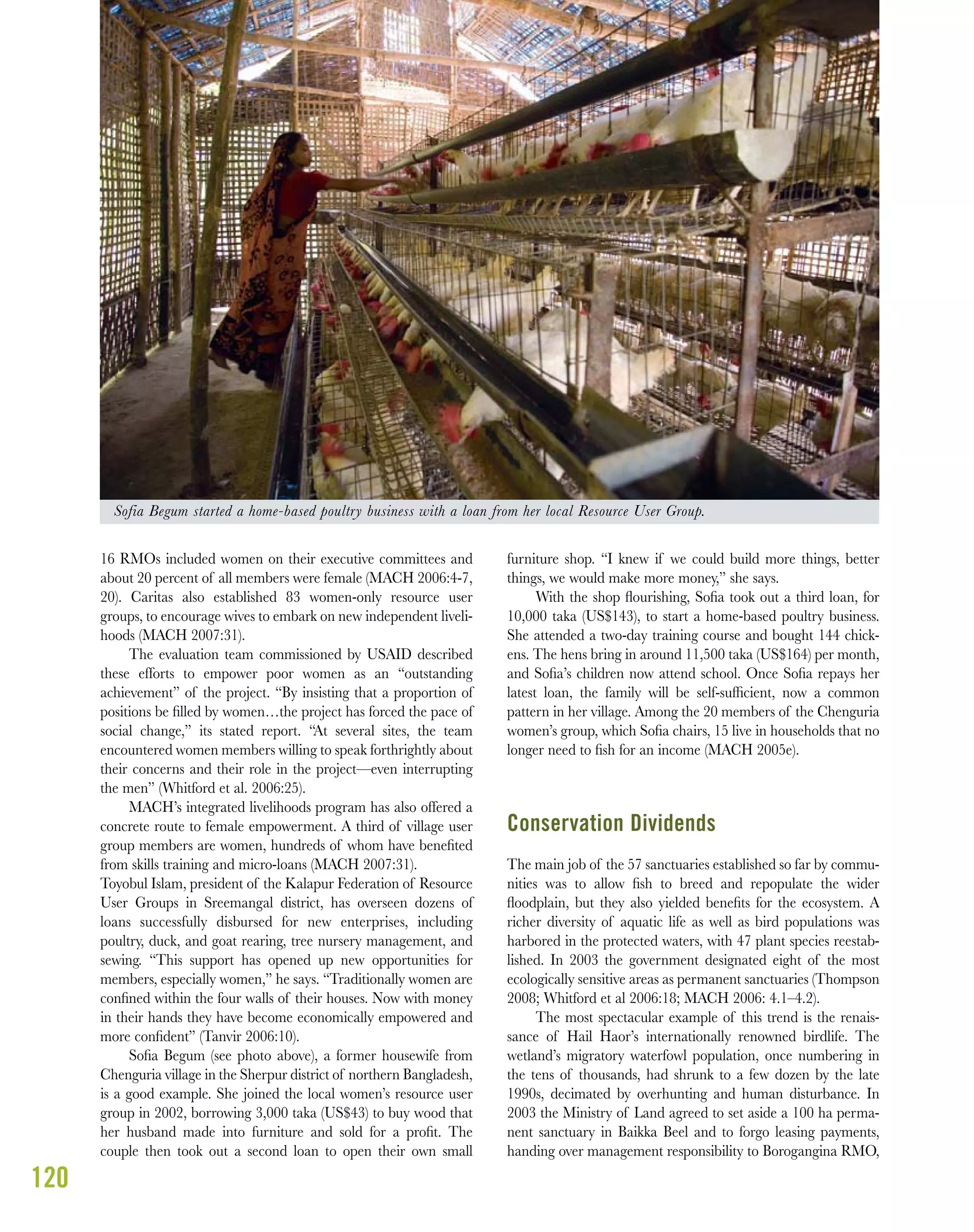
WRI assumes compound growth and uses the least-squares method to calculate
average annual percent growth of GDP in 2000 US dollars. The least squares
method works by fitting a trend line to the natural logarithm of annual GDP values.
The slope (m) of this trend line is used to calculate the annual growth rate (r) using
the equation r = em
– 1. The growth rate is an average rate that is representative
of the available observations over the entire period. It does not necessarily match
the actual growth rate between any two periods.
Distribution of GDP by Sector is the percent of total output of goods and services
that is a result of value added by a given sector. Value added is the net output of
a sector after adding up all outputs and subtracting intermediate inputs. The
industrial origin of value added is determined by the International Standard Indus-
trial Classification (ISIC), a classification system for economic activity developed
and maintained by the United Nations. Agriculture corresponds to ISIC divisions
1–5 and includes forestry and fishing. Industry corresponds to ISIC divisions
10–45 and includes manufacturing (ISIC divisions 15–37). It comprises value
added in mining, manufacturing, construction, electricity, water, and gas.
Services corresponds to ISIC divisions 50–99 and includes value added in whole-
sale and retail trade (including hotels and restaurants); transport; and
government, financial, professional, and personal services such as education,
health care, and real estate services. Since this value is calculated as total GDP
less the portion from agriculture and industry, any discrepancies that may occur in
the GDP distribution by sector calculation will appear here.
Adjusted Net Savings (previously “genuine savings”) is equal to a nation’s private
and public net savings (gross domestic product plus net income and transfers from
abroad minus consumption of fixed capital) plus education expenditure, minus
energy depletion, mineral depletion, net forest depletion, and carbon dioxide and
particulate emissions damage. Adjusted Net Savings is an indicator of sustainabil-
ity; persistently negative rates of savings must lead, eventually, to declining
well-being. It measures the true rate of savings in an economy after taking into
account investments in human capital, depletion of natural resources, and damage
caused by pollution. Data are shown as a percent of gross national income (GNI).
Exports of Goods and Services represents the value of all goods and other
market services provided to the rest of the world. Exports include the value of
merchandise, freight, insurance, transport, travel, royalties, license fees, and other
services, such as communication, construction, financial, information, business,
personal, and government services. They exclude labor and property income
(formerly called factor services) as well as transfer payments. Data are presented
in millions of current US dollars. WRI calculates Exports of Goods and Services
as a Percent of GDP by dividing total exports by GDP figures provided by the
World Bank.
Foreign Direct Investment (FDI) is private investment in a foreign economy to
obtain a lasting management interest (10 percent or more of voting stock) in an
enterprise. The IMF defines FDI in its manual Balance of Payments as the sum of
equity investment, reinvestment of earnings, and inter-company loans between
parent corporations and foreign affiliates. Data are in million current US dollars.
FDI became the dominant means for funds transfer from rich to poor countries after
the liberalization of global financial markets in the 1970s and accounts for more
than half of financial flows to developing countries. Data are based on balance of
payments information reported by the IMF, supplemented by data from the OECD
and official national sources. Negative numbers mean that outflows of investment
by foreign countries into a particular country (or reinvestment of profits outside the
country) exceed inflows.
Official Development Assistance (ODA) and Aid measures the amount of ODA
received by a country. It includes concessions by governments and international
institutions to developing countries to promote economic development and welfare.
The data shown here record the actual receipts of financial resources or of goods
or services valued at the cost to the donor, less any repayments of loan principal
during the same period. Values are reported in million current US dollars. Grants by
official agencies of the members of the Development Assistance Committee (DAC)
of the OECD are included, as are loans with a grant element of at least 25 percent
as well as technical cooperation and assistance. The data on development assis-
tance are compiled by DAC and published in its annual statistical report,
Geographical Distribution of Financial Flows to Aid Recipients, and in the DAC
annual Development Co-operation Report.
WRI calculates Workers’ Remittances as a Percent of GNI by dividing remit-
tances by gross national income. Both values are originally in current US dollars,
and the quotient is expressed as a percentage. Remittances measure the transfer
of earned wages by migrant workers to their home country. They include all trans-
fers by migrants who are employed or intend to remain employed for more than a
year in another economy in which they are considered residents. Transfers made by
self-employed workers are not considered remittances, as this indicator attempts
to describe money raised through labor rather than entrepreneurial activity. Since
1980, recorded remittance receipts to low- and middle-income countries have
increased sixfold. Data are collected from the IMF’s Balance of Payments Yearbook.
The IMF data are supplemented by World Bank staff estimates for missing data for
countries where workers’ remittances are important.
FREQUENCY OF UPDATE BY DATA PROVIDERS
The World Bank publishes World Development Indicators each year in April. Data for
this table were taken from the 2007 online edition, which typically includes values
through 2005.
216
3 Economics and Trade: Technical Notes
217
DATA RELIABILITY AND CAUTIONARY NOTES
Gross Domestic Product: The World Bank produces the most reliable global GDP
estimates available. However, informal economic activities sometimes pose a
measurement problem, especially in developing countries, where much economic
activity may go unrecorded. Obtaining a complete picture of the economy requires
estimating household outputs produced for local sale and home use, barter
exchanges, and illicit or deliberately unreported activity. Technical improvements
and growth in the services sector are both particularly difficult to measure. How
consistent and complete such estimates will be depends on the skill and methods
of the compiling statisticians and the resources available to them. Because values
are measured in US dollars, these data do not account for differences in purchas-
ing power among countries.
Adjusted Net Savings: The data that were used to calculate adjusted net savings
are mostly from official sources and are generally considered to be reliable. However,
due to methodological or data limitations, the calculation omits several important
resources including soils, fish, water resources, and water and air pollutants.
Foreign Direct Investment: Because of the multiplicity of sources, definitions,
and reporting methods, data may not be comparable across countries. (Data do not
include capital raised locally, which has become an important source of financing
in some developing countries.) In addition, data only capture cross-border invest-
ment flows when equity participation is involved and thus omit non-equity
cross-border transactions. For a more detailed discussion, please refer to the World
Bank’s World Debt Tables 1993–1994, volume 1, chapter 3.
Official Development Assistance: Data are not directly comparable, since the
ODA figures do not distinguish among different types of aid, which can affect
individual economies in different ways. Because data are based on donor-country
reports, they may not match aid receipts recorded in developing and transition
economies. According to the World Bank, “the nominal values used here may
overstate the real value of aid to the recipient.” The purchasing power of foreign
aid can decrease when price and exchange rates fluctuate, grants are tied to
specific policy restrictions, or technical assistance pays for the work of firms in
other countries.
Worker Remittances: Data on worker remittances are reported by the countries
receiving the transfers. Variations in reporting standards do exist, particularly in
determining the residency status of a worker. This may lead to some differences
across countries.
SOURCES
Development Data Group, World Bank. 2007. 2007 World Development Indicators.
Washington, DC: World Bank. Online at http://go.worldbank.org/B53SONGPA0.
218
4 Institutions and GovernanceSources: Freedom House, United Nations Human Settlements Programme, World Bank, Privacy International, International Telecommunications Union, Transparency International
World .... .... .... .... 55..99 44..77 22..55 .... .... .... ....
Asia (excl. Middle East) .... .... .... .... 44..33 .... 11..55 .... .... .... ....
Armenia 4 5 4 0.4 1.4 3.2 2.7 64 Law Enacted 30 2.9
Azerbaijan 5 6 61 0.2 0.9 2.5 2.1 73 Pending Effort 24 2.4
Bangladesh 4 4 425 10.3 0.9 2.5 1.1 68 Pending Effort 18 2.0
Bhutan 5 6 64 0 3.0 5.6 .. 65 .. 13 6.0
Cambodia 5 6 56 4.4 1.7 1.9 1.8 61 .. 17 2.1
China 6 7 29 3.6 1.8 .. 2.0 83 .. 43 3.3
Georgia 3 3 5 0.1 1.5 2.9 3.1 57 Law Enacted 37 2.8
India 3 2 62 7.7 0.9 3.7 2.9 37 Law Enacted 32 3.3
Indonesia 3 2 42 10.5 1.0 0.9 0.9 58 Pending Effort 34 2.4
Japan 2 1 14 5 6.3 3.7 1.0 20 Law Enacted 75 7.6
Kazakhstan 5 6 52 0.9 2.3 2.3 1.1 75 .. 41 2.6
Korea, Dem People's Rep 7 7 .. .. 3.0 .. .. 97 .. .. ..
Korea, Rep 2 1 11 6.3 2.9 4.6 2.6 30 Law Enacted 82 5.1
Kyrgyzstan 4 5 4 4.1 2.3 4.4 2.8 b 64 .. 32 2.2
Lao People's Dem Rep 6 7 135 4.2 0.8 2.3 .. 81 .. 15 2.6
Malaysia 4 4 144 2.4 2.2 8.0 1.9 65 .. 57 5.0
Mongolia 2 2 11 2.2 4.0 5.3 1.7 b 34 .. 35 2.8
Myanmar 7 7 .. .. 0.3 1.3 .. 96 .. 17 1.9
Nepal 4 5 5 6.4 1.5 3.4 2.0 77 Pending Effort 19 2.5
Pakistan 5 6 50 5.3 0.4 2.3 3.4 61 Law Enacted 24 2.2
Philippines 3 3 33 4.2 1.4 3.2 0.8 40 Pending Effort 43 2.5
Singapore 4 5 9 2.8 1.3 3.7 4.7 66 .. 75 9.4
Sri Lanka 4 4 83 5.1 2.0 .. 2.7 58 Pending Effort 38 3.1
Tajikistan 5 6 37 1.9 1.0 3.5 2.2 b 76 Law Enacted 21 2.2
Thailand 4 7 2 6.3 2.3 4.2 1.1 50 Law Enacted 48 3.6
Turkmenistan 7 7 .. .. 3.3 .. .. 96 .. 37 2.2
Uzbekistan 7 7 78 1.4 2.4 .. .. 90 Law Enacted 31 2.1
Viet Nam 5 7 67 1.2 1.5 .. .. 79 .. 31 2.6
Europe .... .... .... .... 77..00 55..33 11..99 .... .... .... ....
Albania 3 3 47 3.5 3.0 2.9 1.4 50 Law Enacted 39 2.6
Austria 1 1 32 4.5 7.8 5.5 0.7 21 Law Enacted 75 8.6
Belarus 6 7 231 0.1 4.6 6.0 1.2 88 .. 49 2.1
Belgium 1 1 132 12.7 6.9 6.2 1.2 11 Law Enacted 74 7.3
Bosnia and Herzegovina 3 3 331 5 4.1 .. 1.8 45 Law Enacted 46 2.9
Bulgaria 2 1 19 2.3 4.6 4.2 2.4 34 Law Enacted 53 4.0
Croatia 2 2 174 5 6.2 4.7 1.6 39 Law Enacted 59 3.4
Czech Rep 1 1 123 3 6.5 4.5 1.8 20 Law Enacted 66 4.8
Denmark 1 1 42 0.6 7.1 8.4 1.4 10 Law Enacted 83 9.5
Estonia 1 1 51 0.5 4.0 5.7 1.6 16 Law Enacted 67 6.7
Finland 1 1 14 4 5.7 6.5 1.2 9 Law Enacted 79 9.6
France 1 1 123 6.1 8.2 5.9 2.5 21 Law Enacted 72 7.4
Germany 1 1 40 5.2 8.2 4.7 1.4 16 Pending Effort 74 8.0
Greece 2 1 23 4 4.2 4.0 4.5 28 Law Enacted 66 4.4
Hungary 1 1 63 11 5.7 5.9 1.3 21 Law Enacted 63 5.2
Iceland 1 1 4 2.4 8.3 8.1 0.0 9 Law Enacted 82 9.6
Ireland 1 1 38 10.2 5.7 4.5 0.6 15 Law Enacted 69 7.4
Italy 1 1 27 0.6 6.5 4.9 1.8 35 Law Enacted 72 4.9
Latvia 1 1 54 2 4.0 5.3 1.7 19 Law Enacted 54 4.7
Lithuania 1 1 3 0.7 4.9 5.2 1.8 18 Law Enacted 56 4.8
Macedonia, FYR 3 3 98 3.5 5.7 3.4 2.2 49 Pending Effort 48 2.7
Moldova, Rep 4 3 48 0.9 4.2 4.3 0.3 65 Law Enacted 37 3.2
Netherlands 1 1 5 6.2 5.7 5.3 1.6 11 Law Enacted 79 8.7
Norway 1 1 3 2.5 8.1 7.7 1.6 10 Law Enacted 79 8.8
Poland 1 1 197 0.5 4.3 5.6 1.8 21 Law Enacted 59 3.7
Portugal 1 1 42 7.4 7.0 5.9 2.1 14 Law Enacted 65 6.6
Romania 2 2 150 2.8 3.4 3.6 2.1 44 Law Enacted 48 3.1
Russian Federation 5 6 52 0.3 3.7 3.7 3.7 72 Pending Effort 50 2.5
Serbia {c} 2 3 .. .. 7.3 3.3 2.7 40 Pending Effort 45 3.0
Slovakia 1 1 17 0.1 5.3 4.4 1.8 20 Law Enacted 59 4.7
Slovenia 1 1 391 2 6.6 6.0 1.7 20 Law Enacted 72 6.4
Spain 1 1 18 7.1 5.7 4.3 1.0 21 Law Enacted 67 6.8
Sweden 1 1 2 3 7.7 7.5 1.6 10 Law Enacted 85 9.2
Switzerland 1 1 16 0.4 6.7 6.1 1.0 11 Pending Effort 76 9.1
Ukraine 2 3 93 3.3 3.7 6.4 2.4 53 Law Enacted 43 2.8
United Kingdom 1 1 21 4.1 7.0 5.5 2.6 19 Law Enacted 77 8.6
Middle East & N. Africa .... .... .... .... 33..55 .... 44..88 .... .... .... ....
Afghanistan 5 5 250 7 0.7 .. .. 69 .. .. ..
Algeria 5 6 51 7.5 2.6 .. 2.8 61 .. 37 3.1
Egypt 5 6 193 1 2.2 .. 2.8 61 .. 40 3.3
Iran, Islamic Rep 6 6 36 10.6 3.2 4.7 4.5 84 .. 43 2.7
Iraq 6 6 8 6.3 4.2 .. .. 71 .. .. 1.9
Israel 2 1 144 7.5 6.1 7.3 7.9 28 Law Enacted 70 5.9
Jordan 4 5 22 10 4.7 .. 7.7 61 .. 45 5.3
Kuwait 4 4 55 0.5 2.2 5.1 5.7 56 .. 51 4.8
Lebanon 4 5 25 5.9 3.2 2.6 3.8 b 60 .. 48 3.6
Libyan Arab Jamahiriya 7 7 .. .. 2.8 .. 1.9 b 96 .. 42 2.7
Morocco 4 5 47 4.9 1.7 6.7 4.3 61 .. 33 3.2
Oman 5 6 16 3 2.4 3.6 12.2 b 70 .. 43 5.4
Saudi Arabia 6 7 4 0 2.5 6.8 8.2 79 .. 44 3.3
Syrian Arab Rep 6 7 34 28.1 2.2 .. 6.2 b 84 .. 28 2.9
Tunisia 5 6 49 6.1 .. 8.1 1.5 83 .. 41 4.6
Turkey 3 3 6 3.1 5.6 4.0 3.2 48 Law Enacted 48 3.8
United Arab Emirates 5 6 6 2 2.0 1.3 1.9 65 .. 64 6.2
Yemen 5 5 21 3.9 1.9 9.6 5.6 81 .. 18 2.6
CorruptionFreedom Indices
Access to Information
Regulatory Barriers to DigitalGovernment Expenditures
2006 2006 Register
(as a percent of
Public
(1–7, 1=most free)
Average
Number of
Days toIndex
RightsLiberties
Index
Registering Property, 2007
Public
Civil Political
to Register
Average Cost gross domestic product) Index
Information
Freedom
Press
Freedom of
(0–100, 0=
Status of
(0–10, 10=
Index
Perceptions
most access)
(1–100, 100=
Index
Access
least corrupt)
2006
most free)
200620022004
LegislationMilitary
20052004 2000-2005
(percent of
property value)
Education {a}Health
219
DATATABLE4:INSTITUTIONSANDGOVERNANCE
W O R L D R E S O U R C E S 2 0 0 8
Sub-Saharan Africa .... .... .... .... 22..66 .... 11..66 bb .... .... .... ....
Angola 5 6 334 11.1 1.5 2.6 5.0 65 Pending Effort 11 2.2
Benin 2 2 118 11.4 2.5 3.5 .. 30 .. 12 2.5
Botswana 2 2 30 5 4.0 10.7 2.5 35 Pending Effort 43 5.6
Burkina Faso 3 5 182 12.2 3.3 4.7 1.5 38 .. 8 3.2
Burundi 5 4 94 11.5 0.8 5.1 6.5 b 74 .. 10 2.4
Cameroon 6 6 93 17.8 1.5 1.8 1.3 65 .. 16 2.3
Central African Rep 4 5 69 11.7 1.5 .. 1.1 61 .. 10 2.4
Chad 6 6 44 21.2 1.5 2.1 0.9 73 .. 10 2.0
Congo 5 6 137 27.3 1.2 2.2 .. 51 .. 17 2.2
Congo, Dem Rep 6 5 57 9.4 1.1 .. 2.1 81 .. 12 2.0
Côte d'Ivoire 6 7 62 16.9 0.9 4.6 .. 65 .. 13 2.1
Equatorial Guinea 6 7 23 6.3 1.2 0.6 .. 88 .. 20 2.1
Eritrea 6 7 101 5.3 1.8 5.4 .. 91 .. 13 2.9
Ethiopia 5 5 43 7.5 2.7 5.0 3.1 75 Pending Effort 10 2.4
Gabon 4 6 60 10.5 3.1 3.9 1.4 67 .. 34 3.0
Gambia 4 5 371 7.6 1.8 2.0 0.3 73 .. 13 2.5
Ghana 2 1 34 1.3 2.8 5.4 0.7 28 Pending Effort 16 3.3
Guinea 5 6 104 15.3 0.7 2.0 .. 67 .. 10 1.9
Guinea-Bissau 4 4 211 5.4 1.3 .. .. 47 .. 10 ..
Kenya 3 3 64 4.2 1.8 6.7 1.5 58 Pending Effort 19 2.2
Lesotho 3 2 101 8.2 5.5 13.4 2.4 42 Pending Effort 19 3.2
Liberia 4 3 50 14.9 3.6 .. .. 64 .. .. ..
Madagascar 3 4 134 11.6 1.8 3.2 .. 49 .. 15 3.1
Malawi 3 4 88 3.3 9.6 5.8 .. 55 Pending Effort 15 2.7
Mali 2 2 29 21.2 3.2 4.3 1.9 24 .. 9 2.8
Mauritania 4 5 49 5.2 2.0 2.3 1.0 57 .. 14 3.1
Mozambique 4 3 42 8.1 2.7 3.7 1.4 43 Pending Effort 12 2.8
Namibia 2 2 23 9.9 4.7 6.9 3.0 30 Pending Effort 39 4.1
Niger 3 3 32 9 2.2 2.3 1.1 b 56 .. 4 2.3
Nigeria 4 4 82 22.2 1.4 .. 0.9 54 Pending Effort 15 2.2
Rwanda 5 6 371 9.4 4.3 3.8 2.2 85 .. 15 2.5
Senegal 3 2 114 19.5 2.4 5.4 1.5 44 .. 14 3.3
Sierra Leone 3 4 235 14.9 1.9 3.8 1.1 59 .. 10 2.2
Somalia 7 7 .. .. .. .. .. 83 .. .. ..
South Africa 2 2 24 8.8 3.5 5.4 1.4 27 Law Enacted 45 4.6
Sudan 7 7 9 3.2 1.5 .. .. 85 .. 13 2.0
Tanzania, United Rep 3 4 119 5.3 1.7 .. 1.1 50 Pending Effort 15 2.9
Togo 5 6 295 13.9 1.1 2.6 1.5 78 .. 18 2.4
Uganda 4 5 227 4.6 2.5 5.2 2.5 b 52 Pending Effort 17 2.7
Zambia 4 3 70 9.6 3.4 2.0 .. 64 Pending Effort 17 2.6
Zimbabwe 6 7 30 25 3.5 4.6 3.4 b 90 Law Enacted 29 2.4
North America .... .... .... .... 66..99 55..99 33..99 .... .... .... ....
Canada 1 1 17 1.8 6.8 5.2 1.1 18 Law Enacted 78 8.5
United States 1 1 12 0.5 6.9 5.9 4.1 16 Law Enacted 78 7.3
C. America & Caribbean .... .... .... .... 33..11 55..55 00..44 .... .... .... ....
Belize 2 1 60 4.7 2.7 5.4 .. 21 Law Enacted 47 3.5
Costa Rica 1 1 21 3.3 5.1 4.9 .. 18 .. 52 4.1
Cuba 7 7 .. .. 5.5 9.8 .. 96 .. 38 3.5
Dominican Rep 2 2 60 5.1 1.9 1.8 0.6 37 Pending Effort 42 2.8
El Salvador 3 2 31 3.6 3.5 2.8 0.6 43 Pending Effort 38 4.0
Guatemala 4 3 30 1 2.3 .. 0.4 58 Pending Effort 38 2.6
Haiti 5 4 405 6.5 2.9 .. .. 68 .. 15 1.8
Honduras 3 3 24 5.8 4.0 .. 0.6 52 Pending Effort 29 2.5
Jamaica 3 2 54 13.5 2.8 4.5 0.7 17 Law Enacted 53 3.7
Mexico 3 2 74 4.7 3.0 5.8 0.4 48 Law Enacted 50 3.3
Nicaragua 3 3 124 3.5 3.9 3.1 0.7 44 Pending Effort 19 2.6
Panama 2 1 44 2.4 5.2 3.8 .. 43 Law Enacted 47 3.1
Trinidad and Tobago 2 2 162 7 1.4 4.2 .. 26 Law Enacted 53 3.2
South America .... .... .... .... 44..22 44..11 11..77 .... .... .... ....
Argentina 2 2 65 7.6 4.3 3.5 1.0 45 Pending Effort 53 2.9
Bolivia 3 3 92 4.9 4.1 6.4 1.9 33 Pending Effort 38 2.7
Brazil 2 2 45 2.8 4.8 4.1 1.6 39 Pending Effort 50 3.3
Chile 1 1 31 1.3 2.9 3.7 3.8 26 Pending Effort 58 7.3
Colombia 3 3 23 2.5 6.7 4.8 3.7 61 Law Enacted 45 3.9
Ecuador 3 3 17 3 2.2 .. 2.4 41 Law Enacted 41 2.3
Guyana 3 2 34 4.5 4.4 8.5 .. 27 .. 43 2.5
Paraguay 3 3 46 3.5 2.6 4.3 0.8 57 Pending Effort 39 2.6
Peru 3 2 33 3.3 1.9 2.4 1.2 39 Law Enacted 44 3.3
Suriname 2 2 193 13.7 3.6 .. .. 23 .. 46 3.0
Uruguay 1 1 66 7.1 3.6 2.2 1.4 28 Pending Effort 54 6.4
Venezuela 4 4 47 2.2 2.0 .. 1.1 72 .. 47 2.3
Oceania .... .... .... .... 66..44 55..00 11..77 .... .... .... ....
Australia 1 1 5 4.9 6.5 4.8 1.8 19 Law Enacted 74 8.7
Fiji 4 6 48 12 2.9 6.4 1.2 b 28 Pending Effort 43 ..
New Zealand 1 1 2 0.1 6.5 6.8 1.0 13 Law Enacted 72 9.6
Papua New Guinea 3 3 72 5.1 3.0 .. 0.5 29 Pending Effort 26 2.4
Solomon Islands 3 4 297 4.9 5.6 .. .. 30 .. 17 ..
a. May include subsidies for private or religious schools. Data are for the most recent year available between 2000 and 2005. b. 2004 value. c. Data for Serbia include the country of Montenegro.
Key to Indices: Freedom Indices (Freedom House): Scaled from1 to 7, 1 represents a completely free nation, 7 represents a nation with virtually no freedom.
Press Freedom Index (Freedom House): Scaled from 1 to 100. 1–30 = Free, 31–60 = Partly Free, 61–100 = Not Free.
Status of Freedom of Information Legislation (Privacy International): Legislation is classified as either enacted or pending.
".." indicates that either no data are available for this country, or, more likely, that FOI legislation does not exist.
Digital Access Index (International Telecommunications Union): Scaled from 0 to 100, 100 represents highest access.
Corruption Perceptions Index (Transparency International): Scaled from 0 (most corrupt) to 10 (least corrupt).
Liberties Rights
Average Cost
most access)
2002 2006
least corrupt)
Index Freedom of Index Index
Press Digital Corruption
Access to Information
Freedom Status of Access Perceptions
Number of
(1–7, 1=most free) Registering Property, 2007
Freedom Indices Regulatory Barriers to
to Register
Civil Political Average
(0–100, 0= Information
Education {a} Military
2004
(1–100, 100= (0–10, 10=
Index Index Days to (percent of most free)Health Legislation
2006 2006 Register
Government Expenditures
(as a percent of
gross domestic product)
Public Public
property value) 2004 2000-2005 20062005
DEFINITIONS AND METHODOLOGY
Freedom Indices, compiled by the nonprofit organization Freedom House, range
from 1 to 7, with 1 representing the most free and 7 representing the least free. To
determine each rating, researchers answer a series of survey questions, making
small adjustments for factors such as extreme violence. Freedom House notes that
a poor rating for a country “is not necessarily a comment on the intentions of the
government, but may indicate real restrictions on liberty caused by non-govern-
mental terror.”
The Civil Liberties Index measures freedom of expression, assembly, association,
and religion. Countries with a rating of 1 generally have an established and
equitable rule of law with free economic activity. A rating of 2 indicates some
deficiencies, while a rating of 3, 4, or 5 indicates varying degrees of censorship,
political terror, and prevention of free association. Countries with a rating of
6 experience severely restricted freedom of expression and association coupled
with political terror (for example, political prisoners). A rating of 7 indicates virtu-
ally no freedom.
The Political Rights Index measures the degree of freedom in the electoral
process, political pluralism and participation, and functioning of government. A
rating of 1 indicates free and fair elections, political competition, and autonomy for
all citizens, including minority groups. A rating of 2 indicates some corruption,
violence, political discrimination, and military influence. These same factors play a
progressively larger role in countries with a ranking of 3, 4, or 5. Countries and
territories with political rights rated 6 are ruled by military juntas, one-party dicta-
torships, religious hierarchies, or autocrats. A rating of 7 indicates nonexistent
political rights due to extremely oppressive regimes, civil war, extreme violence, or
warlord rule.
Regulatory Barriers to Registering Property, published by the World Bank’s
Doing Business database, are compiled via survey in conjunction with academic
advisers, using a simple business case to ensure comparability across countries
and over time. Surveys are administered through more than 5,000 local experts,
including lawyers, business consultants, accountants, government officials, and
other professionals routinely administering or advising on legal and regulatory
requirements. Broadly speaking, higher values here represent regulatory environ-
ments that stifle the formalization of property rights.
Average Number of Days to Register measures the time, in calendar days,
necessary for a business to complete the legal and bureaucratic procedures
required for registering property. Governments differ significantly in the require-
ments for this process. Data for registering property are produced assuming a
standardized case of an entrepreneur who wants to purchase land and a building
in the country’s largest business city.
Average Cost to Register measures the cost to a business, expressed as a
percent of the property value, needed to complete the legal and bureaucratic proce-
dures required for registering property. Cost includes fees, transfer taxes, stamp
duties, and any other payment to the property registry, notaries, public agencies, or
lawyers. Other taxes, such as capital gains tax or value added tax, are excluded
from the cost measure. Data are produced assuming a standardized case of an
entrepreneur who wants to purchase land and a building in the country’s largest
business city.
Government Expenditures as a percent of gross domestic product roughly
indicate the economic importance of public health, public education, and military
activities in national economies.
Public Health Expenditure consists of recurrent and capital spending from
government (both central and local) budgets, external borrowings and grants
(including donations from international agencies and NGOs), and social (or
compulsory) health insurance funds. The estimates of health expenditure come
mostly from the World Health Organization’s (WHO) World Health Report 2003 and
its subsequent updates, and from the Organisation for Economic Co-operation and
Development (OECD) for its member countries, supplemented by World Bank
poverty assessments and country-sector studies. Data are also drawn from the
International Monetary Fund.
Public Education Expenditure consists of public spending on public education
plus subsidies to private education at the primary, secondary, and post-secondary
levels. Foreign aid for education is excluded. Education expenditure estimates are
provided to the World Bank by the Institute for Statistics of the United Nations
Educational, Scientific, and Cultural Organization (UNESCO). UNESCO compiles its
data from annual financial reports of central or federal governments and state or
regional administrations.
Military Expenditure is defined by the Stockholm International Peace Research
Institute (SIPRI) as “all current and capital expenditure on: (a) the armed forces,
including peacekeeping forces; (b) defense ministries and other government
agencies engaged in defense projects; (c) paramilitary forces, when judged to be
trained an equipped for military operations; and (d) military space activities.”
Expenditures include the cost of procurements, personnel, research and develop-
ment, construction, operations, maintenance, and military aid to other countries.
Civil defense, veterans’ benefits, demobilization, and destruction of weapons are
not included as military expenditures. The World Bank uses data collected by SIPRI
for its annual World Development Indicators military expenditure dataset.
Press Freedom is “the degree to which each country permits the free flow of infor-
mation,” according to Freedom House, ranked on a scale of 1 to 100. Countries with
a score between 1 and 30 are considered to have a “Free” media; 31 to 60, “Partly
Free”; and 61 to 100, “Not Free.” This survey does not measure press responsibil-
ity; rather, it measures the degree of freedom in the flow of information. Press
freedom data are collected from overseas correspondents, staff travel, interna-
tional visitors, the findings of human rights organizations, specialists in
geographic and geopolitical areas, the reports of governments, and a variety of
domestic and international news media. The final index is a sum of three separate
components that reflect the legal, political, and economic environments that press
in each country operate within.
Status of Freedom of Information (FOI) Legislation measures a government’s
guarantee of public access to information by placing each country in one of three
categories: In Effect: 57 countries legally guarantee public access to government
records through comprehensive FOI laws; Pending: 39 additional countries are
considering adopting freedom of information acts; None: countries not listed have
no pending FOI legislation (represented by “..” in the data table, which could
indicate that no data are available for this country). Access to information about
government activities increases transparency and allows citizens to more effec-
tively combat corruption. Data are compiled by Privacy International by author
David Banisar on a country-by-country basis. The specifics of each country’s legis-
lation and constitutional guarantees are explained in detail in the source
publications.
The Digital Access Index is a composite score, developed by the International
Telecommunications Union (ITU), which reflects the ability of each country’s
population to take advantage of internet communication technologies. It ranges
from 1 to 100, where 100 equals the most access. The Index is calculated as a
weighted average of eight variables describing infrastructure, affordability, educa-
tional level of the population, quality of information and communication technology
services, and Internet usage.
220
4 Institutions and Governance: Technical Notes
221
The Corruption Perceptions Index (CPI) measures the degree to which corrup-
tion is perceived to exist among public officials and politicians. Ratings range in
value from 10 (least corrupt) to 0 (most corrupt). The survey measures public sector
corruption or the abuse of public office for private gain. It measures local and
national governments, not domestic and foreign corporations doing business in
these countries. The CPI is compiled from 12 surveys originating from nine differ-
ent independent institutions. A country is included in the CPI only if there are data
available from 3 or more surveys. The surveys measure the perceptions of local
residents, expatriates, business people, academics, and risk analysts. Survey
results are combined in three-year periods to reduce abrupt variations that could
potentially be caused by errors. Thus, figures for 2006 are based on surveys taken
not only in 2006, but in 2004 and 2005 as well.
FREQUENCY OF UPDATE BY DATA PROVIDERS
All of the data sets in this table are updated annually by the original providers, with
the exception of the Digital Access Index, Public Education Expenditures, and the
Status of FOI Legislation, which are updated intermittently.
DATA RELIABILITY AND CAUTIONARY NOTES
Freedom Indices: Data and methodologies are subject to rigorous internal and
external reviews, the data are reproducible, the index components are clear, and
ratings are assigned by a centralized team of researchers. Thus, the data are
considered to be reliable. Nonetheless, this index is measuring ideas and behaviors
and not a discrete physical quantity, and, as such, rigid score comparisons and
rankings are discouraged. To ensure comparability of the ratings from year to year,
any changes to the methodology are introduced incrementally.
Regulatory Barriers to Registering Property: Data are very reliable, but the
limited definition of this indicator may restrict its applicability. For example,
collected data refer to only businesses in the country’s most populous city. In
addition, data often focus on a specific business form—a limited liability company
of a specified size—and may not be representative of the regulation on other
businesses. The methodology also assumes that a business has full information on
what is required and does not waste time when completing procedures. In practice,
completing a procedure may take longer if the business lacks information or is
unable to follow up promptly.
Public Health Expenditure: The values reported here represent the product of an
extensive effort by WHO, OECD, and the World Bank to produce a comprehensive
data set on national health accounts. Nonetheless, few developing countries have
health accounts that are methodologically consistent with national accounting
procedures. Data on public spending at the sub-national level are not aggregated
in all countries, making total public expenditure on health care difficult to measure.
WHO cautions that these data should only be used for an “order of magnitude”
estimate and that specific cross-country comparisons should be avoided.
Public Education Expenditure: In some cases data refer only to a ministry of
education’s expenditures, excluding other ministries and local authorities that spend
a part of their budget on educational activities. Spending on religious schools, which
constitutes a large portion of educational spending in some developing countries,
may be included. The World Bank cautions that these data do not measure the effec-
tiveness or levels of attainment in a particular educational system.
Military Expenditure: The entire data set has been carefully compiled with exten-
sive analysis by a single provider, SIPRI, which makes these data fairly reliable.
When a time series is not available or a country’s definition of military expenditure
differs from SIPRI’s, estimates are made based on analysis of official government
budget statistics. Estimates are always based on empirical evidence, not assump-
tions or extrapolations. SIPRI cautions that military expenditure does not relate
directly to military capability or security.
Status of FOI Legislation: While the FOI data have been thoroughly researched,
there are unavoidable difficulties in assigning each country to one of three
categories. Some countries have laws guaranteeing access, but the laws are not
enforced. Still others guarantee access to government documents in specific
categories, excluding access in other categories.
Digital Access Index: The variables selected to build this indicator are from a
number of reputable sources including ITU’s quarterly survey of information and
communication technologies around the world. However, as with any complex global
dataset, complete accuracy is difficult to ensure.
Corruption Perceptions Index: Overall, the data are considered to be reliable.
Survey responses from residents in each country correlate well with responses from
experts abroad. The data are reproducible and the index components are clear.
Nonetheless, while the CPI can illustrate rough comparisons, rigid international
score comparisons are discouraged. While year-to-year variation in scores is
affected by changes in survey samples and methodology, findings indicate that in
general, trends in the data over time are reasonably accurate. Confidence intervals
are published in tabular format by Transparency International.
SOURCES
Freedom Indices: Freedom House. 2007. Freedom in the World 2007: The Annual
Survey of Political Rights and Civil Liberties. New York: Freedom House. Online at
http://www.freedomhouse.org/uploads/press_release/fiw07_charts.pdf.
Urban Population Living in Slums: United Nations Human Settlements
Programme (UN-HABITAT). 2003. Slums of the World: The Face of Urban Poverty in
the New Millennium? Nairobi: UN-HABITAT. Online at http://www.unhabitat.org/
publication/slumreport.pdf.
Regulatory Barriers to Registering Property: World Bank Group. 2007.
Doing Business Custom Datasets. Washington, DC: World Bank. Online at
http://www.doingbusiness.org/CustomQuery.
Government Expenditures: Development Data Group, World Bank. 2007. 2007
World Development Indicators. Washington, DC: World Bank. Online at
http://go.worldbank.org/B53SONGPA0.
Status of FOI Legislation: Banisar, D. 2004. Freedom of Information and Access
to Government Records Around the World. Washington, DC: Privacy International.
Online at http://www.privacyinternational.org/issues/foia/foia-survey.html.
Digital Access Index: International Telecommunications Union (ITU), 2003. World
Telecommunication Development Report. Geneva: ITU. Online at http://www.itu.int/
newsarchive/press_releases/2003/30.html.
Corruption Perceptions Index: Transparency International. 2006. 2006 Corruption
Perceptions Index. Berlin: Transparency International. Online at http://www.transparency.org/
policy_and_research/surveys_indices/cpi.
TECHNICALNOTES:INSTITUTIONSANDGOVERNANCE
World Resources 2008 is the 12th volume in a series that dates
from 1986. It has evolved from its initial objective as the compre-
hensive assessment of environment and development trends to a
book that provides serious policy analysis of the critical issues
arising from human dependence and impact on the environment.
The World Resources Report is the work of a unique and continuing
partnership between the United Nations Development Programme
(UNDP), the United Nations Environment Programme (UNEP),
The World Bank, and the World Resources Institute.
For this 12th edition in the World Resources series, we would like
to express our gratitude to the Netherlands Ministry of Foreign
Affairs, the Swedish International Development Cooperation
Agency (SIDA), the Office of International Development Assis-
tance of the Ministry of Foreign Affairs of Denmark (Danida),
and the United States Agency for International Development
(USAID). They have been constant, concerned and engaged
supporters of the World Resources Report and of efforts to meet
the challenges of profound poverty.
We continue to be thankful for our colleagues in Norway at
UNEP/GRID-Arendal for their ongoing involvement in this
work, both through their direct contributions of materials, and for
their support of outreach efforts to ensure that the findings of the
report reach broad and appropriate audiences.
Though we expressed our gratitude in the previous edition of
World Resources, we wish to acknowledge again the intellectual
contribution of Jon Anderson, formerly at USAID, and his
colleagues and their publication Nature, Wealth and Power,
and the members of the Poverty Environment Partnership and
their publication Linking Poverty Reduction and Environmental
Management. Their thinking about poverty remains relevant
and important.
In particular, we want to acknowledge the contribution of
Crispino Lobo, Executive Director of the Watershed Organisation
Trust of India, to our work. His wisdom, practical experience, and
documented successes in community-led watershed regeneration
have inspired us and informed our theory and writing.
Individual Contributions
The development of World Resources 2008 had more fits and
starts than normal. The patience, goodwill, and understanding of
our partners is appreciated well beyond what mere thanks can
convey. Peter Gilruth of UNEP, Kirk Hamilton of the World
Bank, Charles McNeill of UNDP and Marianne Fernagut of
GRID-Arendal have all brought a new dimension to the word
partnership, and we do thank them.
We have been equally fortunate with reviewers and advisors who
have fielded innumerable requests coupled with demanding
schedules without complaint. In particular, we would like to
thank Bill Aalbersberg, José Roman Carerra, Darrell Deppert,
Elspeth Halverson, David Hughell, Erin Hughes, Brian Jones,
Azharul Mazumder, Steve McCarthy, Greg Minnick, Chris Reij,
Tony Rinaudo, Rony Rozario, Gretchen Ruethling, Claudio
Saito, Sean Southey, Paul Steele, Bhishma Subedi, Alifereti
Tawake, Paul Thompson, Gaby Tobler, Henry Tschinkel, Mark
Wentling, and Bob Winterbottom.
The staff at World Resources Institute has been equally gener-
ous of their time and expertise in helping bring this report to
conclusion, under somewhat difficult circumstances. To them we
are so grateful: Steve Barker, Hyacinth Billings, Amy Cassara,
Emily Cooper, Crystal Davis, Norbert Henninger, Georgia
Moyka, Robin Murphy, Jesse Ribot, Jon Talbot, Dan Tunstall,
Peter Veit, and Elsie Vélez-Whited. Lauren Withey has worn
more than one hat on our staff and Stephanie Hanson, likewise,
has taken on a number of duties.
We would be remiss if we did not acknowledge those who started
with this volume but had to move on: Alex Acs and Ethan Arpi
did early research and writing and Jen Lesar gave us organiza-
tion and discipline. Dena Leibman laid the early groundwork for
this report.
In addition to Greg Mock, our principal writer, we have been
fortunate to be able to draw on a small team committed to the
project, adaptable to the unpredictability of our schedule, and
possessed of good editorial judgment: we owe much to Polly
Ghazi and Karen Holmes.
This report began with modest goals and anticipated a length
shorter than previous volumes. Thanks to the informed and
unstinting engagement of Manish Bapna, with the dedication of
Dan Tunstall, Emily Cooper, and Greg Mock, we have produced
a much expanded report whose length, we hope, is justified by
its value.
That has made the task of our reviewers that much more
demanding—more to read under an unconscionably tight time-
frame. Their generosity of time and their detailed and thoughtful
comments and advice have greatly improved this work. We
acknowledge their valuable contributions in the following section,
listing each of them by chapter.
Despite all the good advice, careful reviews, and valuable contri-
butions of others, at the end, the WRR staff has to accept final
responsibility for the content of this report…and we do.
222
Acknowledgments
223
World Resources 2008 Reviewers
WRI gratefully acknowledges the following individuals for their
thoughtful reviews of World Resources 2008.
Chapter 1
Bill Aalbersberg, University of the South Pacific
Arun Agarwal, University of Michigan
Jon Anderson, Millennium Challenge Corporation
Anna Balance, DFID
Robert Chase, World Bank
Munyaradzi Chenji, UNEP
Michael Colby, USAID
Emily Cooper, WRI
Marianne Fernagut, UNEP/GRID-Arendal
Norbert Henninger, WRI
Fran Irwin, Independent Consultant
Brian Jones, Independent Consultant
Crispino Lobo, Watershed Organisation Trust
Robin Mearns, World Bank
Ruth Meinzen-Dick, IFPRI
Heather McGray, WRI
Marcos Neto, CARE
Jesse Ribot, WRI
Sara Scherr, Ecoagriculture Partners
Virginia Seitz, Millennium Challenge Corporation
Sean Southey, RARE Conservation
Paul Steele, UNDP
Alifereti Tawake, University of the South Pacific
Frank Turyatunga, UNEP/GRID-Arendal
Chris Weaver, WWF
Robert Winterbottom, International Resources Group
Chapter 2
Arun Agarwal, University of Michigan
Jon Anderson, Millenium Challenge Corporation
Anna Balance, DFID
Ruth Campbell, ACDI/VOCA
Robert Chase, World Bank
Munyaradzi Chenji, UNEP
Michael Colby, USAID
Emily Cooper, WRI
Elisabeth Farmer, ACDI/VOCA-Ethiopia
Marianne Fernagut, UNEP/GRID-Arendal
Norbert Henninger, WRI
Fran Irwin, Independent Consultant
Crispino Lobo, Watershed Organisation Trust
Robin Mearns, World Bank
Ruth Meinzen-Dick, IFPRI
Steve McCarthy, ACDI/VOCA
Heather McGray, WRI
Marcos Neto, CARE
Jesse Ribot, WRI
Sara Scherr, Ecoagriculture Partners
Virginia Seitz, Millennium Challenge Corporation
Sean Southey, RARE Conservation
Paul Steele, UNDP
Frank Turyatunga, UNEP/GRID-Arendal
Chapter 3
Fisheries for the Future
Azhural Mazumder, USAID
Paul Thompson, Winrock International
Green Livelihoods
José Roman Carrera, Rainforest Alliance
David Hughell, Rainforest Alliance
Gregory Minnick, Rainforest Alliance
John Nittler, Chemonics International
Claudio Saito, Chemonics International
Henry Tschinkel, consultant
Turning Back the Desert
Christopher Burns, Peace Corps
Chris Reij, Centre for International Cooperation, Vrije Universiteit
Tony Rinaudo, WorldVision international
Mark Wentling, USAID
Mike McGahuey, USAID
Robert Winterbottom, International Resources Group
Chapter 4
Arun Agarwal, University of Michigan
Virginia Barriero, WRI
Robert Chase, World Bank
Munyaradzi Chenji, UNEP
Florence Daviet, WRI
Christina Deconcini, WRI
Marianne Fernagut, UNEP/GRID-Arendal
Heather McGray, WRI
Bruce McKenney, TNC
Jonathan Pershing, WRI
Jesse Ribot, WRI
Sara Scherr, Ecoagriculture Partners
Paul Steele, UNDP
Fred Stolle, WRI
Peter Veit, WRI
Data Tables
Alan Brewster, Yale University
Norbert Henninger, WRI
Christian Layke, WRI
Daniel Tunstall, WRI
Jaap van Woerden, UNEP/GRID-Geneva
A C K N O W L E D G E M E N T S
Chapter 1
Main Text
I Adger, W.N. 2000. “Social and Ecological Resilience: Are They Related?”
Progress in Human Geography 24(3):347–364. Online at http://www.uea.ac.uk/
env/people/adgerwn/prghumangeog2000.pdf.
I Arcand, J., and L. Bassole. 2007. Does Community Driven Development
Work? Evidence From Senegal. Paper presented at African Economic Confer-
ence 2007, Addis Ababa, United Nations Economic Commission for Africa,
Nov. 16. Online at www.uneca.org/aec/documents/Jean-Louis%20Arcand_
Leandre%20Bassole.pdf.
I Azim, M.E., M.A. Wahab, and M.C.J. Verdegem. 2002. “Status of Aquaculture
and Fisheries in Bangladesh.” World Aquaculture 34(4):37–40, 67.
I Bebbington, A., and T. Carroll. 2000. “Induced Social Capital and Federa-
tions of the Rural Poor.” Social Capital Initiative Working Paper No. 19.
Washington, DC: World Bank. Online at http://siteresources.worldbank.org/
INTSOCIALCAPITAL/Resources/Social-Capital-Initiative-Working-Paper-
Series/SCI-WPS-19.pdf.
I Binswanger, H., and T. Nguyen. 2004. Scaling Up Community-Driven
Development for Dummies. Washington, DC: World Bank. Online at http://
info.worldbank.org/etools/library/view_p.asp?lprogram=1&objectid=81570
I Blue Ventures Madagascar. 2008. Expeditions: Andavadoaka. London: Blue
Ventures. Online at http://www.blueventures.org/expeditions_andavadoaka.htm.
I Boudreaux, K. 2007. “State Power, Entrepreneurship, and Coffee: The
Rwandan Experience.” Policy Comment No. 15, Mercatus Policy Series.
Arlington, VA, USA: George Mason University. Online at http://ssrn.com/
abstrats=1026935.
I Brenson-Lazan, G. 2003. Groups and Social Resilience Building. West Hartford,
CT, USA: Amauta International, LLC. Online at http://www.communityatwork.com/
resilience/RESILIENCIAENG.pdf.
I Briguglio, L., G. Cordina, S. Bugeja, and N. Ferrugia. 2005. Conceptualiz-
ing and Measuring Economic Resilience. Malta: Islands and Small States
Institute, University of Malta. Online at http://home.um.edu.mt/islands/
resilience_index.pdf.
I FAO (Food and Agriculture Organization of the United Nations). 2005a.
Global Forest Resources Assessment 2005. Rome: FAO. Online at
http://www.fao.org/DOCREP/008/a0400e/a0400e00.htm.
I FAO (Food and Agriculture Organization of the United Nations). 2005b.
National Aquaculture Sector Overview: Bangladesh. Rome: FAO. Online at
http://www.fao.org/fishery/countrysector/naso_bangladesh#tcN110052.
I FAO (Food and Agriculture Organization of the United Nations). 2007a. State
of the World’s Fisheries and Aquaculture 2006. Rome: FAO. Online at
ftp://ftp.fao.org/docrep/fao/009/a0699e/a0699e.pdf.
I FAO (Food and Agriculture Organization of the United Nations). 2007b.
Adaptation to Climate Change in Agriculture, Forestry, and Fisheries:
Perspective, Framework, and Priorities. Rome: FAO. Online at
ftp://ftp.fao.org/docrep/fao/009/j9271e/j9271e.pdf.
I Farrington, J., and C. Boyd. 1997. “Scaling Up the Participatory Management
of Common Pool Resources.” Development Policy Review 15:371–391.
I FEV (Finca Esperanza Verde). 2008. About Us. San Ramón, Nicaragua: FEV.
Online at http://www.fincaesperanzaverde.org.
I Folke, C., S. Carpenter, T. Elmqvist, L. Gunderson, C.S. Holling, B. Walker, J.
Bengtsson, F. Berkes, J. Colding, K. Danell, M. Falkenmark, L. Gordon, R.
Kasperson, N. Kautsky, A. Kinzig, S. Levin, K.-G. Mäler, F. Moberg, L. Ohlsson,
P. Olsson, E. Ostrom, W. Reid, J. Rockström, H. Savenije, and U. Svedin. 2002.
Resilience and Sustainable Development: Building Adaptive Capacity in a
World of Transformation. Background Paper for the Environmental Advisory
Council to the Swedish Government. Stockholm: Swedish Ministry of the
Environment. Online at http://www.sou.gov.se/mvb/pdf/resiliens.pdf.
I Forest Trends. 2005. Rural Resource Initiative: A New Global Initiative
Advancing Forest Tenure, Policy and Market Reforms to Reduce Rural
Poverty, Strengthen Forest Governance, Conserve and Restore Forest Ecosys-
tems and Achieve Sustainable Forest-Based Economic Growth: Concept Note.
Washington, DC: Forest Trends. Online at http://www.forest-trends.org/
documents/publications/conceptnotes/RRI%20Concept%20Note%20-
%20Nov%201[1].doc.pdf.
I Füssel, H-M. 2007. “Vulnerability: A Generally Applicable Conceptual Frame-
work for Climate Change Research.” Global Environmental Change
17:155–167.
I Glavovic, B. 2005. Social Resilience: Building Layers of Resilience to Transcend
Waves of Adversity. PowerPoint presentation at Resilient Infrastructure Confer-
ence, Rotorua, New Zealand, Aug. 8. Online at http://www.caenz.com/info/
2005Conf/pres/Glavovic.pdf.
I Glenzer, K. 2008. “The Power of Local Natural Resource Governance in
Conflict Contexts.” Powerpoint presentation at Woodrow Wilson International
Center for Scholars, Washington, DC. Feb. 28.
I Grootaert, C., and T. van Bastelaer. 2001. Understanding and Measuring
Social Capital: A Synthesis of Findings and Recommendations from the
Social Capital Initiative. Social Capital Initiative Working Paper No. 24.
Washington, DC: World Bank. Online at http://go.worldbank.org
/W8FMEK6FRO.
I ICRISAT (International Crops Research Institute for the Semi-Arid Tropics).
2007. Rural Prosperity Through Integrated Watershed Management: A Case
Study of Gokulpura-Goverdhanpura in Eastern Rajasthan. Pantancheru,
Andhra Pradesh, India: ICRISAT. Online at http://www.icrisat.org/Journal/
volume5/aes/aes6.pdf.
I Kura, Y., C. Revenga, E. Hoshino, and G. Mock. 2004. Fishing for Answers:
Making Sense of the Global Fish Crisis. Washington, DC: World Resources Insti-
tute. Online at http://archive.wri.org/publication_detail.cfm?pubid=3866#1.
I Larson, A., and J. Ribot. 2007. “The Poverty of Forestry Policy: Double Standards
on an Uneven Playing Ground.” Sustainability Science 2(2):189–204.
I MACH (Management of Aquatic Ecosystems through Community
Husbandry). 2006. MACH-II Briefing Packet for USAID Evaluation Team,
Part I: Achievement, Influence and Future. Dhaka: MACH.
I Meinzen-Dick, R. 2008. Senior Research Fellow. International Food Policy
Research Institute, Washington, DC. Personal Communication. Feb. 14.
I MA (Millennium Ecosystem Assessment). 2005. Ecosystems and Human
Well-Being: General Synthesis. Washington, DC: Island Press. Online at
http://www.millenniumassessment.org/documents/document.356.aspx.pdf
I Molnar, A., M. Liddle, C. Bracer, A. Khare, A. White, and J. Bull. 2007.
Community Based Forest Enterprises in Tropical Forest Countries: Status
and Potential. Washington, DC: Forest Trends; Rights and Resources
Initiative; and International Tropical Timber Organization. Online at
http://www.rightsandresources.org/documents/index.php?pubID=109.
I Morton, J., and S. Anderson. 2008. “Climate Change and Agrarian Societies
in Drylands.” Paper presented at the World Bank workshop The Social
224
References
225
Dimensions of Climate Change, Washington, DC, Mar. 6. Online at
http://go.worldbank.org/O06G8VNDK0.
I Narayan, D. 2002. Empowerment and Poverty Reduction: A Sourcebook.
Washington DC: World Bank. Online at http://go.worldbank.org/FD9HH8DH11.
I PIP (Parks in Peril). 2007. Machililla National Park. Quito, Ecuador: The
Nature Conservancy Ecuador. Online at http://www.parksinperil.org/wherewework/
southamerica/ecuador/protectedarea/machalilla.html.
I Pretty, J., and H. Ward. 2001. “Social Capital and the Environment.” World
Development 29(2):209–227.
I Ribot, J. 2008. Senior Associate. World Resources Institute, Washington, DC.
Personal Communication. Feb. 12.
I Ribot, J., and N. Peluso. 2003. “A Theory of Access.” Rural Sociology
68(2):153–181.
I Ribot, J., A. Chhatre, and T. Lankina. 2008. “Institutional Choice and Recog-
nition in the Formation and Consolidation of Local Democracy.” Working
Paper 35, Representation, Equity, and Environment Series. Washington, DC:
World Resources Institute. Online at http://www.wri.org/publication/9397.
I Serageldin, I., and C. Grootaert. 1999. “Defining Social Capital: An Integrat-
ing View.” In Social Capital: A Multifaceted Perspective. P. Dasgupta and I.
Serageldin, eds., pp. 40–58. Washington, DC: World Bank.
I Shah, P. 2006. Supporting the “People Sector.” The South Asia Experience in
Rural Livelihoods Development and Preliminary Results. Washington, DC:
World Bank. Online at http://siteresources.worldbank.org/EXTSOCIALDEVELOPMENT/
Resources/244362-1170428243464/3408356-1170428261889/3408359-
1170428299570/People-Sector.pdf.
I UNDP (United Nations Development Programme). 2004a. Equator Prize 2004
Nomination Form. New York: UNDP. Online at http://www.equatorinitiative.net/
content.lasso.
I UNDP (United Nations Development Programme). 2004b. Equator Prize 2004
Nomination Form: The Pred Nai Community Forest, Trad Province, Thailand.
New York: UNDP. Online at http://www.equatorinitiative.net/content.lasso.
I UNDP (United Nations Development Programme). 2006a. Equator Prize 2006
Nomination Form: The Village of Andavadoaka, Madagascar. New York: UNDP.
Online at http://www.equatorinitiative.net/content.lasso.
I UNDP (United Nations Development Programme). 2006b. Equator Prize
2006 Nomination Form: Finca Esperanza Verde. New York: UNDP. Online at
http://www.equatorinitiative.net/content.lasso.
I UNEP (United Nations Environment Programme). 2007. Global Environmental
Outlook 4: Environment for Development. Valletta, Malta: Progress Press Ltd.
I Ventura, I. 2006. Leader. Agua Blanca Community, Agua Blanca, Ecuador.
Personal Communication. Dec. 10.
I Walker, B., L. Gunderson, A. Kinzig, C. Folke, S. Carpenter, and L. Schultz.
2006. “A Handful of Heuristics and Some Propositions for Understanding
Resilience in Social-Ecological Systems.” Ecology and Society 11(1). Online
at http://www.ecologyandsociety.org/vol11/iss1/art13/ES-2005-1530.pdf.
I World Bank. 2002. Project Appraisal Document on a Proposed Credit in the
Amount of SDR 80 Million to India for the Karnataka Community-Based Tank
Management Project. Report No. 23555-IN. Washington, DC: World Bank.
Online at http://www-wds.worldbank.org/servlet/WDSContentServer/WDSP/IB/
2002/04/19/000094946_02041104044843/Rendered/INDEX/multi0page.txt.
I World Bank. 2005. “The Effectiveness of World Bank Support for Community-
Based and -Driven Development: An OED Evaluation.” Washington, DC:
World Bank. Online at http://lnweb18.worldbank.org/oed/oeddoclib.nsf/
b57456d58aba40e585256ad400736404/cf723fb0d152acd0852570a10052
19ea?OpenDocument.
I World Bank. 2006a. “Bangladesh Country Environmental Analysis.”
Bangladesh Development Series Paper No: 12. Dhaka: World Bank Office.
Online at http://go.worldbank.org/SMDBXINT60.
I World Bank. 2006b. Where is the Wealth of Nations? Washington, DC: World
Bank. Online at http://go.worldbank.org/U055JOCQT0
I World Bank. 2007. World Development Indicators 2007. Washington, DC:
World Bank. Online at http://go.worldbank.org/3JU2HA60D0.
I World Bank. 2008. World Development Indicators Online. Online at
http://go.worldbank.org/6HAYAHG8H0.
I WRI (World Resources Institute) in collaboration with United Nations Develop-
ment Programme, United Nations Environment Programme, and World Bank.
2005. World Resources 2005: The Wealth of the Poor—Managing Ecosystems
to Fight Poverty. Washington, DC: WRI. Online at http://www.wri.org/project/
world-resources.
Box 1.2
I Gillespie, S. 2004. Scaling Up Community-Driven Development: A Synthesis
of Experience. Washington, DC: International Food Policy Research Institute.
Online at http://www.ifpri.org/divs/fcnd/dp/papers/fcndp181.pdf.
I Hooper, M., R. Jafry, M. Marolla, and J. Phan. 2004. “Scaling-Up Community
Efforts to Reach MDGs—An Assessment of Experience From the Equator
Prize.” In The Millennium Development Goals and Conservation: Managing
Nature’s Wealth for Society’s Health. D. Roe, ed. London: International Institute
for Environment and Development. Online at http://www.iied.org/Gov/mdgs/
publications.html.
I Ribot, J. 2008. Senior Associate. World Resources Institute, Washington, DC.
Personal Communication. Feb. 12.
I Uvin, P. and D. Miller. 1994. Scaling Up: Thinking Through the Issues. Provi-
dence, Rhode Island, USA: The World Hunger Program, Brown University.
Online at http://www.globalpolicy.org/ngos/intro/growing/2000/1204.htm.
Box 1.3
I MA (Millennium Ecosystem Assessment). 2005. Ecosystems and Human
Well-Being: General Synthesis. Washington, DC: Island Press. Online at
http://www.millenniumassessment.org/en/synthesis.aspx.
I Ravallion, R., S. Chen, and P. Sangraula. 2007a. “New Evidence on the
Urbanization of Global Poverty.” Population and Development Review, 33(4),
667-702.
I Ravallion, R., S. Chen, and P. Sangraula. 2007b. New Evidence on the Urban-
ization of Global Poverty. Summary of World Bank Policy Research Working
Paper 4199. Washington, DC: World Bank. Online at http://go.worldbank.org/
D92DH5SHP0.
I World Bank. 2006. Where is the Wealth of Nations? Washington, DC: World
Bank. Online at http://go.worldbank.org/U055JOCQT0.
I World Bank. 2007a. World Development Indicators 2007. Washington, DC:
World Bank. Online at http://go.worldbank.org/3JU2HA60D0.
I World Bank. 2007b. Global Monitoring Report 2007. Washington, DC: World
Bank. Online at http://go.worldbank.org/P3JY1Y40Z0.
I World Bank. 2007c. Poverty At a Glance. World Bank Issue Brief. Washington,
DC: World Bank. Online at http://go.worldbank.org/VL7N3V6F20.
W O R L D R E S O U R C E S 2 0 0 8
I World Resources Institute, Kenya Ministry of Environment and Natural
Resources, Kenya Ministry of Planning and National Development, and Inter-
national Livestock Research Institute. 2007. Nature’s Benefits in Kenya:
An Atlas of Ecosystems and Human Well-Being. Washington, DC: World
Resources Institute. Online at http://www.wri.org/publication/content/9373.
Update: Namibia
I Boudreaux, K. 2007. “Community-Based Natural Resource Management
and Poverty Alleviation in Namibia: A Case Study.” Policy Comment No. 10,
Mercatus Policy Series. Arlington, Virginia, USA: George Mason University.
Online at http://www.enterpriseafrica.org/publications/pubID.3745/
pub_detail.asp.
I Harring, S., and W. Odendaal. 2006. Our Land They Took: San Land Rights
Under Threat In Namibia. Windhoek, Namibia: Legal Assistance Centre.
Online at http://www.lac.org.na/publications/department.html.
I IRDNC (Integrated Rural Development and Nature Conservation). 2006. WWF
Project Technical Progress Report—Caprivi. Windhoek, Namibia: IRDNC.
Online at http://www.irdnc.org.na/download/Caprivi%20Report%20July%
2006%20to%20Dec%2006.doc.
I Jones, B. 2007. Environment and Development Consultant. Windhoek,
Namibia. Personal Communication. May 24.
I Jones, B. 2008. Environment and Development Consultant. Windhoek,
Namibia. Personal Communication. Jan. 26.
I Jones, B., and A. Mosimane. 2007. Promoting Integrated Community-Based
Natural Resource Management as a Means to Combat Desertification: the
Living in a Finite Environment (LIFE) Project and the Khoadi Hoas and Nyae Nyae
Conservancies, Namibia. Washington, DC: International Resources Group. Online
at http://www.frameweb.org/ev_en.php?ID=15189_201&ID2=DO_COMMUNITY.
I MET (Ministry of Environment and Tourism). 2003. Community Based Natural
Resource Management (CBNRM) Programme Details: Community Forestry
Programme. Windhoek, Namibia: MET. Online at http://www.met.gov.na/
programmes/cbnrm/commfor.htm.
I MET (Ministry of Environment and Tourism). 2005. Community Based
Natural Resource Management (CBNRM): Enhancing Conservation,
Development & Democracy in Namibia’s Rural Areas. Windhoek, Namibia:
MET. Online at http://www.met.gov.na/programmes/cbnrm/Enhancing%
20conse,%20devand%20dem.htm.
I Morris, D., J. Barcomb, M. Bowker, M. Gadd, P. Gaulke, L. Grussing, and O.
Pierson. 2007. Team One Due Diligence Report: Government of Namibia
Proposal to the Millennium Challenge Corporation. Washington, DC: United
States Department of the Interior International Technical Assistance Program
and United States Department of Agriculture Forest Service International
Programs Office. Online at http://www.frameweb.org/ev02.php?ID=
86625_201&ID2=DO_TOPIC.
I NACSO (National Association of CBNRM Support Organisations). 2005.
NACSO Services. Windhoek, Namibia: National Association of CBNRM
Support Organisations. Online at http://www.nacso.org.na.
I NACSO (National Association of CBNRM Support Organisations). 2006.
Namibia’s Communal Conservancies: A Review of Progress and Challenges
in 2005. Windhoek, Namibia: National Association of CBNRM Support
Organisations. Online at http://www.irdnc.org.na/conservancies.htm.
I NEEN (Namibian Environmental Education Network). 2004a. Namibian
Environmental Directory: CRIAA. Windhoek, Namibia: NEEN. Online at
http://www.nnf.org.na/ENVDIR/pages/criaa.htm.
I NEEN (Namibian Environmental Education Network). 2004b. Namibian
Environmental Directory: DRFN. Windhoek, Namibia: NEEN. Online at
http://www.nnf.org.na/ENVDIR/pages/drfn.htm.
I NEEN (Namibian Environmental Education Network). 2004c. Namibian
Environmental Directory: NARA. Windhoek, Namibia: NEEN. Online at
http://www.nnf.org.na/ENVDIR/pages/nara.htm.
I The Namibian. 2008. “Community Forestry Project in Omaheke.” Windhoek,
Namibia: Apr. 8. Online at http://allafrica.com/stories/printable/
200804080639.html.
I Tjaronda, W. 2008. “Community Forests a Boon.” Windhoek, Namibia: New
Era, Feb. 15. Online at http://allafrica.com/stories/200802150530.html.
I Seitz, V. 2008. Senior Director of Social and Gender Assessment. Millennium
Challenge Corporation, Washington, DC. Personal Communication. Feb. 14.
I Vaughan, K., S. Mulonga, J. B. Katjiua, and N. Branston. 2003. “Cash from
Conservation, Torra Community Tastes the Benefits: A Short Survey and
Review of the Torra Conservancy Cash Payout to Individual Members.”
Wildlife Integration for Livelihood Diversification (WILD) Project, Working
Paper 15. Windhoek, Namibia: Ministry of Environment and Tourism. Online
at http://www.met.gov.na/programmes/wild/WildDownload.htm.
I Vaughan, K., and J. Katjiua. 2002. An Overview of Community Based Natural
Resource Management and Rural Livelihoods in Khoadi Hoas Conservancy—
Kunene Region. Windhoek: Wildlife Integration for Livelihood Diversification
(WILD) Project, Ministry of Environment and Tourism. Online at
http://www.met.gov.na/programmes/wild/WILDworkingpapers1-5/WP%205%
20-%20CBNRM%20Livelihoods%20KHC.pdf.
I Weaver, C. 2007. Chief of Party, Living In a Finite Environment (LIFE) Project.
Worldwide Fund For Nature (WWF), Windhoek, Namibia. Personal Communi-
cation. Dec. 19.
I WRI (World Resources Institute) in collaboration with United Nations Devel-
opment Programme, United Nations Environment Programme, and World Bank.
2005. World Resources 2005: The Wealth of the Poor—Managing Ecosystems
to Fight Poverty. Washington, DC: WRI. Online at http://www.wri.org/project/
world-resources.
I WWF (World Wildlife Fund), Namibia Nature Foundation, Cooperative League
of United States of America, and International Resources Group. 2007.
Integrated Community Based Natural Resource Management (CBNRM) for
Economic Impact, Local Governance and Environmental Sustainability:
Living in a Finite Environment Plus (LIFE Plus), Semi-Annual Report for
October 1, 2006–April 30, 2007. Windhoek, Namibia: USAID Namibia.
Update: Fiji
I Aalbersberg, W. 2007. Director of Institute of Applied Science. University of
the South Pacific, Suva, Fiji. Personal Communication–Household Income
Across FLMMA Sites. Unpublished Data. June.
I Aalbersberg, W. 2008. Director, Institute of Applied Science. University of the
South Pacific, Suva, Fiji. Personal Communication. March.
I Govan, H., W. Aalbersberg, A. Tawake, and J. Parks. 2008. Locally-Managed
Marine Areas: A Guide for Practitioners. Lami, Fiji: The Locally-Managed
Marine Area Network.
I Leisher, C., P. van Beukering, and L. M. Scherl. 2007a. Nature’s Investment
Bank: How Marine Protected Areas Contribute to Poverty Reduction. Arling-
ton, Virginia, USA: The Nature Conservancy, Amsterdam: Poverty Reduction
226
W O R L D R E S O U R C E S 2 0 0 8
227
and Environmental Management; Australia: Department of the Environment
and Water Resources; Jakarta, Indonesia: Worldwide Fund for Nature. Online
at http://www.nature.org/initiatives/protectedareas/files/mpa_report.pdf.
I Leisher, C., P. van Beukering, and L.M. Scherl. 2007b. Nature’s Investment
Bank: How Marine Protected Areas Contribute to Poverty Reduction. Video.
Arlington, Virginia, USA: The Nature Conservancy, Amsterdam: Poverty Reduc-
tion and Environmental Management; Australia: Department of the
Environment and Water Resources; Jakarta, Indonesia: Worldwide Fund for
Nature. Online at http://www.prem-online.org/index.php?p=projects&cid=19.
I LMMA (Locally Managed Marine Area) Network. 2005a. History of the LMMA
Network. Lami, Fiji: LMMA Network. Online at http://www.lmmanetwork.org/
Site_Page.cfm?PageID=33.
I LMMA (Locally Managed Marine Area) Network. 2005b. What is an LMMA?
Lami, Fiji: LMMA Network. Online at http://www.lmmanetwork.org/
Site_Page.cfm?PageID=15.
I LMMA (Locally Managed Marine Area) Network. 2006a. A Focus on Lessons
Learned. Annual Report of the LMMA Network for 2005. Lami, Fiji: LMMA Network.
Online at http://www.lmmanetwork.org/Site_Documents/Grouped/LMMA%
202005%20Annual%20Report%20Final%2030%20May%202006.pdf.
I LMMA (Locally Managed Marine Area) Network. 2006b. Newsletter. Issue 7,
October. Lami, Fiji: LMMA Network. Online at http://lmmanetwork.org/
Site_Documents/Grouped/LMMA%20Newsletter%207%20Oct%202006.pdf.
I LMMA (Locally Managed Marine Area) Network. 2007a. Enhancing LMMA
Effectiveness through Continued Learning: Annual Report of the LMMA Network
for 2006. Lami, Fiji: LMMA Network. Online at: http://www.lmmanetwork.org/
Site_Documents/Grouped/LMMA%202006%20Annual%20Report%20final%2
013%20June%2007.pdf.
I LMMA (Locally Managed Marine Area) Network. 2007b. Lessons Learned.
Video. Lami, Fiji: LMMA Network. Online at http://www.lmmanetwork.org/
Site_Page.cfm?PageID=67.
I Narsey, W. 2007. “Truth Behind Our Poverty.” Fiji Times, June 10.
I O’Garra, T. 2007. Estimating the Total Economic Value (TEV) of the Navakavu
LMMA (Locally Managed Marine Area) in Vitu Levu Island (Fiji). Noumea, New
Caledonia: Initiative for the Protection and Management of Coral Reefs in
the Pacific (CRISP). Online at http://www.icriforum.org/secretariat/gmdc/pdf/
CRISP_TEV_REPORT.pdf.
I Rarabici, V. 2007. “Fish Wardens on Alert for Illegal Fishermen.” Fiji Times
Online. July 23. Online at http://www.lmmanetwork.org/Site_Documents/
Grouped/Fiji%20Times%20Online%20July%2007.pdf.
I Tawake, A. 2008 [Forthcoming]. “Scaling-Up Networks of Locally Managed
Marine Areas (LMMAs) to Island Wide Ecosystem Management while Decen-
tralizing the Effort of Fiji LMMA Network and its Implementation from
National to Provincial Levels.” Suva, Fiji: Institute of Applied Sciences,
University of the South Pacific. Pages based on manuscript of June 13, 2007.
I Tawake, A, L. Nailetica, J. Ravula, M. Crabbe, H. Dugmore, G. Hill, K. Picker-
ing, and R. Tamanivalu. 2005. Kadavu Yabula Management Support Team: A
Report on the Effectiveness and Site Suitability of 5 Tabu Areas (MPAs) in
Kadavu. Institute of Applied Sciences (IAS), Technical Report No. 2005/09.
Suva, Fiji: IAS, University of the South Pacific. Online at http://ias.fst.usp.ac.fj/
index.php?id=3469&tx_kharticlepages_pi1[page]=4&cHash=044b9cf14b.
I USP (University of the South Pacific). 2007. Final Report to the MacArthur
Foundation: Improving the Art and Science of Effective Conservation in Fiji
and the Western Pacific. Suva, Fiji: USP.
I van Beukering, P. J. H., L. M. Scherl, E. Sultanian, C. Leisher, and P. S. Fong.
2007. Case Study 1: Yavusa Navakavu Locally Managed Marine Area (Fiji).
Arlington, Virginia, USA: The Nature Conservancy; Amsterdam: Poverty
Reduction and Environmental Management; Australia: Department of the
Environment and Water Resources; Jakarta, Indonesia: Worldwide Fund for
Nature. Online at http://www.prem-online.org/archive/19/doc/Country%
20Report%20Navakavu%20_Fiji_.pdf.
Chapter 2
Main Text
I ActionAid India. 2002. Critical Webs of Power. New Delhi: ActionAid India.
Online at http://www.actionaid.org/main.aspx?PageID=278.
I Agrawal, A. 2001. “Common Property Institutions and Sustainable Gover-
nance of Resources.” World Development 29(10):1649–1672.
I AIDER (Asociación para la Investigación y Desarrollo Integral). 2007.
Pucallpa, Ucayali, Perú: AIDER. Online at http://aider.com.pe/home.
I AKRSP (Aga Khan Rural Support Programme). 2003. Introduction. AKRSP.
Online at http://www.akrsplessons.org/akrsp.php.
I Alsop, R., D. Sjoblom, C. Namazie, and P. Patil. 2000. Community-Level User
Groups in Three World Bank Aided Projects: Do They Perform as Expected?
Washington, DC: World Bank. Online at http://povlibrary.worldbank.org/library/
view/10285/.
I Alsop, R. and B. Kurey. 2005. Local Organizations in Decentralized Develop-
ment: Their Functions and Performance in India. Washington, DC: World
Bank. Online at http://go.worldbank.org/S9B3DNEZ00
I Alter Eco. 2007. Alter Eco Fair Trade. San Francisco: Alter Eco, Inc. Online at
http://www.altereco-usa.com/main.php?section=home&subsection=main.
I ANAI (Asociación ANAI). 2005a. About ANAI. San Jose, Costa Rica: Asociación
ANAI. Online at http://www.anaicr.org/gallery/en/index.php?option=
com_content&task=view&id=53&Itemid=114. Viewed Jan. 30, 2008.
I ANAI (Asociación ANAI). 2005b. ANAI History. San Jose, Costa Rica: Asociación
ANAI. Online at http://anaicr.org/index.php?option=com_content&task=
view&id=15&Itemid=131. Viewed Jan. 30, 2008.
I ANAI (Asociación ANAI). 2005c. ANAI Accomplishments. San Jose, Costa Rica:
Asociación ANAI. Online at http://anaicr.org/index.php?option=com_content&task=
view&id=16&Itemid=135. Viewed Jan. 30, 2008.
I ANAI (Asociación ANAI). 2005d. Training and Leadership. San Jose, Costa Rica:
Asociación ANAI. Online at http://anaicr.org/index.php?option=com_content&task=
view&id=38&Itemid=82. Viewed Jan. 30, 2008.
I ANAI (Asociación ANAI). 2005e. Gandoca Beach Program. San Jose, Costa
Rica: Asociación ANAI. Online at http://anaicr.org/index.php?option=com_
content&task=view&id=106&Itemid=182. Viewed Jan. 30, 2008.
I ANAI (Asociación ANAI). 2005f. Sea Turtle Program Accomplishments. San Jose,
Costa Rica: Asociación ANAI. Online at http://anaicr.org/index.php?option=com_
content&task=view&id=114&Itemid=190. Viewed Jan. 30, 2008.
I Andersson, E., R. Wilson, and D. Warburton. 2005. The True Costs of Public Partic-
ipation. London: Involve. Online at http://www.involve.org.uk/index.cfm?fuseaction=
main.viewSection&intSectionID=390.
I ANSAB (Asia Network for Sustainable Agriculture and Bioresources). 2005a.
About ANSAB. Kathmandu, Nepal: ANSAB. Online at http://ansab.org/
about.php?linkno=24.
I ANSAB (Asia Network for Sustainable Agriculture and Bioresources). 2005b.
Nepal NTFP Alliance: Final Report. Kathmandu, Nepal: ANSAB. Online at
http://www.frameweb.org/ev02.php?ID=17653_201&ID2=DO_TOPIC.
Viewed 1/30/08.
I ANSAB (Asia Network for Sustainable Agriculture and Bioresources). 2007.
Annual Report, 2006. Kathmandu, Nepal: ANSAB.
I Barrett, C. D. Lee, and J. McPeak. 2005. “Institutional Arrangements for
Rural Poverty Reduction and Resource Conservation.” World Development
33(2):193–197.
I Basorun, Y.O., and J.O. Olakulehin. 2007. “The Lagos State Fish Farmers’
Association.” LEISA Magazine, How Farmers Organise 23(1):10–11. Online
at http://www.leisa.info/index.php?url=magazine-details.tpl&p[readOnly]=
0&p[_id]=90648.
I Bebbington, A. and T. Carroll. 2000. “Induced Social Capital and Federations
of the Rural Poor.” Social Capital Working Paper No. 19. Washington, DC:
World Bank. Online at http://siteresources.worldbank.org/INTSOCIALCAPITAL/
Resources/Social-Capital-Initiative-Working-Paper-Series/SCI-WPS-19.pdf.
I Beltran, J., P. Orozco, V. Zapata, J. Sanz, M. Roa, and A. Schmidt. 2004.
“Scaling Out and Scaling Up—The Importance of Watershed Management
Organizations.” In Scaling Up and Out: Achieving Widespread Impact
Through Agricultural Research, D. Pachico and S. Fujisaka, eds., pp.152-
171. Cali, Colombia: International Center for Tropical Agriculture (CIAT).
Online at http://www.ciat.cgiar.org/impact/pdf/scaling_up.pdf.
I Berkes, F., C. Seixas, D. Fernandes, D. Medeiros, S. Maurice, and S. Shukla.
2004. Lessons from Community Self-Organization and Cross-Scale Linkages in
Four Equator Initiative Projects. Winnipeg, Canada: Natural Resources Insti-
tute, University of Manitoba. Online at http://www.umanitoba.ca/institutes
/natural_resources/pdf/Lessons%20from%20Community%20Self-
Organization%20and%20CrossScale%20Linkages%20in%20Four%20Eq
uator%20Initiative%20Projects.pdf.
I Best, R., S. Ferris, and A. Schiavone. 2005. Building Linkages and Enhanc-
ing Trust Between Small-Scale Rural Producers, Buyers in Growing Markets
and Suppliers of Critical Inputs. Paper presented at the International
Seminar Beyond Agriculture: Making Markets Work for the Poor, Church
House Conference Centre, Westminster, London, UK. Kent, UK: Crop Post-
Harvest Program, Natural Resources International Limited. Online at
http://www.cphp.uk.com/uploads/documents/CPHPTheme%20papers.pdf.
I Blomley, T. 2006. Mainstreaming Participatory Forestry Within the Local
Government Reform Process in Tanzania. London: International Institute
for Environment and Development. Online at http://www.iied.org/pubs/
display.php?o=14536IIED&n=7&l=71&g=Tanzania.
I Body Shop. a. Shea Butter. UK: The Body Shop International. Online at
http://www.thebodyshop.com/bodyshop/browse/ingredient_detail.jsp?ingre
dientId=500208
I Body Shop. b. Support Community Trade. UK: The Body Shop International.
Online at http://www.thebodyshop.com/bodyshop/values/support_community_
trade.jsp?cmre=default-_-Footer-_-ValuesCommunityTrade.
I Boyd, G. 2005. Organisational Mechanisms that Best Serve the Poor. Discussion
Paper. London: Caledonia Centre for Social Development and International Insti-
tute for Environment and Development. Online at http://www.iied.org/pubs/
pdfs/13515IIED.pdf.
I BRAC. 2005. History. Dhaka, Bangladesh: BRAC. Online at
http://www.brac.net/history.htm.
I BRAC. 2007. BRAC at a Glance. Dhaka, Bangladesh: BRAC. Online at
http://www.brac.net/downloads_files/BRAC%20At%20A%20Glance%20-
%20June%202007.pdf.
I Braun, A., J. Okoth, H. Khaamala, and G. Khisa. 2007. “Building FFS
Networks in East Africa.” LEISA Magazine, How Farmers Organise
23(1):18–19. Online at http://www.leisa.info/index.php?url=magazine-
details.tpl&p[readOnly]=0&p[_id]=90648.
I Breslin, E. 2003. Demand Response Approach in Practice: Why Sustainabil-
ity Remains Elusive. WaterAid Discussion paper. London: WaterAid. Online at
228
W O R L D R E S O U R C E S 2 0 0 8
229
http://www.wateraid.org/other/startdownload.asp?DocumentID=69&mode=
plugin.
I Brown, L.D. 1991. “Bridging Organizations and Sustainable Development.”
Human Relations 44(8):807–831.
I Brown, D., and A. Kalegaonkar. 1999. “Addressing Civil Society’s Challenges:
Support Organizations as Emerging Institutions.” Institute for Development
Research Reports 15(1). Oxford: Institute for Development Research. Online
at http://www.worlded.org/docs/Publications/idr/idr_pubs.htm
I Bruneau, R. 2005. “Watershed Management Research: A Review of IDRC
Projects in Asia and Latin America.” Rural Poverty and Environment Working
Paper No. 18. Ottawa, Canada: International Development Research Centre.
Online at http://www.idrc.ca/uploads/user-S/1117113803118Bruneau.pdf.
I Bruns, B., and P.C. Bruns. 2004. “Strengthening Collective Action.” In Collec-
tive Action and Property Rights for Sustainable Development. R. Meinzen-Dick
and M. Di Gregorio, eds., Brief 15. Washington, DC: International Food Policy
Research Institute. Online at http://www.ifpri.org/2020/focus/focus11.asp.
I Buck, L., J. Anderson, and D.C. Behr. 2003. Strengthening Natural Resource
Institutions in Africa – Applying Social Learning to Reconciling Poverty
Reduction and Environmental Management Paper. Presented at International
Workshop on Reconciling Rural Poverty Reduction and Resource Conservation:
Identifying Relationships and Remedies, Cornell University, Ithaca, New York,
May 2–3. Online at http://aem.cornell.edu/special_programs/AFSNRM/
Poverty/presentations.htm#Buck,%20Anderson%20&%20Behr.
I Bukula, S. 2006. Speaking With One Voice. The Role of Small and Medium
Growers’ Associations in Driving Change in the South African Forest Sector:
Discussion Paper. London: International Institute for Environment and Devel-
opment. Online at http://www.iied.org/NR/forestry/projects/associations.html.
I Bumacas, D., D. Catacutan, G. Chibememe, and C. Rhodes. 2006. “Enabling
Local Communities to Develop and Scale Up Ecoagriculture: A Grassroots
Perspective.” In Farming with Nature: the Science and Practice of Eco-
Agriculture. J. McNeely and S. Scherr, eds., pp. 286–307. Washington DC:
Island Press.
I CAPRi (CGIAR Systemwide Program on Collective Action and Property
Rights). 2007. “Collective Action and Marketing of Underutilized Plant
Species: The Case of Minor Millets in Kolli Hills, Tamil Nadu, India.” CAPRi
Working Paper No.69. Washington, DC: International Food Policy Resource
Institute. Online at http://www.capri.cgiar.org/wp/capriwp69.asp.
I Cardenas, J-C. 2001. Wealth Inequality and Overexploitation of the Commons:
Field Experiments in Colombia. Paper presented at the Inequality Cooperation
and Sustainability Workshop, Santa Fe Institute, Santa Fe, New Mexico, Sep.
21–23. Online at http://www.santafe.edu/research/publications/
workingpapers/02-08-033.pdf.
I Carroll, T. 1992. Intermediary NGOs: The Supporting Link in Grassroots
Development. West Hartford, Connecticut, USA: Kumarian Press.
I Carter, S., and B. Currie-Alder. 2006. “Scaling-up Natural Resource Manage-
ment: Insights from Research in Latin America.” Development in Practice,
16(2):128–140.
I Catacutan, D., and E. Tejada. 2006. Institutional Issues and Political
Challenges in Scaling Up Agroforestry: The Case of Landcare in the Philip-
pines. Paper presented at ICRAF 2nd National Agroforestry Congress,
Camarines Sur, Philippines, Oct. 26–27. Online at www.worldagroforestry.org/
downloads/publications/PDFs/pp05125.pdf.
I Chebil, S., and I. Haque. 2003. “Community Driven Development Programs
for Poverty Reduction: Experiences, Issues, and Lessons.” Scientific Journal
of Administrative Development, 1(1):112–141.
I Chhetri, R. 1994. “Rotating Credit Associations in Nepal: Dhikuri as Capital,
Credit, Saving, and Investment.” Human Organization, 54(4):449–454.
I Chilongo, T. 2005. Tanzanian Agricultural Co-operatives: An Overview. Moshi,
Tanzania: Moshi University College of Co-operative and Business Studies. Online
at http://internet.fredskorpset.no/upload/24657/TZ%20Co-op%20Overview%
20Concept%20Paper.doc
I Chuenpagdee, R., and S. Jentoft. 2007. “Step Zero for Fisheries Manage-
ment: What Precedes Implementation.” Marine Policy, 31(6):657–668.
I CIP (International Potato Center). 2007. Press Room/Facts and Figures:
Work in the Mountains, Height Programs. Lima, Peru: CIP. Online at
http://www.cipotato.org/pressroom/facts_figures/work_in_the_mountains.asp.
I CODI (Community Organizations Development Institute). 2006. Community Master
Plan. Bangkok, Thailand: CODI. Online at http://www.codi.or.th/index.php?option=
com_content&task=view&id=1103&Itemid=52.
I COMACO(CommunityMarketsforConservation).2004.WCSFactSheetforZambia:
Community Markets for Conservation and Rural Livelihoods – COMACO: 4. Lundazi,
Zambia: COMACO. Online at http://itswild.org/fact_sheet_for_zambia-4.
I COMACO (Community Markets for Conservation). 2006a. About COMACO.
Lundazi, Zambia: COMACO. Online at http://www.itswild.org/about-comaco.
I COMACO (Community Markets for Conservation). 2006b. Results. Lundazi,
Zambia: COMACO. Online at http://www.itswild.org/results.
I COMACO (Community Markets for Conservation). 2007a. Watershed Protec-
tion and Water Management. Luango Valley, Zambia: COMACO. Online at
http://itswild.org/watershed-protection.
I COMACO (Community Markets for Conservation). 2007b. Products and
Services. Luango Valley, Zambia: COMACO. Online at http://www.itswild.org/
http://itswild.org/products-services.
I Conway, T., C. Moser, A. Norton, and J. Farrington. 2002. “Rights and Liveli-
hood Approaches: Exploring Policy Dimensions.” In Natural Resource
Perspectives, (78). London: Overseas Development Institute. Online at
http://www.odi.org.uk/Publications/nrp/index.html.
I Cotula, L., C. Toulmin, and J. Quan. 2006. Better Land Access for the Rural
Poor: Lessons from Experience and Challenges Ahead. London: International
R E F E R E N C E S
Institute for Environment and Development. Online at http://www.iied.org/
pubs/display.php?o=12532IIED&n=11&l=31&k=cotula
I Cummings, A. 2004. Against All Odds: Innovative Business Initiatives in
Rural El Salvador, Central America. PhD Thesis, Aalborg University,
Denmark. El Salvador: Fundación Nacional para el Desarrollo. Online at
http://forskningsbasen.deff.dk/ddf/rec.external?id=auc13211585.
I Dahal, D.R. 1994. A Review of Forest User Groups: Case Studies from Eastern
Nepal. Katmandu, Nepal: International Center for Integrated Mountain Devel-
opment. Online at http://www.odi.org.uk/fecc/resources/greyliterature/
joint%20forest%20management/Dill%20Ram%20Dahal/index.html
I Das Gupta, M., H. Grandvoinnett, and M. Romani. 2003. “Fostering Commu-
nity-Driven Development: What Role for the State?” World Bank Policy
Research Working Paper 2969. Washington, DC: World Bank. Online at
http://go.worldbank.org/XXH48NYNF0.
I Dean’s Beans. 2008. Home. Orange, Massachusetts, USA: Dean’s Beans.
Online at http://www.deansbeans.com/coffee/index.html.
I Deininger, K. 2003. Land Policies for Growth and Poverty Reduction.
Washington, DC: World Bank; Oxford: Oxford University Press. Online at
http://go.worldbank.org/T9WPA67D50.
I Deverill, P. 2000. Designing Water and Sanitation Projects to Meet Demands:
The Engineer’s Role, Background Paper. Leicestershire, UK: Water Engineer-
ing and Development Centre, Loughborough University. Online at
http://wedc.lboro.ac.uk/projects/proj_contents0/WEJT1%20-%20Design-
ing%20for%20Demand/www/outputs/Background-paper.doc.
I Deverill, P., A. Wedgwood, S. Bibby, and I. Smout. 2002. Designing Water
Supply and Sanitation Projects to Meet Demand in Rural and Peri-Urban
Communities: Book 1, Concepts, Principles, and Practice. Leicestershire, UK:
Water Engineering and Development Centre, Loughborough University.
Online at http://wedc.lboro.ac.uk/staff/staff_details.php?id=37.
I Ebrahim, A. 2003. NGOs and Organizational Change: Discourse, Reporting,
and Learning. Cambridge, UK: Cambridge University Press.
I Edwards, M., and D. Hulme. 1992. “Scaling Up NGO Impact on Development:
Learning from Experience.” Development in Practice, 2(2):77–91.
I FAO (Food and Agriculture Organization). 2004. World Overview of Conserva-
tion Approaches and Technologies (WOCAT): Impact Analysis, LANDCARE,
Claveria Landcare Association (CLCA). Berne, Switzerland: WOCAT. Online at
http://www.fao.org/ag/agl/agll/wocat/wqasum8.asp?questid=PHI04.
I Feder, G. 2002. The Intricacies of Land Markets – Why the World Bank
Succeeds in Economic Reform through Land Registration and Tenure
Security. PowerPoint presented at Conference of the International Federation
of Surveyors, Washington, DC, Apr. 19–26. Online at http://pdf.wri.org/ref/
feder_02_the_intricacies.pdf.
I Ford Foundation. 2002. Sustainable Solutions: Building Assets for Empow-
erment and Sustainable Development. New York: Ford Foundation. Online at
http://fordfound.org/pdfs/impact/sustainable_solutions.pdf.
I Francis, P., and M. Amuyunzu-Nyamongo. 2005. Bitter Harvest: The Social
Costs of State Failure in Rural Kenya. Paper presented at New Frontiers of
Social Policy: Development in a Globalizing World, World Bank, Washington,
DC, Dec. 12–15. Online at http://go.worldbank.org/1NX2RIW3B0.
I Fritsch, O., and J. Newig. 2006. Improving Environmental Quality Through
Participation? A Critical Perspective on the Effectiveness of Public Partici-
pation. Osnabrueck, Germany: Osnabrueck University.
I Gibson, C., J. Williams, and E. Ostrom. 2005. “Local Enforcement and Better
Forests.” World Development 33(2):273–284.
I Harper, M., and A. Roy. 2000. Cooperative Success: What Makes Group Enter-
prise Succeed. Warwickshire, UK: Practical Action.
I Harsch, E. 2001. “Making Trade Work for Poor Women.” Africa Recovery
15(4):6. Online at http://www.un.org/ecosocdev/geninfo/afrec/vol15no4/
154shea.htm.
I Hellin, J., M. Lundy, and M. Meijer. 2007. “Farmer Organization and Market
Access.” LEISA Magazine 23(1):26–27. Online at http://www.leisa.info/
index.php?url=article-details.tpl&p%5B_id%5D=90668.
I Holt-Giménez, E. 2006. Campesino a Campesino: Voices from Latin
America’s Farmer to Farmer Movement for Sustainable Agriculture. Oakland,
California, USA: Food First Books.
I Hooper, M., R. Jafry, M. Marolla, and J. Phan. 2004. “Scaling-Up Community
Efforts to Reach the MDGs: An Assessment of Experience from the Equator
Prize.” In The Millennium Development Goals and Conservation: Managing
Nature’s Wealth for Society’s Health, pp. 129–142. London: International Insti-
tute for Environment and Development. Online at http://www.iied.org/Gov/
mdgs/publications.html.
I Howell, J., and J. Pearce. 2000. “Civil Society: Technical Instrument or Social
Force for Change?” In New Roles and Relevance: Development NGOs and the
Challenge of Change, D. Lewis and T. Wallace Bloomfield, eds., Chapter 7.
West Hartford, Connecticut, USA: Kumarian Press.
I IIED (International Institute for Environment and Development). 2006.
Innovation in Securing Land Rights in Africa: Lessons from Experience.
Briefing Paper 2006. London: IIED. Online at http://www.iied.org/pubs/
display.php?o=12531IIED&n=1&l=2&k=Innovation%20in%20Securing%2
0Land%20Rights%20in%20Africa.
I IIED (International Institute for Environment and Development). 2007.
Learning from Local Organisations about Poverty Reduction and Environ-
mental Management: A Participatory Review. London: IIED. Online at
http://www.povertyenvironment.net/?q=filestore2/download/962/Local%20
organisations%20work%20plan%200107%20PEP.doc.
I IUCN (World Conservation Union) Botswana. 2005a. Botswana CBNRM
Support Program: BOCOBONET. Gaborone, Botswana: IUCN Botswana.
Online at http://www.cbnrm.bw/Partners/BOCOBONET.html.
I IUCN (World Conservation Union) Botswana. 2005b. Botswana CBNRM Support
Program: Community Based Tourism. Gaborone, Botswana: IUCN Botswana.
Online at http://www.cbnrm.bw/cbnrmbotswana/communitytourism.html.
I IUCN (World Conservation Union) Botswana. 2005c. Botswana CBNRM
Support Program: Conservation. Gaborone, Botswana: IUCN Botswana.
Online at http://www.cbnrm.bw/cbnrmbotswana/conservation.html.
I IUCN (World Conservation Union) Botswana. 2006. Botswana Support Program
Achievements.Gaborone,Botswana:IUCNBotswana.Onlineat:http://www.cbnrm.bw/
supportprogramme/achievements.html. Viewed Sept. 18, 2007.
I Jones, B., and A. Mosimane. 2007. Promoting Integrated Community-Based
Natural Resource Management as a Means to Combat Desertification: The Living
in a Finite Environment (LIFE) Project and the Khoadi Hoas and Nyae Nyae
Conservancies, Namibia. Washington, DC: International Resources Group. Online
at http://www.frameweb.org/ev_en.php?ID=42632_201&ID2=DO_TOPIC.
I Kanungo, P. 2004. Broadening SME Networking and Cluster Development:
UNIDO Initiatives—Glimpses from Nicaragua and India. Washington, DC:
World Bank. Online at http://siteresources.worldbank.org/INTEMPOWERMENT/
Resources/15110_Nicaragua_Case_Study.pdf.
230
W O R L D R E S O U R C E S 2 0 0 8
231
I Kerr, J., G. Pangare, and V.L. Pangare. 2002. Watershed Development
Projects in India: An Evaluation. Research Report 127. Washington, DC:
International Food Policy Research Institute. Online at: http://www.ifpri.org/pubs/
abstract/127/rr127.pdf.
I Khan, S.S., and J.K. Tareen. 2004. Scaling Up Poverty Reduction: Case of the
Rural Support Programs (RSPs) in Pakistan. PowerPoint presented at Scaling
Up Poverty Reduction Conference, Shanghai, China, May. Washington, DC:
World Bank. Online at http://go.worldbank.org/0PVXAD8LO0
I Kolavalli, S., and J. Kerr. 2002. “Scaling up Participatory Watershed Devel-
opment in India.” Development and Change, 33(2):213–235.
I Koopman, J., R. Kweka, M. Mboya, and S.M. Wangwe. 2001. Community Partic-
ipation in Traditional Irrigation Scheme Rehabilitation Projects in Tanzania:
Report of a Collaborative Research Project. Dar es Salaam, Tanzania: Ministry
of Agriculture and Cooperatives, Irrigation Section.
I Kruijssen, F., and S. Somsri. 2006. Marketing Local Biodiversity in Thailand:
Identification of a Possible Good Practice for On-farm Biodiversity Manage-
ment of Tropical Fruit Trees. Paper presented at Conference on International
Agricultural Research for Develop, University of Bonn, Germany Oct.11–13.
Online at http://www.tropentag.de/2006/abstracts/full/221.pdf.
I Lewis, D. 2005. Markets, Food Security and Conservation: A Model for Rural
Development in Zambia. New York City: Wildlife Conservation Society. Online
at http://www.itswild.org/research_and_policy. Viewed 1/30/2008.
I LMMA (Locally Managed Marine Area) Network. 2007. Enhancing LMMA Effec-
tiveness through Continued Learning: Annual Report of the LMMA Network for
2006. Suva, Fiji: LMMA Network. Online at http://www.lmmanetwork.org/
Site_Page.cfm?PageID=64.
I Lobo, C. 2007. Managing Trustee. Watershed Organisation Trust, Ahmedna-
gar, Maharashtra, India. Personal communication. May and July.
I Lobo, C. 2008. Managing Trustee, Watershed Organisation Trust, Ahmedna-
gar, Maharashtra, India. Personal communication. Feb.
I Locke, R. 2002. Building Trust and Social Embeddedness and Labor Union
Revival. Paper presented at the Conference on Economic Governance and
Political Institutions, São Paulo, Brazil, March. São Paulo, Brazil: Centro
Brasileiro De Analise e Planejamento.
I Lok Sabha (Indian House of the People). 2006. The Scheduled Tribes and Other
Traditional Forest Dwellers (Recognition of Forest Rights) Bill, 2006. Delhi, India:
Lok Sabha. Dec. 15. Online at http://forestrightsact.awardspace.com/Act.pdf.
I Macqueen, D., S. Vermeulen, C. Kazoora, F. Merry, S. Ousman, S. Saigal, S.
Wen, and H. Weyerhauser. 2005. “Advancement Through Association: Appro-
priate Support for Associations of Small and Medium Forest Enterprise.” In
How to Make Poverty History: The Central Role of Local Organizations in
Meeting the MDGs. T. Biggs and D. Satterthwaite, eds., pp. 79–98. London:
International Institute for Environment and Development. Online at
http://www.iied.org/pubs/pdfs/11000IIED.pdf.
I Macqueen, D., S. Bose, S. Bukula, C. Kazoora, S. Ousman, N. Porro, and H.
Weyerhaeuser. 2006. Working Together: Forest-Linked Small and Medium
Enterprise Associations and Collective Action. London: International Institute
for Environment and Development. Online at http://www.iied.org/pubs/
pdfs/14521IIED.pdf.
I Manikutty, S. 2002. “Gujarat Cooperative Milk Marketing Federation Ltd.
(GCMMF).” Asian Case Research Journal, 6:205–239.
I Mansuri, G., and V. Rao. 2003. Evaluating Community-Based and Commu-
nity-Driven Development: A Critical Review of the Evidence. Washington,
DC: World Bank. Online at http://siteresources.worldbank.org/
INTECAREGTOPCOMDRIDEV/Resources/DECstudy.pdf
I Marsh, R. 2003. Working with Local Institutions to Support Sustainable Livelihoods.
Rome: Food and Agriculture Organization of the United Nations, Sustainable Devel-
opment Department. Online at http://www.fao.org/sd/2002/PE0702a_en.htm.
I McCarthy, S. 2007. Chief of Party, Agricultural Cooperatives in Ethiopia (ACE),
1998–2004. ACDI/VOCA, Washington, DC. Personal Communication. Nov. 27.
I McFadden, S. 2007. “Organic Growth.” Boston Business Journal. Feb. 2.
I Meinzen-Dick, R., and M. Di Gregorio. 2004. “Overview.” In Collective Action
and Property Rights for Sustainable Development. R. Meinzen-Dick and M. Di
Gregorio, eds. Brief 1. 2020 Vision for Food, Agriculture, and the Environ-
ment, Focus 11. Washington, DC: International Food Policy Research
Institute. Online at http://www.ifpri.org/2020/focus/focus11.asp.
I Middleton, L. 2008. “Community Markets for Conservation: WCS at Work in
Zambia.” Wildlife Magazine, Jan., pp. 22–29. Bronx, New York, USA: The
Wildlife Conservation Society.
I NACSO (Namibia Association of CBNRM Support Organisations). 2003. NACSO
Services. Windhoek, Namibia: NACSO. Online at http://www.nacso.org.na.
I NACSO (Namibian Association of CBNRM Support Organizations). 2006. Namibia’s
CommunalConservancies:AReviewofProgressandChallengesin2005.Windhoek,
Namibia: NACSO. Online at http://www.irdnc.org.na/conservancies.htm.
I Ostrom, E. 1990. Governing the Commons: The Evolution of Institutions for
Collective Action. New York: Cambridge University Press.
I Ostrom, E. 2004. “Understanding Collective Action and Collective Action
Problems.” In Collective Action and Property Rights for Sustainable Develop-
ment. R. Meinzen-Dick and M. Di Gregorio, eds., Brief 2. 2020 Vision for Food,
R E F E R E N C E S
Agriculture, and the Environment, Focus 11. Washington DC: International
Food Policy Research Institute. Online at http://www.ifpri.org/2020/
focus/focus11.asp.
I Pagdee, A., Y. Kim, and P.J. Daugherty. 2006. “What Makes Community
Forest Management Successful: A Meta-Study from Community Forests
Throughout the World.” Society and Natural Resources, 19:33–52.
I Pathak, N., A. Kothari, and D. Roe. 2005. “Conservation with Social Justice?
The Role of Community Conserved Areas in Achieving the Millennium Devel-
opment Goals.” In How to Make Poverty History: The Central Role of Local
Organizations in Meeting the MDGs. T. Biggs and D. Satterthwaite, eds., pp.
55–78. London: International Institute for Environment and Development.
Online at http://www.iied.org/pubs/pdfs/11000IIED.pdf.
I Philip, K. 2003. Co-operatives in South Africa: Their Role in Job Creation and
Poverty Reduction. Parktown, South Africa: South African Foundation. Online
at http://www.businessleadership.org.za/publications.php.
I Pimbert, M. 2006. Reclaiming Autonomous Food Systems: The Role of Local
Organizations in Farming, Environment and People’s Access to Food. Paper
presented at the International Conference on Land, Poverty, Social Justice
and Development, The Hague, Netherlands, Jan. 12–14.
I Pokharel, B., S. Madhusudan, I.B. Sapkota, B. Subedi, Asia Network for
Sustainable Agriculture and Bioresources, and EnterpriseWorks/VITA for Inter-
national Resources Group. 2006. Role of Natural Products in Resource
Management, Poverty Alleviation, and Good Governance: A Case Study of
Jatamansi and Wintergreen Value Chains in Nepal. Washington, DC: United
States Agency for International Development. Online at http://www.irgltd.com/
Resources/Publications/ANE/Nepal%20FRAME%20final%20v5.pdf.
I Pozzoni, B., and N. Kumar. 2005. A Review of the Literature on Participatory
Approaches to Local Development for an Evaluation of the Effectiveness of World
Bank Support for Community-Based and -Driven Development Approaches.
Washington, DC: World Bank. Online at http://siteresources.worldbank.org/
EXTEFFOFWBSUP/Resources/cbd_cdd_literature_review.pdf.
I PREM (People’s Rural Education Movement). 2007. PREM. Mandiapalli, Orissa,
India: PREM. Online at http://prem.org.in.
I Pretty, J., and H. Ward. 2001. “Social Capital and the Environment.” World
Development, 29(2):209–227.
I Ribot, J. 2008. Senior Associate, Governance and Access, World Resources
Institute. Washington, DC. Personal Communication, Feb. 12.
I Satterthwaite, D. 2005. “Introduction: Why Local Organizations are Central
to Meeting the MDGs.” In How to Make Poverty History: The Central Role of
Local Organizations in Meeting the MDGs. T. Biggs and D. Satterthwaite,
eds., pp. 1–25. London: International Institute for Environment and Devel-
opment. Online at http://www.iied.org/pubs/pdfs/11000IIED.pdf.
I Scherr, S., J. Amornsanguasin, M.E. Chiong-Javier, D. Garrity, S. Sunito, and
Saharuddin. 2001. Local Organizations in Natural Resource Management in
the Uplands of Southeast Asia: Policy Context and Institutional Landscape.
Paper presented at the Sustainable Agriculture and Natural Resources
Management Conference Sustaining Upland Development in Southeast
Asia, Manila, Philippines, May 28–30.
I SEWA (Self-Employed Women’s Association). 2005. SEWA’s Ongoing Struggle.
Bhadra, Ahmedabad, India: SEWA. Online at http://www.sewa.org/index_files/
sewastruggle.htm.
I SEWA (Self-Employed Women’s Association). 2007a. Goals. Bhadra, Ahmed-
abad, India: SEWA. Online at http://www.sewa.org/aboutus/goals.asp.
I SEWA (Self-Employed Women’s Association). 2007b. Structure. Bhadra, Ahmed-
abad, India: SEWA. Online at http://www.sewa.org/aboutus/structure.asp.
I Seymour, F. 1994. “Are Successful Community-based Conservation Projects
Designed or Discovered?” In Natural Connections: Perspectives in Commu-
nity Based Conservation. D. Western and R.M. Wright, eds., pp. 472–496.
Washington, DC: Island Press.
I Sharma, A., A. Purohit, K.L. Dandsena, and V. Madhu. 2005. Scaling Up
without Losing Quality and Impact: Lessons from Outstanding Watershed
Programs in India. International Water Management Institute–Tata (IMWI-
TATA) Water Policy Research Highlight. Mumbai, India: IMWI-TATA. Online at
http://www.iwmi.cgiar.org/iwmi-tata/FILES/pdf/PM05/26_Highlight.pdf.
I Shrestha, A. 2004. “Building Gender-Responsive Water User Associations in
Nepal.” In Bringing Water to the Poor: Selected ADB Case Studies. M.A. Asico
and L. Lumbao, eds., pp.14–19. Manila, Philippines: Asian Development
Bank. Online at http://www.adb.org/Documents/Books/Water_for_All_Series/
Water_to_the_Poor/Water_08.pdf#page=11.
I Shyamsundar, P., E. Araral, and S. Weerartne. 2004. Devolution of Resource
Rights, Poverty, and Natural Resource Management – A Review. Washing-
ton, DC: World Bank. Online at http://go.worldbank.org/1Q6TDM92V2.
I Southey, S. 2008. Manager, United Nations Development Programme
Equator Initiative. Personal Communication, Feb. 16.
I Subedi, B. 2007. Executive Director, Asia Network for Sustainable Agriculture
and Bioresources, Kathmandu, Nepal. Personal Communication. Dec. 11.
232
233
I Subedi, B., H.R. Ojha, K. Nicholson, and S.B. Binayee. 2004. Community-Based
Forest Enterprises in Nepal: Case Studies, Lessons and Implications.
Kathmandu, Nepal: Asia Network for Sustainable Agriculture and Bioresources.
I Taylor, P., L. Raynolds, and D. Murray. 2003. One Cup at a Time: Poverty Allevi-
ation and Fair Trade Coffee in Latin America. Fort Collins, Colorado, USA:
Colorado State University. Online at http://www.colostate.edu/Depts/Sociology/
FairTradeResearchGroup/doc/fairtrade.pdf.
I Thiele, G., A. Devaux, C. Velasco, and K. Manrique. 2006. “Horizontal Evalua-
tion: Stimulating Social Learning among Peers.” Institutional Learning and
Change Initiative Brief 13. Rome: Institutional Learning and Change Initia-
tive. Online at http://www.cgiar-ilac.org/downloads/Briefs/ILAC_Brief13.pdf.
I Thi Phi, L., N. Van Duong, N. Ngoc Quong, and P. Lac Vang. 2004. “Making
the Most of Market Chains: Challenges for Small-Scale Farmers and Traders
in Upland Vietnam.” Small and Medium Forest Enterprise Series No. 2.
London: International Institute for Environment and Development. Online at
http://www.iied.org/pubs/display.php?o=9313IIED&n=8&l=47&k=Vietnam.
I Toulmin, C. 2005. “Securing Land and Property Rights in Sub-Saharan Africa:
The Role of Local Institutions.” In How to Make Poverty History: The Central
Role of Local Organizations in Meeting the MDGs. T. Biggs and D. Satterth-
waite, eds., pp. 27–54. London: International Institute for Environment and
Development. Online at http://www.iied.org/pubs/pdfs/11000IIED.pdf.
I Turton, C., M. Warner, and B. Groom. 1998. “Scaling Up Participatory Water-
shed Development in India: A Review of the Literature.” Overseas Development
Institute (ODI), Agriculture & Extension Network Paper No. 86. London: ODI.
Online at http://www.odi.org.uk/networks/agren/papers/agrenpaper_86.PDF.
I UNDP (United Nations Development Programme). 1998. Capacity Assessment
and Development in a Systems and Strategic Management Context. Technical
Advisory Paper No. 3. New York: UNDP. Online at http://www.pogar.org/
publications/other/undp/governance/capsystech3-98e.pdf.
I UNDP (United Nations Development Programme). 2004. Unleashing Entre-
preneurship: Making Business Work for the Poor. New York: UNDP. Online at
http://www.undp.org/cpsd/report/index.html.
I UNDP (United Nations Development Program). 2006a. Equator Prize 2006
Nomination Form: Nam Ha Ecoguide Service. New York: UNDP. Online at
http://www.equatorinitiative.net/files/2006-053_LaoPDR_NamHaEcoguideService.doc.
I UNDP (United Nations Development Programme). 2006b. “The Costa Rican Organic
Agricultural Movement (MAOCO).” In Community Action to Conserve Biodiversity:
Linking Biodiversity Conservation with Poverty Reduction., pp. 36–37. New York:
UNDP. Online at http://sgp.undp.org/index.cfm?module=ActiveWeb&page=
WebPage&s=biodiversity_case_st.
I UNDP (United Nations Development Programme). 2008a. Equator Initiative.
New York: UNDP. Online at http://www.undp.org/equatorinitiative/.
I UNDP (United Nations Development Programme). 2008b. Capacity Develop-
ment Homepage. New York: UNDP. Online at http://www.capacity.undp.org/
index.cfm?module=ActiveWeb&page=WebPage&s=capacity_development.
I UNDP (United Nations Development Program) Energy and Environment
Group. 2006. Community Action to Conserve Biodiversity: Linking Biodiver-
sity Conservation with Poverty Reduction. New York: UNDP. Online at
http://www.undp.org/equatorinitiative/documents/pdf/biodiversity_case_
studies_english.pdf.
I Uphoff, N. 1992. Local Institutions and Participation for Sustainable Devel-
opment. London: International Institute for Environment and Development.
Online at http://www.iied.org/pubs/display.php?o=6045IIED.
I Uphoff, N. 1999. “Understanding Social Capital: Learning from the Analysis
and Experience of Participation.” In Social Capital: A Multifaceted Perspective,
P. Dasgupta and I. Serageldin, eds. Washington, DC: World Bank. Online at
http://www.worldbank.org.in/external/default/main?pagePK=51187349&piPK
=51189435&theSitePK=295584&menuPK=64187510&searchMenuPK=2956
11&theSitePK=295584&entityID=000094946_99110505361324&searchMe
nuPK=295611&theSitePK=295584.
I Uphoff, N., and L. Buck. 2006. Strengthening Rural Local Institutional
Capacities for Sustainable Livelihoods and Equitable Development.
Washington, DC: World Bank. Online at http://siteresources.worldbank.org/
EXTSOCIALDEVELOPMENT/Resources/244362-1170428243464/3408356-
1170428261889/3408359-1170428299570/Strengthening-Rural-Local-
Institutional-Capacities.pdf
I Uphoff, N., M. Esman, and A. Krishna, eds. 1998. Reasons for Success:
Learning From Instructive Experiences in Rural Development. West Hartford:
Kumarian Press.
I USAID (United States Agency for International Development). 1984. Local
Organizations in Development. USAID Policy Paper. Washington, DC: USAID.
Online at http://www.usaid.gov/policy/ads/200/localorg/localorg.pdf.
I USAID (United States Agency for International Development) and ARD, Inc.
2008. Global Land Tenure Master Database. 2007. Unpublished data. Origi-
nal graphics published in USAID and ARD, Inc. 2007. “Land Tenure and
Property Rights Tools and Regional Reports.” Washington, DC: USAID
EGAT/Natural Resources Management/Land Resources Management Team
and Burlington, Vermont: ARD, Inc. Online at http://prrgp.com/tools.htm.
I USAID (United States Agency for International Development) and WWF (World
Wildlife Fund). 2007. LIFE PLUS Cumulative Progress Towards Achievement
of Strategic Objective Results And Intermediate Results for the Period:
October 1, 2006 – September 30, 2007. Washington, DC: USAID and WWF.
I Valcárcel, V. 2007. T’ikapapa gana el World Challenge 2007. Lima, Peru: Papa
Andina. Dec. 5. Online at http://papandina.cip.cgiar.org/index.php?id=
47&tx_ttnews[tt_news]=52&cHash=de3a74ed43.
I van den Brink, R., G. Thomas, H. Binswanger, J. Bruce, and F. Byamugisha.
2006. “Consensus, Confusion, and Controversy: Selected Land Reform
Issues in Sub-Saharan Africa.” Working Paper No. 71. Washington, DC: World
Bank. Online at http://www.icarrd.org/en/icard_doc_down/TD7.pdf.
I Varughese, G., and E. Ostrom. 2001. “The Contested Role of Heterogeneity in
Collective Action: Some Evidence from Community Forestry in Nepal.” World
Development, 29(5):747–765.
I von Benda-Beckmann, K. 1981. “Forum Shopping and Shopping Forms:
Dispute Processing in a Minanagkabau Village.” Journal of Legal Pluralism
19:117–159.
I WCS (Wildlife Conservation Society). 2006a. WCS Fact Sheet for Zambia: COMACO
ProducerGroupsasEntryPointsforFoodSecurityandDiversifiedLivelihoods.New
York: WCS. Online at http://www.wcs.org/international/Africa/zambia.
I WCS (Wildlife Conservation Society). 2006b. Maize Production in Luangwa
Valley in Relation to Farming Practices: Strategies for Sustainable Agricul-
ture and Natural Resource Conservation. New York: WCS. Online at
http://itswild.org/files/maize-production-in-luangwa-valley-in-relation-to-
farming-practices.pdf.
I WCS (Wildlife Conservation Society). 2007. Zambia. New York: WCS. Online
at http://www.wcs.org/international/Africa/zambia.
I White, A., and A. Martin. 2002. Who Owns the World’s Forests? Forest Tenure
R E F E R E N C E S
and Public Forests in Transition. Washington, DC: Forest Trends and Center
for International Environmental Law. Online at http://www.cbnrm.net/
pdf/white_a_001_foresttenure.pdf.
I White, T.A., and C.F. Runge. 1995. “The Emergence and Evolution of Collec-
tive Action: Lessons from Watershed Management in Haiti.” World
Development, 23(10):1683–1698.
I White, A., A. Khare, and A. Molnar. 2007. Transitions in Forest Tenure and
Governance: Drivers, Projected Patterns, and Implications. Paper presented
at the Conference Illegal Logging and Associated Trade: Exploring Options,
Royal Institute of International Affairs, London, Jan. 24. Online at
http://www.rightsandresources.org/publication_details.php?publicationID=133.
I WIDECAST Latin American Program. 2007. Home. Heredia, Costa Rica: WIDECAST
Latin American Program. Online at http://www.latinamericanseaturtles.org/
index.php?option=com_frontpage&Itemid=1.
I World Bank. 1996. The World Bank Participation Sourcebook. Washington, DC:
World Bank. Online at http://www.worldbank.org/wbi/sourcebook/sbhome.htm.
I WOTR (Watershed Organisation Trust). 2007a. WOTR: About Us. Ahmedna-
gar, Maharashtra, India: WOTR. Online at: http://www.wotr.org/aboutus.htm.
I WOTR (Watershed Organisation Trust). 2007b. WOTR: Activities. Ahmednagar,
Maharashtra, India: WOTR. Online at: http://www.wotr.org/activities.htm.
I Young, T., and J. Portocarrero. 2007. Hat Making in Peru: A Pathway out of
Poverty. Id21 Research Highlight, Jan. 23. Brighton, UK: Institute of Development
Studies. Online at http://www.id21.org/zinter/id21zinter.exe?a=i&w=r5jp1g1.
I Zehra, M. 2005. “Creating Space for Civil Society in an Impoverished
Environment in Pakistan.” In Reducing Poverty and Sustaining the Environ-
ment: The Politics of Local Engagement. S. Bass, H. Reid, D. Satterthwaite,
and P. Steele, eds., pp. 20–41. Sterling, VA: Earthscan/IIED.
Box 2.1
I Asociación ANAI. 2006. Talamanca Initiative Case Study. Sabanilla de
Montes de Oca, Costa Rica: Asociación ANAI.
I Berkes, F. 2007. “Community-based Conservation in a Globalized World.”
Proceedings of the National Academy of Sciences 104:15188–15193. Online
at http://www.pnas.org/cgi/content/abstract/0702098104v1.
I Berkes, F., and T. Adhikari. 2006. “Development and Conservation: Indigenous
BusinessesandtheUNDPEquatorInitiative.”InternationalJournalofEntrepreneur-
ship and Small Business 3(6):671–690. Online at http://www.inderscience.com/
search/index.php?action=record&rec_id=10920&prevQuery=&ps=10&m=or.
I Berkes, F., and I. J. Davidson-Hunt. 2007. “Communities and Social Enter-
prises in the Age of Globalization.” Journal of Enterprising Communities
1:209–221.
I IIRR (International Institute of Rural Reconstruction). 2000. Going To Scale:
Can We Bring More Benefits to More People More Quickly? Cavite, Philip-
pines: IIRR.
I Heid, E., and J. Streets. 2006. Partnership for Community-Run Marine
Protected Areas in Madagascar. Berlin: Global Public Policy Institute. Online at
http://www.gppi.net/fileadmin/gppi/SEED_CASE_Madagascar_MPA_eh.pdf.
I Hooper, M., R. Jafry, M. Marolla, and J. Phan. 2005. “Scaling-up Community
Efforts to Reach the MDGs–An Assessment of Experience from the Equator
Prize.” In The Millennium Development Goals and Conservation: Managing
Nature’s Wealth for Society’s Health. D. Rose, ed., pp. 129–142. London:
International Institute for Environment and Development. Online at
http://www.iied.org/Gov/mdgs/documents/MDG2-ch8.pdf.
I NRI (Natural Resources Institute), University of Manitoba. 2007. Current EI
Projects at the NRI. Winnipeg, Canada: University of Manitoba. Online at
http://www.umanitoba.ca/institutes/natural_resources/nri_cbrm_projects
_eiprojects.html.
I Timmer,V.2004.CharacteristicsofLeadershipandFiveEquatorPrize2002Final-
ists. CID Graduate Student Working Paper No. 3. Cambridge, Massachusetts,
USA: Science, Environment and Development Group, Center for International Devel-
opment, Harvard University. Online at http://www.cid.harvard.edu/cidwp/pdf/
grad_student/003.pdf.
I UNDP (United Nations Development Programme). 2002. Equator Initiatives:
Shompole Community Ecotourism Development Project (SCEDP) 2002. New
York: UNDP. Online at http://www.equatorinitiative.net/files/2002-0075_
Nom_SCEDP_Kenya.pdf.
I UNDP (United Nations Development Programme). 2005. Learning From
Success: Scaling-up Community-based Enterprises for Biodiversity and the
MDGs–A Synthesis of Community Case Studies from Latin America and the
Caribbean. New York: UNDP. Online at http://www.undp.org/equatorinitiative/
documents/pdf/completoing.pdf.
I UNDP (United Nations Development Programme). 2007. Equator Knowledge
Zone. New York: UNDP. Online at http://www.equatorinitiative.net/index.lasso.
Box 2.3
I Allen, H. 2002. CARE International’s Village Savings & Loan Programmes in Africa:
Micro Finance for the Rural Poor that Works. Atlanta, GA: CARE International.
Online at http://www.msu.edu/unit/phl/devconference/CAREVillSavLoanAfr.pdf.
I CARE International. 2005. “Women’s Groups in Niger Help Stave Off the
Worst of the Food Crisis.” Atlanta, Georgia, USA: CARE International. Aug.
10. Online at http://www.care.org/newsroom/articles/2005/08/20050810_
niger_mmd.asp?sitewrapper=print.
234
W O R L D R E S O U R C E S 2 0 0 8
235
I CARE International. 2007. Annual Report 2006—Regions. Atlanta, Georgia, USA:
CARE International. Online at http://www.care.org/newsroom/publications/
annualreports/2006/annual2006_regions.pdf.
I FON (Friends of Niger). 2001. “Mata Masu Dubara: Women’s Savings and Credit
Group Formation.” The Camel Express. Dec. Online at http://www.friendsofniger.org/
newsletters/MMD.htm.
Box 2.4
I Lobo, C. 2007. Co-founder and Executive Director, Watershed Organisation
Trust. Ahmednagar, Maharashtra, India: Personal Communication. July.
I WOTR (Watershed Organisation Trust). 2007. WOTR: Activities. Ahmednagar,
Maharashtra, India: WOTR. Online at http://www.wotr.org/activities.htm.
I WOTR (Watershed Organisation Trust). 2005. Drop by Drop: The Story of
WOTR. Ahmednagar, Maharashtra, India: WOTR.
I WRI (World Resources Institute) in collaboration with United Nations Develop-
ment Programme, United Nations Environment Programme, and World Bank.
2005. World Resources 2005: The Wealth of the Poor—Managing Ecosystems
to Fight Poverty. Washington, DC: WRI. Online at http://www.wri.org/
project/world-resources.
Box 2.5
I AKRSP (Aga Khan Rural Support Programme). 2003. Introduction. Islam-
abad, Pakistan: AKRSP. Online at http://www.akrsplessons.org/akrsp.php.
I Khan, M. 2005. The Microhydel Projects of Aga Khan Rural Support Programme,
Chitral, Pakistan. Aga Khan Development Network. Online at http://www.gdnet.org/
pdf2/gdn_library/awards_medals/2005/midp_05_first.pdf.
I Najam, A. 2003. AKRSP-Government Relations: Looking Back, Looking Forward.
Paper presented at Lessons in Development—The AKRSP Experience Confer-
ence, Islamabad, Pakistan, Dec. 2003. Online at http://www.akrsplessons.org/
themes.php?goto=government.
I Malik, A., and G. Wood. 2003. Poverty and Livelihoods. Paper presented at Lessons
in Development—The AKRSP Experience Conference, Islamabad, Pakistan, Dec.
2003. Online at http://www.akrsplessons.org/themes.php?goto=poverty.
I Zehra, M. 2005. “Creating Space for Civil Society in an Impoverished
Environment in Pakistan.” In Reducing Poverty and Sustaining the Environ-
ment: The Politics of Local Engagement, S. Bass, H. Reid, D. Satterthwaite,
and P. Steele, eds., pp. 20–43. London: Earthscan.
Box 2.6
I ANSAB (Asia Network for Sustainable Agriculture and Bioresources). 2005.
Our Experience of Introducing FSC Certification in Nepal. Katmandu: ANSAB.
Online at http://www.ansab.org/certificates.php?linkno=12.
I ANSAB (Asia Network for Sustainable Agriculture and Bioresources). 2007.
Capability Statement. Katmandu: ANSAB. Unpublished.
I Crown, R. 2004. “Implementation Completion Report (TF-28370) on a Grant
in the Amount of US$ 4.57 Million to the Government of the Democratic
Socialist Republic of Sri Lanka for the Conservation and Sustainable Use of
Medicinal Plants Project.” World Bank Report No. 29629. Washington, DC:
World Bank. Online at http://www-wds.worldbank.org/external/default/
WDSContentServer/WDSP/IB/2004/12/17/000090341_20041217110244/
Rendered/PDF/29629.pdf.
I FAO (Food and Agriculture Organization of the United Nations). 2005. Trade
in Medicinal Plants. Rome: FAO. Online at http://www.fao.org/docrep/008/
af285e/af285e00.htm.
I GMCL (Gram Mooligai Co. Ltd.). 2006. Business Plan. Bangalore, India:
GMCL. Unpublished.
I Indian NGOs. 2007. Proposal on Herbal Medicines: Reduction of Health Expenses
at Family Level and Livelihood for Women. Munbai: Indians NCOs Online at
http://www.indianngos.com/villageherbals/villageherbs.htm.
I Kursar, T., C. Caballero-George, T. Capson, L. Cubilla-Rios, W. H. Gerwick, M. P. Gupta,
A.Ibañez,R.G.Linington,K.L.McPhail,E.Ortegabarría,L.I.Romero,P.N.Solis,andP.
D. Coley. 2006. “Securing Economic Benefits and Promoting Conservation Through
Bioprospecting.” BioScience 56(12):1005–1012.
I Lambert, J., P. Ryden, and E. Esikuri. 2005. Capitalizing on the Bio-Economic
Value of Multi-Purpose Medicinal Plants for the Rehabilitation of Drylands in
Sub-Saharan Africa. Washington, DC: World Bank. Online at http://www-
wds.worldbank.org/external/default/WDSContentServer/WDSP/IB/2005/11/0
3/000012009_20051103132923/Rendered/PDF/341170rev.pdf.
I Mander, M. 1998. Marketing of Indigenous Medicinal Plants in South
Africa—A Case Study in Kwazulu-Natal. Rome: Food and Agriculture Organ-
ization of the United Nations. Online at http://www.fao.org/docrep/
W9195E/w9195e00.HTM.
I Newman, D., and G. Cragg. 2007. “Natural Products as Sources of New
Drugs over the Last 25 Years.” Journal of Natural Products, 70:461–477.
I Raju, G. 2006. Gram Mooligai. Washington, DC: New Ventures. Unpublished.
I Schippmann, U., D. Leaman, and A. B. Cunningham. 2002. Impact of Culti-
vation and Gathering of Medicinal Plants on Biodiversity: Global Trends and
Issues. Paper presented at Biodiversity and the Ecosystem Approach in
Agriculture, Forestry and Fisheries satellite event at the Ninth Regular
Session of
World resources 2008_roots_of_resilience

World resources 2008_roots_of_resilience

  • 1.
    Growing the Wealthof the Poor WORLD RESOURCES INSTITUTE Resilience O W N E R S H I P I C A P A C I T Y I C O N N E C T I O N 2008 Roots of WORLD RESOURCES THE WORLD BANK
  • 2.
    WORLD RESOURCES2008WORLD RESOURCES REPORT PhilipAngell, Editor-in-Chief Gregory Mock, Senior Writer/Editor Lauren Withey, Research Assistant Emily Cooper, Research Analyst Stephanie Hanson, Managing Editor Jen Lesar, Managing Editor (to December 2007) Alex Acs, Research Analyst (to August 2007) Ethan Arpi, Intern Dena Leibman, Contributing Editor Hyacinth Billings, Publications Director DATA, MAPS, AND GRAPHICS Amy Cassara, Senior Associate Crystal Davis, Research Analyst Stephen Adam, Research Analyst Hugo Ahlenius, Programme Officer (UNEP/GRID-Arendal) CONTRIBUTING WRITERS Polly Ghazi, Consultant Karen Holmes, Consultant Alex Acs, WRI Emily Cooper, WRI Joe Foti, WRI Lauren Withey, WRI Elspeth Halverson, UNDP Gabriela Tobler, UNDP Crispino Lobo, Watershed Organisation Trust WORLD RESOURCES 2008 EDITORIAL BOARD Manish Bapna David Jhirad Jonathan Lash Robin Murphy Janet Ranganathan Daniel Tunstall Jake Werksman PRINCIPAL PARTNERS United Nations Development Programme Veerle Vandeweerd Charles McNeill Gordon Johnson United Nations Environment Programme Peter Gilruth Munyaradzi Chenje World Bank James Warren Evans Kirk Hamilton World Resources Institute Manish Bapna Daniel Tunstall ADJUNCT PARTNER UNEP/GRID-Arendal Peter Prokosch Marianne Fernagut Hugo Ahlenius Itchy Cvetanovski Frank Turyatunga Svein Tveitdal PUBLICATION DESIGN Alston Taggart, Studio RED
  • 3.
  • 5.
    United Nations DevelopmentProgramme United Nations Environment Programme World Bank World Resources Institute WORLD RESOURCES 2008 W O R L D R E S O U R C E S I N S T I T U T E W A S H I N G T O N , D C Growing the Wealth of the Poor Resilience O W N E R S H I P I C A P A C I T Y I C O N N E C T I O N Roots of
  • 6.
    iv W O RL D R E S O U R C E S 2 0 0 8 World Resources 2008: Roots of Resilience—Growing the Wealth of the Poor Cite as: World Resources Institute (WRI) in collaboration with United Nations Development Programme, United Nations Environment Programme, and World Bank. 2008. World Resources 2008: Roots of Resilience—Growing the Wealth of the Poor. Washington, DC: WRI. Published by World Resources Institute 10 G Street, NE Suite 800 Washington, DC 20002 © 2008 World Resources Institute The World Resources Series is produced collaboratively by four organizations: the United Nations Development Programme, the United Nations Environment Programme, the World Bank, and the World Resources Institute. The views expressed in this volume are those of the contributors and do not necessarily reflect the judgments of the organizations’ boards of directors or member governments. The full report is available online at www.wri.org. Materials may be reproduced with the written permission of the World Resources Institute. ISBN 978-1-56973-600-5 The World Resources Institute wishes to acknowledge five organizations whose support has been indispensable in bringing World Resources 2008 to publication: Netherlands Ministry of Foreign Affairs Swedish International Development Cooperation Agency United States Agency for International Development UNEP/GRID - Arendal Ministry of Foreign Affairs of Denmark
  • 7.
    FOREWORD vii PART IROOTS OF RESILIENCE CHAPTER 1 SCALING UP ECOSYSTEM ENTERPRISE 2 I Our Thesis 5 I The Need to Scale Up 8 I Box 1.1 Managing Ecosystems to Fight Poverty: The Messages of World Resources 2005 9 I Box 1.2 What is Scaling Up? 10 I Ownership, Capacity, and Connection 13 I Enterprise and Governance 16 I Box 1.3 The Rural Poverty Imperative 20 I Scaling Up Requires Social Capital 25 I The Changing Development Paradigm 26 I The Resilience Dividend 27 I Update: Scaling Up Namibia’s Community Conservancies 30 I Update: Scaling Up Local Management of Coastal Fisheries in Fiji 38 CHAPTER 2 BUILDING OWNERSHIP, CAPACITY, AND CONNECTION 46 BUILDING OWNERSHIP 49 I Land and Resource Tenure 50 I Local Demand and Commitment 54 I Box 2.1 Lessons from the Equator Initiative: Best Practice in Local Ecosystem-Based Entrepreneurship 56 I Participatory Decision-Making 63 I Box 2.2 Lessons from the Field: Generating and Channeling Local Demand 68 DEVELOPING CAPACITY 71 I A Focus on Local Organizations 71 I Box 2.3 Women on the Move: Scaling Up Women’s Savings Groups in Niger 74 I The Role of Intermediary Support Organizations 77 I Box 2.4 Watershed Organisation Trust, India 78 I Box 2.5 Local Empowerment, Upward Influence: The Aga Khan Rural Support Programme 84 CONNECTING RURAL ENTERPRISES: NETWORKS AND ASSOCIATIONS 95 I The Power of Association 95 I Box 2.6 Curing Poverty? Taking Advantage of the Medicinals Market 98 I Box 2.7 Ethiopian Coffee Cooperatives: Leverage Through Networks 100 I The Challenges of Association 107 CONTENTS WORLD RESOURCES2008
  • 8.
    vi W O RL D R E S O U R C E S 2 0 0 8 CHAPTER 3 ROUTES TO RESILIENCE: CASE STUDIES 110 I Fisheries for the Future: Restoring Wetland Livelihoods in Bangladesh 112 I Green Livelihoods: Community Forestry Enterprises in Guatemala 126 I Turning Back the Desert: How Farmers Have Transformed Niger's Landscape and Livelihoods 142 CHAPTER 4 DRIVING THE SCALING PROCESS 158 I Extracting Insights from the Cases 160 I Box 4.1 REDD and Community Forest Management: Reducing Poverty, Reducing Carbon Emissions 164 I Beyond the Community Level: Addressing Challenges at the Macro Level 168 I Box 4.2 The Difficulty of Devolution: Senegal’s Struggle to Shift Forest Management to Local Hands 172 CHAPTER 5 RECOMMENDATIONS: ADVANCING ENTERPRISE AND RESILIENCE 188 I Cultivating Ownership and Increasing Demand 191 I Box 5.1 Climate Change and the Poor: Resilience and Adaptation 192 I Developing the Capacity of Local Organizations 195 I Promoting Enterprise Networks and Associations 197 I Creating a National Enabling Environment 197 I Culturing Resilience and Resourcefulness 200 PART II DATA TABLES 1. Population and Human Well-Being 206 2. Food and Water 210 3. Economics and Trade 214 4. Institutions and Governance 218 I Acknowledgments 222 I References 224 I Photo Credits 244 I Index 245
  • 9.
    THREE-QUARTERS OF THEWORLD’S POOREST CITIZENS— those living on less than $2 per day—are dependent on the environment for a significant part of their daily livelihoods. Climate change, therefore, adds a real urgency to the efforts of the many institutions that work to improve the lives of the poor. World Resources 2008 argues that properly designed enterprises can create economic, social, and environmental resilience that cushion the impacts of climate change, and help provide needed social stability. Increased resilience must be part of the response to the risks of climate change. The efforts that foster resilience chart the first steps on the path out of poverty. What can we say with some certainty about environment and development as we approach the end of the first decade of the 21st century? CREATING ENTERPRISE, FIGHTING POVERTY, FOSTERING RESILIENCE. FOREWORD
  • 10.
    viii W O RL D R E S O U R C E S 2 0 0 8 I The world is far wealthier; Brazil, India and China are emerg- ing as new and influential economic powers. At the same time, however, wealth tends to be highly concentrated in a small percentage of the population worldwide. I The Millennium Ecosystem Assessment of 2005 found that 15 out of the 24 major ecosystem services it assessed are being degraded or used unsustainably. I We are already experiencing the initial consequences of climate change; the pace of these early changes, such as polar ice melt, is more rapid than any models had predicted. I We have made commendable progress in reducing the number of people living in poverty, but that achievement has been limited to China and a handful of South Asian countries. The plain fact is that almost half the world’s population— 2.6 billion people—continues to live on $2 per day or less; one billion of them on $1 per day or less. I In spite of the news that as of 2007, we have become a predominately urban world, the reality of poverty remains geographical. Three-quarters of the poorest families live in rural areas; they still depend in large measure on natural resources for their existence; they remain vulnerable and their future insecure. What we know well from successful case studies, and what this volume again argues is that any success in overcoming poverty takes time and persistence; efforts to address rural poverty are linked to natural systems and must abide by natural cycles. Yet time is a growing constraint as the early impacts of climate change emerge and their long-term effects become clearer. Of equal concern is the fear that progress made over the past decades to overcome poverty may be at risk from the disruptive effects of climate change. This poses a dilemma for the development community: we must not only maintain but scale up our responses to such poverty, to reduce the economic vulnerability of the poorest at a time when many natural resources are being degraded. World Resources 2005: The Wealth of the Poor examined the relationship between ecosystem management, good gover- nance, and poverty reduction. In it we argued that poverty and the environment are inextricably linked, that the world’s rural poor could enhance their livelihoods by capturing greater value from ecosystems. Our thesis was that income from sustainably managed ecosystems can act as a stepping stone in the economic empow- erment of the poor. But this could only happen when poor households are able to reap the benefits of their good ecosystem stewardship. Governance, in the form of tenure reform, can create the self-interest that leads to an improved natural resource base, be it agriculture, forestry, or fishing. We believe the linkage among poverty, environment, and governance, and the promise it holds for the poor has even more currency today. In this book, we take a closer look at that
  • 11.
    ix linkage. We drawon a wealth of experience in community- based natural resource management, much of it supported by the partners in this book. We identify those elements without which the achieve- ment of any permanent measure of improvement, of any promise of sustained growth, is greatly diminished. We explore three essential factors in some detail: community ownership and self-interest; the role of intermediate organiza- tions (in providing skills and capacity); and the importance of networks—formal and informal—as support and learning structures. When these factors are present, resourceful and resilient communities can emerge. Resilience is the capacity to adapt and to thrive in the face of challenge. This report contends that when the poor success- fully (and sustainably) scale up ecosystem-based enterprises, their resilience can increase in three dimensions: They can become more economically resilient—better able to face economic risks. They—and their communities—can become more socially resilient—better able to work together for mutual benefit. And the ecosystems they live in can become more biologically resilient—more productive and stable. It is clear that in the coming decades, the rural poor will be tested as the impacts of climate change manifest. There are no cities in the developing world large enough or wealthy enough to absorb the migration of the poor who have no buffer against these dangers, and can find no means to adapt. The political and social instability inherent in such potentially massive movements of people is of increasing concern to the interna- tional community. With the adoption of the Millennium Development Goals in 2000, and the increased attention given poverty with succeed- ing meetings of the G-8, a renewed and expanded commitment to overcoming poverty is slowly being put in place. There are big strategies being tested, and significant resources being expended, both by donor countries and by NGOs and philan- thropic organizations. We recognize that the concern for poverty extends to the serious problems of urban poverty as well. For this reason, we must continue to support responsible industrial development that generates jobs and opportunity, even as it lessens its burden of pollution. Such urban industrial growth has been a signifi- cant factor in East Asia’s success over the last two decades in reducing poverty. But for the rural poor, the challenge is different. Natural resources are still the mainstay of the rural economy. Nature- based enterprises such as community forestry or ecotourism lodges offer the poor a way to use their ecosystem assets and gain business capacities that allow them to participate in an increasingly integrated and globalized economy. They provide the opportunity for diverse livelihood strategies. And, as we move to reduce carbon emissions, there may well be additional economic opportunity for the rural poor through the mechanism of carbon markets, in which rural communities may receive compensation for carbon reduction or offset programs, such as storing carbon through community forestry projects. Improved governance is the key. Giving communities the right to manage local natural resources themselves can be a critical catalyst for improving well-being. Governments committed to end poverty should also begin to remove barriers to rural enterprises, such as lack of compet- itive markets, lack of transportation infrastructure, and lack of financial services. There is ready help in public and private insti- tutions to assist in these tasks. Most importantly, the concern over poverty must translate into a real and substantial effort to build the capacity of local organizations to manage natural resources and create viable enterprises. Scaling up such enterprises can provide a potent source of revenue for substantive rural development—the key to a better life for almost 2 billion of the world’s poor. To this imperative is now added the unease that comes from knowing that the time to get ready, the time to help millions prepare, is growing short. The consequences of not acting may well test the depths of our compassion. Thirty-five years ago—in 1972—the nations of the world came to Stockholm for the first international conference on the human environment. The theme of that historic gathering was “Only One Earth.” It marked the onset of our awareness that we all share a common environment, a fact not fully appreciated then or for many years after. Today, the manifest reality of climate change and its certain impact on all of us, no matter how privileged, leaves no doubt as to that fact. How we embrace that reality does now determine our common future. Kemal Dervis A D M I N I S T R ATO R United National Development Programme Achim Steiner E X E C U T I V E D I R E C TO R United Nations Environment Programme Robert B. Zoellick P R E S I D E N T World Bank Jonathan Lash P R E S I D E N T World Resources Institute F O R E W 0 R D 3
  • 12.
  • 13.
    I nce PART 2 3 5 Scaling Up EcosystemEnterprise Building Ownership, Capacity, and Connection I Building Ownership I Developing Capacity I Connecting Rural Enterprises: Networks and Associations Routes to Resilience: Case Studies Driving the Scaling Process Recommendations: Advancing Enterprise and Resilience 1 4
  • 14.
    2 Scaling up nature-basedenterprises offers a clear route to building the resilience of rural communities.
  • 15.
    SCALING UP ECOSYSTEM ENTERPRISE NATURE IS ANESSENTIAL YET ELUSIVE ASSET FOR THE world’s poor. It routinely provides subsistence livelihoods for poor rural households but little prospect for creating opportunity, wealth, and security—the foundations of well-being. This need not be so. In World Resources 2005 we showed that ecosystems can become the focus of a powerful model for nature-based enterprise that delivers continuing economic and social benefits to the poor, even as it improves the natural resource base. Evidence shows that poor rural families empowered with secure resource rights can significantly increase their income stream from nature with prudent ecosystem management. To make this possible, a funda- mental shift in governance—in the power of the poor to access resources of value and build functional enterprises—is required. (See Box 1.1 on page 9.) The increase in “environmental income” that results from ecosystem-based enterprises can stabilize the household economies of the poor, translating into better nutrition and health, greater access to education, more opportunities for saving and investment, and reduced vulnerability to financial shocks. Social gains accompany these material gains, as the poor assume greater power to manage local ecosystems and become more active players in the local economy. These gains are often associated with an increased voice in resource decisions and greater equity in the distribution of economic benefits from natural resources. CHAPTER1
  • 16.
    4 Examples of sucheconomic and social gains from environ- mental enterprise have grown in recent years. (See Table 1.2 on page 18.) It is clear now that helping the poor to increase their environmental income through good resource stewardship, devolution of resource authority, and competent business models can contribute to reducing rural poverty. This must be matched by access to finance and the reform of policies and institutions that keep rural groups and their businesses from competing fairly in rural, national, and international markets. When these conditions are met, environmental enterprises can become a basis for building more resilient rural communi- ties—resilient in the face of environmental challenges such as climate change. This resilience extends as well to the economic and social challenges associated with rural life in an era of globalization and urban migration. These include the loss of traditional livelihoods, political marginalization, and the break- down of customary village institutions. Can this ecosystem-based approach to wealth creation and resilience be scaled up so that it begins to make a difference on a global level? In World Resources 2008, we assert that it can. In this chapter we present a vision for how the rural poor can use their ecosystem assets to create viable and sustainable enterprises, gain empowerment, increase their income and opportunities, and build their resilience to environmental and social challenges—and do so at a significant scale. The chapter: I Presents the thesis that scaling up nature-based income and cultur- ing resilience requires the three elements of ownership, capacity, and connection, and defines these terms. I Defines what we mean by ecosystem-based enterprise and how it relates to community-based natural resource management. I Presents a rationale for the need to “scale up” and explains the different kinds of scaling. I Defines the enabling environment of natural resource polices, market regulations, and state support that is needed to foster successful nature-based enterprises of the poor. I Explains the role of local governments vis-à-vis other local resource institutions such as forest user groups, watershed committees, or fishery committees. I Relates our thesis to community-driven development as funded and practiced by development organizations today. I Defines the three dimensions of resilience—ecological resilience, social resilience, and economic resilience—and how scaling up ecosystem-based enterprise helps build the resilience of rural communities and poor families. THIS CHAPTER
  • 17.
    5 S C AL I N G U P E C O S Y S T E M E N T E R P R I S E Our Thesis Under the right conditions, programs that give communities the skills and rights to manage their ecosystem assets sustainably have shown they can achieve results on a significant scale, raising environmental income at the village level or district level and, in some instances, even larger scales. In Namibia, for example, community conservancies have grown to cover 14 percent of the land area in less than a decade. Using the authority the state grants them to manage local wildlife, community conservancies have become the foundation of a new rural economy, generating substantial income from tourism and trophy hunting while actually increasing wildlife populations. (See Update: Scaling Up Namibia’s Community Conservancies on page 30.) But what are the conditions under which such approaches can go to scale? And how can national governments and inter- national development agencies foster these conditions? In this volume we explore the essential factors behind scaling up environmental income and resilience for the poor. (See Box 1.2 on page 10 for a discussion of what we mean by “scaling up.”) Because so many of the forests, fisheries, grass- lands, and watersheds that poor families rely on are common pool resources, we concentrate on the governance conditions and local capacities that allow communities to jointly manage these ecosystems in equitable, sustainable, productive, and commercially successful ways. That means we are often speaking of community-based natural resource management (CBNRM). Our consideration of environmental income also includes small- holder agriculture—the most prevalent nature-based livelihood of the poor. This kind of agriculture also benefits from joint approaches to irrigation, soil conservation, pest management, adoption of new technology, and marketing. The capacity for joint action—the result of building “social capital”—is an important feature of successful scaling. Our thesis is that successfully scaling up environmental income for the poor requires three elements: it begins with ownership—a groundwork of good governance that both transfers to the poor real authority over local resources and elicits local demand for better management of these resources. Making good on this demand requires unlocking and enabling local capacity for development—in this case, the capacity of local communities to manage ecosystems competently, carry out ecosystem-based enterprises, and distribute the income from these enterprises fairly. The third element is connection: estab- lishing adaptive networks that connect and nurture nature-based enterprises, giving them the ability to adapt, learn, link to markets, and mature into businesses that can sustain themselves and enter the economic mainstream. When these three elements are present, communities can begin to unlock the wealth potential of ecosystems in ways that actually reach the poor. In so doing they build a base of compe- tencies that extends beyond nature-based enterprises and supports rural economic growth in general, including the gradual transition beyond reliance on natural resource income alone. They also acquire greater resilience. It is the new capacities that community members gain—how to build functional and inclusive institutions, how to undertake community-based projects, and how to conduct a successful business—that give rise to greater social and economic resilience. It is the insight that ecosystems are valuable assets that can be owned and managed for sustained benefits that builds the foundation of ecological resilience. Together, these three dimensions of resilience support the kind of rural development whose benefits persist in the face of challenge. Even while stressing these elements, we realize there are numerous other factors that are crucial to creating an environ- ment where poor families have both the authority and the support to engage in ecosystem enterprises. These include state policies on how and to whom natural resource access is granted, as well as how the markets for nature-based products are regulated. Basic democratic rights such as the ability of the poor to have their interests championed within government by representatives that they can sanction and the ability to seek legal recourse when their rights have been violated also form a backdrop of good gover- nance that is essential to real economic empowerment. On the following pages, Table 1.1 summarizes our view of the key ingredients for successfully scaling up ecosystem-based enterprises to reduce poverty and build resilience, and Figure 1.1 depicts how these ingredients interact to generate ecosystem enterprises and drive them to scale up. At the same time, we realize that enterprise scaling does not proceed by a linear check list or formula. For example, incremental progress can be made without attaining the perfect enabling environment. However, the better the enabling environment, the more effective the scaling-up process and the resulting reduction in poverty.
  • 18.
    6 W O RL D R E S O U R C E S 2 0 0 8 Formation of Local NRM Institution & Local Financial Commitment Community Demand Joint Ecosystem Management (CBNRM) Ecosystem- Based Enterprise Networked, Market- Connected Enterprise participatory planning Driven by: • Tenure security • Leadership • Communication • Initiating Event • Financial support Includes: • Formation of resource user group • Connection to local government • Local investment: cost-sharing or labor contribution Examples: • Community forestry plan • Community fishing agreement • Community grazing plan • Water harvesting • Irrigation management • Soil conservation Examples: • Small-scale farming • NTFP collection • Fishing • Ecotourism • Handicrafts • Livestock rearing Examples: • Cooperatives • Learning networks • Commercial associations and federations • Connection to government line agencies and extension services • Financial services Supportive Policy Environment Nondiscriminatory Tax and Regulatory Environment Commitment of Government Line Agencies Technical, Research, and Marketing Support Availability of Financial Services and Public Funding Communication of Successes CONNECTION CAPACITY OWNERSHIP CONNECTIONCAPACITYOWNERSHIP Enabling Environment for Scaling Poverty Reduction • Livelihood Security • Income • Empowerment • Opportunity Increased Resilience • Ecosystem Stability • Social Cohesion and Adaptability • Economic Opportunities and Business Skills capacity building SCALING UP Enterprise Enterprise Enterprise Enterprise Enterprise Development Intermediary Support Organizations ENABLING networking capacity building FIGURE 1.1 SCALING UP COMMUNITY-DRIVEN ECOSYSTEM ENTERPRISE
  • 19.
    7 S C AL I N G U P E C O S Y S T E M E N T E R P R I S E TABLE 1.1 SCALING UP ECOSYSTEM ENTERPRISE: KEY INGREDIENTS Success Factors for Community-Driven Natural Resource Management OWNERSHIP: A Local Stake in Development and Enterprise I Enforceable resource rights I Community demand for natural resource management I Community investment of time, money, or other key inputs I Participation in and influence over decision-making processes CAPACITY: Social, Technical, and Business Skills to Manage Resources and Establish Enterprises I Social capacity to embrace a shared goal for resource management and to negotiate an action plan to attain it I Technical capacity to jointly manage natural resources sustainably, including the ability to monitor resources and enforce rules I Business capacity to organize an ecosystem-based enterprise and market the resulting products and services I Local resource management institutions with the capacity to distribute costs and benefits of ecosystem management fairly I Dynamic community leadership to catalyze demand and mediate disputes I Intermediary support organizations to help build capacity and influence C O N N E C T I O N : Links to Learning, Support, and Commercial Networks and Associations I Horizontal links to other rural producers to access information, improve efficiency, and connect to markets I Vertical links to government and the private sector to build political support, deal with bureaucratic obstacles, and connect to technical and financial support An Enabling Environment for Scaling SUPPORTIVE POLICY ENVIRONMENT I Secure resource rights and fair benefit-sharing arrangements I Progressive policies on the registration of NGOs, commercial associations, and cooperatives I Basic democratic rights such as representation and redress NONDISCRIMINATORY TAX AND REGULATORY ENVIRONMENT I Reform of subsidies, taxes, licensing requirements, and quotas favoring large enterprises over small enterprises COMMITMENT OF GOVERNMENT LINE AGENCIES I Government line agencies reoriented toward service role rather than traditional top-down role I Interagency coordination TECHNICAL, RESEARCH, AND MARKETING SUPPORT I Extension services for resource management and monitoring I Business planning and enterprise development I Market research and product development AVAILABILITY OF FINANCIAL SERVICES AND PUBLIC FUNDING I Public funds available for ecosystem restoration I Private and/or public financing available for enterprise development COMMUNICATION OF SUCCESSES I Stakeholder engagement via site visits and testimonials I Momentum among policymakers, funders, line agencies, and local government via media stories, research reports, and site visits
  • 20.
    The Need toScale Up The scale of global poverty and the scale of peril to rural ecosys- tems are both great. They require a response at a similar scale. Some 2.6 billion people live on less than $2 per day, with three quarters of them in rural areas. (See Box 1.3 on pg. 20.) Their dependence on ecosystems for subsistence and cash is high. Nature-based income often makes up more than half of the total income stream of the rural poor (WRI et al. 2005:39, 52). Unfor- tunately, rural ecosystems themselves are under unprecedented strain. In 2005 the Millennium Ecosystem Assessment (MA) found that 15 of the 24 ecosystem services it assessed were in global decline—services such as plant pollination or the provi- sion of fresh water, woodfuels, wild foods, and fish. These and similar services provide the basis for many of the livelihoods of the poor. Indeed, the MA concluded that the greatest burden of ecosystem degradation already falls on the poor, and it will do so in increasing measure if current trends persist (MA 2005:1–2). Scaling Up Community-Based Natural Resource Management for Income and Resilience These worsening ecosystem trends and the close connection between poverty and the environment drive home the need to scale up income for the poor in a way that helps arrest rather than exacerbate environmental damage. Two decades of experience show that community-based natural resource management—in the right hands and with appropriate support—has the potential to meet this goal. The question has become how to isolate the key elements of the many local success stories and propel them into wider application. Without an approach to scaling up CBNRM for the poor, these local 8 W O R L D R E S O U R C E S 2 0 0 8 -5 -4 -3 -2 -1 0 1 2 Europe Oceania Asia South America Africa North & Central America Million hectares per year FIGURE 1.2 ECOSYSTEM DECLINE: ANNUAL NET CHANGE IN FOREST AREA BY REGION, 1990-2005 Source: FAO 2005a:XV Continues on page 12
  • 21.
    9 IN WORLD RESOURCES2005 WE ARGUED THAT poverty and the environment are inextricably linked and that the world’s rural poor could enhance their livelihoods by captur- ing greater value from ecosystems. The reality is that three quarters of the world’s poor people—those living on less than $1 a day—live in rural areas and depend on natural resources to earn a living. Our thesis was that income from sustainably managed ecosys- tems can act as a stepping stone in the economic empowerment of the poor. But this can only happen when poor households are able to reap the benefits of their good ecosystem stewardship. Good governance, including secure tenure, can create the self- interest that leads to an improved natural resource base, be it in agriculture, forestry, or fishing. Unfortunately, an array of governance failures usually stands in the way: lack of secure access to ecosystems, political marginaliza- tion, and exclusion from the decisions that affect how ecosystems are managed. Unlocking the economic potential of ecosystems to reduce rural poverty means tackling these obstacles. Major Findings of World Resources 2005 1. Environmental income is crucial to the livelihoods of the rural poor. Natural resources anchor the household economies of the rural poor. In the last decade, the connec- tion between environment and the livelihoods of the poor has been well elucidated. Nature-based income, or environmen- tal income, often contributes from one half to two thirds of the total income stream of poor rural families. Small-scale farming and the collection of wild foods, materials, and medicines are the main sources of environmental income. Case studies show that better management of the ecosys- tems that produce these goods and services can significantly increase household incomes of the poor. 2. Community-based natural resource management (CBNRM) can be pro-poor. CBNRM has tremendous potential to increase environmental income of poor households. However, realizing this potential requires a change in gover- nance—a change in the access to and control of natural resources by the poor. Better governance can mean the difference between using nature for simple survival or for wealth accumulation. 3. A poverty-environment-governance approach is flexible, adaptable, and replicable. When people have a vested inter- est in the natural resources they use, this self-interest can manifest in improved environmental stewardship and improved quality of life. Tenure reform that assures the poor secure resource rights is the first priority in making gover- nance work for the poor. Access and use rights to resources—the basis of resource tenure—are fundamental to tapping the wealth of ecosystems. This includes the right to have access to common pool resources, which are an impor- tant source of environmental income but are typically under the control of the state. 4. Government at all levels plays a critical role. Everything from resource rights to access to larger markets depends in one way or another on government action and government policy. Getting this policy right so that it facilitates rather than impedes the natural-resource-based livelihoods of the poor is critical. 5. There are significant obstacles to the success of this approach. They include the capture of benefits by the elite and powerful, often through corruption; lack of participation by all groups in the community, especially the most disad- vantaged; and inequitable distribution of the benefits of natural resource management. Tackling poverty ultimately means political change that enables land reform, finance reform, tax reform, and policy reform in a number of resource sectors. Yet initial steps on the path out of poverty can be taken successfully without the need for every reform to be in place. Maximizing sustainable environmental income is not, taken alone, a full solution to poverty. But it is a legitimate and impor- tant entry route to more stable incomes and greater participation in the market economy of nations. It can support other job creation strategies and economic expansion programs. Emphasizing good ecosystem management will also directly support attaining the Millennium Development Goals (MDGs). Because of the dependence of the poor on environmental income, the MDGs can never be fully met without utilizing the power of ecosystems to support wealth creation. The converse is also true. Failure to deal with the declining state of ecosystems will increase poverty. Should the ecosystems that the poor rely on most heavily for subsistence and income continue to decline at their present rate or should the poor fail to capture the income derived from these ecosystems, more people will fall into poverty, and the prospect of meeting the MDGs will recede. Source: World Resources 2005: The Wealth of the Poor—Managing Ecosystems to Fight Poverty. Download the full report or the executive summary online: http://www.wri.org/ publication/world-resources-2005-wealth-poor-managing-ecosystems-fight-poverty#. BOX 1.1 MANAGING ECOSYSTEMS TO FIGHT POVERTY: THE MESSAGES OF WORLD RESOURCES 2005
  • 22.
    10 In general, scalingup refers to increasing the scope or reach of an activity, program, project, or initiative so that it serves more people or delivers more or better benefits. WHILE THIS SEEMS STRAIGHTFORWARD ENOUGH, the term “scaling up” can be confusing because we use it in several ways. Its meaning depends on what is being scaled and the type of scaling up that is occurring. What Are We Scaling Up? In the broadest sense, we want to scale up: I Poverty reduction, using the assets from ecosystems as a basis for wealth creation, and I Resilience of local communities—especially poor families— to accommodate environmental and social change, particularly arising from climate change. However, these are ultimate goals. In World Resources 2008, we use the term scaling up more specifically to refer to the means to achieve these ultimate goals. Thus we want to scale up: I Environmental income—income from ecosystems and nature-related activities, I Access—the power to use ecosystem resources to support livelihoods and empowerment, I Environmental enterprises—generators of environmental income and livelihood skills, and I Community-based natural resource management (CBNRM)— the basis of much enterprise, social learning, and empowerment. These four elements are interrelated, as described here: To reduce income poverty, we focus on increasing the quantity of income from nature—in other words, scaling up environmen- tal income. This can result from higher productivity from the natural resource base due to better management, from generat- ing new services like trophy hunting or carbon storage, or from extracting greater value from traditional products like coffee, handicrafts, or medicinal plants due to better business practices or marketing. Environmental income can take the form of subsistence services—food, building materials, or fuel, for instance—but more and more must also translate into the cash economy if the rural poor are eventually to be integrated into mainstream national and global economies. Environmental income cannot be scaled up unless the poor have access to ecosystem resources—or the power to use these resources for benefit within the current economic and political system. With real access comes empowerment and social benefits beyond just income. Environmental income is realized through some form of enter- prise, be it farming, fishing, collection of non-timber forest products, or provision of services like tourism. Scaling up environmental income means increasing the scale, viability, and profitability of these enterprises—and doing so sustainably. For the rural poor, many of these enterprises are best under- taken collectively as community-based schemes, since many of the resources they use are common pool resources. Scaling up CBNRM, then, is often the route to scaling up environmental income and environmental enterprise. Most current development literature uses “scaling up” in this last sense of scaling up a successful CBNRM project, approach, or initiative. While this is certainly desirable, in this volume we do not restrict our definition of scaling up to donor-funded projects or initiatives. We go further to speak of scaling up successful and equitable ecosystem enterprises. Such enter- prises are the expression of conducive governance conditions, market and business skills, and good natural resource manage- ment, which we believe are the basis of sustainability and resilience. Five Types of Scaling Up We can speak in terms of five different modes of scaling up, all of which can help increase the development impact of an enter- prise, project, initiative, or organization. I Quantitative scaling up. When an enterprise, program, or organization expands its size, profitability, geographic base, or budget, it is experiencing quantitative scaling. This is the kind of growth and expansion of membership base, constituency, or geographic influence that most people think of when they speak of scaling up. It often involves replicating a successful community-based model or enterprise in new communities or simply spreading the original enterprise or program to cover a larger area—a process sometimes referred to as “scaling out.” But quantitative scaling can also simply involve growing an enterprise’s size and profitability, and thus increasing its social and financial sustainability (Hooper et al. 2004:132; Uvin and Miller 1994:8-11; Gillespie 2004:8). BOX 1.2 WHAT IS SCALING UP?
  • 23.
    11 I Functional scalingup. As enterprises or organizations increase the types of activities they carry out or the scope or integration of these activities with other enterprises or organi- zations, they are undergoing functional scaling. This allows successful enterprises or CBNRM programs to diversify into complementary activities. For example, a community water- shed rehabilitation program may expand to include agricultural marketing activities as the restored watershed becomes more agriculturally productive. Or programs may expand into new areas such as nutrition, health, or even liter- acy that make use of the trust and community mobilization engendered by the original activities (Hooper et al. 2004:131-132; Uvin and Miller 1994:11-12). I Organizational scaling up. Organizations responsible for community-based projects and enterprises often strengthen their own capacities substantially, allowing them to take on new responsibilities or to carry on their current activities more effectively. They may accomplish this through staff training and personnel development to improve the manage- ment and systems of the organization. New sources of funding can also lead to organizational scaling by increasing financial independence and nurturing creativity and critical analysis. Establishing learning links with other public agencies or private organizations is also an important factor in encouraging this type of organizational growth (Hooper et al. 2004:132; Uvin and Miller 1994:16-18). I Political scaling up. This type of scaling involves increasing the political power of an organization or enterprise so that it can influence state actors, negotiate for stronger support or greater latitude in its activities, and advocate for policy changes that facilitate the organization’s work or extend the enterprise’s commercial or social reach. Through political scaling up, community-based organizations can greatly increase the chances that their work will spread to new juris- dictions or expand into new activities, increasing their impact (Hooper et al. 2004:132; Uvin and Miller 1994:12-13). I Institutional scaling up. This refers to growing and strengthening the public institutions necessary for estab- lishing and distributing the benefits of ecosystem enterprises. Local government is often the focus of this scaling. Replication of the institutional infrastructure of representation—the institutionalized form of participa- tion—and the placement of natural resource functions at the local representative level of government can help spread citizen inclusion in decision-making. Since local government is both replicable across space and sustain- able over time, it can be an important partner in scaling up ecosystem enterprises (Ribot 2008).
  • 24.
    W O RL D R E S O U R C E S 2 0 0 8 successes will remain isolated achievements. With such an approach, they may help transform the rural economy and create incentives to manage ecosystems for long-term health as well as profit. Scaling up CBNRM for the poor needs to be seen as part of a larger strategy to increase the resilience of the rural poor to meet the array of environmental, social, and economic challenges they face. Change is coming to rural communities in many forms—as climate change that threatens agriculture and other nature-based livelihoods; as the general decline in ecosys- tem health cited by the MA; as a change in traditional rural economies with globalization and the intensification of agricul- ture; and as increased social instability as village, tribal, and family patterns adjust to new models of ownership and gover- nance and to increasing urban flight. These sources of change are growing exponentially and, with them, the stresses they impose on the poor. So the need for scaling up extends to resilience as well. CBNRM can become the vehicle for developing the capabilities and connections to accommodate such systemic changes. That, effectively, is the definition of resilience. CBNRM is more than just a means to focus and direct environmental management. It can be a platform for empowerment, a way to develop local institutions, a connection point for local represen- tative government, and a nucleation point for the development of social connections. These aspects encourage knowledge generation and social learning, and these are the basis of greater social resilience. They are also the basis for cooperative enter- prise, which can bring greater earning power, so that the poor can expand their financial assets. At the same time, CBNRM that adopts a stewardship approach supports ecosystem stability, which increases an ecosys- tem’s ability to absorb environmental stresses and remain productive. Reducing pressure on local ecosystems through restoration and sustainable harvest practices can help mitigate longer-term systemic changes like climate change. Thus, scaling up CBNRM through the elements of ownership, capacity, and connection is effectively scaling up resilience in all its dimensions. Such resilience must underlie any attempt at poverty reduction in a rural environment defined by large-scale physical, economic, and social change. The Potential for Scaling Up To better understand the need and potential for scaling up environmental income and resilience through good ecosystem stewardship, consider the plight of inland fisheries in Bangladesh. The country’s many rivers, wetlands, and shallow lakes make it the world’s third largest producer of freshwater fish (not including aquaculture) (FAO 2007a:14). Even so, productiv- ity could be much higher if the nation’s freshwater fisheries were not so degraded. As with many of the world’s inland fisheries, pollution, development, dams, and unsustainable fishing practices have greatly diminished the annual catch. The conse- quences for the poor have been grim. Between 1995 and 2000, fish consumption among poor families in Bangladesh’s extensive floodplains dropped almost 40 percent (World Bank 2006a:46). Conscious of the need to try a new approach to managing the nation’s inland fisheries, the government of Bangladesh has assented to community control of local fishing waters in 110 villages in three wetland watersheds in the country’s northern region. Between 1999 and 2006, fish catches rose 140 percent in these villages as local fishers adopted better fishing practices and restored fish habitat to help fish stocks recover. Fish consumption rose 52 percent, and average daily household income rose more than 30 percent in the affected villages. (For a more complete account of the fishery restoration, see Chapter 3: Fisheries for the Future: Restoring Wetland Livelihoods in Bangladesh.) There is great potential for scaling up the success of the community-based fishery management arrangement in northern Bangladesh. So far, the new approach has directly benefited 184,000 Bangladeshis—most of them poor—in 110 villages 12
  • 25.
    13 (MACH 2006:2). Butthe successes there are directly applicable to another 340 neighboring villages in the same watersheds. Beyond these watersheds, many more fish-dependent families could benefit if the government applies the lessons of these communities in the thousands of villages in which freshwater fish make up an important part of the local economy. An estimated 9.5 million Bangladeshis are involved in subsistence fishing on the nation’s floodplains, swelling to some 11 million during the monsoon season (Azim et al. 2002:38; FAO 2005b). Looking farther afield, the number of potential beneficiar- ies increases even more, since freshwater fisheries are a prime source of income for poor people throughout the developing world. In China, more than 9 million people are involved with inland fisheries and aquaculture. In the Mekong River basin, where fish is a critical part of the diet, as many as 40 million people—from full-time fishers to rice farmers—depend on fresh- water fish for at least a portion of their livelihood. Lessons from Bangladesh’s success are likely quite relevant in these and other regions where the decline of fisheries still confronts the poor (Kura et al. 2004:36). Similar estimations could be made for other ecosystems. For example, successful efforts at community-led watershed restora- tion in arid western India have replenished water tables and boosted crop production and village incomes. These models are now beginning to go to scale, with implications not just for India but for many of the 1.8 billion people in developing countries who live in drylands. About half of all poor families live in drylands; most of them depend on vulnerable rainfed agricul- ture and livestock rearing in watersheds that are overgrazed and marginally productive (Morton and Anderson 2008:4; UNEP 2007:83). Similarly, community forestry enterprises in Asia, Africa, and Central America have shown that forest loss, poach- ing, and illegal logging can be arrested as forests become a more reliable source of community income. Since about 1.6 billion of the rural poor rely on forests for at least a portion of their income, the need for scaling up these enterprise models is clear (Forest Trends 2005:1). In all these cases, scaling up successful community-driven approaches is the most promising route to addressing both poverty and ecosystem decline simultaneously. Ownership, Capacity, and Connection Ownership, capacity, and connection are essential elements of a strategy to scale up environmental income and ecosystem enter- prises and to achieve poverty reduction and increased rural resilience using nature’s assets. Ownership and Demand Without ownership, poor households and poor communities lack the personal investment necessary to participate in joint resource management efforts, adopt new management techniques, or build enterprises based on long-term stewardship. Ownership here has two aspects. One is ownership of the resource manage- ment process, meaning control over decisions on what resources are to be managed and how to manage them. The second is legal ownership or tenure: the recognized right to benefit from resource management. When both of these are aligned, poor families can legitimately be said to have a stake in the benefits that accrue from successful ecosystem management. And that is the first requirement for their engagement at either an individual or community level. Ownership here should not necessarily be interpreted as the full bundle of property rights associated with private property (the rights to access, to use, to exclude others, to manage a resource, and to sell or transfer these rights). The right to trans- S C A L I N G U P E C O S Y S T E M E N T E R P R I S E 3 Watersheds 110 Villages 184,000 Inland fishers 3 Watersheds 340 Adjacent Villages 1 Country 12,000 Water Bodies 9.5 Million Inland Fishers 15 Countries > 50 Million Inland Fishers FIGURE 1.3 THE POTENTIAL FOR SCALING UP COMMUNITY-BASED FISHERY MANAGEMENT
  • 26.
    14 W O RL D R E S O U R C E S 2 0 0 8 fer or sell communal or state resources, for example, may not be necessary for establishing a viable enterprise. The crux of ownership—as we use the term—is that local people have secure rights to use and control ecosystem resources, including the right to manage the resource and exclude others. Without this power, local groups may find it impossible to protect their resources from exploitation by powerful outsiders (Meinzen-Dick 2008). Ownership of resources and the resource management process can give rise to local demand for better ecosystem management. Demand can be defined as the expression of desire for something, measured by the contribution that people are willing to make to receive it. In this sense, demand is a spur to action and translates to a willingness to work together for a common goal. Indeed, successful CBNRM often grows directly out of community consensus on the need to act and a commit- ment on the part of a majority of stakeholders to adhere to an agreed action plan. The impetus for this “local demand” can come from a variety of sources. It may come as a response to resource scarcity or ecosystem decline—the failure of a local fishery, for example. Or it may come in response to successful pilot projects that demonstrate benefits from good resource management in situations similar to those found in a community. In World Resources 2008 we focus on building ecosystem-based enter- prises as a way to create viable rural livelihoods and reduce poverty. What do we mean by enterprise and how does it relate to human well-being? We define an enterprise as any activity undertaken to create a product or service of value. Ecosystem-based or nature-based enterprises derive their products or services from ecosystem services—from the primary productivity of nature and the functioning of natural systems. Fishing; agriculture; livestock rearing for meat, milk, or wool; timber extraction; collection of non-timber forest products such as rattan, xate palm, thatch, or edible plants and spices; the harvest of medicinal plants; and plant- based handicrafts such as wood carving—are all common nature-based enterprises based on consumptive use. Tourism and recreation are typical nonconsumptive enterprises based on nature. Enterprises support livelihoods. That is, they are the organized activity that provides the basis for any livelihood, along with the attendant relationships— with markets, social groups, or government—necessary for its success. It’s important to understand that while enterprise is commonly associated with commerce, this is not always so, particularly when speaking of the enterprises of the poor. Realizing the value from the product or service created by an enterprise often occurs when it is marketed within the cash economy, yielding revenue. But value from an enterprise can also be extracted through subsistence use of products or in the form of personal or social benefits such as empowerment, group cohesion, cultural identity, or religious experience. Many of the benefits of community-based natural resource management come in these nonmonetary forms. Thus our definition of enterprise is a more encompassing one rather than being restricted narrowly to commerce. Enterprise is not only a way to connect to markets, and our emphasis on enterprise is not an attempt to monetize all livelihood benefits. Just as poverty has dimensions beyond lack of income, so enterprises that are poor-friendly have benefits beyond income. Nonetheless, the commercial aspect of ecosystem-related enterprises for poverty reduction is undeniably important. Developing the business skills, access rights, market connections, finance, and policy support to enable successful business enterprises is an essential part of enabling low- income families to participate in national and global economies and is thus a principal focus of this report. WHAT IS AN ENTERPRISE? In sum, enterprise, as we use it here, is both a vehicle for individual and social empowerment, and a means for wealth creation. How do Ecosystem-Based Enterprises and CBNRM Relate? Community-based natural resource management (CBNRM) is the founda- tion of many successful ecosystem-based enterprises. CBNRM plays two important roles in facilitating these enterprises among the poor. First, CBNRM can improve the natural resource base by encouraging sustainable management and harvest practices. This may mean that there are more fish for fishers to catch and sell, more fodder for pastoralists to feed their livestock, or a higher water table and less erosion, allowing farmers to grow crops more productively. Second, CBNRM builds social capital among community members and linkages to networks beyond the community that help create successful enterprises. For instance, communities managing forest concessions in Guatemala have used the social capital and linkages to NGOs and govern- ment required for this management to create community forest enterprises that export high-grade timber around the world. (See Chapter 3.) The relationship also goes the other way: the promise of improved enter- prise encourages greater participation in CBNRM by crystallizing the benefits of working together. A community’s demand for joint management of its natural resources is defined by incentives. The prospect of enterprise that produces income or other tangible benefits acts as such an incentive. Although CBNRM is itself a collective activity, the enterprises associated with CBNRM are not necessarily collective enterprises—they may be individually owned enterprises as well. For example, a community group may collaborate to jointly manage irrigation water, but the benefits the water brings may be realized in an individual small farmer’s field—an individual enterprise. However, the collective effort associated with CBNRM may foster networks such as producer cooperatives or Farmer Field Schools that allow individuals to share techniques and technologies, purchase inputs in bulk, and sell their products together to gain market leverage. So while CBNRM is not a precondition for ecosystem-based enterprises, we argue that the poor’s reliance on communal natural resources often makes it a key element in the commercial success of these enterprises, while magnifying their social benefits.
  • 27.
    15 It might alsocome in reaction to a dynamic leader who presents the community with a compelling vision for good management. The availability of state funds, technical assistance, or reforms to natural resource policy may also factor into the willingness of poor families to change their farming or fishing practices, their grazing habits, or their use of a forest. Once local demand for a new resource management approach has been expressed, local commitment must follow. This can take a variety of forms, such as a contribution of cash, labor, or other investment that represents both personal owner- ship of the new management effort and a willingness to participate in a joint undertaking. Sometimes this investment takes the form of adherence to a management plan that restricts harvests for a prescribed period to allow the ecosystem to recover. Without this expression of self-interest and social enter- prise, participation in and sustainability of community resource management efforts is likely to be low. Local Capacity for Development Ownership and demand are just the first steps in successful environmental enterprise for the poor. When community members take on enforceable rights and the willingness and scope to exercise them, they become empowered “stakeholders.” But they must still develop a range of technical, social, and finan- cial skills in order to turn their stake in natural resources into improvements in livelihoods and income. These include the ability to assay their resources, formulate and execute a resource management plan, produce a high-quality product, and market it successfully. This knowledge is the infrastructure of skills and experiences that successful natural resource enterprise requires. Building these skills is not a haphazard processes for community-based enterprises that succeed. It is an intentional and step-wise process that involves a variety of local organiza- tions—from informal savings or self-help groups to civil society groups like NGOs or unions and to local and municipal govern- ments. In the aggregate, these small-scale, ground-level organizations are the key to drive the scaling process, particularly when it comes to scaling up environmental income for poverty reduction. To be effective for poverty reduction, such local organizations must function along participatory lines and ensure that the interests of the poor are adequately represented. Other groups beyond local organizations also have impor- tant roles to play. Intermediary support organizations or mid-level NGOs that straddle between local groups and state governments are especially powerful actors in building the human, social, and institutional capital required for successful community-driven management of natural resources. These second-order groups—sometimes called “mother NGOs”—play a variety of roles in capacity-building, coordination, service delivery, and as trusted intermediaries between local and state institutions. Fostering the development of such intermediary organizations may be one of the most important steps govern- ments and donors can take to encourage successful scaling. It is important to note that effective capacity-building is something that enterprises, community groups, and local institu- tions take on themselves. It is encouraged and facilitated by NGOs and others, but the incentive is born of self-interest. In the largest sense, capacity follows power, and when local people are given enforceable rights over resources of value, their capac- ities for resource management and entrepreneurship often quickly emerge. In some ways the issue is not so much lack of capacity as it is the inability to exercise capacities due to a lack of political power, contacts, and select skills. As part of this process, local groups can identify those technical and social skill sets they lack and can engage intermediary groups to facilitate these skills and provide opportunities and financial support to apply them. Networks and Connection Successful nature-based enterprises depend upon developing dynamic links among local organizations (horizontal linkages) and between local and state institutions (vertical linkages). These linkages, which often take the shape of networks such as cooper- atives, federations, unions, or learning networks, are the conduit for information exchange and adaptive learning. They play a critical role in facilitating access to markets, financial services, and other technical and social services that support and sustain community enterprises. Without continued attention to develop- ing and maintaining such networks and connections, the ecosystem enterprises of the poor are not likely to last long. Experience shows that community-based natural resource projects often fail within 5 years without a connection to innova- tion, encouragement, engagement, and learning (Farrington and Boyd 1997:380–381). Networks help to create lasting social capital among the poor by increasing cooperation and understanding across a geographic area. In fact, they are the glue of scalability, allowing the efforts of individual organizations in widely separated communities to coalesce into something with broader applicabil- ity and impact. In many cases, networks are also the channel through which intermediary organizations reach village clients and deliver their capacity-building services. The updates on case studies from World Resources 2005 at the end of this chapter demonstrate the importance and interrela- tionship of the three elements of ownership, capacity, and connection, using examples of two very different types of ecosys- tem enterprise that have scaled up significantly in the last few years. So far this chapter has stressed the potential for nature- based enterprise to enhance the livelihoods of the rural poor and has suggested a strategy to first develop and then scale up such enterprises. The model presented is intentionally schematic, concentrating on a local-level strategy for valuing ecosystem assets and enabling local groups to turn these assets into functional businesses and sources of social empowerment. The remainder of the chapter places this model in the larger context of rural development, acknowledging the governance challenges inherent in fostering the enterprises of the poor and stressing the S C A L I N G U P E C O S Y S T E M E N T E R P R I S E
  • 28.
    16 importance of anenabling environment of natural resource policy, access to finance, and good communication. The central role of social capital—the web of social networks and relation- ships that pervade society—in developing successful rural enterprise is also explored, as well as the relationship of nature- based enterprise to “community-driven development” (CDD)—a participatory model of development that devolves decision- making and financial power to local bodies. The chapter ends by considering the potential for a “resilience dividend” when individuals and communities successfully undertake sustainable nature-based enterprises. Enterprise and Governance Any model of nature-based enterprise for the poor must wrestle with the fundamental power imbalance that the poor face where natural resources are concerned. For years the poor have been relegated to low-level enterprises and subsistence use of nature, while others have been empowered with access to high-value resources, granted subsidies to develop extractive industries, given favorable tax and regulatory treatment, and permitted to dominate natural resource markets. In other words, wealth is continuously extracted from nature—but not by the poor. They have been excluded from nature’s wealth not principally because they lack the business acumen to compete but because the resource rights and market access they need to go beyond subsis- tence use of ecosystems have been granted to others through state policies (Larson and Ribot 2007:189–191). Successful nature-based enterprises of the poor will not arise—and those that arise will not scale up—without addressing these basic governance challenges. The Need for Authority and Access CBNRM can only provide a route for the rural poor to tap nature’s wealth if the poor are given sufficient authority over resources and access to markets, technology, and other factors they need to translate their resource management efforts into benefits, monetary or otherwise. We have emphasized the concept of ownership and associated it with secure resource rights and inclusive participation in management and enterprise decision-making. While these are essential, they alone are not sufficient. Poor individuals and groups may be granted resource tenure but lack effective ways to enter the market chains for farm, fish, or forest products. They may lack critical inputs, such as technologies or fertilizers, or lack energy or road infrastruc- ture. They often will lack finance, making productive investment in the resource more difficult. And they will almost certainly be subject to licensing requirements and other regulations that place restrictions on how they can exercise their resource rights. These common obstacles translate into a lack of true access to nature’s wealth. Real access here is more than just physical access to the resource. It encompasses a bundle of powers that includes the ability to tap new technology, gain state support, obtain financing, and negotiate the regulatory and tax systems that the state uses to control resource markets through licenses, quotas, fees, and levies (Ribot and Peluso 2003:161–170). Honduras provides a good example of the difficulty that the poor often have in acquiring not only the rights to use and manage resources but also the access they need to markets and to a competitive business regulatory environment so that they can conduct successful enterprises. Although in law the Honduran government recognizes the rights of indigenous peoples to their traditional lands, in practice indigenous peoples have found it very difficult to establish legal title to these lands. Indeed, their use rights over forest resources are restricted to non-timber forest products, while the government has the right to grant logging contracts to third parties on indigenous lands
  • 29.
    17 without the approvalof the indigenous inhabitants (Larson and Ribot 2007:193–196). Even when rural communities seem to gain an advantage under Honduran law the advantage evaporates under inspec- tion. One provision of Honduran forest law—called the Social Forestry System—grants communities that form an “agroforestry cooperative” the ability to negotiate directly with the state for a contract to tap forest resources, including timber and pine resin. The intent is to foster small-scale forest enter- prises. The forest contracts are not only difficult to negotiate, however, but very restricted in their commercial usefulness. For example, agroforestry cooperatives are only permitted to harvest a maximum of 1,000 m3 of timber annually—an amount so small that it is nearly impossible to support a commercial opera- tion. Meanwhile, large-scale timber operators are not subject to similar restrictions. It is no coincidence that the forestry sector is dominated by such large-scale producers, who control both the timber and pine resin markets and who maintain very close relationships with government bureaucrats, often facilitated by sweetheart deals and bribes (Larson and Ribot 2007:193–196). The situation in Honduras is not unique. Similar obstacles plague the attempts of local groups to undertake community forestry or to organize their use of other ecosystem services— fisheries or wildlife, for instance—into commercial enterprises. A recent study of community forestry enterprises worldwide identi- fied a long list of discriminatory taxes, licensing systems, royalties, and legal limitations that routinely handicap the ability of small forest enterprises to compete against more powerful commercial interests (Molnar et al. 2007:64–68). Thus local nature-based enterprises—even when they are driven by community demand, as we have described—depend for their success on overcoming systemic policy obstacles and power imbalances. Many of these obstacles reflect the fact that the process of decentralizing natural resource authority is still incomplete in most cases. Creating an Enabling Environment for Enterprise Wrestling with the problems of authority and access is a neces- sary precondition for pro-poor enterprise. However, a true “enabling environment” for poor-friendly enterprise will not only remove obstacles but will lend support in many key areas, such as finance, leadership development, communication, and progressive public policy. Much of this will originate at the national level. For example, ensuring that state policies do not unduly restrict the formation or activities of NGOs, producer cooperatives, commercial associations, and other civil society and commercial organizations is essential if these organizations are to provide effective support to rural enterprises. At the same time, the state itself has an important role to play in small enter- prise development, whether that be offering technical support for natural resource management, helping small producers to develop business plans, or supporting basic market and product development that small rural enterprises have difficulty under- taking on their own. Clearly, an enabling environment for nature-based enter- prise also requires access to financial services, since lack of investment capital and start-up funds are frequent barriers to the enterprises of the poor. Both the public and the private sector have parts to play in making financial services available for both small and medium enterprises. Government also has an impor- tant regulatory role to encourage the private sector to develop credit and insurance products appropriate for a rural clientele. Governments and international financial institutions can in addition provide funds to undertake basic investments in ecosys- tem stabilization and restoration, such as watershed restoration to improve water retention and check erosion or aquatic habitat restoration to revitalize fisheries. These funds are often a catalyst for CBNRM and thus a generator of natural assets that can be the basis of enterprise. Creating an environment in which nature-based enterprises can replicate also requires attention to the role of communica- tion. Media engagement in publicizing successes is almost always necessary to generate interest and local demand for CBNRM and then to build political support among government agencies and donors for funding the scaling process and for building the capacity of intermediary support organizations that will act as midwives for community-driven enterprises. Culturing dynamic community leaders through access to training, mentoring, and secondments is another essential enabling factor. Many of these enabling factors are described in greater detail in Chapter 4. S C A L I N G U P E C O S Y S T E M E N T E R P R I S E Continues on page 24
  • 30.
    18 W O RL D R E S O U R C E S 2 0 0 8 Results With technical support from a local NGO and Madagascar’s scientific research bureau, the villagers of Andavadoaka created a Marine Protected Area (MPA) plan that includes seasonal bans on octopus fishing. This has increased catches 13-fold, increasing the fishery base on which the co-op depends. Subsistence food supplies and incomes have both grown substantially in the region. The cooperative has enough market power to push for better prices with large businesses. It also fills a lucrative niche in the interna- tional sustainable fish market. NWBP produces 200 metric tons of honey and 50 metric tons of beeswax each year. Along with selling its products throughout Zambia, NWBP exports its honey and beeswax to The Body Shop for use in cosmetic products and to major British grocery stores. Beekeeping provides an incentive for sustainable forest stewardship and an alternative to charcoal production. The average supplementary income to each farmer is roughly enough for a household to purchase a year’s supply of soap. Both the daily crab catches and daily incomes of Pred Nai villagers have doubled. Shrimp, shellfish, and other fish are return- ing to the mangrove swamp, along with birds and monkeys. The savings and loan group initially established to fund the community’s management costs now manages a fund of over US$72,000, raised from its 60 members. Scaling A dozen villages nearby are replicating Andavadoaka’s MPA and the government is using Andavadoaka’s experience as an example for how to manage the rest of the nation’s fisheries. The villagers are now building their own ecotourism lodge. NWBP began with 100 local producers in 1988 and by 2004 had grown to 6,000 producers in an area of 5,000 km2 . It is looking to increase the number of producers in order to meet product demand. Leaders of NWBP have conducted courses for rural beekeepers in Guyana to share their organic techniques. In addition, NWBP has launched an organic poultry-rearing operation to provide another source of income to the region’s communities. A Mangrove Network has now developed, with other local villages adopting Pred Nai’s management program. Pred Nai’s leaders spread the lessons they have learned about community management to this new network and to the larger Community Coastal Resource Management Network. They have collaborated with outside fisheries experts, and their efforts have been recognized by Thailand’s forestry and fisheries ministries. The community is now using these political connections to push for stricter regulations of trawlers off the coastline. Background The cooperative formed in 2003 with support from Copefrito, Madagascar’s largest exporter of fish. It brings together traditionally competing fishers to coordinate their catches and bargain with buyers. Started as a government-supported community project in 1979, NWBP became a private enterprise owned by the producers in 1988. The company provides training for rural farmers in organic honey production, and then purchases the honey from them. The producers are shareholders in the company and negotiate honey prices to maximize their returns. In 1990, NWBP received the first-ever organic certification for honey production in the world. They maintain this certification today, through the Soil Association in the UK. In 1986 community members came together to stop logging and shrimp farming in their mangrove swamp. This decision followed the shrinking of the mangrove from 48,000 ha to about 4,800 ha and the subsequent decline in crab catches. Pred Nai villagers developed a management plan that prohibited large-scale shrimp farming, replanted the mangrove forest, and implemented crab and shellfish harvest regulations and monitoring. Enterprise Andavadoaka Fisherman’s Cooperative Madagascar Source: UNDP 2006a, Blue Ventures Madagascar 2008 North Western Bee Products, Ltd. (NWBP) Zambia Source: UNDP 2004a Pred Nai Community Forest Thailand Source: UNDP 2004b TABLE 1.2 THE RESULTS OF ECOSYSTEM ENTERPRISE: SELECTED EXAMPLES
  • 31.
    19 S C AL I N G U P E C O S Y S T E M E N T E R P R I S E Results As of 2005, per capita income among farmers had increased by 28 percent thanks to new agricultural techniques and inputs. Migration from the region—both seasonal and permanent—had fallen noticeably. The communities have become visibly more resilient in the face of drought, both through increased food, fodder, and fuel availability and through higher groundwater levels that recharge local wells. Cut flowers and new high-value crops like fennel and green peas bring in additional income for farmers at local markets. Crop productivity and livestock populations have increased. A cooperative of 32 local farmers works on the farm, producing certified shade-grown, organic, Fair-Trade coffee. In 2006, each farmer received US$2,500 from over 10 tons of coffee sold. In the same year, the tourism enterprise generated $100,000 for FEV staff and the local entrepreneurs supporting the venture. The tourism venture has won much international recognition, including being named Best Eco-lodge in Nicaragua in 2004. Smithsonian magazine also awarded it the Sustainable Tourism Award for Conservation in the same year. Migration from the Agua Blanca community has fallen as community members have found new sources of income from tourism, from employment as park rangers, and from selling crafts and supplies to tourists. These economic opportunities have helped the Mataño to maintain their culture and retain their ancestral land. A network of local and international NGOs has extended technical support to the community in agricultural and water harvesting techniques. As a result, the community established a communal garden that all community members work in and take from. Scaling The benefits derived from the project have spread beyond agricul- ture, increasing literacy and spending on health care within the communities. Gokulpura and Goverdhanpura’s record is just one of many similar successes within the Indian Govern- ment’s countrywide effort to promote sustainable agriculture and poverty reduction through integrated water- shed management. Eight small tourism-related businesses have developed as a result of FEV’s attraction. Ten percent of revenues from both coffee production and tourism is reinvested in community development each year, and this has funded a school and a drinking water system so far. In addition, FEV has shared its model with others, hosting a delegation from the United Nations as well as groups who want to start similar projects. Agua Blanca leaders are now hosting exchanges with surrounding indigenous communities to share their successes and ideas about agricultural techniques, forest management, and tourism in the region. Background In 1997, in drought-prone eastern Rajasthan, the 1,900 residents of Gokulpura and Goverdhanpura began practicing integrated watershed manage- ment to increase agricultural productivity. Their work, supported by a consortium of NGOs, donors, and government agencies, included: creating systems for rainwater harvesting, groundwater recharge, and traditional irrigation; diversifying crops and improving agricultural and livestock- rearing techniques; and implementing an afforestation program. This 91 ha private forest reserve includes a sustainable coffee farm and eco-lodge. It formed in 1998 through a partnership between a US-based NGO and community members in San Ramón, Nicaragua. The NGO helps to develop the coffee and ecotourism businesses, working with local families to provide guest accommoda- tions; giving grants to local artists, musicians, and farmers; and paying for certification of the coffee farm. The NGO has also linked the coffee business with a US retailer that now buys all of the coffee produced on the farm. This indigenous community of Mataño people is located within the 60,000-ha Machililla National Park on the southern coast of Ecuador. Since the late 1990s, the community has established an ecotourism business based on lodging tourists with local families. Guided tours are offered through the area’s unique mix of dry forest and cloud forest. In addition, the area boasts warm sulfur springs, accessible archeological sites, and a museum of Mataño artifacts found nearby. Enterprise Gokulpura- Goverdhanpura Integrated Watershed Management India Source: ICRISAT 2007 Finca Esperanza Verde (FEV) Nicaragua Source: UNDP 2006b; FEV 2008 Comunidad de Agua Blanca Ecuador Source: Ventura 2006; PIP 2007 TABLE 1.2 THE RESULTS OF ECOSYSTEM ENTERPRISE: SELECTED EXAMPLES (CONTINUED)
  • 32.
    20 BOX 1.3 THERURAL POVERTY IMPERATIVE REDUCING POVERTY REMAINS A MORAL AND ECONOMIC imperative for most nations. While there has been progress over the last two decades in reducing the number of poor families, poverty persists on a massive scale, with nearly half of the population of the developing world living on less than $2 per day. In addition to the lack of income associated with poverty, the poor experience a range of other deficits in nutrition, health, education, and opportunity, emphasizing poverty’s multidimensional nature. Social exclusion and political power- lessness add to the burden. For these reasons, poverty continues to be one of the most formidable development challenges that nations face. To help meet this challenge, the Millennium Development Goals (MDGs)—adopted by the international community in 2000— establish quantitative and time-bound targets to reach development milestones in income, education, health, and empowerment. At the top of the list of MDGs is the goal to cut in half the number of people living in extreme poverty by 2015 (starting from 1990 levels). Recent Poverty Trends Worldwide, the number of people living on less than $1 per day—the international standard for extreme poverty—has dropped from 1.25 billion in 1990 to 986 million in 2004 (the latest year for which data are available). This represents signif- icant progress, given the population growth that occurred during this period. In 1990, 29 percent of the global popula- tion lived below the $1 per day level; in 2004, that figure had dropped to 18 percent. The number of people living on less than $2 per day—another recognized poverty marker—has also dropped; nonetheless, some 2.6 billion people still struggle to make do at this marginal income level (World Bank 2007a:63, Table 2.6a). Although the global drop in poverty has been significant, a more detailed breakdown of poverty trends shows that poverty reduction has been highly uneven across regions. Much of the recent progress on poverty comes from China’s extraordinary success in the last several decades in lowering its poverty rate. In 1981, 63 percent of China’s population—more than 600 million people—lived on less than $1 per day; by 2004, some 500 million fewer Chinese suffered $1 per day poverty (adjusted for inflation) and the nation’s rate of extreme poverty had fallen to just below 10 percent, aided by years of double- digit economic growth (World Bank 2007a:63, Table 2.6a; World Bank 2007b:40–41). (See Figure on page 19.) In contrast, other regions have seen more modest progress. In sub-Saharan Africa, where nearly a third of all poor people live, recent economic growth has helped reduce the share of people in extreme poverty by 4 percent from 1999 to 2004. Nonetheless, population growth has suppressed these gains and kept the number of people suffering $1 per day poverty at nearly 300 million—more than 40 percent of the region’s population. Similarly, extreme poverty fell 4 percent in South Asia from 1999 to 2004, but the number of people living on less than $1 per day still exceeds 460 million—32 percent of the region’s population (World Bank 2007a:63, Table 2.6a; World Bank 2007b:40–41). Given these trends, the prognosis is mixed for meeting the Millennium Development Goal of halving the incidence of extreme poverty from 1990 levels by 2015. At the global level, this goal is still within reach: extreme poverty is expected to continue declining to around 12 percent of the global popula- tion in 2015. But many countries will not come close to meeting the MDG goal, particularly in Africa. One worrying trend is that severe and persistent poverty is increasingly concentrated in so- called fragile states—countries that suffer from poor governance and weak institutions, are often enmeshed in civil conflict, and have little capacity to address poverty. In these states, poverty levels may actually increase to over 50 percent by 2015, as their Poverty translates into the lack of some or all of the aspects of human well-being. These aspects begin with sufficient income to obtain adequate food and shelter. But other dimensions of well-being are impor- tant as well. These include good health, security, social acceptance, access to opportunity, and freedom of choice. THE DIMENSIONS OF WELL-BEING ELEMENTS OF WELL-BEING Physical and Financial Necessities Health Security Good Social Relations Freedom of Choice and Action Source: MA 2005:vi I Adequate Livelihood I Sufficient Nutritious Food I Shelter I Access to Goods I Strength and Fitness for Activity I Feeling Well I Access to Clean Air and Water I Personal Safety I Secure Resource Access I Security from Disasters I Social Cohesion I Mutual Respect I Ability to Help Others I Opportunity to Achieve What an Individual Values
  • 33.
    21 citizens are shutout of the promising economic trends in other nations (World Bank 2007b:2–4, 40; World Bank 2007a:4). Even where progress against income poverty has been made, deficits in other aspects of poverty persist. For example, no regions are on track to reach the Millennium Develop- ment Goal for reducing child mortality. One third of all children in developing countries remain underweight or stunted from poor nutrition. And half of the residents of devel- oping countries still lack adequate sanitation (World Bank 2007b:1). Even those countries on track to meet their MDG targets will face the challenge of maintaining their current economic growth and progressive poverty policies beyond 2015 so that they continue to lower their national poverty rates. 0 10 20 30 40 50 60 1980 1985 1990 1995 2000 2005 Sub-Saharan Africa South Asia East Asia & Pacific Europe & Central Asia Percentoftotalpopulation Latin America & Caribbean Middle East & North Africa POPULATION LIVING ON LESS THAN $1 PER DAY, 1981-2004 Source: World Bank 2007 Percentage of population living under $2/day <15% 15-35% 35-75% >75% No data PERCENTAGE OF POPULATION LIVING UNDER $2 PER DAY IN 2004 Source: World Bank 2008
  • 34.
    22 Poverty Is PredominantlyRural Although the world’s population is steadily urbanizing, the great majority of the world’s poor still live in rural areas. New research on the breakdown between rural and urban poverty shows that 75 percent of those who live on less than $1 per day in developing nations live in the countryside—a higher estimate than many observers expected, given the continued growth of urban slums. However, there are considerable regional differ- ences in the urban-rural poverty split. In East Asia, more than 90 percent of the poor live in rural areas. Poverty in China, for example, is overwhelmingly rural and is becoming more so. In Latin America and the Caribbean, on the other hand, poverty is more urban in nature, with only 40 percent of the poor residing in the countryside. The rural poor make up 70 percent of all those surviving on $1 per day in sub-Saharan Africa and 75 percent in South Asia (Ravallion et al. 2007a:38, Table 3; Ravallion et al. 2007b:1–2). New research also reveals how much of the total rural popula- tion lives on less than $1 per day. At a global level, 30 percent of all rural residents live in $1 per day poverty, and 70 percent live on less than $2 per day. By comparison, some 13 percent of urban residents live on $1 per day and 34 percent on $2 per day (Ravallion et al. 2007a:38–39, Tables 3 and 4; Ravallion et al. 2007b:1). While poverty is still overwhelmingly rural, the balance is slowly shifting as urbanization progresses. In other words, poverty is gradually becoming more urban, in many cases fueled by an influx of poor immigrants from rural areas seeking jobs in the city. Nonetheless, poverty will remain predominantly rural for decades more. Forecasts for 2030, for example, predict that 60 percent of all poor people will still live in the countryside, even though the majority of people in the developing world will live in cities at that point (Ravallion et al. 2007a:25–26; Raval- lion et al. 2007b:2). The persistence of poverty as a rural phenomenon emphasizes the importance of effective rural development models for scaling up poverty reduction. It also strengthens the case for ecosystem management as a necessary element of such devel- opment, since natural ecosystems are one of the principal assets of rural areas—an asset the poor already use extensively. The Depth of Poverty is Important Simply knowing the number of people who fall below the $1 or $2 per day poverty line in an area is not sufficient to under- stand the real depth or severity of poverty there. For that it is necessary to probe how far below the poverty line people fall. One way to do this is to calculate the poverty gap—the mean shortfall from the poverty line of an area’s population. The poverty gap captures not only the proportion of people who are poor but also how poor they are, and it is thus an important consideration when designing poverty reduction strategies or measuring their effectiveness. Where the poverty gap is large, escaping poverty is all the more difficult, since families must make substantial income gains just to reach the poverty line. On the other hand, reducing the poverty gap through even small increases in environmental income or wage labor may help BOX 1.3 THE RURAL POVERTY IMPERATIVE 0% 20% 40% 60% 80% 100% Rural, 76% Urban, 24% East Asia & Pacific Middle East & North Africa South Asia Sub- Saharan Africa Europe & Central Asia Latin America & Caribbean Percentofimpoverishedpopulation livinginruralareas 1993 2002 RURAL SHARE OF POVERTY Rural Share of Poverty, 1993 and 2002 Rural Share of Global Poverty 2002 Source: Ravallion et. al. 2007: 38
  • 35.
    relieve some ofthe symptoms of poverty, even though families remain below the poverty line. The poverty gap in rural areas can vary markedly from village to village, district to district, or province to province. For example, while the average poverty gap in Kenya (calculated from the national rural poverty line of 59 cents per day) is 19 percent, some districts in Nyanza and Coast Provinces have poverty gaps of 30 percent. These districts have not only more people in poverty but a deeper level of poverty, with family income that is further below the poverty line. In contrast, in many locations in Central and Nairobi Province, the poverty gap is less than 10 percent, and poverty is not as severe (World Resources Institute et al. 2007:13,18–19). Looking across all of sub-Saharan Africa, the large size of the poverty gap— 23 percent—gives a good picture of the dimensions of the continent’s poverty problem and the challenge of attaining the poverty MDG (Ravallion et al. 2007a:42, Table 8). Two Imperatives: More Growth and Greater Equity Large-scale poverty reduction requires sustained economic growth. A case in point is China, where particularly rapid growth has been paired with steep declines in poverty numbers. Even outside of China, analysis suggests that recent declines in global poverty are largely the product of a resumption of economic growth in many low- and middle-income countries. In a recent analysis of 19 low-income countries, analysts found that a 1-percent rise in gross domestic product per capita—a standard measure of economic growth—was associated with a 1.3-percent fall in the rate of extreme poverty in the countries studied (World Bank 2007b:42). But growth is not the only factor behind poverty reduction. The distribution of income within a nation—its level of income equality—is also important in determining whether the benefits of economic growth reach the poor or are captured by the well- off. Where income inequality is high, the pace of poverty reduction slows. Inequality results in deficits in many of the factors that determine how economic benefits are shared, such as education, political voice, and access to information, markets, and technology. According to the World Bank, rising inequality over the 1990s offset some of the poverty reduction from economic gains in many countries. In a recent study of trends in growth and inequality, the Bank found that inequality had increased over the last two decades in 46 of the 59 countries studied (World Bank 2007a:4; World Bank 2007c:3). The need to encourage economic growth with equity is particu- larly acute in rural areas, where most poverty is centered. Natural resources have been a traditional source of economic activity in these areas, but the kinds of large-scale forestry, mining, fishing, and agricultural development that have been common there have often depleted the resource base. This has not only run counter to the immediate interests of the rural poor, who depend heavily on nature, it has harmed the long- term economic health of nations. In sub-Saharan Africa, for example, net creation of wealth has effectively been zero over the last three decades, as economic gains have been offset by the liquidation of the region’s natural resource assets (World Bank 2007b:55). Community-based efforts to manage natural resources offer one route to local enterprises that support sustainable rural growth that both adds to local incomes and builds net wealth at the national level. 23 Since 1990, poverty analysts have been using the $1 per day standard as the international poverty line for extreme poverty. More precisely, the extreme poverty standard is set at $1.08, figured in 1993 “purchasing power parity” (PPP) dollars, which allows comparison of poverty rates across countries and across years. However, most people in rural areas who live in extreme poverty actually survive on signifi- cantly less than $1.08 per day. Recent calculations by the World Bank show that the mean income of those living below the poverty line in rural areas throughout the world is just 77 cents. The difference between this mean income and the poverty line—31 cents—indicates that rural poverty is not only extensive but deep. HOW POOR IS POOR? $0.76 $0.75 $0.76 $0.77 $0.00 $0.20 $0.40 $0.60 $0.80 $1.00 $1.20 1993 1996 1999 2002 Dailyincomepercapita (in1993internationaldollars) International Poverty Line ($1.08 per day) GLOBAL AVERAGE INCOME OF THE RURAL POOR* *The rural poor are defined as populations living in rural areas with per capita incomes of less than $1.08 per day Source: Ravallion et. al. 2007: 38, 42
  • 36.
    The Importance ofLocal Government At the heart of our model of nature-based enterprise is the need for local institutions that can competently manage ecosystem assets in a way that enfranchises the poor and distributes the benefits and costs of ecosystem management fairly. Ideally, these institutions would be associated with local levels of government that are based on principles of democratic representation, such as elected village councils. Representation is a critical piece of an enterprise model for the poor; it is the formal mechanism to institutionalize inclusion and citizen participation in local decisions on access and exploitation of natural resources, as well as matters such as business taxes and licenses. Thus when local governments exercise representation effectively, they become critical pieces of the infrastructure of scaling up. By definition, local governments are already “scaled up” geographically and present a vehicle for spreading citizen inclusion laterally over space and time. In other words, local governments can represent an efficient mechanism for institutional scaling (Ribot 2008). (See Box 1.2 on page 10.) However, local governments have struggled both with their ability to represent the poor and their ability to manage local natural resources in a way that enables enterprise. For this reason, other local institutions such as forest user groups, grazing societies, irrigation groups, and watershed committees have emerged to deal with natural resource issues even when local governments are present. In some cases, these groups evolve from customary institutions such as elders councils or tribal authorities, but in many cases they are deliberately created by local stakeholders or by outside influences such as the central government or international funders. When these groups are empowered with legally recognized resource management powers, they can directly or indirectly compete with the author- ity of local governments, which is already weak in many cases (Ribot et al. 2008:8). The question of “institutional choice”—which local institu- tion receives legitimacy and legal empowerment to manage ecosystems—is a challenge for those wishing to foster poor- friendly enterprises, and it has been so for over a decade. On the one hand, transferring substantial powers to resource user committees can undermine the authority of representative government, creating a separate pole of authority outside the traditional governance structure. While such user committees may strive to be inclusive, they are not part of the formal democratic mechanisms of government built on the concept of representa- tion. Under some conditions, they may favor elite capture and actually harm the interests of the poor. On the other hand, they often offer a much greater opportunity for inclusion and participa- tion in actual resource decisions than local government processes, which can be unwieldy and inaccessible to the poor (Ribot et al. 2008:8). In any case, these alternative resource institutions have grown in stature and number and are unlikely to die away soon. They are part of the process of community-driven development as currently practiced. The challenge, then, is to integrate the functioning of these alternative resource institutions into the processes of local government without handicapping their ability to apply their specialized skills and to motivate citizens to cooperatively manage local resources. There is some precedent to believe that this can be done, although the best routes to accomplish this are by no means well articulated. In the Indian state of Karnataka, for example, communities participating in a World Bank-funded program to revitalize village reservoirs (tanks) formed Tank User Groups to determine how to manage the village tanks for maximum benefit. Villagers were offered a choice as to how their user group would formally relate to the local government. The choices ranged from having members of the local government sit on the Tank User Groups to having the Tank User Group be designated as a legal subcommittee of the local government. The point was to give local government an official role in the decision-making process without disem- powering tank users (World Bank 2002:46–49). Similarly, when the government of Bangladesh transferred authority to manage inland fisheries to communities participat- ing in a special pilot project to rejuvenate depleted fish stocks, it established local Resource Management Organizations composed of all users of the nearby water bodies. But it gave local govern- ments the power to oversee and approve the fishery management plans that the Resource Management Organizations submitted 24 W O R L D R E S O U R C E S 2 0 0 8
  • 37.
    25 as part ofthe project. (See the Chapter 3 case Fisheries for the Future for more details.) The point here is that addressing questions of institutional choice so that local government and user groups do not work at cross purposes is a critical part of the process of creating governance conditions where the poor can pursue nature-based enterprise. Scaling Up Requires Social Capital In considering the challenge of scaling up environmental income, it may be useful to think in terms of natural, human, and social capital. Nature accounts for much of the wealth of developing nations, particularly the poorest countries. In its 2006 report Where is the Wealth of Nations?, the World Bank found that natural capital—a nation’s stock of natural resources and biological systems—makes up more than a quarter of the total wealth in low-income countries (World Bank 2006b:20–21). That comes as no surprise when viewing rural economies in the developing world, which are highly dependent on natural resource income, both from small-scale farming, fishing, and forest products and from commercial-scale logging, mining, agribusiness, and fishing fleets. The implication of this dependence is that careful manage- ment of ecosystem resources can be a key contributor to successful development, particularly in the poorest countries (World Bank 2006b:vii). Indeed, the premise of World Resources 2005 was that ecosystems are reservoirs of natural capital that the poor can tap as a renewable source of income. Giving the poor access to this asset base places this natural capital at the center of rural development and poverty reduction rather than at its fringes, as other development models that ignore the environment-poverty link have done. But converting the natural capital of ecosystems to sustainable wealth for the poor requires other forms of capital for its success. One of the most significant findings of the World Bank’s analysis of global wealth is that the bulk of the world’s wealth exists not as natural capital or physical capital (such as buildings, roads, or goods) but as human, social, and institutional capital—the intangible forms of wealth represented by human knowledge and capacity, socialnetworks,andthequalityof humaninstitutionssuchastherule of law. In developing countries this “intangible capital” accounts for nearly 60 percent of total wealth, but in high-income countries the proportion is far higher—about 80 percent (See Figure 1.4). To a great extent, the key advantages of rich countries are the skills of their labor force, the breadth of their commercial and social networks, and the quality of their institutions—these are essential ingredients behind their high level of economic activity (World Bank 2006b:xiv, 4). For developing countries, making the most of their natural resource wealth will require overcoming their current deficits in these forms of intangible capital. This insight is relevant to how communities pursue the goal of managing ecosystems for sustainable income. The major challenge in scaling up environmental income for the poor is not identifying opportunities for better ecosystem management or developing better management strategies, although these are very important. The greatest challenge is developing the capaci- ties to take advantage of these opportunities, the local institutions to govern resource management efficiently and fairly, and social networks that are open to the poor. At the village level, a commitment to scaling up is a commitment to deliberately developing human and social capital—to enabling the capacities and willingness for joint resource management. The capacity for collective action or joint enterprise— cooperative behavior that is mutually beneficial—is one of the defining features of social capital. More broadly, social capital is understood to encompass the social networks and relationships that pervade societies and the shared values and norms that underlie them. Ideas on the importance of social capital have been circulating for some time now, and it is generally accepted that the density of social networks and institutions can greatly affect the efficiency and sustainability of development, including economic growth and poverty reduction (Serageldin and Grootaert 1999:45–47; Grootaert and van Bastelaer 2001:1). Also important is the fact that the formation of social capital can be linked to improvement in natural capital, through the power of collective action (Pretty and Ward 2001:212–214). Research in the last decade has made it clear that invest- ments in developing social capital may be particularly important to the poor, with major impacts on their income and welfare. The existence of social capital has been found to increase agricultural production and improve the management of natural resources, as well as bringing poor households greater access to water, sanitation, credit, and education (Grootaert and van Bastelaer 2001:xi). Poor people’s organizations, such as saving and credit groups, local political advocacy groups, resource user groups, and federations that link such groups into a broader web of support, are a form of structural social capital with proven benefits (Bebbington and Carroll 2000:xiii, 1–2). S C A L I N G U P E C O S Y S T E M E N T E R P R I S E 0% 20% 40% 60% 80% 100% Intangible capital Produced capital Natural capital Low-income countries Middle-income countries High-income countries FIGURE 1.4 DISTRIBUTION OF TOTAL WEALTH BY INCOME GROUP, 2000 Source: World Bank 2006b:4
  • 38.
    26 Investing in thesocial capital of the poor is particularly important for ecosystem management. Managing the common pool resources that are often at issue requires community approaches—bolstered by the strengths of poor people’s groups and social networks. The empowerment, connectedness, and commercial outreach that these groups bring are crucial offsets to the marginalization that plagues the rural poor and isolates their business ventures. The Changing Development Paradigm The foundations of a scalable approach to environmental income have been long in the making. Since the late 1980s there has been a growing realization that poor families and rural communities must be the driving force in resource management if this management is to truly benefit them. The move to decen- tralize natural resource authorities and embrace local participation is just one aspect of a shift in development practice toward “bottom-up” approaches. These community-based approaches—often called community-driven development—see local households and communities as the proper origin and center of development, not simply as beneficiaries of develop- ment schemes dictated from above (Shah 2006:1). The Lessons of Community-Driven Development Development institutions such as the World Bank and the UN Development Programme have increasingly turned to community-driven development as the shortcomings of top- down development projects have become clear. A 2005 World Bank study showed that projects that include a community- driven component have grown from 2 percent of the World Bank project portfolio in 1989 to 25 percent in 2003 (World Bank 2005:ix). The Bank’s interest stems from years of research and experience indicating that community empowerment has an important role to play in encouraging pro-poor growth, increas- ing the effectiveness of development projects, and promoting poverty reduction. The lesson is that empowering communities to participate in their own development not only respects their inherent rights, it leads to more successful outcomes (Narayan 2002:1–11). In addition to empowering communities through participa- tory processes, CDD—at least as practiced by the World Bank—has four other major components. The first is empowering local governments by granting them significant fiscal powers over development project budgets. A second component is reformulat- ing the role of the central government so that decentralization does not lead to abandoning communities entirely to their own resources but instead joining with them in co-management or joint ventures, drawing on the strengths of each level of government. Improving “downward accountability” is another important dimension of CDD, meaning that service providers and local and central governments must be accountable to local communities for their development decisions. A final vital CDD component is capacity development—enabling local organizations and citizens to improve their skills and problem-solving abilities through train- ing, facilitation, and hands-on experience (Binswanger and Nguyen 2004:9–10). While there is growing acceptance of the basic tenets of CDD, applying these tenets successfully through normal devel- opment channels has achieved mixed results so far, particularly in rural areas. Outcome ratings for World Bank–funded CDD projects undertaken from 1994 to 2003 were, on average, better than those for traditional top-down projects, demonstrating the value of the approach and its ability to be applied at a significant scale. In Benin, for example, community members in 229 villages used a Bank-supported participatory planning approach to identify priority problems, prepare action plans, take part in literacy and technical training courses, and successfully carry out nearly 300 infrastructure projects as part of the Benin Borgou Pilot Project (World Bank 2005:xiii,17). In Senegal, an independ- ent review of the country’s National Rural Infrastructures Program—which adopts a community-driven approach to build- ing schools, health clinics, access roads, and water and sanitation infrastructure—found that the program had achieved significant results in extending access to clean water and health services to rural villagers (Arcand and Bassole 2007:1).
  • 39.
    27 But the Bank’sCDD projects are not uniformly successful, nor have they met all their project goals. They tend to be more effective in delivering local infrastructure—such as new schools, roads, or other physical improvements—than in building the capacity of communities to use these facilities to reach their development goals. In addition, many CDD projects have not been very effective at reaching the poor, despite efforts to target poor families. Some of this stems from structural factors, such as the fact that many benefits are tied to owning land and thus favor wealthier households with larger land holdings. But some of it derives from a lack of attention to the power dynamics within communities that favor elite capture and make it hard for the poor to participate effectively in community processes (World Bank 2005:xiii–xiv; 19–23). Attempts to target projects to geographic regions that have high poverty levels, while useful, do nothing to develop a community process that involves the poor and builds their capac- ity to participate as equal beneficiaries. At the same time, participatory processes are fraught with difficulties for tradition- ally excluded groups such as women and the poor. In the Benin Borgou Project, traditional village leaders dominated the process of deciding which infrastructure project the village would under- take, and they only later sought the community’s approval of their decision—an all-too common form of “participation” (World Bank 2005:126, 20). Building Capacity Takes Time According to the Bank’s own evaluation, the difficulty that many of its CDD projects have encountered in capacity-build- ing can be traced to the lack of a long-term commitment to systematic and comprehensive capacity-building programs. The typical project cycle for a modest community project—a school, for example—is just 1 year. This may be enough time for a community to assess its needs, generate demand, and actually construct the school, but it is not enough time for residents to develop the social capacity to incorporate the school into the life of the community or the financial and managerial skills to run it effectively. Those capacities require a longer period of gestation. Indeed, the Bank has found that its CDD projects were most successful when they included long- term capacity-building programs or when they took advantage of capacity that had already been built over years of commu- nity participation in development projects. For example, one of the factors in the success of Pakistan’s Aga Khan Rural Support Programme is that the support of the World Bank and many other funders has stretched over 20 years, allowing the program to capitalize on participatory processes built up over that time (World Bank 2005:19, 21). The lessons of the World Bank’s experience with commu- nity-driven development show that while putting communities in the “driver’s seat” of local development can bring enormous benefits, it requires a deep commitment to eliciting or channeling community demand, backed by a long-term and comprehensive program of developing skills and the confi- dence to use them. Most of all, it must catalyze and build on a process of social engagement within the community that gradually cultures social capital sufficient to allow different local stakeholders to work together productively over years rather than months, so that poor families become part of the working model of community action (World Bank 2005:22). The Resilience Dividend Resilience is the capacity to thrive in the face of challenge. Communities that are successful in using a community-driven model to manage their ecosystem assets and build them into enterprises can experience a marked increase in their resilience. With increased resilience, these communities are better prepared to survive economic downturns, environmental changes, and social disruptions—challenges whose impacts are often most severe where poverty is highest. Defining Resilience Resilience is usually defined as the capacity of a system to toler- ate shocks or disturbances and recover. In human systems, this is closely linked to the adaptive capacity of the system—the ability of individuals and the group to adapt to changing conditions through learning, planning, or reorganization. In the context of rural communities, we can speak of three forms or dimensions of resilience: ecological, social, and economic. I Ecological resilience is the level of disturbance that an ecosys- tem can absorb without crossing a threshold to a different ecosystem structure or state (Walker et al. 2006:14; Folke et al. 2002:13). The disturbance may be natural, like a storm, or human-caused, like deforestation, pollution, or climate change. The new ecosystem structure that results after crossing a threshold may have lower productivity or may produce differ- S C A L I N G U P E C O S Y S T E M E N T E R P R I S E
  • 40.
    28 W O RL D R E S O U R C E S 2 0 0 8 ent things that are not as desirable to those remaining in the ecosystem. Overfishing, forest clearance, and overgrazing are typical disturbances that can challenge ecosystems and ultimately overwhelm their ability to recover, forcing them over the threshold to a new and, from the standpoint of nature- based livelihoods, less desirable state. I Social resilience is the ability to face internal or external crises and effectively resolve them. In the best cases it may allow groups to not simply resolve crises but also learn from and be strengthened by them (Brenson-Lazan 2003:1). It implies an ability to cohere as a community and to solve problems together in spite of differences within the community. Social capital and a shared sense of identity and common purpose support this aspect of resilience. I Economic resilience is the ability to recover from adverse economic conditions or economic shocks (Briguglio et al. 2005:6–7). It encompasses having a variety of economic options available if a particular economic activity fails or being able to create more options if necessary. It benefits from being able to call on a wide variety of skill sets and contacts. Rural environments are subject to increasing challenges as economic globalization, social instability, and large-scale environmental changes disrupt traditional rural social patterns and livelihoods. Turning the natural capital available in ecosys- tems into the human, social, and institutional capital needed for rural development to succeed generates all three forms of resilience. The concept of resilience started to take hold in development circles in the late 1990s, when it became clear that climate change posed a serious threat to smallholder agriculture in the developing world and that the ability to adapt to it would be crucial to the survival of rural communities (Füssel 2007:155). This adaptability represents resilience writ large, as we use the term here. But climate change is only one of the high-profile challenges that rural, resource-dependent communities face. Rapid popula- tion growth, out-migration from lack of opportunity, the disruption of traditional systems of land tenure, depressed and volatile prices for agricultural commodities, and armed conflict are all serious sources of vulnerability in the modern countryside. Some of these challenges may occur rapidly; others evolve slowly, building in intensity over time. In either case, developing greater resilience can help manage this vulnerability. Building Resilience Ecological, social, and economic resilience are all interrelated, creating a strongly coupled system (Glavovic 2005). Depleting or enhancing any of the three dimensions of resilience will affect the other dimensions. For example, exhausting the forest resources in an area through overharvesting—reducing its ecological resilience—may leave the area with fewer economic options, and therefore less economic resilience, particularly if the capital gained from the harvest has not been invested in building the capacity of the community to move beyond forest-related livelihoods. Reduced economic resilience will, in turn, affect the community’s social resilience if it leads to a high proportion of out-migration or causes dissention due to increased competition for the area’s remaining resources or jobs (Adger 2000:353–357). But this strong coupling between ecosystem and society can also create a positive cycle. When communities manage ecosys- tems for long-term productivity, they increase the resilience of these ecosystems, and this stabilizes the ecosystems’ ability to continue to support economic activities. At the same time, the act of cooperatively managing the resource builds the commu- nity’s social capacity, its set of business skills, and its connection with outside markets and sources of financial and technical support. These sum up to a substantial resilience dividend that consists of different layers of skills, support mechanisms, and biological potential that can allow communities to absorb change and reorganize in new and productive ways rather than disinte- grate (Glavovic 2005). The resilience of the social-ecological system can be increased in a number of ways. For ecosystems, sound manage- ment techniques are critical, including harvesting, tillage, and water use practices. For example, contour tilling, agroforestry, organic agriculture, and the use of hedges or vegetative buffer strips can all help stabilize soil structure, reducing erosion and increasing soil organic matter. This increases fertility and raises the moisture holding capacity of the soil. In turn, this decreases vulnerability to high-intensity rainfall, floods, and droughts (FAO 2007b:11). Likewise, water harvesting through the use of contour tilling and check dams can raise water tables, making agriculture on marginal lands less volatile (FAO 2007b:12). In forests, retain- ing plant diversity can stabilize the ecosystem, making it less vulnerable to extreme weather events and pest damage. These are precisely the kinds of tactics that communities engaged in nature- based enterprises use to increase and sustain production. Community-driven enterprises also build social resilience because the cooperation and communication skills they demand build the group’s functional social capital. For example, new evidence from Nepal, where civil war disrupted village life and affected forest use and agriculture for over a decade, shows that participation in Community Forest User Groups can provide a source of stability during violent conflict (Glenzer 2008). The trust and common purpose developed by managing, harvesting, and marketing forest products together can help bridge potential divides within the community and creates an atmosphere where future cooperation is more likely. Similarly, research in Rwanda shows that the participation of smallholder coffee producers in newly formed cooperatives has provided a shared sense of endeavor and an unexpected opportunity for reconciliation of some Tutsi and Hutu farmers in the aftermath of the nation’s genocide (Boudreaux 2007:28–31). Successful community-based enterprises also depend heavily on their learning skills, and learning is central to resilience and adaptability over time. Indeed, social resilience is not about avoiding change but about gaining the tools to survive
  • 41.
    29 and reorganize whenchange is inevitable—in other words, learning to adapt (Folke et al. 2002:7). The ability to learn from errors and experiments is a key ingredient of adaptability and thus a key to greater resilience (Walker et al. 2006:15, 20–21). Resilience experts say that preventing a system under stress from crossing a threshold—in other words, from collapsing to a less desirable state—requires innovation and skills, agreement within the group on what to do, and financial options. These are the kinds of resources that communities build when they under- take community-based enterprises. They gain the ability to work systematically through trial and error, to innovate in order to solve problems, to work together and come to negotiated agree- ments. At the same time, their business and technical skills give them options to modify their businesses or start new ventures (Walker et al. 2006:19). When communities in Guatemala’s Petén region were first given forest concessions, they confronted widespread illegal forest use that was rapidly degrading the concessions’ commer- cial resources and the ecosystem’s biological stability. They had little experience with community action or business develop- ment. But the financial and social incentives were strong for joint resource management and were well understood in the communities involved. As a consequence, these communities have persisted in their efforts for over a decade, working through occasional disagreements and business misjudgments and mastering their business through trial and error—with the support of donors and the government. The result has been the establishment of several viable commercial timber operations that have increased economic options in these communities and yielded valuable—and transferable—business experience. The forest ecosystem itself is no longer in danger of imminent decline because of the actions taken to foster these community forest enterprises. (See Chapter 3: Green Livelihoods: Commu- nity Forest Enterprises in Guatemala.) Ultimately, communities that undertake joint resource management, systematically build their social cohesion and business capacities, and expand their learning and commercial networks are greatly increasing their ability to “manage for resilience.” This gives them a much better chance of sustaining their success in a world where unforeseen challenges are likely (Folke et al. 2002:10). Moreover, scaling up these kinds of nature-based enterprises offers a clear route to building this resilience on a larger district, regional, or national level. Scaling up resilience in this manner is a recipe for more vital and sustainable rural development.
  • 42.
    30 HE LAST EDITIONOF WORLD RESOURCES highlighted Namibia’s Communal Conservancy Program as a successful model of community-based natural resource management with a growing record for poverty reduction. The program empowered rural communities with unprecedented management and use rights over wildlife, creating new incen- tives for communities to protect this valuable resource and develop economic opportunities in the tourism and trophy hunting industries. Since its genesis in 1996, the Namibian conservancy program has achieved considerable scale. After a decade of rapid growth, the program has expanded to 50 registered conservancies in 2007, an increase of nearly 20 in the last 3 years alone. Conser- vancies now cover nearly 11.9 million ha—over 14 percent of the country’s area—and benefit more than 230,000 rural Namibians. Many more communities are still in the process of formally estab- lishing conservancies (WWF et al. 2007:ii). At the same time, there has been a marked increase in the numbers of wildlife in the conservancies after a decades-long trend of decline. In conservancies in the northwest, for example, elephant numbers more than doubled from 1982 to 2000 and populations of oryx, springbok, and mountain zebra increased 10-fold. This recovery is the result of a decrease in illegal hunting and poaching and reflects the economic value that conservancy members now place on healthy wildlife populations—a direct link between wildlife and economic development (NACSO 2006:25; Seitz 2008). In this update we reexamine Namibian conservancies using the framework for scaling up introduced in this volume, concentrat- ing on the development of local ownership, the building of local capacity for enterprise, and the creation of connections that nurture these enterprises. Background: The Conservancy Structure Communal conservancies are legally recognized common property resource management institutions in Namibia’s communal lands. They were codified under Namibia’s 1996 Nature Conservation Act, which granted rights to any rural community living in the communal lands to form a conservancy, provided they can establish a defined membership, define their geographic boundaries, form a representative management committee, and draft a constitution that guarantees the equitable distribution of economic benefits. The use rights granted to conservancies include the rights to hunt, capture, cull, and sell “huntable game” such as kudu, oryx, springbok, warthog, and buffalo. These rights are not unlimited, however; for example, the government still determines the overall culling rate and establishes quotas for protected game used for trophy hunting (WRI et al. 2005:115; Seitz 2008; Jones and Mosimane 2007:11). Conservancies benefit from a variety of income-generating activities, including entering into contracts with large tourism companies, selling hunting concessions, managing small campsite enterprises, selling wildlife to game ranchers, selling crafts, and distributing various in-kind benefits, such as bushmeat. These activities have brought significant profits that, due to safeguards in each conservancy’s constitution, have been reinvested into households and communities. Communi- ties add these opportunities to their existing land uses, such as farming and rearing livestock (WRI et al. 2005:117). The conservancy program has also brought employment to a region where few formal opportunities existed before. Most people were previously engaged in subsistence farming, with a fortunate minority owning and selling livestock. For the poorest, remittances were the only hope for additional income. Conservan- cies have offered a chance to generate a new source of income and, in some cases, opportunities for social mobility in the country’s impoverished communal areas (Boudreaux 2007:13). UPDATE: SCALING UP NAMIBIA’S COMMUNITY CONSERVANCIES T Walvis Bay Swakopmund Rehoboth Oshakati Rundu Katima Mulilo Windhoek ANGOLA BOTSWANA SOUTH AFRICA N A M I B I A Protected areas State protected areas Conservancies established before 2003 Conservancies established after 2003
  • 43.
    Creating Local Ownership Coreto the mission of the conservancy program has been giving communities the local ownership needed to benefit from better natural resource management. By design, communities have considerable control over the relatively nonprescriptive conser- vancy program. The program’s flexibility has enabled it to mold to local conditions across Namibia’s diverse communal areas (WRI et al. 2005:115). Responding to Demand Conservancies have succeeded as demand-driven institutions because they offer rural communities a vehicle to address unmet needs. People living within the communal areas have long suffered from a paucity of legal rights, particularly when Namibia was under South African apartheid rule, prior to independence in 1990. This has undermined their access to land and economic opportunity. Conservancies allow them a chance to overcome these deficiencies by building political and economic institutions around proven tourism and wildlife industries (Harring and Odendaal 2006: 42–43). For example, the Nyae Nyae Conservancy in the northeastern part of the country grew out of the Ju/Wa Farmers Union from a demand for a viable economic alternative to farming. The farmers’ union was one of the first and most effective formal organizations of the San people—one of the country’s poorest and most marginalized minor- ity groups (Harring and Odendaal 2006:37, 38). Due in part to the region’s dry and harsh climate, however, the union’s agropastoral focus offered little respite to the San. Following the passage of the communal conservancy legislation, the union evolved into the Nyae Nyae Conservancy, taking advantage of considerable potential in the tourism industry. This is now one of the best-performing conservan- cies, bringing in N$914,000 (US$135, 610) in 2006 (WWF et al. 2007:112). A portion of the money was allotted for conservancy reinvestment, while some was used to make cash payouts to members, with each of the conservancy’s 657 members receiving N$300 (US$44) (Jones and Mosimane 2007:26). While conservancies do offer substantive rights over wildlife within the conservancy boundaries, they do not confer full land rights over the conservancy area. Conservancy status does not affect other forms of land use such as livestock grazing or agriculture. In practical terms, this sometimes makes wildlife management more difficult if outsiders try to move their livestock onto land the conservancy has reserved for wildlife and tourism. In other words, conservancy status offers only a partial solution to the questions of resource and land tenure, since it does not confer the full right to exclude competing land uses. Nonetheless, it is a large step forward compared with the situation prior to 1996 (Boudreaux 2007:40–43). Allowing Space for Local Decision-Making Conservancies themselves are effectively self-selecting units, so they are built around communities’ willingness to work collec- tively. In many instances, they form when neighboring villages and tribal authorities—sometimes with little history of cooper- ation—agree to trace a boundary around their shared borders and manage the wildlife within this area. Conservancies can also be championed by local groups like farmers’ unions, trusts, and veld committees, building on preexisting institutional arrangements—such as the Khoadi Hoas Conservancy, which emerged from a strong association of local farmers known as the Grootberg Farmers’ Union (WRI et al. 2005:115; Jones and Mosimane 2007:10; Harring and Odendaal 2006:38). The flexibility of the conservancy program allows communities to choose diverse strategies to manage wildlife and distribute benefits according to their particular needs, customs, and norms. Conservancies can choose whether wildlife is to be sold, hunted, used for ceremonial purposes, or left alone. Similarly, conservancy revenues are spent according to local discretion— provided that they are equitably distributed. Some conservancies have opted to invest in social services to support schools, local farmers, and other groups in need (NACSO 2006:41–42). Even questions regarding who qualifies as a conservancy member are resolved locally, resulting in arrange- ments varying from each person within the conservancy boundaries being considered a member to only the heads of households as members. In other cases, membership is open to any individual wishing to participate (NACSO 2006:16). Participation Substantive participation of conservancy residents is central to the design of the program, though it has succeeded to varying degrees in practice. The usual challenges to participation exist,
  • 44.
    32 including a limitedculture of participation, a distrust concern- ing the benefits of participation, and gender and ethnic inequalities (NACSO 2006:38–39; Seitz 2008). In the rural context, these challenges are often exaggerated by physical barriers. The Khoadi Hoas Conservancy, for example, in the western semiarid part of Namibia, relies upon a single pickup truck to ferry participants to meetings across the conservancy’s many square kilometers (Jones and Mosimane 2007:22). But as the benefits to participation become clear, even within the sparse rural terrain, communities have spoken up. Particu- larly when conservancy revenues accumulate, members tend to show more interest in payouts and processes (NACSO 2006:38,40). They begin to demand more accountability from the conservancy management committees and sometimes insist on changes to the constitution that place more power in the hands of members (Jones 2008). Greater participation is a mechanism for members to apply pressure to conservancy committees, challenging them to deliver benefits fairly. One of the most contentious issues has been the handling of finances, mainly because poor bookkeep- ing and auditing practices have resulted in missing funds and disgruntled members (NACSO 2006:38). In the Torra Conser- vancy, for example, members complained that there was no clear process for recording the receipts of payouts. This led to some instances of conflict, but also resulted in recommenda- tions that a third party, like the Ministry of Environment and Tourism, assume an advisory role to oversee the dispersion of payouts (Vaughan et al. 2003:19). Overall, as the experience of conservancy management commit- tees ripens, the opportunities for participation are growing as well. By 2006, some 80 percent of all conservancies were holding annual general meetings in which conservancy members were able to participate in decision-making, reelect or remove committee members, receive financial reports, and approve conservancy budgets. In three conservancies where the committees did not at first submit audited financial documents for approval, conservancy members insisted that they do so, marking a heightened expectation of accountability (NACSO 2006:38–39). UPDATE: NAMIBIA Support Activities Supplies legal advice and advocacy on issues related to community-based natural resource management (CBNRM). Serves as an umbrella organization and support provider for community-based tourism initiatives. Represents a broad range of NGOs and community-based organizations. Provides assistance through grants, financial administration, technical support, fundraising, and monitoring and evaluation. Provides training and materials for CBNRM partners. Centre of the University of Namibia provides research-related support. Provides assistance to established and emerging conservancies in southern Namibia. Provides research, developmental assistance, and market linkages for natural plant products. Conducts capacity training in participatory, democratic management for conservancy communities and institutions supporting communities. Researches arid land management, conducts participatory learning projects with communities about sustainable management, and engages policymakers to improve regulatory framework for sustainable development. Provides assistance to established and emerging conservancies in southern Kunene and Erongo regions. A field-based organization working to support conservancy development in Kunene and Caprivi regions. Supports San communities in the Otjozondjupa region in the Nyae Nyae Conservancy. MET is not a formal member, but attends meetings and participates in NACSO working groups. Provides a broad spectrum of support in terms of policy, wildlife monitoring and management, and publicity. Organization Legal Assistance Centre Namibia Community-Based Tourism Association Namibia Non-Governmental Organisation Forum Namibia Nature Foundation Rössing Foundation Multi-disciplinary Research Centre Namibia Development Trust Centre for Research Information Action in Africa – Southern Africa Development and Consulting !NARA Desert Research Foundation of Namibia Rural People’s Institute for Social Empowerment Integrated Rural Development and Nature Conservation Nyae Nyae Development Foundation Ministry of Environment and Tourism NAMIBIAN ASSOCIATION OF CBNRM SUPPORT ORGANIZATIONS (NACSO) Source: MET 2005; NEEN 2004a,b,c; Weaver 2007; Jones 2008
  • 45.
    33 Developing Capacity As institutions,conservancies are in many cases newcomers; they bring together villages, tribal authorities, and other local institutions that often have little experience working together formally. As such, signs of good governance, like participation and a familiarity with accounting and budgeting, develop over time as conservancies learn by doing (NACSO 2006:38). Supporting their evolution are a number of local intermediary support organizations that work with nascent conservancies on capacity-building projects. At the center of the capacity-building efforts is the Namibian Association of CBNRM Support Organizations (NACSO), which in partnership with the Ministry of Environment and Tourism has helped design and run skills training programs among many diverse communities, institutions, and businesses. These include community-based tourism enterprises, private tourism companies, tribal authorities, villages, and the conservancy committees themselves (NACSO 2005). The organizations that belong to NACSO—12 local NGOs, the University of Namibia, and several members who participate on a more limited basis (see Table on previous page)—undertake the bulk of the capacity-building effort due to their familiarity with issues of development and conservation in rural Namibia (Jones 2007). For example, the Namibian Community-Based Tourism Association (NACOBTA) has been instrumental in helping communities negotiate levies and income-sharing agreements with private tourism companies (Jones 2007). Other capacity-building support has focused on business and natural resources management skills, which has helped the essential day-to-day operations of conservancies. An investiga- tion in 2005 found that most instances of financial mismanagement in the conservancies were due not to graft but to shortfalls in capacity and training—a potent reminder that capacity building is now the conservancies’ most critical need (NACSO 2006:38). Capacity-building efforts have spanned a wide range of activities, from training management teams in financial administration and the writing of annual reports to encourag- ing local potters to enter the national pottery exhibition and also training workshops on conflict management. In the Caprivi region in northern Namibia, Integrated Rural Develop- ment and Nature Conservation—one of the NACSO support organizations—offered tour guide training and even sponsored public speaking workshops specifically intended for women (IRDNC 2006:1,3). Evolving Governance Today, with the help of NACSO, some conservancies have become the most functional governing bodies in their regions (Harring and Odendaal 2006:32). Conservancies have revenue, legitimacy from the state, and an ability to work with tribal authorities, giving them political and economic influence (Harring and Odendaal 2006:32–33). For example, when the management committee in Sesfontein Conservancy wanted to distribute bushmeat from regulated hunting, it worked with traditional leaders to allocate and distribute the meat equitably among conservancy members (NACSO 2006:38). The continued success of conservancies, however, will likely depend on the level of benefits they keep bringing to their members. Addressing this concern, some conservancies have catered their activities more closely around the livelihood needs of local residents, helping to build political support and demon- strate a degree of accountability to the local community. The Khoadi Hoas Conservancy, for instance, has worked with its local farmers’ union to support livestock and range management activ- ities, as well as helping to subsidize fuel for water pumps and repair infrastructure damaged by wildlife. It has also reimbursed members for crop losses from elephant and predator damage (Jones and Mosimane 2007:21; NACSO 2006:54) In some instances, conservancies have taken on larger land use and natural resource management issues in the communal areas. As social and political institutions, they are evolving a capacity to manage land rights issues. Leaders of the Khoadi Hoas Conservancy, for one, have worked with other local figures, such as agricultural extension officers, to offer advice on land and resource disputes (Vaughan and Katjiua 2002:19 as cited in Jones and Mosimane 2007:21). Conservancies have also begun to address social issues such as HIV and AIDS, which affect a large percentage of the population of some areas. In Caprivi, conservancy “peer educators” attended a week-long training workshop in 2006 to improve their AIDS awareness-raising skills (IRDNC 2006:3). Networks The success of implementing Namibia’s community conserva- tion program has very much been a story of cooperation between institutions. Fifteen years ago the Ministry of Environ- ment and Tourism (MET) began working with a group of nonprofit organizations, along with the University of Namibia, to address the challenges of community-based natural resource management (CBNRM) in Namibia. This cooperative arrange- ment eventually evolved into NACSO (NACSO 2006:15,19).
  • 46.
    34 The organic developmentof NACSO has allowed it to address the evolving challenges faced by communities. Over time, NACSO has worked to build ownership around wildlife manage- ment in Namibia’s conservancies. This in turn has supported the development of local governance, as well as building the skills and capacities needed to manage wildlife productively for the benefit of the community. Alongside NACSO’s evolution, the Namibia Community-Based Tourism Association has represented and supported the community tourism enterprises sprouting up within conservan- cies. Currently there are 108 such conservancy-owned enterprises working solely within the conservancy boundaries, with varying levels of success (WWF et al. 2007:92–93). NACOBTA has worked to improve local business skills and, with its membership in NACSO and engagement with the Namibian government, has also helped bridge the gap between national policy and local needs. Funding and facilitating the work of NACSO have been a number of international partners, such as the United States Agency for International Development (USAID) and the World Wildlife Fund (WWF). From the beginning, these organizations have been crucial in supporting governance innovations such as the Nature Conservation Act, which provided the legal founda- tion for the conservancy program, and in providing guidance on establishing community-based wildlife management enter- prises (NACSO 2006:15, 19, 55). They have also been very effective at documenting the Namibian conservancy movement and advertising it within the international development commu- nity as a model for sustainable environmental management and rural development. This has both strengthened the political position of the conservancy program within the Namibian government and helped it gain the necessary financial resources from other international donors to cover the considerable startup costs of new conservancies. One downside to the current funding formula is that it has created a certain degree of dependence on external donors, whose funding levels are now declining. This challenges the NACSO organizations to develop alternate funding sources so that they can continue their current level of support to conservancies (Jones 2008). UPDATE: NAMIBIA 0 5 10 15 20 25 1994 1995 1996 1997 1998 1999 2000 2001 2002 2003 2004 2005 MillionNamibiandollars Income from CBNRM activities outside of conservancies Non-case income to conservancies Cash income to conservancies INCOME FROM CONSERVANCIES AND OTHER COMMUNITY-BASED NATURAL RESOURCE MANAGEMENT IN NAMIBIA, 1994-2005 0 50,000 100,000 150,000 200,000 250,000 1998 1999 2000 2001 2002 2003 2004 2005 Numberofpeople POPULATION LIVING IN CONSERVANCY AREAS 0 20,000 40,000 60,000 80,000 100,000 120,000 1998 1999 2000 2001 2002 2003 2004 2005 Squarekilometers TOTAL LAND AREA UNDER MANAGEMENT GROWTH IN COMMUNAL CONSERVANCIES, 1998-2005 Source: NACSO 2006: 12 Source: NACSO 2006: 45
  • 47.
    35 Impacts Conservancies will notend rural poverty in Namibia on their own, but they are a step in the right direction. In 2006, conser- vancy income reached nearly N$19 million (US$2.9 million), and this figure has been climbing steadily for the past eight years. Income from small businesses associated with the conservancies but not directly owned by them brings in another N$8 million (US$1.2 million), raising the total economic benefits associated with Namibian conservancies to nearly N$27 million (US$4.1 million) in 2006 (see table), up from N$20 million (US$3 million) just a year earlier. This has estab- lished conservancies as a substantial and growing source of employment and revenue generation for rural areas (WWF et al. 2007:ii). Significantly, women have shared in the employment benefit and the empowerment that it brings, capturing many of the new jobs, including being game guards and natural resource monitors, as well as serving tourists in campgrounds and lodges (Seitz 2008; WRI et al. 2005:117). As conservancy income has risen, so have community benefits. The greatest portion of the money that conservancies take in typically goes toward salaries and benefits for employees in the joint-tourism ventures, campsites, and other tourism and hunting enterprises—some N$7.7 million (US$1.2 million) in 2006. The remainder of the income is used for cash payouts to members, investments in social development and local infra- structure, miscellaneous operating costs, capital development, and purchases of bushmeat for members (WWF et al. 2007:ii; NACSO 2006:52–54). Cash payouts, although relatively small in dollar value, play an important role in this cash-scarce society. They are especially helpful when school fees are due or during the dry season, when food can be insufficient (Jones and Mosimane 2007:27). Expenditures on social development projects are increasing among conservancies, more than doubling from 2003 to 2005. This has made conservancies an increasingly important agent of rural development. Mayuni Conservancy, for instance, donated N$5,000 (US$755) to each of its two schools in 2005, while Source of Income Value in N$ Percentage of Total Conservancy Income Miscellaneous 34,788 0.1% Premium hunting 43,600 0.2% Veld products 39,000 0.1% Thatching Grass 2,450,481 9.1% Shoot and sell hunting 504,883 1.9% Interest earned 161,807 0.6% Craft sales 474,343 1.8% Campsites and CBTEs* 3,746,481 14.0% Trophy meat distribution 870,219 3.2% Game Donation 860,950 3.2% Use of own game 739,629 2.8% Trophy hunting 6,113,923 22.8% Joint venture tourism 10,794,668 40.2% TOTAL 26,834,772 100.0% * community-based tourism enterprises. Source: WWF et al. 2007:113. CONSERVANCY-RELATED INCOME, 2006 Based in large part on the success of CBNRM in the conservancies, the Namibian government enacted legislation in 2001 allowing the formation of community forests—areas within the country’s communal lands for which a community has obtained management rights over forest resources such as timber, firewood, wild fruits, thatch grass, honey, and even some wildlife (MET 2003). The establishment of the community forest program shows how the scaling-up process can reach across natural resource systems, affecting natural resource policy at the broadest level. Although the community forest program and the conservancy program are now administered separately by different ministries, some groups have expressed interest in merging the programs to allow a more integrated approach to managing natural resources at the community level (Tjaronda 2008). Establishing a community forest is similar to the process of forming a conservancy. Communities must: I Submit a formal application to the government; I Elect a forest management committee from the community; I Develop a constitution; I Select, map, and demark a community forest area; I Submit a forest management plan describing how the community will harvest forest resources sustainably and manage other activities such as grazing and farming within the forest area; I Specify use rights and bylaws necessary to act on their management plan; I Craft a plan to ensure the equitable distribution of revenues to all community members; and I Obtain permission from the area’s traditional authority (MET 2003). As of April 2008, a total of 45 community forests had been formed (although only 13 were officially gazetted), encompassing 2.2 million ha and benefiting some 150,000 Namibians. In the northeastern region alone, 16 registered forests have generated more than N$300,000 (US$38,000) since 2005 (The Namibian 2008; Tjaronda 2008). EXTENDING THE CONSERVANCY CONCEPT: COMMUNITY FORESTS IN NAMIBIA
  • 48.
    36 Torra Conservancy supportedyouth development programs and paid for the maintenance of school computers. Tsiseb Conser- vancy has started a microfinance scheme to encourage local enterprises. Soup kitchens and pensioners receive continuing support in Khoadi-Hoas. Many conservancies also make a contri- bution to the local traditional authority (NACSO 2006:52–54). Sustainability A decade after the program began, many conservancies are moving steadily toward economic self-sufficiency. By the end of 2007 there were 16 conservancies covering all their operating costs, up from just 4 in 2003. Another 4 were paying a substantial portion of their costs—as much as 85 percent (Weaver 2007). This sort of financial independence is a crucial long-term goal for conservancies. Strong economic performance increases local buy-in to activities and bankrolls capacity build- ing, which is one of the keys to a conservancy’s commercial and social viability. Wealthier conservancies, for example, have started investing in permanent staff to run daily operations. This increases the quality and consistency of conservancy management and ensures that institutional memory is retained longer than when conservancies were managed by a rotating staff of community volunteers (Jones 2007). By 2007, half of the 50 registered conservancies had employed some staff— including conservancy managers, administrators, and field officers—although this was mostly within the conservancies with the highest tourism and game hunting potential (WWF et al. 2007:113). Torra Conservancy provides an example of what these bodies are capable of. In 2000, it became Namibia’s first financially independent conservancy, covering all its operating expenses through conservancy income as well as paying out a surplus dividend to its 450 members (Vaughan et al. 2003:5). This was partly made possible because Torra entered into a joint-venture arrangement with the private company Wilderness Safaris Namibia to run a high-end campground called Damaraland. The conservancy collects 10 percent of the camp’s income. Together these joint-venture arrangements are the largest source of revenue for conservancies overall, although only a minority of the conservancies have such an agreement in place. Currently, 16 formal joint-venture agreements exist, with 8 more in development (Weaver 2007). UPDATE: NAMIBIA The expansion and success of conservancies as sources of rural income, empowerment, social cohesion, and institutional development have increased the resilience of Namibia’s ecosystems and rural communities to environmental problems like desertification as well as to the challenges of social and economic change. Greater Environmental Resilience I The spread of conservancies means that over 14 percent of Namibia’s land mass now benefits from sustainable wildlife management. Reduced poaching and better management have increased wildlife populations over wide areas and helped restore historic game migra- tion patterns (WWF et al. 2007:ii; NACSO 2006:25–29). I Managing conservancy lands primarily for wildlife has reduced livestock grazing in some areas, lowering the likelihood of overgrazing, which exacerbates desertification (Jones and Mosimane 2007:22). Greater Economic Resilience I Greater job opportunities in tourism and related services have diver- sified local livelihoods, supplementing traditional income from agriculture and livestock rearing. This has reduced vulnerability to drought, which Namibian dryland agriculture is prone to (Jones and Mosimane 2007:3,6). I Conservancy income has helped bankroll microfinance schemes that have magnified the economic growth associated with the conservan- cies (NACSO 2006:54). I The skills necessary to manage wildlife populations, attract and serve a tourist clientele, and distribute conservancy revenues fairly are transferable to other business and social enterprises, opening greater possibilities for small business development within conser- vancy communities (Boudreaux 2007:15). Greater Social Resilience I Conservancies build social capital by offering a platform for collec- tive activities that unite dispersed communities in common cause and for mutual benefit (Boudreaux 2007:3). I Conservancy management committees provide a forum for participa- tion and empowerment and a laboratory to develop representative and inclusive local institutions whose benefits extend beyond wildlife management into the provision of a variety of social services as well as dispute resolution. I Conservancy activities build a culture of learning and connection rather than isolation, allowing rural communities to participate in national and global economies and cultures. CONSERVANCIES INCREASE RESILIENCE
  • 49.
    37 Challenges to theConservancies Despite the economic gains that many conservancies have experienced, there is still considerable work to be done. In 2007, only 34 of 50 conservancies received some kind of income from their activities that was used toward covering operating costs, resource management activities, and payments to members (Weaver 2007). While this is up from 19 in 2004, it indicates that setting up an economically viable conservancy is a difficult and time-consuming process and that the wildlife rights that are devolved to conservancies do not guarantee instant income. Gaining the competence and infrastructure to take advantage of wildlife management rights requires consis- tent capacity building and institutional support for many years in most cases. Further, a conservancy may gain financial independence before it has a sound governance foundation and may require continuing support in developing good governance practices (Jones 2008). This need for consistent and continuing support will become a pressing concern in the next few years as international donor support for the conservancies tapers off. Over the past 15 years the Living in a Finite Environment (LIFE) program, which was funded by USAID and implemented by WWF, has supported the Ministry of Environment and Tourism and the NACSO network of NGOs involved in scaling up CBRNM activities in Namibia. The funds have been used to support a variety of existing initiatives, such as strengthening local democratic decision-making in communal areas, helping to develop wildlife management plans, and developing tourism enterprises. But the LIFE program is set to expire in 2008 after receiving US$46 million in support (WWF et al. 2007:1; Jones and Mosimane 2007:5–6). As the LIFE program phases out, will conservancies have the resources they need to continue their upward trajectory? The answer is unclear. Of course, some conservancies will fare better than others, either because they have more tourist appeal, better functioning institutions, or have benefited from sustained NGO and government capacity-building efforts. But a number of other conservancies—both existing and in the making—will require continued assistance for CBNRM activi- ties to scale up beyond their current level of success. One likely source of support comes from the Millennium Challenge Corporation (MCC), a 4-year-old United States devel- opment agency. With encouragement from the MCC, the Namibian government submitted a US$300-million proposal for assistance in funding economic development objectives over 5 years. Roughly a third of the proposed spending would be used to support tourism ventures, including community conservan- cies. In its current form, however, the proposal does not primarily focus on conservancies, and it is not clear how much of the money would fund activities that directly or indirectly benefit them. Nor does the proposal specify the kinds of capac- ity-building and support services that conservancies will clearly continue to need, such as assistance in entering into joint partnerships with private tourism enterprises. This points up the continuing challenge of integrating the growth and maturation of Namibian conservancies into the mainstream of Namibian economic development. That integration will likely determine how successful the scaling up of Namibian conservancies is and how effective this is in achieving long-term rural development and poverty reduction (Morris et al. 2007:5–7, 28).
  • 50.
    38 UPDATE: SCALING UPLOCAL MANAGEMENT OF COASTAL FISHERIES IN FIJI ORLD RESOURCES 2005 HIGHLIGHTED THE local management of coastal fisheries in Fiji as an example of successful community-based stewardship of natural resources that improved local livelihoods while enhancing marine biodiversity and productivity. A locally managed marine area (LMMA) is an innovative type of marine protected area that blends traditional village management of ocean resources with modern methods of biological monitoring and assessment. Through the establishment of LMMAs, communities are empowered to improve management of declining marine resources, leading to gradual restoration of productivity and, ultimately, to increased catches of fish and shellfish. Organiz- ing communities into networks actively engaged in the management of their marine resources also helps villagers gain greater access to decision-makers and have more impact on policies that affect their lives. Since the creation of Fiji’s first LMMA in 1997—covering 24 ha near the small village of Ucunivanua on the eastern coast of Fiji’s largest island—the use of LMMAs as a tool to address overfishing has spread rapidly throughout Fiji. In 2001, the Fiji Locally-Managed Marine Area (FLMMA) Network was estab- lished as a forum for Fiji’s LMMA participants to share their methods and monitoring results. As reported in World Resources 2005, the LMMA Network in Fiji encompassed nearly 60 LMMAs, involving 125 communities and covering about 20 percent of Fiji’s inshore fishery. By 2007 the Network had scaled up to include some 213 LMMAs, involving 279 villages and covering almost 8,500 sq km (850,000 ha) of coastal fisheries, or about 25 percent of the inshore area (LMMA Network 2005a; LMMA Network 2007a:3; Tawake 2008:2). At the same time, the LMMA Network has expanded to other countries in the Asia-Pacific region, including Indonesia, Papua New Guinea, the Philippines, the Solomon Islands, and the islands of Palau and Pohnpei. All told, the international LMMA Network encompasses more than 300 LMMA sites, covering in excess of 10,800 sq km (LMMA Network 2007a:3). The LMMA approach has also inspired local management of marine resources in more distant lands, ranging from the Marshall Islands and Vanuatu to Hawaii (LMMA Network 2007b). In this update, we look at how the LMMA Network has expanded in Fiji and elsewhere in the Asia-Pacific and examine the key factors in that scaling-up and the impact it has had. Background: The LMMA Approach in Fiji The FLMMA Network emerged against a backdrop of long-term depletion of Fiji’s inshore fisheries that had accelerated in the 1990s, attributable to increased commercial fishing as well as larger harvests by growing populations of subsistence fishers. The resulting degradation of marine resources impinged sharply on the livelihoods of rural Fijians, most of whom depend on local fish and shellfish catches for some or all of their daily protein intake and income. With fish stocks on the decline, the incidence of national poverty rose from 29 percent in 1991 to about 34 percent in 2003 (Narsey 2007). The structure of LMMAs in Fiji is based on customary systems of marine tenure, under which communities control traditional fishing grounds, known as iqoliqolis, adjacent to their villages. (Leisher et al. 2007b). Communities establishing LMMAs in Fiji today have used these traditional practices, managing their iqoliqolis at the community level and setting aside a portion of this traditional fishing ground (typically 10–20 percent) as a restricted or tabu area to allow marine resources to recover (LMMA 2005a). The location and size of this tabu area is determined within each community, often with suggestions from technical experts. In this aspect, LMMAs are distinct from the more common marine protected areas (MPAs), in which management decisions are made by central authorities with little or no consultation with local people (LMMA 2005b). W
  • 51.
    39 As fish andshellfish species recover in tabu areas, their abundance gradually increases in nearby areas of the LMMA where fishing is allowed. This “spillover effect” has boosted local income by as much as 35 percent over 3 years (LMMA Network 2006a:5). Over the past 7 years of LMMA work in Fiji, communities have collected data on the impacts and benefits of their manage- ment efforts and shared these with appropriate government officials. As a result, the LMMA approach has gained increas- ing acceptance from government, and the Ministry of Fisheries has become a key FLMMA partner. In 2005 the Ministry publicly committed to protecting 30 percent of Fiji’s inshore waters by 2020—a commitment that was subse- quently joined by Palau and the Federated States of Micronesia (LMMA Network 2006a:5). Creating Local Ownership Local control of natural resources is the centerpiece of the LMMA Network’s approach. The network is a collaborative partnership that aims to demonstrate that marine protected areas can yield impressive conservation results while accommo- dating a wide range of local needs—economic, cultural, and social—and using modern marine science. Local Demand The rapid expansion of the LMMA Network in Fiji and elsewhere in recent years has been driven by demand from communities. When a village creates an LMMA that results in increased fish catches and higher incomes, neighboring communities hear about it and want to learn how these successes occurred and how they can follow a similar path (USP 2007:3–4; Aalbersberg 2008). Over time, demand for information about the LMMA approach has grown; inquiries now come from as far afield as East Africa (USP 2007:5). As of mid-2007, with more than 200 active LMMA sites in Fiji, 50 to 100 additional villages were at the preliminary consultation stage of the community engagement process (LMMA Network 2007a:3, 23). Communities engaged in LMMA work tend to retain high levels of commitment to the program, indicative of their sense of ownership and economic stake. For instance, members of the Navakavu community surveyed as part of an extensive interna- tional study of the impact of MPAs on poverty reduction indicated that they consider their LMMA to be crucial for themselves and future generations. Ninety-five percent of respondents agreed that dissolving the LMMA now would cause significant problems in the future (Leisher et al. 2007a:9). Participation and Local Decision-Making A hallmark of the LMMA Network approach is the use of partic- ipatory methods to help communities design simple management plans to address threats to marine resources. Experts from FLMMA partner organizations, such as the Univer- sity of the South Pacific (USP), the Peace Corps, and the Fijian Fisheries Ministry, provide technical information and advice to support community decision-making but do not dictate it; community members make all final decisions (Tawake et al. 2005:7; Govan et al. 2008:7). When a community decides to establish an LMMA, participa- tory planning meetings are held to establish resource rules governing the use of the community’s marine resources. Typically an intermediary organization such as USP engages 0 50 100 150 200 250 300 350 2000 2001 2002 2003 2004 2005 2006 Numberofsites GROWTH OF LMMA NETWORK, 2000-2006 Country Total Number Number of LMMA Area of LMMAs Villages (sq km) Fiji 213 279 8,497 Indonesia 12 16 700 Palau 1 3 266 Papua New Guinea 16 17 503 Philippines 17 17 270 Pohnpei, FSM 1 4 64 Solomon Islands 42 75 567 Totals 302 411 10,867 Source: LMMA Network 2007a: 3 LMMA NETWORK PARTICIPATION, 2006 Source: LMMA Network 2007a: 2
  • 52.
    40 UPDATE: FIJI extensively withthe community during this period to provide assistance. Support from a neutral party like USP that is not aligned with any interest group in the community is often very helpful to stakeholders in reaching consensus. Once rules governing resource use are established, an iqoliqoli committee is formed to coordinate LMMA work as well as to represent the community before relevant institutions on issues involving the LMMA. The iqoliqoli committee has the responsi- bility, as designated by the vanua (traditional community council), for making all management decisions concerning the LMMA, following consultation with residents through village council meetings (van Beukering et al. 2007:11). In the community of Navakavu, for example, the iqoliqoli committee consists of 21 members, including landowners and the headman from each of the four main villages using the iqloiqoli, as well as the individuals serving in key posts estab- lished by the LMMA process: biological monitors, fish wardens (one from each village), and the leader of the youth environ- mental drama group (van Beukering et al. 2007:11–12). People in the villages of Navakavu are confident about the committee’s competence and its responsiveness to community demands. As one villager noted, “The establishment of the [iqoliqoli] committee has helped each member recognize their assigned duties and has encouraged them to perform well in their area” (Leisher et al. 2007a:8). The relatively small size of LMMAs (compared with large MPAs administered by central authorities) tends to foster a stronger sense of ownership and engagement by the locals. The limited scale of the resource ensures that the impact of conservation measures can be detected sooner. In the case of Navakavu, the LMMA is even within sight of the managing villages, adding to their sense of control (Leisher et al. 2007a:32). Compliance and Enforcement When a community establishes an LMMA, the improvement in the condition of marine resources attracts poachers from both inside and outside the community. Thus monitoring compliance with established resource rules and minimizing poaching is
  • 53.
    central to acommunity’s LMMA management (Leisher et al. 2007a:10). For instance, in Kadavu alone (Fiji’s third largest island), some 52 fish wardens provide enforcement for 26 LMMAs and their protected zones (LMMA 2006a:15). In many communities, poaching can undermine the levels of cooperation and social cohesion that are needed for successful management. That is especially true when poachers are inter- nal. Rata Aca Vitukawalu, a tribal chief in Daku village in Kadavu province, observes: “The biggest obstacle we are facing right now is people are still fishing illegally in our marine protected area. People have been stealing not only fish but also the buoys which have been left as marks for our MPA bound- aries” (LMMA Network 2007b). In order to ensure tabu compliance, communities select a voluntary fish warden, who patrols local waters, reports illegal entries and collects evidence. Fish wardens are given special training by the fisheries ministry to enable them to arrest viola- tors (LMMA Network 2006a:15). Developing Capacity Monitoring and Analysis When the first LMMAs were established, scientists from USP taught villagers to use simple techniques of sampling and statistical analysis in order to determine a baseline of species abundance in the tabu area and in adjacent, down-current sites. The resulting baseline was then combined with results of annual biological monitoring surveys in order to determine the impact of the LMMA on species numbers (LMMA Network 2006a:6–7). By 2006, almost 3,000 people—more than 1,000 people each in Fiji and Indonesia, and another 800 or so in other countries, including Papua New Guinea, the Philippines, and Microne- sia—had received training in LMMA Network methodologies (LMMA Network 2007a:8). The network has also produced a biological monitoring training DVD for communities. As community-based management has grown, the methodolo- gies used for monitoring and analysis of results have also evolved. Over the past 2 years, the LMMA Network has devoted particular effort to refining, clarifying, and streamlining data collection and analysis techniques taught to LMMA communi- ties. This has helped to scale up the effort by making it easier to roll out the LMMA approach in new areas (LMMA Network 2006a:7). One example of this refinement is USP’s Learning Framework (LF), which serves as a common language across the LMMA Network. The LF contains methods to measure biological and socioeconomic conditions at LMMA sites, allowing communi- ties to help identify the factors that correlate most strongly with poverty reduction and successful marine resource conservation. Recently, this tool has been translated into local languages, enhancing its accessibility for current and potential LMMA participants (LMMA Network 2006a:7, 35). The overarching goal of the training provided to LMMA commu- nities is to build their capacity for “adaptive management”—the ability to adjust management practices and rules over time, based on monitoring results (LMMA 2006a:6). Now that commu- nities have been collecting and analyzing monitoring data for several years, many sites are “at the stage where we expect to see more adaptive management happening soon,” says Professor Bill Aalbersberg of USP (Aalbersberg 2008). Enterprise Development Some LMMA communities are experiencing new economic opportunities, now that villagers spend less time fishing and often have fish surpluses. In communities with good infrastruc- ture and access to urban centers, the men have found jobs in cities or towns and commute daily from the village. In Navakavu, a recently established public bus service has given women access to markets in the capital city of Suva where they can sell their surplus fish and shellfish catch at higher prices, increasing their ability to earn significant amounts of cash (Van Beukering et al. 2007:9–10). In general, training provided to communities by the LMMA Network and its partners have focused so far on biological monitoring and analysis, with the aim of empowering commu- nities to manage their marine resources better. Yet only a small subsection of the population learns these skills, namely fish wardens, those involved in biological monitoring, and members
  • 54.
    of the iqoliqolicommittee (Van Beukering et al. 2007:16). Unfortunately, even less emphasis is placed on development of alternative livelihoods for families currently dependent on fisheries or on the acquisition of skills needed to run success- ful enterprises: accounting, bookkeeping, and management (Van Beukering et al. 2007:16). Networks At its core, the LMMA Network is a peer learning system in which members share a strong commitment to supporting each other’s activities, including the exchange of information. Community partners who have been trained in LMMA techniques are eager to pass on what they have learned to others. In addition to hosting formal workshops, the LMMA Network also promotes opportuni- ties for informal learning and village-to-village exchanges. Cross-site visits between Network communities enable those involved to learn from each other’s experiences, methods, and practices (LMMA Network 2006a:7). Extending the LMMA Approach One especially promising development has been FLMMA’s creation of subnetworks to extend LMMA work to more remote areas of Fiji. This is being carried out by province-wide teams, which provide systematic support to remote communities. These Iqoliqoli Management Support Teams (QMSTs) are made up of community members, fisheries officers, overseas volun- teers, USP students, and provincial government officials. They hold management planning workshops and link LMMA groups province-wide (Tawake et al. 2005:5–6). This approach has worked well in Kadavu, Fiji’s fifth largest island, located to the south of Fiji’s main island of Viti Levu. The people of Kadavu rely heavily on fishing and farming for their livelihoods, although a growing tourist industry has begun to provide a few alternative sources of income (Tawake 2008:4). Kadavu faces significant overfishing problems and destructive fishing practices, which have degraded some marine areas. But due to the Kadavu QMST’s efforts to extend the LMMA approach throughout the province, the number of communities that have established tabu areas has increased rapidly in recent years—from 5 in 2002 to 30 in 2005 and 52 in 2008, which represents nearly the entire island (Tawake et al. 2005:5; Aalbersberg 2008). The provincial council has endorsed the team’s work and has passed a resolution calling on every community to set up both terrestrial and marine protected areas (Tawake et al. 2005:5). Similar province-wide approaches are also being pursued in Cakaudrove and Macuata, two of three provinces based on Vanua Levu, Fiji’s second largest island, located to the north of Viti Levu (LMMA Network 2006a:5). As of March 2008, some 40 villages (about half of those encompassed by the initiative) had established resource management plans. Of these villages, 24 had established tabu areas of varying sizes (with a maximum of slightly more than 1 sq km) and varying durations (from 3 months to 10 years) (Aalbersberg 2008). Policy Influence and Political Engagement Organizing communities into networks enables them to have greater access to decision-makers and greater impact on policy. The efforts of the LMMA Network have helped to secure national governments’ recognition of the value of traditional resource management approaches. Indeed, Fiji’s government has formally adopted the LMMA approach and has devoted a division of the Fisheries Department to coordinate with FLMMA to promote inshore conservation. The FLMMA Secretariat is now even housed in the Fisheries Department. And as a result of community pressures on the Fisheries Ministry, Fiji has recently set a 12-nautical-mile limit to keep foreign fishing vessels from iqoliqolis (Tamake 2008:2, 8; Aalbersberg 2008). Impacts The economic impacts of the LMMA program seem to be signif- icant, although the data so far are not comprehensive. About 20 LMMA Network sites in Fiji have collected detailed survey data on household incomes. However, only 3 of these sites have time-series data to correlate economic benefits from increased fish catch. In Ucunivanua, average household income rose from just over F$430 (US$258) per month in 2002 to about F$990 (US$594) in 2006, an increase of 130 percent. The commu- nity of Daku in Kadavu province experienced a gain in average income of just over 30 percent in one year, from about F$235 (US$141) per month in 2005 to F$307 (US$184) in 2006 (Aalbersberg 2007). The most comprehensive examination of the economic impacts of LMMA work has been a recent study by an international team examining the role of marine protected areas in poverty reduction. The team did extensive interviews with households in the Navakavu community, an LMMA site since 2000. A survey of 300 households found that monthly income in Navakavu averaged F$418 (US$251), while income in control sites with similar demographic and geographic characteristics averaged only F$197 (US$118) per month (van Beukering et al. 2007:20). 42 UPDATE: FIJI
  • 55.
    43 The team alsoinvestigated whether the tabu had had any significant impacts on fishers. Some 283 fishers were exten- sively interviewed about their activities, but no significant differences between LMMA and non-LMMA villages could be detected in terms of the types of fish caught, fishing techniques used, fishing frequency, or travel time to fishing grounds (van Beukering et al. 2007:24). Yet LMMA sites gener- ated about three times the income from fishing as non-LMMA sites (van Beukering et al. 2007:28). The ability of fishers from LMMA villages to secure larger fish catches from a smaller harvest zone is testament to the substantial spillover effect from the tabu area into the harvesting zone (van Beukering et al. 2007:28). The key difference between fishers from LMMA and non-LMMA villages was in their perceptions of changes in fishing condi- tions over the past 5 years. While some 80 percent of fishers from LMMA villages said that they faced easier conditions, the majority of fishers from non-LMMA villages said that they faced more difficult conditions (van Beukering et al. 2007:26). Moreover, households in LMMA villages were more likely to rely on income from sources other than fishing, with 28 percent of households in LMMA sites having alternative income sources versus only 17 percent in comparable, non-LMMA villages (van Beukering et al. 2007:28). This increased diversification of income sources boosts resilience in the LMMA villages to threats to future fisheries income from, for instance, the impacts of reef degradation due to coastal pollution, severe storms, or climate change. This resilience comes with other LMMA benefits as well, such as planning skills and closer community cooperation. Another advantage for LMMA members has been increased consumption of fish. Households in LMMA villages eat more fish because they catch more fish. Some 75 percent of surveyed households in Navakavu reported eating more fish than 5 years ago, while 76 percent of households in the control (that is, non-LMMA) villages reported eating less fish (van Beukering et al. 2007:31). Despite the challenges of achieving full equity in participation, the ongoing work of the iqoliqoli committees has tended to foster better communication and increased cooperation within LMMA communities, helping to bridge differences between various clans. Typically, local councils in LMMA communities are called on to make many more collective decisions about resource management than was the case before the LMMA’s creation. This has revitalized traditional systems of community cooperation and joint decision-making, thus contributing to increased social cohesion (van Beukering et al. 2007:15, 17). For instance, a survey of villagers in the Navakavu community found that more than 80 percent agreed that since establish- ment of the LMMA there has been a higher level of participation in community meetings, women have had a stronger voice, and the community has become more united. More than 50 percent agreed that youth have more opportunities to share their opinions and that resource conflicts within the community have declined (van Beukering et al. 2007:30). In Votua, another LMMA community, social cohesiveness has improved considerably after 3 years of LMMA work. “Through our engagement with LMMA work…our three clan chiefs are now talking to each other after decades of disputes,” observed one community member (LMMA Network 2006a:21).
  • 56.
    44 UPDATE: FIJI LMMAs havealso enhanced social cohesion by increasing village fundraising for communal purposes, such as to support the local church or schools. Households earning additional income from selling surplus fish and shellfish are better able to meet their traditional social obligation to contribute to village fundraising. For instance, in Waiqanake village in Navakavu, the Community Fundraising Project recently amassed some F$20,000 (about US$12,000), three quarters of which came from the sale of fish and shellfish from the LMMA (van Beuker- ing et al. 2007:9). Sustainability The LMMA approach has several distinct characteristics that contribute to its ability to create long-term change. First, it relies on strong commitment and motivation from the commu- nities themselves, which tends to promote enhanced resilience. Experience with the initial LMMAs indicates that communities remain engaged in the collective efforts needed for successful ongoing resource management. Another favorable aspect is the relatively low cost to establish an LMMA. For instance, the total cost to establish the LMMA in Navakavu is estimated at less than US$12,000 over 5 years—a modest investment that has led to a doubling of average household income for about 600 people (Leisher et al. 2007a:iv). A separate study in Navakavu showed that the increase in fish caught over this period has provided about US$37,800 in benefits to the community (O’Garra 2007:2). The province-wide approaches established in Kadavu and other provinces of Fiji hold considerable promise as a low-cost and highly effective method for extending LMMA work to remote sites and may provide a model for other LMMA Network countries to emulate (LMMA Network 2006a:35). It is important to note, however, that successful LMMA work requires a commitment to provide ongoing training for commu- nity members who replace people who move away from the village. Likewise, continual training is needed in LMMA Network partner organizations, such as government ministries, since staff move around over the course of their careers and often leave the districts in which they had begun promoting LMMAs. The role of external funding has also been significant. The cost of the LMMA Network’s core operations is about US$500,000 per year, much of which has historically been supplied by U.S.- based charitable organizations, including the MacArthur and Packard Foundations. It has been challenging for the network to secure additional sources of support, especially for core costs (USP 2007:23). A FLMMA Trust Fund has been established to provide ongoing village assistance costs once donor funding ends. It was origi- nally established with prize money from international awards for FLMMA work. More recently, Conservation International has committed funds in return for FLMMA managing the organiza- tion’s Fiji Marine Managed Area initiative. A marine bioprospecting venture has also contributed to the fund. Individual communities are being encouraged to establish their own trust funds as well (Aalbersberg 2008). Challenges to the LMMAs In addition to the sustainability challenges described above, the LMMA approach faces other tests as it expands throughout Fiji and the South Pacific. Representation Traditional Fijian cultural norms tend to emphasize the involve- ment of older, male community members in decisions on marine resources. Women and youth are often challenged to make their voices heard.
  • 57.
    45 While the FLMMAprotocol recommends equal representation of women, men, and youth in all meetings and committees, this is not always achieved. In some villages, women lead iqoliqoli committees (Aalbersberg 2008). In others, however, women are not represented, despite the fact that many are actively involved in gathering shellfish (van Beukering et al. 2007:15,16–17). In interviews, many women of Navakavu voiced serious criticisms concerning the operation of the iqoliqoli committee in their community, especially the lack of any mechanism for women’s grievances to be heard and acted on by the committee (van Beukering et al. 2007:15). Changing such entrenched traditions will take time, yet the long-term future of any community LMMA depends on both the perception and the reality of equitable treatment and participa- tion. Increases in alternative livelihoods, critical when natural resources are the sole source of income, can provide other avenues of empowerment and representation. Enforcement Maintaining the integrity of tabu areas is a continuing problem for LMMA communities, despite the efforts discussed earlier to develop enforcement capacity. Uneven support from regional and national officials and inadequate resources both cause problems. Fish wardens often experience difficulties carrying out their assigned jobs due to this lack of resources. Many LMMA villages consider the availability of a specially desig- nated patrol boat (with an engine) to be a prerequisite for successful enforcement, particularly in areas of conflict with commercial fishers (LMMA Network 2006b:2). While some communities have been able to secure the use of such a boat, they may lack the means to purchase fuel for it. When violations are detected, only sanctioned fish wardens have the right to take violators to the police. Some transgressors may be brought before community meetings for more traditional forms of enforcement, such as shaming (LMMA Network 2006a:15). But a general lack of consistency and an occasional unwillingness of official law enforcement to get involved often undercut the effectiveness of any compliance program (Rarabici 2007). For instance, in the community of Tavualevu, on the north shore of Fiji’s largest island, Viti Levu, the iqoliqoli committee has taken on violators who engage in destructive, illegal fishing using dynamite smuggled out from a nearby gold mine. Despite the confiscation of dynamite and offenders’ fishing gear by community fish wardens, many violators have evaded significant penalties due to lack of will within the judicial system to convict them (LMMA Network 2007a:14-15). A related challenge for communities engaged in LMMA work is addressing the suspicion of favoritism in enforcement. There is a perception that some people, such as extended family members of fish wardens, are more able to “get away with” illegal entry into tabu areas or the use of prohibited gear (van Beukering et al. 2007:12–13). Community support for the LMMA program will be eroded if the appearance of preferential access to marine resources is not addressed. Other Livelihoods The long-term success of the LMMA strategy also will depend on LMMA members’ capacities for enterprise development and alternative livelihoods. Even with new opportunities for tourism employment, most poor families in Fiji’s coastal communities remain heavily dependent on marine resources for their income. Yet as populations grow, if additional livelihood options are not available there is always the danger that poach- ing will become more common and that communities will revert to overharvesting.
  • 58.
    Scaling up environmentalenterprise for the poor involves creating the conditions for nature-based enterprises to thrive.
  • 59.
    BUILDING OWNERSHIP, CAPACITY, AND CONNECTION SCALING UP ENVIRONMENTALINCOME FOR THE POOR involves creating the conditions for nature-based enterprises to thrive. The term “enterprise” here spans the range from smallholder farming, fishing, and agroforestry to community- based ecotourism and even commercial logging. The conditions that foster successful ecosystem enterprises are conditions that promote engagement and investment at the individual and community level, skill development to manage resources and yield a desirable product, and the forging of social and commercial links and networks that help isolated rural enterprises to connect to markets and continue growing their business and management capacities over time. In its three major parts, this chapter probes these three essential conditions for poor- friendly enterprise: ownership, capacity, and connection. Or, to be more precise: creating a sense of ownership, developing the local capacity for resource management and entrepreneur- ship, and building the dynamic networks and connections necessary to sustain ecosystem-based enterprises. These elements are both sequential and interactive. Ownership provides the initial impulse for enterprise and precedes individual and collective action, but capacity is necessary to allow ownership to bear fruit, and connection is needed to increase and sustain the benefits stream. CHAPTER2
  • 60.
    48 W O RL D R E S O U R C E S 2 0 0 8 This chapter emphasizes the role of local organizations and local branches of government in bringing about these condi- tions. These local actors, which encompass village councils, savings groups, farmers’ organizations, NGOs, producer cooperatives, worker associations, resource user groups, and a range of other formal and informal groups, provide the mecha- nisms through which joint resource management and enterprise development occur in the rural sphere. The chapter also examines intermediary support organiza- tions (ISOs) that help connect and enable community-level groups and that act as bridges between local groups and higher levels of government and business. Without these trusted inter- mediaries, the rural poor would have a much more difficult time gaining the skills, financing, and authority necessary to carry out successful nature-based enterprises. The capacity development that these organizations enable and the political connections that they bring to the table are key elements of successful scaling up. In examining the elements of scaling up nature-based enterprises, we realize that no list of “best practices,” however well-grounded in observation and practice, can be regarded as a blueprint for success. Community-driven enterprises, and particularly nature-based enterprises, are always a product of the unique social, cultural, and resource context in which they arise. Slow and persistent learning by doing, where local partic- ipants gradually adapt their collective resource management and business practices to the local situation and capacities of the group, is perhaps the only consistent best practice (Mansuri and Rao 2003:37). Nonetheless, isolating common experiences and challenges within an identifiable theoretical frame, as we do here, offers an undeniable opportunity for learning at a macro level, so that support for scaling up ecosystem enterprise is well conceived.
  • 61.
    Managing ecosystems productivelyand sustainably generally requires a significant investment of time and resources. What can catalyze the willingness to make this personal investment, or, even more challenging, the willingness to work and invest collabora- tively with others in the community? Ownership is the inducement—having a stake in the benefits that will accrue from ecosystem management. Ownership here involves both resource rights—the rights over land and resources known as tenure—as well as a sense of control over the larger process of resource devel- opment in a community. Local ownership of resource rights and decision-making processes governing resource use provides the motive force for community-driven development of ecosystem enterprises. Without this local stake in ownership, ecosystem management schemes are not likely to be sustainable or effective at poverty reduction. As mentioned in Chapter 1, our use of the term ownership does not necessarily imply possessing the full bundle of rights attributed to private property. Many different tenure arrange- ments—from full private ownership to communal tenure to co-management arrangements over state-owned resources like forests or fisheries—can support local nature-based enterprises. The critical factor for ownership is that local people—individually or collectively—have secure rights to use and control the ecosys- tem resources in question and perceive that their access is secure. While we do not explicitly take up the topic of decentraliza- tion of natural resource governance in this chapter, it provides a necessary backdrop to our discussion of ownership. Decentraliza- tion—the shifting of decision-making powers from central to local levels of government—is part of the larger process of devolving resource rights to local-level institutions, which is an important first step on the path to viable ecosystem enterprises. The current reality is that resource rights are often not vested in local govern- ments, communities, or individuals, and the poor are particularly likely to suffer from a lack of control over the ecosystem resources they rely on for their livelihoods. Centralized state control over forest, fishery, mineral, and wildlife resources is still the norm in 49 1. BUILDING OWNERSHIP Ownership: A Local Stake in Development and Enterprise Enforceable resource rights Community demand for natural resource management Community investment of time, money, or other key inputs Participation in and influence over decision-making processes See page 6 for full diagram. OWNERSHIP CAPACITY CONNECTION In this section, we present the idea that “ownership,” broadly conceived, is the bedrock of nature-based enterprise. The incentive for sound resource management grows when individuals and communities possess enforceable resource rights and process rights—that is, when they have secure access to natural resources of value as well as to the decision- making processes around natural resource management. This section: I Examines the two components of ownership: secure rights in land or aquatic resources and the ability to participate in decision-making around the management of local ecosystem resources. Both are important to create a real stake in improved resource management. I Links the success of community-based natural resources manage- ment (CBNRM) to the security of land and resource tenure and looks at recent innovations in tenure reform. I Proposes that community demand for better resource management is a crucial element in catalyzing successful ecosystem enterprises and analyzes how this demand arises. I Traces how community demand is expressed as collective action—a commitment of resources and time for joint ecosystem management. I Explains the importance of participation of community members in the design of local resource management institutions and in the resource management process itself. I Probes the weaknesses of current participatory methods with respect to the poor and suggests some strategies for making participation more poor-friendly. THIS SECTION: OWNERSHIP
  • 62.
    most developing nations,although this has begun to change as more nations have embraced decentralization reforms. True decentralization shifts power over resources by realigning resource-related decision-making processes to put local institu- tions—and thus local users—at the center. Devolution of meaningful resource rights can take place within such a decentral- ization process, with local government playing a critical role. Unfortunately, most current decentralization efforts remain partial, and lack of resource rights is still a serious impediment for most of the rural poor. Land and Resource Tenure Access to land and natural resources is the basis for livelihoods, shelter, and social inclusion. Tenure is the right—embodied in law, custom, or convention—to such access. It is the right to use, manage, and profit from resources and to exclude others from access—a bundle often termed property rights. As such, land and resource tenure is the basis for all ecosystem enterprises—from farming to fishing—and lack of secure tenure is one of the most consistent and significant obstacles the poor face in tapping the wealth of nature. In fact, rural poverty is strongly associated with weak property rights or outright landlessness (Cotula et al. 2006:7). Creating the conditions for “ownership” and community buy-in to nature-based enterprises thus requires wrestling early on with the issue of tenure. The link between successful enterprise and property rights is well established. Those with secure land and resource rights have a reasonable expectation that they will benefit from the use of their “property” and are more willing to invest time and money to improve or manage it (van den Brink et al. 2006:4). Some studies show that investment doubles on land where tenure is strength- ened (Feder 2002:15). It comes as no surprise, then, that strong property rights are associated with increased economic growth (Cotula et al. 2006:7). The connection between property rights and investment is particularly true of investments that take time to yield benefits, such as using good cultivation and water-management practices, plant- ing long-lived crops such as orchards and plantations, adopting sustainable fishing practices, or installing expensive infrastructure such as irrigation systems or new fishing equipment (Meinzen-Dick and Di Gregorio 2004:1; van den Brink et al. 2006:4). The key here is that the individuals or groups holding the property rights feel these rights are secure, meaning that there is little chance they will be dispossessed of their land or property for a period long enough to ensure that they reap the benefits of their investment. Secure tenure is also linked to the success of community- based natural resource management. In a 2006 meta-study of 49 community forest management (CFM) cases worldwide, Pagdee et al. found a significant association between a community’s security of forest tenure and the project’s success (See Figure 1). Conversely, when user rights and benefits were insecure, CFM was more likely to fail. Clearly defined forest boundaries and clear rules for forest use were other factors important to successful community management. All of these are features of robust property rights regimes (Pagdee et al. 2006:43–45, 49). Challenges to Security While the benefits of secure tenure are clear, achieving it is often exceedingly difficult for the poor. Tenure regimes are complex and 50 W O R L D R E S O U R C E S 2 0 0 8OWNERSHIP Status of Land Tenure and Property Rights, 2005 Moderately severe concern Serious concern Extremely serious concern Not ranked STATUS OF LAND TENURE AND PROPERTY RIGHTS, 2005 Source: USAID and ARD, Inc. 2008
  • 63.
    51 the sources oftenure insecurity are many. One particular challenge is the mismatch between modern systems of formalized legal tenure and the systems of informal customary tenure that still prevail in many rural areas. Modern tenure systems are generally based on registered titles that give property owners legally recog- nized rights sanctioned and enforced by the state. However, formally codified property rights are uncommon in many rural communities. Access to land in these areas often comes through social networks, kinship, inheritance, and other customary means that bypass the official recognition of the state. Titled property rights in Africa, for example, are still rare, and most land falls under customary tenure. In West Africa, only 2–3 percent of all land is held by formal written title—and most of that is in urban areas or covers higher-value lands such as those near irrigation systems or other infrastructure (Toulmin 2005:34; van den Brink et al. 2006:5). Responsibility for validating and enforcing customary tenure systems rests with customary authorities such as village elders and tribal chiefs. These systems can be complex, recogniz- ing multiple, sometimes overlapping, rights over the same land or resource. For example, a person may have the right to build a house or grow crops on a piece of land but not to sell it, or the right to graze cattle on a piece of pasture during certain months of the year while another person farms it in other months (Toulmin 2005:33–34). As long as the local institutions that recognize and enforce customary tenure remain strong and unchallenged, research confirms that customary property rights can provide the security landholders need to make long-term investments (Toulmin 2005:29; van den Brink et al. 2006:5). Unfortunately, customary property rights often overlap state- sanctioned tenure systems, with a single parcel or resource claimed under both systems. The state does not recognize customary title in many of these cases—although this is beginning to change— and the result has been conflict over competing claims and loss of tenure security (van den Brink et al. 2006:14). In many cases, these customary tenure rights take the form of communal rights, meaning they are held in common by a group, tribe, or village, which may allocate different land rights to individuals within the group or to the group as a whole. This provides another point of potential conflict with state tenure systems, where titles are usually granted to individuals (van den Brink et al. 2006:5–6). State Claims to Land One of the most frequent sources of tenure conflict is when the state itself claims title to lands and resources long considered by local people to be their own, including forestland, fisheries, and other common pool resources. States routinely grant logging, mining, or fishing concessions to commercial interests without B U I L D I N G O W N E R S H I P, C A P A C I T Y , A N D C O N N E C T I O N OWNERSHIP Inequitable Access to Land and Natural Resources, 2005 Moderately severe concern, merits monitoring Serious concern, merits intervention Extremely serious concern, merits urgent attention Not ranked INEQUITABLE ACCESS TO LAND AND NATURAL RESOURCES, 2005 100% 38% 0% 20% 40% 60% 80% 100% SuccessrateofCFM Tenure Security Present Tenure Security Absent *of 7 communities evaluated *of 42 communities evaluated FIGURE 1 SUCCESS RATE OF COMMUNITY FOREST MANAGEMENT (CFM) IN 49 COMMUNITIES STUDIED Source: Pagdee et al. 2006:45 Source: USAID and ARD, Inc. 2008
  • 64.
    52 W O RL D R E S O U R C E S 2 0 0 8 consultation and with little or no compensation to local inhabi- tants. Often these are precisely the lands and resources to which the poor require access in order to pursue ecosystem enterprises (Toulmin 2005:31; van den Brink et al. 2006:14). At the same time, new market forces, demographic trends, and land uses have destabilized many customary tenure regimes. Population growth means that more people are vying for access to land and resource rights in most areas. Modern markets for cash crops, timber, and minerals have also encour- aged intensification of land uses. In many areas—particularly near urban centers and lands with high-value resources—land markets have developed that directly compete with traditional methods of land exchange and allocation of resource rights (IIED 2006:2–3; Toulmin 2005:29–31, 34). For example, in regions of Ghana where land competition is most intense, once-secure inheritance rights over land have begun to break down, with older family members increasingly leasing out family land for income rather than passing it on, resulting in rising landlessness among the young. In other instances, agribusiness firms have worked with local Ghanaian chiefs to expropriate family farming land for conversion to cash crops such as palm oil plantations. The result is increasing distortions of customary tenure practices and a trend toward privatizing land and resource uses to fit the market economy, with the impact falling hardest on those with the weakest property rights: the young, the old, women, and the poor (van den Brink et al. 2006:9; IIED 2006:2–3). Tenure Innovations Many governments today are aware of the importance of tenure security to poverty alleviation and economic growth. In a 2005 study of 18 recent national anti-poverty strategies, the International Institute for Environment and Development found that 13 countries made explicit reference to the connection between poverty and the lack of access to land. As a consequence, many countries are experimenting with tenure reform, revising the ways they recognize individual and collective rights to land and resources (Cotula et al. 2006:12; Toulmin 2005:35). Rural people and governments alike realize that there is an increasing need to formalize their property rights in a way that is legally recognized. To be truly secure, a property right today requires two forms of recognition. It must first be seen as legit- imate in the eyes of the community, which must respect the property rights on a daily basis. But it must also be legally recog- nized by the state and thus capable of weathering a competing claim. While legal recognition may not matter so much if the land is not under pressure and customary tenure arrangements are still strong, it is essential where local land markets are active or there is strong interest in the land or resource rights at issue (Cotula et al. 2006:23). Moreover, where communities seek secure access to natural resources claimed by the state as a basis for environmental enterprise, a formalized agreement between the community and the state that spells out the community’s use and management rights is essential. OWNERSHIP
  • 65.
    53 In the 1970sand 1980s, efforts to make tenure more secure in Africa, Asia, and Latin America focused on large-scale land- titling programs, emphasizing formal land registration and individual title deeds backed by detailed surveys of property boundaries (cadastral surveys). This approach brought some success in Latin America and Asia. In Nicaragua, Ecuador, and Venezuela, research shows that registration of land has brought higher agricultural investment and land values, while Thailand’s titling program has increased productivity and investment on titled farm land (Cotula et al. 2006:20; van den Brink et al. 2006:19–20; Feder 2002: 15, 18; Deininger 2003:42–51). In general, however, traditional titling efforts have not proved to be an effective and cost-efficient approach, particularly in Africa. They tend to be too expensive, time-consuming, and bureaucratically complex and therefore not very accessible to the poor. In 1985, Ghana enacted a registration law intended to help formalize all interests in land, whether under customary tenure or the nation’s common law tenure. But the country’s registry has not been able to process applications quickly enough and a large backlog remains. In addition, poor quality control in the registra- tion process led to 30,000 disputed titles as of 2000 (Cotula et al. 2006: 20–22; Toulmin 2005:46; van den Brink et al. 2006:12–13). Titling also brings with it other challenges and unintended consequences. Experience shows that local elites often try to take advantage of the titling process to grab land or to influence the registration process in their favor, such as by registering common lands in their own name. Titling may also work against margin- alized groups, such as widows or the poor, who may not have the time, money, or technical understanding to protect their interests against those with more influence or contacts. Titling may even increase land conflicts—at least in the short term—as people with latent disputes realize that registration will be a decisive step in deciding who holds property rights over a given piece of land or resource (Cotula et al. 2006:20). Using Local Institutions As a result, the thinking on how best to improve tenure security has now shifted away from wholesale replacement of customary tenure with formal titles. The current consensus is that a broader approach is necessary that builds on local tenure practices and uses local institu- tions to help execute simpler forms of land and resource registration open to a broader range of rural families. Such registration can be much lower-cost and can offer an intermediate level of formalization that provides a measurable increase in security (Cotula et al. 2006: 21–22; van den Brink et al. 2006:14). In Niger, for example, the government has instituted a community-based system for registering local land rights in the Mirriah region by creating Village Land Commissions. The five-person committees publicize the requests they receive for land registration and, if a request is not contested, they record it in the village land register (Toulmin 2005:48). Another key to increasing tenure security is rectifying national tenure laws so that they recognize local customary land rights. Countries such as Uganda, Mozambique, Tanzania, Niger, and Namibia have all made efforts to protect such customary tenure in law and often to recognize it through various forms of registration. On the other hand, under Mozambique’s 1997 land law, custom- ary use rights are protected whether they have been registered or not. The law also mandates that communities be consulted when investment projects are proposed within their jurisdiction and be given the right of first refusal (Cotula et al. 2006:21; IIED 2006:7). One potential problem with blanket recognition of customary tenure is that it may formalize existing inequalities in customary tenure arrangements, which often concentrate land rights in authorities such as tribal chiefs (Ribot 2008). Rights for the Landless A comprehensive approach to increasing tenure security must also serve those who don’t own land. Land leasing arrangements, for example, are an important form of land access for many rural families. Tenure experts point out that full, titled ownership is not always required to give secure access to land and resources. Longer- term lease or tenant arrangements can also provide security and flexibility at much lower cost than land purchases, making them a good entry point for many poor families to increase their land and resource access. Sometimes, NGOs can play a useful intermediary role in helping the poor negotiate land leases. In the Indian state of Andhra Pradesh, an NGO called the Deccan Development Society has helped lower-caste women lease underutilized private land on a tenancy basis (Cotula et al. 2006:25). Finally, any approach to more secure tenure must include the development of more effective systems to resolve land disputes. Often, several different courts and land dispute tribunals—some part of the national legal system and some operating under customary law—operate in the same jurisdiction without coordi- nation. Those with conflicts often go “forum shopping,” looking for the venue where they feel they will get the most favorable ruling. The result is that many land disputes are never fully resolved in a manner that is binding or accepted by all parties. A functional dispute resolution system must include both customary and statutory mechanisms within a single framework, with the connection between the two clearly established (von Benda- Beckmann 1981; Cotula et al. 2006:23). Forests: Leading Tenure Progress How quickly such approaches can be applied to bring measurable increases in resource tenure security is uncertain. But it is clear that fundamental changes in the tenure landscape are already under way, particularly with respect to state-owned resources such as forests. Forest tenure has changed substantially in the last few decades, with the area of forest administered by communities doubling in the past 15 years alone to 25 percent of all developing- country forests (White et al. 2007:15) New legislation and reforms now taking place suggest that this increase may continue, with some experts predicting the percentage of community forests may double again by 2020. For instance, in 2006, the Indian parlia- ment passed legislation recognizing the land and use rights of indigenous tribes and other traditional forest dwellers. Meanwhile, the Indonesian government indicated it would allocate 60 percent B U I L D I N G O W N E R S H I P, C A P A C I T Y , A N D C O N N E C T I O N OWNERSHIP
  • 66.
    54 W O RL D R E S O U R C E S 2 0 0 8 of its degraded state forestlands to communities, and the head of China’s State Forest Administration said that strengthening local property rights was a top priority (White et al. 2007:15; White and Martin 2002:4-7; Lok Sabha 2006). How this will play out in terms of actual increases in forest- based enterprises is again unknown. There is often a significant difference between policy and practice on the ground, and the nature of the tenure rights granted to communities varies widely, from substantive to shallow. In addition, there are many require- ments for successful enterprise beyond resource access. Nonetheless, current trends show that governments are increas- ingly aware that ecosystem resources have considerable potential to contribute to rural development if progress on the issue of resource tenure can be made (White et al. 2007:15). Local Demand and Commitment Successful ecosystem-based enterprises arise out of an expressed demand from the community. Secure resource rights alone are not sufficient. There must be the desire and willingness to use these rights to jointly manage ecosystems, reflecting the belief that doing so will benefit individuals and the group. (See Box 2.2.) Demand manifests itself as community consensus on the need to act and a commitment on the part of the majority of stakehold- ers to adhere to an agreed action plan. Without this kind of demand from the community, ecosystem enterprises are likely to fail; people will not maintain projects or adhere to management plans over the long term that they do not want or do not consider fair. Similarly, by requiring commitments and investments—of labor, money, or other resources—community-based enterprise encourages a sense of local ownership, in turn engendering sustained involvement on the part of participants. Insights on the importance of community demand for success in development efforts first arose out of experience with water and sanitation projects in the 1970s and 1980s. Authorities noted that drinking water or sewer projects that were planned and executed without consultation with local communities often failed to meet community needs and subsequently were under- used and poorly maintained. In contrast, projects that responded to focused community demand and involved the community in design, construction, and maintenance had a better performance and cost-recovery record (Deverill et al. 2002:2–3; Breslin 2003:1–10). These lessons provided the groundwork of experi- ence for the community-driven development approach and a point of reference for examining the structure of demand. The Structure of Demand for Rural Enterprise In the realm of community development, demand can be defined as “an informed expression of desire for a particular service, measured by the contribution people are willing and able to make to receive this service” (Deverill 2000:1). A “contribution” often includes time and effort, not just goods and money. For nature- based enterprises, the service involved is an ecosystem service, such as increased agricultural production, the provision of timber or non-timber forest products (NTFPs), higher fisheries produc- tion, or landscapes and species that attract tourists. Demand is not static; it develops with changes in the community and the resource base. Among some groups, demand for jointly managing ecosystems has deep historical roots, but it has often broken down as modern tenure patterns and economic forces have disrupted traditional ways. In other instances, degra- dation of the resource base or new opportunities for resource exploitation offer conditions for the demand for community resource management to arise. Development of local demand can be envisioned in three stages. First, there is a change, or initiating event in the commu- nity. Second, participants decide whether or not to respond to this change. This usually involves deliberation among the community members, with individuals weighing the costs and benefits to themselves. Third, the participants decide how to address the problem. These stages are iterative and not discrete from one another, as people constantly update their information and weigh the consequences of participation or nonparticipa- tion (White and Runge 1995:1685). The initiating event that leads to demand for a new ecosys- tem enterprise can come from a number of sources: a change in the information available, a change in the local environment or economy, a change in the financial incentives for investment, or a change in resource rights or access that makes resources more available. A dynamic community leader who can put the change in perspective and advocate for action is often an important part of the mix. In many cases, several of these factors work in concert to create the perception that a new opportunity is at hand. In the end, the decision whether to act on this opportu- nity is a function of available information, community dynamics, and the perceived costs of action versus inaction (Lobo 2007; White and Runge 1995:1685). OWNERSHIP 0 100 200 300 400 1985 2002 Communallyownedforestarea (millionhectares) FIGURE 2 GROWTH IN COMMUNITY FOREST OWNERSHIP WORLDWIDE, 1985-2002 Source: White and Martin 2002: 11
  • 67.
    55 Resource Degradation A declinein the status or productivity of a local natural resource is frequently a significant factor in generating community demand. A sudden drop in fish catches or the depletion of a certain stock of tree may spur community members to act or to be more receptive to new approaches to managing the resource, particularly if the resource is or was an important part of the household income stream. The decline in the resource must take place over a short enough time span to be noticeable; if changes are too gradual, individuals may not perceive the events as serious enough at any one point in time to justify action (White and Runge 1995:1685). While serious resource degradation may build demand to address the loss of resources, this demand alone may not be sufficient to spur action without a convincing alternative at hand. Changing Information Information is always a critical variable in the demand equation. What people know about the changing resource situation in their community, new opportunities for using resources, or the poten- tial return on a new investment is usually the deciding factor in whether they consent to community resource management. New information can come from a variety of sources, with demonstra- tions and pilot projects being particularly effective in conveying an alternative to the status quo. The “demonstration effect”— when villagers or their leaders see for themselves the benefits that other communities have gained by managing their watershed, forest, or fishing grounds differently—is often quick and persua- sive. In Niger, where NGOs initially helped farmers to regenerate trees and implement basic soil and water conservation practices, the visible and rapid yield increases created by these practices inspired neighboring farmers to follow suit. The spread has been described as “viral,” with the techniques now used widely across Niger. (See Chapter 3: Turning Back the Desert: How Farmers Have Transformed Niger’s Landscapes and Livelihoods.) However, seeing demonstration projects in person is not the only way that villagers can get new information. Street fairs, theater, radio broadcasts, pamphlets, posters, and video presenta- tions can all broadcast possibilities, shift consciousnesses, and change tastes, making people more aware of options for action (Lobo 2007). Awards and prizes that recognize good practices can also be an effective tool for delivering new information and gener- ating demand. The Equator Prize of the UN Development Programme (UNDP), which profiles and rewards successful ecosystem enterprises, has had a substantial demonstration effect since its establishment in 2002 (UNDP 2008a). (See Box 2.1.) This emphasizes the important role that communication plays in building demand at the village level. In most cases, being an effec- tive advocate for community resource management requires some mastery of communication tools and forums. Engaged Leadership Effective leaders are able to understand the forces for change in a community, express a guiding vision, offer alternatives for action, and organize their constituents first to make a choice between alternatives and then to carry through on their choice. In this sense, leaders provide both the spark of demand and also a stabi- lizing force connecting demand to collective action. In the beginning, a leader’s personal charisma may be crucial in selling the vision for action and arousing the willingness to make a commitment to a new resource management scheme. Because of their position, education, and experience, leaders can confer legit- imacy to a proposed line of action or doom it if they find it unacceptable. Because of their connections to those in power (a form of bridging social capital), they can also communicate this legitimacy to external sources of funding or support. Particularly in those situations where a new management regime or enterprise is stimulated by outside actors (NGOs, governments, etc.), the development of local leaders with the capacity to function within the community according to its norms greatly increases the chances for success (Seymour 1994: 481–486). New Incentives or Resource Access Factors originating outside the community, such as changes in state tenure policies or the availability of state or international funds to support a change in resource management, can also be powerful inducements for change. Namibia’s conservancies could not take off until the national legislature enacted the Nature Conservation Act in 1996 that devolved wildlife tenure to local groups. Likewise, the widespread adoption of new watershed management practices B U I L D I N G O W N E R S H I P, C A P A C I T Y , A N D C O N N E C T I O N OWNERSHIP Continues on page 61
  • 68.
    56 THE EQUATOR INITIATIVEOF THE UNITED Nations Development Programme (UNDP) champions community efforts to link socioeconomic development and income generation with the conservation and sustainable use of natural resources. The Initiative’s name comes from the observation that the most biologically diverse ecosystems and the most acute levels of poverty overlap within the equatorial belt. Bringing together the United Nations, local communities, civil society, businesses, and governments, the Initiative supports community-based organiza- tions and local ecosystem-based enterprises (EBEs) by providing knowledge management services, documenting best practices, and expanding access to policymaking processes that have been recognized as integral to achieving the Millennium Development Goals (Hooper et al. 2005:142). Since its launch in 2002, the Equator Initiative has accumu- lated a wealth of knowledge on local best practices through the Equator Prize, an international award that recognizes outstand- ing local efforts within the equatorial region to reduce poverty through improved environmental stewardship. The selection process is by design a mechanism to identify best practice. Nominations are evaluated by an experienced technical advisory committee whose members have diverse areas of expertise. Winners, which have ranged between five and seven organiza- tions in the past, are selected by a jury of preeminent individuals in the fields of conservation and development. To distill lessons learned from the process, an ongoing research program reports on Equator Prize finalists and winners. Researchers from the University of Manitoba and the International Development Research Centre have worked firsthand with Equator Prize finalist communities to document and analyze their experi- ences. They have identified a number of necessary conditions and best practices for successful community-based EBEs (NRI 2007). Preconditions for Success In order for EBEs to begin to grow and flourish, the stakeholders involved must recognize the economic value of ecosystem- derived resources and also be knowledgeable about how to use these resources to improve local livelihoods. Then EBEs require firm rights to the resource or need to have land (or water) tenure over its use. Without well-established and defensible rights, EBEs cannot make and enforce resource use rules. This is a basic defining principle for success: EBEs must have access to a secure natural resource base and the right to benefit from its use. This is a necessary but not a sufficient condition for EBE success (Berkes and Davidson-Hunt 2007:219). Another major precondition for success is the availability of sufficient start-up capital and access to financial services, with the amounts needed dependent on the scale and ambition of those involved in the early stages of a project. This “seed money” is often in the form of grants. The Equator Initiative experience has indicated that small grants with few or no condi- tions (no strings attached) may show better results than large grants during the start-up phase. Large grants create the need for a higher level of financial management capacity to meet many bureaucratic requirements (UNDP 2005:13). Increasing Access to Markets and Overcoming Barriers to Entry EBEs are most successful when they engage in innovative strategies to increase access to markets, finding ways to overcome the obstacles they face in the form of local and national regulations, international trade laws, lack of product demand, and channels of distribution (UNDP 2005:24). These obstacles also include physical barriers to getting products to market, such as a lack of roads, bridges, or means of trans- portation, as well as barriers to knowledge and insight, such as the value of marketing and the need to limit the number of individuals in a value chain in order to capture as much profit as possible for the local community. Alimentos Nutri-Naturales, an Equator Prize 2006 winner from Guatemala, was founded by 56 women from nine communities in the buffer zone of the Maya Biosphere Reserve. It is completely owned and managed by women. It has successfully overcome barriers to market access through local product sourcing and selling. The women have created a local niche market for the Maya nut, a traditional staple food, whose use had become infre- quent and which was becoming threatened by habitat destruction. Sustainable local production and sales, which are BOX 2.1 LESSONS FROM THE EQUATOR INITIATIVE: BEST PRACTICE IN LOCAL ECOSYSTEM-BASED Honey Care Africa, Ltd. in Kenya, 2002 Equator Prize Finalist
  • 69.
    57 cost-effective and locallymanageable, have allowed the women of Alimentos Nutri-Naturales to successfully improve local liveli- hoods and food security. One significant way they have created demand is through a partnership with a school lunch program, whereby biscuits made from Maya nut flour are included in the lunches provided to local schoolchildren (UNDP 2007). Cross-Scale Linkages Horizontal Linkages The Equator Initiative experience has shown that some prize finalists and winners may have 20 or more partners who assume different roles at different phases of program development. Research shows that at least 8–12 partners are needed to provide the levels and kinds of support required to meet all the technical, capacity-building, educational, infrastructural, legal, and marketing needs for program or enterprise growth (Berkes and Adhikari 2006:687; Berkes 2007:15190). The Village of Andavadoaka in Madagascar, a winner of the 2006 Equator Prize, reacted to declining populations of octopus, the traditional source of local livelihood, by partnering with marine conservationists to stabilize the species and imple- ment a seasonal ban on octopus fishing. The successful partnership encouraged nearby villagers to join Andavadoaka’s efforts, resulting in a regional community network that is working to preserve local coral reefs and manage aquatic wildlife populations. To further bolster local livelihoods, the villagers in this remote isolated area have begun to explore ecotourism options in partnership with a UK-based NGO, and a new resort was scheduled to open in late 2007. The overall success of the village’s efforts is tied to its work with a number of partners: a national academic institution, two international NGOs, a variety of national government agencies, a private- sector fishing company, and more than a dozen neighboring communities (UNDP 2007; Heid and Streets 2006:4–7). Vertical Linkages Research has shown that successful Equator Prize finalists and winners are often connected across four or five levels (commu- nity, regional, national, multinational, international) and also demonstrate a system of co-management across the different levels, with vertically integrated responsibilities for program management. If the number of levels a program extends across is truncated, the likelihood of success is diminished (Berkes and Adhikari 2006:687,688). The Shompole Community Trust, a winner of the 2006 Equator Prize, belongs to the indigenous Maasai people in Kenya. It has been successful in part because it was able to significantly increase community funds by entering into a partnership with a private investor who brought in start-up capital, international hotel standards, and marketing and management skills to establish a luxury eco-lodge. The Shompole Lodge works in close cooperation with the Maasai community, offering local employment and training opportunities. Hotel visitors generate a monthly average income of US$2,000–5,000 that the community invests in social development activities and biodi- versity conservation. At the same time, the lodge operations benefit from the Maasai’s traditional expertise in managing their ancestral land and wildlife, ensuring a steady flow of ecotourists. Shompole’s ability to partner from the community level with a corporate entity that works at the national level, and to use this linkage to attract an international clientele and national and international media attention, has been a signifi- cant driver of the Trust’s success (UNDP 2002, 2007). Leadership Effective leaders and leadership teams are integral to bridging levels and to building and maintaining partnerships. The Equator Initiative has worked closely with representatives of prize finalist and winning communities and has found that these leaders consistently demonstrate an ability to operate in different contexts and across different horizontal and vertical levels. They tend to think systematically about the design of their enterprises, and they catalyze innovative thinking, facili- tate communications, and initiate organizational learning (Timmer 2004:4). Honey Care Africa, an Equator Prize 2002 finalist, illustrates the importance of effective leadership in sustaining successful enterprises. Honey Care was established in 2000 as a social venture to promote local economic development through community-based beekeeping across East Africa. Since then, it has helped more than 9,000 rural beekeepers (over 40 percent of whom are women) earn a supplementary income of US$180–250 per year—often the difference between living above or below the poverty line. Farouk Jiwa and his co-founders use a holistic strategy for development: in addition to providing beehives to rural farmers and guaranteeing to purchase the honey that is produced, they have also established tree planting and tree nursery programs, using the pollinating habits of the bees to improve local ecosys- tems. In addition, Honey Care’s leaders have created strong networks, partnering with NGOs and donors to support training in sustainable beekeeping and long-term relationships with product retailers abroad. The enterprise’s leaders were also willing to take calculated risks, introducing the latest beekeep- ENTREPRENEURSHIP Continues on page 60
  • 70.
    58 BOX 2.1 LESSONSFROM THE EQUATOR INITIATIVE Description Based in Kahuzi-Biega National Park, Pole Pole Foundation provides capacity-building in local communities, including those of displaced pygmies, through wood-carving programs called “poachers to artisans,” environmental education, farming and breeding, and reforestation. Honey Care supplies hives and apiculture training to communities, farmers, and organi- zations and assures them that it will purchase all the honey they produce for a competitive price. Foundations support the initiative by providing start-up funds to the farmers. This Maasai Community enterprise includes a community-owned and -managed 10,000 ha conservation area that is patrolled by trained local game scouts. The conservation area strategy is designed to decrease poaching and improve environmental condi- tions, including reforestation and wetland restoration. The community collectively owns 30 percent of an eco-lodge they have helped to establish. The indigenous Masyarakat Adat of Ngata Toro village live within Lore Lindu National Park. After being granted resource use rights in the park in 2000, the Ngata Toro commu- nity established an ecotourism enterprise and complementary agriculture and handi- crafts enterprises. Developed to increase food security among farmers in the state of Karnataka, GREEN facilitates the creation of seed and gene banks of indigenous varieties of millet, rice, and various vegetables and leads farmer knowledge exchanges and agricultural education programs. Benefits Since 1997, Pole Pole has planted more than 426,000 trees, which communities use for timber, firewood, and construction projects. Pygmy women harvest crops and have started at least 140 small businesses. More than 135 children have been supported for three years at a school built by the organization. Some 2,000 households care for 10,000 hives and earn $200–250 per year in supplemental income. The trust has more than 2,000 registered members. The lodge offers 70 percent of its permanent jobs to community members, with priority given to the poorest. In addition, it provides the community with US$2000–5000 per month in profits, which are used to pay for health care, water, and teacher salaries. Wildlife numbers on the reserve tripled between 2001 and 2004, and small enterprises have spun off from the tourism venture. Ngata Toro has revived and implemented customary laws to ensure sustainable extraction of natural resources. They have established duck, pig, and fish farming, implemented organic farming practices, and developed value-added rattan, bamboo, and tree-bark product enterprises. They now host other indigenous communities to share knowledge. GREEN established 31 community seed banks managed by women farmers, who earn an average of US$52 per year from their work with the seeds. The number of farmers participating in the seed conser- vation program has grown from 10 in 1992 to more than 1,500 farmers across Karnataka. Product or Service Provided Crafts, carvings, tree nursery, timber, non- timber forest products, construction projects, crop harvesting Honey Tourism Tourism, artisanal crafts, furniture making Seeds, garden produce SUCCESSFUL ECOSYSTEM-BASED ENTERPRISES: SELECTED EQUATOR PRIZE FINALISTS Ecosystem-Based Enterprise A F R I C A Pole Pole Foundation Democratic Republic of the Congo Founded: 1992 2006 Equator Prize Finalist Honey Care Africa, Ltd. Kenya Founded: 2000 2002 Equator Prize Finalist Shompole Community Trust Kenya Founded: 2001 2006 Equator Prize Winner http://www.shompole.com/ A S I A - P A C I F I C Ngata Toro Community Indonesia Founded: 1993 2004 Equator Prize Finalist Genetic Resource, Energy, Ecology and Nutrition (GREEN) Foundation India Founded: 1992 2004 Equator Prize Winner
  • 71.
    59 Description CERD began aprogram in Hinatuan Bay in Surigao del Sur called Fishery Integrated Resource Management for Economic Develop- ment (FIRMED). The program established a plan among local villages to rehabilitate and conserve fishing resources. Communities around the wetlands developed a written contract setting guidelines for sustain- able harvest of crocodile eggs, as well as protective measures for nesting crocodiles and their habitat. They have implemented a commu- nal monitoring and enforcement program to secure the contract’s benefits. AmazonLife markets Treetap ® , a cotton fabric drenched in natural latex that is extracted from wild rubber trees. The cloth producers are co- owners of the patented process. The company contracts third parties in Rio de Janeiro to produce bags, backpacks, briefcases, hats, and footwear with the fabric that are sold nationally and internationally. In this enterprise women harvest the high-protein maya nut from trees in the rainforests and process it at home into whole grain maya nut seeds and flour, drink mix, pancake mix, and cereal. They then jointly market the maya nut products. The group is just one of three women’s maya nut enterprises formed in Central America with technical support provided by a regional NGO. This community-based enterprise consists of women who grow vegetables, herbs, and medici- nal and aromatic plants in their home gardens and in a 2.25-ha community garden. The women’s network uses sustainable agricultural practices, makes and markets compost, and coordinates a seed bank. The women and their husbands have built a central storage facility and a processing plant for their produce. Benefits FIRMED established seven fish sanctuaries, restored 117 ha of mangroves, and successfully lobbied for reforms on local fishing laws. Between 2003 and 2005 the number of families engaged in fishing increased by a third while average fish catches have increased by 50 percent. Average household income from fishing has doubled within the community, and income from seaweed farming also more than doubled. A strong rise in the crocodile population helped Sepik communities earn more than US$90,000 per year from the sale of eggs, skins, and young crocodiles. Revenue goes into a communal fund that is distributed among community members and pays for school fees. As of 2006, some 200 families supplied the rubber for Treetap ® , and AmazonLife was selling 40,000 sheets of rubber laminates each year at 10 times the price that local producers had previ- ously received. Alimentos Nutri-Naturales brings an annual income of US$24,000 to seven rural communities. The broader maya nut rejuvenation project helps 600 families from 21 communities in Central America to earn more than US$200 per year. The workers have conserved 90,000 ha of maya nut forests and planted 400,000 new trees. Consumption of maya nut products has also improved local nutrition due to its high protein content. Forty-two families directly benefit from the network. The women’s average annual incomes have grown from US$409 per year prior to the enterprise to US$2,863 per year. Product or Service Provided Fish Crocodile eggs and related products Treetap ® cloth product line, including bags, garments, and footwear Maya nuts and maya nut products Medicinal plants, spices SUCCESSFUL ECOSYSTEM-BASED ENTERPRISES: SELECTED EQUATOR PRIZE FINALISTS (CONTINUED) Ecosystem-Based Enterprise Center for Empowerment and Resource Development (CERD) Philippines Founded: 1996 2006 Equator Prize Finalist Sepik Wetlands Management Initiative Papua New Guinea Founded: 1998 2006 Equator Prize Finalist AmazonLife Brazil Founded: 1994 2002 Equator Prize Finalist http://www.amazonlife.com Alimentos Nutri-Naturales Guatemala Founded: 2001 2006 Equator Prize Winner http://www.theequilibriumfund.org/ Quibdo Women’s Network of Medicinal Plant Producers and Marketeres (Red de Mujeres Productoras y Comercializadoras de Plantas Medicinales de Quibdo) Colombia Founded: 1997 2004 Equator Prize Finalist Source: UNDP 2007 L A T I N A M E R I C A - C A R I B B E A N
  • 72.
    60 ing technology toensure high-quality honey. Their solid leader- ship has created a successful and sustainable enterprise model. Today, Honey Care Africa is the region’s largest producer of quality honey and continues to expand its operations, selling its Fair Trade and ecologically certified honey locally and abroad (Timmer 2004:15–18). Scalability The vertical and horizontal linkages and leadership conditions for success also apply to scalability. Hooper et al. examined the experiences of Equator Prize finalists and winners and found that their success was defined in large part by their ability to scale up their efforts (Hooper et al. 2005:141–142). Scaling up can be defined as “bringing more quality benefits to more people over a wider geographical area more quickly, more equitably, and more lastingly” (IIRR 2000). Scaling up can take place functionally, in terms of broadening the types of activities undertaken; quantitatively, in terms of increasing participation and scope; organizationally, in terms of increased effectiveness and efficiency of operations; or politically, in terms of a better ability to engage in political processes in order to benefit initiative stakeholders (Hooper et al. 2005: 131- 132). The Shompole Community Trust, for example, has shown functional and organizational scalability, while Honey Care Africa has shown strong quantitative scalability. The experiences of Costa Rica’s Talamanca Initiative, an Equator Prize 2002 winner, demonstrate the potential for political scalabil- ity. The Initiative is an alliance of more than 20 community-based organizations committed to bringing environmental and socioeco- nomic benefits to the Talamanca region. It has also provided leadership at many levels beyond the region by establishing and consolidating advocacy groups. The Costa Rican Sea Turtle Conser- vation Network and the Central American Sea Turtle Conservation Network, for instance, have influenced the development of local and national policies to protect the area’s sea turtle population. The Initiative’s advocacy efforts have contributed as well to the adoption of rural tourism as the fourth pillar of Costa Rica’s tourism marketing plan and the passage of a law to promote organic production methods. Most recently, the Talamanca Initiative has created the National Cacao Chamber (CANACACAO), a multistake- holder group that aims to influence the Costa Rican government to use traditional cacao production techniques nationwide (Asociación ANAI 2006). Conclusion Over the past five years, the Equator Initiative has received more than 1,000 nominations for the Equator Prize. Of these, 75 community initiatives stand out as exemplary cases of commu- nity-level efforts to conserve biological diversity, alleviate poverty, and ultimately contribute to achieving the Millennium Development Goals. In partnership with academic institutions and research organizations, the Initiative has learned from the experiences of these successful community groups and local EBEs. Analysis shows that local initiatives are most successful when there is a collective understanding of the value of ecosys- tem-derived resources, secure property rights to these resources, low barriers to market participation, multiple beneficial partner- ships, and strong effective leadership. EBEs, when developed with sustainability in mind and operated for the benefit of communities, are a powerful tool in international efforts to protect the environment and promote human development. This box was written by Elspeth Halverson and Gabriela Tobler, Programme Officers at the UNDP Equator Initiative. More information on the Equator Initiative is available at www.undp.org/equatorinitiative. BOX 2.1 LESSONS FROM THE EQUATOR INITIATIVE Alimentos Nutri-Naturales (ANN) in Guatemala, 2006 Equator Prize Winner
  • 73.
    in India didnot occur until the government made village-level grants available for undertaking such work. In these situations, demand arose when information about the new opportunity circu- lated to eligible communities through local NGOs and other intermediaries. (See Update in Chapter 1: Scaling Up Namibia’s Community Conservancies.) As with resource degradation, policy changes and other incentives from outside rarely create sufficient demand by themselves to lead to action without the advocacy of a leader or other trusted intermediary who can demonstrate how these new policies or funds can translate to local benefits. From Demand to Commitment Local commitment is essential to ensure that a community is really invested in the success of an ecosystem-based enterprise. Whereas demand is the expressed desire to engage in an enterprise, based on the projected benefits and costs, commitment is the demon- strated intent of each stakeholder to carry out their respective parts of the project and to make the sacrifices necessary for the venture to succeed. It is essentially the “down payment” on the community’s expression of demand. Commitment can take many forms in the context of nature- based enterprises. It may be a contract, a public promise, or a demonstration of involvement, with participants all bringing some form of goods, service, or money to offer. It can be a contribution of time or labor, as when members of a forest user group in Nepal volunteer to patrol the forest on a rotating basis to guard against illegal entry or when Indian villagers undertaking watershed restoration activities dig contour trenches together to stop monsoon rains from cascading down the bare slopes. It can also take the form of a monetary contribution used to finance some or all of the costs of the new resource management effort. The important thing is that the commitment must take a tangible form of recognized value. And to have maximum effect, it must be made early in the evolution of the new management effort. In addition, commitment must be public to be effective. In this way, community members can hold each other accountable for their promise. An important benefit of this accountability is that, over time, as participants make good on their commitments, trust within the group grows, increasing the group’s social capital and making communication and coordination among members easier. Communities as Investors Without local investment of something of value or a commitment to make a sacrifice, participation in community natural resource management over the longer term is likely to be uncertain. In contrast, by investing in a community undertaking, beneficiaries change its nature. The enterprise moves from something “received” to something “earned.” Community members, as active participants, are freer to negotiate for what they want in a project before they contribute their money, time, or goods. In this sense, a show of local commitment opens a path of communica- tion among both community members and outside funders or support organizations, so that the needs and suggestions of partic- ipants are taken seriously. Commitment turns community members into active investors (Breslin 2003:1–9). In concept, the commitment necessary for a nature-based enterprise is similar to the co-financing arrangements that have become common practice in most community-driven infrastruc- ture projects. The World Bank’s Ghana Community Water and Sanitation Project, for example, required communities to commit to 5 percent of the project costs to begin with and 100 percent of the operations and maintenance costs. Zambia requires communi- ties to contribute 15 percent of financing costs (with exceptions for particularly indigent communities). In middle-income countries, communities are expected to contribute greater amounts. In Brazil, communities must contribute 10 percent to subproject costs and 15 percent to infrastructure projects (Chebil and Haque 2003:129–130; Breslin 2003:1–9). Such a substantial monetary commitment may not be possi- ble for community-based resource management efforts that involve many poor families. In these cases, contributions of labor are often more appropriate. Sometimes this “labor” can take the 61 B U I L D I N G O W N E R S H I P, C A P A C I T Y , A N D C O N N E C T I O N OWNERSHIP
  • 74.
    62 W O RL D R E S O U R C E S 2 0 0 8OWNERSHIP form of simply adhering to a new ecosystem management regime that calls for reducing harvest levels—a definite sacrifice for poor families whose dependence on the resource may be high. For example, participants in Bangladesh’s MACH program (Manage- ment of Aquatic Ecosystems through Community Husbandry), which sought to increase fish harvests for lakeside communities, had to forgo fishing in established sanctuaries, stop using certain fishing gear such as mesh nets, and curtail certain types of hunting and gathering. (See Chapter 3: Fisheries for the Future: Restoring Wetland Livelihoods in Bangladesh.) The advantage of using nonmonetary forms of commitment is that they tend to increase actual involvement in the endeavor and create a shared sense of effort and mutual sacrifice that furthers the group dynamic and increases the sustainability of the project. Inspiring Collective Action At the heart of joint management of natural resources is “collec- tive action” —the willingness to work collaboratively in the pursuit of a common goal. This is what occurs when people decide that it is in their best interest to co-manage a community forest or fishery or work together to insure that an irrigation system operates properly. Most ecosystem-based enterprises depend for their success on collective action because they make use of common pool resources, where many users have access to the resource. Collective action is essential to keep the resource from overex- ploitation and to make sure benefits are fairly apportioned. This kind of collaboration is nothing new—groups have been engaging in collective resource management for millennia. However, many years of research have confirmed that some conditions are more favorable for inspiring and maintaining collective action than others (Ostrom 1990:88–102; Meinzen-Dick and Di Gregorio 2004:1; Ostrom 2004:1–2; Agrawal 2001:1659). Demand is the starting point for collective action. Another key condition is that the community or group must have the authority to manage the resource. They must have the autonomy to create and enforce rules—whether formal or informal—for resource use. Without this ability to apply their rules and make them stick, the rationale for joint action quickly diminishes (Bruns and Bruns 2004:1). (See Figure 3.) The will and ability to enforce rules is paramount. Groups need the authority to set boundaries and control access to the resource and the means to monitor the resource for infractions. The rules themselves must have some force behind them, whether it is the threat of punishment, rewards for cooperative behavior, or the threat of alienation from the group. To a certain extent, the details of the rules the group adopts matter less to the success of the collective action than how well these rules are monitored and enforced (Bruns and Bruns 2004:1; Gibson et al. 2005:279–282; Barrett et al. 2005:195). Not surprisingly, social capital is a fundamental building block of effective collective action. When people in a group are linked by social bonds and share norms and social expectations they are more likely to successfully manage a resource together and succeed at an ecosystem-based enterprise. The social capital of the group greatly influences how effective it is in making and following resource management rules. In the words of one researcher: “Trust lubricates cooperation” (Pretty and Ward 2001:210). It reduces the “transaction costs” of working together, saving time, worry, and money. Where social bonds are strong, the threat of social sanctions alone is an effective means of rule enforcement (Pretty and Ward 2001:210–217; Uphoff 1999:221–231). Experience working together as a group in the past also contributes to success. Those who already have some experience of the group dynamic are more likely to put their faith in new enterprises that require collective action. It helps, too, if some members of the group have previous experience with the benefits of a particular kind of collective action. This can act as a strong motivator for continued participation in the group endeavor and a source of inspiration for other group members. In a study of Haitian peasant groups who undertook joint watershed management, those groups with at least some members who had experience adopting soil conservation measures in the past were most likely to continue working together (White and Runge 1995:1690–1692). In Mozambique, the fishers of the Inhassoro community rapidly adopted a fisheries co-management arrangement offered by the state in 1995 because years earlier they had informally adopted closed fishing seasons and other management practices on their own, and they knew the advantages and challenges of these practices. They were primed for the opportunity when it came (Chuen- pagdee and Jentoft 2007:661). The proven value of experience, trust, and knowledge of benefits to the success of collective action emphasizes the need to bring these elements into play early when forming nature-based enterprises. Where these elements have not been previously developed in the group, there is a pressing need to employ communication, demonstration, knowledge sharing, and trust- building processes—the motivators behind demand—to fill the void. Building the social capacity of the group to work together 70% 0% 0% 20% 40% 60% 80% 100% SuccessrateofCFM Rules and Regulations Present Rules and Regulations Absent *of 57 communities evaluated *of 12 communities evaluated FIGURE 3 INFLUENCE OF COMMUNITY RULES ON THE SUCCESS OF FOREST MANAGEMENT (CFM) IN 69 COMMUNITIES Source: Pagdee et al 2006:45
  • 75.
    63 B U IL D I N G O W N E R S H I P, C A P A C I T Y , A N D C O N N E C T I O N OWNERSHIP also requires embracing the idea and practice of participatory processes, where each member of the group provides input and has a voice in negotiations on the resource management rules and the general conduct of the ecosystem enterprise. Participa- tion anchors the group in a common purpose and provides the means to resolve the disputes that inevitably arise in community resource management. Participatory Decision-Making Participation in decisions about how and for what purpose local ecosystems should be managed is an essential part of creating a local stake in development. It is part and parcel of the process of building demand for an ecosystem-based enterprise and a crucial mechanism enabling community-based resource management to succeed. Participatory decision-making allows local stakeholders to “own” the process of creating and directing environmental enter- prises and to specify how and to whom benefits from the enterprise should be distributed. It is the dialogue through which local demand is expressed and thus the basis for “buy-in” to the enter- prise and the management activities it requires. Without a mechanism for eliciting what stakeholders want and what they are willing to commit to, community-based resource management efforts can’t be “community-driven.” The Benefits of Participation Since the mid-1970s, the use of participatory approaches to local development has become increasingly common (Pozzoni and Kumar 2005:v). One premise of community-driven development is that broad-based participation is the key mechanism through which communities first define their development and investment priorities and then carry them out. This premise is based on years of experience showing that the more people are involved upstream in the process of planning and carrying out development projects, the more likely they are to contribute to the project and sustain it—to own it (World Bank 1996:8). The range of participatory methods is broad and, after more than 25 years of application at the community level, fairly well elaborated. At the initial planning stage of an ecosystem-based project, participation techniques often fall under the broad rubric of participatory rural appraisals and can include such activities as joint resource appraisals using mapping and modeling, focus group discussions, structured interviews carried out by an assess- ment team deputized by the community, and various preference ranking exercises (World Bank 1996:191–192). Ideally, the infor- mation, options, and preferences surfaced through these methods provide the basis for a community decision on how to proceed. Once the group decides on an activity, and on an institution—such as a watershed committee or a forest users group—to manage the activity, participation often becomes more structured and formal- ized. For both these levels of participation, research and practice have confirmed several benefits.
  • 76.
    W O RL D R E S O U R C E S 2 0 0 8 Greater Legitimacy, Greater Capacity, Better Implementation Participation by the range of stakeholders in the activity planning process and in the ongoing management of the activity builds the legitimacy of resource and business decisions made. Legitimacy translates to acceptance and “buy-in.” Even where there are clear winners and losers, the ownership built in the participatory process can lessen opposition and conflict when the decisions are implemented. The process of successful participation is itself a learning experience for most stakeholders—a process of social learning. Community members gain awareness of new opportunities and become familiar with their possible costs and benefits. They often acquire new skills: some are technical, such as learning how to monitor resource parameters and trends; others are interpersonal. Community members who otherwise might not have interacted have the chance to build relationships with one another, fostering trust and social cohesion—the currency of social capital. Inclusive participation also deepens the community’s democratic culture. Participation brings well-known empowerment benefits as well, such as confidence, increased social status, self-reliance, and satisfaction at being included in the decision-making process. It may also help connect participants to government services, additional learning opportunities, or other resources of personal benefit (Andersson et al. 2005:70). Increasing the legitimacy of a community decision-making process and the capacities of the participants leads to better imple- mentation of the project, management plan, or other resource decision. Skills and knowledge developed through a participatory process may give participants greater ability to contribute to the project activity, for example by being a monitor or advisor. Equally important, the legitimacy granted to a participatory decision usually translates to greater compliance with the terms of the decision, such as fishing or harvest rules. This allows people to make more informed commitments—commitments that they are more likely to keep (Andersson et al. 2005:67–71; Fritsch and Newig 2006:3–5; World Bank 1996:5–6). Participation is Imperfect Despite the known advantages of participation, it suffers from documented weaknesses as well. Without conscious manage- ment, these weaknesses can advantage certain groups at the expense of others, diminishing the legitimacy of the decisions taken and the prospects for buy-in by the full array of stakeholders. The Poor Can Be Excluded Inclusiveness is a particular challenge for many participatory processes, with typically marginalized groups such as the poor and women likely to be left out or their input discounted. Two dimen- sions of inclusion are essential for true participation. Formal inclusion is the ability for community members to take part in a participatory process—to be present and allowed to speak up. Substantive inclusion relates to the extent that this formal input is actually taken into consideration by others—how well a commu- nity member’s voice is really heard. Too often, the poor suffer a double exclusion, with fewer poor families taking part in participa- tory processes overall and, when they do take part, being regarded as minority voices without authority. The participation of poor women is often a worst-case scenario. In a 1994 study of Nepal’s Forest User Groups, women only constituted 3.5 percent of all members (Pozzoni and Kumar 2005:4–8; Dahal 1994:78). 64 OWNERSHIP
  • 77.
    65 B U IL D I N G O W N E R S H I P, C A P A C I T Y , A N D C O N N E C T I O N OWNERSHIP There are a number of factors behind the lack of participation of the poor. For one, the costs in terms of time and transportation can be significant, while the immediate benefits of participating are often uncertain, providing little incentive to take time away from their pressing livelihood concerns (Pozzoni and Kumar 2005:29–30; World Bank 1996:147). In addition, the poor may believe their involvement is of little value, as the processes may be dominated by village elites. While new laws and government practices have begun to increase the level of formal inclusion of marginalized groups in participa- tory decision-making, research shows that weaker social groups such as the poor still exercise little influence over final decisions compared with more powerful community members (Pozzoni and Kumar 2005:v, 6–7). Inequality Hinders Cooperation A related phenomenon is that participatory decision-making is more difficult in communities with high levels of income inequality or strong social or class divisions. One of the strongest criticisms of the generalized application of participatory methods is that it often treats “communities” as if they were more homogeneous than they are, composed of individuals or groups with largely compatible— or at least reconcilable—interests. This ignores the natural heterogeneity of communities and thus ignores the divisions, competing interests, cultural divides, and power imbalances that are typically present in most groups. When these divisions are strong, collective action and participatory processes can suffer. Some research shows, for example, that cooperating to manage natural resources is more difficult in heterogeneous groups, even when all the members of the group depend equally on the resource (Cardenas 2001:20). In some cases, both the poorest and the richest tend to drop out, as their prospects for getting what they want from the process diminish (Pozzoni and Kumar 2005:9). However, other research shows that group hetero- geneity can be tolerated—or managed—and need not hinder successful participation, particularly if the resource at issue is highly valued and the benefits from working together are likely to be substantial (Varughese and Ostrom 2001:762–763). Benefits and Costs Are Not Equally Shared If better-off members of the community tend to dominate participatory decision-making, then it is not hard to imagine that they might also share disproportionately in the benefits of partic- ipation-based projects. Research on community irrigation developments in Tanzania found that while landowners and tenant farmers both received water, landowners were the main beneficiaries. Both groups had to contribute the same amount of labor to the project, but tenants ended up paying higher land rents since irrigated acreage is more valuable in the land market (Koopman et al. 2001:47–48). In instances where improved community management of ecosystems results in greater productivity—more water, fish, or forest products, for example— those with larger land holdings or more investment capital can often capture a greater share of the increased production. At the same time, landless residents often bear the greatest costs of ecosystem management, particularly if it requires a temporary decrease in their use of common pool resources like fodder, woodfuel, building materials, or bush meat. Making Participation Poor-Friendly Addressing the dysfunctions of participation is essential if commu- nity-driven ecosystem enterprises are to benefit the poor. Certainly, no standard recipe for successful participation is possi- ble, because each instance of community participation is unique, depending on the natural resource at issue and the social and economic dynamics of the group. Nonetheless, it is possible to identify broad strategies to achieve greater inclusion, facilitate communication, encourage a group vision, build the social capac- ity to act collectively, and create a viable institution to manage that action. These strategies—which often benefit from the interven- tion of a trusted outside facilitator such as an NGO—help surmount the initial barriers that local groups face when they contemplate managing natural resources as a community. Ground Rules: Formal Inclusion and Format Formal inclusion of all community members is not just a formal- ity, but an essential ground rule. Explicitly recognizing the goal of seeking the input of all stakeholders—men and women—is a significant step in making sure the participatory forum is not unbalanced from the start. Some groups find it useful to specify that management or leadership committees must include members of low-income or marginalized groups. The format for group decision-taking—whether by majority vote, consensus, or other means—is also important. Consensus-based approaches— where the group does not proceed until all parties agree—can help protect the interests of the poor, but they can also be unwieldy. Logistics matter as well. The choice of location and time for the initial and follow-on meetings are simple but important formatting concerns to lower time costs and increase accessibility for the poor. Fact-Finding and Initial Goal Identification Initial encounters within a participatory decision-making process need to set a tone of common endeavor and provide the basis for unbiased information. Fact-finding exercises or mapping and modeling efforts can offer a neutral ground for determining the dimensions of the resource base and the range of possible management goals, along with the likely benefits. The discussion and enthusiasm that such exercises often generate can begin to establish a rapport within the group and prepare it for more substantive and controversial topics (World Bank 1996:192; Bruns and Bruns 2004:1–2). Affinity Groups and Empowerment Early in the participatory process, the self-selection of affinity groups—composed of individuals with common concerns due to similar economic circumstances, landholdings, or gender—can
  • 78.
    give marginalized groupsthe chance to meet and identify common goals and challenges, preparing them to represent their interests within the larger group (Sharma et al. 2005:5; Bruns and Bruns 2004:2). Sometimes these groups find it useful to prepare a formal “action plan” in which they envision their participation in the enterprise and how it can be shaped to meet their needs and respect their constraints. One risk is that members of affinity groups, while they may gain confidence and solidarity by meeting with their peers, may be further stigma- tized by more powerful actors in the group as a whole if they function too autonomously. For example, if the landless band together in an affinity group, they may make it easier for the larger community to label them and marginalize their input. To avoid this, when the Indian NGO Watershed Organisation Trust (WOTR) facilitates initial meetings among villagers considering watershed restoration, they divide the entire group into smaller affinity groups that meet simultaneously and in the same location, so that the deliberations of these groups are always considered part of the group process rather than seen as separate and competing with it (Lobo 2007). Facilitated Group Exchanges to Identify Issues Once an initial basis of information and group tolerance is estab- lished, a broader range of issues can be brought to the table. An important early task is creating a group vision for what success will look like. Facilitation of the visioning process and subsequent discussions by a trusted outside actor such as a local NGO are often beneficial to provide direction to the process and supply an independent moderator (World Bank 1996:204; Bruns and Bruns 2004:1). On the basis of this vision, the group can proceed to enumerate the challenges to achieving this vision from each stake- holder’s standpoint and to negotiate an agreement for collective action. A strong vision of benefits is crucial to maintain the momentum of participation and create space for negotiation. Building Social Capacities and Technical Skills To a great extent, the quality of a group’s participatory decision- making reflects the social relationships within the group—its stock of social capital. Increasing the inclusion of the poor often requires reconstructing these relationships to build the social capacities of the group. Social capacity-building is thus a big part of successful participation, particularly where marginalized groups are part of the mix. Visioning and other trust-building exercises are one aspect of this, including working side by side to assess, repair, or demark the resource at issue before full commu- nity management has begun (Bruns and Bruns 2004:1). More broadly, social capacity-building is often linked to other forms of capacity-building, such as learning new technical and management skills—the kinds of applied skills necessary to reveg- etate a watershed, set up a no-fishing zone, or create a harvest plan for a community forest, for example. Linking the two types of learning—social and technical—can often help both proceed more rapidly, so that the capacity for jointly managing the resource is developed as quickly as possible. Design of Institutions and Formal Rules for Inclusion and Benefits Sharing A prime focus of participatory decision-making around commu- nity resources involves the design of the management rules and the formula for sharing the costs and benefits of the manage- ment regime. In both these areas, considerations for how the poor will fare must be in the forefront as negotiations within the group proceed. This requires first a careful accounting of the costs of management that may fall hardest on the poor and the recognition that some form of compensation may be appropri- ate to allow them to continue to participate in and support the scheme. If poor households will have to reduce their woodfuel harvests to allow a forest to recover or decrease their bushmeat harvest so that tourists can see more wildlife at an ecotourism destination, then provision must be made at the time of rule- making for an adequate substitute. Compensation can come in many forms, such as cash, substitute employment, or increased access to resources at another site. Research confirms that communities are capable of instituting quite complex manage- ment rules and compensations if most members believe they are fair and if the community values the resource highly enough (Shyamsundar et al. 2004:10, 95–96; Varughese and Ostrom 2001:759–763). 66 OWNERSHIP
  • 79.
    67 OWNERSHIP Ownership has twoaspects in relation to ecosystem enterprises: secure resource rights and meaningful participation rights, or the ability to participate in decisions about the management of local ecosystems. Together they create a real stake—financial and social—in how ecosys- tems are managed. F O U R S T E P S T O F O S T E R O W N E R S H I P STEP 1: Improve the Security of Resource Tenure I Security of resource tenure supports successful nature-based enterprise. Research confirms that secure tenure is linked to the success of commu- nity-based natural resource management. Unfortunately, tenure insecurity is widespread, constituting a major obstacle to ecosystem enterprises among the poor. I To improve the security of tenure for the majority of poor rural residents, a broader approach is necessary that builds on local tenure practices and uses local institutions to execute simpler, speedier, and lower-cost forms of land and resource registration that are more accessible to rural families. Recognition of local customary land rights must be part of any viable tenure reform. Such reform must also include development of more effective dispute resolution systems that can accommodate both customary and statutory titles within a single legal framework. STEP 2: Catalyze Demand for Ecosystem Management I Ecosystem-based enterprises that arise out of community demand are more likely to succeed. Demand is expressed as the willingness for collective action—for joint management of local ecosystem resources. Demand can be catalyzed by factors such as a change in the local environment or economy, a change in the financial incentives for invest- ment, a change in resource rights or access, or a change in information through exposure to pilot projects or demonstrations. Leadership is important in channeling community demand into enterprise. SUMMING UP: OWNERSHIP STEP 3: Inspire a Public Commitment to Collective Action I To be useful, demand must translate into a public commitment of money, resources, or time—a demonstration of involvement on the part of stakeholders that signals their ownership of the joint effort or enter- prise and their commitment to collective action. STEP 4: Encourage Participatory Decision-Making I Participatory decision-making allows local stakeholders to own the process of creating and carrying out ecosystem enterprises and is important to building demand for CBNRM and other enterprises. I Participation by the range of stakeholders builds the legitimacy of business or resource management decisions, which can bring better compliance with management plans. Participation also empowers the poor and builds the social capacities of the group, which can improve cooperation and lessen conflict. I Making participation more poor-friendly is essential if the poor are to benefit from CBNRM and nature-based enterprise. Some strategies include: I Establishing formal rules for inclusion of marginalized groups, such as on executive committees; I Undertaking group mapping or modeling exercises to establish a common ground of endeavor and information sharing; I Establishing affinity groups to allow the poor to organize and repre- sent their needs effectively; I Engaging in a group visioning process to establish a model for what successful collective action will look like, understand what its benefits and challenges will be, and establish a basis for negotiation among competing interests; and I Accounting for the costs of resource management and compensating the poor when these costs fall on them disproportionately
  • 80.
    68 In this piece,Crispino Lobo, one of the founders of the Water- shed Organisation Trust, speaks from more than 15 years experience helping villagers in almost 600 watersheds to organize and collectively carry out watershed rehabilitation projects in three arid Indian states. REGENERATING THE ENVIRONMENT AND REVITALIZING the local economy on a sustainable basis is possible only if the effort is a response to the felt need and demand of the local community. The questions that arise then are: How does one elicit and organize such a response in ecologically and econom- ically stressed communities? How can a commonality of purpose be fostered? How does one gauge the depth of purpose, will, and unity amongst all the major actors in the community? How does one ensure that the interests of disadvantaged groups are not only protected but also become part of the articulated consensus of the community? Generating Demand, Forging Consensus, Creating Institutions It is important that people understand the interrelationship between the hardships they are experiencing, the ecological health of their “area of survival,” and the way they use their natural resources. Often, the social, economic, and power asymmetries within the community prevent people from seeing these crucial causal relationships. For a consensus to emerge that galvanizes a community for change and collective action, it is necessary to address the various competing and often hostile interests, agendas, and grievances that permeate the social fabric of a community. For this, it is necessary to surface and discuss exhaustively the conflicts and concerns of the various interest groups. Together, they must arrive at community-endorsed arrangements that protect the legitimate interests of each group, compensate those who suffer losses resulting from restoration measures, and grant vulnerable groups—women, the landless, small herders and farmers, and indigenous groups—an assured share of benefits both during and after environmental rehabilitation. If this inclusive process of negotiation, arbitration, reconcilia- tion, compensation, and redistribution results in an agreement that is seen as fair and reasonable by all the major stakehold- ers, it will become the dynamic that catalyzes a decisive consensus for collective action. Equity is the key to igniting and maintaining community-wide engagement that leads to desired and therefore sustainable results. Once this dynamic has been created, a local institution must be set up that has effective representation of all the stakeholder groups, is mandated to oversee implementation and enforce- ment of the actions agreed upon, and is in turn accountable to the community. This sensitive exercise requires the intervention of a trusted intermediary agency—usually an external one, such as an NGO—that has credibility as well as the ability to leverage the funds necessary for the environmental regeneration to go forward. Unless sufficient financial resources are secured beforehand, the community processes should not proceed. Common purpose and will can only be sustained if people believe that there is a fair chance of the project proceeding and their hopes and aspirations for it being fulfilled. Assessing Social Capital, Building Capacities, Putting People at the Center Many projects that begin with great promise quickly lose steam once implementation begins and the agreed upon arrangements and restrictions have to be put into practice. This is because, despite the best intentions, the existing social capital—the bonds of solidarity and goodwill—are not yet strong enough to overcome long-standing internal conflicts, fault lines, and closed mindsets in the community. To gauge the true extent of positive engagement among commu- nity members and decrease the risk of failure, it is helpful to devise a practical “entry test” to help the community determine if it is ready for such a collective undertaking. Such a test must be transparent and resistant to distorting influences like political pressure. More important, it should be “self-selecting” in nature, where success is based on the actions of the community itself rather than the judgment of government or program authorities. Box 2.2 LESSONS FROM THE FIELD: GENERATING AND CHANNELING LOCAL DEMAND Crispino Lobo
  • 81.
    69 The measures ofsuccess must be directly related to the kinds of actions that will be required should the project go forward. For instance, when villages wanting to undertake the regenera- tion of their watersheds approach the Watershed Organisation Trust (WOTR), they are required to demonstrate their intent and commitment by doing 4 days of voluntary work as a community, such as digging contour trenches or other soil and water conser- vation work. In dryland areas where the majority of people eke out a subsistence living from the land, this is a substantial contribution, and completing it requires real need, a suffi- ciently cohesive community, and a functioning and trusted leadership—the minimum amount of social capital needed for complex projects and interventions to succeed. Once a community has passed the “entry test,” it must then enter a capacity-building phase as a prelude to undertaking full-scale project implementation. Capacity-building—as WOTR uses the term—is a time of intense facilitation, support, and skill training, usually by an NGO or other external agent. The community is helped to understand the implications of the agreements they have made as a community and is supported in implementing them and in managing the conflicts that inevitably occur when curbs on customary land and resource uses begin to take effect. Usually this is a time of stress and uncertainty, where internal contradictions and conflicts come to the fore and community institutions undergo changes in membership, functioning, and mandates. During the capacity-building phase, actual project work should begin at a sufficient scale that it will have some visible short- term impacts. This preliminary work cements trust and builds confidence between the villagers and outside project authori- ties—a crucial requirement for success and a “goodwill reserve” that can be drawn upon when rough patches are hit. It also provides a cushioning environment for the hardships suffered by some groups by creating incentives—such as increased opportunities for wage labor—to resolve conflicts and adopt new behaviors. These incentives, as well as other short- term results of the project, are a powerful glue that holds together a common consensus and provides a preview of the kind of benefits that will flow to the entire community once the full project is completed. Perhaps most important, this prelim- inary work during the capacity-building phase provides the experiential basis for imparting skills and competencies to the villagers. In rural communities, the most effective means of knowledge acquisition is through “learning by doing.” People learn by directly participating, observing, and experiencing the consequences of their actions and then reflecting upon mistakes made. Training must be oriented toward empowerment and tailored to the work being undertaken and the needs of the community. It should therefore include the entire range of skills that a community must acquire in order to be in the “driver’s seat” of the effort. Unless people are fully engaged in all aspects of the regeneration effort—planning, implementation, monitoring, evaluation, and maintenance—and are able to implement the project in a technically proficient and managerially sound manner, they will not acquire the necessary “ownership” of the effort nor reap benefits commensurate with their investments and expectations. It is also important to introduce at all levels, especially at the project level, systems that promote trans- parency, accountability, and free flow of information to all actors and partners so as to secure commitment, foster owner- ship, and sustain momentum. A community will maintain and enhance an asset that generates for it a stream of desired benefits on a reliable basis. Hence, it is important to “mate” the village into the local and regional economy and markets as well as with development agencies and resource providers across sectors. This will provide outlets for local products and increase business opportunities and employment.
  • 82.
    It will alsoprovide access to new developmental schemes, financing, technologies, new ideas, and information. Women are critical in shaping the sustainability of natural resources, whether they be watersheds, forests, or pastures. A major portion of a rural household’s daily food consumption comes from the environment and is managed by women. Involv- ing them as decision-makers, with preference given to their needs, ensures that they have a stake in the maintenance of assets created by the project. It also gives them the incentive to encourage their children—the next generation of resources users—to become careful stewards of the resources they inherit. Making Equity a Community Concern With projects such as watershed regeneration, it is generally acknowledged that those with access to sizable land resources benefit more that those with less or no land—the impoverished and marginalized. In order to bring about a measure of equity, most of these projects adopt various mechanisms such as increased representation of the marginalized in decision- making bodies, preferential access to resources, and inclusion of a significant livelihood component in the project to augment and diversify the income portfolio of the vulnerable groups. Unfortunately, equity in natural resources management inter- ventions, as currently practiced, is primarily a concern imposed from outside—usually by donors and some enlightened project authorities. The need for equity and sharing is usually outside the cognitive framework of the village elite. As such, it is often viewed as an irritant to be endured in order to secure project funding. Unless it becomes a part of the “concern set” of the village elite, the underlying inequity will endure. Some of the marginalized will benefit from the interventions or opportunities created for them, but it is unlikely that most of them will experi- ence significant and sustained benefits after the project ends. To address this, the Watershed Organisation Trust is piloting an approach that promotes inclusiveness and enlists the active cooperation of the village elite in improving the lot of vulnera- ble groups. Called Wasundhara, which means “the earth” and connotes compassion, caring, co-responsibility, and harmony, it is being implemented in 28 villages in Maharashtra where watershed development projects are under way. It is based on the premise that unless the village elite see reducing poverty and marginalization in their village as a desirable “public good” that also furthers their self-interest, they will not make it their concern, and little will change for the majority of the poor. Wasundhara engages an entire community in an ongoing dialogue focused on envisaging and realizing a shared and more equitable future, beginning from the smallest unit—the single habitation or neighborhood unit (hamlet)—and building upward to the wider community. The core components of the approach are: I Generating awareness by getting groups and the community to understand the nature of their poverty—the events and their causal relationships that led to the present situation; I Catalyzing community-wide momentum for change by walking them through a process that helps them envision their highest possible realizable good (“visioning”) and the steps that are needed to get there; I Identifying the poor and vulnerable on the basis of a community-led “wealth ranking exercise”; and I Generating a consensus and affixing responsibilities as to what is to be done, how, and by whom, in order to address identified gaps, particularly the needs of the poor and the underserved areas of the village. A focused strategy of empowering the marginalized while using the project funds to simultaneously leverage and maintain the political will and commitment of the village leadership to address the needs of the poor and underserved is used. In addressing these needs, Wasundhara looks beyond the confines of the watershed project that the village is undertak- ing. This is appropriate since many of the “developmental deficits” of the poor—in infrastructure, education, energy, and so on—are beyond the scope of such a project. The Wasundara approach therefore attempts to link up project villages to government development agencies and other service providers. Initial results in the 28 villages adopting the Wasundhara approach are very encouraging. Social interactions have improved and relationships between the various community- based organizations and village governance agencies have become more collaborative and less conflict-prone. Fourteen of these villages have already secured funding from various government agencies totaling approximately US$230,000 for development projects such as constructing drinking water systems, classrooms, drip irrigation systems, and connecting roads. They have also contributed more of their own money and labor than they would have otherwise. Such results drive greater sustainability of project gains in the future. If the overwhelm- ing majority of a project village believes that they are appreciably benefiting from watershed restoration and associ- ated developments, it is more than likely that they will continue to maintain these assets in the days ahead. Box 2.2 LESSONS FROM THE FIELD 70
  • 83.
    71 When the “demandcycle” finishes, the “action cycle” begins. Once a community or group of resource users has acquired resource rights and generated the vision and commitment—the demand—for joint enterprise, it enters a new phase of execu- tion. Translating the group’s demand into action requires skills. At a minimum, the group must learn to manage the resource, produce and market its product, and organize its own decision- making process to keep group members aligned and involved in the enterprise. Building these skills is at the heart of the process of scaling up rural ecosystem enterprises. Successful scaling strategies often use a graduated approach that starts with the skills inherent in local organizations and systematically builds these through dedicated capacity-building programs. These programs make a point of building social capital as well as technical skills, emphasizing adaptive and flexi- ble learning. The point is not only to assure the persistence of the resource base but also to build inclusive local organizations with the organizational skills and business experience to succeed in a variety of social enterprises. This is one of the definitions of increasing social and economic resilience. A Focus on Local Organizations Local organizations are essential for implementing and sustaining community-based natural resources management. In the develop- ing world, organizations such as forest user groups, watershed committees, and village councils provide the institutional structure for group resource management and the receptacle for resource management authority devolved from the state. Other local groups such as NGOs, unions, savings groups, or producer cooperatives provide technical, financial, and capacity-building services or help marginalized groups organize themselves. These organizations have a distinct advantage in pro-poor development, but they have a number of inherent weaknesses as well. Strengthening such local institutions and their linkages is one of the most effective ways to empower local communities, make their resource management and business efforts technically competent, and ensure that poor families share in the benefits (Alsop and Kurey 2005:5–7). Defining Local Organizations The defining feature of “local” organizations is that their dealings are characterized by face-to-face interactions. Their members rely heavily on personal relationships and networks to gain access to 2. DEVELOPING CAPACITY Capacity: Social, Technical, and Business Skills to Manage Resources and Establish Enterprises Social capacity to embrace a shared goal for resource management and to negotiate an action plan to attain it Technical capacity to jointly manage natural resources sustainably, including the ability to monitor resources and enforce rules Business capacity to organize an ecosystem-based enterprise and market the resulting products and services Local resource management institutions with the capacity to distribute costs and benefits of ecosystem management fairly Dynamic community leadership to catalyze demand and mediate disputes Intermediary support organizations to help build capacity and influence See page 6 for full diagram. OWNERSHIP CAPACITY CONNECTION In this section, we argue that strong nature-based enterprises are built around functional local organizations with a breadth of social, technical, and business capacities. Developing these latent capacities often requires systematic support from intermediary organizations that can act as honest brokers, facilitators, trainers, organizers, and connection points with government and the private sector. This section: I Defines local organizations and discusses their function as the keys to implementing and sustaining CBNRM and nature-based enterprise. I Weighs the strengths and weaknesses of local organizations and describes the need for capacity development to improve inclusiveness and accountability, build critical skills and connections, and find more reliable funding. I Describes intermediary support organizations, defines their role in catalyzing local nature-based enterprises and delivering critical support services, and profiles several successful ISOs. I Asserts the ability of ISOs to make nature-based enterprises and CBNRM more pro-poor by building a group’s social capacity and setting forth norms for participation and distribution of benefits. I Examines the role of ISOs in “upward” capacity-building—that is, changing the attitudes of government officials toward local enterprises and increasing government services and political support. THIS SECTION: CAPACITY
  • 84.
    72 W O RL D R E S O U R C E S 2 0 0 8 resources and make decisions within the group. They are human- scale, with trust as an important driver in their activities (Uphoff 1992:3; Uphoff and Buck 2006:5). Local organizations operate across all sectors and vary widely depending on culture and location. Some are institutions of local government, while others are civil society groups or even businesses. (See Table 2.1.) Local organizations also span a spectrum from formal and officially recognized by the government to highly informal, traditional, or organic organizations. In any one rural setting there may be a large number of such organiza- tions with overlapping membership and intersecting functions. In one study of four villages in India, researchers identified 38 differ- ent local institutions, including the gram panchayat (official village council), labor and educational organizations, savings groups, youth and religious groups, and marketing groups such as dairy cooperatives (USAID 1984:1–7; Marsh 2003:7). Local organizations have a variety of origins: some spring from traditions within a community, while others are created by community members in response to new social, economic, or environmental conditions. Donors and the government also create local groups to take on specific development tasks. In some cases, self-help groups and other local organizations have arisen in response to state failure and lack of government services. Some receive significant support (money, training, resources, or labor) from outside groups, while others are completely self-sufficient (Uphoff 1992:3; Seymour 1994:479; Francis and Amuyunzu- Nyamongo 2005:18–20). Local groups have been involved with natural resources for as long as these resources have been managed. Many traditional insti- tutions regulating access to natural resources revolved around customary authorities such as tribal leaders. For example, until recently the Borana people of southern Ethiopia used councils of elders and clan leaders to administer carefully delineated rangeland districts on their communities’ behalf, specifying where and when to graze based on seasonal weather patterns (Uphoff and Buck 2006:59–60). Today, even as many traditional institutions have declined, the number of local groups involved with fisheries, forests, pastures, and farms has increased and diversified as rural society has reorganized itself around new ownership patterns, central government structures, and economic realities. Some estimates put the number of new groups related to resource use formed in the last two decades in the hundreds of thousands (Pretty and Ward 2001:214). One principal reason for this expansion has been the trend toward government decentralization and the creation of greater political space for the devolution of resource rights to local groups (Scherr et al. 2001:10). In Nepal alone the government reported the existence of 14,000 community forest user groups by 2005, due to the enactment of the 1993 Forest Act, which set the framework for devolving management authority and harvesting rights to local groups (Pokharel et al. 2006:6). The Strengths of Local Organizations Local organizations are central actors in rural development, an insight confirmed by two decades of research and case studies. Their effectiveness stems from being embedded in the community social order. Because of their intimate contact with village life they are good at assessing needs and marshaling local resources to accomplish their work. Their small size and relatively nonbureau- cratic nature generally makes them highly adaptable to the changing demands and uncertainty posed by rural life (Satterth- waite 2005:3–7; Uphoff 1992:2–9; Marsh 2003:1–4; Uphoff and Buck 2006:1–10; Scherr et al. 2001:17–18). The fact that they are populated by people who know each other means that local organizations offer opportunities for collective action and mutual assistance that do not always occur at district, national, or international levels (Uphoff 1992:2–3). For example, in Nepal rotating credit associations called Dhikuri offer the chance for members to tap an informal lending market. Members of the local Dhikuri contribute regularly to a loan fund that each member in turn can draw upon on a revolving basis for CAPACITY Type of Local Organization Local Government or Public Institution Resource Management Group Self-Help Group Service Delivery, Advocacy, or Networking Group Examples Village Councils; Councils of Elders; Public Schools; Local Health Clinics Forest User Groups; Grazing Societies; Watershed Committees; Irrigation Associ- ations; Fishery Management Committees; Farmer Associations Savings Groups; Women’s Support Groups, Youth Clubs Non-governmental Organizations; Unions; Church Groups; Cooperatives TABLE 2.1 THE VARIETY OF LOCAL ORGANIZATIONS
  • 85.
    73 B U IL D I N G O W N E R S H I P, C A P A C I T Y, A N D C O N N E C T I O N CAPACITY investment purposes or to meet expenses (Chhetri 1994:449–453). In this instance, trust substitutes for financial or property-based collateral in obtaining the loan (Marsh 2003:26). Local organiza- tions are adept at lowering transaction costs in this way, based on social ties. Local organizations can be effective at organizing and sustain- ing collective natural resource management because they naturally tap into the community’s understanding of the resource and its connection to local livelihoods. They are likely to be familiar with the different techniques used locally to manage the resource, as well as the problems involved in management. Importantly, they reflect the social norms and work ethic of the community, and for this reason they can often command compliance with management rules through social pressure (Uphoff 1992:2–3; Scherr et al. 2001:17–18). In the village of Mendha-Lekha in the Indian state of Maharashtra, villagers established a gram sabha (village assembly) and a forest protection committee in the early 1980s to regulate use of their 1,800-ha village forest. Working in tandem to set rules on forest use, these two local organizations have been highly effective at preventing once-common forest fires, encroachment, and illegal extraction of forest products—so effective, in fact, that the state has ceded all enforcement authority over the local forest to the village (Pathak et al. 2005:59). Community organizations can offer particular advantages to the poor. Savings groups, self-help groups, resource user groups, and other informal organizations afford members the option to join as the need arises. This opt-in, opt-out structure grants the poor considerable flexibility to participate and provides a safety net in times of need. Local organizations such as political parties, church groups, or farmer cooperatives can also provide an avenue for the poor to achieve some social mobility, at least when these groups are inclusive in their membership. For example, evidence from villages in Mozambique shows that belonging to a church or political group brings opportunities to get ahead in the community (Marsh 2003:25-26). Local NGOs can play a particularly important role in natural resource management and enterprise development. They often provide key services to help strengthen and connect other local organizations, bringing new information and management techniques and offering training in business and management skills to allow resource user groups to do their jobs more effectively. In the Indian states of Maharashtra, Gujarat, Andhra Pradesh, and others, local NGOs have played an essen- tial part in mobilizing communities to take part in watershed restoration schemes and in building the capacity of village water- shed committees to manage the restoration work. NGOs also frequently act as advocates for communities, helping to channel local voices to higher levels of government and the private sector and insisting on accountability from these authorities (Marsh 2003:27–28; Scherr et al. 2001:15–16). Challenges and Limitations Despite their potential to manage local natural resources, empower community members, and bring political, social, and economic benefits to the community, local organizations suffer from a number of weaknesses. Local organizations provide a range of functions that are essential to rural development, natural resource management, and the development of nature-based enterprises. These include: I Financing: mobilizing and securing funds I Staffing: providing staff to form or support groups I Provisioning: facilitating access to services, natural resources, and local assets I Community-Based Action: physical construction and mobilization of village resources. I Capacity-Building: facilitation or direct provision of training programs I Coordination: coordination with other organizations I Monitoring and Evaluation: tracking organizational inputs, outputs, and performance I Conflict Resolution and Accountability: prevention, mediation, and adjudication of conflict I Information-Sharing and Dissemination: sharing technical, commer- cial, and political information within and between organizations I Advocacy: pushing for reform of laws or institutions or representing the interests of members to public officials and donors Source: Adapted from Alsop and Kurey 2005:6–7. HOW LOCAL ORGANIZATIONS SUPPORT RURAL DEVELOPMENT
  • 86.
    74 MATA MASU DUBARA—MMD,FOR SHORT—MEANS “Women on the Move” in Hausa, a language of Niger and the African Sahel (Allen 2002:1). It is also the name of a highly successful savings and loan program based on women’s self- help groups. The rapid growth and well-documented success of the program demonstrates that self-initiated local organizations can become effective agents of rural development. This village-based savings and loan program began in 1991 with six groups of about 30 women in Niger’s Maradi region, with funding and technical support from CARE International (Allen 2002:1). Today, MMD’s “accumulating savings and credit associations” model provides small short-term loans and strong savings returns to rural women across western and south- ern Africa. As of August 2005, the MMD program had reached 172,000 women in Niger, resulting in over US$5 million in savings (CARE International 2005:1). By the end of 2006, CARE’s Village Savings and Loan program, based on MMD’s principles, had reached 500,000 people across Africa—70 percent of them women (CARE International 2007:10). An MMD group in a rural village typically consists of 30 women who meet on a weekly basis to make a predetermined contribu- tion to a savings pot (FON 2001:1). The group decides each month how it will use the savings. Most often, the funds go toward small loans to petitioning members who make their case to the group. The loans, with interest rates generally between 10 and 20 percent, must then be repaid to the group 4 weeks later. Some groups decide to invest their savings in a group business (Allen 2002:10,19). At the end of a set time period—usually 9 or 12 months—the savings group dissolves, evenly redistributing its funds among all its members. The fund cycle is timed so that the redistribu- tion takes place in a season when extra funds are particularly desirable—either before the holidays or during the agricultural planting season. Most groups re-form shortly thereafter to continue the savings and loan process. The program is attrac- tive largely because MMD members receive a median return of 80 percent on their savings (Allen 2002:23). The rapid growth of MMDs across Niger and in other African states illustrates the scaling capacity of demand-driven local organizations when they are based on a simple model that is supplemented by effective capacity training. The MMD training was initially provided entirely by CARE volunteers. Today, however, the program operates through a “train-the-trainer” model, whereby CARE officials work with select village leaders to bring the model to new areas. The change in strategy greatly facilitated the spread of MMDs. In the four years after the “train-the-trainer” model was adopted in 1998, the number of MMD groups grew from 1,200 to more than 5,600, and membership quadrupled—topping 160,000 (Allen 2002:13). Women in the region who are interested in forming their own group pay the local trainers a small fee to help establish their MMD. During the first three months of a newly formed group, the trainers attend weekly meetings explaining the procedures and working out the specific rules and the type of loan program the women want to follow. After this “intensive period,” the trainer sits in on meetings less frequently but is available to answer questions through the end of the 8-month cycle that new groups typically use as a test period (Allen 2002:18–19). One key to the simple and flexible MMD model is that no liter- acy is required of any group members. Instead, the group uses procedures like dropping pebbles into their savings safe-deposit box to mark the number of weeks they have been operating; other records are kept orally, with several women responsible for keeping records, which are then reconciled at each meeting. If women want to contribute more savings each week, they are able to do so in a multiple of the minimum contribution and are considered to represent “multiple persons” in order to simplify the payout process at the end. CARE learned from experience about the unique challenges presented by illiteracy and has formalized these adaptive procedures in its model as a result (Allen 2002:19–20). CARE’s role in MMD’s success exemplifies the changing role that external support organizations often play in catalyzing and scaling up the efforts of local organizations. Its transition from a ground- level testing and frontline service to an upper-tier training and advisory organization has allowed CARE to move to the background as local groups have stepped up, promoting local learning and ownership of the program and ensuring that the growth of MMD groups continues to be driven by local demand. Box 2.3 WOMEN ON THE MOVE: SCALING UP WOMEN’S SAVINGS GROUPS IN NIGER
  • 87.
    75 Restricted Focus The narrowfocus of, say, a user group, can foster parochialism and insularity, as members concentrate their energies on increas- ing the benefits to the group without regard for the effects on other community members or on adjacent communities. For example, a forest protection committee concerned only about enforcing its ban on wood collection by outsiders may show little concern for the broader effects of the ban on nearby communi- ties. Likewise, an irrigation association may succeed at maintaining irrigation structures and apportioning water fairly among its members, but it will likely have little concern for the downstream effects of its water diversions. Without input from other groups, these organizations may miss opportunities for partnerships that meet more than one goal simultaneously and widen the constituency—and base of support—for their actions (Brown and Kalegaonkar 1999:3, 8). Lack of Capacity Undoubtedly the greatest weakness of local organizations— particularly newly formed ones—is their lack of social and technical skills and business experience. Many groups form organically through face-to-face interaction, sometimes impro- vised to solve a particular problem. Others are encouraged to form by outside donors, government agencies, or NGOs in order to enable community-driven development and create an institu- tional structure for local resource management. The result is that they are largely amateur rather than professionally run organiza- tions. Though their members may be well versed in their livelihood or trade, they are often unfamiliar with business skills such as budgeting, accounting, or negotiation of legal contracts; in the case of resource management groups, they often lack technical knowledge of resource management or monitoring skills. They may also be unfamiliar with organizational processes and participatory methods that the group may need to plan, make joint decisions, and encourage “ownership” by its members (World Bank 1996:154; Brown and Kalegaonkar 1999:3, 8). In Namibia’s conservancies, lack of capacity is one of the biggest constraints that conservancy management committees face. In the Khoadi Hoas Conservancy, for example, a poorly negotiated contract suppressed income from trophy hunting for several years until professional help was brought in to restructure the deal. Conservancy committees have also had some trouble with auditing and accounting procedures, resulting in cases of misplaced funds. Training in financial management has thus become a high priority for every conservancy committee in the last few years (Jones and Mosimane 2007:11; NACSO 2006:38–40). Lack of Resources and Connections Most local organizations are perennially short of funds. This limits their ability to undertake large projects, pay members for their time, or even meet the organization’s basic needs for equipment, meeting space, and supplies. Indeed, many rural community groups without a sponsor are low-budget affairs that depend on volunteers for their activities and donations for their expenses. Similarly, they often lack influential contacts within government or the private sector that could advocate for their work, connect them to government support programs, or intervene when they face regulatory obstacles. Recognizing this financial and political isola- tion, many donors have stepped in to provide support and connection. While this has proved very helpful in many cases, it also tends to weaken the group’s autonomy. As local groups become more reliant on a few donors, they run the risk that the donors’ goals rather than the needs of their members may begin driving their agendas. In addition, reliance on external support is, in most cases, unsustainable in the long run (Brown and Kalegaonkar 1999:8; USAID 1984:11). CAPACITY
  • 88.
    76 W O RL D R E S O U R C E S 2 0 0 8CAPACITY The technical, social, and business capacities that are painstakingly built during the creation and management of nature-based enterprises also foster ecological, social, and economic resilience. The skills and abilities represented by these capacities can be deployed in many other social, resource management, and business settings, increasing the flexibility and adaptability of the members of the enterprise. CAPACITIES THAT INCREASE ECOLOGICAL RESILIENCE I Technical: mapping and assessing ecosystem resources. Enables enterprise to demark accurately the resources to be managed and estimate their potential productivity, contributing to better management plans and more enforceable management boundaries. I Technical: monitoring and analyzing resource trends. Allows enterprise to assess pressures on a resource and determine the effect of the enterprise’s management techniques. I Technical: applying resource restoration techniques. Allows enterprise to increase the ecosystem’s baseline productivity. I Technical: applying resource restoration techniques. Allows enterprise to increase the ecosystem’s baseline productivity. I Technical: applying sustainable harvest techniques. Leaves ecosystem resources to regenerate, providing a continuing stream of environmental benefits. I Technical: processing ecosystem products efficiently. Allows enterprise to maximize production while minimizing impact. I Social: enforcing management rules. Enables enterprise to minimize poaching or clearing and to attain its management goals. CAPACITIES THAT INCREASE SOCIAL RESILIENCE I Social: group visioning and enterprise planning. Builds the willingness for collective action and guides the formulation of manage- ment and business plans. I Social: undertaking collective management activities. Builds group trust and confidence that enterprise members can work coopera- tively toward shared goals. I Social: crafting an equitable benefits distribution plan. Demon- strates that collective action can result in widespread benefits. I Social: resolving internal management disputes. Enables enterprise members to overcome obstacles to collective action and joint enterprise. I Social: negotiating with outside funders or government agencies. Enables enterprise to represent its interests and increases the chance of receiving technical, political, and funding support for the enterprise. CAPACITIES THAT INCREASE ECONOMIC RESILIENCE I Business: crafting a business plan. Increases the enterprise’s probable returns and improves competitiveness for commercial entities. I Business: applying accounting and fiscal management. Allows enterprise to handle business transactions and distribute benefits in an efficient and transparent manner that maintains the confidence of enterprise members, funders, and government overseers. I Business: undertaking marketing and communication. Enables enterprise to expand its customer base and tap support networks. I Business: maintaining quality control. Allows the enterprise to deliver quality products and services that command a higher market price and inspire customer confidence. RESILIENCE AND CAPACITY: MAKING THE CONNECTION Lack of Accountability Many local groups are not formed along democratic or participa- tory lines and lack strong accountability to their members. They are frequently dominated by strong individuals—often those who founded them or prominent members of the community— and don’t have good mechanisms to communicate with or elicit feedback from members. They may not have elections, leaving members little ability to sanction leaders or express dissatisfaction. In such situations, members often show little engagement in the governance of the group. Even when local organizations are part of local government, as in the case of official village councils, lack of accountability is still an issue. In Tanzania, some village forest management committees—which are official subcommittees of the elected local government—have withheld crucial information about their forest activities from villagers in order to have a freer hand with their decisions (Alsop et al. 2000:3; Brown and Kalegaonkar 1999:5; Blomley 2006:15). Lack of Inclusiveness Achieving greater social inclusion and representation is a major challenge for local organizations around the world. Many local groups—both traditional and modern—still reflect the hierarchical social structure of rural societies and are thus not very inclusive of women, the poor, and other socially marginalized people. Researchers in Guatemala estimated that in 2001 less than 10 percent of the members of community assemblies were women, and women held just 1 percent of leadership positions. In the Indian state of Gujarat, a study of the participation of poor families in rural dairy cooperatives showed that large landowners dominated the cooperatives and captured most of the benefits, while the landless and lower-caste households had not benefited as much. Illiteracy made it difficult for many of the poor to understand the proceedings of the cooperative’s general meetings, discouraging their attendance. Moreover, cooperative rules forbade considering illiterate members for spots on the
  • 89.
    77 management committee. Thepersistence of such barriers to inclusion is a central obstacle to realizing the potential of local organizations to drive rural development and foster nature-based enterprises (Pimbert 2006:18–19; Marsh 2003:26, 40–45). The Need for Capacity Development Local organizations are in great flux today as traditional groups try to adapt to modern ideas of good governance and as new groups arise to fill the demand for community-driven development. The strengths and weaknesses of these local groups result in a mixed bag of benefits and missed opportunities. They are often in the best position to manage local ecosystems for sustainability and income—and have done so successfully in many cases. But they don’t always do so efficiently, in a participatory manner, or with enough consideration for the poor. The development challenge is to work with local organiza- tions to capitalize on their strengths and facilitate a transformation “from within” that allows them to become more inclusive and competent. This calls for a serious capacity-building effort that supports both social and technical learning. Local organizations are at the ground floor of the creation of ecosystem enterprises, either participating directly in the enterprise or delivering support services. Unless they raise their level of functioning, scaling up of these enterprises will never occur. Devolving rights to local commu- nities is only one part of the formula. The other necessary element is sufficient capacity within the community to use these rights to good effect, turning them into functional and poor-friendly enter- prises (Marsh 2003:32; Satterthwaite 2005:17–19; IIED 2007:1–5). Experience over the last two decades has demonstrated the perils of ignoring the need for effective capacity-building. More than a decade ago, the World Bank concluded, from its own experience with local organizations, that a common failure was to create an institutional structure—like a watershed committee or irrigation association—without paying sufficient attention to the capabilities, knowledge, and technical skills that these groups would require in order to be successful. In the Bank’s experience, many newly formed local groups fail because too much is expected of them, with insufficient capacity-building and time for growth (World Bank 1996:154). The Role of Intermediary Support Organizations Over the last 15 years or so, attention has been directed at a new class of organization—the intermediary support organization—in response to a greater recognition of the constraints of capacity, sustainability, and influence that many local groups face. Interme- diary support organizations are typically NGOs or other civil society groups that operate in the space between the state and the local level and often act as intermediaries between the two. Occasionally, private businesses can also act as ISOs. These groups are sometimes called intermediate, meso-level, grassroots support, or second-order organizations to distinguish them from purely local groups. They are characterized by high-level organizing, technical, or political skills that they use to help local groupsincreasetheircapacityandfunctioningandtoconnecttostate or regional authorities and funding sources. The abilities to manage, coordinate, train, and influence that they possess allow them to catalyze local development projects, extract the elements of success, and spread these as models to other communities. For this reason they are important actors in the scaling up process. Indeed, in nearly every example of successful scaling up of nature-based enterprises, the fingerprints of one or more ISOs are detectable. The Watershed Organisation Trust profiled in Box 2.4 provides a good example of what an effective intermediary organization can achieve. B U I L D I N G O W N E R S H I P, C A P A C I T Y , A N D C O N N E C T I O N CAPACITY Assessing the strength of local organizations—and their potential to drive local development—requires looking at several different dimensions: I Vision and Strategy: Does the organization have a clear vision for its future and a coherent strategy to achieve its goals? I Leadership: How is the leadership chosen and how often are leaders replaced? I Inclusiveness and Gender Balance: How diverse is the membership in terms of gender, income level, and social standing? I Physical Participation: To what degree do members participate in the communal activity? I Process Participation: To what degree do members participate in organizational decisions? I Internal Processes: What rules and processes guide the organiza- tion’s day-to-day functioning? I Technical Capacity: How effectively can the organization carry out its activities, using appropriate technologies and methods? I Administrative Capacity: How well can the organization plan and arrange its activities and finances? I Financial Control: To what degree do members control and audit |the use of funds? I Funding: What are the organization’s income sources and are they sufficient to finance its essential activities? Source: World Bank 1996:154 ASSESSING LOCAL ORGANIZATIONS Intermediary support organizations are characterized by high- level organizing, technical, or political skills. They use these to help local organizations increase their capacity and functioning and to connect to state or regional authorities and funding sources.
  • 90.
    78 BOX 2.4 WATERSHEDORGANISATION TRUST, INDIA IN WORLD RESOURCES 2005: THE WEALTH OF the Poor, we profiled the India-based Watershed Organisation Trust (WOTR) in a case study titled “More Water, More Wealth in Darewadi Village” (WRI et al. 2005:124–130). The case examined WOTR’s watershed restoration program in Darewadi, a village of 1,000 residents in the western state of Maharashtra. The Trust, a classic example of an intermediary support organ- ization, helped Darewadi villagers restore their severely degraded terrain through a process of securing land tenure, developing strong institutions and community involvement, and implementing sophisticated regeneration plans. The results were impressive: higher water tables, more land under irriga- tion, new wells, livestock increases, and crop diversification. At the start of 2008, WOTR continues to multiply its Darewadi success, leaving a string of similar stories across Maharashtra, Andhra Pradesh, and other Indian states and even other countries (WOTR 2007). WOTR illustrates the pivotal role that intermediary support organizations can play in scaling up successful community development models. WOTR was officially incorporated in 1993 to serve as the imple- menting NGO for a German-sponsored development initiative known as the Indo-German Watershed Development Programme. The program was carried out in partnership with the Indian govern- ment in an effort to mitigate the rapid degradation of overused, drought-prone lands across India. WOTR began by working directly with individual villages, beginning in Maharashtra state, to help them implement successful management projects. At the heart of the program is the assumption that these commu- nity programs would be organized and facilitated by local NGOs. Government agencies, at both the federal and the state level, would provide administrative and policy support, as well as approving the means and delivery of funding (WOTR 2005:8–9). Initial success of the first project in Darewadi led to plans for large-scale implementation. The pilot identified certain princi- ples and approaches that WOTR believed were critical to future scaling and implementation success: I A development initiative will succeed only if it is “owned” by the community it is trying to help. People need to see themselves not as beneficiaries but as active participants and decision-makers. They should be involved at every stage, and that involvement requires accountability. All others involved, no matter from what sector, have to be facilitators, mentors, teachers—not “doers.” I Given the many dimensions of poverty, various developmen- tal actors—including those involved in policy development—must be engaged. Creating partnerships and networks across all three sectors—civil society, the private sector, and government—is critical if permanent change is to be achieved. I Government has an important but redefined role if success- ful projects are to scale up. It acts as a validator of the process and as a facilitator to involve new communities. I The scope of the project has to be carefully and clearly defined at the outset, so that all involved understand what participation is required and what results can reasonably be expected. Today WOTR is a true intermediary support organization, going well beyond its original role as village-level implementer and its single focus on watershed management. It takes on multiple responsibilities at various levels: It selects implementing agencies, builds their capacities, brings them together to facili- tate shared learning and build relationships, and links them into the local development resource network. It provides financial, technical, organizational, and managerial support to the imple- menting agencies. Through a variety of communication efforts, WOTR is able to shape pro-poor enabling policies (Lobo 2007). The WOTR Program Capacity-Building WOTR began by developing two training, or “pedagogy,” programs: the Participatory Operational Pedagogy (POP) and the Gender Oriented Participatory Operational Pedagogy (GO-POP). POP is an integrated, sequenced, iterative methodology by which communities (and their facilitating NGOs) are able to develop their organizational capabilities and subsequently learn skills specific to their needs. It contains built-in assessment and monitoring tools. POP is built around the principles of “learning by doing,” peer mentoring, and on-site engagement. It is a sequenced program with three components: agency selection (NGOs and villagers), capacity-building within these groups, and implementation of an “operating system” that contains a package of processes that facilitate learning and help realize desired outcomes. The GO-POP is a stand-alone subcomponent of the overall POP. The GO-POP seeks to weave gender into all aspects of the project. It builds the capacities of women and secures their meaningful representation in the institutional life of the village, while working with men to obtain their support for the women’s roles (Lobo 2007).
  • 91.
    79 The capacity-building phase,which WOTR believes is critical to scaling up, must be completed before a project is allowed to go into full implementation mode. Community Equally important to the program is the role of the community. WOTR requires active engagement by the community from the outset. Not only does the community have to request the imple- mentation of a watershed restoration program, but that request has to reflect the will of the community arrived at through a process that involved the whole community. But this will is not enough. WOTR understood the power of self- interest or “ownership.” A community must not only want the program that would help them out of poverty, it must “own” a part of it. Community members had to make an investment. Poor communities have little cash. What they do have is time and labor. So the program also requires community members’ commitment to provide the time to attend training sessions that help build the skills and social capital of the community and the labor to construct the catch-basins, ditches, and wells necessary for restoring and improving a small watershed. The self-interest represented by these “investments” is critical to a project’s success (Lobo 2007). Networks and Connections Successful projects aspire to sustainable (permanent) change that can be scaled up to have greater impact. To avoid operat- ing in a vacuum, a project must make both horizontal and vertical connections. Expanding the impact of the watershed program has involved sharing its accomplishments and its requirements with other communities. It also required the establishment and training of a network of local NGOs, which were primarily community- grown, and community-based organizations (CBOs) to provide day-to-day support to the projects. Communicating the opportunity of the watershed restoration program has become a key part of the work of state and local governments. WOTR has managed those delicate relations in a manner that engages government as a partner, ensuring they share credit for project successes. Those linkages become important as change takes place in communities, as their economic situation improves, as they require additional skills, and as their need for new services increases. WOTR ensures that relevant training and other services are provided, whether by government, the private sector, or civil society, and it establishes those linkages with each community. The communities become linked to each other through the process of learning about the program and validating the benefits before joining. WOTR facilitates ongoing communica- tions between the CBOs and local NGOs in each community to share information and best practices. The communities also maintain contacts with government officials. A crucial element in the WOTR network, one designed to help ensure an enabling institutional framework for the program and support by both the host government and donors, is an effort called the Exposure and Dialogue Program. It brings all parties—donors, government officials, other community leaders—together on a regular basis to spend several days living in poor communities. There they immerse themselves in the daily lives of the villagers, deal with them as equals, and begin to understand the reality of the poor. This experience creates a cadre of motivated, high-level “champions” who understand firsthand what the program does, how it is carried out, and what it requires in policy and funding (Lobo 2007). Results Having started in one village, WOTR today supports efforts involving 184 NGOs and agencies that facilitate watershed development in 476 villages in three Indian states. The work has brought improvements to nearly 400,000 ha and more than 650,000 people. Some 150,000 individuals have gone through the WOTR training programs, primarily in India but in 23 other countries as well, thus creating thousands of “ambassadors” spreading the practice of community-driven watershed develop- ment (WOTR 2007). In addition, several other donor and government-funded water- shed programs have introduced a capacity-building phase into their programs and adopted some of the approaches and methodologies that WOTR has developed. A major achievement has been the establishment of a National Watershed Develop- ment Fund by the government of India that is intended to communicate this program to villages in some of the poorest dryland districts in the country (Lobo 2007).
  • 92.
    80 W O RL D R E S O U R C E S 2 0 0 8 Groups like the Watershed Organisation Trust gain their effectiveness from a variety of qualities: I They have influence. Intermediary organizations usually have good relations with or access to government authorities who are a position to clear obstacles at multiple scales. I They are good mentors. They have a “managing” capacity that goes beyond just an “organizing” role, enabling them to mentor other local and mid-level organizations, build capacity within government and donor communities as well as on the ground, and connect different groups to the services, actors, and channels that they need. I They communicate well. They understand the importance of publicizing their successes and sharing their needs and aspira- tions with those in the position to help. I Their endorsement counts. Their credibility can lend legiti- macy to and generate momentum around local initiatives that would otherwise struggle to gain funding and recognition. Intermediary organizations emerge in a number of ways. They can grow out of grassroots action, be established by exter- nal actors, or emerge from a combination of both. They are very often NGOs, but they can be other types of civil society and quasi-governmental organizations. Examples include universi- ties, trade unions, religious organizations, and science and research groups. Local organizations can also grow into or begin to take on some of the functions of intermediary organizations as they mature. Finally, ISOs are often characterized by adaptability. Success at the community level in natural resource management may lead to demands for new types of information and services. Intermedi- ary organizations that have successfully remained flexible and responsive can adapt to these needs and begin to provide a new array of services, contacts, and strategies. In this section, we look in greater depth at the core capabili- ties of intermediary organizations and how they support efforts to sustain and scale up nature-based enterprises that route environ- mental income to the poor. ISOs: Capacity-Building Building Technical Capacity Technical capacities that communities need include the ability to use new technologies like improved seeds and more-efficient processing facilities, as well as new techniques such as water harvesting or no-fishing zones. Financial and business skills—from accounting to writing a business plan—also fall under the category of technical capacity, as do monitoring and evaluation skills. Effective capacity-building is more difficult than many realize. Conventional approaches, which often involve technical CAPACITY Capacity is the ability of individuals and institutions to perform their functions, solve problems, and set and achieve objectives. It is also the set of attributes, capabilities, and resources of an organization that enables it to undertake its mission. Source: UNDP 1998:10; Beltran et al. 2004:167; UNDP 2008b. There is no one model that describes intermediary support organizations or what they do. However, their work generally falls into four main categories: I Capacity Building. Building capacity involves imparting a variety of business and social skills, along with the guidance and opportunity to master them. ISOs are involved in at least three different forms of capacity-building: I Building technical, financial, business, and political skills. This is the more conventional aspect of capacity-building necessary to allow individuals and local organizations to establish and carry out community-based natural resource management and build it into a viable enterprise. ISOs are in a position to identify existing capacity and build upon it to a degree not possible solely at the local level. I Building social and institutional capital. Putting technical and business skills to good use in nature-based enterprises requires the social capacity for participation and negotiation. ISOs often have particular expertise in catalyzing community processes that develop this social learning. I Upward influence and government capacity-building. Capacity on the ground will not be enough to sustain community enterprises if government stands in the way. One of the skills of an ISO is that it can engage with government, helping to increase the adaptability and receptivity of the bureaucracy so that it can further rather than hinder community efforts. I Facilitating Finance. As trusted intermediaries, ISOs can be important contacts and conduits for project and business finance. On the one hand, they may solicit and receive funds from government or from local or international donors, which they then disperse at the project level. On the other hand, they may play a crucial role in connecting local nature- based entrepreneurs to sources of investment capital or outside business partners. I Increasing Equity and Transparency. ISOs are often ideally situated to improve the inclusiveness and transparency of community-based resource management efforts by setting forth norms for participation, finance, project management, and the distribution of benefits. This aspect of their work is particularly important to making nature-based enterprises open to the poor. I Building Linkages and Networks. By their nature, ISOs maintain contacts with a variety of organizations, enterprises, and government representatives, as well as a pool of technical experts and other influen- tial actors. They are thus well positioned to help community-based enterprises connect to larger networks for information exchange, market development, and political influence. WHAT DO INTERMEDIARY SUPPORT ORGANIZATIONS DO?
  • 93.
    81 experts from governmentagencies or outside consulting firms, often miss the mark in terms of their relevance to local needs. They may consist of “one-off” efforts that rely on one or two quick training courses, rather than the kind of interactive train- ing that people need to truly absorb useful skills. Perhaps the biggest challenge is to provide capacity-building services that go beyond one-dimensional “how to” training and allow local people to express their creativity and entrepreneurial ability, while providing access to the tools that can help them adapt to changing circumstances. ISOs help meet these challenges in several ways. First, they typically adopt a long-term and collaborative approach to capac- ity-building. In many instances they provide training themselves, but just as often they facilitate specialized local NGOs to deliver the training in a way that is locally appropriate. ISOs often coordinate the efforts of these local capacity-builders, providing “training for the trainers” and using their networking ability to provide access to resources that local NGOs typically lack. This ability to nurture and support local service providers has prompted the Watershed Organisation Trust in India to see itself as a “Mother NGO” (Lobo 2008). The ability to look broadly at capacity-building gives ISOs the power to identify and meet needs on a wider scale, such as across a district or region. For example, the Kalinga Mission for Indigenous Communities and Youth Development, an ISO in the Philippines, recognized a widespread need among Philippine community organizations for better managerial and financial capacity. It worked with some 50 local organizations already engaged in sustainable development projects—including sustain- able farming and watershed management—to build their financial accounting, management, and reporting skills. These skill sets increased the financial sustainability of the participating CBOs and increased their confidence when approaching poten- tial donors (Bumacas et al. 2006:299). When they do participate directly in capacity-building, the most successful ISOs blend an assortment of learning approaches in order to maximize the relevance and effectiveness of their train- ing. For instance, many ISOs emphasize field visits (one village to another), regional workshops and forums for exchange, and a blend of participatory and more traditional methods to build technical skills. The abilities to think holistically about the capac- ity development process and to draw on their wide reach and system of contacts to facilitate learning are signal characteristics of effective ISOs (Bruneau 2005:43–47; Carter and Currie-Alder 2006:136–138; Berkes et al. 2004:12). Building Social Capacity More than technical capacity is required to enable a community- based enterprise to thrive. Many of the capabilities that enable community efforts to succeed over the long term—group organiz- ing and institution building, negotiating and political skills, and the ability to distribute benefits and costs fairly—require significant social capacity within communities. B U I L D I N G O W N E R S H I P, C A P A C I T Y , A N D C O N N E C T I O N CAPACITY The Asian Network for Sustainable Agriculture and Bioresources, or ANSAB, is an NGO established in 1992 in Katmandu to raise the living standards of smallholder farmers in South Asia. The organization was founded as a technology-focused initiative, meant to generate knowledge and capacity in agriculture and forestry technology across South Asia. ANSAB evolved through the mid-1990s to emphasize natural resource management and enterprise development, realizing that these two components would be central to its mission of raising living standards (Subedi 2007). The organization’s 50 employees are drawn from a variety of fields, including sociology, biology, and economics. Their work is concentrated in five programs: enterprise development, community forestry, policy and networking, marketing information services, and business development services. Within these program areas, ANSAB consults on individual community development projects and also serves as a network coordinator for large-scale initiatives (ANSAB 2007:14–15). Most of ANSAB’s work since this transition has centered on empowering and training Community Forest User Groups (CFUGs) across Nepal, which govern much of the country’s forests under the 1993 Forest Law. In addition to assisting with the formation of these CFUGs, in 1995 ANSAB became the coordinator of the Nepal Non-Timber Forest Products Network (NNN). This network brings together communities, businesses, donors, and environ- mental and government representatives to promote sustainable use of NTFPs in Nepal. NNN coordinators meet biannually to advance their goals of reducing poverty and promoting biodiversity through careful commercial- ization of NTFPs. Between meetings, ANSAB, among other things, leads trainings for the directors of Community Forest User Groups, publishes and distributes data about NTFP markets, and holds talks with government officials to improve laws for NTFP producers (ANSAB 2005b: 4,7). Over the last 15 years, ANSAB has facilitated and implemented a wide range of nature-based enterprise initiatives—with visible results. In 2006 alone, their enterprise development work with CFUGs helped 65,351 people to realize US$5.54 million in income (ANSAB 2007:3). In 2005, some 70 percent of the NTFP producers who received ANSAB’s market information reported increased bargaining power and therefore higher incomes as a result of the information. In addition, ANSAB’s direct work with CFUGs has led to the sustainable management of more than 86,584 ha of forest across Nepal (ANSAB 2007:8). ANSAB’s cross-cutting strategic partnerships are also critical to its success. In 2002, they formed a public-private alliance that brought the Rainforest Alliance together with Nepalese companies, NGOs, and Nepal’s federation of CFUGs (known as FECOFUN), to create a program to certify NTFPs produced by the Community Forest User Groups. To date, 24 products, such as handmade paper and cosmetic ingredients, have received Forest Stewardship Council certification under this program. Twenty-one CFUGs are involved in the production of these products (ANSAB 2005b:6). In addition, ANSAB has facilitated the organic certifica- tion of dozens of herbs and essential oils within CFUG communities (ANSAB 2005b:12). ISO PROFILE: ASIAN NETWORK FOR SUSTAINABLE AGRICULTURE AND BIORESOURCES, KATMANDU, NEPAL
  • 94.
    82 W O RL D R E S O U R C E S 2 0 0 8CAPACITY The ANAI Association, winner of the 2002 UN Equator Prize, describes itself as a “grassroots support organization,” helping other grassroots groups in Costa Rica’s Talamanca region to carry out sustainable agriculture projects and conservation initiatives, from agroforestry to sea turtle conservation and ecotourism (ANAI 2005a). ANAI grew out of a loose partnership between North American biologists and Talamancan farmers in the late 1970s, initially formed to provide technical support for conservation-focused community development projects (ANAI 2005b). Since then, ANAI has used training courses, seed grants, networking, and targeted research to support the efforts of 20 grassroots conservation organizations, a 1,500-member farmers’ cooperative, and 16 local ecotourism ventures (ANAI 2005c). When ANAI first began working on agroforestry in the 1970s, there were few local organizations to work with on the ground. As a result, while it was providing seeds and training to community groups willing to participate in agroforestry projects, ANAI also placed an early emphasis on building the organizational and technical capacities of local groups. ANAI’s focus on local capacity-building took a major step forward in 1991 when it established its Regional Training Center. Here, ANAI offers agriculture, health, technology, conservation, and leadership workshops to local indigenous communities (ANAI 2005d). Over time, ANAI has evolved into a true intermediary support organization, channeling funds to grassroots organizations and connecting them to sources of technical, financial, and marketing support. It has also become skilled in creating linkages to government agencies, research insti- tutions, and international funders and in promoting the efforts of its clients to these actors (Carroll 1992:217). The substance and tenor of ANAI’s work has changed over the years, largely as a result of the organization’s own success. For instance, ANAI began its efforts to conserve Leatherback sea turtles in 1985, concentrating initially on reducing poaching by protecting the beach of the Gandoca-Manzanillo Wildlife Refuge, where the turtles came ashore to breed. Between 1985 and 2004, ANAI developed an entire program to achieve both development and conserva- tion goals through scientific monitoring, community outreach and education, and ecotourism. By 2003, the new ecotourism ventures were generating over US$93,000 for the coastal communities, and poaching was virtually non- existent (ANAI 2005e). The project had become so successful that ANAI’s central coordinating role no longer seemed appropriate. The project spun off from ANAI and joined WIDECAST, a global network of turtle conservation groups and researchers (WIDECAST Latin American Program 2007). ISO PROFILE: ANAI ASSOCIATION, TALAMANCA, COSTA RICA ANAI views the spin-off as a mark of its success and its evolution. In fact, its stated purpose is to become part of the local fabric of support, function- ing as just one node in a network of self-sufficient local organizations. In ANAI’s own words: “The role of locally based Grassroots Support Organiza- tions like ANAI is increasingly recognized as a necessary part of what may be called an ‘ecology of organizations,’ including specialized technical aid groups, donors, lending institutions, advocacy and watchdog groups, government agencies, and grassroots or ‘base’ groups….At every stage it has been appropriate for us to ask ourselves what we should be doing for others and what we should be training our neighbors to do [themselves]. Increasingly, though, local groups are taking the initiative to let us know what they think they can do, and what they would like to learn to do, and where they need help” (ANAI 2005a). Focus Capacity-Building Information Service Provision Networking Source: ANAI 2005a, 2005b, 2005c, 2005d, 2005e. Activities I Hold workshops and outreach activities in: I Agricultural diversification I Organic certification I Sea turtle restoration I Health I Organizational management and leadership I Collect, analyze, and distribute information about: I Ecotourism markets I Agricultural best practices I Biodiversity I Agricultural markets I Work with local enterprises to develop business plans I Distribute donor funds to local initiatives I Partner with Costa Rican government to secure good policies for sustainable development projects and conservation of biodiversity I Coordinate enterprise and NGO coalitions, such as ecotourism networks and farmers’ cooperatives HOW DOES ANAI FACILITATE SUSTAINABLE COMMUNITY DEVELOPMENT? Evidence indicates that early attention to social processes is worth the effort. In analyses of watershed development projects in India, researchers have found that NGO-led projects have tended to invest more heavily than government-led projects in social organizing. As a result, most NGO projects recorded a higher success rate in terms of creating self-sustaining local institutions— such as village watershed committees—that continued to manage their lands sustainably and profitably (Sharma et al. 2005:2; Kerr et al. 2002:77; Turton et al. 1998:2). Social capacity-building is a matter of emphasizing process as well as substance. What this often means for ISOs is that guided social interactions and group learning are deliberately incorpo- rated as part of technical capacity-building courses, in order to induce a new social dynamic in the group. In some cases, these participatory exercises and guided group interactions are broken out separately and become a precursor to the community under- taking group action in the field. The Watershed Organisation Trust in India has recently begun piloting an approach to social capacity-building when it begins to work with a new community on watershed rehabilitation and water harvesting. It calls its approach wasundhara—a term which means “mother earth” and connotes caring and compassion within
  • 95.
    83 the community. Init, facilitators from WOTR lead the group through a process of examining the wealth dynamics of the community, including an assessment of needs and aspirations within the village population. This is followed by a visioning process where the community generates a shared goal, agrees upon the steps to get there, and assigns responsibilities for action. In order to cement the agreement and build trust, the group then undertakes several days of cooperative field work together in the watershed. The idea is to engage the entire community in an on-going dialogue focused on creating a more equitable future that offers benefits for every house- hold in the village, rich and poor (Lobo 2007). While many competent local NGOs can facilitate social capacity-building exercises, WOTR was able to use its extensive experience in nearly 600 villages to design the wasundara approach, which is tailored to the caste and wealth situation in Maharashtra’s villages and its relation to water in the arid rural landscape. Villagers tend to respect WOTR as a firm but fair “outsider” with a proven track record in helping villages success- fully increase their access to water. This illustrates the point that the established reputation of an ISO can be an important factor in convincing villagers to undertake a social capacity-building process like wasundara in the first place. Indeed, ISO effectiveness depends in some measure on the ISO’s own social capacity. Competent ISOs consciously work on their own visioning process and constantly try to build their connection to their clients, since trust and reputation are sometimes their most valuable assets in their work to guide and empower communities and build networks among stakeholders at many levels (Lobo 2007). When social capacity-building is successful, it gives rise to capabilities beyond just a shared vision and the ability to work productively together. It can enable groups to internalize learning processes and to problem-solve, and it can give them the confi- dence and flexibility to collaborate with outside partners and to gain access to outside sources of support. These are the very abili- ties that help local enterprises sustain themselves in the face of outside shocks, such as economic downturns, unfavorable regula- tions, or natural hazards such as drought or floods. In this sense, greater social capacity translates to greater social resilience. “Upward” Capacity-Building No natural resource can be managed entirely at the local level, even when communities have been granted significant resource rights. All such local efforts ultimately take place within the larger political environment. National policies and the attitudes and competence of elected officials and line-agency staff have a very real impact on the success of management efforts at the local level. B U I L D I N G O W N E R S H I P, C A P A C I T Y , A N D C O N N E C T I O N CAPACITY
  • 96.
    84 THE AGA KHANRURAL SUPPORT PROGRAMME (AKRSP) is an internationally funded NGO working to promote development in the remote communities of Pakistan’s mountainous northern regions. Its considerable success as an intermediary support organization is a testament to the power of its two-pronged approach: working “downward” to build local institutions and social capacity and “upward” to change government attitudes and development practices. When AKRSP began to serve the isolated villages of the Chitral and the Northern Areas in 1982, it did so in a governance vacuum at the local level. This vacuum was created in the 1970s when the central government, in a bid to increase its political control of the region, abolished the traditional local governance structures known as mirdoms, which had controlled many aspects of village life and natural resource use. In the fractured governance situation that resulted, local leadership became less effective, and forest and pasture resources degraded quickly (Zehra 2005:22–25). AKRSP decided its initial development efforts must focus on founding and support- ing community organizations that could govern and provide for communities on their own, betting that this would be the most effective development strategy for such remote locales in the long term (Zehra 2005:25). The strategy has paid off. These harsh mountain valleys, histor- ically defined by religious and political divisions, are likely some of the most challenging regions of the world to promote economic opportunities. Yet by focusing on promoting commu- nity development, AKRSP has organized nearly 4000 functional village organizations (VOs) that have effectively filled the governance gap that once existed (AKRSP 2003). The VOs—and parallel women’s organizations (WOs), exclu- sively for women—initially formed around building productive physical infrastructure for the villages. With all village house- holds represented, the VOs convened to make investment decisions based on principles of equity, productivity, and sustainability. Initial investments included transportation and sanitation infrastructure. The communities then began to provide other services through their VOs, such as training in community forestry practices and in veterinary care for livestock. Savings programs were established for each VO, with each member contributing a share. These funds, now totaling over US$8 million, are used as a source of collateral to obtain financing for community projects (Zehra 2005:25–26). Today the VOs involve about 90 percent of the region’s popula- tion, and many have federated into clusters to capitalize on economies of scale for larger investments (AKRSP 2003; Zehra 2005:28). AKRSP has facilitated these processes from the start by working closely with the villagers on the ground to establish the VOs, to fund them initially, and to provide techni- cal support and information. All of these efforts have been grounded in AKRSP’s goals for social capacity-building among villagers. Participation, self-help, and cooperation are well- established norms among the isolated communities, and AKRSP has used this to its advantage in developing social capital through the village organizations (Zehra 2005:41–42). The VOs’ work has helped to cut poverty rates in the region nearly in half over the last 25 years (Malik and Wood 2003:1). With NGO partners like the World Conservation Union–IUCN and funding from Pakistan’s government and bilateral donors, AKRSP has helped communities achieve an impressive range of conservation and development goals (Zehra 2005:32; AKRSP 2003). These include slowing deforestation and providing electricity for 18,000 households through small hydro dam projects. In the process, community decision-making structures have been strengthened. For example, all proposed dams go BOX 2.5 LOCAL EMPOWERMENT, UPWARD INFLUENCE: THE AGA KHAN RURAL SUPPORT PROGRAMME
  • 97.
    85 CAPACITY through consensus-oriented planningwithin the village organi- zations before being approved (Khan 2005:5–7). Yet even as it has stressed local empowerment and the gradual maturing of local institutions, AKRSP has always understood the inescapable role of government in its work. In its early years of operation, AKRSP focused on earning legitimacy and making gains in natural resource management and renewable energy projects in one region of the country. Its primary concern regarding the provincial and federal government was to convince officials not to actively deter its efforts (Najam 2003:2). As AKRSP became more established, it began to shift its strat- egy to explicitly target line agencies and government officials with training sessions and field visits. These efforts began to pay off in the form of new attitudes and approaches to rural development policy in the early 1990s. As a result, the NGO began to have opportunities to collaborate directly with govern- ment on education, health, and forestry projects. Leery of the dangers of becoming too closely associated with government, AKRSP’s leadership made a conscious effort to avoid over- reliance on government funding. It reserved government collaboration for one portion of its portfolio and treated it as an opportunity for upward capacity-building, particularly in terms of improving social-organizing capacity within government agencies (Najam 2003:2-3). Finally, after it had been working for more than 20 years, the organization found itself collaborating with officials who had grown up in the villages where AKRSP programs were in place. As it garnered success in the field and earned recognition nationally and internationally, AKRSP found its role with government shifting to that of a respected advisor (Najam 2003:2). The results of this work are visible on the ground. For example, in the late 1990s federal and provincial governments agreed, under guidance from AKRSP, to give 80 percent of all hunting license fees to local conservation funds. These funds are now used by the villages for projects ranging from school construction to compensation for shepherds who sustain losses from snow leopard predation (Zehra 2005:32). AKRSP illus- trates that ISOs that are able to attain this level of respectability within government and still retain their flexibility and connections at the grassroots level can become a potent force for change. AKRSP’s successes have inspired a burst of successful imitator NGOs across the region as well as a new government focus on providing support at the local level. This has made what was once a services and governance vacuum a crowded and competitive workspace (Najam 2003:4). By 2000, at least eight rural support programs were modeled on AKRSP’s approach, and these programs had catalyzed the formation of 20,000 additional community organizations (Zehra 2005:29). Intermediary organizations are often in a position to engage with government in a number of different capacities and hence can play an important role in building the capacity of government to further grassroots development. “Upward” capacity-building refers to the efforts of ISOs to improve the skills, adaptability, and receptiveness of government to more participatory approaches and its active engagement with emerging institutions at the local level (Carroll 1992:122–125). At first, ISO dealings with government often concentrate on mitigating the immediate dysfunctions of government, minimiz- ing harmful interference and neutralizing the often hostile view that official agencies take of local resource management. One of the most effective ways to do this is to act early on to get support from highly placed government officials, based on a compelling vision for the work as well as the solid reputation of the ISO. This can earn the organization some maneuvering room at lower levels of the bureaucracy, and it is one reason that politically savvy leadership can be an important advantage for an ISO. ISOs may also directly intervene at the policy level on behalf of their local clients. For example, in 2001 ANSAB convinced Nepali forestry authorities to lift their ban on the harvesting of yarsagumba, a valuable medicinal fungus. Earlier, unregulated harvesting had badly depleted the fungus; in spite of a total ban on local use, rampant illegal harvesting continued. ANSAB argued that legalizing the harvest and trade of yarsagumba by Community Forest User Groups under careful guidelines would give these groups the incentive to protect the resource. ANSAB’s proposal was taken seriously by forest officials since they had worked productively with ANSAB for many years to help local user groups establish sustainable regimes for harvesting other forest products (ANSAB 2005b). In addition to direct intervention and advocacy, ISOs use a variety of training and engagement strategies, profiled below, to drive positive change in government agencies and build govern- ment capacity. Training and Dialogue. Organizations that are engaged in projects on the ground have a wealth of information and project experience that could inform government activities, but there are few channels to effectively communicate all this to those in govern- ment who could use it. One method for reaching policymakers and line-agency officials directly is simply to offer training services that they find worthwhile. These may be technical courses or field demonstrations, or they may involve more dialogue and interac- tive training in social and policy matters. When carried out skillfully, such training contributes to a wider communication and influence strategy that ISOs use to create the “institutional space” for local programs to succeed. Organizations such as WOTR, Sadguru, and MYRADA—all of which facilitate community- based watershed restoration in India—train government officials at their training centers and organize demonstration visits and workshops for officials (Sharma et al. 2005:10). ISO-instigated workshops or other public meetings can become a setting in which policymakers and practitioners interact
  • 98.
    with representatives ofpoor people in an atmosphere of learning. UNDP’s Equator Initiative (see Box 2.1) provides an example of this on an international scale. As a respected external actor, UNDP draws attention to successful ecosystem-based enterprises and examples of best practice, and it brings actors from grassroots organizations and governments together on equal footing in inter- national forums (Hooper et al 2004:142). Staff Exchanges and Partnerships. A very straightforward method for creating dialogue with government is to encourage short- or long-term exchanges of personnel for the purposes of hands-on training and information exchange. A number of the more established ISOs in India and Pakistan have used such secondments to good effect. In its early years of operation, the work of the Aga Khan Rural Support Programme (AKRSP) on rural development in northern Pakistan effectively replaced the weakened government’s development role in that area. However, the ISO later played a key role in developing capacity in the public sector through joint activities, training sessions, and deputation of staff from forestry, fisheries, and wildlife depart- ments to work for AKRSP (Zehra 2005:29–30). (See Box 2.5.) ISOs may also influence government attitudes and exchange technical knowledge by working as consultants on government- run projects. When working with reasonably supportive governments, this can be one of the most efficient ways to build capacity within the government bureaucracy itself. AKRSP was able to achieve notable changes in government policy and practice through its direct collaboration with the government of Pakistan on development projects. Other forms of direct partnership with government can be useful as well. In Namibia, the Ministry of Environment and Tourism (MET) became one of 12 partner organizations that affiliated as the Namibian Association of CBNRM Support Organizations (NACSO), which has acted as an ISO for Namib- ian conservancies. By joining as a partner of NACSO, the MET has been able to effectively “mainstream” into the government bureaucracy the progressive approach to wildlife governance that NACSO represents. However, while partnerships between government and ISOs offer many potential benefits, they are always a delicate matter. The origins and terms of the partnership—which party initiated it, who controls funding, and relative levels of competence on both sides—can influence the balance of independence and influ- ence that an ISO is able to maintain. Furthermore, support for collaborative efforts can wane with changes in government leadership, jeopardizing the common ground between the state and an ISO. A larger limitation of collaboration as a model for building capacity is that it rarely influences the underlying incen- tive structures and organizational attitudes of government agencies. As a result, it may only result in incremental change (Howell and Pearce 2000:75). The scaling up of CBNRM projects ultimately requires navigating existing policy and enforcement practices—an impos- sible goal to achieve without engaging government in a construc- tive manner. Attempting to influence or collaborate with government actors is important in large part because bypassing these institutions is not a viable strategy for the longer term. ISOs: Building Linkages and Networks A core strength of intermediary support organizations is their ability to build ties between the diverse actors in development. ISOs are well equipped to facilitate partnerships between community-based organizations and government, between local entrepreneurs and outside sources of support, and among the many NGOs and government actors working—sometimes at cross purposes—in a given area (Edwards and Hulme 1992:84; Brown 1991:812). This “bridging” or networking function lies at the heart of efforts to sustain and scale up successes in CBNRM and nature- based enterprise. When the ISO bridging function is effective, it supports cumulative learning and builds a web of relationships that persist long after the ISO has exited the scene (Carroll 1992:104). ISOs that are able to build such self-sustaining networks of capable organizations can then gradually withdraw their direct support and focus on replicating their efforts elsewhere. By supporting the growth of other implementing NGOs and improving pathways for communication and learning at the grassroots level, an ISO can also scale out its impact through multiple avenues at once. Furthermore, a key strength of ISOs is their ability to transcend the limits of localized action, fostering strategic planning across multiple scales and sectors and influencing policy at higher levels. These capacities reflect a combination of horizon- tal and vertical linkage-building (Bebbington and Carroll 2000:xiii; Bruneau 2005:27). Horizontal Networking Horizontal linkages—those between local organizations— enhance the capacity of grassroots organizations for collective action and increase the sustainability and scalability of local development efforts (Brown 1991:810–811). Catalyzing the growth of new relationships and institutional arrangements can be an area of strength for many intermediary support organiza- tions. ISOs often focus on strengthening connections between local groups as part of building social capacity. In other cases, ISOs themselves emerge as the result of groups federating in response to the limitations of local organizations. In both cases ISOs are in a position to be particularly successful networkers. Their efforts can range from creating informal forums for infor- mation exchange or more-formal conferences and committees of local representatives to actively supporting the efforts of grass- roots organizations to form official networks or federations on their own. Even in places where there is a strong history of grass- roots organizing, ISOs can play a networking role by improving 86 W O R L D R E S O U R C E S 2 0 0 8CAPACITY
  • 99.
    87 synergies between complementaryefforts, allowing for cross- fertilization of ideas and institutional learning and improving groups’ access to new services and sources of information. The People’s Rural Education Movement (PREM), an ISO based in the Indian state of Orissa, is a good example of an ISO that is adept at the networking function. PREM, whose develop- ment work stresses education, health, and sustainable livelihoods, has been very active in the establishment of formal networks at the regional and national levels. It heads a large supernetwork of 172 independent community-based organizations, from which it has helped several more specialized networks to emerge. These include Utkal Mahila Sanchaya Bikas, a federation of women’s self-help groups; the National Advocacy Council for Develop- ment of Indigenous People, which represents indigenous communities in 18 states; and the East Coast Fisher People Forum, which organizes and advocates for poor fishing commu- nities. PREM mentors and provides managerial support for these organizations (PREM 2007). In addition to their obvious importance for scaling up, horizontal linkages can also strengthen existing local initiatives by improving feedback and expanding opportunities. For example, externally funded development projects often suffer from a lack of relevant feedback from the outside. Papa Andina, a regional organization affiliated with the International Potato Center that promotes research and development activities among farmers in the Andes region of South America, noticed this phenomenon among local development projects within its network. External evaluations rarely produced clear recommen- dations or significant follow-up and often suffered from the creation of an expert/inexpert dynamic that hindered real capac- ity-building. In response, Papa Andina began bringing peers from a range of research and development projects in the region together for three-day workshops to evaluate methodologies, conduct site visits, and exchange ideas. These “horizontal evalua- tions” produced recommendations that were “actionable” and strengthened the confidence and sense of community among participating organizations (Thiele et al. 2006:1). The concept of horizontal evaluations can also be applied more informally to good effect. WOTR organizes annual “peer review” processes among villages participating in watershed restoration. Representatives from village watershed committees visit and evaluate progress in other villages, creating opportunities to learn from successes and recommend areas for improvement. WOTR has noticed that these reviews spark an element of competitive pride among watershed committees, none of which want to look bad in front of their peers (Das Gupta et al. 2005:27). WOTR also integrates peer reviews into a wider communication strategy by awarding prizes to top performers and involving government officials and neighboring villages in recognizing success stories. Hence, horizontal evaluations fill several important roles: they help spread the word of successful approaches (evaluators can B U I L D I N G O W N E R S H I P, C A P A C I T Y , A N D C O N N E C T I O N CAPACITY
  • 100.
    88 W O RL D R E S O U R C E S 2 0 0 8CAPACITY Source: Uphoff et al. 1998: ii. ANATOMY OF AN ISO: THE SELF-EMPLOYED WOMEN’S ORGANIZATION (SEWA), INDIA More than one million poor women are involved in SEWA, an Indian ISO that combines elements of more traditional trade unions and cooperatives to assist small-scale sellers, producers, and laborers. INCREASED EMPLOYMENT OPPORTUNITIES HIGHER WAGES MORE SECURE AND RESILIENT LIVELIHOODS COOPERATIVES (Artisans, Vendors, Service Providers, Agriculturalists) I Markets I Raw Material Inputs I Skills and Management Training I Contracts BASIC SERVICES I Child Care I Literacy/Numeracy Education I Legal Aid I Community Health Care I Housing FINANCIAL SERVICES I Savings I Credit I Life Insurance I Mortgage Recovery & Asset Titles bring lessons learned back to their own communities), build the capacity of local organizations to evaluate and solve technical and management issues on their own, and motivate communities to a higher level of performance. Furthermore, all these interactions strengthen the network of peer groups tackling the same resource and governance issues in a region, opening channels for further learning and collaboration in the future. Vertical Networking By virtue of their position of operating between local organiza- tions and higher-level actors, intermediary support organizations are inherently suited to the task of strengthening vertical linkages—connections between local groups and the state or central government, donors, and various international organiza- tions. In some cases, strengthening such linkages can be as straightforward as facilitating access of local groups to funding, or it can be as delicate as improving relationships between state agencies and the poor and paving the way for government to better support local natural resource management. Improving communication and exchanges of learning can also be as impor- tant here as in horizontal networking, potentially contributing to greater transparency as well as greater adaptability and respon- siveness of actors at different levels. Capacity-building at the local level plays an important complimentary role in this process, since grassroots organizations interacting with government agencies need confidence, negotiat- ing skills, and credibility. An important part of an ISO’s vertical networking ability is its familiarity with the government system and its skill in transferring to grassroots groups the ability to deal with external actors and negotiate unfamiliar procedures (Carroll 1992:122–125; Brown 1991:826; Hooper et al. 2004:136). In some cases, ISOs are able to use their role as an independ- ent and respected party to create opportunities for equal exchanges between grassroots and government actors. A study of nominees of UNDP’s Equator Prize found that one advantage of the program was that it facilitated situations that put community, national, regional, and global leaders all on equal footing, facilitat- ing the rate of political scaling-up for many of the community groups recognized in the process (Hooper et al. 2004:142). Another example of this process is the Carchi Consortium, an initiative that originated as a roundtable for NGOs and univer- sities to share information on watershed management in northern Ecuador. It soon expanded to involve local stakeholders and government representatives. As it began to gain recognition as a legitimate actor in the region, the consortium evolved into a forum for local and non-local stakeholders to exchange ideas and address TRADE GROUP UNIONS (Carpenters, Scrap Collectors, Garment Stitchers ) I Social Security I Protective Legislation, Lobbying I Protests, Rallies
  • 101.
    conflicts. It hasbeen successful at bringing together municipal governments and local organizations to establish joint watershed planning at the local level and strategic management at a landscape scale. By encouraging ongoing exchanges, the consor- tium has also created opportunities to raise issues such as women’s rights and environmental sustainability across scales. Most impor- tant, it provides a neutral space for local stakeholders to interact with the state and influence government processes (Carter and Currie-Alder 2006:132–133). In practical terms, it is usually impossible to separate the horizontal and vertical networking functions that ISOs perform. They are usually integrated into a unified effort to help local organizations connect to sources of help and support at all levels. The Botswana Community-Based Organization Network (BOCOBONET), for instance, serves as an umbrella organiza- tion supporting communities that have been given authority to manage local wildlife. It offers training and communications services, but its most important function is its networking role. BOCOBONET facilitates horizontal linkages by providing a forum for local organizations to exchange experiences and dissem- inate lessons learned. But it has also strived to use its position to improve dialogue and coordination between community groups, NGOs, the private sector, and the government (IUCN Botswana 2006). Among the policy impacts of its work have been greater support for joint venture activities and a national review of CBNRM in 2003 (IUCN Botswana 2006). Like many active networks, BOCOBONET realizes that building effective capac- ity on the ground benefits greatly from political connection. ISOs: Improving Access to Markets While scaling out nature-based enterprises is an important goal, an equally important objective from a poverty-reduction stand- point is to scale up the income-generating opportunities within these schemes. CBNRM projects in particular are very often hindered by an inadequate focus on the business side of sustain- able resource management. One challenge for every nature-based enterprise effort is its dependence upon the viability of local and wider markets and the ability of local people to reach and navigate them. Both of these issues can present daunting challenges to small farmers, foresters, and other natural resource–based entrepreneurs. Intermediary organizations, by virtue of their connections to the wider world, are potentially well positioned to improve local producers’ relationships with local, regional, and—in some cases—international markets. For example, AKRSP’s work in northern Pakistan focused primarily on building and supporting community organizations, but it also included an enterprise development arm that was able to use the ISO’s size and connec- tions to its advantage (See Box 2.5). Carpet makers and dry fruit merchants are among the industries that gained good access to national and international markets through AKRSP’s involvement (Zehra 2005:31). One source of ISOs’ effectiveness in connecting community enterprises to markets is their ability to catalyze “upstream” market research, product development, and process improve- ments. In the early 1980s, ANAI Association began a series of research and marketing studies to develop higher-value crops and more-efficient cropping systems for local farmers. To bring these to their local clientele, they partnered with a local farmers’ cooperative in a three-year crop diversification program. In this instance, ANAI acted like a government research and extension service, but with greater flexibility and accountability to local people (Carroll 1992:214). ‘ ISOs: Facilitating Finance As trusted intermediaries, ISOs are logical candidates to help community groups and local entrepreneurs connect to sources of finance. In many instances, ISOs act as nodes for the distribution of project funds from governments or international donors. In India, SEWA and WOTR have acted as receptacles for project funds from the government’s “watershed development” program, which they then disbursed to village watershed committees for use 89 B U I L D I N G O W N E R S H I P, C A P A C I T Y , A N D C O N N E C T I O N CAPACITY
  • 102.
    90 W O RL D R E S O U R C E S 2 0 0 8CAPACITY TABLE 2.2 INTERMEDIARY SUPPORT ORGANIZATIONS AROUND THE WORLD SELECT ACCOMPLISHMENTS By 2003, ecotourism ventures initiated by ANAI generated $93,000/year for coastal communities, and poaching had been reduced on beaches where ANAI has turtle conservation programs. Farmers co-op that ANAI started provides consistent market and better prices for 1,500 farmers. Helped five communities obtain FSC certifi- cation for 25,000 ha of forest. Implemented carbon-capture program through Clean Development Mechanism of Kyoto Protocol. Conducted community forestry management training in 22 communities. Has trained 6,839 community forest enter- prise members in forestry and processing techniques and business management. FORESCOM halved the cost to receive FSC certification for the 12 enterprises it has certified, which are responsible for 500,000 ha of community concessions. In 2007, coordinated sales of over 2.6 million board feet of timber. Taught 1,000 farmers to process native products, generating employment and income and developing new markets. T’ika- papa branding project brings fresh native potatoes from 500 poor farmers to Lima supermarkets. In 2006, helped over 65,000 forest dwellers to realize US$5.54 million in additional income. Increased the capacity of over 500 businesses to produce and market natural products. Helped 21 community groups to obtain Forest Stewardship Council certification. Per capita income in districts where AKRSP works rose from $131 to $241 between 1991 and 2001, while the poverty rate fell from 67 percent to 34 percent. Has helped mobilize US$8 million in savings in 4,000 community organizations it helped established. ISO FUNCTIONS Builds capacity of community organ- izations and local environmental enterprises in forest products, ecotourism, and agriculture. Trains leaders and connects local groups to technical and financial support. Provides technical support to community organizations to help them generate income and improve living standards while improving the environment. Holds technical and managerial training courses for and enables information-sharing among 22 communities that manage forest concessions. In 2003, ACOFOP created FORESCOM—a commercial association of ACOFOP members— to process, market, and certify the communities’ forest products. Trains smaller Andes NGOs to help potato farmers organize effectively, gain access to new technologies and markets, and innovate market chain solutions. Works with Community Forest User Groups, offering technical support and linkages to markets, NGOs, and government to promote nature-based enterprise and biodiversity. Builds the capacity of community organizations and government officials, using training sessions, collaboration, and hands-on approaches. Leads natural resource management and poverty reduction efforts in Pakistan’s north. TYPE Grassroots Support NGO Training NGO Federation of Community Enterprises Regional Research and Development NGO Networking NGO Community Support NGO YEAR EST. 1978 1986 1997 1998 1992 1982 NAME Asociación ANAI Asociación para la Investigación y Desarrollo Integral (AIDER) Asociación de Comunidades Forestales del Petén (ACOFOP) Papa Andina Asia Network for Sustainable Agriculture and Bioresources (ANSAB) Aga Khan Rural Support Programme (AKRSP) PLACE Costa Rica Source: ANAI 2005a-f Peru Source: AIDER 2007 Guatemala Source: Nittler and Tschinkel 2005:10–11; Chemonics 2005:8, 28, 30; Saito 2008 Andes Source: Valcárcel 2007; CIP 2007 Nepal Source: ANSAB 2005a; ANSAB 2007 Pakistan Source: Khan 2004:18–19; Zehra 2005:20; AKRSP 2003 L A T I N A M E R I C A A S I A - P A C I F I C
  • 103.
    91 B U IL D I N G O W N E R S H I P, C A P A C I T Y , A N D C O N N E C T I O N CAPACITY TABLE 2.2 INTERMEDIARY SUPPORT ORGANIZATIONS AROUND THE WORLD (CONTINUED) SELECT ACCOMPLISHMENTS As of June, 2007, BRAC microfinance had helped create almost 7 million jobs in agriculture, forestry, trade, and small enter- prises. Had loaned over US$4.1 billion, with a repayment rate of 98.3 percent. Operates 17 Training and Resource Centers for liter- acy, health, and business training. Reaches more than 10,000 farmers through 15 partner institutions. Soil and water conservation are now the norm in villages where it works. Landcare groups have expanded their activities to cut-flower production, post-harvest processing of produce, and furniture-making. As of 2005, helped to secure land tenure for over 12,000 families in the Bangkok slums. Assisted 569 rural towns with community planning for sustainable devel- opment and established 40 town “Learning and Pilot Centers” for community members to test agricultural cultivation and process- ing methods. By 2007, over 200 Local Managed Marine Areas (LMMAs) had been established, involv- ing 279 villages and 8,500 sq km of coastal fisheries. Over 1,000 people in Fiji trained in LMMA methods. Incomes are higher in villages involved in the network. For earthquake recovery project between 2001 and 2005, trained over 4,500 farmers in animal husbandry techniques and estab- lished demonstration agricultural farms, salt farms, tool and equipment libraries, and 75 child care centers; 35,000 villagers received capacity training in some form. As of 2008, collaborates with 184 NGOs and agencies, facilitating watershed devel- opment nearly 400,000 ha in three Indian states, benefiting 650,000 people. Has trained nearly 150,000 people in watershed rehabilitation, including participatory methods and planning processes. ISO FUNCTIONS Facilitates local development, working broadly in health, education, social development, finance, and environmental areas. Offers rural microfinance programs. Partners with World Food Programme and other international NGOs. Forms and links farmer-led “Landcare” groups. Conducts train- ing sessions and cross-farm visits. Works with local governments to promote sustainable agriculture. Offers financial and technical assis- tance to community-based groups in urban slums. Strengthens groups’ negotiating and organizational skills, and connects them to political decision-making processes. Connects and builds the capacity of community groups to manage marine resources. Local NGOs in network share ideas and findings and advocate for changes in government fisheries management policies. Country-wide federation of trade cooperatives of self-employed women. Provides capacity training, networking, and financing support. Builds capacity of local NGOs to run watershed development projects across the State of Maharashtra. Has created a network of community watershed groups that helps to maintain and expand these efforts. TYPE Finance, Training, and Research NGO Agricultural Extension NGO Quasi- Governmental Organization Information Forum NGO Trade Union Capacity- Building NGO YEAR EST. 1972 1990 2000 2001 1972 1993 NAME Bangladesh Rural Advancement Committee (BRAC) Claveria Landcare Association (CLCA) Community Organizations Development Institute (CODI) Fiji Locally Managed Marine Areas Network (FLMMA) Self-Employed Women’s Association (SEWA) Watershed Organisation Trust (WOTR) PLACE Bangladesh Source: BRAC 2005, BRAC 2007 Philippines Source: FAO 2004; Catacutan and Tejada 2006:1 Thailand Source: CODI 2006, Boonyabancha 2005: 34 Fiji Source: LMMA Network 2007 India Source: SEWA 2005, 2007a, 2007b India Source: WOTR 2007a and 2007b A S I A - P A C I F I C
  • 104.
    92 W O RL D R E S O U R C E S 2 0 0 8 at the project level. In return, ISOs also must act as auditors and information nodes, monitoring progress and passing on to funders data on project accomplishments and lessons learned. They must therefore literally act as honest brokers (Ebrahim 2003:155). ISOs may also be instrumental in connecting ecosystem- based enterprises to sources of private finance or investment. In fact, in some cases, for-profit, socially responsible businesses can become ISOs, investing their own capital in local enterprises they deem central to their supply chains and providing an array of support services to these enterprises to help them stabilize produc- tion, expand their local benefits, and raise their product quality. Dean’s Beans—a Fair Trade coffee importer and retailer in the United States—is one such example (See box on following page). ISOs: Increasing Equity and Transparency As a result of their “mid-level” status in many development efforts, ISOs are well positioned to improve the transparency, accountability, and inclusiveness of the organizations they support, particularly in the beginning phases of a community enterprise. ISOs that offer projects or services that are in high demand can insist that communities meet governance and partic- CAPACITY TABLE 2.2 INTERMEDIARY SUPPORT ORGANIZATIONS AROUND THE WORLD (CONTINUED) SELECT ACCOMPLISHMENTS NACSO services such as business training and legal advice have helped move new conservancies from fledgling organizations without enterprise experience to income- generating institutions with high community participation. In 2006, conser- vancy communities accrued N$26 million in livelihood benefits from tourism and related commerce, creating nearly 6,000 full- and part-time jobs. Has provided a channel for communica- tion between communities and a platform for rural voices. Its members’ work in rural communities has notably shifted attitudes toward natural resources, particularly wildlife. Between 1999 and 2006, trained 30,000 households in conservation farming techniques. Crop yields have consequently risen 6–20 percent. In 2005, earned over US$3,000 profit on soy and honey products, which was reinvested in COMACO’s work. ISO FUNCTIONS Umbrella group for 11 NGOs and one university. Provides information sharing, technical assistance, capacity-building, regional coordination, and monitoring and evaluation to support the management and enterprises of national conservancies. NACSO secretariat convenes working groups on resource management, business and enterprise, institutional development, etc. Support network for nine community-based natural resource organizations in Botswana. Promotes information-sharing and connects them to technical support, funding, and government services. Also conducts train- ing, workshops, and lobbying. A commercial network that has evolved into an ISO. Promotes conservation and farmer access to niche agricultural markets. Builds farmer capacity to gain access to markets and to farm sustainably. TYPE NGO Umbrella Network YEAR EST. 1996 1999 2002 NAME Namibian Association of CBNRM Support Organizations (NACSO) BOCOBONET Community Markets for Conservation (COMACO) PLACE Namibia Source: USAID and WWF 2007:2–3; NACSO 2003; Buck et al. 2003:16 Botswana Source: IUCN Botswana 2005a, b, c; Buck at al. 2003:17 Zambia Source: COMACO 2006a, b A F R I C A
  • 105.
    93 B U IL D I N G O W N E R S H I P, C A P A C I T Y , A N D C O N N E C T I O N CAPACITY The private sector can play a crucial part in supporting CBNRM and its associated enterprises in rural communities. In many instances, private sector companies from outside the community can provide market outlets for nature-based products. The markets for Fair Trade items such as coffee, cocoa, and bananas or for Forest Stewardship Council–certified wood work in this way, with retailers specifically advertising the social and environmental benefits of the products as selling points. In some cases, this marketing link turns into a more direct and substan- tive partnership between the rural enterprise and the outside retailer. For instance, Alter Eco, a fair trade company headquartered in France, has developed a close relationship with quinoa (a specialty cereal) producers in Bolivia and is helping them to obtain organic certification to further distinguish their crop. Alter Eco pays an NGO with expertise in organic certifications to train the producers’ cooperative to adhere to these standards (Alter Eco 2007). Similarly, The Body Shop, a high-end cosmet- ics company, has developed a Community Trade model in which it buys shea butter and other cosmetic ingredients directly from 36 communities in 23 countries. As part of the Community Trade model, the Body Shop offers communities a long-term market for their products along with a “fair price” guarantee (Body Shop a, b). Some companies go even farther in their engagement with community enterprises and actually assume the role of an intermediary support organization, providing a range of services such as technical advice, training, finance, and political advocacy on behalf of a community enter- prise. Dean’s Beans, a coffee and cocoa Fair Trade retailer based in the United States, is one example. In addition to its role as importer, the company has played a political role, supporting indigenous communities fighting oil pipeline development in Ecuador and Peru. It has helped the communities to negotiate among themselves and with oil companies, and its coffee purchases have broadened the economic opportunities available to the communities. Dean’s Beans also supports development projects within the communities in which it works. In Ethiopia, the company is providing coffee-producing communities with the materials and technical support to build water wells. Elsewhere, it has assisted with health clinics, linking its coffee growers to technical and managerial know-how for these centers and supplying the communities with an extra premium above the Fair Trade minimum price for their coffee to help pay for the clinic. The company even helps to develop other forms of financing for farmers, including a microcredit program for coffee cooperatives in Papua New Guinea (Dean’s Beans 2008). In spite of—or because of—its outlays on social programs and capacity- building, Dean’s Beans’ business model has proved quite successful, with the company attaining a 14-percent profit margin on US$2.6 million in sales in 2006. The success of Dean’s Beans and similar firms shows that social activity and support services—the traditional work of the nonprofit sector—can find their way into commercial business models, benefiting both community enterprises and corporate interests. Dean’s Beans argues that its support services and community advocacy are essential elements in controlling its supply chain and delivering consistent quality in its beverages. It acts as an ISO not only to uphold its corporate principles, but also to serve its quality-focused but socially conscious customer base (McFadden 2007). PRIVATE SECTOR ISOs: THE EXAMPLE OF DEAN’S BEANS ipation criteria in order to qualify, such as the equal participation of women in the group activity and in management decisions. Likewise, ISOs can help communities craft schemes for more equitably distributing benefits, such as granting poor families preferential access to water or pastures in restored watersheds. ISOs are also well placed to encourage communities to establish consistent monitoring and reporting regimes, as well as bookkeep- ing and auditing practices, so that members know the results of their management efforts and can track expenses and the distri- bution of profits. While these may be outside values at first, they quickly become important to the success of nature-based enter- prises, which are predicated on continued support and confidence by community members. Intermediary organizations can also perform a critical “watchdog” function in places where interactions between government, the private sector, and local communities have little formal oversight. They can help communities monitor and evalu- ate government actions and compare them to what the government has promised, and they can serve as a repository for information gathered across a larger scale. For government programs they are directly involved in, ISOs can work to build in additional mechanisms for downward accountability. Clearly, this monitoring function needs to be performed deftly so as not to impair an ISO’s ability to partner or intervene with government agencies at other junctures in the enterprise process (Kolavalli and Kerr 2002:232). Sometimes ISOs can put additional weight behind exist- ing efforts of marginalized groups to gain resource rights or curb abuses of power by government. In one rural district of Orissa, India, local activists in nine villages wanted to initiate a “social audit” of local government—a participatory process for holding gram panchayat officials downwardly accountable. The activists collaborated with the national branch of Action- Aid, an international NGO, to implement the process. Although the right to conduct an audit has been a statutory requirement for state-led development projects since 1993, few local groups have sufficient information on how to conduct one or are in a position to confront local elites. The NGO was able to provide information and organizing capacity to local organ- izers, which brought additional credibility to the process (ActionAid India 2002:14–17).
  • 106.
    94 W O RL D R E S O U R C E S 2 0 0 8CAPACITY Effective approaches to capacity development go beyond one-off technical courses or “how-to” training to allow local people to express their creativ- ity and entrepreneurial ability and to provide opportunities to develop adaptive skills. Local Organizations I Local organizations are essential for implementing and sustaining CBNRM and creating ecosystem-based enterprises. Local organizations include a broad range of bodies including resource management units like forest user groups or watershed committees, as well as local government bodies such as village councils. Community-based organi- zations like NGOs, unions, cooperatives, church groups, and self-help groups are also local organizations offering important services to local enterprises. As such, they are uniquely equipped to respond to commu- nity demand. I Because they are populated by people who know each other, local organizations such as resource user groups offer opportunities for collective action and mutual assistance not always present in more geographically dispersed organizations. NGOs and other community- based organizations can provide key services to organize CBNRM and can strengthen user groups through training in business and manage- ment skills. I Despite their advantages, local organizations often suffer significant weaknesses, including a restricted focus that can foster parochialism and insularity; lack of resources and connections that limits their ability to grow and connect to markets; a lack of accountability to members of the group, particularly if the group is dominated by a powerful leader or local elites; and a lack of inclusiveness of the poor, women, or other socially marginalized groups. I The challenge is to work with local organizations to capitalize on their strengths and facilitate a transformation from within that allows them to become more inclusive and competent. Intermediary support organi- zations can be important contributors to this transformation. Intermediary Support Organizations I In the last 15 years, ISOs have begun to emerge as key actors in the process of scaling-up nature-based enterprises. ISOs are distinguished by high-level organizing, technical, or political skills that they use to help local groups increase their capacity and functioning, and to connect to state or regional authorities and funding sources. They are usually NGOs or other civil society groups such as labor unions, but they can also be private-sector businesses. SUMMING UP: CAPACITY I Effective ISOs are defined by several key qualities: credibility in village circles due to their past successes, influence with government authorities, good communication skills, and an understanding of the power of publicizing. I The work ISOs do generally falls into four main categories: social and technical capacity development; facilitating finance for CBNRM and new enterprises; increasing equity and transparency of local organiza- tions; and building linkages and networks for information sharing, political influence, and market connection. I ISOs typically adopt a long-term and collaborative approach to capacity-building, often using their mentoring ability to nurture local NGOs and other service providers (“training the trainers”) who may be more appropriate to provide direct skills training within a given local context. I ISOs pay special attention to the need to develop a group’s social capacity. To develop that, ISOs emphasize process, often using guided group interactions, participatory and trust-building exercises, and group visioning processes. In these exchanges, ISOs act as facilitators and honest brokers. I ISOs are often in a position to engage in “upward” capacity-building with government agencies—that is, improving the receptivity of government to community-initiated enterprises, improving its ability to deliver training and support services, and securing its policy support to ease regulatory burdens that often handicap rural enterprises. I A core strength of ISOs is their ability to build ties between the diverse actors in development. This “bridging” or networking function lies at the heart of efforts to sustain and scale up successes in CBNRM and nature-based enterprise. I ISOs are well positioned to communicate the importance of trans- parency and equity in local enterprises and to lobby communities to put in place auditing, benefits sharing, and participation practices that will maintain the confidence and support of community members. I One of the most persistent barriers that rural nature-based enterprises face is the lack of support services that can enable inexperienced communities to grow their business skills and expand their social and institutional capabilities. ISOs, while important, are just one element in a larger web of support that must also include governments, private businesses, civil society groups, donors, international NGOs, and other international organizations and that must persist over the long term.
  • 107.
    95 If they areto prosper—or even survive—rural enterprises must be connected to learning, support, and commercial networks. Such networks help compensate for the isolation and lack of market power that rural businesses typically suffer, and they help link the diverse array of local organizations to achieve common goals (Best et al. 2005:21–22). As mentioned in the last section, linkages and networks are principal tools in sustaining and scaling up nature-based businesses. Networks link rural producers in information exchanges, in cooperative production and marketing efforts, in product and process research, in financing schemes, and in efforts to achieve political influence. Networks also help build and extend social capital, creating “institutional spaces” in which the poor can interact and liaise with other groups. They help legitimize and strengthen informal insti- tutions such as savings groups or women’s groups, allowing them to institutionalize their processes, solidify their contacts, and thus enter the mainstream of recognized organizations. There are many kinds of networks. Some, like learning networks, are informal and often amorphous. Others are more structured and take the form of cooperatives, trade groups, producer organizations, unions, enterprise networks, and federa- tions. Here we will refer to these structured organizations generally as associations. Such associations often have written charters or rules and many—but not all—are legally recognized entities. Associations are essentially networks that have been institutional- ized to pursue specific kinds of collective action. The Power of Association Associations help small enterprises do collectively what they are unable to accomplish alone. Although the spectrum of their interests is wide, their activities tend to fall into a limited number of categories. These include: creating opportunities to invest in local production; reducing the influence of go-betweens or agents; extending market reach; improving access to credit; facil- itating learning networks; and building new opportunities to engage the political process. CAPACITY 3. CONNECTION Connection: Links to Learning, Support, and Commercial Networks and Associations Horizontal links to other rural producers to gain access to information, improve efficiency, and connect to markets Vertical links to government and the private sector to build political support, deal with bureaucratic obstacles, and connect to technical and financial support OWNERSHIP CAPACITY In this section, we explore the formal and informal networks and associa- tions that ecosystem-based enterprises must rely on to gain information, connect to markets and technology, and organize themselves for political influence. Such networks are part of the essential architecture of scaling up, providing the means for local organizations to share experiences, expand their skills and influence beyond their usual sphere, and sustain themselves in a globalized world. This section: I Defines networks and associations and their role in helping rural enterprises to learn and grow, particularly with relation to the poor. I Examines the role of formal associations such as cooperatives and consortia in helping small rural enterprises pool resources and achieve economies of scale. I Looks at the importance of learning networks that facilitate informal information exchange and foster group learning. I Describes the power of federations to magnify the voice of small producers and engage policymakers. I Discusses the difficulty of starting and maintaining associations and federations and the problems of keeping them accessible to the poor and free of government manipulation. THIS SECTION: CONNECTION Networks are dynamic and lasting connections among individuals, groups, and enterprises—a form of structured social capital. They can be informal like learning networks or support groups or can be more formalized, with rules and written charters, such as cooperatives, unions, trade groups, or federations. These more formalized networks we call associations. WHAT ARE NETWORKS AND ASSOCIATIONS? CONNECTING RURAL ENTERPRISES: NETWORKS AND ASSOCIATIONS CONNECTION
  • 108.
    Enabling Local Productionand Processing Perhaps the most basic function of a rural enterprise association is to enable small producers to pool their resources and achieve economies of scale and scope. This can allow them to process locally the raw nature-based products that they once had to send elsewhere—products like timber, rattan, medicinal plants, spices, and other non-timber forest products, as well as traditional agricul- tural commodities. Bringing processing closer to home is a straightforward way of allowing local enterprises to reach higher on the commodity chain and capture greater value from their efforts. In Nepal, the formation of community forest user groups has created a platform for villagers who harvest forest products, such as jatamansi and wintergreen, to build local production facil- ities and improve their profit margins (Subedi et al. 2004; Pokharel et al. 2006:11). Ten years ago, 90 percent of the jatamansi harvested in rural Nepal was exported to India in raw form, with Indian companies profiting from the processing income. Today 75 percent of raw jatamansi is processed into oil by Nepali distillers. Similar progress has been made in the distil- lation of wintergreen. In 1995, little was processed locally, while today almost 100 percent of the harvest is converted into oil by local distilleries (Pokharel et al. 2006:36). However, compared with other value-adding business ventures, distilling small batches of wintergreen and jatamansi is relatively inexpensive. When community forest groups have started larger enterprises—like saw and pulp mills—they have relied on larger organizational structures to do so. An example in Nepal’s Kavre district is the Chaubas Wood Processing Enterprise, which is essentially a consortium of four community forest user groups, each representing about 75 households. The enterprise functions like a cooperative, where profits are funneled back to the participating community forest groups, after expensing operating costs. The community groups have, in turn, used this money to build roads and schools, among other development projects. In addition to these community benefits, the mill itself employs hundreds of local workers, with a payroll of 500,000 Nepali rupees in 1999 (Subedi et al. 2004:34). In agricultural communities, associations perform a similar function to promote local crop processing. In the Tecoluca munic- ipality of El Salvador, farmers and workers in the cashew industry have organized under the producer association APRAINORES and are now owners of the Organic Cashew Agroindustrial System (SAMO, by its Spanish acronym), a local cashew produc- tion facility. The facility itself employs 68 people and buys cashews from 160 local farmers, most of whom belong to APRAINORES. The sale of cashews has benefited from trade in foreign markets, such as the United Kingdom, the United States, and Belgium (Ford Foundation 2002:42). While producer associations are frequently key in catalyzing local investment in processing facilities, the reality is that such investment must often be augmented by external support, at least at the start. In the above examples, a number of support groups— most of which are NGOs—supplied financial and logistical support in varying degrees to enable the associations to get off the ground and build their facilities. For example, the community forest user groups in Nepal that have benefited most from jatamansi and wintergreen distilleries are those assisted by NGOs (Pokharel et al. 2006:1). Likewise, CORDES, an influential Salvadoran NGO, financed and managed SAMO’s cashew processing facility initially, as well as assisted in improving the quality and reliability of production—an important prerequisite for access to foreign markets (Cummings 2004:3). This reliance on external start-up support points up the still significant challenges that rural associations face in improving their technical capacity and obtaining commercial finance. Furthermore, bringing production closer to home does not necessarily guarantee that producers will benefit financially. Despite increases in local employment and marginal increases in the value of the product, traders in the middle can still capture the lion’s share of profit by exploiting advantages in market infor- mation (Thi Phi et al. 2004:24). Value Added in Each Step Total Value, Rupees (Rs) per kg Rs6.00 Rs1.50 Rs1.25 Rs6.50 Rs11.00 Rs10.00 Rs1.25 Farm Transport Mill Transport Value addition center Retail center Transport Rs6.00 Rs7.50 Rs8.75 Rs10.00 Rs16.50 Rs27.50 Final price = Rs37.50 Unprocessed Millet Processed Millet* *Prices given per kilogram of processed millet. About 50% of unprocessed millet is lost during processing. Procurement price at the farm gate Dehusking Millet is polished and cleaned at the value addition centers, which are located in different villages Sent to Chennai, usually in bulk to reduce cost Mostly food markets, such as Spencer’s 96 W O R L D R E S O U R C E S 2 0 0 8CONNECTION FIGURE 5 MILLET VALUE CHAIN IN INDIA Source: CAPRi 2007:15
  • 109.
    97 B U IL D I N G O W N E R S H I P, C A P A C I T Y , A N D C O N N E C T I O N Gaining Market Influence By building associations such as cooperatives, rural producers establish a position from which to negotiate with traders or marketing agents or to displace them and deal directly with larger suppliers or retailers. Traders are an integral part of rural market chains, but their incentives are not always aligned with that of rural producers. In Peru, for example, a small number of traders—about 15 percent—dominate the market for straw hats and can often fix the prices paid to rural hat producers (Young and Portocarrero 2007:3). As individuals, rural producers often have poor access to market information and little access to market outlets, putting them at a real disadvantage. Associations can help producers collect and disseminate market information, improve overall bargaining power, and identify new markets. This changes the power balance and helps local enterprises exercise greater control within the market chain (Best et al. 2005:22-23). Cooperatives are the most common rural enterprise associa- tion, offering many examples of successfully organizing nature-based businesses. In 1980, tribal groups in the Mayurbhanj District of Orissa, India, formed a cooperative to harvest and sell sabai, a durable grass used for making rope and string. Prior to that time, local sabai harvesters were at the mercy of traders, who dominated access to markets. The cooperative successfully altered market dynamics in the area by gaining the support of the State Cooperative Department, which helped broker a deal with the State Forest Department in which it promised to purchase sabai only from recognized cooperatives. Since the Forest Department was a large buyer of processed sabai for bundling timber and other forest products, this represented a significant economic opportu- nity (Harper and Roy 2000:96–97). Cooperatives have been important organizing forces in count- less other commodity areas as well. In Latin America, most small-scale coffee farmers are members of cooperatives that provide technical and marketing assistance to individuals and often give them access to credit or invest in community infrastructure and education. Fair trade certifications for thousands of these coopera- tives allow some 420,000 farmers in Latin America to bypass the national coffee purchasing system that historically offered low prices and has boosted these farmers’ incomes by between 100 and 200 percent in some cases (Taylor et al. 2003:6-10). Beyond cooperatives, which are associations of individual producers, rural enterprises also find advantages in banding together in regional networks or clusters to work on mutual techni- cal and marketing concerns. In Nicaragua, 11 small hammock makers—each with about 15 employees—formed a legally consti- tuted business consortium called EcoHamaca with the help of the United Nations Industrial Development Organization (UNIDO). Prior to the formation of the group, the hammock makers had competed in the local market. But once convinced of the need to pool resources, their association allowed them to reconceptualize their product designs and production approaches. For example, they realized that by making their designs more eco-friendly they could enter the lucrative European and United States markets, so they shifted to using natural dyes and substituted more abundant CONNECTION The Songtaab-Yalgré Association is a women-run organization that facil- itates the local production of shea butter, a vegetable fat used in high-end cosmetics that is made by crushing and roasting shea nuts. Collecting shea nuts has long been important to poor women in Burkina Faso, as shea trees grow wild in the West African savannah and the nuts are used in local cuisine. However, the international demand for processed shea nuts has increased in recent years, creating a signifi- cant economic opportunity. In 1997, a study by the UN Development Fund for Women concluded that the economic benefits of selling processed shea butter on the interna- tional market were nearly 50 percent higher than selling raw nuts (Harsch 2001:4). The Songtaab-Yalgré Association has taken advantage of this differen- tial for the benefit of poor women. It has formed relationships with women shea nut collectors in 11 villages near Ouagadougou and works with two women’s unions, Siglé and Boussé, to establish a purchase price for the nuts that is considerably higher than what women used to get from private traders. Local women also work in the association’s production facilities. In all, the Songtaab-Yalgré Association provides income to some 3,100 women who protect and manage nearly 20,000 shea trees. It sells its product line of traditional and organic shea butter and soaps through a network of distributors in Europe and North America (ASY 2007). Songtaab-Yalgré Association was an Equator Prize winner in 2006. ASSOCIATION PROFILE: SONGTAAB-YALGRÉ ASSOCIATION, OUAGADOUGOU, BURKINA FASO Continues on page 103
  • 110.
    98 EVEN IN THEERA OF MODERN, LAB-DESIGNED pharmaceuticals, medicinal plants are big business. Approxi- mately 47 percent of conventional drugs on the market today are either natural products or directly derived from these products (Newman and Cragg 2007:461). Pharmaceutical companies are putting more resources than ever into bioprospecting in the hopes of finding new cures hidden in the world’s forests and deserts (Kursar et al. 2006:1006). In 2007, the global trade in medicinal plants was estimated at US$78 billion and growing, propelled by a burgeoning alternative health care market and increasing demand for natural cosmet- ics across the United States and Europe. Experts predict that the medicinals trade will continue to grow at about 7 percent annually for the foreseeable future (Lambert et al. 2005:21). Such expansion presents a prime opportunity for rural, nature- based enterprises to capitalize on a market in which they hold a natural advantage. But it also highlights the challenge of advancing what has always been a low-margin business for rural residents into a higher-value enterprise—and doing so without overexploiting the fragile natural resource base. Rural Advantage Rural and indigenous communities hold a comparative advan- tage when it comes to medicinal plant collection and preparation since they already account for much of the global production and use of medicinals. For many rural residents, harvesting medicinals is an important—although limited— contributor to total income. For example, studies show that in India’s western Himalaya, nomadic tribes rely on medicinal plant cultivation and sales for 5–10 percent of their income (Shekhar and Badola 2000:275). In rural Kwazulu-Natal in South Africa, the 16,000 medicinal plant gatherers in the region earn an average of between US$67 and US$98 per month for their efforts (Mander 1998:Sec. 5.4). Medicinals also provide direct health benefits to people across the devel- oping world, 80 percent of whom use such treatments as their primary source of health care (WHO 2006). With the knowledge and resources that these communities currently use in their medicinals production, they seem well situated to play a central role in the growing global medicinals market. Dual Challenges: Capturing Value, Harvesting Sustainably Rural communities must address two major challenges if they are to use medicinal plants to their advantage in the long term. The first is for villagers to capture more value from the medici- nals they harvest, requiring a shift away from the current system in which most benefits accrue to pharmaceutical companies and intermediary traders. The second challenge is to make medici- nal plant collection more sustainable by reversing the habitat degradation and overharvesting trends common in commercial medicinal production. Fortunately, experience indicates that the solutions to these problems are often complementary. Ninety percent of the medicinals that are traded on the global market are still harvested from the wild, even though many studies have indicated the importance of increasing medicinal cultivation to meet growing global demand (FAO 2005:5; Schippmann et al. 2002:8–11). The low prices received by harvesting communities and the habitat degradation associated with plant collection stem from the fact that, in most instances, there are no effective government or community controls on the harvest of wild medicinal plants—a de facto open-access situa- tion that undermines ecosystem health and disadvantages poor rural residents, who typically have little market power. The reality of the supply side is that harvesters rarely own the land on which they harvest (Schippmann et al. 2002:7,10–11). The individuals who collect the specimens tend to work alone, selling their raw products to traders and processors. In areas where employment options are few, these collectors are willing to devote many hours to collection and must accept whatever the traders offer them at the end of the day. Frequently, harvesters are forced to travel farther and farther to find wild medicinal stocks as plants disappear with overharvesting and habitat destruction caused by timber cuts and land conversion (Mander 1998:Sec. 5.1.1.1). One estimate suggests that such destruction and overcollection has led to the endangerment of more than 4,000 medicinal plants worldwide (Schippmann et al 2002:3–4). The Prunus Africana tree of Cameroon is one of these endan- gered plants. P. Africana was once harvested primarily by locals who used it for wooden tools and to treat chest pain and malaria (WWF 2002:1). In the 1970s, pharmaceutical companies began to use the plant’s bark to treat prostate gland hypertrophy. Cameroon’s government eventually allowed all pharmaceutical companies access to its forests as a way to promote competition, and unsustainable harvest practices became the norm. When these practices combined with ongoing deforestation, the P. Africana population plummeted. The rural communities, left without their once-common medicinal resource, reaped few commercial benefits from the deforestation. The trees’ harvesters were either outsiders working for foreign pharmaceu- tical companies or locals who gained little for their efforts because they accepted the low prices offered by intermediary traders (Stewart 2003:566–567). BOX 2.6 CURING POVERTY? TAKING ADVANTAGE OF THE MEDICINALS MARKET
  • 111.
    99 A New Model: CommunityManagement of Medicinals Cameroon’s failure to address the open-access issue illustrates the need for national governments and communities to proac- tively create and enforce guidelines for the medicinals market. Today governments, communities, NGOs, and donors are learn- ing how best to support such efforts. Sri Lanka, Nepal, India, and Ethiopia are a few of the countries serving as test grounds in recent medicinal plant development projects. Between 1998 and 2004, the World Bank partnered with the Sri Lankan government to establish community management systems for biodiverse areas known to have medicinal species. The Bank contracted with NGOs to help 29 villages form Medicinal Plant Conservation Areas on state-owned lands, meant to act as buffers between village domains and state forest reserves. Village Project Management Committees, partnering with the NGOs and local researchers, oversaw the study of medicinal plants within the area and developed plans for harvesting them sustainably and monitoring their popula- tions over time. The communities involved also started communal gardens in which they cultivated medicinal plants to augment their collection of wild stock. The effort created a greater awareness among local populations of conservation methods and experience with joint forest management practices (Crown 2004:4–5,8–10,46). At the end of the six- year project period, the Bank considered the outcomes and future potential for the project successful enough to pursue a similar effort in Ethiopia (World Bank 2001). In Nepal, thousands of communities have spent the last 12 years working with NGOs, the U.S. Agency for International Development, and other donors to grow the medicinals market under the state’s decentralized forestry law (USAID 2006). NGOs like the Asia Network for Sustainable Agriculture and Bioresources (ANSAB) have helped many of the country’s Community Forestry User Groups to craft sustainable harvest plans for medicinal plants and other non-timber forest products and to build processing facilities to add value to them. In 2006 ANSAB’s technical and networking efforts, which included securing “organic” and “sustainably harvested” certifications for many forest-derived products, helped more than 65,000 villagers take in US$5.54 million in additional monetary benefits (ANSAB 2007:2). The certified products include 17 different essential oils, such as jatamansi, and 44 single-ingre- dient herbs, such as juniper, which have various uses in Ayurvedic (a traditional form of Indian health care), Chinese, and modern medicine (ANSAB 2005; Subedi 2001:4–6). Business’s Evolving Role: The Example of Gram Mooligai Co, Ltd. Based in Bangalore in southern India, Gram Mooligai Co, Ltd. (GMCL) is a medicinals processing company that uses a differ- ent business model from Nepal’s community ventures to capitalize on the medicinals market and achieve environmental and social aims. Founded in 2002 with a grant from the Ford Foundation, the company is owned by self-organized groups of medicinal plant gatherers and cultivators from across southern India who hold the company’s shares. The company buys all of its raw stock of medicinals from these groups, eliminating inter- mediaries from its supply chain. As a policy, it pays producers 70 percent of product sale prices to obtain the raw stock—a very high return (GMCL 2006:2). On average, harvesters make a seasonal income of about 3,500 rupees (US$88) per year— a critical contribution for low-income families (Raju 2006: 8). To protect medicinal plant stocks from overexploitation, GMCL partners with Indian non-profits to train harvesters to carry out their work in a sustainable manner (GMCL 2006:2). The company also encourages organic cultivation of medicinals to augment wild supplies and ease the work of plant collection. The company has established a 12-ha test farm to fine-tune methods for organic plant cultivation. The lessons learned on the farm are then integrated into the training program for producers (GMCL 2006:8). As part of its larger mission, GCML’s business model empha- sizes helping women and poor rural consumers. The company fosters rural employment by encouraging women’s self-help groups to sell the company’s medicinal products in the country- side; the women’s groups make 150 rupees for every 500 rupees of medicine they sell (Indian NGOs 2007). At the same time, GMCL hopes that these rural sales will help meet some of the unmet health care needs of the poor. The medicine sold in these areas is certified by Ayurvedic physicians and targets the most common ailments of the rural population (GMCL 2006: 9). The company expects such rural sales to eventually account for 20–30 percent of its total market (GMCL 2006:7). Overall, Gram Mooligai’s business strategy seems to be working. In fiscal year 2005–2006, the company achieved sales of more than US$240,000 (Raju 2006:7,8). Having doubled its sales since 2002, GMCL hopes to expand into northern India and capture 3 percent of the country’s medicinals market within the next 5 years (GMCL 2006:6). The company’s success is testa- ment to the potential for economic and social impact and environmental sustainability that exists in the medicinals market under the right conditions. With care, medicinals can connect the traditional knowledge and practices of rural communities with the global market economy.
  • 112.
    100 THE HUMID MOUNTAINSOF SOUTHWESTERN Ethiopia are the legendary birthplace of Arabica coffee—the most prized coffee variety—and coffee imbues the nation’s culture and economy. Ethiopians are some of the world’s biggest coffee drinkers per capita, consuming about half of the 280,000 tons of beans the country produces each year (Dempsey and Campbell 2006:5). The remaining coffee is exported, accounting for more than a third of the country’s total exports—about US$424 million in fiscal year 2006–2007 (The Economist 2007). Some 94 percent of Ethiopian coffee is grown by smallholders on 1–2 ha plots, most of it using organic methods (Dempsey 2006:1; Weihe 2005:12). Small coffee producers in Ethiopia, as in many countries, generally earn little from their labors, and poverty among coffee farmers is widespread. But reforms within the nation’s coffee sector are bringing change. In the last decade, coffee farmers have revitalized their system of coffee cooperatives and improved their product quality. Greater differ- entiation of the distinctive flavors produced by different growers and the introduction of organic certification have also added value to the best of the Ethiopian beans, so that they command a higher price. In concert with government reforms of the coffee sales and export system, these changes have allowed many Ethiopian producers to reach more specialized and higher- valued markets, thus increasing income for many farmers. Reviving Cooperatives, Building Federations Fundamental to the reform of Ethiopia’s coffee sector has been the revival of the nation’s coffee cooperatives. Until recently, cooperatives in Ethiopia had fallen into disfavor among farmers because of government interference. The former military regime had used them as a means to control farm production rather than to meet farmers’ needs. With the end of military rule in 1991, Ethiopia’s new government emphasized liberalizing markets and driving growth through the agricultural sector. This left an opening to reinvent farmer cooperatives and make them more farmer-friendly and market-savvy (Kodama 2007:88–89; McCarthy 2007). To undertake this task, the Ethiopian Government and the US Agency for International Development (USAID) partnered with a Washington-based NGO called ACDI/VOCA that specializes in agricultural assistance and capacity-building. The first step in rebuilding the legitimacy of cooperatives was to bring a diverse group of Ethiopian officials, farmers, and cooperative directors to visit successful cooperatives in Kenya and the United States in the early 1990s (Dorsey and Assefa 2005:8). This demon- strated not only the marketing benefits of cooperatives but also their potential as democratic associations acting on behalf of their members. To help regenerate the cooperative structure, ACDI/VOCA began a farmer-to-farmer training program in 1995. Encouraged by its success, the leaders of the coffee cooperatives involved—along with ACDI/VOCA—petitioned the government to allow them to federate into larger regional associations, called cooperative “unions,” to increase their market power and facilitate techni- cal training and coordination. In 1998, the government agreed, and in 1999 the Oromia Coffee Farmers’ Cooperative Union was created. Since then, five more coffee unions have formed (Dorsey and Assefa 2005:8–9; Dempsey 2006:4; Kodama 2007:90). Union leaders have been trained in topics ranging from accounting to bean selection to processing and quality control methods. These leaders are asked, in turn, to train the managers of the different cooperatives within the union. The cooperative managers then train farmers within individual cooperatives, assuring a chain of consistent, high-quality, trace- able beans (Dempsey 2006:8). The government strengthened the role of the cooperatives and unions significantly when it modified its coffee-marketing policies in 2001. Prior to that time, Ethiopian law required coffee cooperatives to sell their products through a national coffee auction rather than directly to roasters and retailers around the world. This requirement meant that coffees, often regardless of quality or region of origin, were lumped together and sold at one price, creating a “lowest common denomina- tor” problem for cooperatives that were working to increase BOX 2.7 ETHIOPIAN COFFEE COOPERATIVES: LEVERAGE THROUGH NETWORKS
  • 113.
    101 their bean qualityand distinguish their unique regional flavors (Kodama 2007:91; Dempsey and Campbell 2006:5). When the government abandoned this requirement and allowed cooperatives to sell their own products directly, it created a more-efficient and profitable marketing pathway. Producers could now sell their beans to cooperatives, which would then sell to their cooperative union, and unions would directly export their products to wholesalers and retailers worldwide (Kodama 2007:91). Federating into cooperative unions has brought many advantages, such as greater efficiency and a coordinated, market-chain approach to production and sales. Cooperatives jointly contract for transportation and warehousing, share technical knowledge, and develop solutions to address common logistical problems. They also share market information and business contacts (Dempsey and Campbell 2006:7). ACDI/VOCA has brought union leaders together with experts in Fair Trade and organic certifica- tion to help cooperatives get certified. By 2006, more than 70 cooperatives were certified organic and 24 were registered as Fair Trade cooperatives (Dempsey 2006:6; Dempsey and Campbell 2006:6). Fair Trade–certified producers are assured a minimum price for their beans, which at US$1.26–1.60 a pound can be up to twice the international commodity market price (Geographical 2005:38; Dempsey 2006:6). Nurturing Direct Trade Today, roasters and importers around the world buy directly from Ethiopian coffee unions and cooperatives. With improved bean quality and product consistency, coffee unions have been able to concentrate on promoting the impressive array of distinct tastes and aromas from beans originating in different Ethiopian cooperatives. This can translate into a competitive advantage in the world of specialty coffees, in which recog- nized producers of unique beans can command a considerable price premium. In 2005, for example, Starbucks designated a sun-dried coffee from Ferro Cooperative—a member of the Sidama Union—as a “Black Apron Exclusive” and eventually sold it in its stores for about US$26 per pound (ACDI/VOCA 2006b:16; Olsen 2007).
  • 114.
    102 Ethiopian coffee marketinghas even advanced to the point where there are national contests such as the E-Cafe Gold Cooperative Coffee Competition, in which judges select Ethiopia’s best cooperative coffees to market internationally in an Internet auction. In 2005, the average price obtained in this auction was US$3.22 per pound, compared with 65 cents for a pound of regular Ethiopian coffee obtained through the national coffee auction. These direct relationships between cooperatives and roasters have helped raise Ethiopia’s profile as a quality coffee producer and will likely spur continued explo- ration by roasters and retailers for distinct flavors from the region (ACDI/VOCA 2006a:9; ICO 2008). Cooperative Benefits Farmers involved in these changes consistently indicate that they are better off, reporting increased household wealth, asset accumulation, higher education levels for their children, improved nutrition levels, and an expansion of farm activities as a result of cooperative membership. They also report more job opportunities across their communities as coffee plots and other crops expanded (Mekasha 2005:19). New financing mechanisms set up in a partnership between USAID and three Ethiopian banks have also increased the well- being of cooperative members. These banks issue short-term loans to the coffee unions and cooperatives to purchase raw coffee beans each year, providing the initial incentive for farmers to enter the collective process. Many cooperatives use their earnings and pooled dividends to invest in local infrastruc- ture such as roads, power lines, health care facilities, and schools (Dempsey and Campbell 2006:7; Dorsey and Assefa 2005:49; Mekasha 2005:19). In addition, the federated cooperative structure provides an effective network to achieve other social goals, such as reaching out to rural communities with HIV/AIDS prevention workshops (Wagner:8–9). Challenges Ahead Despite the positive repercussions of Ethiopia’s specialty coffee boom in some communities, benefits are still limited to a small percentage of producers. Within the Yirgacheffe Union, for example, only 13 percent of coffee is directly exported (Kodoma 2007:96). The rest still flows through the national coffee auction and is subject to international commodity coffee prices that have sometimes reached crisis lows in the last decade due to global overproduction. One difficulty that the unions must address is that they are, in many ways, victims of their own success. Their achievements in improving the quality and marketing of Ethiopian coffee have led many international roasters and retailers to do business directly with the best cooperatives, leaving fewer specialty buyers to purchase from the unions (McCarthy 2007). This means less funding for the unions to provide training and support for their members. The cooperatives that remain in the unions are in turn unwilling to pay for union membership unless they receive tangible benefits. When cooperatives end up selling through the auction, farmers often leave them to supply directly to traders and thus save themselves the cooperative membership fees. If the unions can overcome this structural challenge, however, their established network might help address another problem that Ethiopian farmers face: the need to diversify economic opportunities. With such diversification and strong unions, poor farmers will gradually depend less on the volatile coffee industry even as their share of the profit from the coffee they produce grows (Mekasha 2005:17; Dorsey and Assefa 2005:12–13). BOX 2.7 ETHIOPIAN COFFEE COOPERATIVES
  • 115.
    103 woods for therare cedar they had used before. They also adopted the collective brand “Made in Masaya” to promote a local identity. With improved product quality, design, and pricing, the EcoHamaca group was able to successfully penetrate the export market, eventually shipping more than 3,000 hammocks per month (Kanungo 2004:1–2). Despite the clear advantages, organizing and sustaining cooperatives and other producer associations is not simple. For example, most rural cooperatives start from a base of inexperi- ence, with members who possess low skill levels and little business experience. They attempt to organize in the most difficult economic circumstances, in rural markets that are highly dispersed and very brand- and price-conscious, making their products that much harder to market. For business consortia, setting aside distrust and competitiveness among members is often a major barrier, and frequently requires an outside catalyst, such as an NGO or government department. In addition, co-ops or consor- tia often require considerable funding from outside sources in order to get off the ground, and finances remain a challenge even for successful associations (Philip 2003:21; Hellin et al. 2007:26; Kanungo 2004:6–7). Promoting Product Standards and Market Research Producer associations are an ideal forum in which to develop standards for product quality, harvesting practices, or manufactur- ing methods to help producers improve their product positioning and reputation. In northeast Brazil, for example, the Valexport producer association helps farmers in the Petrolina-Juazeiro area maintain their melon quality—and export prices—at a high level. B U I L D I N G O W N E R S H I P, C A P A C I T Y , A N D C O N N E C T I O N CONNECTION Community Markets for Conservation, or COMACO, is a commercial network with a conservation mission, working to expand livelihood opportunities for rural communities in eastern Zambia. Every year, thousands of tourists flock to the Luangwa Valley to visit its game parks. But its people are very poor, with average household incomes under US$200 (Lewis 2005:2). Poverty and food insecurity have encouraged unsustainable agricultural practices and a high incidence of game hunting for subsistence and sale in local markets. Hoping to break this destructive poverty-environment linkage, the Wildlife Conservation Society, an international NGO, formed the COMACO network in 2002 (Middleton 2008). The centerpiece of COMACO’s work is the agricultural extension service it offers to small producer groups of 10–20 households at regional training offices (WCS 2007). At these bases of operation throughout the valley, paid extension officers and volunteers have taught 30,000 villagers—represent- ing over 2,500 producer groups—about livestock care and basic conservation farming techniques, such as natural composting and land preparation without burning. With these techniques, farmers grow higher- quality produce and can provide enough food for their families, even in times of drought. (WCS 2007; Middleton 2008). Upon receiving training from the extension officers, producer group members sign a contract committing themselves to the conservation farming practices in return for the additional benefits that membership in COMACO offers. Included in these benefits are training in other types of farming and access to free and subsidized farm inputs provided by COMACO (WCS 2006a:1). The biggest incentive that COMACO offers for joining the network and adhering to the contract is that the organization purchases produce with high value- added potential—such as rice, soybeans, honey, peanuts, and fresh vegetables—from network farmers at premium prices. After collecting the produce at its regional centers, COMACO processes and packages the foods at one of its three major plants and sells them under COMACO’s “It’s Wild” brand through its Web site, in tourist lodges, and in urban markets (Lewis 2005:3; WCS 2007). The producer groups own 20 percent of COMACO shares, and thus receive dividends when the company makes a profit (COMACO 2004:1). COMACO’s extension work and premium payments to farmers are part of a larger strategy to overhaul the incentive structure for Luangwa’s farmers, increasing their farm and non-farm income so that they can become less reliant on game hunting and environmentally destructive farming practices (Lewis 2005:3). As part of this strategy, citizens who hand over the firearms they use for game hunting receive an eight-week training course in goat husbandry, beekeeping, dry-season gardening, fish farming, and carpentry in the Poacher Transformation Program (WCS 2007). In addition, COMACO offers those who grow and plant tree seedlings to minimize soil erosion an extra price premium for their produce (COMACO 2007a). COMACO has also helped form an ecotourism enterprise of bush camp accommodations and a line of jewelry made from animal snares that farmers have turned in as part of the Poacher Transformation Program (COMACO 2007b). As it matures and contin- ues to offer an expanded slate of capacity-building and marketing services, COMACO has taken on many of the characteristics of an intermediary support organization, with the goal of geographically scaling its effects throughout eastern Zambia. It has also taken on ISO characteristics in its work with local and national government officials and NGOs at all levels as it expands. While not yet financially self-sufficient, COMACO has produced positive results for the communities of the Luangwa Valley during its five-plus years of work. One thousand households have begun to grow dry-season gardens and fruit trees using the solar-powered fences COMACO has helped finance. Farmers are now eating more fish, thanks to the 150 fish ponds COMACO has facilitated. On-farm composting combined with other conservation farming techniques (skills taught in COMACO’s extension courses) helped increase maize yields of participating farmers by over 19 percent between 2005 and 2006 (WCS 2006b:4). And hunters that formerly used illegal techniques to catch wild game have doubled their legal incomes since joining the program. In fact, former hunters surrendered 40,000 illegal snares and 800 firearms between 2001 and 2006. As a consequence, the local wildlife population has stabilized and slightly increased in some places—a trend that suggests that the network’s commercial and conserva- tion missions are compatible (WCS 2006; WCS 2007). NETWORK PROFILE: COMMUNITY MARKETS FOR CONSERVATION (COMACO), LUANGWA VALLEY, ZAMBIA
  • 116.
    104 W O RL D R E S O U R C E S 2 0 0 8 In the 1980s, Petrolina-Juazeiro emerged as a leading melon region, producing year-round fruit for export to European markets. As word of the lucrative business spread, new growers emerged, many of which had little experience. Product quality fell and the region’s reputation was tarnished, lowering melon prices (Locke 2002:24). As a result, four of the area’s largest producers formed Valexport. Within a few months 43 additional members had joined, and today Valexport’s members include over 200 local producers of different sizes. The association has set region-wide quality standards and routinely collects data on quality control among its members to enforce its standards (Locke 2002:24). CONNECTION TABLE 2.3 ECOSYSTEM-BASED ENTERPRISE ASSOCIATIONS AROUND THE WORLD SELECT ACCOMPLISHMENTS Women own shares of cooperative, which has attained a profit margin of 18 percent. Members get credit through the cooperative and use cooperative equipment to increase efficiency. Fish production doubled from 2005 to 2007. Fish production cycle reduced from 8 months to 5 months. Kenya’s Kakamega District network, one of 2,000 FFS networks in East Africa, helped farmers process and add value to sweet potatoes, resulting in higher market prices for their produce. In 2004, each family received US$16 profit from their combined 812 kg of processed palqui. From 2001 to 2006, Nam Ha–trained guides earned US$116,603 from 7,700 tourists, and $11,400 more went to village development funds to construct local infrastructure. Family incomes have increased 25 percent. Indirectly creates jobs for 385 people in small, mining-dominated community. Members receive 40 percent more for their organic products than traditional farmers. Some products sold in the United States and Europe. WORK Women’s cooperative cultivates, harvests, processes into various food products, and markets shoots and berries from the local cowa tree. Association provides marketing strategies and technological information, and also purchases inputs in bulk. Networks coordinate farmer exchanges, help farmers purchase agricultural inputs in bulk, arrange for managerial skills training, and help coordinate product processing and marketing. Association manages, processes, and conducts market- ing workshops to sustainably use native palqui plants for food and medicinals. Association trains local villagers as ecoguides, lodge operators, and biodiversity monitors so they can manage ecotourism businesses in and around Lao PDR’s protected areas. Women’s network cultivates, processes, brands, and markets medicinal and herbal plants. Association links community organizations for watershed planning, coffee processing, and organic certification of farm products. MEMBERS 40 women 2,100 fish farmers 50,000 farmers 31 families 100 workers 85 women 700 farmers YEAR EST. 1983 2004 2000 2003 2001 1996 2000 LOCALE Chanthaburi, Thailand Lagos, Nigeria Kenya, Uganda, Tanzania Potos, Bolivia Luan Namtha, Lao PDR Choco, Colombia Rio Abajo, Guatemala ASSOCIATION KLONGNARAI WOMEN’S GROUP Source: Kruijsse and Somsri 2006 LAGOS STATE FISH FARMERS’ ASSOCIATION Source: Basorun and Olakulehin 2007 FARMER FIELD SCHOOL (FFS) NETWORKS Source: Braun et al. 2007 ASSOCIATION OF PALQUI PRODUCERS (APROPALQUI) Source: UNDP Energy and Environment Group 2006:4-6 NAM HA ECOGUIDE SERVICE Source: UNDP 2006a WOMEN’S NETWORK OF MEDICINAL AND AROMATIC PLANT PRODUCERS AND RETAILERS (RMPCPMA) Source: UNDP Energy and Environment Group 2006:29-31 SOLOLA ASSOCIATION OF ORGANIC PRODUCERS (APOCS) Source: UNDP Energy and Environment Group 2006:52-54
  • 117.
    105 B U IL D I N G O W N E R S H I P, C A P A C I T Y , A N D C O N N E C T I O N Associations can be important facilitators for achieving product certifications, such as “organic,” “sustainably produced,” or “Fair Trade”—designations that can add value to products and allow producers to enter select markets. In Nepal, FECOFUN, the national federation of Community Forest User Groups, has helped pioneer new certification standards for many different “sustainably harvested” forest products through the Forest Stewardship Council (FSC) and has encouraged forest user groups to meet these standards as part of their business models. By 2006, 21 communities were harvesting forest products in accordance with the new FSC standards (Pokharel et al 2006:27). Producer associations are also well positioned to help their members conduct market analyses so that they can tailor their production and marketing efforts better. This involves assessing the current and potential market for a given product, determin- ing the main actors in the commodity chain, and identifying bottlenecks in the supply chain. In Honduras, the Consorcio Local para el Desarrollo de la Cuenca del Rio Tascalapa, a local consortium of farmer organizations in the Yorito region, conducted a market chain analysis for coffee in which it identified critical points and problems in the coffee chain. The analysis, which was jointly undertaken by producers, processors, and traders, brought improved communication to the group and resulted in some farmers deciding to seek organic certification for their coffee (Best et al. 2005:38). Accessing Credit and Finance Associations act as important channels for rural finance, provid- ing an access point to microcredit, private finance, or government support programs for small businesses. They provide an organ- ized and recognized face for producer groups—one that funders can use as a node for communication and contact with dispersed rural enterprises (Macqueen et al. 2006:8). When Indian artisan producers of calico prints created the Calico Printers Coopera- tive Society in 1999, they gained the attention of the government, which wanted to help small-scale textile producers increase exports of their products by investing in new processes and marketing contacts. As a result, the Small Industries Develop- ment Bank of India created the Mutual Credit Guarantee Scheme for calico print makers, which provided microcredit worth Rs 1.5 million to 65 artisans in the co-op. Similarly, small businesses in Nicaragua that joined producer associations or consortia with the help of UNIDO benefited from more than US$300,000 in new investment that they would not have attracted otherwise and gained access to US$100,000 in credit for joint activities (Kanungo 2004:3–4). Building Learning Networks By participating in associations, small-scale producers can build learning networks through informal meetings, workshops, site visits, e-mail exchanges, and other types of knowledge sharing. Such exchanges can help spread the latest information on sustain- able farming practices, agroforestry, wildlife management, aquaculture, and other knowledge-intensive livelihoods. The learning networks that result allow producers to solve problems collectively, share approaches, and break out of traditional patterns of resource use that may be unsustainable, inefficient, or unprofitable. This important aspect of capacity-building is often self-generated—and self-scaling—when producers are given a forum in which to interact. In Cuba, the National Association of Small Farmers (ANAP) started a sustainable farming initiative known as the Farmer to Farmer Movement. ANAP worked with farmers, local coopera- tives, and government agencies to quickly spread the adoption of sustainable farming practices following the food crisis of the early 1990s, using workshops, farm demonstrations, and other learning exchanges. The Farmer to Farmer Movement was so successful in its information networking that it grew to include 100,000 small- holders in just eight years (Holt-Giménez 2006:37, 173). In the El Angel watershed of Northern Ecuador, a different kind of learning network evolved, called the Carchi Consortium. The group originally formed as a forum for scientists to share technical information on water issues in the area. It eventually evolved to include not just scientists but also representatives from water associations and farmer groups from around the water- shed—many of whom had long been concerned about the use and allocation of water. The consortium’s effectiveness rests on its ability to act as a clearinghouse for unbiased information on water flows. As such, the consortium helped end much of the suspicion that plagued earlier debates between farmers. Today, the consor- tium has expanded in its influence by pulling together additional stakeholders, including representatives from three neighboring CONNECTION
  • 118.
    106 W O RL D R E S O U R C E S 2 0 0 8CONNECTION municipalities in the watershed. In so doing, it has become both a forum for regional water planning and a de facto dispute resolu- tion mechanism (Carter and Currie-Alder 2006:132–133). One important aspect of learning networks is their ability to reduce “innovation time”—the time it takes to learn about, understand, adapt, and apply new ideas that will benefit the enterprise. The ANAI Association reports that when it first started working in Costa Rica in the 1970s, it took on average seven years to adopt important new ideas and adapt them to the local situation. Now the ISO says that the communities that it mentors and partners with require only on average two years to take on and implement new ideas of a similar scale and complex- ity, due to the much larger network of like-minded communities in the region today that support the innovation process by sharing local experiences (Southey 2008). Engaging Political Processes Small-scale producers are not known for their influence. At the national level, most small rural enterprises that “go it alone” are politically marginalized compared with their corporate and state- owned counterparts (Macqueen et al. 2005:89; Pimbert 2006: 21). Associations can help producers engage the political process by coordinating and amplifying their voice. They provide a forum for reaching consensus on policy issues and crafting a uniform message that can become the basis for effective lobbying. Associa- tions that are adept at political networking are prime actors in the political scaling of rural nature-based enterprises (Hooper et al. 2004:132; Bebbington and Carroll 2000:9). The Costa Rican Organic Agricultural Movement (MAOCO) is an example of an umbrella association that has been very effective at influencing local and national farm policy, even as it has catalyzed communication and better product standards within its membership. The network grew out of efforts by small- holders and local NGOs to increase support for organic farming in Costa Rica. Over time, MAOCO attracted champions within government by strategically engaging state officials and universi- ties. It worked on a scale small enough for farmers and their representatives to liaise with local agriculture officials but large enough to engage the national agriculture ministry and develop- ment agencies (UNDP 2006b:36–37). As a result, MAOCO has helped establish a more unified voice on organic farming at a variety of levels. At the local level, MAOCO gave farmers a forum to share lessons and challenges regarding organic farming. At the national and regional levels, MAOCO worked to establish guidelines for the production, preparation, and marketing of organic products. MAOCO eventually helped replace an outdated law on organic farming, paving the way for new organic farming standards and raising awareness among other farmers—organic or not—about the benefits and requirements of organic farming. In addition, MAOCO’s work has helped inform a National Strategy for Organic Agriculture (UNDP 2006b:36). To increase the scale of their political influence, local producer associations often federate into regional or national groups that represent the interests of many similar businesses and present a uniform position on state policies, as well as a convenient contact point for government officials. Federations are associations themselves, but they have a membership base of organizations, not individual enterprises or producers. Many federations exist at the national and state levels, though some operate regionally and internationally. In 1995, a number of Nepal’s Community Forest User Groups established the Federation of Community Forest Users Nepal (FECOFUN) to represent their interests at the national level. By 2005, some 9,000 of the country’s 14,000 CFUGs had joined the federation, giving it considerable political clout as well as the ability to offer its members a wide range of technical and marketing services. The federation enables member communities to share information on forest management, biological monitoring, timber and NTFP sales, management plans, and marketing strate- Networks and associations help build the ecological, social, and economic resilience of rural communities and the ecosystems they manage for enterprise: Ecological Resilience I Networks aid adaptive management. Because they facilitate knowl- edge sharing among communities and experts with the same ecosystem concerns, networks directly contribute to adaptive manage- ment—management that makes changes based on changing conditions or new data, technologies, or capabilities. This kind of learning-based management is a recognized feature of sustainable ecosystem use. I Networks enable a synoptic view. They allow village-level leaders to gain a larger-scale view of ecosystems and their management. Linking with other communities brings a larger geographic scale to bear, so that community management systems can be informed by and connected to management efforts in adjacent ecosystems and can remain aware of synergistic effects. Social Resilience I Networks enhance social capital. They enlarge the social capital pool by connecting it to other like-minded groups and communities and expanding the universe of useful group processes and experiences, as well as by introducing new ideas and norms of inclusion and public good. In addition, they institutionalize this social capital in official associations, allowing it to take on a legally recognized and commer- cially relevant form. Economic Resilience I Networks increase commercial access. They widen and stabilize market penetration, allow businesses to capture greater value from their efforts, provide a route for new technology, act as a conduit for micro or conventional finance, and make available good business practices and opportunities for skills development and training. NETWORKS ENHANCE RESILIENCE
  • 119.
    107 gies. Politically, FECOFUN’sinfluence has grown over the years as it has forged links with the national ministry that oversees Nepal’s land management system. In partnership with the Asian Network for Sustainable Agriculture and Bioresources, FECOFUN played an active role in encouraging the government to develop a national policy on the harvesting of herbs and other non-timber forest products—an area that directly affects the household income of CFUG members. The federation has subsequently become the holder of FSC certification for the sustainable harvest of 23 differ- ent forest products. As its confidence and lobbying power has grown, FECOFUN has begun to help local user groups appeal to the government for management rights over larger areas (Pokaharel et al. 2006:17; ANSAB 2005b:5–20) As FECOFUN’s experience shows, federations and umbrella groups can become powerful tools for amplifying local concerns into an effective appeal for expanded rights. In Burkina Faso, an alliance of agricultural producers called the Coordination Frame- work for Rural Producer Organizations (CCOF in French) has been successful in bringing the concerns of smallholder farmers to government policymakers. The group formed in 1988 when the government began to make changes in national land tenure policies. Government policymakers had not consulted smallholder farmers, and the new tenure policies tended to advantage large farms and agribusinesses and to ignore local customary institutions for land management. CCOF’s efforts have helped reorient the tenure policymaking process so that new tenure laws accord equal rights to smallholders (Conway et al. 2002:4). The Challenges of Association Formal networking via associations offers indisputable benefits for rural producers, but it also poses challenges, particularly for the poor. By design, many associations are exclusive, open only to the membership of certain individuals or enterprises. Farming cooperatives, for example, tend to only benefit those with land. Furthermore, the formal status of many associations can be restrictive and confounding to rural producers, particularly those who are used to working outside of legal structures. Lack of technical and financial capacity are also common problems that hold rural associations back. The Closed Doors of Membership Organizations By their nature, associations are exclusive and not always support- ive of the neediest in society. For example, while dairy cooperatives in the Indian state of Gujarat have been highly successful at organizing their members and remaking the Indian dairy market, they have been less successful at opening their doors to low-income producers. Village-level studies suggest that preexisting inequali- ties—in both land ownership and enforced by caste makeup—are reflected in the makeup of cooperatives (Marsh 2003:40-45). To address the problem of exclusion, some governments and donors have experimented with quotas that force the inclusion of women and marginalized groups in cooperatives or resource user groups. In Nepal, for example, the government amended its irriga- tion policy in 1997 to mandate that women account for at least 20 percent of all members of water user associations. Such mandates are often insufficient to spur real acceptance of underrepresented groups, but capacity-building programs have proved effective in some cases. During one canal rehabilitation project funded by the Asian Development Bank, membership of women in the local water user association grew from 25 percent to over 60 percent when a program to train women in canal management and maintenance was included, directed by a newly formed Women’s Facilitator Group within the larger water user association (Shrestha 2004:15–17). Another form of exclusion sometimes encountered in rural associations is related to size. Larger enterprises within an associa- tion may seek to exclude smaller ones because they view them as of marginal value to the organization. Sometimes this is a result of institutional failures within a cooperative, where stronger members are able to leverage more decision-making power. In Brazil, the Valexport producer association was initially created for the region’s largest and most profitable melon producers. It was not until the government exerted pressure on the cooperative that it opened its doors to smaller producers (Locke 2002:28). Associa- tions also often become less inclusive as they expand beyond their original local areas, with new participants expected to demonstrate a minimum level of experience and wealth (Marsh 2003:26). The Problem of Informality Many associations have a formal or legal status that confers a recognizable identity and, in some cases, legal rights. For example, they may be registered under business statutes or recognized under B U I L D I N G O W N E R S H I P, C A P A C I T Y , A N D C O N N E C T I O N CONNECTION
  • 120.
    108 W O RL D R E S O U R C E S 2 0 0 8 cooperative law. Thus, one advantage of associations is that they help bring rural enterprises out of the informal sector and increase their visibility and bargaining power with government or private sector actors. However, making the transition from the informal sector is not always easy. A good deal of business in rural areas still occurs informally, and simple verbal arrangements often govern the rules of business transactions. For example, lending arrangements often rely more on trust and social standing than on financial and asset- based collateral. Partly because of this culture, taking steps toward formalizing rural institutions can be difficult (Marsh 2003:26; UNDP 2004:12). Many rural workers do not even consider themselves involved in a sector, industry, or enterprise, especially if their work is only seasonal or part-time (Macqueen et al. 2005:84). In addition, much of the rural workforce is self-employed and therefore not necessarily inclined to join an association. In its work to build networks among small producers, UNIDO has found that small businesses are often loath to give up their competitive attitude toward other businesses to work together in a formal organization. Considerable attention to trust-building exercises is sometimes required (Kanungo 2004:3, 6–7). Simplifying regulations surrounding the registration of formal associations can also help reduce barriers to the formation of rural associations. Even if rural workers and business owners are open to working together, they may be unaware of the possibilities to do so. In South Africa, the Sakhokuhle Association is an umbrella forestry organization for small forestry groups with 1,400 members. The coordinator of the program remarked that when the umbrella organization was first starting, many forestry groups “had never heard of any umbrella association in forestry” (Bukula 2006:29). The Involvement of Government Government policies are critical to the success of rural associa- tions. For one, they determine the rules under which associations can form as well as how they govern and support themselves. When governments favor associations, they can be a principal agent in their scaling up. In West Africa, for example, political liberalization over the past 10 years has directly contributed to the emergence of a number of new producer organizations (Pimbert 2006:13). But government involvement in associations can be a mixed blessing. At times, governments have sought to use associations for their own political purposes, to the detriment of the associations. The postcolonial period in Africa witnessed a number of examples where governments exerted a paternalistic control over farmer cooperatives, dictating the terms of membership and issuing top-down directives. This bureaucratic approach belied the entrepreneurial nature in which many cooperatives initially formed, resulting in their eventual economic stagnation and disfa- vor (Chilongo 2005:6–9). Until recently, for example, many small coffee farmers in Ethiopia distrusted cooperatives because of their past affiliation with the government (McCarthy 2007). In other instances, however, governments may discourage the formation of associations, perceiving them as pressure groups that may campaign against the policies of the state. This reluc- tance to grant groups the right to free association can be particularly troublesome for those in the informal rural economy, who tend not to be protected under trade unions or other labor laws. In 2002, the International Labour Organization (ILO) issued a recommendation that member states curb their political interference and control of national cooperative movements. The ILO encouraged governments to restrict their involvement to a regulatory and policy-setting role, instead of controlling coopera- tives, and to revise their laws to bring them up to the standards put forward by the International Co-operative Alliance. By 2005, 15 countries had acted on the ILO’s recommendation and had changed their laws governing cooperatives (Boyd 2005:9–10). In addition to their political power over associations, govern- ments also wield considerable financial control. In theory, associations have built-in mechanisms for generating revenue, such as membership fees or commissions for wholesaling their members’ products. In practice, however, many fail to raise the funds to pay for staff and other support services for their members. This is particularly true of new associations that have not devel- oped established markets. The truth is that many associations are in need of external support and may never get off the ground without start-up finance (Macqueen et al. 2005:84). Governments often fill this role, typically by providing grants, loans, and capac- ity-building services. While this can provide an essential lifeline, it can also compromise the association’s independence and its ability to lobby for change in government policies (Pimbert 2006:13). CONNECTION In the Indian state of Gujarat, village dairy cooperatives work within a three-tiered structure of organization that is represented by the national Gujarat Cooperative Milk Marketing Federation. In the Gujarat model, village cooperatives are the lowest level of cooperative society, where membership is typically limited to producers. These cooperatives, however, elect representation in the form of a managing committee and chairperson, which represent the village cooperative at the district level. Cooperative organizations at the district level are called unions, which also elect representation, but for the state-level federation. Generally speaking, the village level handles procurement, the district level handles transportation and processing, and the federation makes decisions on investment, marketing, and planning. The milk cooperative model in Gujarat was considered so successful that the government of India launched an initiative known as “Operation Flood” to replicate the model in other Indian States (Manikutty 2002:3). The government formed a coordinating agency called the National Dairy Development Board, which has helped scale up the Gujarat model and works with a total of 22 state federations, 170 district level unions, 72,774 village level societies, and 9.31 million milk producers (Manikutty 2002:4). FEDERATION PROFILE: THE GUJARAT COOPERATIVE MILK MARKETING FEDERATION
  • 121.
    109 B U IL D I N G O W N E R S H I P, C A P A C I T Y , A N D C O N N E C T I O N CONNECTION I Networks represent dynamic connections between individuals, groups, and enterprises—a form of structured social capital. They can be informal, like learning networks or support groups, or more formalized, with rules and written charters, such as cooperatives, unions, trade groups, or federa- tions. These more formalized networks we call associations. I Networks and associations are the physical and institutional face of scaling up, giving an organizational form to the growth in information, influence, and market access that allows nature-based enterprises to expand their production, profits, and social benefits. Networks and the Poor I Networks create institutional spaces in which the poor can interact with other producers working toward similar goals, building social capital through contact and cooperation. I They also help to legitimize and strengthen the informal institutions of the poor, such as savings groups or women’s groups, by expanding their contacts, helping them to enter the mainstream of recognized organizations. Association Benefits I Producer associations enable small rural producers to overcome some of their inherent handicaps, achieving economies of scale in harvesting, processing, and marketing nature-based products and services. I Cooperatives and marketing associations allow small producers to gain bargaining power with traders in the middle or to bypass them altogether, letting the producers rise higher on the value chain and capture a greater share of the market value of their products. I Associations provide channels for various forms of microcredit and private finance, acting as a formal node that private banks and public funding agencies can work through to reach a dispersed rural clientele. I Learning networks are powerful communication links that provide a conduit for sharing information and fostering group learning, reducing innovation time—the time it takes to learn about and adapt new ideas to the local situation. For this reason, they greatly contribute to adaptive management of ecosystem resources, which depends on sharing experiences and lessons learned through a strategic process of trial and error. Cooperatives and producer associations often act as venues for learning new business and technical skills through courses or site visits. I Federations allow enterprise owners to organize and advocate for their interests within the political process. They provide forums for reaching consensus and crafting a uniform message, amplifying their influence on policy. Association Challenges I As with many rural organizations, associations can be exclusive, and they often discriminate against smaller or poorer producers. It is not uncommon for them to be dominated by more wealthy, educated, or politically connected producers. I Rural associations frequently face funding problems and often depend on grants to cover start-up and running costs. They tend to be financially marginal, with limited budgets, and thus have trouble expanding their activities or offering many services that would benefit their members. I Government support for rural associations can be crucial for their survival, but it can also interfere with their internal governance. Governments often try to use cooperatives and other associations for political ends, which can destroy their effectiveness as producer- driven organizations. SUMMING UP: CONNECTION
  • 122.
    Enterprises founded ona basis of good environmental governance can not only improve the livelihoods of the rural poor but increase their resilience to continuing challenges such as climate change.
  • 123.
    ROUTES TO RESILIENCE IN THIS REPORTWE ARGUE THAT COMMUNITY-BASED NATURAL resource management that springs from genuine community demand can nurture enter- prises that both generate considerable income and improve the state of local ecosystems. Under the right conditions, these enterprises can scale up, achieving a significant poverty reduction effect. The case studies in this chapter chronicle three instances where significant scale and income effects have been achieved. The cases detail the governance conditions, principal actors, and enabling conditions that allowed these successes to go forward, as well as the challenges they have faced and must continue to deal with in order to sustain their success. The cases also demonstrate that enterprises founded on a basis of good environmental governance can not only improve the livelihoods of the rural poor but increase their resilience to continuing challenges. They can become more economically resilient—better able to face economic risks. They and their communities can become more socially resilient—better able to work together for mutual benefit. And the ecosystems they live in can become more biologically resilient—more productive and stable. The three case studies in this chapter are as diverse in their geography as they are in the ways the communities involved have worked to improve their lives through the management of local natural resources. They illustrate the power of self-interest and community ownership, the enabling value of intermediary organizations, and how communication and networks can provide new ideas and support. These cases also illustrate simply how hard this all is—that nothing achieves the perfection of plans on paper, that progress takes time and support, but that lives can improve and communities can get stronger. Fisheries for the Future: Restoring Wetland Livelihoods in Bangladesh A change in how the government grants access to freshwater fisheries in three major watersheds has restored these fisheries and the lives of the poor in the communities around them. Page 112. Green Livelihoods: Community Forestry Enterprises in Guatemala Government-granted forestry concessions in the Maya Biosphere Reserve have reduced illegal deforestation while slowly improving the economies of the communities responsible for them. Page 126. Turning Back the Desert: How Farmers Have Transformed Niger’s Landscapes and Livelihoods Long-term engagement by NGOs has transformed traditional and sustainable agricultural practices and in the process has literally changed the landscape of this arid country even as it has improved lives. Page 142. CHAPTER3CASESTUDIES
  • 124.
    112 IGHT YEARS AGO,A FULL FISHING NET WAS A RARE SIGHT ON THE EASTERN SHORES of Hail Haor wetland in remote northern Bangladesh. Even the wildfowl for which the area was renowned had been driven away by shrinking habitat and hunters. For the very poor villagers who made up the majority of local residents, and whose food and income depended on fish and aquatic plants, life was increasingly desperate. Households competed fiercely to buy fishing rights from the local elite. These few people, mostly large landowners and businessmen, controlled access to local water bodies (known as beels) that contained water year round, purchas- ing government leases which they then offered to the highest bidder. Today the residents of Hail Haor area enjoy food and income security. Conflict over fishing rights has been replaced by cooperation, with villagers patrolling a no-fishing sanctuary and voluntarily paying dues to harvest a newly excavated beel. Degraded bird and fish habitat has been restored by local labor. Fish catches have almost doubled, and two locally extinct species have been successfully reintroduced (MACH 2005a; MACH 2005b). This turnaround in fortunes has been achieved under an innovative pilot program in people-led wetland management that is drawing attention from policymakers across South Asia. Based on the “co-management” of wetlands by new community institutions and local government, the Management of Aquatic Ecosystems through Community Husbandry (MACH) program, funded by the United States Agency for International Develop- ment (USAID), has revived fisheries in three degraded wetlands, improving the circumstances of 184,000 of Bangladesh’s poorest citizens (MACH 2006:2). Success is rooted in community self-interest and ownership. In return for adopting conservation measures and sustainable fishing practices, community organizations (each representing several adjacent villages) receive 10-year leases to manage local waterways as well as grants to excavate silted beels and create wetland sanctuaries. To offset the hardships caused by fishing restrictions, poor households also receive skills training and micro-loans to start new enterprises. Between 1999 and 2006, fish catches in project villages rose by 140 percent, consump- tion went up by 52 percent, and average daily household incomes increased by 33 percent (MACH 2007:10,12,32; Whitford et al. 2006:7). While the long-term sustainability of these benefits cannot be judged yet, community-led wetlands management and liveli- hood diversification have improved the ability of some of Bangladesh’s poorest inhabitants to survive economic downturns, environmental disruption, and the potential impacts of climate change on the country’s low-lying floodplains. By protecting wetlands from further overexploitation and degradation, commu- nities have also improved the environmental resilience of the resources on which their lives and livelihoods depend. So clear-cut have been the ecosystem and anti-poverty benefits that the government of Bangladesh has replicated key elements of MACH’s approach in other fishing areas and in a pilot program for community-led management of protected forest areas. It has also adopted MACH’s co-management model in its new Inland Capture Fisheries Strategy, reversing a decades-old policy of centralized control over the floodplains FISHERIES FOR THE FUTURE Restoring Wetland Livelihoods in Bangladesh E
  • 125.
    113 that cover halfthe country and on which 70 million people depend for food and income (Whitford et al. 2006:5; MACH 2007:47; Thompson 2006:1). A Road Map for Wetland Revival Located at the confluence of three major rivers—the Ganges, the Brahmaputra, and the Meghna—Bangladesh is rich in natural resources, especially water and fertile soils. Its freshwa- ter wetlands are among the world’s most important, harboring hundreds of species of fish, plants, and wildlife and providing a critical habitat for thousands of migratory birds (MACH 2007:1). But their productivity has come under increasing pressure as the population has increased, exceeding 140 million people in a territory of only 144,000 km²—an area the size of Nepal with nearly five times the population (Whitford et al. 2006:7). Siltation caused by forest clearance, drainage for agricul- tural development, and the construction of flood embankments has shrunk inland fishing grounds, especially during the area’s six-month dry season. Overexploitation and pollution have decimated fish stocks and other aquatic life, including edible plants harvested by the poor (Thompson 2006:1,3). The conse- quences have been devastating for millions of fishing households, one of the poorest segments of Bangladeshi society. Between 1995 and 2000, freshwater fish consumption fell by 38 percent among the poorest 22 percent of Bangladeshis (World Bank 2006:46), and in 2000 the World Conservation Union (IUCN) classified 40 percent of Bangladesh’s freshwater fish species for which data are available as threatened with extinction (IUCN Bangladesh 2000 as cited in Thompson 2006:1). Long-standing government policies intensified this ecolog- ical crisis. Bangladesh’s ruling classes traditionally viewed wetlands as wastelands to be “recovered” for agricultural production, which fostered indiscriminate development. Between the mid-1960s and the mid-1980s alone, about 0.8 million ha of floodplain were drained (Sultana 2006a:1). Fishing rights were also geared to maximizing government revenue rather than conserving natural resources. Most inland fishing waters in Bangladesh are government property, and the Ministry of Land leased short-term harvesting rights to the highest bidder. This not only encouraged overfishing, it was also fundamentally inequitable. Fishing rights were concen- trated in the hands of those wealthy enough to afford the prized leases, while depriving poor fishing households of access (MACH 2006:1). Recognizing these shortcomings and encouraged by foreign donors, including USAID, Bangladesh’s government began restricting wetland drainage in the late 1990s (MACH 2006:2-1, 4-2). It also launched several experimental wetland restoration projects that devolved management rights to communities or local government, with national and international nongovern- mental organizations providing capacity-building and technical support (MACH 2006:1). The nine-year, US$14-million MACH program was perhaps the most successful and high-profile of these projects. Jointly developed and funded by the government of Bangladesh and USAID, MACH’s objective was to act as a national testing ground for community-led natural resource management, with field operations in more than 110 rural fishing villages (Whitford et al. 2006:18; Thompson 2006:1). Four highly experienced NGOs were selected by the Bangladesh government and USAID to implement the program and act as intermediary organizations between communities and local and national government. US-based Winrock International, which specializes in sustainable resource management projects, devised the new institutional arrangements and provided overall program management, while three national NGOs implemented the field work. The Bangladesh-based Center for Natural Resource Studies (CNRS), which specializes in community-based flood- plain restoration, helped communities establish Resource Management Organizations (RMOs), decide environmental priorities, and monitor the impacts of project activities. Caritas Bangladesh, a Catholic human development agency with a long record of working with poor, landless, marginalized communities across the country, oversaw income generation and microcredit lending among poor wetland users. The Bangladesh Center for Advanced Studies, a leading environ- mental research group, provided short-term specialists in hydrology and fishery biology to inform physical restoration works and fish restocking. Its staff also undertook research and advocacy on water quality, pollution, and cleaner practices in the textile dyeing industry and advised on policy reform (MACH 2007:3-4). F I S H E R I E S F O R T H E F U T U R E
  • 126.
    114 W O RL D R E S O U R C E S 2 0 0 8 As the program will be completed in 2008, it is too early to assess either the long-term sustainability of the new institutions it established or the durability of benefits to fish stocks and habitats. Still, MACH’s success to date has been impressive enough for international donors and government policymakers to view its co-management approach as a potential model for natural resource management beyond Bangladesh’s borders (Thompson 2008). Wealth from Water: The MACH Approach The three wetlands targeted in the MACH program faced a representative range of development pressures and ecological threats. Hail Haor in the Sreemangal administrative subdistrict in northeast Bangladesh is a wetland region fed by 59 hill streams and renowned for its fish and birdlife but threatened by siltation and soil erosion caused by farming practices in the surrounding hills. Turag-Bangshi, a low-lying floodplain in Kaliakoir just north of Dhaka faces encroachment by agriculture, irrigation works, and industrial pollution. And Kangsha-Malijhi in the Sherpur district of north central Bangladesh is prone to flash floods worsened by the deforestation of surrounding hills (MACH 2003:ix; MACH 2007:5). Out of 450 villages using these intricate ecosystems of rivers, streams, and beels, the 184,000 people living in 110 commu- nities most dependent on wetland resources were targeted for project activities (MACH 2006:2). Average household income was US$500 a year in 1999 when field operations began (Deppert 2006a). Most families relied either fully or partly on fish and aquatic plants for food and income (MACH 2006:1). Wetlands in Bangladesh are highly seasonal, making year-round livelihoods precarious, a fact of nature exacerbated in the project areas by the overexploitation of dry-season water. In an average year, water coverage shrinks from a wet-season peak of 13,000 ha to a dry-season minimum of 3,000 ha in Hail Haor, from 8,000 to 700 ha in Turag-Bangshi, and from 8,000 to 900 ha in Kangsha-Malijhi (MACH 2007:5). MACH’s approach to reviving these fishing grounds and boosting local incomes was simple but radical: enabling commu- nities to co-manage wetlands and gain access to fishing rights on a secure and equitable basis through new institutions that repre- sented all local stakeholders. Traditionally, highly-sought-after fishing rights to jalmohals— government-owned areas that hold water year-round—were leased to the highest bidder for three years by the Ministry of Land. Fisheries were therefore controlled by well-off lessees, who either hired professional fishers to work for them or charged poor fishers tolls. This system created little incentive to conserve local fish stocks or protect wetland ecosystems, and many poor people were deprived of access (Hughes 2006). The first step in devolving wetland management was two years of intensive community consultations to identify local wetland threats and develop a consensus on solutions in the form of Participatory Action Plans. In each cluster of villages, field officers from the Center for Natural Resource Studies were careful to bring all stakeholders into the process, including local councilors, small businessmen, landowners, and teachers as well as poor fishing families and the landless (Sultana 2006b:4). While this approach ran the risk of local elites dominating the process, it helped ensure that the new wetland management institutions and their programs for action had full community support. It was applauded by independent evaluators who visited MACH villages in 2006 and described collaboration across interest groups as “essential if the Resource Management Organization is to articulate a credible management plan and stand up to powerful interests, such as former leaseholders or government officials” (Whitford et al. 2006:6–7). Building Environmental Capital I Sixty-three sanctuaries established, covering 178 ha; 57 ha of beel wetland and 31 km of water channels excavated. I Fishing restrictions have aided habitat and fish stock recovery. I Fishing pressure in 110 project villages fell by 2,500 person hours per day. I Some 644,000 trees planted to replace lost swamp forest and reduce erosion. I Wetlands restocked with 1.2 million fish from 15 native species, including 8 threatened fish species (MACH 2007:11–13; 15; Sultana 2006b:2). Building Economic Capital I Members of 5,202 wetland-dependent households received training and credit to start new livelihoods (MACH 2007:32–33). I Project works provided 2 million days of local employment (MACH 2007:13). I Average daily household incomes rose by a third, to US$1.31 (MACH 2007:33). I Fish production rose 140 percent and consumption increased by 52 percent (Whitford et al. 2006:7). Building Social Capital I New community institutions provided a forum for cooperation among different interest groups, including poor fishing families, better-off landowners, and local businessmen (MACH 2007:57). I Co-management arrangements with local government provided support and sustainability for the new community institutions. I Endowment and revolving credit funds enabled these new institutions to function independently after project finance ended (MACH 2007:45; MACH 2006:4.13–4.17). BENEFITING PEOPLE AND NATURE: KEY MACH ACHIEVEMENTS 1999–2006
  • 127.
    115 Creating Institutions, EmpoweringCommunities The next step involved establishing the institutional framework for communities and local government to co-manage the wetlands on their doorsteps. Three new types of institutions were created—at the village, wetland, and local government levels, as well as one village-level federation. (See Table 1.) The first priority was establishing 16 Resource Manage- ment Organizations to take over day-to-day control of wetland management. These represented a radical departure from the status quo, as community institutions had rarely played a role in natural resource management in Bangladesh. Each organiza- tion had jurisdiction over part of the wetland ecosystem, incorporating several villages. All local wetland users—fishers, farmers, women, aquatic plant harvesters, and other resource collectors—were represented in its membership, along with other local stakeholders such as farmers (MACH 2006:2; Sultana 2006b:1–5). After each RMO had drawn up a constitution, annual budget, and wetland management plan, with MACH assistance, it was registered with the government’s Social Welfare Direc- torate and awarded 10-year leases to manage and harvest local water bodies by the Ministry of Land. The only condition was prompt payment of annual dues, which were set at lower rates than those charged to individual leaseholders (MACH 2006:2; MACH 2007:19–22). This granting of medium-term tenure rights was critical to engaging communities’ self-interest in the success of the fledgling resource management institutions. Previously fishers and other wetland harvesters could only receive annual permits and had no say over wetland management. Awarding villagers a measure of control over the natural resources on which they depended gave them a compelling reason to invest time and resources in the new governance institutions. By 2006, RMO memberships (ranging from a few dozen to several hundred people) and their elected executive committees had successfully developed, implemented, and enforced wetland restoration plans and equitable harvesting rights across 25,000 ha of permanent and seasonal wetlands (MACH 2007:v, 20). A second tier of local wetland governance—the co- management institution—was established at the upazila (subdis- trict) administrative level, in the form of Local Government Committees (renamed and formalized by the Bangladeshi government in 2007 as Upazila Fisheries Committees). These brought together local administrators, elected local councilors, and community representatives from both RMOs and village- based wetland user groups representing poor households. Their role was to coordinate wetland management activities within their boundaries, approving RMO management plans and measures and arbitrating conflicts. They therefore had the final say over wetland development, marking a significant departure from the status quo in which wetland management decision-making was passed down from ministries in Dhaka to local government administrators, bypassing communities (Deppert 2006a). Role Exercises day-to-day control of wetland management Coordinates wetland management activities within their boundaries, approves RMO management plans and measures, arbitrates conflicts, has final say in wetland development Creates opportunities for skills training, microcredit loans Helps RUGs become self-sufficient through training in literacy, record-keeping, and other skills Membership All local wetland users and local stakeholders Local administrators, elected local councilors, community representatives from RMOs and RUGs Poor fishing families, aquatic plant collectors, and landless people Resource User Groups Management Institution Resource Management Organization (RMO) Local Government Committee (Upazila Fisheries Committee) Resource User Group (RUG) Federation of Resource User Groups (FRUGs) TABLE 1 WETLANDS MANAGEMENT INSTITUTIONS, MACH PROGRAM Sources: Deppert 2006a; MACH 2006:2; MACH 2007:30; Sultana 2006a:2-4; Sultana 2006b: 1-5
  • 128.
    116 W O RL D R E S O U R C E S 2 0 0 8 Five such committees were established, each chaired by the senior local administrator—the Upazila Nirbahi Officer— with the Upazila Fisheries Officer acting as secretary. Other members included the elected chairmen of local councils (Union Parishads) and local government officials responsible for land management and agriculture as well as the leaders of local RMOs and Resource User Groups (RUGs). Every member had equal voting rights, and the committees provided a new forum for communities to exert influence and voice their needs (MACH 2007:3). Darrell Deppert of Winrock International, who headed the MACH program until late 2007, describes the innovative Upazila Fisheries Committees as the key to the program’s success and long-term sustainability. “They are the backbone required to support community-based institutions in sustainably managing wetlands for the benefit of all users. I am often told by poor community members that to sit at the same table as elected officials and government administrators is very important and empowering” (Deppert 2006a). While the co-management committees fostered local government investment in sustainable fisheries, the third tier of new institutions created by MACH helped win over the poor. Drawing on existing successful microcredit programs in Bangladesh, Caritas organized village-level Resource User Groups (RUGs), targeting poor fishing families, aquatic plant collectors, and landless people. Each group elected a chairper- son, and members applied for skills training and microcredit loans to start new livelihoods. These activities were managed by Caritas Bangladesh, which also provided literacy and nutrition programs (Sultana 2006a:2-4). The objective was twofold: to prevent the poor being penal- ized by fishing restrictions imposed by RMOs to regenerate wetlands and to reduce pressure on fisheries by helping the poor gain access to new and more profitable livelihoods. By the end of 2006, project villages boasted 250 RUGs with 5,202 members, bringing income benefits to more than 25,000 people (Sultana 2006a:2; MACH 2007:30; Deppert 2006a). In 2004, the village groups were organized into 13 Federations of Resource User Groups (FRUGs), which employed staff to help member groups become self-sufficient via training in literacy, record-keeping, and other key skills. By 2007, these federations had been registered as independent organizations with the Bangladesh government’s Social Welfare Department, had taken control of the revolving microcredit funds built up by the project, and were operating independently of Caritas (MACH 2007:30). Wetland Management by the People, for the People Each Resource Management Organization was given jurisdic- tion over a distinct area of one of the three project wetlands. These were typically made up of a series of beels and streams and a floodplain that were connected during the monsoon months but isolated in the dry season (MACH 2003:25-26). After it was legally registered, an RMO’s first step was to hold community planning meetings to identify the main problems affecting local wetlands. These generally included the following concerns: siltation due to soil erosion, overharvesting and use of harmful fishing gear, destructive fishing methods such as the dewatering of deeper pockets in the floodplain to catch fish sheltering in the dry season, industrial pollution, and blocked fish migratory routes. To address these problems, the RMOs adopted wetland management plans dictating when and where fishing could take place, banning harmful practices, and outlining physical interventions, such as excavating corridors between dry-season water bodies. These were developed by the membership following community consultations and were implemented by elected executive committees of 10–20 people. Once their plans were approved by Local Government Committees, the I Creating small sanctuaries, usually of 10 ha or less, where fishing is banned year-round, enabling fish and other aquatic organisms to repopulate the wider floodplain during the wet season. I Excavating silted-up channels to create new dry-season habitat and increase water flow and fish movement in the wider wetland. I Observing two- to three-month fishing bans during the early monsoon fish spawning season. I Banning damaging practices such as dewatering in the dry season. I Banning hunting of wetland birds. I Planting indigenous wetland and riparian swamp trees. Source: MACH 2006:4.1–4.5 TYPICAL COMMUNITY WETLAND MANAGEMENT MEASURES
  • 129.
    117 new community organizationswere awarded leases for local water bodies, which they paid for by collecting dues from fishers. MACH NGOs provided guidance, technical support, and grants to implement the conservation plans (MACH 2003:xii, 29–31). Field staff from Caritas and the Center for Natural Resource Studies also trained RMO committee members in wetland conservation and tree restoration techniques, accounts and record-keeping, good governance practices, and other key skills (MACH 2003:20). Promoting Ownership and Equity Implementing these measures called for significant community investment, cooperation, and sacrifices before the benefits started flowing. Fishing was banned in the sanctuaries that formed the cornerstone of most RMO plans, and fishers had to stop using equipment that encouraged overfishing, such as fine mesh nets that caught immature fish before they had time to reproduce. In some areas, poor families accustomed to supplementing their diet by hunting birds or collecting plants could no longer do so (MACH 2006:4.1–4.2). Those who wanted to join RMOs were expected to volunteer their time free of charge and usually to pay annual dues of about 5 taka (US$1=70 taka) (MACH 2005b). To win over skeptical citizens, RMOs supported by field- workers from Caritas and the Center for Natural Resource Studies used a variety of measures. In the public arena, these included rallies, public meetings, and street theater to raise awareness of conservation benefits. To foster transparent decision-making and allay suspicions of corruption, RMOs held open meetings from the outset and set two-year term limits for executive committee members. Following early experiences in which relatively wealthy individuals dominated decision-making, they also mandated that a majority of members must be poor resource users, owning less than 0.2 ha of land (Deppert 2006a; MACH 2007:24–25). Most RMOs also use secret ballots to elect office-holders. Regular meetings are held with fishers and landowners to agree on management plans and rules and to set user fees. In order to broaden participation, most RMOs have also set up subcommittees for financial audits, sanctuary management, and tree plantations (MACH 2007:21). Perhaps most important for their constituencies, RMOs have provided fair and equitable access to harvesting grounds for all resource users, while adopting a pro-poor approach that has favored a majority of local citizens. Commercial fishers are charged a one-time annual toll during the harvesting season, while those fishing for subsistence receive free access. Dues are lower than those charged by former profit-seeking leaseholders, with executive committees seeking only to cover operational costs and the annual leasing fee (MACH 2007:v–vi, 48). Independent evaluators commissioned by USAID to visit MACH villages in 2006 reported that the new governance arrangements had significantly empowered the poorest citizens. “The project has been notably successful in improving the social standing of poor fishermen, traditionally near the bottom of the social ladder.” One beneficiary eloquently described the improve- ment of his lot to the evaluation team: “‘Before, we were nothing, but now our dignity has increased so that we can shake hands with all kinds of people’” (Deppert 2006a; Whitford et al. 2006:25). The experience of the Jethua Resource Management Organization in Hail Haor is typical. Its 42 founding members elected a 13-strong executive committee that organized public meetings and won community approval to lease and excavate a 2.4 ha perennial beel, guaranteeing a year-round harvest to local F I S H E R I E S F O R T H E F U T U R E
  • 130.
    118 W O RL D R E S O U R C E S 2 0 0 8 fishers. Within the beel, a 0.5 ha sanctuary was created where fishing was banned in order to regenerate the wider wetland, and two species of locally extinct fish have been successfully reintroduced. The RMO borrowed 42,000 taka (US$600) from MACH to create the sanctuary, which it repaid through user dues within two years. Within five years, fish catches had almost doubled, to 231 kg/ha. In 2004, having proved its sustainable management credentials and boding well for the future, the RMO obtained leasing rights to a much larger neighboring beel, covering 250 ha (MACH 2005a). In the few areas where enforcing new rules such as seasonal fishing bans and no-fishing sanctuaries has been a problem, communities have responded by organizing volunteer wetland patrols to deter rule-breakers (MACH 2005c). With community approval, CNRS also pioneered the design and use of concrete fish shelters, using local labor to construct more than 22,000 hexapod-shaped devices and place them in sanctuaries. These both provided additional feeding habitat and made it very diffi- cult to catch fish, which congregate and hide among them (MACH 2006:4-4). Resource Management Organizations have also exercised newfound influence by successfully overcoming resistance from powerful former leaseholders who did not want to hand over control of wetlands. Such successes have often been achieved with the support of local fisheries officials or council chairmen, underlining the worth of the new co-management arrangements in strengthening communities’ hands. Although fisheries law in Bangladesh is generally poorly enforced, in three cases RMOs supported by Upazila Fisheries Committees have succeeded in upholding fines on groups of fishers that broke harvesting rules (MACH 2007:59–61). The evaluation team commissioned by USAID also noted that the co-management structure had “equipped the poor to resist pressure from the powerful” and that they found “no examples of elite benefit capture” in the project villages (Whitford et al. 2006:8). Whether this remains the case after project funding ends is an open question. But in 2006–2007 MACH boosted RMOs’ survival prospects by awarding the Upazila Fisheries Commit- tees endowment funds whose annual returns could be used to continue making grants to RMOs for habitat restoration and management. By guaranteeing a future revenue stream, these provided a clear incentive for communities to retain their loyalty both to the institutions and to sustainable wetland and fisheries practices (MACH 2007:vi). Community Dividends: More Fish, New Livelihoods As a pilot government program, close monitoring of social and environmental impacts was an essential component of MACH’s activities. To establish a baseline, NGO field staff set up 23 monitor- ing locations in 1999, representing all types of wetland habitat. Every 10 days during the project, field staff and village monitors designated by RMOs recorded the number of people fishing, their hours, and the weight of the catches (MACH 2007:35). The resulting data were dramatic and unequivocal. Fish yields more than doubled with wetlands in community hands, from average catches of 144 kg/ha in 1999 to 327 kg/ha in 2007 (MACH 2007). Fish consumption, recorded every three days by local women in 29 villages, rose by 52 percent overall between 1999 and 2004, from 32 to 48 grams per person a day (MACH 2006:2–3). Wetland diversity also expanded, with threatened fish species successfully reestablished, migrating birds returning, and aquatic plants recovering, including the shingra fruit harvested by poor families (MACH 2007: 12, 112). For families used to unpredictable fish harvests, the most important benefit has been the revival of fish catches. By 2004, fishing effort had fallen by almost 2,500 hours a day across project FISH YIELD AND FISH SANCTUARIES, MACH SITES, 1999–2006 32 4141 46 54 61 62 kgoffish/hectare 0 100 200 300 400 1999 2000 2001 2002 2003 2004 2005 2006 Fisheries yield, as catch per unit of area Number of sanctuaries Source: MACH 2007:11, 53
  • 131.
    villages due toharvesting restrictions and a shift among fishing households to alternative livelihoods that offered greater income and stability (Sultana 2006b:2). Yet MACH communities still earned US$4.7 million more from local fish sales in 2004 than they did in 1999 due to the revival of wetland habitats and, consequently, of fish stocks (MACH 2006:4-18). MACH has also speeded this process by funding the reintroduction, under RMO supervision, of almost 1.2 million fish from 15 native species (MACH 2007:12). New livelihoods have also played a significant role in rising prosperity and ecosystem recovery, underlining the importance of linking conservation activities to income generation. Modeled on established community microcredit schemes in Bangladesh, the first micro-loans were awarded by Caritas a year after MACH began operating. To qualify, households had to own less than 0.2 ha of land, join their local men’s or women’s Resource User Group, and agree to save a minimum of five taka a week (MACH 2007:34; Costa 2006:2). Members were encouraged to take up new or part-time occupations to compensate for times of year when fishing was banned and to reduce pressure on wetland fisheries against the backdrop of a rising population. They were given access to training and loans covering 35 occupations ranging from poultry, duck, and goat rearing to nursery planta- tion, mechanics, electricians, and sewing (MACH 2006:4-17). Most beneficiaries sold their goods or services locally, but some reached wider markets. Clothing traders, for example, have begun buying items tailored by RUG members, while whole- salers collect eggs from their poultry farms (Begum 2007). Between 2000 and 2006, a total of 14,829 loans were handed out to RUG member households, supporting enterprises that collectively brought in more than US$800,000 (MACH 2007:33,53). Four thousand of the borrowing families reported that their incomes rose by at least 70 percent thanks to their new alternative activities (MACH 2007:33). Credit recovery rates are an impressive 96 percent, reflecting the successful outcome of loans and community buy-in (Whitford et al. 2006:8). MACH infrastructure activities also generated short-term employment for poor households, particularly through the excava- tion of 31 km of link channels between dry-season water bodies and 57 ha of shallow beels. These excavations provided 2 million days of manual labor while enriching thousands of hectares of wetland by creating new perennial waterways (MACH 2007:13). Dividends for Women Women’s participation in decision-making of any kind is rare in Bangladesh, particularly in the conservative rural areas where MACH operated. As Bangladeshi women do not fish (although they collect other aquatic resources such as plants), many communities argued that they had no place in wetland manage- ment. MACH field staff, however, worked hard to overcome these cultural norms and set a 25 percent target for female membership of resource management organizations. By 2006 all 1999 2000 2001 2002 2003 2004 2005 2006 0 1 2 3 4 5 Fishing income earned above 1999 baseline MillionsofUSD ADDITIONAL INCOME FROM FISHING IN MACH COMMUNITIES 119 F I S H E R I E S F O R T H E F U T U R E 411 503 461 437 420 407 479 464 1999 2000 2001 2002 2003 2004 2005 2006 0 1000 2000 3000 4000 Average annual income of borrower Number of borrowers USD BENEFITS OF ALTERNATIVE INCOME LOAN PROGRAM Source: MACH 2007: 53 Source: MACH 2007: 53
  • 132.
    120 16 RMOs includedwomen on their executive committees and about 20 percent of all members were female (MACH 2006:4-7, 20). Caritas also established 83 women-only resource user groups, to encourage wives to embark on new independent liveli- hoods (MACH 2007:31). The evaluation team commissioned by USAID described these efforts to empower poor women as an “outstanding achievement” of the project. “By insisting that a proportion of positions be filled by women…the project has forced the pace of social change,” its stated report. “At several sites, the team encountered women members willing to speak forthrightly about their concerns and their role in the project—even interrupting the men” (Whitford et al. 2006:25). MACH’s integrated livelihoods program has also offered a concrete route to female empowerment. A third of village user group members are women, hundreds of whom have benefited from skills training and micro-loans (MACH 2007:31). Toyobul Islam, president of the Kalapur Federation of Resource User Groups in Sreemangal district, has overseen dozens of loans successfully disbursed for new enterprises, including poultry, duck, and goat rearing, tree nursery management, and sewing. “This support has opened up new opportunities for members, especially women,” he says. “Traditionally women are confined within the four walls of their houses. Now with money in their hands they have become economically empowered and more confident” (Tanvir 2006:10). Sofia Begum (see photo above), a former housewife from Chenguria village in the Sherpur district of northern Bangladesh, is a good example. She joined the local women’s resource user group in 2002, borrowing 3,000 taka (US$43) to buy wood that her husband made into furniture and sold for a profit. The couple then took out a second loan to open their own small furniture shop. “I knew if we could build more things, better things, we would make more money,” she says. With the shop flourishing, Sofia took out a third loan, for 10,000 taka (US$143), to start a home-based poultry business. She attended a two-day training course and bought 144 chick- ens. The hens bring in around 11,500 taka (US$164) per month, and Sofia’s children now attend school. Once Sofia repays her latest loan, the family will be self-sufficient, now a common pattern in her village. Among the 20 members of the Chenguria women’s group, which Sofia chairs, 15 live in households that no longer need to fish for an income (MACH 2005e). Conservation Dividends The main job of the 57 sanctuaries established so far by commu- nities was to allow fish to breed and repopulate the wider floodplain, but they also yielded benefits for the ecosystem. A richer diversity of aquatic life as well as bird populations was harbored in the protected waters, with 47 plant species reestab- lished. In 2003 the government designated eight of the most ecologically sensitive areas as permanent sanctuaries (Thompson 2008; Whitford et al 2006:18; MACH 2006: 4.1–4.2). The most spectacular example of this trend is the renais- sance of Hail Haor’s internationally renowned birdlife. The wetland’s migratory waterfowl population, once numbering in the tens of thousands, had shrunk to a few dozen by the late 1990s, decimated by overhunting and human disturbance. In 2003 the Ministry of Land agreed to set aside a 100 ha perma- nent sanctuary in Baikka Beel and to forgo leasing payments, handing over management responsibility to Borogangina RMO, Sofia Begum started a home-based poultry business with a loan from her local Resource User Group.
  • 133.
    121 F I SH E R I E S F O R T H E F U T U R E The NGOs that implemented the MACH program were not only critical to its success in the 110 project villages. In acting as intermediaries with government agencies, national policymakers, donors, and the wider NGO community, they also had an impact well beyond the program’s geographic boundaries. Their work has thus been a practical example of the kind of value added by intermediary NGOs, as discussed in Chapter 2. Due to MACH’s status as a pilot project for potential replication in various natural resource sectors, the government of Bangladesh and the United States Agency for International Development (USAID) decided from the outset to involve prominent and highly experienced organizations in its implementation. Winrock International, a nonprofit NGO with technical experience in natural resource management in 40 countries, was contracted not only to oversee program implementation but also to devise the detailed framework for the makeup, responsibilities, and operation of the new co-management institutions. Likewise, the recruitment of Caritas, the Center for Natural Resource Studies, and the Bangladesh Center for Advanced Studies (BCAS)—three national NGOs with proven track records (in, respectively, livelihood development, fishery and wetland manage- ment, and environmental policy) and with highly qualified staff—was based on the desire to lay the groundwork for success in the field. This approach was costly, both in terms of finances and field staff per hectare (Whitford et al. 2006:18). However, a 2006 evaluation of MACH’s effectiveness by independent consultants acknowledged the critical role of intermediaries in its success, stating: “The project correctly recognized that creation and sustaining of beneficiary organizations would require frequent face-to-face contact from project staff with considerable training in rural development and social awareness. Thus the combination of a major consulting firm, with considerable experience in the technical aspects of the project, with three prominent NGOs, with excellent organi- zational skills, has proved very effective” (Whitford et al. 2006:18). The evaluation did warn that the “intensity of financial and staff resource use does raise some questions for replicability” (Whitford et al. 2006:18). MACH’s final report to USAID estimated, however, that the agency’s invest- ment would achieve a “more than healthy” internal rate of return of 56 percent and a benefit-cost ratio of 4.7, based mainly on the documented upsurge in fishing income (Thompson 2008). The reach, experience, and networking ability of the MACH NGOs also enabled the program’s positive lessons to be absorbed by both govern- ment officials and other NGOs and to be widely disseminated. Personnel from Caritas and the Center for Natural Resource Studies organized site visits and seminars for policymakers from the Ministry of Fisheries and Livestock and the Ministry of Land and for donors and community development NGOs. They also replicated MACH’s physical interventions in nine sites near Dhaka as part of a separate commu- MACH NGOS AND DONORS: AGENTS FOR CHANGE nity-led wetland management project implemented by the Department of Fisheries (MACH 2007:38–41). At a macro policy level, the government of Bangladesh has asked MACH staff to advise on a range of natural resource programs, including the high-profile Coastal and Wetland Biodiversity Management Project funded by the United Nations Development Programme and the Global Environment Facility (MACH 2003:xiii). Representatives from Winrock and the Bangladesh Center for Advanced Studies also played a key role in the development of the Ministry of Fisheries and Livestock’s 2006 Inland Capture Fisheries Strategy (Whitford et al. 2006:17). BCAS, which helped formulate Bangladesh’s environmental policy framework, and Winrock, which shared staff with another project that supported the Department of Fisheries in developing its strategies, were particularly well placed to exert their influence on the strategy, which embraces key MACH approaches (Thompson 2008). As the program’s reputation has spread in development circles, the MACH NGOs’ influence and reach has also extended overseas, with delegations of policymakers from Nepal, Cambodia, Viet Nam, Brazil, and other resource-rich developing countries seeking to exchange ideas and learn lessons (Thompson 2008). Role of USAID As a major donor to the government of Bangladesh, the US Agency for Inter- national Development has developed a broad environmental agenda in the country, with impacts and influence well beyond the funding and scope of individual projects. Its latest Program Objective for Environment seeks to strengthen natural resource management by the Government of Bangladesh and national NGOs via key themes, including implementation of effective community-based resources management mechanisms, habitat restoration, policy promotion, and improved institutional capacity. The MACH program, mostly funded by USAID, covered all these areas. Its success enabled USAID to influence national policymaking, both through the Inland Capture Fisheries Strategy and the government’s latest Poverty Reduction Strategy Paper, its keystone development blueprint. The latter describes floodplain fisheries as having “particular significance for poverty reduction goals.” In the future, it stated, the Department of Fisheries would “preserve…and make more productive use of inland capture fishery through community based participation of fishermen and fishery related stakeholders” (MACH 2007:75). In 2003, USAID’s community-led, co-management approach was also formally extended to terrestrial ecosystems, in partnership with the Ministry of Environment and Forests. A pilot program to preserve threatened tropical forests is centered on devolving power to new local institutions in five wildlife-rich protected areas (Whitford et al. 2006:14,19).
  • 134.
    122 W O RL D R E S O U R C E S 2 0 0 8 which has since banned all fishing, bird hunting, and harvest- ing of edible water plants (MACH 2007:47). By 2007, a midwinter census recorded more than 7,000 water birds in Baikka Beel, including such rare species as the Pallas’ Fish Eagle and Greater Spotted Eagle (MACH 2007:38), and MACH had built a watch tower to accommodate an influx of ecotourists. The Bangladesh government is now applying for Hail Haor to receive international protected wetland status under the Ramsar Convention (MACH 2007:vi). Land-based habitat management has also brought conser- vation dividends. Communities planted more than 600,000 trees from 48 native species to restore swamplands and wetland border forests and to counter erosion on the banks of rivers and streams. Over the long term, the tree planting program will also bring economic benefits to communities. While the swamp forests will be preserved, tree branches can be lopped for fuel and for brushwood that is placed in the water to attract fish. MACH also estimates a healthy return from the first felling cycle of non-swamp trees at US$1.04 million in today’s prices between 2015 and 2020. Through benefit-sharing agreements a substantial part of this will go to community organizations, with the rest reserved for landowners and local government (MACH 2007:14-15; 53). Sustaining Success: Lessons and Challenges Two clear advantages help to explain the MACH program’s success as a conservation and anti-poverty initiative: the large sums of donor money invested and government support for decentralizing wetland management. But there were several other key elements that reflect the framework laid out earlier in this book and that have wider resonance. First and most important, the program was built on communi- ties’ self-interests. Villagers were granted rights and powers to use natural resources and responsibilities to manage and protect them. If they failed, their livelihoods and investment (of user dues and time volunteered) were at stake. Second, because of the co-manage- ment arrangement with local administrators, these new institutions were not isolated; they worked well within the existing governance framework. Third, the implementing NGOs worked effectively as intermediary organizations—acting as a bridge between villagers and local and national governments to develop democratic, equitable, and effective community-based institutions. Fourth, effective networking, outreach, and organizational scale-up over the nine years of the program prevented the project villages from being mere temporary islands of good practice. Instead, the new institutions were left on a good footing to prosper after donor funds and NGO expertise began to be withdrawn in 2007. Fifth, endowment funds for RMOs and revolving credit funds for resource user groups provided financial security once the project funding dried up. As a result, the commu- nity institutions nurtured by MACH are now self-sufficient enough not only to survive but to prosper. So concluded the team of consultants sent to evaluate the program in 2006, reporting that most resource management organizations and user groups “appear capable of managing the fishery resources and income generation activities respec- tively [and] should be able to sustain themselves financially for the indefinite future” (Whitford et al. 2006:27). The slow project phase- out has also helped community Career fisherman Jamir Uddin struggled to survive as once bountiful catches declined across Sherpur wetland in the 1990s. To make extra money he began collecting and selling peanuts, and in 2001 he took out a MACH micro-loan to start his own shop. Three loans later, his expanding general goods store makes 30,000 taka (US$428) a year in profits, a sum he describes as unimaginable in his former occupation: “I saw that if I quit fishing and devoted myself to a shop full time I could make more money,” he says as he greets customers. “This shop has changed my life.” (MACH 2005d)
  • 135.
    123 institutions to planahead. Several Resource Management Organi- zations have demonstrated maturity and forward thinking in establishing “post MACH funds,” while others have leased additional water bodies to generate more income. Darabashia RMO in Sherpur district, for example, which collects 20 taka a year from its 122 members and rents out access to fish shelters, has saved 33,676 taka ($US481) in a post-MACH fund (MACH 2005b). Some challenges remain. Literacy rates are very low in some Resource User Groups, which will need to lean heavily on their local federation to survive once project field staff leave (MACH 2006:4.16). Within RMOs there is a risk that female membership will slip or that local elites will seek to re-exert their authority once project oversight is removed. There is also the prospect that, with fish populations recovering, communities will be tempted to overexploit the wetland bounty once again, and RMOs may face challenges to their authority. The bigger clouds on the horizon, however, are related to national policy and government commitment. While Dhaka has pledged to renew wetland leases to RMOs when they become due, uncertainty remains about how many years the government will commit to. This could undermine community support for sustainable use of wetlands, since interest in the institutions established by MACH is based on long-term tenure. Competing development priorities are also jeopardizing the impressive fishery gains made by some communities. In Kaliakoir, polluted water from an eightfold increase in textile- related industries over the last three years has caused fish kills in sanctuaries (Chowdhury and Clemett 2006:3). Water quality and treatment regulations exist but are not enforced, despite visits from representatives of the RMOs and the MACH NGOs. To address this, the Bangladesh Center for Advanced Studies, a MACH partner NGO, is working to identify cleaner technolo- gies. It is also adopting a two-pronged lobbying strategy: trying to persuade the polluting industries to install effluent treatment plants while pressing the government to enforce existing water quality standards (MACH 2007: 16–19, 62–63). Meanwhile, in Hail Haor and Sherpur, continuing defor- estation of hills throughout the wetland catchments will result in growing siltation problems unless there are widespread changes in land use practices used in forests, tea estates, and farmland. These problems are common across Bangladesh’s floodplains, suggesting that MACH’s impressive achievements may not be sustainable over the long term unless its co-management approach is scaled up and applied across larger ecosystems, with full government backing (MACH 2007:76). Toward a Sustainable Future: Scaling Up Community Fisheries MACH’s success in increasing fish stocks and fishing income was all the more marked in that it occurred against a backdrop of continuing ecological crisis in most of Bangladesh’s floodplains. While it remains early, the co-management of wetlands appears to offer a route to preserving their environmental resilience—and hence the fisheries productivity on which millions of poor people depend. Sustainable harvesting, coupled with alternative liveli- hoods programs, has also boosted communities’ economic resilience, while the creation of new community institutions has increased their social capacity. With fishing communities suffering around the country, this lesson has not been lost on the national government, which, with donor support, has begun to replicate MACH approaches both in the field and in national policymaking. Quantitative Scale-Up In 2006, for example, MACH field staff began helping Depart- ment of Fisheries’ officers and communities to copy its physical conservation techniques in 10 degraded wetlands close to Dhaka (MACH 2007:38–39). The villages involved were supported by the Fourth Fisheries Project, a major Department of Fisheries program aimed at reducing poverty through increased fish production, funded by the World Bank and the United Kingdom Department for International Development (Thompson 2007). This project and others overseen by the Bangladeshi Depart- ment of Fisheries and Department of Environment have also copied MACH’s pioneering efforts to replant native swamp trees along wetland borders. In addition, government agencies directly operating floodplain community projects, such as the Local Government Engineering Department, have adopted MACH best practices such as sanctuaries and habitat restoration (MACH 2007:41–42). In 2003, MACH approaches were also extended to terres- trial ecosystems, forming the basis for a groundbreaking project to safeguard Bangladesh’s threatened forests by devolving power to communities (Whitford et al. 2006:14). Bangladesh has less than 0.02 ha of forestland per person, the lowest ratio in the world, and those fragments that remain are under intense F I S H E R I E S F O R T H E F U T U R E
  • 136.
    124 W O RL D R E S O U R C E S 2 0 0 8 pressure to provide timber, fuelwood, agricultural land, and space for new settlements (Whitford et al. 2006:13). Nevertheless, they shelter many threatened and important species, including tigers, elephants, and gibbons, and provide livelihoods and food for around 1 million people. The Co-management of Tropical Forest Resources in Bangladesh project, known as Nishorgo, has set up fledgling stakeholder co-management councils and committees at community and forest ecosystem level in five wildlife-rich areas covering 23,000 ha. If it proves effective, the new governance system, a bilateral initiative of USAID and the Ministry of Environment and Forests, will be replicated across all 19 protected forests in the country (MACH 2006:13, 18–21). Organizational Scale-Up MACH’s success was also founded on the networks it assiduously built at local and national levels. In particular, setting up Federa- tions of Resource User Groups was vital to the sustainability of the 250 village-based RUGs, most of whose members were poor, illiterate, and lacking in skills and confidence. The 13 federations have offices (built by MACH) and paid employees (including former Caritas field officers) who trained user group office holders such as chairmen and secretaries in such skills as literacy, numeracy, and book and account keeping (MACH 2007:14, 30–32). By mid-2007, revolving credit funds totaling more than US$420,000, set up by Caritas to promote financial stability after project funding ends, had been handed over to the federa- tions to administer (MACH 2007:vi). Without their continued operation and support, the survival of the Resource User Groups—which have helped to lift thousands of people out of severe poverty—would be in jeopardy. As described earlier, the vertical networking between community institutions and local government at union (local council) and upazila (subdistrict) level has also played an essen- tial role on several fronts: providing a forum for citizens’ voices, fostering better local government understanding of wetland problems, and rooting the MACH institutions in existing gover- nance structures. This has been achieved most obviously through the cross- memberships of poor people in Federations of Resource User Groups, Resource Management Organizations, and Upazila Fisheries Committees. But it has also involved contacts made by RMO leaders and MACH staff with elected local councilors and with upazila officers working in fisheries, agriculture, livestock management, engineering, and social welfare, whose services have been tapped to assist the community institutions (MACH 2003:xi). Political Scale-Up The measurable success of MACH’s community-led recipe for reviving wetlands (and of other similar projects in Bangladesh and the region) has prompted Dhaka to embrace this approach for all inland waters. In January 2006 the Ministry of Fisheries and Livestock approved a new Inland Capture Fisheries Strategy that adopted key MACH components, namely: I Co-management of wetlands and fisheries through Upazila Fisheries Committees and community-based organizations; awarding of long-term wetland leases to the latter, for nominal payments, provided they adopted conservation-based plans and practices. I Promotion of the best practices pioneered by MACH communities, including sanctuaries, restricted fishing seasons, and excavations. I Alternative income programs for the poorest fishers, although without specified funding sources (Deppert 2006b:3). If implemented, the strategy would eventually bring some 4 million ha of seasonal floodplains and about 12,000 government-owned Pilot projects can have broader impact. The demonstrable success of the MACH program has spurred its adoption by the national govern- ment to cover all inland freshwater fisheries. The government is also instituting a project based on the lessons of the MACH program to safeguard and enhance the country’s dwindling forest areas. It remains to be seen how these national commitments will be kept, but national policy recognition establishes a certain measure of accountability that will be hard to abandon. A long-term commitment is necessary. The kind of political, social, and environmental changes reflected in the MACH program take time to develop and take permanent hold. USAID and Winrock’s involvement over 9 years is exemplary for its dedication but also as an object lesson. The World Bank has observed that the single most important factor in the lack of success in community development projects has been the absence of a long-term commitment by donors. Sustainably-managed resources have limits. Such resources can only provide so much economic benefit; the expanding needs of growing populations have to be accommodated. MACH developed an alternative livelihoods program from the start to help create other options for economic growth for community members, thus avoiding the destruc- tive consequences of overfishing. Villagers were exposed to a variety of potential livelihoods and offered appropriate training. Accommodate and include women. The alternative livelihoods program was embraced by the women in the communities, traditionally excluded from male-dominated fishing. Engaging women in such enter- prises can increase the social capital of a community and hasten its exit from extreme poverty. Microfinance efforts in these communities have also engaged and empowered women, by giving them an impor- tant new role in family finances. Local government is important. The MACH program, while establish- ing several new organizations—RMOs, RUGs—that aided the restoration and management of the inland fisheries, made sure such groups were not seen as a threat to local governance structures already in place. The legitimacy of local government is critical to continued social stability even as efforts like MACH bring about significant change in livelihoods in a community. LEARNING FROM BANGLADESH’S FISHERIES INITIATIVE
  • 137.
    125 F I SH E R I E S F O R T H E F U T U R E year-round water bodies—lakes, marshes, rivers, and estuaries— under community-led control. At a higher policy level, MACH’s community-led approach has also been broadly endorsed in the government’s latest Poverty Reduction Strategy Paper, which describes floodplain fisheries as having “particular significance for poverty reduction goals” (MACH 2007:47–48). Putting these paper commitments into practice, however, will require major infusions of political will and public money. Key lessons for successful regional or national scale-up identi- fied by the MACH partners themselves form a daunting to-do list, including: I Provide all community resource management organizations with endowment funds and wetland leases for at least 10 years. I Mandate local government to step up support and services for community institutions and to hold themselves accountable to citizens for results. I Develop criteria and systems for regular reviews of community institution activities, to be jointly conducted by local govern- ment and citizens. I Facilitate the sharing of best practices among community organizations and with government agencies. I Train community organization representatives in record- keeping, budget preparation, revenue-raising, and preparation of resource management plans. I At a national policy level, involve all relevant agencies, including those responsible for land management, fisheries, environment, agriculture, and water resources (Sultana 2006b:6). Azharul Mazumder, Environment Team Leader of USAID/ Bangladesh, is confident that sustainable co-management of floodplain fisheries can work for poor communities. But he is under no illusions as to the scale of the task ahead. “Doing business as usual will hardly do the trick,” he says. To muster the required political will, “critical wetland habitats should be declared protected areas and brought under an ecosystem-based protected area management system. This will require a mindset change among the policymakers and an institutional change in the way relevant agencies perform management functions” (Mazumder 2006). The MACH program and similar projects have provided a promising national road map for protecting natural resources while enhancing livelihoods. Policymakers in both developing and donor countries will be watching closely to see whether these efforts will be successfully replicated in the years ahead.
  • 138.
    126 UATEMALA’S NORTHERNMOST REGION,EL PETÉN, HOSTS A UNIQUE BLEND of natural beauty, biological diversity, and archeological heritage dating back to ancient Mayan civilization. The Petén’s 33,000 km² of relatively undisturbed lowland tropical forests shelter 95 species of mammals, among them spider monkeys, pumas, and threatened jaguars, and 400 species of birds, including the iconic scarlet macaw (WCS 2006). The region is also home to an expanding melting pot of Guatemalan citizens: indigenous descen- dants of the Mayans, political refugees who sought refuge during 20 years of civil war, and economic migrants from the country’s overpopulated cities and degraded highlands (Pool et al. 2002:92). A decade ago, deforestation had diminished biodiversity and threatened forest-based livelihoods in the region. But the north- ern Petén is now the setting for successful community-run forestry enterprises whose sustainably harvested wood and non-timber forest products (NTFPs) are attracting the attention of overseas buyers. Under the supervision of non-governmental organizations (NGOs), donors, and government agencies, community-owned forestry enterprises steward more than 420,000 ha in the multi- ple use zone of the renowned Maya Biosphere Reserve (MBR) (Chemonics 2006:16). These enterprises are each in charge of one distinct parcel of land – a concession - that the Guatemalan government has leased to them. Forest product sales from these enterprises have brought new employment, infrastructure, social cohesion, and income. Between October 2006 and September 2007, the conces- sions produced some US$4.75 million in certified timber sales and close to US$150,000 in sales of xate (palm leaves used for flower arrangements) and other non-timber forest products (Rainforest Alliance 2007a:1; Nittler 2007). Under village management, biodiversity has flourished and forest fires, illegal logging, and hunting have declined dramatically, while continu- ing unabated in neighbouring national parks (Nittler and Tschinkel 2005:3; Chemonics and IRG 2000: A-IV-8). By 2000, the forest concessions in the reserve managed by these community enterprises had become the world’s largest tract of sustainably certified and community-managed forest (Chemonics and IRG 2000:A-IV-8). Prior to 2004, 10 enterprises had met the international certification standard of the Forest Stewardship Council (FSC) for sustainably harvested wood, and several were selling high-income finished products such as decking and floor panels in addition to timber (Chemonics 2006:17; Rainforest Alliance 2007b:2-3). This transformation of fragmented communities of farmers and illegal loggers into eco-entrepreneurs did not occur in a policy vacuum. Government decentralization policies, which awarded communities tenure rights and resource management responsibilities, provided an enabling environment and motiva- tion for communities to protect their forests. Substantial assistance from donors and intermediary support organizations provided the funds and the technical expertise to make the concession model work. Progress toward financial and organizational independ- ence has been slow and sometimes challenging, and the community enterprises are not all assured of a long-term future. The more successful ones now show signs of increased resilience. The overall results have proved promising enough for policymakers to consider scaling up the effort across the Community Forestry Enterprises in Guatemala GREEN LIVELIHOODS G
  • 139.
    127 region. Already, communitiesin Honduras are replicating the concession model, while government agencies from Nicaragua, Panama, and Peru have hired members of Petén’s community-owned enterprises as consultants in sustainable forest management (Chemonics 2006:41). From Conflict to Conservation: A New Forestry Approach Twenty years ago, the region’s future looked far less promis- ing. Harvesting of non-timber forest products such as chicle (used to make chewing gum) had been the mainstay of the local economy for decades and had left the bulk of the forest relatively untouched (Chemonics 2006:5). But during the 1980s huge areas were haphazardly cleared as population growth and economic pressures fuelled illegal logging and burning of forests to make way for crops and cattle (Chemon- ics 2006:5). Illegal land use among new and long-term residents in and around the reserve was also abetted by lack of land tenure, endemic corruption, and the absence of law enforcement (Pool et al. 2002:E-4). By the end of the 1980s foreign donors, particularly the United States and Germany, were pressuring the Guatemalan government to slow the destruction of this key section of the chain of Mayan forest running through Central America (Nittler and Tschinkel 2005:2). In response, a new national agency, the National Council of Protected Areas (CONAP) was established in 1989 to administer and regulate activity within Guatemala’s System of Protected Areas (Chemonics 2006:5). A year later, with the approval from the international environmental community, the Congress of Guatemala designated 2.1 million ha in the north- ern Petén as the Maya Biosphere Reserve (Nittler and Tschinkel 2005:2). Of this, 767,000 ha were designated “core zones” where all extractive activity was banned; 848,440 ha became a “multiple use zone” for sustainable harvesting activities. The remaining 497,500 ha made up a surrounding buffer zone with a mix of state-owned and private lands (Stoian and Rodas 2006a:1). The United States Agency for International Develop- ment (USAID) signed an agreement with Guatemala’s government to conserve biodiversity and improve management within the Maya Biosphere Reserve, donating about US$10.5 million in the first 10 years. An additional US$11.9 million was contributed by the government of Guatemala and interna- tional NGOs (Pool et al. 2002:E-4). Communities Take Over CONAP’s initial efforts to carry out its mandate to protect the reserve concentrated on battling illegal deforestation in its two designated national parks—Sierra de Lacandón and Laguna del Tigre—and on slowing agricultural clearing in the Buffer Zone (Chemonics 2006:6). Assisted by local and international NGOs, the new agency emphasized centralized control and enforcement, which alien- ated local communities. Local loggers unwilling to abide by restrictions attached to CONAP’s permits were legally barred from harvesting timber, but the overstretched agency was unable to enforce these bans. Illegal felling and land occupation contin- ued unabated despite the introduction of park guards and checkpoints, measures that angered some members of the local population. CONAP offices were burned, and one official was murdered (Pool et al. 2002:10). Estimates suggested that for every cubic meter of cedar or mahogany cut legally in the region, three meters were illegally felled (Pool et al. 2002: E-2). Intensifying the ecological crisis, the 1992 ceasefire in Guatemala’s civil war and subsequent Peace Accords in 1996 prompted returnees from Mexico and other areas of Guatemala to settle in parts of the Petén that had been declared protected parks (Nittler and Tschinkel 2005: 2,5). By 1994, it was clear that CONAP’s punitive approach was not working. As the situation grew increasingly chaotic, a group of concerned foresters proposed awarding communities harvest- ing rights in the multiple use zone, thus fostering their self-interest in the reserve’s success. Backed by national NGOs, their idea soon won support from USAID and the Guatemalan government (Nittler and Tschinkel 2005:3). Since there was no model for sustainable use of mixed tropical forests in Guatemala, one forestry consultant prepared a management plan for the first concession—a 4,800-ha parcel of G R E E N L I V E L I H O O D S
  • 140.
    128 W O RL D R E S O U R C E S 2 0 0 8 forest allocated to a newly constituted legal organization estab- lished by the villagers of San Miguel la Palotada. Another consultant proposed how a larger concession scheme might operate, and a local lawyer translated these concepts into draft regulations and a prototype contract between CONAP and the community organization (Nittler and Tschinkel 2005:3–4). “We used the considerable experience on concessions from around the world, especially a study on those in Africa by the World Bank,” recalls Henry Tschinkel, part of the founding group and a former Regional Forestry Adviser for USAID (Tschinkel 2008). In 1994, these legal documents were approved by CONAP’s board and the first concession was allocated (Nittler and Tschinkel 2005:4). This mechanism opened the floodgates for other local communities and industries to apply for legal rights to sustainably manage forests under 25-year contracts (Nittler and Tschinkel 2005:3). By September 2006, 11 more concessions were in the hands of communities and 2 more were run by local timber companies, placing the management of most of the multiple use zone in local hands (Pool et al. 2002:E-2). In its effort to slow deforestation in the buffer zone, CONAP has also developed a mechanism to support communities in the buffer that sustainably manage their private land (Chemonics and IRG 2000:A-IV-5). As of 2006, there were four such cooperatives in operation (Stoian and Rodas 2006a:2). In the early years, most community-harvested timber— primarily high-value mahogany and tropical cedar—was sold as logs to local forest industries, often on unfavorable terms. But as the enterprises matured they began to cooperate across commu- nities, strengthening their negotiating power. In 1999, the early community forestry enterprises, the legally consituted entities that held each forest concession (known as EFCs), formed an umbrella association, the Asociación de Comunidades Forestales del Petén (ACOFOP), which lobbied CONAP and donors on the concessions’ behalf, giving member communities the capacity to sell products jointly and generally defend their interests (Chemonics and IRG 2000:A-IV-10). As their skills and confidence grew, the community forestry enterprises added value to their product by diversifying into wood processing, using the proceeds from selling standing timber to buy chainsaws and later small sawmills (Nittler 2008). Ten enterprises took another step toward diversification and independence in 2003 by setting up FORESCOM, a collective forest products company. Initially funded by USAID, FORESCOM helped its concession members to make the leap from donor subsidy to profitability by providing affordable forest certification services and identifying new markets for timber and other products (Chemonics 2003:21; Nittler and Tshinkel 2005:1; Chemonics 2006:13–14). By 2007, with some residual training from intermediaries and government agencies, a majority of enterprises were genuine, profit-making businesses, reaching markets in Mexico, the United States, and Europe (Rainforest Alliance 2007a:1). Building Environmental Capital I Community harvesting rights were conditional on sustainable forestry practices; only 0.8–2.4 trees felled per ha (Nittler and Tschinkel 2005:17). I As of 2008, 9 community concessions, 2 industrial concessions, and 1 cooperative - managing about 480,000 ha in total - maintained certification by the Forest Stewardship Council (Hughell and Butterfield 2008:6). I Annual forest clearance rates within certified concessions fell sharply to only 0.04 percent of tree cover, one twentieth of the clearance rate in neighboring protected areas; squatting by settlers and illegal logging also declined (Hughell and Butterfield 2008:9). I Diversity of birds, animals, and insects has been maintained or enhanced (Balas 2004 and Radachowsky 2004 as cited in Nittler and Tschinkel 2005:17). Building Economic Capital I More than 10,000 people directly benefit from forest concessions and 60,000 receive indirect benefits. Concession employees receive more than double the regional minimum wage (Saito 2008). I Trade in timber reached US$4.7 million in 2007, with 2.6 million board feet sold. Sales of non-timber forest products further boosted income from concessions (Rainforest Alliance 2007a:1). I By 2006, a total of 6,839 members of community enterprises had received intensive training in forestry and business management and in technical skills (Chemonics 2006:8). I Environmental services payments to communities for avoided defor- estation and carbon sequestration are under negotiation (Rainforest Alliance 2007b:3). Building Social Capital I Communities received legal rights to manage and harvest forests and security of tenure via 25-year management leases (Nittler and Tschinkel 2005:3). I New local NGOs were established to assist communities, strengthening civil society (Nittler and Tschinkel 2005:11–12). I EFCs established an umbrella association and a forest products company, FORESCOM, thereby extending their influence and sales reach (Nittler and Tschinkel 2005:10). I A share of the revenue from forest products was used for community projects such as installing water supply systems and paying school fees (Rainforest Alliance 2007b:3). COMMUNITY FORESTRY ENTERPRISES: KEY ACHIEVEMENTS
  • 141.
    129 G R EE N L I V E L I H O O D S The Concession Model: An Evolving Blueprint for Sustainable Enterprise As the concession initiative originated from foresters and as the enabling regulations were rushed through by CONAP against a backdrop of donor pressure, communities living in the multi- ple use and buffer zones were not widely consulted at the start. As a result, they were initially wary of seeking concessions, with three years passing until a second community sought and received a contract in 1997 (Nittler and Tschinkel 2005:2). After that, as the benefits of forest harvesting rights became apparent, “communities were suddenly standing in line,” according to Henry Tschinkel (Tschinkel 2007). As only six small communities inhabited the densely forested multiple use zone—not enough to manage half a million hectares of land—the remaining concessions were granted to groups of villages in the adjoining buffer zone. The disadvantage of this was that seven of the communities had stronger backgrounds in farming than forestry and faced a steep learning curve for their new trade (Chemonics and IRG 2000:III-6-8). Two additional concessions were awarded to local timber companies, despite opposition from conservation NGOs, on the condition that their operations achieve certification under International Forest Stewardship Council guidelines within three years (Saito 2008). Unable to clear timber and then move on as in the past, these industrial concessions quickly became converts to sustainable forestry practices and formed alliances with community enterprises, buying their wood for processing and sale (Chemonics 2006:16). Although the multiple use zone remained government property, the concession contracts granted usufruct rights to legally constituted community organizations for 25 years, with an option for renewal (Nittler and Tschinkel 2005:3; Stoian and Rodas 2006a:15). This was estimated as the time needed for the first parcels of land to be ready for a second harvest, thus creating community self-interest in practicing sustainable forestry management (Tschinkel 2008). It was also long enough for communities to envisage building healthy businesses, especially with significant donor subsidies. The forest area in the concessions ranges consider- ably in size from 4,800 to 72,500 ha (Chemonics and IRG 2000:A-iv-7). In a rush to get the concession program established as soon as possi- ble, their borders were drawn on the basis of lobbying by communities and NGOs and of proximity to the park’s protected core zones, rather than by the presence and distribution of high- value tree species. As a result, some of the early community enterprises struggled to extract enough valuable trees from the small concessions they had been allocated to support a viable business (Nittler and Tschinkel 2005:4–5). By the late 1990s, due in part to lobbying from the newly formed EFC umbrella organiza- tion, ACOFOP, this problem was rectified for later concessions as the national parks agency began awarding larger concessions with greater commercial promise (Chemonics and IRG 2000:A-iv-8). Each concession was allocated to a legally constituted organ- ization—the community forestry enterprises. Every adult resident of the founding community was free to join, although in many communities, few villagers initially signed up due to concerns about the responsibilities involved (Tschinkel 2007). Early memberships ranged from 29 to 372 and included residents of up to nine villages (Chemonics and IRG 2000:A-IV-11). Once CONAP approved an EFC’s five-year sustainable forest management plan, that plan became part of the legal contract between the enterprise and the national parks agency. EFCs were then legally empowered to harvest and sell timber from their concession, in accordance with each management plan’s conditions. They were also required to submit annual operating plans for CONAP’s approval, detailing the species and volume to be cut (Chemonics and IRG 2000:II-12; Tschinkel 2008). Enterprises were legally empowered to harvest not only valuable tree species, such as mahogany, but also non-timber forest products, including chicle, allspice, and xate palm leaves (Chemonics 2003:23). Crucially, the fledgling EFCs were also required by USAID and CONAP to achieve certification under international sustainable forestry standards within three years in order to qualify for continued donor assistance (Chemonics and IRG 2000:A-iv-12). To help them achieve this, the regulations for allocating a concession required that a qualified NGO assume
  • 142.
    130 W O RL D R E S O U R C E S 2 0 0 8 considerable technical and financial responsibility over the businesses and that directors and governing boards be elected for each enterprise (Nittler and Tschinkel 2005:11, 8). Despite early suspicions about CONAP’s intentions, these new tenure rights, combined with the desire to tap into growing donor assistance and to develop new livelihoods, created a powerful incentive among communities to bid for concessions and abide by the conditions set. The concession holders pledged to assume a completely new role, transforming themselves from illegal loggers, farmers, and immigrants into natural resource stewards. Even with considerable assistance, it took several years for these disparate and often fragmented communities to develop the good governance and resource management practices required to fulfill their contracts (Chemonics 2006:39-40). By December 2000, however, consultants reported to USAID that enterprise members “fully understood” that their economic sustenance depended on a well-managed forest, and they demonstrated this by “their availability for…unpaid jobs and their enthusiasm for learning the technical aspects of the operations” (Chemonics and IRG 2000:A-IV-9-10). It also took time for mistrust of government agencies to abate. But as the early EFCs began to earn income from timber, the perception of CONAP and its NGO partners held by local residents gradually evolved from that of adversary to one of an ally. The result was a marked reduction of tension in the region (Pool et al. 2002:10). By the end of 1999, CONAP had signed 12 concession contracts covering almost the entire multiple use zone, with 355,000 ha under community management and an additional 132,215 ha managed by the two industrial concessions. Nearly 92,000 ha of the community concessions had been certified to international FSC standards, the largest tract of natural forest under community management in the world at that time (Chemonics and IRG 2000: A-IV-7-8). Promoting Conservation and Commerce:ARBOL VERDE: ANATOMY OF A COMMUNITY FORESTRY ENTERPRISE 18, 817 7,039 20,496 22,067 51,940 53,797 83,558 64,973 12,218 19,390 21,176 25,386 65,755 66,460 121 53 60 50 176 124 285 345 27 95 96 40 Community Forest Enterprise La Pasadita San Miguel La Palotada Cruce a la Colorada La Colorada San Andrés (AFISAP) Cooperativa Carmelita Uaxactun (OMYC) Arbol Verde Impulsores Suchitecos Laborantes del Bosque Custudios de las Selva El Esfuerzo Paxbán La Gloria Legal Status Community Concessions Industrial Concessions MAYA BIOSPHERE COMMUNITY CONCESSIONS, 2005 Source: Molnar 2006: 167-8 Members Area Under Management (Ha) One of the most successful community forestry enterprises is Arbol Verde, which manages a 64,973-ha concession producing timber and sawn wood for domestic, Caribbean, and Mexican markets and runs a side operation in ecotourism. Certified in 2002, it has the biggest membership of any concession (345) people and its organizational and governance structure typifies how most enterprises have evolved. The administrator and board of directors, elected every two years, operate a sawmill, hotel, and restaurant in addition to managing the forest. In 2006, some 30 people were employed in seasonal timber jobs, 10 people worked in sawmilling, and 19 were in administration, forest management, and patrols and tourism (Chemonics 2006:10; Molnar et al. 2007:44).
  • 143.
    131 Intermediaries Help BuildNecessary Skills Given that most EFC members were poorly educated and few had either organizational or business management experience, outside assistance was critical. This role was filled by local and international NGOs funded by donors, primarily USAID but also the UK Department for International Development and others. In the early years, international environmental NGOs including Conservation International, Centro Agrónomico Tropical de Investigación y Enseñanza (CATIE), The Nature Conservancy, CARE, Rodale Institute, and the Wildlife Conser- vation Society provided technical assistance geared mainly to forest protection (Saito 2008). These organizations had lobbied strongly for the creation of the Maya Biosphere Reserve and were heavily invested in its success. Working on the basis of Cooperative Agreements and Letters of Implementation with USAID, these NGOs developed monitoring tools, performed environmental impact assessments, fostered conservation awareness, and helped enterprises achieve forest certification. Each international group also worked through local NGOs, whose personnel helped the fledgling enterprises establish basic self-governance procedures and provided basic training for elected officers in organizational management, record-keeping, accounting, and strategic planning (Chemonics and IRG 2000:II-8-9). Three entirely new local environmental NGOs—ProPetén, Centro Mayo, and Nature for Life—were created to implement USAID-funded activities across the Maya Biosphere Reserve, in itself a major achievement (Chemonics and IRG 2000:II-9). Only one of these, Nature for Life, worked directly with the community enterprises, under the direction of CATIE and with support from The Nature Conservancy (Chemonics and IRG 2000:A-VI-1-2). Yet all three groups have flourished, providing additional representation for the Petén’s isolated forest commu- nities and increasing their social resilience. The efforts of these early intermediaries, both international and local, were essential in making the concessions a reality. Working with farmers and loggers for whom forestry simply meant felling trees, their expertise in conservation policy and sustainable land management helped to foster conservation awareness and pride among local populations as well as to teach sustainable forestry practices. As a result, the young EFCs exceeded expectations in making the transition to sustainable forestry management. In December 2000, a review of USAID’s efforts to preserve the Maya Biosphere Reserve by the develop- ment consultancy Chemonics International described the concessions in the multiple use zone as a “stroke of genius” that had “provided the most sustainable aspects of the program” (Chemonics and IRG 2000:III-5). However, the same review highlighted the urgent need for the EFCs to become viable businesses in addition to successful forestry stewards. Generous subsidies by USAID and others had enabled the enterprises to make profits from timber sales in their first few years without putting sound business practices in place. But this state of affairs was not sustainable over the long term, and the review authors advised USAID that the conservation NGOs assisting the EFCs lacked the business, marketing, and management capabilities that were now required (Chemonics and IRG 2000:A-IV-24). The consultants also raised two other red flags. They warned that governance failings of enterprises and turf wars among the many NGOs advising them were delaying progress and preventing lessons from being shared (Chemonics and IRG 2000:III-5-6). And they concluded that the free technical assis- tance to EFCs had “served to develop an unsustainable dependency of the communities on the subsidy and a specific NGO” (Chemonics and IRG 2000:A-IV-24).
  • 144.
    132 A Second Start Theseimportant early lessons caused USAID to streamline its Petén operations and channel all assistance through Chemonics International to local NGOs, thus strengthening local institutions (Chemonics 2006:1; Tschinkel 2007). CONAP also adapted the rules governing concession management to require that a qualified “forestry supervisor” should provide technical supervision, rather than specifically an NGO, enabling EFCs to work with more specialized advisers such as professional foresters (Saito 2008). From 2002 to March 2006, Chemonics staff worked with local NGOs to improve the community enterprises’ internal statutes and financial practices, teach technical forestry skills to improve cost effectiveness, and develop timber processing and marketing outlets (Chemonics 2006:1). The most difficult problems Chemonics faced was tackling elite capture, corruption, and poor management within some of the community organizations. Institutional corruption remains a serious problem throughout Guatemala, and the new commu- nity organizations proved no exception. Making matters worse, the governance conditions required by USAID and the imple- menting NGOs had often been nominally met by communities in the rush to get enterprises going (Tschinkel 2007). As a result, decision-making over timber management and sales and financial power were often concentrated among a few individuals, usually the board of directors, with little involvement of the wider membership. Some enterprises also refused membership to residents who had opted out in the early days, despite contractual requirements that all adults be allowed to join. While concession statutes generally required some invest- ment in community-wide projects, these were often ignored, further alienating the wider community (Chemonics and IRG 2000:A-IV-17; Nittler and Tschinkel 2005:8). Communities’ lack of understanding of how to run a good business also resulted in an insistence that new boards of directors and treasurers be elected every year, adding to the organizational disarray (Chemonics and IRG 2000:A-IV-17). Chemonics took a three-pronged approach to developing the EFCs into viable businesses. First, it helped them to revise regulations along more effective, transparent, and equitable lines (Chemonics 2003:16). Second, it filled the skills void by focusing on intensive training and sales and marketing support. By 2006, some 6,839 enterprise members had participated in training courses and technical assistance events teaching entrepreneurial skills, including business and finance administration, tax and labor laws, banking and credit access, budgeting, sales manage- ment, and accounting (Chemonics 2006:8, 19–24). Third, EFCs were helped to develop five-year strategic business plans, weaning them off a year-to-year boom-and-bust approach to doing business (Chemonics 2006:8). To fulfill its marketing mandate, Chemonics also subcon- tracted SmartWood, the certification program run by the U.S. nonprofit Rainforest Alliance, to certify the outstanding conces- sions so they could better tap into the growing global market in sustainable timber (Chemonics 2006:8). In addition, Chemonics’
  • 145.
    133 technical support staffsupported the establishment of FORESCOM as an umbrella forest products company and drafted its bylaws. FORESCOM began operations in January 2004 and took over certification of its member concessions in 2005. This centralized process for certification cut community costs significantly, enabling EFCs to pay for certification and technical assistance without donor subsidies for the first time (Chemonics 2006:2, 8). In March 2006, the second phase of USAID-funded inter- mediary assistance ended and Chemonics withdrew. In a natural progression toward making the EFCs viable businesses, Chemonics was succeeded by a scaled-down USAID program targeted specifically toward diversifying wood and non-timber products from the concessions and expanding their markets. The long-term viability of the concessions depends on the success of this three-year, US$2-million phase, which is managed by the Rainforest Alliance and will end in August 2009 (Rainforest Alliance 2007b:1). The Paternalism Trap By August 2009, the US government’s aid agency will have spent more than US$11 million on the Petén community forestry enterprises project alone (Nittler and Tschinkel 2005:12; Rainforest Alliance 2007b:1). While the many intermediaries working with the EFCs have helped them become both effective stewards and successful businesses, the scale of support also fostered a culture of donor dependency that has proved difficult to break (Tschinkel 2007). “Self-sufficiency goals were only put in place after Chemonics arrived,” recalled John Nittler, a vice- president of Chemonics International who helped oversee the program. “In the early years…a dependency was created that remains very hard to overcome” (Nittler 2007). Since 2006, the Rainforest Alliance and government agencies working with the enterprises have sought to foster independence with a “learning through doing” approach (Rainforest Alliance 2007b:2). This provides on-the-job (rather than theoretical) training in the production, processing, packag- ing, and sale of new processed timber and NTFPs. CONAP’s requirement that all concessions hire a forestry specialist as technical supervisor has also helped to professionalize EFCs, as has a recent requirement by the SmartWood certifiers that concession governing boards must retain some members for more than one term of office (Saito 2008; Carrera 2007). By late 2007, these strategies appeared to be paying off, with 8 of the 12 community enterprises functioning as self- sufficient businesses and facing prosperous futures after USAID subsidies end (Carrera 2007). Conservation Dividend: Preserving Forests, Protecting Livelihoods While community forestry enterprises have been slow in gaining organizational independence, they proved to be skillful in forestry stewardship. Aware of the link between sustainable forest manage- ment and the income potential of their new venture, virtually every EFC established a low-impact approach to harvesting both timber and non-timber forest products, based on a few common ground rules (Chemonics and IRG 2000:A-IV-9–10). Ecologically fragile areas and those high in biodiversity were left alone. Elsewhere, harvest management cycles of 25 years were established, with one of 25 blocks of forest to be harvested each year, allowing 24 years for regrowth. Each EFC also prepared annual operational plans, based on a census of individual trees in the block to be harvested, which were approved by CONAP officials (Nittler and Tschinkel 2005:14–15, 11). On average, only 0.8–2.4 trees per ha have been harvested, due in part to a lack of commercial species of sufficient size (Tschinkel 2008). The 25-year plans included detailed maps, some enhanced with satellite images and aerial photography, showing concession boundaries, vegetation and forest types, and fragile and archeolog- ical sites in need of particular protection. Most highlighted 15–20 “commercial” tree species, although until recent years almost all the wood felled was mahogany or tropical cedar (Nittler and Tschinkel 2005:14). This detailed planning also enabled logging roads to be cut efficiently, minimizing ecological impact. Early fears voiced by some environmental NGOs that any felling activity could harm biodiversity soon proved ground- less (Chemonics 2006:37). As one biological monitoring team reported in 2002: “At current extraction levels (0.8–2.4 trees/ha), G R E E N L I V E L I H O O D S Among rural Guatemalans, forestry is traditional male territory, a cultural mindset that impeded early efforts to involve women in the community enterprises. In some cases, male leaders argued that forestry management tasks involved physical labor unsuitable for women; in others, wives and daughters were refused membership of EFCs granted to their husbands and fathers (Monterroso 2002:1). Early NGO training programs also failed to emphasize women’s rights. In 2002 only about 15 percent of EFC members were female, with their tasks mostly limited to harvesting non-timber forest products, including berries, xate, and wicker for baskets (Monterroso 2002:1). But address- ing this gender gap became a major focus of training programs implemented by Chemonics International, and by 2006 eight EFCs had set up commissions to promote gender equity and appointed at least one woman to their Board of Directors (Chemonics 2006:18). Chemonics and local NGOs also held workshops to enhance village women’s self-esteem and provided day care services to boost their participation in EFC meetings. Practical job training and marketing assistance for non-timber products, such as handicrafts and tourism guiding, were also focused increasingly on women (Chemonics 2006:18–19). ENTERPRISING WOMEN: A WORK IN PROGRESS
  • 146.
    the ecological impactsof timber extraction are minimal. Modest changes in the community structures of birds, beetles, diurnal butterflies, and game species suggest that current logging practices do not preclude any species from logged areas, but rather increase species richness by augmenting habitat hetero- geneity” (Balas 2004 and Radachowsky 2004 as cited in Nittler and Tschinkel 2005:17). Giving local communities an economic stake in the forest around them has also proved a highly effective driver in curbing illegal activity in the Maya Biosphere Reserve (Saito 2008). To protect their capital investment, the 1,500 members of the 12 community forestry enterprises have invested time, personnel, and money into patrolling and safeguarding their concessions. Every year the EFCs jointly invest around US$150,000 in forest surveillance and fire control measures. Members patrol concession borders; they report fires, illegal logging, and new settlements; and they are compensated for their time from timber sale revenues (Chemonics 2006:37). “Our secret is that we have more than 150 people working in this forest, collecting palm leaves, chicle and allspice, and if one of them sees anything happening that shouldn’t be, they report it to us and we send a delegation to that area immedi- ately,” says Benedin Garcia, founder member of the community organization that manages the Uaxactun conces- sion (Rainforest Alliance 2007b:3). The impact of community self-interest and investment in preserving the forests under their control has been dramatic. As early as 2000, deforestation fell sharply in the Maya Biosphere Reserve’s multiple use zone, which contains the concessions; illegal deforestation continues in the core zones where devel- opment is banned (Chemonics 2003:10–11). From 2002 to 2007, this trend accelerated, with the average annual defor- estation rate in the reserve’s national parks (0.79 percent of land area) 20 times higher than that in the FSC-certified concessions (0.04 percent of land area) (Hughell and Butter- field 2008:10). The MBR’s protected areas also suffer more wildfires, often set by farmers or illegal settlers, than the neighboring concessions. Since 1998, between 7 percent and 20 percent of forest cover in the Maya Biosphere Reserve has burned annually, while in FSC-certified concessions the figure has fallen steadily from 6.3 percent in 1998, when concessions were first established, to 0.1 percent in 2007 (Hughell and Butterfield 2008:1–2). CONAP’s requirement that EFCs achieve Forest Stewardship Council certification within three years of signing a concession contract also contributed to the speed with which communities adopted effective forest management and surveillance practices (Chemonics 2003: 26). By 2008, all 12 community enterprises and both industrial concessions had achieved FSC status at some point, and 479,500 ha of forest was currently certified (Hughell and Butterfield 2008:6). While the Petén population’s willingness to harvest sustainably depends on a continuing flow of economic benefits, they have laid the groundwork to preserve their forests for the indefinite future. As observers Nittler and Tschinkel reported in 2005: “In general the forest management and operational plans have evolved to a level of sophistication which, if followed, is almost certain to assure the sustained management and long- term conservation of the forest” (Nittler and Tschinkel 2005:15). This is particularly impressive given that tens of millions of dollars have failed to halt deforestation in other parts of the Maya Biosphere Reserve and the wider network of Central American parks to which it belongs. Community Dividends: Jobs, Income, Infrastructure The success of Guatemala’s community forestry enterprises is reflected in growing income and employment among the desperately poor villages scattered through the remote northern forests and lowlands. By 2003, the 12 community enterprises were generating an estimated US$5 million per year in timber sales, while forestry operations generated an estimated 51,309 person-days of work, worth US$359,490 in wages (Nittler and Tschinkel 2005:21). By September 2007, approximately 7,300 people were employed either seasonally or year-round by the enterprises and FORESCOM (Carrera 2008). Typically, half the wood harvested is highly prized mahogany, sold mostly to local timber companies that export W O R L D R E S O U R C E S 2 0 0 8 134 Land Use Zone 1998 2003 2005 2007 Core protected areas 23.6% 26.0% 29.6% 10.4% FSC/RA certified concessions 6.3% 1.8% 0.1% 0.1% in multiple use zone Remainder of multiple use zone 21.9% 21.3% 12.9% 5.0% Buffer zone 23.9% 23.5% 19.6% 10.3% Overall MBR (%) 19.5% 19.1% 18.0% 7.2% Overall MBR (ha) 404,632 398,280 375,149 149,424 Source: Hughell and Butterfield 2008:1–2 PERCENTAGE OF AREA BURNED IN EACH LAND USE ZONE BY YEAR Land class 1986 to 2001 2002 to 2007 Core protected areas 0.26% 0.79% FSC certified concessions 0.01% 0.04% in multiple use zone Remainder of multiple use zone 0.31% 0.86% Buffer zone 1.91% 2.20% Entire MBR 0.52% 0.88% Source: Hughell and Butterfield 2008:10 ANNUAL DEFORESTATION RATE BEFORE AND AFTER 2002
  • 147.
    135 it to theUnited States. Another valuable species, Santa Maria, is sold for export to Mexico, while other native timber such as Spanish cedar finds ready local markets (Nittler and Tschinkel 2005:17–18). Enterprise members enjoy distinct advantages over their neighbors. They earn an estimated average of US$1,140 during the two to three months when full time work is available for harvesting and processing within the concessions (Chemonics 2003: 6). The rest of the year they typically take other jobs, such as working on farms or ranches, although some members work year-round on the concessions, processing timber and harvest- ing and processing non-timber products. Annual household incomes outside concessions can be as low as US$1,200 a year, the same amount that the average employed concession member earns in two to three months (Chemonics 2003:6). Not only do enterprises typically pay a higher day rate than the regional prevailing wage, but some also pay members an annual dividend (Chemonics and IRG 2000:A-IV-14). As their income and business acumen has grown, some enterprises have also branched out into ecotourism, independ- ent of donor support, providing additional jobs for local people. Arbol Verde, for example, built a small hotel, while Uaxactun, the gateway to Mayan temple country, has developed tour guide programs and a handicrafts center (Stoian and Rodas 2006b:6; Chemonics 2006:18–19). Improving Quality of Life While not all enterprises have fulfilled their own regulations on benefit-sharing with the wider community, most have invested in much-needed local infrastructure and services. In the early years, for example, Unión Maya Itzá purchased two buses and a truck for community use; Carmelita built a bridge, San Miguel installed a potable water system, and La Pasadita built a dispen- sary (Chemonics and IRG 2000:A-IV-14–15). More recently, several enterprises have provided social services that are transforming poor families’ quality of life and young people’s prospects. For example, the Conservation and Management Organization that manages the Uaxactun conces- sion operates an emergency fund that the town’s poorest families can draw on for medical care. It also pays several high school teachers salaries and funds computer classes for 22 students in the provincial capital. “We invest in education because we want the next generation to be well-trained and capable of defending our interests,” says the organization’s board secretary, Flori- dalma Ax (Rainforest Alliance 2007c:2). G R E E N L I V E L I H O O D S The remote forest town of Carmelita, nestled among Mayan ruins in the central Petén, was among the first to receive a concession contract from CONAP, in 1996. With assistance from U.S. non-profit Conservation Inter- national and the Wildlife Conservation Society and later with support from Chemonics and the Rainforest Alliance, it has made productive use of its 53,798 ha of forest (Nittler 2008; Stoian and Rodas 2006a:2). The 127 members of the cooperative enterprise (56 percent male and 44 percent female) that manages the concession have set aside 20,000 ha for timber production and 33,798 ha for harvesting non-timber forest products, primarily xate ornamental palms and chicle gum (Stoian and Rodas 2006a:6). In recent years, the community has offered guided ecotours on foot and horseback into neighboring El Mirador park, which is rich in archeological sites (Stoian and Rodas 2006a:7). Despite felling timber on less than 1 percent of their land, enterprise members have significantly increased their income by selling certified mahogany and NTFPs and by investing in a community sawmill and carpentry shop. Sawn wood from first-class mahogany fetched US$1,781 per cubic meter in 2006, up from US$742 per cubic meter in 2000 (Molnar et al. 2007:171–172). Since 2003, individual enterprise members have also reaped an impressive average annual income from sales of xate and chicle of around US$2,300 (Chemonics 2003:7). The community forestry enterprise is the largest local employer, providing seasonal logging and wild plant harvesting work for about 90 people and CARMELITA: A CONCESSION SUCCESS STORY 30 permanent jobs in sawmills. More than a third of earnings are ploughed back into community development and improved forestry technology and management (Stoian and Rodas 2006a:13). The future is not without hazards, as Carmelita’s members sometimes have to fend off encroaching settlers, cattle ranchers from the south, and illegal loggers from the north. But the enterprise has strengthened its prospects by expanding markets and pooling resources with other EFCs by joining both FORESCOM and a non-timber forest products marketing alliance (Stoian and Rodas 2006a:5). “Our parents protected this forest for our benefit and it is our responsibility to protect it for future generations,” says the enterprise’s 23-year-old president Carlos Crasborn (Rainforest Alliance 2007b:2; Pool et al. 2002:94). DAYS OF WAGES PROVIDED BY CARMELITA CONCESSION, 2005 Activity Non-Members Members Total Timber extraction 250 2,000 2,250 Wood processing 1,000 3,000 4,000 Xate collection - - - 400 400 Chicle collection - - - 200 200 Tourism 50 100 150 Total 1,300 5,700 7,000 Source: Stoian and Rodas 2006: 13
  • 148.
    136 W O RL D R E S O U R C E S 2 0 0 8 Adding Value: Processing and Wood Products In the early years, EFC overreliance on donor subsidies and on high-earning but finite supplies of mahogany raised the specter of bankruptcy and subsequent community disillusionment. The NGO intermediaries therefore steered the fledgling enterprises toward capturing greater value from their resource, both by selling more species and by processing timber themselves. By 2003, eight communities owned portable sawmills, two had invested in carpentry equipment, and 55 percent of the 50,000 work days generated across community forests were spent sawmilling, compared with 29 percent spent harvesting (Nittler and Tschinkel 2005:16, 22; Chemonics 2003:7). Since 2005, the collective forestry services company, FORESCOM, has taken its member enterprises a further step up the economic ladder by expanding markets and developing new products. Building on a marketing strategy developed by Chemonics, FORESCOM has successfully established national and US markets for three lesser-known wood species—pucte, Santa Maria, and danto (Chemonics 2006:24; Nittler and Tschinkel 2005:17–18). It also won government funding to build an industrial processing plant that began operating in 2007, enabling enterprises to directly manufacture finished products for the lucrative international market in certi- fied wood. With assistance from the Rainforest Alliance, FORESCOM secured orders in 2007 for more than 1.5 million board feet of certified wood, worth US$3 million, including milled lumber, floorboards, and decking (USAID 2005). The plant has already allowed more members of FORESCOM to take advantage of sales contracts for products like decking and flooring with specialty companies in the United States, the Netherlands, and the United Kingdom (Molnar et al. 2007:172–173; Rainforest Alliance 2007a:1). A Secondary Harvest: Non-Timber Forest Products The community enterprises have also garnered extra income and diversified their business by harvesting and selling non- timber forest products (NTFPs). Collecting these products, which include chicle tree sap, xate palms, and allspice, for sale to exporters has been lucrative in the Petén for decades, yielding significant income for thousands of families (Chemonics 2006:5;
  • 149.
    137 Chemonics and IRG2000:A-V-2). Historically, NTFP collection has been an individual venture, resulting in little awareness of harvest sustainability and limited marketing power for the producers (IRG 2006:1). A few years after the concessions were awarded, however, NGOs began encouraging sustainable and collective harvesting of these products as a supplement to timber cutting (Pool et al. 2002:15). CONAP was subsequently charged with regulating NTFPs’ harvesting and transport (IRG 2006:1-2; Chemonics and IRG 2000:A-V-4). The new focus on NTFPs has paid off for the concession communities. With the assistance of the Rainforest Alliance, more enterprises have improved the management and professional harvesting of wild plants and are exploiting their commercial potential. They are dealing directly with overseas buyers, cutting out the export middlemen, boosting profits, and building relation- ships with customers (Rainforest Alliance 2007c:2). In 2007, Carmelita, Uaxactun, and five other concessions created a joint marketing committee for xate palms to coordinate supply and export routes. With the Rainforest Alliance acting as intermediary, these enterprises are selling between 400 and 600 packages of xate a week to a single buyer, Continental Floral Greens in Houston. From January to September 2007 they grossed US$147,948 in US exports (Carrera 2008). Other new markets include the Adventist Churches of Minnesota, which bought 122,000 palms sourced from the Maya Biosphere Reserve over 12 months in 2006–2007 (Rainforest Alliance 2000a:2). For Palm Sunday 2008, these churches purchased 250,000 palms with a 5 cent premium on each palm (Carrera 2008). To meet the demands of eco-conscious customers, the Rainforest Alliance has helped these communities set sustain- able harvesting guidelines for collectors and improve supply and delivery by building two central collection and sorting facilities. With technical assistance, three enterprises—Carmelita, Uaxac- tun, and San Andres—are on target to achieve FSC certification in 2008 for sustainable xate plantations on 170,000 ha of concession land, the first such management standard in the world (Rainforest Alliance 2007b:2). Securing the Future: A Challenging Road Ahead Both for nature and for people, Guatemala’s community forestry enterprises have proved a clear success. As early as 2000, the government’s decision to hand over tenure rights and management responsibilities to communities with a direct economic interest in forest protection had paid off. “[They] have exceeded expectations…are dramatically increasing the incomes of concessionaires and have reduced the incidence of forest fires, illegal logging and settlements,” reported the authors of a 2000 review of the Maya Biosphere Project for USAID (Chemonics and IRG 2000:III-5). While the concessions have encountered problems and required millions of dollars in support, they have continued to do far better at protecting forest and biodiversity than CONAP has done in the neighboring national parks. Studies predict that at current rates of deforestation, the Maya Biosphere Reserve will lose 38 percent of its 1986 forest cover by 2050. As a result, the certified concessions are likely to play an increasingly important role in the future in the reserve (Hughell and Butterfield 2008:2). The commitment of self-interested communities combined with the support of government agencies, NGOs, international donors, and, more recently, overseas buyers has fostered this success story. Yet 14 years after the first concession was granted, four EFCs are in trouble and the long-term future of the remain- der, while promising, is not assured (Nittler 2008). The reasons for this uncertainty stem from mistakes made when concessions were first allocated and from failures to address wider policy issues, such as uncontrolled immigration and agricultural encroachment that threaten their future stability. As described earlier, the borders of some early concessions were hastily drawn without close attention to the makeup of the forests and without input from forestry professionals. Several have since proved too small and devoid of high-value timber species that could provide a viable income from sustainable Xate palms
  • 150.
    138 W O RL D R E S O U R C E S 2 0 0 8 timber operations, and they have struggled to make a profit (Nittler and Tschinkel 2005). Under these circumstances, community commitment to sustainable forestry management has been lacking, with predictable consequences. Corruption has flourished in a number of the smaller concessions, including San Miguel (7,039 ha), La Pasadita (18,817 ha), La Colorada (22,067 ha), and Cruce a La Colorada (20,469 ha). In these concessions, powerful local figures illegally sell parcels of concession land to settlers and encourage farmers to encroach into forest earmarked for sustain- able harvest (Nittler 2008; Carrera 2008). In 2004, SmartWood suspended the FSC certification status of San Miguel and La Pasadita, further harming their business outlook and producing a stalemate that has yet to be resolved (Chemonics and IRG 2000:A-IV-24; Carrera 2007). Poor organization and governance have also continued to hold back some enterprises from thriving as independent small businesses. In 2005, for example, observers noted that the continued insistence by many enterprises on a yearly turnover of board members entrenched “a guaranteed recipe for perpetual incompetence” (Nittler and Tschinkel 2005:8). In the past three years, however, these problems have lessened significantly as EFCs have been required to professionalize their management under conditions specified by the SmartWood sustainable certifi- cation inspections. At least one manager with proven forestry experience must be hired, for example, and EFC governing boards are required to retain at least one or two members for more than one term of office to ensure continuity of experience (Carrera 2007). Long-term planning has also improved EFCs’ business performance. With help from Chemonics, seven enter- prises have produced comprehensive five-year plans enabling them to forecast timber supply, improve sales forecasts, and avoid poor investment decisions (Chemonics 2006:26). In its 2006 completion report, Chemonics International focused on the growing economic and social resilience of the concession communities, describing how villagers had devel- oped into effective entrepreneurs: “Unlike the mindset in 2001, today most [enterprise] members understand the importance of managing their organizations for profit. Board members and managers are more aware of production costs, they have built in administrative and production controls, and are better prepared to negotiate more profitable forest-harvesting contracts” (Chemonics 2006:38). By December 2007, accord- ing to José Roman Carrera, regional manager for the Rainforest Alliance’s sustainable forestry division, eight enter- prises were profitable, operationally self-sufficient, and well placed to prosper once USAID funding to develop new products and markets ceases in August 2009 (Carrera 2007).
  • 151.
    139 G R EE N L I V E L I H O O D S Care must be taken at start-up. In the understandable rush to establish concessions in the early 1990s, little thought was given to the implications of long-term forest stewardship. Territories were carved out with little consideration of what was appropriate and necessary to provide economic opportunities and incentives. The first few conces- sions were too small, unable to support profitable enterprises under sustainable management. Today, those concessions are rife with corruption, and the forests are degraded by illegal logging and clearing for agriculture. There is a difference between stewardship and enterprise. Initial skill training for the concession managers focused on forest manage- ment. Only after government agencies and NGOs both saw that the expected economic impact was not materializing—and that sustain- able practices were suffering as a result—did it become clear that communities also needed skills to manage the business side of the concession: sales, marketing, and certification. This oversight set back the development of profitable community concessions by several years. Government has an ongoing role that must be exercised. One of the goals of the government’s establishment of the Maya Reserve was the preservation of one of the last great swaths of virgin forest in Central America. The track record of the certified concessions shows considerable improvement in the health of the areas under their control. But the National Parks in the reserve itself, ostensibly off-limits to all extractive uses, are losing acreage at an alarming pace because of poaching and illegal farming. The lack of any enforcement undercuts the government’s goals and may ultimately jeopardize the achievements of the concessions. Long-term commitment is needed. This applies in every case. The first concession contract was signed in 1994. Nine years later, NGOs and aid agencies were putting the finishing touches on FORESCOM, the organization formed by nine of the concession communities to provide marketing services and training for concession members and to coordi- nate sustainable certification of their timber. Twelve years after the first concession, a phaseout plan for USAID is in place, now that nine concessions are well established and profitable. There is strength in numbers. The forest concessions in Guatemala were thrust from the start into an international market; that is the nature of the high-value timber they were able to harvest. These conces- sions could never, individually, hope to have all the contacts and skills necessary to successfully navigate that trade. Their willingness to fund the creation of FORESCOM has paid significant dividends. In addition to the services mentioned already, FORESCOM markets the combined harvests of the members to command better prices and encourages the production of additional products. Delegating certain critical manage- ment decisions to FORESCOM is one key factor that has made eight of the Petén concessions self-sufficient and profitable today. LEARNING FROM GUATEMALA’S COMMUNITY FOREST ENTERPRISES Carrera warned, however, that this encouraging prospect depended on the absence of “adverse external developments,” particularly the threat of uncontrolled immigration and agricultural encroachment spilling over into community forests (Carrera 2007). Due to rising birth rates and economic migra- tion from the south, illegal settlements and forest clearance by farmers continue to plague the Maya Biosphere Reserve’s supposedly protected national parks. By 2006, for example, about 40 percent of Laguna del Tigre National Park along the reserve’s western border had been destroyed by illegal logging and wildfires (compared with only 4 percent in the neighboring Uaxactun concession) (Rainforest Alliance 2007c:2). One problem is that communities in the buffer zone alongside the national parks have not been given the alternative livelihood opportunities enjoyed by the concession communi- ties and therefore lack any incentive to respect park rules. Another is the weakness of CONAP, which remains chronically short of staff and resources and which lacks political support from other government agencies (Chemonics 2006:45). “The government supports the development of the forestry enter- prises,” says Carrera, “but to protect the concessions it needs to assign enough resources to enforce the protected area laws throughout the Maya Biosphere Reserve” (Carrera 2008). Scaling Up Community Forest Enterprises Organizational Scale-Up The creation of second-tier agencies has been critical in putting Guatemala’s community enterprises on a viable business footing. In the early years, ACOFOP lobbied for more and larger concessions to be allocated and it provided fragmented communities with a collective voice (Chemonics 2003:10). Since 2003, the forest products company FORESCOM has enabled nine enterprises to add value to their basic product, timber, and to expand markets (Chemonics 2006:27). By providing technical assistance in meeting Smart- Wood’s sustainable timber certification conditions, FORESCOM has allowed enterprises to cut compliance costs by up to 80 percent and to end reliance on donor subsidies (Chemonics 2006:13–14; Nittler and Tschinkel 2005:16). With assistance from the internationally networked Rainforest Alliance, the company has also successfully identified national and overseas markets, particularly for lesser-known wood species that FORESCOM sells on its members’ behalf. By representing the combined output of nine concessions (with the other three due to join by 2009), FORESCOM is winning big contracts beyond the reach of individual enterprises, such as an annual contract to supply 1 million board feet of timber a year to a Guatemalan building company.
  • 152.
    140 W O RL D R E S O U R C E S 2 0 0 8 Much of the demand from the US and Europe is for processed wood and finished products. In 2006, FORESCOM received a US$260,000 grant from the Guatemalan government to build a factory that manufactures flooring, decking, and furni- ture components from lesser-known species. In 2008, the company will also help enterprises set up dry kilning facilities in their communities to refine the processing of high-value mahogany and cedar, further boosting profits (Carrera 2007). FORESCOM has also built strong working relationships with customers, such as the national timber company Baren Commercial, and strategic alliances with local, national, and international organizations and agencies such as the municipal- ities of San Benito and Flores in the Petén, the National Forest Institute, the Union Association of Exporters (now a FORESCOM member), and the International Tropical Timber Organization (Chemonics 2006:29; Rainforest Alliance 2007b:1). Individual enterprises have also established strong relationships with specialist US buyers, such as Gibson Guitars and Continental Forest Greens, who are willing to pay premium prices—and often in advance—for, respectively, certi- fied timber and xate (Rainforest Alliance 2007b:3). Political Scale-Up Despite the EFCs’ well-publicized success, Guatemala’s govern- ment has rebuffed USAID proposals that the concession approach be extended to core zones of the Maya Biosphere Reserve still being destroyed by illegal development and forest fires (Tschinkel 2007). Its commitment to the existing community concessions, however, is not in doubt. CONAP’s 2005–2014 management strategy for the MBR, which includes consolidat- ing the concessions in the multiple use zone, was approved at Cabinet level (Chemonics 2006:33), giving communities at least medium-term security. The national parks agency and the National Forest Institute have also widely adopted and institu- tionalized the extraction and management practices used in the concessions (Tschinkel 2008). Since 2006, government agencies have also joined CONAP and the USAID-funded NGOs in helping EFCs achieve profitability and independence. The National Forest Institute is helping refine villagers’ technical forestry skills. Two other agencies—PRONACOM (the National Competitiveness Program) and the Technical Training and Productivity Insti- tute—are teaching enterprise members “learning by doing” skills and tools for running a small business, including the supply of finished products to international markets (Rainfor- est Alliance 2007b:2; Carrera 2008). These agencies are expected to retain their links with the enterprises after international donors withdraw, deepening the government’s investment in the EFCs’ future (Carrera 2007). “The importance of the government of Guatemala’s political and financial support for the development of the community forestry concession system…and continued enterprise develop- ment cannot be overstated,” says Greg Minnick, Managing Director of the Rainforest Alliance TREES (Training, Exten- sion, Enterprise and Sourcing) Program (Minnick 2008). Claiming Carbon Credits: A New Policy Tool The Guatemalan government has also recognized the earning potential represented by preserving the Maya Biosphere Reserve’s natural forest cover. With funding from PRONACOM, USAID, the Inter- American Development Bank, and two private companies, CONAP and the Rainforest Alliance are supporting a pioneer- ing scheme to develop carbon credit markets for the community concessions on the basis of avoided deforestation (Rainforest Alliance 2007b:3). “It is a new concept, the first of its kind in Central America, because we are not working with plantations, but with natural primary tropical forest under certification,” says José Roman Carrera (Carrera 2007). The pilot Maya Biosphere Carbon Project has already attracted interest from three buyers, and a quantification and verification process is due to be completed in 2008. The Rainforest Alliance projects that the enterprises will be able to sell 24.9 million tons of avoided carbon dioxide emissions over the next 10 years, creating an impressive new revenue stream in the form of environmental services payments (Rainforest Alliance 2007b:3). The government’s interest reflects the recognition that, as donors withdraw, payments such as these may represent the best guarantee for the reserve’s long-term survival, reinforcing local communities’ stake in its conservation. According to Carrera, the new income will be partly invested in the four failing community concessions, helping them to develop non-timber forest product industries and sustainable agriculture in areas already stripped of forest. “It’s the only way we can preserve biodiversity,” he says, “by adding environmental services to other sustainable forms of income and extracting maximum value from the forests” (Carrera 2007). Replicating the Petén’s Success USAID is funding the first attempt to certify community and family-owned forest plots outside the Petén, by expanding the activities implemented by the Rainforest Alliance to two other regions. Since September 2006, as part of the Forestry Enter- prises in Guatemala Program, the NGO has worked in Las Verapaces, to the south of the Petén, and in the Western Highlands area affected by Hurricane Stan, helping commu- nities implement sustainable management practices and expand markets for local mixed forest products. Already, several existing community forestry organizations have reached commercial timber and wooden gift markets for the first time by promoting their timber as “pre-certified” (Rainforest Alliance 2007b:1).
  • 153.
    141 Across Latin America Neighboringcountries with biologically diverse tropical forests are also taking advantage of the skills and lessons learned by the Petén’s pioneering enterprises. Following a decade of training, the sophisticated technical capacity of community foresters is so evident that they have been hired as consultants and trainers in sustainable forest management programs in Nicaragua, Panama, and Peru (Chemonics 2006:41). The comprehensive 25-year sustainable management plans devel- oped by the enterprises and intermediaries have also produced “technical models worthy of emulation” by forest managers across tropical regions, according to observers (Nittler and Tschinkel 2005:15). The Rainforest Alliance, for example, is already replicating the concession forest management model in Honduras, helping to build community enterprise skills and access to certified timber markets for 11 villages that manage 100,000 ha within the threatened and wildlife-rich Rio Platano Biosphere Reserve (Rainforest Alliance 2006:1). Guatemala’s community enterprises have taken a long time to become established. In the process, they have become increasingly resilient and better prepared for new external and internal challenges. Their success in keeping deforestation at bay, raising local incomes and quality of life, and developing into established businesses is encouraging and offers prospects and lessons for replication in other tropical regions. Manage- ment responsibility for 25 percent of the developing world’s forests now lies in the hands of local communities—a figure expected to double by 2015 (Molnar et al. 2007:19; Carrera 2008). This makes identifying and scaling up such local management models, which meet the needs of both people and nature, a compelling and necessary task. G R E E N L I V E L I H O O D S
  • 154.
    142 Yet Niger isalso the scene of an unprecedented, farmer-led “re-greening” movement that has reversed desertification and brought increased crop production, income, food security, and self-reliance to impoverished rural producers. Vast expanses of savanna devoid of vegetation in the early 1980s are now densely studded by trees, shrubs, and crops. The scale of the change is truly astonishing, affecting about 5 million ha of land—about the size of Costa Rica—which amounts to almost half of the cultivated land in Niger (Tappan 2007). By 2007, between a quarter and half of all the country’s farmers were involved, and estimates suggest that at least 4.5 million people were reaping the benefits (Reij 2008). The ecological impacts have been dramatic and include reduced erosion and increased soil fertility (Tougiani et al. 2008:10). Crop harvests have risen in many areas, enabling rural households to enjoy better diets, improved nutrition, higher incomes, and increased capacity to cope with periods of drought (Tougiani et al. 2008:16). In some villages, the soudure—the annual “hungry period” when food supplies are nearly exhausted—has been shortened or even eliminated (Larwanou et al. 2006:1). Large areas of countryside that a few years ago faced constant shortages of fuelwood and fodder now produce surpluses for sale in nearby markets (Tougiani et al. 2008:13). How Farmers Have Transformed Niger’s Landscapes and Livelihoods TURNING BACK THE DESERT IGER IS AN UNLIKELY SETTING FOR AN ENVIRONMENTAL SUCCESS STORY OF MAJOR proportions. The West African state ranks 174th out of 177 countries in the 2007–08 Human Development Index prepared by the United Nations Development Programme, based on indicators of health, education, and economic well-being. Sixty percent of Niger’s people live on less than US$1 per day (UNDP 2007). Four fifths of its terri- tory falls within the Sahara desert and cannot support food crops. Yet population pressures are intense, with rural women bearing an average of 7.1 children (INS and Macro International Inc. 2007:xxv). Niger’s farmland and people— nomadic tribes apart—are concentrated in a southern strip of wind-swept savanna that falls within the Sahelian climatic zone. Rural communities struggle to grow crops in sandy, nutrient poor soils against a backdrop of chroni- cally low and erratic rainfall, an ecological challenge that climate change will only intensify (IPCC 2007:444, 447–48). N
  • 155.
    143 Many rural producershave doubled or tripled their incomes through the sale of wood, seed pods, and edible leaves (Winter- bottom 2008). The re-greening movement has had especially important impacts for some of the poorest members of Nigerien society—women and young men (Larwanou et al. 2006:1–2). The burden on women associated with the gathering of wood for household fuel has been reduced substantially (Boubacar et al. 2005:23). So has the annual exodus of young men seeking urban jobs in Niger and neighboring countries, thanks to new opportunities to earn income in an expanded and diversified rural economy (Larwanou et al. 2006:1–2). With farmers producing more fuelwood to supply urban areas, Niger’s shrinking natural forests have also been spared further destruc- tion (Winterbottom 2008). There have been two key vehicles for this remarkable transformation. First is the adoption of simple, low-cost techniques for managing the natural regeneration of trees and shrubs, known as farmer-managed natural regeneration, or FMNR. In concert with forest management, many communi- ties are also using simple soil and water conservation programs to drive the greening transformation. Both efforts have been encouraged and assisted by intermediaries including NGOs, donor governments, and international aid agencies. While this case study emphasizes the FMNR process, much of Niger’s greening success can also be attributed to the simultaneous soil and conservation work. FMNR evolved in the mid-1980s as a response to the problems associated with traditional farming in Niger, in which farmers “cleaned” their land of all vegetation and crop residues before planting crops (Polgreen 2007:2). The past two decades of experimentation and innovation with FMNR in sustainably harvesting native vegetation have resulted in widespread acceptance that tree cover brings both income and subsistence benefits. The government of Niger has played an enabling role, enacting key land tenure and tree growth reforms, having learned from the failures of earlier destructive policies (McGahuey 2008). In an ecologically vulnerable region expected to experi- ence more frequent drought as a result of climate change, Niger’s tree regeneration movement, say natural resource management experts, offers a proven path to greater environ- mental and economic resilience and increased food security for the inhabitants of Africa’s drylands (Harris 2007; IPCC 2007:444, 447–48). Given the explosive rate of population growth in the region, FMNR alone will not enable Niger—or other Sahelian countries—to stay ahead of the food and liveli- hood needs of their people (McGahuey 2008). Indeed, even though FMNR is used widely today, 50 percent of Niger’s children remain undernourished (INS and Macro Interna- tional Inc. 2007:xxix). But it is one important tool to increase productivity for land-poor farmers and has already proved its capacity to provide them with diverse and sustainable rural livelihoods and economies. T U R N I N G B A C K T H E D E S E R T Building Environmental Capital I An increase of 10- to 20-fold in tree and shrub cover on about 5 million ha of land, with approximately 200 million trees protected and managed (McGahuey and Winterbottom 2007:7; Tappan 2007; Reij 2008). I At least 250,000 ha of degraded land reclaimed for crop production (McGahuey and Winterbottom 2007:7). I Soil fertility improved as higher tree densities act as windbreaks to counter erosion, provide enriching mulch, and fix nitrogen in root systems (Reij 2006:iii). I In some areas, the return of wild fauna, including hares, wild guinea fowls, squirrels, and jackals (Boubacar et al. 2005:16). I Return of diverse local tree species that had all but disappeared from many areas and of beneficial insect and bird predators that reduce crop pests (Boubacar et al. 2005:13; Rinaudo 2005a:14). Building Economic Capital I Expanded cultivation of cereals and vegetables, with harvests doubling in some areas (Tougiani et al. 2008:16; Boubacar et al. 2005:25). I Pods and leaves provide critical dry-season fodder supplies for livestock (Tougiani et al. 2008:16). I New food export markets created, primarily to Nigeria (Reij 2006:ii). I Rural incomes rose in three regions practicing farmer-managed natural regeneration (FMNR) (McGahuey and Winterbottom 2007:3). I Creation of specialized local markets in buying, rehabilitating, and reselling degraded lands, with land values rising by 75–140 percent in some areas (Abdoulaye and Ibro 2006:44). I Empowerment of hundreds of thousands of poor farmers, enabling them to pursue new enterprises and improve livelihoods (McGahuey 2008). Building Social Capital I Some 25–50 percent of all rural producers have adopted improved natural resource management techniques (estimate based on Tappan 2007). I Food, fuelwood, and income provided by trees have increased food security (Reij 2006:iii). I Nutrition and diets have improved through the availability of edible tree leaves and fruits as well as produce grown on rehabilitated plots (Larwanou et al. 2006:22). I Improved access to land and income generation for women, widows, and the landless poor (McGahuey and Winterbottom 2007:13). I Average time spent by women collecting firewood has fallen from 2.5 hours to half an hour (Reij 2006:iii). I Increased self-reliance among villages; improved social status of women involved in FMNR (Reij 2006:iii; Diarra 2006:27). I Reduced urban exodus of young men in search of work and creation of new small businesses related to forest products (BBC 2006). KEY ACHIEVEMENTS OF NIGER’S RE-GREENING MOVEMENT
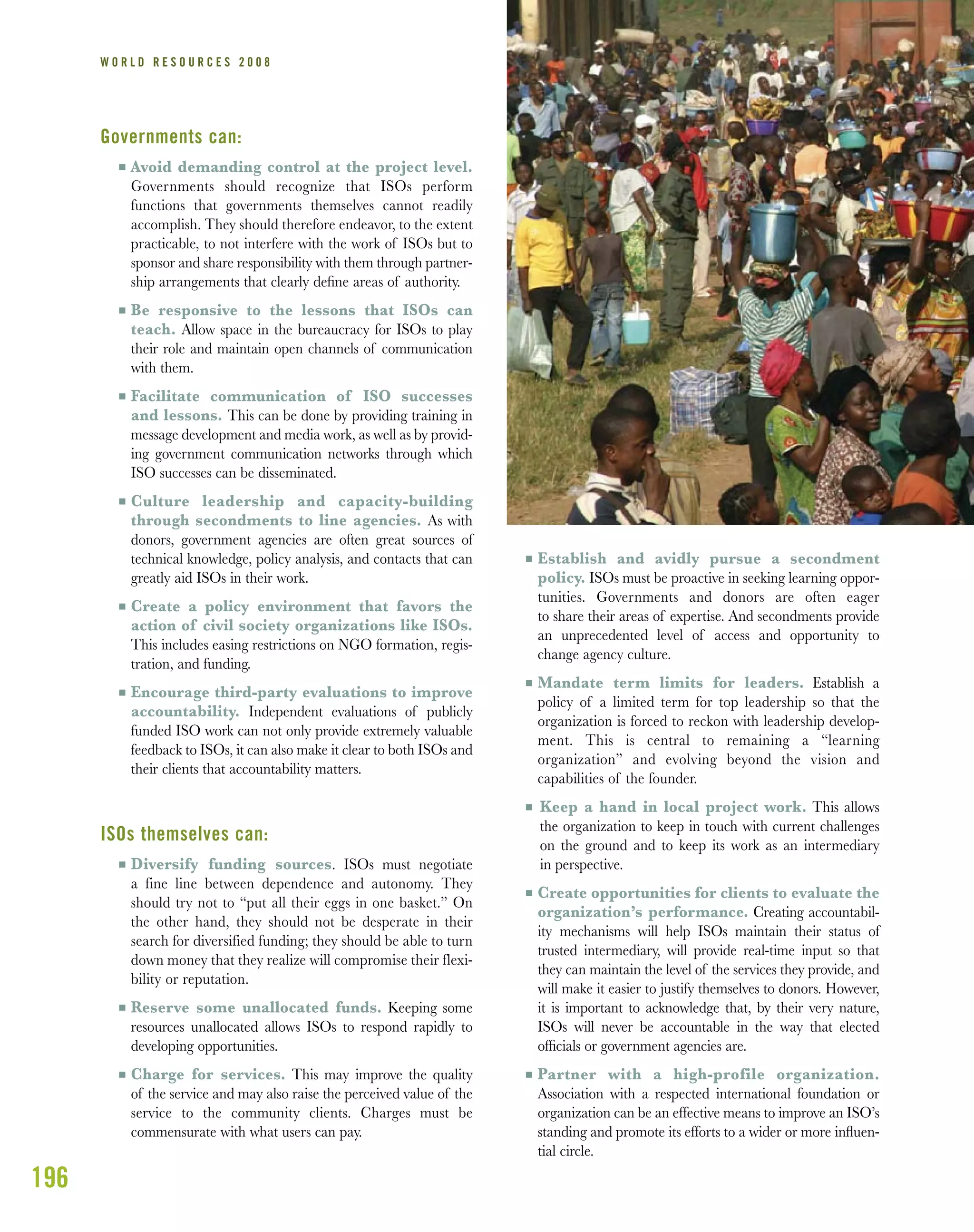
  • 156.
    144 W O RL D R E S O U R C E S 2 0 0 8 From Famine to Food: The Revegetation of Niger The farmer-led transformation of Niger’s countryside over the past quarter-century stemmed from an ecological and humani- tarian crisis that threatened the lives and livelihoods of millions of people and undermined the country’s ability to sustain itself. Through the early 1900s, land use in Niger was character- ized by sparse rural populations cultivating small fields amidst surrounding bush. Families were smaller, yields were sufficient, and there were ample supplies of timber from natural woodlands. Fields were left fallow, and trees and shrubs were regenerated to provide extra wood before being cleared for planting (Winterbottom 2008). Land clearing and tree-felling became more common in the 1930s, as the French colonial government pushed Nigerien farmers to grow export crops and implemented policies that provided disincentives for farmers to care for their land. Such disincentives included a new land law that established the national government as the owner of all trees and required Nigeriens to purchase permits to use them (Brough and Kimenyi 2002). Perversely, the positive outcomes of the effective French health care system, namely higher life expectancy and lower infant mortality, also increased strain on natural resources (Brough and Kimenyi 2002). So by the time the post-colonial government took power in 1960, Niger’s resources were already stretched thin. Throughout the 1960s and 1970s, this pressure multiplied with the policies of the new government, rapid population growth, and a series of devastating droughts. Niger’s postcolonial government extended its predecessor’s policy of state ownership over all forest resources. Hoping for better enforcement of the forestry law, it made the Forestry Service into a paramilitary institution (USAID et al. 2002:42). Its I 1935: French law asserts that all natural resources in Niger, includ- ing trees, belong to the state I 1960: Independence from France; new government maintains natural resource rules and begins stricter enforcement with paramilitary Forest Service I 1969 -1973: 4-year drought cripples country I 1975: Multiple donors and NGOs enter Niger to improve food security and combat desertification, including CARE International’s Majjia Valley Project I 1983: Serving in Mission (SIM) begins implementing Farmer- Managed Natural Regeneration (FMNR) as part of its Maradi Integrated Development Project (MIDP) I 1984 -1985: MIDP teams with World Food Program’s Food for Work Program in 95 villages in Maradi in response to drought I 1985: Government creates Plan to Combat Desertification I 1987: Transitional government’s Rural Code Secretariat coordinates with international aid groups to revise Rural Code and natural resource governance regulations I 1993: New Rural Code signed, transferring tree ownership to property owners I 1996: Coup d’état results in suspended donor assistance I 1998: Legislation to implement Rural Code at village level enacted I 2004: Rural Code enforcement begins at village level I 2005: Food shortages due to drought, locust infestation, and population pressures; farmers practicing FMNR and soil and water conservation techniques fare better than those that do not I 2007: Satellite images show that over 5 million ha of Niger has new vegetation thanks to regeneration efforts of previous twenty years THE GREENING OF NIGER: KEY DATES TRENDS IN VEGETATION INDEX, 1982–1999
  • 157.
    145 officers forbade anyfelling, harvesting, or selling of trees without government permits (Dan Baria 1999:1, 2). Offenders, including farmers lopping branches from bush trees on their own land, were fined or even imprisoned (Rinaudo 2005a:5). This discour- aged people from investing efforts in producing, managing, and selling forest products. At the same time, government agricultural extension services focused on planting crops in rows, animal plowing, and other measures that also discouraged trees in fields (Rinaudo 2005a:5). The government invested heavily in centrally managed reforestation projects, funded with donor support, which often involved plowing under natural vegetation (McGahuey and Winterbottom 2007:21). This stripping of Niger’s natural tree cover was exacer- bated by rapid population growth. By 1975 much of the remaining natural woodland had been converted to farm fields to feed rapidly growing rural communities. But by clearing native trees and shrubs, farmers exposed their fields to the fierce Sahara winds, resulting in plummeting soil fertility and harvests. The loss of tree cover also triggered a rural fuelwood crisis. Poor households were forced to burn animal dung or crop residues instead of using them for compost, reinforcing the downward spiral in soil quality and crop yields (Rinaudo 2007; Winterbottom 2008). In 1969, Niger’s growing stresses developed into a humanitarian disaster with the start of an extreme 4-year drought that triggered famine across the Sahel, afflicting 50 million people (Dan Baria 1999:1). The scale of human suffer- ing attracted global media coverage and drew international aid agencies into Niger. Within a few years these donors, including the United States Agency for International Develop- ment (USAID), the World Bank, CARE International, the Canadian International Development Agency, Italian Cooper- ation, the International Fund for Agricultural Development (IFAD), and the German government agency GTZ, had expanded relief efforts to include development projects aimed at restoring rural productivity (Hamissou 2001:34–35). In the 1970s and early 1980s, these efforts focused on training foresters and establishing exotic tree nurseries and fuelwood plantations. This approach was both intensive and expensive—plantations typically cost US$1,000 per ha to seed and maintain (McGahuey and Winterbottom 2007:4). Local people were rarely consulted before projects began, and the government often appropriated land that farmers and herders had used (Rinaudo 2005a:4). Over 12 years, some 60 million trees were planted in Niger, less than half of which survived (Tougiani et al. 2008:5). One exception to an otherwise ill-fated program was the Majjia Valley Project, developed by CARE International in 1975, funded by USAID, and implemented by the Nigerien Forest Service and U.S. Peace Corps volunteers (USAID et al. 2002:42;Wentling 2008a). Farms in the tree-denuded river valley had been plagued by high winds that destroyed seeds in Niger’s June-to-October growing season. By planting alternating rows of neem (Azadirachta indica)—an exotic nursery-grown species— and native Acacia nilotica saplings across the valley to act as windbreaks, the project improved soil retention and fertility, lessened the need for repeated sowing, and reduced damage to newly planted crops (Steinberg 1988:1). Within a few years, overall yields of millet in fields between windbreak rows increased by 15 percent. While this roughly equaled the loss of production due to trees taking up former T U R N I N G B A C K T H E D E S E R T
  • 158.
    146 W O RL D R E S O U R C E S 2 0 0 8 crop space, the harvesting of tree branches, leaves, and twigs used for wood fuel, thatching, and livestock fodder rose by 68 percent (Steinberg 1988:1). In a break with previous top-down approaches, the project gave communities responsibility for maintaining the windbreaks, and village committees were estab- lished to create and enforce rules governing tree pruning (Steinberg 1988:3; Tougiani et al. 2008:10). The Search for Sustainable Solutions: Tree Regeneration Takes Root In its emphasis on improving native soils, harvesting branches, and sharing responsibility with communities, the Majjia Valley Project laid the groundwork for the FMNR revolution. Its capital- and labor-intensive plantation-based approach, however, was not very scaleable, as only a small fraction of Niger’s cropland lies within river valleys; the majority is in drier upland areas (Steinberg 1988:2). By the early 1980s, development agencies operating in Niger began to recognize that simple, low-cost farming techniques held the greatest promise for improving rural liveli- hoods. At the same time, studies sponsored by USAID’s Forest and Land Use Planning project produced compelling evidence that native species were better adapted to local conditions than exotic imports, such as eucalyptus and neem, that were initially used in development projects (Gallegos et al. 1987:86). Not only could the long tap roots of native trees reach low water tables, but they quickly regenerated after lopping (Amoukou 2006:26; Rinaudo 2005a:6). These native trees provided multiple products for resource-poor households, including fuelwood, livestock fodder, and edible leaves and seedpods (Rinaudo 2005a:6). Armed with this evidence, projects funded by development agencies increasingly shifted from exotic plantations to promot- ing natural forest management. The Pioneers: Serving In Mission One of the key people behind the movement toward natural forest management was Tony Rinaudo, a Christian missionary with a strong background in natural resource issues who spent the 1970s and 1980s working with Serving in Mission (SIM, formerly Society of International Ministries). In 1958, SIM had established a farm school in Maradi, partnering with the Evangelical Church of Niger to assist small-scale farmers in the region (Evans 2005). In response to the drought of the early 1970s, SIM, like other aid organizations at the time, turned its focus in Maradi to tree planting. But by the early 1980s, Rinaudo and some of his colleagues saw that the greening improvements from these efforts were limited, given the amount of time and money invested. It was then that Rinaudo began to seek out a different solution to desertification (Rinaudo 2005a:6). In 1983 he realized that the fields cleared by project farmers were not barren, as they appeared, but contained “underground forests” of native tree and shrub stumps that could be successfully regen- erated at a fraction of the cost of growing nursery tree stock (Rinaudo 2005a:2). As a result, he helped SIM launch the Maradi Integrated Development Project (MIDP), featuring a new approach to reforestation (Rinaudo 2005a:2). Farmer-managed natural regeneration, as MIDP’s approach came to be called, involved supporting the regeneration of trees and their sustainable management to produce continuous supplies of fuelwood as well as non-timber products such as edible seeds and leaves. MIDP’s effort entailed very few “rules,” instead emphasizing farmer experimentation and choice. Farmers chose how many tree stumps to let resprout in their Farmer-managed natural regeneration (FMNR) in the savannas of southern Niger adapts centuries-old methods of woodland management to produce continuous harvests of trees for fuel, building materials, and food and fodder without the need for frequent, costly replanting. Trees are trimmed and pruned to maximize harvests while promoting optimal growing conditions (such as access to water and sunlight). The new feature, pioneered by farmers in Niger and the intermediary organizations that assisted them, was to use these techniques in agricultural cropland and to manage trees as part of a farm enterprise. For decades, Nigerien farmers had cleared their fields of vegetation, leaving what turned out to be an “underground forest” of living stumps and roots. FMNR is based on the regeneration of native trees and shrubs from these mature root systems, which promote surprisingly fast regrowth. Four key steps are involved: I Selecting the stumps to regenerate based on the usefulness of the species. I Selecting stems to prune and protect on each stump—usually the tallest and straightest. Intermediaries promoted five stems per stump as the ideal, but each farmer decides for himself or herself, based on farming objectives and household needs. I Removing unwanted stems and side branches. I Removing new stems and regularly pruning surplus side branches (as often as once a day). The longer a stem is left to grow, the higher its value in local wood markets. The original FMNR model, pioneered by Serving In Mission, promoted harvesting one of the original five stems every year, with a newly resprouting stem chosen as a replacement. However, some farmers regrow many more stems per stump, allowing more than 200 stumps per ha to regenerate. This method quickly creates a young woodland. Typical species regenerated in the region include Ziziphus and Combretum, Guera senegalensis, Bauhinia reticulata, and Piliostigma reticulatum, which provide wood, nutritious fruits, edible leaves, and livestock fodder. Source: Rinaudo 2005a:6–11 WHAT IS FARMER-MANAGED NATURAL REGENERATION?
  • 159.
    147 fields, how manyresprouted stems to grow and harvest, and what to do with the wood (Rinaudo 2005a:8). MIDP workers lived in the project villages and led by example, practicing FMNR on their own farmland. They won recruits by holding village meetings and approaching farmers known to favor planting trees (Rinaudo 2007, 2008). The FMNR approach asked farmers to abandon lifelong practices. Unsurprisingly, few of them were daring enough to take such a risk (Rinaudo 2005a:9). In the first year, only 12 farmers cultivating a total of 12 ha responded to recruitment efforts, from among thousands of local farmers in the district of Guidan Roumdji (the name of this arrondissement was changed to Groumdjii in 2002). They were mocked by other farmers, and some of their young trees were deliberately damaged or chopped down and stolen for fuelwood (Rinaudo 2007). According to Rinaudo, the first farmers were motivated by a variety of factors. “In 1983, the thought of leaving trees in crop fields was seen as ludicrous by farmers brought up with the belief that cleared fields were essential for good crop yields. Some of the 12 guys were early adopters and innovators and were used to being different.... Some may have hoped that the project would provide loans for oxen, fertilizer and seed as SIM had done in the past. Some were visionary and were already planting trees, so the idea that FMNR would be simpler and faster appealed to them” (Rinaudo 2007). Despite the peer pressure, all 12 farmers persevered and benefited from a small fuelwood yield in the first year (Rinaudo 2007). Their crop productivity also increased, as MIDP workers had predicted. The following year, the Sahel was hit with another major drought and subsequent famine, a cycle repeated in 1988. MIDP staff seized the opportunity to expand its tree regeneration efforts by incorporating FMNR in a Food for Work program in 95 villages in three of Maradi’s six districts—Guidan-Roumdjii and Madarounfa along the southwest border with Nigeria and Dakoro district in the northwest (Rinaudo 2008). In return for food, farmers were required to regenerate native vegetation on their land. Rinaudo estimates that between 80,000 and 100,000 people were exposed to FMNR in 1984 and 1988, providing “the critical mass of people required for adoption of an innovative approach” (Rinaudo 2007). Most farmers took part only reluctantly, however, motivated solely by their desire for food aid. Although crops flourished among their field trees, many chopped the trees down after the program ended. About two thirds of the half- million newly regenerated trees were lost, with only a third of farmers continuing with the program (Rinaudo 2005a:9). “Despite regular program messages about the value of trees, most people practiced FMNR only in order to obtain grain,” says Rinaudo (Rinaudo 2007). Nevertheless, MIDP’s leaders had seen the benefits of FMNR and were optimistic that it had the potential to help farmers across Niger and beyond. They therefore continued their efforts, working with the thousands of farmers who did keep their trees to refine regeneration practices. Early progress was slow, obstructed not only by deep-rooted cultural beliefs but also by Niger’s forestry laws, which stipulated that trees were state property (Rinaudo 2005a:5, 9). As farmers were liable to be fined for cutting branches in their fields, they lacked incen- tives to regenerate native bush, and many would slash and burn regrowing stumps (Rinaudo 2005a:1). While government budget cuts in the 1980s began to limit the ability of forestry agents to enforce the laws, the Forestry Service continued to station agents at road blocks to confiscate cut wood, preventing the development of a legitimate commercial market for farm- grown fuel (Rinaudo 2007). In the late 1980s, however, this problem abated after MIDP intervened with the head of the Maradi Forestry Department, who agreed to suspend enforcement of the tree cutting regula- tions (Rinaudo 2007). For the first time, this gave farmers the incentive and confidence to protect trees on their land by providing both informal tenure rights and the prospect of new income from timber products. By fostering the perception that farmers “owned” the trees in their fields—although official reform of tree ownership was not implemented until 2004— this cooperation between NGO and local government enabled FMNR to take hold (Rinuado 2008). T U R N I N G B A C K T H E D E S E R T
  • 160.
    148 W O RL D R E S O U R C E S 2 0 0 8 Farmers Spread the Word Within a few years, farmers throughout the region began to experiment with regeneration. As thousands of households quickly made impressive gains in crop yields and incomes, the practice spread from farmer to farmer and from district to district, driven by self-interest without project intervention. As regenerating trees requires no financial outlays for materials or equipment by poor, risk-averse farmers, FMNR was well adapted to such spontaneous self-scaling (Rinaudo 2005a:17–18). Farmers became the best spokespersons for woodland regeneration. But the movement was also facilitated by external intermediary support, with donor agencies funding village implementation projects, farmer study tours, and farmer-to- farmer exchanges. By the mid-1990s, FMNR had become standard practice within the MIDP operational area in Maradi. Project staff had also trained farmers and NGO field workers in five of Niger’s six other regions, including neighboring Tahoua and Zinder and more distant Tillabéri, Dosso and Diffa (Rinaudo 2008). Other rural development projects adopted and promoted FMNR methods in their programs, including some funded by the German government and the World Bank and implemented by organizations that included IFAD and CARE International (Larwanou et al. 2006; Boubacar 2006:16; USAID et al. 2002:42). Following a military coup d’état in Niger in 1996, most of this donor assistance was suspended (USAID et al. 2002:42). Yet woodland regeneration continued to spread rapidly, underlining the key role played by farmers themselves in self-scaling (Winterbottom 2008). In 2004—the year in which government reforms formally awarded tree ownership to rural landowners— observers estimated the number of regenerated trees in Maradi’s Aguié district alone at about 4 million (Reij 2004:1). By 2006, farmers in the densely populated parts of Zinder had almost universally adopted FMNR on about 1 million ha— without any major donor intervention (Larwanou et al. 2006:12–13, 17). This remarkable trend, attributed by observers to the high economic value of Zinder’s dominant gao and baobab trees, underlines the profound shift that farmer-led regeneration has brought about in national consciousness (Larwanou et al. 2006:12, 14). The gao tree has always been highly valued in Niger—under Hausa tradition, for instance, anyone cutting the sultan’s gao trees was subject to physical punishment (Larwanou et al. 2006:14). But with Niger’s recent decentralization of natural resource management and the legalization of tree- cutting, the gaos’ value can now be translated into economic benefits for the rural farmers that tend them. While no comprehensive national inventory has been conducted, aerial and ground surveys and anecdotal evidence suggest that by 2006, trees had reappeared on about 5 million ha, nearly half of all cultivated land in Niger (Tappan 2007). In Maradi and Zinder, which account for over half of Niger’s cereal production and where 40 percent of its people live, the practice of FMNR is now common (Wentling 2008b: 7; Rinaudo 2005a:5, 9). NRM Technique Protection of natural regeneration of trees Tassa Demi-lunes Stone lines Dan Saga, Maradi region (IFAD project) 100 -- -- -- Control, non-project village (Dourgou in Maradi region) 6 -- -- -- Kolloma Baba, Tahoua region (GTZ project) 86 91 20 97 Batodi, Tahoua region (IFAD project) 100 97 46 91 PERCENT OF POPULATION IN THREE NIGER PROJECT VILLAGES ADOPTING COMPLEMENTARY TREE REGENERATION AND SOIL AND WATER CONSERVATION TECHNIQUES Source: Adapted from Abdoulaye and Ibro 2006:37.
  • 161.
    Demi-lunes Tassa 149 Adding Value:Reclaiming Water and Land Since the late 1970s, donor efforts to stave off future famines have also included the introduction of simple soil and water conservation techniques to rehabilitate barren land (Reij 2008). As the practice of tree regeneration spread across southern Niger, intermediaries and farmers adopted some of these practices to further boost crop production. Widely adopted methods included rock lining (placing rocks lines along the contour of sloping land to reduce runoff), improved versions of traditional planting pits or tassa, and demi-lunes (crescent- shaped trenches dug along the contour of sloping land to improve water infiltration into soil) (Abdoulaye and Ibro 2006:19). These techniques enabled cultivation of secondary vegetable crops, which in turn helped rural families improve their diets in a country where half the children suffer from malnutrition (Boubacar et al. 2005:21). For example, improved soils and higher water tables have enabled villages in Tahoua region to grow onions, tomatoes, sweet potatoes, cow peas, watermelon, and asparagus for home use and sale in local markets (Guéro and Dan Lamso 2006:31). Soil and water conservation methods have proved particu- larly important in districts with low water tables and severe shortages of cultivable soil. One of the most dramatic success stories is Batodi village in the Illéla district of Tahoua, where the International Fund for Agricultural Development promoted use of improved tassa and demi-lunes (Boubacar et al. 2005:8). According to villagers, the local water table had sunk to 18 meters below ground by the early 1990s (Boubacar et al. 2005:15). Nothing would grow in the barren land around the village, and women typically spent several hours a day fetching water. By 2005, with almost every villager using tassa and demi- lunes, water tables had risen to three meters below the surface and yields of millet and sorghum, Niger’s primary food crops, had increased significantly (Guéro and Dan Lamso 2006:31). Batodi’s many women farmers now cultivate dry-season vegetable gardens, irrigated by wells, for household use and sale (Guéro and Dan Lamso 2006:31). Onions are especially high value, with one producer (a male farmer) earning 250,000 CFA francs (US$500) for a crop grown on a quarter of a hectare (Abdoulaye and Ibro 2006:19). Adoption of these soil and conservation techniques has led to the restoration of land once considered useless. In Tahoua region, for example, entrepreneurial farmers started a new market by buying degraded land to rehabilitate and resell (Reij 2008). Land prices around Batodi doubled between 1990 and 1994 as a result, while in a second village, Roukouzoum, rehabil- itated land was resold after two years for triple the original price (Boubacar et al. 2005:10–11, 20). A market in specialized labor has also developed in the region, with self-trained land restorers hired by other farmers to dig tassa and demi-lunes (Boubacar et al. 2005:27). While farmers most able to capitalize on increased land values tend to be the better-off ones, land reclamation has also provided a route for very poor families to relieve hunger and increase income (Boubacar et al. 2005:20–21). Creating Resilient Landscapes, Livelihoods The simple and cost-effective practice of farmer-managed natural regeneration has provided an impressively wide range of benefits for Niger’s impoverished rural communities. Over the last 20 years or so, about 200 million trees have been protected
  • 162.
    150 W O RL D R E S O U R C E S 2 0 0 8 and managed by farmers and at least 250,000 ha of degraded land has been restored to crop production (Reij 2008; McGahuey and Winterbottom 2007:7). A 2005 survey for USAID recorded tree or shrub stems ranging from 20 to 150 per ha across three regions, a dramatic 10- to 20-fold increase since 1975 (McGahuey and Winterbottom 2007:6–8). This change in the rural landscape has enabled hundreds of thousands of households living on US$2 or less a day to diversify livelihoods and increase income, thus increasing their economic resilience. It has also played a critical role in addressing the chronic hunger of families accustomed to living with unpredictable harvests. FMNR has also had an enormously empowering effect, demonstrating to hundreds of thousands of people that they were not helpless hostages to poverty and a capricious climate. “[Its success] helped establish a positive mindset about farmers’ capacity to take charge of critical farm management decisions,” explains USAID natural resources management adviser Mike McGahuey. “It showed that progress against poverty and deser- tification was strongest when the rural poor worked on their own behalf to achieve their own objectives” (McGahuey 2008). Money Trees Fuelwood and Fodder Income The most immediate benefit for most families practicing FMNR is the availability of fuelwood from pruned tree branches. From the first year, communities are able to harvest light firewood and from the second year to cut branches to sell in local markets for much-needed extra income. According to conservative SIM estimates, farmers regenerating 40 stumps on a 1-ha field could earn an additional 70,000 CFA francs (about US$140) per year—half the average annual income of a poor farming household. By 2004, researchers had recorded steep increases in fuelwood and fodder production in FMNR communities, with majorities of villagers gaining income from one or other product. Earlier studies indicate that in 100 Maradi villages alone, about US$600,000 worth of wood was sold between 1985 and 1997 (SIM 1999, as cited by Rinuado 2005a:14). And survey results from across villages with land rehabilitation projects demonstrate that residents perceive a marked decrease in poverty around them as a result of the projects (Abdoulaye and Ibro 2006:40). Crop Income Revegetation also improves the traditionally poor fertility of Niger’s soils, which in turn boosts crop production. Bush trees dotted across fields help hold soil in place, reducing wind and water erosion (Guéro and Dan Lamso 2006:15). Native trees and shrubs draw up nutrients and distribute them in the topsoil at the same time that falling leaves and trimmings are used as mulch (Rinaudo 2005a:12). Livestock and birds attracted to tree shade and branches leave droppings that fertilize the soil (Rinaudo 2005a:12). Moreover, the growing season on land with trees is longer because farmers only have to sow once, compared with twice or more on fields unprotected from the elements (Rinaudo 2005a:4; Reij 2008). Such benefits are magnified when farmers act collectively, as blanket FMNR villages in Maradi and Zinder regions have discovered. Vegetation in one field affects nearby land by serving as a windbreak and promoting improved water infiltration and soil retention (Winterbottom 2007). All these FMNR benefits, combined with the soil and water interventions, have resulted in increases in sorghum yields of between 20 and 85 percent and in millet yields of between 15 and 50 percent in intervention villages (Amoukou 2006:25). Other studies suggest that millet yields have even consistently doubled in some FMNR-practicing communities (Tougiani et al. 2008:16). This has enabled households both to store more food against the threat of shortages in the dry season and, occasionally, to sell surplus crops in local markets or for export to neighboring Nigeria (Reij 2006:ii). 0% 20% 40% 60% 80% 100% Tama Kolloma Baba Batodi Dan Saga Boukanda Wood Hay Village Source: Abdoulaye and Ibro 2006: 43 Area: 1 hectare No. Trees protected: 40/hectare No. stems protected per tree: 5 stems/stump Year 1 40 stems x 0.10 cents US$ 4 Year 2 40 stems x 0.70 cents US$ 28 Year 3 40 stems x US$1.50 US$ 60 Year 4 40 stems x US$ 3.50 US$ 140 Year 5 40 stems x US$ 3.50 US$ 140 Year 6 40 stems x US$ 3.50 US$ 140 Total US$ 512 Source: Rinaudo 2005b. SAMPLE WOOD INCOME BENEFITS FOR FARMERS PERCENT OF RURAL HOUSEHOLDS EARNING INCOME FROM WOOD AND HAY IN 2005
  • 163.
    151 Nationally, figures fromthe Niger agriculture ministry show cereal production rising steadily in parallel with the spread of FMNR. In 1980, Niger produced 1,770,700 metric tons of cereals, rising to 2,093,300 mt in 1995 and 2,319,800 mt in 2000. By 2006, when at least a quarter of cultivated land was converted, production reached an impressive 4,055,984 mt (Wentling 2008b:1). These statistics suggest that the farmer-led re-greening movement is having a clear impact on the country’s ability to feed itself and improve the rural economy. Non-Timber Tree Products Farmers’ trees have also yielded direct non-timber benefits in the form of fodder for livestock and edible leaves and seedpods to set aside for times of hunger (Rinaudo 2005a:3). Anecdotal evidence suggests that diet has also improved for many FMNR practitioners as they have a greater diversity of food sources. Some villagers in the Aguié district of Maradi, for example, harvest the leaves of a common scrubland tree, Maerua crassifolia, which are rich in vitamin A (Reij 2008). Maradi- based farmers have also used the proceeds of FMNR to embark on new income-generating activities, such as beekeep- ing (Burns 2008). While most non-timber tree products are consumed by farming families, some districts have generated significant income from their sale. This is especially true in Zinder province, where FMNR has revived cultivation of the baobab tree. Each baobab can bring in an average of US$20 a year in economic benefits just from the sale of its edible leaves (Larwanou et al. 2006:18). With some farms boasting an average of 50 baobab trees per ha, that can amount to US$1,000 per ha a year—nearly three times the total annual income of much of the population (calculation based on Larwanou et al. 2006:18; Winterbottom 2007). Providing Food Security, Protecting Against Famine The return of trees to Niger’s densely populated southern plains and dunes has also increased food security for local rural economies at a time when the country is adding 440,000 new mouths to feed every year (Wentling 2008b:2). Since the cereals millet and sorghum make up over 90 percent of the typical villager’s diet, it was critical that in 2006 the country was able to produce 283 kg of cereal per capita, almost identical to the 285 kg produced in 1980 despite a near-doubling of the population over 25 years (Wentling 2008b:3, 1). “In the late 1970s donors thought it would be impossible for Niger to produce enough food to feed a population of 10 million,” says Mark Wentling, USAID’s country program manager for Niger. “In the past three years, Niger has produced more cereals than ever. Much of this increase can be attributed to higher crop yields achieved through the practice of FMNR… which has been critical to enable Niger…to feed its population of 14 million” (Wentling 2008a). Over the last 45 years, Niger has been plagued by an average of one bad harvest every eight years, following a growing season of low rainfall (Wentling 2008b:4). Farmers practicing FMNR, who are able to stockpile some grains during good years and to harvest trees for food and income, are better insulated against these deadly cyclical droughts, which are predicted to increase as a result of climate change (Reij 2006:2; IPCC 2007:444, 447–48). When the most recent drought and accompanying food shortages hit the regions of Maradi, Tahoua, Tillabéri, and Zinder in 2004–05, FMNR villages fared much better than those stripped of vegetation. An estimated 15 children a week died of hunger in Maradi during the summer of 2005 (BBC 2005). Yet Storing millet
  • 164.
    152 W O RL D R E S O U R C E S 2 0 0 8 villages in Aguié District, where inhabitants could harvest regen- erated trees for food, fodder, and firewood to sell in exchange for grain (see box) did not rely on famine relief and avoided a single death (Tougiani et al. 2008:13). The contrast between the famine’s impacts on FMNR farmers and on their neighbors who did not practice FMNR is a stark reminder of the persistence required to scale up even visibly beneficial and simple changes to entrenched customs. Indeed, despite all its successes, at least half of Niger’s farmers still do not use FMNR (Tappan 2007). Women Reap Dividends Women are perhaps the biggest winners in Niger’s tree regener- ation revolution. Traditionally excluded from resource management decisions (despite being skilled in farming and animal husbandry), they have profited from the simple reality that FMNR favors women producers (Tougiani et al. 2008:12). Getting the best results from revegetation requires year-round, The Maradi village of Dan Saga and its neighbors are the focus of a concerted effort to build social capacity while promoting natural resource management in Niger. Beset by chronic food shortages due to a lack of land to sustain its rapidly growing population, Dan Saga was chosen as a priority site by the Aguié District Rural Development Project, an initiative launched in 1992 by the International Fund for Agricultural Development (Boubacar 2006:17). The project provided rural credit to several dozen villages and actively promoted farmer-led tree regenera- tion. Initially it did so using top-down demonstration and instruction to farmers. But these early efforts were undermined by conflicts among villagers, as some people were stealing wood from trees grown by others (Boubacar 2006:17–19). In 2001, project managers switched focus to empowering communities through capacity-building. Under the renamed Desert Community Initiative, village management committees for natural regeneration were elected by all community members. In a major break with tradition, these included women farmers and herders—two normally marginalized groups—as well as male landowners. The committees laid down strict rules to regulate the exploitation of trees, organized villagers to guard fields against intruders, and imposed fines on those who broke commu- nity-approved regulations (Reij 2004; Tougiani et al. 2008:12). Resource management decisions and action plans were made at monthly village assemblies, held before local elders and the chief, at which committee members fed back information to the community. New bylaws, agreed to by the local administrative authority, embedded these arrange- ments, while elected committee members were equipped with a uniform and badge, emphasizing their authority. Aguié’s departmental govern- ment, forestry department, and land tenure commission also approved the new institutional arrangements (Tougiani et al. 2008:10–14). DAN SAGA: PEOPLE POWER TRANSFORMS LOCAL ECONOMY Their investment thus protected, many more farmers began nurturing bush trees, adopting pruning and trimming techniques that allowed fast vertical growth without hindering the growth of millet in the soil below (Toumieux 2005). By 2007, a total of 53 FMNR community committees had been established, covering 170 villages and encompassing the entire Aguié district (Tougiani et al. 2008:11). Each village made payments toward policing tree regeneration activities. The income raised, together with fines collected, was placed in a village fund and used to support development activities and tree nurseries on common land. This trans- parent process both enhanced social unity and reinforced public support for tree regeneration (Tougiani et al. 2008:12–13). By 2007, destructive tree cutting practices had “practically ceased in the whole of Aguié,” and 130,000 ha across the district boasted regen- erating trees (Tougiani et al. 2008:14). In Dan Saga, this included every household and more than 5,600 ha of land, transforming the local economy (Abdoulaye and Ibro 2006:15). Fields that had previously lain barren contained on average 150 bush trees per ha, compared with only 52 per ha in a nearby non-project village (Abdoulaye and Ibro 2006:36). Villagers reported that FMNR can double their yields (Diarra 2006:18), and some 40 percent of village producers were selling surplus wood, seedpods from gao trees, and fruits and gum Arabic from Acacia seyal trees (Abdoulaye and Ibro 2006:43). Annual per capita income from wood sales alone ranged between US$46 and US$92 (Tougiani et al. 2008: 13). Food security and resilience to drought—critical issues for a village on the edge of the Sahara—have also improved markedly (Tougiani et al. 2008:2). In 2005, when a deadly combination of locusts and drought struck the region, Dan Saga required no food aid (Toumieux 2005).
  • 165.
    153 even daily, attentionto pruning trees. As most men still migrate to urban centers throughout West Africa during the dry season to secure additional cash income, the increasingly valued task of tree husbandry often falls to women (Wentling 2008a). Women and their families derive a host of material benefits from this role. Using their own wood for cooking eliminates a daily cost of 200 CFA francs (US 40 cents) for purchased firewood (USAID et al. 2005:18). Surplus wood can earn up to 400 CFA francs (US 80 cents) per bundle in local markets during the dry season; in Zinder, a sack of nutritious, edible baobab leaves can sell for as much as 3,000 CFA francs (US$6), three times the average daily wage for laborers (Larwanou et al. 2006:18). Women farmers use FMNR income to meet household needs, including purchasing food and paying school fees. Many have also diversified their house- holds’ livelihoods: some by taking advantage of better soil fertility and water retention to cultivate cash crops such as onions, tomatoes, sesame, and hibiscus; others by using their new earnings to invest in sheep and goats, which live off of tree seedpods (BBC 2006; Reij 2006:iii). Anecdotal evidence highlights how the status of women has been transformed by their involvement in FMNR. A 2006 field study of FMNR villages across Zinder region found that livestock owners—ranked high on the social ladder— commonly included women (Larwanou et al. 2006:21). In Kolloma Baba village in Tahoua, formerly vulnerable and marginalized widows and divorcees employ male laborers to work their farms (Boubacar et al. 2005:10, 16). During the 2005 food crisis, female FMNR farmers also used their food reserves to assist others, elevating their position in the community (Diarra 2006:12). Women farmers’ enhanced status is also clearly demonstrated in FMNR communities that boast village natural resource management committees, where they participate equally with men in decision-making (Tougiani et al. 2008:12). Re-greening a Country: Key Players and Partners With millions of trees now carpeting land that was mostly barren only one to two decades ago, Niger’s farmers have produced one of the most visibly successful examples of natural resource management in the world today. Although it took several years to take off, Niger’s farmers have abandoned a core practice of clearing fields and have embraced the protection and sustain- able management of native vegetation. Why did they do so? One clear reason, say observers, was the impact of the environmental and economic crisis of the late 1970s and early 1980s, combined with Niger’s booming population. With more mouths to feed every year, rural communities could see that traditional clearing and farming methods were no longer meeting their needs (Wentling 2008a). The obvious success of early FMNR projects, implemented at little or no cost to farmers, was also a powerful spur to their neighbors. But it is unlikely the movement would have reached such a scale or overcome the barriers to farmer adoption without the input of two key players: Niger’s central govern- ment and international intermediary organizations. T U R N I N G B A C K T H E D E S E R T “These lands are now like our husbands,” say the women of Kolloma Baba, describing the thriving plots of millet and sorghum, cow peas, groundnut, and okra around them, the result of years of hard labor (Abdoulaye and Ibro 2006:40, 42). Once barren, boulder-covered, and devoid of vegetation, these patches of reclaimed desert have lifted the women, mostly divorcees and widows, out of grinding poverty and transformed their social status. Today, not only do they harvest enough food for their families; they earn income from selling surplus crops, hay, and tree seedpods, and their land has significantly increased in value (Boubacar et al. 2005:17, 20; Diarra 2006:21). The women’s fortunes were transformed with the help of the Tahoua Rural Development Project, funded by the German government agency GTZ. In the late 1980s, with the agreement of the village chief and local government officials, about 250 widows and divorced women received the rights to abandoned, degraded land in Kolloma Baba, a village where farm productivity had plunged by up to 90 percent (PDRT 1997 as cited by Guéro and Dan Lamso 2006:5; Abdoulaye and Ibro 2006:40). In return the women pledged to restore the land by investing their labor in soil and water conservation techniques (Guéro and Dan Lamso 2006:29; Winterbottom 2008). After clearing the land of rock, each woman received a plot of about 60 square meters (BBC 2006). In addition to sowing traditional millet and sorghum, many took the initiative to diversify into cow peas, groundnut, and okra (Abdoulaye and Ibro 2006:32). In the early years, female farmers worked through the Kolloma Baba Women’s Association, established by the project, with members helping each other to develop their land (BBC 2006). More recently, they have hired male labor, proof of their considerable economic capacity (Boubacar et al. 2005:18, 29). By 2006, they had restored 2,000 ha of degraded land and were selling excess crops, lifting themselves a step out of poverty and increasing their social status. A village committee, principally made up of women, deals with protection of regenerated trees across the community (Saadou and Larwanou 2006:15–16, 18). Although their land has increased several times in value, and despite persistent pressure from male farmers, the women have vowed not to sell. Says association member Fatima Illiassou: “Thanks to our crops, we can eat. We can buy clothes for our children. We won’t go through all that suffering to give men the fruits of our labor” (BBC 2006). KOLLOMA BABA: WOMEN REVIVE LAND, IMPROVE THEIR STATUS
  • 166.
    154 W O RL D R E S O U R C E S 2 0 0 8 Role of Government: From Policemen to Allies One of the biggest hurdles to widespread adoption of FMNR was the state ownership of Niger’s trees. Villagers were well aware of the law because the oppressive Forestry Service vigor- ously enforced it for over 20 years, well into the 1980s, making farmers hesitant to manage trees. However, de facto shifts in the forest and land tenure system began in the late 1980s as part of the government’s transition to democracy (USAID et al. 2002:42; Wentling 2008a). These de facto shifts were driven by a confluence of forces. Macro issues included the fallout from the 1984 drought and Niger’s 1987 transition to a democratic government. There were also a range of smaller efforts taking place simultaneously that had an impact on the thinking of the government. One of the most important of these was a USAID project that partnered Niger’s Forest Service with rural residents to manage a formerly “off-limits” national park using FMNR and soil and water conservation techniques. The Forest and Land Use Planning project convinced the Forest Service that such practices were effective and could actually create revenue for the state, as the partnership was based around a sustainable wood harvesting cooperative that divided revenues between the Forest Service and local people (Gallegos et al. 1987:51–52). MIDP and CARE projects were also helping the government realize the goals of its 1985 Plan to Combat Desertification, thereby solidifying the effectiveness of FMNR and these localized conservation techniques in the minds of government officials (Gallegos et al. 1987:24). In 1987, the transitional government created a Permanent Rural Code Secretariat to begin the process of revising the Rural Code, a body of law that applied to much of Niger and that included the provision establishing government ownership of trees. MIDP, USAID, and others worked with the new Inter- Ministerial Committee on Natural Resources, charged by the government to develop a new Code (Gallegos et al. 1987:25). The organizations were largely successful in their efforts, though formal legal changes took longer than hoped due to government instability. The Code that was signed in 1993 recog- nized both customary and formal land use rights and laid the groundwork for transferring tree ownership to property owners (McGahuey 2008). Legislation to implement the new code at the village level was passed in 1998 and came into force in 2004 (Wentling 2008a). For many farmers, having this sense of security about managing trees without fear of legal repercussions tipped the balance of self-interest in favor of embracing FMNR’s simple, cheap, and effective practices. Prompted and assisted by foreign donors, the new govern- ment did not limit its reforms to the Rural Code. In pursuit of economic development and improved management of the country’s beleaguered natural resources, it also overhauled the country’s Forest Code, decentralization laws, Forest Service, and forest fiscal policy (USAID et al. 2002:42). The collective impact was to create an economic and social environment in which sustainable land management practices, such as FMNR and soil and water conservation, could and did explode across the country. “Under the old system, the spontaneous spread of FMNR would not have likely occurred,” says Mike McGahuey. “FMNR demonstrated that the most effective role of govern- ment was to reduce barriers and strengthen farmers’ incentives to engage in and benefit from environmentally and socially sustainable agricultural practices” (McGahuey 2008). Role of Intermediaries: Agents of Change In an effective partnership, international donors and NGOs have had a twofold impact on the spread of Niger’s tree regeneration movement: promoting new land management practices among Niger’s farmers and facilitating the government reforms that enabled community experiments to reach national scale. The U.S. and German governments and the World Bank acted as significant catalysts by providing intellectual input, funding, land management expertise, and pressure for policy reform. In the 1980s USAID, GTZ, the French and Dutch governments, IFAD, and the World Bank helped provide the economic rationale for farmer-led tree regeneration by funding research on the superior benefits of native vegetation, including potential markets for forest products (Winterbottom 2008). While supporting soil conservation and tree management programs, these donors also engaged the government of Niger in a policy dialogue on sustainable natural resource management, stressing the need for community rights, laws providing secure resource tenure, and reform of both the forestry code and the
  • 167.
    155 role of forestryagents (USAID et al. 2002:42). Their advice was adopted in the wholesale reforms of the 1990s described earlier. USAID’s involvement went well beyond advice, however. In the mid-1990s, the agency was deeply involved in helping Niger’s new democratic government formulate, implement, and popularize its natural resource management reforms, through a US$28-million agricultural development grant program. This funded, for example, technical support for formulation of the Rural Code and the establishment of the Permanent Secretariat to administer the legislation. The agency also funded all-impor- tant efforts to publicize the code to millions of dispersed farmers and herders. This included translating the text into the eight major languages spoken in Niger and communicating the changes via radio and television (USAID et al. 2002:148). While donors played their part at the macro level, in the field it was the committed and long-term presence of NGOs and specialized agencies such as Serving In Mission, IFAD, and Care International that enabled FMNR to take root. By 2008, SIM had worked with farmers in Maradi for over two decades, while the major IFAD projects in Aguié district had begun 13 years earlier. “After the food-for-work program ended in 1988, the only tools at hand were persuasion and persistence,” recalled Rinaudo. “Having staff in the village and giving the same message over and over.” In the early years, he added, the catalyzing influence of individual MIDP figures and supportive Maradi forestry staff played a major role in fostering recognition and acceptance of the new farming practices. Without the efforts of such intermedi- aries, FMNR might not have reached the critical mass that resulted in its scale-up over much of rural Niger (Rinaudo 2008). A Road Map for Greening Africa’s Drylands? The simple process of regenerating native trees, coupled with progressive policy and institutional reforms, has proved an impressively strong mechanism for leveraging transformational development in Niger. The scope of its impact on one of the world’s poorest societies includes poverty reduction, economic growth, agricultural and rural development, and improved governance and health. Niger’s overused farmland and barren savanna are visibly more fertile and resilient thanks to sustainable management practices. And instead of the dire food shortages predicted by aid agencies as Niger’s population boomed, farmers adopting FMNR have displayed a new economic resilience that has impressed development experts. “Although challenges remain, the resiliency, innovations and adaptations of rural produc- ers…in the face of environmental and economic stresses… provide encouraging prospects for progress,” reported USAID officials in 2007 (McGahuey and Winterbottom 2007:26–27). And progress need not be limited to Niger. For other Sahelian countries facing the triple challenges of population growth, desertification, and climate change, FMNR also offers a cheap and effective model to improve farm productivity and reclaim precious land from the dunes (Rinaudo 2005a:9). More Food for More People Yet despite the extraordinary spread of FMNR and the signifi- cant benefits generated, population growth will continue to pose a major challenge to food security in Niger, especially against a backdrop of climate change. In the past 20 years, Niger’s population has doubled to 14 million people, and it maintains one of the highest birthrates in the world of about 7.1 children per woman (Wentling 2008b:1; INS and Macro International Inc. 2007:xxv). By 2015, the population will rise to 18.8 million and the area of cultivable land per capita will fall further—from 1.45 ha to 1.12 ha per person (Wentling 2008b:6, 7). Yet already, even in the best harvest years, at least 1 million land-poor Nigeriens need food aid due to localized droughts or pest infestations (Wentling 2008a:5). Similar demographic pressures face Niger’s neigh- bors, including Burkina Faso, Mali, and Chad. As a result, food production will become an increasing government and donor priority in the region, which makes higher agricultural productivity imperative. In this context, say development experts, FMNR has a major role to play in helping poor rural populations improve food security and ride out the present baby boom. “Niger appears to be a model in buying time,” says Mike McGahuey. “FMNR has a track record of allowing people to (a) get more product and more diverse forms of product from the same amount of land and (b) maintain the productive capacity of that land even while more is being taken T U R N I N G B A C K T H E D E S E R T
  • 168.
    156 from it. [Such]approaches… will be more and more important for Niger and for other countries” (McGahuey 2008). With two thirds of Africa either desert or drylands, this potential has not been lost on donors, neighboring governments, and international NGOs. While the vast, spontaneous spread of re-greening in Niger is unique, tree regeneration and soil and water conservation projects have also been successfully imple- mented in other Sahelian countries, notably Burkina Faso, Mali, Senegal, the Gambia, and Guinea (Winterbottom 2008). Organ- isation for Economic Co-operation and Development donor countries, working with the Club du Sahel and the Permanent Interstate Committee for Drought Control in the Sahel, have implemented successful programs supporting decentralized natural resource management, land tenure, and forestry code reforms (Winterbottom 2008). During the 1990s, USAID duplicated its policy reform assistance to Niger in other West African countries, including Mali, Senegal, and Guinea, where it helped governments reform forest codes. These reforms recognized farmers’ rights to Sometimes costly technology is less important than patience and persistence. The FMNR approach has succeeded in restoring and improving vast swaths of land in Niger using little more than the time and persistence of the staff of NGOs and aid agencies. No new technol- ogy was involved, and no special seeds or other agricultural inputs, simply the willingness of the NGOs to support the first adopters of the practice and to take advantage of every chance to demonstrate the impact of FMNR to other farmers. Even with unexpected setbacks, these organizations stayed close to the farmers and kept encouraging them. The result, over time, has been the significant improvement of more than half the cultivated land in Niger. Tradition and fear are powerful forces that must be accommo- dated. The fact that most farmers who had allowed trees to grow on their land in exchange for food support later uprooted the trees, even after the benefits of that practice were apparent, demonstrates the difficulty of securing change in rural and traditional cultures. The NGOs and donors understood the strength of these traditions, and they overcame them with patience and perseverance. Livelihood improvements can also improve community stability. In rural Sahelian communities, the dry season leaves families seeking alternative sources of income and food. It is something of a ritual for men to leave the village for several months at a time seeking paying work in larger towns and cities. Not only does this exodus increase the pressure on those left behind, it decreases social cohesion within communities and commonly results in the introduction of diseases such as HIV when the men return. One of the important benefits of the increased productivity from FMNR is that it can provide more in-village economic opportunities for men and women, reducing the need to leave to seek work, and so enhancing community resilience. This is a benefit that we have seen in several cases studies in WRR 2008 and 2005. Simple methods of communication can yield significant benefits. The widespread adoption of FMNR practices in Niger was, to a very large extent, due to simple word-of-mouth…what today is called “viral communication.” The program began with a few brave souls willing to break with tradition. It expanded as neighbors witnessed the visible agricultural and economic improvements created by these changes and as farmers conversed about the potential benefits of leaving trees in local and regional markets. Planned visits of farmers to FMNR commu- nities resulted in a continued spread of the practice. Today, about 5 million ha have benefited; more than 250,000 ha of land that was once considered unusable is now producing crops, and a significant portion of the nation’s farmers are involved. Inclusion is important. As communities in Niger began to adopt FMNR and water conservation practices, decisions about the use of common lands and tree protection were necessary. The inclusion of all affected parties, not just land-owning farmers—women, nomadic herders—was critical for broad community acceptance of change and the effective- ness of the new rules. LEARNING FROM NIGER’S RE-GREENING
  • 169.
    157 manage trees andto redefine the role of forestry officers as extension agents, supporting community-based management (USAID et al. 2002:42, 137). As in Niger, USAID also provided assistance in Mali and Senegal to help implement newly enacted forest codes (USAID et al. 2002: 137). Barriers remain, however, to achieving the level of scale-up for farmer-led natural resource management witnessed in Niger. “Unfortunately, key enabling conditions are not yet fully estab- lished in most countries across West Africa,” says International Resource Group natural resources management (NRM) expert Bob Winterbottom, who worked through USAID as Natural Resources Management Advisor to Niger’s Ministry of Environment from 1993 to 1996. “An important challenge for donors and governments will [be] to reinforce their efforts to reduce barriers to FMNR, such as high taxes on wood and other ‘natural products’ harvested and marketed by rural populations, and…onerous permit requirements that discour- age investment in producing and marketing forest products” (Winterbottom 2008). Equally important in creating the incentive to change among farmers is granting secure land and tree tenure—still lacking in some West African countries—and the transfer of rights and authority to local communities to control access to and use of natural resources. As Niger’s experience has shown, when farmers are given the rights and tools to control their own economic destiny, both land and people benefit. Creating Resilience to Climate Change The Sahel has been identified as one of the areas most vulnera- ble to increased drought in a warming climate. While rains have been relatively good in recent years (except 2004), the long-term projections are for longer and more frequent droughts across the region as global temperatures rise (IPCC 2007:444, 447–48). In the absence of effective natural resource management approaches such as FMNR in Niger, this raises the threat of future famines approaching the devastating scale of the 1970s; it also promises to further the desertification of fragile lands in the Sahel. Yet development experts and intermediary organizations are hoping that region-wide expansion of FMNR and other proven land management programs will help the region increase its resilience in the face of changing climate (Winterbottom 2008). Winterbottom notes: “The development community needs better models for poverty reduction and rural development that simultaneously assist these populations in adapting to climate change. The experience in Niger has demonstrated that incorpo- rating FMNR and other NRM practices are key elements of such a model” (Winterbottom 2008). Gray Tappan, a geogra- pher who measures the spread of FMNR across Niger, has seen these tangible effects throughout his travels: “[Adopting commu- nities] have become much more resilient to drought in the last 20 years because of the increase in vegetation cover. Crops can fail, but the farmers, the herders, have something to fall back on. And that is the trees—the wood, the fruit” (Harris 2007). One opportunity to extend these cost-effective resilience- building techniques to more communities would be to integrate them into the National Adaptation Programmes for Action (NAPAs) of the countries of the Sahel. The NAPAs are adapta- tion strategy plans written by developing-country governments under the United Nations Framework Convention on Climate Change (CNEDD 2006:3). FMNR can achieve many of the goals of Niger’s current NAPA, but unlike the actions recom- mended in the present version, it would not require extensive external technical and financial assistance (CNEDD 2006:7–8). Another opportunity to increase the resilience that comes with FMNR across the Sahel is a new international alliance of NGOs and research organizations that is developing a Sahel Re- Greening Initiative. The Initiative will mobilize donor funding to build on the grassroots successes of FMNR across the West African Sahel (Reij 2008). Niger’s current government appears more capable than earlier administrations of instituting the new Rural Code to allow for institutionalization of FMNR and other community conservation practices across Niger. The new government’s Rural Code Secretariat, created in 2006, is also getting consider- able support from donors (Wentling 2008a). It is hoped that the lessons of the drought in 2004, which left many individuals and communities that did not practice FMNR vulnerable, will help convince farmers who continue to clear their land indiscrimi- nately of the benefits of better management. But there are new challenges. Where tree regeneration is widely practiced, community and local governments need to act to resolve conflicts over access to natural resources and property rights to formerly abandoned land that has been restored (Winterbottom 2008). In particular, the rights of the more vulnerable—nomadic herders, the landless, and women—to equitably gain access to the benefits of FMNR need to be strengthened (Tougiani et al. 2008:12–15). The gains made by the current generation of women, for example, could be eroded unless Niger’s inheritance laws are revised to enable land and livestock to pass from mother to daughter (BBC 2006). Nevertheless, in its proven impacts and ready scaleability, FMNR and associated soil and water conservation practices provide a potentially transformative model for natural resource management in the drylands of Africa and beyond. T U R N I N G B A C K T H E D E S E R T
  • 170.
    Successfully scaling upecosystem enterprise requires a confluence of community-level and national-level actions.
  • 171.
    DRIVING THE SCALING PROCESS SUCCESSFULLY SCALING UPECOSYSTEM ENTERPRISES requires a confluence of community-level and national-level actions. As Chapter 2 points out, community stakeholders in ecosystem enterprises must find a compelling rationale for working together and an effective process for learning and applying new skills as a group. For scaling up to occur, this rationale and process must be effectively communicated to other groups in similar circumstances and supported by intermedi- ary organizations. At the same time, national governments, donors, and the private sector must provide an environment that nurtures small rural enterprises and removes some of the political, financial, and physical barriers they face as they struggle to break out of the confines of rural markets. This chapter looks at both these levels of action—community and national. It first examines the case studies from Chapter 3 to extract cross-cutting lessons on how successful enterprises are founded, sustained, and expanded. It then looks beyond the community level to probe challenges and enabling conditions at the macro level— larger governance, financing, and infrastructure considerations that if left unaddressed will stymie the scaling up process. CHAPTER4
  • 172.
    160 W O RL D R E S O U R C E S 2 0 0 8 Extracting Insights from the Cases The cases in Chapter 3 give a tangible expression to the power of giving communities a stake in managing their ecosystem assets, of providing for long-term and comprehensive capacity development of ecosystem enterprises, and of creating politi- cal linkages and commercial networks to nurture these enterprises. The cases also contain a number of more nuanced insights into the success of nature-based enterprises and the factors that allow them to scale up. 1. Resource Tenure Need Not Be Perfect to be Useful One of the biggest catalysts for new and scalable ecosystem enterprises is a change in the resource tenure situation. The prospect of gaining new or more secure resource rights is often more important than the precise form that tenure takes. That said, the details of the tenure situation do affect the ultimate sustainability of an ecosystem enterprise. In addition, the ability to initiate a change in tenure can be a powerful act of community empowerment. Access to resources is the bedrock of nature-based enterprises, and tenure enshrines this access in law and practice. The case studies make it clear that a variety of different tenure modes can underpin scaling up, though each mode has strengths and weaknesses. In Namibia, for example, conservancies did not offer an unlimited set of resource rights, yet the rights they did offer connected well with opportunities for viable enterprises and with traditional livelihoods. But the more important factor was that conservancies offered a ready vehicle for indigenous communities to use their new tenure rights to their advan- tage—something they had never had a chance to do before. They offered a new and powerful set of incentives for land use and enterprise. Likewise, in Bangladesh the chief building block of the Management of Aquatic Ecosystems through Community Husbandry (MACH) program was the opportunity it gave communities to gain new resource rights in the form of 10-year leases—leases they had formerly been shut out of because of cost. In Guatemala, the 25-year forest concessions offered the only real possibility for forest communities to gain enforceable rights to what was until then a de facto open access forest. In Fiji, communities that adopted the locally managed marine area (LMMA) model were essentially voting to adopt a tradi- tional tenure regime that offered a social compact restricting open fishing access. In all these cases, communities had to understand and act upon the opportunity for a change in tenure made possible by a change in government policy. In Namibia, for instance, communities had to self-organize and formally apply to become a conservancy. The opportunity for tenure change then became an organizing principle and catalyst for action. One lesson is that if communities themselves can take advantage of a new tenure opportunity, scaling up may be more likely. That is because favorable tenure is the root of local demand, and the opportunity to change tenure is rare. Communities know this. In the case of state-owned resources like common pool forests or fisheries, this implies that govern- ments should establish clear guidelines for how communities may enter into substantive co-management arrangements that devolve real resource authority to them. Then governments must make it clear that communities themselves have the choice to adopt this new regime—a choice that was unavailable before and that rewards community initiative. In this chapter, we build on the basis of the case studies in Chapter 3, first deriving cross-cutting lessons from the cases, and then looking beyond the community level to examine several national-level actions necessary to create an enabling environment for scaling up nature- based enterprises. The chapter: I Derives seven cross-cutting lessons from the case studies in Chapter 3. I Looks at the need to make rural markets more amenable to small nature-based enterprises by confronting elite capture, encouraging competition, and rectifying tax and regulatory regimes that discrimi- nate against these enterprises. I Examines the rationale for providing technical, research, and market- ing assistance to rural enterprises. I Argues that representation of rural concerns in national legislatures must improve markedly if the current marginalization of rural produc- ers in national policy is to change. I Argues that government line agencies must reorient their missions to emphasize service and to embrace community participation in resource management decisions. I Presents the case for a different approach to rural infrastructure development—a community-driven approach specifically attuned to local needs. I Examines current trends in rural finance and the government’s role in making sure adequate financing and insurance are available for small and medium-size enterprises. THIS CHAPTER
  • 173.
    161 At the sametime, although many forms of tenure can be acceptable as a basis for ecosystem enterprises, the precise form that tenure takes does have implications for the future. Not all tenure regimes embody the same level of resource rights or the same tenure security. For example, there is no guarantee that the 10-year leases the fishing communities in Bangladesh now hold will be renewed when they expire. In Niger, the government still holds primary ownership of many tree species, and there is no guarantee that government forest policy will not change the incentives once again for forest management. In Fiji, the govern- ment has been very supportive of LMMAs but has not granted communities undisputed control of their nearshore waters. In other words, the precise form that local resource tenure takes does matter, insofar as it affects tenure security and benefits sharing arrangements. The details of tenure will therefore be a principal factor in the eventual sustainability of community ecosystem enterprises. Ultimately there is no substitute for strong, formal tenure arrangements with resource rights well defined in duration and geographic extent. 2. High-Profile Demonstrations and Communication Help Scale Up Demand As a catalyst for local demand and commitment and as a way of generating government and donor support, the power of a high-profile pilot project or demonstration that shows obvious and quantifiable benefits cannot be overestimated. Scaling up will not occur without good communication of success stories. One of the clearest roles that central governments and donors can play in the scaling up process is creating channels to spread the successes of local enterprises and intermediary support organizations (ISOs). Time and again, demonstration has been shown to be crucial to both quantitative and political scaling up. Exchange visits that allow residents of outside villages to inspect successful community-led ecosystem enterprises are one of the most effective ways to inspire demand. Seeing results on the ground and meeting the people behind these results helps poten- tial adopters to orient themselves and relate their own situations to the social and geographic situation of the demonstration project. This allows them to build a vision of their own, to address pertinent questions, and to argue convincingly to others back in their home villages. D R I V I N G T H E S C A L I N G P R O C E S S
  • 174.
    162 For those whocannot physically visit demonstration sites, such as donors, international NGOs, or government officials, communication of these successful cases in a variety of different formats and depths can be nearly as effective. Today, websites are one of the simplest and most cost-efficient means for communities—often with the help of ISOs—to spread the experiences of their pilot efforts to an international audience. ISOs such as Winrock International, the Watershed Organisa- tion Trust, and the Rainforest Alliance all have articles and pictures on their websites documenting their work with exemplary community enterprises. International prizes and awards also play a useful role in spreading information and building enthusiasm for new commu- nity-based approaches, especially for donors. For example, many of the best examples of enterprises that have successfully scaled up have received recognition—and prize money—from the United Nations Development Programme’s Equator Initiative. (See Box 2.1 in Chapter 2.) This has greatly increased the profile of these programs both internationally and in-country, raising their prestige and opening new channels for interaction and influence. More-formal research and documentation of benefits, methods, and challenges faced by these enterprises are also a criti- cal part of building their credibility and extending their influence. Indeed, in-depth ecosystem studies and economic analyses have proved to be highly influential among government decision- makers and funders pondering whether their investments have been worthwhile and whether they should continue to fund this model of rural enterprise. In other words, these are often the foundation of high-level “demand”—manifest in political commitment and funding—for scaling up a successful commu- nity-led project. For example, in-depth and candid reports on the conservancies in Namibia, the MACH program in Bangladesh, and the forest enterprises in Guatemala have stimulated great interest in the governance and enterprise innovations in these projects and have influenced subsequent funding commitments and natural resource management approaches by the U.S. Agency for International Development and other donors. 3. Capacity Follows Power Capacity-building for nature-based enterprise is pointless without real devolution of resource authority to local stake- holders. In fact, the devolution itself induces capacity, as those involved in the enterprise find a compelling interest in gaining new competencies and the opportunity to put these into practice in real time. Even when central governments accept the idea that devolving authority over resources can stimulate the prospects for rural development and poverty reduction, they are often reluctant to relinquish substantive management, regulatory, or budgetary powers to local communities. One reason they put forward is that local organizations lack the technical knowledge and experi- ence to manage forests or fisheries properly without degrading them. Experience from the cases suggests otherwise and drives home the point that success at community-based natural resource management (CBNRM)—at least in the beginning— has more to do with putting proper incentives in place for local action than with technical proficiency. When wildlife manage- ment power was granted to Namibian conservancies, they had little trouble reducing poaching because communities had a reason to protect their now-valuable wildlife populations. Similarly, illegal logging and unsustainable fishing practices plunged in Guatemala and Bangladesh, respectively, when communities had the incentive and powers to police their local resources. While there is little doubt that technical training should be a priority early on in the formation of ecosystem enterprises, there is no reason to use it as a reason to slow the devolution process or to put restrictive oversight policies in place.
  • 175.
    163 Earlier and morecomplete transmission of resource authority to local governments and other local organizations can achieve two ends. First, it can increase commitment to the new ecosystem management regime by eliminating lingering fears about tenure security and management authority. In other words, it can increase local compliance with management rules in the short term as local empowerment is validated. Second, it can provide the conditions necessary to more rapidly gain both technical and social capacities needed to manage over the longer term. Experience is truly the most powerful teacher, and central governments can help maximize this learning environment by mentoring rather than micromanaging. As mentioned in Chapter 1, institutional choice—which local institution the central government devolves resource authority to—is an important concern, with the need to recon- cile the roles of local government and local resource user groups. But there is little dispute that substantial devolution to the local level must occur or the prime incentive for responsible nature-based enterprise will be absent. By the same token, local institutions to which management powers are devolved must be bound by their new responsibilities as well as their new rights. In Guatemala, the initial rules govern- ing concession management were lax and ill enforced, which created problems of poor governance, exclusion of some community members, and poor business management that took years to set right. 4. Local Resource Management Institutions Require Time to Mature The local institution responsible for managing a natural resource, whether it is a forest user group, watershed committee, or village council, usually requires a maturation period during which the structure and processes of the institution become more representative and inclusive as well as better able to distribute benefits and costs equitably and resolve disputes fairly. The development of a capable local resource management insti- tution is essential to the success of ecosystem enterprises. This development includes establishing local legitimacy, setting proce- dures for decision-making and consultation with community members, and designing processes for enforcing rules and resolv- ing disputes. These are all competencies that build and change over time as the practice of participation deepens and experi- ence with the resource grows. If the institution that is given management power over the resource is a new creation, this maturation process may be lengthy. In Namibia, the general outlines of the conservancy councils were set by the conservancy charter, but there had been no experience with such groups prior to the legal designation of the first conservancy, and little experi- ence with participation. The same was true in Bangladesh with the novel Resource Management Organizations (RMOs). In some Namibian communities, dissatisfactions have surfaced with how and what benefits are distributed among the group. In Guatemala, the actual resource management scheme was not an issue, even though only a minority of the communities had previ- ously made a living from the forest. Instead, it was a lack of business skills that held them back. Such growing pains are common, and they point to the importance of an initial institutional structure that is adaptable and responsive enough to accommodate this maturation period. In Bangladesh, the structure of the Resource Management Organizations fostered responsiveness by limiting executive committee members to two-year terms and mandating that a majority of the RMO members come from the ranks of the poorest—those with less than 0.2 hectares of land. Investing in group visioning and trust-building exercises in the formative stages of community enterprise development can also help by increasing the cohesiveness of the group and its capacity to participate and resolve problems without a rupture. In Bangladesh, communities went through two years of intensive consultation before the RMOs were formed. Experiences of the Watershed Organisation Trust in India emphasize that this initial capacity-building is a singularly effective route to institu- tion-building. In Guatemala, by contrast, the first concessions were hastily demarcated and granted amid political pressure to protect the Maya Biosphere Reserve, with little consultation among local communities or forest management experts. The effectiveness, legitimacy, and ability of the resource management institution to weather problems also depend on its relationship with other local organizations and levels of govern- ment. Care must be taken, for example, that newly empowered resource management organizations do not undermine the role of local representative governments in land use and business development. In Bangladesh, this was avoided by establishing Local Government Committees that brought together govern- ment administrators, elected local councilors, RMO members, and local wetland users groups to approve the RMO manage- ment plans. The interaction of the RMOs with these other institutions conferred legitimacy on the RMOs, making their role clear without introducing competition among the various groups. This kind of harmony helps give new resource manage- ment organizations the space and support they need to mature. In Guatemala, on the other hand, municipal governments were given no role or involvement with the new concessions, and the stumpage taxes they had previously collected were redistributed to the new national park authority, creating resentment. It is important to note that the necessity for patience as local institutions mature into their role of natural resource managers is frequently at odds with the desire by government or funders for these institutions to move quickly to assume their new duties. One of the challenges in scaling up nature-based enterprises is reconciling this pressure with the reality that institutional growth usually occurs by modest increments. Experience shows that expecting too much from new institutions often undermines progress rather than encouraging it. D R I V I N G T H E S C A L I N G P R O C E S S
  • 176.
    164 THE BENEFITS OFLOCAL NATURAL RESOURCE management and nature-based enterprises reach far beyond the local or even national level: they can also help mitigate climate change. As we have seen in Guatemala and elsewhere, sustainable management plans that provide local populations with economic alternatives to converting forestlands for agriculture can be highly effective at protecting valuable forest resources, increasing forest cover, and providing a host of other ecosystem services to the surrounding region. The case study in Chapter 3 describes in detail efforts to estab- lish community enterprises in the Petén region of Guatemala, based on sustainable management of designated forest conces- sions in the Maya Biosphere Reserve. The program was designed to help alleviate poverty in local communities as well as to combat illegal logging and forest conversion in one of the last unspoiled forest tracts in Latin America. The environmental benefits were realized within a few years of the program’s start, with significant reduction in illegal logging and other forest degradation. Ironically, in the nearby national park, which is a designated “no-harvest” zone, cutting for agriculture and timber poaching have increased. An added dividend is the potential for climate benefits resulting from the improved stewardship of these forest resources. Climate change now dominates environmental discussions because of the profound effects it is predicted to have on ecosystems around the world. In response, policymakers are seeking fast, effective, and inexpensive ways to mitigate carbon releases. One strategy that has surfaced in international climate change negotiations is referred to as Reducing Emissions from Deforestation in Developing Countries, or REDD. REDD would function as a global payment for ecosystems services (PES) arrangement, wherein forest owners—either states, communities, companies, or individuals—would be compensated to lower the rate of carbon emissions from their forests below a given reference scenario by reducing forest cover loss. An effective REDD program could become one potentially important option within a menu of global carbon reduction tools, since land use changes account for at least 20 percent of annual carbon emissions worldwide (Myers 2007:19; Huberman 2007: 6-7; IPCC 2007:543). It is unlikely, though, that REDD will ever become a major source of revenue to countries or communities. There are certain technical issues that REDD must satisfy, however, prior to being accepted by the UN Framework Conven- tion on Climate Change—the broad-based treaty that acts as a forum for international climate negotiations. Carbon emission reference scenarios must be established. Monitoring tools must be created and implemented. Payment mechanisms need to be developed. A robust and accepted carbon trading market has to be in place (Myers 2007:18–19, 26–37). REDD Flag for the Poor But even settling these and other technical issues does not guarantee REDD’s adoption or success. Experience shows that without careful attention to issues of equity and respect for community rights and rural livelihoods, actions taken under PES programs can backfire, working against the interests of the poor and failing to achieve their environmental objectives. A recent example in Uganda illustrates the potential hurdles for REDD-associated projects that ignore community concerns. In Mount Elgon National Park, a reforestation program negoti- ated in the 1990s between a Dutch nonprofit and the national government was designed to offset carbon releases by Dutch power companies. From the government’s point of view, the tree planting would improve the landscape of the national park at no cost to the government, attracting more tourists. But the local people who had been evicted from their lands in preparation for reforestation were unwilling to accept the new circumstances imposed upon them by the government. In 2006, after years of fighting to regain their livelihoods, three communities were granted a court injunction that overturned the evictions. After moving back onto their lands, the farmers chopped down the new trees. The Dutch nonprofit that managed the reforestation project was helpless to secure its 12-year, US$4 million invest- ment, and the carbon benefits were lost as well (Faris 2007). What went wrong? This was a project dictated by the national government, with no involvement by local communities. The traditional tenure rights and livelihoods of local residents were ignored. None of the benefits generated by the project flowed to the local communities. The outcome could have been different if the program was poor- friendly and created community self-interest by recognizing the rights and needs of the local residents. If the local farmers had been given the opportunity to earn their livelihoods through sustainable management of the new forests or by combining tree planting with their traditional agriculture in an agroforestry scheme, both the economic needs of local residents and the environmental goals of the government and investors would have been served. BOX 4.1 REDD AND COMMUNITY FOREST MANAGEMENT: REDUCING POVERTY, REDUCING CARBON EMISSIONS
  • 177.
    165 The Lessons ofPES There are important lessons from this and other PES experi- ences, as well as from the community-based natural resource management enterprises described in this report, that could help orient REDD so it can better achieve its goals. By framing REDD initiatives as both pro-poor and pro-environment projects, unintended consequences that could undermine the project in the future have a better chance of being avoided. The Uganda example makes it clear, for instance, that tenure and governance issues cannot be ignored. Creating a community “stake” in a project nurtures the self-interest that inspires community involvement and responsibility. Another lesson is that payments to communities under a REDD compensation scheme must be substantial enough to make a difference in the household incomes of community members, who otherwise are unlikely to participate in the program or follow through on their commitments. This compensation may come as monetary payments, but it can also be complemented by capac- ity training or support to develop alternative enterprises. One way to make REDD’s goal of reducing deforestation more amenable to low-income families is to allow them to pursue complementary land uses such as agroforestry, the collection of non-timber forest products, and perhaps even limited timber harvesting. This recognizes the fact that poor families are unlikely to be able to live on PES payments alone and must pursue other activities to round out their livelihoods. The goal should be to make these activities as compatible with carbon storage as possible. A third lesson is that entry costs to participate in REDD programs—such as licensing and certification costs—must be low if poor people are to participate. Otherwise, only large landowners will be able to join. Prohibitively high entry costs pose a particular problem in cases of contested tenure. Large landowners who can afford the certification costs may stake claims over contested lands, thereby turning REDD into a tool to solidify land claims where tenure has been unclear. Community-Based Forestry: A REDD Primer The international development community has a central role to play in assuring that REDD is carried out in an effective and pro-poor manner, first by supporting community-based forestry. Providing this support can bring economic and social benefits to communities while reducing carbon emissions. Community forestry projects can also help build the capacities and resilience of forest communities, making them more capable of handling a REDD project down the line. And such efforts need not wait for REDD’s complicated technical questions to be sorted out. NGOs might also work to establish performance metrics for carbon mitigation that do not rely entirely on precise calculations of emissions created by deforestation. Such metrics could help developing countries to receive international funding outside of the global carbon market—whether through bilateral or multilat- eral support, or through a global funding mechanism—by reducing their emissions, but without the stringent technical requirements imposed by REDD (Daviet et al. 2007: 5-8). Agroforestry and sustainable harvesting within community forests would likely fit more easily into such performance metrics. Finally, NGOs and donors can assist in developing social and environmental standards for REDD, using established commu- nity-based forestry programs to design social protocols and to test carbon release monitoring techniques. Doing so will mean that if REDD becomes part of global carbon mitigation, commu- nities, donors, governments, and NGOs will already have experience with effectively reducing carbon emissions while improving local economies and increasing social resilience. Building enterprises through community management of natural resources will certainly not solve all the challenges that REDD faces as a global PES system. Nor will it quickly result in the large-scale projects that climate experts claim are required to make a significant reduction in carbon emissions. Yet these enterprises can be encouraged right now – and they can help meet REDD’s major environmental aim while simulta- neously serving as a training ground to work out some of the program’s technical issues. In this way, community manage- ment of natural resources effectively stands at the intersection of climate adaptation, carbon mitigation, and rural develop- ment. A well-designed REDD program may serve as one of a number of financial incentives to promote these management efforts in the future.
  • 178.
    166 5. ISOs ProvideFocus and Credibility Intermediary support organizations are often the most efficient way to focus local demand, help communities create an appropriate local institution for resource management, and bring the attention and credibility to the local effort that is needed to engage government and donor interest. As discussed in Chapter 2, ISOs have capabilities that are especially suited to helping communities organize themselves. ISOs typically have a very strong vision of the advantages of community-led resource management and, based on their deep experience with similar interventions, can articulate the possible benefits of working together to villagers who may lack this vision. They can also be straightforward about costs and potential problems and therefore can act as an honest broker. In addition, they have an understanding of the importance of process and participation to building a firm foundation for group action and can intervene when obstacles arise within the group. In Bangladesh, Caritas and the Center for Natural Resource Studies were instrumental in setting up the initial consultation process within communities to identify local priorities and develop a consensus on how to restore wetland productivity. These consultations were notable for their inclu- siveness and political savvy, which paid dividends later on when actual work began. Meanwhile, another ISO, Winrock International, helped design the innovative institutional arrangement that included Resource Management Organiza- tions and Local Government Committees. The strength of these institutions and their applicability on a broad scale has been a key element in scaling up the MACH program. ISOs have an ability to intervene with government, funders, and even the private sector to clear obstacles that otherwise might stop a community effort in its tracks. In Niger, for example, it was intervention by Serving in Mission (SIM) that first led the Forest Service to relax its insistence on state owner- ship of trees, giving farmers the incentive to allow native trees to return to their fields. Without the credibility of SIM, based on its earlier work in Niger, farmer-led regeneration would not have gotten off the ground. The cases also show that ISOs can usefully work in consor- tia to increase their effect. In both Namibia and Bangladesh, groups of NGOs and other support organizations coordinated their activities under a single umbrella group, bringing their many different specialties together so that communities could find a range of interlocking services. In Namibia, the 11 members of the Namibian Association of CBNRM Support Organizations even included the Ministry of Environment and Tourism and a trade association, giving conservancies significant access to the government bureau-
  • 179.
    167 cracy and thebusiness community. Working in tandem in this fashion may be an especially effective model to support scaling up across culturally or geographically diverse communities. In Guatemala, rivalries between the various international and local NGOs working with the communities created the opposite effect, with the fledgling enterprises failing to work together and share best practices in the early years. 6. Accountability Remains Important Part of the maturation process for local institutions and enterprises is developing appropriate accountability mecha- nisms so that community interest in maintaining collective action persists. One of the consistent lessons of successful nature-based enter- prises that scale up is that they maintain significant involvement and trust of community stakeholders over time. Stakeholder interest is influenced by many things, such as the value of the resources being managed (the greater the potential benefits, the greater the interest). But trust in community institutions is fostered by transparency of processes and regular accounting for decisions taken. In Bangladesh, all meetings of the Resource Management Organizations are public, and most RMOs have established a separate subcommittee to conduct financial audits and discourage corruption. Biological and socioeconomic data are routinely collected and released so that the community, the government, and funders can measure progress and assess benefits and costs. In addition, the two-year terms for executive committee members mean that elections—the most basic of accountability mechanisms—are held frequently. Sometimes, accountability mechanisms can be as simple as a public billboard. In some state-funded watershed restoration projects in India, local NGOs have used billboards with great effect to let community members know what kinds of public investments have been promised, how much they have cost so far, and what benefits have accrued. Such accountability mechanisms may seem like just the rudiments of responsible public action, but they are not trivial, and they are not always easy for inexperienced community institu- tions to apply consistently. Training in applying such transparent practices as regular audits and public reporting of decisions is one aspect of capacity-building that should not be neglected. 7. High-Level Government and Donor Commitment Is Necessary No matter how well local demand is marshaled and local capacity expanded, community-driven enterprises still require active acceptance and participation of governments and donors in order to scale up effectively. It may seem axiomatic, but without a clear, public, and ongoing commitment by government, no strategy to foster nature-based enterprises for poverty reduction can succeed. Government is entwined in nearly every aspect of natural resource management—from granting resource tenure to regulating the transport and sale of ecosystem products. Government’s planning, permitting, and oversight roles mean its involvement is nearly always required, even when control over resources has been devolved to the local level. Govern- ment’s potential to be an obstacle thus looms large as community-based organizations struggle to learn how to manage local ecosystems sustainably and profitably. But government as potential partner also beckons. Government backing can support pilot projects, ease access to credit, make technical assistance available, and provide capacity development programs that train people in crucial resource management skills. Government also brings a unique synoptic view. It can look broadly at ecosystems regionwide to identify resource trends and assess where there may be conflicts between resource users. It can also look broadly at community-driven enterprises, and when it sees a promising model it can help bring that to scale, bringing the state’s planning, budget, and communication powers to bear. As we see in the cases, the role of a committed govern- ment, working in partnership with other key actors, evolves from that of an institution that dictates to communities to one that ensures that conditions are right at every stage for enter- prises to grow and prosper. In Bangladesh, the government worked hand in hand with ISOs and communities to analyze the fisheries problems these communities faced, identify alter- natives to current practices, design and fund new government and community institutions, and make skill-building programs available for low-income families. In Namibia, the Ministry of Environment and Tourism worked in tandem with conservancies and ISOs to improve wildlife manage- ment, create tourist infrastructure, and build tourism demand so that conservancies could capitalize on their wildlife resource. In all these efforts, government involvement extended over years and was at a depth that allowed promis- ing programs to mature naturally. Donors play a similar and complementary role. One key insight from the cases is the importance of determina- tion, patience, and long-term commitment on the part of both governments and donors. The involvement of the US Agency for International Development in the Namibia, Bangladesh, Guatemala, and Niger cases provides a good example, spanning at least a decade in each instance. Other bilateral donors like the UK Department for International Development and international NGOs such as the World Wildlife Fund have shown similar persistence in these cases. Their mode of extended participation and financial support speaks forcefully to the point that effecting a permanent change in the expectations and livelihoods of the poor requires a long-term approach. D R I V I N G T H E S C A L I N G P R O C E S S
  • 180.
    168 W O RL D R E S O U R C E S 2 0 0 8 Beyond the Community Level: Addressing Challenges at the Macro Level Earlier chapters adopt a village-level perspective to nature-based income, concentrating on the capacities that communities must develop and the actions they must take in order to create viable enterprises that reduce poverty. But for such a community- centered model to succeed, a supporting environment of functional national governance, accessible markets, and improved physical and financial infrastructure is required. Scaling up depends critically on actions that governments take to remove obstacles and provide support in matters beyond the local sphere. In the following sections we probe some of the macro-level changes needed to provide the necessary enabling environment to allow community-based enterprises to realize their full potential and scale up their impact. The changes needed to create that environment range from reducing the influence of elites and implementing fair tax and regulatory schemes to improving rural representation in national govern- ments, making ministers more responsive to rural needs, and improving rural infrastructure. It is an impressive and even daunting list, although it is by no means exhaustive. Behind these recommendations is the understanding, however, that many of the reforms called for have been lacking for decades and that change requires new incentives to alter policy and motivate conduct that is pro-poor. This is not easy. Resistance to the kind of changes that would create such an enabling environment is every bit as persistent as rural poverty itself. This emphasizes the importance of consis- tent and prolonged commitment by national governments to the goal of pro-poor development and the policy reforms that this requires. With genuine commitment from national leaders to alleviate rural poverty, real change is possible. Rectifying and Expanding Rural Markets Rural markets often possess a number of distortions that disad- vantage rural smallholders and communities that seek to market nature-based products. Competition is often minimal, and villagers who produce nature-based commodities like charcoal or coffee usually do not capture much of the eventual retail value of their products. Governments have a vital role to play in making markets fairer and thereby able to yield greater income. The right policies can boost employment, helping to ensure viable livelihoods for the poorest. The willingness of governments to confront the dysfunc- tions of rural markets must proceed from a genuine belief in the potential for rural small-scale enterprises to contribute to national economic growth. For decades, government policies in every natural resource sector—from agriculture to forestry to fisheries to mining—have favored large-scale producers at the expense of rural small-scale producers. This is in spite of the fact that small-scale rural enterprises are responsible for signif- icant production and most of the employment in these sectors. In India, small forest enterprises account for 87–98 percent of all forest-related businesses and generate more than 80 percent of all revenues. Indeed, small and medium-size forest enter- prises frequently account for 80–90 percent of all forest businesses in developing countries (Mayers and Macqueen 2007:1–2; Molnar et al. 2007:1–10). Likewise, smallholders are responsible for 90 percent of all agricultural production in Africa (WRI et al. 2005:35). In the burgeoning palm oil business, smallholders account for up to 90 percent of total production in West African countries and as much as one third of production in Indonesia and Malaysia, the world’s two biggest producers (Vermeulen and Goad 2006:4). The rationale for states to favor large-scale over small- scale operations has been predicated on the belief that the bigger outfits are more efficient and productive. Yet much research points to the fact that small enterprises, when they have the same level of technical help and financing as large ones, can be both efficient and profitable. For example, small- holder palm oil farmers with access to the latest technology have shown they can be as efficient as large-scale plantations and can achieve high net profits (Vermeulen and Goad 2006:6, 26, 28). Similarly, some small forest enterprises in Central America produce high-quality hard woods that are competitive and profitable in a global timber market dominated by larger producers (Molnar et al. 2007:43–46). Extending this produc- tive potential beyond a few successful rural enterprises requires state action to challenge elite capture of resources and reform the regulatory and incentive structures that often determine whether a small business can get off the ground or instead withers quickly. It also requires targeted assistance with technology adoption, product improvement, business planning, and market development. SMALL FORESTRY ENTERPRISES (SFES) PREDOMINATE Brazil China Guyana India S. Africa Uganda Number of SFEs (% of all forestry enterprises) >98% 87% 93% 87-98% 33-95% – SFE Employees (% of all forestry employees) 49-70% 50% 75% 97% 25% 60% SFE Revenues (% of all forestry revenues) 75% 43% 50% 82% 3% 60% Source: Mayers and Macqueen 2007:1–2
  • 181.
    169 Confronting Elite Capture, EncouragingCompetition Elite capture of local resources often proceeds with the govern- ment’s tacit or explicit help. The more valuable the resource, the more prone it is to being used for political patronage, result- ing in distortions in how resource concessions or access are granted. Subsidies may be targeted to a privileged few who qualify. Wealthy landowners or those with political influence have been very adept at using their power to exert control in the countryside and squelch competition. In Indonesia, the businessman Bob Hassan dominated the Indonesian plywood export market from the mid-1980s to the mid-1990s due to his close personal ties to President Suharto. As head of the plywood trade association Apkindo, Hassan—with government compliance —controlled plywood trade quotas and commanded shipping and insurance monopolies that left little room for small forest operators to negotiate (Gellert 2003:55–56, 64–68). Although Hassan’s level of dominance may not be typical, the use of political influence and wealth to gain resource access and discourage competition is still pervasive. Indeed, the rural economy is often beset with anticompetitive practices that end up concentrating profits in the hands of a few who dominate the commodity chain. Collusion among leading businesses in an area often leads to price-fixing in rural commodity markets or the formation of cartels that control trade in natural resources (Molnar et al. 2007:64; Gautam 2005:1–2). These make it hard for smallholders to receive a fair price for their production or labor and for small-scale enterprises to survive. In Senegal’s charcoal trade, a handful of high-level traders and brokers capture most of the industry’s profit, while woodcutters and low-level transporters and retailers work for subsistence wages. In many instances, the capture of rural commodity chains is enabled by manipulation of government regulations, often with the complicity of officials. Senegal’s charcoal barons, for example, have used their dominance of state forest licenses— required of all who harvest, transport, or market forest products—to concentrate their power and control the charcoal market (Ribot 2008:2, 6). (See Box 4.2.) Confronting anticompetitive behaviors such as these is a prerequisite for enabling rural nature-based enterprises to grow. While the necessity of creating a “level playing field” for businesses has long been preached by development banks and donors, many developing nations still lack basic competi- tion laws and have yet to act aggressively to police the marketplace (Gautam 2005:6). Doing so means not only adopting progressive laws and oversight practices; it also requires that governments acknowledge the part their own regulations play in facilitating many anticompetitive behaviors and corrupt practices. Government has an obligation to ensure that regulatory instruments such as production quotas, trans- port licenses, and user fees are not abused through bribery or patronage and are applied in a manner that widens access rather than restricts it. Greater transparency in the application of such instruments is a necessary first step. Adjusting Regulatory and Tax Regimes Unfair capture of natural resource opportunities is not the only hurdle that small businesses face. Over-regulation by govern- ment and unfair tax policies also constitute significant burdens D R I V I N G T H E S C A L I N G P R O C E S S
  • 182.
    170 for many nature-basedenterprises. The state has a clear role in defining, encouraging, and enforcing sustainable natural resource management. Based on its synoptic view of the nation’s ecosystems, the state must make sure that local resource exploitation patterns are compatible with the national vision for resource management and, when summed together, do not degrade the resource base. However, governments have a tendency toward heavy-handed regulation of community groups who manage natural resources. This often manifests as strict prescriptions for “best practices” that communities are required to follow or complex management plans that they must formulate before being granted the necessary permits to harvest or carry out management activities. In many cases these prescriptions are unnecessarily complex, do not respect local institutions or capacities, and impose a severe financial burden (Ribot 2004:54–59; Molnar et al. 2007:64–70). Thus, regula- tions that may be appropriate for industrial-scale enterprises managing large tracts of forest or significant fishing fleets can be overkill for small community-based enterprises, resulting in a competitive disadvantage. Under Cameroon’s 1994 Forestry Law, for example, the requirements for establishing a community forest include creat- ing a management committee with a constitution, mapping the forest areas at issue and comparing them to the government’s overall forest plan, and submitting a forest management plan. These steps have proved too complex and expensive for most communities (Ribot 2004:55). Similar planning and permit obstacles plague forest users in many other countries, including India, Nepal, Tanzania, Bolivia, Guatemala, Senegal, and the Philippines. In Guatemala’s community forest concessions in the Petén region, the overlapping inspection requirements of donors, international certifiers (the Forest Stewardship Council), and government agencies burdened fledgling enterprises with high costs and hindered their transition to financial independence. In 2007, a survey of community forestry enterprises worldwide found that artificial and overdemanding rules for management plans and other required permits and procedures—and the high costs associated with them—were major obstacles to the success of community-based businesses (Molnar et al. 2007:66–70). Overzealous government oversight and micromanagement of community enterprises amounts to resistance to true devolu- tion of resource rights to local communities. It often stems from fear by government bureaucrats that rural communities lack the capacity—and therefore cannot be trusted—to manage resources responsibly and efficiently. This lack of “capacity” is used as an excuse to delay granting the necessary government permission, often without offering any avenue or resources for gaining the required capacities or meeting the required standards. The net result is that the government retains its accustomed role at the center of resource management (Ribot 2004:59–65). An alternative to the over-regulation of community-based natural resource enterprises would be to adopt a “minimum standards” approach. The national government would estab- lish a minimum set of rules or standards that community members must follow in their management but would grant communities flexibility in how they meet this standard. For instance, environmental standards could be set for how much of a forest can be cut in a single year, what rare or endangered species are not to be harvested, or what seasons are off-limits for fishing in order to encourage spawning and stock replenish- ment. On the other hand, all activities not specified in the environmental rules or not at odds with the environmental standard would be allowed without the need for a permit or management plan. This would reverse the current regulatory structure in which only activities specified in the management plan are allowed (Ribot 2004:56–59). Minimum environmental standards or targets could provide the flexibility that local groups need to adapt and innovate in their management without compromising sustain- ability. Of course, this would only be possible if reasonable sanctions were in place for breaching the standards, such as fines or temporary loss of harvest rights. As in any regulatory scheme, credible monitoring and enforcement would be crucial. Simplicity and clarity of the standards and the consequences of failure to meet them would also be a key factor in the success of this approach (Ribot 2004:56–59). In addition to their substantial regulatory burden, small nature-based enterprises also commonly suffer from inappro-
  • 183.
    171 priate tax policies.In the upland areas of Vietnam, farmers and traders of forest products are subject to as many as nine formal and informal taxes when they market their products, including road fees, village taxes, resource taxes, inspection fees, a value added tax, and a tax on forest enterprises. Road taxes and the expected bribes at inspection stations alone can add as much as 30 percent to the original farmgate price when transporting goods to Hanoi, posing a serious threat to business and suppressing profits. So high was the accumulated tax burden in Vietnam’s Ba Che district that cinnamon traders finally abandoned the area (Thi Phi et al. 2004:13, 16–17). Even established businesses are impeded by such burdens. In the Compostela Valley in the Philippines, one prominent community forestry cooperative in business since 1996 has been consistently hindered by a combination of high regula- tory costs and a high tax rate on forest activities (Molnar et al. 2007:69). If small nature-based businesses are to be encour- aged, the aggregate burden of taxes, fees, and permit charges must be lowered. In addition, certain kinds of taxes hit small producers particularly hard, such as those applied at the point of resource extraction. Reconfiguring the tax burden so that it falls more heavily at points higher in the value chain could benefit enterprise formation without unduly reducing total tax receipts (Molnar et al. 2007:64, 74). Other distortions of the rural marketplace also affect small ecosystem enterprises and may likewise need adjustment. For example, governments frequently intervene in agricultural and forest markets by creating state monopolies to control the sale or trade of nature-based products. In Vietnam’s Ba Che Province, all producers of bamboo, pine resin, cinnamon, and sandalwood must sell their product to the State Forest Enter- prise for processing and trade (Thi Phi 2004:28). Until recently, all coffee producers in Ethiopia had to sell their product through the national coffee auction (Dempsey and Campbell 2006:2). While these entities can offer some stability of prices and an unambiguous outlet for products, they can also stifle local initiative, suppress market prices, and impede the matura- tion of local enterprises. They constitute another level of state control that is not beneficial to rural entrepreneurs. Providing Technical, Research, and Marketing Assistance In addition to correcting market distortions, the government must offer positive encouragement and support to expand rural markets. Governments have a legitimate role in a number of areas, such as helping to set product quality standards and undertaking product research—tasks that small enterprises are ill prepared to perform. In the early 1990s, the government of the Indian state of Andhra Pradesh sponsored research on karaya gum—an exudate collected from gum trees by poor indigenous families in the state and used in the food and pharmaceutical industries. The state knew that karaya gum collection provided an important income source for many rural indigenous families, but poor gum quality suppressed the demand for the product, and poor harvesting techniques injured the trees, decreasing output and shrinking income potential. Through a state-run corporation, Andhra Pradesh inter- viewed karaya gum users and conducted lab and field tests on different harvesting, processing, grading, and storing techniques to determine appropriate product standards and pinpoint the optimum methods to harvest and prepare the product. The state corporation then organized training programs to commu- nicate these new methods and distribute better harvesting tools. Due to these initiatives, the quality of the gum has increased considerably, the market has stabilized, and the market price per kilogram has risen two- to threefold, depending on the grade of gum. Gum-related income has risen in step with the higher prices. In essence, a relatively small investment by the state revolutionized the traditional karaya gum trade and made it a more reliable and profitable business (IRG 2005:1–18). Supporting similar research efforts focused on production and quality concerns surrounding medicinals or the many other natural products that form the basis of many rural enterprises could presumably achieve similar increases in market potential and family incomes. The government also has an important role to play in intro- ducing new technologies, improved seed and plant varieties, and more effective resource management methods that rural produc- ers would have trouble developing on their own. In Indonesia, D R I V I N G T H E S C A L I N G P R O C E S S FORMAL AND INFORMAL TAXES ON FOREST PRODUCTS, QUANG NINH PROVINCE, VIETNAM, 2004 Tax Assessed On Assessed By Receipt Amount Commune road fee Truck owner Guard station No 10,000-50,000 Dong per truck Village fee Trader and truck owner Village No 20,000 Dong per truck Commune resource tax Trader Commune Yes 50,000 Dong per truck Forestry inspection fee Trader Forestry inspectors No 20,000 (for trucks) / 250,000 Dong (for boats at port) Police fee Trader Police No 20,000 – 250,000 Dong per trader or truck State forest enterprise Trader State Yes Variable Value added tax Trader District Yes 5% Resource tax Trader District Yes Up to 13% Buy-from-afar tax Trader District Yes 10% Source: Thi Phi et al. 2004:13, 16–17
  • 184.
    E M PO W E R I N G L O C A L C O M M U N I T I E S W I T H resource rights seems straightforward, in theory. But trans- ferring meaningful power over local resources to rural communities is often difficult in practice. Forest management in Senegal is a prime example. Senegal’s legislature enacted substantive legal reforms in 1996 and 1998 that were intended to shift management and control over local forests from the Forest Department to elected local councils. But a series of obstacles has frustrated the intent of these laws and thwarted real decentralization of forest authority (Ribot 2008a:1). Since the decentralization reforms, most rural communities have seen little increase in their ability to earn forest income, which was one of the intended benefits of the reforms. Charcoal—made by the partial burning of trees—is the dominant cooking fuel in Senegal’s large cities and the princi- pal commercial output of Senegal’s forests. Despite supplying lucrative markets with charcoal, the forest villages still cannot profit outside of project areas that are under the protection of donors (Ribot 2008a:3). Since colonial times, forestry in West Africa has been marked by a top-down approach that has excluded rural communities from forestry decisions and economic gains. In Senegal, author- ity over forests was exercised by the state Forest Department to serve the commercial sector and meet urban fuel needs. Forests were not managed to develop village economies. Over the past 15 years, Senegalese lawmakers have tried to address this imbalance through successive revisions of the forestry laws. In 1993, they blessed the idea of community forest management by allowing rural councils—the elected bodies that represent the smallest unit of local government—to participate in manag- ing local forests. Under this plan, the country’s Forest Department retained total control over the forest resources— allowing villagers to “participate” in the labor of management (Ribot 2008a:4–5). In 1996 the nation enacted a major decentralization law that required the transfer of direct control over community forests to rural councils. The 1998 Forest Code acted on this directive, granting rural councils the sole right to exploit community forests commercially but also requiring them to develop management plans for their forests so that exploitation would follow good forestry practice (Ribot 2008a:4–6). In spite of these legal reforms, the old top-down forestry model has by no means died away. For one, professional foresters in Senegal’s Forest Department are not convinced that rural communities can manage forests adequately on their own yet— or at least that they will manage them in the best interest of the nation (Ribot 2008a: 1-2). But a more fundamental reason for resistance to the new community forest orientation is its poten- tial to change the dynamics of the nation’s charcoal market. The Forest Department has been a key player in a well-established system of forest exploitation that is dominated by urban charcoal merchants. The charcoal market is well oiled with money and political influence, and the current set of vested interests is not anxious to see this situation change (Ribot 2008a:iv). Under today’s system, urban charcoal merchants and distribu- tors have near-monopoly control over the market, allowing them to reap the bulk of the profits. The charcoal process begins when a city-based charcoal merchant hires a team of migrant workers to harvest timber from a forest and convert it to charcoal on-site in an artisanal charcoal kiln (Ribot 2008a:3). The charcoal is then transported by truck or train to cities such as Dakar and sold to distributors, who in turn sell bags of charcoal to individual retail vendors for eventual purchase by city residents (Ribot 2008a:17). In this system, rural villagers reap virtually no income, because neither the merchants nor the charcoal crews are local. Village chiefs may receive some payoff from charcoal merchants, and the charcoal crews may pay for lodging in village homes, but little else trickles down to the local economy (Ribot 2008a:4). In any case, the charcoal makers—whether local or migrant, work for subsistence wages, while merchants and urban distrib- utors profit handsomely. In 2002, the average merchant reaped BOX 4.2 THE DIFFICULTY OF DEVOLUTION: SENEGAL’S STRUGGLE TO SHIFT FOREST MANAGE 172 PROFIT DISTRIBUTION ACROSS SENEGAL’S CHARCOAL MARKET CHAIN, 2002 Woodcutter 9,827 134 642,930 15.9% Foreman 246 438 52,556 1.3% Merchant 640 3,815 2,196,053 54.3% Urban Wholesaler n.a. 2,922 876,461 21.7% Urban Retailer 3,306 326 279,256 6.9% TOTAL 14,018 4,047,255 100.0% Source: Ribot 2008b. Actor No. of Actors in Senegal Average Net Profit Per Actor After Subsistence Subtracted (US$/actor) Total Market Net Profit (US$) Distribution of Total Market Net Profit (%)
  • 185.
    a net profitof $3,815—nearly 30 times the $134 earned by those who cut and produced the charcoal (Ribot 2008b). Because of the lack of economic benefits for local residents, most are not in favor of letting their forests be cut for charcoal, and their rural councils feel the same way (Ribot 2008a:7). Instead, many communities would like to enter the charcoal market on their own terms and capture more of the benefits. But they are blocked by the Forest Department. In the past several years a few communities have been able to enter the market under the protection of well-financed development projects (Larson and Ribot 2007:197). But outside of the project areas the new laws empowering rural communities are ignored and business-as-usual exploitation continues. Although the new forest laws technically give rural councils the power to decide whether to allow cutting for charcoal in their forests, the Forest Department has found effective ways to thwart this authority and maintain central control. For example, the Forest Service has set strict rules for the mandatory forest management plans that rural councils must submit before the state will grant them authority over their forests. Local commu- nities find it nearly impossible to develop these detailed plans, which are expensive and, arguably, unnecessarily complex (Ribot 2008a:7). In fact, to date only four rural communities have managed to submit plans acceptable to the government since the 1998 Forest Code was enacted—and those were only completed with support from foreign donors. Without an approved plan, the Forest Department retains management authority over a community’s forest (Larson and Ribot 2007:200). In contrast, commercial charcoal harvesters do not need to submit any management plan before harvesting—they are allowed to cut without plans in areas assigned to them by local forest agents (Larson and Ribot 2007:200). The Forest Department also has other ways to exact its will. It has authority to require and to allocate permits to produce, store, and transport commercial forest products. It also sets the quota for how much wood will be cut for charcoal—a power it has long used as a source of political patronage and power— and it determines which areas are eligible for cutting (ostensibly, with the permission of the local council) (Larson and Ribot 2007:199, 200). The Department uses these powers to put pressure on local communities. If a rural council questions whether to allow cutting for charcoal, local forest officials, merchants, and powerful political actors will contact the President of the council and usually bully or bribe him to give his permission to cut. Rural councils complain that, with no approved management plan of their own, they have little choice but to comply (Ribot 2008a:16). The result is that real power over harvest and management of forests has not shifted to local communities as intended. The Senegalese experience demonstrates that without a reason- able set of rights to manage, use, and market natural resources, nature-based income will remain out of reach. In this case, forest villagers are barred from the charcoal market. But Senegal’s story equally demonstrates that entrenched economic interests and their Forest Service allies can effectively block the empowerment process, even when progressive laws are in place. Merchants, foresters, and local chiefs with a stake in the Senegalese charcoal industry as currently configured have an incentive to work against the empowerment of elected rural councils and their rural constituents, whose entry into the industry will bring greater competition and will challenge the merchants’ dominance of the charcoal market. Changing this state of affairs will require dismantling the policies that let the Forest Department undermine local author- ity and allow urban merchants to dominate the charcoal industry. That means abandoning the system of quotas and permits that concentrate market access in the merchants’ hands and loosening the requirements for forest management plans. But the political reality is that this will not be easy. Further, when the laws and regulations are changed, the bigger job will be to change practice—especially the culture of domination by forestry agents and urban merchants. The permit and quota systems were, by law, supposed to be phased out in 2001, but the deadline has long passed. In January 2008 the Minister of Environment signed another decree promising to eliminate the quota—even though it was already legally abolished (Ribot 2008b). Will the Forest Department relinquish its sources of power? If not, is the legislature prepared to force the issue? MENT TO LOCAL HANDS 173 Hauling charcoal in Senegal
  • 186.
    174 W O RL D R E S O U R C E S 2 0 0 8 government-supported nurseries are helping to free small-scale palm oil producers from one of their key competitive constraints by supplying them with the same high-quality seed stock that large plantations use (Vermeulen and Goad 2006:33). Technol- ogy interventions need not be highly sophisticated or expensive to be effective. In central and southern Africa, significant increases in honey yields have been realized by introducing new beehive technology, such as replacing traditional bark or clay hives with simple wooden structures with removable slats (Molnar et al. 2007:25; FAO 2005a:19–21). Government guidance and support should not be confined to technical and production issues. It should also extend to business planning and market analysis—skills that are required early in the enterprise cycle. Local NGOs and intermediary support organiza- tions frequently take on the task of helping local enterprises ascertain their markets and prepare business plans, but govern- ments can sometimes work at a higher level to coordinate these services. In The Gambia, the government adopted a stepwise method of helping communities determine the most suitable forest enterprises for them to invest in for maximum benefit. The program—called market analysis and development (MA&D)—is directed at communities that have established legally designated Community Forests under the state’s commu- nity forestry rules, which were put in place in the early 1990s. In each community, the MA&D method proceeds in three phases. First, community members, with the help of a facilitator, assess the community’s financial objectives and inventory their forest resources. Second, they identify potential forest products, evalu- ate their market potential, and select the most promising. In the final phase, the community crafts a business plan, explores financing arrangements, and is guided through a pilot phase of the enterprise (FAO 2005a:9–41). One of the strengths of the approach in The Gambia is the melding of practical and political concerns. The government saw its adoption of the MA&D program as part of its overall effort to decentralize forest management and enhance forest livelihoods. It integrated the practical step of building local business capacity with the political reform of creating Commu- nity Forests, realizing that community forestry would only work well if it resulted in real benefits to the local economy (FAO 2005a:1–3, 59–60, 63). Another way in which governments can help nature-based businesses expand their markets is in the area of product certifi- cation. Many small producers of coffee, spices, tea, timber, vegetables, and a number of other commodities and crafts have added value to their products by certifying them as organic, Fair Trade, or “sustainably harvested.” However, certification can constitute a considerable technical and cost barrier for small businesses. Governments can facilitate the process by making sure state regulations support and encourage certification and by providing technical assistance and even financial support in some instances. Certification is not likely to be useful or attainable for all enterprises, however, and governments should be cautious about making certification a requirement for resource manage- ment—as has happened in some cases—lest it become an inadvertent barrier (Molnar et al. 2007:58). Overall, the guiding principle in offering state technology, marketing, research, or other services should be that these programs are rooted in the demand from local enterprises. State extension services are nothing new, but there is abundant evidence that many such efforts fail to achieve their goals. In Indonesia, for example, the government funds nearly 130 separate programs to support small and medium-size enter- prises, but evaluations suggest that few meet their goals. A stronger element of local design would undoubtedly improve the effectiveness of these programs (World Bank 2006a:xii). Improving National Governance It is not enough to catalyze good governance at the commu- nity level if this good practice is undermined at the national level. Rural communities are often marginalized within national policymaking, leading to a lack of policy attention that can work against community enterprises. This is true both within national legislative bodies and within government ministries where the regulatory regime governing natural resource use is forged and enforced. The result is that rural communities face a lack of representation of their interests, often resulting in onerous regulations that handicap their ability to manage local resources. At the same time, govern- ment line agencies often perpetuate a top-down mentality that can runs counter to the community-driven approach that is known to foster scaling up of nature-based enterprises. While we concentrate in this section on the challenges of improving rural representation and the importance of reori- enting the attitudes of line agencies, we realize that many other steps are necessary to improve national governance for nature-based enterprise, such as more complete decentraliza- tion of natural resource governance, less tolerance for natural resource–based patronage and corruption, and greater access to judicial redress for the rural poor whose resource rights have been violated. COST TO PRODUCERS OF INTERNATIONAL CERTIFICATION (US$) FSC* Fair Trade** Initial Certification $7,500 $780 application fee + $3,125 certification fee. Ongoing Costs Yearly Audit: $2000 Documentation: $2,500 Compliance: $10,000 Yearly renewal: $1,560 - $2,500 Compliance: Varies *Average for Oaxaca, Mexico community forests of over 4,000 hectares **For small farmer organization between 50 and 100 members: Source: Molnar 2003: 17; FLO-CERT 2008.
  • 187.
    175 Revitalizing Rural Representation inNational Legislatures Most nations have national legislative bodies based on the principle of representation, where legislators ostensibly repre- sent the interests of citizens and are accountable to them—usually through elections. National legislatures are supposed to be the “People’s House.” They are designed to be the central government’s main venue for articulating the popular will in national decisions—a bridge between ordinary citizens and their government. However, they can only fulfill this mission if legislators perform adequately as representatives of their constituents’ concerns (Veit 2007:10). Unfortunately, legislators face a number of disincentives to actually serve the interests of their rural constituents. As a result, they often do not use their lawmaking and oversight powers to protect rural communities from environmental exploitation or to argue their rural constituents’ case for greater resource rights (Veit 2007:14). In a recent study of nine African legislatures, the dysfunctions typical of such legislative repre- sentation were clear. Across all the countries studied, there were strong incentives to support executive branch and party interests and few to represent local matters. Researchers concluded that “legislators are not downwardly accountable to their electors, do not have sufficient autonomy from political bosses and institutions, and lack the authority and capacity to effectively address their constituents’ concerns.” The result: many local views are routinely misrepresented in the legisla- ture, and thus rural concerns—particularly concerns related to the environment—are not well represented (Veit 2007:37–38). Correcting the legislative incentive structure and provid- ing more direct and accountable representation is paramount if legislators are to become forceful advocates for small rural enterprises based on nature. This will require adjustments of the legislative process itself. In many legislatures the bond between citizens and their legislators is weak. In part, this is due to the lack of transparency in legislative processes and the difficulty of getting basic informa- tion about what legislators are doing and how they are voting. In most African nations, for example, votes by legislators are not recorded and parliamentary sessions are not broadcast on radio or television. Committee meetings are often closed to the public, and special parliamentary reports or investigations are not routinely released to the public or translated into local dialects. This lack of information makes it difficult to hold legislators accountable for their actions (Veit 2007:20). Often the only way local constituents can judge the performance of their represen- tative is by the “constituent services” they deliver—the direct help that legislators sometimes give to constituents to address a particular problem (Veit 2007:20–21). While legislators may have weak accountability to their rural constituents, they are often quite beholden to more powerful political figures, such as party officials, cabinet ministers, the president, or other members of the executive branch. In fact, the executive branch routinely wields control over legislators through a combination of special favors and intimidation. On the one hand, the executive can offer opportunities for career advance- ment, such as a cabinet seat, an ambassadorial post, a position in local government, or an appointment to a key parliamentary committee. Many African nations maintain large numbers of presidential appointments for just such patronage purposes. Uganda, for example, has 21 cabinet ministers and 45 ministers of state. On the other hand, failure to support the executive can bring various kinds of harassment and withholding of access and money for constituent services (Veit 2007:24–25).
  • 188.
    176 W O RL D R E S O U R C E S 2 0 0 8 Political parties are a second pole of influence that demands legislators’ attention. Party leaders often play a major role in deciding who will run for office, what committee positions legis- lators will occupy, and what resources they will have access to. Party officials routinely pressure their members to maintain party discipline and follow the party line. This discourages legis- lators from taking individual actions such as strongly defending local interests or opposing their party’s stand on natural resource issues, including resource concessions, royalties, and subsidies (Veit 2007:25–28). Even in this environment of weak downward accountabil- ity and strong incentives to serve party and executive interests, some legislators do become effective advocates for their rural constituents. But they often pay a political price. In 1997, a Cameroon legislator argued against a forest management agreement that the government had signed with a local forestry company near the Mengame Gorilla Reserve. The legislator objected on the grounds that the volume of timber the company was cutting was greater than it was reporting, while the benefits to his constituents—who lived in that area—were less than their due. Under pressure from the legislator, the agreement was revoked and an advisory board—with some members representing his constituents—was set up to help guide management of the reserve and development in the surrounding communities. For his work against the administra- tion, the legislator was later sanctioned by his party and dropped from its list of candidates in the next election (Veit 2007:29–30). As this example shows, the current lack of effective and responsive rural representation is not inevitable, but it is deeply entrenched. Addressing the breakdown of legislative represen- tation will require significant reforms of the way power is configured within the legislative and executive branches of government. For example, the accountability of legislators can be raised first by simply increasing transparency and informa- tion flow about legislative processes. Adopting Freedom of Information legislation is often vital in this regard. In addition, providing citizens with the authority to recall their legislator in the event of misconduct and shortening the terms of legislators so that they must stand for election with greater frequency will also tend to increase their responsiveness to the electorate (Veit 2007:41–42). Legislators’ autonomy can be increased by limiting the influence of political parties; permitting independent candi- dates to run for office and allowing lawmakers to switch parties midterm would be a step in this direction. Curbing the executive’s influence could be pursued by restricting the number of appointments he or she can make and requiring that all appointees be confirmed by the legislature. Restricting the executive’s influence over the selection of legislative leaders such as the parliamentary Speaker or committee chairs would also help. Empowering the legislature to impose sanctions on government officials for poor performance would increase the vital oversight function that legislatures must perform in a healthy democracy (Veit 2007:40–41). Such political reforms are never simple, but they are certainly not without precedent. Governments in Africa and elsewhere have already initiated wide-ranging political reforms in the last two decades that, if followed through, can empower legislatures, further decentralize power, and make it easier to stand up for rural constituents. In contrast, failure to strengthen rural representation will perpetuate the competitive and political disadvantage that rural enterprises now face with respect to their urban counterparts.
  • 189.
    177 Reorienting Line Agencies towardParticipation and Service In spite of the move to decentralize natural resource rights, government line agencies often persist in their top-down approach to interacting with communities. For at least a decade, proponents of community-driven development and community- based resource management have suggested that government bureaucracies responsible for managing natural resources must reorient their approach. A greater emphasis on delivering support services and a greater embrace of community participation in resource management decisions is necessary if community-driven enterprises are to be developed (Esmail 1997:55–58; Pozzoni and Kumar 2005:22–23; Kolavalli and Kerr 2002:227–233). Unfortunately, this goes against the culture and training of most natural resource line agencies, which are populated with professional resource managers trained with a mandate to manage the resource for production, not for community develop- ment purposes. Line agencies’ culture of control derives from their traditional dominance of the planning process as well as the regulatory system of permits, quotas, and licenses that is central to production and marketing of natural resources. Partic- ipation and consultation threatens this control and is often seen as outside the agency’s core competence, overly complex, and ultimately inefficient. It is not surprising then that, as one researcher noted, “though top-down planning has lost much of its luster in the past decade, it remains a powerful organizational reflex” (Howard et al. 2001:7; Kolavalli and Kerr 2002:228). Increasing the responsiveness—or downward accountabil- ity—of line agencies to rural communities will require a number of interlocking strategies. First is a redefinition of the mission of these agencies, with the focus shifting from control to facilitation and from product to process. Rather than conceiving and measuring success in terms of production targets, the agency must now be seen as encouraging a fruitful decision-making process, balancing community and industry use of ecosystem resources, and delivering capacity-building services that eventu- ally enable community-led production through local enterprises. An important part of this mission shift is the acceptance that the timeframe for a given project or intervention will be lengthened to allow more time for capacity development and strengthening of the local organizations that will become the frontline resource managers (Pozzoni and Kumar 2005:22). Greater attention to community concerns and capacity development will not happen in a day. It can be hastened by developing a new slate of performance indicators that reflect this change in mission and by tying promotion and compensation to these indicators. NGOs may be able to provide a useful service by acting as community watchdogs, grading agencies on their services and processes (Kolavalli and Kerr 2002:228, 231). There is also a part to be played by the media and other influential parties, such as members of parliament or other government departments. Such actors can often exert indirect pressure to change ineffective attitudes and reward new approaches (Vania and Taneja 2004:117). Capacity-building within the agencies themselves is obviously a crucial step in making this cultural transition. Few agencies have staff equipped with the professional skills most useful in encouraging participatory processes, and few line staff think of themselves primarily as service providers. Of course, requirements for community participation are not entirely new, and training programs on participatory methods have become more common in recent years. But these have not yet prompted fundamental changes in staff competence or attitudes. Bringing about that kind of shift will require a new incentive structure that rewards staff for attitudes that foster participation, such as openness, tolerance, and adaptability (Pozzoni and Kumar 2005:22; Kolavalli and Kerr 2002:228). Indeed, many observers suggest that line agencies, to remain effective in their new role, must make greater efforts to become “learning organizations” that give staff more autonomy to make joint decisions with communities and that encourage risk-taking, innovation, and an ability to record and disseminate lessons. Such an organization would be in a good position to help community-based enterprises tackle the management and marketing challenges they face (Bainbridge et al. 2000:12–13). Improving Physical Infrastructure One of the most profound obstacles to market penetration and commercial success for rural enterprises is physical isolation. Roads and communication links to the outside world are notori- ously inadequate in most villages, restricting the ability of community members to send their products to market, to collect and share market information, or, in the case of tourism, to provide access to the customer base. In the mountainous province of Benguet in the Philippines, rough roads make it a jarring six-hour journey to the lucrative vegetable markets of Manila. Transportation costs and broker fees hit Benguet farmers hard, forcing them to sell their produce for five times as much in Manila as in their home villages, reducing their compet- itiveness without giving them any extra profit (Beattie 2007:1). Their plight is an example of how important the improvements in rural infrastructure are to bettering the prospects for nature- based enterprises. Governments have long known that economic growth requires infrastructure investment, and studies in developing countries have particularly identified the economic benefits of roads and telecommunication networks to rural communities (ADB et al. 2005:79–82). Better roads and telecommunications open new markets and attract new business investment, in addition to helping rural people serve their traditional markets better. Inexpensive mobile phone service, for example, has expanded the ability of poor fishers off the southern Indian coast to market their fish, letting them contact wholesalers in a variety of local ports to alert them to the quantity and timing of their catch and allowing the fishers to bargain for a fair price (Sullivan 2006:1). Improved road and communication infrastructure also D R I V I N G T H E S C A L I N G P R O C E S S
  • 190.
    178 W O RL D R E S O U R C E S 2 0 0 8 gives rural people more access to government and financial services and a greater ability to participate in the political process and advocate for their interests (Jahan and McCleery 2005:11, 17). Infrastructure investments are especially important to the poor (World Bank 2005:74–75). Studies in India, for example, show that investments in roads are nearly twice as effective as other forms of government expenditures in reducing rural poverty (Fan et al. 1999:39–41). In Vietnam, poor households living in communes with paved roads have a 67-percent greater chance of escaping poverty than those without paved roads (Ali and Pernia 2003:6). The poor often define their poverty in terms of access to infrastructure such as roads, schools, and health centers (Fan et al. 2004:26). In spite of its recognized benefits, infrastructure investment remains difficult and controversial, particularly as it has tradi- tionally been practiced. Large road, dam, energy, irrigation, or telecommunications projects are often expensive, prone to corruption, and subject to poor maintenance, increasing the ratio of costs to benefits. In addition, many infrastructure projects carry high environmental and social costs. While roads increase market access, for example, they also may encourage encroachment and increase competition for natural resources, make enforcing resource management rules more difficult, or raise local land prices, thus increasing land insecurity for the poor. In addition, many rural roads are built not by the govern- ment to serve rural communities but by extractive industries for the purpose of tapping rural resources—often the same resources local enterprises would otherwise use. All these factors can work against the success of local nature-based businesses. The New Paradigm: Community-Driven Infrastructure To meet the challenges of upgrading rural infrastructure, a new paradigm has emerged that accepts the need to approach such infrastructure with social and environmental sustainability in mind. This requires being more sensitive to local demand and more community-focused, drawing on a process of consultation with affected communities. As much as possible, it also enlists communities in building and maintaining new infrastructure and demands of them a financial commitment—typically 10 or 15 percent of the total cost. This kind of community-driven infrastructure often involves smaller-scale projects that can be planned and undertaken at a local level and then integrated into larger infrastructure networks (Jahan and McCleery 2005:23–45; Torero and Chowdhury 2005:5; Adato et al. 2005:67–69). Small-scale, community-based infrastructure projects have shown that they can confer a variety of local benefits and can better target these to the poor. In Bangladesh, a project to build portable steel bridges across local rivers has greatly increased mobility in the communities that chose to participate. In the Savar area, travel times to the nearest market, school, and hospital were cut by 75 percent, and travel costs fell by two thirds. Farmers are able to move their perishable products such as milk more quickly and thus realize greater income and less spoilage. Women in particular have benefited from the small, strategically located bridges and can more easily seek wage employment now; girls’ school enrollment rates have also climbed with the increased safety of river crossing (Jahan and McCleery 2005:35–36).
  • 191.
    179 One of thestrengths of a community-based approach to infrastructure is that it often directs resources to problems that large-scale infrastructure programs ignore. For example, while many national road projects are focused on building or upgrad- ing primary roads that connect villages and cities, recent research makes it clear that improvements in road infrastructure should not stop there. Feeder roads as well as a variety of infor- mal village paths and tracks are also crucial for the day-to-day transport that supports rural businesses and gives the poor access to natural resources (Hettige 2007:2–3). In Uganda, state investments in rural feeder roads are three times more effective in reducing poverty than expenditures on paved roads, because they directly contribute to greater agricultural productivity (Fan et al. 2004:47). Maximizing the effect of road-building programs on ecosystem-related businesses thus requires reori- enting them to include these crucial secondary routes—routes that would be appropriate targets for community-based efforts. Community-driven infrastructure projects also confer the same kind of empowerment and engagement benefits that other community-based efforts do. Participation of community members in planning and execution of infrastructure projects builds a sense of collective ownership of the roads, water works, or other infrastructure that is built. Cost-sharing and responsibility for long-term maintenance of the facilities reinforce this feeling and make it more likely the infrastructure will continue to deliver benefits in the future. Working together on infrastructure projects builds community solidarity and social capital in the same way that joint resource management does (Jahan and McCleery 2005:36–38; Adato et al. 2005:xi). In fact, the two may reinforce each other, with small-scale infrastructure programs acting as a catalyst for a variety of local enterprises, and these enterprises in turn providing a rationale for continued infrastructure maintenance. Conceived in this way, it is not hard to imagine that infrastructure invest- ments, when appropriately planned and executed in a way that meaningfully involves the user communities, can play a critical role in scaling up nature-based enterprises. While the community-based approach to infrastructure development has clear advantages, it still depends on strong support from national government to succeed. Infrastructure networks clearly require high-level planning and coordination— traditionally a government responsibility—if they are to provide transportation, communication, power, or water in an integrated and equitable manner. And even if local communi- ties contribute a portion of the budget through cost-sharing, the bulk of infrastructure financing will appropriately come from state coffers. In addition, government expertise is needed to help communities evaluate the safety of existing infrastructure such as bridges and roads in the face of the increasing risk of natural disasters associated with climate change. Government oversight and facilitation will thus continue to be required even if local communities are given considerable budget authority over local projects. Governments must therefore carefully balance their coordination, oversight, and funding roles without unduly interfering in the conduct of decentralized, small-scale, locally driven projects if they are to discharge their mandate to provide the “built capital” that rural development requires. Providing Adequate Finance Like all businesses, small rural enterprises need financing to bankroll their start-up costs and expand their operations as they mature. Yet access to such financing has traditionally been extremely limited. Community-based businesses—particularly when undertaken by the poor—are characterized by high vulnerability and lack of collateral, a financial profile that has left commercial banks reluctant to extend conventional loans to this sector. Loan sharks were often the only available source of funds. Today the microcredit industry has begun to address this financing void. Over the last three decades, small loans— typically between US$20 and US$500—have become increasingly available to a range of rural and urban enterprises. Inspired by the success of Grameen Bank and other similar initiatives, a host of NGOs, credit unions, community-based organizations, and government funds have entered the microcre- dit market. The Microcredit Summit Campaign, a nonprofit dedicated to tracking these services for the poorest populations, reported that at the end of 2006 there were 3,316 microcredit institutions worldwide, serving more than 133 million credit recipients (Daley-Harris 2007:2). This growth—and much more—is necessary to finance any substantial scaling up of nature-based enterprises. At the same time, the microcredit field has morphed into the broader “microfinance” industry, expand- ing into other financial services targeted to the poor, such as “microinsurance.” Even remittances—the funds sent home by family members who emigrate to urban areas or to other nations—have become a target of the microfinance industry, as service providers try to reduce the costs and increase the impact of these transferred savings. The microfinance world is maturing in other ways as well. Urged by governments and encouraged by the success of NGO and government microcredit operations, commercial banks have increasingly entered the microcredit field, servicing over 17 percent of all microcredit customers (Gonzalez and Rosenberg 2006a:6). The private sector role is growing across all forms of microfinance. Many major banks are adding microfinance D R I V I N G T H E S C A L I N G P R O C E S S PORTABLE BRIDGES SAVE TIME AND REDUCE COST OF MOBILITY IN SAVAR AREA, BANGLADESH TIME (minutes) COST (taka) Before After Before After Nearest school 60 15 15 5 Nearest hospital 75 22 20 7 Nearest market 60 15 15 5 Source: Jahan and McCleery 2005:35–36
  • 192.
    180 W O RL D R E S O U R C E S 2 0 0 8 products, and commercial insurers are seriously considering how to provide life insurance, crop insurance, and even health insur- ance in a “micro” form to a historically underserved and often unreachable market. In the remittance sector, too, money trans- fer operations are competing to attract immigrants’ business, forcing down the cost of sending remittances. This positive feedback loop between migration and falling remittance costs pushed remittances to developing countries alone to an estimated $239 billion in 2007 (World Bank 2008). Against this background of change and expansion, govern- ment’s role is changing too. While financing opportunities for enterprises have definitely expanded, they still fall far short of the need. In India, for example, some 70 percent of small farmers still have no access to credit (World Bank 2007a:1). Overall, some 3 billion people could benefit from microfinance services, but only about 500 million currently have access to them (World Bank 2007b:2). Governments must therefore continue to encourage the expansion of the commercial micro- credit industry by providing the basic economic conditions this requires: a stable macroeconomic environment and a legal system that is safe for investment. At the same time, governments must take a more robust role in regulating the microfinance industry and encouraging competition and improved products. In addition, governments will need to remain involved as investors themselves to make sure that the poorest enterprises are served—a market that the private sector may never be able to serve well (Hashemi 2001:1). Helping Microcredit Mature Microcredit has proved its effectiveness and profitability since Yunus and his compatriots helped pioneer the concept in the late 1970s. In 2006, microfinance organizations reported an average loan loss rate of just .9 percent: on average, only .9 percent of the lender’s gross loan portfolio is unrecoverable (MIX 2008:44,53). Interest rates on microloans typically range between 18 and 70 percent, depending on the lending institution and the circumstances of the loan (Grameen Foundation 2007). Attracted by the high repayment rates and interest rate potential, private sector banks have been entering the lucrative and underserved microfinance arena in increasing numbers. Large financial institutions like Citigroup, Deutsche Bank, and American International Group now provide wholesale loans to microfinance institutions around the world, and hedge funds and governments have also begun investing in microfinance (Parks 2007). Such is the interest in microfinance investment that Compartamos, a high-profile microfinance bank in Mexico, held a successful initial public offering (IPO) of stock in 2007 to become a publicly traded company. Since the IPO, Comparta- mos’ net income has risen 38 percent over the previous year (Compartamos 2007; Parks 2007). The financial resources and management skills that commercial banks can tap have brought new dynamism to microfinance, where 44 percent of all borrowers are now served by profitable institutions (Gonzalez and Rosenberg 2006b:3). Commercial banks also bring advantages that complement the capabilities of the NGOs and community-based groups that pioneered microcredit. For example, regulated banks are not constrained by the same rules for accepting funds and accumu- lating profits that NGOs typically must follow. NGOs usually have a more difficult time raising money to finance their loans, since they cannot technically accept deposits like a bank and must rely heavily on grants (FAO 2005b:34–35). Likewise, savings cooperatives cannot usually tap commercial credit markets and can only cover their loans by expanding their limited depositor base (FAO 2005b:34–36). Commercial banks thus bring greater firepower and the hope of considerably expanding the credit pool. The entry of commercial banks into microfinance is not the only transformative change under way in the industry. The Internet has made information on microfinance widely accessi- ble, connecting these institutions around the world to potential donors and investors. For example, the Microfinance Informa- tion Exchange Market website contains detailed information on more than 1,000 microfinance institutions and 100 funders, citing statistics on their portfolios, financial standing, and trans- parency (MIX 2007). Even individuals can now invest in microfinance. Via the Internet, the would-be investor can view the profiles of small entrepreneurs and invest online, receiving repayment at the end of the loan cycle (Kiva 2007). This increased information exchange has been instrumental in microfinance’s recent growth, leveraging funds from both small donors and large commercial banks like CitiGroup (Daley- Harris 2006:13–14). At the same time, new computer and mobile phone technolo- gies are helping to make loan payments and other transactions easier and less costly. For example, mobile phones—already used by 3 billion people worldwide and increasingly penetrating rural areas— 0 20 40 60 80 100 120 140 1997 1998 1999 2000 2001 2002 2003 2004 2005 2006 Millionsofcustomersreached Total number of customers Number of customers making less than $1 per day FIGURE 4.1 REACHING THE POOREST WITH MICROCREDIT WORLDWIDE, 1997 – 2006 Source: Daley-Harris 2007:22-23
  • 193.
    181 can help ruralcustomers make their loan payments without traveling to the city, by using the services of “rural agents” like shopkeepers. Brazil currently has the most advanced system of banking agents, with 74 different institutions managing about 90,000 “points of sale” across the country (Taylor 2007; Siedek 2007). Continuing Role for NGOs Despite the new technology and the entrance of commercial banks, successful finance of rural enterprises still requires many of the institutional skills that gave birth to the microfinance industry decades ago. For this reason, NGOs and self-help cooperatives retain an important role in the industry—as do governments. They are still in many cases the only providers of microfinance services in the poorest and most rural areas or to the most marginal borrowers. Just as important, their missions generally go beyond only providing finance, and they are more likely to adhere to broad environmental or social objectives that banks may neglect in their search for profits (FAO 2005b:36). In some ways, scaling up the microfinance industry repre- sents a danger to this larger development mission. Microcredit NGOs have come under pressure to grow their portfolios and recover more of their costs, just like commercial banks. One response to this “mission drift” has been to try to separate “simple” (and profitable) microfinance loans from those that incorporate a wider array of development services—loans that are less likely to be suitable to commercial lenders and may need to be subsidized. For example, the Bangladesh Rural Advance- ment Committee (BRAC) developed two distinct loan products—one a straightforward microcredit line meant to be self-sustaining through repayments and the other a line subsi- D R I V I N G T H E S C A L I N G P R O C E S S Private equity and venture capital funds are largely inaccessible to entrepreneurs in small and medium enterprises (SMEs) in developing economies. Yet such direct investment can be critical for the growth of these businesses, particularly in new, cutting-edge sectors. The scarcity of investors willing to research and take risks on SMEs in developing states—especially in rural areas— creates a major gap in financial systems for the increasing number of enterprises that have outgrown micro-loans or have visions for their businesses that exceed what local group banking schemes can provide. Fortunately, there is a growing field of businesses and non-profits that are helping enterprises acquire private equity and venture capital and simultaneously providing them with the business and technical skills they need to grow. One such example of a “business incubator” program is New Ventures, a project of the World Resources Institute. New Ventures works with partner organizations in the Global South to promote the growth of SMEs. The process begins when New Ventures screens enterprises through a call for business plans in each of the countries in which it operates. Selected enterprises are those companies that demonstrate a sound business model and show potential to meet social and environmental goals through innovative, sustainable goods and services. New Ventures provides professional mentoring for the selected enterprises, including business development services, business plan development, and market- ing support, and convenes investor forums in which the entrepreneurs can pitch their enterprises to potential investors (New Ventures 2008a). The New Ventures “portfolio” spans many sectors and regions. It includes Indian medicinals company Gram Mooligai (See Box 2.6), Mexican-based AdobeTerra, which produces low-cost, environmen- tally-safe adobe-based bricks, and Brazilian EnerSud Ind e Soluções Energéticas, a manufacturer of small-scale wind turbines (New Ventures 2008b). Since its creation nearly ten years ago, New Ventures has helped 180 businesses attract US$120 million in investment (New Ventures 2008a). For more information, visit http://www.new-ventures.org. NEW VENTURES: LINKING DEVELOPING ECONOMY ENTREPRENEURS AND INVESTORS
  • 194.
    182 W O RL D R E S O U R C E S 2 0 0 8 dized by donors and coordinated with the government to address more complex poverty issues in the poorest segments of the population (BRAC 2005a, 2005b). The second type packages health care and various kinds of skills training with the loan so that recipients gain the capacity for enterprise—and for loan repayment. A high percentage of those receiving these loans “graduate” to conventional microloans later (Matin 2004:7–9). Major Role for Government Other innovative programs explicitly target enterprise develop- ment among groups. Nepal’s Micro-Enterprise Development Programme (MEDEP) is a government initiative that partners with the Agriculture Development Bank of Nepal to provide loans to “microentrepreneur groups” composed of low-income individ- uals selected primarily for their business potential. Before receiving loan funding, the group receives a staged series of business consult- ing services and entrepreneurship training that helps them assess their potential market, gain marketing skills, and connect to appro- priate technology. In Nepal’s rural Parlat district, almost 40 percent of MEDEP’s loans have gone to small-scale forest enter- prises like beekeeping, bamboo craft making, soap making, or the processing of various medicinals and forest plants. Among these businesses, the loan recovery rate stands at 99.7 percent. The high repayment rate is a testament to the strength of packaging loans and business services together. Although MEDEP’s loan adminis- tration costs have been high due to the expense of its training and support services, the net profit appears sufficient to sustain the program, even though the loan rate is fixed at 12 percent—a very low rate for microfinance (FAO 2005b:51–58). A major role for government in spurring the continued maturation of microfinance is to provide a stable investment environment that both attracts new financial institutions into areas where loan availability is still restricted and spurs compe- tition among loan providers in areas where microfinance is already well established. In addition, government plays a critical role in providing information and training for lending institutions. Lack of staff training is a serious obstacle for many smaller microfinance providers. Subsidizing staff capacity-building could help microfinance institutions cut costs, maximize their investment impact, and diversify their product portfolios. With the high volume of capital flows pushed through microcredit institutions today, it is important that this educational element is not neglected. Government, with its research, technical, and outreach capacities, is the logical entity to assume this task (CGAP 2007:11; FAO 2005b: 84–85). Meeting Increasing Needs As microcredit scales up and rural enterprises begin to grow, one emerging issue is how well the industry will serve mid-size businesses. Will an industry geared to loans of less than US$1,000 be able to provide larger loans as enterprises expand? Microfi- nance institutions tend to hesitate to underwrite such larger loans because, ironically, there is greater risk associated with larger enterprises due to their high capital costs and longer payback periods. It would seem that these mid-size businesses may face a new credit shortage as they succeed (Farrington 2002:6). Yet competition and the natural evolution of the microfi- nance industry seems to be filling this void. Where the microfinance market is already saturated, institutions will look to the less-crowded mid-size market to continue their growth, as is already happening in Bolivia. Institutions like BRAC are also beginning to include business loans, ranging from US$20,000 to US$300,000, in their product lines (BRAC 2005a). The presence of successful medium-size businesses may even attract banks to rural areas in order to service this sector. An important role for government in this period of growth will be to develop and manage a credit bureau that assembles and disseminates borrower information, so that businesses with good credit histo- ries at the microfinance level are more visible. Having such a system in place can provide one more incentive for microfi- nanciers to take on bigger borrowers, propelling these enterprises to the next level (Mylenko 2006:3–9). Encouraging Microinsurance Fostering small rural enterprises requires not just greater access to credit but also a reduction in the substantial risks that these enterprises face from accidents, natural disasters, and the ill health of the owners. Without credit, rural entrepreneurs cannot build their businesses; without insurance, however, they may not be able to survive hard times. Insurance is another way that businesses make themselves more resilient in the face of threats. Conventional businesses typically combine insurance into the package of financial services they rely on to stay in business, and
  • 195.
    183 small rural businessesdeserve no less. In addition, having insur- ance increases security and therefore promotes investment and growth of the enterprise—a positive cycle that enhances the enterprise’s viability and sustainability (Arena 2006:1–3). Insurance is especially critical for nature-based enterprises that will face increased uncertainty from climate change and other factors beyond their control. Increased droughts and floods, changing geographic distribution of vector-borne diseases, and more severe weather events are just a few of the threats that owners of nature-based enterprises may face. Global economic shifts—now evident in higher food and fuel prices worldwide—are also a source of risk. If fuel prices make flying substantially more expensive, for example, this could pose a risk to ecotourism destinations like the Namibian conservancies. Microinsurance is one way for nature-based enterprises to increase their resilience in the face of these threats. Microinsurance is not new. NGOs and community-based organizations have provided microinsurance to some low- income customers for decades, and they currently cover about 10.5 million people, primarily with health, funeral, or life insur- ance. More recently, the corporate sector has joined in and now commands the largest share of the microinsurance portfolio, with some 38 million policies. Coverage is quite uneven, with policies mostly in a few countries like India, where the govern- D R I V I N G T H E S C A L I N G P R O C E S S In this volume, we argue the importance of natural capital for rural develop- ment. We present a model that relies on community-based development of ecosystem resources to generate income for poverty reduction. But not all natural resources are exploited at the community level. National governments tend to encourage large-scale extraction of natural resources such as miner- als, oil, fish, and timber as a source of government revenue through taxes and royalties. In Guinea Bissau, for example, revenue from fishery access agreements for foreign fishing vessels provided 30 percent of all government revenue between 1993 and 1999; in Mauritania, 15 percent; in São Tomé, 13 percent (OECD 2007:55). Large-scale commercial exploitation thus has the potential to contribute substantially to economic growth in many developing nations. Such extrac- tion is generally organized and regulated at a state or national level—with the revenues accruing there rather than at the community level. In theory, this large-scale, “top-down” use of natural capital can be an important source of development capital—and poverty reduction—if governments use these revenues to fund education, infrastructure, social programs, or—as we suggest—the promotion of rural enterprise (OECD 2007:7-11). But are these different approaches to the use of natural resources compatible? Both exist side-by-side today, and both are probably neces- sary to drive economic growth. However, large-scale extraction—through physically extensive forest, fishery, or mining concessions—has the potential to work against the interests of local nature-based enterprises by competing for ecosystem resources or degrading the ecosystems themselves, often aided by corruption. Forest or fishery development that leaves these ecosystems less viable or less available is not a recipe for rural resilience. Even when industrial-scale use of natural resources brings jobs to local people, this may not enhance their resilience if it decreases their opportunities for self-generated enterprises or fails to impart marketable skills that enrich their social and business capacities. Two principles should guide efforts to make large-scale resource use compati- ble with community-level uses and a contributor to rural poverty reduction: 1. Large-scale resource extraction should not undermine the prospects for local enterprises, but co-exist with or support them. National policies LARGE-SCALE VS. COMMUNITY-LEVEL USE OF NATURAL RESOURCES: ARE THEY COMPATIBLE? should not pit these two approaches against one another, but acknowledge the place of both in economic growth. The first practical effect of this acknowledgement should be a commitment to include local interests in the decision-making process when resource concessions or other large natural resource development projects are negotiated. Too often, local communities are effectively left out of the process of determining the size, location, and operating condi- tions for such projects, and are not compensated if they suffer losses to their traditional livelihoods or lost opportunities for nature-based enterprises. The process of inclusion and respect for local communi- ties is embodied in the practice of “free, prior, and informed consent”—or FPIC. It consists of giving local people a formal role in decisions on large development projects that materially affect the local environment. FPIC is a mechanism, like strong tenure laws, to help communities secure their resource tenure, or to receive reason- able compensation if their tenure rights are involuntarily transferred to others. It is one means to negotiate the interface between large- scale and local extraction modes (Sohn et al. 2007:6-8). 2. A portion of natural resource revenues should be used to fund local development priorities, particularly local infrastructure. With foresight and planning, central governments can direct at least some of their resource-derived revenues to activities that foster rural development and reduce poverty. Done properly, this attempt at a fairer distribution of resource benefits can increase the prospects for successful local enterprises if the revenues are used as development capital for local roads, schools, and other basic infrastructure, or to fund microfinance or rural enterprise programs. In some countries, government policies already contain a distributional formula for resource revenues. In Nigeria, for example, 13 percent of oil revenues are returned to the jurisdictions in which the oil was extracted (Veit 2008). Unfortunately, experience shows that the existence of a “fair” distribution formula is no guarantee that revenues will be used wisely or to benefit the poor. Much depends on the capacity of both local and central governments to disperse funds for community-driven infrastructure, education, or other support programs. Developing this capacity for “distributional equity” is a prerequisite for making large-scale resource exploitation both pro-poor and supportive of local enterprise and initiative.
  • 196.
    184 W O RL D R E S O U R C E S 2 0 0 8 ment requires large insurers to sell a portion of their policies to poor people (Roth et al. 2007:31). The percentage of poor people around the world with any kind of insurance remains very low—an estimated 0.3 percent in Africa, 2.7 percent in Asia, and 7.8 percent in the Americas (Roth et al. 2007:17, 18). But commercial interest in microinsur- ance is growing. For instance, AIG Uganda and Delta Life in Bangladesh now both carry insurance products targeted at the poor (Churchill 2006:13). As with microcredit, insurance compa- nies have realized that serving the poor—or at least the moderately poor—can be profitable (Roth et al. 2007:21). But designing quality microinsurance suited for the rural poor is not easy. Insurers face high costs as they distribute their products in areas where populations are spread out and commer- cial insurance is unfamiliar. Verifying claims for these distant clients creates high transaction costs. Companies must also deal with higher costs when insuring the rural poor because there is typically low risk diversity among rural clients, meaning that many rural businesses in a given area may face losses from the same risk, such as a cyclone. One way to cut costs is to make insurance plans for the poor simpler and more flexible. This is necessary for working success- fully with small enterprises that must pay their deductibles across a longer time frame because of the episodic nature of small enterprise income (Churchill 2006:22). Group insurance plans are another effective means of cutting down on transaction costs. And all rural insurance plans are most effective when a large insurer partners with a small, community-level channel to distribute the product and verify claims (Loewe 2006:44). These local “agents” might be churches, post offices, employers, or local retailers (Roth et al. 2007:i). The most important qualities of the “on-the-ground” partner are having both the trust of the community members and the competence to educate and provide appropriate insurance packages to the local clientele. The ideal role for governments with regard to microinsurance may be similar to their role in providing microcredit. They must foster an environment hospitable to investment and competition between insurers in order to ensure that premiums are driven down. Government must simultaneously reach out to the poorest through targeted grants tied to training and partnerships with NGOs. Governments also play a critical role as providers of informa- tion about the industry to potential clients. This is especially important in developing countries where there is no insurance culture and where a mistrust of insurance exists (Trommersauser et al. 2006:513). And while insurance is an important way to promote investment and provide security for small enterprises, the government’s primary focus within rural finance should remain on securing more basic finance options like savings and credit first— and then building insurance into these finance channels. Leveraging Remittances for Rural Investment Remittances constitute the third growing form of finance for the rural poor and a potential source of investment capital for rural enterprises. As noted earlier, the World Bank estimates that in 2007 internal and cross-border migrants from the developing world sent US$239 billion back to their home countries (World Bank 2008). This is more than double the official development assis- tance (US$103.7 billion) provided to developing countries in 2007 (World Bank 2007c). The International Fund for Agricultural Development estimates that 80–90 percent of such remittances is spent meeting basic needs such as food, shelter, health care, and other necessities. The remaining 10–20 percent is saved or invested—potentially to finance a new business (IFAD 2007:7). It is hard to assess the impact of remittances on poverty reduction or economic growth, but evidence suggests that even when these monies are not directly invested they have a strong multiplier effect on the local economy (OECD 2006:155). In Mexico, one study suggested that for every remittance dollar spent in the country, the Mexican gross national product increased by about three dollars (Ratha 2003:8). Statistics also indicate that remittances allow more children—especially girls— to go to school and are often designated for this purpose by the sender (World Bank 2006a:126, 2007d). Governments are beginning to recognize the significant development opportunity that these funds represent. Some are partnering with so-called hometown associations—groups of migrants from a particular region who provide funds and support for their communities from abroad. Local or national governments might provide information to these associations about their communities’ needs, establish grant funds to match remittances sent home by the associations, or provide contrac- tors for projects like constructing hospitals or schools. El Salvadorian hometown associations, for example, compete with each other for matching funds from the central government to complete development projects. As of 2004, US$2 million from hometown associations had leveraged almost US$7 million from the government to complete 45 development projects, including infrastructure works and recreational and health facil- ities (Orozco 2007:234–235). Yet while individual and collective remittance funds clearly have a significant positive development impact for poor 0 50,000 100,000 150,000 200,000 250,000 300,000 1990 1995 2000 2005 MillionUSdollars Low income countries Middle income countries High income countries FIGURE 2 GROWTH IN GLOBAL REMITTANCE RECEIPTS, 1990–2006 Source: World Bank 2007e
  • 197.
    185 communities, the costof sending remittances is high, and the lack of other financial services such as savings accounts in rural communities makes long-term investment of the funds less likely. Fortunately, competition is lowering these costs, especially in the most heavily used channels, such as between the United States and Mexico (World Bank 2006b:137). The cost of sending US$300 from the United States to Mexico fell nearly 60 percent between 1999 and 2005 (from US$26 to US$11), largely due to the entrance of banks into the remit- tance transfer business during this time (World Bank 2006a:137–140). As with microcredit and microinsurance, government has an important part to play in expanding the development benefit from remittances and increasing their ability to finance rural enterprises. Promoting competition within the remit- tance sector is a definite priority so that transfer costs continue to come down. But governments must also be more active in encouraging group remittances for development purposes by establishing incentives like El Salvador’s matching grant programs. With guidance and incentives, remittances could become a more well directed and potent source of local invest- ment finance. Beyond Microfinance While access to credit through traditional banking or microfi- nance channels is a clear necessity for the growth of rural enterprises, it is not the only finance source needed for scaling up. As the case studies in this report attest, project funds from government or multilateral donors remain an important part of the total funding mix for nature-based enterprises. Particularly during the demonstration phase of new resource management strategies and the growth of nontradi- tional industries like ecotourism, these external sources of enterprise funding can provide crucial seed money, acting as catalysts for communities. This makes them an invaluable tool in the initial stages of scaling up. Governments therefore have the important task of integrating such public grant funding with the larger pool of traditional loan-based finance so that they reinforce each other, creating a dynamic environment for the growth of rural enterprise. Encouraging a variety of finance mechanisms for rural enterprise is crucial in the shift toward community-driven devel- opment. However, consistent finance for rural populations is only one part of a larger development effort that includes general education, health, and infrastructure investments. Education provides a higher return on investments because it gives rural citizens a greater capacity to innovate. Where young people in rural areas use their educations to migrate, finances cycle back to rural areas in the form of remittances. Infrastruc- ture promotes microfinance investment by lowering the transaction costs associated with working in rural areas (FAO 2005b:84). Basic health services and sanitation take on added importance because physical labor is at the heart, at least in the early stages, of rural enterprise. Malaria, dysentery, and HIV/AIDS all reduce the productivity and the growth potential of such enterprises. Thus in addition to their many roles in encouraging microfinance and targeting finance options toward rural enter- prises, governments must commit to meeting these other rural needs in order to succeed in their microfinance efforts—and ultimately in their goal of growing the rural economy and reducing poverty. 0 2 4 6 8 10 12 14 1999 2001 2003 2005 2007 CosttosendUS$300(inUS$) Chicago Los Angeles New York FIGURE 3 COST OF REMITTANCES TO MEXICO FROM SELECT U.S. CITIES, 1999–2007 Source: Profeco 2008
  • 198.
    186 W O RL D R E S O U R C E S 2 0 0 8 SEVEN INSIGHTS FROM THE CASES I Resource Tenure Need Not be Perfect to be Useful. The prospect of gaining new or more secure resource rights is more important to the scaling up of nature-based enterprises than the form this tenure takes, although the precise form does have important implications for the enterprise’s sustainability. I High-Profile Demonstrations and Communication Help Scale Up Demand. Scaling up will not occur without good communication of success stories. I Capacity Follows Power. Devolution of resource rights induces capacity development, offering incentive and opportunity to gain entrepreneurial skills. I Local Resource Management Institutions Require Time to Mature. The development of a capable local resource management institution requires patience as the institution gains legitimacy and becomes more representative and responsive. I ISOs Provide Focus and Credibility. Intermediary support organizations focus community demand and help create functional institutions with the necessary technical and social capacities. I Accountability Remains Important. Accountability of the local resource management institution helps maintain the will for collective action and enterprise. I High-Level Government and Donor Commitment Is Necessary. Sustained scaling up cannot occur without clear government and donor commit- ment over an extended period of enterprise development. ELEMENTS OF AN ENABLING ENVIRONMENT 1. Fair and Expanded Markets for Rural Enterprise I Confront Elite Capture, Encourage Competition. The more valuable the resource, the more prone it is to being used for political patron- age, resulting in distortions in how resource concessions, subsidies, or access are granted. Regulatory instruments such as production quotas or permits are also frequently captured by those with influ- ence. Many developing nations still lack basic competition laws and have yet to act aggressively to police the marketplace or confront resource-related corruption. I Adjust Regulatory and Tax Regimes. Governments have a tendency toward heavy-handed regulation of community groups that manage natural resources, often manifesting as strict prescriptions for “best practices” that communities are required to follow or complex management plans that they must formulate before being granted the necessary permits to harvest or carry out management activities. In many cases these prescriptions are unnecessarily complex, do not respect local institutions or capacities, and impose a severe financial burden. An alternative would be to adopt a “minimum standards” approach, in which the national government would establish a set of rules or standards that community members must follow in manage- ment but would grant communities flexibility in how they meet this standard. In addition, reconfiguring the tax burden away from taxes levied at the point of resource extraction could benefit nature-based enterprise formation. I Provide Technical, Research, and Market Assistance. Governments have a legitimate role to play in helping to set product quality standards and undertaking product research, as well as introducing new technologies, improved seed and plant varieties, and more effec- tive resource management methods that rural producers would have trouble developing on their own. 2. Improved National Governance Related to Rural Enterprise I Revitalize Rural Representation in National Legislatures. Rural communities face a lack of representation of their interests, resulting in onerous regulations that handicap their ability to manage local resources. Rural legislators frequently lack autonomy from political bosses and the executive branch and are not easily held to account by voters for their actions. As a result, they often do not use their lawmaking and oversight powers to protect rural communities from environmental exploitation or to argue their rural constituents’ case for greater resource rights or more appropriate regulations. I Reorient Line Agencies toward Participation and Service. Line agencies are typically dominated by professional managers oriented toward resource production rather than community consultation or the development of small enterprises. Changing this situation will require redefining their mission to stress facilitation of community enterprise through capacity development and participa- tory decision-making. 3. Improved Physical Infrastructure I Adopt a More Community-Driven Approach to Infrastructure. Inade- quate roads, communication lines, and energy infrastructure are persistent and profound obstacles to rural enterprise. To meet the challenges of upgrading rural infrastructure, a new paradigm has emerged that accepts the need to approach such infrastructure with social and environmental sustainability in mind. This requires being more sensitive to local demand and more community-focused, drawing on a process of consultation with and participation of affected communities. Small-scale, community-based infrastructure projects have shown they can confer a variety of benefits particularly targeted to rural enterprises and the poor. 4. Adequate Financing I Help Microcredit Mature. The microcredit industry has achieved impressive growth in the last two decades, attracting the interest of the commercial banking industry. Nonetheless, the availability of finance is still a main obstacle in rural enterprise development. A major role for government in spurring the continued maturation of microfinance is to provide a stable investment environment that SUMMING UP: DRIVING THE SCALING PROCESS
  • 199.
    187 D R IV I N G T H E S C A L I N G P R O C E S S both attracts new financial institutions into areas where loan avail- ability is still restricted and spurs competition among loan providers in areas where microfinance is already well established. In addition, government has a critical role in providing information and training for lending institutions. I Encourage Microinsurance. Conventional businesses typically combine insurance into the package of financial services they rely on to stay in business, and small rural enterprises deserve no less. However, the range of microinsurance products available today is still quite limited. Simpler and more flexible plans are required to serve a low-income rural clientele, coupled with a community-level distribution channel through local institutions like post offices or local retailers. I Leverage Remittances for Rural Investment. Remittances are poten- tially a significant source of investment capital for rural enterprises. Some emigrants have established informal development funds in which they pool remittances and send them to their home towns to fund development projects. In turn, some governments have estab- lished matching grants to encourage this kind of community investment. Bringing down the high cost of sending remittances will be key in making them a more potent source of investment funds. SUMMING UP: DRIVING THE SCALING PROCESS (CONTINUED)
  • 200.
    When ownership, capacityand connection are present, communities enhance their ability to manage ecosystems collectively and extract a sustained stream of benefits.
  • 201.
    ADVANCING ENTERPRISE AND RESILIENCE THIS VOLUME OFTHE WORLD RESOURCES REPORT PRESENTS in strategic detail an approach to addressing rural poverty initially examined in our last report, The Wealth of the Poor. The “poverty-environment-governance” construct intro- duced in that volume informs an approach that sets the stage for a community’s first steps on a path to a better economic future. We argued there that poverty and the environment are inextricably linked and that the world’s rural poor could enhance their livelihoods by capturing greater value from ecosystems. Income from sustainably managed ecosystems can act as a stepping stone in the economic empowerment of the poor. But that can only happen when poor households are able to reap the benefits of their good ecosystem stewardship. Better governance, beginning with improved and predictable resource tenure, is the catalyst. World Resources 2008 explores the model further. It argues that properly designed nature- based enterprises can not only improve the livelihoods of the rural poor, they can also create resilience—economic, social, and environmental—that can cushion the impacts of climate change, keep communities rooted, and help provide needed social stability. World Resources 2008 examines what is necessary to allow such nature-based enterprises to scale up so as to have greater impact on rural poverty. It identifies three critical elements: community ownership and self-interest, the role of support organizations in providing skills and capacity, and the importance of networks—formal and informal—as support and learning structures. CHAPTER5 RECOMMENDATIONS:
  • 202.
    190 W O RL D R E S O U R C E S 2 0 0 8 When these elements of ownership, capacity, and connection are present, communities enhance their ability to manage ecosystems collectively and extract a sustained stream of benefits, unlocking the wealth potential of nature. In so doing they build competencies that extend beyond nature-based enter- prises, allowing them to expand their livelihood options beyond reliance on natural resource income alone. This approach to rural economic growth and resilience takes on added importance as we look ahead. The World Bank predicts that profound poverty will remain largely rural almost until the end of the century (Ravallion et al. 2007:39). The nature of that poverty, and how the world responds, will be shaped by the larger trends at work right now. Climate change will, by all accounts, have the greatest impact on the rural poor. Other forces also come into play. An anticipated 50 percent increase in world population by the end of this century will add to the stress on natural resources. Increased consumption by a growing global middle class will continue the erosion of ecosystems, starkly documented by the Millennium Ecosystem Assessment in 2005 (MA 2005). The emergence of new economic and political power centers with often divergent and competing interests and values will likely make international agreement to solve problems more difficult. Yet it is precisely the interplay between the persistence of rural poverty and the inexorable trends shaping the twenty-first century that makes addressing this problem so urgent and important. This chapter outlines specific actions that governments at all levels can take to encourage the creation of nature-based enterprises that build rural resilience as they reduce poverty. It also looks at the important roles that can be played in this process by donors, NGOs, and other institutions working on development issues, particularly with respect to encouraging the development of intermediary support organizations. In pursuing these actions, a primary goal is to fashion an extensive web of support that can help rural enterprises gain the capacities they require to thrive. One of the most persistent barriers they face is a lack of support services that can enable inexperienced communities to grow their business skills and their institutional capabilities at the same time. Associations and intermediary support organizations (ISOs) are elements of the web of support that rural enterprises require, but governments, donors, international NGOs, and other international organiza- tions must also participate in delivering the capacity that nature-based businesses need over the long term. Such support services are key to turning budding rural enterprises into engines for rural employment and wealth creation—the kind of economic growth that will directly benefit poor families.
  • 203.
    191 Cultivating Ownership and IncreasingDemand 1. Complete the Job of Decentralization. Conferring resource rights on rural communities and individ- uals means devolving authority over these resources to the local level. An important part of this process is decentraliza- tion of natural resource governance to local governments. While devolution of resource rights directly from central government to local user groups can take place without empowering local government, this is not a recipe for long- term success. Local government needs to be part of the mix. In concept, decentralization was accepted long ago by most governments as an appropriate step to encourage rural development and increase equity. Reforms over the last quarter-century have accomplished the first steps in the decentralization process, delivering new mandates and some new authorities to local governments. But in too many cases decentralization reforms have not been carried through to their logical or necessary conclusion. Political decentraliza- tion has not always been matched by fiscal and administrative decentralization that empowers local govern- ments to raise and allocate funds or to regulate local resource management. Central governments still play an outsize role in determining how local ecosystem resources are managed and who will reap the benefits. As a result, local governments continue to suffer from insufficient capacity and authority to catalyze and support nature-based enterprises. Central governments can help complete the decentralization process by defining more clearly local governments’ roles as decision-makers and arbiters of local resource use. This may mean ceding greater budgetary authority and regulatory control—such as permitting authority for resource use—to local authorities, while establishing clear criteria for trans- parency in spending and permitting to make sure local governments remain accountable to communities. 2. Pursue Tenure Reform That is Flexible and Inclusive. Many nations have begun to tackle the considerable task of increasing the tenure security of rural residents. On the basis of this experience, several lessons have emerged that should inform government actions. I Consider alternatives to formal titles. Land and resource registration is important, but traditional centralized titling programs have proved costly and contentious. Governments should explore broader approaches that use local institutions to execute simpler and lower-cost forms of registration that provide an inter- mediate level of formalization in a timely manner. I Recognize customary tenure. National tenure laws need to explicitly recognize—and provide a means to register—local customary land rights, including communal tenure. I Provide for long-term land leasing and tenancy. Governments should not neglect the impor- tance of lease and tenant arrangements to the poor and should encourage long-term leases that can provide adequate tenure security. I Clarify co-management responsibilities and rights. National laws need to explicitly recognize the specific domain of co-management, where the state shares resource tenure with local communities or resource user groups. Co-management arrangements need to specify clearly how resource rights and responsibilities are divided and for what duration in order to provide adequate security for local investment in good management. In addition, the rights devolved must be substantial, with a better balance between local and state authorities than is contained in most current arrangements. I Provide a functional dispute resolution mechanism. Such a mechanism must link the exist- ing customary and statutory mechanisms in a common framework so that conflicting land claims can be settled 3. Support Pilot Projects and Help Communicate Successes. Governments, NGOs, and donors can all play a positive role in building demand for ecosystem-based enterprises. I Fund pilot projects and facilitate exchange visits. These are among the most effective and cost- efficient means of demonstrating firsthand to community members the benefits of community resource management. I Help communities communicate their successes. This can be done by providing assistance with message development, websites, and the publica- tion of articles, photographs, and other communication tools and with dissemination of these products through state and donor networks. R E C O M M E N D A T I O N S : A D V A N C I N G E N T E R P R I S E A N D R E S I L I E N C E Continues on page 195
  • 204.
    192 OF THE 2.6BILLION PEOPLE WHO LIVE ON LESS than $2 per day, almost 2 billion live in rural areas, in countries whose economies and people are most dependent on natural resources (World Bank 2007a:63; Ravallion et al. 2007:39). Efforts to meet the Millennium Development Goal of cutting poverty in half in such areas are being stymied by the already- evident impacts of climate change, which has been called “today’s crisis, not tomorrow’s risk” for developing countries (Alexander 2008). While climate change impacts will be uneven around the globe, the human impact will be greatest where the poor live— countries at the lower latitudes. Whether the effects relate to food production, human health, desertification, or flooding, location does matter as far as climate change is concerned (World Bank 2007b). Some examples of the expected effects of climate change: I Water will be the defining element of climate change impacts: too much water in the form of more severe storms and resultant flooding, as experienced in 2007 in Bangladesh, or too little, as with desertification—”poten- tially the most threatening ecosystem change impacting the livelihoods of the poor” (MA 2005:4). According to the Millennium Ecosystem Assessment, desertification is projected to get worse in Africa and Central Asia, and climate change is a key cause (MA 2005:1). More than 300 million Africans, out of a population of some 930 million, live in drought or drought-prone areas (IPCC 2007:437). I The Himalayan glaciers are receding at an unprecedented pace. More than 500 million people in southern Asia depend on this previously predictable glacial melt for water, primarily for agriculture. Now that source is at risk (IPCC 2007:493). I Agriculture depends on water. In southern Asia, where population growth is expected to add at least 1 billion people by 2050, various climate scenarios project decreases in rice and cereal production of up to 10 percent (UNFPA 2007:91; IPCC 2007:480–481). I A 1-meter rise in sea level—the minimum forecast for this century—has the potential to displace nearly 6 million people across South Asia, with Bangladesh’s coastal popula- tion most threatened. In East Asia, the outlook is even bleaker: a 1-meter rise would displace more than 37 million people, mostly in Vietnam’s Mekong and Red River Delta basins (Dasgupta et al. 2007: 2, 28–35). A recent report on adaptation policy options argued that vulner- ability to climate change was a function of two factors: the degree to which an area is exposed—itself a function of climate conditions and the extent and character of the vulnerable area—and the area’s capability to respond or adapt (Burton et al. 2006:3) The countries that are home to the majority of the world’s poor (see Box 1.3: The Rural Poverty Imperative) are also, by and large, countries with the least developed economies and with a lack of financial and technical resources to support efforts to mitigate climate change effects. They are the least resilient, the most vulnerable. The poor have limited choices: they can stay where they are and manage the future that faces them with whatever means and mechanism they might have. Or they can move. Though migration may be a necessary recourse for people confronted with conflict or persecution, it must be viewed as the option of last resort. The World Bank’s recent assessment of poverty states that for at least the next 80 years the majority of the poor living on less than $2 per day will live in rural areas (Ravallion et al. 2007:26). That reality defines how the development commu- nity must manage the twin and inextricable challenges of abject poverty and climate change. For the almost 2 billion people already living marginal existences in rural areas, large-scale interventions are not practical or likely. They must be better able to confront the new environmental conditions brought on by climate change so as to maintain and perhaps improve their own circumstances. Adaptation to the natural variability in climate has been part of rural life for centuries. Anti-poverty strategies that build on the natural resource base and engage the self-interest of the poor have shown the potential to provide a number of important benefits. As the case studies in this book detail, communities that have developed nature-based enterprises have not only improved their livelihoods, they have, over time, become more capable, more adaptable, and more resilient as a result. That resilience has many dimensions. There is economic resilience, as communities realize income from sustainable management of natural resources, including smallholder agriculture. There is social resilience born of community engagement in the development and operation of such enter- prises. And there is environmental or ecosystem resilience from the improved stewardship of natural resources when they come under community control. The case studies in this book describe programs that were not begun in response to the threat of climate change, yet they had the effect of providing communities with the skills and the tools to help them adapt to that threat. For example, the work of the Watershed Organisation Trust in India has already generated a BOX 5.1 CLIMATE CHANGE AND THE POOR: RESILIENCE AND ADAPTATION
  • 205.
    193 range of importantbenefits—social and economic—for almost 500 watershed communities. Water tables have risen, more land can be irrigated, more livestock can be raised, and there is more paid work for those who do not own land. Other benefits include increased crop variety, including new cash crops; increased income; and increased social cohesion as heads of families leave less frequently to find work elsewhere during what used to be long dry periods. (See Box 2.4: Watershed Organisation Trust, India.) At the same time that the livelihoods of village residents have improved, restoration efforts have made the environment on which they depend—the watershed—more resilient to the expected impacts of climate change. The same holds true for the farmers in Niger. It has taken more than two decades to restore their agricultural lands to increased fertility and productivity. Now almost half the cultivated land in the country has been “re-greened,” densely covered with crops, shrubs, and trees, all of which have contributed to significant increases in food production and improved economic circum- stances. Soil and water conservation techniques have resulted in elevated water tables, richer soil, and the reclaiming of over 250,000 ha of barren land to productive agricultural use. (See Chapter 3: Turning Back the Desert: How Farmers Have Transformed Niger’s Landscapes and Livelihoods.) Niger is one of a number of countries in sub-Saharan Africa whose agricultural productivity has been predicted to be World Developing countries Asia Latin America Africa Industrial countries -20 -15 -10 -5 0 5 10 2080s as % of 2000 potential Middle East & North Africa CHANGE IN AGRICULTURAL OUTPUT POTENTIAL, 2000-2080 Projected changes in agricultural productivity in 2080 due to climate change, incorporating the effects of carbon fertilization -50% -15% 0 +15% +35% No data PROJECTED CHANGES IN AGRICULTURE IN 2080 DUE TO CLIMATE CHANGE Source: Cline 2007 Source: Cline 2007
  • 206.
    194 adversely affected byclimate change. While it is impossible to predict what will ultimately happen in Niger, we know that up to half of the country’s farmers have adopted land management techniques that make them far more resilient in the future. The model of enterprise promotion outlined in this book holds promise for addressing the persistence of rural poverty. It appears to deliver other important benefits as well. In the most recent Climate Change Assessment from the Intergovernmental Panel on Climate Change (IPCC), Working Group II identified the critical determinant of “adaptive capacity”: the ability make the changes necessary in land use, economic activity, and social organization necessary to respond to climate change. It is worth noting that many of them are the same elements necessary for establishing community nature-based enterprises. The IPCC offered this list of determinants of adaptive capacity from the literature (IPCC WG II 2007:816): I Access to economic and natural resources I Entitlements (property rights) I Social networks I Institutions and governance I Human resources I Technology There are no guarantees, but experience shows that the poor, rural communities that have nurtured robust nature-based enterprises have, in the process, become more resilient to challenge and more capable of dealing successfully with change in the future. BOX 5.1 CLIMATE CHANGE AND THE POOR
  • 207.
    195 4. Facilitate CommunityParticipation. Participatory processes have well-known benefits but require resources and support in order to bring maximum benefits and inclusion. In providing this support, an important goal is to change the power dynamics of participation so that the interests of the poor are adequately represented—an evolu- tion that is both challenging and bound to be gradual. I Provide technical support for community resource appraisals. This can include mapping and work on geographic information systems, as well as govern- ment- or donor-led training in monitoring protocols for long-term resource tracking. I Encourage representation of marginalized groups on management committees. Govern- ment mandates for formal inclusion of groups such as women or the landless on resource management or execu- tive committees can begin the process of acceptance and true representation of these individuals. I Encourage the formation of self-help groups. Informal associations can be powerful mechanisms for empowerment through capacity development and political organization, helping marginalized groups articulate their concerns within the larger group of resource users. I Provide impartial facilitation services for community planning processes. NGOs are often well placed to help communities engage in productive dialogue, visioning, and planning exercises that must be based on a foundation of trust. I Educate agency officials to respect commu- nity participation processes. Government officials themselves often require training in how to elicit commu- nity participation, how to incorporate input they receive from communities in government plans, and how to deter- mine what support services the state can offer. Incentives are also required to help officials put into action what they have learned and to catalyze a change in agency culture. I Support community enforcement efforts. Resource management involves rule enforcement. This is best done by the community itself whenever possible. But where the area to be managed is large or contains high- value but widely dispersed resources like wildlife or fish, enforcement may strain the capacity of the community. The state can provide a service by training local community members in enforcement techniques and providing logisti- cal support when needed. Developing the Capacity of Local Organizations 1. Foster the Development of Intermediary Support Organizations. Developing the capacity of local organizations involves connecting them with financial and organizational resources, exposing them to new technical and business skills, and helping them improve their inclusiveness and accountability to local people. ISOs are often the most critical actors in this capacity- building process and therefore are key to helping local organizations scale up their ecosystem-focused enterprises. Supporting the formation of ISOs and helping them meet the many challenges they face should thus be a top priority for governments and donors. The main challenges they face include obtaining a sustainable funding supply, balancing their different roles and relationships, culturing leadership, communicating and disseminating successes and lessons learned, maintaining a learning culture that is flexible and adaptable, and maintaining downward accountability to local citizens. In recognition of the special importance this report places on ISOs, actions that donors and govern- ments can take to promote the growth and maturation of ISOs are broken out below, as well as some steps that ISOs themselves can take to aid in their own development. Donors can: I Provide sustained funding. This funding should allow ISOs the flexibility to deploy funds as opportuni- ties arise, realizing that the best ISOs are innovative and opportunistic. I Support leadership training. Providing funding and opportunities for off-site training can encourage leadership development. Secondments are one very effec- tive means to accomplish this. This can also include seconding staff from a funder to the ISO. I Require accountability for outputs. This should include regular reporting not just to donors but to citizens to encourage downward accountability to and feedback from local organizations. I Recognize achievement with awards. Awards such as the Equator Initiative prizes can raise the profile and credibility of successful ISOs in national and inter- national circles. R E C O M M E N D A T I O N S : A D V A N C I N G E N T E R P R I S E A N D R E S I L I E N C E
  • 208.
    196 W O RL D R E S O U R C E S 2 0 0 8 Governments can: I Avoid demanding control at the project level. Governments should recognize that ISOs perform functions that governments themselves cannot readily accomplish. They should therefore endeavor, to the extent practicable, to not interfere with the work of ISOs but to sponsor and share responsibility with them through partner- ship arrangements that clearly define areas of authority. I Be responsive to the lessons that ISOs can teach. Allow space in the bureaucracy for ISOs to play their role and maintain open channels of communication with them. I Facilitate communication of ISO successes and lessons. This can be done by providing training in message development and media work, as well as by provid- ing government communication networks through which ISO successes can be disseminated. I Culture leadership and capacity-building through secondments to line agencies. As with donors, government agencies are often great sources of technical knowledge, policy analysis, and contacts that can greatly aid ISOs in their work. I Create a policy environment that favors the action of civil society organizations like ISOs. This includes easing restrictions on NGO formation, regis- tration, and funding. I Encourage third-party evaluations to improve accountability. Independent evaluations of publicly funded ISO work can not only provide extremely valuable feedback to ISOs, it can also make it clear to both ISOs and their clients that accountability matters. ISOs themselves can: I Diversify funding sources. ISOs must negotiate a fine line between dependence and autonomy. They should try not to “put all their eggs in one basket.” On the other hand, they should not be desperate in their search for diversified funding; they should be able to turn down money that they realize will compromise their flexi- bility or reputation. I Reserve some unallocated funds. Keeping some resources unallocated allows ISOs to respond rapidly to developing opportunities. I Charge for services. This may improve the quality of the service and may also raise the perceived value of the service to the community clients. Charges must be commensurate with what users can pay. I Establish and avidly pursue a secondment policy. ISOs must be proactive in seeking learning oppor- tunities. Governments and donors are often eager to share their areas of expertise. And secondments provide an unprecedented level of access and opportunity to change agency culture. I Mandate term limits for leaders. Establish a policy of a limited term for top leadership so that the organization is forced to reckon with leadership develop- ment. This is central to remaining a “learning organization” and evolving beyond the vision and capabilities of the founder. I Keep a hand in local project work. This allows the organization to keep in touch with current challenges on the ground and to keep its work as an intermediary in perspective. I Create opportunities for clients to evaluate the organization’s performance. Creating accountabil- ity mechanisms will help ISOs maintain their status of trusted intermediary, will provide real-time input so that they can maintain the level of the services they provide, and will make it easier to justify themselves to donors. However, it is important to acknowledge that, by their very nature, ISOs will never be accountable in the way that elected officials or government agencies are. I Partner with a high-profile organization. Association with a respected international foundation or organization can be an effective means to improve an ISO’s standing and promote its efforts to a wider or more influen- tial circle.
  • 209.
    197 Promoting Enterprise Networks andAssociations 1. Create a Policy Environment Conducive to Networking. Governments can help unleash the power of learning networks and commercial associations by rectifying their legal and regulatory structures. I Establish a right to free association in the national constitution. This establishes the fundamen- tal legitimacy of all forms of voluntary associations and hinders the government’s ability to discourage them. I Simplify registration procedures. Registration helps formalize rural associations such as cooperatives and business consortia and provides a contact point for govern- ment assistance. Onerous registration requirements, on the other hand, can discourage their formation. I Rectify national cooperative laws. National laws governing cooperatives should be brought in line with the standards put forward by the International Co-operative Alliance and promoted by the International Labour Organization. Doing so will help governments steer clear of attempting to interfere with the activities and governance of cooperatives and other associations. 2. Provide Financial Support for New Associations. Fledgling associations are notoriously in need of financial support to establish themselves and begin to provide member services. Providing start-up funds can mean the difference between survival and failure. Whether such funds are provided by governments or donors, they should be granted without political interference and with the intent of develop- ing the internal governance abilities of the association. Funds should be gradually phased out to encourage financial sustainability and independence. 3. Extend Capacity Development and Support Services. As with other aspects of rural enterprise, lack of capacity is a leading obstacle to the growth of functional rural associations. I Advertise the benefits of associations. Conduct outreach and advertising campaigns to educate rural communities about the benefits of producer associations and to inform them of the capacity-building and support programs available to new organizations from government or NGO sources. I Support training in business and organiza- tional skills. Associations provide an ideal venue for offering training courses, both to increase the functioning of the association itself and for the benefit of association members. I Encourage the formation of learning networks. The connectivity of association members can be increased by providing web services and other communication tools, as well as seed funds for regional conferences and other face-to-face encounters between associations. Creating a National Enabling Environment 1. Foster Competition Through Appropriate Regulation and Transparency. As overseer of the national economy and regulator of natural resource uses, the central government has a responsibility to make sure small rural enterprises are not held back by uncompetitive practices or regulations and tax structures that puts them at a disadvantage I Enact and enforce basic competition laws. Many nations have not yet embodied basic market princi- ples in law or do not zealously enforce such laws they already have on the books. While law alone is insufficient to
  • 210.
    198 W O RL D R E S O U R C E S 2 0 0 8 create open markets, basic statutes against price fixing and the formation of monopolies and cartels are an important foundation for oversight and redress. I Reverse the bias toward large enterprises. State subsidies and access policies are often targeted toward industrial-scale resource users rather than small-scale enter- prises. One step toward eliminating this bias would be adjusting the procedures that govern the awarding of forest and fishery concessions so that community groups can compete for these concessions on an equal basis or be granted preferred access to a portion of available conces- sions. Greater transparency in the concession process in general would be a good place to start. In addition, greater attention to including small enterprises in established subsidy programs or creating subsidies targeted to small enterprise development would also help create a better balance between large- and small-scale producers. I Increase access to natural resources informa- tion. Too often, rural enterprises lack basic information on the availability, ownership status, and current usage patterns of ecosystem resources. Government has a special responsibility to make available to its rural constituents data on natural resource stocks and flows, on resource tenure, and on market conditions for typical natural resource commodities and services—information that can form the basis of resource management and enterprise planning. I Use greater transparency when granting extraction licenses and harvest quotas. Reduc- ing the use of these regulatory instruments as sources of patronage is a priority. Transparency in how these instru- ments are obtained and who has obtained them is just a beginning. Creating official avenues for enterprises to pursue administrative redress when these instruments are abused is a second useful step. I Apply a “minimum standards” approach to environmental regulations. Rather than binding communities with a detailed list of resource management requirements, states should consider establishing a set of minimum environmental standards that communities must achieve but should grant latitude in how they meet these standards. Such flexibility can keep small enterprises from becoming bogged down in bureaucratic details that create a significant regulatory burden but do little to increase environmental compliance. I Reduce the burden of resource and business taxes. Taxes and user fees applied at the point of resource extraction are particularly hard on small enterprises. Shift- ing some of the tax burden to points higher in the value chain may reduce the tax burden on small enterprises without unduly lowering total tax receipts. I Increase the ability of small-scale enterprises to market their products directly. States intervene in the markets of many of the forest and agricultural
  • 211.
    199 products that formthe basis of nature-based enterprises; often, rural producers cannot sell their products except through state-controlled auctions or outlets. In the right circumstances, this regulation can help regularize prices and access to commodity markets, but in many cases it squelches competition and restricts the entrepreneurial space that rural enterprises occupy. Creating opportunities for these enterprises to go outside the state-controlled system and market their wares directly can expand their market reach and provide an incentive for product improvement and innovation. 2. Provide Long-Term and Integrated Enterprise Support. Budding rural enterprises can benefit from a variety of support services sponsored by governments, donors, and NGOs—from business development and marketing support to microfinance programs. Experience shows that these are more effective if administered as an integrated package, where financing follows intensive skills development and business planning and where consistent follow-up is provided as enterprises take their first steps. I Provide market analysis, business planning, and mentoring services. A realistic view of the market and a sound business plan to reach this market are often luxuries that small producers do not have the resources or knowledge to undertake. Filling this gap can greatly enhance an enterprise’s chances of success. Business mentoring programs have proved highly effective at reduc- ing the failure rate of new enterprises. I Regulate, but don’t over-regulate, the microfi- nance industry. Microfinance has become a crucial part of the enterprise generation cycle in many rural areas. Although the microfinance industry has grown rapidly, further growth is required to fuel the expansion of nature- based enterprises. Governments have a vital regulatory role, providing oversight as the commercial banking industry enters the microfinance market, encouraging competition to drive down loan costs, and creating product standards that ensure that loan and insurance products are well designed. Governments can also assume an educational role, making training available for smaller microcredit and microinsur- ance providers. I Provide professional business services for continuing support. Once support services are estab- lished, the need for them may persist for many years. One of the most frequent shortcomings of enterprise develop- ment programs is their lack of follow-up services, often leaving new enterprises without access to legal, accounting, marketing, technical, and financial services they require to sustain themselves and expand. 3. Reorient the Government Bureaucracy Toward Service. If the government line agencies that deal with natural resources are to foster community-based enterprise rather than thwart it, they must jettison old attitudes and develop new skills that emphasize service delivery and shared decision-making with local institutions. I Redefine the mission of line agencies. To change their culture, line agencies must begin by redefining themselves. Rather than seeing themselves as sole managers of natural resources, with an emphasis on production alone, they must shift their focus to collaborative manage- ment, with a goal of ensuring both a good decision-making process and sustainable resource use based on these decisions. This entails helping communities participate in local resource decisions and use local resources responsibly for their livelihoods. I Establish incentives to change agency culture. Translating this new mission into change within line agencies will require developing performance indicators that embody the agencies’ new goals and tying promotions and pay to these performance measures, thus rewarding staff for acquiring participatory skills and delivering techni- cal and advisory services to resource-based enterprises. I Develop staff capacity to work collaboratively with local resource users. Agency staff typically lack training in participatory methods, necessitating a dedicated effort to develop and reward such skills. The goal should be to transform agencies into “learning organiza- tions” that reward innovation and collaboration and that culture cross-cutting skills that combine technical expertise with a mastery of process and social skills. 4. Revitalize Rural Representation. To compete against larger industries and urban constituen- cies and to gain access to larger markets, small rural enterprises need their legislative representatives to advocate for their concerns more effectively and to make sure resource policies and regulations treat them fairly. Legisla- tive reforms are needed to realign incentives for rural representatives and increase their downward accountability to their rural constituents. Not all of these reforms are of the same degree of difficulty. Some, such as increasing legislative transparency through enactment of Freedom of Information legislation, may be accomplished in the short term—and have been in many nations. However, we acknowledge that other more substan- tive reforms, such as reigning in the power of the executive branch and of political parties, are more challenging and R E C O M M E N D A T I O N S : A D V A N C I N G E N T E R P R I S E A N D R E S I L I E N C E
  • 212.
    200 W O RL D R E S O U R C E S 2 0 0 8 daunting and may require longer-term efforts and significant commitment. But without such major reorientation, rural representation will remain partial, at best, with respect to the interests of the poor and their nature-based enterprises. . I Increase the transparency of the legislative process. Rural constituents often face a surprising lack of information about how their representatives have voted, making it difficult to hold them accountable for their actions. Adopting Freedom of Information legislation is a necessary first step to increase information flow. Opening committee meetings that are now held in closed session and requiring that all votes taken and testimony given are officially recorded and made publicly available in local languages would be additional small but significant steps in opening the sometimes arcane world of legislative proceed- ings. At the very least, these steps would allow the media and NGO watchdog groups to report more accurately on legislators’ actions. I Restrict the influence of the executive branch. The considerable influence of the executive branch over legislators often trumps constituent concerns. Curbing this influence—at least somewhat—could be achieved by restricting the number of cabinet appointments (often used as patronage) the executive can make, requiring these appointments be confirmed by the legislature, and restrict- ing the executive’s influence over key legislative posts such as the parliamentary Speaker or committee chairpersons. I Limit the power of political parties over legis- lators. The autonomy of legislators—and thus their willingness to take controversial positions in support of their constituents—can be increased by making sure that independent candidates are permitted to run for office and by ensuring that legislators can switch parties midterm without losing their seats. Culturing Resilience and Resourcefulness There is no iron-clad recipe for building the ownership, capacity, and connection that can power successful community manage- ment of natural resources, no formula for scaling up ecosystem-based enterprises. Circumstances vary considerably by country and by community, and any set of recommendations is bound to be incomplete. Nonetheless, this chapter has identified a number of fundamental principles that can guide governments, NGOs, and donors, and it offers a discrete set of actions based on these principles—actions that can help create an enabling environment for rural enterprise. The evidence of success using this approach is scattered and uneven. But the body of evidence continues to grow and the scope of impact—geographically and by sector—widens. And success, even partial, is compelling. Results are seen in communities with an improved quality of life that can be measured—communities with skills and experi- ences that can make them more resourceful and more resilient. Improved stewardship of the natural resource base not only creates environmental income, so that the community is stronger financially, it also improves the resilience of the environment itself, rendering it better able to withstand potential future impacts. Nowhere is that more apparent than in Niger and in the improved watersheds in Maharashtra state in India. And finally, the skills wielded by the community as it manages its enterprises builds a confidence—a resilience to the inevitable challenges to come. The foundation for scaling up such community enter- prises, whether geographically, as seen in India and Niger, or financially, as seen in Namibia, is set when the project is nurtured at the community level. To establish, nurture, and grow these natural resource-based enterprises takes time and patience and the right policies. That imperative often runs counter to the natural desire of donors and governments to show progress and claim success. If this approach is to go to scale, it requires a long-term commitment, one that falls on everyone’s shoulders: government, funders, and the communi- ties themselves. The conventional criteria that define support of poverty alleviation efforts must change. Tenure rights, properly framed and put in place, are catalytic; the self-interest they create is critical. But just as important is how the benefits of that tenure—the income and other benefits that result from improved stewardship of natural resources—are allocated. Fairness and equity in the distribution scheme validate the integrity of an enterprise, and that is critical in attracting the support it requires to be sustainable and to grow. Both donors and ISOs have important responsibilities here as community “buy-in” and active participation take place in the early stages. Donors must ensure that funding is available on an “as needed” basis, when the time is right in the community to move to the next stage. ISOs are critical because of their role both in bringing skills to the community and in determining when it can assume more responsibilities. This stage involves the building of social capital—a process that allows the community to assume responsibility for an enterprise. Skills training and capacity-building to manage an enterprise are, in turn, the processes of building the human capital that will allow the enterprise to grow as other challenges are met. Again, time is required for these skills to take hold and mature. As the discussion in Chapter 2 details, and as the case studies in Chapter 3 illustrate, the role of government at every level is vital to this approach. At its highest level, there must be an unshakable commitment to help the very poor out of their subsistence conditions, recognizing that it is in a nation’s long- term self-interest to do so. That commitment should be reinforced by clear, continuous, and public affirmations.
  • 213.
    But that isnot enough; it is just the starting point. In addition to the specifics outlined in previous chapters there must be a change in how government sees itself in the process. We argue that, for success, communities must “own” their enterprise, in that they see its success as their own success and thus make the necessary investments of time and care, supported by informed government policy. Government thus becomes an enabler, providing the legal and other tools that allow these enterprises to take root and flourish. Government, by and large, is no longer the director or the only decision-maker. That doesn’t mean government and its officials are relegated to the sidelines. It means that they assume roles of facilitation, service provision, and guidance—roles that become critically important to the ability of enterprises to scale up. In fact, as Crispino Lobo of the Watershed Organisation Trust has found in India, government officials who accept this new role of enabler realize greater attention, credit, and respect than they did when they were issuing orders and directives. Similarly, Guatemala’s National Council of Protected Areas has won the trust of forestry enterprises in the Maya Biosphere Reserve by operating as a facilitator rather than purely regulat- ing their activities. However, the transition from top-down management to enabling local management and enterprise is not easy. It requires attention to and reinforcement by superiors, and the change challenges the most basic public perceptions of govern- ment officials. But the payoff is well worth it. This change of role may be uncomfortable in the early stages of an enterprise, in light of the important place we argue that ISOs must play in the development of the social and business skills required of a successful community enterprise. Seeing these intermediary organizations as allies rather than interlopers is part of that shifting government role. As outlined in this report, the array of challenges that rural enterprises must meet in order to succeed and scale up can appear overwhelming, even to the most committed of govern- ments and sponsors. However, we hope we have shown the distinctions among the various challenges, both in terms of timing and complexity. What is important is that the challenges are addressed in a manner appropriate to the enterprise and its move to scale up. Not all challenges can or must be met at once, and the sequenc- ing of activities and funding is essential. For example, improved watershed management programs may ultimately require build- ing new roads in order to market the higher agricultural production that results from greater water availability. But a new road to service urban markets may not be needed immediately, as local markets may be able to absorb the increased production for a time. On the other hand, increased provision of health care and upgraded educational opportunities could be necessary sooner to ensure the continued scaling up of the enterprise. Government as an enabling partner would be in a position to respond appropriately. Facing the Future Governments must begin to accept that the success of their broader development initiatives depends on increasing economic, social, and ecosystem resilience. The large-scale trends that are shaping the natural world in this century must be accommodated in development strategies. Climate change, increased demand for raw materials and foodstuffs, and growing water scarcity are trends unlikely to change in the foreseeable future. They will inevitably have their greatest impact on the rural poor, those whose futures are inextricably tied to the ecosystems in which they live. Rural development strategies must address these challenges head on. Nurturing and scaling up nature-based enterprises using the approach suggested in this report is an effective route to building the resilience and resourcefulness that rural communities and ecosystems must have to withstand the certain challenges of the future. R E C O M M E N D A T I O N S : A D V A N C I N G E N T E R P R I S E A N D R E S I L I E N C E
  • 214.
  • 215.
    IIPART 1 2 3 4 Population and HumanWell-Being Food and Water Economics and Trade Institutions and Governance
  • 216.
    204 Each edition ofWorld Resources includes a statistical appendix, a compilation of country-level data culled from a variety of sources. This section presents some of the data required to build a basic picture of the state of the Earth in its human, economic, and environmental dimensions. In an increasingly interdepend- ent, globalized world, a picture of the whole is needed to understand the interactions of human development, population growth, economic growth, and the environment. The four tables in World Resources 2008 were compiled to reflect the volume’s focus on managing ecosystems to reduce poverty. The main text of the book explores how the strategy of using the environmental assets of the poor to raise household income can be scaled up to achieve a major reduction of poverty. These data tables support the volume’s analysis by quantifying the poor’s assets in terms of food, water, and human capital while measuring background demographic, economic, and governance conditions. The data tables in this edition of World Resources are a subset of a much larger data collection available online through the World Resources Institute’s EarthTrends website (http://earthtrends.wri.org). EarthTrends is a free, online resource that highlights the environmental, social, and economic trends that shape our world. The website offers the public a compre- hensive collection of vital statistics, maps, and graphics viewable by watershed, district, country, region, or worldwide. Table 1: Population and Human Well-Being contains seven core indicators on population, health, education, and poverty. Three of these indicators—poverty rates, infant mortality, and HIV/AIDS prevalence—are measured under the Millennium Development Goals (MDGs), which were established in 2000 to track global progress toward eradicating poverty and improving human well-being. Two other indicators—life expectancy and literacy rates—are elements of the United Nations Development Programme’s Human Development Index (HDI), which measures achievement of development goals related to quality of life. In addition, this table displays the Gini Index, a single number that captures the level of income inequal- ity within a country. Recent international attention to the issue of global poverty through the MDGs and the HDI has lead to a substantial improvement in the quality of these indicators in the past decade. Table 2: Food and Water attempts to show the drivers of global food and water consumption and the consequences for both the environment and human well-being. The intensity of use of agricultural inputs—in terms of land, labor, water, and fertilizer—can be compared across countries with a reasonable level of accuracy. Unfortunately, reliable data do not exist on the actual environmental impacts of agriculture, such as land degra- dation and nutrient pollution. Similarly, while fish capture can be measured, it is impossible to quantify on a country-by-country basis the extent of fisheries depletion. Water resources indicators are particularly sparse. Nonetheless, we can show the approxi- mate availability of water resources and loosely tie these issues to human well-being with the composite Water Poverty Index. Table 3: Economics and Trade shows the size and sectoral distribution of national economies, along with some basic financial flows: private investment, exports, foreign aid, and payments to home countries made by laborers working WORLD RESOURCES 2008 Data Tables
  • 217.
    abroad. In orderto capture a country’s investment in future growth and development, Adjusted Net Savings is included in this table. Adjusted Net Savings—also known as Genuine Savings or Green GDP—calculates the “true” rate of savings of a country’s economy by taking into account human capital, depletion of natural resources, and the damages of pollution in addition to standard economic savings measures. Table 4: Institutions and Governance measures, at the national level, the governing conditions that need to be in place for sustainable development: personal and political freedom, functioning property markets, responsible government spending, and access to information. Many of these indicators are inherently subjective and can only be captured through an index calculation. Therefore, rigid country comparisons of indices on freedom, corruption, and digital access are discour- aged. Unfortunately, many of the enabling governance conditions for scaling up the environmental assets of the poor cannot be measured comprehensively on a national level. Specif- ically, no data exist to measure security of tenure, access to resources, or the distribution of land and other resources to individuals, communities, and the state. General Notes The World Resources 2008 data tables present information for 155 countries. These countries were selected from the 191 official member states of the United Nations based on their population levels, land area, and the availability of data. Many more countries are included in the EarthTrends online database. Country groupings are based on lists developed by the Food and Agriculture Organization of the United Nations (for developed and developing countries), the World Bank (for low-, medium-, and high-income countries), and the World Resources Institute (for regional classifications). A full listing is available online at http://earthtrends.wri.org/searchable_db/general_notes. Comprehensive technical notes are available in the pages following each data table. In addition, several general notes apply to all the data tables (except where noted otherwise): I “..” in a data column signifies that data are not available or are not relevant (for example, country status has changed, as with the former Soviet republics). I Negative values are shown in parentheses. I 0 appearing in a table indicates a value of either zero or less than one half the unit of measure used in the table; (0) indicates a value less than zero and greater than negative one half. I Except where identified by a footnote, regional totals are calcu- lated using regions designated by the World Resources Institute. Totals represent either a summation or a weighted average of available data. Weighted averages of ratios use the denominator of the ratio as the weight. Regional totals are published only if more than 85 percent of the relevant data are available for a particular region. Missing values are not imputed. I The regional totals published here use data from all 222 countries and territories in the World Resources/EarthTrends database (some of these countries are omitted from the current tables). Regional summations and weighted averages calculated with only the 155 countries listed in these data tables will therefore not match the published totals. I Except where identified with a footnote, world totals are presented as calculated by the original data source (which may include countries not listed in WRI’s database); original sources are listed after each data table. I When available data are judged too weak to allow for any meaningful comparison across countries, the data are not shown. Please review the technical notes for further consideration of data reliability. 205
  • 218.
    206 1 Population andHuman Well-BeingSources: United Nations Population Division; United Nations Educational, Scientific, and Cultural Organization; United Nations Children’s Fund; Joint United Nations Programme on HIV/AIDS; World Bank Life Expactancy Gini at Birth Index {c} (years) (0 = 2005– perfect 2010 equality) World 66,,667711,,222266 88,,331177,,770077 7777 8877 6677 5522 11 .... .... .... .... Asia (excl. Middle East) 33,,772277,,114466 44,,449911,,226644 7711 8866 7700 .... .... .... .... .... .... Armenia 3,002 2,838 99 100 72 26 0.1 2 31 34 2003 d Azerbaijan 8,467 9,599 98 100 68 74 0.1 4 33 37 2001 d Bangladesh 158,665 217,932 .. .. 64 54 < 0.1 41 84 33 2000 d Bhutan 658 851 .. .. 66 65 < 0.1 .. .. .. .. Cambodia 14,444 20,761 64 85 60 98 1.6 34 78 42 2004 d, e China 1,328,630 1,458,421 87 95 73 23 0.1 10 35 47 2004 d Georgia 4,395 3,807 .. .. 71 41 0.2 7 25 40 2003 d India 1,169,016 1,505,748 48 73 65 56 0.9 34 80 37 2004 d Indonesia 231,627 279,666 87 94 71 28 0.1 8 52 34 2002 d Japan 127,967 118,252 .. .. 83 3 < 0.1 .. .. 25 1993 f Kazakhstan 15,422 17,142 99 100 67 63 0.1 2 16 34 2003 d Korea, Dem People's Rep 23,790 25,434 .. .. 67 42 .. .. .. .. .. Korea, Rep 48,224 48,411 .. .. 79 5 < 0.1 2 2 32 1998 f Kyrgyzstan 5,317 6,343 98 99 66 58 0.1 2 21 30 2003 d Lao People's Dem Rep 5,859 8,142 61 77 64 62 0.1 27 74 35 2002 d Malaysia 26,572 35,270 85 92 74 10 0.5 2 9 49 1997 f Mongolia 2,629 3,204 98 98 67 39 < 0.1 11 45 33 2002 d Myanmar 48,798 56,681 86 94 62 75 1.3 .. .. .. .. Nepal 28,196 41,742 35 63 64 56 0.5 24 69 47 2004 d Pakistan 163,902 240,276 36 63 66 79 0.1 17 74 31 2002 d Philippines 87,960 122,388 93 93 72 25 < 0.1 15 43 45 2003 d Singapore 4,436 5,202 89 97 80 3 0.3 .. .. 43 1998 f Sri Lanka 19,299 20,249 89 92 72 12 < 0.1 6 42 40 2002 d Tajikistan 6,736 9,434 99 100 67 59 0.1 7 43 33 2003 d Thailand 63,884 69,218 91 95 71 18 1.4 2 25 42 2002 d Turkmenistan 4,965 6,270 98 99 63 81 < 0.1 21 59 41 1998 d Uzbekistan 27,372 35,199 .. .. 67 57 0.2 2 2 37 2003 d Viet Nam 87,375 110,429 87 94 74 16 0.5 .. .. 34 2004 d Europe 773311,,228833 770066,,990077 9999 9999 gg 7755 .... .... .... .... .... .... Albania 3,190 3,519 98 99 76 16 .. 2 10 31 2004 d Austria 8,361 8,643 .. .. 80 4 0.3 .. .. 29 2000 f Belarus 9,689 8,346 99 100 69 10 0.3 2 2 30 2002 d Belgium 10,457 10,780 .. .. 79 4 0.3 .. .. 33 2000 f Bosnia and Herzegovina 3,935 3,653 94 99 75 13 < 0.1 .. .. 26 2001 d Bulgaria 7,639 6,224 98 99 73 12 < 0.1 2 6 29 2003 d Croatia 4,555 4,168 97 99 76 6 < 0.1 2 2 29 2001 d Czech Rep 10,186 9,728 .. .. 77 3 0.1 2 2 25 1996 f Denmark 5,442 5,602 .. .. 78 4 0.2 .. .. 25 1997 f Estonia 1,335 1,224 100 100 71 6 1.3 2 8 36 2003 d Finland 5,277 5,469 .. .. 79 3 0.1 .. .. 27 2000 f France 61,647 66,605 .. .. 81 4 0.4 .. .. 33 1995 f Germany 82,599 79,348 .. .. 79 4 0.1 .. .. 28 2000 f Greece 11,147 11,179 94 98 80 4 0.2 .. .. 34 2000 f Hungary 10,030 9,259 .. .. 73 7 0.1 2 2 27 2002 d Iceland 301 344 .. .. 82 2 0.2 .. .. .. .. Ireland 4,301 5,475 .. .. 79 5 0.2 .. .. 34 2000 f Italy 58,877 57,519 98 99 81 4 0.5 .. .. 36 2000 f Latvia 2,277 2,012 100 100 73 9 0.8 2 5 38 2003 d Lithuania 3,390 3,023 100 100 73 7 0.2 2 8 36 2003 d Macedonia, FYR 2,038 1,966 94 98 74 15 < 0.1 2 2 39 2003 d Moldova, Rep 3,794 3,388 98 99 69 14 1.1 2 21 33 2003 d Montegro 598 613 .. .. 75 .. .. .. .. .. .. Netherlands 16,419 17,141 .. .. 80 4 0.2 .. .. 31 1999 f Norway 4,698 5,366 .. .. 80 3 0.1 .. .. 26 2000 f Poland 38,082 35,353 .. .. 76 6 0.1 2 2 35 2002 f Portugal 10,623 10,607 .. .. 78 4 0.4 .. .. 39 1997 f Romania 21,438 18,860 96 98 73 16 < 0.1 2 13 31 2003 d Russian Federation 142,499 123,915 99 100 66 14 1.1 2 12 40 2002 d Serbia {g} 10,528 10,528 94 99 .. 12 0.0 .. .. 30 2003 d Slovakia 5,390 5,217 .. .. 75 7 < 0.1 2 3 26 1996 f Slovenia 2,002 1,901 .. .. 78 3 < 0.1 2 2 28 1998 d Spain 44,279 46,682 .. .. 81 4 0.6 .. .. 35 2000 f Sweden 9,119 10,012 .. .. 81 3 0.2 .. .. 25 2000 f Switzerland 7,484 8,104 .. .. 82 4 0.4 .. .. 34 2000 f Ukraine 46,205 38,053 99 100 68 13 1.4 2 5 28 2003 d United Kingdom 60,769 66,162 .. .. 79 5 0.2 .. .. 36 1999 f Middle East & N. Africa 446600,,006677 664499,,556699 6644 8822 6699 4433 00..22 ii 22 2200 22000044 Afghanistan 27,145 53,252 13 43 44 165 < 0.1 .. .. .. .. Algeria 33,858 44,726 60 80 72 34 0.1 2 15 35 1995 d Egypt 75,498 104,070 59 83 71 28 < 0.1 3 44 34 2000 d Iran, Islamic Rep 71,208 91,155 70 84 71 31 0.2 2 7 43 1998 d Iraq 28,993 47,376 64 84 60 102 .. .. .. .. .. Israel 6,928 9,160 96 99 81 5 .. .. .. 39 2001 f Jordan 5,924 8,554 85 95 73 22 .. 2 7 39 2003 d Kuwait 2,851 4,273 91 94 78 9 .. .. .. .. .. Lebanon 4,099 4,925 .. .. 72 27 0.1 .. .. .. .. Libyan Arab Jamahiriya 6,160 8,447 .. .. 74 18 .. .. .. .. .. Morocco 31,224 39,259 40 66 71 36 0.1 2 14 40 1999 d Oman 2,595 3,865 74 87 76 10 .. .. .. .. .. Saudi Arabia 24,735 37,314 69 87 73 21 .. .. .. .. .. Syrian Arab Rep 19,929 29,294 74 86 74 14 .. .. .. .. .. Tunisia 10,327 12,529 65 83 74 20 0.1 2 7 40 2000 d Turkey 74,877 92,468 80 95 72 26 .. 3 19 44 2003 d United Arab Emirates 4,380 6,753 .. .. 79 8 .. .. .. .. .. Yemen 22,389 40,768 .. .. 63 76 .. 16 45 33 1998 d Year (thousands of people) {a} Literacy Rate Estimates and Projections Percent of Population2000–2004 (percent) Rate (per 1,000 Total Population Men2007 2030 Women Percent Of Adults AgesAdult Mortality International Poverty and Income EqualityInfant Living on Less Than {b} $1 per day $2 per day or AIDS 20052005 live births) Human Health 15–49 Living With HIV Survey
  • 219.
    207 DATATABLE1:POPULATIONANDHUMANWELL-BEING W O RL D R E S O U R C E S 2 0 0 8 Life Expactancy Gini at Birth Index {c} (years) (0 = 2005– perfect 2010 equality) Sub-Saharan Africa 880077,,442255 11,,330088,,446611 5533 7700 gg 5511 110011 66..11 ii 4411 7722 .... 22000044 Angola 17,024 30,652 54 83 43 154 3.7 .. .. .. .. Benin 9,033 16,076 23 48 57 89 1.8 31 74 37 2003 d Botswana 1,882 2,358 82 80 51 87 24.1 28 56 61 1993 d Burkina Faso 14,784 26,505 15 29 52 96 2.0 27 72 40 2003 d Burundi 8,508 17,232 52 67 50 114 3.3 55 88 42 1998 d Cameroon 18,549 26,892 60 77 50 87 5.4 17 51 45 2001 d Central African Rep 4,343 6,214 34 65 45 115 10.7 67 84 61 1993 d Chad 10,781 19,799 13 41 51 124 3.5 .. .. .. .. Congo 3,768 5,824 .. .. 55 81 5.3 .. .. .. .. Congo, Dem Rep 62,636 122,734 54 81 47 129 3.2 .. .. .. .. Côte d'Ivoire 19,262 28,088 39 61 48 118 7.1 15 49 45 2002 d Equatorial Guinea 507 854 81 93 52 123 3.2 .. .. .. .. Eritrea 4,851 8,433 .. .. 58 50 2.4 .. .. .. .. Ethiopia 83,099 137,052 .. .. 53 109 .. 23 78 30 2000 d Gabon 1,331 1,791 .. .. 57 60 7.9 .. .. .. .. Gambia 1,709 2,770 .. .. 60 97 2.4 59 83 50 1998 d Ghana 23,478 34,234 50 66 60 68 2.3 45 79 41 1998 d Guinea 9,370 16,170 18 43 56 98 1.5 .. .. 39 2003 d Guinea-Bissau 1,695 3,358 .. .. 46 124 3.8 .. .. 47 1993 d Kenya 37,538 62,762 70 78 54 79 6.1 23 58 43 1997 d Lesotho 2,008 2,252 90 74 43 102 23.2 36 56 63 1995 d Liberia 3,750 7,797 .. .. 46 157 .. .. .. .. .. Madagascar 19,683 32,931 65 77 59 74 0.5 61 85 48 2001 d Malawi 13,925 23,550 54 75 48 79 14.1 21 63 39 2004 d Mali 12,337 23,250 12 27 55 120 1.7 36 72 40 2001 d Mauritania 3,124 4,944 43 60 64 78 0.7 26 63 39 2000 d Mozambique 21,397 31,117 .. .. 42 100 16.1 36 74 47 2002 d Namibia 2,074 2,678 84 87 53 46 19.6 35 56 74 1993 f Niger 14,226 30,842 15 43 57 150 1.1 61 86 51 1995 d Nigeria 148,093 226,855 .. .. 47 100 3.9 71 92 44 2003 d Rwanda 9,725 16,646 60 71 46 118 3.1 60 88 47 2000 d Senegal 12,379 19,554 29 51 63 77 0.9 17 56 41 2001 d Sierra Leone 5,866 9,592 24 47 43 165 1.6 57 75 63 1989 d Somalia 8,699 15,193 .. .. 48 133 0.9 .. .. .. .. South Africa 48,577 53,236 81 84 49 55 18.8 11 34 58 2000 d Sudan 38,560 58,446 52 h 71 h 59 62 1.6 .. .. .. .. Tanzania, United Rep 40,454 65,516 62 78 53 76 6.5 58 90 35 2000 d Togo 6,585 10,856 39 69 58 78 3.2 .. .. .. .. Uganda 30,884 61,548 58 77 52 79 6.7 .. .. 46 2002 d Zambia 11,922 17,870 60 76 42 102 17.0 64 87 51 2004 d Zimbabwe 13,349 16,628 .. .. 44 81 20.1 56 83 50 1996 d North America 333388,,883311 440055,,442299 9955 9966 gg 7799 .... 00..88 ii .... .... .... Canada 32,876 39,105 .. .. 81 5 0.3 .. .. 33 2000 f United States 305,826 366,187 .. .. 78 6 0.6 .. .. 41 2000 f C. America & Caribbean 118888,,778822 223355,,448877 8888 9900 7744 2266 jj .... .... .... .... Belize 288 413 .. .. 76 15 2.5 .. .. .. .. Costa Rica 4,468 5,795 95 95 79 11 0.3 3 10 50 2003 f Cuba 11,268 11,126 100 100 78 6 0.1 .. .. .. .. Dominican Rep 9,760 12,709 87 87 72 26 1.1 3 16 52 2004 f El Salvador 6,857 8,935 .. .. 72 23 0.9 19 41 52 2002 f Guatemala 13,354 21,691 63 75 70 32 0.9 14 32 55 2002 f Haiti 9,598 12,994 .. .. 61 84 3.8 54 78 59 2001 f Honduras 7,106 10,298 80 80 70 31 1.5 15 36 54 2003 f Jamaica 2,714 2,924 86 74 73 17 1.5 2 14 46 2004 d Mexico 106,535 128,125 90 92 76 22 0.3 3 12 46 2004 d Nicaragua 5,603 7,407 77 77 73 30 0.2 45 80 43 2001 d Panama 3,343 4,488 91 93 76 19 0.9 7 18 56 2003 f Trinidad and Tobago 1,333 1,400 .. .. 70 17 2.6 12 39 39 1992 f South America 338833,,440066 447777,,333322 9900 9911 7733 2266 jj .... .... .... .... Argentina 39,531 47,534 97 97 75 15 0.6 7 17 51 2004 f Bolivia 9,525 13,034 81 93 66 52 0.1 23 42 60 2002 f Brazil 191,791 236,480 89 88 72 31 0.5 8 21 57 2004 f Chile 16,635 19,778 96 96 79 8 0.3 2 6 55 2003 f Colombia 46,156 57,577 93 93 73 17 0.6 7 18 59 2003 f Ecuador 13,341 16,679 90 92 75 22 0.3 18 41 54 1998 f Guyana 738 660 .. .. 67 47 2.4 2 6 43 1999 f Paraguay 6,127 8,483 .. .. 72 20 0.4 14 30 58 2003 f Peru 27,903 35,564 82 94 71 23 0.6 11 31 52 2003 f Suriname 458 481 87 92 70 30 1.9 .. .. .. .. Uruguay 3,340 3,590 .. .. 76 14 0.5 2 6 45 2003 f Venezuela 27,657 37,149 93 93 74 18 0.7 19 40 48 2003 f Oceania 3344,,224400 4433,,220066 9933 9944 gg 7766 .... 00..33 ii .... .... .... Australia 20,743 25,287 .. .. 81 5 0.1 .. .. 35 1994 f Fiji 839 918 .. .. 69 16 0.1 .. .. .. .. New Zealand 4,179 4,895 .. .. 80 5 0.1 .. .. 36 1997 f Papua New Guinea 6,331 9,183 50.9 63.4 57 55 1.8 .. .. 51 1996 d Solomon Islands 496 762 .. .. 64 24 .. .. .. .. .. Developed 11,,335533,,228877 11,,441111,,447799 9999 9999 gg 7766 55 .... .... .... .... .... Developing 55,,331177,,000044 66,,990033,,886699 7700 8844 6677 5577 .... .... .... .... .... a. Medium variant population projections; please consult the technical notes for more information. b. Measures the percent of the population living below $1.08 per day and $2.15 per day at 1993 prices. c. The Gini Index measures the equality of income distribution within the population (0=perfect equality; 100=perfect inequality). d. Based on per capita consumption or expenditure data. e. Poverty Rates for Cambodia were obtained from a 1997 survey. f. Based on per capita income data. g. Data for Serbia include the country of Montenegro (these countries were a single nation from 2003 to 2006). h. Estimates are for North Sudan only. i. Regional totals are calculated by UNAIDS. j. Regional total are calculated by UNICEF and combine South America, Central America and the Caribbean; a list of countries classified in each region is avilable at http://www.unicef.org/files/Table9.pdf. Percent of Population International Poverty and Income Equality 2005 2005 Infant Percent Of Adult Mortality Adults Ages Total Population Literacy Rate Rate 15–49 Living Estimates and Projections 2000–2004 (per 1,000 With HIV (thousands of people) {a} (percent) live births) or AIDS Survey $1 per day $2 per day Living on Less Than {b} Year2007 2030 Women Men Human Health
  • 220.
    DEFINITIONS AND METHODOLOGY TotalPopulation refers to the de facto population of a country, in thousands of people, as of July 1 of the year indicated. For estimates for 2005 and earlier, the United Nations Population Division (UNPD) compiles and evaluates census and survey results from all countries, adjusting data when necessary. Adjustments incorporate data from civil registrations (in developed countries), population surveys (in developing countries), earlier censuses, and, when necessary, popula- tion models based on information from similar countries. The future projections reported here assume medium fertility (the UN “medium-fertility assumption”). All future population projections are based on estimates of the 2005 base year popula- tion and incorporate the three main components of population growth: fertility, mortality, and migration. For more information on methodology, see World Popula- tion Prospects: The 2006 Revision, Volume III: Analytical Report. Adult Literacy Rate measures the proportion of the men or women older than the age of 15 who can both read and write with understanding a short, simple state- ment on their everyday life. Most literacy data are collected intermittently during national population censuses and supplemented by household surveys, labor force surveys, employment surveys, industry surveys, and agricultural surveys when they are available. The United Nations Educational, Scientific, and Cultural Organization (UNESCO) uses these data to graph a logistic regression model and create the estimates shown here. When census and survey data are not available, literacy rates for a specific country are estimated based on neighboring countries with similar characteristics. Life Expectancy at Birth is the average number of years that a newborn baby is expected to live if the age-specific mortality rates effective at the year of birth apply throughout his or her lifetime. The United Nations Population Division prepares estimates and projections based on data from national statistical sources. When needed, other sources, mainly population censuses and demographic surveys, are consulted. In countries highly affected by the HIV/AIDS epidemic, estimates of the impact of the disease are made explicitly by projecting the yearly incidence of HIV infection. Infant Mortality Rate is the probability of a child dying between birth and 1 year of age expressed per 1,000 live births. The indicator is used as a measure of children’s well-being and the level of effort being made to maintain child health: more than three quarters of child deaths in the developing world are caused by diseases that can be prevented or cured by low-cost interventions such as immunization, oral rehydration therapy, and antibiotics. The data on mortality of children in infancy are typically obtained from civil registration records on deaths and births, and a ratio can be calculated directly. In many developing countries, however, civil registration records are incomplete. In these instances, several types of surveys may be utilized to collect birth and death histories of sample populations to fill gaps in knowledge. Percent of Adults Ages 15–49 Living With HIV or AIDS is the estimated percent- age of people aged 15–49 living with HIV/AIDS in 2005. These estimates include all people with HIV infection, whether or not they have developed symptoms of AIDS, who are alive at the end of the year specified. Data for this age group capture those in their most sexually active years. Measuring infection within this age range also allows greater comparability for populations with different age structures. Estimates for a single point in time and the starting date of the epidemic were used to plot an epidemic curve charting the spread of HIV in a particular country; these curves are used to create the estimates shown here. Population Living on Less Than $1 per day is the percentage of the population of a country living on less than $1.08 a day at 1993 international prices, equivalent to $1 in 1985 prices when adjusted for purchasing power parity (PPP). This amount is used because it is comparable to the poverty lines used in many developing countries, and income below this level is referred to as “extreme poverty.” Population Living on Less Than $2 per day is the percentage of the population of a country living on less than $2.15 a day at 1993 international prices, equiva- lent to $2 in 1985 prices when adjusted for purchasing power parity. International Poverty Line data are based on nationally representative primary household surveys conducted by national statistical offices or by private agencies under the supervi- sion of government or international agencies and obtained from government statistical offices and World Bank country departments. PPP exchange rates, produced at the World Bank, are used because they take into account local prices and goods and services not traded internationally. Gini Index is a measure of income inequality that describes the deviation of income or consumption distribution from perfect equality. A score of zero implies perfect equality while a score of 100 implies perfect inequality. If every person in a country earned the same income, the Gini Index would be zero; if all income were earned by one person, the Gini Index would be 100. The Gini index is calculated by compiling income (or expenditure) distribution data. For developing countries, the Gini index is compiled from household survey data; for high-income countries the index is calcu- lated directly from the Luxemburg Income Study database, using an estimation method consistent with that applied for developing countries. Once compiled, income or expenditure distribution data are plotted on a Lorenz curve, which illustrates the cumulative percentages of total income received against the cumulative number of recipients, starting with the poorest individual or household. The Gini index is calcu- lated as the area between the Lorenz curve and a hypothetical (45-degree) line of absolute equality, expressed as a percentage of the maximum area under the line. Survey Year shows the year that both the poverty rate and income inequality data were collected in each country. Surveys were conducted between 1993 and 2004. FREQUENCY OF UPDATE BY DATA PROVIDERS Country-level estimates of population, life expectancy, and HIV/AIDS infection rates are published every two years by UNPD and the Joint United Nations Programme on HIV/AIDS (UNAIDS). Literacy data are updated by UNESCO as new estimates are made available. The United Nations Children’s Fund (UNICEF) publishes the most recent infant mortality data in their annual State of the World’s Children report. Poverty rates and income equality data are updated irregularly as surveys are conducted in individual countries; new survey results are compiled and released annually in the World Bank’s World Development Indicators. DATA RELIABILITY AND CAUTIONARY NOTES Total Population and Life Expectancy: Since demographic parameters are estimated on a country-by-country basis, reliability varies among countries. For some developing countries, estimates are derived from surveys rather than censuses, especially when countries lack a civil registration system or have one that does not achieve full coverage of all vital events. Also, for developing countries the availability of detailed information on fertility and mortality is limited and the data on international migration flows are generally inadequate. Although estimates are based on incomplete data and projections cannot factor in unforeseen events (such as famine or wars), UN demographic models are widely accepted and use well-understood principles, which make these data as comparable, consistent across countries, and reliable as possible. 208 1 Population and Human Well-Being: Technical Notes
  • 221.
    Adult Literacy Rate:The availability and quality of national statistics on literacy vary widely. National census and survey data are typically collected only once every decade. In addition, many industrialized countries have stopped collecting literacy data in recent years, based on the sometimes incorrect assumption that universal primary education means universal literacy. When census and survey data are not available for a particular country, estimates are sometimes made based on neigh- boring countries. Actual definitions of adult literacy are not strictly comparable among countries. Some countries equate persons with no schooling with illiterates or change definitions between censuses. In addition, UNESCO’s definition of liter- acy does not include people who, though familiar with the basics of reading and writing, do not have the skills to function at a reasonable level in their own society. Infant Mortality: These data tend to be of poorer quality than under-5 mortality data. A concerted effort has been made by UNICEF and its partners to develop a consistent and transparent methodology. However, the data used to derive these estimates come from a wide variety of sources of disparate quality: some countries have several sources of data covering the same period, allowing for data cross- referencing; other countries have many fewer sources and/or have sources of poor quality. In addition, inaccuracies in birth and death totals in civil registries (with death figures typically less complete than those of births) may result in an under- estimation of a country’s infant mortality rate. Percent of Adults Living with HIV or AIDS: Data reliability varies on a country- by-country basis. The extent of uncertainty depends primarily on the type of epidemic and the quality, coverage, and consistency of a country’s surveillance system. UNAIDS estimates low and high values for the total number of infections in its 2006 Report on the Global AIDS Epidemic; the values shown here fall between these two estimates. A more detailed analysis of the collection methodology and reliability of HIV/AIDS estimates is available in a series of seven articles published online in the journal Sexually Transmitted Infections in August 2004. International Poverty Rates and Gini Index: Despite recent improvements in survey methodology and consistency, indicators are still not strictly comparable across countries. Surveys can differ in the type of information requested (for example, whether income or consumption is used). Consumption is usually a much better welfare indicator, particularly in developing countries. The households that are surveyed can differ in size and in the extent of income sharing among members, and individuals within a household may differ in age and consumption needs. Differences also exist in the relative importance of consumption of nonmarket goods. Although the $1/day and $2/day poverty lines are commonly used, there is an ongoing debate as to how well they capture poverty across nations. Values should be treated as rough statistical approximations of the number of people earning or consuming at a given level rather than a certain prognosis of how many people are poor. International poverty rates do not capture other elements of poverty, including lack of access to health care, education, safe water, or sanitation. Estimates are expected to change significantly in the next release of the World Development Indicators, which will incorporate purchasing power estimates benchmarked to 2005 rather than 1993. SOURCES Population and Life Expectancy: Population Division of the Department of Economic and Social Affairs of the United Nations Secretariat. 2007. World Popula- tion Prospects: The 2006 Revision. Dataset on CD-ROM. New York: United Nations. Online at http://www.un.org/esa/population/ordering.htm. Literacy Rates: United Nations Educational, Scientific, and Cultural Organization (UNESCO) Institute for Statistics. 2006. World Education Indicators, Literacy Statistics. Paris: UNESCO. Online at http://www.uis.unesco.org. Infant Mortality: United Nations Children’s Fund (UNICEF). 2006. The State of the World’s Children 2007: The Double Dividend of Gender Equality. Table 1. New York: UNICEF. Online at http://www.unicef.org/sowc07. Percent of Adults Living with HIV or AIDS: Joint United Nations Programme on HIV/AIDS (UNAIDS). 2006. Report on the Global AIDS Epidemic. Geneva: UNAIDS. Online at http://www.unaids.org/en/HIV_data/2006GlobalReport/default.asp. Gini Index and International Poverty Rates: Development Data Group, World Bank. 2007. 2007 World Development Indicators. Washington, DC: World Bank. Online at http://go.worldbank.org/B53SONGPA0. 209
  • 222.
    210 2 Food andWaterSources: Food and Agriculture Organization of the United Nations, Keele University, World Health Organization, United Nations Children’s Fund Total Production in 2005 (metric tons) World 44,,442233,,448822 111100 .... 4433 22,,880099 1177 1144 115577,,553311,,221144 2266 5544,,222288 88,,221100 .... 9955 7733 Asia (excl. Middle East) 777700,,440033 222211 .... 5555 22,,668811 1155 1155 110022,,448800,,448877 5511 1144,,551144 33,,994488 .... 9933 7766 Armenia 1,390 19 3,464 11 2,357 19 24 1,033 (47) 11 3,511 54 99 80 Azerbaijan 4,754 8 5,825 25 2,727 14 7 9,016 (18) 30 3,547 .. 95 59 Bangladesh 9,019 187 8,999 52 2,193 3 30 2,215,957 100 1,211 8,232 54 82 72 Bhutan 585 .. 2,500 94 .. .. .. 300 (12) 95 42,035 56 86 60 Cambodia 5,350 4 1,051 69 2,074 9 33 426,000 279 476 32,526 46 64 35 China 554,851 257 c 2,871 64 2,940 22 12 60,630,984 85 2,829 2,125 51 93 67 Georgia 3,006 23 2,006 18 2,646 17 9 3,072 (17) 63 14,406 60 96 67 India 180,000 95 3,289 58 2,473 8 20 6,323,557 26 1,897 1,670 53 95 83 Indonesia 47,600 79 2,250 46 2,891 5 6 6,513,133 48 2,838 12,441 65 87 69 Japan 4,736 366 11,435 3 2,768 21 < 2.5 5,433,436 (28) 430 3,351 65 100 100 Kazakhstan 207,784 6 1,321 16 2,858 25 6 31,589 (37) 110 7,405 58 97 73 Korea, Dem People's Rep 2,950 .. 1,771 27 2,178 6 33 712,995 (33) 77 3,403 .. 100 100 Korea, Rep 1,902 367 4,651 8 3,035 16 < 2.5 2,711,667 (19) 70 1,448 62 97 71 Kyrgyzstan 10,840 10 6,799 23 3,173 18 4 27 (93) 21 3,821 64 98 66 Lao People's Dem Rep 1,939 .. 2,818 76 2,338 7 19 107,800 168 334 53,859 54 79 43 Malaysia 7,870 175 736 16 2,867 18 3 1,424,097 14 580 22,104 67 100 96 Mongolia 130,500 3 196 22 2,250 39 27 366 132 35 12,837 55 87 30 Myanmar 11,293 2 3,109 69 2,912 5 2,217,466 169 1,046 20,313 54 80 77 Nepal 4,217 15 4,043 93 2,483 7 17 42,463 101 210 7,447 54 96 89 Pakistan 27,230 150 7,407 45 2,316 20 24 515,472 (5) 223 1,353 58 96 89 Philippines 12,200 88 1,981 37 2,480 15 18 4,145,044 48 479 5,577 61 87 82 Singapore 0 .. 950 0 .. .. .. 7,837 (43) 1 135 56 100 .. Sri Lanka 2,356 130 6,283 44 2,416 6 22 164,230 (30) 50 2,372 56 98 74 Tajikistan 4,255 .. 10,359 31 1,907 10 56 210 (45) 16 2,392 59 92 48 Thailand 18,487 128 4,300 53 2,425 13 22 3,743,398 4 410 6,280 64 98 100 Turkmenistan 32,966 .. 12,554 32 2,840 21 7 15,016 32 25 4,979 70 93 54 Uzbekistan 27,259 .. 11,268 25 2,312 17 25 5,425 (61) 50 1,842 61 95 75 Viet Nam 9,537 253 5,974 66 2,617 13 16 3,397,200 130 891 10,310 52 99 80 Europe 448800,,666655 8800 .... 88 33,,335544 2288 <<22..55 1166,,227733,,001144 ((1155)) 77,,779933 1100,,668866 .... 110000 .... Albania 1,121 70 1,517 46 2,874 28 6 5,275 207 42 13,184 .. 99 94 Austria 3,376 221 14 4 3,732 33 < 2.5 2,790 (16) 78 9,455 75 100 100 Belarus 8,885 153 134 11 2,885 27 4 5,050 (18) 58 6,014 61 100 100 Belgium 1,394 .. .. 2 3,634 31 < 2.5 25,767 (29) 18 1,751 61 100 100 Bosnia and Herzegovina 2,148 16 .. 4 2,668 13 9 9,070 505 38 9,566 .. 99 96 Bulgaria 5,326 126 521 6 2,885 24 8 8,579 (32) 21 2,797 63 100 97 Croatia 3,137 108 .. 7 2,795 20 7 48,465 139 106 23,161 68 100 100 Czech Rep 4,270 118 18 7 3,308 25 < 2.5 24,697 9 13 1,290 61 100 100 Denmark 2,658 136 236 3 3,472 36 < 2.5 949,625 (54) 6 1,099 61 100 100 Estonia 829 436 9 10 3,222 26 < 2.5 100,136 (25) 13 9,696 .. 100 99 Finland 2,246 118 30 5 3,143 37 < 2.5 146,096 (21) 110 20,857 78 100 100 France 29,690 209 200 3 3,623 37 < 2.5 909,483 (6) 204 3,343 68 100 100 Germany 17,001 226 775 2 3,484 31 < 2.5 330,353 9 154 1,862 65 100 100 Greece 8,431 115 1,622 15 3,666 23 < 2.5 198,951 8 74 6,653 66 .. .. Hungary 5,865 102 510 9 3,552 32 < 2.5 21,270 28 104 10,353 61 100 98 Iceland 2,281 .. 29 7 3,275 41 < 2.5 1,690,383 4 170 566,667 77 100 100 Ireland 4,370 452 0 9 3,717 32 < 2.5 352,082 (22) 52 12,187 73 100 .. Italy 15,074 150 1,773 4 3,675 26 < 2.5 480,921 (21) 191 3,289 61 100 .. Latvia 1,582 91 21 11 3,014 28 3 151,160 1 35 15,521 .. 100 96 Lithuania 2,541 143 7 10 3,372 27 < 2.5 141,798 140 25 7,317 .. .. .. Macedonia, FYR 1,242 22 .. 10 2,852 18 5 1,114 (26) 6 3,137 .. .. .. Moldova, Rep 2,528 7 353 20 2,729 16 11 5,001 137 12 2,783 49 97 88 Netherlands 1,923 580 2,850 3 3,495 30 < 2.5 617,383 18 91 5,539 69 100 100 Norway 1,040 186 261 4 3,511 31 < 2.5 3,203,476 7 382 81,886 77 100 100 Poland 16,169 108 94 20 3,366 26 < 2.5 192,854 (58) 62 1,601 56 100 .. Portugal 3,812 122 3,503 11 3,747 29 < 2.5 218,866 (20) 69 6,485 65 .. .. Romania 14,800 37 1,333 13 3,582 23 < 2.5 13,352 (81) 212 9,837 59 91 16 Russian Federation 216,277 10 108 9 3,118 22 3 3,356,327 (24) 4,507 31,764 63 100 88 Serbia {d} 5,595 434 .. 17 2,703 35 9 7,022 82 209 19,870 .. 99 86 Slovakia 2,236 92 .. 8 2,779 27 7 2,648 (26) 50 9,276 71 100 99 Slovenia 510 334 .. 1 2,954 31 3 2,763 (7) 32 16,219 69 .. .. Spain 29,154 119 1,324 6 3,421 28 < 2.5 1,071,178 (25) 112 2,557 64 100 100 Sweden 3,166 118 96 3 3,208 36 < 2.5 262,239 (36) 174 19,131 72 100 100 Switzerland 1,525 178 114 4 3,545 34 < 2.5 2,689 (2) 54 7,354 72 100 100 Ukraine 41,355 13 588 13 3,054 20 < 2.5 274,210 (36) 140 3,066 .. 99 91 United Kingdom 16,956 306 47 2 3,450 31 < 2.5 842,271 (17) 147 2,449 72 100 100 Middle East & N. Africa 446600,,334455 7777 .... 3300 33,,111166 1111 66 33,,889944,,880011 2299 665577 11,,339988 .... 9944 7799 Afghanistan 38,048 .. 2,839 66 .. .. .. 1,000 (23) 65 2,015 .. 63 31 Algeria 39,956 5 481 23 3,055 10 4 126,628 19 14 423 50 88 80 Egypt 3,409 535 17,928 31 3,356 8 4 889,302 118 58 759 58 99 97 Iran, Islamic Rep 63,012 60 4,057 25 3,096 9 4 527,912 43 138 1,931 60 99 84 Iraq 10,019 .. 6,791 8 .. .. .. 32,970 7 75 2,490 .. 97 50 Israel 552 2,329 3,019 2 3,554 21 < 2.5 26,555 26 2 240 54 100 100 Jordan 1,004 619 1,905 10 2,680 10 6 1,071 80 1 148 46 99 91 Kuwait 154 0 19,167 1 3,061 18 5 5,222 (40) 0 7 54 .. .. Lebanon 329 102 2,771 3 3,164 17 3 4,601 5 4 1,206 56 100 100 Libyan Arab Jamahiriya 15,450 28 1,648 5 3,337 11 < 2.5 46,342 34 1 99 .. .. .. Morocco 30,376 53 1,141 33 3,098 7 6 947,777 10 29 895 46 99 56 Oman 1,080 88 15,375 34 .. .. .. 150,744 8 1 369 59 .. .. Saudi Arabia 173,798 113 4,074 7 2,840 15 4 74,778 55 2 93 53 97 .. Syrian Arab Rep 13,824 62 3,537 26 3,057 14 4 16,980 46 26 1,314 55 98 87 Tunisia 9,784 21 434 23 3,247 11 < 2.5 111,818 33 5 442 51 99 82 Turkey 40,644 77 1,056 43 3,328 12 3 545,673 (17) 229 3,051 57 98 93 United Arab Emirates 559 237 6,356 4 3,238 23 < 2.5 90,570 (14) 0 31 52 100 100 Yemen 17,734 3 3,787 46 2,020 8 38 263,000 144 4 184 44 71 65 Water Resources Total 2002–2004 That is Under- (kcal/person/day) Calorie Supply, 2003 Percent of Water Use of an (km 3 ) Actual Renewable Improved Water of population) Source (percent Per Capita person) Agricultural Population workforce in nourished(m3 /ha) agriculture) (percent of 2003 Fertilizer (kg/ha) 2003 (1,000 ha) Land {a} 2000 Water Urban Rural 2004 2004 2002 Total Poverty Index(m 3 per Food Security and Nutrition FisheriesIntensity of Agricultural Inputs Labor Water Resources {b} Production Percent Percent from Animal Products Change Since 1995
  • 223.
    211 DATATABLE2:FOODANDWATER W O RL D R E S O U R C E S 2 0 0 8 Total Production in 2005 (metric tons) Sub-Saharan Africa 11,,004466,,885544 1111 .... 6611 22,,227722 77 3300 55,,992255,,117700 3311 55,,446633 66,,995577 .... 8811 4433 Angola 57,590 2 64 71 2,089 8 35 240,000 95 184 10,909 41 75 40 Benin 3,467 1 22 50 2,574 4 12 38,407 (13) 25 2,765 39 78 57 Botswana 25,980 .. 211 44 2,196 13 32 132 (34) 14 8,215 57 100 90 Burkina Faso 10,900 5 168 92 2,516 5 15 9,007 13 13 890 42 94 54 Burundi 2,345 0 168 90 1,647 2 66 14,200 (33) 4 442 40 92 77 Cameroon 9,160 6 102 55 2,286 6 26 142,682 51 286 16,920 54 86 44 Central African Rep 5,149 .. 1 69 1,932 12 44 15,000 7 144 34,787 44 93 61 Chad 48,630 .. 54 71 2,147 7 35 70,000 (22) 43 4,174 39 41 43 Congo 10,547 .. 7 37 2,183 7 33 58,448 27 832 196,319 57 84 27 Congo, Dem Rep 22,800 .. 14 61 1,606 2 74 222,965 40 1,283 20,973 46 82 29 Côte d'Ivoire 19,900 12 88 45 2,644 4 13 55,866 (21) 81 4,315 46 97 74 Equatorial Guinea 334 .. 4 68 .. .. .. 3,500 52 26 49,336 68 45 42 Eritrea 7,532 2 515 76 1,520 6 75 4,027 13 6 1,338 37 74 57 Ethiopia 31,769 5 487 81 1,858 5 46 9,450 48 110 1,355 35 81 11 Gabon 5,160 2 101 33 2,671 11 5 43,941 9 164 114,766 62 95 47 Gambia 779 .. 69 78 2,288 6 29 32,000 35 8 5,019 48 95 77 Ghana 14,735 3 107 56 2,680 5 11 393,428 11 53 2,314 45 88 64 Guinea 12,450 1 850 82 2,447 4 24 96,571 42 226 23,042 52 78 35 Guinea-Bissau 1,630 .. 263 82 2,051 7 39 6,200 (2) 31 18,430 48 79 49 Kenya 26,512 79 200 74 2,155 13 31 149,378 (23) 30 839 47 83 46 Lesotho 2,334 .. 30 38 2,626 4 13 46 15 3 1,693 43 92 76 Liberia 2,602 .. 101 66 1,930 3 50 10,000 13 232 67,207 .. 72 52 Madagascar 27,550 2 4,089 73 2,056 8 38 144,900 19 337 17,186 48 77 35 Malawi 4,440 20 362 81 2,125 3 35 59,595 11 17 1,285 38 98 68 Mali 39,479 .. 1,262 79 2,237 10 29 101,098 (24) 100 6,981 41 78 36 Mauritania 39,750 .. 3,000 52 2,786 18 10 247,577 366 11 3,511 50 59 44 Mozambique 48,580 8 133 80 2,082 2 44 43,751 62 216 10,531 45 72 26 Namibia 38,820 1 260 38 2,290 16 24 552,812 (3) 18 8,658 60 98 81 Niger 38,500 0 143 87 2,170 5 32 50,058 1,271 34 2,257 35 80 36 Nigeria 72,600 7 179 30 2,714 3 9 579,537 58 286 2,085 44 67 31 Rwanda 1,935 .. 89 90 2,071 3 33 8,186 142 5 551 39 92 69 Senegal 8,157 13 860 72 2,374 9 20 405,264 11 39 3,225 45 92 60 Sierra Leone 2,845 .. 636 60 1,943 4 51 145,993 125 160 27,577 42 75 46 Somalia 44,071 .. 3,074 69 .. .. .. 30,000 7 14 1,620 .. 32 27 South Africa 99,640 51 499 8 2,962 13 < 2.5 830,369 42 50 1,048 52 99 73 Sudan 134,600 4 2,166 57 2,260 20 26 63,608 41 65 1,707 49 78 64 Tanzania, United Rep 48,100 9 926 79 1,959 6 44 354,351 (4) 91 2,291 48 85 49 Togo 3,630 7 29 57 2,358 3 24 29,267 139 15 2,272 46 80 36 Uganda 12,462 1 17 78 2,360 6 19 427,575 105 66 2,133 44 87 56 Zambia 35,289 .. 250 67 1,975 5 46 70,125 (6) 105 8,726 50 90 40 Zimbabwe 20,550 33 990 60 2,004 8 47 15,452 (7) 20 1,520 53 98 72 North America 448844,,664466 110033 .... 22 33,,773399 2288 <<22..55 66,,887722,,334488 11 55,,557766 1166,,555588 .... 110000 110000 Canada 67,505 52 104 2 3,605 26 < 2.5 1,255,821 33 2,902 88,336 78 100 99 United States 416,902 118 1,111 2 3,754 28 < 2.5 5,396,735 (6) 2,071 6,816 65 100 100 C. America & Caribbean 114411,,886611 6611 .... 2222 22,,990022 1177 1111 22,,004400,,771144 55 11,,225599 66,,665533 .... 9966 8844 Belize 152 263 303 30 2,876 22 4 14,548 37 19 66,268 66 100 82 Costa Rica 2,865 339 2,724 18 2,813 20 5 46,378 92 112 25,157 67 100 92 Cuba 6,655 13 1,409 13 3,286 11 < 2.5 52,387 (49) 38 3,368 .. 95 78 Dominican Rep 3,696 .. 1,404 14 2,281 15 29 12,086 (40) 21 2,295 59 97 91 El Salvador 1,704 56 854 27 2,556 13 11 43,317 178 25 3,546 56 94 70 Guatemala 4,652 87 819 44 2,227 9 22 16,756 40 111 8,410 59 99 92 Haiti 1,590 .. 846 60 2,109 8 46 8,310 50 14 1,599 35 52 56 Honduras 2,936 41 484 28 2,373 14 23 48,580 61 96 12,755 60 95 81 Jamaica 513 3 704 19 2,690 15 9 18,766 (34) 9 3,520 58 98 88 Mexico 107,300 68 2,210 19 3,171 19 5 1,449,535 3 457 4,172 58 100 87 Nicaragua 6,976 30 502 17 2,291 11 27 40,897 241 197 34,416 58 90 63 Panama 2,230 39 334 18 2,287 24 23 222,756 7 148 44,266 67 99 79 Trinidad and Tobago 133 502 164 8 2,788 17 10 13,414 16 4 2,925 59 92 88 South America 557799,,559999 110099 .... 1166 22,,888866 2211 99 1188,,331166,,445511 ((99)) 1177,,227744 4444,,881166 .... 9966 6655 Argentina 128,747 42 747 9 2,959 28 3 933,902 (21) 814 20,591 61 98 80 Bolivia 37,087 4 371 43 2,219 18 23 7,090 12 623 65,358 63 95 68 Brazil 263,600 140 562 15 3,146 21 7 1,008,066 54 8,233 43,028 61 96 57 Chile 15,242 215 3,470 15 2,872 22 4 5,453,882 (31) 922 55,425 69 100 58 Colombia 42,051 196 1,083 18 2,567 16 13 181,074 8 2,132 45,408 66 99 71 Ecuador 7,249 82 4,686 23 2,641 19 6 486,023 (20) 432 31,739 67 97 89 Guyana 1,740 20 3,137 16 2,764 16 8 53,980 12 241 320,479 76 83 83 Paraguay 24,836 69 119 33 2,524 18 15 23,100 9 336 52,133 56 99 68 Peru 21,210 73 3,832 28 2,579 13 12 9,421,130 5 1,913 66,431 64 89 65 Suriname 89 93 9,254 18 2,697 12 8 40,191 209 122 268,132 75 98 73 Uruguay 14,955 99 2,141 12 2,883 27 < 2.5 125,953 (0) 139 39,612 67 100 100 Venezuela 21,640 129 1,166 7 2,272 15 18 492,210 (3) 1,233 44,545 65 85 70 Oceania 445599,,110099 6611 .... 1199 .... .... .... 11,,558822,,335599 3399 11,,669933 5522,,667744 .... 9966 8833 Australia 439,500 46 356 4 3,135 33 < 2.5 307,392 23 492 23,911 62 100 100 Fiji 460 12 175 38 2,974 17 5 41,597 39 29 33,159 62 43 51 New Zealand 17,235 280 266 9 3,199 32 < 2.5 640,845 2 327 79,893 69 100 .. Papua New Guinea 1,050 101 1 72 .. .. .. 250,582 536 801 131,011 55 88 32 Solomon Islands 117 .. .. 72 2,260 7 21 28,658 (55) 45 89,044 .. 94 65 Developed 11,,882277,,887744 8866 .... 66 33,,332288 2266 <<22..55 3300,,223344,,660055 ((1133)) 1144,,445500 1100,,663377 .... 110000 9933 Developing 22,,660044,,447777 113311 .... 5533 22,,667755 1144 1177 112277,,115533,,004444 4422 3399,,883377 77,,558800 .... 9911 7711 a. Includes arable and permanent cropland and permanent pasture. b. Although water data were obtained from FAO in 2007, they are long-term averages originating from multiple sources and years. c. Data from 2002. d. Data for Serbia include the country of Montenegro (these countries were a single nation from 2003 to 2006). Use of anFood Security and Nutrition Improved Water Products 1995 Percent of (kcal/person/day) Source (percent nourished That is Under- (percent of Population Land {a} Fertilizer Water workforce in Labor Agricultural Per Capita Poverty Water Resources {b} Water Actual Renewable Water Resources Intensity of Agricultural Inputs Fisheries (m3 per(1,000 ha) (kg/ha) (m 3 /ha) agriculture) Index 2004 Production Percent Change Since of population) Total 2003 2003 2000 2004 Total 2002–2004 from Animal Calorie Supply, 2003 Percent Urban Rural(km3 ) person) 2002
  • 224.
    DEFINITIONS AND METHODOLOGY AgriculturalLand, in thousand hectares, is the total area of all arable and perma- nent cropland and permanent pasture. Arable land includes land under annual crops, temporary meadows, kitchen gardens, and land fallow for less than 5 years. Abandoned land resulting from shifting cultivation is not included. Permanent cropland is cultivated with crops that occupy the land for long periods and need not be replanted after each harvest, including land under trees grown for wood or timber. Permanent pasture is the amount of land used permanently (5 years or more) for herbaceous forage crops, either cultivated or growing wild (wild prairie or grazing land). Data on land use are reported by country governments, in surveys distributed by the Food and Agriculture Organization of the United Nations (FAO). Fertilizer intensity measures the mass in kilograms of the nutrients nitrogen, potash, and phosphate consumed annually per hectare of arable and permanent cropland. Some countries report data based on the fertilizer year; that is, 2003 data actually encompassed July 1, 2003, to June 30, 2004. Data are collected through the FAO fertilizer questionnaire, with support from the Ad Hoc Working Party on Fertilizer Statistics. Water intensity measures, in cubic meters, the annual volume of water used in the agricultural sector per hectare of arable and permanent cropland. Water use for agriculture is defined as the water withdrawals that are attributed to the agricul- tural sector, used primarily for irrigation. WRI calculates water intensity by dividing water use data by the extent of agricultural land, using statistics from FAO’s AQUASTAT information system in the FAOSTAT database. To estimate agricultural water use, an assessment has to be made both of irrigation water requirements and of water withdrawals for agriculture. AQUASTAT collects its information from a number of sources, including national water resources and irrigation master plans; national yearbooks, statistics, and reports; reports from FAO; international surveys; and surveys made by national or international research centers. Labor intensity refers to the percentage of the total labor force economically active in agriculture, hunting, forestry, or fishing. The International Labor Organization (ILO) defines economically active as “all persons of either sex who furnish the supply of labour for the production of economic goods and services.” The ILO derives the labor estimates from population censuses and sample surveys. When country data are missing, the ILO estimates figures from similar neighboring countries or by using special models of activity rates. FAO provided the annual figures used for these calculations through interpolating and extrapolating the ILO’s decennial series. Calorie Supply, Total refers to the amount of available food per person per day, expressed in kilocalories. Percent from Animal Products refers to the percent of available food that is derived from animal products, including all types of meat and fish; animal fats and fish oils; edible offal; milk, butter, cheese, and cream; and eggs and egg products. FAO compiles statistics on apparent food consumption based on supply/utilization accounts (SUAs) maintained in FAOSTAT, its on-line statistical service. FAO derives caloric values by applying food composition factors to the quantities of the processed commodities. Percent of Population That is Undernourished refers to the proportion of the population with food intake that is continuously below a minimum dietary energy requirement for maintaining a healthy life and carrying out light physical activity. Data represent country averages over a 3-year period from 2002 to 2004. FAO estimates the number of undernourished individuals using calculations of the amount of food available in each country and a measure of inequality in distribu- tion derived from household income/ expenditure surveys. The total undernourished population is calculated as the number of people who fall below a minimum energy requirement, which is estimated by sex and age group based on a reference body weight. This minimum energy requirement varies by country but typically averages between 1,750 and 2,030 kilocalories per person daily. Fisheries Production data refer to both the nominal catch (capture) and the harvest (aquaculture) of fish, crustaceans, mollusks, aquatic mammals, and other aquatic animals taken for commercial, industrial, recreational, and subsistence purposes from marine, brackish, and inland waters. Statistics for aquatic plants are excluded from country totals. Data include all quantities caught and harvested for both food and feed purposes but exclude catch discarded at sea. Production of fish, crustaceans, and mollusks is expressed in live weight, the nominal weight of the aquatic organisms at the time of harvest. Most fisheries statistics are collected by FAO from questionnaires sent to national fisheries agencies. When these data are missing or considered unreliable, FAO estimates fishery production based on regional fishery organizations, project documents, industry magazines, or statisti- cal interpolations. Actual Renewable Water Resources gives the maximum theoretical amount of water annually available for each country in cubic kilometers. Per Capita Actual Renewable Water Resources gives the maximum theoretical amount of water annually available, on a per person basis, in cubic meters. Actual renewable water resources are defined as the sum of internal renewable resources (IRWR) and exter- nal renewable resources (ERWR), taking into consideration the quantity of flow reserved to upstream and downstream countries through formal or informal agree- ments or treaties and possible reduction of external flow due to upstream water abstraction. IRWR are composed of the average annual flow of rivers and recharge of groundwater (aquifers) generated from endogenous (internal) precipitation. ERWR are the portion of the country’s renewable water resources that is not gener- ated within the country, including inflows from upstream countries and a portion of border lakes or rivers. Per capita water resources data are calculated by WRI using 2000 popula- tion estimates (or other appropriate year as indicated in footnotes) from the UN Population Division. Water resources data were compiled by the FAO from a number of sources: national water resources and irrigation master plans; national yearbooks, statistics, and reports; reports from FAO; international surveys; and surveys made by national or international research centers. The Water Poverty Index (WPI) measures, for a given country, the impact of water scarcity and water provision on human populations. The WPI is a number between 0 and 100, where a low score indicates water poverty and a high score indicates good water provision. The WPI is the culmination of an interdiscipli- nary approach that combines both the physical quantities relating to water availability and the socioeconomic factors relating to poverty to produce an indicator that addresses the diverse factors that affect water resource manage- ment. The index is composed of five component indices: resources, access, capacity, use, and environment. Use of an Improved Water Source measures the total proportion of the popula- tion with access to an improved drinking water source. An improved water source includes any of the following: household connections, public standpipes, boreholes, protected dug wells, protected springs, and rainwater collection. Improved water sources are more likely to provide safe drinking water than unimproved sources but are not a direct measure of “safe” drinking water. Examples of unimproved water sources include unprotected wells and springs, surface water, vendor-provided water, tanker-provided water, and bottled water if it is not consistently available in sufficient quantities. Both urban and rural access are shown here. Any person not inhabiting an area classified as urban is counted in the rural population. The definition of an urban area varies slightly from country to country; the smallest urban agglomerations typically have a population between 2,000 and 10,000 people. Data are collected by the World Health Organization (WHO) and the United 212 2 Food and Water: Technical Notes
  • 225.
    213 Nations Children’s Fund(UNICEF) using a variety of household survey instruments, including the Demographic Health Surveys, Multiple Indicator Cluster Surveys, Living Standards Measurement Studies, and World Health Surveys. FREQUENCY OF UPDATE BY DATA PROVIDERS Land, fertilizer, labor, nutrition, and fisheries data are updated annually by FAO. Water resources data are updated intermittently as new values become available. The Water Poverty Index was created by the Center for Ecology and Hydrology in 2002 and has not been updated. The Use of Improved Water Source data set is a Millen- nium Development Indicator and is updated every 1–3 years to measure a country’s progress toward the Millennium Development Goals. DATA RELIABILITY AND CAUTIONARY NOTES Agricultural Land: Data are compiled from various sources, so definitions and coverage do not always conform to FAO recommendations and may not always be completely consistent across countries. Fertilizer: Data are excluded for some countries with a relatively small area of cropland, such as Iceland and Singapore. In these cases, the calculation of fertil- izer consumed per hectare of cropland yields an unreliable number. Labor: Values vary widely among and within countries according to labor scarcity, production technologies, and costs of energy and machinery. The annual figures for total number of agricultural workers were obtained by interpolating and extrapolat- ing past trends (1950–2000), taken from ILO decennial population series. As a result, fluctuations in the labor force may not be captured in annual figures. Labor intensity may be overestimated in countries with substantial fishing or forestry industries, since the total agricultural labor force includes some workers engaged in these activities. Calorie Supply: Figures shown here represent only the average calorie supply available for the population as a whole and do not necessarily indicate what is actually consumed by individuals. Even if data are used as approximations of per capita consumption, it is important to note that there is considerable variation in consumption among individuals. Food supply data are only as accurate as the underlying production, trade, and utilization data. Percent of Population That is Undernourished: Food balance sheets provide data for the available food supply, not specific consumption, so waste and other losses are not accounted for. Also, since production statistics are typically available only for major food crops, non-commercial or subsistence-level production is not always included. Crops that are either continuously or selectively harvested, such as cassava and plantains, may not be accurately accounted for, and subsistence hunting of wild game and insects is typically ignored. Data for 2002–2004 are preliminary. In all likelihood, these numbers will change in future revisions as estimates are refined. Total Fisheries Production: FISHSTAT provides the most extensive global time series of fishery statistics since 1950. However, country-level data are often submitted with a 1–2 year delay. Statistics from smaller artisanal and subsistence fisheries are sparse. While these figures provide a good overview of regional trends, data should be used with caution and supplemented with estimates from regional organizations, academic literature, expert consultations, and trade data. For more information, consult Fishery Statistics Reliability and Policy Implications, published by the FAO Fisheries Department. Water Resources: While AQUASTAT represents the most complete and careful compilation of water resources statistics to date, freshwater data are generally of poor quality. Sources of information vary but are rarely complete. Access to infor- mation on water resources is still sometimes restricted for reasons related to political sensitivity at the regional level. Many instances of water scarcity are highly localized and are not reflected in national statistics. In addition, the accuracy and reliability of information vary greatly among regions, countries, and categories of information, as does the year in which the information was gathered. As a result, no consistency can be ensured among countries on the duration and dates of the period of reference. All data should be considered order-of-magnitude estimates. Water Poverty Index: The WPI focuses public attention on the important issue of water scarcity and allows individuals to quickly understand the degree of water stress in a country. However, the freshwater data used to build this index are incom- plete and frequently incomparable across countries; users of this index should always treat these numbers as order-of-magnitude estimates. Use of an Improved Water Source: These data have become more reliable as WHO and UNICEF shift from provider-based information (national census estimates) to consumer-based information (survey data). Nonetheless, compar- isons among countries should be made with care. Definitions of urban and rural are not consistent across countries. The assessment does not account for intermittent or poor quality of water supplies. SOURCES Total Agricultural Land, Fertilizer, Labor, and Calorie Supply: Food and Agriculture Organization of the United Nations (FAO). 2007. FAOSTAT online statis- tical service. Rome: FAO. Online at http://faostat.fao.org. Percent of Population that is Undernourished: Food and Agriculture Organiza- tion of the United Nations (FAO), Statistics Division. 2006. Food Security Statistics, 2006. Rome: FAO. Online at http://www.fao.org/es/ess/faostat/foodsecurity/ index_en.htm. Fisheries Production: Food and Agriculture Organization of the United Nations (FAO), Fishery Information, Data and Statistics Unit. 2007. FISHSTAT Plus: Universal Software for Fishery Statistical Time Series, Version 2.3. Rome: FAO. Online at http://www.fao.org/fi/statist/FISOFT/FISHPLUS.asp. Renewable Water Resources: Food and Agriculture Organization of the United Nations (FAO), Water Resources, Development and Management Service. 2007. AQUASTAT Information System on Water and Agriculture: Review of World Water Resources by Country. Rome: FAO. Online at http://www.fao.org/waicent/faoinfo/ agricult/agl/aglw/aquastat/water_res/index.htm. Water Poverty Index: Lawrence, P., J. Meigh, and C. Sullivan. 2003. The Water Poverty Index: an International Comparison. Staffordshire, UK: Keele University. Online at http://www.keele.ac.uk/depts/ec/wpapers/kerp0219.pdf. Use of Improved Water Source: World Health Organization (WHO) and United Nations Children’s Fund (UNICEF). 2006. Meeting the MDG Drinking Water and Sanitation Target: The Urban and Rural Challenge of the Decade. Geneva and New York: WHO and UNICEF. Online at http://www.wssinfo.org/pdf/JMP_06.pdf. TECHNICALNOTES:FOODANDWATER
  • 226.
    214 3 Economics andTradeSource: World Bank Agriculture Industry Services World 3366,,335522,,113300 55,,664477 22..99 44 2288 6699 cc 77 .... 997744,,228833 110066,,337722 00..66 Asia (excl. Middle East) 99,,337700,,557700 22,,666655 33..00 66 3344 5599 cc 1199 3300 cc 117744,,881100 1166,,221155 22..66 Armenia 3,405 1,129 8.5 21 44 35 15 27 258 193 21.2 Azerbaijan 9,911 1,182 9.9 10 62 28 (38) 57 1,680 223 6.7 Bangladesh 61,357 433 5.3 20 27 53 17 17 803 1,321 6.4 Bhutan 639 1,003 6.9 25 37 38 .. 27 1 90 .. Cambodia 5,660 402 8.2 34 27 39 7 65 379 538 3.3 China 1,889,930 1,449 8.8 13 48 40 32 38 79,127 1,757 1.0 Georgia 4,344 971 5.7 17 27 56 11 42 450 310 5.8 India 644,098 588 6.0 18 27 54 19 21 6,598 1,724 3.0 Indonesia 207,740 942 2.2 13 46 41 (2) 34 5,260 2,524 0.7 Japan 4,992,809 39,075 1.0 2 30 68 c 15 13 c 3,214 .. 0.0 Kazakhstan 29,957 1,978 6.8 7 40 54 (38) 54 1,975 229 0.4 Korea, Dem People's Rep .. .. .. .. .. .. .. .. .. 81 .. Korea, Rep 637,945 13,210 4.5 3 40 56 22 43 4,339 .. 0.1 Kyrgyzstan 1,642 319 4.6 34 21 45 (2) 39 43 269 14.0 Lao People's Dem Rep 2,347 396 6.1 45 30 26 (8) 27 28 296 0.0 Malaysia 112,462 4,437 4.1 9 52 40 9 123 3,966 32 1.0 Mongolia 1,235 483 3.8 22 29 49 17 76 182 212 11.5 Myanmar .. .. .. .. .. .. .. .. 300 145 .. Nepal 6,347 234 3.9 38 21 41 23 16 3 428 16.5 Pakistan 92,771 596 3.7 22 25 53 1 15 2,183 1,667 4.0 Philippines 93,727 1,129 3.9 14 32 53 21 47 1,132 562 12.4 Singapore 112,215 25,845 4.6 0 34 66 .. 243 20,071 .. .. Sri Lanka 19,663 1,002 4.2 17 26 57 12 34 272 1,189 9.2 Tajikistan 1,544 237 6.3 24 32 44 (2) 54 55 241 21.4 Thailand 156,761 2,441 2.5 10 44 46 18 74 4,527 -171 0.7 Turkmenistan .. .. .. 20 41 39 c .. 65 62 28 .. Uzbekistan 17,906 684 4.5 28 29 43 (48) 40 45 172 .. Viet Nam 44,718 538 6.9 21 41 38 9 70 1,954 1,905 7.8 Europe 1100,,007722,,111144 1133,,778855 22..44 22 2288 7700 1100 3377 557700,,225533 33,,000077 55..44 Albania 4,794 1,532 5.8 23 22 56 5 22 263 319 16.0 Austria 208,681 25,346 2.2 2 31 68 15 53 9,057 .. 1.0 Belarus 18,261 1,868 6.6 10 41 49 .. 61 305 54 1.4 Belgium 249,352 23,796 2.2 1 24 75 11 87 31,959 .. 1.9 Bosnia and Herzegovina 6,436 1,647 11.7 10 25 65 .. 36 299 546 17.5 Bulgaria 16,033 2,071 2.9 10 32 59 5 61 2,614 .. 8.0 Croatia 23,156 5,211 3.8 7 31 62 13 47 1,761 125 3.3 Czech Rep 67,836 6,628 2.3 3 37 60 15 72 .. .. 0.9 Denmark 171,208 31,612 1.9 2 25 74 14 49 5,238 .. 0.4 Estonia 7,890 5,862 6.3 4 29 67 11 84 2,997 .. 2.2 Finland 134,891 25,713 3.4 3 30 68 12 39 3,978 .. 0.4 France 1,430,131 23,494 2.3 2 21 77 11 26 70,686 .. 0.6 Germany 1,971,480 23,906 1.4 1 30 69 10 40 32,034 .. 0.2 Greece 142,125 12,799 4.1 5 21 74 8 21 640 .. 0.6 Hungary 57,696 5,720 4.4 4 31 65 c 7 66 6,436 .. 0.3 Iceland 10,427 35,136 4.0 7 25 68 c 8 32 2,472 .. 0.6 Ireland 124,735 29,991 7.6 3 37 60 c 21 83 c (29,730) .. 0.4 Italy 1,132,825 19,329 1.4 2 27 71 11 26 19,585 .. 0.1 Latvia 11,570 5,029 6.8 4 22 74 9 48 730 .. 2.4 Lithuania 16,547 4,846 5.6 6 34 61 11 58 1,032 .. 2.2 Macedonia, FYR 3,842 1,889 2.0 13 29 58 12 45 100 230 3.9 Moldova, Rep 1,807 430 2.4 17 25 59 14 53 199 192 29.1 Netherlands 403,042 24,696 2.3 2 24 74 14 71 40,416 .. 0.3 Norway 184,787 39,969 2.6 2 43 55 15 45 3,285 .. 0.2 Poland 198,578 5,203 3.9 5 31 65 8 37 9,602 .. 1.3 Portugal 116,287 11,023 2.4 3 25 73 1 29 3,201 .. 1.7 Romania 48,864 2,259 2.1 10 35 55 1 33 6,630 .. 5.6 Russian Federation 349,853 2,445 4.4 6 38 56 (10) 35 15,151 .. 0.5 Serbia {d} 11,047 1,370 .. 16 33 51 .. 27 1,481 1,132 17.7 Slovakia 25,651 4,762 3.9 4 29 67 2 79 1,908 .. 1.0 Slovenia 22,870 11,432 3.9 3 34 63 16 65 541 .. 0.8 Spain 678,021 15,623 3.8 3 30 67 12 25 22,789 .. 0.7 Sweden 270,308 29,954 2.8 1 28 71 19 49 10,679 .. 0.2 Switzerland 258,647 34,778 1.5 1 28 70 e .. 46 c 15,420 .. 0.5 Ukraine 45,188 960 3.8 11 34 55 4 54 7,808 410 0.8 United Kingdom 1,619,534 26,891 2.8 1 26 73 7 26 158,801 .. 0.3 Middle East & N. Africa 11,,227700,,001188 33,,331199 44..11 .... .... .... .... 4477 .... 2299,,778833 .... Afghanistan .. .. .. 36 25 39 .. 12 .. 2,775 .. Algeria 69,698 2,121 3.9 9 62 30 (2) 48 1,081 371 2.2 Egypt 120,216 1,624 4.4 15 36 49 (4) 31 5,376 926 5.4 Iran, Islamic Rep 132,621 1,943 4.7 10 45 45 (16) 39 30 104 0.6 Iraq 19,148 .. (2.3) c 9 70 21 e .. .. .. 21,654 .. Israel 127,167 18,367 2.8 .. .. .. .. 46 5,585 .. 0.7 Jordan 11,415 2,086 4.6 3 30 68 (1) 52 1,532 622 18.6 Kuwait 52,174 20,578 4.1 1 51 49 e .. 68 250 .. .. Lebanon 20,287 5,672 3.0 7 22 71 (13) 19 2,573 243 21.8 Libyan Arab Jamahiriya 43,998 7,517 4.8 .. .. .. .. .. .. 24 0.0 Morocco 40,910 1,356 3.6 14 30 56 24 36 1,552 652 8.7 Oman 22,706 8,961 .. c 2 56 42 c .. 57 c 715 31 .. Saudi Arabia 229,098 9,910 2.9 4 59 37 c .. 61 .. 26 .. Syrian Arab Rep 22,369 1,175 2.9 23 35 41 (39) 37 427 78 3.1 Tunisia 24,194 2,412 4.9 12 29 60 9 48 723 377 4.8 Turkey 246,224 3,417 3.2 12 24 65 8 27 9,805 464 0.2 United Arab Emirates 104,151 22,975 6.3 2 56 42 .. 94 .. .. .. Yemen 11,121 530 4.4 13 41 45 .. 46 (266) 336 10.2 Workers' of Gross National Income Remittances 2005 (constant 2000 $US) Export of (million curent $ US) Gross Domestic Product (GDP) Average Goods and Foreign Total Per Annual (million Capita Growth Rate Investment Assistance as a Percent Services Official Direct Development (dollars) (percent) as a Percent Income (GNI) of GDP (net inflows) and Aid {b} 2005 dollars) 20052005 2005 1995–2005 2005 2005 (percent) in 2005 Adjusted Net Savings {a} as a Percent of Gross NationalGDP Distribution by Sector Financial Flows
  • 227.
    215 DATATABLE3:ECONOMICSANDTRADE W O RL D R E S O U R C E S 2 0 0 8 Agriculture Industry Services Sub-Saharan Africa 442233,,001166 ff 556688 33..66 1177 3344 4499 ((66)) 3344 1166,,558822 3300,,668866 .... Angola 14,935 937 7.1 7 74 19 (39) 74 (1,304) 442 .. Benin 2,754 326 4.7 32 13 54 3 14 21 349 1.5 Botswana 8,204 4,649 7.1 2 53 44 .. 51 279 71 1.3 Burkina Faso 3,334 252 4.5 31 20 50 .. 9 20 660 1.0 Burundi 790 105 0.9 35 20 45 (6) 9 1 365 .. Cameroon 12,057 739 4.3 41 14 45 (3) 23 18 414 0.1 Central African Rep 918 227 0.9 54 21 25 7 .. 6 95 .. Chad 2,600 267 7.7 23 51 26 (58) 59 705 380 .. Congo 3,987 997 3.1 6 46 48 (47) 82 724 1,449 0.3 Congo, Dem Rep 5,236 91 (0.7) 46 25 29 1 32 402 1,828 .. Côte d'Ivoire 10,468 577 .. 23 26 51 2 50 266 119 1.0 Equatorial Guinea 2,019 4,101 20.3 c 7 89 4 e .. .. 1,860 39 .. Eritrea 757 172 .. 23 23 55 3 9 11 355 .. Ethiopia 10,018 141 .. 48 13 39 12 16 265 1,937 1.6 Gabon 5,375 3,884 1.2 8 58 35 .. 59 300 54 0.1 Gambia 509 335 4.2 33 13 54 8 45 52 58 13.1 Ghana 6,357 287 4.5 38 23 39 13 36 107 1,120 1.0 Guinea 3,621 385 3.6 25 36 39 (6) 26 102 182 1.1 Guinea-Bissau 213 135 (1.2) 60 12 28 1 38 10 79 9.9 Kenya 15,151 442 2.5 27 19 54 8 27 21 768 2.8 Lesotho 988 550 2.3 17 41 41 19 48 92 69 19.2 Liberia 444 135 13.0 64 15 21 .. 37 194 236 .. Madagascar 4,340 233 2.8 28 16 56 6 26 29 929 0.1 Malawi 1,986 154 2.7 35 19 46 (11) 27 3 575 0.0 Mali 3,294 244 6.1 37 24 39 5 26 159 692 3.0 Mauritania 1,317 429 3.1 24 29 47 (43) 36 115 190 0.1 Mozambique 5,773 292 8.4 22 30 48 (3) 33 108 1,286 0.9 Namibia 4,231 2,083 3.9 10 32 58 34 46 .. 123 0.3 Niger 2,184 156 3.3 40 17 43 e 1 15 12 515 1.8 Nigeria 60,413 459 4.1 23 57 20 (31) 53 2,013 6,437 4.5 Rwanda 2,351 260 7.2 42 21 37 12 11 8 576 1.0 Senegal 5,521 474 4.4 18 19 63 9 27 54 689 7.8 Sierra Leone 1,203 218 5.4 46 24 30 (3) 24 59 343 0.2 Somalia .. .. .. .. .. .. .. .. 24 236 .. South Africa 159,695 3,406 3.1 3 30 67 0 27 6,257 700 0.3 Sudan 16,749 462 6.2 34 30 37 (10) 18 2,305 1,829 4.4 Tanzania, United Rep 12,646 330 .. 45 18 38 3 17 473 1,505 0.1 Togo 1,502 244 .. 42 23 35 0 34 3 87 6.9 Uganda 7,786 270 5.9 33 25 43 1 13 257 1,198 6.0 Zambia 4,090 350 3.5 19 25 56 (5) 16 259 945 .. Zimbabwe 5,547 426 (3.3) 18 23 59 (9) 43 103 368 .. North America 1111,,885555,,997766 3366,,007766 33..22 11 2222 7777 cc 33 1122 cc 114433,,990000 .. 00..00 Canada 809,546 25,064 3.5 .. .. .. 5 39 c 34,146 .. .. United States 11,046,430 37,267 3.2 1 22 77 c 3 10 c 109,754 .. 0.0 C. America & Caribbean 776677,,229988 44,,669988 22..22 55 2266 6699 44 3311 2255,,991100 2,923 55..88 Belize 1,082 3,708 6.3 14 18 68 0 55 126 13 4.4 Costa Rica 19,470 4,499 4.5 9 30 62 16 49 861 30 2.1 Cuba .. .. .. .. .. .. .. .. .. 88 .. Dominican Rep 23,396 2,630 5.3 12 26 62 8 34 1,023 77 12.4 El Salvador 14,634 2,127 2.6 10 30 60 2 27 518 199 16.9 Guatemala 21,851 1,734 3.2 23 19 58 3 16 208 254 10.0 Haiti 3,701 434 0.7 28 17 55 e .. .. 10 515 25.4 Honduras 7,098 985 3.1 14 31 55 23 41 464 681 22.3 Jamaica 8,736 3,291 0.9 6 33 61 14 41 683 36 19.8 Mexico 636,268 6,172 3.4 4 26 70 4 30 18,772 189 2.9 Nicaragua 4,577 889 3.8 19 28 53 5 28 241 740 12.3 Panama 14,245 4,408 4.0 8 16 76 2 69 1,027 20 0.8 Trinidad and Tobago 11,856 9,083 6.5 1 60 40 .. .. 1,100 -2 0.6 South America 11,,443344,,882288 33,,882299 11..77 99 3388 5544 33 2244 4444,,666600 22,,444400 33..11 Argentina 313,626 8,094 0.7 9 36 55 4 25 4,730 100 0.2 Bolivia 9,742 1,061 2.9 15 32 53 (20) 36 (277) 583 3.6 Brazil 670,450 3,597 2.1 8 38 54 8 17 15,193 192 0.5 Chile 93,216 5,721 3.7 6 47 48 (6) 42 6,667 152 0.0 Colombia 99,130 2,174 1.8 13 34 53 1 22 10,375 511 3.2 Ecuador 20,496 1,549 2.7 7 46 48 (14) 31 1,646 210 5.9 Guyana 736 980 1.3 31 25 45 (4) 88 77 137 26.1 Paraguay 8,030 1,361 0.8 22 19 59 10 47 64 51 4.4 Peru 65,353 2,337 2.9 7 35 58 5 25 2,519 398 1.9 Suriname 1,147 2,554 3.0 11 24 65 .. 41 .. 44 0.4 Uruguay 21,632 6,246 0.0 9 31 60 1 30 711 15 0.5 Venezuela 131,270 4,939 0.4 5 52 44 e (7) 41 2,957 49 0.1 Oceania 553388,,226699 1166,,556666 33..33 44 2277 6699 cc 66 2200 cc ((3322,,339977)) 885588 00..66 Australia 468,369 23,039 3.6 3 27 70 c 4 18 c (34,420) .. 0.4 Fiji 1,863 2,198 2.3 16 25 59 39 .. (4) 64 0.9 New Zealand 62,704 15,298 3.2 .. .. .. 15 29 c 1,979 .. 0.7 Papua New Guinea 3,783 643 0.9 42 39 19 c .. .. 34 266 .. Solomon Islands 323 677 (1.9) .. .. .. .. 48 c (1) 198 0.7 High Income 2288,,554466,,009900 ff 2288,,661122 22..55 22 2266 7722 cc 88 .... 669933,,448888 .... 11..00 Middle Income 66,,668811,,448800 ff 22,,119966 55..22 1100 3399 5511 1111 3377 225588,,999999 4433,,777722 1166..00 Low Income 11,,113322,,338822 ff 449944 44..44 2211 2299 5500 1100 2266 2211,,779966 4433,,221166 1100..44 a. Adjusted net savings, formerly called genuine savings, measures the "true" rate of savings by taking into account human capital, depletion of natural resources, and damages from pollution. b. Represents inflows of development assistance and aid. c. 2004 value. d. Data for Serbia include the country of Montenegro (these countries were a single nation from 2003 to 2006). e. 2003 value. f. Regional totals calculated by the World Bank. 2005 Financial Flows 2005 2005 (percent) in 2005 20052005 2005 1995–2005 2005 National dollars) (dollars) (percent) Income (GNI) of GDP (net inflows) and Aid {b} Income GDP Distribution by Sector Direct Development of Gross (million Capita Growth Rate National as a Percent Investment Assistance of Gross Remittances Average as a Percent Goods and Foreign Official as a Percent ServicesTotal Per Annual (constant 2000 $US) Gross Domestic Product (GDP) Savings {a} Export of (million current $US) Adjusted Net Workers'
  • 228.
    DEFINITIONS AND METHODOLOGY GrossDomestic Product (GDP) is the sum of the value added by all producers in an economy. Data are expressed in 2000 constant U.S. dollars. Currencies are converted to dollars using the International Monetary Fund’s (IMF) average official exchange rate for 2005. Gross domestic product estimates at purchaser values (market prices) include the value added in the agriculture, industry, and service sectors, plus taxes and minus subsidies not included in the final value of the products. It is calculated without making deductions for depreciation of fabricated assets or for depletion of natural resources. To obtain comparable series of constant price data, the World Bank rescales GDP and value added by industrial origin to a common reference year, currently 2000. National accounts indicators for most developing countries are collected from national statistical organizations and central banks by visiting and resident World Bank missions. The data for high-income economies are obtained from the Organisation for Economic Co-operation and Development (OECD) data files (see the OECD’s monthly Main Economic Indicators). The United Nations Statistics Division publishes detailed national accounts for UN member countries in National Accounts Statistics: Main Aggregates and Detailed Tables and updates in the Monthly Bulletin of Statistics. Gross Domestic Product per Capita is the total annual output of a country’s economy divided by the mid-year population. Values are obtained directly from the World Bank. Average Annual Growth Rate of GDP is the average percentage growth of a country or region’s economy for each year between (and including) 1995 and 2005. WRI assumes compound growth and uses the least-squares method to calculate average annual percent growth of GDP in 2000 US dollars. The least squares method works by fitting a trend line to the natural logarithm of annual GDP values. The slope (m) of this trend line is used to calculate the annual growth rate (r) using the equation r = em – 1. The growth rate is an average rate that is representative of the available observations over the entire period. It does not necessarily match the actual growth rate between any two periods. Distribution of GDP by Sector is the percent of total output of goods and services that is a result of value added by a given sector. Value added is the net output of a sector after adding up all outputs and subtracting intermediate inputs. The industrial origin of value added is determined by the International Standard Indus- trial Classification (ISIC), a classification system for economic activity developed and maintained by the United Nations. Agriculture corresponds to ISIC divisions 1–5 and includes forestry and fishing. Industry corresponds to ISIC divisions 10–45 and includes manufacturing (ISIC divisions 15–37). It comprises value added in mining, manufacturing, construction, electricity, water, and gas. Services corresponds to ISIC divisions 50–99 and includes value added in whole- sale and retail trade (including hotels and restaurants); transport; and government, financial, professional, and personal services such as education, health care, and real estate services. Since this value is calculated as total GDP less the portion from agriculture and industry, any discrepancies that may occur in the GDP distribution by sector calculation will appear here. Adjusted Net Savings (previously “genuine savings”) is equal to a nation’s private and public net savings (gross domestic product plus net income and transfers from abroad minus consumption of fixed capital) plus education expenditure, minus energy depletion, mineral depletion, net forest depletion, and carbon dioxide and particulate emissions damage. Adjusted Net Savings is an indicator of sustainabil- ity; persistently negative rates of savings must lead, eventually, to declining well-being. It measures the true rate of savings in an economy after taking into account investments in human capital, depletion of natural resources, and damage caused by pollution. Data are shown as a percent of gross national income (GNI). Exports of Goods and Services represents the value of all goods and other market services provided to the rest of the world. Exports include the value of merchandise, freight, insurance, transport, travel, royalties, license fees, and other services, such as communication, construction, financial, information, business, personal, and government services. They exclude labor and property income (formerly called factor services) as well as transfer payments. Data are presented in millions of current US dollars. WRI calculates Exports of Goods and Services as a Percent of GDP by dividing total exports by GDP figures provided by the World Bank. Foreign Direct Investment (FDI) is private investment in a foreign economy to obtain a lasting management interest (10 percent or more of voting stock) in an enterprise. The IMF defines FDI in its manual Balance of Payments as the sum of equity investment, reinvestment of earnings, and inter-company loans between parent corporations and foreign affiliates. Data are in million current US dollars. FDI became the dominant means for funds transfer from rich to poor countries after the liberalization of global financial markets in the 1970s and accounts for more than half of financial flows to developing countries. Data are based on balance of payments information reported by the IMF, supplemented by data from the OECD and official national sources. Negative numbers mean that outflows of investment by foreign countries into a particular country (or reinvestment of profits outside the country) exceed inflows. Official Development Assistance (ODA) and Aid measures the amount of ODA received by a country. It includes concessions by governments and international institutions to developing countries to promote economic development and welfare. The data shown here record the actual receipts of financial resources or of goods or services valued at the cost to the donor, less any repayments of loan principal during the same period. Values are reported in million current US dollars. Grants by official agencies of the members of the Development Assistance Committee (DAC) of the OECD are included, as are loans with a grant element of at least 25 percent as well as technical cooperation and assistance. The data on development assis- tance are compiled by DAC and published in its annual statistical report, Geographical Distribution of Financial Flows to Aid Recipients, and in the DAC annual Development Co-operation Report. WRI calculates Workers’ Remittances as a Percent of GNI by dividing remit- tances by gross national income. Both values are originally in current US dollars, and the quotient is expressed as a percentage. Remittances measure the transfer of earned wages by migrant workers to their home country. They include all trans- fers by migrants who are employed or intend to remain employed for more than a year in another economy in which they are considered residents. Transfers made by self-employed workers are not considered remittances, as this indicator attempts to describe money raised through labor rather than entrepreneurial activity. Since 1980, recorded remittance receipts to low- and middle-income countries have increased sixfold. Data are collected from the IMF’s Balance of Payments Yearbook. The IMF data are supplemented by World Bank staff estimates for missing data for countries where workers’ remittances are important. FREQUENCY OF UPDATE BY DATA PROVIDERS The World Bank publishes World Development Indicators each year in April. Data for this table were taken from the 2007 online edition, which typically includes values through 2005. 216 3 Economics and Trade: Technical Notes
  • 229.
    217 DATA RELIABILITY ANDCAUTIONARY NOTES Gross Domestic Product: The World Bank produces the most reliable global GDP estimates available. However, informal economic activities sometimes pose a measurement problem, especially in developing countries, where much economic activity may go unrecorded. Obtaining a complete picture of the economy requires estimating household outputs produced for local sale and home use, barter exchanges, and illicit or deliberately unreported activity. Technical improvements and growth in the services sector are both particularly difficult to measure. How consistent and complete such estimates will be depends on the skill and methods of the compiling statisticians and the resources available to them. Because values are measured in US dollars, these data do not account for differences in purchas- ing power among countries. Adjusted Net Savings: The data that were used to calculate adjusted net savings are mostly from official sources and are generally considered to be reliable. However, due to methodological or data limitations, the calculation omits several important resources including soils, fish, water resources, and water and air pollutants. Foreign Direct Investment: Because of the multiplicity of sources, definitions, and reporting methods, data may not be comparable across countries. (Data do not include capital raised locally, which has become an important source of financing in some developing countries.) In addition, data only capture cross-border invest- ment flows when equity participation is involved and thus omit non-equity cross-border transactions. For a more detailed discussion, please refer to the World Bank’s World Debt Tables 1993–1994, volume 1, chapter 3. Official Development Assistance: Data are not directly comparable, since the ODA figures do not distinguish among different types of aid, which can affect individual economies in different ways. Because data are based on donor-country reports, they may not match aid receipts recorded in developing and transition economies. According to the World Bank, “the nominal values used here may overstate the real value of aid to the recipient.” The purchasing power of foreign aid can decrease when price and exchange rates fluctuate, grants are tied to specific policy restrictions, or technical assistance pays for the work of firms in other countries. Worker Remittances: Data on worker remittances are reported by the countries receiving the transfers. Variations in reporting standards do exist, particularly in determining the residency status of a worker. This may lead to some differences across countries. SOURCES Development Data Group, World Bank. 2007. 2007 World Development Indicators. Washington, DC: World Bank. Online at http://go.worldbank.org/B53SONGPA0.
  • 230.
    218 4 Institutions andGovernanceSources: Freedom House, United Nations Human Settlements Programme, World Bank, Privacy International, International Telecommunications Union, Transparency International World .... .... .... .... 55..99 44..77 22..55 .... .... .... .... Asia (excl. Middle East) .... .... .... .... 44..33 .... 11..55 .... .... .... .... Armenia 4 5 4 0.4 1.4 3.2 2.7 64 Law Enacted 30 2.9 Azerbaijan 5 6 61 0.2 0.9 2.5 2.1 73 Pending Effort 24 2.4 Bangladesh 4 4 425 10.3 0.9 2.5 1.1 68 Pending Effort 18 2.0 Bhutan 5 6 64 0 3.0 5.6 .. 65 .. 13 6.0 Cambodia 5 6 56 4.4 1.7 1.9 1.8 61 .. 17 2.1 China 6 7 29 3.6 1.8 .. 2.0 83 .. 43 3.3 Georgia 3 3 5 0.1 1.5 2.9 3.1 57 Law Enacted 37 2.8 India 3 2 62 7.7 0.9 3.7 2.9 37 Law Enacted 32 3.3 Indonesia 3 2 42 10.5 1.0 0.9 0.9 58 Pending Effort 34 2.4 Japan 2 1 14 5 6.3 3.7 1.0 20 Law Enacted 75 7.6 Kazakhstan 5 6 52 0.9 2.3 2.3 1.1 75 .. 41 2.6 Korea, Dem People's Rep 7 7 .. .. 3.0 .. .. 97 .. .. .. Korea, Rep 2 1 11 6.3 2.9 4.6 2.6 30 Law Enacted 82 5.1 Kyrgyzstan 4 5 4 4.1 2.3 4.4 2.8 b 64 .. 32 2.2 Lao People's Dem Rep 6 7 135 4.2 0.8 2.3 .. 81 .. 15 2.6 Malaysia 4 4 144 2.4 2.2 8.0 1.9 65 .. 57 5.0 Mongolia 2 2 11 2.2 4.0 5.3 1.7 b 34 .. 35 2.8 Myanmar 7 7 .. .. 0.3 1.3 .. 96 .. 17 1.9 Nepal 4 5 5 6.4 1.5 3.4 2.0 77 Pending Effort 19 2.5 Pakistan 5 6 50 5.3 0.4 2.3 3.4 61 Law Enacted 24 2.2 Philippines 3 3 33 4.2 1.4 3.2 0.8 40 Pending Effort 43 2.5 Singapore 4 5 9 2.8 1.3 3.7 4.7 66 .. 75 9.4 Sri Lanka 4 4 83 5.1 2.0 .. 2.7 58 Pending Effort 38 3.1 Tajikistan 5 6 37 1.9 1.0 3.5 2.2 b 76 Law Enacted 21 2.2 Thailand 4 7 2 6.3 2.3 4.2 1.1 50 Law Enacted 48 3.6 Turkmenistan 7 7 .. .. 3.3 .. .. 96 .. 37 2.2 Uzbekistan 7 7 78 1.4 2.4 .. .. 90 Law Enacted 31 2.1 Viet Nam 5 7 67 1.2 1.5 .. .. 79 .. 31 2.6 Europe .... .... .... .... 77..00 55..33 11..99 .... .... .... .... Albania 3 3 47 3.5 3.0 2.9 1.4 50 Law Enacted 39 2.6 Austria 1 1 32 4.5 7.8 5.5 0.7 21 Law Enacted 75 8.6 Belarus 6 7 231 0.1 4.6 6.0 1.2 88 .. 49 2.1 Belgium 1 1 132 12.7 6.9 6.2 1.2 11 Law Enacted 74 7.3 Bosnia and Herzegovina 3 3 331 5 4.1 .. 1.8 45 Law Enacted 46 2.9 Bulgaria 2 1 19 2.3 4.6 4.2 2.4 34 Law Enacted 53 4.0 Croatia 2 2 174 5 6.2 4.7 1.6 39 Law Enacted 59 3.4 Czech Rep 1 1 123 3 6.5 4.5 1.8 20 Law Enacted 66 4.8 Denmark 1 1 42 0.6 7.1 8.4 1.4 10 Law Enacted 83 9.5 Estonia 1 1 51 0.5 4.0 5.7 1.6 16 Law Enacted 67 6.7 Finland 1 1 14 4 5.7 6.5 1.2 9 Law Enacted 79 9.6 France 1 1 123 6.1 8.2 5.9 2.5 21 Law Enacted 72 7.4 Germany 1 1 40 5.2 8.2 4.7 1.4 16 Pending Effort 74 8.0 Greece 2 1 23 4 4.2 4.0 4.5 28 Law Enacted 66 4.4 Hungary 1 1 63 11 5.7 5.9 1.3 21 Law Enacted 63 5.2 Iceland 1 1 4 2.4 8.3 8.1 0.0 9 Law Enacted 82 9.6 Ireland 1 1 38 10.2 5.7 4.5 0.6 15 Law Enacted 69 7.4 Italy 1 1 27 0.6 6.5 4.9 1.8 35 Law Enacted 72 4.9 Latvia 1 1 54 2 4.0 5.3 1.7 19 Law Enacted 54 4.7 Lithuania 1 1 3 0.7 4.9 5.2 1.8 18 Law Enacted 56 4.8 Macedonia, FYR 3 3 98 3.5 5.7 3.4 2.2 49 Pending Effort 48 2.7 Moldova, Rep 4 3 48 0.9 4.2 4.3 0.3 65 Law Enacted 37 3.2 Netherlands 1 1 5 6.2 5.7 5.3 1.6 11 Law Enacted 79 8.7 Norway 1 1 3 2.5 8.1 7.7 1.6 10 Law Enacted 79 8.8 Poland 1 1 197 0.5 4.3 5.6 1.8 21 Law Enacted 59 3.7 Portugal 1 1 42 7.4 7.0 5.9 2.1 14 Law Enacted 65 6.6 Romania 2 2 150 2.8 3.4 3.6 2.1 44 Law Enacted 48 3.1 Russian Federation 5 6 52 0.3 3.7 3.7 3.7 72 Pending Effort 50 2.5 Serbia {c} 2 3 .. .. 7.3 3.3 2.7 40 Pending Effort 45 3.0 Slovakia 1 1 17 0.1 5.3 4.4 1.8 20 Law Enacted 59 4.7 Slovenia 1 1 391 2 6.6 6.0 1.7 20 Law Enacted 72 6.4 Spain 1 1 18 7.1 5.7 4.3 1.0 21 Law Enacted 67 6.8 Sweden 1 1 2 3 7.7 7.5 1.6 10 Law Enacted 85 9.2 Switzerland 1 1 16 0.4 6.7 6.1 1.0 11 Pending Effort 76 9.1 Ukraine 2 3 93 3.3 3.7 6.4 2.4 53 Law Enacted 43 2.8 United Kingdom 1 1 21 4.1 7.0 5.5 2.6 19 Law Enacted 77 8.6 Middle East & N. Africa .... .... .... .... 33..55 .... 44..88 .... .... .... .... Afghanistan 5 5 250 7 0.7 .. .. 69 .. .. .. Algeria 5 6 51 7.5 2.6 .. 2.8 61 .. 37 3.1 Egypt 5 6 193 1 2.2 .. 2.8 61 .. 40 3.3 Iran, Islamic Rep 6 6 36 10.6 3.2 4.7 4.5 84 .. 43 2.7 Iraq 6 6 8 6.3 4.2 .. .. 71 .. .. 1.9 Israel 2 1 144 7.5 6.1 7.3 7.9 28 Law Enacted 70 5.9 Jordan 4 5 22 10 4.7 .. 7.7 61 .. 45 5.3 Kuwait 4 4 55 0.5 2.2 5.1 5.7 56 .. 51 4.8 Lebanon 4 5 25 5.9 3.2 2.6 3.8 b 60 .. 48 3.6 Libyan Arab Jamahiriya 7 7 .. .. 2.8 .. 1.9 b 96 .. 42 2.7 Morocco 4 5 47 4.9 1.7 6.7 4.3 61 .. 33 3.2 Oman 5 6 16 3 2.4 3.6 12.2 b 70 .. 43 5.4 Saudi Arabia 6 7 4 0 2.5 6.8 8.2 79 .. 44 3.3 Syrian Arab Rep 6 7 34 28.1 2.2 .. 6.2 b 84 .. 28 2.9 Tunisia 5 6 49 6.1 .. 8.1 1.5 83 .. 41 4.6 Turkey 3 3 6 3.1 5.6 4.0 3.2 48 Law Enacted 48 3.8 United Arab Emirates 5 6 6 2 2.0 1.3 1.9 65 .. 64 6.2 Yemen 5 5 21 3.9 1.9 9.6 5.6 81 .. 18 2.6 CorruptionFreedom Indices Access to Information Regulatory Barriers to DigitalGovernment Expenditures 2006 2006 Register (as a percent of Public (1–7, 1=most free) Average Number of Days toIndex RightsLiberties Index Registering Property, 2007 Public Civil Political to Register Average Cost gross domestic product) Index Information Freedom Press Freedom of (0–100, 0= Status of (0–10, 10= Index Perceptions most access) (1–100, 100= Index Access least corrupt) 2006 most free) 200620022004 LegislationMilitary 20052004 2000-2005 (percent of property value) Education {a}Health
  • 231.
    219 DATATABLE4:INSTITUTIONSANDGOVERNANCE W O RL D R E S O U R C E S 2 0 0 8 Sub-Saharan Africa .... .... .... .... 22..66 .... 11..66 bb .... .... .... .... Angola 5 6 334 11.1 1.5 2.6 5.0 65 Pending Effort 11 2.2 Benin 2 2 118 11.4 2.5 3.5 .. 30 .. 12 2.5 Botswana 2 2 30 5 4.0 10.7 2.5 35 Pending Effort 43 5.6 Burkina Faso 3 5 182 12.2 3.3 4.7 1.5 38 .. 8 3.2 Burundi 5 4 94 11.5 0.8 5.1 6.5 b 74 .. 10 2.4 Cameroon 6 6 93 17.8 1.5 1.8 1.3 65 .. 16 2.3 Central African Rep 4 5 69 11.7 1.5 .. 1.1 61 .. 10 2.4 Chad 6 6 44 21.2 1.5 2.1 0.9 73 .. 10 2.0 Congo 5 6 137 27.3 1.2 2.2 .. 51 .. 17 2.2 Congo, Dem Rep 6 5 57 9.4 1.1 .. 2.1 81 .. 12 2.0 Côte d'Ivoire 6 7 62 16.9 0.9 4.6 .. 65 .. 13 2.1 Equatorial Guinea 6 7 23 6.3 1.2 0.6 .. 88 .. 20 2.1 Eritrea 6 7 101 5.3 1.8 5.4 .. 91 .. 13 2.9 Ethiopia 5 5 43 7.5 2.7 5.0 3.1 75 Pending Effort 10 2.4 Gabon 4 6 60 10.5 3.1 3.9 1.4 67 .. 34 3.0 Gambia 4 5 371 7.6 1.8 2.0 0.3 73 .. 13 2.5 Ghana 2 1 34 1.3 2.8 5.4 0.7 28 Pending Effort 16 3.3 Guinea 5 6 104 15.3 0.7 2.0 .. 67 .. 10 1.9 Guinea-Bissau 4 4 211 5.4 1.3 .. .. 47 .. 10 .. Kenya 3 3 64 4.2 1.8 6.7 1.5 58 Pending Effort 19 2.2 Lesotho 3 2 101 8.2 5.5 13.4 2.4 42 Pending Effort 19 3.2 Liberia 4 3 50 14.9 3.6 .. .. 64 .. .. .. Madagascar 3 4 134 11.6 1.8 3.2 .. 49 .. 15 3.1 Malawi 3 4 88 3.3 9.6 5.8 .. 55 Pending Effort 15 2.7 Mali 2 2 29 21.2 3.2 4.3 1.9 24 .. 9 2.8 Mauritania 4 5 49 5.2 2.0 2.3 1.0 57 .. 14 3.1 Mozambique 4 3 42 8.1 2.7 3.7 1.4 43 Pending Effort 12 2.8 Namibia 2 2 23 9.9 4.7 6.9 3.0 30 Pending Effort 39 4.1 Niger 3 3 32 9 2.2 2.3 1.1 b 56 .. 4 2.3 Nigeria 4 4 82 22.2 1.4 .. 0.9 54 Pending Effort 15 2.2 Rwanda 5 6 371 9.4 4.3 3.8 2.2 85 .. 15 2.5 Senegal 3 2 114 19.5 2.4 5.4 1.5 44 .. 14 3.3 Sierra Leone 3 4 235 14.9 1.9 3.8 1.1 59 .. 10 2.2 Somalia 7 7 .. .. .. .. .. 83 .. .. .. South Africa 2 2 24 8.8 3.5 5.4 1.4 27 Law Enacted 45 4.6 Sudan 7 7 9 3.2 1.5 .. .. 85 .. 13 2.0 Tanzania, United Rep 3 4 119 5.3 1.7 .. 1.1 50 Pending Effort 15 2.9 Togo 5 6 295 13.9 1.1 2.6 1.5 78 .. 18 2.4 Uganda 4 5 227 4.6 2.5 5.2 2.5 b 52 Pending Effort 17 2.7 Zambia 4 3 70 9.6 3.4 2.0 .. 64 Pending Effort 17 2.6 Zimbabwe 6 7 30 25 3.5 4.6 3.4 b 90 Law Enacted 29 2.4 North America .... .... .... .... 66..99 55..99 33..99 .... .... .... .... Canada 1 1 17 1.8 6.8 5.2 1.1 18 Law Enacted 78 8.5 United States 1 1 12 0.5 6.9 5.9 4.1 16 Law Enacted 78 7.3 C. America & Caribbean .... .... .... .... 33..11 55..55 00..44 .... .... .... .... Belize 2 1 60 4.7 2.7 5.4 .. 21 Law Enacted 47 3.5 Costa Rica 1 1 21 3.3 5.1 4.9 .. 18 .. 52 4.1 Cuba 7 7 .. .. 5.5 9.8 .. 96 .. 38 3.5 Dominican Rep 2 2 60 5.1 1.9 1.8 0.6 37 Pending Effort 42 2.8 El Salvador 3 2 31 3.6 3.5 2.8 0.6 43 Pending Effort 38 4.0 Guatemala 4 3 30 1 2.3 .. 0.4 58 Pending Effort 38 2.6 Haiti 5 4 405 6.5 2.9 .. .. 68 .. 15 1.8 Honduras 3 3 24 5.8 4.0 .. 0.6 52 Pending Effort 29 2.5 Jamaica 3 2 54 13.5 2.8 4.5 0.7 17 Law Enacted 53 3.7 Mexico 3 2 74 4.7 3.0 5.8 0.4 48 Law Enacted 50 3.3 Nicaragua 3 3 124 3.5 3.9 3.1 0.7 44 Pending Effort 19 2.6 Panama 2 1 44 2.4 5.2 3.8 .. 43 Law Enacted 47 3.1 Trinidad and Tobago 2 2 162 7 1.4 4.2 .. 26 Law Enacted 53 3.2 South America .... .... .... .... 44..22 44..11 11..77 .... .... .... .... Argentina 2 2 65 7.6 4.3 3.5 1.0 45 Pending Effort 53 2.9 Bolivia 3 3 92 4.9 4.1 6.4 1.9 33 Pending Effort 38 2.7 Brazil 2 2 45 2.8 4.8 4.1 1.6 39 Pending Effort 50 3.3 Chile 1 1 31 1.3 2.9 3.7 3.8 26 Pending Effort 58 7.3 Colombia 3 3 23 2.5 6.7 4.8 3.7 61 Law Enacted 45 3.9 Ecuador 3 3 17 3 2.2 .. 2.4 41 Law Enacted 41 2.3 Guyana 3 2 34 4.5 4.4 8.5 .. 27 .. 43 2.5 Paraguay 3 3 46 3.5 2.6 4.3 0.8 57 Pending Effort 39 2.6 Peru 3 2 33 3.3 1.9 2.4 1.2 39 Law Enacted 44 3.3 Suriname 2 2 193 13.7 3.6 .. .. 23 .. 46 3.0 Uruguay 1 1 66 7.1 3.6 2.2 1.4 28 Pending Effort 54 6.4 Venezuela 4 4 47 2.2 2.0 .. 1.1 72 .. 47 2.3 Oceania .... .... .... .... 66..44 55..00 11..77 .... .... .... .... Australia 1 1 5 4.9 6.5 4.8 1.8 19 Law Enacted 74 8.7 Fiji 4 6 48 12 2.9 6.4 1.2 b 28 Pending Effort 43 .. New Zealand 1 1 2 0.1 6.5 6.8 1.0 13 Law Enacted 72 9.6 Papua New Guinea 3 3 72 5.1 3.0 .. 0.5 29 Pending Effort 26 2.4 Solomon Islands 3 4 297 4.9 5.6 .. .. 30 .. 17 .. a. May include subsidies for private or religious schools. Data are for the most recent year available between 2000 and 2005. b. 2004 value. c. Data for Serbia include the country of Montenegro. Key to Indices: Freedom Indices (Freedom House): Scaled from1 to 7, 1 represents a completely free nation, 7 represents a nation with virtually no freedom. Press Freedom Index (Freedom House): Scaled from 1 to 100. 1–30 = Free, 31–60 = Partly Free, 61–100 = Not Free. Status of Freedom of Information Legislation (Privacy International): Legislation is classified as either enacted or pending. ".." indicates that either no data are available for this country, or, more likely, that FOI legislation does not exist. Digital Access Index (International Telecommunications Union): Scaled from 0 to 100, 100 represents highest access. Corruption Perceptions Index (Transparency International): Scaled from 0 (most corrupt) to 10 (least corrupt). Liberties Rights Average Cost most access) 2002 2006 least corrupt) Index Freedom of Index Index Press Digital Corruption Access to Information Freedom Status of Access Perceptions Number of (1–7, 1=most free) Registering Property, 2007 Freedom Indices Regulatory Barriers to to Register Civil Political Average (0–100, 0= Information Education {a} Military 2004 (1–100, 100= (0–10, 10= Index Index Days to (percent of most free)Health Legislation 2006 2006 Register Government Expenditures (as a percent of gross domestic product) Public Public property value) 2004 2000-2005 20062005
  • 232.
    DEFINITIONS AND METHODOLOGY FreedomIndices, compiled by the nonprofit organization Freedom House, range from 1 to 7, with 1 representing the most free and 7 representing the least free. To determine each rating, researchers answer a series of survey questions, making small adjustments for factors such as extreme violence. Freedom House notes that a poor rating for a country “is not necessarily a comment on the intentions of the government, but may indicate real restrictions on liberty caused by non-govern- mental terror.” The Civil Liberties Index measures freedom of expression, assembly, association, and religion. Countries with a rating of 1 generally have an established and equitable rule of law with free economic activity. A rating of 2 indicates some deficiencies, while a rating of 3, 4, or 5 indicates varying degrees of censorship, political terror, and prevention of free association. Countries with a rating of 6 experience severely restricted freedom of expression and association coupled with political terror (for example, political prisoners). A rating of 7 indicates virtu- ally no freedom. The Political Rights Index measures the degree of freedom in the electoral process, political pluralism and participation, and functioning of government. A rating of 1 indicates free and fair elections, political competition, and autonomy for all citizens, including minority groups. A rating of 2 indicates some corruption, violence, political discrimination, and military influence. These same factors play a progressively larger role in countries with a ranking of 3, 4, or 5. Countries and territories with political rights rated 6 are ruled by military juntas, one-party dicta- torships, religious hierarchies, or autocrats. A rating of 7 indicates nonexistent political rights due to extremely oppressive regimes, civil war, extreme violence, or warlord rule. Regulatory Barriers to Registering Property, published by the World Bank’s Doing Business database, are compiled via survey in conjunction with academic advisers, using a simple business case to ensure comparability across countries and over time. Surveys are administered through more than 5,000 local experts, including lawyers, business consultants, accountants, government officials, and other professionals routinely administering or advising on legal and regulatory requirements. Broadly speaking, higher values here represent regulatory environ- ments that stifle the formalization of property rights. Average Number of Days to Register measures the time, in calendar days, necessary for a business to complete the legal and bureaucratic procedures required for registering property. Governments differ significantly in the require- ments for this process. Data for registering property are produced assuming a standardized case of an entrepreneur who wants to purchase land and a building in the country’s largest business city. Average Cost to Register measures the cost to a business, expressed as a percent of the property value, needed to complete the legal and bureaucratic proce- dures required for registering property. Cost includes fees, transfer taxes, stamp duties, and any other payment to the property registry, notaries, public agencies, or lawyers. Other taxes, such as capital gains tax or value added tax, are excluded from the cost measure. Data are produced assuming a standardized case of an entrepreneur who wants to purchase land and a building in the country’s largest business city. Government Expenditures as a percent of gross domestic product roughly indicate the economic importance of public health, public education, and military activities in national economies. Public Health Expenditure consists of recurrent and capital spending from government (both central and local) budgets, external borrowings and grants (including donations from international agencies and NGOs), and social (or compulsory) health insurance funds. The estimates of health expenditure come mostly from the World Health Organization’s (WHO) World Health Report 2003 and its subsequent updates, and from the Organisation for Economic Co-operation and Development (OECD) for its member countries, supplemented by World Bank poverty assessments and country-sector studies. Data are also drawn from the International Monetary Fund. Public Education Expenditure consists of public spending on public education plus subsidies to private education at the primary, secondary, and post-secondary levels. Foreign aid for education is excluded. Education expenditure estimates are provided to the World Bank by the Institute for Statistics of the United Nations Educational, Scientific, and Cultural Organization (UNESCO). UNESCO compiles its data from annual financial reports of central or federal governments and state or regional administrations. Military Expenditure is defined by the Stockholm International Peace Research Institute (SIPRI) as “all current and capital expenditure on: (a) the armed forces, including peacekeeping forces; (b) defense ministries and other government agencies engaged in defense projects; (c) paramilitary forces, when judged to be trained an equipped for military operations; and (d) military space activities.” Expenditures include the cost of procurements, personnel, research and develop- ment, construction, operations, maintenance, and military aid to other countries. Civil defense, veterans’ benefits, demobilization, and destruction of weapons are not included as military expenditures. The World Bank uses data collected by SIPRI for its annual World Development Indicators military expenditure dataset. Press Freedom is “the degree to which each country permits the free flow of infor- mation,” according to Freedom House, ranked on a scale of 1 to 100. Countries with a score between 1 and 30 are considered to have a “Free” media; 31 to 60, “Partly Free”; and 61 to 100, “Not Free.” This survey does not measure press responsibil- ity; rather, it measures the degree of freedom in the flow of information. Press freedom data are collected from overseas correspondents, staff travel, interna- tional visitors, the findings of human rights organizations, specialists in geographic and geopolitical areas, the reports of governments, and a variety of domestic and international news media. The final index is a sum of three separate components that reflect the legal, political, and economic environments that press in each country operate within. Status of Freedom of Information (FOI) Legislation measures a government’s guarantee of public access to information by placing each country in one of three categories: In Effect: 57 countries legally guarantee public access to government records through comprehensive FOI laws; Pending: 39 additional countries are considering adopting freedom of information acts; None: countries not listed have no pending FOI legislation (represented by “..” in the data table, which could indicate that no data are available for this country). Access to information about government activities increases transparency and allows citizens to more effec- tively combat corruption. Data are compiled by Privacy International by author David Banisar on a country-by-country basis. The specifics of each country’s legis- lation and constitutional guarantees are explained in detail in the source publications. The Digital Access Index is a composite score, developed by the International Telecommunications Union (ITU), which reflects the ability of each country’s population to take advantage of internet communication technologies. It ranges from 1 to 100, where 100 equals the most access. The Index is calculated as a weighted average of eight variables describing infrastructure, affordability, educa- tional level of the population, quality of information and communication technology services, and Internet usage. 220 4 Institutions and Governance: Technical Notes
  • 233.
    221 The Corruption PerceptionsIndex (CPI) measures the degree to which corrup- tion is perceived to exist among public officials and politicians. Ratings range in value from 10 (least corrupt) to 0 (most corrupt). The survey measures public sector corruption or the abuse of public office for private gain. It measures local and national governments, not domestic and foreign corporations doing business in these countries. The CPI is compiled from 12 surveys originating from nine differ- ent independent institutions. A country is included in the CPI only if there are data available from 3 or more surveys. The surveys measure the perceptions of local residents, expatriates, business people, academics, and risk analysts. Survey results are combined in three-year periods to reduce abrupt variations that could potentially be caused by errors. Thus, figures for 2006 are based on surveys taken not only in 2006, but in 2004 and 2005 as well. FREQUENCY OF UPDATE BY DATA PROVIDERS All of the data sets in this table are updated annually by the original providers, with the exception of the Digital Access Index, Public Education Expenditures, and the Status of FOI Legislation, which are updated intermittently. DATA RELIABILITY AND CAUTIONARY NOTES Freedom Indices: Data and methodologies are subject to rigorous internal and external reviews, the data are reproducible, the index components are clear, and ratings are assigned by a centralized team of researchers. Thus, the data are considered to be reliable. Nonetheless, this index is measuring ideas and behaviors and not a discrete physical quantity, and, as such, rigid score comparisons and rankings are discouraged. To ensure comparability of the ratings from year to year, any changes to the methodology are introduced incrementally. Regulatory Barriers to Registering Property: Data are very reliable, but the limited definition of this indicator may restrict its applicability. For example, collected data refer to only businesses in the country’s most populous city. In addition, data often focus on a specific business form—a limited liability company of a specified size—and may not be representative of the regulation on other businesses. The methodology also assumes that a business has full information on what is required and does not waste time when completing procedures. In practice, completing a procedure may take longer if the business lacks information or is unable to follow up promptly. Public Health Expenditure: The values reported here represent the product of an extensive effort by WHO, OECD, and the World Bank to produce a comprehensive data set on national health accounts. Nonetheless, few developing countries have health accounts that are methodologically consistent with national accounting procedures. Data on public spending at the sub-national level are not aggregated in all countries, making total public expenditure on health care difficult to measure. WHO cautions that these data should only be used for an “order of magnitude” estimate and that specific cross-country comparisons should be avoided. Public Education Expenditure: In some cases data refer only to a ministry of education’s expenditures, excluding other ministries and local authorities that spend a part of their budget on educational activities. Spending on religious schools, which constitutes a large portion of educational spending in some developing countries, may be included. The World Bank cautions that these data do not measure the effec- tiveness or levels of attainment in a particular educational system. Military Expenditure: The entire data set has been carefully compiled with exten- sive analysis by a single provider, SIPRI, which makes these data fairly reliable. When a time series is not available or a country’s definition of military expenditure differs from SIPRI’s, estimates are made based on analysis of official government budget statistics. Estimates are always based on empirical evidence, not assump- tions or extrapolations. SIPRI cautions that military expenditure does not relate directly to military capability or security. Status of FOI Legislation: While the FOI data have been thoroughly researched, there are unavoidable difficulties in assigning each country to one of three categories. Some countries have laws guaranteeing access, but the laws are not enforced. Still others guarantee access to government documents in specific categories, excluding access in other categories. Digital Access Index: The variables selected to build this indicator are from a number of reputable sources including ITU’s quarterly survey of information and communication technologies around the world. However, as with any complex global dataset, complete accuracy is difficult to ensure. Corruption Perceptions Index: Overall, the data are considered to be reliable. Survey responses from residents in each country correlate well with responses from experts abroad. The data are reproducible and the index components are clear. Nonetheless, while the CPI can illustrate rough comparisons, rigid international score comparisons are discouraged. While year-to-year variation in scores is affected by changes in survey samples and methodology, findings indicate that in general, trends in the data over time are reasonably accurate. Confidence intervals are published in tabular format by Transparency International. SOURCES Freedom Indices: Freedom House. 2007. Freedom in the World 2007: The Annual Survey of Political Rights and Civil Liberties. New York: Freedom House. Online at http://www.freedomhouse.org/uploads/press_release/fiw07_charts.pdf. Urban Population Living in Slums: United Nations Human Settlements Programme (UN-HABITAT). 2003. Slums of the World: The Face of Urban Poverty in the New Millennium? Nairobi: UN-HABITAT. Online at http://www.unhabitat.org/ publication/slumreport.pdf. Regulatory Barriers to Registering Property: World Bank Group. 2007. Doing Business Custom Datasets. Washington, DC: World Bank. Online at http://www.doingbusiness.org/CustomQuery. Government Expenditures: Development Data Group, World Bank. 2007. 2007 World Development Indicators. Washington, DC: World Bank. Online at http://go.worldbank.org/B53SONGPA0. Status of FOI Legislation: Banisar, D. 2004. Freedom of Information and Access to Government Records Around the World. Washington, DC: Privacy International. Online at http://www.privacyinternational.org/issues/foia/foia-survey.html. Digital Access Index: International Telecommunications Union (ITU), 2003. World Telecommunication Development Report. Geneva: ITU. Online at http://www.itu.int/ newsarchive/press_releases/2003/30.html. Corruption Perceptions Index: Transparency International. 2006. 2006 Corruption Perceptions Index. Berlin: Transparency International. Online at http://www.transparency.org/ policy_and_research/surveys_indices/cpi. TECHNICALNOTES:INSTITUTIONSANDGOVERNANCE
  • 234.
    World Resources 2008is the 12th volume in a series that dates from 1986. It has evolved from its initial objective as the compre- hensive assessment of environment and development trends to a book that provides serious policy analysis of the critical issues arising from human dependence and impact on the environment. The World Resources Report is the work of a unique and continuing partnership between the United Nations Development Programme (UNDP), the United Nations Environment Programme (UNEP), The World Bank, and the World Resources Institute. For this 12th edition in the World Resources series, we would like to express our gratitude to the Netherlands Ministry of Foreign Affairs, the Swedish International Development Cooperation Agency (SIDA), the Office of International Development Assis- tance of the Ministry of Foreign Affairs of Denmark (Danida), and the United States Agency for International Development (USAID). They have been constant, concerned and engaged supporters of the World Resources Report and of efforts to meet the challenges of profound poverty. We continue to be thankful for our colleagues in Norway at UNEP/GRID-Arendal for their ongoing involvement in this work, both through their direct contributions of materials, and for their support of outreach efforts to ensure that the findings of the report reach broad and appropriate audiences. Though we expressed our gratitude in the previous edition of World Resources, we wish to acknowledge again the intellectual contribution of Jon Anderson, formerly at USAID, and his colleagues and their publication Nature, Wealth and Power, and the members of the Poverty Environment Partnership and their publication Linking Poverty Reduction and Environmental Management. Their thinking about poverty remains relevant and important. In particular, we want to acknowledge the contribution of Crispino Lobo, Executive Director of the Watershed Organisation Trust of India, to our work. His wisdom, practical experience, and documented successes in community-led watershed regeneration have inspired us and informed our theory and writing. Individual Contributions The development of World Resources 2008 had more fits and starts than normal. The patience, goodwill, and understanding of our partners is appreciated well beyond what mere thanks can convey. Peter Gilruth of UNEP, Kirk Hamilton of the World Bank, Charles McNeill of UNDP and Marianne Fernagut of GRID-Arendal have all brought a new dimension to the word partnership, and we do thank them. We have been equally fortunate with reviewers and advisors who have fielded innumerable requests coupled with demanding schedules without complaint. In particular, we would like to thank Bill Aalbersberg, José Roman Carerra, Darrell Deppert, Elspeth Halverson, David Hughell, Erin Hughes, Brian Jones, Azharul Mazumder, Steve McCarthy, Greg Minnick, Chris Reij, Tony Rinaudo, Rony Rozario, Gretchen Ruethling, Claudio Saito, Sean Southey, Paul Steele, Bhishma Subedi, Alifereti Tawake, Paul Thompson, Gaby Tobler, Henry Tschinkel, Mark Wentling, and Bob Winterbottom. The staff at World Resources Institute has been equally gener- ous of their time and expertise in helping bring this report to conclusion, under somewhat difficult circumstances. To them we are so grateful: Steve Barker, Hyacinth Billings, Amy Cassara, Emily Cooper, Crystal Davis, Norbert Henninger, Georgia Moyka, Robin Murphy, Jesse Ribot, Jon Talbot, Dan Tunstall, Peter Veit, and Elsie Vélez-Whited. Lauren Withey has worn more than one hat on our staff and Stephanie Hanson, likewise, has taken on a number of duties. We would be remiss if we did not acknowledge those who started with this volume but had to move on: Alex Acs and Ethan Arpi did early research and writing and Jen Lesar gave us organiza- tion and discipline. Dena Leibman laid the early groundwork for this report. In addition to Greg Mock, our principal writer, we have been fortunate to be able to draw on a small team committed to the project, adaptable to the unpredictability of our schedule, and possessed of good editorial judgment: we owe much to Polly Ghazi and Karen Holmes. This report began with modest goals and anticipated a length shorter than previous volumes. Thanks to the informed and unstinting engagement of Manish Bapna, with the dedication of Dan Tunstall, Emily Cooper, and Greg Mock, we have produced a much expanded report whose length, we hope, is justified by its value. That has made the task of our reviewers that much more demanding—more to read under an unconscionably tight time- frame. Their generosity of time and their detailed and thoughtful comments and advice have greatly improved this work. We acknowledge their valuable contributions in the following section, listing each of them by chapter. Despite all the good advice, careful reviews, and valuable contri- butions of others, at the end, the WRR staff has to accept final responsibility for the content of this report…and we do. 222 Acknowledgments
  • 235.
    223 World Resources 2008Reviewers WRI gratefully acknowledges the following individuals for their thoughtful reviews of World Resources 2008. Chapter 1 Bill Aalbersberg, University of the South Pacific Arun Agarwal, University of Michigan Jon Anderson, Millennium Challenge Corporation Anna Balance, DFID Robert Chase, World Bank Munyaradzi Chenji, UNEP Michael Colby, USAID Emily Cooper, WRI Marianne Fernagut, UNEP/GRID-Arendal Norbert Henninger, WRI Fran Irwin, Independent Consultant Brian Jones, Independent Consultant Crispino Lobo, Watershed Organisation Trust Robin Mearns, World Bank Ruth Meinzen-Dick, IFPRI Heather McGray, WRI Marcos Neto, CARE Jesse Ribot, WRI Sara Scherr, Ecoagriculture Partners Virginia Seitz, Millennium Challenge Corporation Sean Southey, RARE Conservation Paul Steele, UNDP Alifereti Tawake, University of the South Pacific Frank Turyatunga, UNEP/GRID-Arendal Chris Weaver, WWF Robert Winterbottom, International Resources Group Chapter 2 Arun Agarwal, University of Michigan Jon Anderson, Millenium Challenge Corporation Anna Balance, DFID Ruth Campbell, ACDI/VOCA Robert Chase, World Bank Munyaradzi Chenji, UNEP Michael Colby, USAID Emily Cooper, WRI Elisabeth Farmer, ACDI/VOCA-Ethiopia Marianne Fernagut, UNEP/GRID-Arendal Norbert Henninger, WRI Fran Irwin, Independent Consultant Crispino Lobo, Watershed Organisation Trust Robin Mearns, World Bank Ruth Meinzen-Dick, IFPRI Steve McCarthy, ACDI/VOCA Heather McGray, WRI Marcos Neto, CARE Jesse Ribot, WRI Sara Scherr, Ecoagriculture Partners Virginia Seitz, Millennium Challenge Corporation Sean Southey, RARE Conservation Paul Steele, UNDP Frank Turyatunga, UNEP/GRID-Arendal Chapter 3 Fisheries for the Future Azhural Mazumder, USAID Paul Thompson, Winrock International Green Livelihoods José Roman Carrera, Rainforest Alliance David Hughell, Rainforest Alliance Gregory Minnick, Rainforest Alliance John Nittler, Chemonics International Claudio Saito, Chemonics International Henry Tschinkel, consultant Turning Back the Desert Christopher Burns, Peace Corps Chris Reij, Centre for International Cooperation, Vrije Universiteit Tony Rinaudo, WorldVision international Mark Wentling, USAID Mike McGahuey, USAID Robert Winterbottom, International Resources Group Chapter 4 Arun Agarwal, University of Michigan Virginia Barriero, WRI Robert Chase, World Bank Munyaradzi Chenji, UNEP Florence Daviet, WRI Christina Deconcini, WRI Marianne Fernagut, UNEP/GRID-Arendal Heather McGray, WRI Bruce McKenney, TNC Jonathan Pershing, WRI Jesse Ribot, WRI Sara Scherr, Ecoagriculture Partners Paul Steele, UNDP Fred Stolle, WRI Peter Veit, WRI Data Tables Alan Brewster, Yale University Norbert Henninger, WRI Christian Layke, WRI Daniel Tunstall, WRI Jaap van Woerden, UNEP/GRID-Geneva A C K N O W L E D G E M E N T S
  • 236.
    Chapter 1 Main Text IAdger, W.N. 2000. “Social and Ecological Resilience: Are They Related?” Progress in Human Geography 24(3):347–364. Online at http://www.uea.ac.uk/ env/people/adgerwn/prghumangeog2000.pdf. I Arcand, J., and L. Bassole. 2007. Does Community Driven Development Work? Evidence From Senegal. Paper presented at African Economic Confer- ence 2007, Addis Ababa, United Nations Economic Commission for Africa, Nov. 16. Online at www.uneca.org/aec/documents/Jean-Louis%20Arcand_ Leandre%20Bassole.pdf. I Azim, M.E., M.A. Wahab, and M.C.J. Verdegem. 2002. “Status of Aquaculture and Fisheries in Bangladesh.” World Aquaculture 34(4):37–40, 67. I Bebbington, A., and T. Carroll. 2000. “Induced Social Capital and Federa- tions of the Rural Poor.” Social Capital Initiative Working Paper No. 19. Washington, DC: World Bank. Online at http://siteresources.worldbank.org/ INTSOCIALCAPITAL/Resources/Social-Capital-Initiative-Working-Paper- Series/SCI-WPS-19.pdf. I Binswanger, H., and T. Nguyen. 2004. Scaling Up Community-Driven Development for Dummies. Washington, DC: World Bank. Online at http:// info.worldbank.org/etools/library/view_p.asp?lprogram=1&objectid=81570 I Blue Ventures Madagascar. 2008. Expeditions: Andavadoaka. London: Blue Ventures. Online at http://www.blueventures.org/expeditions_andavadoaka.htm. I Boudreaux, K. 2007. “State Power, Entrepreneurship, and Coffee: The Rwandan Experience.” Policy Comment No. 15, Mercatus Policy Series. Arlington, VA, USA: George Mason University. Online at http://ssrn.com/ abstrats=1026935. I Brenson-Lazan, G. 2003. Groups and Social Resilience Building. West Hartford, CT, USA: Amauta International, LLC. Online at http://www.communityatwork.com/ resilience/RESILIENCIAENG.pdf. I Briguglio, L., G. Cordina, S. Bugeja, and N. Ferrugia. 2005. Conceptualiz- ing and Measuring Economic Resilience. Malta: Islands and Small States Institute, University of Malta. Online at http://home.um.edu.mt/islands/ resilience_index.pdf. I FAO (Food and Agriculture Organization of the United Nations). 2005a. Global Forest Resources Assessment 2005. Rome: FAO. Online at http://www.fao.org/DOCREP/008/a0400e/a0400e00.htm. I FAO (Food and Agriculture Organization of the United Nations). 2005b. National Aquaculture Sector Overview: Bangladesh. Rome: FAO. Online at http://www.fao.org/fishery/countrysector/naso_bangladesh#tcN110052. I FAO (Food and Agriculture Organization of the United Nations). 2007a. State of the World’s Fisheries and Aquaculture 2006. Rome: FAO. Online at ftp://ftp.fao.org/docrep/fao/009/a0699e/a0699e.pdf. I FAO (Food and Agriculture Organization of the United Nations). 2007b. Adaptation to Climate Change in Agriculture, Forestry, and Fisheries: Perspective, Framework, and Priorities. Rome: FAO. Online at ftp://ftp.fao.org/docrep/fao/009/j9271e/j9271e.pdf. I Farrington, J., and C. Boyd. 1997. “Scaling Up the Participatory Management of Common Pool Resources.” Development Policy Review 15:371–391. I FEV (Finca Esperanza Verde). 2008. About Us. San Ramón, Nicaragua: FEV. Online at http://www.fincaesperanzaverde.org. I Folke, C., S. Carpenter, T. Elmqvist, L. Gunderson, C.S. Holling, B. Walker, J. Bengtsson, F. Berkes, J. Colding, K. Danell, M. Falkenmark, L. Gordon, R. Kasperson, N. Kautsky, A. Kinzig, S. Levin, K.-G. Mäler, F. Moberg, L. Ohlsson, P. Olsson, E. Ostrom, W. Reid, J. Rockström, H. Savenije, and U. Svedin. 2002. Resilience and Sustainable Development: Building Adaptive Capacity in a World of Transformation. Background Paper for the Environmental Advisory Council to the Swedish Government. Stockholm: Swedish Ministry of the Environment. Online at http://www.sou.gov.se/mvb/pdf/resiliens.pdf. I Forest Trends. 2005. Rural Resource Initiative: A New Global Initiative Advancing Forest Tenure, Policy and Market Reforms to Reduce Rural Poverty, Strengthen Forest Governance, Conserve and Restore Forest Ecosys- tems and Achieve Sustainable Forest-Based Economic Growth: Concept Note. Washington, DC: Forest Trends. Online at http://www.forest-trends.org/ documents/publications/conceptnotes/RRI%20Concept%20Note%20- %20Nov%201[1].doc.pdf. I Füssel, H-M. 2007. “Vulnerability: A Generally Applicable Conceptual Frame- work for Climate Change Research.” Global Environmental Change 17:155–167. I Glavovic, B. 2005. Social Resilience: Building Layers of Resilience to Transcend Waves of Adversity. PowerPoint presentation at Resilient Infrastructure Confer- ence, Rotorua, New Zealand, Aug. 8. Online at http://www.caenz.com/info/ 2005Conf/pres/Glavovic.pdf. I Glenzer, K. 2008. “The Power of Local Natural Resource Governance in Conflict Contexts.” Powerpoint presentation at Woodrow Wilson International Center for Scholars, Washington, DC. Feb. 28. I Grootaert, C., and T. van Bastelaer. 2001. Understanding and Measuring Social Capital: A Synthesis of Findings and Recommendations from the Social Capital Initiative. Social Capital Initiative Working Paper No. 24. Washington, DC: World Bank. Online at http://go.worldbank.org /W8FMEK6FRO. I ICRISAT (International Crops Research Institute for the Semi-Arid Tropics). 2007. Rural Prosperity Through Integrated Watershed Management: A Case Study of Gokulpura-Goverdhanpura in Eastern Rajasthan. Pantancheru, Andhra Pradesh, India: ICRISAT. Online at http://www.icrisat.org/Journal/ volume5/aes/aes6.pdf. I Kura, Y., C. Revenga, E. Hoshino, and G. Mock. 2004. Fishing for Answers: Making Sense of the Global Fish Crisis. Washington, DC: World Resources Insti- tute. Online at http://archive.wri.org/publication_detail.cfm?pubid=3866#1. I Larson, A., and J. Ribot. 2007. “The Poverty of Forestry Policy: Double Standards on an Uneven Playing Ground.” Sustainability Science 2(2):189–204. I MACH (Management of Aquatic Ecosystems through Community Husbandry). 2006. MACH-II Briefing Packet for USAID Evaluation Team, Part I: Achievement, Influence and Future. Dhaka: MACH. I Meinzen-Dick, R. 2008. Senior Research Fellow. International Food Policy Research Institute, Washington, DC. Personal Communication. Feb. 14. I MA (Millennium Ecosystem Assessment). 2005. Ecosystems and Human Well-Being: General Synthesis. Washington, DC: Island Press. Online at http://www.millenniumassessment.org/documents/document.356.aspx.pdf I Molnar, A., M. Liddle, C. Bracer, A. Khare, A. White, and J. Bull. 2007. Community Based Forest Enterprises in Tropical Forest Countries: Status and Potential. Washington, DC: Forest Trends; Rights and Resources Initiative; and International Tropical Timber Organization. Online at http://www.rightsandresources.org/documents/index.php?pubID=109. I Morton, J., and S. Anderson. 2008. “Climate Change and Agrarian Societies in Drylands.” Paper presented at the World Bank workshop The Social 224 References
  • 237.
    225 Dimensions of ClimateChange, Washington, DC, Mar. 6. Online at http://go.worldbank.org/O06G8VNDK0. I Narayan, D. 2002. Empowerment and Poverty Reduction: A Sourcebook. Washington DC: World Bank. Online at http://go.worldbank.org/FD9HH8DH11. I PIP (Parks in Peril). 2007. Machililla National Park. Quito, Ecuador: The Nature Conservancy Ecuador. Online at http://www.parksinperil.org/wherewework/ southamerica/ecuador/protectedarea/machalilla.html. I Pretty, J., and H. Ward. 2001. “Social Capital and the Environment.” World Development 29(2):209–227. I Ribot, J. 2008. Senior Associate. World Resources Institute, Washington, DC. Personal Communication. Feb. 12. I Ribot, J., and N. Peluso. 2003. “A Theory of Access.” Rural Sociology 68(2):153–181. I Ribot, J., A. Chhatre, and T. Lankina. 2008. “Institutional Choice and Recog- nition in the Formation and Consolidation of Local Democracy.” Working Paper 35, Representation, Equity, and Environment Series. Washington, DC: World Resources Institute. Online at http://www.wri.org/publication/9397. I Serageldin, I., and C. Grootaert. 1999. “Defining Social Capital: An Integrat- ing View.” In Social Capital: A Multifaceted Perspective. P. Dasgupta and I. Serageldin, eds., pp. 40–58. Washington, DC: World Bank. I Shah, P. 2006. Supporting the “People Sector.” The South Asia Experience in Rural Livelihoods Development and Preliminary Results. Washington, DC: World Bank. Online at http://siteresources.worldbank.org/EXTSOCIALDEVELOPMENT/ Resources/244362-1170428243464/3408356-1170428261889/3408359- 1170428299570/People-Sector.pdf. I UNDP (United Nations Development Programme). 2004a. Equator Prize 2004 Nomination Form. New York: UNDP. Online at http://www.equatorinitiative.net/ content.lasso. I UNDP (United Nations Development Programme). 2004b. Equator Prize 2004 Nomination Form: The Pred Nai Community Forest, Trad Province, Thailand. New York: UNDP. Online at http://www.equatorinitiative.net/content.lasso. I UNDP (United Nations Development Programme). 2006a. Equator Prize 2006 Nomination Form: The Village of Andavadoaka, Madagascar. New York: UNDP. Online at http://www.equatorinitiative.net/content.lasso. I UNDP (United Nations Development Programme). 2006b. Equator Prize 2006 Nomination Form: Finca Esperanza Verde. New York: UNDP. Online at http://www.equatorinitiative.net/content.lasso. I UNEP (United Nations Environment Programme). 2007. Global Environmental Outlook 4: Environment for Development. Valletta, Malta: Progress Press Ltd. I Ventura, I. 2006. Leader. Agua Blanca Community, Agua Blanca, Ecuador. Personal Communication. Dec. 10. I Walker, B., L. Gunderson, A. Kinzig, C. Folke, S. Carpenter, and L. Schultz. 2006. “A Handful of Heuristics and Some Propositions for Understanding Resilience in Social-Ecological Systems.” Ecology and Society 11(1). Online at http://www.ecologyandsociety.org/vol11/iss1/art13/ES-2005-1530.pdf. I World Bank. 2002. Project Appraisal Document on a Proposed Credit in the Amount of SDR 80 Million to India for the Karnataka Community-Based Tank Management Project. Report No. 23555-IN. Washington, DC: World Bank. Online at http://www-wds.worldbank.org/servlet/WDSContentServer/WDSP/IB/ 2002/04/19/000094946_02041104044843/Rendered/INDEX/multi0page.txt. I World Bank. 2005. “The Effectiveness of World Bank Support for Community- Based and -Driven Development: An OED Evaluation.” Washington, DC: World Bank. Online at http://lnweb18.worldbank.org/oed/oeddoclib.nsf/ b57456d58aba40e585256ad400736404/cf723fb0d152acd0852570a10052 19ea?OpenDocument. I World Bank. 2006a. “Bangladesh Country Environmental Analysis.” Bangladesh Development Series Paper No: 12. Dhaka: World Bank Office. Online at http://go.worldbank.org/SMDBXINT60. I World Bank. 2006b. Where is the Wealth of Nations? Washington, DC: World Bank. Online at http://go.worldbank.org/U055JOCQT0 I World Bank. 2007. World Development Indicators 2007. Washington, DC: World Bank. Online at http://go.worldbank.org/3JU2HA60D0. I World Bank. 2008. World Development Indicators Online. Online at http://go.worldbank.org/6HAYAHG8H0. I WRI (World Resources Institute) in collaboration with United Nations Develop- ment Programme, United Nations Environment Programme, and World Bank. 2005. World Resources 2005: The Wealth of the Poor—Managing Ecosystems to Fight Poverty. Washington, DC: WRI. Online at http://www.wri.org/project/ world-resources. Box 1.2 I Gillespie, S. 2004. Scaling Up Community-Driven Development: A Synthesis of Experience. Washington, DC: International Food Policy Research Institute. Online at http://www.ifpri.org/divs/fcnd/dp/papers/fcndp181.pdf. I Hooper, M., R. Jafry, M. Marolla, and J. Phan. 2004. “Scaling-Up Community Efforts to Reach MDGs—An Assessment of Experience From the Equator Prize.” In The Millennium Development Goals and Conservation: Managing Nature’s Wealth for Society’s Health. D. Roe, ed. London: International Institute for Environment and Development. Online at http://www.iied.org/Gov/mdgs/ publications.html. I Ribot, J. 2008. Senior Associate. World Resources Institute, Washington, DC. Personal Communication. Feb. 12. I Uvin, P. and D. Miller. 1994. Scaling Up: Thinking Through the Issues. Provi- dence, Rhode Island, USA: The World Hunger Program, Brown University. Online at http://www.globalpolicy.org/ngos/intro/growing/2000/1204.htm. Box 1.3 I MA (Millennium Ecosystem Assessment). 2005. Ecosystems and Human Well-Being: General Synthesis. Washington, DC: Island Press. Online at http://www.millenniumassessment.org/en/synthesis.aspx. I Ravallion, R., S. Chen, and P. Sangraula. 2007a. “New Evidence on the Urbanization of Global Poverty.” Population and Development Review, 33(4), 667-702. I Ravallion, R., S. Chen, and P. Sangraula. 2007b. New Evidence on the Urban- ization of Global Poverty. Summary of World Bank Policy Research Working Paper 4199. Washington, DC: World Bank. Online at http://go.worldbank.org/ D92DH5SHP0. I World Bank. 2006. Where is the Wealth of Nations? Washington, DC: World Bank. Online at http://go.worldbank.org/U055JOCQT0. I World Bank. 2007a. World Development Indicators 2007. Washington, DC: World Bank. Online at http://go.worldbank.org/3JU2HA60D0. I World Bank. 2007b. Global Monitoring Report 2007. Washington, DC: World Bank. Online at http://go.worldbank.org/P3JY1Y40Z0. I World Bank. 2007c. Poverty At a Glance. World Bank Issue Brief. Washington, DC: World Bank. Online at http://go.worldbank.org/VL7N3V6F20. W O R L D R E S O U R C E S 2 0 0 8
  • 238.
    I World ResourcesInstitute, Kenya Ministry of Environment and Natural Resources, Kenya Ministry of Planning and National Development, and Inter- national Livestock Research Institute. 2007. Nature’s Benefits in Kenya: An Atlas of Ecosystems and Human Well-Being. Washington, DC: World Resources Institute. Online at http://www.wri.org/publication/content/9373. Update: Namibia I Boudreaux, K. 2007. “Community-Based Natural Resource Management and Poverty Alleviation in Namibia: A Case Study.” Policy Comment No. 10, Mercatus Policy Series. Arlington, Virginia, USA: George Mason University. Online at http://www.enterpriseafrica.org/publications/pubID.3745/ pub_detail.asp. I Harring, S., and W. Odendaal. 2006. Our Land They Took: San Land Rights Under Threat In Namibia. Windhoek, Namibia: Legal Assistance Centre. Online at http://www.lac.org.na/publications/department.html. I IRDNC (Integrated Rural Development and Nature Conservation). 2006. WWF Project Technical Progress Report—Caprivi. Windhoek, Namibia: IRDNC. Online at http://www.irdnc.org.na/download/Caprivi%20Report%20July% 2006%20to%20Dec%2006.doc. I Jones, B. 2007. Environment and Development Consultant. Windhoek, Namibia. Personal Communication. May 24. I Jones, B. 2008. Environment and Development Consultant. Windhoek, Namibia. Personal Communication. Jan. 26. I Jones, B., and A. Mosimane. 2007. Promoting Integrated Community-Based Natural Resource Management as a Means to Combat Desertification: the Living in a Finite Environment (LIFE) Project and the Khoadi Hoas and Nyae Nyae Conservancies, Namibia. Washington, DC: International Resources Group. Online at http://www.frameweb.org/ev_en.php?ID=15189_201&ID2=DO_COMMUNITY. I MET (Ministry of Environment and Tourism). 2003. Community Based Natural Resource Management (CBNRM) Programme Details: Community Forestry Programme. Windhoek, Namibia: MET. Online at http://www.met.gov.na/ programmes/cbnrm/commfor.htm. I MET (Ministry of Environment and Tourism). 2005. Community Based Natural Resource Management (CBNRM): Enhancing Conservation, Development & Democracy in Namibia’s Rural Areas. Windhoek, Namibia: MET. Online at http://www.met.gov.na/programmes/cbnrm/Enhancing% 20conse,%20devand%20dem.htm. I Morris, D., J. Barcomb, M. Bowker, M. Gadd, P. Gaulke, L. Grussing, and O. Pierson. 2007. Team One Due Diligence Report: Government of Namibia Proposal to the Millennium Challenge Corporation. Washington, DC: United States Department of the Interior International Technical Assistance Program and United States Department of Agriculture Forest Service International Programs Office. Online at http://www.frameweb.org/ev02.php?ID= 86625_201&ID2=DO_TOPIC. I NACSO (National Association of CBNRM Support Organisations). 2005. NACSO Services. Windhoek, Namibia: National Association of CBNRM Support Organisations. Online at http://www.nacso.org.na. I NACSO (National Association of CBNRM Support Organisations). 2006. Namibia’s Communal Conservancies: A Review of Progress and Challenges in 2005. Windhoek, Namibia: National Association of CBNRM Support Organisations. Online at http://www.irdnc.org.na/conservancies.htm. I NEEN (Namibian Environmental Education Network). 2004a. Namibian Environmental Directory: CRIAA. Windhoek, Namibia: NEEN. Online at http://www.nnf.org.na/ENVDIR/pages/criaa.htm. I NEEN (Namibian Environmental Education Network). 2004b. Namibian Environmental Directory: DRFN. Windhoek, Namibia: NEEN. Online at http://www.nnf.org.na/ENVDIR/pages/drfn.htm. I NEEN (Namibian Environmental Education Network). 2004c. Namibian Environmental Directory: NARA. Windhoek, Namibia: NEEN. Online at http://www.nnf.org.na/ENVDIR/pages/nara.htm. I The Namibian. 2008. “Community Forestry Project in Omaheke.” Windhoek, Namibia: Apr. 8. Online at http://allafrica.com/stories/printable/ 200804080639.html. I Tjaronda, W. 2008. “Community Forests a Boon.” Windhoek, Namibia: New Era, Feb. 15. Online at http://allafrica.com/stories/200802150530.html. I Seitz, V. 2008. Senior Director of Social and Gender Assessment. Millennium Challenge Corporation, Washington, DC. Personal Communication. Feb. 14. I Vaughan, K., S. Mulonga, J. B. Katjiua, and N. Branston. 2003. “Cash from Conservation, Torra Community Tastes the Benefits: A Short Survey and Review of the Torra Conservancy Cash Payout to Individual Members.” Wildlife Integration for Livelihood Diversification (WILD) Project, Working Paper 15. Windhoek, Namibia: Ministry of Environment and Tourism. Online at http://www.met.gov.na/programmes/wild/WildDownload.htm. I Vaughan, K., and J. Katjiua. 2002. An Overview of Community Based Natural Resource Management and Rural Livelihoods in Khoadi Hoas Conservancy— Kunene Region. Windhoek: Wildlife Integration for Livelihood Diversification (WILD) Project, Ministry of Environment and Tourism. Online at http://www.met.gov.na/programmes/wild/WILDworkingpapers1-5/WP%205% 20-%20CBNRM%20Livelihoods%20KHC.pdf. I Weaver, C. 2007. Chief of Party, Living In a Finite Environment (LIFE) Project. Worldwide Fund For Nature (WWF), Windhoek, Namibia. Personal Communi- cation. Dec. 19. I WRI (World Resources Institute) in collaboration with United Nations Devel- opment Programme, United Nations Environment Programme, and World Bank. 2005. World Resources 2005: The Wealth of the Poor—Managing Ecosystems to Fight Poverty. Washington, DC: WRI. Online at http://www.wri.org/project/ world-resources. I WWF (World Wildlife Fund), Namibia Nature Foundation, Cooperative League of United States of America, and International Resources Group. 2007. Integrated Community Based Natural Resource Management (CBNRM) for Economic Impact, Local Governance and Environmental Sustainability: Living in a Finite Environment Plus (LIFE Plus), Semi-Annual Report for October 1, 2006–April 30, 2007. Windhoek, Namibia: USAID Namibia. Update: Fiji I Aalbersberg, W. 2007. Director of Institute of Applied Science. University of the South Pacific, Suva, Fiji. Personal Communication–Household Income Across FLMMA Sites. Unpublished Data. June. I Aalbersberg, W. 2008. Director, Institute of Applied Science. University of the South Pacific, Suva, Fiji. Personal Communication. March. I Govan, H., W. Aalbersberg, A. Tawake, and J. Parks. 2008. Locally-Managed Marine Areas: A Guide for Practitioners. Lami, Fiji: The Locally-Managed Marine Area Network. I Leisher, C., P. van Beukering, and L. M. Scherl. 2007a. Nature’s Investment Bank: How Marine Protected Areas Contribute to Poverty Reduction. Arling- ton, Virginia, USA: The Nature Conservancy, Amsterdam: Poverty Reduction 226 W O R L D R E S O U R C E S 2 0 0 8
  • 239.
    227 and Environmental Management;Australia: Department of the Environment and Water Resources; Jakarta, Indonesia: Worldwide Fund for Nature. Online at http://www.nature.org/initiatives/protectedareas/files/mpa_report.pdf. I Leisher, C., P. van Beukering, and L.M. Scherl. 2007b. Nature’s Investment Bank: How Marine Protected Areas Contribute to Poverty Reduction. Video. Arlington, Virginia, USA: The Nature Conservancy, Amsterdam: Poverty Reduc- tion and Environmental Management; Australia: Department of the Environment and Water Resources; Jakarta, Indonesia: Worldwide Fund for Nature. Online at http://www.prem-online.org/index.php?p=projects&cid=19. I LMMA (Locally Managed Marine Area) Network. 2005a. History of the LMMA Network. Lami, Fiji: LMMA Network. Online at http://www.lmmanetwork.org/ Site_Page.cfm?PageID=33. I LMMA (Locally Managed Marine Area) Network. 2005b. What is an LMMA? Lami, Fiji: LMMA Network. Online at http://www.lmmanetwork.org/ Site_Page.cfm?PageID=15. I LMMA (Locally Managed Marine Area) Network. 2006a. A Focus on Lessons Learned. Annual Report of the LMMA Network for 2005. Lami, Fiji: LMMA Network. Online at http://www.lmmanetwork.org/Site_Documents/Grouped/LMMA% 202005%20Annual%20Report%20Final%2030%20May%202006.pdf. I LMMA (Locally Managed Marine Area) Network. 2006b. Newsletter. Issue 7, October. Lami, Fiji: LMMA Network. Online at http://lmmanetwork.org/ Site_Documents/Grouped/LMMA%20Newsletter%207%20Oct%202006.pdf. I LMMA (Locally Managed Marine Area) Network. 2007a. Enhancing LMMA Effectiveness through Continued Learning: Annual Report of the LMMA Network for 2006. Lami, Fiji: LMMA Network. Online at: http://www.lmmanetwork.org/ Site_Documents/Grouped/LMMA%202006%20Annual%20Report%20final%2 013%20June%2007.pdf. I LMMA (Locally Managed Marine Area) Network. 2007b. Lessons Learned. Video. Lami, Fiji: LMMA Network. Online at http://www.lmmanetwork.org/ Site_Page.cfm?PageID=67. I Narsey, W. 2007. “Truth Behind Our Poverty.” Fiji Times, June 10. I O’Garra, T. 2007. Estimating the Total Economic Value (TEV) of the Navakavu LMMA (Locally Managed Marine Area) in Vitu Levu Island (Fiji). Noumea, New Caledonia: Initiative for the Protection and Management of Coral Reefs in the Pacific (CRISP). Online at http://www.icriforum.org/secretariat/gmdc/pdf/ CRISP_TEV_REPORT.pdf. I Rarabici, V. 2007. “Fish Wardens on Alert for Illegal Fishermen.” Fiji Times Online. July 23. Online at http://www.lmmanetwork.org/Site_Documents/ Grouped/Fiji%20Times%20Online%20July%2007.pdf. I Tawake, A. 2008 [Forthcoming]. “Scaling-Up Networks of Locally Managed Marine Areas (LMMAs) to Island Wide Ecosystem Management while Decen- tralizing the Effort of Fiji LMMA Network and its Implementation from National to Provincial Levels.” Suva, Fiji: Institute of Applied Sciences, University of the South Pacific. Pages based on manuscript of June 13, 2007. I Tawake, A, L. Nailetica, J. Ravula, M. Crabbe, H. Dugmore, G. Hill, K. Picker- ing, and R. Tamanivalu. 2005. Kadavu Yabula Management Support Team: A Report on the Effectiveness and Site Suitability of 5 Tabu Areas (MPAs) in Kadavu. Institute of Applied Sciences (IAS), Technical Report No. 2005/09. Suva, Fiji: IAS, University of the South Pacific. Online at http://ias.fst.usp.ac.fj/ index.php?id=3469&tx_kharticlepages_pi1[page]=4&cHash=044b9cf14b. I USP (University of the South Pacific). 2007. Final Report to the MacArthur Foundation: Improving the Art and Science of Effective Conservation in Fiji and the Western Pacific. Suva, Fiji: USP. I van Beukering, P. J. H., L. M. Scherl, E. Sultanian, C. Leisher, and P. S. Fong. 2007. Case Study 1: Yavusa Navakavu Locally Managed Marine Area (Fiji). Arlington, Virginia, USA: The Nature Conservancy; Amsterdam: Poverty Reduction and Environmental Management; Australia: Department of the Environment and Water Resources; Jakarta, Indonesia: Worldwide Fund for Nature. Online at http://www.prem-online.org/archive/19/doc/Country% 20Report%20Navakavu%20_Fiji_.pdf.
  • 240.
    Chapter 2 Main Text IActionAid India. 2002. Critical Webs of Power. New Delhi: ActionAid India. Online at http://www.actionaid.org/main.aspx?PageID=278. I Agrawal, A. 2001. “Common Property Institutions and Sustainable Gover- nance of Resources.” World Development 29(10):1649–1672. I AIDER (Asociación para la Investigación y Desarrollo Integral). 2007. Pucallpa, Ucayali, Perú: AIDER. Online at http://aider.com.pe/home. I AKRSP (Aga Khan Rural Support Programme). 2003. Introduction. AKRSP. Online at http://www.akrsplessons.org/akrsp.php. I Alsop, R., D. Sjoblom, C. Namazie, and P. Patil. 2000. Community-Level User Groups in Three World Bank Aided Projects: Do They Perform as Expected? Washington, DC: World Bank. Online at http://povlibrary.worldbank.org/library/ view/10285/. I Alsop, R. and B. Kurey. 2005. Local Organizations in Decentralized Develop- ment: Their Functions and Performance in India. Washington, DC: World Bank. Online at http://go.worldbank.org/S9B3DNEZ00 I Alter Eco. 2007. Alter Eco Fair Trade. San Francisco: Alter Eco, Inc. Online at http://www.altereco-usa.com/main.php?section=home&subsection=main. I ANAI (Asociación ANAI). 2005a. About ANAI. San Jose, Costa Rica: Asociación ANAI. Online at http://www.anaicr.org/gallery/en/index.php?option= com_content&task=view&id=53&Itemid=114. Viewed Jan. 30, 2008. I ANAI (Asociación ANAI). 2005b. ANAI History. San Jose, Costa Rica: Asociación ANAI. Online at http://anaicr.org/index.php?option=com_content&task= view&id=15&Itemid=131. Viewed Jan. 30, 2008. I ANAI (Asociación ANAI). 2005c. ANAI Accomplishments. San Jose, Costa Rica: Asociación ANAI. Online at http://anaicr.org/index.php?option=com_content&task= view&id=16&Itemid=135. Viewed Jan. 30, 2008. I ANAI (Asociación ANAI). 2005d. Training and Leadership. San Jose, Costa Rica: Asociación ANAI. Online at http://anaicr.org/index.php?option=com_content&task= view&id=38&Itemid=82. Viewed Jan. 30, 2008. I ANAI (Asociación ANAI). 2005e. Gandoca Beach Program. San Jose, Costa Rica: Asociación ANAI. Online at http://anaicr.org/index.php?option=com_ content&task=view&id=106&Itemid=182. Viewed Jan. 30, 2008. I ANAI (Asociación ANAI). 2005f. Sea Turtle Program Accomplishments. San Jose, Costa Rica: Asociación ANAI. Online at http://anaicr.org/index.php?option=com_ content&task=view&id=114&Itemid=190. Viewed Jan. 30, 2008. I Andersson, E., R. Wilson, and D. Warburton. 2005. The True Costs of Public Partic- ipation. London: Involve. Online at http://www.involve.org.uk/index.cfm?fuseaction= main.viewSection&intSectionID=390. I ANSAB (Asia Network for Sustainable Agriculture and Bioresources). 2005a. About ANSAB. Kathmandu, Nepal: ANSAB. Online at http://ansab.org/ about.php?linkno=24. I ANSAB (Asia Network for Sustainable Agriculture and Bioresources). 2005b. Nepal NTFP Alliance: Final Report. Kathmandu, Nepal: ANSAB. Online at http://www.frameweb.org/ev02.php?ID=17653_201&ID2=DO_TOPIC. Viewed 1/30/08. I ANSAB (Asia Network for Sustainable Agriculture and Bioresources). 2007. Annual Report, 2006. Kathmandu, Nepal: ANSAB. I Barrett, C. D. Lee, and J. McPeak. 2005. “Institutional Arrangements for Rural Poverty Reduction and Resource Conservation.” World Development 33(2):193–197. I Basorun, Y.O., and J.O. Olakulehin. 2007. “The Lagos State Fish Farmers’ Association.” LEISA Magazine, How Farmers Organise 23(1):10–11. Online at http://www.leisa.info/index.php?url=magazine-details.tpl&p[readOnly]= 0&p[_id]=90648. I Bebbington, A. and T. Carroll. 2000. “Induced Social Capital and Federations of the Rural Poor.” Social Capital Working Paper No. 19. Washington, DC: World Bank. Online at http://siteresources.worldbank.org/INTSOCIALCAPITAL/ Resources/Social-Capital-Initiative-Working-Paper-Series/SCI-WPS-19.pdf. I Beltran, J., P. Orozco, V. Zapata, J. Sanz, M. Roa, and A. Schmidt. 2004. “Scaling Out and Scaling Up—The Importance of Watershed Management Organizations.” In Scaling Up and Out: Achieving Widespread Impact Through Agricultural Research, D. Pachico and S. Fujisaka, eds., pp.152- 171. Cali, Colombia: International Center for Tropical Agriculture (CIAT). Online at http://www.ciat.cgiar.org/impact/pdf/scaling_up.pdf. I Berkes, F., C. Seixas, D. Fernandes, D. Medeiros, S. Maurice, and S. Shukla. 2004. Lessons from Community Self-Organization and Cross-Scale Linkages in Four Equator Initiative Projects. Winnipeg, Canada: Natural Resources Insti- tute, University of Manitoba. Online at http://www.umanitoba.ca/institutes /natural_resources/pdf/Lessons%20from%20Community%20Self- Organization%20and%20CrossScale%20Linkages%20in%20Four%20Eq uator%20Initiative%20Projects.pdf. I Best, R., S. Ferris, and A. Schiavone. 2005. Building Linkages and Enhanc- ing Trust Between Small-Scale Rural Producers, Buyers in Growing Markets and Suppliers of Critical Inputs. Paper presented at the International Seminar Beyond Agriculture: Making Markets Work for the Poor, Church House Conference Centre, Westminster, London, UK. Kent, UK: Crop Post- Harvest Program, Natural Resources International Limited. Online at http://www.cphp.uk.com/uploads/documents/CPHPTheme%20papers.pdf. I Blomley, T. 2006. Mainstreaming Participatory Forestry Within the Local Government Reform Process in Tanzania. London: International Institute for Environment and Development. Online at http://www.iied.org/pubs/ display.php?o=14536IIED&n=7&l=71&g=Tanzania. I Body Shop. a. Shea Butter. UK: The Body Shop International. Online at http://www.thebodyshop.com/bodyshop/browse/ingredient_detail.jsp?ingre dientId=500208 I Body Shop. b. Support Community Trade. UK: The Body Shop International. Online at http://www.thebodyshop.com/bodyshop/values/support_community_ trade.jsp?cmre=default-_-Footer-_-ValuesCommunityTrade. I Boyd, G. 2005. Organisational Mechanisms that Best Serve the Poor. Discussion Paper. London: Caledonia Centre for Social Development and International Insti- tute for Environment and Development. Online at http://www.iied.org/pubs/ pdfs/13515IIED.pdf. I BRAC. 2005. History. Dhaka, Bangladesh: BRAC. Online at http://www.brac.net/history.htm. I BRAC. 2007. BRAC at a Glance. Dhaka, Bangladesh: BRAC. Online at http://www.brac.net/downloads_files/BRAC%20At%20A%20Glance%20- %20June%202007.pdf. I Braun, A., J. Okoth, H. Khaamala, and G. Khisa. 2007. “Building FFS Networks in East Africa.” LEISA Magazine, How Farmers Organise 23(1):18–19. Online at http://www.leisa.info/index.php?url=magazine- details.tpl&p[readOnly]=0&p[_id]=90648. I Breslin, E. 2003. Demand Response Approach in Practice: Why Sustainabil- ity Remains Elusive. WaterAid Discussion paper. London: WaterAid. Online at 228 W O R L D R E S O U R C E S 2 0 0 8
  • 241.
    229 http://www.wateraid.org/other/startdownload.asp?DocumentID=69&mode= plugin. I Brown, L.D.1991. “Bridging Organizations and Sustainable Development.” Human Relations 44(8):807–831. I Brown, D., and A. Kalegaonkar. 1999. “Addressing Civil Society’s Challenges: Support Organizations as Emerging Institutions.” Institute for Development Research Reports 15(1). Oxford: Institute for Development Research. Online at http://www.worlded.org/docs/Publications/idr/idr_pubs.htm I Bruneau, R. 2005. “Watershed Management Research: A Review of IDRC Projects in Asia and Latin America.” Rural Poverty and Environment Working Paper No. 18. Ottawa, Canada: International Development Research Centre. Online at http://www.idrc.ca/uploads/user-S/1117113803118Bruneau.pdf. I Bruns, B., and P.C. Bruns. 2004. “Strengthening Collective Action.” In Collec- tive Action and Property Rights for Sustainable Development. R. Meinzen-Dick and M. Di Gregorio, eds., Brief 15. Washington, DC: International Food Policy Research Institute. Online at http://www.ifpri.org/2020/focus/focus11.asp. I Buck, L., J. Anderson, and D.C. Behr. 2003. Strengthening Natural Resource Institutions in Africa – Applying Social Learning to Reconciling Poverty Reduction and Environmental Management Paper. Presented at International Workshop on Reconciling Rural Poverty Reduction and Resource Conservation: Identifying Relationships and Remedies, Cornell University, Ithaca, New York, May 2–3. Online at http://aem.cornell.edu/special_programs/AFSNRM/ Poverty/presentations.htm#Buck,%20Anderson%20&%20Behr. I Bukula, S. 2006. Speaking With One Voice. The Role of Small and Medium Growers’ Associations in Driving Change in the South African Forest Sector: Discussion Paper. London: International Institute for Environment and Devel- opment. Online at http://www.iied.org/NR/forestry/projects/associations.html. I Bumacas, D., D. Catacutan, G. Chibememe, and C. Rhodes. 2006. “Enabling Local Communities to Develop and Scale Up Ecoagriculture: A Grassroots Perspective.” In Farming with Nature: the Science and Practice of Eco- Agriculture. J. McNeely and S. Scherr, eds., pp. 286–307. Washington DC: Island Press. I CAPRi (CGIAR Systemwide Program on Collective Action and Property Rights). 2007. “Collective Action and Marketing of Underutilized Plant Species: The Case of Minor Millets in Kolli Hills, Tamil Nadu, India.” CAPRi Working Paper No.69. Washington, DC: International Food Policy Resource Institute. Online at http://www.capri.cgiar.org/wp/capriwp69.asp. I Cardenas, J-C. 2001. Wealth Inequality and Overexploitation of the Commons: Field Experiments in Colombia. Paper presented at the Inequality Cooperation and Sustainability Workshop, Santa Fe Institute, Santa Fe, New Mexico, Sep. 21–23. Online at http://www.santafe.edu/research/publications/ workingpapers/02-08-033.pdf. I Carroll, T. 1992. Intermediary NGOs: The Supporting Link in Grassroots Development. West Hartford, Connecticut, USA: Kumarian Press. I Carter, S., and B. Currie-Alder. 2006. “Scaling-up Natural Resource Manage- ment: Insights from Research in Latin America.” Development in Practice, 16(2):128–140. I Catacutan, D., and E. Tejada. 2006. Institutional Issues and Political Challenges in Scaling Up Agroforestry: The Case of Landcare in the Philip- pines. Paper presented at ICRAF 2nd National Agroforestry Congress, Camarines Sur, Philippines, Oct. 26–27. Online at www.worldagroforestry.org/ downloads/publications/PDFs/pp05125.pdf. I Chebil, S., and I. Haque. 2003. “Community Driven Development Programs for Poverty Reduction: Experiences, Issues, and Lessons.” Scientific Journal of Administrative Development, 1(1):112–141. I Chhetri, R. 1994. “Rotating Credit Associations in Nepal: Dhikuri as Capital, Credit, Saving, and Investment.” Human Organization, 54(4):449–454. I Chilongo, T. 2005. Tanzanian Agricultural Co-operatives: An Overview. Moshi, Tanzania: Moshi University College of Co-operative and Business Studies. Online at http://internet.fredskorpset.no/upload/24657/TZ%20Co-op%20Overview% 20Concept%20Paper.doc I Chuenpagdee, R., and S. Jentoft. 2007. “Step Zero for Fisheries Manage- ment: What Precedes Implementation.” Marine Policy, 31(6):657–668. I CIP (International Potato Center). 2007. Press Room/Facts and Figures: Work in the Mountains, Height Programs. Lima, Peru: CIP. Online at http://www.cipotato.org/pressroom/facts_figures/work_in_the_mountains.asp. I CODI (Community Organizations Development Institute). 2006. Community Master Plan. Bangkok, Thailand: CODI. Online at http://www.codi.or.th/index.php?option= com_content&task=view&id=1103&Itemid=52. I COMACO(CommunityMarketsforConservation).2004.WCSFactSheetforZambia: Community Markets for Conservation and Rural Livelihoods – COMACO: 4. Lundazi, Zambia: COMACO. Online at http://itswild.org/fact_sheet_for_zambia-4. I COMACO (Community Markets for Conservation). 2006a. About COMACO. Lundazi, Zambia: COMACO. Online at http://www.itswild.org/about-comaco. I COMACO (Community Markets for Conservation). 2006b. Results. Lundazi, Zambia: COMACO. Online at http://www.itswild.org/results. I COMACO (Community Markets for Conservation). 2007a. Watershed Protec- tion and Water Management. Luango Valley, Zambia: COMACO. Online at http://itswild.org/watershed-protection. I COMACO (Community Markets for Conservation). 2007b. Products and Services. Luango Valley, Zambia: COMACO. Online at http://www.itswild.org/ http://itswild.org/products-services. I Conway, T., C. Moser, A. Norton, and J. Farrington. 2002. “Rights and Liveli- hood Approaches: Exploring Policy Dimensions.” In Natural Resource Perspectives, (78). London: Overseas Development Institute. Online at http://www.odi.org.uk/Publications/nrp/index.html. I Cotula, L., C. Toulmin, and J. Quan. 2006. Better Land Access for the Rural Poor: Lessons from Experience and Challenges Ahead. London: International R E F E R E N C E S
  • 242.
    Institute for Environmentand Development. Online at http://www.iied.org/ pubs/display.php?o=12532IIED&n=11&l=31&k=cotula I Cummings, A. 2004. Against All Odds: Innovative Business Initiatives in Rural El Salvador, Central America. PhD Thesis, Aalborg University, Denmark. El Salvador: Fundación Nacional para el Desarrollo. Online at http://forskningsbasen.deff.dk/ddf/rec.external?id=auc13211585. I Dahal, D.R. 1994. A Review of Forest User Groups: Case Studies from Eastern Nepal. Katmandu, Nepal: International Center for Integrated Mountain Devel- opment. Online at http://www.odi.org.uk/fecc/resources/greyliterature/ joint%20forest%20management/Dill%20Ram%20Dahal/index.html I Das Gupta, M., H. Grandvoinnett, and M. Romani. 2003. “Fostering Commu- nity-Driven Development: What Role for the State?” World Bank Policy Research Working Paper 2969. Washington, DC: World Bank. Online at http://go.worldbank.org/XXH48NYNF0. I Dean’s Beans. 2008. Home. Orange, Massachusetts, USA: Dean’s Beans. Online at http://www.deansbeans.com/coffee/index.html. I Deininger, K. 2003. Land Policies for Growth and Poverty Reduction. Washington, DC: World Bank; Oxford: Oxford University Press. Online at http://go.worldbank.org/T9WPA67D50. I Deverill, P. 2000. Designing Water and Sanitation Projects to Meet Demands: The Engineer’s Role, Background Paper. Leicestershire, UK: Water Engineer- ing and Development Centre, Loughborough University. Online at http://wedc.lboro.ac.uk/projects/proj_contents0/WEJT1%20-%20Design- ing%20for%20Demand/www/outputs/Background-paper.doc. I Deverill, P., A. Wedgwood, S. Bibby, and I. Smout. 2002. Designing Water Supply and Sanitation Projects to Meet Demand in Rural and Peri-Urban Communities: Book 1, Concepts, Principles, and Practice. Leicestershire, UK: Water Engineering and Development Centre, Loughborough University. Online at http://wedc.lboro.ac.uk/staff/staff_details.php?id=37. I Ebrahim, A. 2003. NGOs and Organizational Change: Discourse, Reporting, and Learning. Cambridge, UK: Cambridge University Press. I Edwards, M., and D. Hulme. 1992. “Scaling Up NGO Impact on Development: Learning from Experience.” Development in Practice, 2(2):77–91. I FAO (Food and Agriculture Organization). 2004. World Overview of Conserva- tion Approaches and Technologies (WOCAT): Impact Analysis, LANDCARE, Claveria Landcare Association (CLCA). Berne, Switzerland: WOCAT. Online at http://www.fao.org/ag/agl/agll/wocat/wqasum8.asp?questid=PHI04. I Feder, G. 2002. The Intricacies of Land Markets – Why the World Bank Succeeds in Economic Reform through Land Registration and Tenure Security. PowerPoint presented at Conference of the International Federation of Surveyors, Washington, DC, Apr. 19–26. Online at http://pdf.wri.org/ref/ feder_02_the_intricacies.pdf. I Ford Foundation. 2002. Sustainable Solutions: Building Assets for Empow- erment and Sustainable Development. New York: Ford Foundation. Online at http://fordfound.org/pdfs/impact/sustainable_solutions.pdf. I Francis, P., and M. Amuyunzu-Nyamongo. 2005. Bitter Harvest: The Social Costs of State Failure in Rural Kenya. Paper presented at New Frontiers of Social Policy: Development in a Globalizing World, World Bank, Washington, DC, Dec. 12–15. Online at http://go.worldbank.org/1NX2RIW3B0. I Fritsch, O., and J. Newig. 2006. Improving Environmental Quality Through Participation? A Critical Perspective on the Effectiveness of Public Partici- pation. Osnabrueck, Germany: Osnabrueck University. I Gibson, C., J. Williams, and E. Ostrom. 2005. “Local Enforcement and Better Forests.” World Development 33(2):273–284. I Harper, M., and A. Roy. 2000. Cooperative Success: What Makes Group Enter- prise Succeed. Warwickshire, UK: Practical Action. I Harsch, E. 2001. “Making Trade Work for Poor Women.” Africa Recovery 15(4):6. Online at http://www.un.org/ecosocdev/geninfo/afrec/vol15no4/ 154shea.htm. I Hellin, J., M. Lundy, and M. Meijer. 2007. “Farmer Organization and Market Access.” LEISA Magazine 23(1):26–27. Online at http://www.leisa.info/ index.php?url=article-details.tpl&p%5B_id%5D=90668. I Holt-Giménez, E. 2006. Campesino a Campesino: Voices from Latin America’s Farmer to Farmer Movement for Sustainable Agriculture. Oakland, California, USA: Food First Books. I Hooper, M., R. Jafry, M. Marolla, and J. Phan. 2004. “Scaling-Up Community Efforts to Reach the MDGs: An Assessment of Experience from the Equator Prize.” In The Millennium Development Goals and Conservation: Managing Nature’s Wealth for Society’s Health, pp. 129–142. London: International Insti- tute for Environment and Development. Online at http://www.iied.org/Gov/ mdgs/publications.html. I Howell, J., and J. Pearce. 2000. “Civil Society: Technical Instrument or Social Force for Change?” In New Roles and Relevance: Development NGOs and the Challenge of Change, D. Lewis and T. Wallace Bloomfield, eds., Chapter 7. West Hartford, Connecticut, USA: Kumarian Press. I IIED (International Institute for Environment and Development). 2006. Innovation in Securing Land Rights in Africa: Lessons from Experience. Briefing Paper 2006. London: IIED. Online at http://www.iied.org/pubs/ display.php?o=12531IIED&n=1&l=2&k=Innovation%20in%20Securing%2 0Land%20Rights%20in%20Africa. I IIED (International Institute for Environment and Development). 2007. Learning from Local Organisations about Poverty Reduction and Environ- mental Management: A Participatory Review. London: IIED. Online at http://www.povertyenvironment.net/?q=filestore2/download/962/Local%20 organisations%20work%20plan%200107%20PEP.doc. I IUCN (World Conservation Union) Botswana. 2005a. Botswana CBNRM Support Program: BOCOBONET. Gaborone, Botswana: IUCN Botswana. Online at http://www.cbnrm.bw/Partners/BOCOBONET.html. I IUCN (World Conservation Union) Botswana. 2005b. Botswana CBNRM Support Program: Community Based Tourism. Gaborone, Botswana: IUCN Botswana. Online at http://www.cbnrm.bw/cbnrmbotswana/communitytourism.html. I IUCN (World Conservation Union) Botswana. 2005c. Botswana CBNRM Support Program: Conservation. Gaborone, Botswana: IUCN Botswana. Online at http://www.cbnrm.bw/cbnrmbotswana/conservation.html. I IUCN (World Conservation Union) Botswana. 2006. Botswana Support Program Achievements.Gaborone,Botswana:IUCNBotswana.Onlineat:http://www.cbnrm.bw/ supportprogramme/achievements.html. Viewed Sept. 18, 2007. I Jones, B., and A. Mosimane. 2007. Promoting Integrated Community-Based Natural Resource Management as a Means to Combat Desertification: The Living in a Finite Environment (LIFE) Project and the Khoadi Hoas and Nyae Nyae Conservancies, Namibia. Washington, DC: International Resources Group. Online at http://www.frameweb.org/ev_en.php?ID=42632_201&ID2=DO_TOPIC. I Kanungo, P. 2004. Broadening SME Networking and Cluster Development: UNIDO Initiatives—Glimpses from Nicaragua and India. Washington, DC: World Bank. Online at http://siteresources.worldbank.org/INTEMPOWERMENT/ Resources/15110_Nicaragua_Case_Study.pdf. 230 W O R L D R E S O U R C E S 2 0 0 8
  • 243.
    231 I Kerr, J.,G. Pangare, and V.L. Pangare. 2002. Watershed Development Projects in India: An Evaluation. Research Report 127. Washington, DC: International Food Policy Research Institute. Online at: http://www.ifpri.org/pubs/ abstract/127/rr127.pdf. I Khan, S.S., and J.K. Tareen. 2004. Scaling Up Poverty Reduction: Case of the Rural Support Programs (RSPs) in Pakistan. PowerPoint presented at Scaling Up Poverty Reduction Conference, Shanghai, China, May. Washington, DC: World Bank. Online at http://go.worldbank.org/0PVXAD8LO0 I Kolavalli, S., and J. Kerr. 2002. “Scaling up Participatory Watershed Devel- opment in India.” Development and Change, 33(2):213–235. I Koopman, J., R. Kweka, M. Mboya, and S.M. Wangwe. 2001. Community Partic- ipation in Traditional Irrigation Scheme Rehabilitation Projects in Tanzania: Report of a Collaborative Research Project. Dar es Salaam, Tanzania: Ministry of Agriculture and Cooperatives, Irrigation Section. I Kruijssen, F., and S. Somsri. 2006. Marketing Local Biodiversity in Thailand: Identification of a Possible Good Practice for On-farm Biodiversity Manage- ment of Tropical Fruit Trees. Paper presented at Conference on International Agricultural Research for Develop, University of Bonn, Germany Oct.11–13. Online at http://www.tropentag.de/2006/abstracts/full/221.pdf. I Lewis, D. 2005. Markets, Food Security and Conservation: A Model for Rural Development in Zambia. New York City: Wildlife Conservation Society. Online at http://www.itswild.org/research_and_policy. Viewed 1/30/2008. I LMMA (Locally Managed Marine Area) Network. 2007. Enhancing LMMA Effec- tiveness through Continued Learning: Annual Report of the LMMA Network for 2006. Suva, Fiji: LMMA Network. Online at http://www.lmmanetwork.org/ Site_Page.cfm?PageID=64. I Lobo, C. 2007. Managing Trustee. Watershed Organisation Trust, Ahmedna- gar, Maharashtra, India. Personal communication. May and July. I Lobo, C. 2008. Managing Trustee, Watershed Organisation Trust, Ahmedna- gar, Maharashtra, India. Personal communication. Feb. I Locke, R. 2002. Building Trust and Social Embeddedness and Labor Union Revival. Paper presented at the Conference on Economic Governance and Political Institutions, São Paulo, Brazil, March. São Paulo, Brazil: Centro Brasileiro De Analise e Planejamento. I Lok Sabha (Indian House of the People). 2006. The Scheduled Tribes and Other Traditional Forest Dwellers (Recognition of Forest Rights) Bill, 2006. Delhi, India: Lok Sabha. Dec. 15. Online at http://forestrightsact.awardspace.com/Act.pdf. I Macqueen, D., S. Vermeulen, C. Kazoora, F. Merry, S. Ousman, S. Saigal, S. Wen, and H. Weyerhauser. 2005. “Advancement Through Association: Appro- priate Support for Associations of Small and Medium Forest Enterprise.” In How to Make Poverty History: The Central Role of Local Organizations in Meeting the MDGs. T. Biggs and D. Satterthwaite, eds., pp. 79–98. London: International Institute for Environment and Development. Online at http://www.iied.org/pubs/pdfs/11000IIED.pdf. I Macqueen, D., S. Bose, S. Bukula, C. Kazoora, S. Ousman, N. Porro, and H. Weyerhaeuser. 2006. Working Together: Forest-Linked Small and Medium Enterprise Associations and Collective Action. London: International Institute for Environment and Development. Online at http://www.iied.org/pubs/ pdfs/14521IIED.pdf. I Manikutty, S. 2002. “Gujarat Cooperative Milk Marketing Federation Ltd. (GCMMF).” Asian Case Research Journal, 6:205–239. I Mansuri, G., and V. Rao. 2003. Evaluating Community-Based and Commu- nity-Driven Development: A Critical Review of the Evidence. Washington, DC: World Bank. Online at http://siteresources.worldbank.org/ INTECAREGTOPCOMDRIDEV/Resources/DECstudy.pdf I Marsh, R. 2003. Working with Local Institutions to Support Sustainable Livelihoods. Rome: Food and Agriculture Organization of the United Nations, Sustainable Devel- opment Department. Online at http://www.fao.org/sd/2002/PE0702a_en.htm. I McCarthy, S. 2007. Chief of Party, Agricultural Cooperatives in Ethiopia (ACE), 1998–2004. ACDI/VOCA, Washington, DC. Personal Communication. Nov. 27. I McFadden, S. 2007. “Organic Growth.” Boston Business Journal. Feb. 2. I Meinzen-Dick, R., and M. Di Gregorio. 2004. “Overview.” In Collective Action and Property Rights for Sustainable Development. R. Meinzen-Dick and M. Di Gregorio, eds. Brief 1. 2020 Vision for Food, Agriculture, and the Environ- ment, Focus 11. Washington, DC: International Food Policy Research Institute. Online at http://www.ifpri.org/2020/focus/focus11.asp. I Middleton, L. 2008. “Community Markets for Conservation: WCS at Work in Zambia.” Wildlife Magazine, Jan., pp. 22–29. Bronx, New York, USA: The Wildlife Conservation Society. I NACSO (Namibia Association of CBNRM Support Organisations). 2003. NACSO Services. Windhoek, Namibia: NACSO. Online at http://www.nacso.org.na. I NACSO (Namibian Association of CBNRM Support Organizations). 2006. Namibia’s CommunalConservancies:AReviewofProgressandChallengesin2005.Windhoek, Namibia: NACSO. Online at http://www.irdnc.org.na/conservancies.htm. I Ostrom, E. 1990. Governing the Commons: The Evolution of Institutions for Collective Action. New York: Cambridge University Press. I Ostrom, E. 2004. “Understanding Collective Action and Collective Action Problems.” In Collective Action and Property Rights for Sustainable Develop- ment. R. Meinzen-Dick and M. Di Gregorio, eds., Brief 2. 2020 Vision for Food, R E F E R E N C E S
  • 244.
    Agriculture, and theEnvironment, Focus 11. Washington DC: International Food Policy Research Institute. Online at http://www.ifpri.org/2020/ focus/focus11.asp. I Pagdee, A., Y. Kim, and P.J. Daugherty. 2006. “What Makes Community Forest Management Successful: A Meta-Study from Community Forests Throughout the World.” Society and Natural Resources, 19:33–52. I Pathak, N., A. Kothari, and D. Roe. 2005. “Conservation with Social Justice? The Role of Community Conserved Areas in Achieving the Millennium Devel- opment Goals.” In How to Make Poverty History: The Central Role of Local Organizations in Meeting the MDGs. T. Biggs and D. Satterthwaite, eds., pp. 55–78. London: International Institute for Environment and Development. Online at http://www.iied.org/pubs/pdfs/11000IIED.pdf. I Philip, K. 2003. Co-operatives in South Africa: Their Role in Job Creation and Poverty Reduction. Parktown, South Africa: South African Foundation. Online at http://www.businessleadership.org.za/publications.php. I Pimbert, M. 2006. Reclaiming Autonomous Food Systems: The Role of Local Organizations in Farming, Environment and People’s Access to Food. Paper presented at the International Conference on Land, Poverty, Social Justice and Development, The Hague, Netherlands, Jan. 12–14. I Pokharel, B., S. Madhusudan, I.B. Sapkota, B. Subedi, Asia Network for Sustainable Agriculture and Bioresources, and EnterpriseWorks/VITA for Inter- national Resources Group. 2006. Role of Natural Products in Resource Management, Poverty Alleviation, and Good Governance: A Case Study of Jatamansi and Wintergreen Value Chains in Nepal. Washington, DC: United States Agency for International Development. Online at http://www.irgltd.com/ Resources/Publications/ANE/Nepal%20FRAME%20final%20v5.pdf. I Pozzoni, B., and N. Kumar. 2005. A Review of the Literature on Participatory Approaches to Local Development for an Evaluation of the Effectiveness of World Bank Support for Community-Based and -Driven Development Approaches. Washington, DC: World Bank. Online at http://siteresources.worldbank.org/ EXTEFFOFWBSUP/Resources/cbd_cdd_literature_review.pdf. I PREM (People’s Rural Education Movement). 2007. PREM. Mandiapalli, Orissa, India: PREM. Online at http://prem.org.in. I Pretty, J., and H. Ward. 2001. “Social Capital and the Environment.” World Development, 29(2):209–227. I Ribot, J. 2008. Senior Associate, Governance and Access, World Resources Institute. Washington, DC. Personal Communication, Feb. 12. I Satterthwaite, D. 2005. “Introduction: Why Local Organizations are Central to Meeting the MDGs.” In How to Make Poverty History: The Central Role of Local Organizations in Meeting the MDGs. T. Biggs and D. Satterthwaite, eds., pp. 1–25. London: International Institute for Environment and Devel- opment. Online at http://www.iied.org/pubs/pdfs/11000IIED.pdf. I Scherr, S., J. Amornsanguasin, M.E. Chiong-Javier, D. Garrity, S. Sunito, and Saharuddin. 2001. Local Organizations in Natural Resource Management in the Uplands of Southeast Asia: Policy Context and Institutional Landscape. Paper presented at the Sustainable Agriculture and Natural Resources Management Conference Sustaining Upland Development in Southeast Asia, Manila, Philippines, May 28–30. I SEWA (Self-Employed Women’s Association). 2005. SEWA’s Ongoing Struggle. Bhadra, Ahmedabad, India: SEWA. Online at http://www.sewa.org/index_files/ sewastruggle.htm. I SEWA (Self-Employed Women’s Association). 2007a. Goals. Bhadra, Ahmed- abad, India: SEWA. Online at http://www.sewa.org/aboutus/goals.asp. I SEWA (Self-Employed Women’s Association). 2007b. Structure. Bhadra, Ahmed- abad, India: SEWA. Online at http://www.sewa.org/aboutus/structure.asp. I Seymour, F. 1994. “Are Successful Community-based Conservation Projects Designed or Discovered?” In Natural Connections: Perspectives in Commu- nity Based Conservation. D. Western and R.M. Wright, eds., pp. 472–496. Washington, DC: Island Press. I Sharma, A., A. Purohit, K.L. Dandsena, and V. Madhu. 2005. Scaling Up without Losing Quality and Impact: Lessons from Outstanding Watershed Programs in India. International Water Management Institute–Tata (IMWI- TATA) Water Policy Research Highlight. Mumbai, India: IMWI-TATA. Online at http://www.iwmi.cgiar.org/iwmi-tata/FILES/pdf/PM05/26_Highlight.pdf. I Shrestha, A. 2004. “Building Gender-Responsive Water User Associations in Nepal.” In Bringing Water to the Poor: Selected ADB Case Studies. M.A. Asico and L. Lumbao, eds., pp.14–19. Manila, Philippines: Asian Development Bank. Online at http://www.adb.org/Documents/Books/Water_for_All_Series/ Water_to_the_Poor/Water_08.pdf#page=11. I Shyamsundar, P., E. Araral, and S. Weerartne. 2004. Devolution of Resource Rights, Poverty, and Natural Resource Management – A Review. Washing- ton, DC: World Bank. Online at http://go.worldbank.org/1Q6TDM92V2. I Southey, S. 2008. Manager, United Nations Development Programme Equator Initiative. Personal Communication, Feb. 16. I Subedi, B. 2007. Executive Director, Asia Network for Sustainable Agriculture and Bioresources, Kathmandu, Nepal. Personal Communication. Dec. 11. 232
  • 245.
    233 I Subedi, B.,H.R. Ojha, K. Nicholson, and S.B. Binayee. 2004. Community-Based Forest Enterprises in Nepal: Case Studies, Lessons and Implications. Kathmandu, Nepal: Asia Network for Sustainable Agriculture and Bioresources. I Taylor, P., L. Raynolds, and D. Murray. 2003. One Cup at a Time: Poverty Allevi- ation and Fair Trade Coffee in Latin America. Fort Collins, Colorado, USA: Colorado State University. Online at http://www.colostate.edu/Depts/Sociology/ FairTradeResearchGroup/doc/fairtrade.pdf. I Thiele, G., A. Devaux, C. Velasco, and K. Manrique. 2006. “Horizontal Evalua- tion: Stimulating Social Learning among Peers.” Institutional Learning and Change Initiative Brief 13. Rome: Institutional Learning and Change Initia- tive. Online at http://www.cgiar-ilac.org/downloads/Briefs/ILAC_Brief13.pdf. I Thi Phi, L., N. Van Duong, N. Ngoc Quong, and P. Lac Vang. 2004. “Making the Most of Market Chains: Challenges for Small-Scale Farmers and Traders in Upland Vietnam.” Small and Medium Forest Enterprise Series No. 2. London: International Institute for Environment and Development. Online at http://www.iied.org/pubs/display.php?o=9313IIED&n=8&l=47&k=Vietnam. I Toulmin, C. 2005. “Securing Land and Property Rights in Sub-Saharan Africa: The Role of Local Institutions.” In How to Make Poverty History: The Central Role of Local Organizations in Meeting the MDGs. T. Biggs and D. Satterth- waite, eds., pp. 27–54. London: International Institute for Environment and Development. Online at http://www.iied.org/pubs/pdfs/11000IIED.pdf. I Turton, C., M. Warner, and B. Groom. 1998. “Scaling Up Participatory Water- shed Development in India: A Review of the Literature.” Overseas Development Institute (ODI), Agriculture & Extension Network Paper No. 86. London: ODI. Online at http://www.odi.org.uk/networks/agren/papers/agrenpaper_86.PDF. I UNDP (United Nations Development Programme). 1998. Capacity Assessment and Development in a Systems and Strategic Management Context. Technical Advisory Paper No. 3. New York: UNDP. Online at http://www.pogar.org/ publications/other/undp/governance/capsystech3-98e.pdf. I UNDP (United Nations Development Programme). 2004. Unleashing Entre- preneurship: Making Business Work for the Poor. New York: UNDP. Online at http://www.undp.org/cpsd/report/index.html. I UNDP (United Nations Development Program). 2006a. Equator Prize 2006 Nomination Form: Nam Ha Ecoguide Service. New York: UNDP. Online at http://www.equatorinitiative.net/files/2006-053_LaoPDR_NamHaEcoguideService.doc. I UNDP (United Nations Development Programme). 2006b. “The Costa Rican Organic Agricultural Movement (MAOCO).” In Community Action to Conserve Biodiversity: Linking Biodiversity Conservation with Poverty Reduction., pp. 36–37. New York: UNDP. Online at http://sgp.undp.org/index.cfm?module=ActiveWeb&page= WebPage&s=biodiversity_case_st. I UNDP (United Nations Development Programme). 2008a. Equator Initiative. New York: UNDP. Online at http://www.undp.org/equatorinitiative/. I UNDP (United Nations Development Programme). 2008b. Capacity Develop- ment Homepage. New York: UNDP. Online at http://www.capacity.undp.org/ index.cfm?module=ActiveWeb&page=WebPage&s=capacity_development. I UNDP (United Nations Development Program) Energy and Environment Group. 2006. Community Action to Conserve Biodiversity: Linking Biodiver- sity Conservation with Poverty Reduction. New York: UNDP. Online at http://www.undp.org/equatorinitiative/documents/pdf/biodiversity_case_ studies_english.pdf. I Uphoff, N. 1992. Local Institutions and Participation for Sustainable Devel- opment. London: International Institute for Environment and Development. Online at http://www.iied.org/pubs/display.php?o=6045IIED. I Uphoff, N. 1999. “Understanding Social Capital: Learning from the Analysis and Experience of Participation.” In Social Capital: A Multifaceted Perspective, P. Dasgupta and I. Serageldin, eds. Washington, DC: World Bank. Online at http://www.worldbank.org.in/external/default/main?pagePK=51187349&piPK =51189435&theSitePK=295584&menuPK=64187510&searchMenuPK=2956 11&theSitePK=295584&entityID=000094946_99110505361324&searchMe nuPK=295611&theSitePK=295584. I Uphoff, N., and L. Buck. 2006. Strengthening Rural Local Institutional Capacities for Sustainable Livelihoods and Equitable Development. Washington, DC: World Bank. Online at http://siteresources.worldbank.org/ EXTSOCIALDEVELOPMENT/Resources/244362-1170428243464/3408356- 1170428261889/3408359-1170428299570/Strengthening-Rural-Local- Institutional-Capacities.pdf I Uphoff, N., M. Esman, and A. Krishna, eds. 1998. Reasons for Success: Learning From Instructive Experiences in Rural Development. West Hartford: Kumarian Press. I USAID (United States Agency for International Development). 1984. Local Organizations in Development. USAID Policy Paper. Washington, DC: USAID. Online at http://www.usaid.gov/policy/ads/200/localorg/localorg.pdf. I USAID (United States Agency for International Development) and ARD, Inc. 2008. Global Land Tenure Master Database. 2007. Unpublished data. Origi- nal graphics published in USAID and ARD, Inc. 2007. “Land Tenure and Property Rights Tools and Regional Reports.” Washington, DC: USAID EGAT/Natural Resources Management/Land Resources Management Team and Burlington, Vermont: ARD, Inc. Online at http://prrgp.com/tools.htm. I USAID (United States Agency for International Development) and WWF (World Wildlife Fund). 2007. LIFE PLUS Cumulative Progress Towards Achievement of Strategic Objective Results And Intermediate Results for the Period: October 1, 2006 – September 30, 2007. Washington, DC: USAID and WWF. I Valcárcel, V. 2007. T’ikapapa gana el World Challenge 2007. Lima, Peru: Papa Andina. Dec. 5. Online at http://papandina.cip.cgiar.org/index.php?id= 47&tx_ttnews[tt_news]=52&cHash=de3a74ed43. I van den Brink, R., G. Thomas, H. Binswanger, J. Bruce, and F. Byamugisha. 2006. “Consensus, Confusion, and Controversy: Selected Land Reform Issues in Sub-Saharan Africa.” Working Paper No. 71. Washington, DC: World Bank. Online at http://www.icarrd.org/en/icard_doc_down/TD7.pdf. I Varughese, G., and E. Ostrom. 2001. “The Contested Role of Heterogeneity in Collective Action: Some Evidence from Community Forestry in Nepal.” World Development, 29(5):747–765. I von Benda-Beckmann, K. 1981. “Forum Shopping and Shopping Forms: Dispute Processing in a Minanagkabau Village.” Journal of Legal Pluralism 19:117–159. I WCS (Wildlife Conservation Society). 2006a. WCS Fact Sheet for Zambia: COMACO ProducerGroupsasEntryPointsforFoodSecurityandDiversifiedLivelihoods.New York: WCS. Online at http://www.wcs.org/international/Africa/zambia. I WCS (Wildlife Conservation Society). 2006b. Maize Production in Luangwa Valley in Relation to Farming Practices: Strategies for Sustainable Agricul- ture and Natural Resource Conservation. New York: WCS. Online at http://itswild.org/files/maize-production-in-luangwa-valley-in-relation-to- farming-practices.pdf. I WCS (Wildlife Conservation Society). 2007. Zambia. New York: WCS. Online at http://www.wcs.org/international/Africa/zambia. I White, A., and A. Martin. 2002. Who Owns the World’s Forests? Forest Tenure R E F E R E N C E S
  • 246.
    and Public Forestsin Transition. Washington, DC: Forest Trends and Center for International Environmental Law. Online at http://www.cbnrm.net/ pdf/white_a_001_foresttenure.pdf. I White, T.A., and C.F. Runge. 1995. “The Emergence and Evolution of Collec- tive Action: Lessons from Watershed Management in Haiti.” World Development, 23(10):1683–1698. I White, A., A. Khare, and A. Molnar. 2007. Transitions in Forest Tenure and Governance: Drivers, Projected Patterns, and Implications. Paper presented at the Conference Illegal Logging and Associated Trade: Exploring Options, Royal Institute of International Affairs, London, Jan. 24. Online at http://www.rightsandresources.org/publication_details.php?publicationID=133. I WIDECAST Latin American Program. 2007. Home. Heredia, Costa Rica: WIDECAST Latin American Program. Online at http://www.latinamericanseaturtles.org/ index.php?option=com_frontpage&Itemid=1. I World Bank. 1996. The World Bank Participation Sourcebook. Washington, DC: World Bank. Online at http://www.worldbank.org/wbi/sourcebook/sbhome.htm. I WOTR (Watershed Organisation Trust). 2007a. WOTR: About Us. Ahmedna- gar, Maharashtra, India: WOTR. Online at: http://www.wotr.org/aboutus.htm. I WOTR (Watershed Organisation Trust). 2007b. WOTR: Activities. Ahmednagar, Maharashtra, India: WOTR. Online at: http://www.wotr.org/activities.htm. I Young, T., and J. Portocarrero. 2007. Hat Making in Peru: A Pathway out of Poverty. Id21 Research Highlight, Jan. 23. Brighton, UK: Institute of Development Studies. Online at http://www.id21.org/zinter/id21zinter.exe?a=i&w=r5jp1g1. I Zehra, M. 2005. “Creating Space for Civil Society in an Impoverished Environment in Pakistan.” In Reducing Poverty and Sustaining the Environ- ment: The Politics of Local Engagement. S. Bass, H. Reid, D. Satterthwaite, and P. Steele, eds., pp. 20–41. Sterling, VA: Earthscan/IIED. Box 2.1 I Asociación ANAI. 2006. Talamanca Initiative Case Study. Sabanilla de Montes de Oca, Costa Rica: Asociación ANAI. I Berkes, F. 2007. “Community-based Conservation in a Globalized World.” Proceedings of the National Academy of Sciences 104:15188–15193. Online at http://www.pnas.org/cgi/content/abstract/0702098104v1. I Berkes, F., and T. Adhikari. 2006. “Development and Conservation: Indigenous BusinessesandtheUNDPEquatorInitiative.”InternationalJournalofEntrepreneur- ship and Small Business 3(6):671–690. Online at http://www.inderscience.com/ search/index.php?action=record&rec_id=10920&prevQuery=&ps=10&m=or. I Berkes, F., and I. J. Davidson-Hunt. 2007. “Communities and Social Enter- prises in the Age of Globalization.” Journal of Enterprising Communities 1:209–221. I IIRR (International Institute of Rural Reconstruction). 2000. Going To Scale: Can We Bring More Benefits to More People More Quickly? Cavite, Philip- pines: IIRR. I Heid, E., and J. Streets. 2006. Partnership for Community-Run Marine Protected Areas in Madagascar. Berlin: Global Public Policy Institute. Online at http://www.gppi.net/fileadmin/gppi/SEED_CASE_Madagascar_MPA_eh.pdf. I Hooper, M., R. Jafry, M. Marolla, and J. Phan. 2005. “Scaling-up Community Efforts to Reach the MDGs–An Assessment of Experience from the Equator Prize.” In The Millennium Development Goals and Conservation: Managing Nature’s Wealth for Society’s Health. D. Rose, ed., pp. 129–142. London: International Institute for Environment and Development. Online at http://www.iied.org/Gov/mdgs/documents/MDG2-ch8.pdf. I NRI (Natural Resources Institute), University of Manitoba. 2007. Current EI Projects at the NRI. Winnipeg, Canada: University of Manitoba. Online at http://www.umanitoba.ca/institutes/natural_resources/nri_cbrm_projects _eiprojects.html. I Timmer,V.2004.CharacteristicsofLeadershipandFiveEquatorPrize2002Final- ists. CID Graduate Student Working Paper No. 3. Cambridge, Massachusetts, USA: Science, Environment and Development Group, Center for International Devel- opment, Harvard University. Online at http://www.cid.harvard.edu/cidwp/pdf/ grad_student/003.pdf. I UNDP (United Nations Development Programme). 2002. Equator Initiatives: Shompole Community Ecotourism Development Project (SCEDP) 2002. New York: UNDP. Online at http://www.equatorinitiative.net/files/2002-0075_ Nom_SCEDP_Kenya.pdf. I UNDP (United Nations Development Programme). 2005. Learning From Success: Scaling-up Community-based Enterprises for Biodiversity and the MDGs–A Synthesis of Community Case Studies from Latin America and the Caribbean. New York: UNDP. Online at http://www.undp.org/equatorinitiative/ documents/pdf/completoing.pdf. I UNDP (United Nations Development Programme). 2007. Equator Knowledge Zone. New York: UNDP. Online at http://www.equatorinitiative.net/index.lasso. Box 2.3 I Allen, H. 2002. CARE International’s Village Savings & Loan Programmes in Africa: Micro Finance for the Rural Poor that Works. Atlanta, GA: CARE International. Online at http://www.msu.edu/unit/phl/devconference/CAREVillSavLoanAfr.pdf. I CARE International. 2005. “Women’s Groups in Niger Help Stave Off the Worst of the Food Crisis.” Atlanta, Georgia, USA: CARE International. Aug. 10. Online at http://www.care.org/newsroom/articles/2005/08/20050810_ niger_mmd.asp?sitewrapper=print. 234 W O R L D R E S O U R C E S 2 0 0 8
  • 247.
    235 I CARE International.2007. Annual Report 2006—Regions. Atlanta, Georgia, USA: CARE International. Online at http://www.care.org/newsroom/publications/ annualreports/2006/annual2006_regions.pdf. I FON (Friends of Niger). 2001. “Mata Masu Dubara: Women’s Savings and Credit Group Formation.” The Camel Express. Dec. Online at http://www.friendsofniger.org/ newsletters/MMD.htm. Box 2.4 I Lobo, C. 2007. Co-founder and Executive Director, Watershed Organisation Trust. Ahmednagar, Maharashtra, India: Personal Communication. July. I WOTR (Watershed Organisation Trust). 2007. WOTR: Activities. Ahmednagar, Maharashtra, India: WOTR. Online at http://www.wotr.org/activities.htm. I WOTR (Watershed Organisation Trust). 2005. Drop by Drop: The Story of WOTR. Ahmednagar, Maharashtra, India: WOTR. I WRI (World Resources Institute) in collaboration with United Nations Develop- ment Programme, United Nations Environment Programme, and World Bank. 2005. World Resources 2005: The Wealth of the Poor—Managing Ecosystems to Fight Poverty. Washington, DC: WRI. Online at http://www.wri.org/ project/world-resources. Box 2.5 I AKRSP (Aga Khan Rural Support Programme). 2003. Introduction. Islam- abad, Pakistan: AKRSP. Online at http://www.akrsplessons.org/akrsp.php. I Khan, M. 2005. The Microhydel Projects of Aga Khan Rural Support Programme, Chitral, Pakistan. Aga Khan Development Network. Online at http://www.gdnet.org/ pdf2/gdn_library/awards_medals/2005/midp_05_first.pdf. I Najam, A. 2003. AKRSP-Government Relations: Looking Back, Looking Forward. Paper presented at Lessons in Development—The AKRSP Experience Confer- ence, Islamabad, Pakistan, Dec. 2003. Online at http://www.akrsplessons.org/ themes.php?goto=government. I Malik, A., and G. Wood. 2003. Poverty and Livelihoods. Paper presented at Lessons in Development—The AKRSP Experience Conference, Islamabad, Pakistan, Dec. 2003. Online at http://www.akrsplessons.org/themes.php?goto=poverty. I Zehra, M. 2005. “Creating Space for Civil Society in an Impoverished Environment in Pakistan.” In Reducing Poverty and Sustaining the Environ- ment: The Politics of Local Engagement, S. Bass, H. Reid, D. Satterthwaite, and P. Steele, eds., pp. 20–43. London: Earthscan. Box 2.6 I ANSAB (Asia Network for Sustainable Agriculture and Bioresources). 2005. Our Experience of Introducing FSC Certification in Nepal. Katmandu: ANSAB. Online at http://www.ansab.org/certificates.php?linkno=12. I ANSAB (Asia Network for Sustainable Agriculture and Bioresources). 2007. Capability Statement. Katmandu: ANSAB. Unpublished. I Crown, R. 2004. “Implementation Completion Report (TF-28370) on a Grant in the Amount of US$ 4.57 Million to the Government of the Democratic Socialist Republic of Sri Lanka for the Conservation and Sustainable Use of Medicinal Plants Project.” World Bank Report No. 29629. Washington, DC: World Bank. Online at http://www-wds.worldbank.org/external/default/ WDSContentServer/WDSP/IB/2004/12/17/000090341_20041217110244/ Rendered/PDF/29629.pdf. I FAO (Food and Agriculture Organization of the United Nations). 2005. Trade in Medicinal Plants. Rome: FAO. Online at http://www.fao.org/docrep/008/ af285e/af285e00.htm. I GMCL (Gram Mooligai Co. Ltd.). 2006. Business Plan. Bangalore, India: GMCL. Unpublished. I Indian NGOs. 2007. Proposal on Herbal Medicines: Reduction of Health Expenses at Family Level and Livelihood for Women. Munbai: Indians NCOs Online at http://www.indianngos.com/villageherbals/villageherbs.htm. I Kursar, T., C. Caballero-George, T. Capson, L. Cubilla-Rios, W. H. Gerwick, M. P. Gupta, A.Ibañez,R.G.Linington,K.L.McPhail,E.Ortegabarría,L.I.Romero,P.N.Solis,andP. D. Coley. 2006. “Securing Economic Benefits and Promoting Conservation Through Bioprospecting.” BioScience 56(12):1005–1012. I Lambert, J., P. Ryden, and E. Esikuri. 2005. Capitalizing on the Bio-Economic Value of Multi-Purpose Medicinal Plants for the Rehabilitation of Drylands in Sub-Saharan Africa. Washington, DC: World Bank. Online at http://www- wds.worldbank.org/external/default/WDSContentServer/WDSP/IB/2005/11/0 3/000012009_20051103132923/Rendered/PDF/341170rev.pdf. I Mander, M. 1998. Marketing of Indigenous Medicinal Plants in South Africa—A Case Study in Kwazulu-Natal. Rome: Food and Agriculture Organ- ization of the United Nations. Online at http://www.fao.org/docrep/ W9195E/w9195e00.HTM. I Newman, D., and G. Cragg. 2007. “Natural Products as Sources of New Drugs over the Last 25 Years.” Journal of Natural Products, 70:461–477. I Raju, G. 2006. Gram Mooligai. Washington, DC: New Ventures. Unpublished. I Schippmann, U., D. Leaman, and A. B. Cunningham. 2002. Impact of Culti- vation and Gathering of Medicinal Plants on Biodiversity: Global Trends and Issues. Paper presented at Biodiversity and the Ecosystem Approach in Agriculture, Forestry and Fisheries satellite event at the Ninth Regular Session of