


















INTRO TO PUMP HYDRAULICS
Brian Gongol
DJ Gongol & Associates, Inc.
November 2, 2023
Nebraska Section AWWA Joint Fall Conference
Kearney, Nebraska
Pump: A machine for adding energy to fluid
...causing it to defy gravity
It's a conversion (but not a religious one)
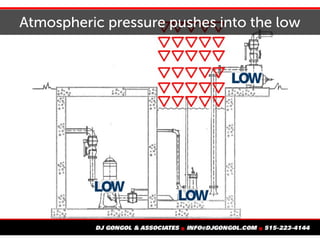
Atmospheric pressure into something useful
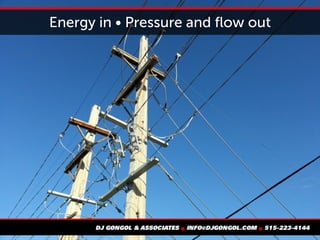
Energy in • Pressure and flow out
Trade-off: Your thumb over a garden hose
Main pump types

Positive displacement

Pushers

Centrifugal

Spinners
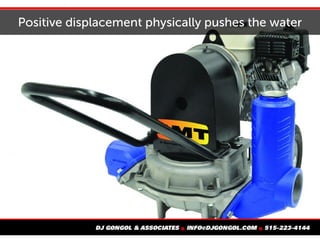
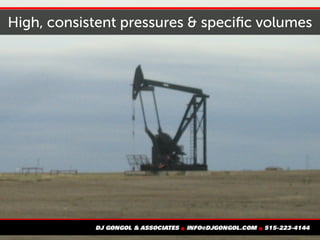
Positive displacement physically pushes the water
High, consistent pressures & specific volumes
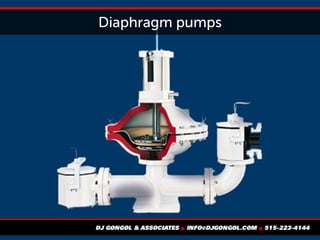
Diaphragm pumps
Peristaltic pumps
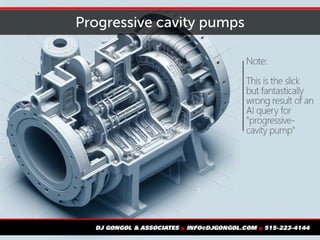
Progressive cavity pumps
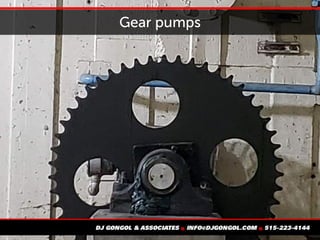
Gear pumps
Good with thick fluids that don't like to flow
Centrifugal pumps create pressure differential
Low pressure at eye, high pressure at discharge
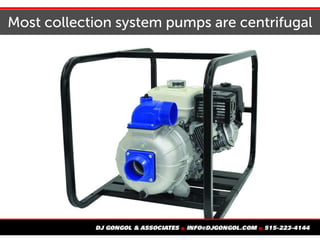
Most collection system pumps are centrifugal
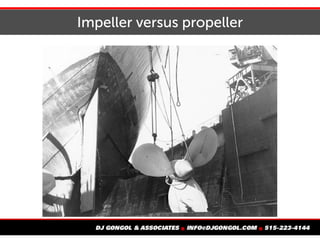
Impeller versus propeller
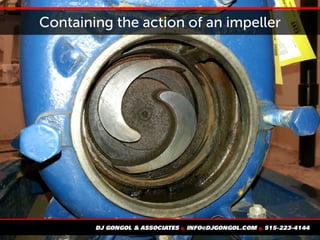
Containing the action of an impeller
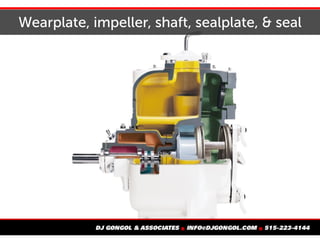
Wearplate, impeller, shaft, sealplate, & seal
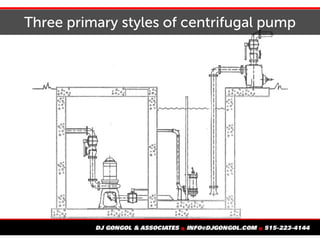
Three primary styles of centrifugal pump
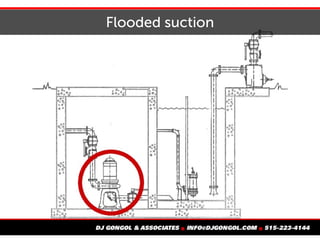
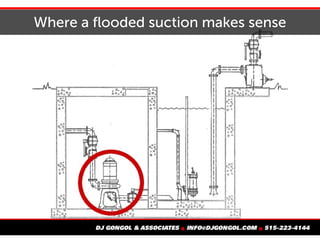
Flooded suction
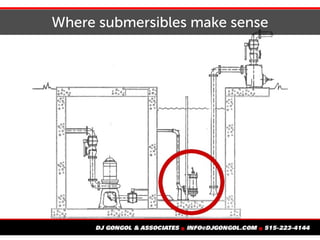
Submersible
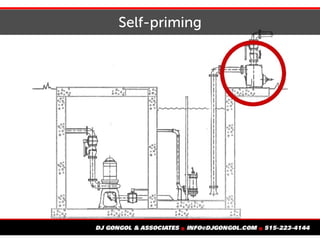
Self-priming
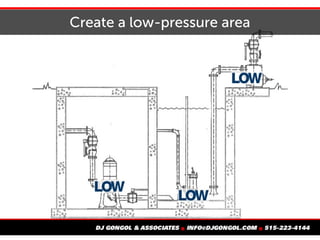
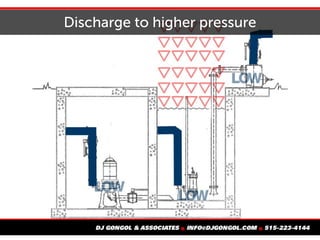
Create a low-pressure area
Atmospheric pressure pushes into the low
Discharge to higher pressure
Science of atmospheric pressure
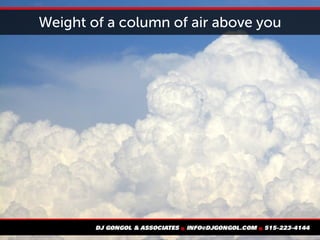
Weight of a column of air above you
Forces that offset its effects
Vapor pressure
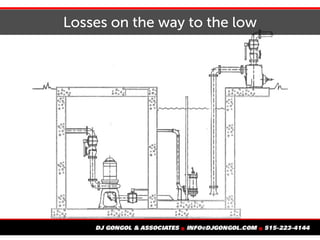
Losses on the way to the low
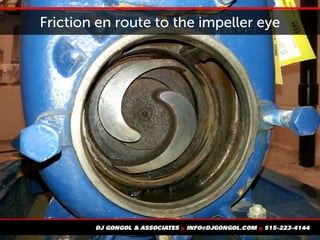
Friction en route to the impeller eye
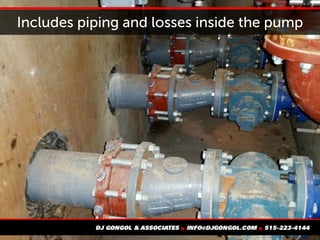
Includes piping and losses inside the pump
Static elevation differences
Also important: A sensible safety factor
A hurricane is one way to think of it...
...but so is a tire on a wet or muddy road
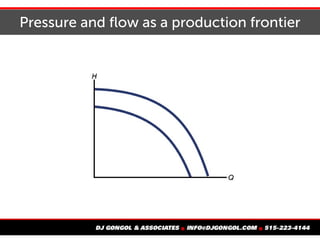
Pressure and flow as a production frontier
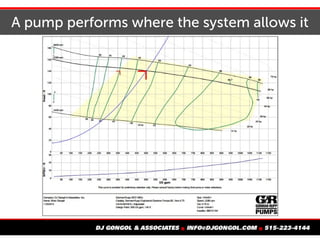
A pump performs where the system allows it
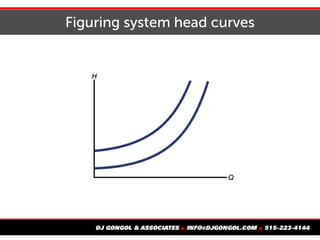
Figuring system head curves
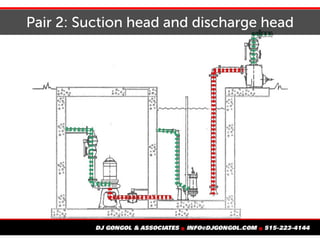
Two pairs of things to consider
Pair 1: Static head and friction head
Pair 2: Suction head and discharge head
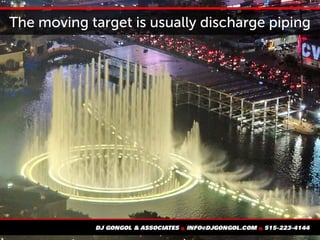
The moving target is usually discharge piping
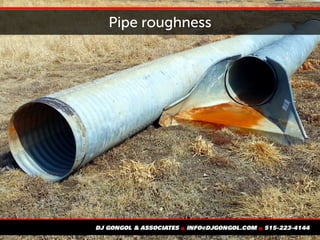
Pipe roughness
Solids buildup (settling and sedimentation)
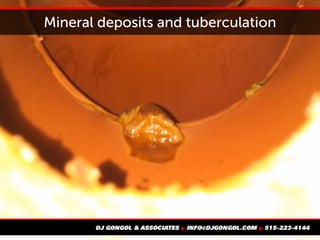
Mineral deposits and tuberculation
Scouring velocity is important but not enough
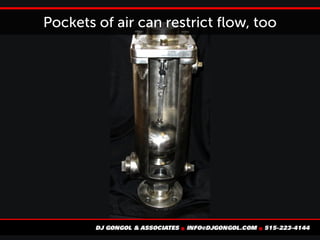
Pockets of air can restrict flow, too
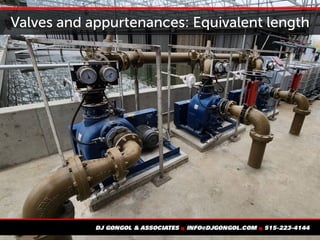
Valves and appurtenances: Equivalent length
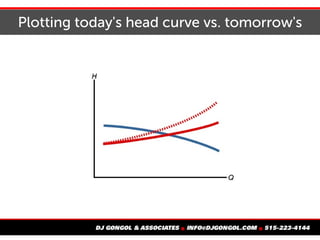
Plotting today's head curve vs. tomorrow's
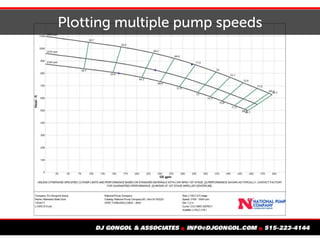
Plotting multiple pump speeds
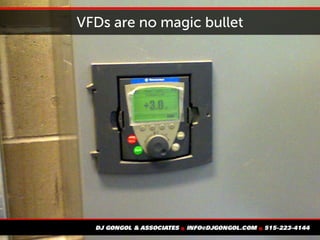
VFDs are no magic bullet
Static heads determine VFD usefulness
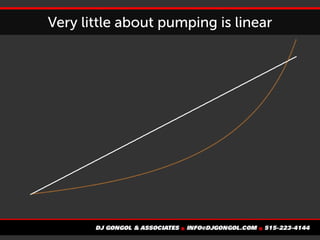
Very little about pumping is linear
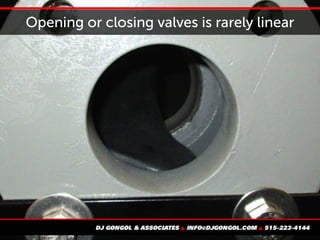
Opening or closing valves is rarely linear
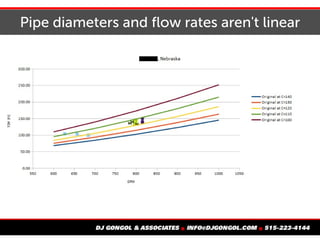
Pipe diameters and flow rates aren't linear
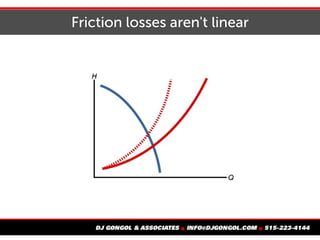
Friction losses aren't linear
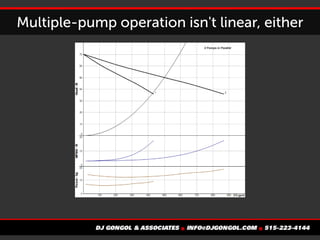
Multiple-pump operation isn't linear, either
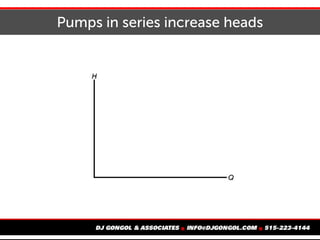
Pumps in series increase heads
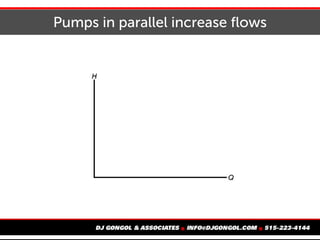
Pumps in parallel increase flows
Know what you're getting in advance
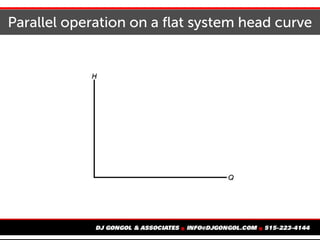
Parallel operation on a flat system head curve
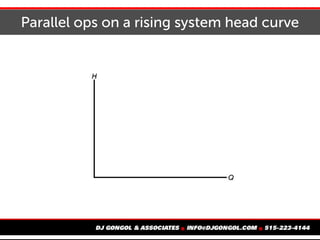
Parallel ops on a rising system head curve
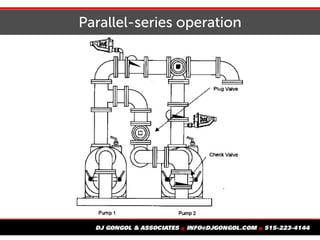
Parallel-series operation
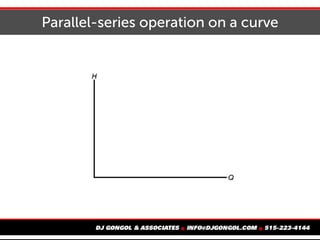
Parallel-series operation on a curve
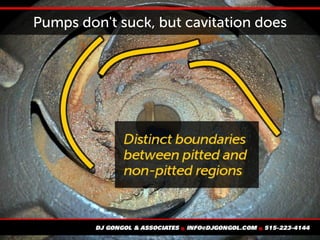
Pumps don't suck, but cavitation does
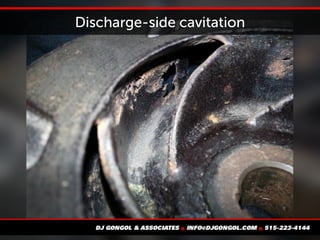
Discharge-side cavitation
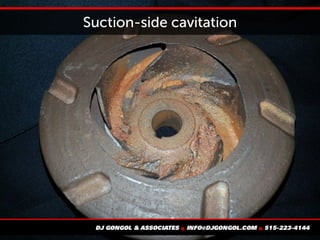
Suction-side cavitation
Always use the safest available pump
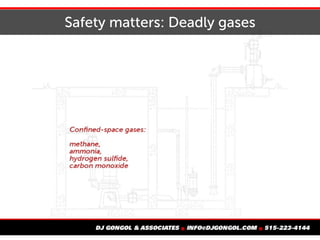
Safety matters: Deadly gases
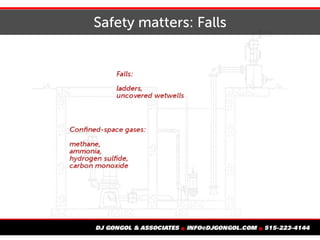
Safety matters: Falls
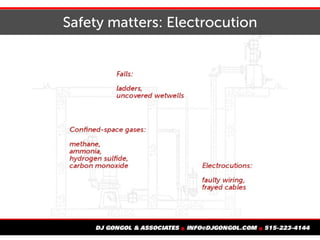
Safety matters: Electrocution
Where a flooded suction makes sense
Where submersibles make sense
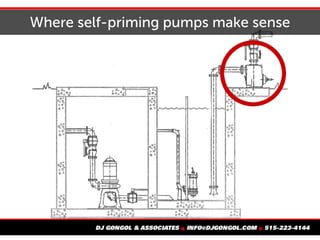
Where self-priming pumps make sense
Questions?

Thank you for coming! 
Brian Gongol
DJ Gongol & Associates

515-223-4144
info@djgongol.com
www.gongol.net

Facebool, Twitter, or
LinkedIn: @djgongol

Call or email anytime
References and credits

Catalog images of pumps courtesy AMT Pump Co.

Hurricane imagery from NOAA (public domain)

http://www.nnvl.noaa.gov/cgi-bin/index.cgi?
page=items&ser=112503&large=1

Propeller image from the US Navy (public domain)

http://www.history.navy.mil/photos/sh-usn/usnsh-g/ap126-d.htm

Wildly incorrect isometric image of a purported progressive-cavity
pump generated by Bing AI

Lift station sample diagram and pump cutaway photo courtesy The
Gorman-Rupp Co.

All other photos are original work of and copyright reserved by Brian
Gongol

Introduction to Pump Hydraulics - v.15