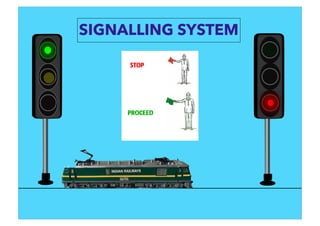
SIGNALLING SYSTEM
‣Hometown- Jaipur
‣Schooling - JNV SAWAI
MADHOPUR
‣Graduation- B.tech Civil
Engineering from NIT
KURUKSHETRA ( 2017)
‣UPSC ESE 2018 - AIR 24
‣GATE 2018 - AIR 97
‣Currently under training in Indian
railways as an IRSE- probationer.
ARUN KUMAR SHARMA
Telegram : shiksha_path
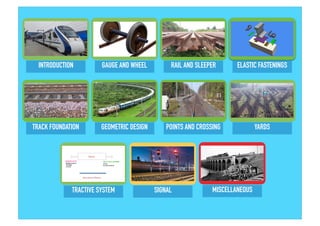
INTRODUCTION RAIL AND SLEEPER
TRACK FOUNDATION GEOMETRIC DESIGN POINTS AND CROSSING
ELASTIC FASTENINGS
TRACTIVE SYSTEM SIGNAL MISCELLANEOUS
GAUGE AND WHEEL
YARDS
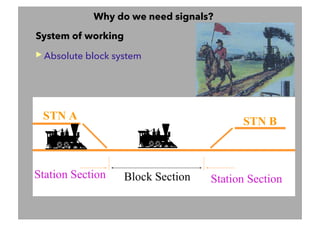
Why do we need signals?
‣Absolute block system
System of working
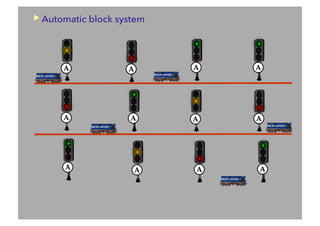
‣Automatic block system
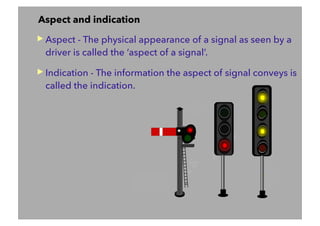
Aspect and indication
‣Aspect - The physical appearance of a signal as seen by a
driver is called the ‘aspect of a signal’.
‣Indication - The information the aspect of signal conveys is
called the indication.
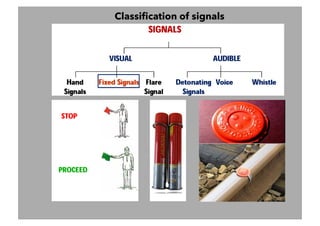
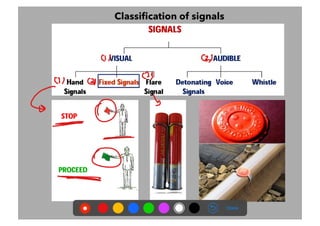
Classification of signals
Fixed signals
Fixed signals
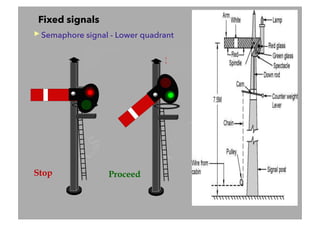
‣Semaphore signal - Lower quadrant
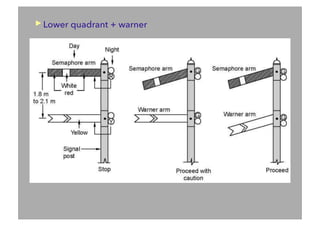
‣Lower quadrant + warner
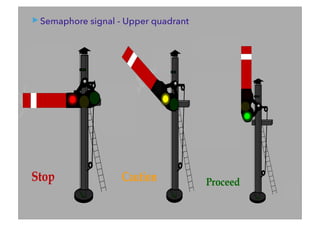
‣Semaphore signal - Upper quadrant
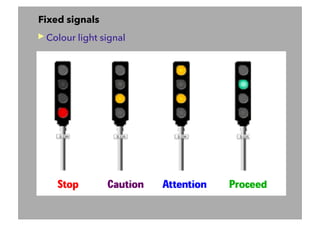
‣Colour light signal
Fixed signals
Fixed signals
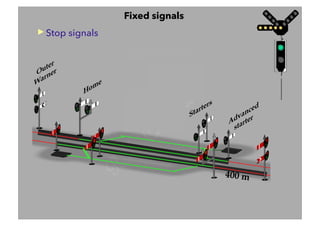
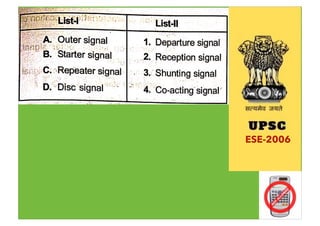
‣Stop signals
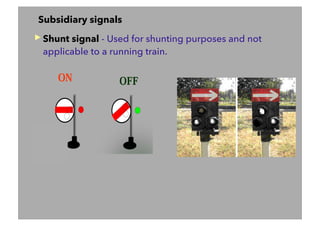
‣Shunt signal - Used for shunting purposes and not
applicable to a running train.
Subsidiary signals
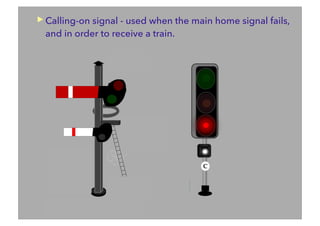
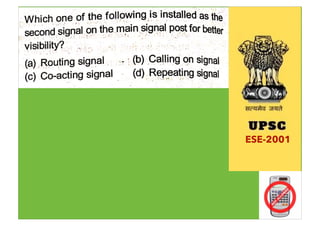
‣Calling-on signal - used when the main home signal fails,
and in order to receive a train.
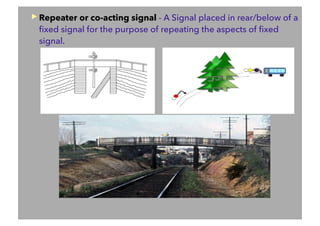
‣Repeater or co-acting signal - A Signal placed in rear/below of a
fixed signal for the purpose of repeating the aspects of fixed
signal.
ESE-2001
ESE-2006
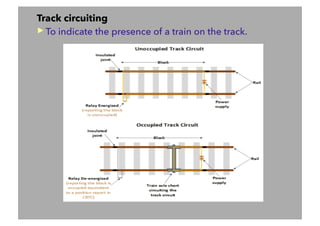
Track circuiting
‣To indicate the presence of a train on the track.
shiksha_path
Highway Engineering
Thank you !

Introduction to Metro signalling and systems.pdf