Lecture 1
General Introduction
By Dr. Ebtehal Galal 2017
Physics
of light
Natural
lighting
Artificial
lighting
Lighting
• Ch 1: Visual and Perception
• Ch 2: Properties of Light
• Ch 3: Natural Light in Buildings
• Ch 4: Electric Light
• Ch 5: Light and Form
• Ch 6: Lighting Calculation
Methods
2/6/2017 by Dr. Ebtehal Galal 3
2/6/2017 by Dr. Ebtehal Galal 5
For the most part of the history of mankind, there were
basically two sources of light available.
the other is flame.The older one of these two is daylight,
2/6/2017 by Dr. Ebtehal Galal 6
• Oil
• Chimney
• Candle light
• Al Razzi
kerosene lamp
900 ce
• 1000 first street
lamp in
Andalusia
• Gas
• Use petroleum
instead of gas
• Using filament
• 1879‫م‬
Adison
electric lamp
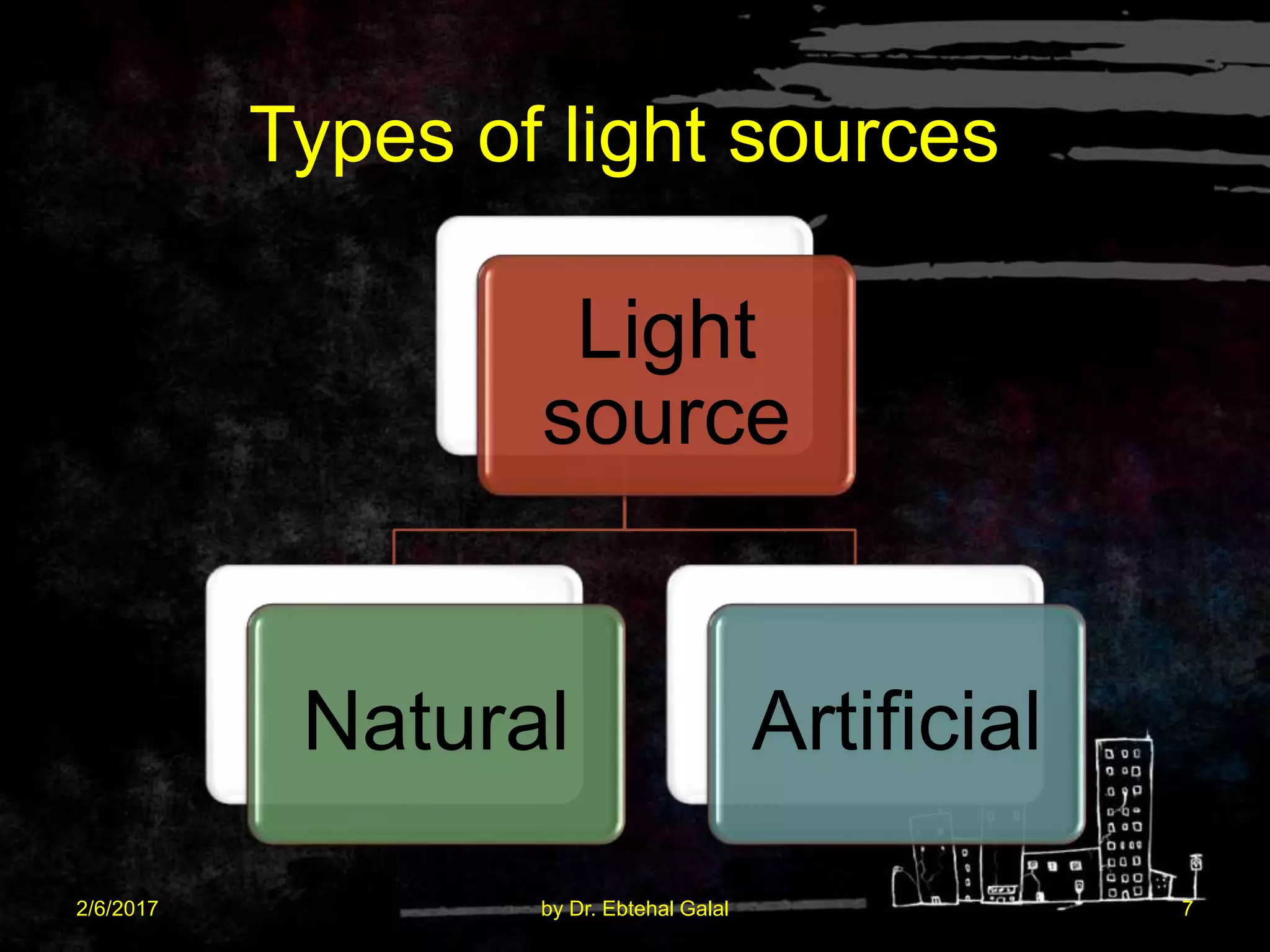
Types of light sources
Light
source
Natural Artificial
2/6/2017 by Dr. Ebtehal Galal 7
2/6/2017 by Dr. Ebtehal Galal 8
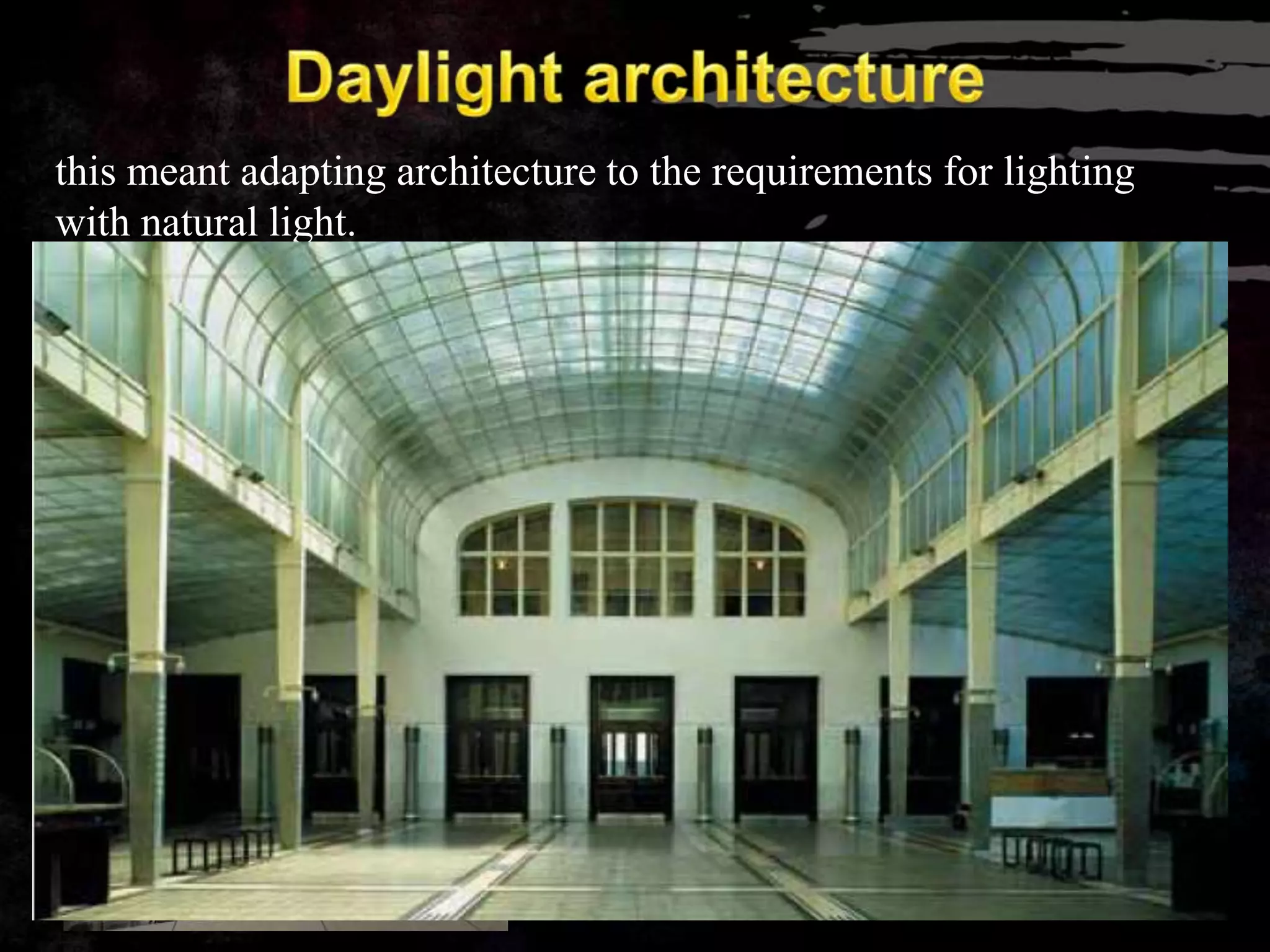
this meant adapting architecture to the requirements for lighting
with natural light.
2/6/2017 by Dr. Ebtehal Galal 9
2/6/2017 by Dr. Ebtehal Galal 10
2/6/2017 by Dr. Ebtehal Galal 11
Vision, biological needs,
visual information.
• Good visual environments allow us to focus
on what we want to see.
2/6/2017 by Dr. Ebtehal Galal 13
2/6/2017 by Dr. Ebtehal Galal 14
1. Nonuniform lighting
layouts with no glare
2. Focusing on walls
rather than overhead
lighting
1. Openings to allow
daylight penetration
2. Avoidance of visual
noise from solar shading
devices
3. Respect privacy
needs at ground-level
openings
William Lam has identified many of these biological information needs
such as:
2/6/2017 by Dr. Ebtehal Galal 15
Most of the information we receive about the world
around us is through our eyes.
Binocular vision.
The ability of the brain to perceive the images from both eyes
as a single image
2/6/2017 by Dr. Ebtehal Galal 16
Complicated proces
between eye and
brain..
-1-forming the image
-2-Transfer the image
through optic nerve to
the brain
-3-perceive the images
“perception”: enables
recognition and
understanding to
images,
2/6/2017 by Dr. Ebtehal Galal 17
Experience,
expectations,
lighting, and emotion
influence perception
or evaluation of
visual images.
2/6/2017 by Dr. Ebtehal Galal 18
Motion perception
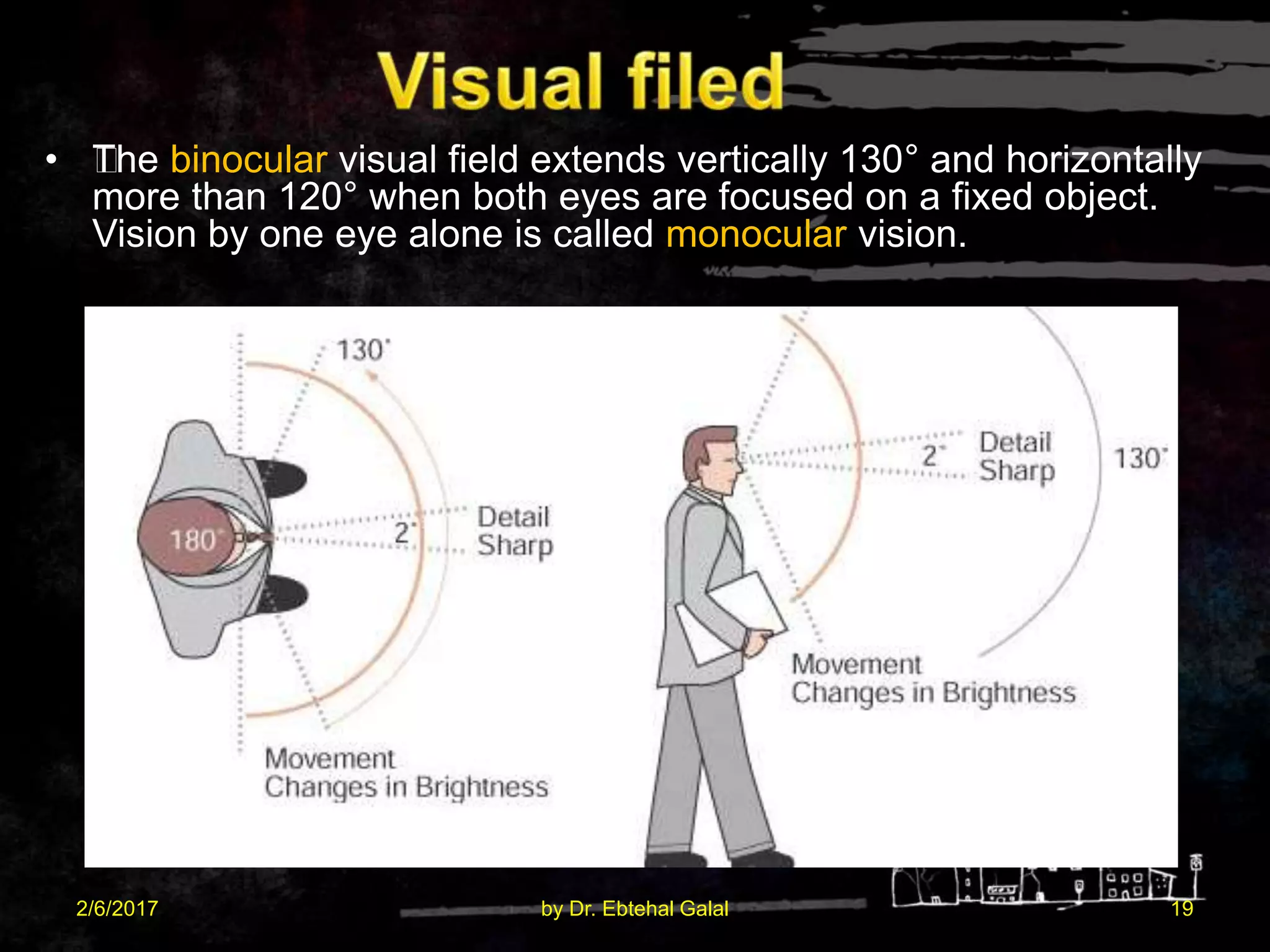
• The binocular visual field extends vertically 130° and horizontally
more than 120° when both eyes are focused on a fixed object.
Vision by one eye alone is called monocular vision.
2/6/2017 by Dr. Ebtehal Galal 19
2/6/2017 by Dr. Ebtehal Galal 20
Visual task performance generally involves
- Detection (I see something),
- Recognition (it is a man),
- and Identification (the man is Mohamed).
What is visual tasks?
• As the visual task becomes more
demanding, the lighting conditions become
increasingly critical.
• When the tasks are specific to a location, the
designer can provide an appropriate quality
and quantity of light for that task.
2/6/2017 by Dr. Ebtehal Galal 21
there are many factors affect visibility such
as: visibility α size

2/6/2017 by Dr. Ebtehal Galal 22
2/6/2017 by Dr. Ebtehal Galal 23
Illuminanation 1/α size
• visibility α age
2/6/2017 by Dr. Ebtehal Galal 24
Visual performance decreases from the late twenties on, because of
yellowing of the lens and other factors
As age increases, normal-sighted persons need a higher illumination level'
and optimum contrast of visual tasks to achieve best visual performance
2/6/2017 by Dr. Ebtehal Galal 25
This is an important consideration in the illumination of exit signs for
visibility under emergency conditions in smoke-filled rooms.
• visibility α contrast
• visibility α time available to perform a task
2/6/2017 by Dr. Ebtehal Galal 26
Visual acuity improves with increasing
duration of exposure
increased luminance can solve the
missing of suitable duration .
2/6/2017 by Dr. Ebtehal Galal 27
2/6/2017 by Dr. Ebtehal Galal 28
• visibility α luminance of visual field
2/6/2017 by Dr. Ebtehal Galal 29
Our speed of reading is already
nearly 80 percent of our maximum
ability;
increasing the task luminance to 30
cd/ft2) provides about a 10 percent
additional increase.
• visibility α size
• Illuminanation 1/α size
• visibility α age
• visibility α contrast
• visibility α time available to perform a task
• visibility α luminance of visual field
2/6/2017 by Dr. Ebtehal Galal 30

Introduction to lighting design for architect and interior designers

  • 1.
    Lecture 1 General Introduction ByDr. Ebtehal Galal 2017
  • 2.
  • 3.
    • Ch 1:Visual and Perception • Ch 2: Properties of Light • Ch 3: Natural Light in Buildings • Ch 4: Electric Light • Ch 5: Light and Form • Ch 6: Lighting Calculation Methods 2/6/2017 by Dr. Ebtehal Galal 3
  • 5.
    2/6/2017 by Dr.Ebtehal Galal 5 For the most part of the history of mankind, there were basically two sources of light available. the other is flame.The older one of these two is daylight,
  • 6.
    2/6/2017 by Dr.Ebtehal Galal 6 • Oil • Chimney • Candle light • Al Razzi kerosene lamp 900 ce • 1000 first street lamp in Andalusia • Gas • Use petroleum instead of gas • Using filament • 1879‫م‬ Adison electric lamp
  • 7.
    Types of lightsources Light source Natural Artificial 2/6/2017 by Dr. Ebtehal Galal 7
  • 8.
    2/6/2017 by Dr.Ebtehal Galal 8 this meant adapting architecture to the requirements for lighting with natural light.
  • 9.
    2/6/2017 by Dr.Ebtehal Galal 9
  • 10.
    2/6/2017 by Dr.Ebtehal Galal 10
  • 11.
    2/6/2017 by Dr.Ebtehal Galal 11
  • 12.
  • 13.
    • Good visualenvironments allow us to focus on what we want to see. 2/6/2017 by Dr. Ebtehal Galal 13
  • 14.
    2/6/2017 by Dr.Ebtehal Galal 14 1. Nonuniform lighting layouts with no glare 2. Focusing on walls rather than overhead lighting 1. Openings to allow daylight penetration 2. Avoidance of visual noise from solar shading devices 3. Respect privacy needs at ground-level openings William Lam has identified many of these biological information needs such as:
  • 15.
    2/6/2017 by Dr.Ebtehal Galal 15 Most of the information we receive about the world around us is through our eyes. Binocular vision. The ability of the brain to perceive the images from both eyes as a single image
  • 16.
    2/6/2017 by Dr.Ebtehal Galal 16 Complicated proces between eye and brain.. -1-forming the image -2-Transfer the image through optic nerve to the brain -3-perceive the images “perception”: enables recognition and understanding to images,
  • 17.
    2/6/2017 by Dr.Ebtehal Galal 17 Experience, expectations, lighting, and emotion influence perception or evaluation of visual images.
  • 18.
    2/6/2017 by Dr.Ebtehal Galal 18 Motion perception
  • 19.
    • The binocularvisual field extends vertically 130° and horizontally more than 120° when both eyes are focused on a fixed object. Vision by one eye alone is called monocular vision. 2/6/2017 by Dr. Ebtehal Galal 19
  • 20.
    2/6/2017 by Dr.Ebtehal Galal 20 Visual task performance generally involves - Detection (I see something), - Recognition (it is a man), - and Identification (the man is Mohamed). What is visual tasks?
  • 21.
    • As thevisual task becomes more demanding, the lighting conditions become increasingly critical. • When the tasks are specific to a location, the designer can provide an appropriate quality and quantity of light for that task. 2/6/2017 by Dr. Ebtehal Galal 21
  • 22.
    there are manyfactors affect visibility such as: visibility α size  2/6/2017 by Dr. Ebtehal Galal 22
  • 23.
    2/6/2017 by Dr.Ebtehal Galal 23 Illuminanation 1/α size
  • 24.
    • visibility αage 2/6/2017 by Dr. Ebtehal Galal 24 Visual performance decreases from the late twenties on, because of yellowing of the lens and other factors As age increases, normal-sighted persons need a higher illumination level' and optimum contrast of visual tasks to achieve best visual performance
  • 25.
    2/6/2017 by Dr.Ebtehal Galal 25 This is an important consideration in the illumination of exit signs for visibility under emergency conditions in smoke-filled rooms. • visibility α contrast
  • 26.
    • visibility αtime available to perform a task 2/6/2017 by Dr. Ebtehal Galal 26 Visual acuity improves with increasing duration of exposure increased luminance can solve the missing of suitable duration .
  • 27.
    2/6/2017 by Dr.Ebtehal Galal 27
  • 28.
    2/6/2017 by Dr.Ebtehal Galal 28
  • 29.
    • visibility αluminance of visual field 2/6/2017 by Dr. Ebtehal Galal 29 Our speed of reading is already nearly 80 percent of our maximum ability; increasing the task luminance to 30 cd/ft2) provides about a 10 percent additional increase.
  • 30.
    • visibility αsize • Illuminanation 1/α size • visibility α age • visibility α contrast • visibility α time available to perform a task • visibility α luminance of visual field 2/6/2017 by Dr. Ebtehal Galal 30

Editor's Notes

  • #7 Oil Chimney Candel light Al razzi kerosene lamp 900 ce 1000 first street lamp in andalus Gass Use petrulim instaed of gass Using filamnt  1879م adeson electric lamp
  • #20 http://www.ssc.education.ed.ac.uk/courses/vi&multi/vmay06c.html
  • #23 تناسب طردي Direct proportion Inverse proportion
  • #27 aqiwatyyy