Introduction to JMS
and MDB
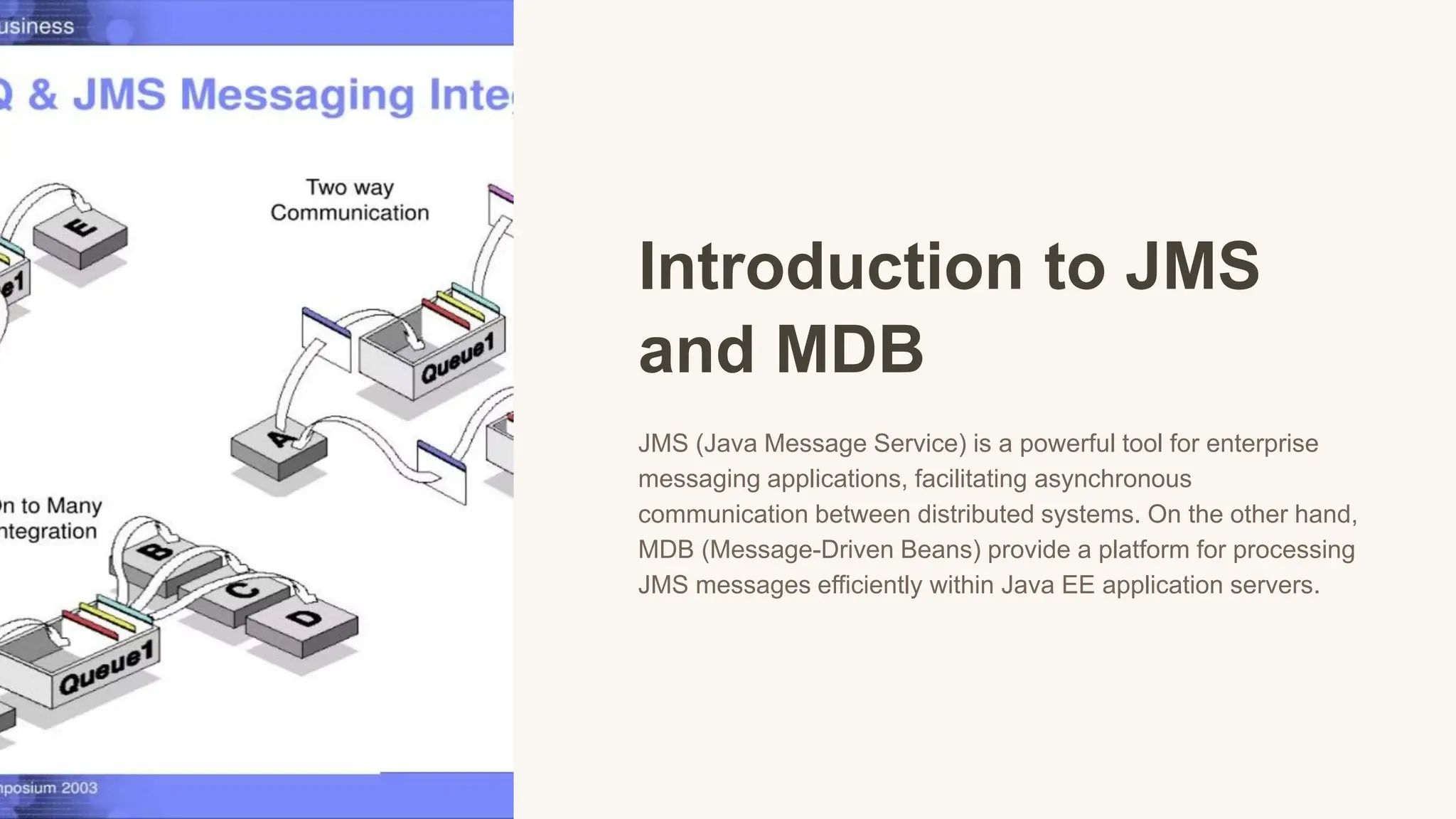
JMS (Java Message Service) is a powerful tool for enterprise
messaging applications, facilitating asynchronous
communication between distributed systems. On the other hand,
MDB (Message-Driven Beans) provide a platform for processing
JMS messages efficiently within Java EE application servers.
What is JMS?
Messaging Protocol
JMS, or Java Message Service, is a
standard messaging protocol for
sending and receiving messages
between clients.
Asynchronous
Communication
It enables asynchronous
communication, allowing applications to
send, receive, and read messages at
their own pace.
Middleware Technology
JMS is commonly used in enterprise applications, integrating with various middleware
technologies for reliable messaging.
Types of JMS
• Point-to-Point (PTP): Uses queues for asynchronous communication. In PTP messaging,
messages are sent from a single sender to a single receiver. Each message is received
by only one receiver, ensuring reliable and ordered message delivery.
• Publish/Subscribe (Pub/Sub): Utilizes topics for one-to-many messaging. In Pub/Sub
messaging, messages are published to a topic and delivered to all the subscribers who
have expressed interest in that topic. This allows for broadcast-style messaging and
enables multiple consumers to receive the same message.
• Request-Reply: Enables request-response communication between components. In a
request-reply model, a sender sends a request message and expects a response
message from the receiver. This pattern is useful for synchronous communication where
the sender needs a response before proceeding.
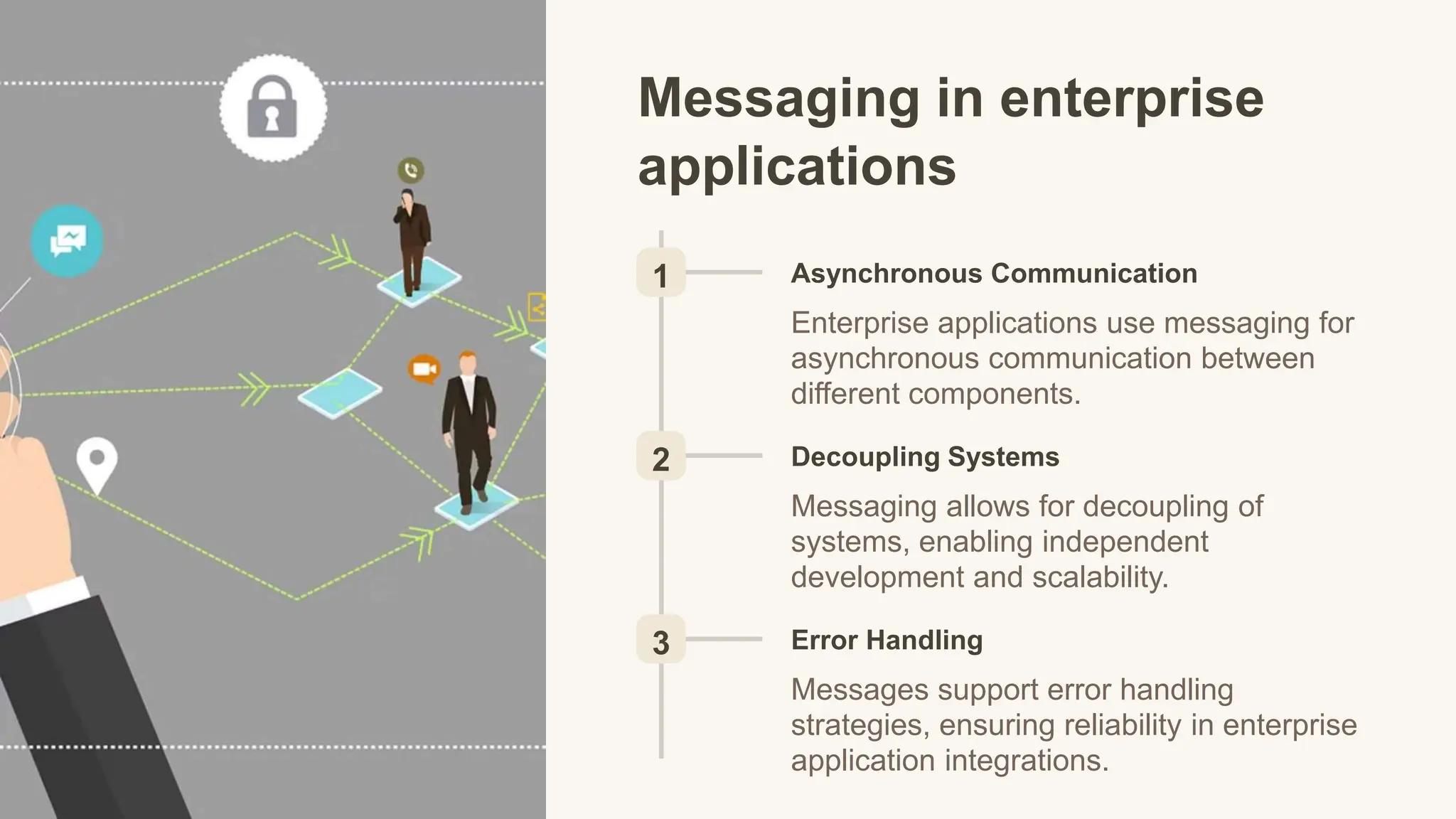
Messaging in enterprise
applications
1 Asynchronous Communication
Enterprise applications use messaging for
asynchronous communication between
different components.
2 Decoupling Systems
Messaging allows for decoupling of
systems, enabling independent
development and scalability.
3 Error Handling
Messages support error handling
strategies, ensuring reliability in enterprise
application integrations.
What are MDBs?
Message-Driven Beans (MDBs) are part of the Java EE platform
used to process asynchronous, reliable messaging. They
provide a means for Java EE applications to receive and process
messages from JMS to fulfill various tasks, such as updating
databases or triggering events.
Message-driven beans in Java EE
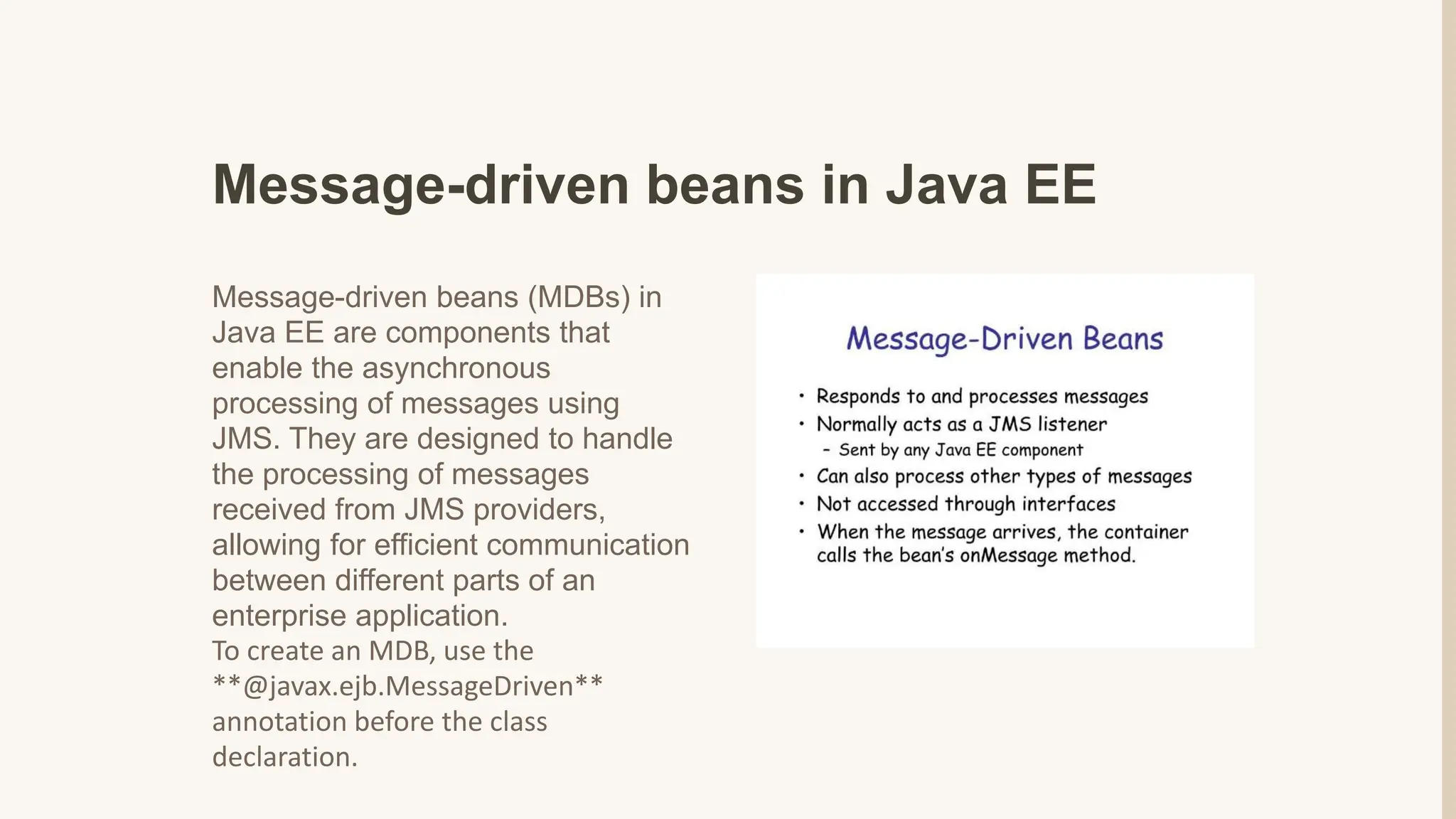
Message-driven beans (MDBs) in
Java EE are components that
enable the asynchronous
processing of messages using
JMS. They are designed to handle
the processing of messages
received from JMS providers,
allowing for efficient communication
between different parts of an
enterprise application.
To create an MDB, use the
**@javax.ejb.MessageDriven**
annotation before the class
declaration.
Integration of JMS and MDB
Seamless Integration
JMS and MDB integrate
seamlessly for efficient
message processing.
Effective
Communication
Enable effective
communication between
distributed components of
enterprise applications.
Collaborative
Functionality
Support collaborative
functionality for real-time data
processing and event-driven
architecture.
Best Practices for Using
JMS and MDB
When using JMS and MDB, it's essential to follow best practices
to ensure efficient and reliable messaging in enterprise
applications. Proper error handling, message acknowledgement,
and connection pooling are crucial for optimal performance.
It's also important to consider message filtering, message re-
delivery, and monitoring for scalability and robustness.
Implementing asynchronous communication and ensuring
transactional integrity are key aspects of JMS and MDB best
practices.
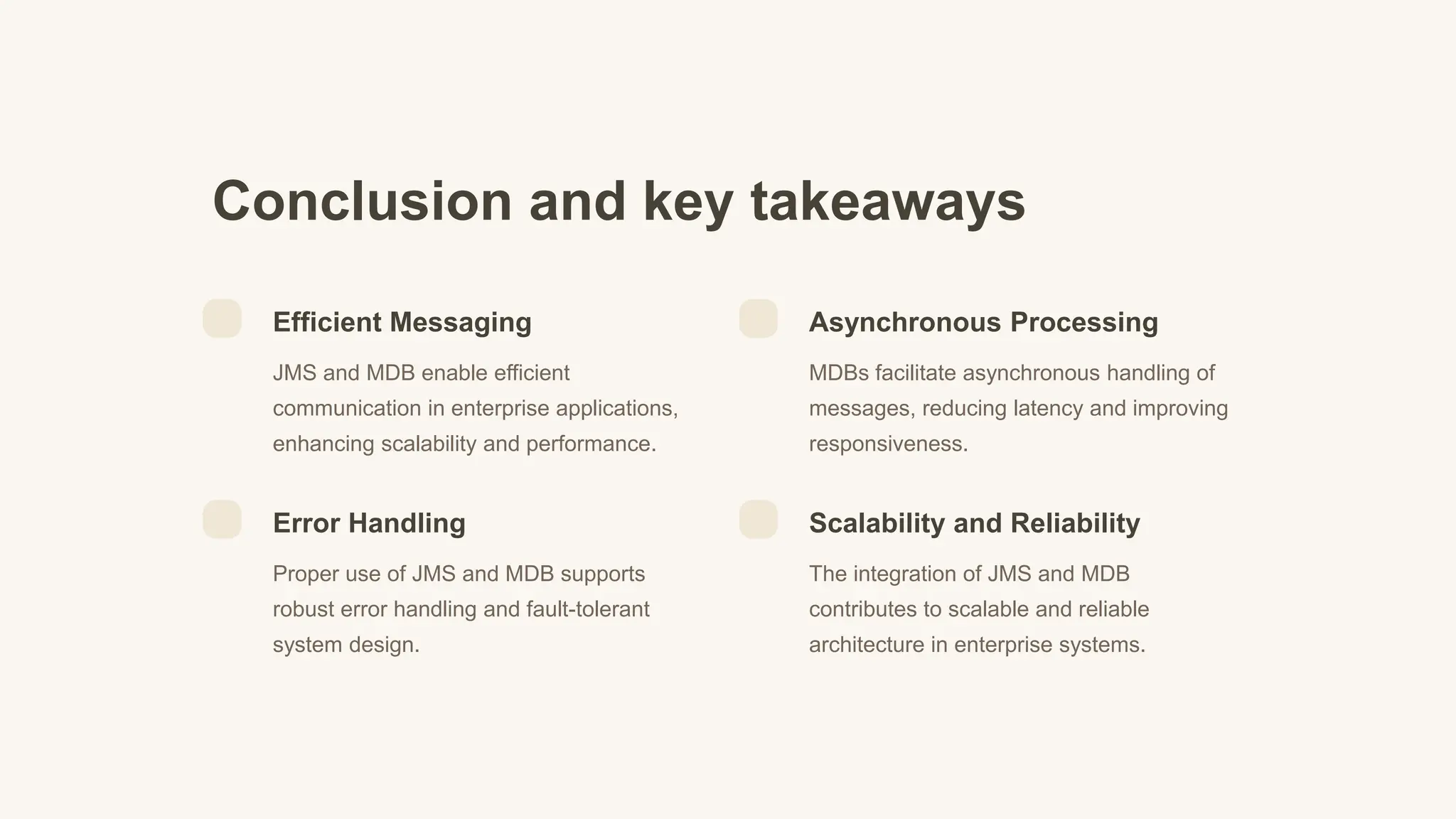
Conclusion and key takeaways
Efficient Messaging
JMS and MDB enable efficient
communication in enterprise applications,
enhancing scalability and performance.
Asynchronous Processing
MDBs facilitate asynchronous handling of
messages, reducing latency and improving
responsiveness.
Error Handling
Proper use of JMS and MDB supports
robust error handling and fault-tolerant
system design.
Scalability and Reliability
The integration of JMS and MDB
contributes to scalable and reliable
architecture in enterprise systems.
JMS (Java Message Service) Example:
import javax.jms.*; import org.apache.activemq.ActiveMQConnectionFactory;
public class JMSExample {
public static void main(String[] args)
throws JMSException {
// Creating a connection factory ConnectionFactory cf = new
ActiveMQConnectionFactory("tcp://localhost:61616");
// Creating a connection
Connection conn = cf.createConnection();
conn.start();
// Creating a session
Session session = conn.createSession(false, Session.AUTO_ACKNOWLEDGE);
// Creating a message producer for the queue
MessageProducer producer =
session.createProducer(session.createQueue("exampleQueue"));
// Sending a text message
producer.send(session.createTextMessage("Hello, JMS!"));
// Closing the connection
conn.close();
}
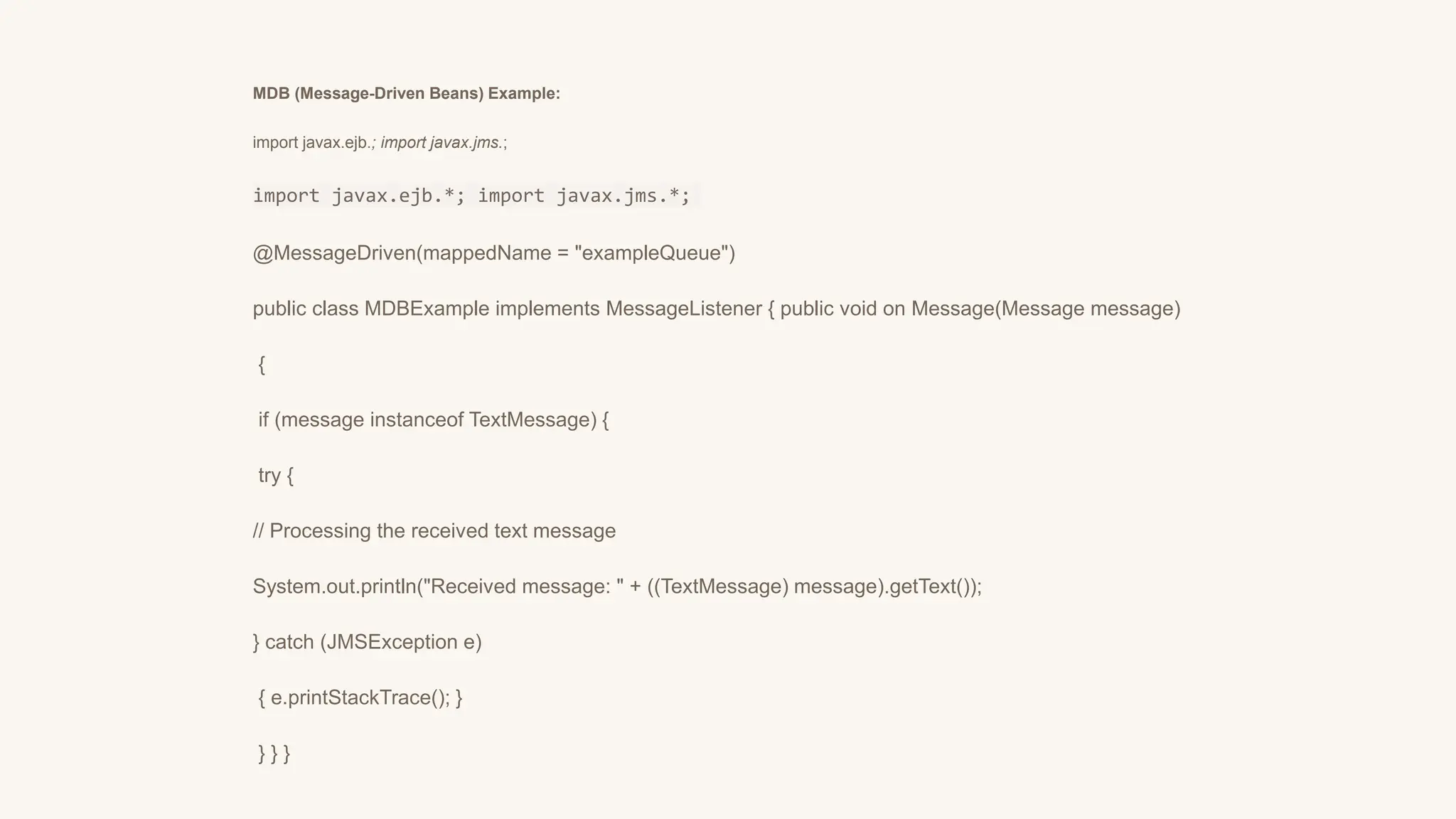
MDB (Message-Driven Beans) Example:
import javax.ejb.; import javax.jms.;
import javax.ejb.*; import javax.jms.*;
@MessageDriven(mappedName = "exampleQueue")
public class MDBExample implements MessageListener { public void on Message(Message message)
{
if (message instanceof TextMessage) {
try {
// Processing the received text message
System.out.println("Received message: " + ((TextMessage) message).getText());
} catch (JMSException e)
{ e.printStackTrace(); }
} } }

Introduction-to-JMS-and-MDB java ejb .pptx

  • 1.
    Introduction to JMS andMDB JMS (Java Message Service) is a powerful tool for enterprise messaging applications, facilitating asynchronous communication between distributed systems. On the other hand, MDB (Message-Driven Beans) provide a platform for processing JMS messages efficiently within Java EE application servers.
  • 2.
    What is JMS? MessagingProtocol JMS, or Java Message Service, is a standard messaging protocol for sending and receiving messages between clients. Asynchronous Communication It enables asynchronous communication, allowing applications to send, receive, and read messages at their own pace. Middleware Technology JMS is commonly used in enterprise applications, integrating with various middleware technologies for reliable messaging.
  • 3.
    Types of JMS •Point-to-Point (PTP): Uses queues for asynchronous communication. In PTP messaging, messages are sent from a single sender to a single receiver. Each message is received by only one receiver, ensuring reliable and ordered message delivery. • Publish/Subscribe (Pub/Sub): Utilizes topics for one-to-many messaging. In Pub/Sub messaging, messages are published to a topic and delivered to all the subscribers who have expressed interest in that topic. This allows for broadcast-style messaging and enables multiple consumers to receive the same message. • Request-Reply: Enables request-response communication between components. In a request-reply model, a sender sends a request message and expects a response message from the receiver. This pattern is useful for synchronous communication where the sender needs a response before proceeding.
  • 4.
    Messaging in enterprise applications 1Asynchronous Communication Enterprise applications use messaging for asynchronous communication between different components. 2 Decoupling Systems Messaging allows for decoupling of systems, enabling independent development and scalability. 3 Error Handling Messages support error handling strategies, ensuring reliability in enterprise application integrations.
  • 5.
    What are MDBs? Message-DrivenBeans (MDBs) are part of the Java EE platform used to process asynchronous, reliable messaging. They provide a means for Java EE applications to receive and process messages from JMS to fulfill various tasks, such as updating databases or triggering events.
  • 6.
    Message-driven beans inJava EE Message-driven beans (MDBs) in Java EE are components that enable the asynchronous processing of messages using JMS. They are designed to handle the processing of messages received from JMS providers, allowing for efficient communication between different parts of an enterprise application. To create an MDB, use the **@javax.ejb.MessageDriven** annotation before the class declaration.
  • 7.
    Integration of JMSand MDB Seamless Integration JMS and MDB integrate seamlessly for efficient message processing. Effective Communication Enable effective communication between distributed components of enterprise applications. Collaborative Functionality Support collaborative functionality for real-time data processing and event-driven architecture.
  • 8.
    Best Practices forUsing JMS and MDB When using JMS and MDB, it's essential to follow best practices to ensure efficient and reliable messaging in enterprise applications. Proper error handling, message acknowledgement, and connection pooling are crucial for optimal performance. It's also important to consider message filtering, message re- delivery, and monitoring for scalability and robustness. Implementing asynchronous communication and ensuring transactional integrity are key aspects of JMS and MDB best practices.
  • 9.
    Conclusion and keytakeaways Efficient Messaging JMS and MDB enable efficient communication in enterprise applications, enhancing scalability and performance. Asynchronous Processing MDBs facilitate asynchronous handling of messages, reducing latency and improving responsiveness. Error Handling Proper use of JMS and MDB supports robust error handling and fault-tolerant system design. Scalability and Reliability The integration of JMS and MDB contributes to scalable and reliable architecture in enterprise systems.
  • 10.
    JMS (Java MessageService) Example: import javax.jms.*; import org.apache.activemq.ActiveMQConnectionFactory; public class JMSExample { public static void main(String[] args) throws JMSException { // Creating a connection factory ConnectionFactory cf = new ActiveMQConnectionFactory("tcp://localhost:61616"); // Creating a connection Connection conn = cf.createConnection(); conn.start(); // Creating a session Session session = conn.createSession(false, Session.AUTO_ACKNOWLEDGE); // Creating a message producer for the queue MessageProducer producer = session.createProducer(session.createQueue("exampleQueue")); // Sending a text message producer.send(session.createTextMessage("Hello, JMS!")); // Closing the connection conn.close(); }
  • 11.
    MDB (Message-Driven Beans)Example: import javax.ejb.; import javax.jms.; import javax.ejb.*; import javax.jms.*; @MessageDriven(mappedName = "exampleQueue") public class MDBExample implements MessageListener { public void on Message(Message message) { if (message instanceof TextMessage) { try { // Processing the received text message System.out.println("Received message: " + ((TextMessage) message).getText()); } catch (JMSException e) { e.printStackTrace(); } } } }