An Introduction Franchising
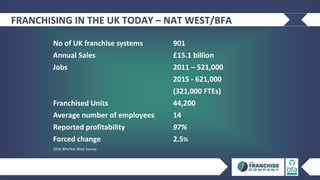
FRANCHISING IN THE UK TODAY – NAT WEST/BFA
No of UK franchise systems 901
Annual Sales £15.1 billion
Jobs 2011 – 521,000
2015 - 621,000
(321,000 FTEs)
Franchised Units 44,200
Average number of employees 14
Reported profitability 97%
Forced change 2.5%
2016 BFA/Nat West Survey
LEGISLATION
No specific franchise legislation exists
in the UK
SPOT THE FRANCHISES!
KEY FEATURES OF A FRANCHISE RELATIONSHIP
• Proven business model
• Use of the brand/trading name
• Use of Intellectual Property
• Franchise agreement
• Payment of fees (up front and ongoing)
• Induction training
• Ongoing training and business support
• Effective marketing tools and support
• Agreement to operate the business in line with the model
developed by the franchisor
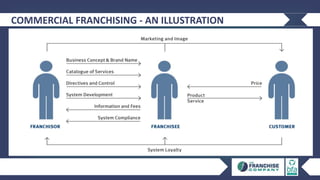
COMMERCIAL FRANCHISING - AN ILLUSTRATION
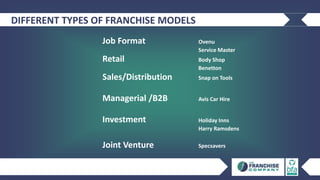
DIFFERENT TYPES OF FRANCHISE MODELS
Job Format Ovenu
Service Master
Retail Body Shop
Benetton
Sales/Distribution Snap on Tools
Managerial /B2B Avis Car Hire
Investment Holiday Inns
Harry Ramsdens
Joint Venture Specsavers
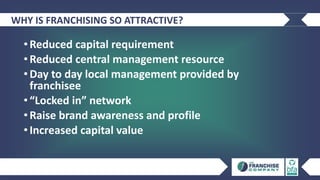
WHY IS FRANCHISING SO ATTRACTIVE?
•Reduced capital requirement
•Reduced central management resource
•Day to day local management provided by
franchisee
•“Locked in” network
•Raise brand awareness and profile
•Increased capital value
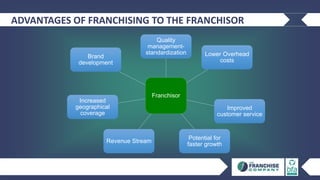
ADVANTAGES OF FRANCHISING TO THE FRANCHISOR
Franchisor
Quality
management-
standardization Lower Overhead
costs
Improved
customer service
Potential for
faster growth
Revenue Stream
Increased
geographical
coverage
Brand
development
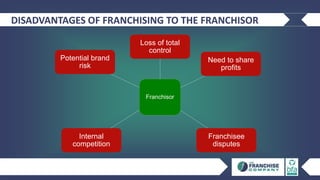
DISADVANTAGES OF FRANCHISING TO THE FRANCHISOR
Franchisor
Loss of total
control
Need to share
profits
Franchisee
disputes
Internal
competition
Potential brand
risk
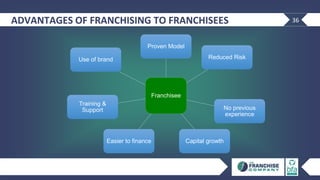
36ADVANTAGES OF FRANCHISING TO FRANCHISEES
Franchisee
Proven Model
Reduced Risk
No previous
experience
Capital growthEasier to finance
Training &
Support
Use of brand
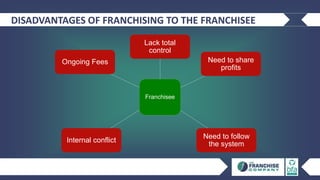
DISADVANTAGES OF FRANCHISING TO THE FRANCHISEE
Franchisee
Lack total
control
Need to share
profits
Need to follow
the system
Internal conflict
Ongoing Fees
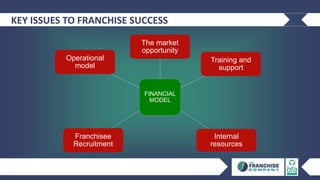
KEY ISSUES TO FRANCHISE SUCCESS
FINANCIAL
MODEL
The market
opportunity
Training and
support
Internal
resources
Franchisee
Recruitment
Operational
model
TO BE SUITABLE FOR FRANCHISING A BUSINESS SHOULD..
•Be tried & tested
•Generating good operating profits
•Developed business format
•Be able to be replicated
•Similar demand in other areas
•Reasonable training requirements
•No main barriers to entry
FINANCIALS – INITIAL FEES
•Most franchisors charge an
initial fee – Franchise Package
Fee
•Initial package fees vary
between £5000 and £25,000
(depending upon the individual
business)
•Some franchisors also charge a
license fee re intellectual
property.
AND ONGOING INCOME
•Ongoing income generated in a
number of ways –
•Management fees – % of gross sales
net of VAT is the norm
•OR Selling product or services to
franchisees
•OR Fixed monthly fees
•Dependent on each individual business
KEY POINTS OF THE FRANCHISE AGREEMENT
•Fixed term agreement
•Franchisee right to renew
•Franchisor rights re termination
•No notice period for franchisee
•Same ongoing terms for all network
•Subject to commercial laws
•Some impact re European legislation
•Terms must comply with BFA
requirements for membership
COMPARISON WITH COMPANY OWNED EXPANSION
•A smaller slice of a larger cake
•Less investment required
•Reduced risk
•Reduced ongoing
management function
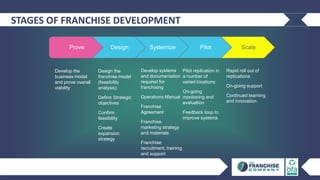
STAGES OF FRANCHISE DEVELOPMENT
Design the
franchise model
(feasibility
analysis)
Define Strategic
objectives
Confirm
feasibility
Create
expansion
strategy
Develop systems
and documentation
required for
franchising
Operations Manual
Franchise
Agreement
Franchise
marketing strategy
and materials
Franchise
recruitment, training
and support
systems
Pilot replication in
a number of
varied locations
On-going
monitoring and
evaluation
Feedback loop to
improve systems
Rapid roll out of
replications
On-going support
Continued learning
and innovation
Develop the
business model
and prove overall
viability
Prove Design Systemize Pilot Scale
FRANCHISE SUCCESS
• Win-win relationship
• Interdependency
• Mutual respect
• Whole is greater than the
component parts
• Added value in system
• Value for money re fees
• Desire to renew the agreement
• Take professional advice – BFA
affiliates
BRITISH FRANCHISE ASSOCIATION (Bfa)
• Industry body
• Established by a small group of
franchisors in 1979
• Now has over 300 members
• Represents franchising in the UK and
Europe
• Mainly franchisor funded and managed
• Franchisee members
• Membership code of ethics
• Affiliates are approved and need to
follow European code of ethics
THE FRANCHISE COMPANY
Mashud Choudhury
mc@franchisecompany.co.uk
Mobile: 07778 743517
www.franchisecompany.co.uk

Introduction to franchising presentation 2018.pptxv1

  • 1.
  • 2.
    FRANCHISING IN THEUK TODAY – NAT WEST/BFA No of UK franchise systems 901 Annual Sales £15.1 billion Jobs 2011 – 521,000 2015 - 621,000 (321,000 FTEs) Franchised Units 44,200 Average number of employees 14 Reported profitability 97% Forced change 2.5% 2016 BFA/Nat West Survey
  • 3.
    LEGISLATION No specific franchiselegislation exists in the UK
  • 4.
  • 5.
    KEY FEATURES OFA FRANCHISE RELATIONSHIP • Proven business model • Use of the brand/trading name • Use of Intellectual Property • Franchise agreement • Payment of fees (up front and ongoing) • Induction training • Ongoing training and business support • Effective marketing tools and support • Agreement to operate the business in line with the model developed by the franchisor
  • 6.
    COMMERCIAL FRANCHISING -AN ILLUSTRATION
  • 7.
    DIFFERENT TYPES OFFRANCHISE MODELS Job Format Ovenu Service Master Retail Body Shop Benetton Sales/Distribution Snap on Tools Managerial /B2B Avis Car Hire Investment Holiday Inns Harry Ramsdens Joint Venture Specsavers
  • 8.
    WHY IS FRANCHISINGSO ATTRACTIVE? •Reduced capital requirement •Reduced central management resource •Day to day local management provided by franchisee •“Locked in” network •Raise brand awareness and profile •Increased capital value
  • 9.
    ADVANTAGES OF FRANCHISINGTO THE FRANCHISOR Franchisor Quality management- standardization Lower Overhead costs Improved customer service Potential for faster growth Revenue Stream Increased geographical coverage Brand development
  • 10.
    DISADVANTAGES OF FRANCHISINGTO THE FRANCHISOR Franchisor Loss of total control Need to share profits Franchisee disputes Internal competition Potential brand risk
  • 11.
    36ADVANTAGES OF FRANCHISINGTO FRANCHISEES Franchisee Proven Model Reduced Risk No previous experience Capital growthEasier to finance Training & Support Use of brand
  • 12.
    DISADVANTAGES OF FRANCHISINGTO THE FRANCHISEE Franchisee Lack total control Need to share profits Need to follow the system Internal conflict Ongoing Fees
  • 13.
    KEY ISSUES TOFRANCHISE SUCCESS FINANCIAL MODEL The market opportunity Training and support Internal resources Franchisee Recruitment Operational model
  • 14.
    TO BE SUITABLEFOR FRANCHISING A BUSINESS SHOULD.. •Be tried & tested •Generating good operating profits •Developed business format •Be able to be replicated •Similar demand in other areas •Reasonable training requirements •No main barriers to entry
  • 15.
    FINANCIALS – INITIALFEES •Most franchisors charge an initial fee – Franchise Package Fee •Initial package fees vary between £5000 and £25,000 (depending upon the individual business) •Some franchisors also charge a license fee re intellectual property.
  • 16.
    AND ONGOING INCOME •Ongoingincome generated in a number of ways – •Management fees – % of gross sales net of VAT is the norm •OR Selling product or services to franchisees •OR Fixed monthly fees •Dependent on each individual business
  • 17.
    KEY POINTS OFTHE FRANCHISE AGREEMENT •Fixed term agreement •Franchisee right to renew •Franchisor rights re termination •No notice period for franchisee •Same ongoing terms for all network •Subject to commercial laws •Some impact re European legislation •Terms must comply with BFA requirements for membership
  • 18.
    COMPARISON WITH COMPANYOWNED EXPANSION •A smaller slice of a larger cake •Less investment required •Reduced risk •Reduced ongoing management function
  • 19.
    STAGES OF FRANCHISEDEVELOPMENT Design the franchise model (feasibility analysis) Define Strategic objectives Confirm feasibility Create expansion strategy Develop systems and documentation required for franchising Operations Manual Franchise Agreement Franchise marketing strategy and materials Franchise recruitment, training and support systems Pilot replication in a number of varied locations On-going monitoring and evaluation Feedback loop to improve systems Rapid roll out of replications On-going support Continued learning and innovation Develop the business model and prove overall viability Prove Design Systemize Pilot Scale
  • 20.
    FRANCHISE SUCCESS • Win-winrelationship • Interdependency • Mutual respect • Whole is greater than the component parts • Added value in system • Value for money re fees • Desire to renew the agreement • Take professional advice – BFA affiliates
  • 21.
    BRITISH FRANCHISE ASSOCIATION(Bfa) • Industry body • Established by a small group of franchisors in 1979 • Now has over 300 members • Represents franchising in the UK and Europe • Mainly franchisor funded and managed • Franchisee members • Membership code of ethics • Affiliates are approved and need to follow European code of ethics
  • 22.
    THE FRANCHISE COMPANY MashudChoudhury mc@franchisecompany.co.uk Mobile: 07778 743517 www.franchisecompany.co.uk