EXPRESSION VECTORS
Sanjana Sharma & Manpreet Singh Mavi
Vectors
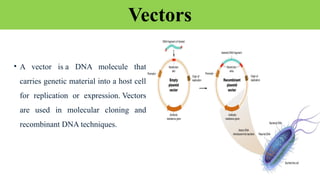
• A vector is a DNA molecule that
carries genetic material into a host cell
for replication or expression. Vectors
are used in molecular cloning and
recombinant DNA techniques.
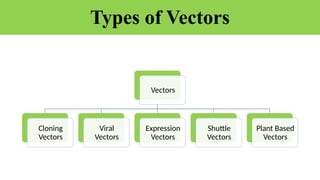
Types of Vectors
Vectors
Cloning
Vectors
Viral
Vectors
Expression
Vectors
Shuttle
Vectors
Plant Based
Vectors
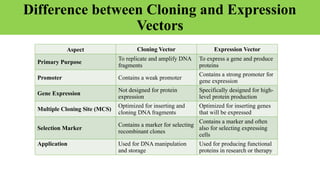
Difference between Cloning and Expression
Vectors
Aspect Cloning Vector Expression Vector
Primary Purpose
To replicate and amplify DNA
fragments
To express a gene and produce
proteins
Promoter Contains a weak promoter
Contains a strong promoter for
gene expression
Gene Expression
Not designed for protein
expression
Specifically designed for high-
level protein production
Multiple Cloning Site (MCS)
Optimized for inserting and
cloning DNA fragments
Optimized for inserting genes
that will be expressed
Selection Marker
Contains a marker for selecting
recombinant clones
Contains a marker and often
also for selecting expressing
cells
Application Used for DNA manipulation
and storage
Used for producing functional
proteins in research or therapy
Expression Vector
• An expression vector is a type of plasmid or
virus designed to express a particular gene in a
target cell.
• It is used to introduce a gene of interest into a
host organism to produce the corresponding
protein.
• Expression depends on some nucleotide
sequences surrounding a gene.
Components of Expression Vectors
1. Promotor
2. Gene of interest
3. Ribosome Binding Sites (RBS)
4. Selection Markers
5. Origin of Replication (Ori)
6. Terminator
Cont….
• Promoter
 is a specific region of DNA
 initiates transcription of a particular gene.
 regulatory sequence where RNA polymerase and transcription factors binds
• Ribosome Binding Site (RBS)
 is a crucial nucleotide sequence in the mRNA
 recruits the ribosome to initiate translation.
 Ensures correct binding of ribosome to mRNA in E. coli and other prokaryotes.
 Starts the protein synthesis process at the correct codon.
• Terminator
 A nucleotide sequence in DNA signaling the end of transcription.
 Ensures RNA polymerase stops synthesizing mRNA at the correct point.
 Prevents the formation of incomplete or excessively long RNA molecules.
Fig: Typical promoter sequences for E. coli and animal
genes.
Fig: Typical promoter sequences for E. coli and animal
genes.
Foreign Gene Expression in E. coli
Challenges in Gene Expression:
• Simply inserting a foreign (non-bacterial) gene into a vector won't
result in significant protein synthesis.
• The gene lacks signals that E. coli recognizes for transcription and
translation.
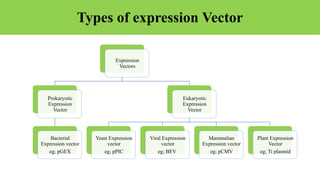
Types of expression Vector
Expression
Vectors
Prokaryotic
Expression
Vector
Bacterial
Expression vector
eg; pGEX
Eukaryotic
Expression
Vector
Yeast Expression
vector
eg; pPIC
Viral Expression
vector
eg; BEV
Mammalian
Expression vector
eg; pCMV
Plant Expression
Vector
eg; Ti plasmid
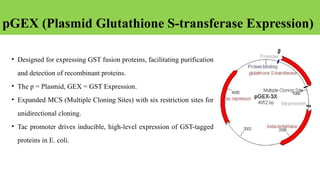
pGEX (Plasmid Glutathione S-transferase Expression)
• Designed for expressing GST fusion proteins, facilitating purification
and detection of recombinant proteins.
• The p = Plasmid, GEX = GST Expression.
• Expanded MCS (Multiple Cloning Sites) with six restriction sites for
unidirectional cloning.
• Tac promoter drives inducible, high-level expression of GST-tagged
proteins in E. coli.
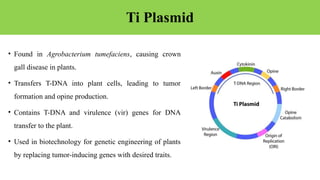
Ti Plasmid
• Found in Agrobacterium tumefaciens, causing crown
gall disease in plants.
• Transfers T-DNA into plant cells, leading to tumor
formation and opine production.
• Contains T-DNA and virulence (vir) genes for DNA
transfer to the plant.
• Used in biotechnology for genetic engineering of plants
by replacing tumor-inducing genes with desired traits.
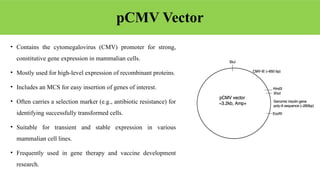
pCMV Vector
• Contains the cytomegalovirus (CMV) promoter for strong,
constitutive gene expression in mammalian cells.
• Mostly used for high-level expression of recombinant proteins.
• Includes an MCS for easy insertion of genes of interest.
• Often carries a selection marker (e.g., antibiotic resistance) for
identifying successfully transformed cells.
• Suitable for transient and stable expression in various
mammalian cell lines.
• Frequently used in gene therapy and vaccine development
research.
Applications of Expression Vectors
• Recombinant Protein Production: Used in the pharmaceutical industry to produce
human insulin, growth hormones, and other therapeutic proteins.
• Gene Therapy: Expression vectors deliver therapeutic genes to correct genetic
disorders (e.g., viral vectors for gene delivery).
• Agricultural Biotechnology: Used to genetically modify plants for better yield,
disease resistance, and nutrient content.
• Industrial Biotechnology: Production of enzymes for detergents, biofuels, and food
processing.
THANK YOU

Introduction to Expression vectors.pptx

  • 1.
    EXPRESSION VECTORS Sanjana Sharma& Manpreet Singh Mavi
  • 2.
    Vectors • A vectoris a DNA molecule that carries genetic material into a host cell for replication or expression. Vectors are used in molecular cloning and recombinant DNA techniques.
  • 3.
  • 4.
    Difference between Cloningand Expression Vectors Aspect Cloning Vector Expression Vector Primary Purpose To replicate and amplify DNA fragments To express a gene and produce proteins Promoter Contains a weak promoter Contains a strong promoter for gene expression Gene Expression Not designed for protein expression Specifically designed for high- level protein production Multiple Cloning Site (MCS) Optimized for inserting and cloning DNA fragments Optimized for inserting genes that will be expressed Selection Marker Contains a marker for selecting recombinant clones Contains a marker and often also for selecting expressing cells Application Used for DNA manipulation and storage Used for producing functional proteins in research or therapy
  • 5.
    Expression Vector • Anexpression vector is a type of plasmid or virus designed to express a particular gene in a target cell. • It is used to introduce a gene of interest into a host organism to produce the corresponding protein. • Expression depends on some nucleotide sequences surrounding a gene.
  • 6.
    Components of ExpressionVectors 1. Promotor 2. Gene of interest 3. Ribosome Binding Sites (RBS) 4. Selection Markers 5. Origin of Replication (Ori) 6. Terminator
  • 7.
    Cont…. • Promoter  isa specific region of DNA  initiates transcription of a particular gene.  regulatory sequence where RNA polymerase and transcription factors binds • Ribosome Binding Site (RBS)  is a crucial nucleotide sequence in the mRNA  recruits the ribosome to initiate translation.  Ensures correct binding of ribosome to mRNA in E. coli and other prokaryotes.  Starts the protein synthesis process at the correct codon. • Terminator  A nucleotide sequence in DNA signaling the end of transcription.  Ensures RNA polymerase stops synthesizing mRNA at the correct point.  Prevents the formation of incomplete or excessively long RNA molecules. Fig: Typical promoter sequences for E. coli and animal genes. Fig: Typical promoter sequences for E. coli and animal genes.
  • 8.
    Foreign Gene Expressionin E. coli Challenges in Gene Expression: • Simply inserting a foreign (non-bacterial) gene into a vector won't result in significant protein synthesis. • The gene lacks signals that E. coli recognizes for transcription and translation.
  • 9.
    Types of expressionVector Expression Vectors Prokaryotic Expression Vector Bacterial Expression vector eg; pGEX Eukaryotic Expression Vector Yeast Expression vector eg; pPIC Viral Expression vector eg; BEV Mammalian Expression vector eg; pCMV Plant Expression Vector eg; Ti plasmid
  • 10.
    pGEX (Plasmid GlutathioneS-transferase Expression) • Designed for expressing GST fusion proteins, facilitating purification and detection of recombinant proteins. • The p = Plasmid, GEX = GST Expression. • Expanded MCS (Multiple Cloning Sites) with six restriction sites for unidirectional cloning. • Tac promoter drives inducible, high-level expression of GST-tagged proteins in E. coli.
  • 11.
    Ti Plasmid • Foundin Agrobacterium tumefaciens, causing crown gall disease in plants. • Transfers T-DNA into plant cells, leading to tumor formation and opine production. • Contains T-DNA and virulence (vir) genes for DNA transfer to the plant. • Used in biotechnology for genetic engineering of plants by replacing tumor-inducing genes with desired traits.
  • 12.
    pCMV Vector • Containsthe cytomegalovirus (CMV) promoter for strong, constitutive gene expression in mammalian cells. • Mostly used for high-level expression of recombinant proteins. • Includes an MCS for easy insertion of genes of interest. • Often carries a selection marker (e.g., antibiotic resistance) for identifying successfully transformed cells. • Suitable for transient and stable expression in various mammalian cell lines. • Frequently used in gene therapy and vaccine development research.
  • 13.
    Applications of ExpressionVectors • Recombinant Protein Production: Used in the pharmaceutical industry to produce human insulin, growth hormones, and other therapeutic proteins. • Gene Therapy: Expression vectors deliver therapeutic genes to correct genetic disorders (e.g., viral vectors for gene delivery). • Agricultural Biotechnology: Used to genetically modify plants for better yield, disease resistance, and nutrient content. • Industrial Biotechnology: Production of enzymes for detergents, biofuels, and food processing.
  • 14.