Working on Camera
Lecturer: Hafiz Muhammad Sheraz
What is Camera
 The term camera comes from the word camera
obscura(Latinfor"darkchamber"),an early
mechanismforprojectingimages.
 Themoderncameraevolvedfromthecamera
obscura & functioning of the camera is very similar
tothe functioningof thehumaneye.
 A camera is an optical instrument that records
imagesthatcanbestoreddirectly, transmittedto
anotherlocation,orboth.
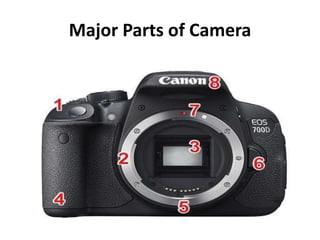
Major Parts of Camera
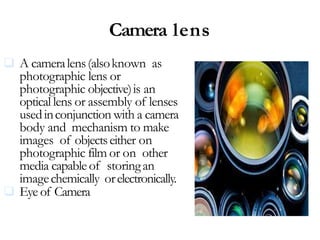
Camera lens
 A cameralens(alsoknown as
photographic lens or
photographic objective)is an
optical lens or assembly of lenses
usedinconjunction with a camera
body and mechanism to make
images of objectseither on
photographic film or on other
media capable of storingan
imagechemically orelectronically.
 Eye of Camera
Shutter
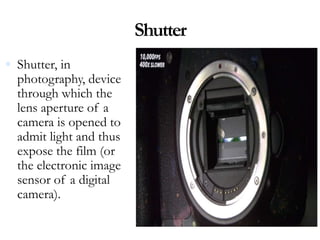
 Shutter, in
photography, device
through which the
lens aperture of a
camera is opened to
admit light and thus
expose the film (or
the electronic image
sensor of a digital
camera).
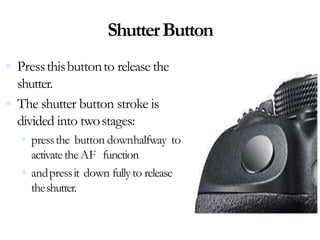
ShutterButton
 Pressthisbuttonto release the
shutter.
 The shutter button stroke is
divided into twostages:
 pressthe button downhalfway to
activatethe AF function
 andpressit down fullyto release
theshutter.
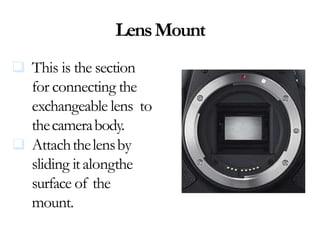
LensMount
 This is the section
for connecting the
exchangeable lens to
thecamerabody.
 Attachthelensby
sliding italongthe
surface of the
mount.
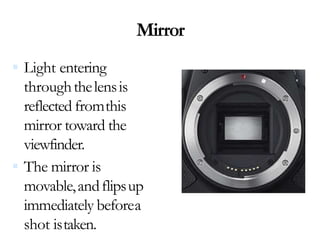
Mirror
 Light entering
throughthelensis
reflected fromthis
mirror toward the
viewfinder.
 The mirror is
movable,andflipsup
immediately beforea
shot istaken.
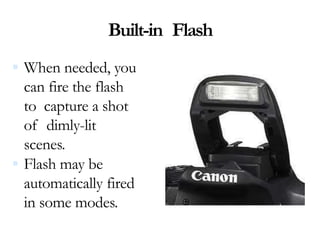
Built-in Flash
 When needed, you
can fire the flash
to capture a shot
of dimly-lit
scenes.
 Flash may be
automatically fired
in some modes.
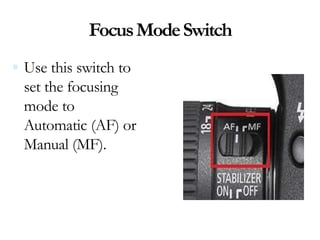
FocusModeSwitch
 Use this switch to
set the focusing
mode to
Automatic (AF) or
Manual (MF).
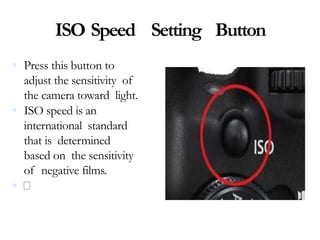
ISO Speed Setting Button
 Press this button to
adjust the sensitivity of
the camera toward light.
 ISO speed is an
international standard
that is determined
based on the sensitivity
of negative films.

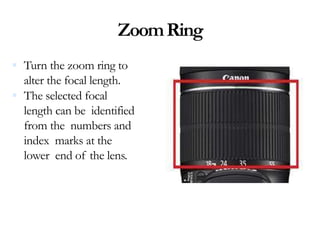
ZoomRing
 Turn the zoom ring to
alter the focal length.
 The selected focal
length can be identified
from the numbers and
index marks at the
lower end of the lens.
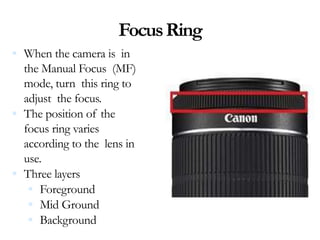
FocusRing
 When the camera is in
the Manual Focus (MF)
mode, turn this ring to
adjust the focus.
 The position of the
focus ring varies
according to the lens in
use.
 Three layers
 Foreground
 Mid Ground
 Background
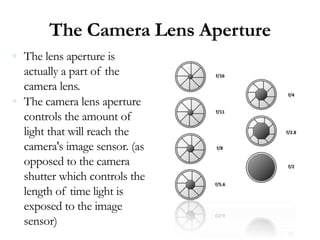
The Camera Lens Aperture
 The lens aperture is
actually a part of the
camera lens.
 The camera lens aperture
controls the amount of
light that will reach the
camera's image sensor. (as
opposed to the camera
shutter which controls the
length of time light is
exposed to the image
sensor)
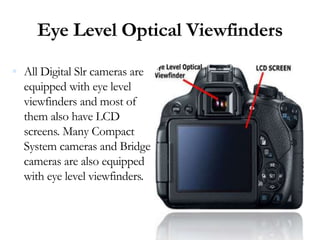
Eye Level Optical Viewfinders
 All Digital Slr cameras are
equipped with eye level
viewfinders and most of
them also have LCD
screens. Many Compact
System cameras and Bridge
cameras are also equipped
with eye level viewfinders.
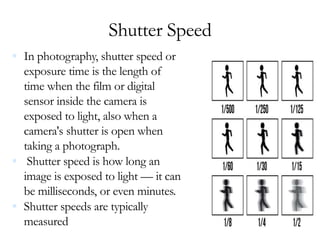
Shutter Speed
 In photography, shutter speed or
exposure time is the length of
time when the film or digital
sensor inside the camera is
exposed to light, also when a
camera's shutter is open when
taking a photograph.
 Shutter speed is how long an
image is exposed to light — it can
be milliseconds, or even minutes.
 Shutter speeds are typically
measured
ISO
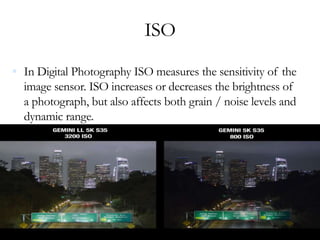
 In Digital Photography ISO measures the sensitivity of the
image sensor. ISO increases or decreases the brightness of
a photograph, but also affects both grain / noise levels and
dynamic range.
Other Functions
 White Balance: White balance (WB) is the process
of removing unrealistic color casts, so that objects
which appear white in person are rendered white in
your photo.
 RED, Blue, green
 Focus defocus: focus is when a photographer
manually focuses their lens so as to select what is in
focus in the frame

Introduction to Camera.pptx

  • 1.
    Working on Camera Lecturer:Hafiz Muhammad Sheraz
  • 2.
    What is Camera The term camera comes from the word camera obscura(Latinfor"darkchamber"),an early mechanismforprojectingimages.  Themoderncameraevolvedfromthecamera obscura & functioning of the camera is very similar tothe functioningof thehumaneye.  A camera is an optical instrument that records imagesthatcanbestoreddirectly, transmittedto anotherlocation,orboth.
  • 3.
  • 4.
    Camera lens  Acameralens(alsoknown as photographic lens or photographic objective)is an optical lens or assembly of lenses usedinconjunction with a camera body and mechanism to make images of objectseither on photographic film or on other media capable of storingan imagechemically orelectronically.  Eye of Camera
  • 5.
    Shutter  Shutter, in photography,device through which the lens aperture of a camera is opened to admit light and thus expose the film (or the electronic image sensor of a digital camera).
  • 6.
    ShutterButton  Pressthisbuttonto releasethe shutter.  The shutter button stroke is divided into twostages:  pressthe button downhalfway to activatethe AF function  andpressit down fullyto release theshutter.
  • 7.
    LensMount  This isthe section for connecting the exchangeable lens to thecamerabody.  Attachthelensby sliding italongthe surface of the mount.
  • 8.
    Mirror  Light entering throughthelensis reflectedfromthis mirror toward the viewfinder.  The mirror is movable,andflipsup immediately beforea shot istaken.
  • 9.
    Built-in Flash  Whenneeded, you can fire the flash to capture a shot of dimly-lit scenes.  Flash may be automatically fired in some modes.
  • 10.
    FocusModeSwitch  Use thisswitch to set the focusing mode to Automatic (AF) or Manual (MF).
  • 11.
    ISO Speed SettingButton  Press this button to adjust the sensitivity of the camera toward light.  ISO speed is an international standard that is determined based on the sensitivity of negative films. 
  • 12.
    ZoomRing  Turn thezoom ring to alter the focal length.  The selected focal length can be identified from the numbers and index marks at the lower end of the lens.
  • 13.
    FocusRing  When thecamera is in the Manual Focus (MF) mode, turn this ring to adjust the focus.  The position of the focus ring varies according to the lens in use.  Three layers  Foreground  Mid Ground  Background
  • 14.
    The Camera LensAperture  The lens aperture is actually a part of the camera lens.  The camera lens aperture controls the amount of light that will reach the camera's image sensor. (as opposed to the camera shutter which controls the length of time light is exposed to the image sensor)
  • 15.
    Eye Level OpticalViewfinders  All Digital Slr cameras are equipped with eye level viewfinders and most of them also have LCD screens. Many Compact System cameras and Bridge cameras are also equipped with eye level viewfinders.
  • 16.
    Shutter Speed  Inphotography, shutter speed or exposure time is the length of time when the film or digital sensor inside the camera is exposed to light, also when a camera's shutter is open when taking a photograph.  Shutter speed is how long an image is exposed to light — it can be milliseconds, or even minutes.  Shutter speeds are typically measured
  • 17.
    ISO  In DigitalPhotography ISO measures the sensitivity of the image sensor. ISO increases or decreases the brightness of a photograph, but also affects both grain / noise levels and dynamic range.
  • 18.
    Other Functions  WhiteBalance: White balance (WB) is the process of removing unrealistic color casts, so that objects which appear white in person are rendered white in your photo.  RED, Blue, green  Focus defocus: focus is when a photographer manually focuses their lens so as to select what is in focus in the frame