Introduction to Project Management
Hamse Abdillahi Yonis
Short course Training Programme
Sunday, 1 Jan- 2017
Course Objectives
 At the end of the training, participants will be able
to:
 Design, plan, implement, and monitor projects in a
more consistent, reliable and predictable manner.
 Apply a range of practical tools in response to a
variety of situations that may arise at different
stages of the project cycle
 Design and implement an effective and contextually
appropriate monitoring and evaluation system that can
support the tracking of outcomes and impact while
enriching organizational learning.
 Have more clarity on the terminology used by donors and
various stakeholders.
 Be able to identify potential risks and design appropriate
mitigation plans.
 Understand the importance of reflection and planning
during the project cycle.
 Be able to communicate more effectively with staff, donors
and beneficiaries.
 What is Project Management?
And Why is it important?
What is a Project?
“Unique process consisting of a set of coordinated and
controlled activities with start and finish dates,
undertaken to achieve an objective conforming to
specific requirements, including constraints of time, cost,
quality and resources”
 A Project is a planned set of activities
 A Project has a scope
 A Project has time, cost, quality and resource constraints
What is Project Management?
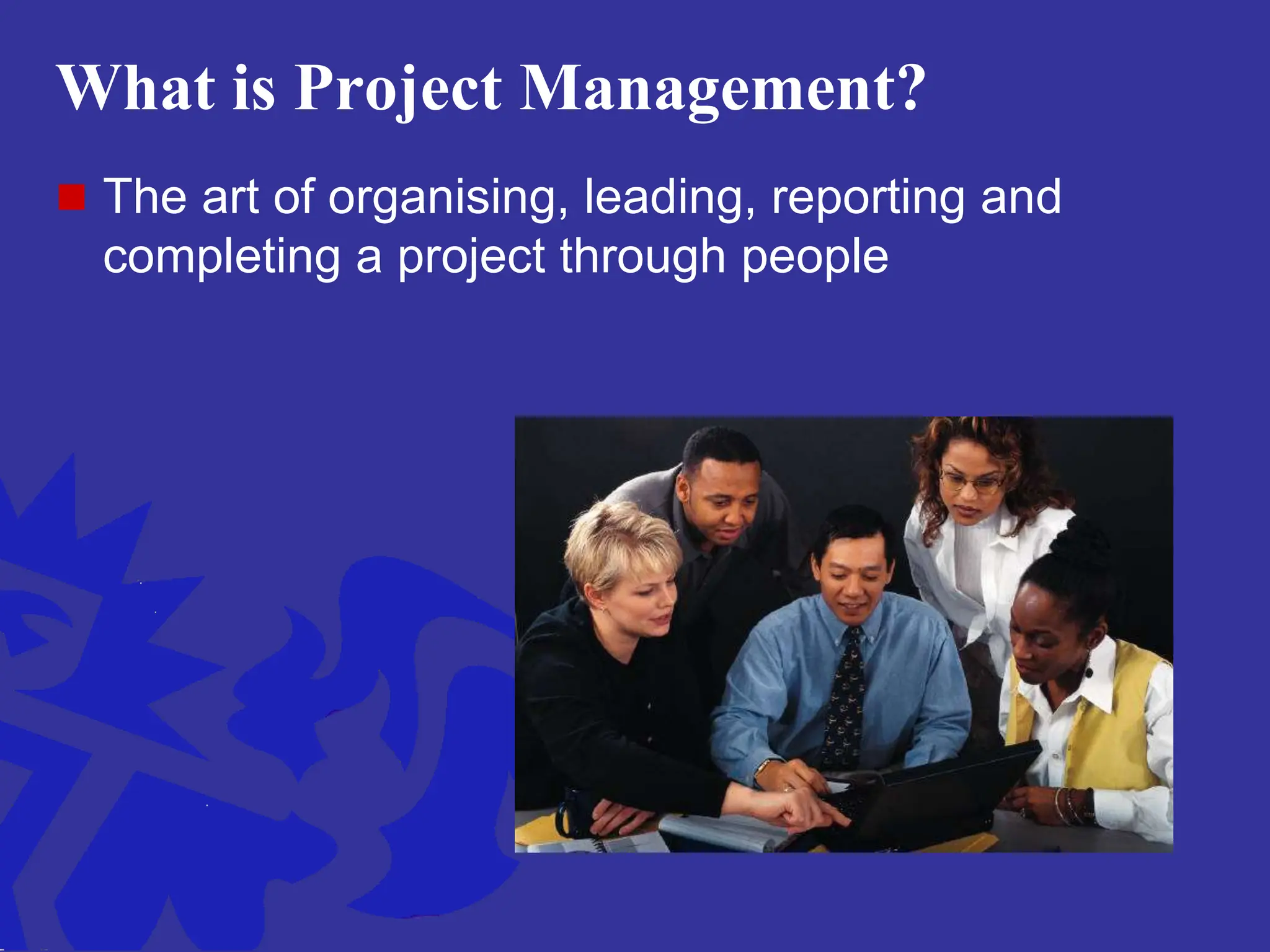
 The art of organising, leading, reporting and
completing a project through people
What is Project Management?
 A project is a planned undertaking
 A project manager is a person who causes things
to happen
 Therefore, project management is causing a
planned undertaking to happen.
Exercise 1
 Write down three attributes of a good Project
Manager
Project Manager Role
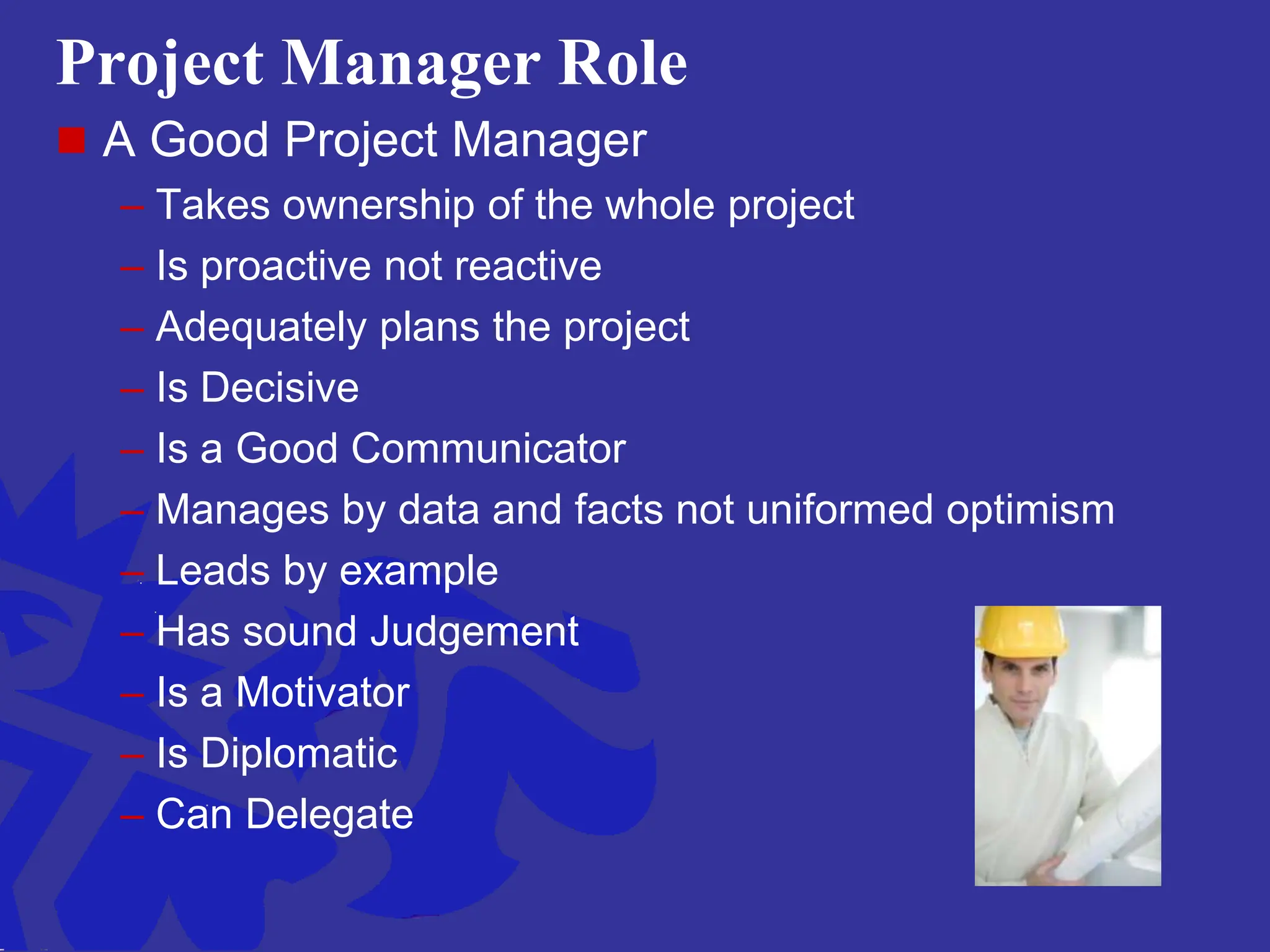
 A Good Project Manager
– Takes ownership of the whole project
– Is proactive not reactive
– Adequately plans the project
– Is Decisive
– Is a Good Communicator
– Manages by data and facts not uniformed optimism
– Leads by example
– Has sound Judgement
– Is a Motivator
– Is Diplomatic
– Can Delegate
Stakeholder
“A person or group of people who have a
vested interest in the success of an project
and the environment in which the
organization operates”
Exercise 2
 Write down three typical project stakeholders
Exercise 2 - Typical Stakeholders
 Donor
 Beneficiaries
 Suppliers
 Project staff
Stakeholder Engagement process
 Identify Stakeholders
 Assess needs
 Define actions
 Establish communication channels
 Gather feedback
 Monitor and review
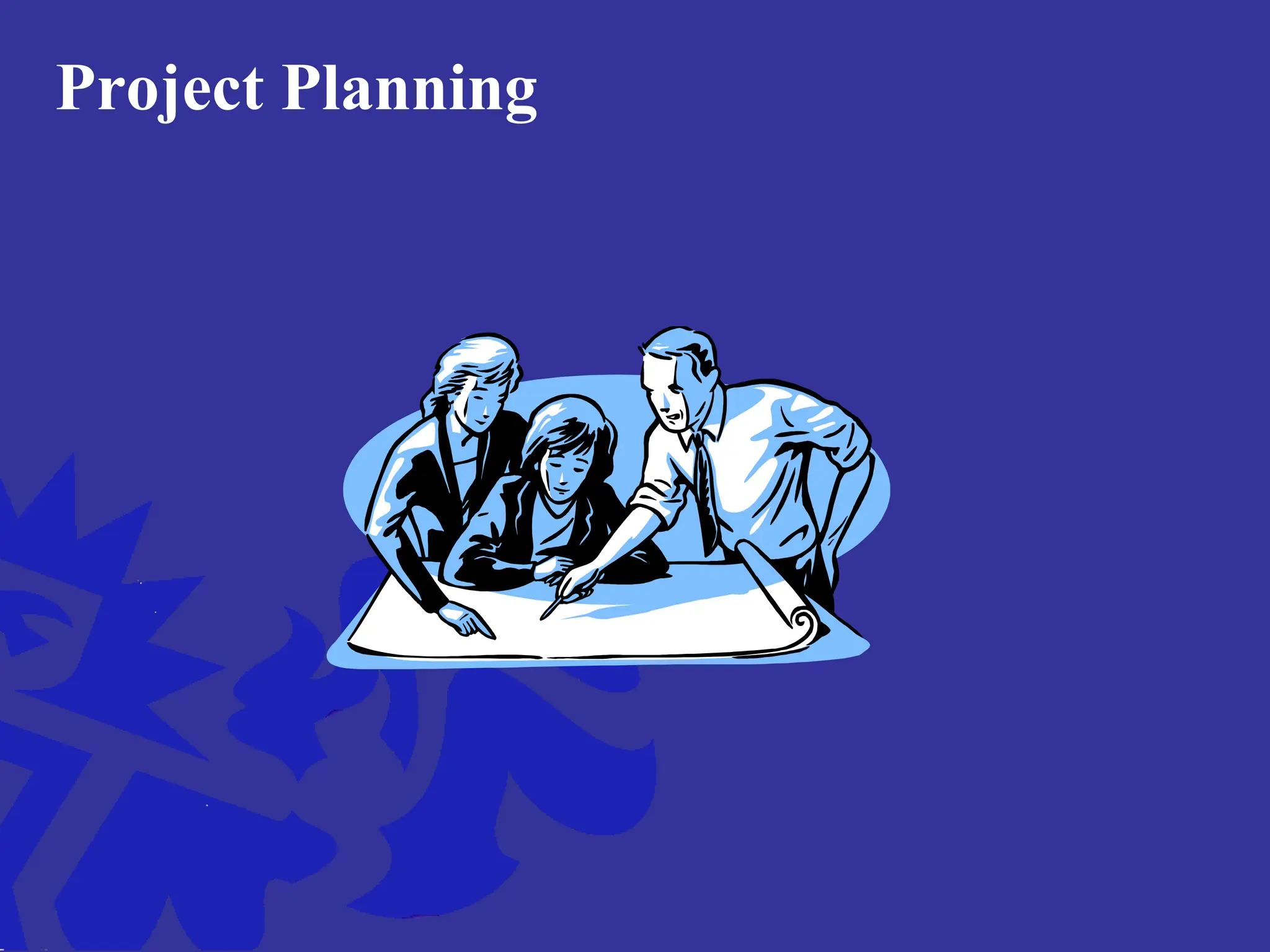
Project Planning
Project Planning
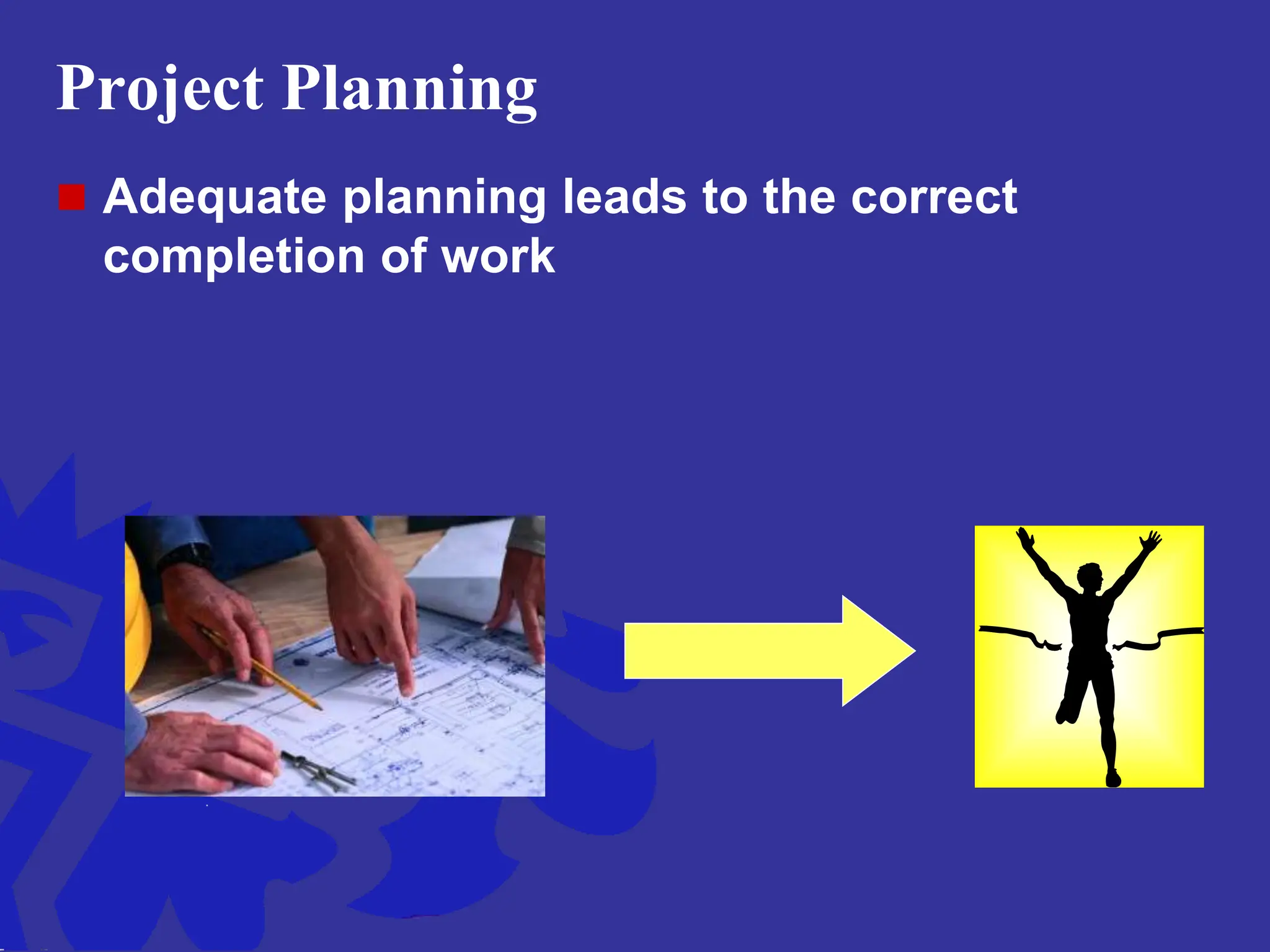
 Adequate planning leads to the correct
completion of work
Planning
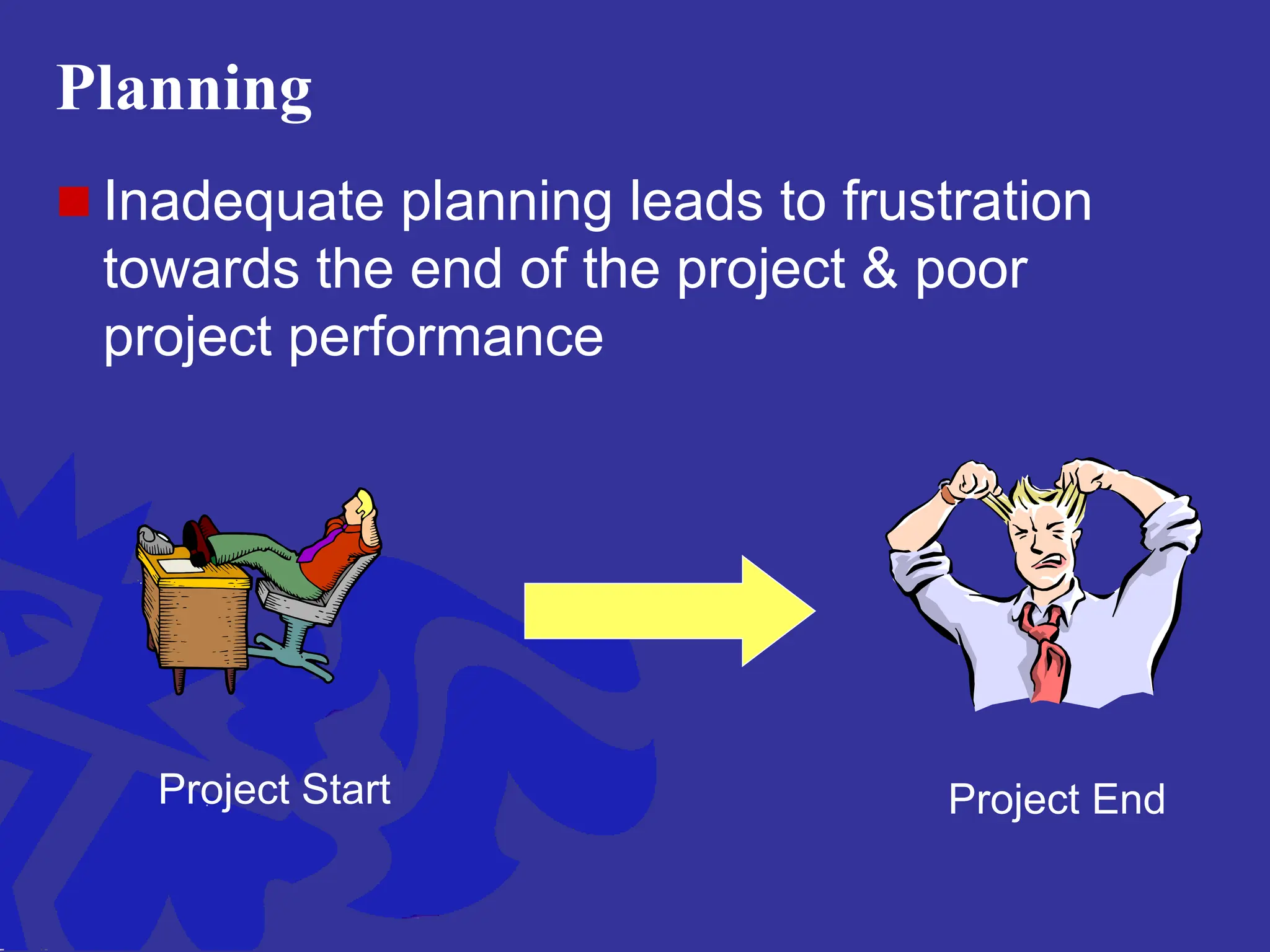
 Inadequate planning leads to frustration
towards the end of the project & poor
project performance
Project Start Project End
Work Breakdown Structure (WBS)
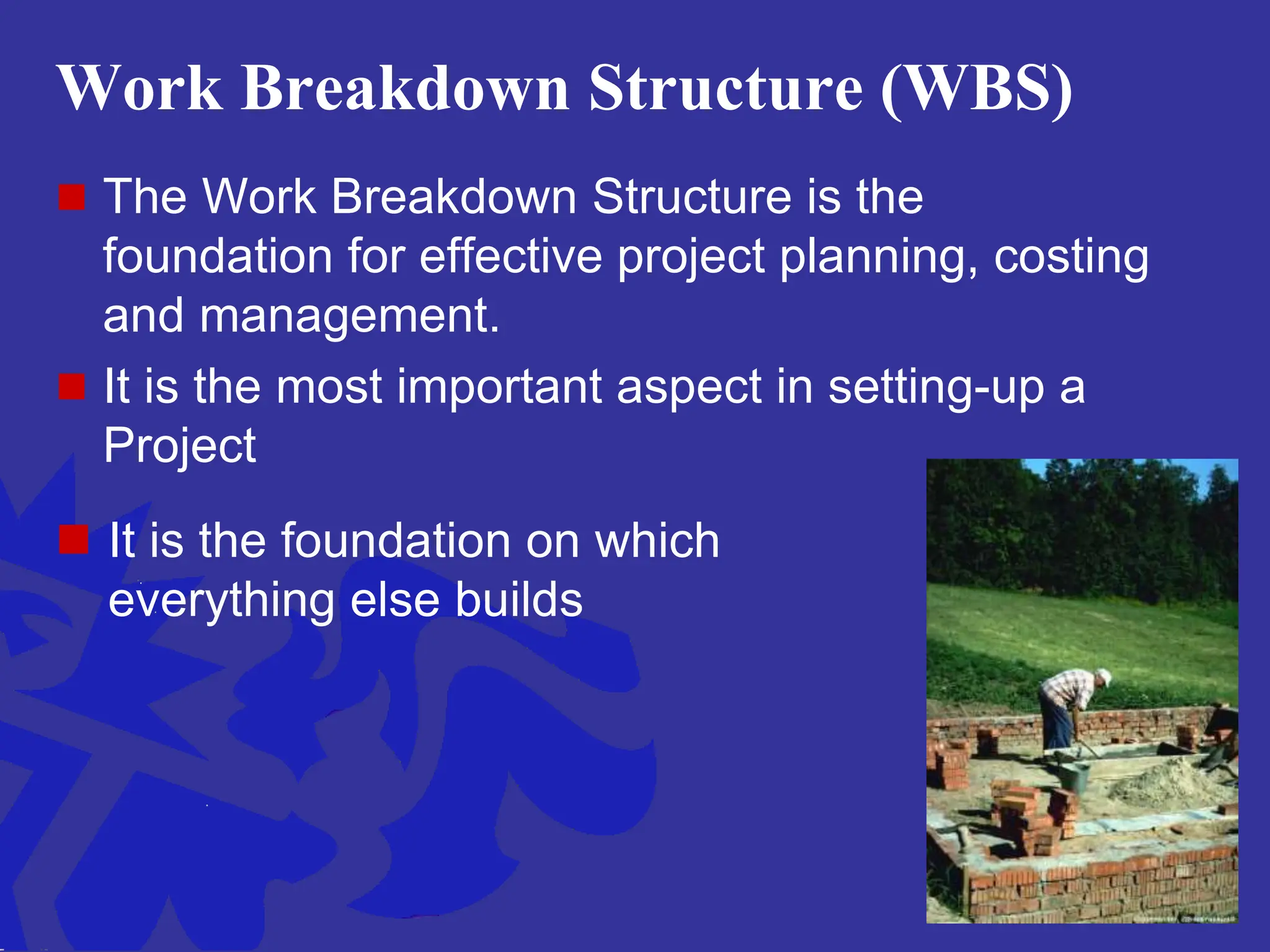
 The Work Breakdown Structure is the
foundation for effective project planning, costing
and management.
 It is the most important aspect in setting-up a
Project
 It is the foundation on which
everything else builds
Work Breakdown Structure - Definition
“A Work Breakdown Structure (WBS) is a
hierarchical (from general to specific) tree
structure of deliverables and tasks that need
to be performed to complete a project.”
Project Planning
 A word about Scheduling
– Schedules (task durations) can have a wide
variation
– There is no unique answer. Rather, there is a
statistical variation depending on assumptions
– Need to understand the basis of scheduling
(Most challenging; Most likely; Absolute certainty
- bet your life on it!)
– Most people are very optimistic/naive
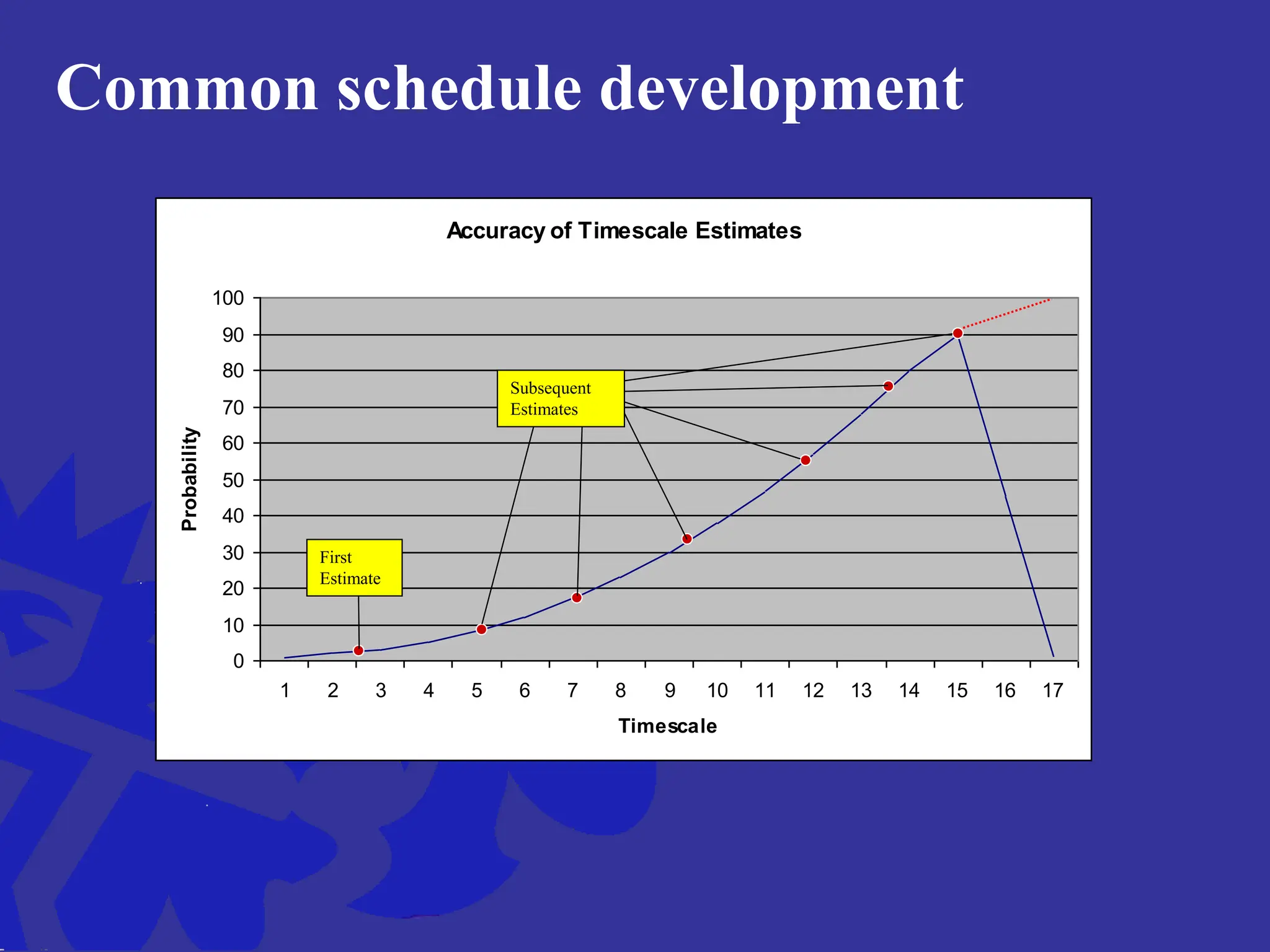
Common schedule development
Accuracy of Timescale Estimates
0
10
20
30
40
50
60
70
80
90
100
1 2 3 4 5 6 7 8 9 10 11 12 13 14 15 16 17
Timescale
Probability
First
Estimate
Subsequent
Estimates
Project Planning – Key Points
 Recognise that adequate project planning is
essential
 Produce a sound WBS
 Use the framework provided by the Project
Management Plan (PMP) template
 Involve the right people
 Allow enough time
 Be systematic
Project Risk Management
Project Risk – Definition (1)
“Project risk is an uncertain event or condition
that, if it occurs, has a negative effect on a
project objective”
Project Risk – Definition (2)
“A combination of the probability of a defined
threat or opportunity (Likelihood) and the
magnitude of the consequences of the
occurrence (Impact) defines a Risk Index”
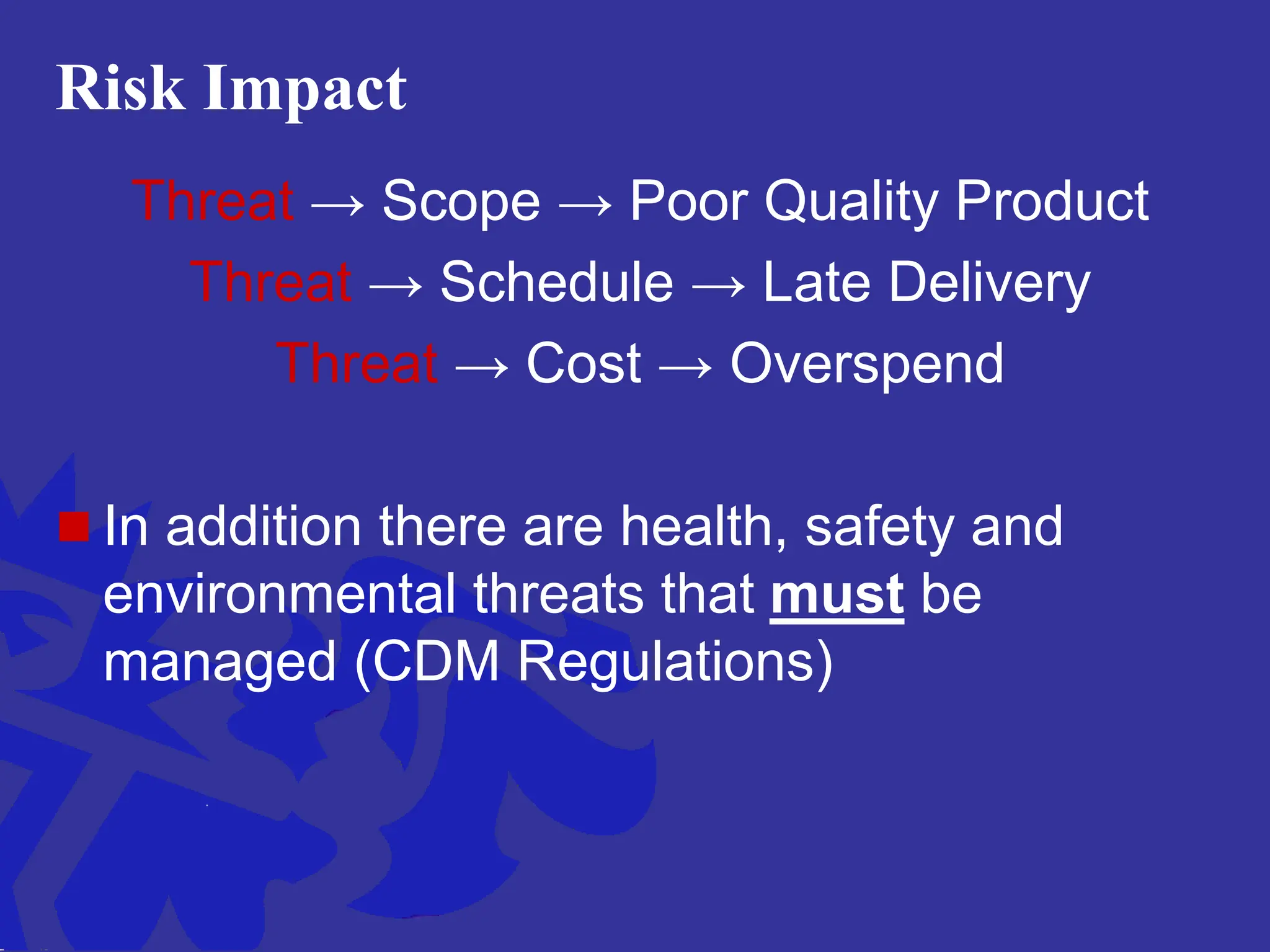
Risk Impact
Threat → Scope → Poor Quality Product
Threat → Schedule → Late Delivery
Threat → Cost → Overspend
 In addition there are health, safety and
environmental threats that must be
managed (CDM Regulations)
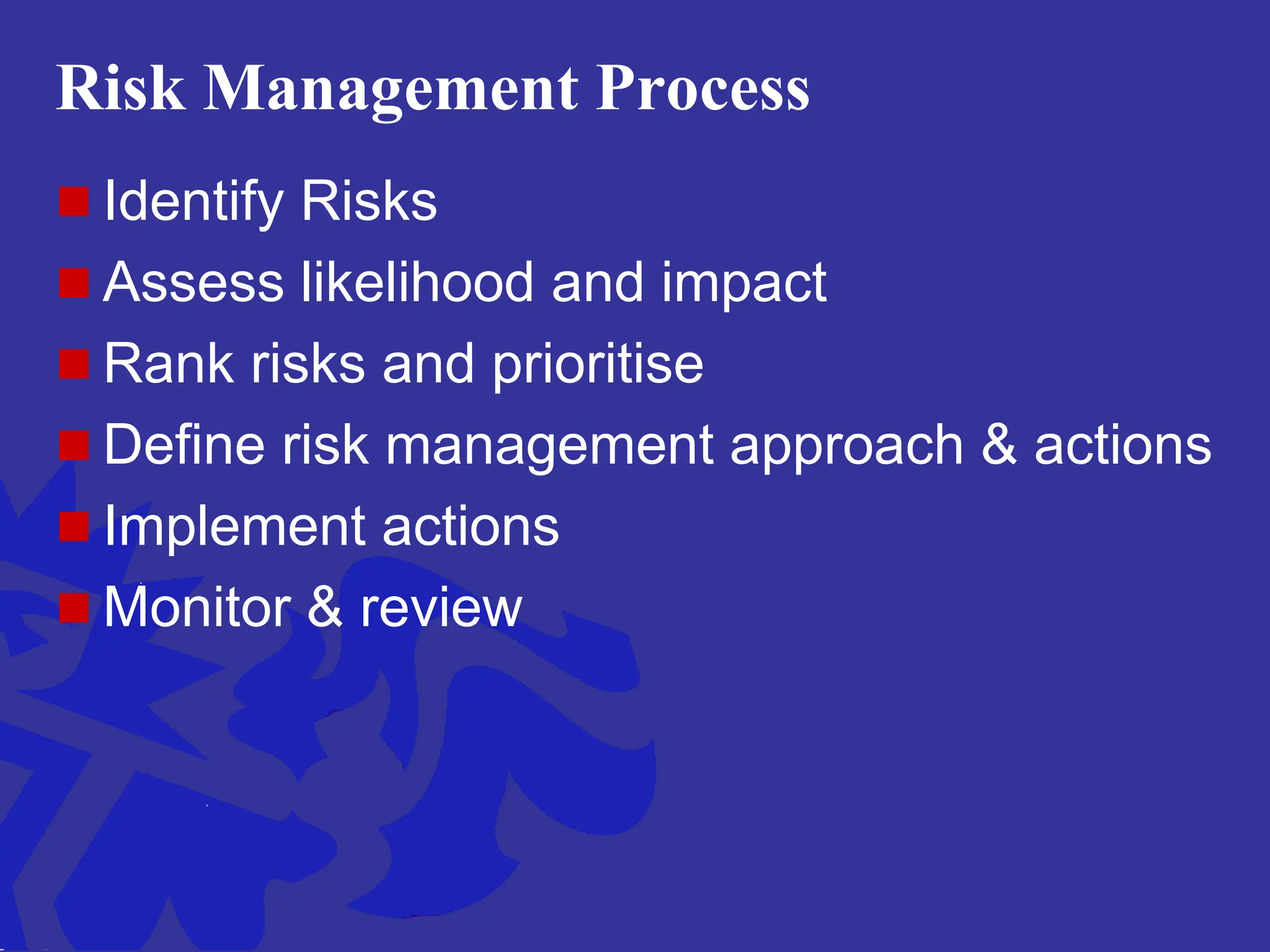
Risk Management Process
 Identify Risks
 Assess likelihood and impact
 Rank risks and prioritise
 Define risk management approach & actions
 Implement actions
 Monitor & review

Introduction of PM.ppt

  • 1.
    Introduction to ProjectManagement Hamse Abdillahi Yonis Short course Training Programme Sunday, 1 Jan- 2017
  • 2.
    Course Objectives  Atthe end of the training, participants will be able to:  Design, plan, implement, and monitor projects in a more consistent, reliable and predictable manner.  Apply a range of practical tools in response to a variety of situations that may arise at different stages of the project cycle
  • 3.
     Design andimplement an effective and contextually appropriate monitoring and evaluation system that can support the tracking of outcomes and impact while enriching organizational learning.  Have more clarity on the terminology used by donors and various stakeholders.  Be able to identify potential risks and design appropriate mitigation plans.  Understand the importance of reflection and planning during the project cycle.  Be able to communicate more effectively with staff, donors and beneficiaries.
  • 4.
     What isProject Management? And Why is it important?
  • 5.
    What is aProject? “Unique process consisting of a set of coordinated and controlled activities with start and finish dates, undertaken to achieve an objective conforming to specific requirements, including constraints of time, cost, quality and resources”  A Project is a planned set of activities  A Project has a scope  A Project has time, cost, quality and resource constraints
  • 6.
    What is ProjectManagement?  The art of organising, leading, reporting and completing a project through people
  • 7.
    What is ProjectManagement?  A project is a planned undertaking  A project manager is a person who causes things to happen  Therefore, project management is causing a planned undertaking to happen.
  • 8.
    Exercise 1  Writedown three attributes of a good Project Manager
  • 9.
    Project Manager Role A Good Project Manager – Takes ownership of the whole project – Is proactive not reactive – Adequately plans the project – Is Decisive – Is a Good Communicator – Manages by data and facts not uniformed optimism – Leads by example – Has sound Judgement – Is a Motivator – Is Diplomatic – Can Delegate
  • 10.
    Stakeholder “A person orgroup of people who have a vested interest in the success of an project and the environment in which the organization operates”
  • 11.
    Exercise 2  Writedown three typical project stakeholders
  • 12.
    Exercise 2 -Typical Stakeholders  Donor  Beneficiaries  Suppliers  Project staff
  • 13.
    Stakeholder Engagement process Identify Stakeholders  Assess needs  Define actions  Establish communication channels  Gather feedback  Monitor and review
  • 14.
  • 15.
    Project Planning  Adequateplanning leads to the correct completion of work
  • 16.
    Planning  Inadequate planningleads to frustration towards the end of the project & poor project performance Project Start Project End
  • 17.
    Work Breakdown Structure(WBS)  The Work Breakdown Structure is the foundation for effective project planning, costing and management.  It is the most important aspect in setting-up a Project  It is the foundation on which everything else builds
  • 18.
    Work Breakdown Structure- Definition “A Work Breakdown Structure (WBS) is a hierarchical (from general to specific) tree structure of deliverables and tasks that need to be performed to complete a project.”
  • 19.
    Project Planning  Aword about Scheduling – Schedules (task durations) can have a wide variation – There is no unique answer. Rather, there is a statistical variation depending on assumptions – Need to understand the basis of scheduling (Most challenging; Most likely; Absolute certainty - bet your life on it!) – Most people are very optimistic/naive
  • 20.
    Common schedule development Accuracyof Timescale Estimates 0 10 20 30 40 50 60 70 80 90 100 1 2 3 4 5 6 7 8 9 10 11 12 13 14 15 16 17 Timescale Probability First Estimate Subsequent Estimates
  • 21.
    Project Planning –Key Points  Recognise that adequate project planning is essential  Produce a sound WBS  Use the framework provided by the Project Management Plan (PMP) template  Involve the right people  Allow enough time  Be systematic
  • 22.
  • 23.
    Project Risk –Definition (1) “Project risk is an uncertain event or condition that, if it occurs, has a negative effect on a project objective”
  • 24.
    Project Risk –Definition (2) “A combination of the probability of a defined threat or opportunity (Likelihood) and the magnitude of the consequences of the occurrence (Impact) defines a Risk Index”
  • 25.
    Risk Impact Threat →Scope → Poor Quality Product Threat → Schedule → Late Delivery Threat → Cost → Overspend  In addition there are health, safety and environmental threats that must be managed (CDM Regulations)
  • 26.
    Risk Management Process Identify Risks  Assess likelihood and impact  Rank risks and prioritise  Define risk management approach & actions  Implement actions  Monitor & review