Introduction ofAWS Cloud
Computing and its future for
Biometric Department
Kevin Lee
Disclaimer
The views and opinions presented here represent those of the
speaker and should not be considered to represent any
companies or organizations.
• Introduction of Cloud Computing
• Computing Services in Cloud
• Benefits of Cloud Computing
• Main Platforms of Cloud
• Core Technologies of AWS
• AWS Implementation in
Biometrics Department
• AWS Cloud Computing Open-
source Programming Transition
Project
• Future of Cloud Computing in
Biometric Department
• Conclusion
“The Magic Faraway Tree Adventure”
Astory about three children climbing up a big tree
to cloud and adventuring a magical land in the
cloud.
- To Ignite Children’s imagination
- To encourage exploring their own creativity
5
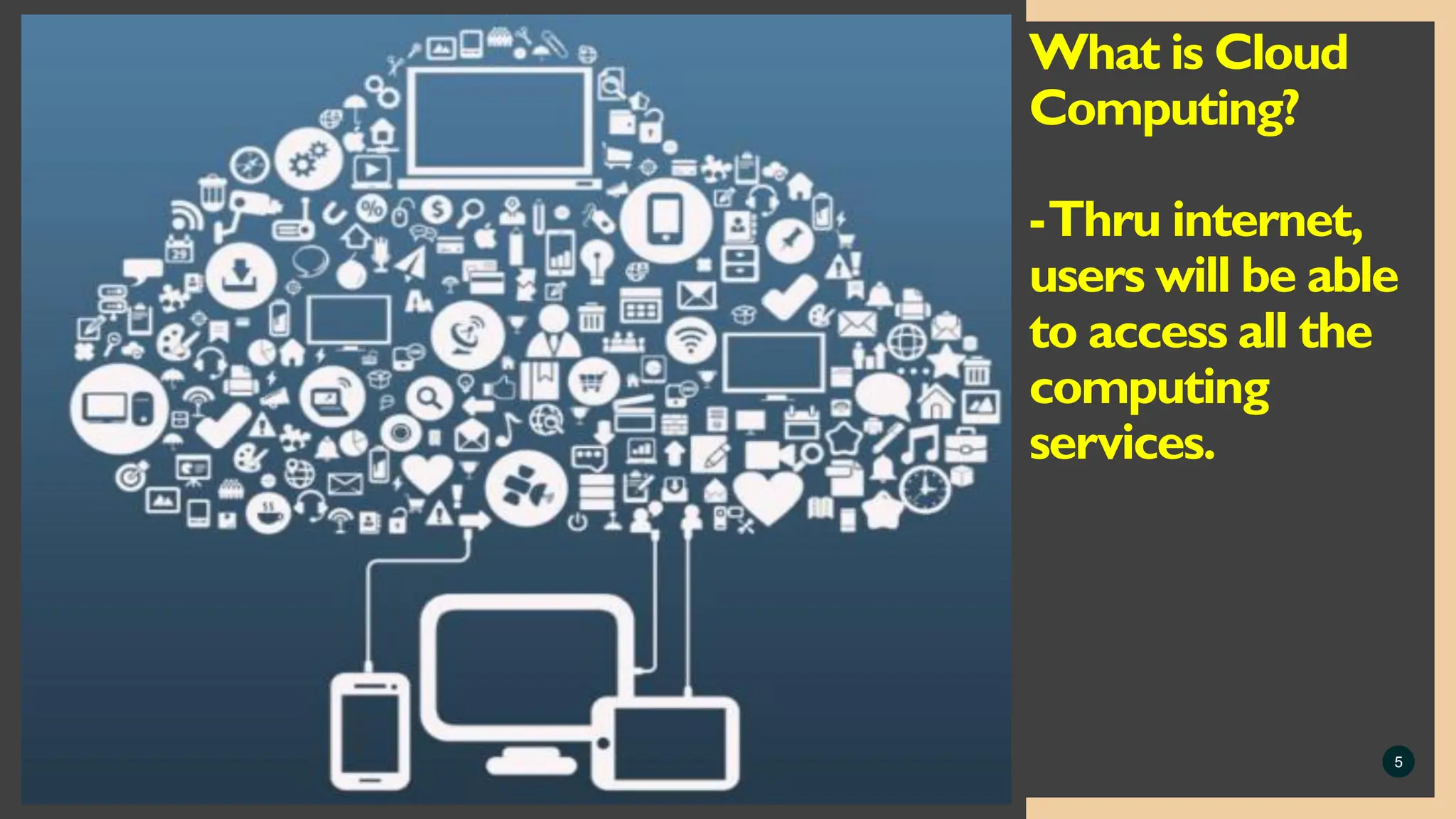
What is Cloud
Computing?
-Thru internet,
users will be able
to access all the
computing
services.
6
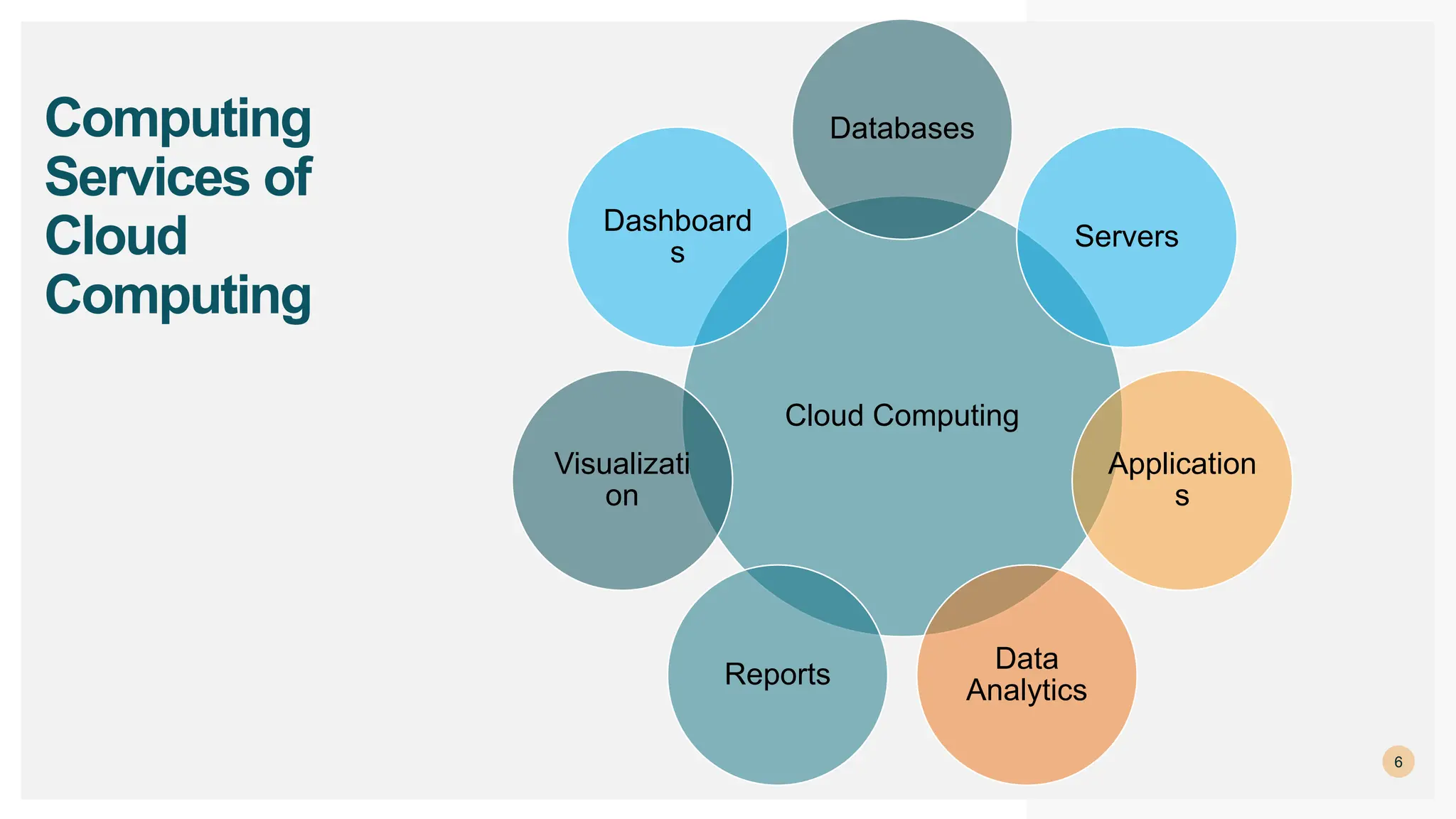
Cloud Computing
Databases
Servers
Application
s
Data
Analytics
Reports
Visualizati
on
Dashboard
s
Computing
Services of
Cloud
Computing
Functionalities / Benefits
of Cloud Computing
• Elasticity
• Flexibility
• Integrated
• Reliable (Highly available)
• Secure
• Cost-saving
• Easy to get started
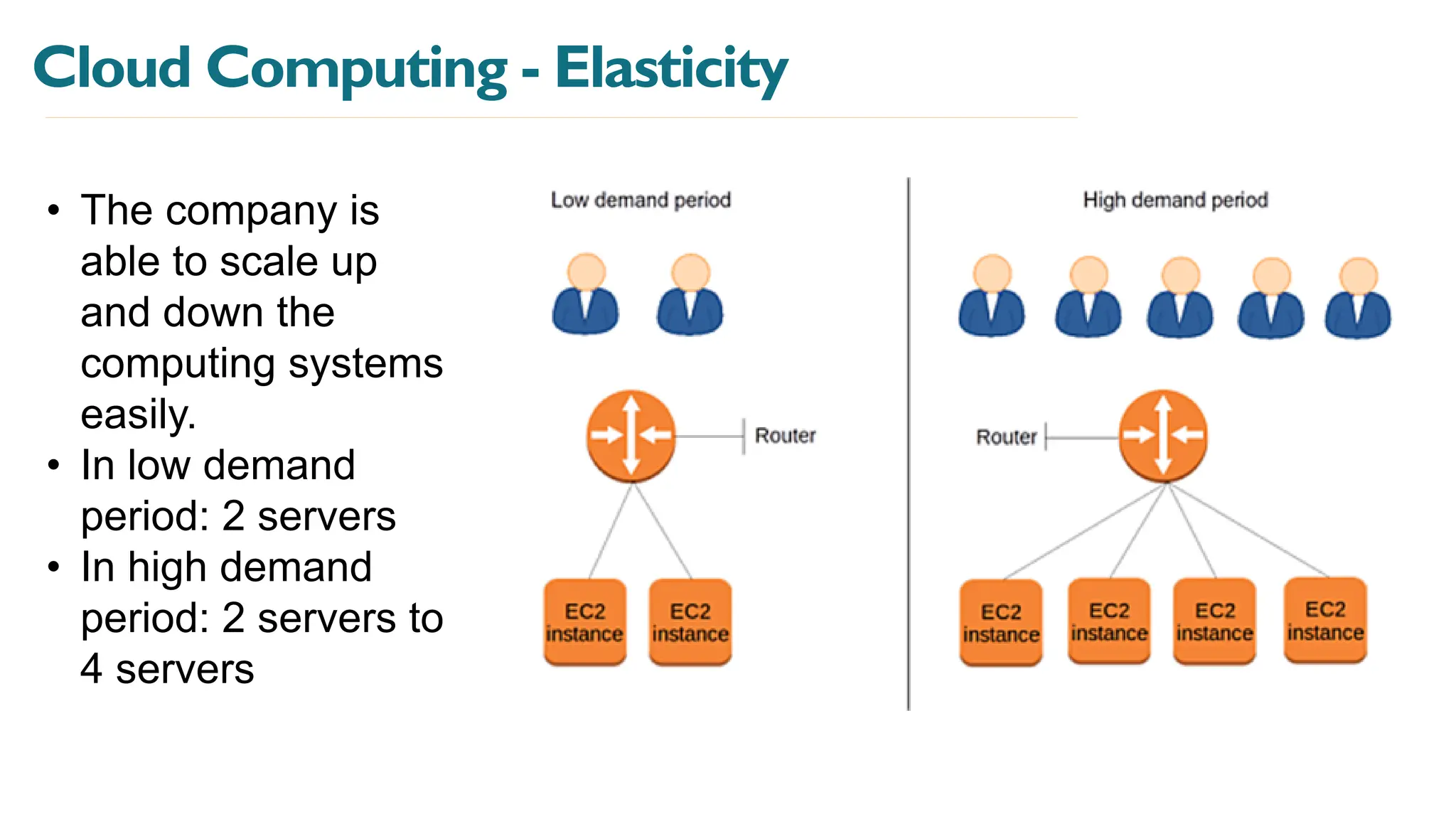
Cloud Computing - Elasticity
• The company is
able to scale up
and down the
computing systems
easily.
• In low demand
period: 2 servers
• In high demand
period: 2 servers to
4 servers
Cloud Computing - Flexibility
• On-demand resources
• The company could choose
the best deployment option
among a range of options,
and change the system
based on the demand easily.
• Scalability
• Pay as you go pricing
• The company does not need
to purchase and maintain
the additional hardware.
• Accessibility control
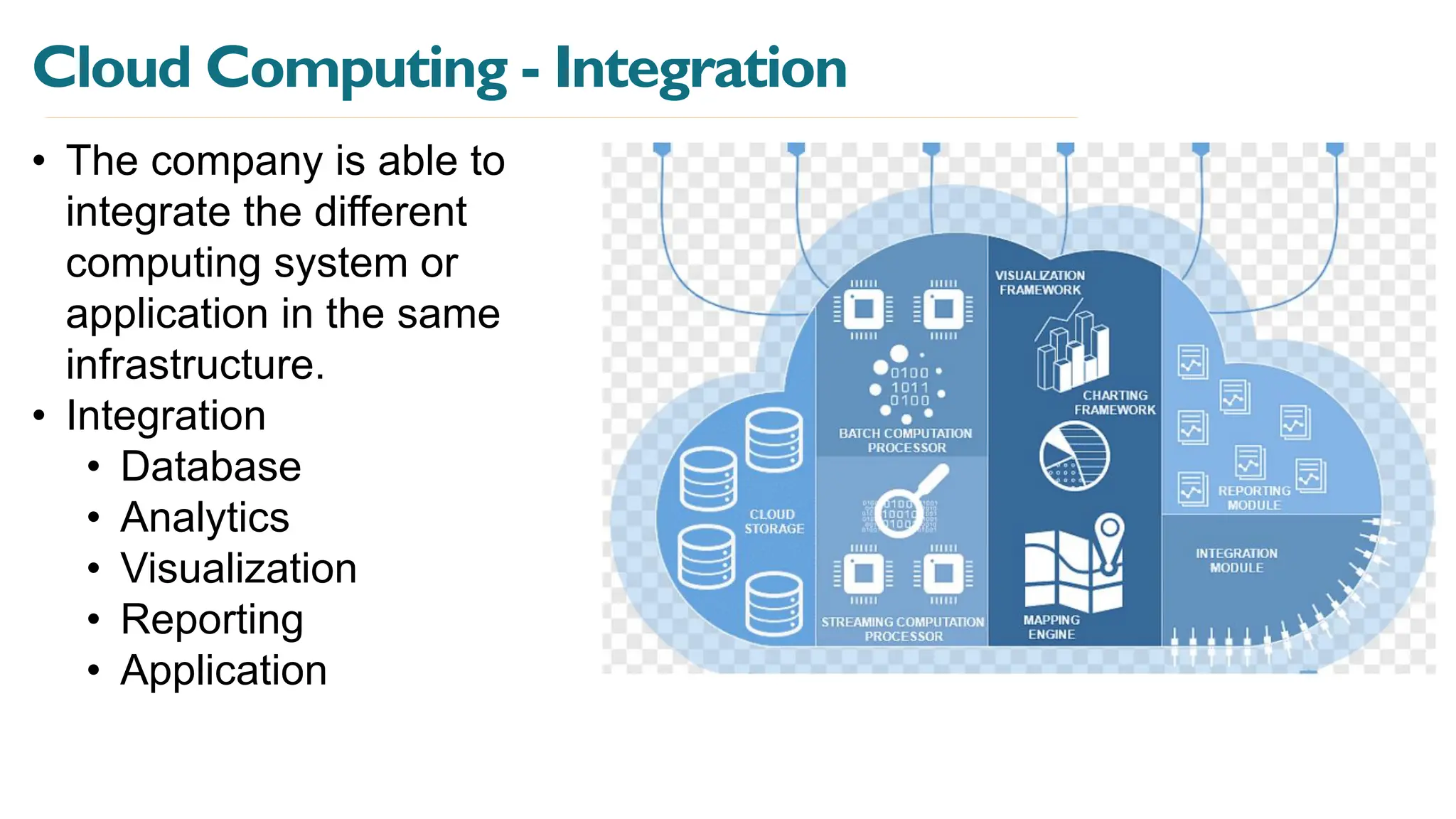
Cloud Computing - Integration
• The company is able to
integrate the different
computing system or
application in the same
infrastructure.
• Integration
• Database
• Analytics
• Visualization
• Reporting
• Application
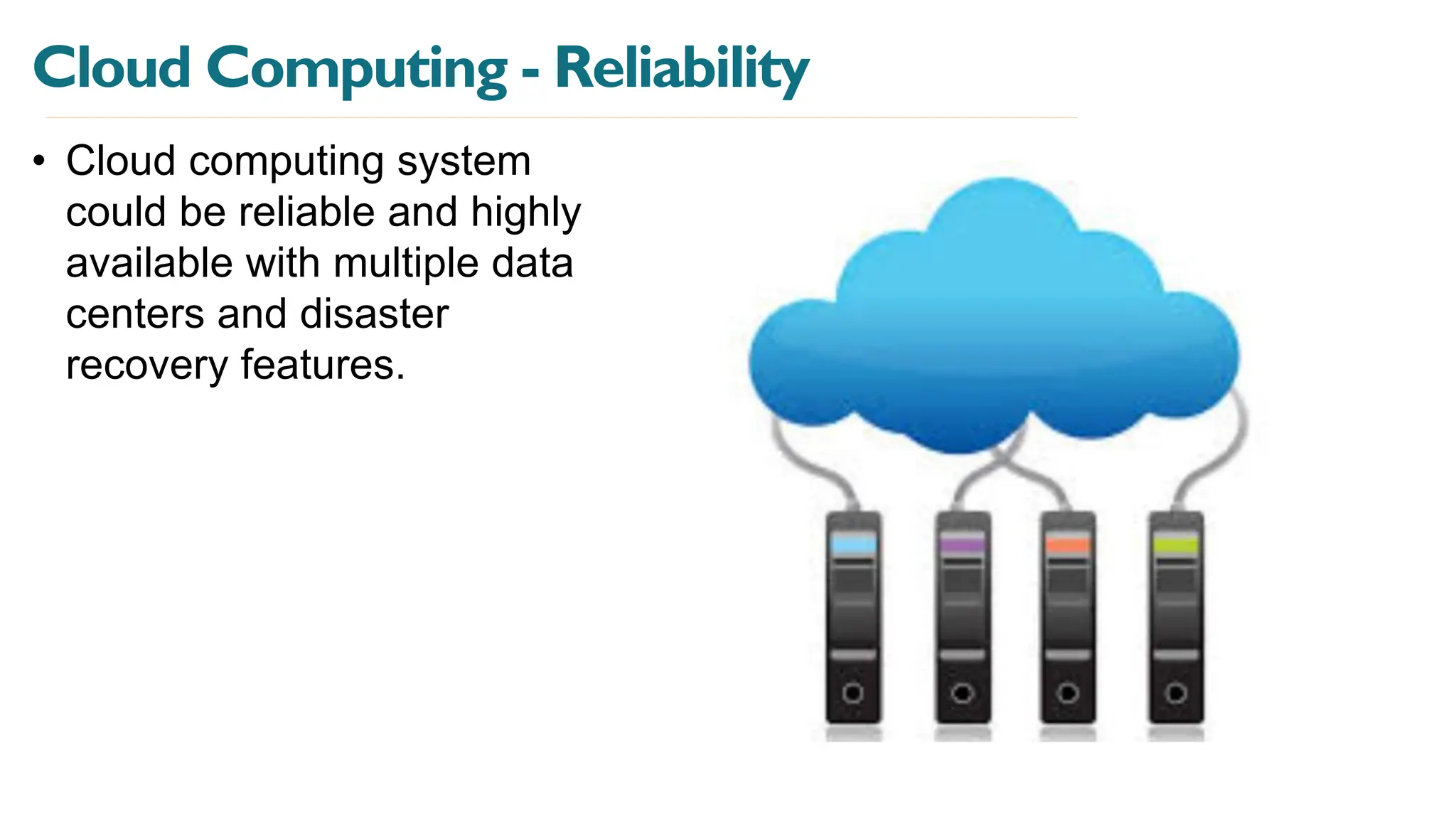
Cloud Computing - Reliability
• Cloud computing system
could be reliable and highly
available with multiple data
centers and disaster
recovery features.
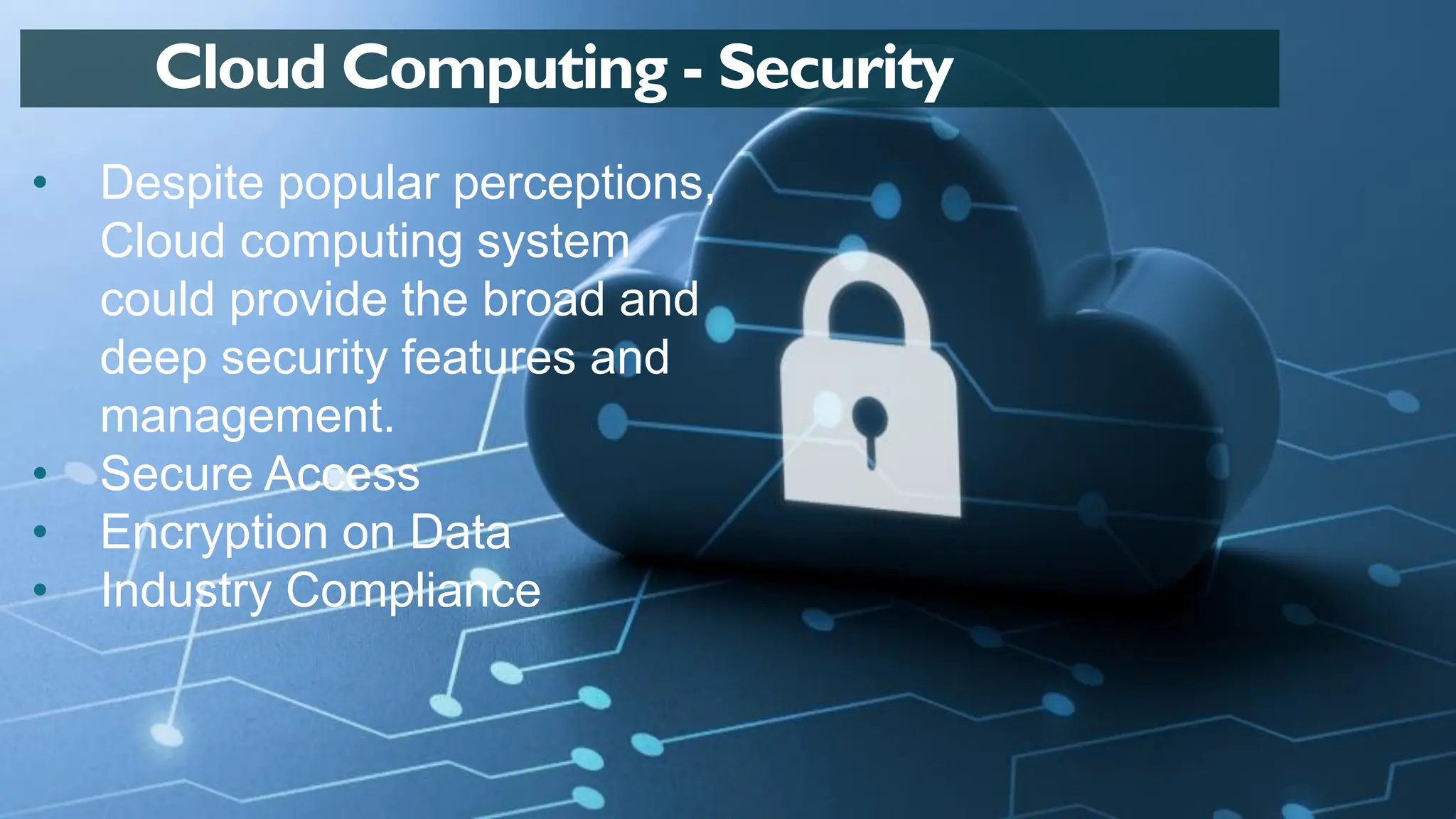
• Despite popular perceptions,
Cloud computing system
could provide the broad and
deep security features and
management.
• Secure Access
• Encryption on Data
• Industry Compliance
Cloud Computing - Security
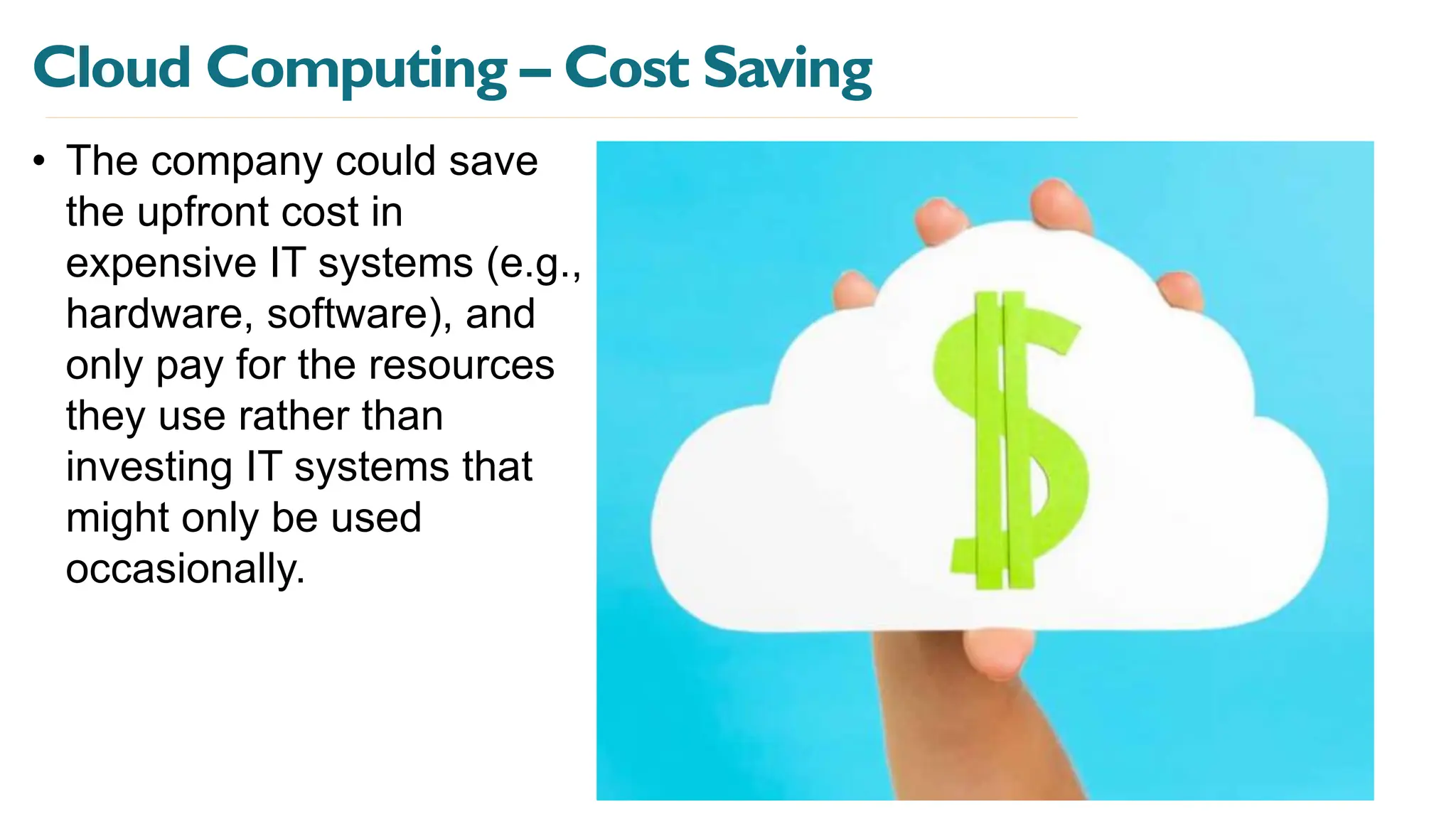
Cloud Computing – Cost Saving
• The company could save
the upfront cost in
expensive IT systems (e.g.,
hardware, software), and
only pay for the resources
they use rather than
investing IT systems that
might only be used
occasionally.
Cloud Computing – Easy to get started
• The company can quickly
create the new systems or
retire them in seconds,
making it easy to prototype
and test new ideas and
applications.
• Sometime, department itself
could build Cloud
Computing environment
without IT support.
Main Platform of Cloud Computing
• Amazon AWS
• Microsoft Azure
• Google Cloud
• IBM Cloud
Core Technologies of
AWS
• Computing
• Storage
• Database
• Security
• Networking
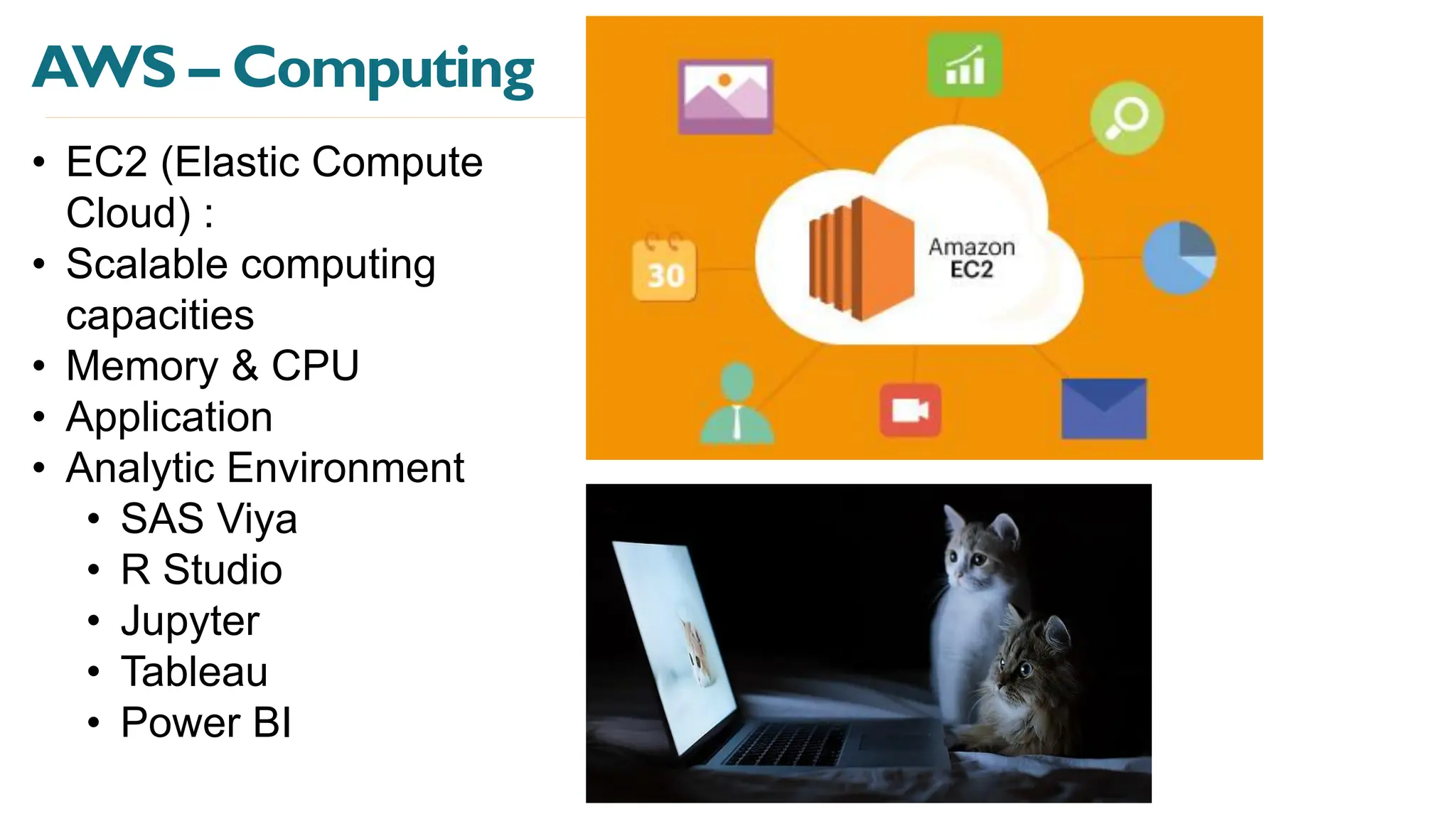
AWS – Computing
• EC2 (Elastic Compute
Cloud) :
• Scalable computing
capacities
• Memory & CPU
• Application
• Analytic Environment
• SAS Viya
• R Studio
• Jupyter
• Tableau
• Power BI
AWS – Storage
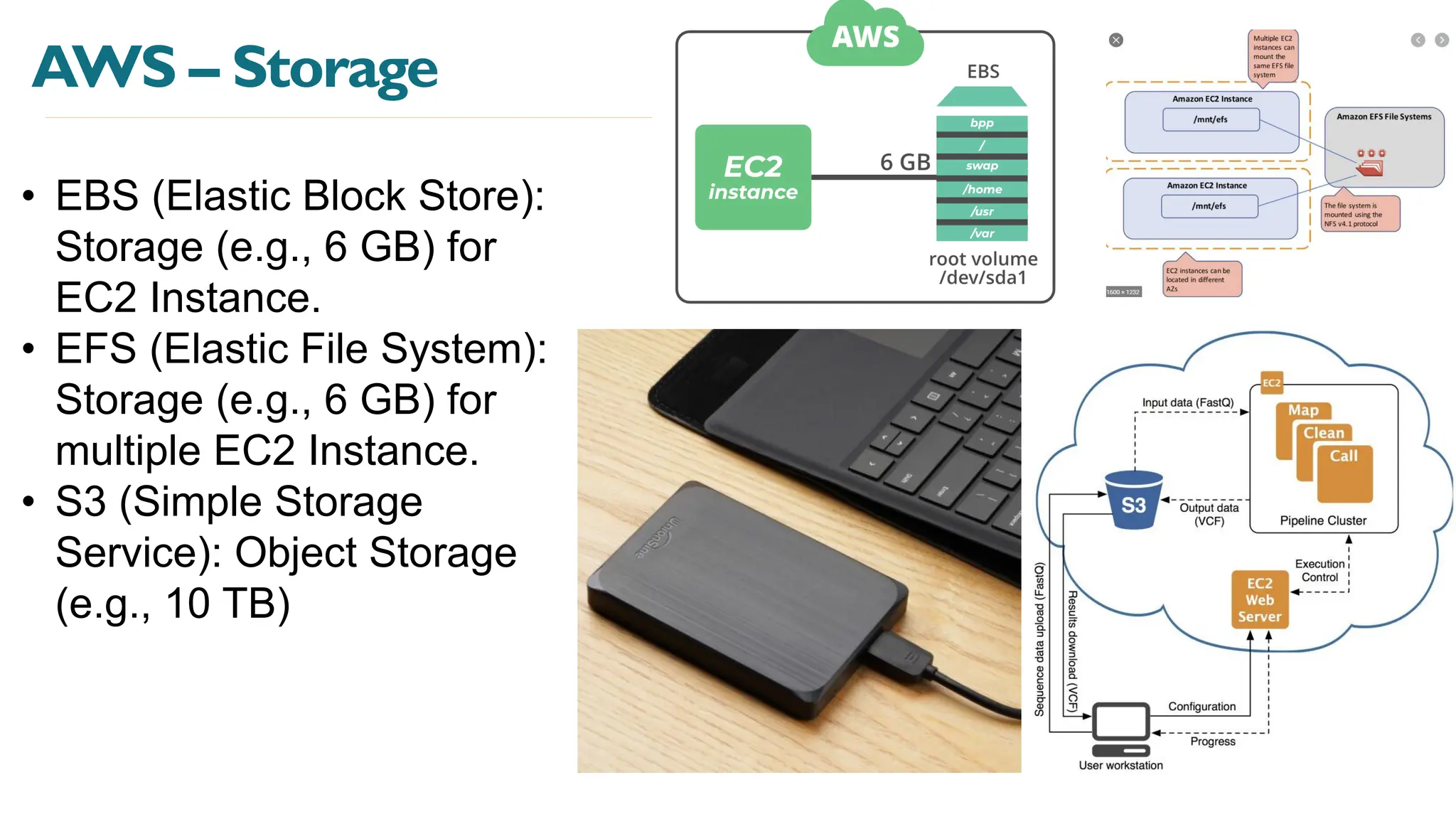
• EBS (Elastic Block Store):
Storage (e.g., 6 GB) for
EC2 Instance.
• EFS (Elastic File System):
Storage (e.g., 6 GB) for
multiple EC2 Instance.
• S3 (Simple Storage
Service): Object Storage
(e.g., 10 TB)
AWS – Database
• Redshift : Data Warehouse
based on PostgreSQL
• RDS (Relational Database
Service) : Relational Database
(e.g., MySQL, PostgreSQL,
Oracle, Aurora)
• DynamoDB : NoSQL
Database
AWS – Security
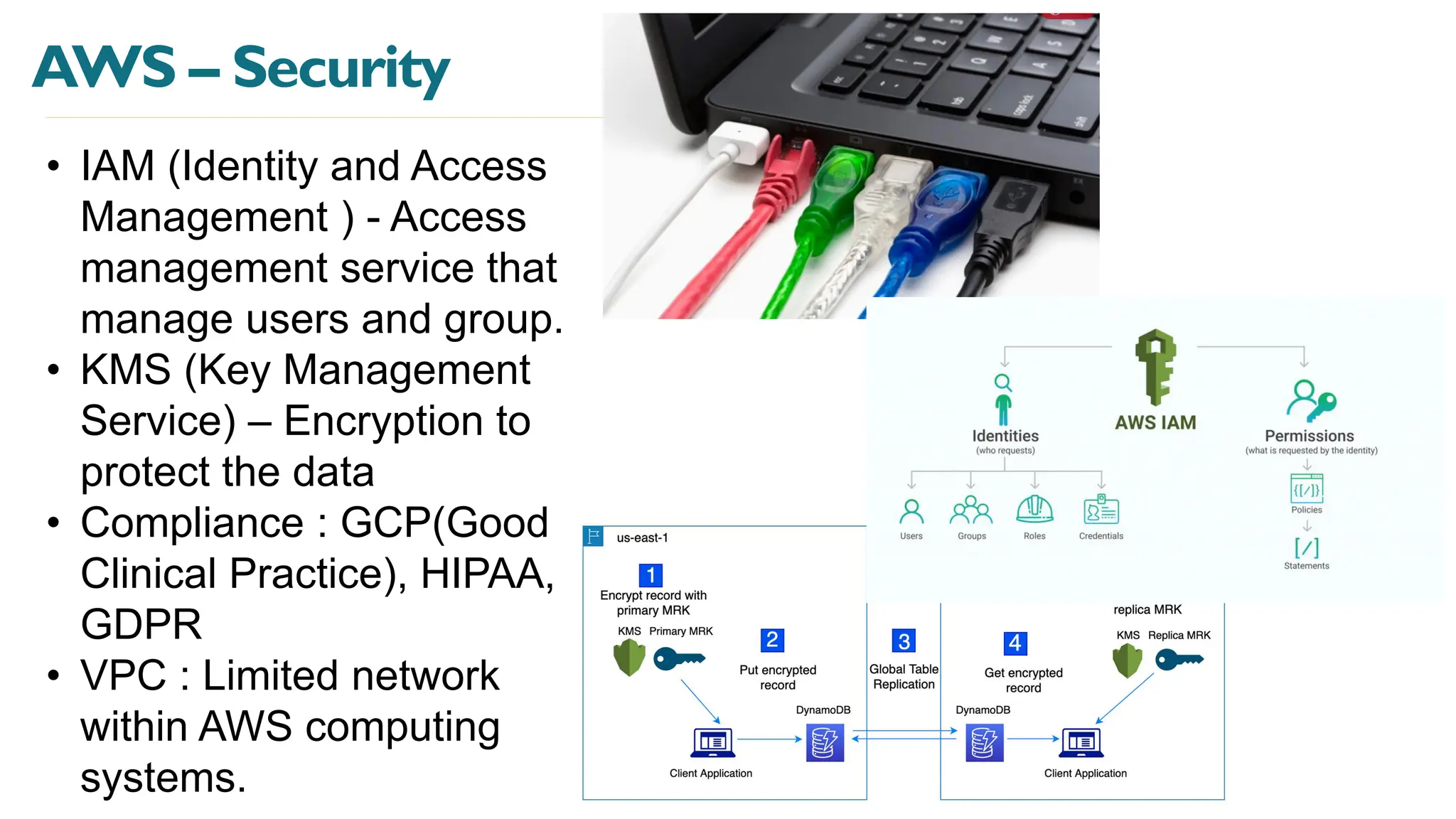
• IAM (Identity and Access
Management ) - Access
management service that
manage users and group.
• KMS (Key Management
Service) – Encryption to
protect the data
• Compliance : GCP(Good
Clinical Practice), HIPAA,
GDPR
• VPC : Limited network
within AWS computing
systems.
AWS – Networking
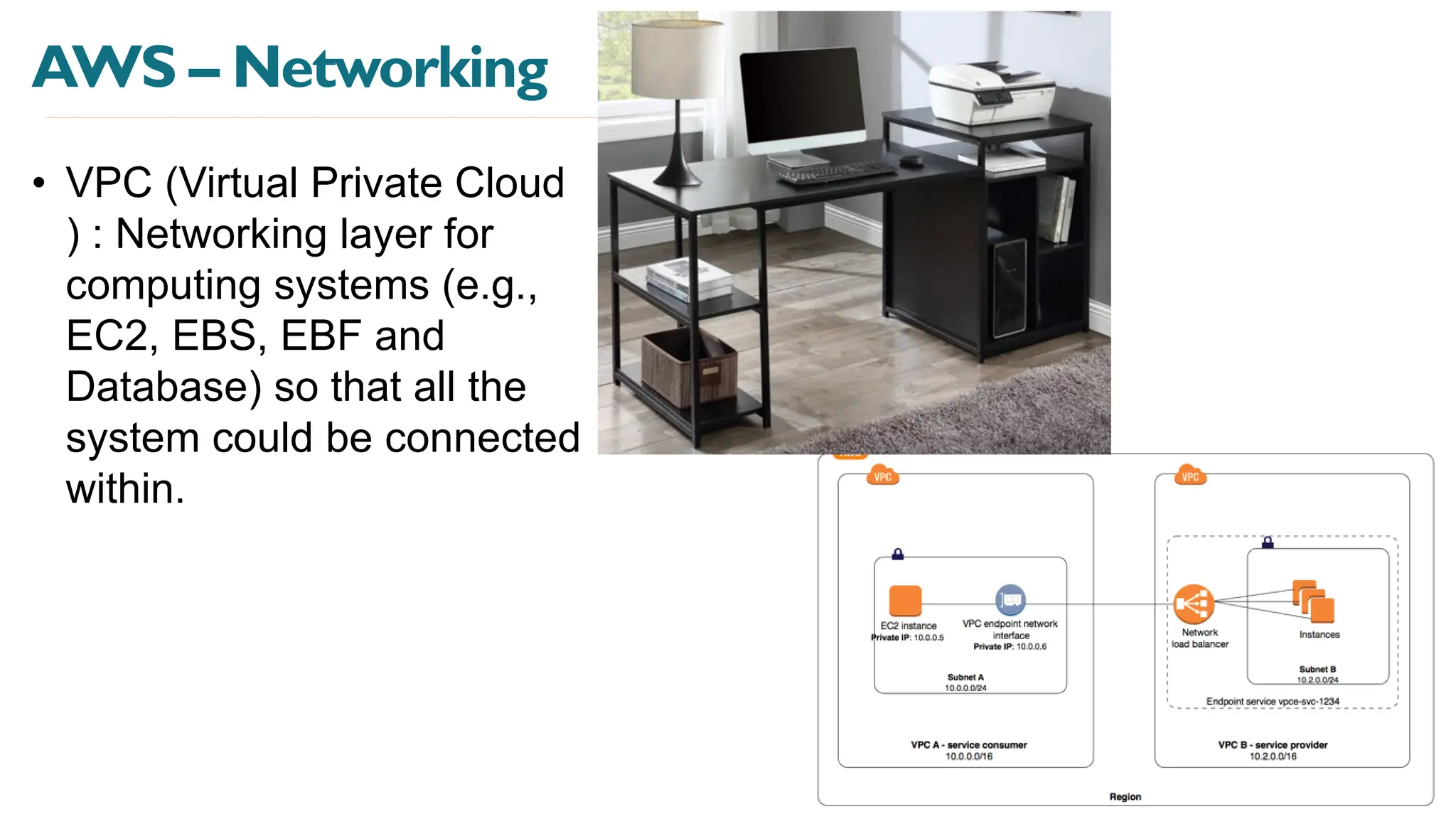
• VPC (Virtual Private Cloud
) : Networking layer for
computing systems (e.g.,
EC2, EBS, EBF and
Database) so that all the
system could be connected
within.
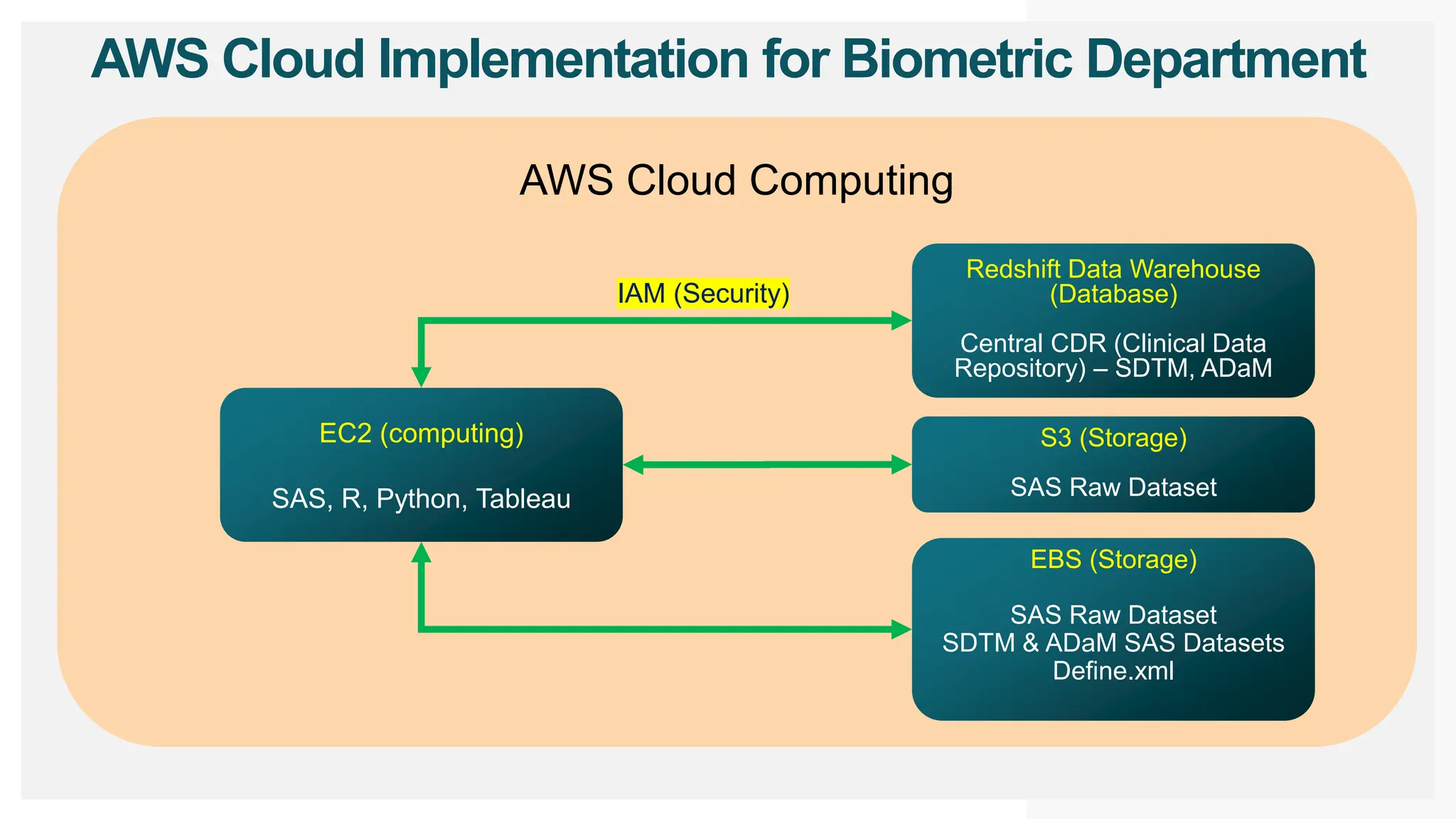
AWS Cloud Implementation for Biometric Department
AWS Cloud Computing
Redshift Data Warehouse
(Database)
Central CDR (Clinical Data
Repository) – SDTM, ADaM
EC2 (computing)
SAS, R, Python, Tableau
EBS (Storage)
SAS Raw Dataset
SDTM & ADaM SAS Datasets
Define.xml
S3 (Storage)
SAS Raw Dataset
IAM (Security)
23
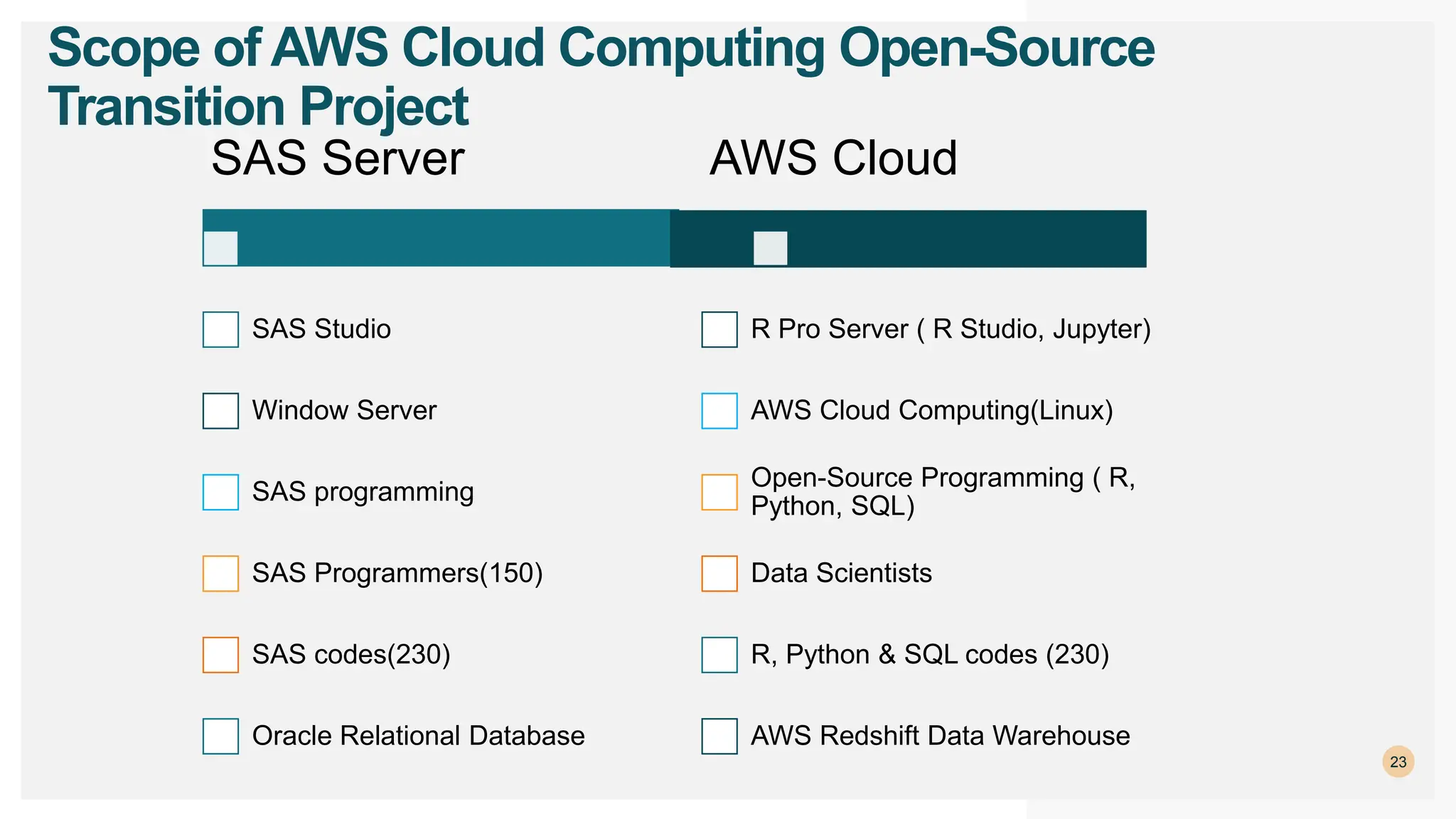
Scope of AWS Cloud Computing Open-Source
Transition Project
SAS Server
SAS Studio
Window Server
SAS programming
SAS Programmers(150)
SAS codes(230)
Oracle Relational Database
AWS Cloud
R Pro Server ( R Studio, Jupyter)
AWS Cloud Computing(Linux)
Open-Source Programming ( R,
Python, SQL)
Data Scientists
R, Python & SQL codes (230)
AWS Redshift Data Warehouse
24
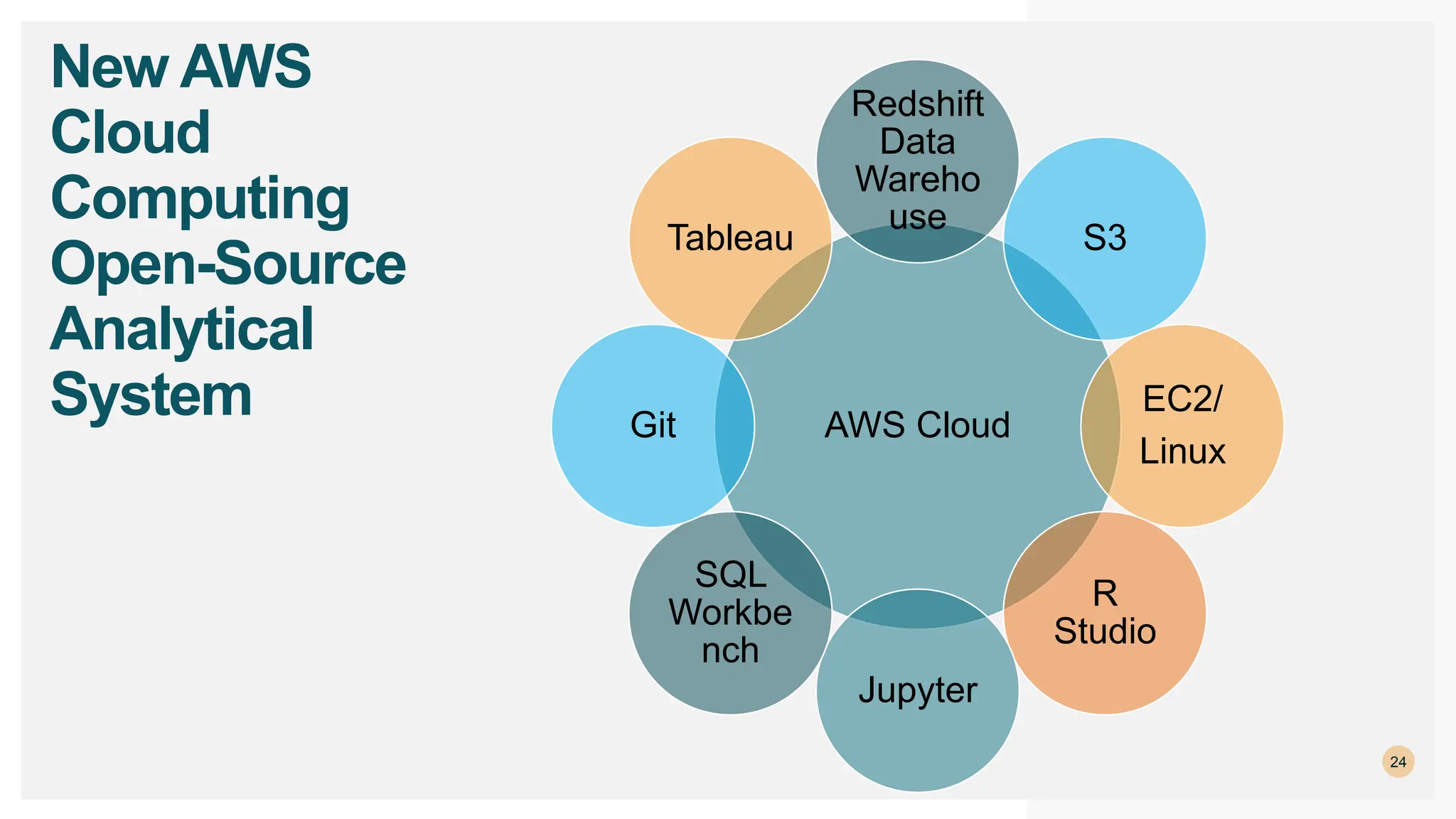
New AWS
Cloud
Computing
Open-Source
Analytical
System AWS Cloud
Redshift
Data
Wareho
use
S3
EC2/
Linux
R
Studio
Jupyter
SQL
Workbe
nch
Git
Tableau
25
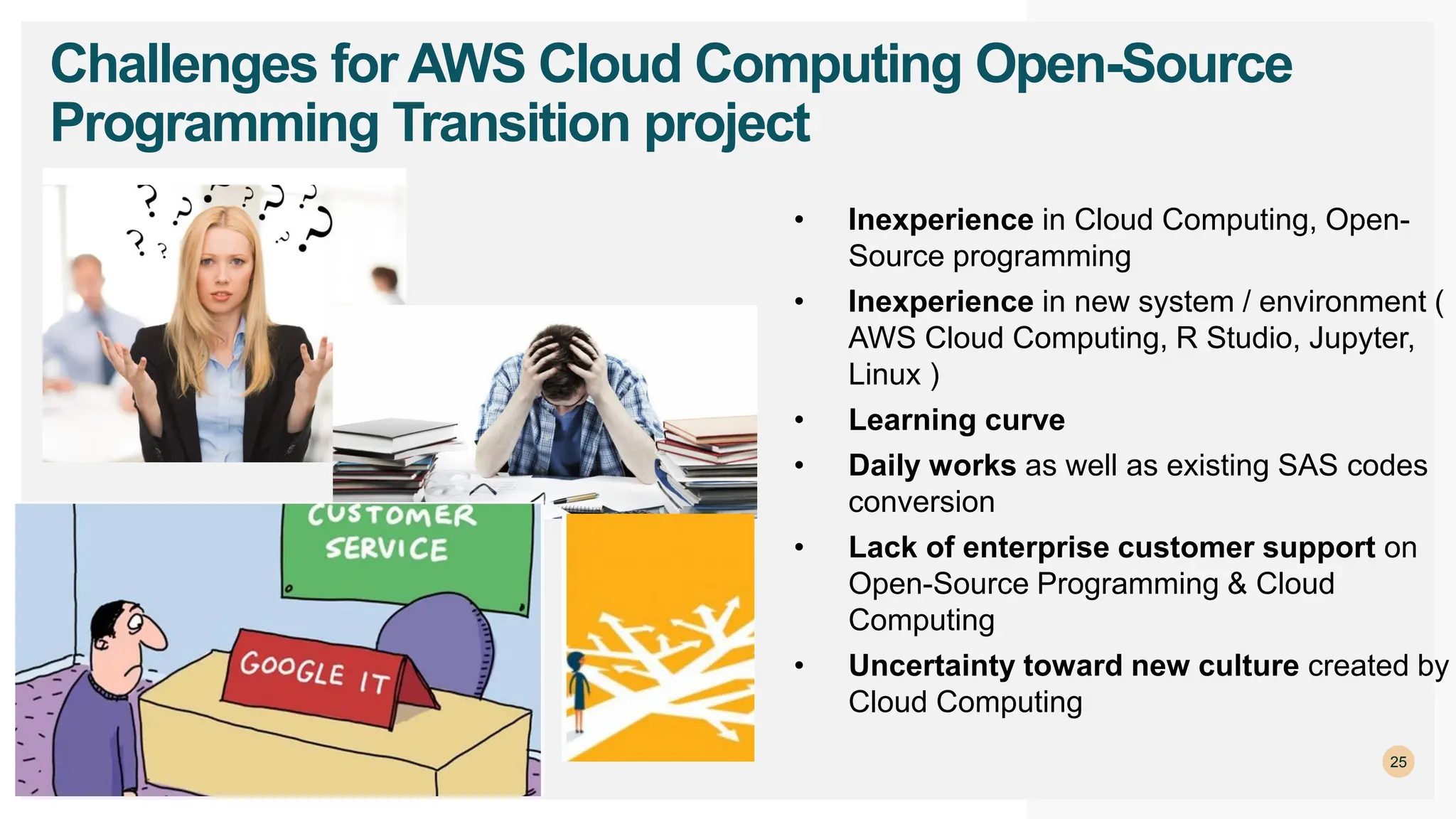
Challenges for AWS Cloud Computing Open-Source
Programming Transition project
• Inexperience in Cloud Computing, Open-
Source programming
• Inexperience in new system / environment (
AWS Cloud Computing, R Studio, Jupyter,
Linux )
• Learning curve
• Daily works as well as existing SAS codes
conversion
• Lack of enterprise customer support on
Open-Source Programming & Cloud
Computing
• Uncertainty toward new culture created by
Cloud Computing
26
Lessons Learned from AWS Cloud Computing
Open-Source Transition Project
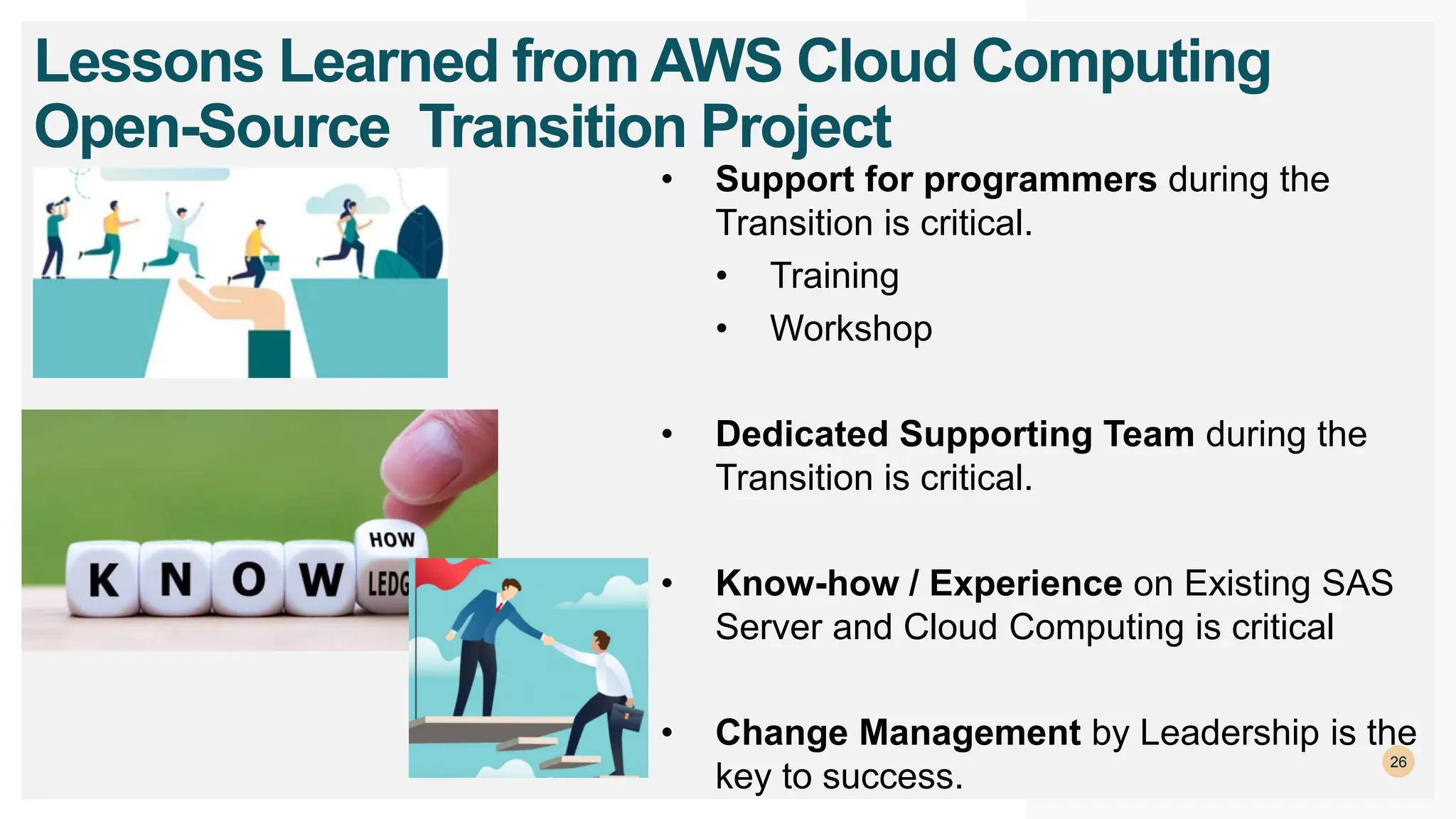
• Support for programmers during the
Transition is critical.
• Training
• Workshop
• Dedicated Supporting Team during the
Transition is critical.
• Know-how / Experience on Existing SAS
Server and Cloud Computing is critical
• Change Management by Leadership is the
key to success.
Why Cloud Computing in Biometric Department?
• Organizational strategic direction
• Central Data Repository for SDTM
and ADaM
• More Advanced Analytics (e.g., Data
Visualization, Machine Learning, Big
Data, Open-Source Programming)
• Need for more flexible, highly
available, centralized, integrated
analytical system
28
Conclusion
• Cloud Computing is / will be the future
computing environment for many
organization as organizational
strategic goals.
• Biometric department of some
organizations has moved or is
exploring the options moving into
Cloud computing environment.
• Unknown, Scary Adventure
Any Questions?

Introduction of AWS Cloud Computing and its future for Biometric Department

  • 1.
    Introduction ofAWS Cloud Computingand its future for Biometric Department Kevin Lee
  • 2.
    Disclaimer The views andopinions presented here represent those of the speaker and should not be considered to represent any companies or organizations.
  • 3.
    • Introduction ofCloud Computing • Computing Services in Cloud • Benefits of Cloud Computing • Main Platforms of Cloud • Core Technologies of AWS • AWS Implementation in Biometrics Department • AWS Cloud Computing Open- source Programming Transition Project • Future of Cloud Computing in Biometric Department • Conclusion
  • 4.
    “The Magic FarawayTree Adventure” Astory about three children climbing up a big tree to cloud and adventuring a magical land in the cloud. - To Ignite Children’s imagination - To encourage exploring their own creativity
  • 5.
    5 What is Cloud Computing? -Thruinternet, users will be able to access all the computing services.
  • 6.
  • 7.
    Functionalities / Benefits ofCloud Computing • Elasticity • Flexibility • Integrated • Reliable (Highly available) • Secure • Cost-saving • Easy to get started
  • 8.
    Cloud Computing -Elasticity • The company is able to scale up and down the computing systems easily. • In low demand period: 2 servers • In high demand period: 2 servers to 4 servers
  • 9.
    Cloud Computing -Flexibility • On-demand resources • The company could choose the best deployment option among a range of options, and change the system based on the demand easily. • Scalability • Pay as you go pricing • The company does not need to purchase and maintain the additional hardware. • Accessibility control
  • 10.
    Cloud Computing -Integration • The company is able to integrate the different computing system or application in the same infrastructure. • Integration • Database • Analytics • Visualization • Reporting • Application
  • 11.
    Cloud Computing -Reliability • Cloud computing system could be reliable and highly available with multiple data centers and disaster recovery features.
  • 12.
    • Despite popularperceptions, Cloud computing system could provide the broad and deep security features and management. • Secure Access • Encryption on Data • Industry Compliance Cloud Computing - Security
  • 13.
    Cloud Computing –Cost Saving • The company could save the upfront cost in expensive IT systems (e.g., hardware, software), and only pay for the resources they use rather than investing IT systems that might only be used occasionally.
  • 14.
    Cloud Computing –Easy to get started • The company can quickly create the new systems or retire them in seconds, making it easy to prototype and test new ideas and applications. • Sometime, department itself could build Cloud Computing environment without IT support.
  • 15.
    Main Platform ofCloud Computing • Amazon AWS • Microsoft Azure • Google Cloud • IBM Cloud
  • 16.
    Core Technologies of AWS •Computing • Storage • Database • Security • Networking
  • 17.
    AWS – Computing •EC2 (Elastic Compute Cloud) : • Scalable computing capacities • Memory & CPU • Application • Analytic Environment • SAS Viya • R Studio • Jupyter • Tableau • Power BI
  • 18.
    AWS – Storage •EBS (Elastic Block Store): Storage (e.g., 6 GB) for EC2 Instance. • EFS (Elastic File System): Storage (e.g., 6 GB) for multiple EC2 Instance. • S3 (Simple Storage Service): Object Storage (e.g., 10 TB)
  • 19.
    AWS – Database •Redshift : Data Warehouse based on PostgreSQL • RDS (Relational Database Service) : Relational Database (e.g., MySQL, PostgreSQL, Oracle, Aurora) • DynamoDB : NoSQL Database
  • 20.
    AWS – Security •IAM (Identity and Access Management ) - Access management service that manage users and group. • KMS (Key Management Service) – Encryption to protect the data • Compliance : GCP(Good Clinical Practice), HIPAA, GDPR • VPC : Limited network within AWS computing systems.
  • 21.
    AWS – Networking •VPC (Virtual Private Cloud ) : Networking layer for computing systems (e.g., EC2, EBS, EBF and Database) so that all the system could be connected within.
  • 22.
    AWS Cloud Implementationfor Biometric Department AWS Cloud Computing Redshift Data Warehouse (Database) Central CDR (Clinical Data Repository) – SDTM, ADaM EC2 (computing) SAS, R, Python, Tableau EBS (Storage) SAS Raw Dataset SDTM & ADaM SAS Datasets Define.xml S3 (Storage) SAS Raw Dataset IAM (Security)
  • 23.
    23 Scope of AWSCloud Computing Open-Source Transition Project SAS Server SAS Studio Window Server SAS programming SAS Programmers(150) SAS codes(230) Oracle Relational Database AWS Cloud R Pro Server ( R Studio, Jupyter) AWS Cloud Computing(Linux) Open-Source Programming ( R, Python, SQL) Data Scientists R, Python & SQL codes (230) AWS Redshift Data Warehouse
  • 24.
    24 New AWS Cloud Computing Open-Source Analytical System AWSCloud Redshift Data Wareho use S3 EC2/ Linux R Studio Jupyter SQL Workbe nch Git Tableau
  • 25.
    25 Challenges for AWSCloud Computing Open-Source Programming Transition project • Inexperience in Cloud Computing, Open- Source programming • Inexperience in new system / environment ( AWS Cloud Computing, R Studio, Jupyter, Linux ) • Learning curve • Daily works as well as existing SAS codes conversion • Lack of enterprise customer support on Open-Source Programming & Cloud Computing • Uncertainty toward new culture created by Cloud Computing
  • 26.
    26 Lessons Learned fromAWS Cloud Computing Open-Source Transition Project • Support for programmers during the Transition is critical. • Training • Workshop • Dedicated Supporting Team during the Transition is critical. • Know-how / Experience on Existing SAS Server and Cloud Computing is critical • Change Management by Leadership is the key to success.
  • 27.
    Why Cloud Computingin Biometric Department? • Organizational strategic direction • Central Data Repository for SDTM and ADaM • More Advanced Analytics (e.g., Data Visualization, Machine Learning, Big Data, Open-Source Programming) • Need for more flexible, highly available, centralized, integrated analytical system
  • 28.
    28 Conclusion • Cloud Computingis / will be the future computing environment for many organization as organizational strategic goals. • Biometric department of some organizations has moved or is exploring the options moving into Cloud computing environment. • Unknown, Scary Adventure
  • 29.