









End to End
Standards driven
Oncology Study
Kevin Lee, Data Scientist
The Agenda
➢ Introduction of Oncology
➢ Why Standards?
➢ Oncology-specific Standards:
Subtype, Response Criteria
guideline, CDISC, Analysis
➢ Standards-driven Oncology
Studies
➢ Final Thoughts / Q&A
Cancer Facts
➢ The word ‘cancer’ is related to the Greek word “crab”
because its finger-like projections were similar to the shape
of the crab
➢ In 2010, the economic cost of the disease worldwide was
estimated at $1.16 trillion.
➢ One in eight deaths in the world are due to cancer.
➢ WHO predicts new cancer cases of 14 million in 2012 to 22
million in 2030 and cancer deaths from 8.2 million a year to
13 million annually.
➢ Men who are married are up to 35% less likely to die from
cancer than those who are not married.
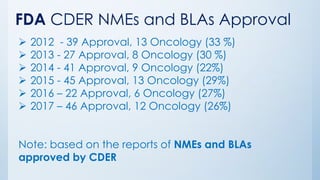
FDA CDER NMEs and BLAs Approval
➢ 2012 - 39 Approval, 13 Oncology (33 %)
➢ 2013 - 27 Approval, 8 Oncology (30 %)
➢ 2014 - 41 Approval, 9 Oncology (22%)
➢ 2015 - 45 Approval, 13 Oncology (29%)
➢ 2016 – 22 Approval, 6 Oncology (27%)
➢ 2017 – 46 Approval, 12 Oncology (26%)
Note: based on the reports of NMEs and BLAs
approved by CDER
Many Pharma
Companies Turns
their Focus to
Cancer
➢ A cornerstone to the
success
➢ Unmet medical needs
➢ Profitable
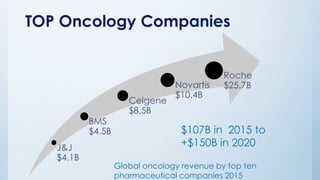
TOP Oncology Companies
J&J
$4.1B
BMS
$4.5B
Celgene
$8.5B
Novartis
$10.4B
Roche
$25.7B
Global oncology revenue by top ten
pharmaceutical companies 2015
$107B in 2015 to
+$150B in 2020
We live in the oncology
drug development
environment.
What do we feel
about oncology
studies?➢
➢ Different
➢ Complex
➢ Difficult
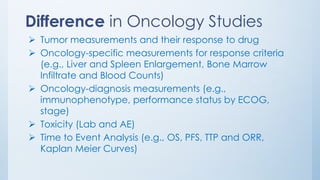
Difference in Oncology Studies
➢ Tumor measurements and their response to drug
➢ Oncology-specific measurements for response criteria
(e.g., Liver and Spleen Enlargement, Bone Marrow
Infiltrate and Blood Counts)
➢ Oncology-diagnosis measurements (e.g.,
immunophenotype, performance status by ECOG,
stage)
➢ Toxicity (Lab and AE)
➢ Time to Event Analysis (e.g., OS, PFS, TTP and ORR,
Kaplan Meier Curves)
➢
Houston,
we have a
BIG
Challenge!!!
How to scale for oncology
studies
How to conduct complex
oncology studies
The more complex
problem is, the
easier the winner be
distinguished.
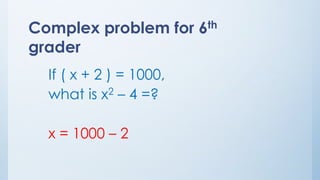
If ( x + 2 ) = 1000,
what is x2 – 4 =?
x = 1000 – 2
Complex problem for 6th
grader
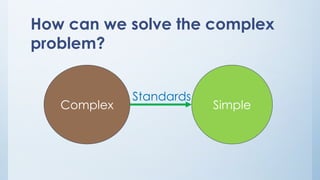
Complex Simple
Standards
How can we solve the complex
problem?
Oncology-
specific
Standards
➢ Study Sub-type
➢ Response Criteria
Guidelines
➢ CDISC
➢ Analysis
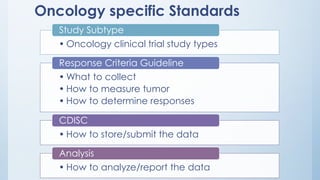
Oncology specific Standards
• Oncology clinical trial study types
Study Subtype
• What to collect
• How to measure tumor
• How to determine responses
Response Criteria Guideline
• How to store/submit the data
CDISC
• How to analyze/report the data
Analysis
Oncology
Study
Subtypes
➢ Solid Tumor
➢ Lymphoma
➢ Leukemia
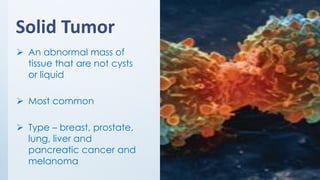
Solid Tumor
➢ An abnormal mass of
tissue that are not cysts
or liquid
➢ Most common
➢ Type – breast, prostate,
lung, liver and
pancreatic cancer and
melanoma
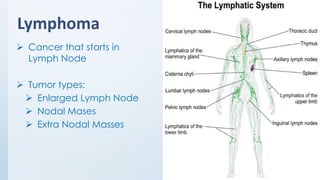
Lymphoma
➢ Cancer that starts in
Lymph Node
➢ Tumor types:
➢ Enlarged Lymph Node
➢ Nodal Mases
➢ Extra Nodal Masses
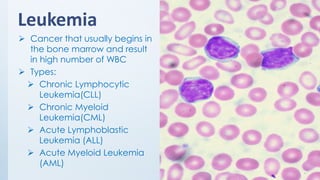
Leukemia
➢ Cancer that usually begins in
the bone marrow and result
in high number of WBC
➢ Types:
➢ Chronic Lymphocytic
Leukemia(CLL)
➢ Chronic Myeloid
Leukemia(CML)
➢ Acute Lymphoblastic
Leukemia (ALL)
➢ Acute Myeloid Leukemia
(AML)
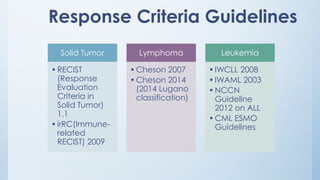
Response Criteria Guidelines
Solid Tumor
•RECIST
(Response
Evaluation
Criteria in
Solid Tumor)
1.1
•irRC(Immune-
related
RECIST) 2009
Lymphoma
•Cheson 2007
•Cheson 2014
(2014 Lugano
classification)
Leukemia
•IWCLL 2008
•IWAML 2003
•NCCN
Guideline
2012 on ALL
•CML ESMO
Guidelines
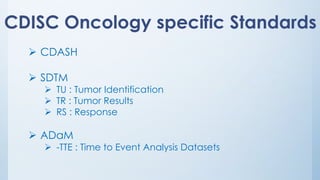
CDISC Oncology specific Standards
➢ CDASH
➢ SDTM
➢ TU : Tumor Identification
➢ TR : Tumor Results
➢ RS : Response
➢ ADaM
➢ -TTE : Time to Event Analysis Datasets
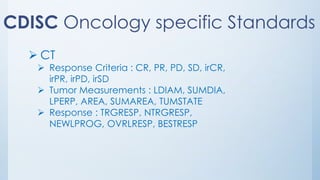
CDISC Oncology specific Standards
➢ CT
➢ Response Criteria : CR, PR, PD, SD, irCR,
irPR, irPD, irSD
➢ Tumor Measurements : LDIAM, SUMDIA,
LPERP, AREA, SUMAREA, TUMSTATE
➢ Response : TRGRESP, NTRGRESP,
NEWLPROG, OVRLRESP, BESTRESP
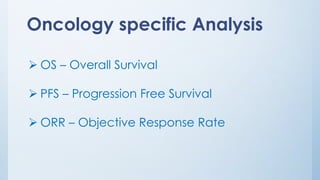
Oncology specific Analysis
➢ OS – Overall Survival
➢ PFS – Progression Free Survival
➢ ORR – Objective Response Rate
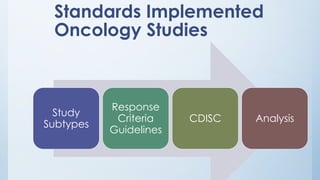
Standards Implemented
Oncology Studies
Study
Subtypes
Response
Criteria
Guidelines
CDISC Analysis
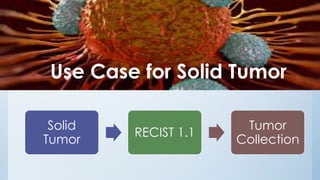
Solid
Tumor
RECIST 1.1
Tumor
Collection
Use Case for Solid Tumor
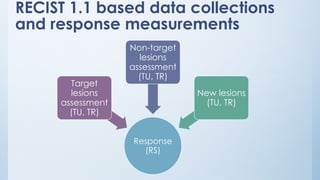
RECIST 1.1 based data collections
and response measurements
Response
(RS)
Target
lesions
assessment
(TU, TR)
Non-target
lesions
assessment
(TU, TR)
New lesions
(TU, TR)
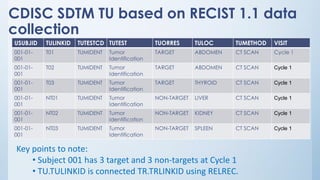
USUBJID TULINKID TUTESTCD TUTEST TUORRES TULOC TUMETHOD VISIT
001-01-
001
T01 TUMIDENT Tumor
Identification
TARGET ABDOMEN CT SCAN Cycle 1
001-01-
001
T02 TUMIDENT Tumor
Identification
TARGET ABDOMEN CT SCAN Cycle 1
001-01-
001
T03 TUMIDENT Tumor
Identification
TARGET THYROID CT SCAN Cycle 1
001-01-
001
NT01 TUMIDENT Tumor
Identification
NON-TARGET LIVER CT SCAN Cycle 1
001-01-
001
NT02 TUMIDENT Tumor
Identification
NON-TARGET KIDNEY CT SCAN Cycle 1
001-01-
001
NT03 TUMIDENT Tumor
Identification
NON-TARGET SPLEEN CT SCAN Cycle 1
CDISC SDTM TU based on RECIST 1.1 data
collection
Key points to note:
• Subject 001 has 3 target and 3 non-targets at Cycle 1
• TU.TULINKID is connected TR.TRLINKID using RELREC.
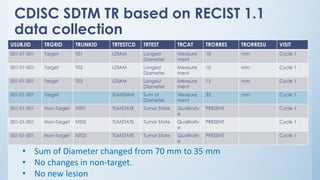
CDISC SDTM TR based on RECIST 1.1
data collection
USUBJID TRGRID TRLINKID TRTESTCD TRTEST TRCAT TRORRES TRORRESU VISIT
001-01-001 Target T01 LDIAM Longest
Diameter
Measure
ment
10 mm Cycle 1
001-01-001 Target T02 LDIAM Longest
Diameter
Measure
ment
10 mm Cycle 1
001-01-001 Target T03 LDIAM Longest
Diameter
Measure
ment
15 mm Cycle 1
001-01-001 Target SUMDIAM Sum of
Diameter
Measure
ment
35 mm Cycle 1
001-01-001 Non-Target NT01 TUMSTATE Tumor State Qualitativ
e
PRESENT Cycle 1
001-01-001 Non-Target NT02 TUMSTATE Tumor State Qualitativ
e
PRESENT Cycle 1
001-01-001 Non-Target NT03 TUMSTATE Tumor State Qualitativ
e
PRESENT Cycle 1
• Sum of Diameter changed from 70 mm to 35 mm
• No changes in non-target.
• No new lesion
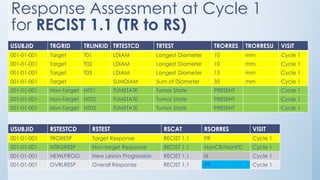
Response Assessment at Cycle 1
for RECIST 1.1 (TR to RS)
USUBJID TRGRID TRLINKID TRTESTCD TRTEST TRORRES TRORRESU VISIT
001-01-001 Target T01 LDIAM Longest Diameter 10 mm Cycle 1
001-01-001 Target T02 LDIAM Longest Diameter 10 mm Cycle 1
001-01-001 Target T03 LDIAM Longest Diameter 15 mm Cycle 1
001-01-001 Target SUMDIAM Sum of Diameter 35 mm Cycle 1
001-01-001 Non-Target NT01 TUMSTATE Tumor State PRESENT Cycle 1
001-01-001 Non-Target NT02 TUMSTATE Tumor State PRESENT Cycle 1
001-01-001 Non-Target NT03 TUMSTATE Tumor State PRESENT Cycle 1
USUBJID RSTESTCD RSTEST RSCAT RSORRES VISIT
001-01-001 TRGRESP Target Response RECIST 1.1 PR Cycle 1
001-01-001 NTRGRESP Non-target Response RECIST 1.1 NonCR/NonPD Cycle 1
001-01-001 NEWLPROG New Lesion Progression RECIST 1.1 N Cycle 1
001-01-001 OVRLRESP Overall Response RECIST 1.1 PR Cycle 1
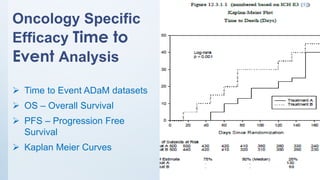
Oncology Specific
Efficacy Time to
Event Analysis
➢ Time to Event ADaM datasets
➢ OS – Overall Survival
➢ PFS – Progression Free
Survival
➢ Kaplan Meier Curves
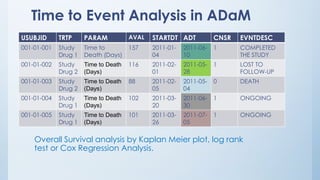
Time to Event Analysis in ADaM
USUBJID TRTP PARAM AVAL STARTDT ADT CNSR EVNTDESC
001-01-001 Study
Drug 1
Time to
Death (Days)
157 2011-01-
04
2011-06-
10
1 COMPLETED
THE STUDY
001-01-002 Study
Drug 2
Time to Death
(Days)
116 2011-02-
01
2011-05-
28
1 LOST TO
FOLLOW-UP
001-01-003 Study
Drug 2
Time to Death
(Days)
88 2011-02-
05
2011-05-
04
0 DEATH
001-01-004 Study
Drug 1
Time to Death
(Days)
102 2011-03-
20
2011-06-
30
1 ONGOING
001-01-005 Study
Drug 1
Time to Death
(Days)
101 2011-03-
26
2011-07-
05
1 ONGOING
Overall Survival analysis by Kaplan Meier plot, log rank
test or Cox Regression Analysis.
Standards
Driven
automated
Oncology
Studies
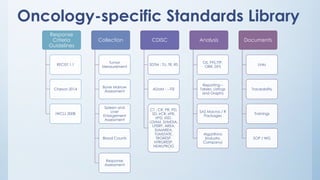
Oncology-specific Standards Library
Response
Criteria
Guidelines
RECIST 1.1
Cheson 2014
IWCLL 2008
Collection
Tumor
Measurement
Bone Marrow
Assessment
Spleen and
Liver
Enlargement
Assessment
Blood Counts
Response
Assessment
CDISC
SDTM : TU, TR, RS
ADaM : --TTE
CT : CR, PR, PD,
SD, irCR, irPR,
irPD, irSD,
LDIAM, SUMDIA,
LPERP, AREA,
SUMAREA,
TUMSTATE,
TRGRESP,
NTRGRESP,
NEWLPROG
Analysis
OS, PFS,TTP,
ORR, DFS
Reporting –
Tables, Listings
and Graphs
SAS Macros / R
Packages
Algorithms
(Industry,
Company)
Documents
Links
Traceability
Trainings
SOP / WG
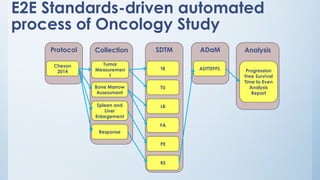
E2E Standards-driven automated
process of Oncology Study
Protocol
Cheson
2014
Collection
Tumor
Measuremen
t
SDTM
TR
Analysis
Progression
Free Survival
Time to Even
Analysis
Report
ADaM
ADTTEPFS
Bone Marrow
Assessment
Spleen and
Liver
Enlargement
FA
TU
LB
Response
PE
RS
Why Standards
driven process in
oncology studies?
➢ Regulatory
compliance
➢ Easy to understand
➢ Scalable
➢ 20/80
➢ Time Saving
➢ Effective/ efficient
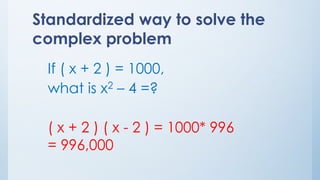
If ( x + 2 ) = 1000,
what is x2 – 4 =?
( x + 2 ) ( x - 2 ) = 1000* 996
= 996,000
Standardized way to solve the
complex problem
Final Thoughts
➢ Benefits of Standards in
Oncology Studies
➢ Oncology-specific
standards
➢ E2E Standards-driven
process
Thanks!!!
Please contact
kevin.kyosun.lee@gmail.com
https://www.linkedin.com/in/
HelloKevinLee/

End to end standards driven oncology study (solid tumor, Immunotherapy, Leukemia, Lymphoma)

  • 1.
    End to End Standardsdriven Oncology Study Kevin Lee, Data Scientist
  • 2.
    The Agenda ➢ Introductionof Oncology ➢ Why Standards? ➢ Oncology-specific Standards: Subtype, Response Criteria guideline, CDISC, Analysis ➢ Standards-driven Oncology Studies ➢ Final Thoughts / Q&A
  • 3.
    Cancer Facts ➢ Theword ‘cancer’ is related to the Greek word “crab” because its finger-like projections were similar to the shape of the crab ➢ In 2010, the economic cost of the disease worldwide was estimated at $1.16 trillion. ➢ One in eight deaths in the world are due to cancer. ➢ WHO predicts new cancer cases of 14 million in 2012 to 22 million in 2030 and cancer deaths from 8.2 million a year to 13 million annually. ➢ Men who are married are up to 35% less likely to die from cancer than those who are not married.
  • 4.
    FDA CDER NMEsand BLAs Approval ➢ 2012 - 39 Approval, 13 Oncology (33 %) ➢ 2013 - 27 Approval, 8 Oncology (30 %) ➢ 2014 - 41 Approval, 9 Oncology (22%) ➢ 2015 - 45 Approval, 13 Oncology (29%) ➢ 2016 – 22 Approval, 6 Oncology (27%) ➢ 2017 – 46 Approval, 12 Oncology (26%) Note: based on the reports of NMEs and BLAs approved by CDER
  • 5.
    Many Pharma Companies Turns theirFocus to Cancer ➢ A cornerstone to the success ➢ Unmet medical needs ➢ Profitable
  • 6.
    TOP Oncology Companies J&J $4.1B BMS $4.5B Celgene $8.5B Novartis $10.4B Roche $25.7B Globaloncology revenue by top ten pharmaceutical companies 2015 $107B in 2015 to +$150B in 2020
  • 7.
    We live inthe oncology drug development environment.
  • 8.
    What do wefeel about oncology studies?➢ ➢ Different ➢ Complex ➢ Difficult
  • 9.
    Difference in OncologyStudies ➢ Tumor measurements and their response to drug ➢ Oncology-specific measurements for response criteria (e.g., Liver and Spleen Enlargement, Bone Marrow Infiltrate and Blood Counts) ➢ Oncology-diagnosis measurements (e.g., immunophenotype, performance status by ECOG, stage) ➢ Toxicity (Lab and AE) ➢ Time to Event Analysis (e.g., OS, PFS, TTP and ORR, Kaplan Meier Curves)
  • 10.
  • 11.
    How to scalefor oncology studies How to conduct complex oncology studies
  • 12.
    The more complex problemis, the easier the winner be distinguished.
  • 13.
    If ( x+ 2 ) = 1000, what is x2 – 4 =? x = 1000 – 2 Complex problem for 6th grader
  • 14.
    Complex Simple Standards How canwe solve the complex problem?
  • 15.
    Oncology- specific Standards ➢ Study Sub-type ➢Response Criteria Guidelines ➢ CDISC ➢ Analysis
  • 16.
    Oncology specific Standards •Oncology clinical trial study types Study Subtype • What to collect • How to measure tumor • How to determine responses Response Criteria Guideline • How to store/submit the data CDISC • How to analyze/report the data Analysis
  • 17.
  • 18.
    Solid Tumor ➢ Anabnormal mass of tissue that are not cysts or liquid ➢ Most common ➢ Type – breast, prostate, lung, liver and pancreatic cancer and melanoma
  • 19.
    Lymphoma ➢ Cancer thatstarts in Lymph Node ➢ Tumor types: ➢ Enlarged Lymph Node ➢ Nodal Mases ➢ Extra Nodal Masses
  • 20.
    Leukemia ➢ Cancer thatusually begins in the bone marrow and result in high number of WBC ➢ Types: ➢ Chronic Lymphocytic Leukemia(CLL) ➢ Chronic Myeloid Leukemia(CML) ➢ Acute Lymphoblastic Leukemia (ALL) ➢ Acute Myeloid Leukemia (AML)
  • 21.
    Response Criteria Guidelines SolidTumor •RECIST (Response Evaluation Criteria in Solid Tumor) 1.1 •irRC(Immune- related RECIST) 2009 Lymphoma •Cheson 2007 •Cheson 2014 (2014 Lugano classification) Leukemia •IWCLL 2008 •IWAML 2003 •NCCN Guideline 2012 on ALL •CML ESMO Guidelines
  • 22.
    CDISC Oncology specificStandards ➢ CDASH ➢ SDTM ➢ TU : Tumor Identification ➢ TR : Tumor Results ➢ RS : Response ➢ ADaM ➢ -TTE : Time to Event Analysis Datasets
  • 23.
    CDISC Oncology specificStandards ➢ CT ➢ Response Criteria : CR, PR, PD, SD, irCR, irPR, irPD, irSD ➢ Tumor Measurements : LDIAM, SUMDIA, LPERP, AREA, SUMAREA, TUMSTATE ➢ Response : TRGRESP, NTRGRESP, NEWLPROG, OVRLRESP, BESTRESP
  • 24.
    Oncology specific Analysis ➢OS – Overall Survival ➢ PFS – Progression Free Survival ➢ ORR – Objective Response Rate
  • 25.
  • 26.
  • 27.
    RECIST 1.1 baseddata collections and response measurements Response (RS) Target lesions assessment (TU, TR) Non-target lesions assessment (TU, TR) New lesions (TU, TR)
  • 28.
    USUBJID TULINKID TUTESTCDTUTEST TUORRES TULOC TUMETHOD VISIT 001-01- 001 T01 TUMIDENT Tumor Identification TARGET ABDOMEN CT SCAN Cycle 1 001-01- 001 T02 TUMIDENT Tumor Identification TARGET ABDOMEN CT SCAN Cycle 1 001-01- 001 T03 TUMIDENT Tumor Identification TARGET THYROID CT SCAN Cycle 1 001-01- 001 NT01 TUMIDENT Tumor Identification NON-TARGET LIVER CT SCAN Cycle 1 001-01- 001 NT02 TUMIDENT Tumor Identification NON-TARGET KIDNEY CT SCAN Cycle 1 001-01- 001 NT03 TUMIDENT Tumor Identification NON-TARGET SPLEEN CT SCAN Cycle 1 CDISC SDTM TU based on RECIST 1.1 data collection Key points to note: • Subject 001 has 3 target and 3 non-targets at Cycle 1 • TU.TULINKID is connected TR.TRLINKID using RELREC.
  • 29.
    CDISC SDTM TRbased on RECIST 1.1 data collection USUBJID TRGRID TRLINKID TRTESTCD TRTEST TRCAT TRORRES TRORRESU VISIT 001-01-001 Target T01 LDIAM Longest Diameter Measure ment 10 mm Cycle 1 001-01-001 Target T02 LDIAM Longest Diameter Measure ment 10 mm Cycle 1 001-01-001 Target T03 LDIAM Longest Diameter Measure ment 15 mm Cycle 1 001-01-001 Target SUMDIAM Sum of Diameter Measure ment 35 mm Cycle 1 001-01-001 Non-Target NT01 TUMSTATE Tumor State Qualitativ e PRESENT Cycle 1 001-01-001 Non-Target NT02 TUMSTATE Tumor State Qualitativ e PRESENT Cycle 1 001-01-001 Non-Target NT03 TUMSTATE Tumor State Qualitativ e PRESENT Cycle 1 • Sum of Diameter changed from 70 mm to 35 mm • No changes in non-target. • No new lesion
  • 30.
    Response Assessment atCycle 1 for RECIST 1.1 (TR to RS) USUBJID TRGRID TRLINKID TRTESTCD TRTEST TRORRES TRORRESU VISIT 001-01-001 Target T01 LDIAM Longest Diameter 10 mm Cycle 1 001-01-001 Target T02 LDIAM Longest Diameter 10 mm Cycle 1 001-01-001 Target T03 LDIAM Longest Diameter 15 mm Cycle 1 001-01-001 Target SUMDIAM Sum of Diameter 35 mm Cycle 1 001-01-001 Non-Target NT01 TUMSTATE Tumor State PRESENT Cycle 1 001-01-001 Non-Target NT02 TUMSTATE Tumor State PRESENT Cycle 1 001-01-001 Non-Target NT03 TUMSTATE Tumor State PRESENT Cycle 1 USUBJID RSTESTCD RSTEST RSCAT RSORRES VISIT 001-01-001 TRGRESP Target Response RECIST 1.1 PR Cycle 1 001-01-001 NTRGRESP Non-target Response RECIST 1.1 NonCR/NonPD Cycle 1 001-01-001 NEWLPROG New Lesion Progression RECIST 1.1 N Cycle 1 001-01-001 OVRLRESP Overall Response RECIST 1.1 PR Cycle 1
  • 31.
    Oncology Specific Efficacy Timeto Event Analysis ➢ Time to Event ADaM datasets ➢ OS – Overall Survival ➢ PFS – Progression Free Survival ➢ Kaplan Meier Curves
  • 32.
    Time to EventAnalysis in ADaM USUBJID TRTP PARAM AVAL STARTDT ADT CNSR EVNTDESC 001-01-001 Study Drug 1 Time to Death (Days) 157 2011-01- 04 2011-06- 10 1 COMPLETED THE STUDY 001-01-002 Study Drug 2 Time to Death (Days) 116 2011-02- 01 2011-05- 28 1 LOST TO FOLLOW-UP 001-01-003 Study Drug 2 Time to Death (Days) 88 2011-02- 05 2011-05- 04 0 DEATH 001-01-004 Study Drug 1 Time to Death (Days) 102 2011-03- 20 2011-06- 30 1 ONGOING 001-01-005 Study Drug 1 Time to Death (Days) 101 2011-03- 26 2011-07- 05 1 ONGOING Overall Survival analysis by Kaplan Meier plot, log rank test or Cox Regression Analysis.
  • 33.
  • 34.
    Oncology-specific Standards Library Response Criteria Guidelines RECIST1.1 Cheson 2014 IWCLL 2008 Collection Tumor Measurement Bone Marrow Assessment Spleen and Liver Enlargement Assessment Blood Counts Response Assessment CDISC SDTM : TU, TR, RS ADaM : --TTE CT : CR, PR, PD, SD, irCR, irPR, irPD, irSD, LDIAM, SUMDIA, LPERP, AREA, SUMAREA, TUMSTATE, TRGRESP, NTRGRESP, NEWLPROG Analysis OS, PFS,TTP, ORR, DFS Reporting – Tables, Listings and Graphs SAS Macros / R Packages Algorithms (Industry, Company) Documents Links Traceability Trainings SOP / WG
  • 35.
    E2E Standards-driven automated processof Oncology Study Protocol Cheson 2014 Collection Tumor Measuremen t SDTM TR Analysis Progression Free Survival Time to Even Analysis Report ADaM ADTTEPFS Bone Marrow Assessment Spleen and Liver Enlargement FA TU LB Response PE RS
  • 36.
    Why Standards driven processin oncology studies? ➢ Regulatory compliance ➢ Easy to understand ➢ Scalable ➢ 20/80 ➢ Time Saving ➢ Effective/ efficient
  • 37.
    If ( x+ 2 ) = 1000, what is x2 – 4 =? ( x + 2 ) ( x - 2 ) = 1000* 996 = 996,000 Standardized way to solve the complex problem
  • 38.
    Final Thoughts ➢ Benefitsof Standards in Oncology Studies ➢ Oncology-specific standards ➢ E2E Standards-driven process
  • 39.