Wind Energy
and
Factors for Installing Wind
Power Plant
Submitted by: Mohit Goyal (14B00173)Mentored by: Dr. Ajoy Das
Definition
• Wind has K.E which can
be extracted to produce
electrical energy.
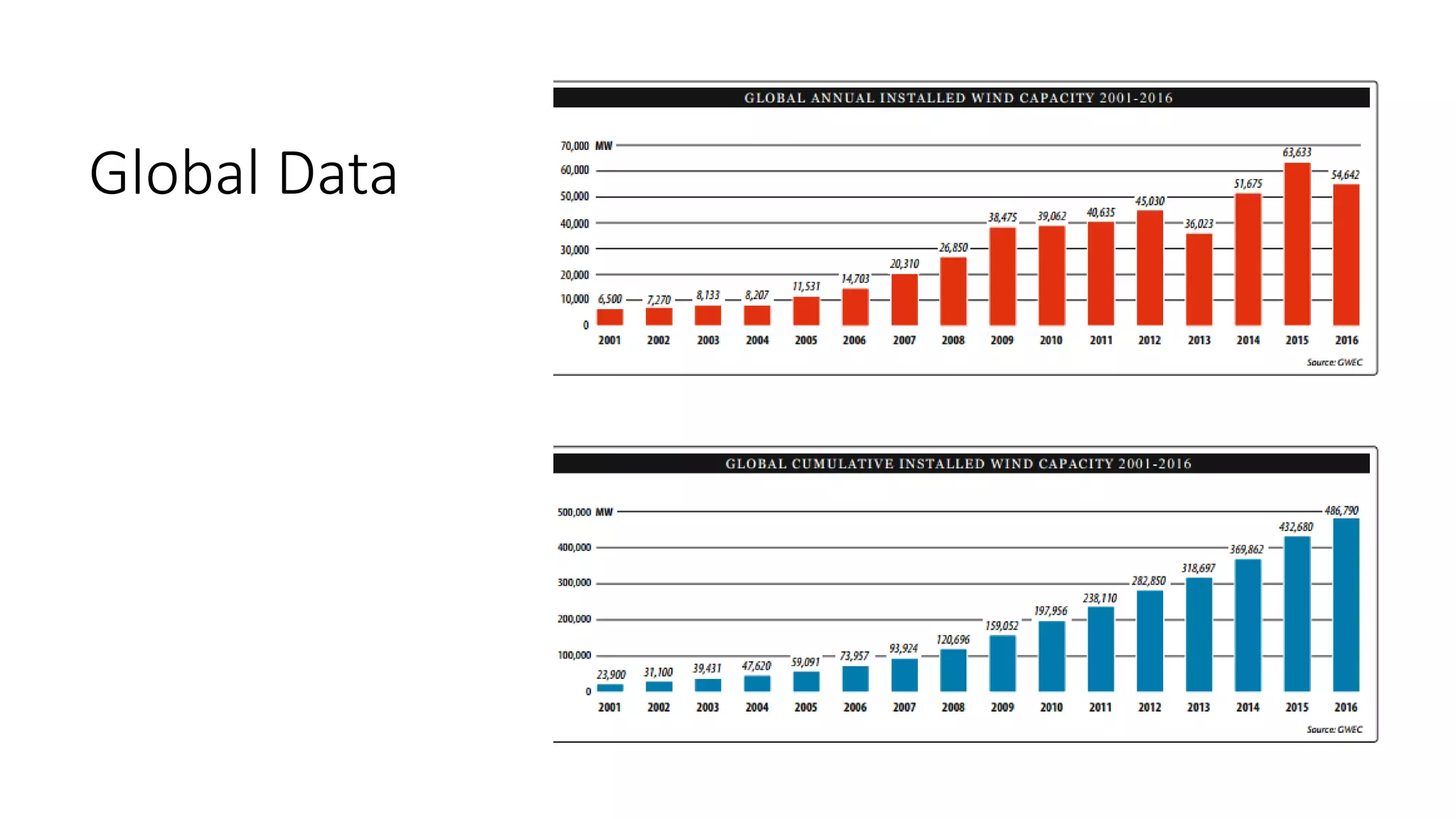
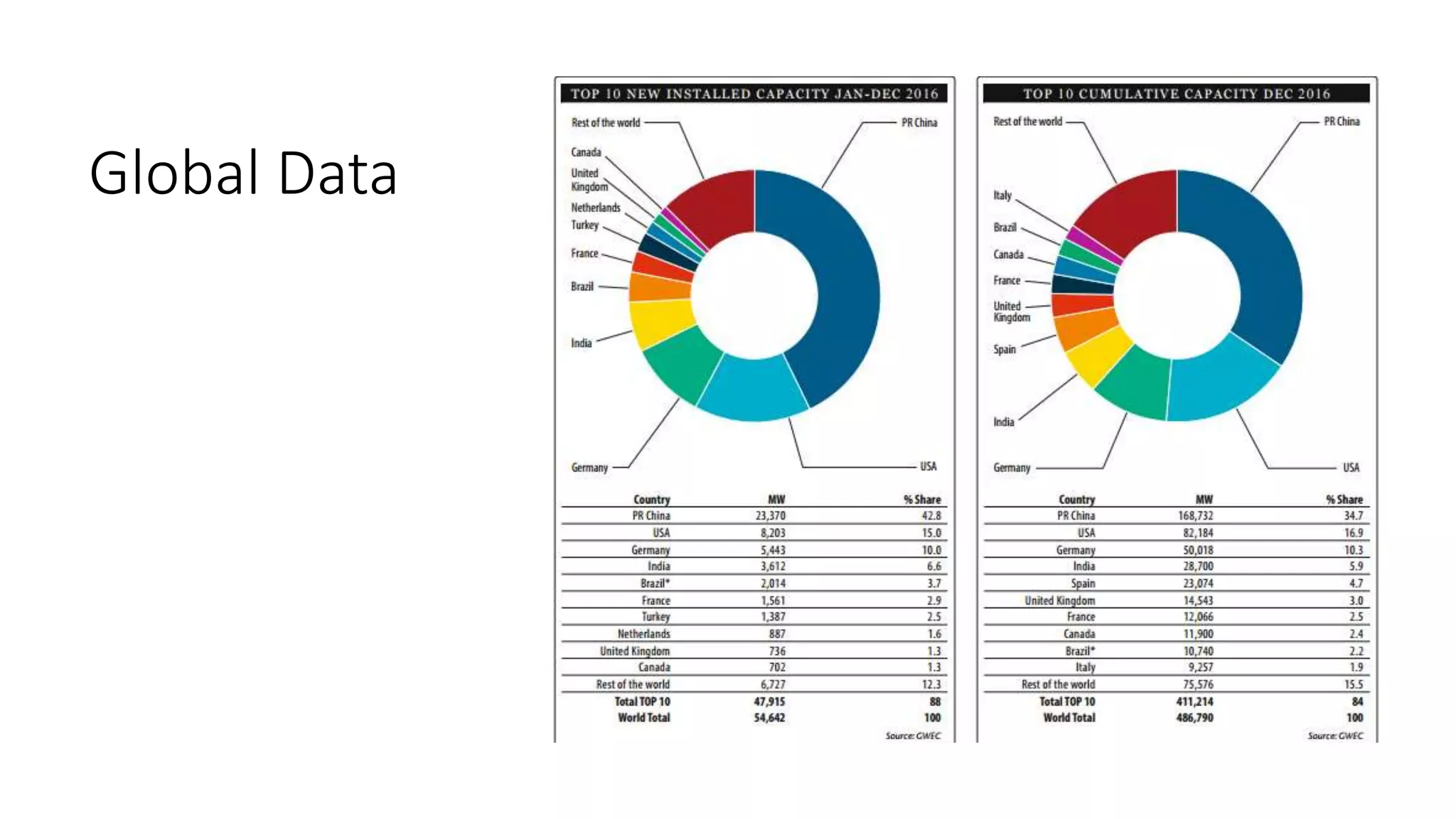
Global Data
Global Data
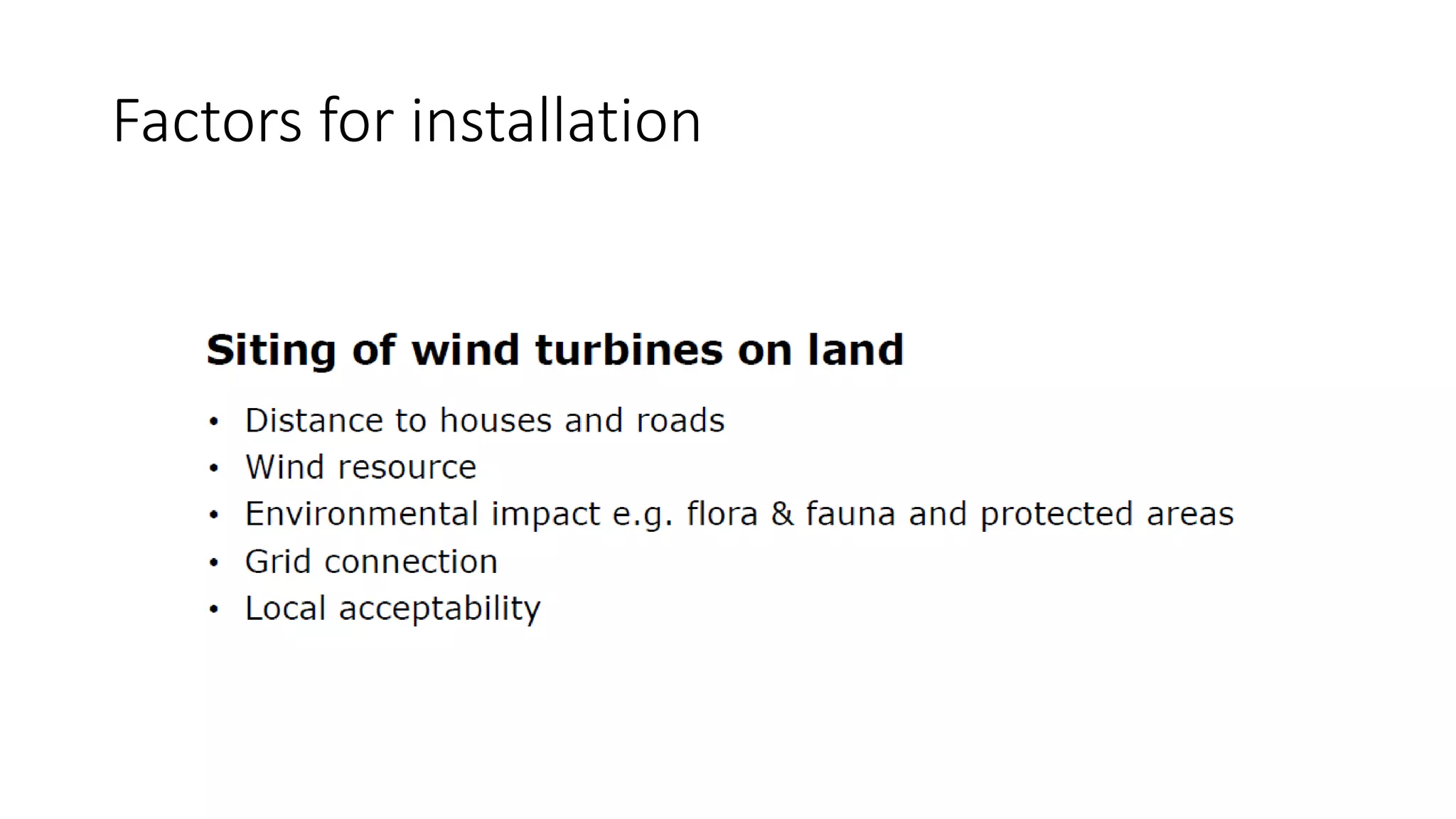
Factors for installation
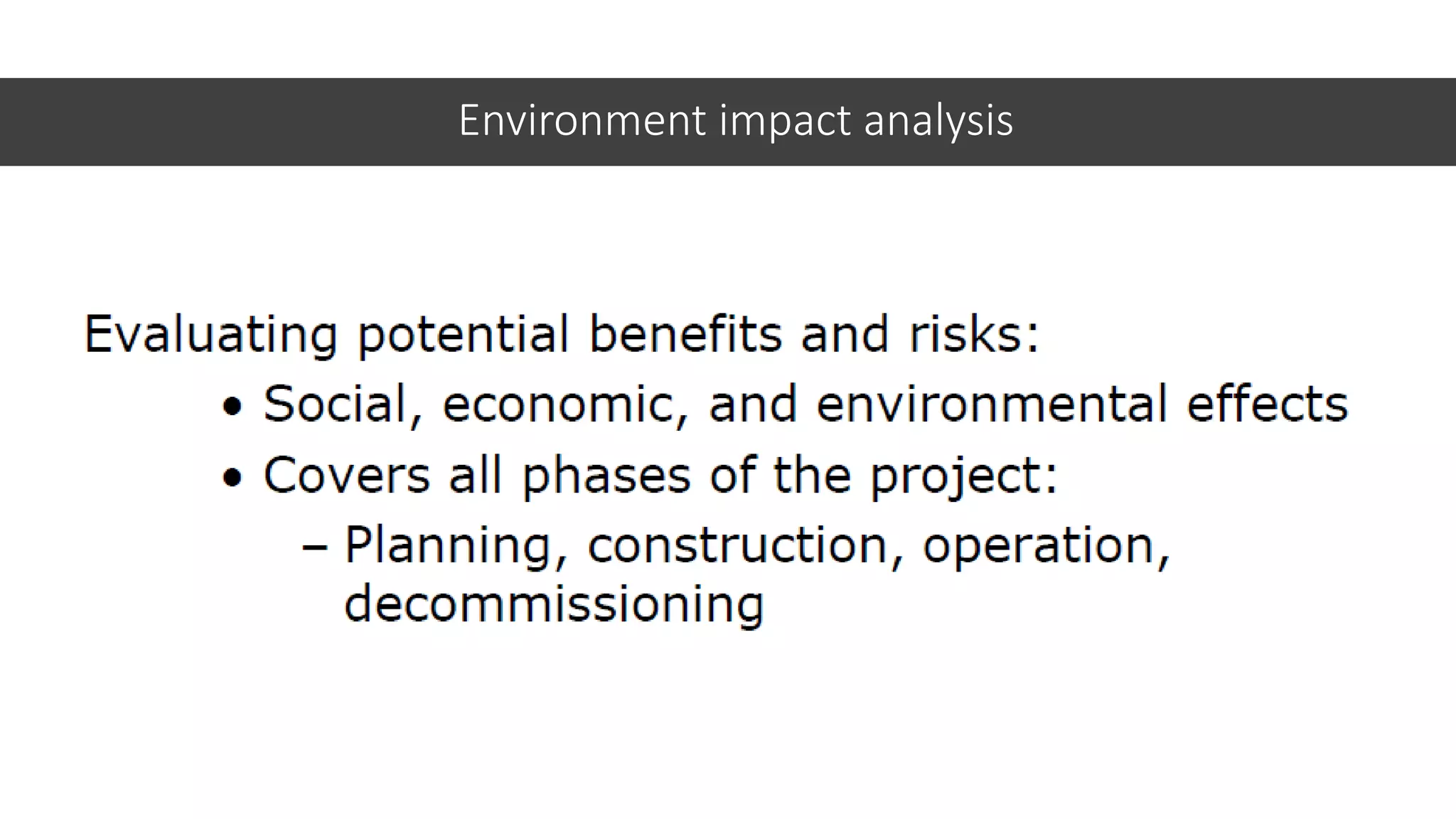
Environment impact analysis
Comparison of wind v/s nuclear
• Installing a nuclear power plant is more complex than wind power
plant.
• Power generation in nuclear is much more than wind power plant.
• Nuclear power plant has an exposure to lot of Thermal cycles while
wind plant has mechanical stress.
• Installing a nuclear power plant is much more costly than wind power
plant.
• For similar amount of energy production wind power plant consume
more land than nuclear power plant.
Comparison of Wind V/s Solar
• Solar have very less moving parts when
compare to wind power unit.
• Wind need more maintenance when
compared to solar.
• Solar can be easily installed anywhere
even at our roof top easily but wind
power system need to be installed at
least above 30 feet which is not possible
in urban areas.
• Wind can even generate energy in night
while solar can’t
• Wind produce noise when compared
with solar.
Source: GWEC
WIND PROFILE
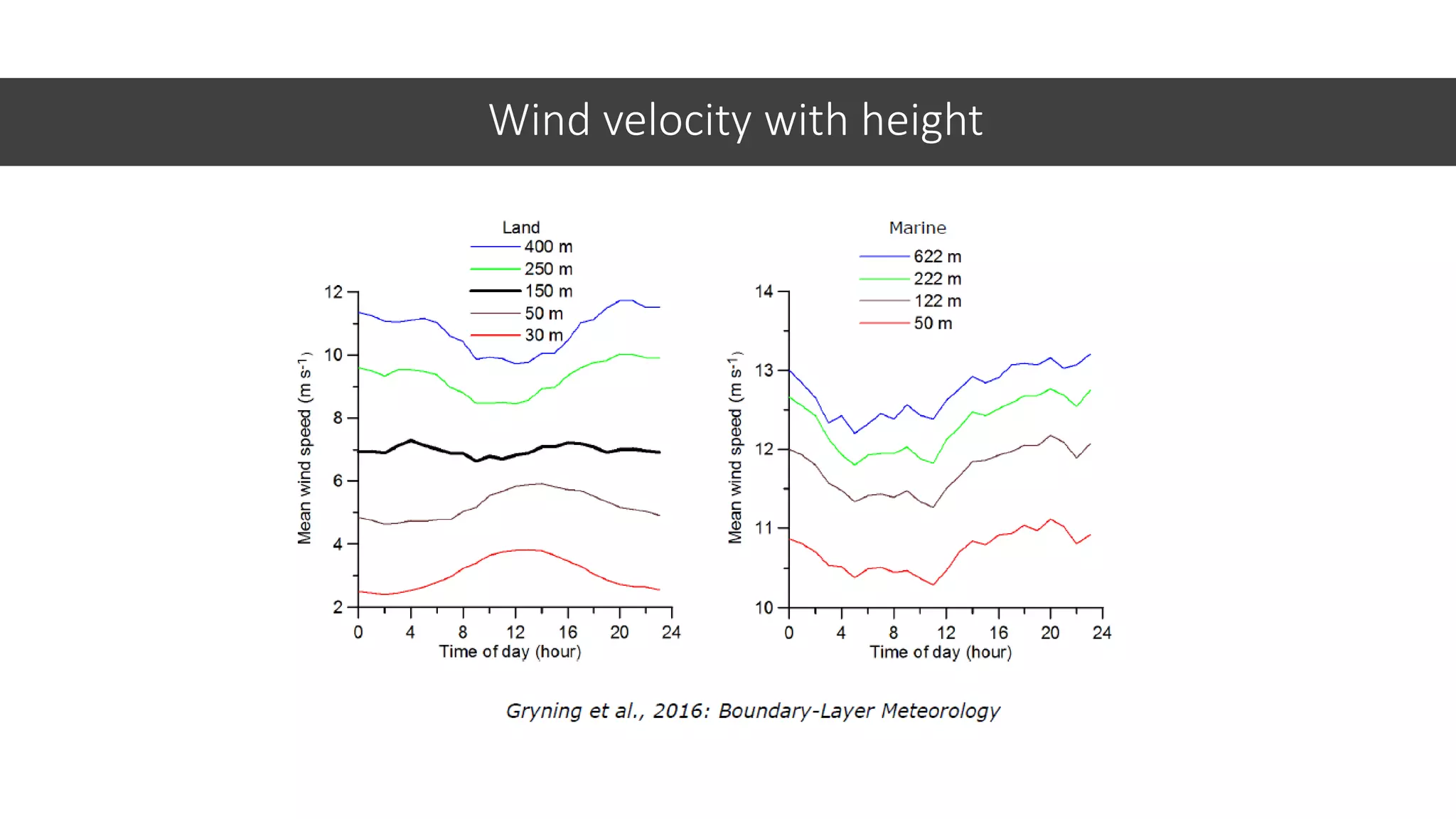
Wind velocity with height
Wind behavior
Wind measuring Instrument
• Anemometer
• SODAR
• LIDAR
SODAR
AnemometerLIDAR
Economics
of
Wind Turbine
Cost
Components of Cost
• Cost of Capital: Cost of money needed
to build the wind farm
• Annual Energy Production (AEP)
• Revenue Generated.
• Annual Maintenance cost.
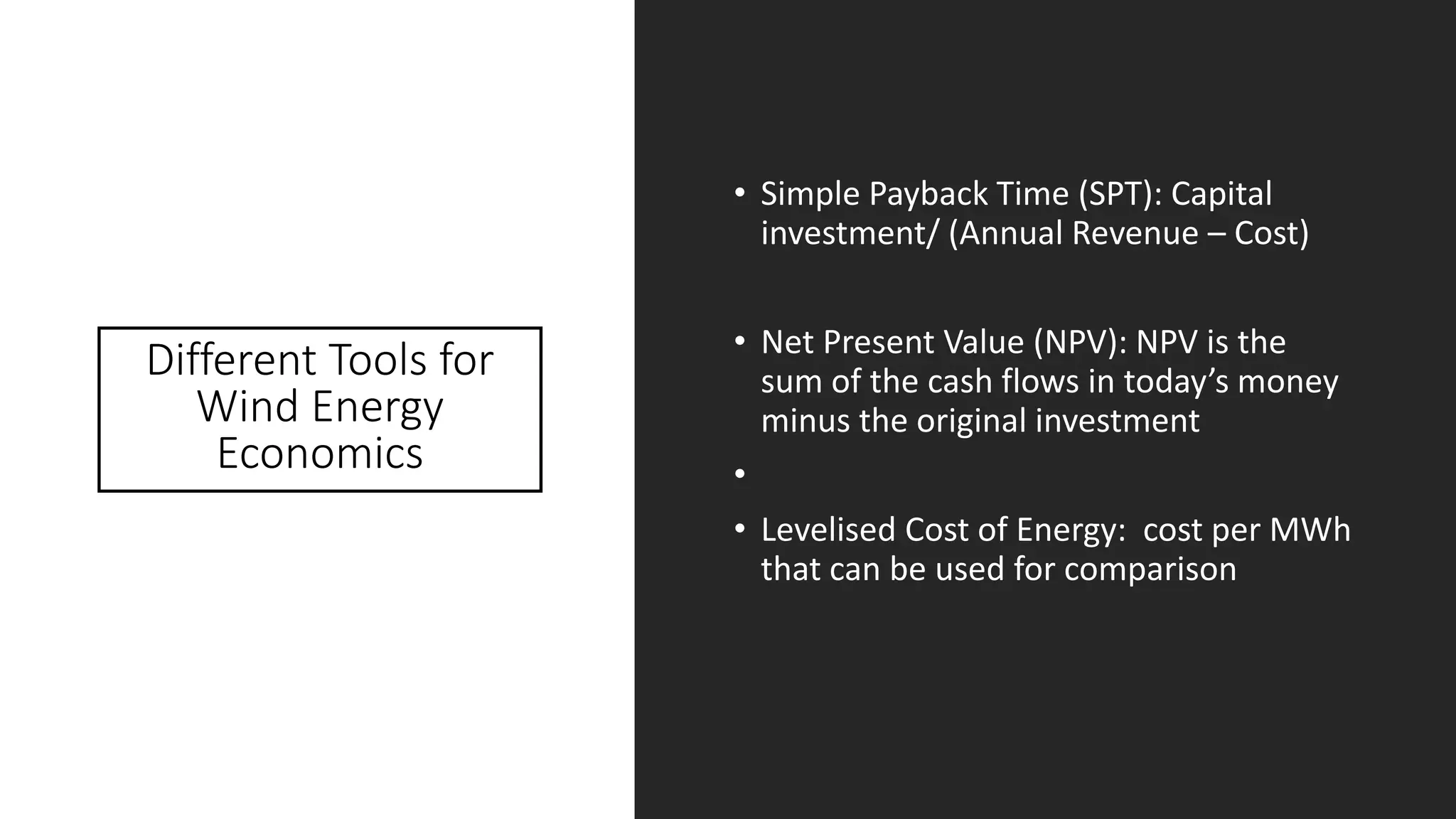
Different Tools for
Wind Energy
Economics
• Simple Payback Time (SPT): Capital
investment/ (Annual Revenue – Cost)
• Net Present Value (NPV): NPV is the
sum of the cash flows in today’s money
minus the original investment
•
• Levelised Cost of Energy: cost per MWh
that can be used for comparison
Wind Energy
Technical concepts
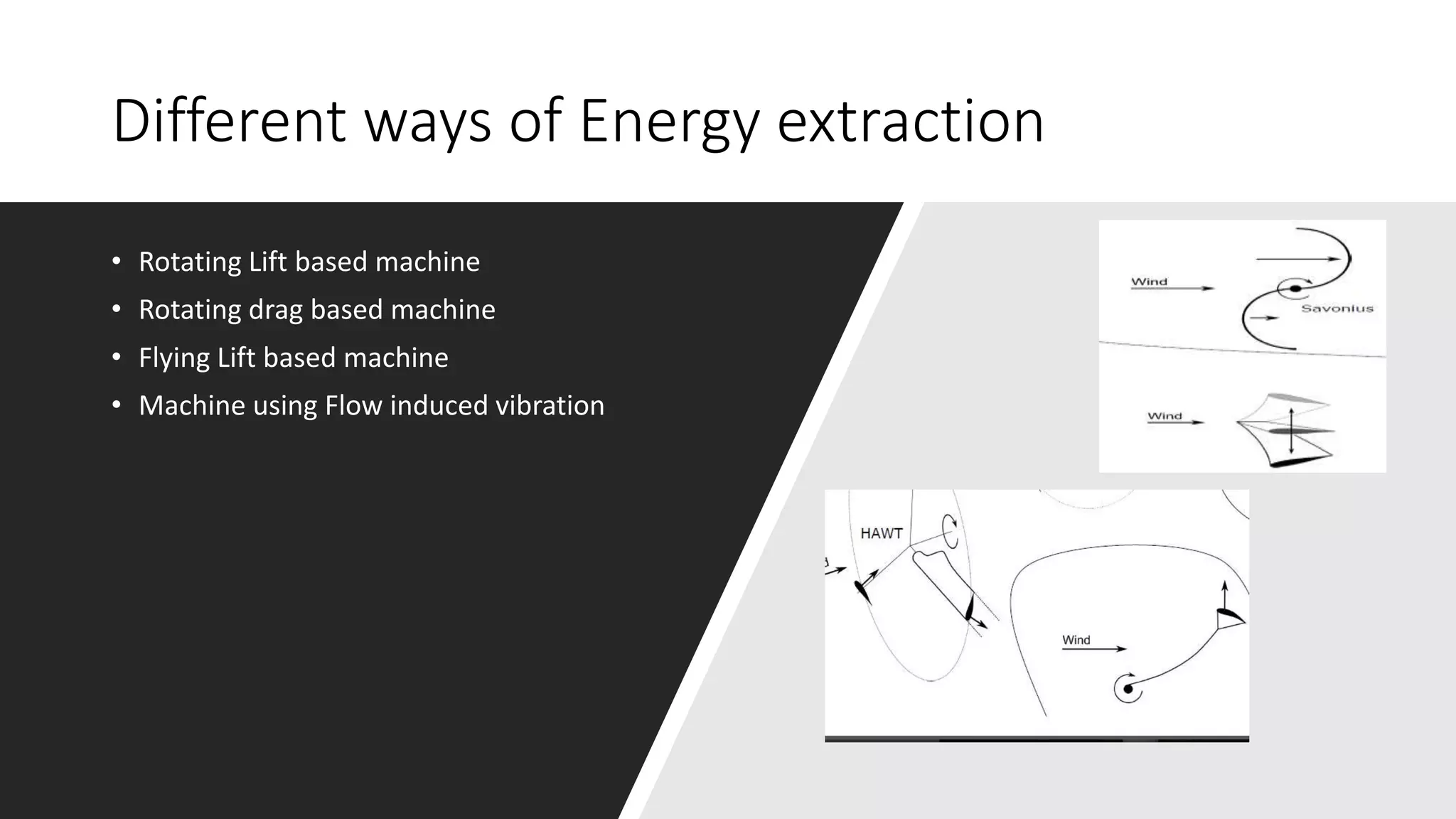
Different ways of Energy extraction
• Rotating Lift based machine
• Rotating drag based machine
• Flying Lift based machine
• Machine using Flow induced vibration
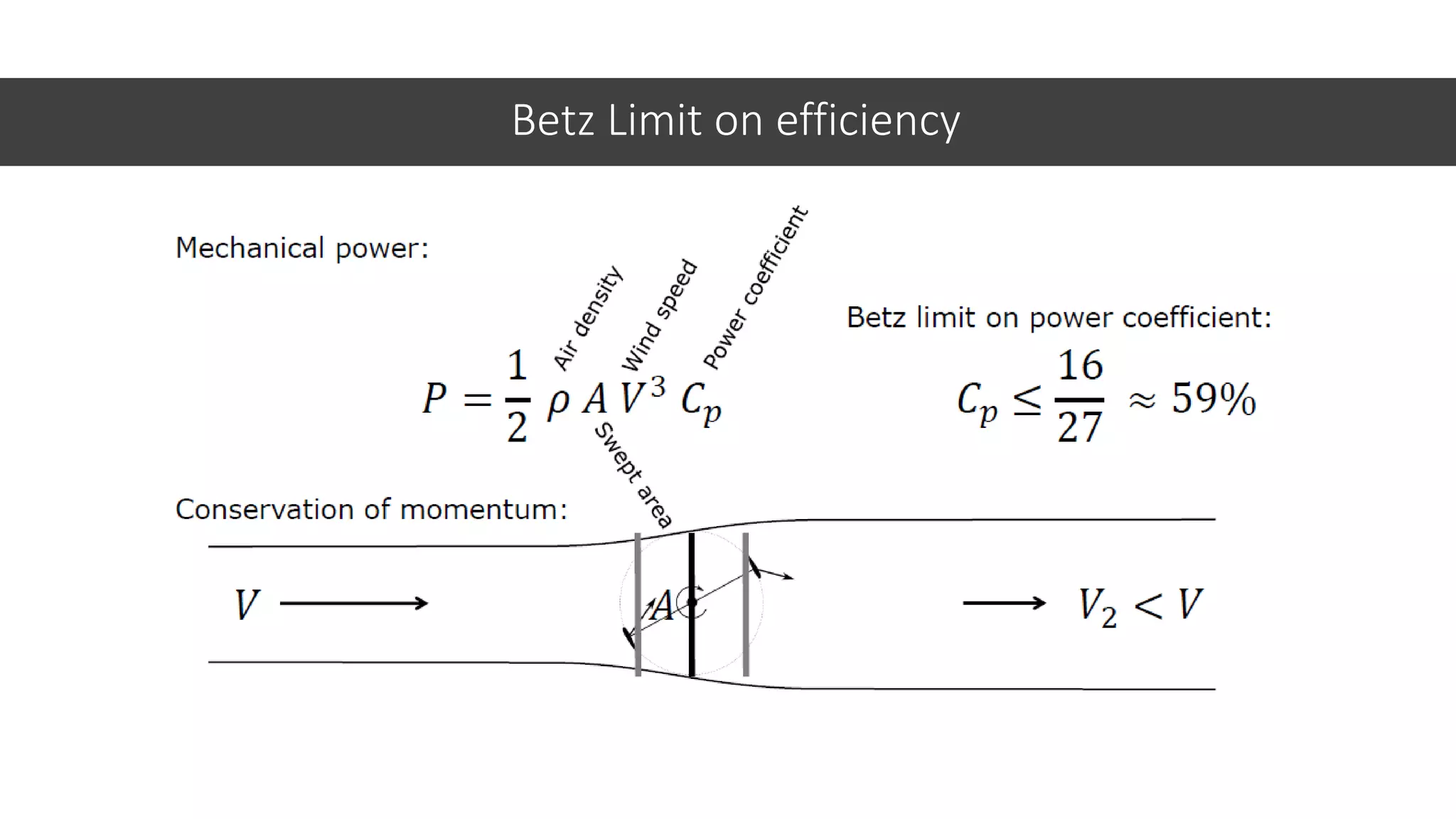
Betz Limit on efficiency
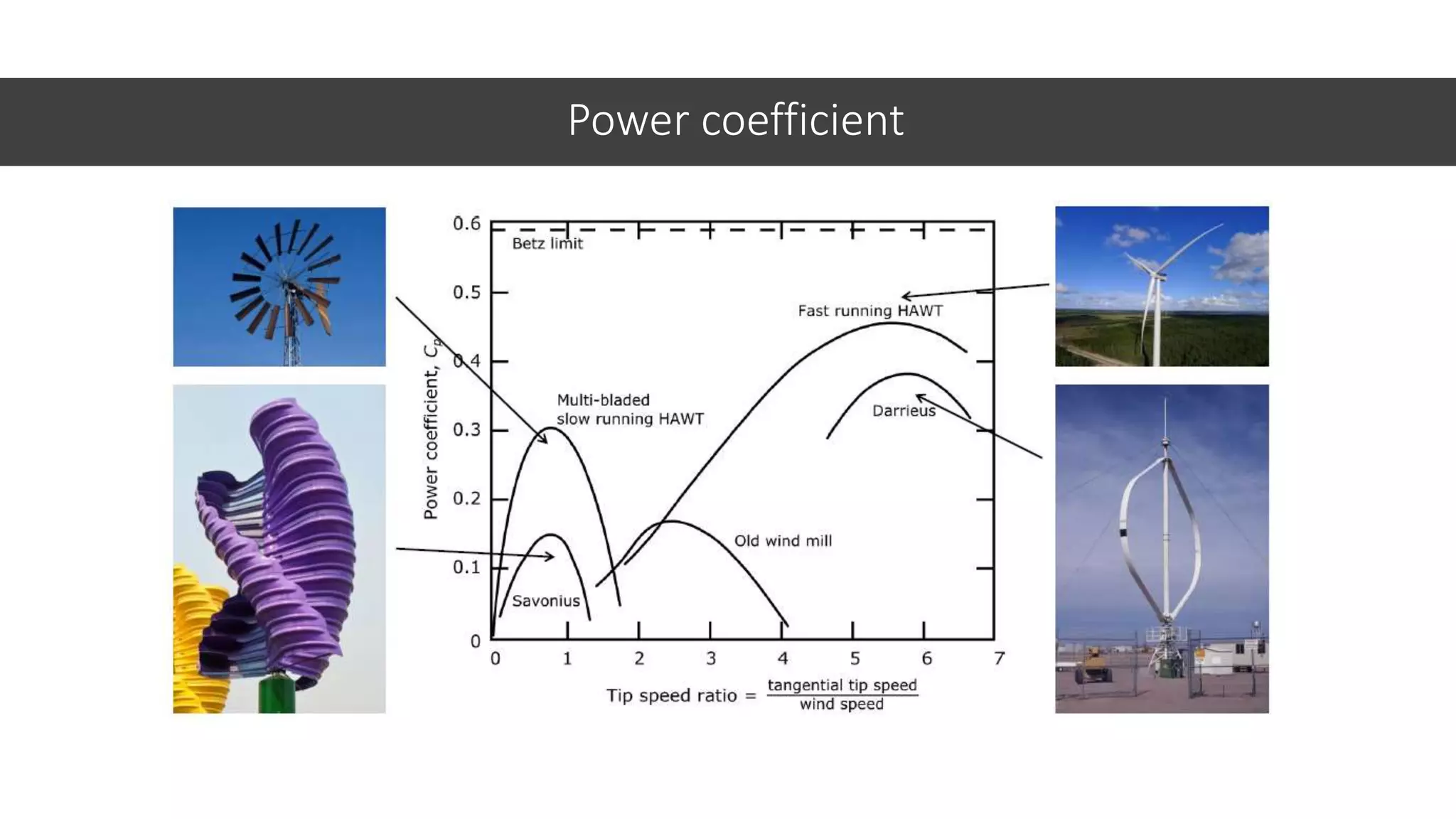
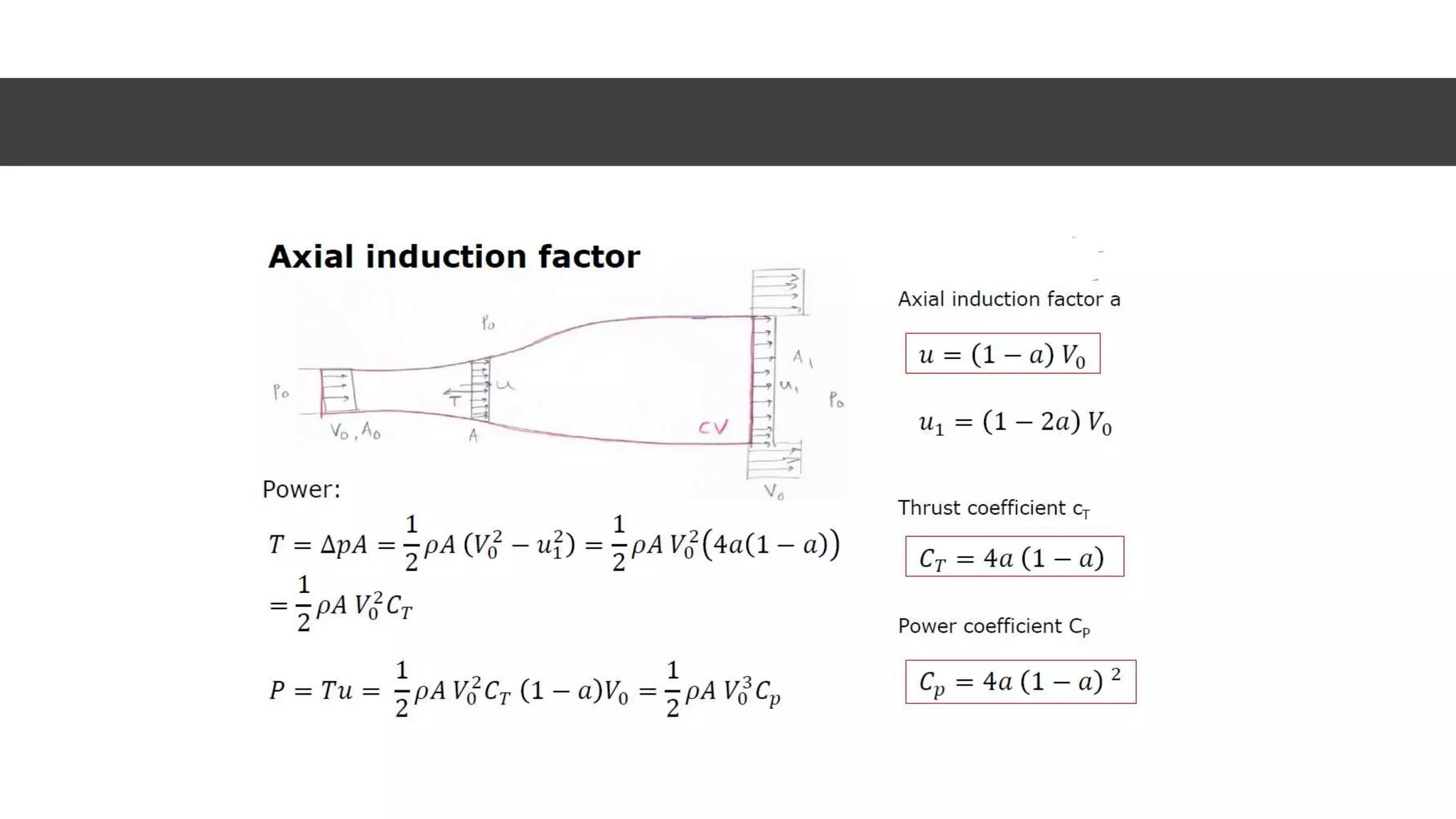
Power coefficient
Towers
Source: Google images
Concrete Foundation
Calculation
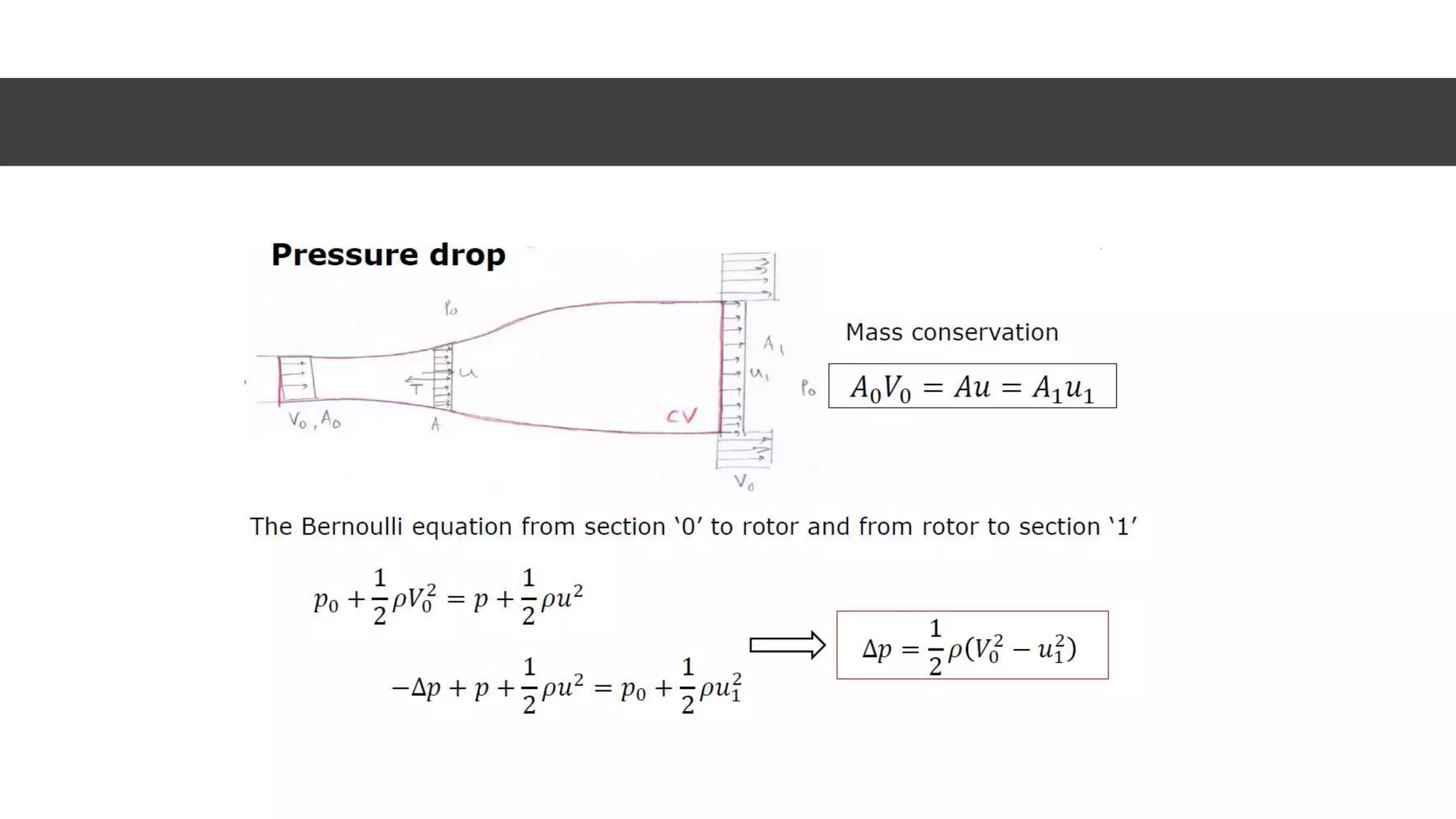
Air flow in turbine
Forces on Rotor Blade
Thrust
Gravity
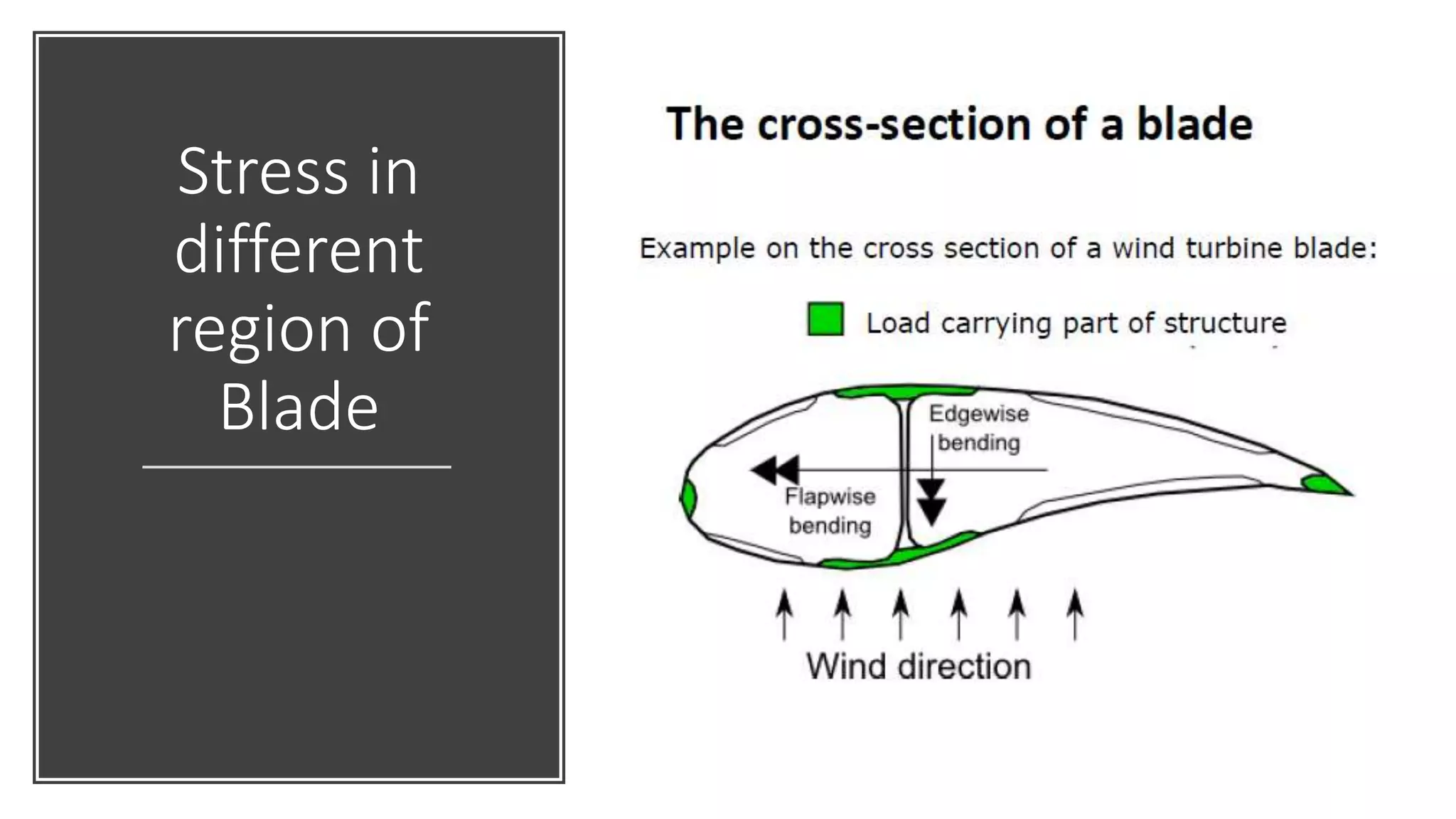
Stress in
different
region of
Blade
Stress in different region
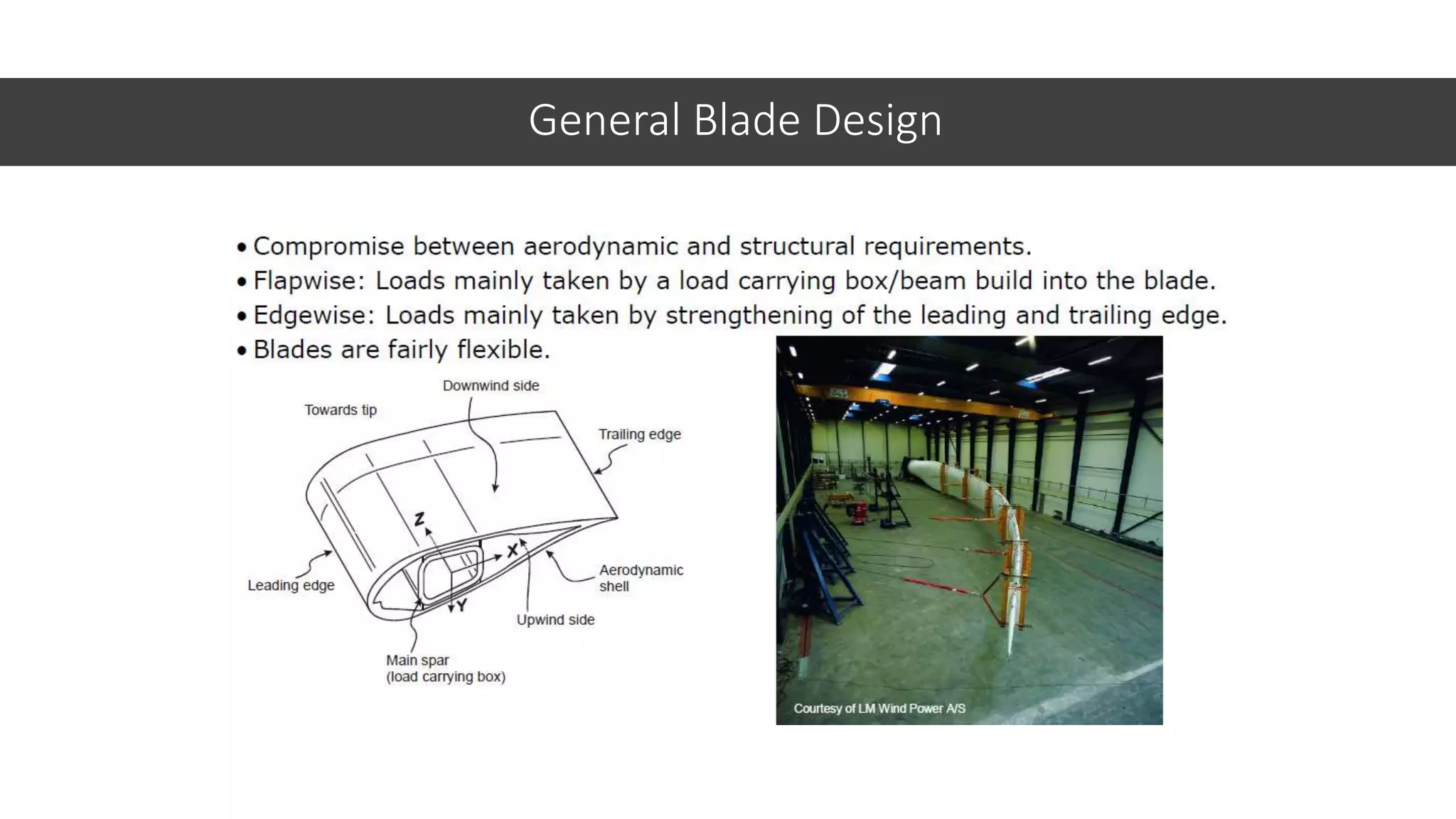
General Blade Design
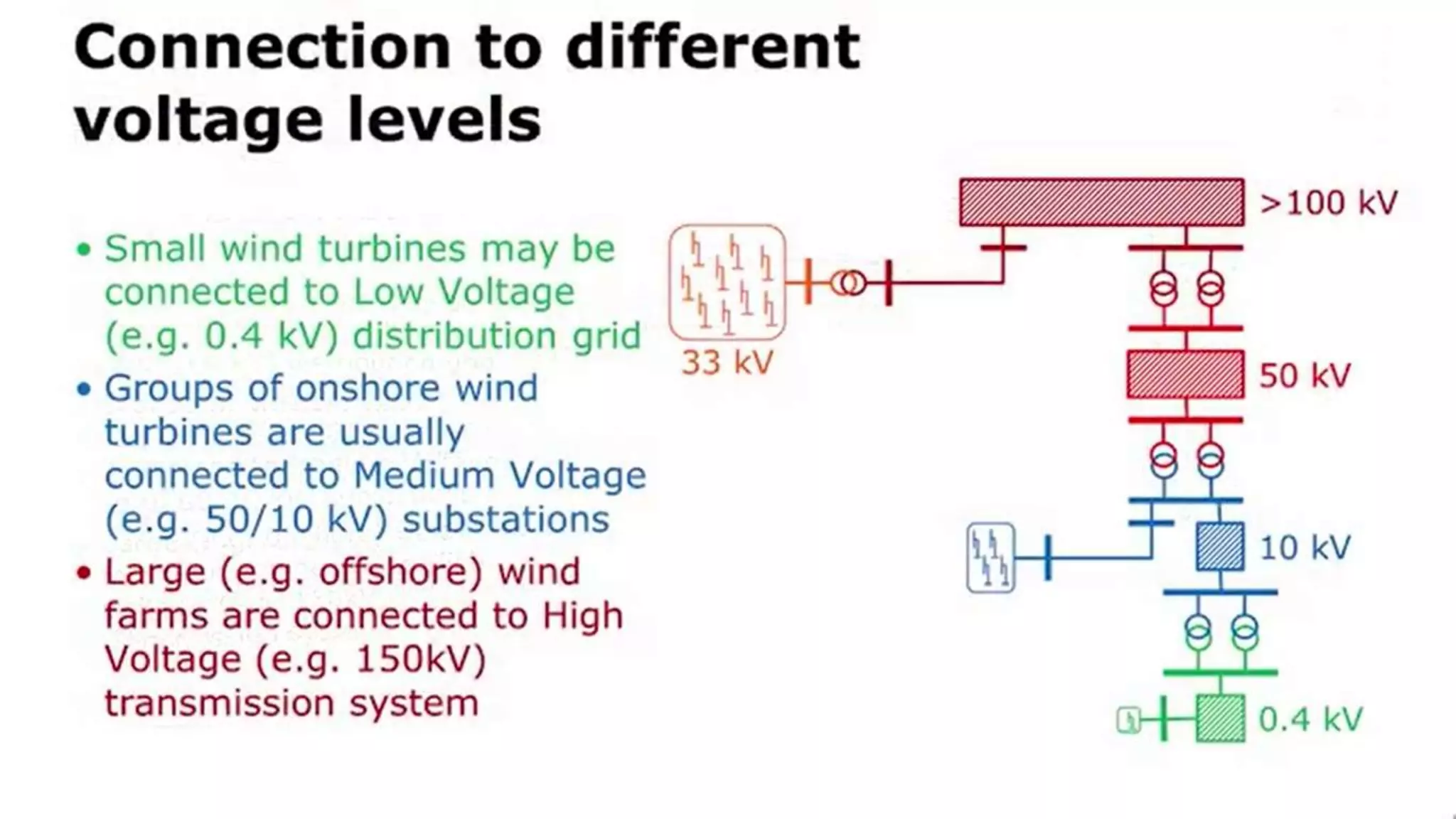
Grid Connection
Of
Wind Power
Classification of
Generation capacity
on Grid:
• Base Load Generators: supply energy to
cover the base load. Base load is the
minimum amount of hourly energy
consumption across the entire grid on
any day.
• Spinning Reserves: Running at low
capacity all the time and can react very
quickly to increase in demand.
• Non Spinning Reserves: is the extra
generating capacity that is not currently
connected to the system but can be
brought online after a short delay.
Electrical connection
Source: nwre
Electrical System
components from generator to
transformer at the base of the tower.
Layout of Wind Power Plant
Electrical System
Electrical diagram of a wind farm
Types of wind energy system
• Wind electric system connected to Grid (without need of storage)
• Standalone Electric system (with energy storage)
Control system
Source: Book Wind Energy Engineering
Wind Power Plant Control Architecture
Installed Wind
of India
Capacity (till
2016)
Source: Wikipidea
Wind
MAP
Electricity Demand (2015-2016)
Source: LGBR 2016
Electricity Demand
Source: LGBR 2016
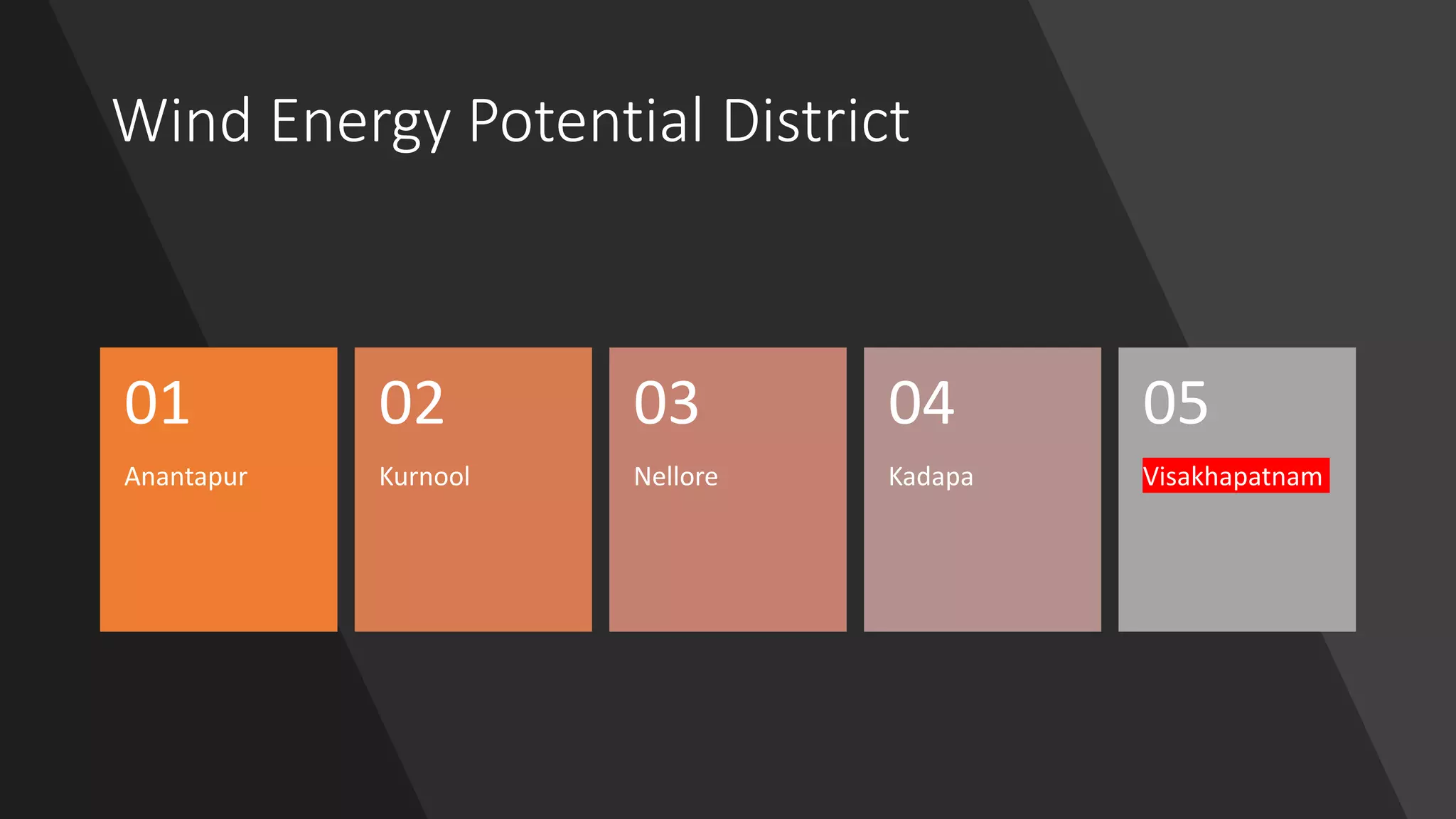
Wind Energy Potential District
Anantapur
01
Kurnool
02
Nellore
03
Kadapa
04
Visakhapatnam
05
Reason for selecting Visakhapatnam
Most dense
district in the
state.
01
Maximum
Energy
requirement
in state.
02
Good Wind
energy source.
03
Need for
renewable
energy
sources
04
Data Analysis
Wind Data
Source: Wind finder
General Power Curve
Source: Gamesa
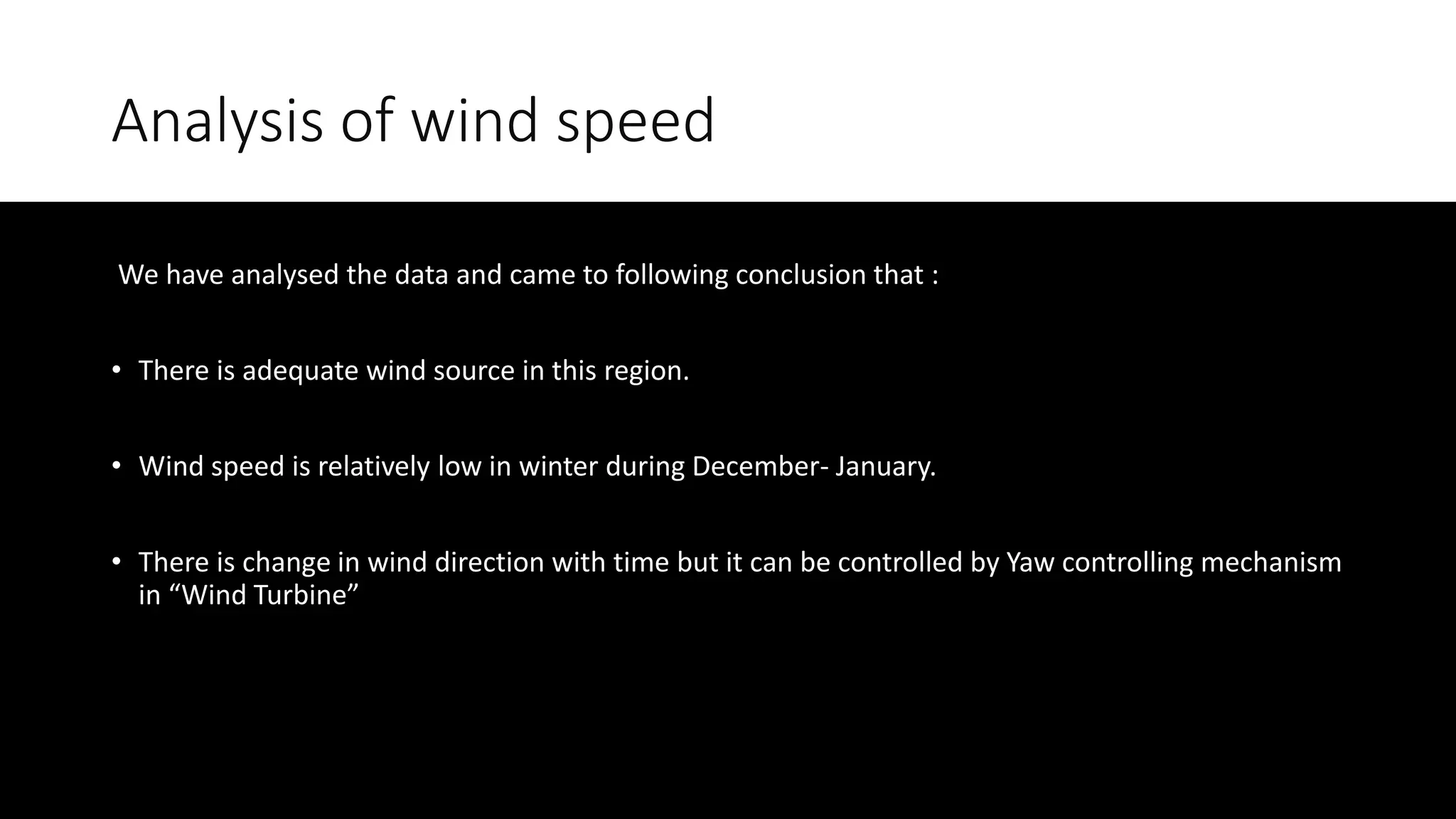
Analysis of wind speed
We have analysed the data and came to following conclusion that :
• There is adequate wind source in this region.
• Wind speed is relatively low in winter during December- January.
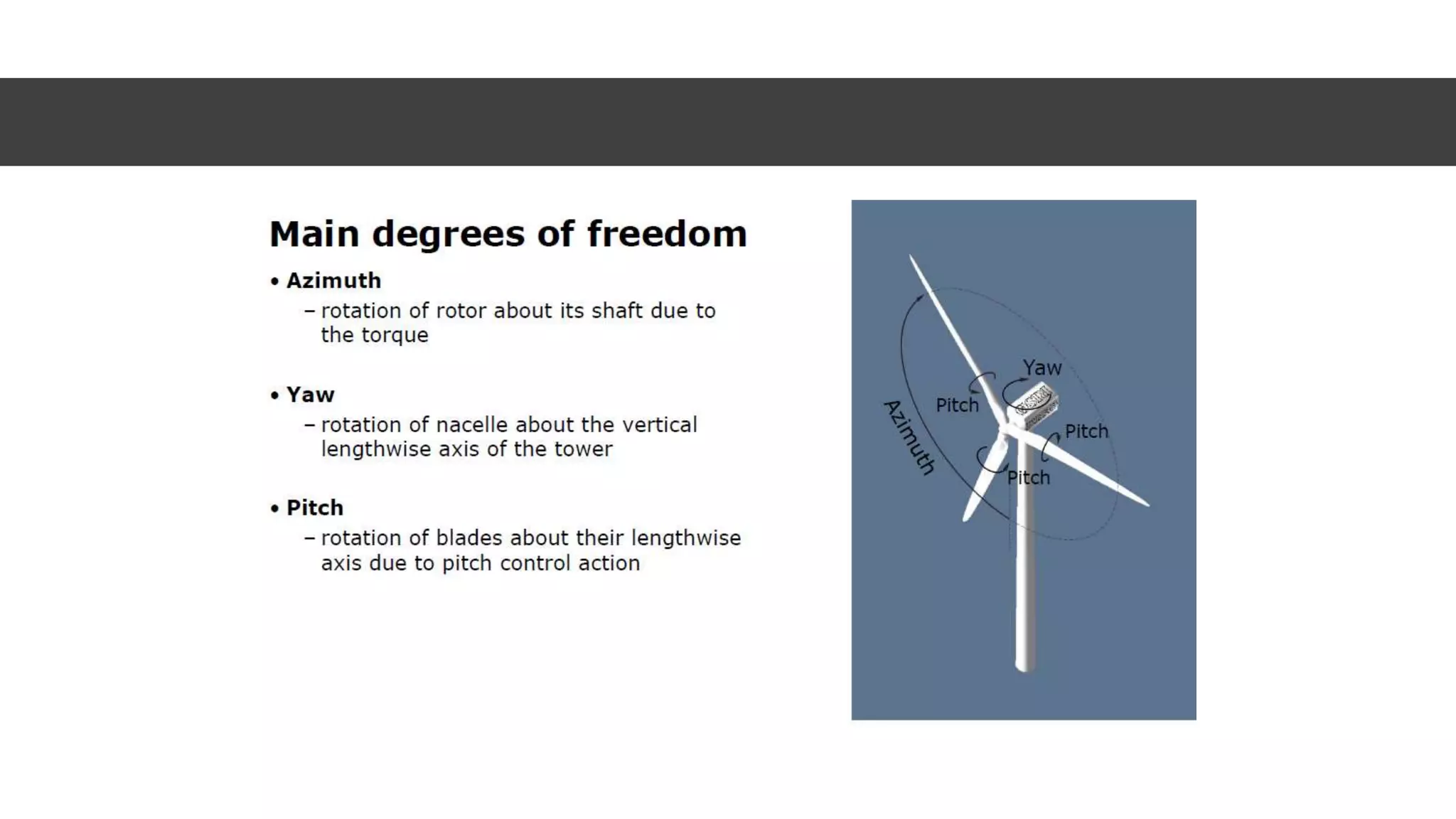
• There is change in wind direction with time but it can be controlled by Yaw controlling mechanism
in “Wind Turbine”
Other Data
Capacity factor =
To be calculated
after 1 yr. of
Installation
1
Density of air =
1.22 Kg/m^3
2
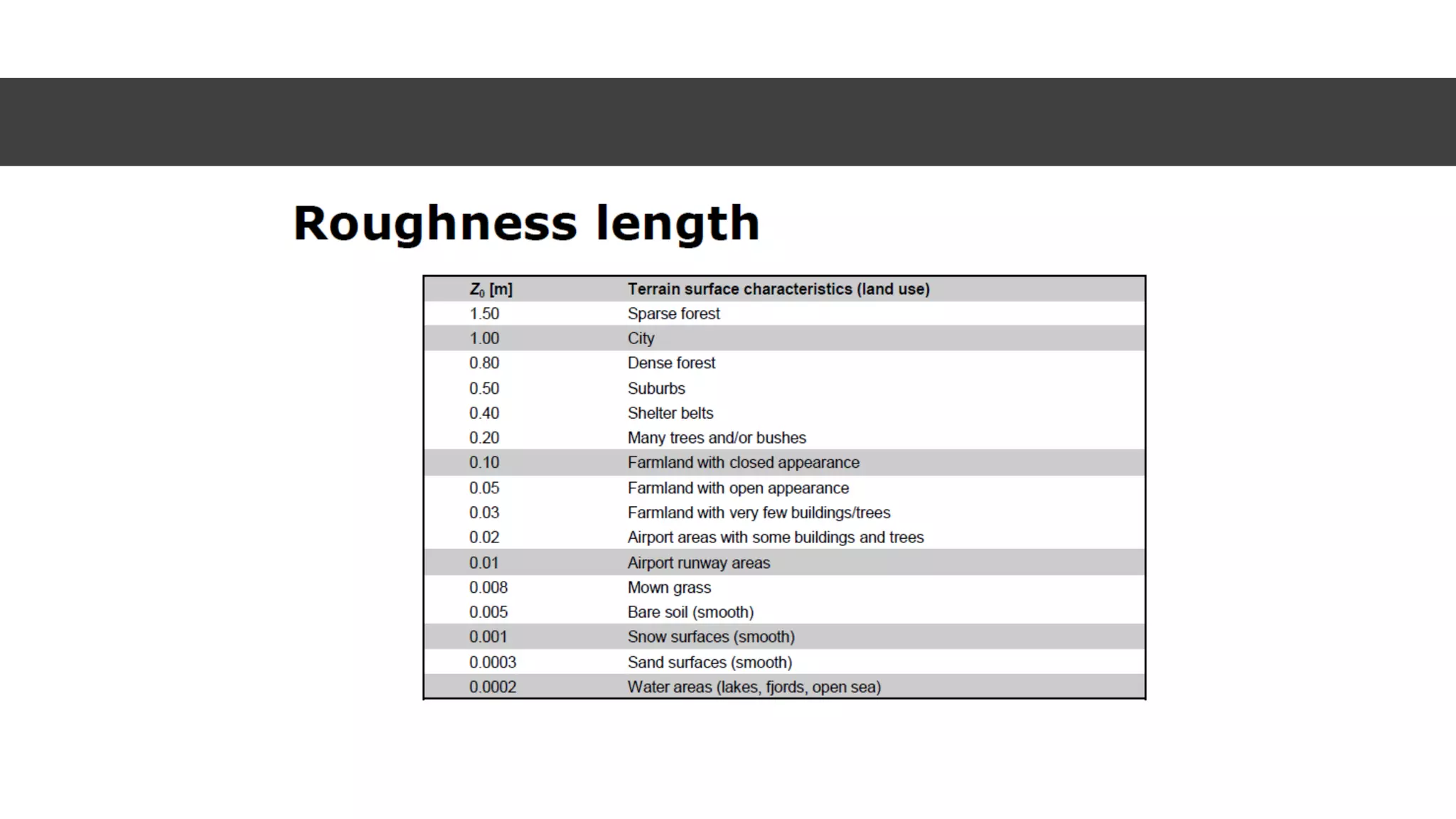
Roughness
Length = 1
3
Power coefficient
of wind turbine
used = 0.42
4
Installation capacity
estimation of wind
farm
Energy requirement data (2016-17)
State Demand(MU) Available(Mu) surplus/deficit(Mu,%) Req.(MW) Available(MW) Surplus/deficit(Mw,%)
Source: LGBR 2016
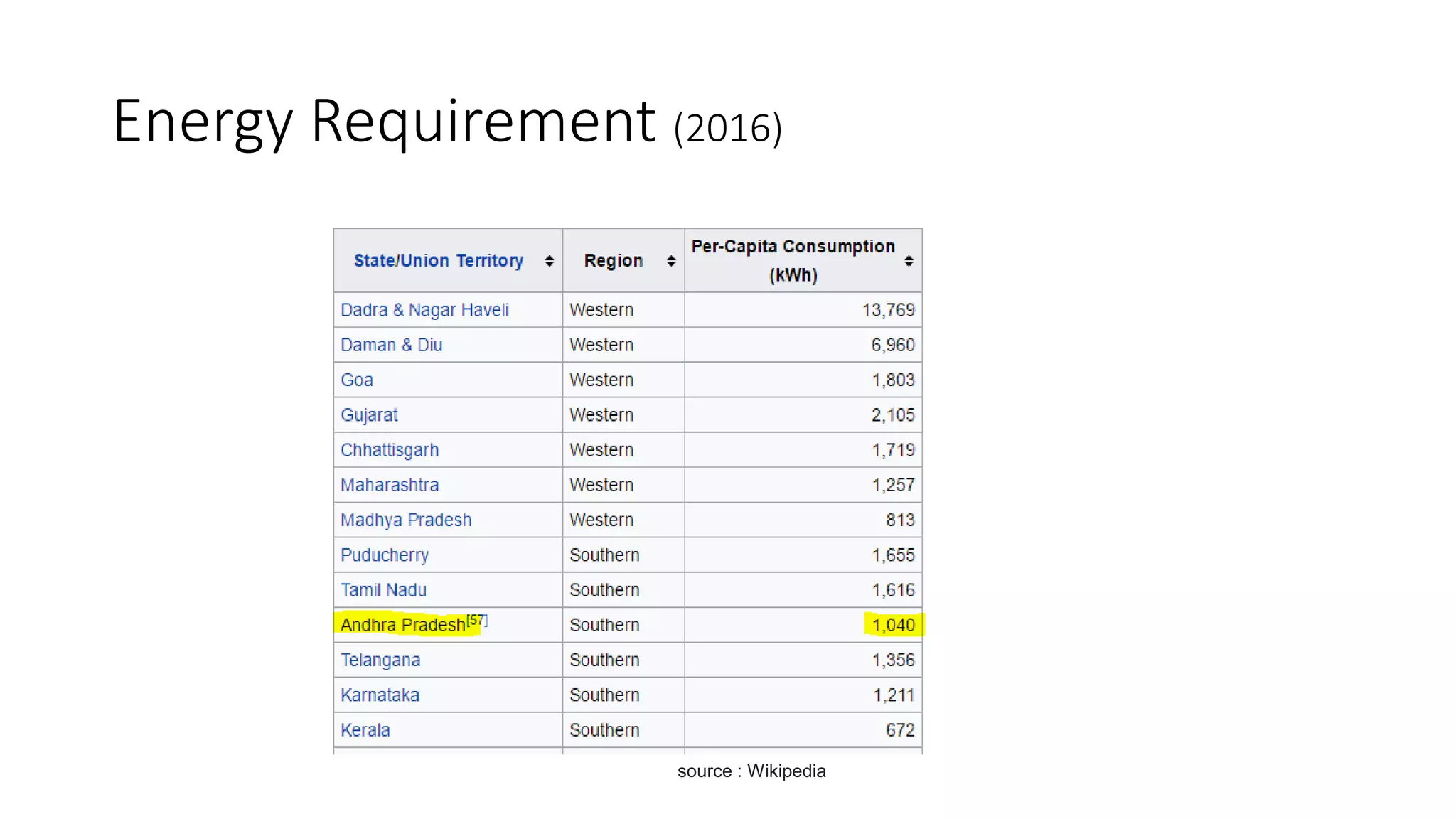
Energy Requirement (2016)
source : Wikipedia
Data of Visakhapatnam District
• Total Population = 2035922
• Per Capita Utilization= 1040 KWH
• Total Estimated Consumption= 2117.35 MU
• Total Estimated Energy Requirement > 3000 MU
• Approximate Energy needed to be added > 900 MU
• Total Capacity of wind turbine = 100MW
Category of wind turbine to be installed.
• HAWT : Since we need these turbines for fulfilling electricity requirement so instead of vertical
we choose horizontal which has relatively less drag force, more efficiency, accessible to wind
energy at high altitude.
• 3 Blade wind turbine is used since it is mostly used in India to extract energy for electricity
demand fulfilment.
• General Rotor dia.= 85m to 90m
• 2000KW Wind turbine
• Total Wind Turbine to be Installed = 100/2= 50 Wind turbines.
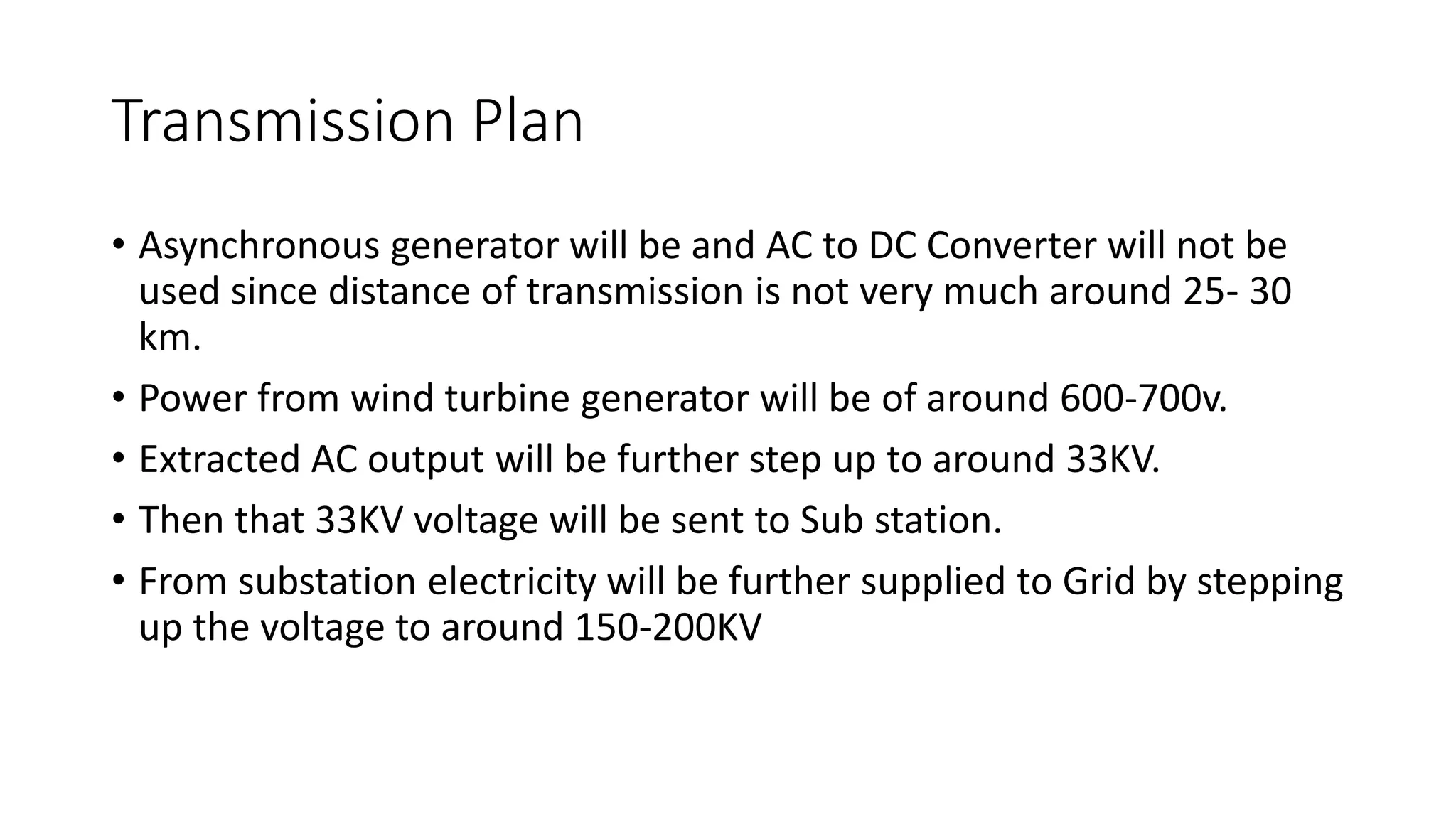
Transmission Plan
• Asynchronous generator will be and AC to DC Converter will not be
used since distance of transmission is not very much around 25- 30
km.
• Power from wind turbine generator will be of around 600-700v.
• Extracted AC output will be further step up to around 33KV.
• Then that 33KV voltage will be sent to Sub station.
• From substation electricity will be further supplied to Grid by stepping
up the voltage to around 150-200KV
Wind Turbine Manufacturer in India
Conclusion
• The potential of wind power generation is immense, a historical
source of energy, wind can be used both as a source of electricity and
for irrigation and agricultural uses.
• Wind energy installation in a short term will increase household
electricity bill but in a long term it is beneficial for us being a
sustainable source.
• Even now there is demand of lot’s of innovation for improving
efficiency so that we can maximize energy extaction.
References
• https://en.wikipedia.org/wiki/Wind_power_in_India
• https://en.wikipedia.org/wiki/Betz's_law
• https://en.wikipedia.org/wiki/Wind_turbine
• http://www.streetdirectory.com/travel_guide/113618/science/limitat
ions_of_wind_energy.html
• https://energy.gov/eere/wind/advantages-and-challenges-wind-
energy
• https://sites.google.com/a/temple.edu/urbanwind/services/turbine
-options-and-specifications
References
• Centre for wind energy Document
• DESIGN OF WIND POWER GENERATING STATIONS presented by Tai-
Ran Hsu, Professor on October 28, 2009
• Book of Wind Energy Engineering by Pramod Jain
• Project report by Greenko Wind Energy PVT. LTD
• Made easy renewable energy book
• Video lectures on coursera.
• Census Data by Govt. of India.

Intro to wind energy

  • 1.
    Wind Energy and Factors forInstalling Wind Power Plant Submitted by: Mohit Goyal (14B00173)Mentored by: Dr. Ajoy Das
  • 2.
    Definition • Wind hasK.E which can be extracted to produce electrical energy.
  • 3.
  • 4.
  • 5.
  • 6.
  • 7.
    Comparison of windv/s nuclear • Installing a nuclear power plant is more complex than wind power plant. • Power generation in nuclear is much more than wind power plant. • Nuclear power plant has an exposure to lot of Thermal cycles while wind plant has mechanical stress. • Installing a nuclear power plant is much more costly than wind power plant. • For similar amount of energy production wind power plant consume more land than nuclear power plant.
  • 8.
    Comparison of WindV/s Solar • Solar have very less moving parts when compare to wind power unit. • Wind need more maintenance when compared to solar. • Solar can be easily installed anywhere even at our roof top easily but wind power system need to be installed at least above 30 feet which is not possible in urban areas. • Wind can even generate energy in night while solar can’t • Wind produce noise when compared with solar. Source: GWEC
  • 9.
  • 12.
  • 13.
  • 14.
    Wind measuring Instrument •Anemometer • SODAR • LIDAR SODAR AnemometerLIDAR
  • 15.
  • 17.
  • 18.
    Components of Cost •Cost of Capital: Cost of money needed to build the wind farm • Annual Energy Production (AEP) • Revenue Generated. • Annual Maintenance cost.
  • 19.
    Different Tools for WindEnergy Economics • Simple Payback Time (SPT): Capital investment/ (Annual Revenue – Cost) • Net Present Value (NPV): NPV is the sum of the cash flows in today’s money minus the original investment • • Levelised Cost of Energy: cost per MWh that can be used for comparison
  • 20.
  • 21.
    Different ways ofEnergy extraction • Rotating Lift based machine • Rotating drag based machine • Flying Lift based machine • Machine using Flow induced vibration
  • 22.
    Betz Limit onefficiency
  • 23.
  • 28.
  • 29.
  • 30.
  • 31.
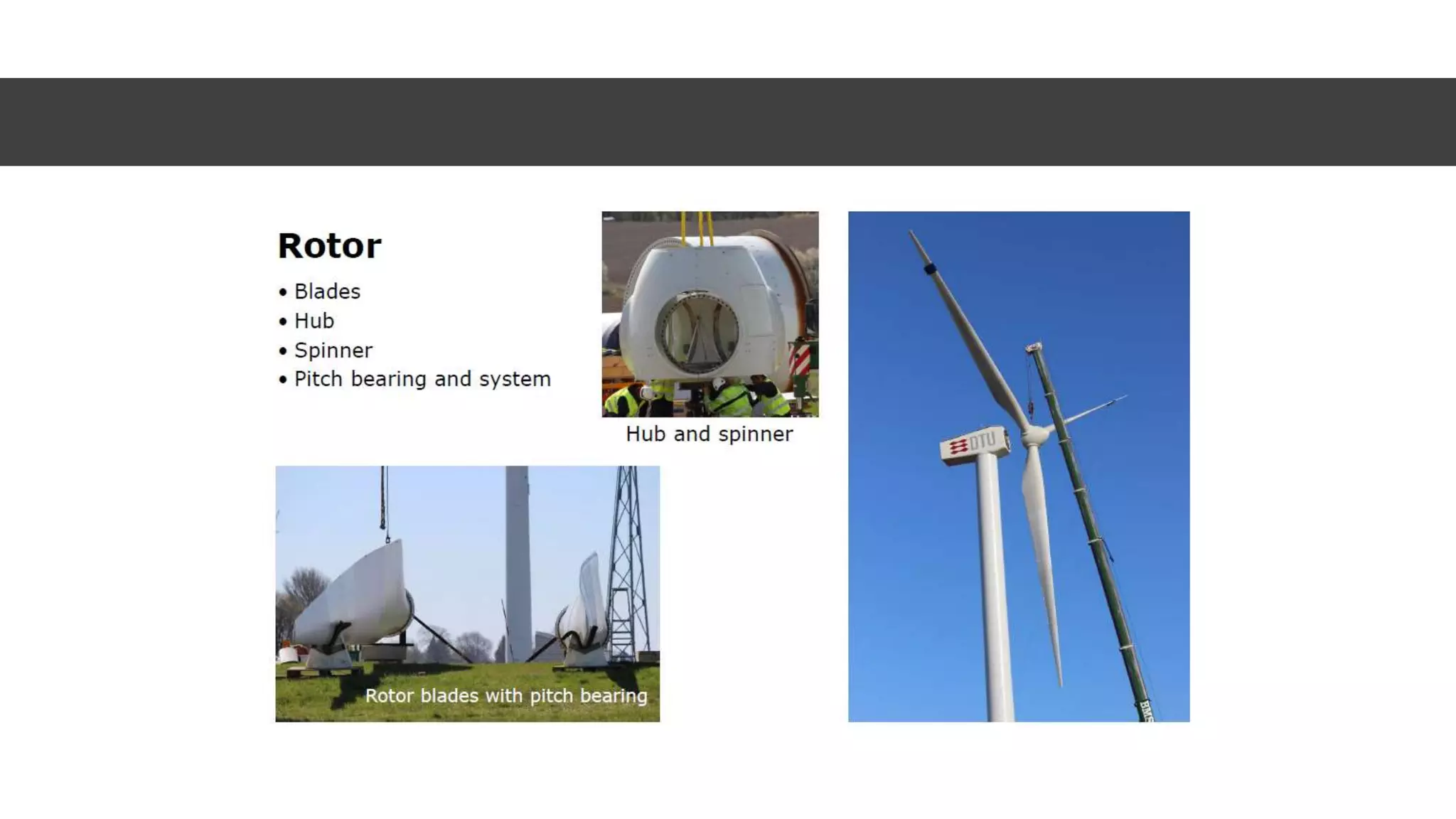
    Air flow inturbine
  • 36.
    Forces on RotorBlade Thrust Gravity
  • 37.
  • 38.
  • 39.
  • 40.
  • 41.
    Classification of Generation capacity onGrid: • Base Load Generators: supply energy to cover the base load. Base load is the minimum amount of hourly energy consumption across the entire grid on any day. • Spinning Reserves: Running at low capacity all the time and can react very quickly to increase in demand. • Non Spinning Reserves: is the extra generating capacity that is not currently connected to the system but can be brought online after a short delay.
  • 42.
  • 43.
    Electrical System components fromgenerator to transformer at the base of the tower.
  • 44.
    Layout of WindPower Plant
  • 45.
  • 48.
    Types of windenergy system • Wind electric system connected to Grid (without need of storage) • Standalone Electric system (with energy storage)
  • 50.
    Control system Source: BookWind Energy Engineering
  • 51.
    Wind Power PlantControl Architecture
  • 52.
    Installed Wind of India Capacity(till 2016) Source: Wikipidea
  • 53.
  • 54.
  • 55.
  • 56.
    Wind Energy PotentialDistrict Anantapur 01 Kurnool 02 Nellore 03 Kadapa 04 Visakhapatnam 05
  • 57.
    Reason for selectingVisakhapatnam Most dense district in the state. 01 Maximum Energy requirement in state. 02 Good Wind energy source. 03 Need for renewable energy sources 04
  • 58.
  • 59.
  • 60.
  • 61.
    Analysis of windspeed We have analysed the data and came to following conclusion that : • There is adequate wind source in this region. • Wind speed is relatively low in winter during December- January. • There is change in wind direction with time but it can be controlled by Yaw controlling mechanism in “Wind Turbine”
  • 62.
    Other Data Capacity factor= To be calculated after 1 yr. of Installation 1 Density of air = 1.22 Kg/m^3 2 Roughness Length = 1 3 Power coefficient of wind turbine used = 0.42 4
  • 63.
  • 64.
    Energy requirement data(2016-17) State Demand(MU) Available(Mu) surplus/deficit(Mu,%) Req.(MW) Available(MW) Surplus/deficit(Mw,%) Source: LGBR 2016
  • 65.
  • 66.
    Data of VisakhapatnamDistrict • Total Population = 2035922 • Per Capita Utilization= 1040 KWH • Total Estimated Consumption= 2117.35 MU • Total Estimated Energy Requirement > 3000 MU • Approximate Energy needed to be added > 900 MU • Total Capacity of wind turbine = 100MW
  • 67.
    Category of windturbine to be installed. • HAWT : Since we need these turbines for fulfilling electricity requirement so instead of vertical we choose horizontal which has relatively less drag force, more efficiency, accessible to wind energy at high altitude. • 3 Blade wind turbine is used since it is mostly used in India to extract energy for electricity demand fulfilment. • General Rotor dia.= 85m to 90m • 2000KW Wind turbine • Total Wind Turbine to be Installed = 100/2= 50 Wind turbines.
  • 68.
    Transmission Plan • Asynchronousgenerator will be and AC to DC Converter will not be used since distance of transmission is not very much around 25- 30 km. • Power from wind turbine generator will be of around 600-700v. • Extracted AC output will be further step up to around 33KV. • Then that 33KV voltage will be sent to Sub station. • From substation electricity will be further supplied to Grid by stepping up the voltage to around 150-200KV
  • 69.
  • 70.
    Conclusion • The potentialof wind power generation is immense, a historical source of energy, wind can be used both as a source of electricity and for irrigation and agricultural uses. • Wind energy installation in a short term will increase household electricity bill but in a long term it is beneficial for us being a sustainable source. • Even now there is demand of lot’s of innovation for improving efficiency so that we can maximize energy extaction.
  • 71.
    References • https://en.wikipedia.org/wiki/Wind_power_in_India • https://en.wikipedia.org/wiki/Betz's_law •https://en.wikipedia.org/wiki/Wind_turbine • http://www.streetdirectory.com/travel_guide/113618/science/limitat ions_of_wind_energy.html • https://energy.gov/eere/wind/advantages-and-challenges-wind- energy • https://sites.google.com/a/temple.edu/urbanwind/services/turbine -options-and-specifications
  • 72.
    References • Centre forwind energy Document • DESIGN OF WIND POWER GENERATING STATIONS presented by Tai- Ran Hsu, Professor on October 28, 2009 • Book of Wind Energy Engineering by Pramod Jain • Project report by Greenko Wind Energy PVT. LTD • Made easy renewable energy book • Video lectures on coursera. • Census Data by Govt. of India.